2008-07-05 Valance Chart Review


[Skip to the end]

Twin themes remain – weakness and higher prices.
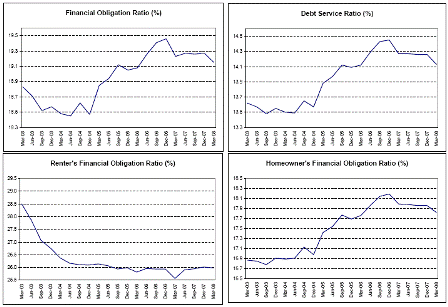
In Q2 2006 it seemed to me that the financial obligations ratio couldn’t get much higher which meant consumer debt could not grow at a faster pace.

With the budget deficit in decline and the trade gap still widening, it would have taken increasing rates of growth of consumer debt to sustain GDP, so my forecast was for gradually declining GDP growth rates over time.

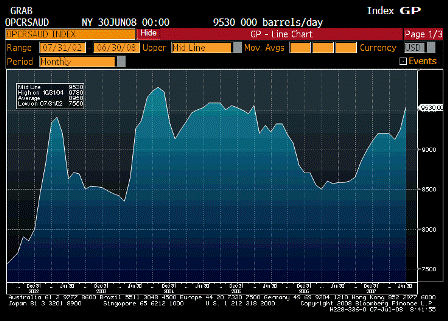
At the same time, I was calling for ever higher crude prices as I saw the Saudis as a swing producer/price setter intent on hiking prices.

This was all temporarily derailed in Aug 2006 when Goldman changed the composition of its commodities index and liquidated substantial amounts of gasoline and crude from the basket of futures purchased and held by its fund, and another fund that followed the Goldman index also re-weighted funds and liquidated substantial numbers of futures contracts. This action pushed prices down until the liquidation was over, but then at year end Goldman and also AIG at year end changed their indexes and again drove prices down. Shortly thereafter it was announced that Goldman was turning its index over to S&P to avoid related party conflicts, or something like that, and the Saudis have resumed their clandestine price hiking.

In general, the Valance charts show economic weakening since Q2 2006. The subprime blow up took away demand in the housing sector as fewer buyers qualified for mortgages when the number of undetected fraudulent applications was reduced, with exports first picking up the slack in 07, and government kicking in soon after in 08.

With the government deficit now proactively growing again, and the financial obligations ratios starting to relax, GDP should continue to muddle through.

“Muddling through” also means, however, that demand will be high enough to support the current level of crude/food/import prices and allow core prices to catch up with headline CPI as the rising food/crude/import prices are also factors of production that are driving up costs.
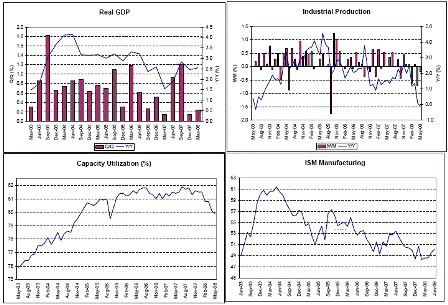
So far, GDP has muddled through as domestic demand has weakened.
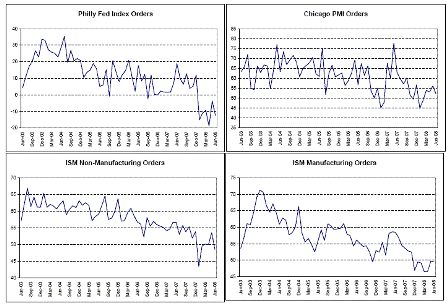
All the surveys look about like these – working their way lower over time, with some turning up recently from the lowest levels.
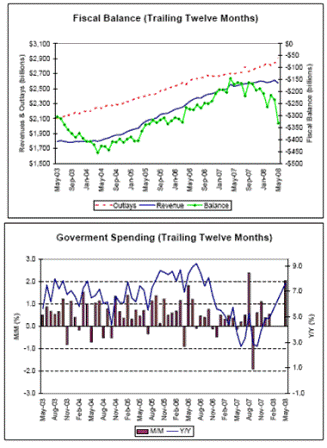
Government spending is on the rise, as a conspicuous drop in the rate of spending in 2007 is making a comeback in 2008, along with the fiscal package now kicking in.
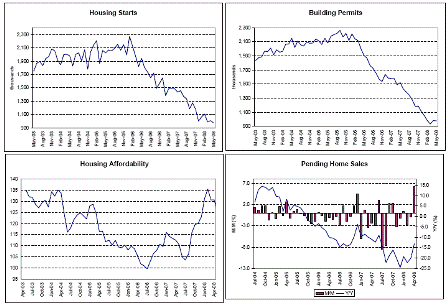
Housing is way down, to the point where it could recover by 50% and still be depressed.

Rising affordability and the passage of time to digest the disruption of the subprime related issues along with increased government spending and increasing exports are beginning to turn things around from the bottom that may have been reached last October/November.
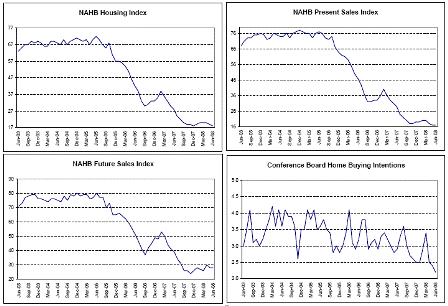
The outlook for the future may have bottomed at these very low levels.
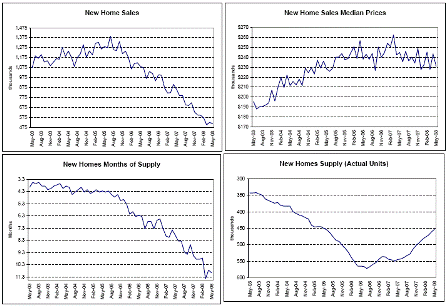
Actual inventories of unsold new homes are steadily falling and median prices are showing signs of a bottom also pointing to a possible bottom for the housing sector.

Government spending and exports have kept the economy from getting a lot worse.
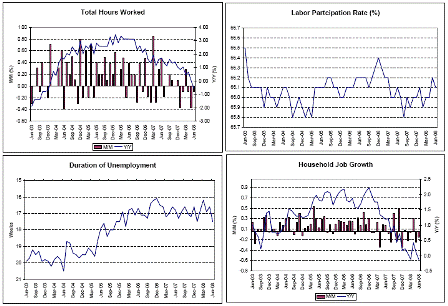
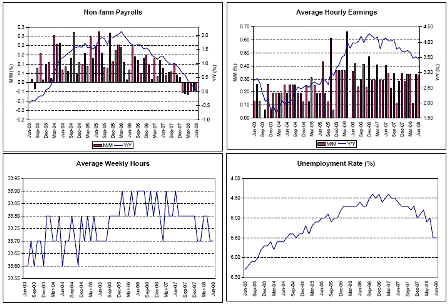
No matter how you look at it, the ‘labor markets’ are on the soft side.
Productivity increases have allowed positive GDP growth with reduced labor input.
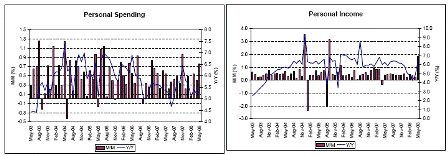
Government to the rescue! GDP will be sustained as long as this holds up.
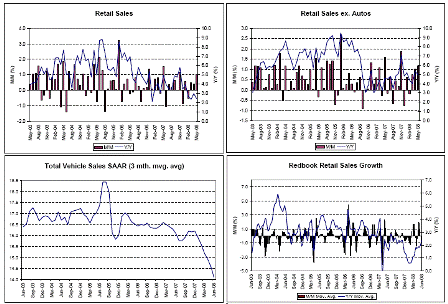
Not terrible here either, apart from the auto industry getting caught out with too many large trucks to sell.
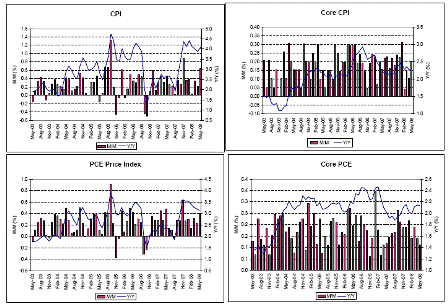
Inflation will only get a lot worse as crude keeps rising.

NOTE: The dip from the Goldman effect in August 2006 has been largely reversed in CPI with the others following with a lag.
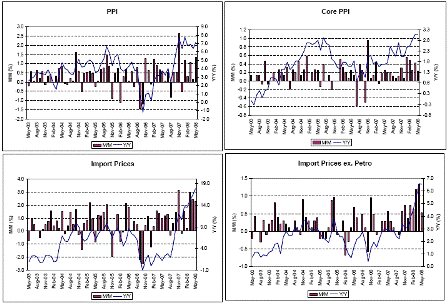
And these are the wholesale prices and import prices that have also more than recovered from the Goldman effect and are in the process of getting passed through to retail prices.
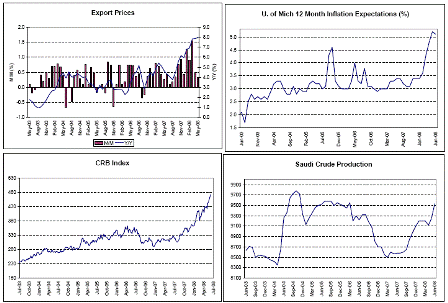
Export prices are booming, expectations way too high for the Fed, the CRB back on trend after the Goldman dip, and demand for Saudi crude holding firm at current prices.
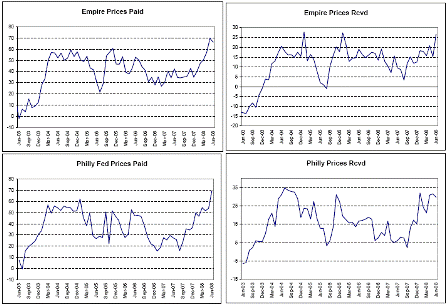
All the price surveys look about like this.
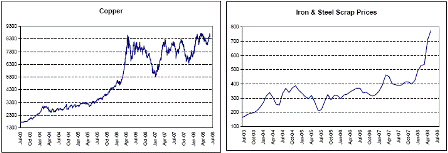
Demand looks strong here as well.
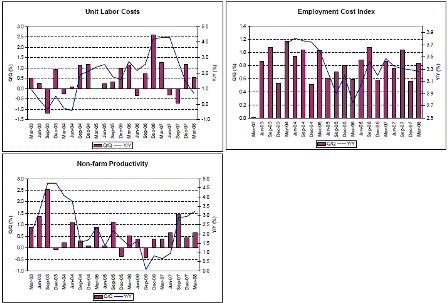
Meanwhile wages remain ‘well-anchored’ as real wages go negative after being about flat for a few decades. And even the most liberal members of Congress seem to think this is a ‘good thing’ as they congratulate the Fed Chairman for keeping wage pressures low.

We are in the process of discovering it IS possible to have inflation without wages leading the way, just like the rest of the banana republics with weak currencies, rising import prices, export led growth, and declining real terms of trade.


[top]
AP: Crippling effect of inflation in poor countries

Impossible – as long as wages are well anchored it’s not inflation…???!!!

Or at least not here?

Inflation surges to double-digit levels in 1 in 4 countries worldwide

by Rachel Beck

There is nowhere to hide from inflation.

Prices in one in four countries, many of them in emerging markets, are accelerating at a double-digit pace, which puts them at least two and a half times the 4 percent annual U.S. headline inflation rate, according to new research from Morgan Stanley.

That should be a wake up call for anyone counting on investments abroad to prop up their portfolios as U.S. stocks teeter on the edge of a bear market.

Sure, the “decoupling” strategy worked for investors in the recent past. Foreign holdings fared better because international economies were outperforming U.S. growth.

The U.S. economy has slowed to nearly a standstill in the last year because of the mounting inflation and the collapse in the housing and mortgage markets. Other industrialized countries have seen about a 2 percent average rate of growth while emerging economies have topped 7 percent.

That growth is now being threatened by inflation. And remember: In the developing world, a larger portion of household expenditures tends to go to the most inflationary items — food and fuel.

Food prices have jumped 39 percent from February 2007 to 2008, led by wheat, soybeans, corn and edible oils, according to the International Monetary Fund.

That hits residents of emerging markets much harder than those living in more advanced economies. People in countries like Vietnam, Russia, Egypt and India put at least 30 percent of their total spending toward food, well above the 6 percent allotment for U.S. households, according to U.S. Department of Agriculture.

That’s why Morgan Stanley economists Joachim Fels and Manoj Pradhan said they were “flabbergasted” by their findings that 50 countries had double-digit inflation rates. On that list were six of the 10 most populous countries in the world, including India, Indonesia, Pakistan, Bangladesh, Nigeria and Russia.

In total, those facing such pricing pressures accounted for 42 percent of the world population.

“In other words, close to three billion consumers are currently experiencing double-digit rates of price increases,” they wrote in a note to clients.

Soaring inflation is not easy to tame. Some countries, such as India where inflation is running at around 11 percent, may have no choice but to boost interest rates.

The Reserve Bank of India earlier this month announced an inter-meeting rate hike. It said in a statement accompanying the move that the “overriding priority for monetary policy is to eschew any further intensification of inflationary pressures and to firmly anchor inflation expectations.”

Others, however, will balk at tightening monetary policy because they don’t want their currencies to surge, which would then raise the price of their exports.

Many emerging-market economies also link their currencies to the dollar, and because of the U.S. Federal Reserve’s loose monetary policy stance right now — the central bank has aggressively cut interest rates in response to the credit crisis — that has helped feed inflationary pressures.

The longer inflation remains elevated, the more damage it will do to long-term economic growth.

“There is plenty of reason to worry about the continuation of the bull story for emerging markets, especially in those countries that have seen a sharp acceleration in inflation, are unable or unwilling to tighten policy sufficiently, and are commodity consumers rather than producers,” the Morgan Stanley economists wrote in their report.

But even as prices surge, earnings forecasts aren’t coming down in many global markets. That may give investors false hope that many countries will bypass the inflation storm.

For instance, in Asian countries outside Japan, earnings forecasts are still for 11.6 percent growth over the next 12 months and 15.1 percent growth in calendar year 2009, according to Barclays Capital.

Those estimates “are implicitly assuming that inflation will either miraculously disappear on its own accord or that central banks are not going to bother doing anything about it neither is particularly believable,” wrote Tim Bond, head of global asset allocation at Barclays.

Barclays is recommending that investors either avoid owning stocks in that region or that they short shares, meaning bet they will decline.

“Although the area is currently outperforming in terms of economic growth, the inflationary environment is not far short of disastrous,” Bond said.

Clearly, the inflation bogeyman is haunting all corners of the world.

Business Weekly: Salary offers move higher

Overall starting salaries for 2008 graduates post a 7.1% increase, according to a quarterly report, in spite of the slowdown

by Sara Hennessey

Despite the weak state of the economy and the large number of businesses being forced to make cuts and lay off employees, it seems recent hires can expect to maintain competitive starting salaries, according to a recent 2008 undergraduate study.

The latest quarterly report of salary offers to grads, released by the National Association of Colleges & Employers (NACE) on July 2, shows an overall increase of 7.1% in starting salaries in all majors, compared to a year ago. Increases for business students lagged the overall market, however, posting only a 4% increase.

NACE National Employment Manager Andrea Koncz says the results were surprising because the group’s spring report (BusinessWeek.com, 4/17/08) seemed to hint salary increases would be flattening out due to the economic slowdown. “However, the current report shows that salaries are in fact still rising,” Koncz says.

For business grads, the average salary offers varied by specialty. Business administration and management grads fared especially well, posting a 5.1% increase over the previous year. Marketing grads saw an equally strong increase — 4.7% over last year. Economics majors saw a 4.2% increase, according to the survey, and finance grads saw a 2.8% increase. While accounting grads reported a modest 2.9% increase in their average offer, it’s a gain compared with NACE’s spring report, which found no year-over-year salary increase for accounting majors.

Hiring Down?
As for the hiring outlook, college employment experts remained cautious that the economic downturn will reduce the number of job offers for undergrads. NACE’s Koncz says her organization will begin asking companies about their hiring plans in late summer. In the meantime, she says initial indications are that companies may be cutting back on new hires. “Whereas last year (companies) were saying they would be hiring 16% more graduates, this year they’re anticipating hiring only 8% more,” Koncz says.

Linda Scales, director of career services at the University of San Diego, says that while alums have reported declining job offers, she hasn’t noticed the same trend for recent grads. Scales calls herself “cautiously optimistic” and says she hasn’t noticed companies holding back in offering jobs to recent grads.

“So far, there’s been no downturn,” she says, “and we keep wondering if it’s coming.” Scales adds that companies may have learned from the last recession and recognize that “there’s a continued need for new blood and new hires.”

Tammie King, director of the career management center at Texas Tech University’s Rawls College of Business, agrees that companies are going to continue to hire, albeit cautiously. “Companies that would normally hire, say, eight entry-level employees are hiring only four,” she says.

Whatever the hiring levels, Jeannette Frett, assistant dean and director of career management for the MBA program at Georgetown’s McDonough School of Business, says starting salaries are likely to continue to rise. “It’s really about supply and demand,” Frett says. “Companies are looking to do more with less, and those with the right talent and the right skills will be able to maintain a competitive salary.”

Schmidt of RBS favors USD over Euro — a turning point?????


[Skip to the end]

Bloomberg News Video Clip

Maybe, but…

It will be tough for the USD index to move up without the CBs and monetary authorities buying it, and that means crossing Paulson and accepting being labeled a ‘currency manipulator’ and ‘outlaw.’

And the higher crude prices mean USD spent on imports increase and unless spending on US domestic assets, goods, and services goes up by that much those unspent USD need to be/are ‘saved’ by non-residents and the USD goes to a level that reflects their current desire to accumulate them.

A rising USD is evidence that the foreign sector wants the extra USDs and are fighting over them. A falling dollar is evidence of the reverse.

Also, if they don’t like the other currencies any more than they like the USD, the currencies can remain relatively stable as the excess USDs are all spent on US exports and US domestic assets. The evidence of this is rising/accelerating US exports and export prices and support for US assets which can include real estate and equities. Note the falling USD has made US equities that much cheaper for non-USD based investors.

This is all part of the same adjustment process, which includes ‘inflation’ as all the pieces described above support higher prices for goods and services both in the US and elsewhere.

And the ‘inflation channel’ also is part of the adjustment of the trade gap. I use the extreme example (hopefully it’s only an extreme example) of prices adjusting upward until coffee is $60 billion a cup, in which case the trade gap of $60 billion per month is only one cup of coffee. In other words, higher prices work to bring down the ‘real’ trade gap.

So they are all working together -trade, fx, prices- within current institutional arrangements (including CBs not wanting to be labeled outlaws and currency manipulators vs the desire to support their exporters, etc) as they always and continuously do to adjust desired to actual ‘savings’ of financial assets, and sustain all the indifference levels.

A turning point if the level of the USD is sufficiently low to drive the US exports and asset sales to non residents needed to keep their residual accumulation of USD to their desired levels.

And with crude prices still rising, it seems likely to me that more USD are being credited to ‘their’ accounts than they currently wish to cling to at current exchange rates, so more downward pressure on the USD would not surprise me. Along with the associated increase in US exports and higher prices in general.


[top]

2008-07-07 Weekly Credit Graph Packet


[Skip to the end]


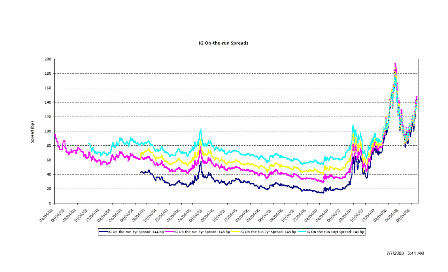
IG On-the-run Spreads (Jul 7)

[top][end]

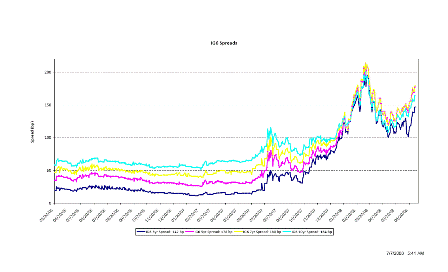
IG6 Spreads (Jul 7)

[top][end]

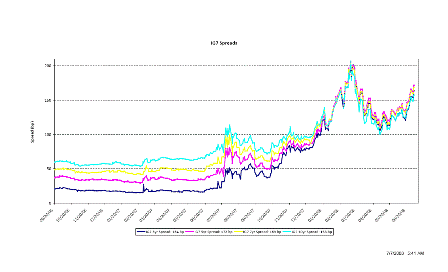
IG7 Spreads (Jul 7)

[top][end]

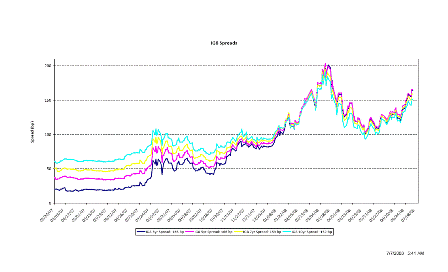
IG8 Spreads (Jul 7)

[top][end]

IG9 Spreads (Jul 7)

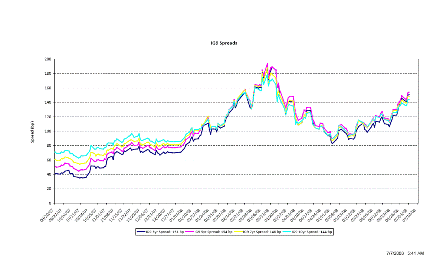
Still working its way higher.


[top]

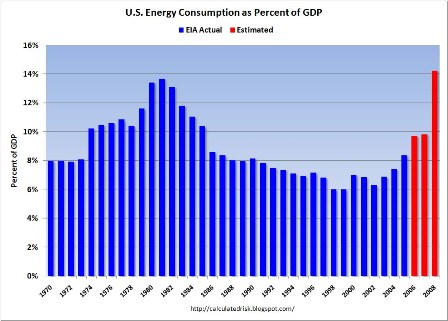
US Energy Consumption as % of GDP

US Energy Consumption as Percent of GDP

Interesting how the price hikes get us back to the 1970s ratio. One of the arguments that it was different this time around was that crude is a lower percentage of GDP than it was then.

The pass-throughs to the rest of the price structure are just getting started, and I expect them to persist well past the peak in crude prices.

Bloomberg: Apartment vacancy unchanged, rents rise

The drop in housing starts may be keeping the rental market tight, as about a 80,000 fewer new units are being built each month.

U.S. Apartment Vacancy Unchanged at 5.9 Percent, Rents Increase

(Bloomberg) The vacancy rate for U.S. rental apartment buildings was unchanged at 5.9 percent in the second quarter as the housing slump and a weakening economy deterred people from buying homes, Reis Inc. reported.

The average monthly U.S. asking rent rose 1 percent to $1,047, the 25th consecutive quarter that rents increased or stayed the same, according to Reis, a New York-based research firm.

Home prices in 20 U.S. metropolitan areas declined in April by the most on record and new home sales fell 40 percent in May from a year ago. The slumping housing market means apartment rents should remain steady even as gasoline prices rise and U.S. companies cut jobs, Sam Chandan, chief economist for Reis, said in an interview. Payrolls fell by 62,000 in June and 438,000 in the first half, the Labor Department said July 3.

“Our projection is rent growth will moderate through 2009, but we don’t think it will turn negative as it did in the early 2000s,” Chandan said. “The bias will be weighted toward rental, in our view. People fear home prices will fall further.”

The last time U.S. rents fell was the first quarter of 2002, when they declined by 0.2 percent, according to Reis.

The five-year housing boom that ended in 2006 attracted investment to homebuilding, so fewer apartment buildings were constructed, Chandan said.

“There has been very little apartment development because all the money was made in housing development,” he said. “We don’t have a strong pipeline of apartments.”

San Francisco
San Francisco asking rents grew the most in the second quarter from the previous 12 months, increasing 9.4 percent. New York gained 7.7 percent, Seattle rose 7.4 percent, San Jose, California increased 7.3 percent and Salt Lake City increased 6.1 percent, according to Reis.

New York had the highest average U.S. rent at $2,847 a month, followed by San Francisco at $1,825, Fairfield County, Connecticut at $1,757, Boston at $1,646 and Long Island, New York at $1,521, Reis said.

Orange County, California, ranked sixth at $1,520, followed by San Jose at $1,504, Northern New Jersey at $1,460, Ventura County, California at $1,409 and Los Angeles at $1,408, according to Reis.

New York had the lowest vacancy rate at 2.2 percent, followed by Long Island at 2.9 percent, Central New Jersey at 3 percent, San Jose at 3.2 percent and New Haven, Connecticut at 3.3 percent, Northern New Jersey at 3.5 percent, Syracuse, New York at 3.6 percent, San Diego and San Francisco at 3.8 percent and Minneapolis at 3.0 percent, Reis said.

The Independent: UK Bank deputy chief warning

Bank deputy chief warns of market trouble to come

by Ben Russell, Political Correspondent and Sean O’Grady

Britain is facing the risk of renewed turmoil in the financial markets, the new deputy governor of the Bank of England warned yesterday.

Professor Charlie Bean, the deputy governor for monetary policy and a former chief economist at the Bank, raised the prospect of a slowing global economy triggering a new round of problems with corporate loans and said that the impact of the credit squeeze could be greater than Bank projections.

Yes, but unlike the Eurozone, the BoE is permitted to ‘write the check’ as in the treasury.

National solvency is not an issue in the UK as it is in the Eurozone when weakness is addressed.

He told members of the Commons Treasury Select Committee that Britain faced “major conflicting risks” threatening the Government’s inflation target from the problems of a slowing economy and rising commodity prices.

Yes, the twin themes of weakness and inflation.

In a memorandum to the committee, Professor Bean warned that the “dislocation” in the financial markets “probably has further to run, especially if a slowing economy here and abroad generates a second round of write-downs, this time associated with corporate loans. Moreover, the impact of the tightening in the terms of availability of credit could prove greater than is embodied in the central case in our most recent set of projections”.

Agreed. And while ‘writing the check’ can readily address these issues with no risk to government solvency, it will also support the higher prices he next discusses:

He said that increasing oil and other commodity price rises would lead to higher inflation becoming “embedded in the economy”, warning that people might seek to offset price increases by making higher wage demands. He said: “There is no doubt that the UK economy presently faces the most challenging set of circumstances since at least the early 1990s and probably earlier.”

Professor Bean said oil prices could continue to rise for another two years and cautioned that Britain faced the danger of a pay-price spiral if workers tried to compensate by pushing up wages. He said: “It certainly poses a significant challenge. There is no doubt about that at all. It may be a relatively unlikely event but it could be particularly unfortunate if it happened, if households and businesses start losing faith in the idea that inflation will stay low, round about the target, they start building it into their pay and prices and inflation becomes much more embedded into the system… Provided pay growth remains subdued, the current pick-up in inflation will be temporary.”

Living standards, the deputy governor stressed, will inevitably be lower because of the global inflation in commodity prices.

Agreed. It’s all about real terms of trade, which have also been declining rapidly in the US as evidenced by the drop in growth of GDP and the drop in non-oil trade deficit.

My guess is the most likely political response in the US and the UK is proactive deficit spending from the treasury to address the weakness and higher interest rates to address the inflation.

Unfortunately the deficit spending that supports domestic demand will also support crude consumption (as well as housing) and ‘monetize’ the ever higher crude prices being set by the Saudis, thereby supporting ‘inflation’ in general.

And this will trigger ever higher interest rates from the Central Bank as inflation trends even higher.

2008-07-03 US Economic Releases


[Skip to the end]


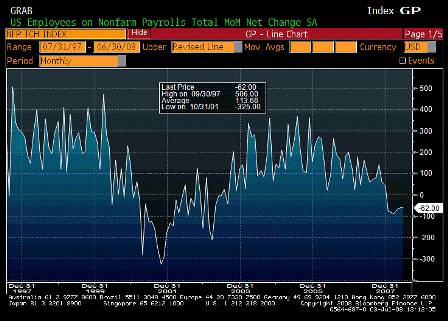
Change in Nonfarm Payrolls (Jun)

Survey -60K
Actual -62K
Prior -49K
Revised -62K

Looking soft but not collapsing.

With productivity increases, GDP can remain positive with flat to down job creation.

[top][end]


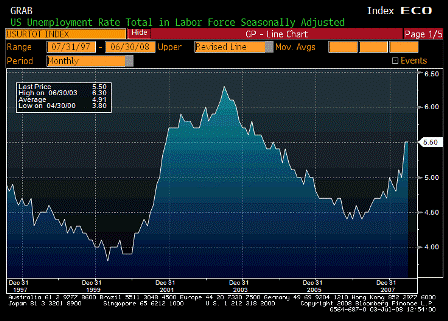
Unemployment Rate (Jun)

Survey 5.4%
Actual 5.5%
Prior 5.5%
Revised n/a

Working its way higher, but this is a lagging indicator.

[top][end]


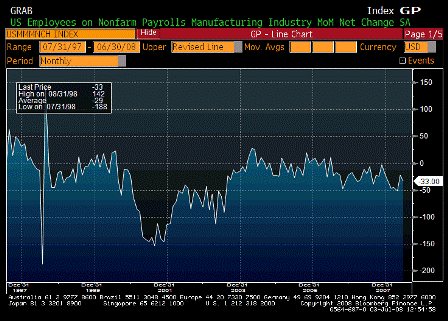
Change in Manufacturing Payrolls (Jun)

Survey -30K
Actual -33K
Prior -26K
Revised -22K

Slowly working its way lower in a multi-year trend.

[top][end]


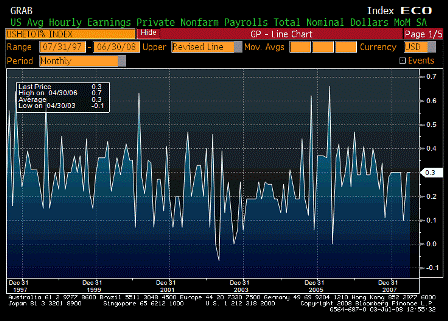
Average Hourly Earnings MoM (Jun)

Survey 0.3%
Actual 0.3%
Prior 0.3%
Revised n/a

Apparently ‘well-anchored’.

[top][end]


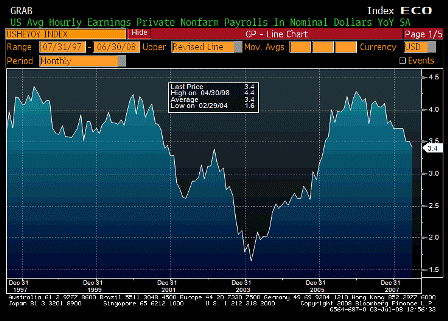
Average Hourly Earnings YoY (Jun)

Survey 3.4%
Actual 3.4%
Prior 3.5%
Revised n/a

Still moving lower with seemingly along with the labor weakness.

[top][end]


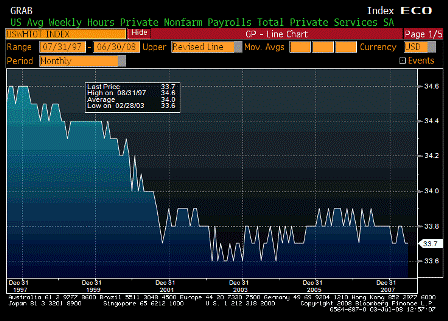
Average Weekly Hours (Jun)

Survey 33.7
Actual 33.7
Prior 33.7
Revised n/a

This is falling off as well and indicates a good sized loss of labor hours.

[top][end]


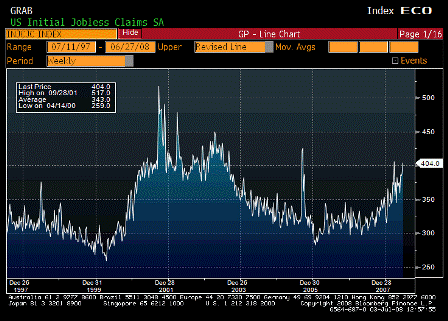
Initial Jobless Claims (Jun 28)

Survey 385K
Actual 404K
Prior 384K
Revised 388K

Working its way higher but still not at recession levels, and the floods might have disorted it some.

[top][end]


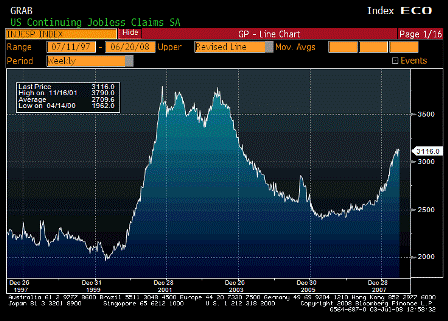
Continuing Jobless Claims (Jun 21)

Survey 3125K
Actual 3116K
Prior 3139K
Revised 3135K

Rate of increase seems to be slowing.

Karim writes:

-62k decline in nfp in line with expectations but details on the soft side

  • Net revisions -52k
  • Unemployment rate stays at 5.5%
  • Index of aggregate hours drops again (-0.1%); 3mth annualized rate now -0.9%. If hours fall 1%, that is the equivalent of about a 1.4mm decline in jobs from a labor income perspective: Labor income = jobs x average hourly earnings x total hours worked.
  • Total augmented unemployment rate (another measure of slack that includes those who have dropped out of labor force but indicate they would like to work) rises from 9.7% to 9.9%, a new cycle high.
  • Median duration of unemployment rises from 8.3 weeks to 10.0 weeks.
  • One piece of improvement was in diffusion index rising from 45.6 to 46.9
  • Birth-death model added 177k jobs, 29k in construction (caution that these are nsa whereas payrolls are sa)

Claims rise from 388k to 404k; 4wk avg rises from 379k to 390k.

Continuing claims fall from 3135k to 3116k; 4wk average rises from 3102k to 3110k

[top][end]


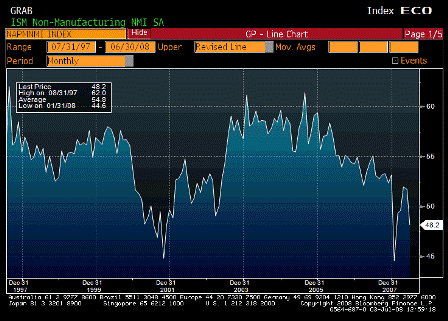
ISM Non-Manufacturing Composite (Jun)

Survey 51.0
Actual 48.2
Prior 51.7
Revised n/a

Seems to be back near its longer term trend line that was headed lower, and prices keep moving up alarmingly.

Karim writes:

Overall index falls from 51.7 to 48.2 in June.

Activity details also weak and prices paid higher:

  • Prices paid 77 to 84.5
  • Activity 53.6 to 49.9
  • New orders 53.6 to 48.6
  • Employment 48.7 to 43.8 (lowest in 6yr history of series)
  • Export orders 54 to 52


[top]