Wed am recap

Mainstream economics says:

Get inflation right and that ‘automatically’ optimizes long-term growth and employment.

Adding to demand with a negative supply shock turns a ‘relative value story’ into an ‘inflation story.’

The ECB is following mainstream theory, while the Fed is not.

why?

The Fed sees looming systemic, deflationary tail risk at the door. At least up to now.

The panic of 1907 and the early 1930s deflationary collapse (both previous examples given by the Fed) were gold standard events.

With a gold standard (and/or other fixed rate regimes) there are direct supply side constraints on the reserve currency. Interest rates are market determined, and during a credit crunch rates spike higher ‘automatically.’ Even the treasury must fund itself and faces the same supply side constraints, thereby limiting fiscal responses. This continues in today’s fixed fx currencies.

With floating fx/non-convertible currency there are inherent no direct supply side constraints on bank lending, deposit creation, and credit in general. Any constraints are on the demand side, including financial capital where constraints are also on the demand side. The CB necessarily directly sets rates, not market forces, and government spending is not constrained by taxing, borrowing, etc., hence fiscal packages are subject only to political choice.

Today’s risks are much the same as previous financial crisis type risks like 1987 and 1998, where the government and its agencies have the open option of ‘writing the check’ as desired, with inflation the price to pay, not government solvency as with fixed fx regimes.

Just like the 1970s, the Saudis are acting the swing producer and setting price and letting quantity they pump adjust. This is also necessarily the case when one is single supplier at the margin with excess capacity. The alternative of pumping flat out and hitting bids in the spot market is not a functional option for any monopolist. Only price setting is.

Russia is also a monopoly supplier at the margin and probably is also acting as a swing producer. So crude prices go to where the higher of the two set them.

Mainstream theory has not yet publicly addressed this kind of negative supply shock.

One option is to match the domestic inflation rates to the price hikes to try to avoid declining real terms of trade.

This is both politically impossible, and it can quickly lead to accelerating inflation.

We have two choices, neither particularly attractive:

  1. Watch our real terms of trade continue to collapse as crude prices are continuously hiked.
  2. Try to inflate to moderate the drop in real terms of trade.

Ironically, we will chose the later as we did in the 1970s because inflation is not a function of interest rates in the direction CBs subscribe to.

Increasing nominal rates increases inflation via the cost and demand channels.

Costs of holding inventory and investment rise with rate hikes.

Governments are net payers of interest to the non-government sectors; so, rate hikes also increase government spending on interest to support incomes in the non-government sectors.

Good luck to us!

Changing Tides

I’ve been thinking that when the Fed turns its attention to inflation it will find itself way behind that curve, which it is by any mainstream standard, and that the curve then gets negative from a year or two out as markets anticipate rate hikes followed by falling inflation and rate cuts.

Didn’t know exactly how it would get from here to there, how long it would take or exactly when it would happen.

I never thought the Fed would let it go this far. Especially Governor Kohn, who has been through this before in the 1970s with Burns, Miller, and Volcker. This FOMCs inflation tolerance lasted a lot longer than I expected, even with a weak economy and perceived systemic risk.

Won’t be long before the mainstream comes down hard on this FOMC for letting the inflation cat out of the bag with a high risk, untested, counter theory strategy of aggressively cutting into a triple negative supply shock. The mainstream will see it as a ‘hail Mary’ move. If it works, fine, if not it was a foolish error with a major price to pay to fix it.

Maybe they just got what will turn out to be overconfident in their inflation fighting ability. Kind of a ‘we know how to do that and can do it anytime’ attitude.

Wrong. They will soon find out it is not so easy.

Maybe they got confused and saw the tail risk as that of the gold standard era when there were real supply side constraints to money to deal with.

Also, they probably blamed the whole 1970’s thing on labor unions; so, maybe they got blind sided this time because they thought without unions wages would be ‘well contained’ and therefore there would be no inflation.

Wrong on that score as well. It was about oil before, and it is about oil now.

And the fact is, they have no tools for fighting inflation. They think they do (hiking rates), but higher rates just make it worse by raising costs and jacking up rentier incomes. (Incomes of savers who do not work or produce = more demand and no supply)

The inflation broke in the early 80’s only because of a supply response of about 15 million barrels of crude per day that buried OPEC and caused prices to collapse for almost 20 years. (And even during the 20 years of low oil prices and falling imported prices inflation still averaged around 3%.)

That kind of supply response is not going to happen in the near future. I expect the Saudis to keep hiking and inflation to keep getting worse no matter what the Fed does. It is payback time for them from being humiliated in the 1980s, and they are also at ideological war with us whether we know it or not.

Markets might have a false start or two with the interest rate response and flattening curve, just to not make it too easy.

Also, as before, there could be an equity pullback when it is sensed the Fed is going to seriously fight inflation with hikes designed to keep a sufficient output gap to bring inflation increases down.

And along the way everything goes up, including housing prices, during a major cost push inflation. Even with low demand. Just look at all the weak emerging market nations that have had major inflations with weak demand, high rates, etc. etc.

Yellen the Dove on inflation

“Inflation is a problem,” she said. Yet the problem isn’t excessive demand, rising wages, or a tight labor market, but “negative supply shocks.” Once the shocks wear off, the inflation rate can’t be sustained in the long run without a pick-up in wage growth, she said.

“There’s no textbook answer to what monetary policy should be doing at this time,” Yellen added.

Yes, there is – the mainstream says quite clearly ‘don’t add to demand during a negative supply shock. Or a triple negative supply shock. That will monetize the price increases and turn a relative value story into an inflation story.’

The FF rate is now below the year over year headline and core CPI; so, it’s easy for the Fed to now make the case the ‘real rate’ is negative and cutting it any could adversely alter long term employment and growth given the balance of risks between market functioning, inflation, and the output gap.

They also think they know that if markets are expecting a 25 basis point cut they need to do less than that to get a positive inflation response.

And, as before, they need to set a rate for the TAF and accept any bank legal collateral to be able to more effectively target LIBOR as desired.

2008-04-16 US Economic Releases

  • MBA Mortgage Applications
  • Bloomberg Global Confidence
  • Consumer Price Index
  • Housing Starts
  • Building Permits
  • Industrial Production
  • Capacity Utilization

2008-04-16 MBAVPRCH Index

MBAVPRCH Index (Apr 11)

Survey n/a
Actual 381.6
Prior 384.7
Revised n/a

Holding in its new, lower range.


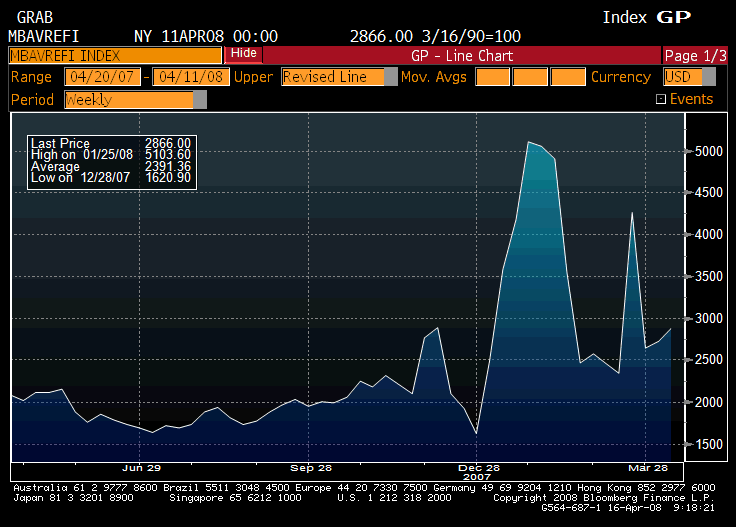
2008-04-16 MBAVREFI Index

MBAVREFI Index (Apr 11)

Survey n/a
Actual 2866.0
Prior 2724.7
Revised n/a

Doing ok in this prime time for resets, which are peaking and then falling off.


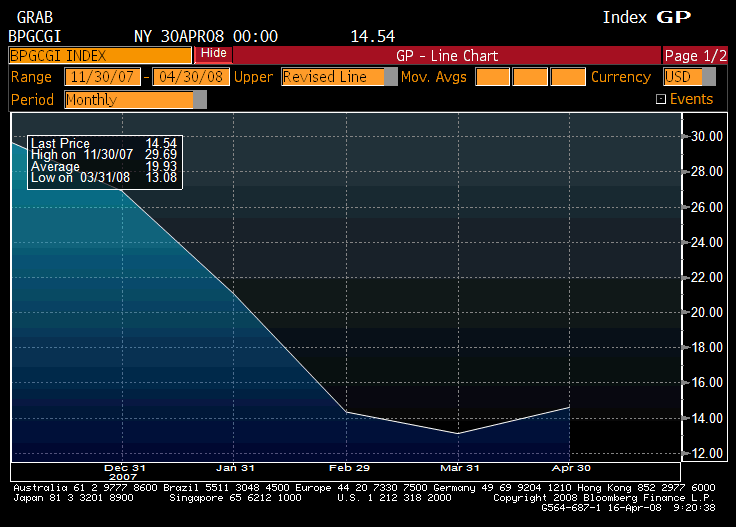
2008-04-16 Bloomberg Global Confidence

Bloomberg Global Confidence (Apr)

Survey n/a
Actual 14.54
Prior 13.08
Revised n/a

Still down, but signs of a bottom.


In my humble opinion, inflation is ripping, and the Fed’s in a very bad place. April’s food and energy price hikes, along with hosts of others, and the weaker USD all are pointing to an upward surge for prices on a forward looking basis.The Fed’s forecasting models should be showing higher inflation as well.And futures markets continue to be an unreliable forecasting tool for the Fed.

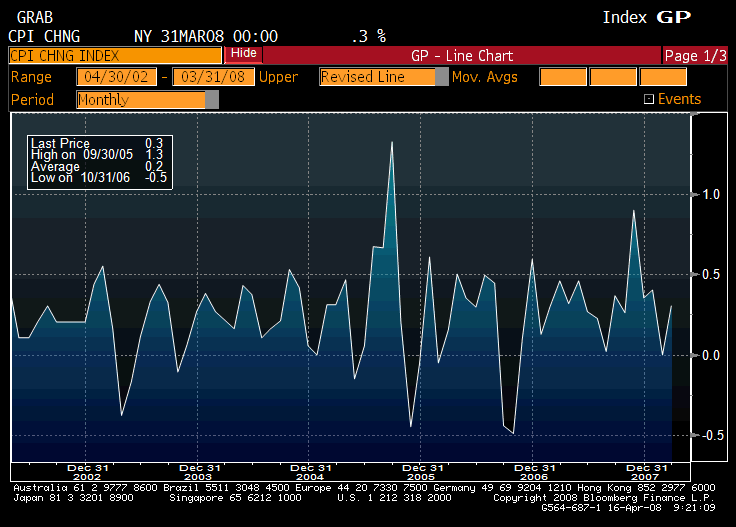
2008-04-16 Consumer Price Index MoM

Consumer Price Index MoM (Mar)

Survey 0.3%
Actual 0.3%
Prior 0.0%
Revised n/a

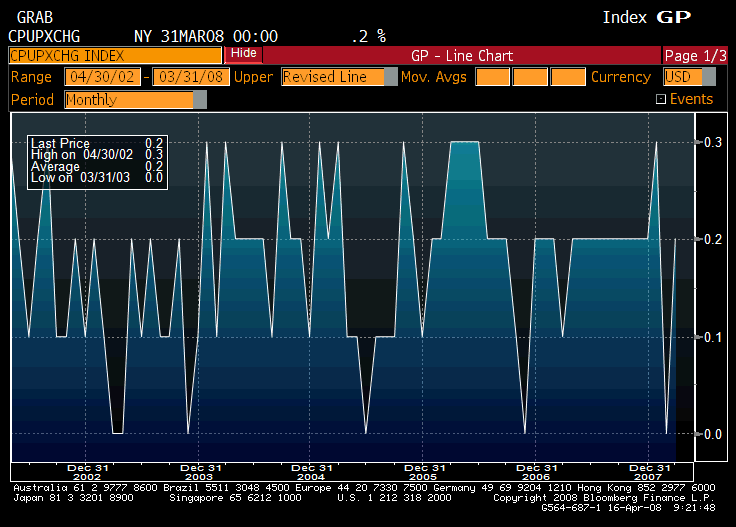
2008-04-16 CPI Ex Food & Energy MoM

CPI Ex Food & Energy MoM (Mar)

Survey 0.2%
Actual 0.2%
Prior 0.0%
Revised n/a

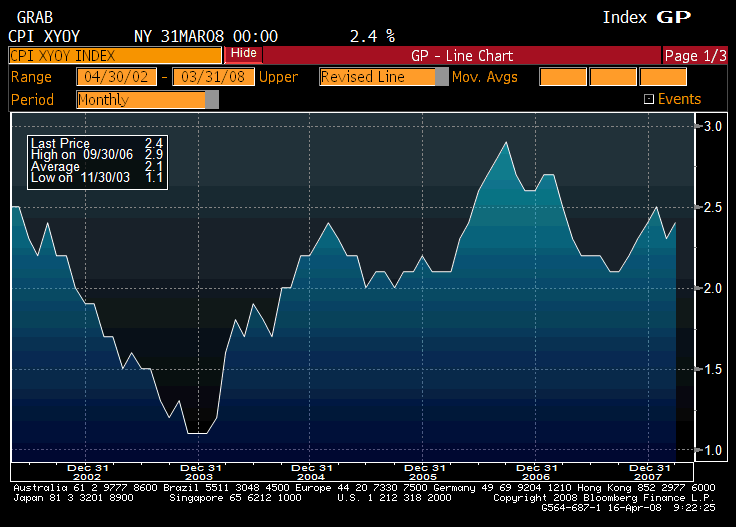
2008-04-16 Consumer Price Index YoY

Consumer Price Index YoY (Mar)

Survey 4.0%
Actual 4.0%
Prior 4.0%
Revised n/a

2008-04-16 CPI Ex Food & Energy YoY

CPI Ex Food & Energy YoY (Mar)

Survey 2.4%
Actual 2.4%
Prior 2.3%
Revised n/a

From Karim:

Headline/Core divergence->limited passthrough

  • Headline 0.343% and stays at 4% y/y

  • Core rises 0.152% (after 0.04% last month), showing limited pass-through from headline and even more limited pass-through from wholesale level (PPI from yday).

  • Core rises from 2.3% to 2.4%, equates to about 1.9-2.0% on core PCE basis due to measurement differences

  • Food up 0.2% and gas up 1.3%

  • OER up 0.2%, apparel down 1.3%, vehicles down 0.1%

  • Lodging away from home down 0.6% and medical up only 0.1%, a bit below trend

Housing starts not looking good. The glimmer of hope is that prior months have been revised up for the last two reports, so there’s a chance this number could be revised substantially as well.

2008-04-16 Housing Starts

Housing Starts (Mar)

Survey 1010K
Actual 947K
Prior 1065K
Revised 1075K

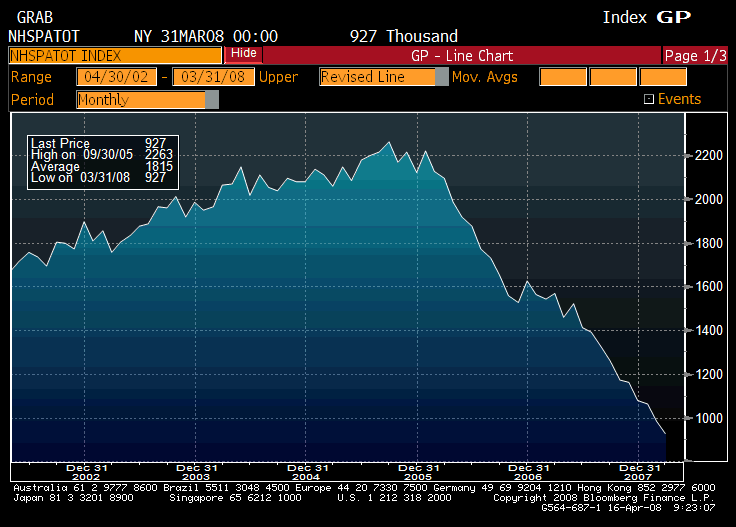
2008-04-16 Building Permits

Building Permits (Mar)

Survey 970K
Actual 927K
Prior 978K
Revised 984K

From Karim:

Housing data shows drag continuing with at least the same intensity

  • Starts down 11.9%, boding poorly for current GDP

  • Permits down 5.8%, boding poorly for future GDP

  • Best news is not adding to inventories

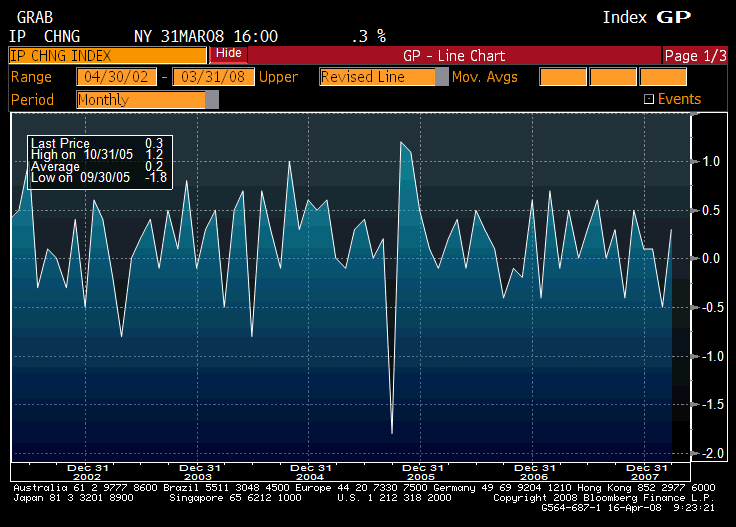
2008-04-16 Industrial Production

Industrial Production (Mar)

Survey -0.1%
Actual 0.3%
Prior -0.5%
Revised -0.7%

May be due to exports, which are keeping GDP and employment muddling through


2008-04-16 Capacity Utilization

Capacity Utilization (Mar)

Survey 80.3%
Actual 80.5%
Prior 80.9%
Revised 80.3%

Staying too high for the typical recession.

2008-04-15 US Economic Releases

  • Producer Price Index
  • Empire Manufacturing
  • NAHB Housing Market Index
  • ABC Consumer Confidence

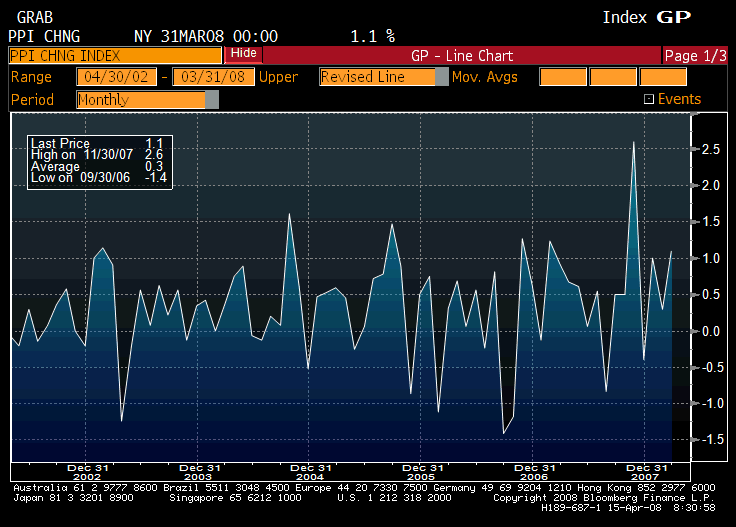
2008-04-15 Producer Price Index MoM

Producer Price Index MoM (Mar)

Survey 0.6%
Actual 1.1%
Prior 0.3%
Revised n/a

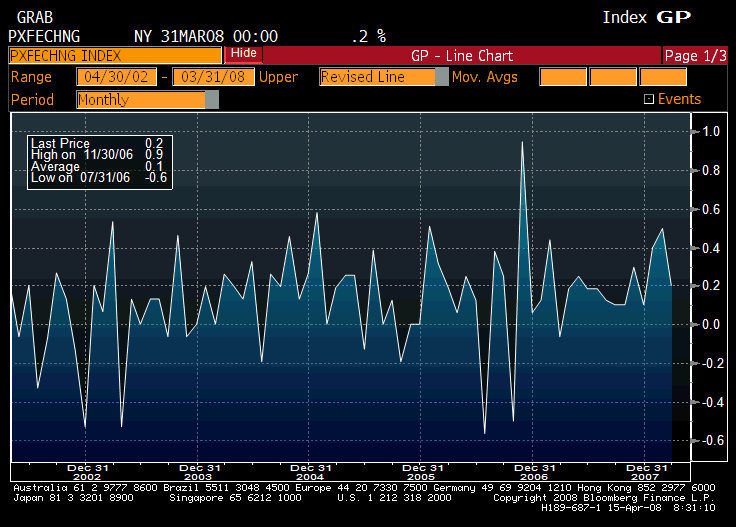
2008-04-15 PPI Ex Food & Energy MoM

PPI Ex Food & Energy MoM (Mar)

Survey 0.2%
Actual 0.2%
Prior 0.5%
Revised n/a

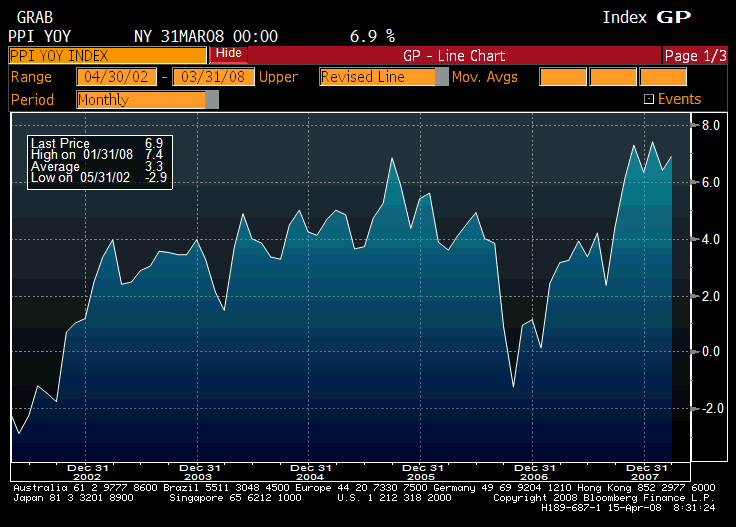
2008-04-15 Producer Price Index YoY

Producer Price Index YoY (Mar)

Survey 6.2%
Actual 6.9%
Prior 6.4%
Revised n/a

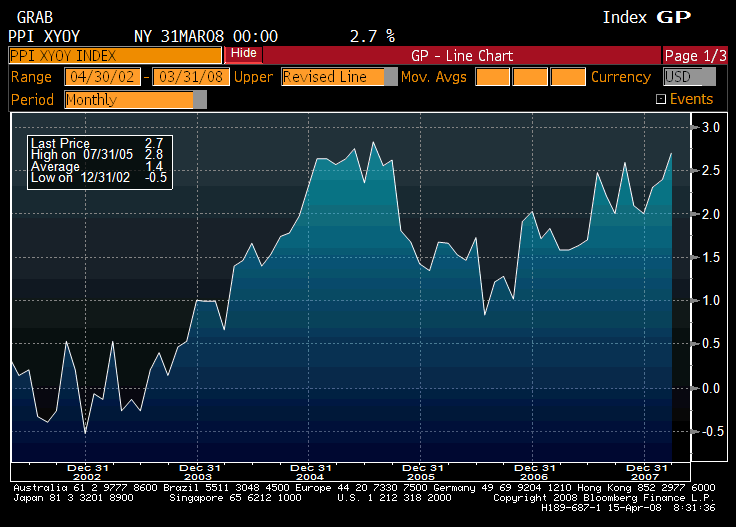
2008-04-15 PPI Ex Food & Energy YoY

PPI Ex Food & Energy YoY (Mar)

Survey 2.8%
Actual 2.7%
Prior 2.4%
Revised n/a

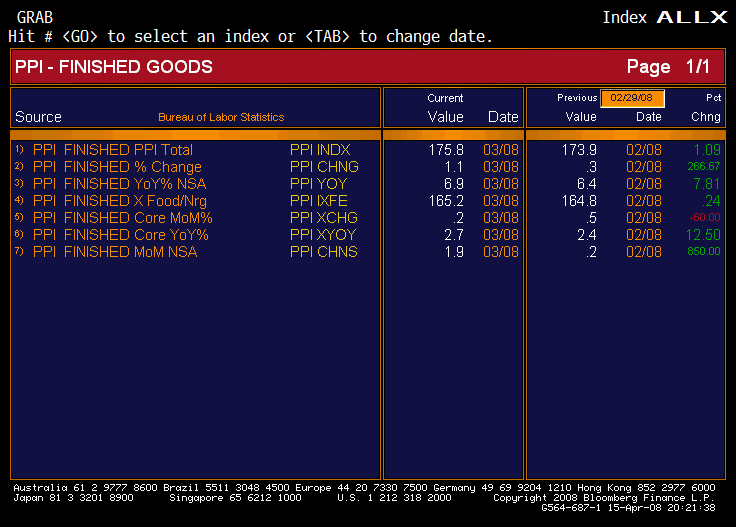
2008-04-15 Producer Price Index TABLE

Producer Price Index TABLE

Inflation ripping.

From Karim:

Headline/Core divergence continues

  • Headline up 1.1% m/m and 6.9% y/y

  • Core up 0.2% m/m and 2.7% y/y

  • Food (+1.2%) and gas (+1.3%) lead the way up, computers (-3.2%) and passenger cars (-0.2%) lead the way down.

  • Intermediate and crude pressures remain intense, rising 2.3% and 8.0% respectively for the month

  • Further margin squeeze likely to put further downward pressure on capex, especially in light of weak economy and credit conditions (see below)

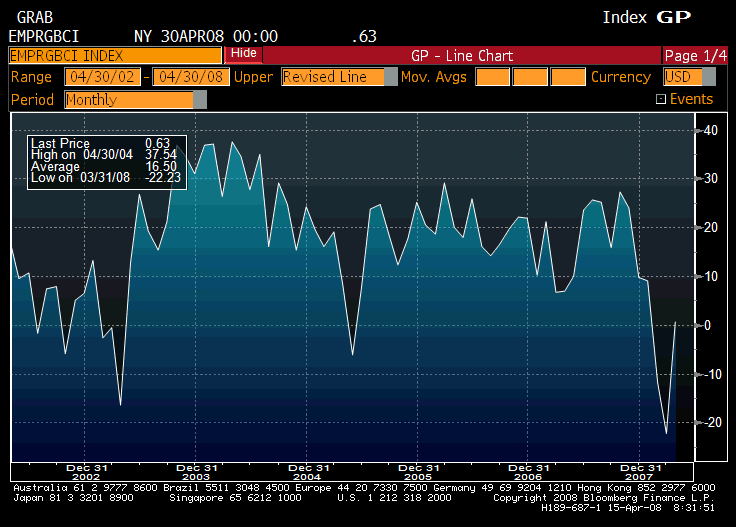
Empire jumps from -22.2 to 0.6. Index quite volatile and 10-20 point moves per month the norm as of late.

6mth expectations deteriorate from 25.8 to 19.6.

  • Shipments show largest jump from -5 to +17 (for current conditions)

  • Employment and average workweek both extremely weak

  • Capex intentions fall from 18 to 11.5

2008-04-15 Empire Manufacturing

Empire Manufacturing (Apr)

Survey -17.0
Actual 0.6
Prior -22.2
Revised n/a

Survey is colored by subjective recessions fears bouncing back some.


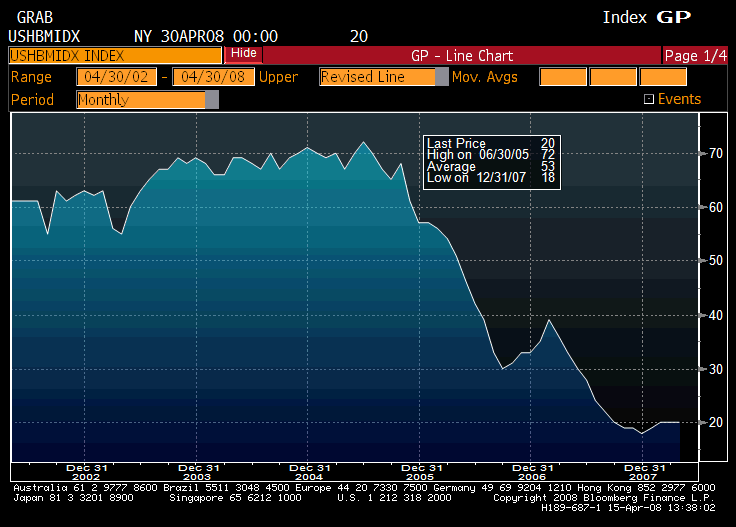
2008-04-15 NAHB Housing Market Index

NAHB Housing Market Index (Apr)

Survey 20
Actual 20
Prior 20
Revised n/a

Still looks to me like a bottom.


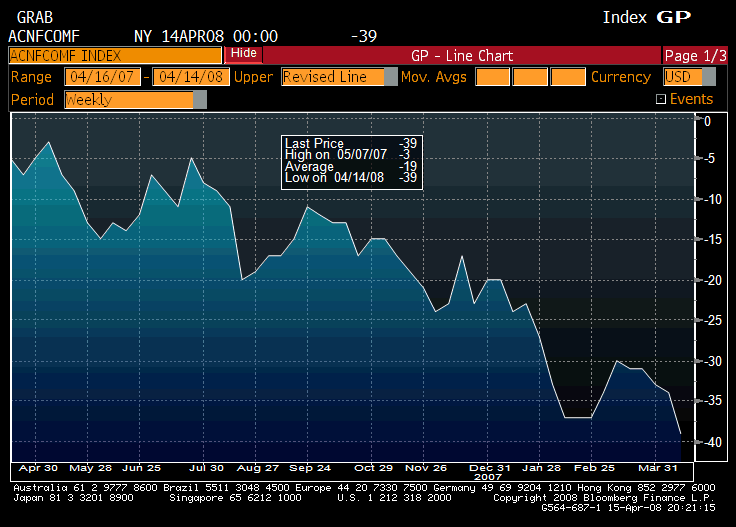
2008-04-15 ABC Consumer Confidence

ABC Consumer Confidence (Apr 13)

Survey n/a
Actual -39
Prior -34
Revised n/a

Still looking weak. Much like an export economy

2008-04-15 EU Highlights

As a point of logic seems their best move is to try to pressure the Fed to stop cutting.

Highlights:

ECB’s Stark, Ordonez Say 4% Key Rate May Not Contain Inflation
French Government Will Lift Minimum Wage by 2.3% on May 1
French annual inflation jumps to 17-year high
Italian inflation jumps to highest level since 1996
German Investor Confidence Unexpectedly Fell in April

Answer to the USD question

Ed says:

Warren,

Isn’t it also true that the US export boom is less a result of the weaker dollar, so much as it is the cause? Foreigners using the trade surplus dollars they were previously content to save, are now spending them, and the shopping list is sizable. In this sense, all the dollars we have been exporting for years are coming home to roost, and that explains a good chunk of the inflation we are seeing.

Ed

I agree the cause is foreigners switching as a sector from wanting to accumulate USD to not wanting to accumulate them, and therefore spending them.

However, I see the market forces working as follows:

The first desire is ‘not to save’ which drives the USD down either until the $ is somehow low enough where they want to save it again, which doesn’t make sense to me, or until the USD is low enough for them to spend them here, which makes a bit more sense to me.

And the other force is the decreased desire to export to us which is evidenced by higher import prices.

Last, this is all inflationary, and inflation is the other channel for getting rid of a trade gap.

For an extreme example, if there is sufficient inflation for the minimum wage to go to $60 billion per hour, the real trade gap is suddenly down to only an hour of labor, though still nominally at 60 billion.

The combination of rising net exports, falling imports, and inflation are all working together right now to digest the sudden shift from CBs and monetary authorities away from buying USD financial assets.

Fiscal adjustment checks start going out in a couple of weeks.

Rest of govt. spending going up as well.

GDP should muddle through and inflation continue to accelerate.

It may dawn on the Fed that the weak dollar is hurting the financial sector as the consumer is being squeezed by food/energy prices and therefore having trouble making loan payments. That’s the price of sticky wages, at least this time around.

Foreign CBs have no option regarding world currency stability but to try to put pressure on the Fed to stop cutting.

Re: Comments on G7 Statement on FX

(an email)

>
>   On Sun, Apr 13, 2008 at 11:41 PM, Craig wrote:
>
>   Ok. So then it seems to me that it’d be a big change
>   for foreigners to panic on USD assets. Not saying it
>   couldn’t happen, but it’d need a big catalyst. In the
>   mean time, I suppose foreigners will peck away,
>   the dollar will do what it does and purchasing power
>   parity will provide some elastic limits on downside.
>
>   True?
>
>   Craig
>
>

Ironically, the ‘fundamentals’ of the $ are pretty good – purchasing power parity is good, the govt deficit is relatively small, and the relatively difficulty of getting $US credit helps as well.

But the technicals remain extremely negative (we’ve cut off the traditional buyers) CBs, monetary authorities, and chunks of our own pension funds.

So it’s not so much as concern about ‘foreigners’ in general, but specifically CBs and monetary authorities no longer accumulating perhaps $50 billion a month, and no one else stepping in to replace them, so instead the $ goes to a level where the trade gap goes away.

And that level of the $ can be anywhere, as while the correction process is ‘using’ the level of the $ to get the trade gap to 0, the trade gap is not that strong/precise a function of the level of the dollar.

It’s an example of a ‘cold turkey’ adjustment (the sudden cut off of all the $ accumulators at once) with no prior thought to the subsequent adjustment process, apart from the limited understanding that it would somehow drive exports, and the mistaken notion that exports are a ‘good thing.’

I do think the rest of the G7 thinks the ‘answer’ for the G7 is to convince the Fed to stop cutting rates.

As I mentioned a while back, the Fed has become an international ‘outlaw’ seemingly prodding the world to follow it in an international race to the bottom regarding inflation. It started the game ‘who inflates the most wins’ with their ‘beggar they neighbor’/mercantilist weak/$ policy to ‘steal’ (or maybe in the way the Fed sees it ‘reclaim’) world agg demand and support US gdp with US exports at the expense of foreign gdp.

Now it seems this policy is backfiring. The weak $ has seemingly raised food/energy prices for the US consumer, weakening the financial sector as less income is available for debt service as well as other consumption, and while exports have helped it’s only been enough to muddle through. And US inflation is sprinting ahead as well.

So the Fed rate cuts have not been seen to have helped the financial sector, the consumer, nor the US economy in general.

The Fed is being seen as destabilizing the world’s economy, weakening the US financial sector, depressing US consumer demand, depressing foreign domestic demand, and driving US to dangerous levels.

Once again it seems it’s being demonstrated that weakening your currency and inflating your way out of debt is not a road to prosperity.

And world markets are pricing in further US rate cuts.

Good morning!

Warren

Money (USD)

My take on the USD:

It was at a level based on foreigners wanting to accumulate $70 billion per month which also = the US trade gap (accounting identity).

Most of that desire to accumulate came from foreign CBs trying to support their exporters, oil producers accumulating USD financial assets, and foreign portfolios allocating some percentage of assets to USD assets.

Paulson cut off the CBs calling the currency manipulators and outlaws.

Bush cut off the oil producers by being perceived to be conducting a holy war.

Bernanke scared off the portfolio managers with what looks to them like an ‘inflate your way out of debt’ policy.

And US pension funds are diversifying out of USD into passive commodities and foreign securities.  Looks to me like the desire to accumulate USD overseas is falling towards zero rapidly.

This means they sell us less and buy more of our goods, services, and our real assets.

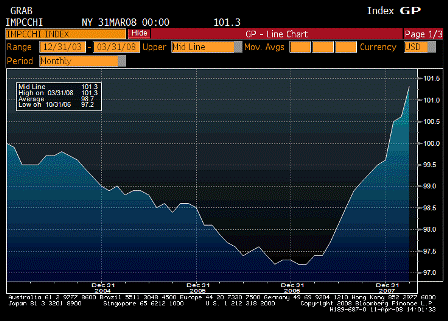
Volumes’ of non oil imports are falling and of oil imports are flat.

The dollar has gotten low enough for the trade gap to fall from over $70 billion to under $60 billion per month (February was an aberration IMHO).

The dollar will ‘adjust’ until it corresponds with a trade gap that = desired foreign accumulation of USD financial assets.

I see no reason to think the trade gap should not go to zero.

The USD probably has not traded down enough to reflect the zero desire to accumulate USD abroad.

The ECB has serious ideological issues regarding buying of USD.  Not the least of which they don’t want to give the impression that the USD is ‘backing’ the euro, which would be the appearance if they collected USD reserves.

The ECB has an inflation problem, and they believe the strong euro has kept it from being much worse.

The policy ‘shift’ might be the process of ending of US rate cuts at the next meeting by cutting less than expected.

This might first mean only a 25 basis point cut when the market prices in 50 basis points, followed by no cut when markets price in 25 basis points, for example.

This would firm the USD and soften the commodities near term, as after the last 75 basis point cut when markets were pricing 100 basis points.

But this does not change the foreign desires to accumulate USD as direct intervention by the ECB would, for example.

So the adjustment process that gets us to a zero trade gap will continue.

And it will continue to drive up headline CPI with core not far behind.

And US GDP will muddle through in the 0% to +2% range with weak private sector consumption being supported by exports, US government consumption, and moderate investment.