credit check

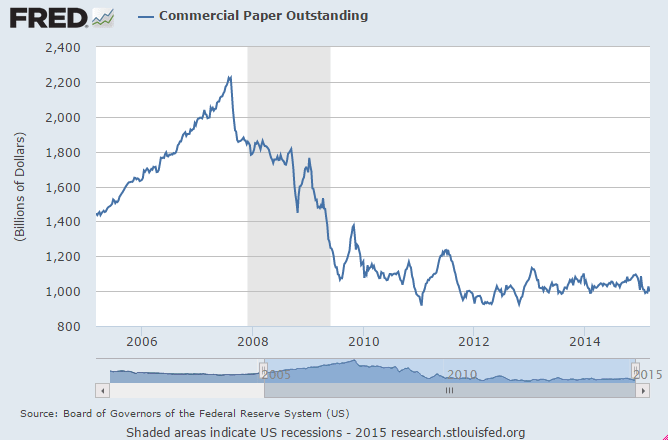
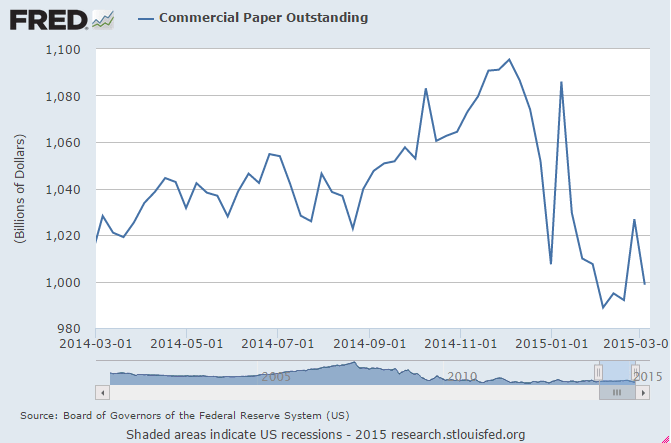
Commercial paper/shadow banking still down and nearly $100 billion off the recent highs:

cc-3-9-1

cc-3-9-2

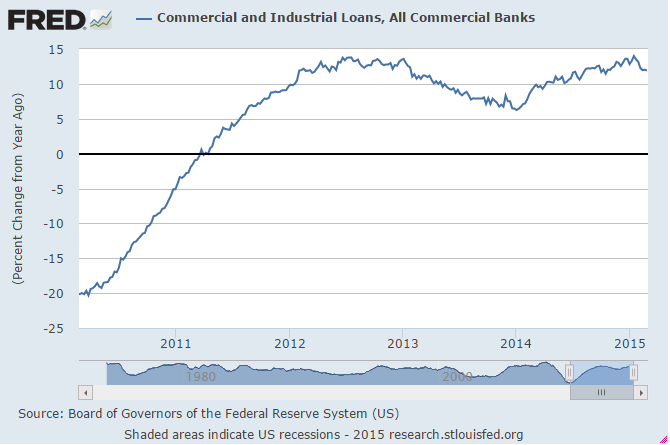
Lets see if bank lending is picking up the slack:

C and I growth decelerating some and nothing special:
cc-3-9-3

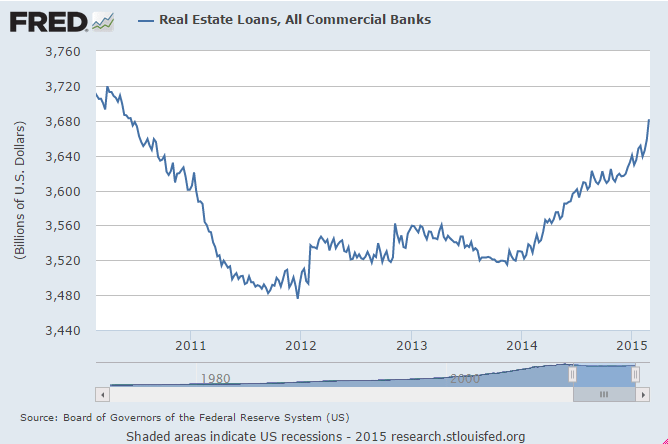
Nice jump in real estate loans. Maybe some of the proceeds went to pay down commercial paper borrowings?
cc-3-9-4

consumer credit, trade deficit chart

Nothing good happening here either.
Looks like the jobs report was about 100,000 people taking menial jobs out of desperation again.
:(

Consumer Credit
consumer-credit-jan
Highlights
Consumer credit rose $11.6 billion in January vs an upwardly revised gain of $17.9 billion in December. Consumers did go to their credit cards in December, when the revolving credit component rose $6.2 billion, but not in January as the component fell $1.1 billion. As always, the data were boosted by the non-revolving component which rose $12.7 billion reflecting strength in auto financing and the government’s acquisition of student loans. Today’s jobs report underscores the strength of the consumer who, boosted also by low gas prices, has less and less reason to turn to credit card debt to fund purchases.

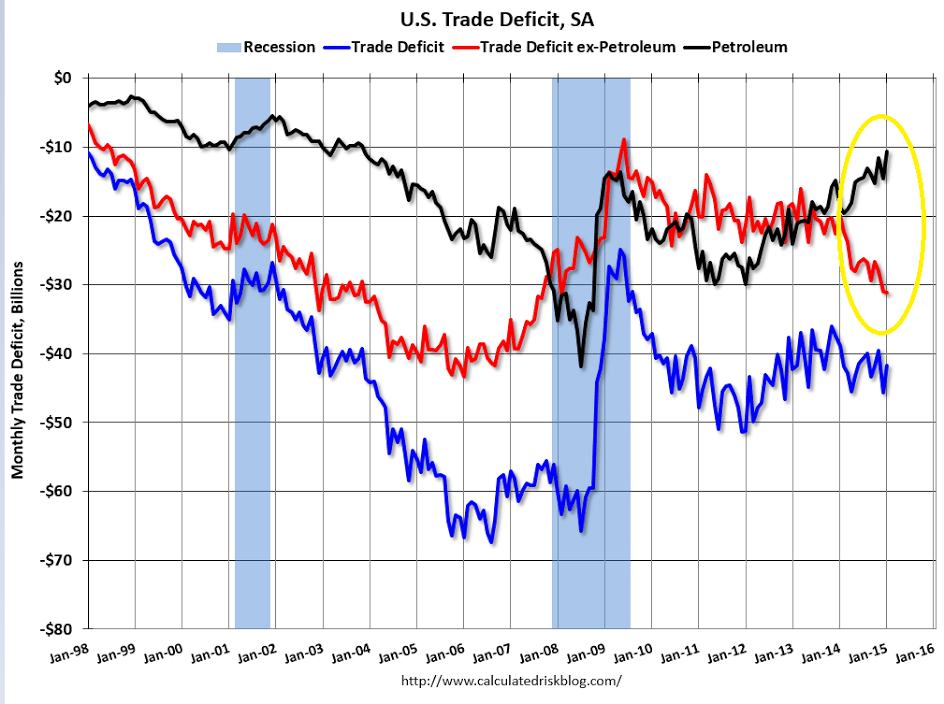
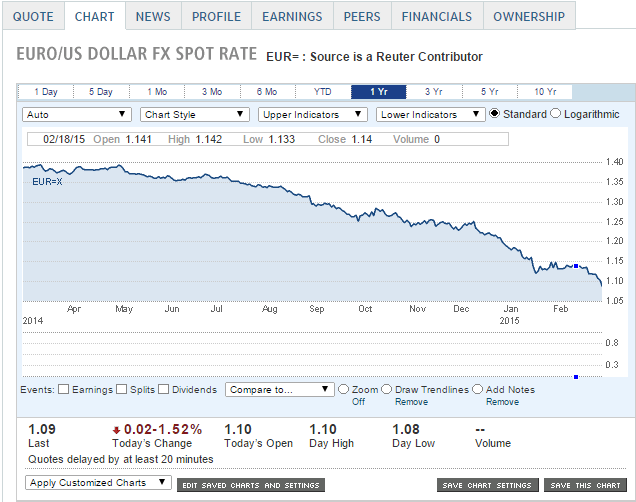
Note the rising trade deficit ex petroleum going up due to the strong dollar from portfolio shifting. And at the same time in the euro zone trade has gone strongly to surplus. This indicate the trade flows remain strongly in favor of the euro even as it declines to new lows due to portfolio managers getting underweight euro and overweight dollars due to misguided notions about QE and interest rates. And this has been happening for quite a while, from back when the dollar/euro was 130. When this shifting is exhausted, and portfolios are left underweight and short with trade removing 20+ billion euro and adding 40+ billion dollars every month to global balances, it all reverses and moves aggressively the other way. But the charts still looking like there’s still more to go as managers react to ECB QE and possible Fed rate hikes:
trade-deficit
eur-us

Jobs

Better than expected number:

Employment Situation
payrolls-feb-1
Highlights
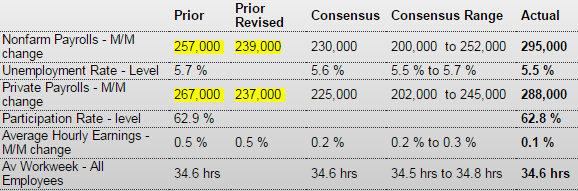
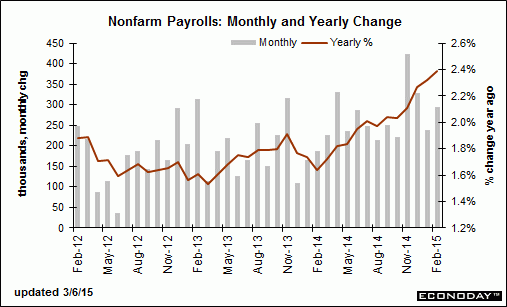
The labor market is stronger than believed. Payroll jobs increased 295,000 in February after healthy increases of 239,000 in January and 329,000 in December. January and December were revised down a net 18,000. Market expectations for February were for a 230,000 increase.

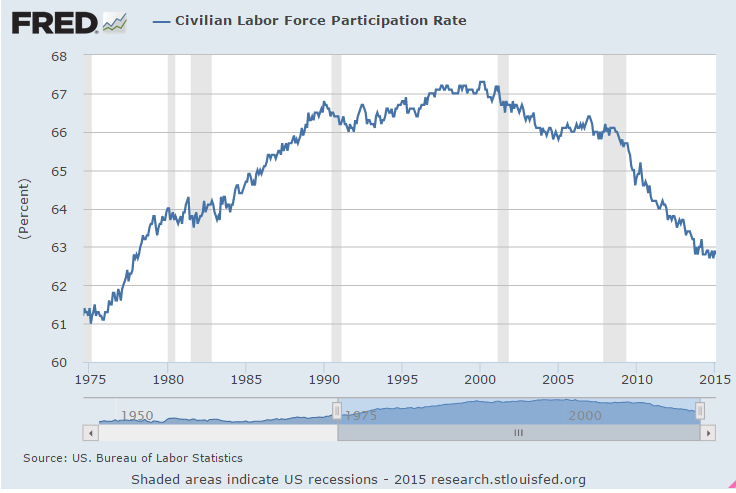
The unemployment rate dipped to 5.5 percent from 5.7 percent in January. Analysts forecast 5.6 percent. The labor force participation rate edged down marginally to 62.8 percent from 62.9 percent in December.

Turning back to the establishment survey, private payrolls increased 288,000 in February after a 237,000 gain the month before. The median forecast was for 225,000.

Goods-producing jobs increased 29,000 after a 64,000 boost in January. Manufacturing increased 8,000 after rising 21,000 in January. Construction advanced 29,000 in February after gaining 49,000 the month before. Mining declined 9,000 after slipping 6,000 in the month before. The latest numbers indicated that the manufacturing and construction sectors are continuing modest improvement.

Private service-providing industries jumped 259,000 after a gain of 173,000 in January. In February, food services and drinking places added 59,000 jobs. In February, employment in health care rose by 24,000. Transportation and warehousing added 19,000 jobs in February and retail trade gained 22,000 jobs.

Government jobs rose by 7,000 in February after a rise of 2,000 the month before.

Average hourly earnings rose 0.1 percent, compared to 0.5 percent in January. Expectations were for a 0.2 percent gain. The average workweek held steady at 34.6 hours, equaling expectations.

payrolls-feb-2
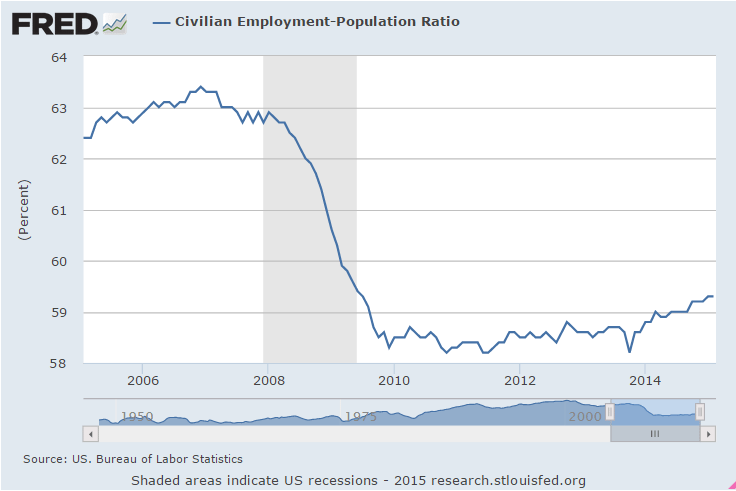
Employment relative to population has been growing some though still relatively low:
payrolls-feb-3
payrolls-feb-4

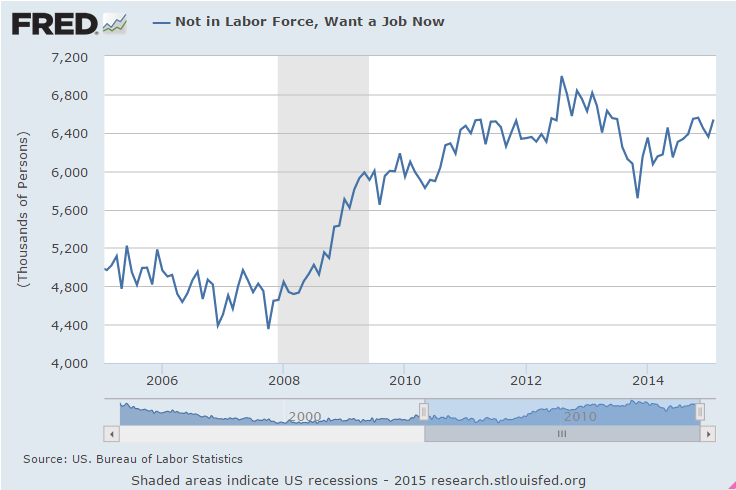
This is still going the wrong way:
payrolls-feb-5
payrolls-feb-6
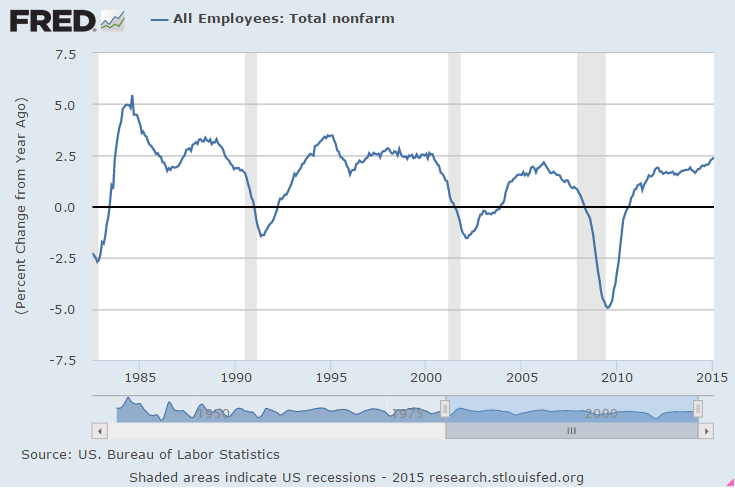
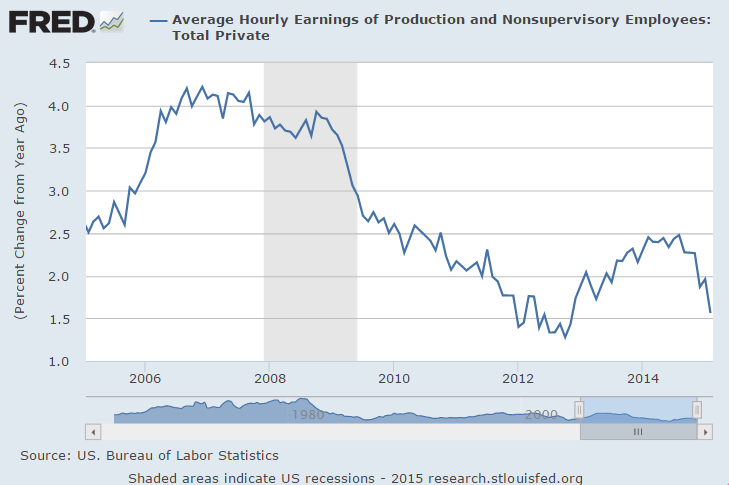
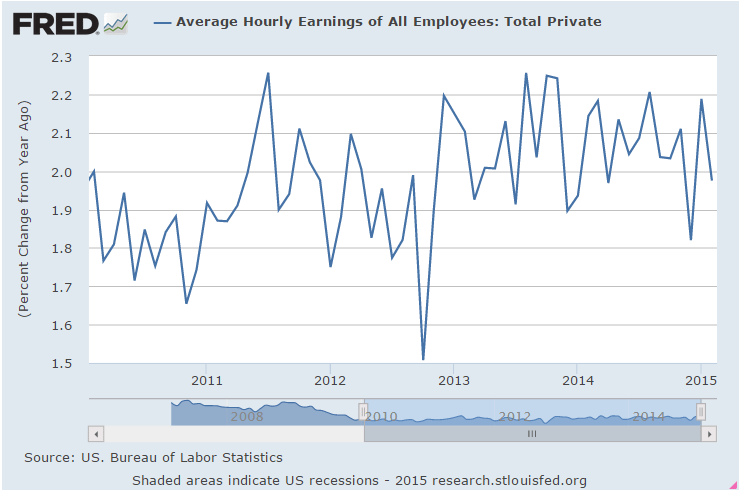
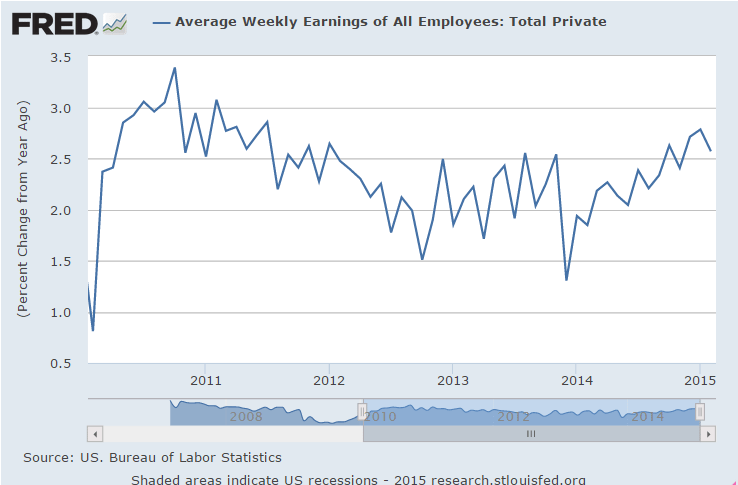
Wage pressure?
payrolls-feb-7
payrolls-feb-8
payrolls-feb-9

Jobless claims, layoffs, productivity and labor costs, new factory orders

Jobless Claims

claims-2-28
Highlights
Initial jobless claims rose 7,000 to a much higher-than-expected level of 320,000 in the February 28 week. The increase lifts the 4-week average by a steep 10,250 to 304,750. The average is trending roughly 5,000 higher than a month ago in a comparison that does not point to improvement for the labor market.

Continuing claims, which are reported with a 1-week lag, are also moving higher, up 17,000 in data for the February 21 week to 2.421 million. The 4-week average is up 4,000 to a 2.404 million level that is slightly higher than a month ago in another comparison that does not point to improvement for the labor market. The unemployment rate for insured employees is unchanged at a recovery low of 1.8 percent.

Today’s report is a disappointment but shouldn’t affect expectations for tomorrow’s employment report, a report that is not expected to show gains relative to January.
claims-2-28-graph
Challenger Job-Cut Report
challenger-cuts-feb
Highlights
Challenger’s layoff count has been on the rise so far this year, at 50,579 in February vs 53,041 in January. This compares with a monthly average during the fourth quarter of just below 40,000. The count in February last year was 41,835. The energy sector, as it was in January, was the chief source of layoffs in February followed by retail and industrial goods.

This tells me business probably ‘over hired’ as employment gains have exceeded output gains:

Productivity and Costs
productivity-q4

More downward GDP revisions on the way:

Factory Orders
factory-orders-jan
Highlights
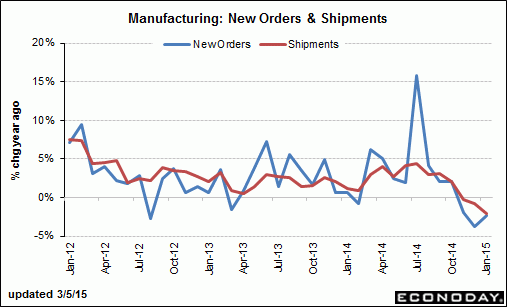
Down 0.2 percent, factory orders fell for a 6th straight month in January. The decline is centered in non-durables which, in price effects tied to energy, fell 3.1 percent in the month, offsetting an unrevised 2.8 percent gain for durables (initial durables data released last week).

The rise in durables reflects a swing higher in the always volatile transportation component which, reflecting a big gain for commercial aircraft, jumped 9.7 percent.

Other details include a 2.0 percent decline for shipments, a decline that gets production off to a slow start for the first quarter. Inventories fell 0.4 percent in the month with unfilled orders down 0.2 percent.

The factory sector has not been contributing to economic growth, the result of weakness in the oil patch and weakness in foreign demand.
factory-orders-jan-graph

Yellen sort of agreed with me in 2009

That’s when I was saying L shaped recover rather than V or even U shaped:

Janet Yellen, 2009:

My forecasts for output and employment are similar to the Greenbook’s, so I won’t go into the details. I do want to emphasize that I anticipate a rather sluggish recovery, not the rapid V-shaped recovery we have frequently seen following deep recessions in the past. The process of balance sheet repair that households and financial institutions are undergoing will result in subdued spending for an extended period, and monetary policies here and abroad are not able to play as big a role as usual in promoting recovery because of the constraint of the zero lower bound on short-term interest rates.

Posted in Fed

mtg purchase apps, Fed’s Evans, ADP, ISM non manufacturing

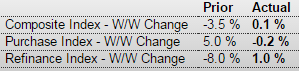
Still no sign of a surge in spending here, as apps remain below even last years winter depressed numbers:

MBA Purchase Applications
mba-2-27
Highlights
A dip in mortgage rates failed to give much lift to the purchase index which slipped 0.2 percent in the February 27 week for a year-on-year rate that is also at minus 0.2 percent. The refinance index did rise but not by much, up 1.0 percent. The average rate for 30-year fixed-rate mortgages with conforming loan balances ($417,000 or less) decreased to 3.96 percent from 3.99 percent.

The lonely dove:

Fed’s Evans, citing low inflation, wants no rate hikes until 2016

March 4 (Reuters) — The Federal Reserve should wait until the first half of 2016 before raising interest rates, a top U.S. central banker said on Wednesday, or risk undermining the very recovery it has helped engineer.

“Given uncomfortably low inflation and an uncertain global environment, there are few benefits and significant risks to increasing interest rates prematurely,” Chicago Federal Reserve Bank President Charles Evans said in remarks prepared for delivery to the Lake Forest-Lake Bluff Rotary Club. “I think we should be patient in raising interest rates.”

Even if the Fed keeps rates at their near-zero level until next year, he said, inflation probably won’t reach the Fed’s 2-percent goal until the end of 2018. And if his forecast proves wrong and the economy begins to run too hot too fast, he said, the Fed would have “ample time” to raise rates moderately to head off excessively high inflation.

Evans, a voting member this year on the Fed’s policy-setting panel, stands nearly alone at the central bank in calling for rates to stay near zero for another year or so. Many of his colleagues have said they are open to, if not eager for, rate hikes to begin as soon as June.

For his part, Evans expects the U.S. economy to grow at a 3-percent pace over the next couple of years, generating job gains of over 200,000 a month for some time.

But that is not enough to justify raising rates, he said. Unemployment, at 5.7 percent, is still above the 5 percent he now believes is sustainable for the economy in the longer run.

More importantly, the Fed’s core gauge of inflation is at just 1.3 percent, and inflation expectations based on prices in Treasury markets have fallen dramatically.

Before raising rates, he said, he would like to see not only a rise in core inflation and in market-based inflation expectations, but also a rise in wages, now averaging around 2 percent a year, to between 3 and 4 percent.

Anyone mention that, like car sales, this is the 3rd consecutive monthly decline?

ADP Employment Report

adp-feb
Highlights
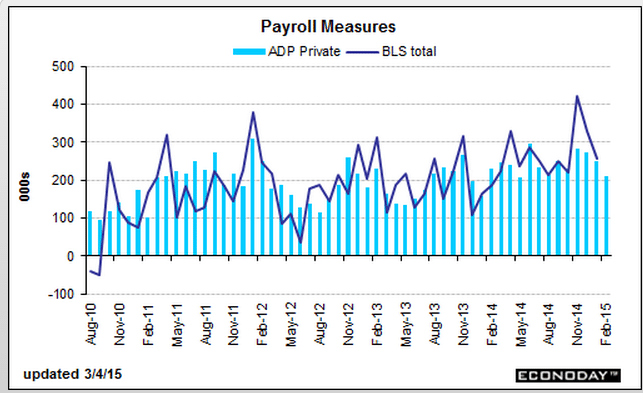
ADP sees slowing for Friday’s February payrolls, estimating that private payrolls rose 212,000 which is 8,000 below consensus for the ADP report. But ADP’s data also includes a big upward revision for January, to 250,000 vs an initially reported 213,000. The results aren’t likely to shift expectations for Friday’s government data where the corresponding Econoday consensus is 225,000 vs January’s 267,000.

Breaking down ADP’s estimate, service-providing industries are up 181,000 in February vs 206,000 in January with goods-producing industries up 31,000 vs 45,000. Further detail shows professional services up 34,000 vs January’s 49,000 with construction up 31,000 vs 45,000. Growth in trade & transport is 31,000, down from 50,0000. Financial activities are up 20,000 vs 15,000 with manufacturing up only 3,000 vs a gain of 15,000 in January.
adp-feb-graph

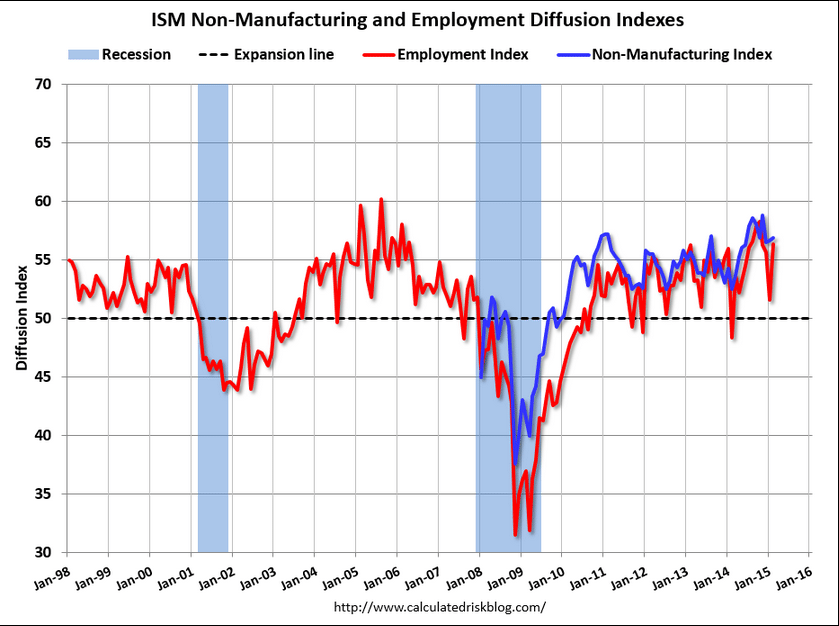
This survey remains firm:

ISM Non-Mfg Index
ism-non-man-feb-employ

Highlights
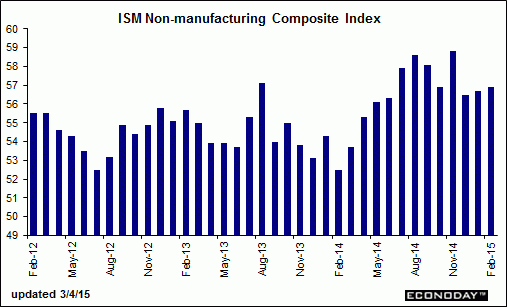
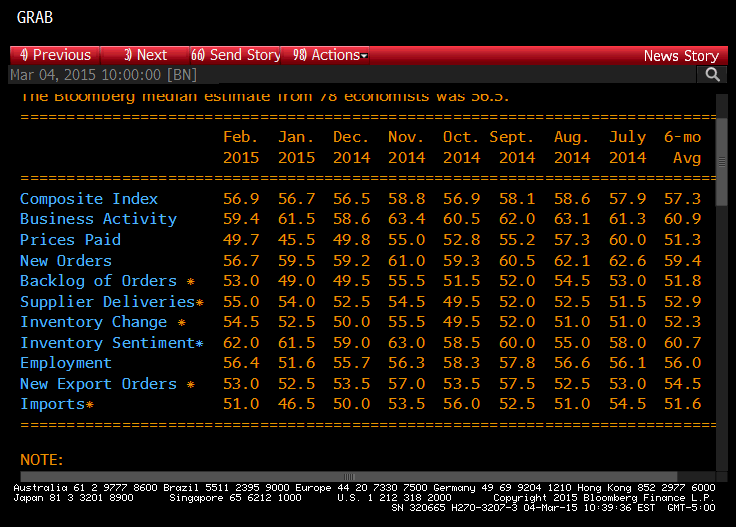
Growth remains very solid in ISM’s non-manufacturing sample where the composite index is up 2 tenths to 56.9 in the February report. Employment is a stand-out positive, jumping nearly 5 points to a 4-month high of 56.4.

Not so strong are new orders where growth is down nearly 3 points to 56.7 for the lowest reading since March last year. Nevertheless, this is still a very healthy and sustainable rate of growth.

Supplier deliveries slowed further in February which added to the composite for the month. But the slowing is likely tied, not to demand factors, but to the port slowdown on the West Coast, a slowdown which has since been resolved. The slowing in deliveries is the likely reason behind a rise in inventories and a build in backlog orders. Cost pressures, as they are in most reports, are flat, the result of course of low fuel costs.

A big plus in today’s report is wide breadth of strength with 14 of 18 industries reporting growth in the month led once again by accommodation & food services which are likely getting a boost from discretionary consumer spending, itself the result of the strong jobs market and low gasoline prices. In the contraction column are both construction and mining, two sectors that remain weak.
ism-non-man-feb-graph

ism-non-man-feb-table

Interesting what’s up and what’s down:
ism-table

car sales fall again

No surging consumer here either.

Third month down…

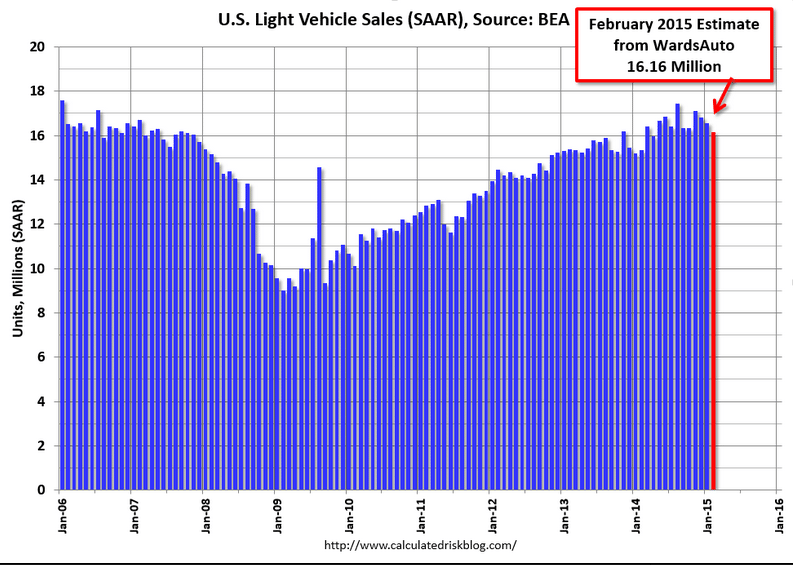
U.S. Light Vehicle Sales decrease to 16.2 million annual rate in February

By Bill McBride

Based on a WardsAuto estimate, light vehicle sales were at a 16.16 million SAAR in February. That is up 5.4% from February 2014, and down 2.4% from the 16.55 million annual sales rate last month. The comparison to February 2014 was easy (sales were impacted by the severe weather last year).
vehicle-sales-feb

eur/usd

Warren, euro continue to go down vs usd. Do you think draghi goal is to reach eur/usd 1:1 ?

Good question!

No one thinks the ECB is buying dollars so if that’s the case the world is getting short euros directly and indirectly in very large size, as per the EU trade surplus, which is a consequence of the overall increases in ‘competitiveness’ as wages are depressed by fiscal policy. It’s all part of the ‘purchasing power parity’ shift with the EU becoming the low cost producer. And these forces all work to make the euro very strong once the ‘portfolio shifting’ has run its course, which it hasn’t yet.

What’s happened with the euro is the same thing that happened with the USD- markets feared QE would be inflationary and cause currency depreciation, so they discounted that in advance of QE, depressing the dollar. And when it didn’t happen and QE ended, the dollar reversed as those caught short and those who had become underweight in dollars had to restore their dollar exposures.

So while portfolios with dollar liabilities that had reduced dollar exposure were returning to dollars, at the same time the ECB was moving towards negative rates and QE, causing portfolios to reduce euro exposures, driving the euro lower. And events surrounding Greece and Ukraine only added to euro fears, further driving portfolio managers to shift exposure away from euro.

What I can’t tell you is when the tide will turn, but looks to me that when it does, the euro goes up until the trade surplus reverses, and since the link between the rising euro and the trade balance is ‘loose’ the euro could easily get very high vs the dollar- say, over 1.5- before that happens.

To answer your question, what Draghi is doing- negative rates and QE, fundamentally makes the euro stronger, but he believes, as do market participants, that it makes the euro weaker. Same with the Fed, of course, as market participants believe higher rates are dollar friendly when in fact fundamentally they weaken it. So while Draghi may be targeting 1:1 as you suggest, and taking measures he believes and markets believe will get him there, in fact he and markets are ‘pushing on a spring’ as fundamentally net euro are being drained rather than added to the global economy.

What this also suggests is the next EU crisis could be that of the strong euro as it appreciates and starts hurting EU export industries, and the ECB just keeps doing more and more QE and cuts rate further which only makes it all worse.

Wells capping sub prime autos, bank margins and income, personal income and spending, ISM manufacturing, construction spending

Wells pulling back some on sub prime auto loans:

Wells Fargo Puts a Ceiling on Subprime Auto Loans

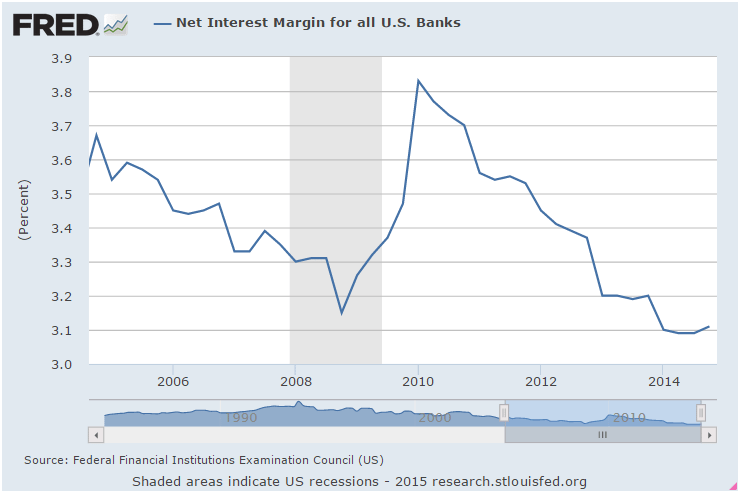
And banks in general fighting this:

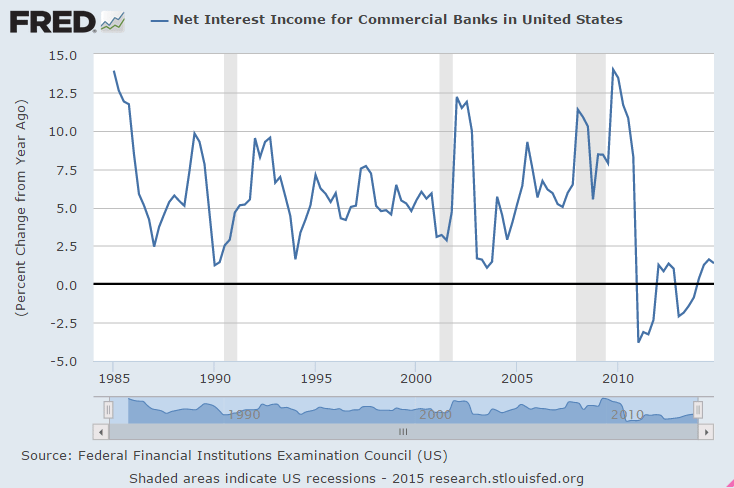
net-income-margin-1

net-income-margin-2

A bit worse than expected. Fewer dollars spent, but more ‘real things’ purchased due to lower prices, but any calculation of a deflator with the large drop in oil prices is problematic:

Personal Income and Outlays
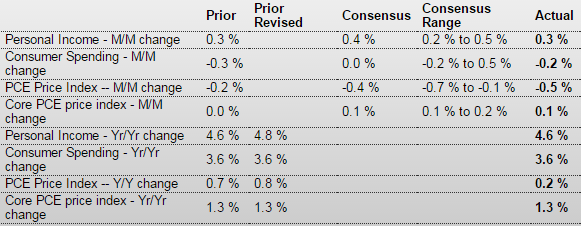
personal-income-table-jan
Highlights
In January, personal income was moderately healthy as was spending after price effects are discounted. Personal income posted a gain of 0.3 percent after growing 0.3 percent in December. January fell short of analysts’ forecast for a 0.4 percent boost. The wages & salaries component jumped 0.6 percent, following a rise of 0.1 percent the prior month.

Personal spending decreased 0.2 percent, following a decline of 0.3 percent in December. Durables slipped 0.1 percent, following a 1.4 percent drop in December-due to sluggish auto sales. Nondurables plunged 2.2 percent in January after decreasing 1.4 percent the month before—with lower gasoline prices pulling this component down. Services advanced 0.5 percent after a 0.2 percent gain in December.

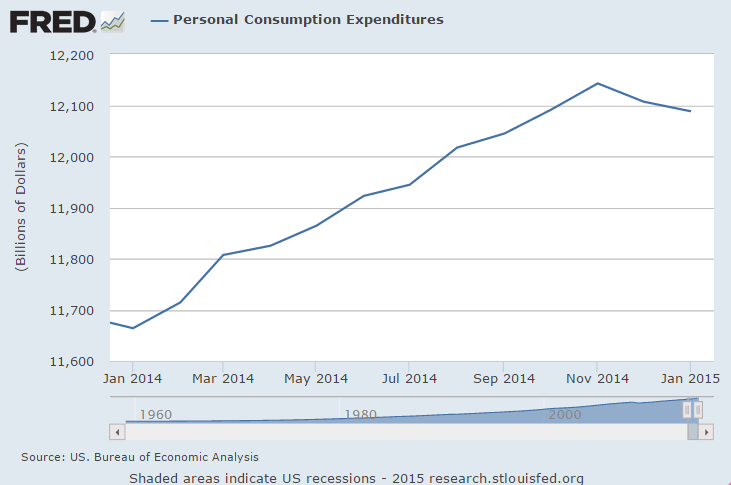
But weakness in current dollar spending was price related as chain-weighted (price adjusted) personal spending came in at 0.3 percent, following a 0.1 percent dip in December. January actually is a good start for first quarter GDP in the PCE component.

Prices at the headline level fell again, down 0.5 percent in January after a 0.2 percent dip the month before. The core PCE price index firmed to up 0.1 percent from flat in December. On a year-ago basis, headline inflation eased to 0.2 percent from 0.8 percent in December. The year-ago core rate was steady at 1.3 percent.

Income growth was moderately healthy in January. The consumer sector has fuel for spending-especially in the important wages & salaries component. Inflation is low and well below the Fed’s target of 2 percent year-ago inflation, meaning the Fed likely will stick with no rate hike before June.

pce-jan

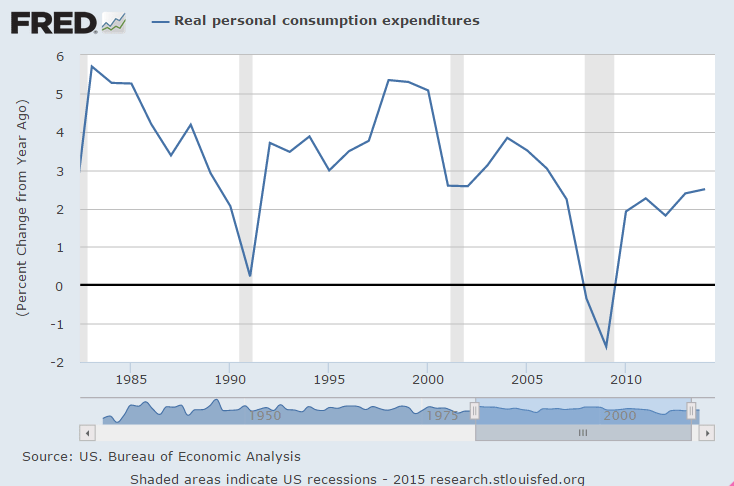
From the GDP report, through Q4:

rpce-jan
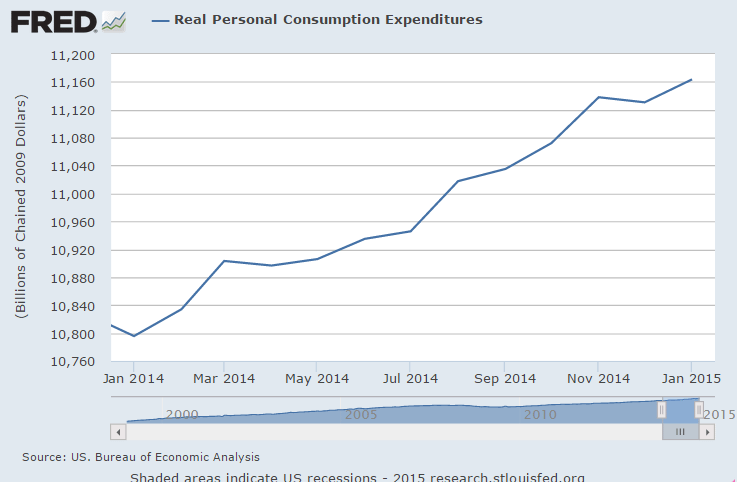
The monthly number shows January 2015 did better than January 2014 when the winter was particularly cold:
rpce-jan-2
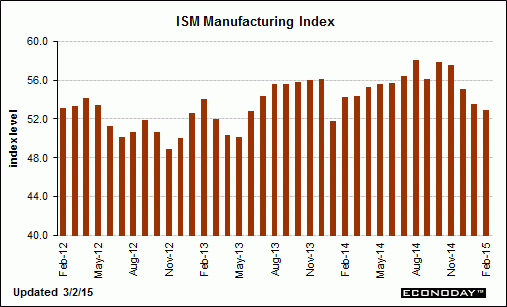
ism-feb

Construction Spending
construction-spending-jan-table
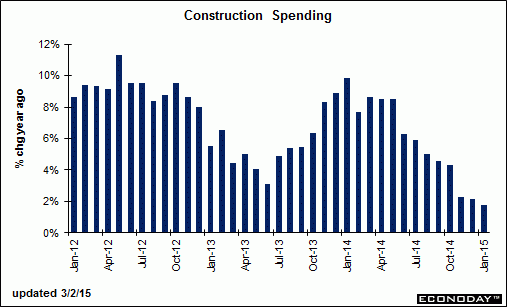
construction-spending-jan