Bloomberg: Russian control of energy to Eurozone


[Skip to the end]

Medvedev May Seek to Assure Merkel on Russian Energy Supplies

by Lyubov Pronina and Brian Parkin

Enlarge Image/Details

(Bloomberg) Russian President Dmitry Medvedev may seek to assure Europe of Russia’s reliability as an energy supplier and allay German Chancellor Angela Merkel‘s human- rights concerns in a one-day visit to Berlin today.

Medvedev will meet Merkel and President Horst Kohler and address about 1,000 business executives and lawmakers in his first trip to Western Europe as Russia’s leader.

“Energy will be at the forefront of talks and they won’t be easy,” Yevgeny Volk, a Moscow-based analyst for the Heritage Foundation, a U.S. research group, said in a telephone interview. “Russia wants to increase its energy influence in Europe, while Western countries would like to get more guarantees from Russia that deliveries will not fail.”

Note there is no discussion about price. The euro negotiators want to ensure deliveries with an agreement that is necessarily unenforceable in any case. Russia does have 25,000 nuclear weapons, for example.

Russia, which supplies 25 percent of Europe’s energy, has clashed with Europe over concerns that it abuses its role as Europe’s main energy source to further its political agenda. It opposes further eastward expansion of the North Atlantic Treaty Organization, U.S. plans for a missile-defense shield in Europe and Kosovo’s secession from Serbia.

Looks to me that Russia is in full control, and is using its position to enhance its real terms of trade, something never even mentioned by the Eurozone.

Germany and the European Union have pressed for guarantees that Russia will follow a uniform policy for supplying oil and gas across the bloc, weakening its capacity to wield energy policy as an arm of diplomacy. Russia briefly cut off gas to Ukraine in 2006 in a pricing dispute.

As if quantity ‘guarantees’ would ‘weaken’ anything. Apart from being unenforceable, it all misses the point of price and relative value.

Good luck to the Eurozone!!!

[top]
2008-06-05 EU News Highlights


[Skip to the end]

Highlights:

France’s Unemployment Rate Drops to 7.5%, Insee Says

Scary low rate for the ECB.

German 2008 Tax Revenue to Grow More Than Expected

Fuel for the hawks, Germany’s unemployment is too low for them as well.

ECB May Keep Benchmark Rate at Six-Year High

For sure. And there will be discussion of hikes.

Spain April Industrial Production Contracts on Euro’s Advance

The ECB wants this kind of slack, but still not enough for them.

OECD Official Urges Fed, ECB to Put Rates on Hold

Yes, as they sure aren’t going to cut as Bernanke originally hoped.

They never bit on his bait to start an international race to the bottom with rate cuts/inflation.

The Fed thought the rising euro and the loss of demand to the US, as US exports rose, would cause the ECB to blink and cut rates.

Instead, the falling dollar and ripping US inflation has caused the Fed to start talking about hikes.

In the mainstream paradigm, the ECB was right in not cutting while the Fed is coming under fire for cutting aggressively into a triple negative supply shock, letting inflation expectations start to elevate, and risking a much larger slowdown bringing inflation down from much higher levels.

European Bonds Fall on Speculation ECB to Highlight Inflation


[top]

2008-06-05 US Economic Releases


[Skip to the end]


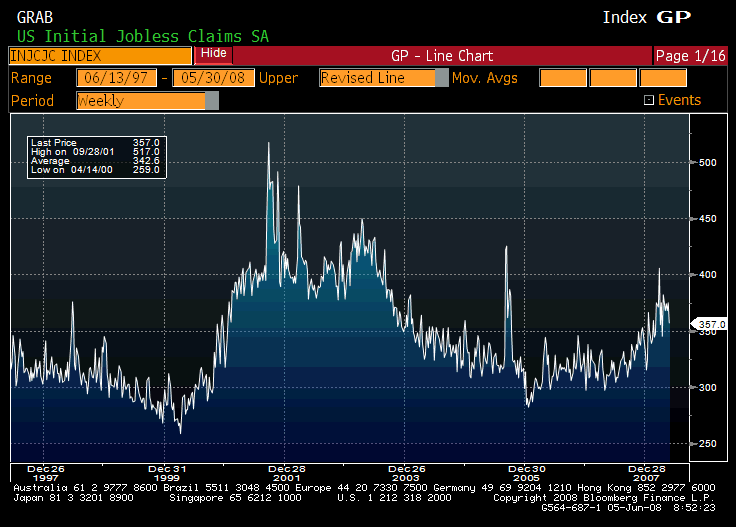
2008-06-05 Initial Jobless Claims

Initial Jobless Claims (May 31)

Survey 375K
Actual 357K
Prior 372K
Revised 375K

Whoops, no recession here – the ‘better than expected’ trend continues.

[top][end]


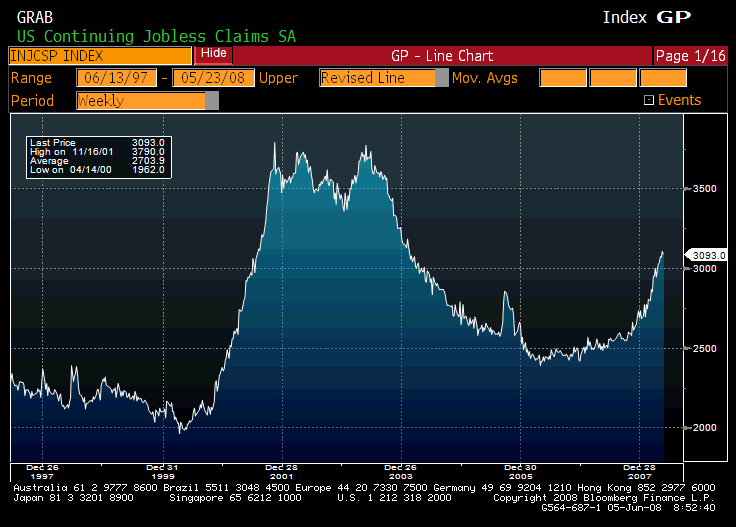
2008-06-05 Continuing Jobless Claims

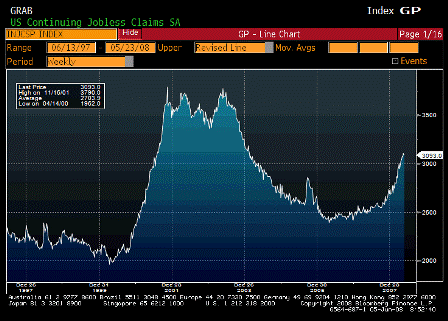
Continuing Claims (May 24)

Survey 3110K
Actual 3093K
Prior 3104K
Revised 3109K

And these are now coming off as well.

The Great Repricing of Risk -‘the worst recession since the Great Depression’- is looking more like a tiny blip for the real economy?

[top][end]


2008-06-05 Mortgage Delinquencies

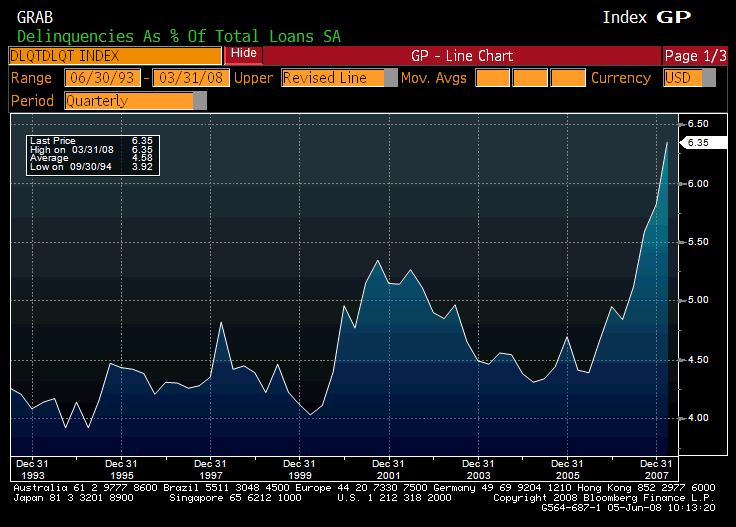
Mortgage Delinquencies (1Q)

Survey n/a
Actual 6.35%
Prior 5.82%
Revised n/a

[top][end]

2008-06-05 Mortgage Delinquencies Survey

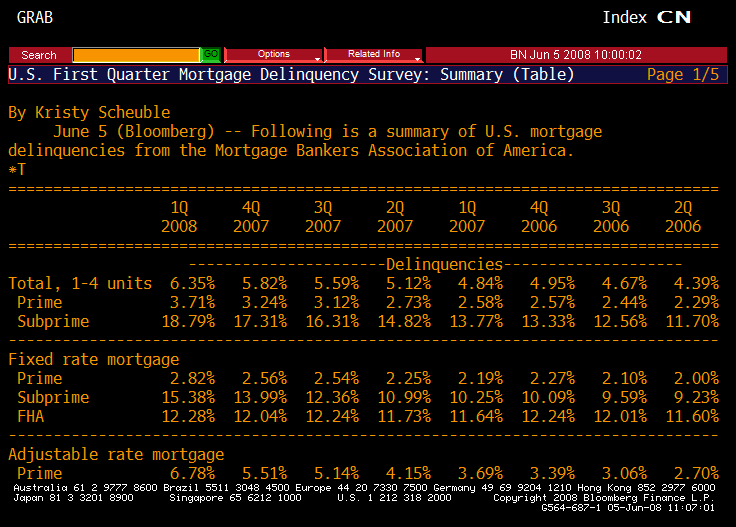
Mortgage Delinquencies Survey

Lagging indicators that shows how bad it was, probably in Q4 2007.
[top][end]


2008-06-05 ICSC Chain Store Sales YoY

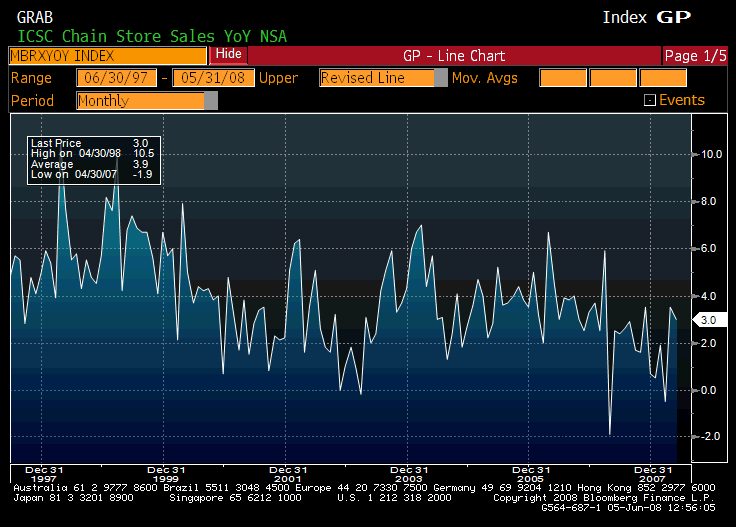
ICSC Chain Store Sales YoY (May)

Survey 1.8%
Actual 3.0%
Prior 3.6%
Revised 3.5%

And yet another better than expected number.

The recent numbers are most likely better than Fed forecasters expected as well


[top]

Bernanke headlines


[Skip to the end]

Bernanke comments on inflation:
(source = Bloomberg)

1) 14:48 Fed’s Bernanke says high energy price ‘provides incentive for ac

2) 14:47 Bernanke Says Inflation `Significantly Higher’ Than Fed Wants

3) 14:45 BULLET: FED: Bernanke’s address at Harvard compares current..>

4) 14:45 *BERNANKE SAYS INFLATION `SIGNIFICANTLY HIGHER’ THAN FED WANTS

5) 14:45 *BERNANKE SAYS OIL PRICE RISE POSES `SIGNIFICANT CHALLENGES’

6) 14:45 *BERNANKE: HIGH ENERGY PRICE `PROVIDES INCENTIVE FOR ACTION’

7) 14:45 *BERNANKE SPEAKING AT HARVARD COMMENCEMENT IN MASSACHUSETTS

8) 14:45 *BERNANKE SAYS PRICE STABILITY `A TOP PRIORITY’ FOR FED

9) 14:45 *BERNANKE SEES `LITTLE’ SIGN OF `1970S-STYLE WAGE-PRICE SPIRAL’

10) 14:45 *BERNANKE: RISE IN INFLATION EXPECTATIONS `SIGNIFICANT CONCERN’


[top]

Bernanke comments


[Skip to the end]

The FOMC can’t possibly believe that a 2% Fed Funds rate is the ‘right’ rate given current CPI of about 4%, core at about 2.5%, GPD moving back up towards 2%, unemployment ‘only’ about 5%, and inflation expectations showing signs of elevating.

The 2% Fed Funds rate is only appropriate if their forecasts show as sufficiently high probability of economic deterioration and increased ‘slack’.

As Fisher and other have put it, they all believe low and stable inflation is a necessary condition for optimal growth and employment.

The Lehman issue will pass with a lot less drama than the Bear Stearns issue.

Q2 GDP forecasts are being revised up as most numbers are coming in better than expected.

Inflation continues to move higher.

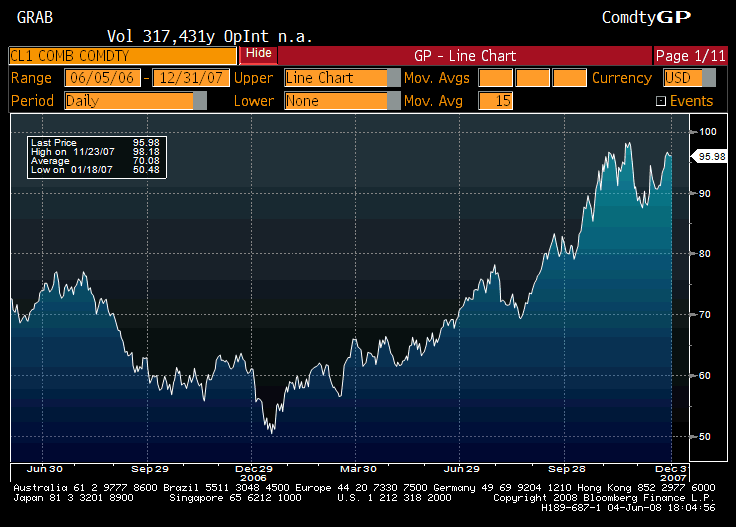
The ‘Mike Masters sell-off’ in commodities will run its course, with commodities subject to competitive markets underperforming, and crude moving higher (when the smoke clears – they try not to make their position too obvious as with the Goldman sell off of August 2006) as Saudis continue as price setter.

2008-06-04 Crude Sell Off in 2006

2006 Crude Sell Off

I expect the sell off to be less than the approximate three month sell off from the Goldman index change in 2006.

Obama is looking strong, but it has been historically problematic to propose tax hikes and win the election.


News reports of Bernanke’s speech:

“Some indicators of longer-term inflation expectations have risen in recent months, which is a significant concern for the Federal Reserve,” Bernanke said in a speech to graduating students at Harvard University.

Yes. To the point. They are concerned their own actions might indicate a higher tolerance for inflation and thereby elevate inflation expectations.

“We will need to monitor that situation closely,” he said, but added there was little sign a “1970s-style wage-price spiral, in which wages and prices chased each other ever upward,” might be starting.

The 1970s were all about oil prices working through the cost side of the economy, just as they are today. And there are still many nations with weak domestic demand, weak currencies, and continuously high levels of inflation.

He said the impact of soaring oil prices has been “relatively muted” because the amount of energy used to produce a given amount of output — a gauge known as energy intensity — has fallen markedly since the 1970s.

This only extends the delay between food/energy prices and core CPI.

He also said policy-makers learned a lesson in the 1970s, in particular that they must keep long-term inflation expectations anchored to achieve low and stable inflation.

Yes, the FOMC and the mainstream truly believes this. In fact, it’s all they have regarding ‘inflation’ vs. relative value changes in their models.

“If people expect an increase in inflation to be temporary and do not build it into their long-term plans for setting wages and prices, then the inflation created by a shock to oil prices will tend to fade relatively quickly,” he said.

Again, they all do truly believe this. They see inflation as a ‘monetary phenomena’, where somehow ‘too much money chases too few goods’. That makes ‘inflation’ a demand-side issue. Price pressures on the supply-side are only ‘relative value stories’ until ‘inflation expectations’ shape ‘long-term plans for setting wages and prices’.


[top]

Re: Alt A downgrades


[Skip to the end]

(An email exchange)

On Wed, Jun 4, 2008 at 12:57 AM, Eric wrote:
>     I guess you have seen this article.
>
>      Primes going down too.
>
>
>      More generally look at the attached graphs, they suggest that IOs and other
>      exotic mortgage are clearly a major cause of the problems, independently of
>      the quality of the loans. I think there is here a pretty good argument to make
>      that non-fixed mortgages, and more especially exotic mortgage have structural
>      characteristics that make them prone to speculative and ponzi structure. The
>      borrowers expect to be able to refinance at one point once interest rate reset or
>      the principal become due. Warren you were saying that proof of ability to pay
>     “libor plus 3 or whatever” was necessary to qualify. This margin of safety
>      (expected ability to pay libor +3 even though now borrower pay only teaser rate)
>      may have been destroyed in several ways.
>
>      – the interest rate may have reset at a higher rate than libor + 3, so that people
>      cannot afford the mortgage anymore.
>
>      – ARMs reinforce the probability of the previous effect, especially when libor when
>      up sky high after the crisis
>
>     – Income of borrowers felt short of expectations, expecially with the economic
>     slowdown (here fiscal policy is clearly a big player)
>
>     – The margin of safety thinned. Maybe previously they had to prove libor + 5 but
>     progressively borrower only had to prove libor + 4 then libor + 3. This would qualify
>      more borrowers and make the deal more sensitive to shock in product and financial
>      markets
>
>      In all this case the affordability of the mortgage is questioned Þ need to refinance Þ
>      if not available then sell the house (short sale or foreclosure). Fixed-rate mortgage
>      eliminate three of the previous reason (only income expectations is a problem).
>
>      Éric

agreed with all.

add to that food and energy prices taking income from home mtg payments, which could be the larger short term effect.

the fed has been taking some heat for this under the theory that the low rates have hurt the $ and thereby hurt the financial sector via the above channel, rather than helped the financial sector via lower rates ‘easing’ conditions via the lower payments channel.

the fed has argued this isn’t the case, insisting the lower rates have helped more than hurt.

also, the fiscal package could soften some of the delinquency increases for a few months.


[top]

2008-06-04 US Economic Release


[Skip to the end]


2008-06-04 MBAVREFI Index

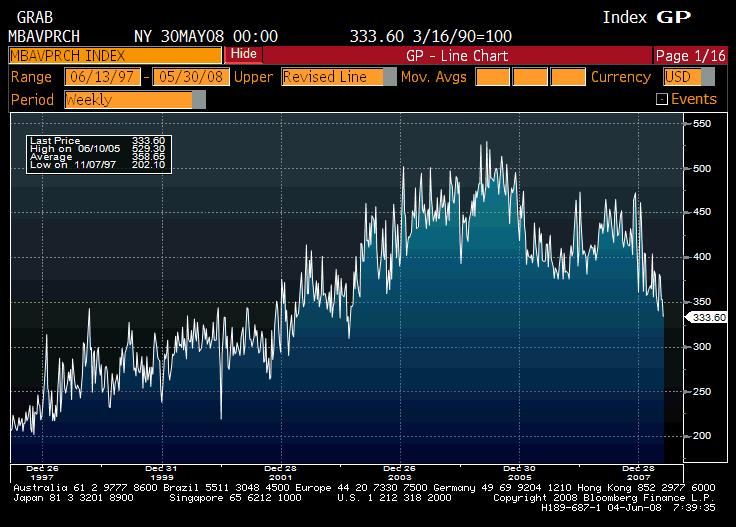
MBAVPRCH Index (May 30)

Survey n/a
Actual 333.6
Prior 352.7
Revised n/a

Not looking good, as the ‘old consumption economy’ – cars, houses, etc.- gives way to the new export economy with the allocations coming via ‘price’ as higher food/fuel prices take away domestic spending power and the foreign sector scrambles to spend it’s now unwanted multi $trillion hoard on US goods, services, and domestic assets, and keeps GDP muddling through.

First, probably fighting strong seasonals.

Second, purchase applications fall off doesn’t jibe with recent housing data and confidence numbers that have been rebounding.

Third, mortgage bankers could be continuing to lose market share to banks and other direct lenders as secondary markets remain problematic.

[top][end]


2008-06-04 MBAVREFI Index

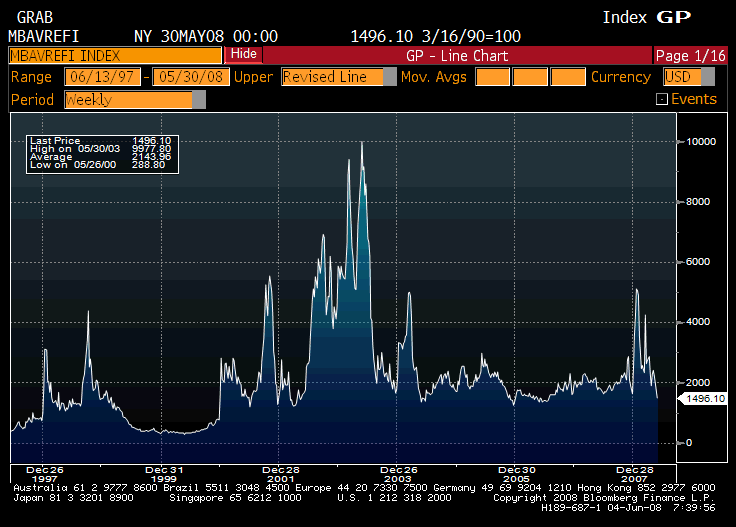
MBAVREFI Index (May 30)

Survey n/a
Actual 1496.1
Prior 2013.5
Revised n/a

[top][end]


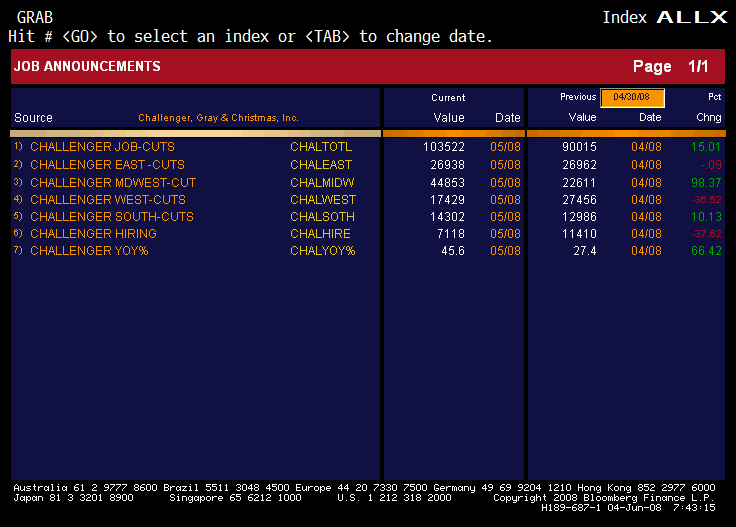
2008-06-04 Challenger Job Cuts YoY

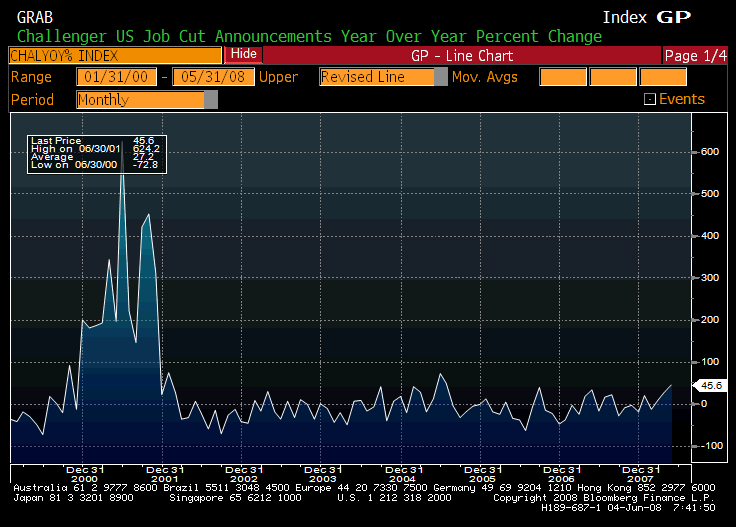
Challenger Job Cuts YoY (May)

Survey n/a
Actual 45.6%
Prior 27.4%
Revised n/a

Moving up. This hasn’t been much of an economic indicator, but employment is a lagging indicator and it makes sense for it to keep getting worse for a couple of quarters or so past the bottom of the cycle.

[top][end]

2008-06-04 Challenger Job Cuts by Region TABLE

Challenger Job Cuts by Region TABLE

[top][end]

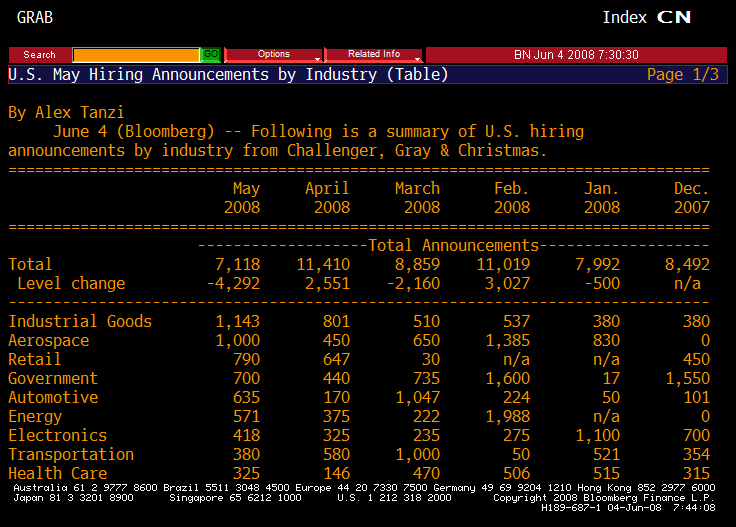
2008-06-04 Challenger Job Cuts by Industry TABLE

Challenger Job Cuts by Industry TABLE

[top][end]


2008-06-04 US Hiring

Hiring

[top][end]


2008-06-04 ADP Employment Change

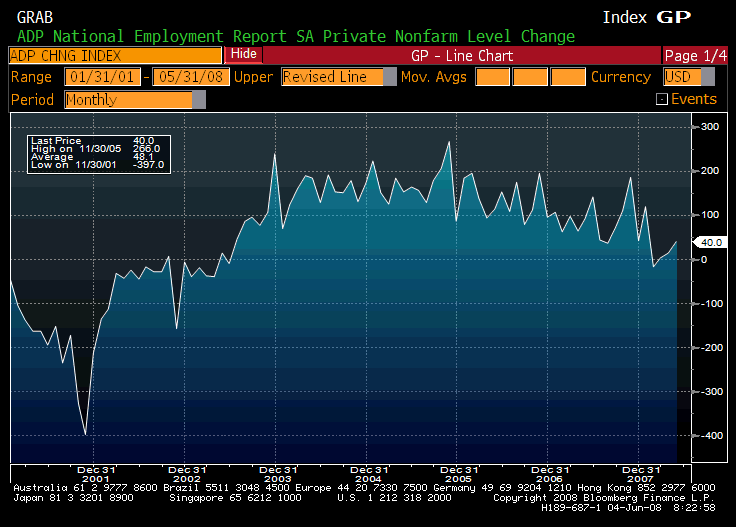
ADP Employment Change (May)

Survey -30K
Actual 40K
Prior 10K
Revised 13K

This report is private sector only. Government employment may be ticking up as we approach the election, as spending delayed from 2007 kicks in.

[top][end]


2008-06-04 Nonfarm Productivity QoQ

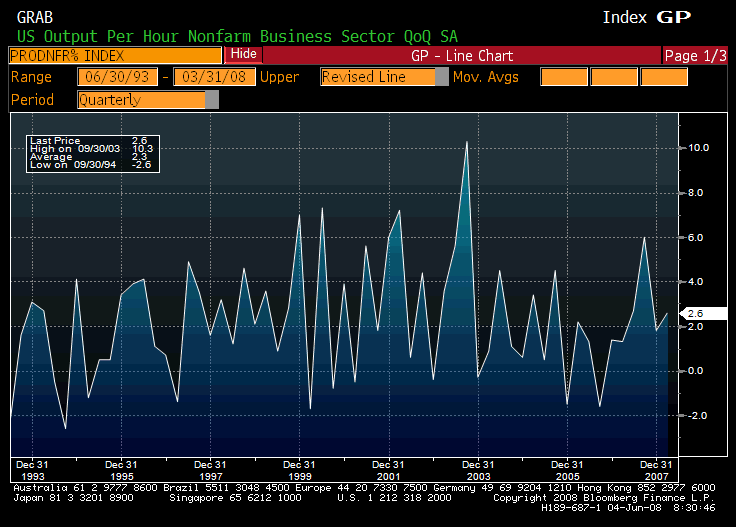
Nonfarm Productivity QoQ (1Q F)

Survey 2.5%
Actual 2.6%
Prior 2.2%
Revised n/a

[top][end]


2008-06-04 Nonfarm Productivity YoY

Nonfarm Productivity YoY (1Q F)

Survey n/a
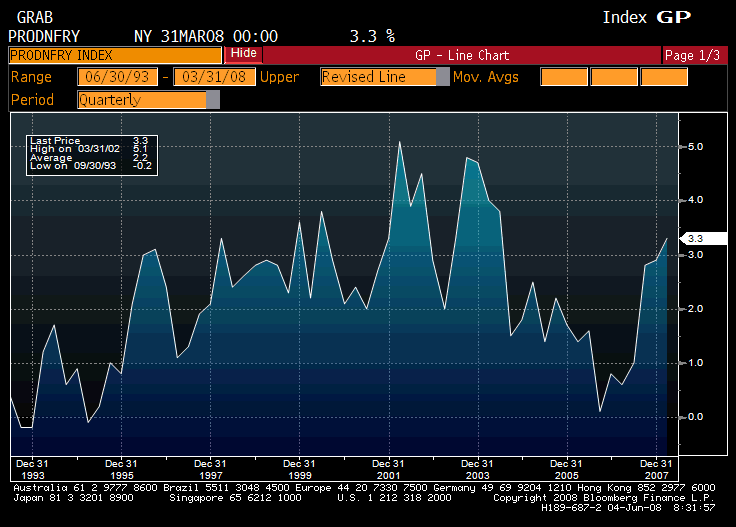
Actual 3.3%
Prior 2.9%
Revised n/a

[top][end]


2008-06-04 Unit Labor Costs QoQ

Unit Labor Costs QoQ (1Q F)

Survey 2.0%
Actual 2.2%
Prior 2.2%
Revised n/a

[top][end]


2008-06-04 Unit Labor Costs per Unit

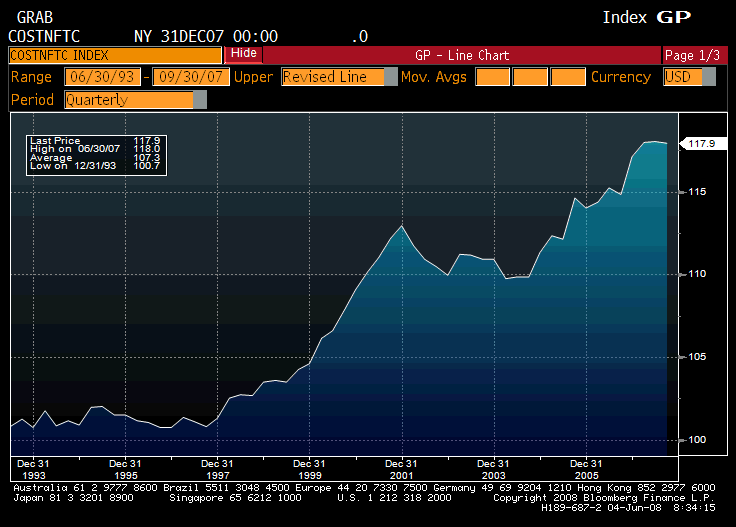
Unit Labor Cost per Unit (1Q F)

Survey n/a
Actual 117.9
Prior 118.0
Revised n/a

[top][end]


2008-06-04 ISM Non-Manufacturing

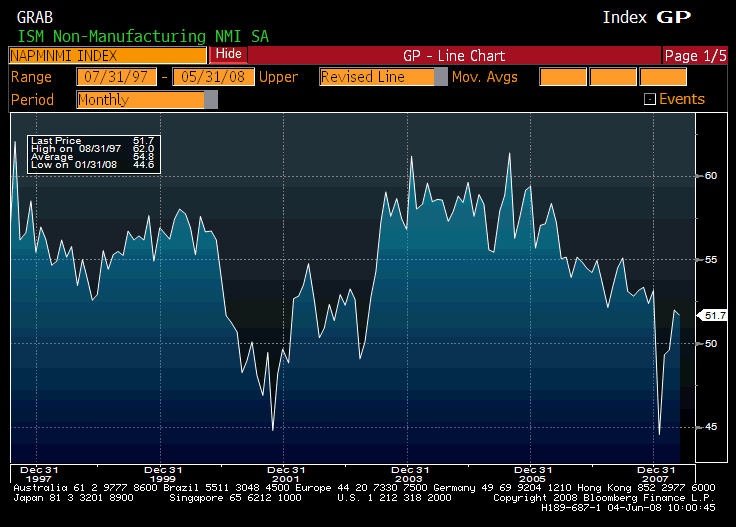
ISM Non-Manufacturing Composite (May)

Survey 51.0
Actual 51.7
Prior 52.0
Revised n/a

Another better than expected report. Clearly above recession levels, and supporting forecasts for higher GDP this quarter.

[top][end]


2008-06-04 ISM Non-Manufacturing TABLE

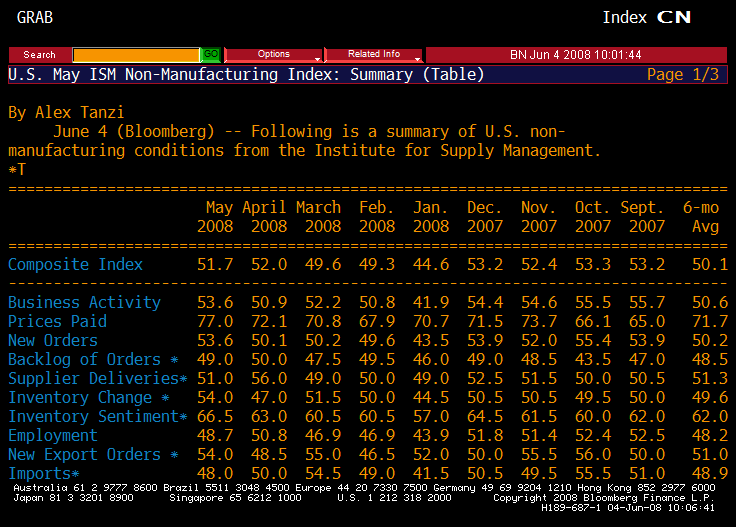
ISM Non-Manufacturing TABLE

Most categories noticeably stronger. Employment down some, but the average of the last few months is rising. New Exports Orders back up as well.

[top][end]


2008-06-04 ISM Non-Manufacturing Prices Paid

ISM Non-Manufacturing Prices Paid

Survey n/a
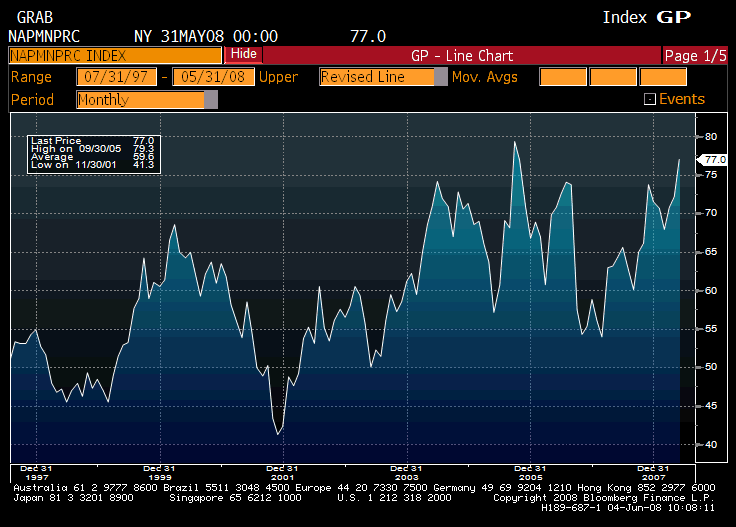
Actual 77.0
Prior 72.1
Revised n/a

This is getting ‘out of control’ from the FOMC’s point of view.


[top]

DXY and exports


[Skip to the end]

2008-06-03 Dollar Index vs US Exports

Dollar Index vs US Exports

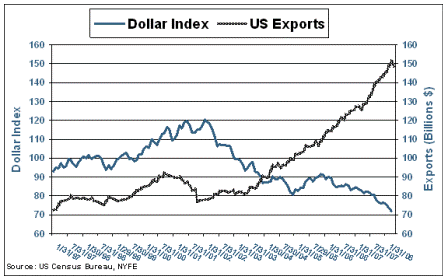
Right – seems to me the dollar will fall until it’s at a level where the trade gap goes to about zero. So even though exports are way up and the trade gap down, there could be a lot more to go.

A nation can only run a trade deficit to the extent non-residents (governments and private sector agents) desire to net accumulate its financial assets (or buy its domestic assets such as real estate).

Seems to me Paulson, Bush, and Bernanke have successfully kept the world’s CBs, monetary authorities, and portfolio managers from actively accumulating USD financial assets.

Doesn’t seem like jawboning is going to alter foreign ‘savings desires’ apart from short term trading responses.


[top]

Reuters: Redbook Research


[Skip to the end]

Muddling through above recession levels.

TABLE-US chain store sales rise 2.0 pct last wk-Redbook

NEW YORK, June 3 (Reuters) – Redbook Research on Tuesday released the
following seasonally adjusted weekly data on U.S. chain store sales:
Year-over-year: Week (w/e 5/31/08 vs year ago) 2.0 pct
Year-over-year:Month (May 2008 vs May 2007) 1.8 pct
Month-over-month: (May 2008 vs April 2008) 1.9 pct


The Johnson Redbook Retail Sales Index is a sales-weighted index of year-over-year same-store sales growth in a sample of large U.S. general merchandise retailers representing about 9,000 stores. (Editing by Theodore d’Afflisio; U.S. Treasury desk; Tel: 646-223-6300)


NEW YORK, June 3 (Reuters) – The International Council of
Shopping Centers and UBS Securities on Tuesday released the
following seasonally adjusted weekly data on U.S. chain store
retail sales.
WEEK ENDING INDEX 1977=100 YEAR/YEAR CHANGE WEEKLY CHANGE

                              (percent)         (percent)

May   31           484.3             1.2               -0.8

May   24           488.2             1.5                0.0

May   17           488.3             1.6               -0.4

May   10           490.3             0.5               -1.0

May    3           495.4             2.3               -0.2
The ICSC-UBS weekly U.S. retail chain store sales index is a

joint publication between ICSC and UBS Securities LLC. It

measures nominal same-store sales, excluding restaurant and

vehicle demand, and represents about 75  retail chain stores.


[top]

2008-06-03 US Economic Releases


[Skip to the end]


2008-06-03 Total Vehicle Sales

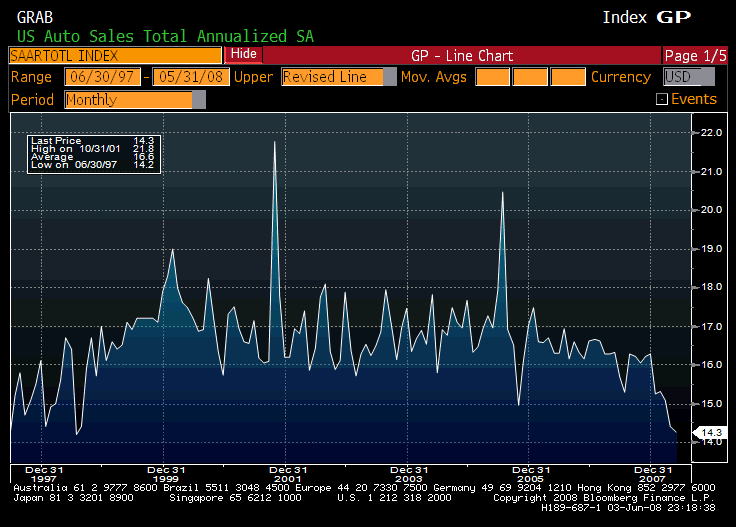
Total Vehicle Sales (May)

Survey 14.6M
Actual 14.3M
Prior 14.4M
Revised n/a

Very weak, as was transportation in general, but more than made up for by other factory orders, see below.

[top][end]


2008-06-03 Domestic Vehicle Sales

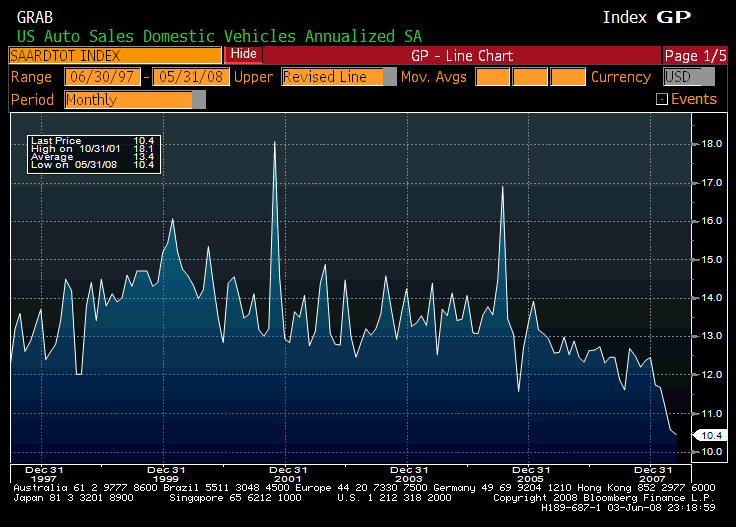
Domestic Vehicle Sales (May)

Survey 10.8M
Actual 10.5M
Prior 10.6M
Revised n/a

As above, very weak.

[top][end]


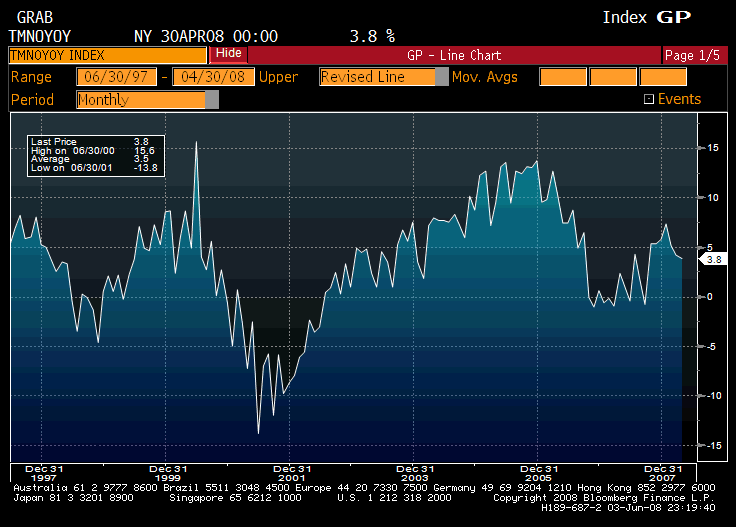
2008-06-03 Factory Orders YoY

Factory Orders YoY (Apr)

Survey -0.1%
Actual 1.1%
Prior 1.4%
Revised 1.5%

[top][end]


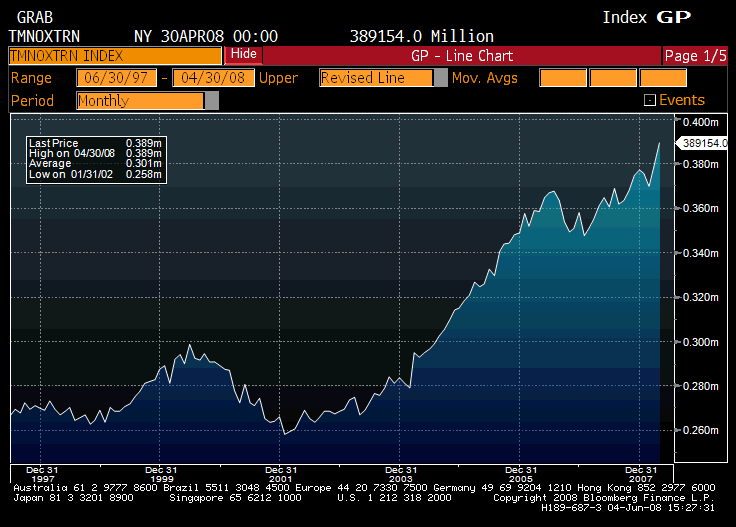
2008-06-04 Factory Orders Ex Transportation

Factory Orders Ex Transportation

Survey n/a
Actual 389154
Prior 378303
Revised n/a

Upside surprise, and non-transportation up very strong.

[top][end]


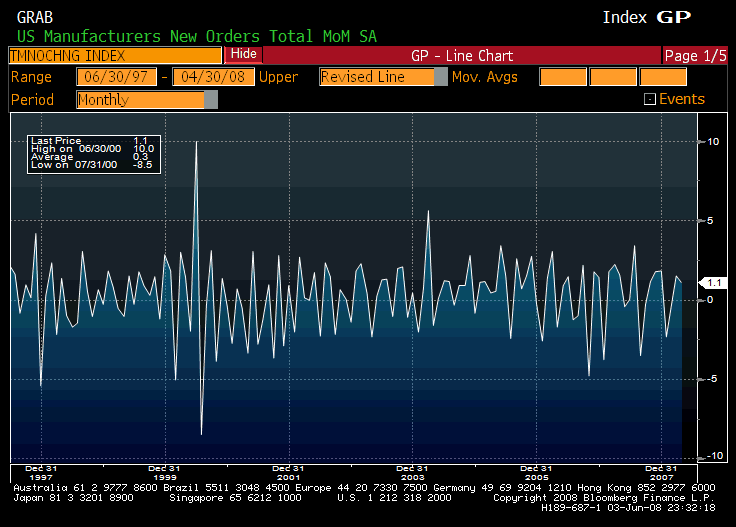
2008-06-03 Factory Orders MoM

Factory Orders MoM (Apr)

Survey n/a
Actual 3.8%
Prior 4.2%
Revised 1.5%

More upside surprises.
No recession, and this was before the fiscal package kicked in.

With domestic demand not this strong, could be even larger increases in exports as foreigners continue to spend their now unwanted hoard of USD over here.

[top][end]


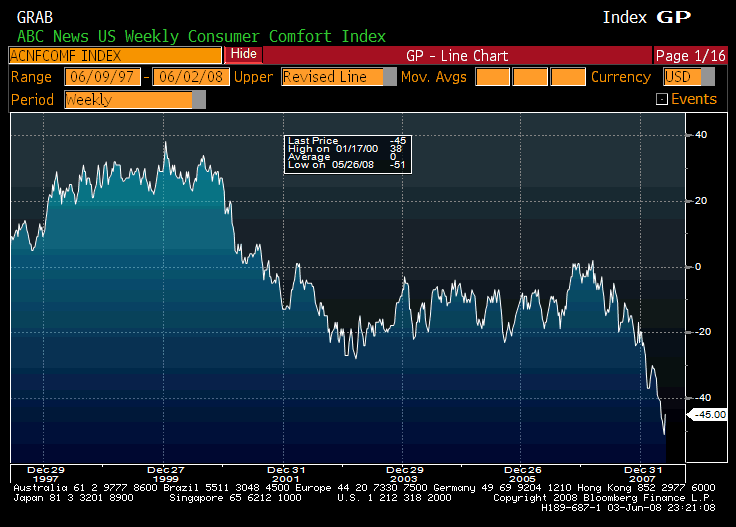
2008-06-03 ABC Consumer Confidence

ABC Consumer Confidence (Jun 1)

Survey -51
Actual -45
Prior -51
Revised n/a

Even this indicator had an upside surprise.

[top]