AVM Repo Commentary


[Skip to the end]

Good report, thanks, and another example of blood flowing around the clot.

Scorecard:

  • Financial sector in a shambles
  • A2 GDP now forecast at 3% or more helped by tax cuts/rebates
  • So as the financial sector worsens the government can cut taxes to sustain output and growth.

    Seems like a good trade off to me – cut taxes and shut down the financial sector!


    Report from Jeff:

    Not only has this become a major focus of the Repo market and gotten some regulator attention, but it has gotten a lot of interest and questions from AVM Repo Commentary readers. I am speaking about Direct Repo or non-Traditional Repo. So, I will explain the concept further. This is the expansion of the Repo market to improve liquidity by pairing collateral providers directly with cash providers. This enhances the liquidity typically provided by the broker/dealers (who pair collateral providers with cash providers among themselves in the interdealer broker market and BrokerTec). These broker/dealers are currently balance sheet constrained due to: reduced capital and difficulty raising capital; taking on their SIVs’ collateral ; taking on their ARS collateral; and management directive to reduce balance sheet and reserve it for assets with higher ROA than repo. The broker/dealers are actively financing their collateral with the Federal Reserve, but have little dry powder to take on collateral from typical Repo collateral providers. This has a ripple effect in the Repo market, causing not only the collateral providers to scramble for financing but also the cash providers to eventually have trouble finding enough Repo collateral offered by the broker/dealers. The first ripple is already being felt by the market and the second ripple may now be showing up. So, the Repo market is evolving to transact Direct Repo between the cash providers and the collateral providers, which helps the broker/dealers, who still want to sell collateral to clients but don’t have the room on their balance sheet to then finance that collateral. It also, logically, compresses the bid/offer spread, which has widened dramatically due to the new ROA guidelines at most broker/dealers. As an example, Agency MBS pools have a 50bp bid/offer spread 1month (as opposed to the traditional 10bp) and Investment Grade Corporates have a 70bp bid/offer spread 1month. Direct Repo could result in significant savings for both the cash provider and the collateral provider. Other terms, such as length of trade and haircut, may also be more favorable to both sides in Direct Repo. Obviously, both the cash provider and the collateral provider would have to do Credit analysis of their counterparties, but they do that already with their broker/dealers as counterparties. Also, Direct Repo can be done as Triparty Repo, reaping the benefits of that product (no fails, less administrative work, third party pricing, third party oversight, etc.) So, this Direct Repo does not replace traditional Repo through broker/dealers, but just picks up the slack in the market, reduces the balance sheet bottleneck, and helps the broker/dealers continue to do business without having to turn away Repo clients. Anyway, I don’t want to bore you any further, so if you would like more information of how AVM Solutions can provide Direct Repo and pair cash providers with collateral providers, as well as broker/dealers, give me a call or an email.


    COLLATERAL PROVIDERS CASH PROVIDERS
    Hedge Funds Money Funds
    Asset Managers Money/Investment Managers
    Credit Unions Credit Unions
    Central Banks International Banks
    Thrifts/Community Banks Municipalities
    Pension Funds Seclending Agents (Reinvestment)
    Seclending Agents Corporations
    Beneficial Owners Broker/Dealers
    Regional Dealer clients.


    [top]
2008-08-15 US Economic Releases


[Skip to the end]


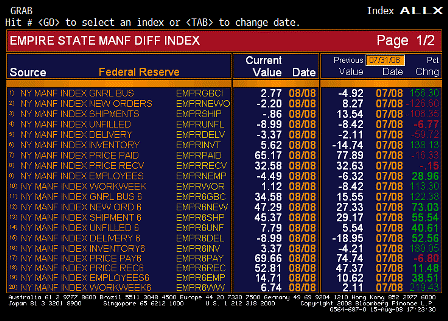
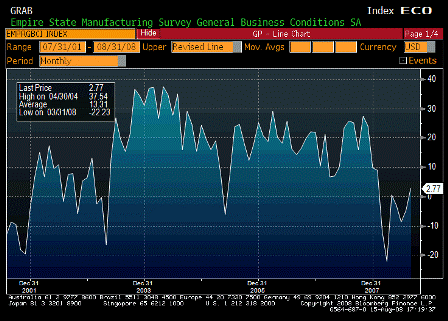
Empire Manufacturing (Aug)

Survey -4.0
Actual 2.8
Prior -4.9
Revised n/a

Yet another series that could be making a comeback, albeit from very low levels.

Even the work week went up.

Prices paid still way high, and prices received high and moved higher.

[top][end]

Empire Manufacturing ALLX (Aug)

[top][end]


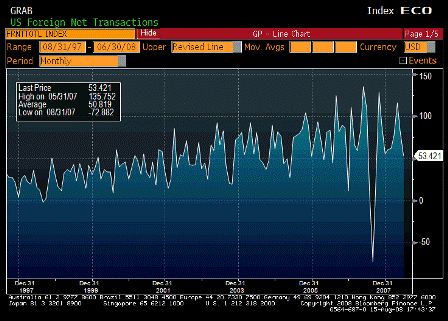
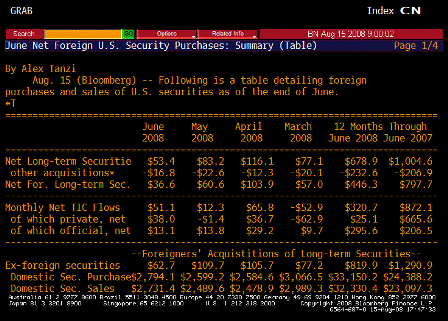
Net Long-term TIC Flows (Jun)

[top][end]

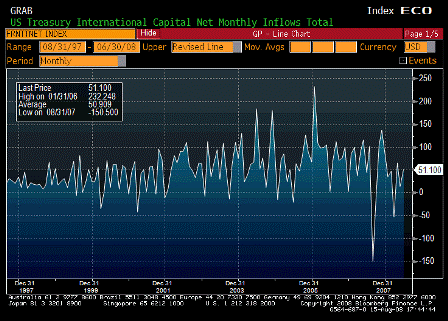
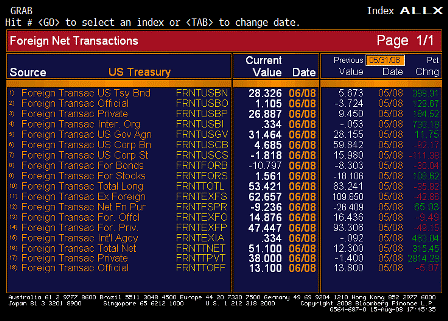
Total Net TIC Flows (Jun)

Survey n/a
Actual $51.1B
Prior -$2.5B
Revised $12.3B

Should be slowing with trade flows reversing.

[top][end]

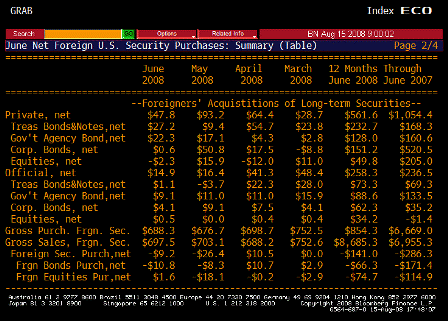
TIC ALLX (Jun)

[top][end]

TIC TABLE 1 (Jun)

[top][end]

TIC TABLE 2 (Jun)

[top][end]

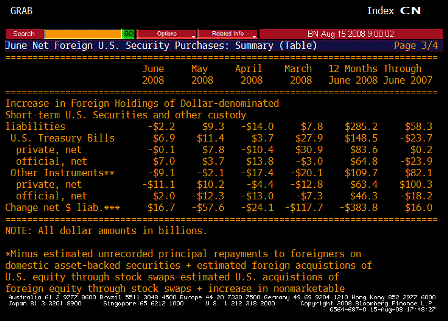
TIC TABLE 3 (Jun)

[top][end]


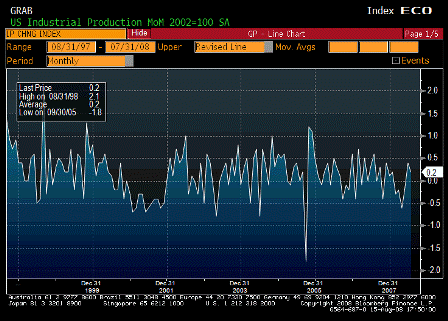
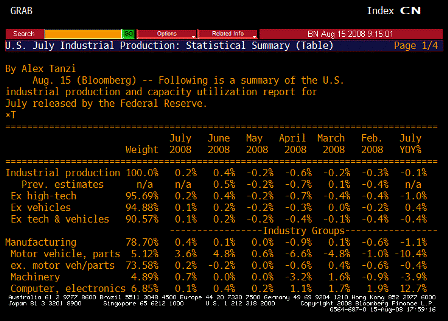
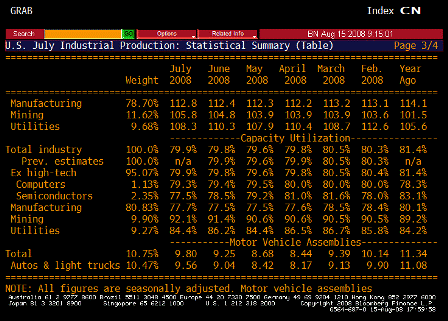
Industrial Production MoM (Jul)

Survey 0.0%
Actual 0.2%
Prior 0.5%
Revised 0.4%

A little better than expected.

[top][end]

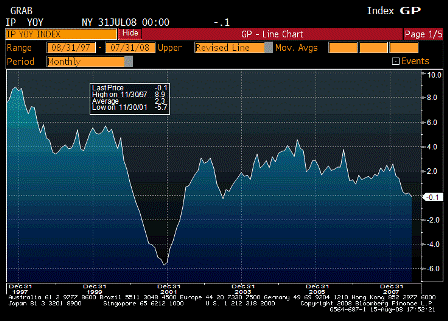
Industrial Production YoY (Jul)

Survey n/a
Actual -0.1%
Prior 0.2%
Revised n/a

Certainly not a collapse.

Being helped by the relatively weak USD.

[top][end]


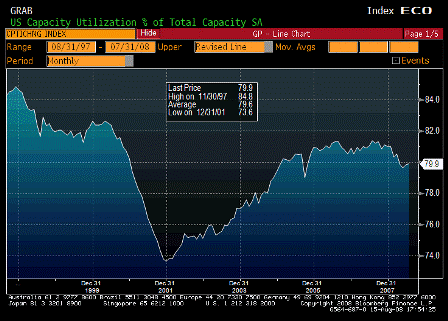
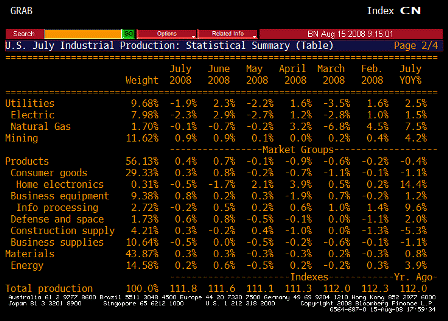
Capacity Utilization (Jul)

Survey 79.8%
Actual 79.9%
Prior 79.9%
Revised 79.8%

No collapse here either.

The Fed’s counting on slack to bring prices down.

[top][end]

[top][end]

Capacity Utilization TABLE 2 (Jul)

[top][end]

Capacity Utilization TABLE 3 (Jul)

[top][end]


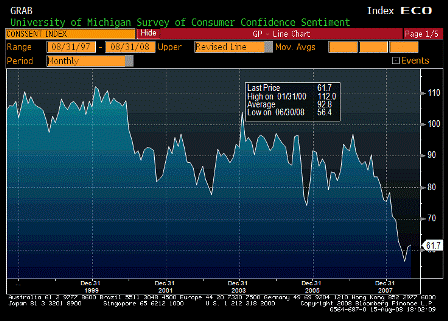
U of Michigan Confidence (Aug P)

Survey 62.0
Actual 61.7
Prior 61.2
Revised n/a

This too looks like it has bottomed from very low levels.

‘Inflation’ still hurting confidence.


[top]
2008-08-14 US Economic Releases


[Skip to the end]


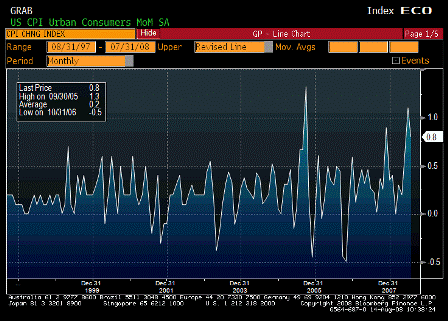
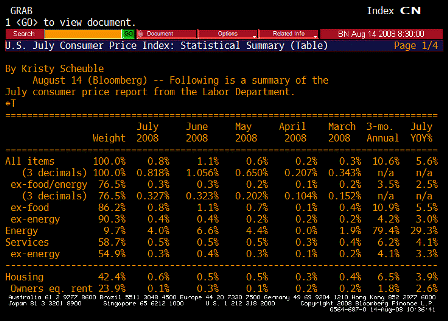
Consumer Price Index MoM (Jul)

Survey 0.4%
Actual 0.8%
Prior 1.1%
Revised n/a

Out of control, but if the recent commodity sell off holds headline will moderate some for awhile. Lots of pass-throughs and cost push forces in place.

[top][end]

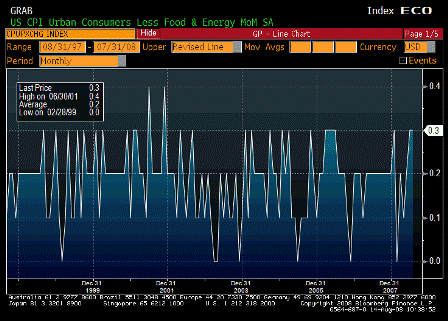
CPI Ex Food & Energy MoM (Jul)

Survey 0.2%
Actual 0.3%
Prior 0.3%
Revised n/a

[top][end]

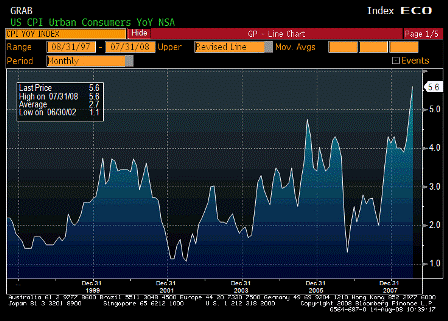
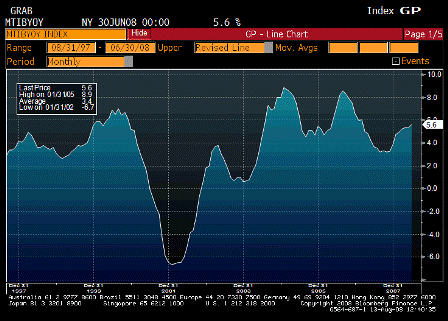
Consumer Price Index YoY (Jul)

Survey 5.1%
Actual 5.6%
Prior 5.0%
Revised n/a

The Fed has to be concerned that the 2% FF rate is way too accommodative, especially with Q2 GDP no forecast at over 3% and Q3 looking like 2%.

[top][end]

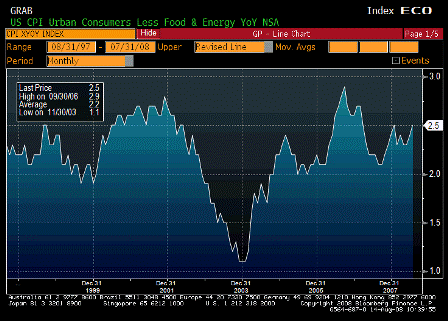
CPI Ex Food & Energy YoY (Jul)

Survey 2.4%
Actual 2.5%
Prior 2.4%
Revised n/a

Could be headed much higher as cost push pass-throughs starting to register.

[top][end]

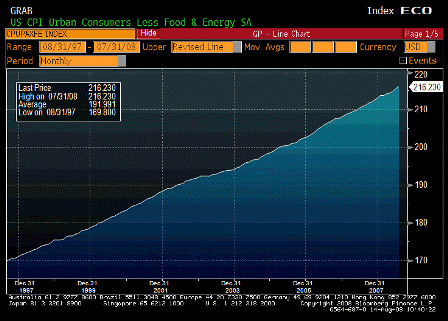
CPI Core Index SA (Jul)

Survey n/a
Actual 216.230
Prior 215.526
Revised n/a

[top][end]

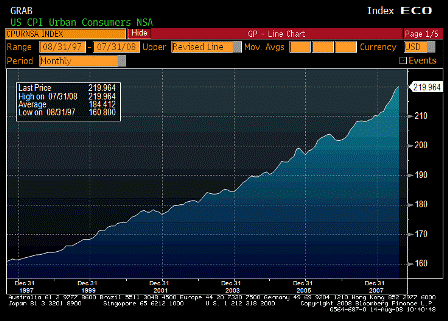
Consumer Price Index NSA (Jul)

Survey 219.075
Actual 219.964
Prior 218.815
Revised n/a

[top][end]

CPI TABLE 1 (Jul)

[top][end]

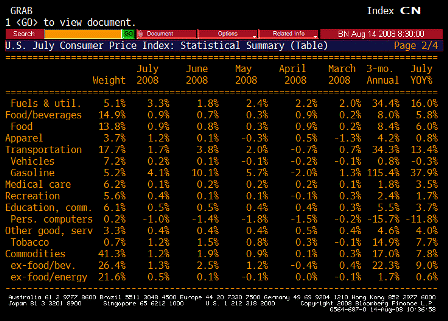
CPI TABLE 2 (Jul)

[top][end]

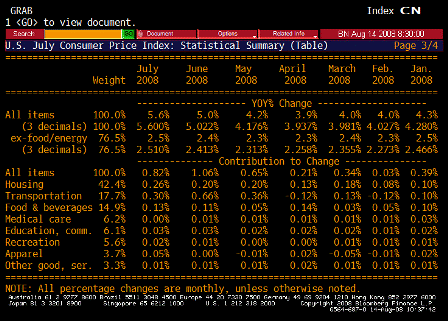
CPI TABLE 3 (Jul)

[top][end]


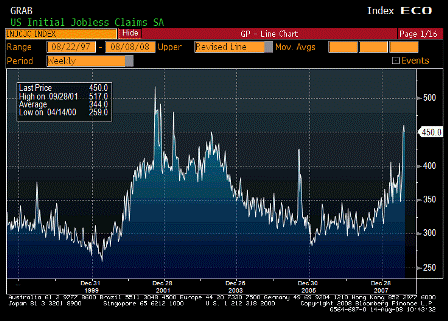
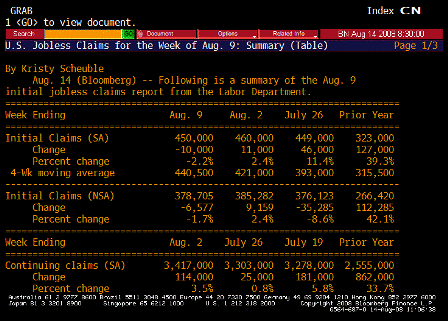
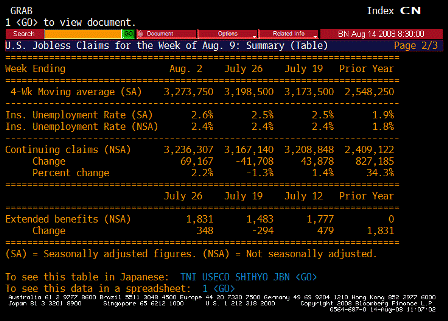
Initial Jobless Claims (Aug 9)

Survey 435K
Actual 450K
Prior 455K
Revised 460K

Up, but confused by new extended benefits.

[top][end]

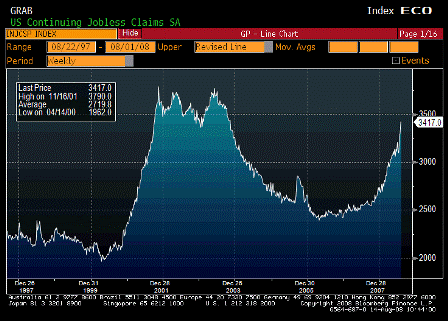
Continuing Jobless Claims (Aug 2)

Survey 3310K
Actual 3417K
Prior 3311K
Revised 3303K

Not looking good either, but how bad can it actually be with GDP north of 3%?

[top][end]

Jobless Claims TABLE 1 (Aug 9)

[top][end]

Jobless Claims TABLE 2 (Aug 9)


[top]
Last week’s initial claims summary


[Skip to the end]

On Fri, Aug 8, 2008 at 2:47 PM, Cesar writes:

  • federal extension of benefits SHOULD have no DIRECT impact on initial claims like they did in 2002
  • in 2002 part of the law required people to make an initial claim in the state system to become eligible for federal benefits, but that is not the case in 2008. The way it should work now is that the state evaluates if you are eligible for the state program when you are applying for federal program. If you are eligible for the state program you make a claim with the state and that shows up in initial claims data. If you are not eligible for the state program you make a federal claim that is counted separately and is not part of the weekly initial claims data.
  • however, the millions of notification letters that have been sent out to people who are potentially eligible for the federal program could have yielded some folks that show-up to get federal benefits, but learn they have state benefits they must exhaust first (anyone getting state benefits first would show up in initial claims)- this is a potential source for an INDIRECT “distortion” of initial claims
  • i saw Ohio had some of the highest claims data last week so i called up to learn how applications were being handled. On both calls i made they said they would file an initial claim with the state program first to make sure i was not eligible, then apply for the federal program. Applying for the state program would show up as an initial claim even if i was later rejected (interesting to note that for the last twelve months before 3/31/2008 less than 50% of people who made “initial claim” actually got first payment). If Ohio and possibly other states are actually filing an initial claim in the state system that gets counted in the weekly data in order to determine eligibility for all people applying for the federal program this would lead to a much larger distortion.


[top]
2008-08-13 JN News Highlights


[Skip to the end]

Highlights:

Economy Shrinks Annualized 2.4% On Weak Domestic Demand


Articles:

Economy Shrinks Annualized 2.4% On Weak Domestic Demand

(Nikkei) Declining consumer and capital spending contributed to pushing down Japan’s gross domestic product 0.6% in real terms from the previous quarter during the April-June period, for an annualized rate of minus 2.4%, according to preliminary data released Wednesday by the Cabinet Office.

The first contraction in four quarters was also attributed to a drop-off in exports amid the U.S. economic slowdown.

Domestic demand contracted 0.6%, with personal spending shrinking 0.5% as price hikes for a number of daily necessities dampened consumer sentiment. The weaker demand also reflected the fact that the previous quarter had one more day than in normal years because 2008 is a leap year.

Capital spending declined 0.2%, while housing investment slid 3.4%. Overall domestic demand pushed down GDP growth by 0.6 percentage point.

Exports, which had until recently driven economic growth, fell 2.3%, meaning overseas demand failed to push up GDP growth in the three months ended June.

In nominal terms, GDP contracted 0.7% for an annualized rate of minus 2.7%.

Fails to mention it grew at over 3% in the prior quarter, so the two quarter average is marginally positive. Japan data seems to have more noise than US data.

Also note the nominal measure over the last year:

Nominal GDP Q/Q:

Q2/08 -0.7%
Q1/08 +0.2%

Q4/07 -0.1%
Q3/07 flat


Lots of noise due to ‘inflation’ as they measure it.

Yes, a soft quarterly report, but as expected or slightly better than expected on most counts.

Same twin themes as the US: weakness and higher prices.

And lots of talk about a fiscal program over there.


[top]
2008-08-13 UK News Highlights


[Skip to the end]

Highlights:

BoE Cuts Growth Forecasts, Jobless Climbs
U.K. Unemployment Rose the Most Since 1992 in July
Surge in credit card debt charge-offs
U.K. Homebuilders Fall as Unemployment Rise May Worsen Slump


Article snip:

BoE Cuts Growth Forecasts, Jobless Climbs (Bloomberg) The BoE cut its forecast for U.K. economic growth and held out the prospect of lower interest rates as unemployment rose the most in almost 16 years in July. Governor Mervyn King said the inflation rate will fall below the 2 % target in two years if policy makers keep the benchmark interest rate at 5 %.

But not if they cut is the implication as well.


[top]
2008-08-13 China News Highlights


[Skip to the end]

They know how to keep it all going:

(Bloomberg) “Demand for investment is still the one to depend on for dealing with potential external shocks,” because local consumption is not enough to be the main engine of China’s growth, said the center, affiliated with the National Development and Reform Commission. “All levels of government should prepare a list of investment projects in urban transport and infrastructure so that they can be launched immediately once needed.”


[top]
2008-08-13 US Economic Releases


[Skip to the end]

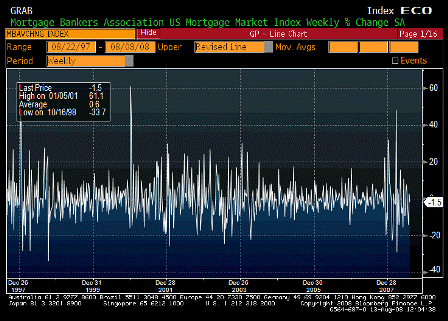
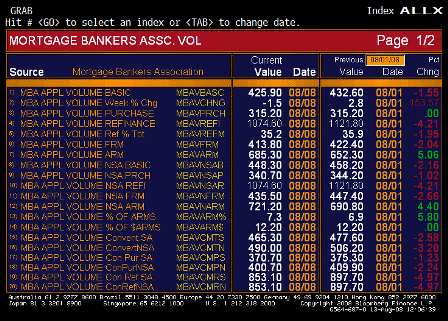
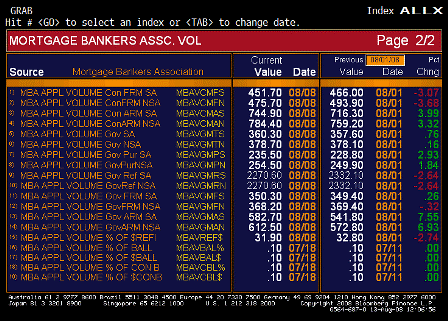
MBA Mortgage Applications (Aug 8)

Survey n/a
Actual -1.5%
Prior 2.8%
Revised n/a

Muddling through on the low side as mortgage bankers lose market share to banks.

[top][end]

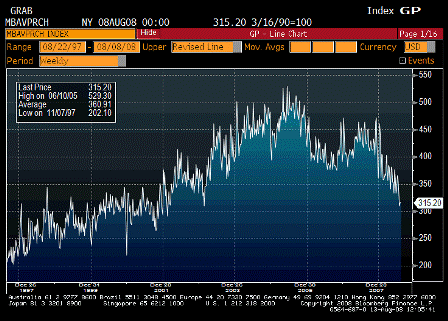
MBA Purchasing Index (Aug 8)

Survey n/a
Actual 315.2
Prior 315.2
Revised n/a

Flat at low levels.

May do better as the seasonal adjustments get easier.

[top][end]

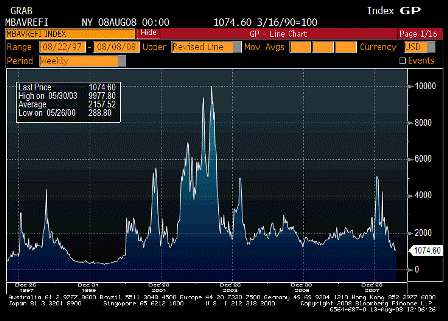
MBA Refinancing Index (Aug 8)

Survey n/a
Actual 1074.6
Prior 1121.8
Revised n/a

Slowing, as bulk of resets are past and rates are doing nothing.

[top][end]

MBA ALLX 1 (Aug 8)

[top][end]

MBA ALLX 2 (Aug 8)

[top][end]


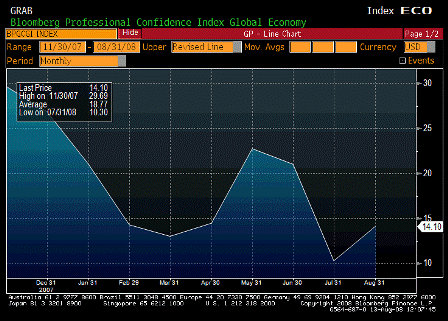
Bloomberg Global Confidence (Aug)

Survey n/a
Actual 14.10
Prior 10.30
Revised n/a

Low, but improving.

[top][end]


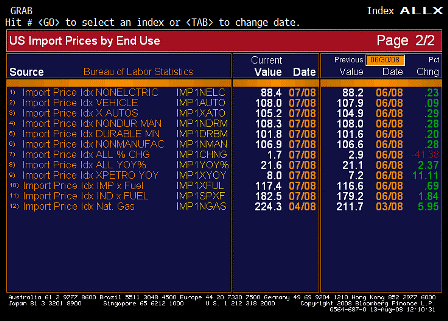
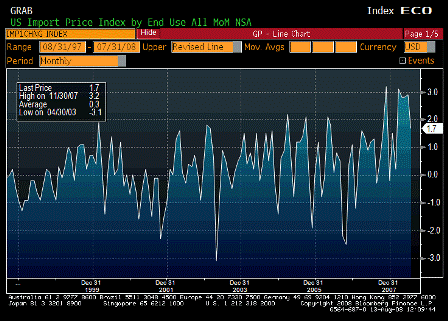
Import Price Index MoM (Jul)

Survey 1.0%
Actual 1.7%
Prior 2.6%
Revised 2.9%

Scary stuff if you are responsible for the value of the currency.

[top][end]

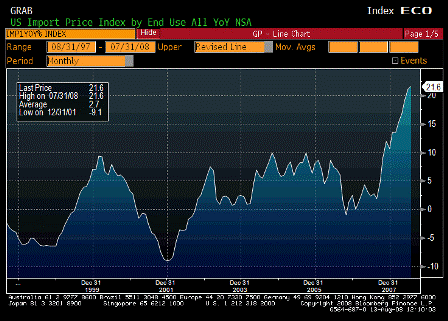
Import Price Index YoY (Jul)

Survey 20.4%
Actual 21.6%
Prior 20.5%
Revised 21.1%

‘Inflation’ flooding in through the open window.

[top][end]

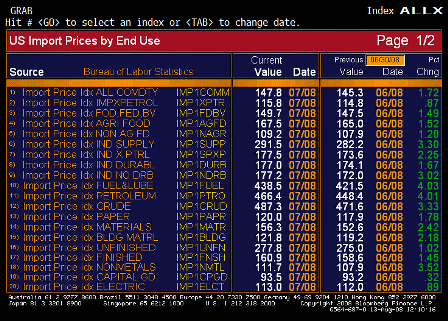
Import Price Index ALLX 1 (Jul)

[top][end]

Import Price Index ALLX 2 (Jul)

Karim writes:

Import prices continue uptrend

  • Headline +1.7% m/m; ex-petroleum up 0.9% m/m

Yes and ex petro 8% year over year and still rising. And this takes time to pass through to core CPI.

  • Expect headline to be below core for the next few mths though

Yes, if gasoline stays down.

But rental vacancies took a small turn down, and owner equivalent rent already printed a 0.3%, and seems with starts so far down there has to be a shortage of actual units available to live in. Also, lots of catching up to do in other core measures, like medical and others which had some prints on the low side.

All of their costs are rising and push up prices with various lags.

And Russia has demonstrated they can do whatever they want and there’s nothing anyone can do about it.

Not good…

[top][end]


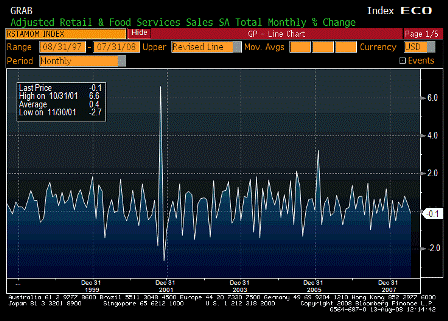
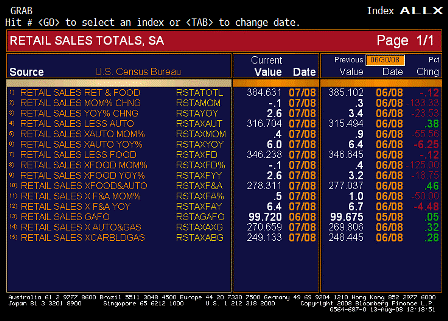
Advance Retail Sales MoM (Jul)

Survey -0.1%
Actual -0.1%
Prior 0.1%
Revised 0.3%

Down some as expected due to weak car sales, but prior month revised up.

Sometimes if people don’t buy cars they buy other things…

[top][end]

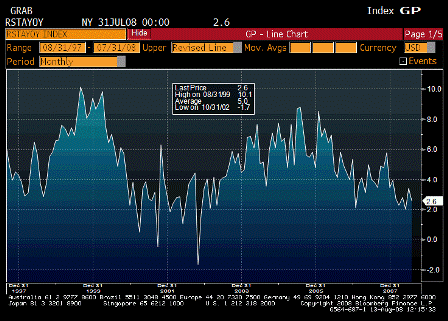
Advance Retail Sales YoY (Jul)

Survey n/a
Actual 2.6%
Prior 3.4%
Revised n/a

Still looks to be moving off a bottom.

[top][end]

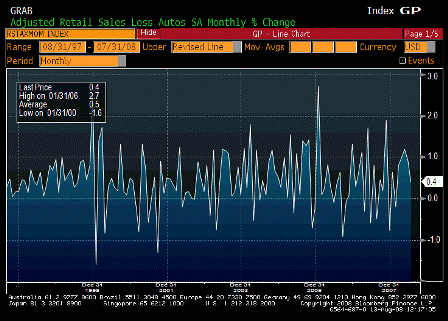
Retail Sales Less Autos MoM (Jul)

Survey 0.5%
Actual 0.4%
Prior 0.8%
Revised 0.9%

Looks okay, a tenth below expectations but prior month revised up the same tenth.

[top][end]

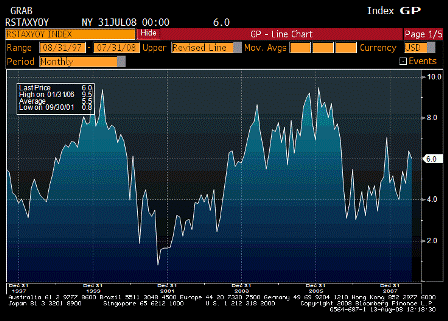
Retail Sales Less Autos YoY (Jul)

Survey n/a
Actual 6.0%
Prior 6.4%
Revised n/a

Looking reasonably firm.

[top][end]

Advance Retail Sales ALLX (Jul)

On Wed, Aug 13, 2008 at 8:54 AM, Karim writes:

Retail sales generally weak but in line with expectations

  • Headline -0.1% m/m; ex-gas -0.2% m/m; ex-autos +0.4%; control group +0.3%
  • Rebate checks did trickle in through July so some help from there
  • Looks like real PCE off to flat start in Q3, perhaps explaining Fisher’s remark yesterday that ‘we will broach zero growth’ in the second half of the year

The FOMC now has a multi year history of underestimating GDP and inflation.

Seems with Q2 GDP now looking like 3% or more, and the first half therefore averaging maybe over 2%, and year over year gdp still pushing 3%, they would either adjust or downgrade their GDP forecasting model.

Same with their inflation forecasting model, as cpi moves through 5% and core elevates from levels not long ago forecast at not a lot more than half that.

Looking more and more like the real economy did bottom in Q4 2007, as private forecasters are now starting to project positive gdp for Q3 and Q4, and some for Q1 2009 as well.

And even if the saudis keep crude at current levels core cpi should continue to march higher for many more quarters as it all catches up to the shift from $20 crude to $100+ crude.

Yes, the financial sector continues to have issues, may severe, but blood is flowing around the clot as the real economy moves forward.

Housing starts peaked in the early 1970s at 2.6 million with only 215 million people and no secondary market or housing agencies- just a bunch of dumb s and l’s taking in deposits and making mortgages (is used to work at one back then).

Today with 50% more people we call 2 million units gangbusters.

The financial innovation is all predatory at the macro level, though at the micro level we’d grown dependent on it for sure.

Yes, US exports are reducing foreign GDP growth, but their are signs they are moving to support domestic demand with fiscal measures, including Japan, the UK, and even some talk from the eurozone, and even china announced lower inflation numbers to justify supporting growth.

And Saudi crude output shows no sign of world net supply going up. Current price action just some kind of massive ‘inventory adjustment’.

Yes, that can change but hasn’t yet.

[top][end]


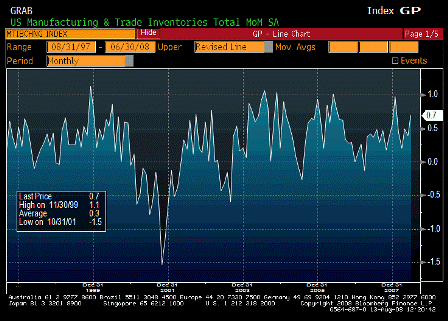
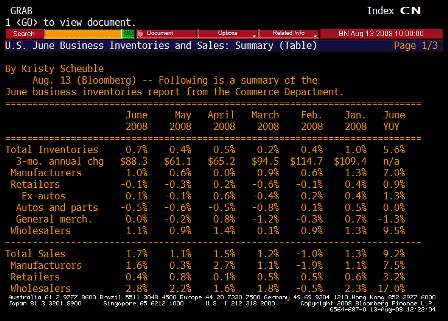
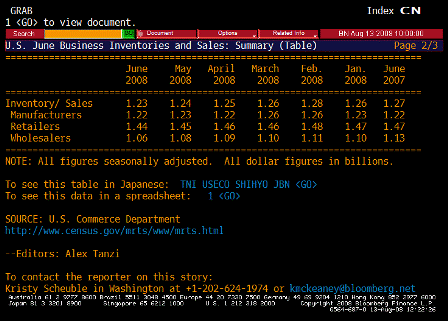
Business Inventories MoM (Jun)

Survey 0.5%
Actual 0.7%
Prior 0.3%
Revised 0.4%

3% Q2 GDP means more inventory is needed.

Also, this and previous inventory data for June higher than expected which means Q2 might be revised up that much more as very low inventory levels were estimated with the initial 1.9% release for Q2 GDP.

[top][end]

Business Inventories YoY (Jun)

Survey n/a
Actual 5.6%
Prior 5.3%
Revised n/a

Not the usual recession pattern.

The real sector seems well managed.

The financial sector is another story. They don’t count mbs inventory, for example, in this series…

[top][end]

Business Inventories TABLE 1 (Jun)

[top][end]

Business Inventories TABLE 2 (Jun)


[top]

2008-08-12 Saudi Oil Output


[Skip to the end]

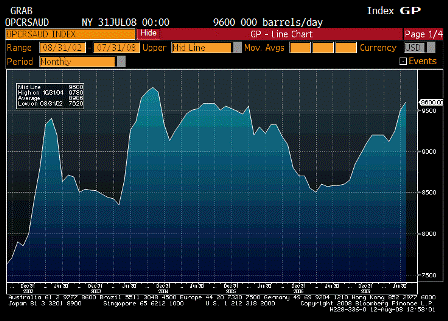
Saudi Oil Output

The Saudi production increase tells me world demand was up, even at the higher prices.

Yes, US demand was down 800,000 bpd vs last year, and yes other world demand may fall.

Only when demand for Saudi output falls sufficiently will they be dislodged from being swing producer and price setter.

That is not to say they won’t continue to disguise their role as best they can, and allow volatility as various world inventory positions (cash and futures) are being liquidated, as is probably the case currently.

Saudi output is also getting very near capacity of maybe 11 million bpd.

If demand goes above that they lose control of price on the upside.


[top]

AGY MBS UPDATE: 08/12/08


[Skip to the end]

On Tue, Aug 12, 2008 at 5:18 PM, Andrew wrote:

AGY MBS UPDATE: 08/12/08

General Themes:

  • Mortgages were weaker to dealer hedge ratios – versus CXLs they were down only -5cents
  • The small CXL daily price change masks what was a pretty bad performance for mortgages
  • Dealer OAS’s are back to the wides of last week – Lehman has FN5.5 LOAS at +90bps
  • What could help mortgages?
  • Asian buying returning
  • Capital raising by the GSE’s, (or capital injection by Tsy)
  • Reduced capital surplus guidelines from OFHEO
  • Convexity led rally in rates

not to mention investors recognizing value vs tsy’s, atraight agency paper, quality AAA corporates, libor, and other lower yielding paper


[top]