Bloomberg: Europe Trade Deficit Widens to Record on Exports, Energy Costs


[Skip to the end]

What’s happening is the world desire to net accumulate euro financial assets has increased and can only be achieved by the rest of the world net selling goods and services (or real assets) to the eurozone.

Europe Trade Deficit Widens to Record on Exports, Energy Costs

by Fergal O’Brien

Sept. 17 (Bloomberg) Europe’s trade gap widened to a record in July as a cooling global economy damped exports and crude oil’s advance to a record boosted the energy deficit.

The 15-nation euro region had a seasonally adjusted deficit of 6.4 billion euros ($9.1 billion), compared with a 3.5 billion-euro trade gap in June, the European Union’s statistics office in Luxembourg said today. The July deficit is the largest since the euro was introduced in 1999.

Euro-area exports to the U.S., the second-biggest buyer of the region’s goods, have fallen the most since 2003 this year as economic expansion there has eased. At the same time, record oil prices pushed up spending on imported fuels such as gasoline and heating oil by 41 percent, further widening the trade gap.

“On the one side, you’re getting weakness in exports and that then is feeding through to weaker industrial production,” said Marco Valli, an economist at Unicredit MIB in Milan. “On the other side, there is the oil prices and in July we will see the maximum impact of that, as oil peaked in early July.”

Crude oil reached a record $147.27 a barrel on July 11 and the euro region’s energy imports soared 41 percent to 151 billion euros in the first half, according to today’s report. The detailed data are published with a one-month lag.

The soaring energy costs boosted imports from Russia, which supplies 34 percent of Europe’s imported oil and 40 percent of its imported gas. Overall imports from Russia, home of OAO Gazprom, the world’s biggest gas producer, soared 22 percent in the first half and the euro area’s trade gap with the nation soared 25 percent to 20.4 billion euros, today’s report showed.

First-Half Decline
The detailed data for the January-June period also showed exports to the U.S., the world’s largest economy, fell 4 percent from a year earlier. That is the biggest first-half decline since a 9 percent drop in 2003. Shipments to the U.K., the euro area’s biggest trading partner, rose 1 percent.

The euro reached a record above $1.60 to the dollar in July, taking its gain over the previous 12 months to 15 percent. The euro’s strength undermines the competitiveness of European goods sold abroad. The currency was at $1.4224 today, down 11 percent from its record.

A slowdown in overseas sales has curbed production at Europe’s factories and dragged the region’s economy into its first contraction in almost a decade in the second quarter. Manufacturing activity has contracted for the last three months, according to a monthly survey of purchasing managers, while export orders have fallen for five months.

`Mightily Relieved’
“Euro-zone exporters will be mightily relieved by the recent marked retreat in the euro from its July peak,” said Howard Archer, chief European economist at Global Insight in London. “However, this is being countered by slowing global growth and a very uncertain outlook.”

Some companies have tried to offset falling U.S. orders by expanding in Asia and oil-exporting countries. Asian sales at French skin-creams maker Clarins SA rose 3 percent in the second quarter as North American sales fell by the same percentage.

Volkswagen AG, Europe’s biggest carmaker, on Sept. 8 said emerging markets will provide the fastest growth in worldwide sales over the next 10 years, led by economic expansion in Asia and Russia.

Europe’s trade deficit with China, which last year overtook the U.K. to become the euro area’s biggest supplier, narrowed by 1.2 percent to 49.9 billion euros in the six months through June. Exports to Asia’s second biggest economy rose 15 percent.

Economists had expected the euro region to show a trade deficit of 3.5 million euros in July, compared with an initially reported 3 billion-euro deficit in June, according to the median of nine estimates in a Bloomberg News survey.


[top]
Fed loan to AIG


[Skip to the end]

My question remains: can they give the shareholders less than they would have gotten in a bankruptcy?

The burden of proof may be on the government to show that the shareholders are better off with the 20% of net worth they are giving them due to the value added of the loan facility, vs 100% of the net worth in a straight bankruptcy.

Press Release

Release Date: September 16, 2008

For release at 9:00 p.m. EDT

The Federal Reserve Board on Tuesday, with the full support of the Treasury Department, authorized the Federal Reserve Bank of New York to lend up to $85 billion to the American International Group (AIG) under Section 13(3) of the Federal Reserve Act. The secured loan has terms and conditions designed to protect the interests of the U.S. government and taxpayers.

The Board determined that, in current circumstances, a disorderly failure of AIG could add to already significant levels of financial market fragility and lead to substantially higher borrowing costs, reduced household wealth and materially weaker economic performance.

The purpose of this liquidity facility is to assist AIG in meeting its obligations as they come due. This loan will facilitate a process under which AIG will sell certain of its businesses in an orderly manner, with the least possible disruption to the overall economy.

The AIG facility has a 24-month term. Interest will accrue on the outstanding balance at a rate of three-month Libor plus 850 basis points. AIG will be permitted to draw up to $85 billion under the facility.

The interests of taxpayers are protected by key terms of the loan. The loan is collateralized by all the assets of AIG, and of its primary non-regulated subsidiaries. These assets include the stock of substantially all of the regulated subsidiaries. The loan is expected to be repaid from the proceeds of the sale of the firm’s assets. The U.S. government will receive a 79.9 percent equity interest in AIG and has the right to veto the payment of dividends to common and preferred shareholders.


[top]

NYT: Fed to Give A.I.G. $85 bln Loan and Takeecon


[Skip to the end]

The Fed has a major strategic advantage over private sector buyers.

With the Fed making the loan, credit spreads in general should narrow.

This will add value to AIG’s short credit position which is where most of the mark to market losses are.

So the Fed’s actions to reduce systemic risk also increase the value of AIG once they take them over.

It’s good to be the Fed!

(not that it matters to the Fed itself financially one way or the other, but they probably don’t know that)

Fed Close to Deal to Give A.I.G. $85 Billion Loan


by Michael J. de la Merced and Eric Dash

In an extraordinary turn, the Federal Reserve was close to a deal Tuesday night to take a nearly 80 percent stake in the troubled giant insurance company, the American International Group, in exchange for an $85 billion loan, according to people briefed on the negotiations.

In return, the Fed will receive warrants, which give it an ownership stake. All of A.I.G.’s assets will be pledged to secure the loan, these people said.

The Fed’s action was disclosed after Treasury Secretary Henry M. Paulson and Ben S. Bernanke, president of the Federal Reserve, went to Capitol Hill on Tuesday evening to meet with House and Senate leaders. Mr. Paulson called the Senate majority leader, Harry Reid, Democrat of Nevada, about 5 p.m. and asked for a meeting in the Senate leader’s office, which began about 6:30 p.m.

The Federal Reserve and Goldman Sachs and JPMorgan Chase had been trying to arrange a $75 billion loan for A.I.G. to stave off the financial crisis caused by complex debt securities and credit default swaps . The Federal Reserve stepped in after it became clear Tuesday afternoon that the banking consortium would not be able to complete the deal.

Without the help, A.I.G. was expected to be forced to file for bankruptcy protection.

The need for the loans became necessary after the major credit ratings agencies downgraded A.I.G. late Monday, a move that likely to have forced the company to turn over billions of dollars in collateral to its derivatives trading partners worsening its financial health.

Until this week, it would have been unthinkable for the Federal Reserve to bail out an insurance company, and A.I.G.’s request for help from the Fed of just a few days ago was rebuffed.

But with the prospect of a giant bankruptcy looming – one with unpredictable consequences for the world financial system – the Fed abandoned precedent and agreed to let the money flow.


[top]

FOMC


[Skip to the end]

Wonder if Fisher cut a deal not to dissent for the hawkish inflation language?

Karim writes:

Decision (no cut) may be hawkish relative to expectations, but wording mostly dovish.

1st paragraph-all changes highlight downside risks to gwth; slowing export gwth a new wrinkle in addition to the usual financial market strains, labor market weakness and housing.

2nd paragraph-identical to prior except mention of inflation expectations has been dropped; so a downgrading of concern over inflation.

3rd paragraph-‘stand ready to act’ but no mention of ‘in a timely manner’.

Fisher dropped his dissent

NEW

Strains in financial markets have increased significantly and labor markets have weakened further. Economic growth appears to have slowed recently, partly reflecting a softening of household spending. Tight credit conditions, the ongoing housing contraction, and some slowing in export growth are likely to weigh on economic growth over the next few quarters. Over time, the substantial easing of monetary policy, combined with ongoing measures to foster market liquidity, should help to promote moderate economic growth.

Inflation has been high, spurred by the earlier increases in the prices of energy and some other commodities. The Committee expects inflation to moderate later this year and next year, but the inflation outlook remains highly uncertain.

The downside risks to growth and the upside risks to inflation are both of significant concern to the Committee. The Committee will monitor economic and financial developments carefully and will act as needed to promote sustainable economic growth and price stability.

OLD

Economic activity expanded in the second quarter, partly reflecting growth in consumer spending and exports. However, labor markets have softened further and financial markets remain under considerable stress. Tight credit conditions, the ongoing housing contraction, and elevated energy prices are likely to weigh on economic growth over the next few quarters. Over time, the substantial easing of monetary policy, combined with ongoing measures to foster market liquidity, should help to promote moderate economic growth.

Inflation has been high, spurred by the earlier increases in the prices of energy and some other commodities, and some indicators of inflation expectations have been elevated. The Committee expects inflation to moderate later this year and next year, but the inflation outlook remains highly uncertain.

Although downside risks to growth remain, the upside risks to inflation are also of significant concern to the Committee. The Committee will continue to monitor economic and financial developments and will act as needed to promote sustainable economic growth and price stability.


[top]
Re: The Sunny Side


[Skip to the end]

(an email exchange)

>   
>   On Tue, Sep 16, 2008 at 10:24 AM, Tom wrote:
>   
>   Hi Coach,
>   
>   While financial markets are in a meltdown not unlike the post 9/11
>   experience,
>   

yes, major deleveraging going on

>   
>   the good news is that central banks around the world are providing
>   coordinated liquidity injections along with other positive actions that may
>   create a new basis for global financial rescues.
>   

yes, but all that does is set the fed funds rate and term fed funds rate. it’s about price, not quantity

>   
>   The creation of the League of Nations was an example of how the world
>   responded to WWI.
>   
>   Tom
>   
>   P.S. But it is still not time to buy stock.
>   

agreed!

watch for fiscal policy to do the heavy lifting to support GDP and employment.


[top]
2008-09-16 JN Highlights


[Skip to the end]

Highlights:

Aug Consumer Sentiment Hits Record Low For 3rd Month
Govt Panel To Call For Cutting Corporate Tax To 30% By FY15
Ota Reelected As New Komeito Leader For Another 2 Years
Extra Budget To Total 1.81tn Yen, Govt Eyes 400bn Yen Bonds
Lehman Failure Not To Mar Japan Financial System: Ibuki
BOJ Injects Y1.5tln To Calm Markets
New-Condo Offerings Tumble 38% In Tokyo, Rise 7% In Osaka For Aug
Forex Focus: Yen To Benefit From Banking Woes
Stocks: Slide To 3-Year Low As Banks, Insurers Tumble
Bonds: Surge After Lehman Bankruptcy, Market Turmoil


Note Japan’s proposed fiscal responses: cutting corp tax and extra budget, while the proposed increased consumption tax has been delayed.

Same in most nations around the world.

Fiscal responses ‘work’ while interest rate cuts don’t.

The US tax rebates worked while there is no econometric evidence the rate cuts did anything, except maybe make things worse as they reduced personal income and contributed psychologically to a USD sell off and spike in import prices that probably hurt consumers at least as much as it helped exporters.

The Fed could to anything today from unchanged to a 50 cut.

They seemed to have decided to use interest rates for ‘monetary policy’ and other tools for ‘market functioning’.

So for market functioning they just expanded the scope of the TAF and the Treasury lending facility, and may do more of that type of thing at today’s meeting, including adjusting the terms of the discount rate.

The question is whether falling commodities and the stronger USD will lead to a further rate cut.

What the Fed knows and has recognized since the Bear Stearns episode is that markets are going to open every day and do their thing, as the last week’s activity has demonstrated.

The Fed’s perceived risk of markets simply not opening and not trading has subsided.

Also, with the Treasury take over of the agencies mtg rates have dropped over 50 bp and availability of mortgage funding has been sustained.

The Fed considers this an ‘easing of financial conditions’ and is the move they’ve wanted to see to support housing, which has shown signs of stabilizing.

And the Treasury has shown it’s there to ‘write the check’ as it sees the need to prevent systemic risk.

So from that point of view there has already been a substantial ease in ‘financial conditions’, and the Fed may not see a need for further immediate ease.

Their forecasts will continue to show ‘moderating inflation and continued downside risks to growth’.

It all depends on their fear factor. They could leave fed funds unchanged or cut up to 50, depending on their concern regarding systemic risk.


[top]
2008-09-16 USER


[Skip to the end]


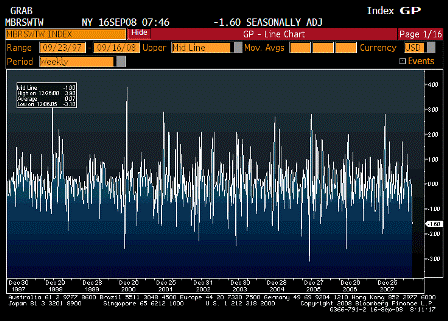
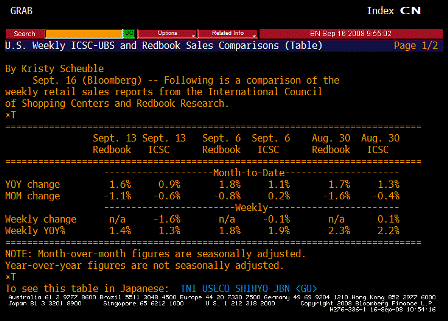
ICSC-UBS Store Sales WoW (Sep 16)

Survey n/a
Actual -1.6
Prior -0.1
Revised n/a

 
Not a good sign, but partially seasonal (see year over year below). Shoppers getting scared by the financial sector again?

[top][end]

ICSC-UBS Store Sales YoY (Sep 16)

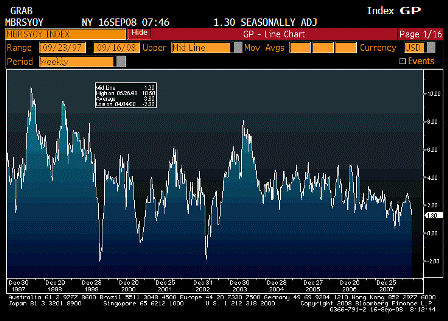
Survey n/a
Actual 1.30
Prior 1.90
Revised n/a

 
Down a bit, but still positive.

[top][end]


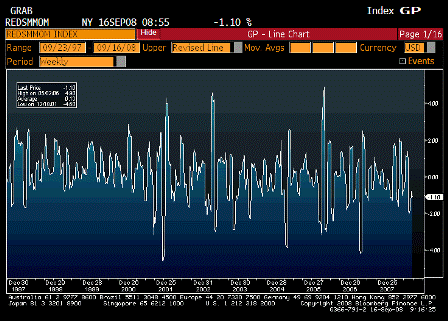
Redbook MoM (Sep 16)

Survey n/a
Actual -1.10
Prior -0.8
Revised n/a

 
Same, down some but somewhat seasonal (see year over year).

[top][end]

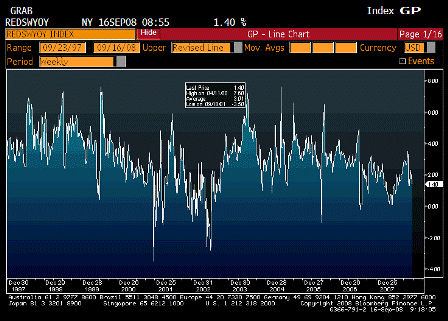
Redbook Weekly YoY (Sep 16)

Survey n/a
Actual 1.40
Prior 1.80
Revised n/a

 
Down some but still positive and off the bottom.

[top][end]

ICSC-Redbook Comparison TABLE (Sep 16)

[top][end]


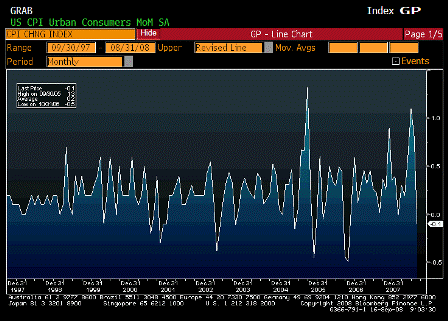
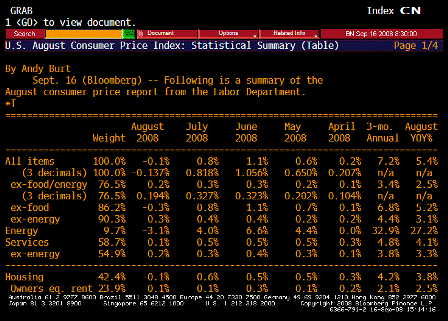
Consumer Price Index MoM (Aug)

Survey -0.1%
Actual -0.1%
Prior 0.8%
Revised n/a

 
Down only a tenth even with the big drop in commodities.

[top][end]

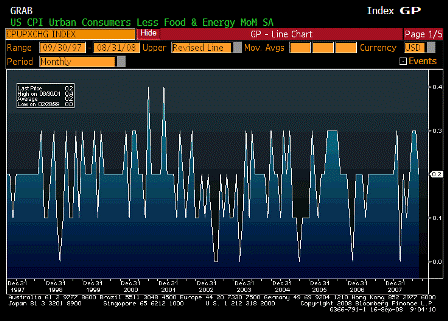
CPI Ex Food and Energy MoM (Aug)

Survey 0.2%
Actual 0.2%
Prior 0.3%
Revised n/a

 
No let up here but this lags headline.

[top][end]

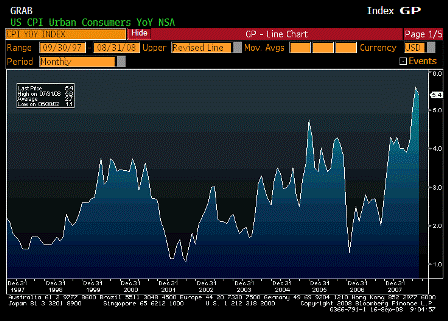
Consumer Price Index YoY (Aug)

Survey 5.5%
Actual 5.4%
Prior 5.6%
Revised n/a

 
Not much of a drop here as crude fell last august as well.

[top][end]

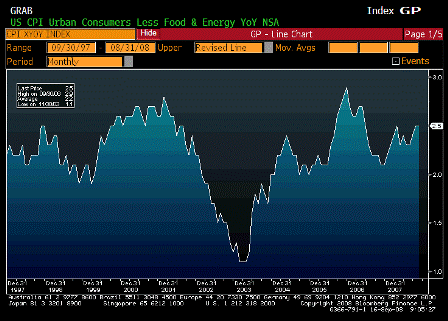
CPI Ex Food and Energy YoY (Aug)

Survey 2.6%
Actual 2.5%
Prior 2.5%
Revised n/a

 
Way above the Fed’s target and comfort zone

[top][end]

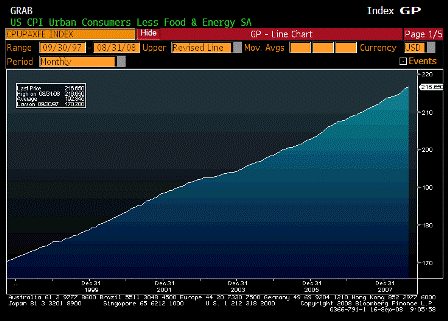
CPI Core Index SA (Aug)

Survey n/a
Actual 216.650
Prior 216.230
Revised n/a

[top][end]

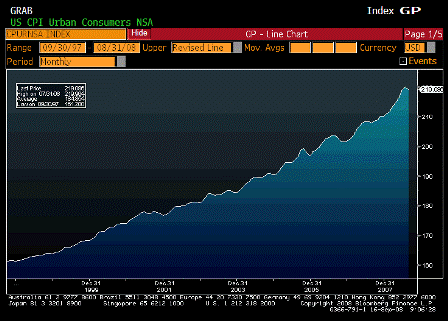
Consumer Price Index NSA (Aug)

Survey 219.300
Actual 219.086
Prior 219.964
Revised n/a

[top][end]

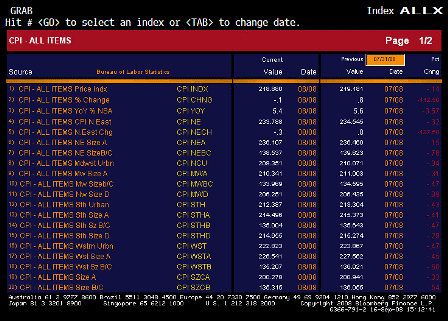
Consumer Price Index ALLX 1 (Aug)

[top][end]

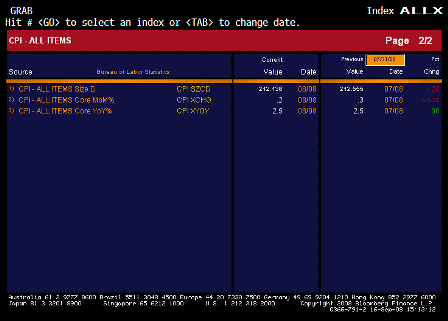
Consumer Price Index ALLX 2 (Aug)

[top][end]

Consumer Price Index TABLE (Aug)

[top][end]

Consumer Price Index TABLE 2 (Aug)

[top][end]

Consumer Price Index TABLE 3 (Aug)

[top][end]


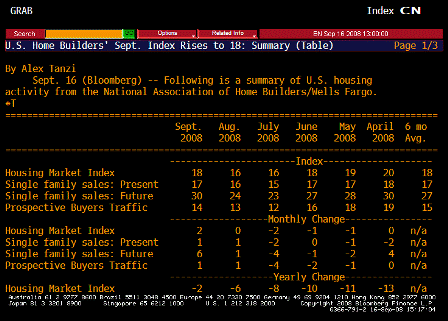
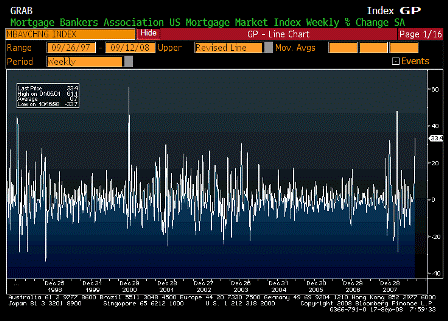
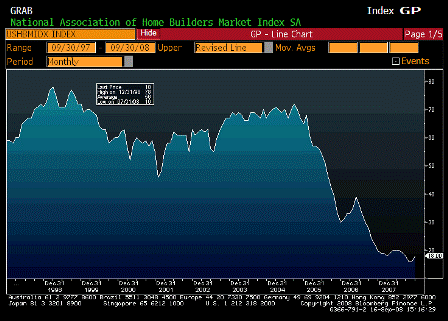
NAHB Housing Market Index (Sep )

Survey 17
Actual 18
Prior 16
Revised n/a

 
A touch better than expected, perking up a bit, but still very low historically and could spring back quickly with the agencies back in action.

[top][end]

NAHB Housing Market Index TABLE (Sep)

[top][end]

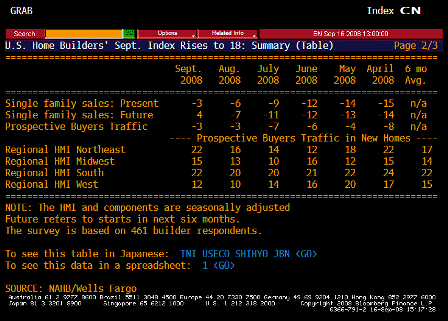
NAHB Housing Market Index TABLE 2 (Sep)

 
Future sales looking pretty good.

[top][end]


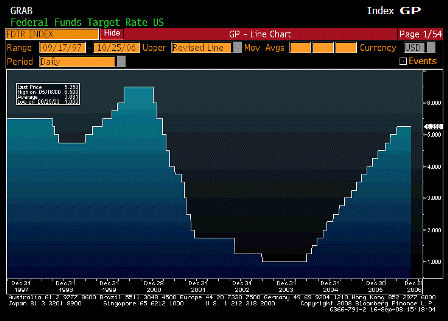
FOMC Rate Decision (Sep 16)

Survey 2.00%
Actual 2.00%
Prior 2.00%
Revised n/a

 
Wonder if Fisher cut a deal not to dissent for the Hawkish inflation language

Karim writes:

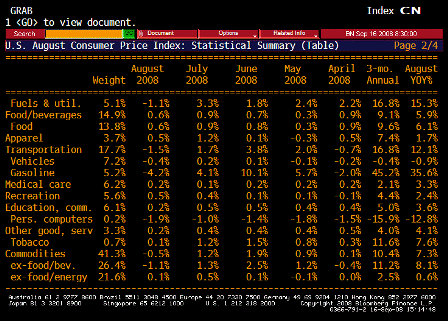
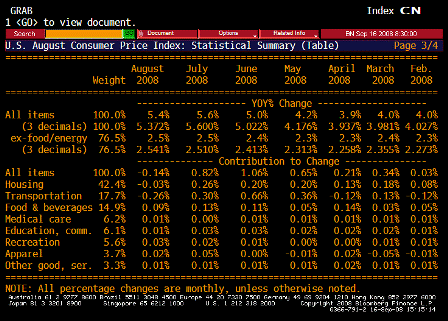
Headline CPI -0.137% m/m and core CPI up .194% m/m

  • Trending items stayed on trend (OER +0.1% and medical +0.2%)

  • Volatile items a bit of a wash

  • Recreation (+0.5) and apparel (+1.0%) higher than normal

  • Lodging away from home (-1%) lower than normal

Fed view likely reinforced that decline in commodity prices plus growing economic slack, especially in labor market, will dampen inflation into 2009.

  • Decision (no cut) may be hawkish relative to expectations, but wording mostly dovish.

  • 1st paragraph- All changes highlight downside risks to growth; slowing export growth a new wrinkle in addition to the usual financial market strains, labor market weakness and housing.

  • 2nd paragraph-Identical to prior except mention of inflation expectations has been dropped; so a downgrading of concern over inflation.

  • 3rd paragraph-‘Stand ready to act’ but no mention of ‘in a timely manner’.

  • Fisher dropped his dissent.


[top]
2008-09-15 Weekly Credit Graph Packet


[Skip to the end]
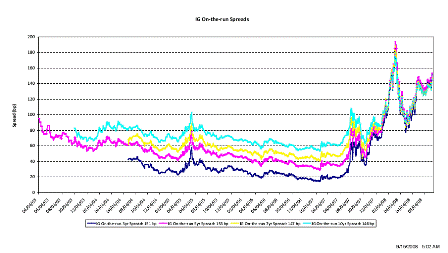
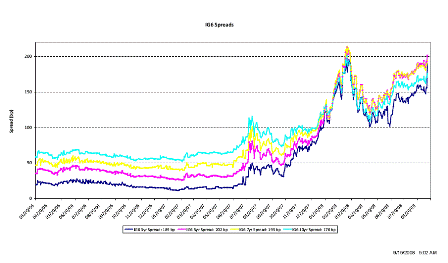
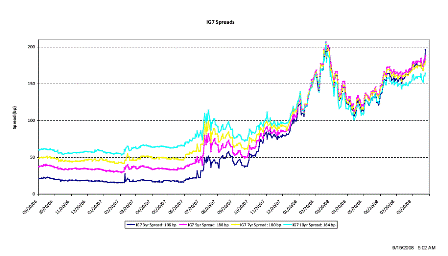
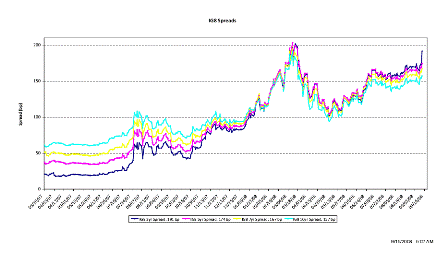
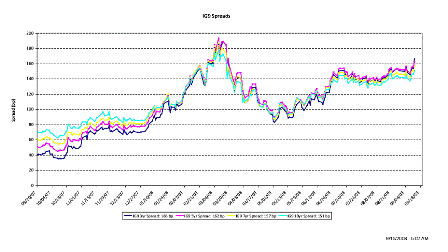
Blip up due to the current turmoil.

IG On-the-Run Spreads (Sep 15)

[top][end]

IG6 Spreads (Sep 15)

[top][end]

IG7 Spreads (Sep 15)

[top][end]

IG8 Spreads (Sep 15)

[top][end]

IG9 Spreads (Sep 15)


[top]