Comments on Summers latest

The deficit hawks have ripped the headline deficit doves to shreds.
The problem is the deficit doves, as previously discussed.
Again, here’s why:

How to avoid our own lost decade

By Lawrence Summers

June 12 (FT) — Even with the 2008-2009 policy effort that successfully prevented financial collapse, the US is now halfway to a lost economic decade. In the past five years, our economy’s growth rate averaged less than one per cent a year, similar to Japan when its bubble burst. At the same time, the fraction of the population working has fallen from 63.1 per cent to 58.4 per cent, reducing the number of those in jobs by more than 10m. Reports suggest growth is slowing.

True!

Beyond the lack of jobs and incomes, an economy producing below its potential for a prolonged interval sacrifices its future. To an extent once unimaginable, new college graduates are moving back in with their parents. Strapped school districts across the country are cutting out advanced courses in maths and science. Reduced income and tax collections are the most critical cause of unacceptable budget deficits now and in the future.

True!

You cannot prescribe for a malady unless you diagnose it accurately and understand its causes. That the problem in a period of high unemployment, as now, is a lack of business demand for employees not any lack of desire to work is all but self-evident, as shown by three points: the propensity of workers to quit jobs and the level of job openings are at near-record low; rises in non-employment have taken place among all demographic groups; rising rates of profit and falling rates of wage growth suggest employers, not workers, have the power in almost every market.

True!

A sick economy constrained by demand works very differently from a normal one. Measures that usually promote growth and job creation can have little effect, or backfire.

A ‘normal’ economy is one with sufficient demand for full employment, so there’s no particular need to promote even more demand.

When demand is constraining an economy, there is little to be gained from increasing potential supply.

True. The mainstream theory is that increased supply will lower prices so the same incomes and nominal spending will buy the additional output. But it doesn’t work because the lower prices (in theory) work to lower incomes to where the extra supply doesn’t get sold and therefore doesn’t get produced. And it’s all because the currency is a (govt) monopoly, and a shortage in aggregate demand can only be overcome by either a govt fiscal adjustment and/or a drop in non govt savings desires, generally via increased debt. And in a weak economy with weak incomes the non govt sectors don’t tend to have the ability or willingness to increase their debt.

In a recession, if more people seek to borrow less or save more there is reduced demand, hence fewer jobs. Training programmes or measures to increase work incentives for those with high and low incomes may affect who gets the jobs, but in a demand-constrained economy will not affect the total number of jobs. Measures that increase productivity and efficiency, if they do not also translate into increased demand, may actually reduce the number of people working as the level of total output remains demand-constrained.

True!

Traditionally, the US economy has recovered robustly from recession as demand has been quickly renewed. Within a couple of years after the only two deep recessions of the post first world war period, the economy grew in the range of 6 per cent or more – that seems inconceivable today.

True!

Why?

Inflation dynamics defined the traditional postwar US business cycle. Recoveries continued and sometimes even accelerated until they were murdered by the Federal Reserve with inflation control as the motive. After inflation slowed, rapid recovery propelled by dramatic reductions in interest rates and a backlog of deferred investment, was almost inevitable.

Not so true, but not worth discussion at this point.

Our current situation is very different. With more prudent monetary policies, expansions are no longer cut short by rising inflation and the Fed hitting the brakes. All three expansions since Paul Volcker as Fed chairman brought inflation back under control in the 1980s have run long. They end after a period of overconfidence drives the prices of capital assets too high and the apparent increases in wealth give rise to excessive borrowing, lending and spending.

Not so true, but again, I’ll leave that discussion for another day.

After bubbles burst there is no pent-up desire to invest. Instead there is a glut of capital caused by over-investment during the period of confidence – vacant houses, malls without tenants and factories without customers. At the same time consumers discover they have less wealth than they expected, less collateral to borrow against and are under more pressure than they expected from their creditors.

True!

Pressure on private spending is enhanced by structural changes. Take the publishing industry. As local bookstores have given way to megastores, megastores have given way to internet retailers, and internet retailers have given way to e-books, two things have happened. The economy’s productive potential has increased and its ability to generate demand has been compromised as resources have been transferred from middle-class retail and wholesale workers with a high propensity to spend up the scale to those with a much lower propensity to spend.

Probably has some effect.

What, then, is to be done? This is no time for fatalism or for traditional political agendas. The central irony of financial crisis is that while it is caused by too much confidence, borrowing and lending, and spending, it is only resolved by increases in confidence, borrowing and lending, and spending. Unless and until this is done other policies, no matter how apparently appealing or effective in normal times, will be futile at best.

Partially true. It’s all about spending and sales. We lost 8 million jobs almost all at once a few years back because sales collapsed. Businesses hire to service sales. So until we get sales high enough to keep everyone employed who’s willing and able to work we will have over capacity, an output gap, and unemployment.

The fiscal debate must accept that the greatest threat to our creditworthiness is a sustained period of slow growth.

NOT TRUE!!! And here’s where the headline deficit doves lose the battles and now the war. There is no threat to the credit worthiness of the US Government. We can not become the next Greece- there simply is no such thing for the issuer of its currency. Credit worthiness applies to currency users, not currency issuers.

Discussions about medium-term austerity need to be coupled with a focus on near-term growth.

There he goes again. This is the open door the deficit hawks have used to win the day, with both sides now agreeing on the need for long term deficit reduction. And in that context, the deficit dove position that we need more deficit spending first, and then deficit reduction later comes across as a ploy to never cut the deficit, and allow the ‘problem’ to compound until it buries us, etc.

Without the payroll tax cuts and unemployment insurance negotiated last autumn we might now be looking at the possibility of a double dip.

They certainly helped, and ending work for pay hurt, and even with whatever support that provided, we are still facing the prospect of a double dip.

Substantial withdrawal of fiscal stimulus at the end of 2011 would be premature. Stimulus should be continued and indeed expanded by providing the payroll tax cut to employers as well as employees.

True, except the extension to employers works to lower prices, as it lowers business costs. This is a good thing, but it adds to aggregate demand only very indirectly. To get it right, I’d suspend all FICA taxes to increase take home pay of those working for a living which will help sales and employment, and to cut business costs, which, in competitive markets, works to lower prices.

Raising the share of payroll from 2 per cent to 3 per cent is desirable, too. These measures raise the prospect of sizeable improvement in economic performance over the next few years.

True, as far as it goes. Too bad he reinforces the overhanging fears of deficit spending per se. You’d think he’d realize everyone would like to cut taxes, and that it’s the fears of deficit spending that are in the way…

At the same time we should recognize that it is a false economy to defer infrastructure maintenance and replacement,

True!

and take advantage of a moment when 10-year interest rates are below 3 per cent

Bad statement!!! This implies that if rates were higher it would make a difference with regards to our infrastructure needs during times of a large output gap, as it perpetuates the myths about the govt somehow being subjected to market forces with regard to its ability to deficit spend. Again, this mainstream deficit dove position only serves to support the deficit hawk fear mongering that’s won the day.

and construction unemployment approaches 20 per cent to expand infrastructure investment.

It is far too soon for financial policy to shift towards preventing future bubbles and possible inflation, and away from assuring adequate demand.

True! But, as above, he’s already defeated himself by reinforcing the fears of deficits and borrowing.

The underlying rate of inflation is still trending downwards and the problems of insufficient borrowing and investing exceed any problems of overconfidence. The Dodd-Frank legislation is a broadly appropriate response to the challenge of preventing any recurrence of the events of 2008. It needs to be vigorously implemented. But under-, not overconfidence is the problem, and needs to be the focus of policy.

Policy in other dimensions should be informed by the shortage of demand that is a defining characteristic of our economy. The Obama administration is doing important work in promoting export growth by modernising export controls, promoting US products abroad and reaching and enforcing trade agreements. Much more could be done through changes in visa policy to promote exports of tourism as well as education and health services. Recent presidential directives regarding relaxation of inappropriate regulatory burdens should also be rigorously implemented.

Too bad he’s turned partisan here, as I’m sure he’s aware of how exports are real costs, and imports real benefits, and how real terms of trade work to alter standards of living. So much for intellectual honesty…

Perhaps the US’ most fundamental strength is its resilience. We averted Depression in 2008/2009 by acting decisively. Now we can avert a lost decade by recognising economic reality.

First we need to recognize financial reality, and unfortunately he and the other headline deficit doves continue to provide the support for the deficit myths and hand it all over to the deficit hawks. Note that, as per the President, everything must be on the table, including Social Security and Medicare. To repeat, fearing becoming the next Greece is working to turn ourselves into the next Japan.

The writer is Charles W. Eliot University Professor at Harvard and former US Treasury Secretary. He is an FT contributing editor

(Feel free to distribute, repost, etc.)
China GDP history

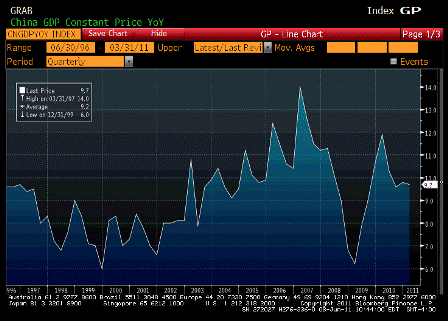
This is year over year ‘real’ GDP growth.

Note the recurring first quarter spikes followed by dips, presumably due to front loading annual state spending and lending.

Not much of a spike this year, due to cutbacks in state spending/lending, but the reduced spending/lending that resulted in the reported growth was likewise front loaded for 2011.

Question now is what the traditional second half dip will look like.
Seems to me it could get pretty ugly.

Also, Japan’s earthquake looks to have weakened world growth more than originally expected. And it’s all probably path dependent, meaning growth simply resumes from the lower, post quake base, especially in light of their reluctance to increase their deficit spending.

Europe is also weakening due to self imposed austerity.

And the US is heck bent on doing same as both parties agree on the need for multi trillions of deficit reduction, while Fed policies continue to work to reduce govt. interest payments to the economy and continue to shift income from savers to bank net interest margins.

H2 is still looking hopeless to me, and also looking like we’re flying without a net.

Bernanke Admits Economy Slowing; No Hint of New Stimulus

In fact, no one on the FOMC has called for QE3, so it’s highly unlikely with anything short of actual negative growth.

So the question is, why the unamimous consensus?

I’d say it varies from member to member, with each concerned for his own reason, for better or for worse.

And I do think the odds of their being an understanding with China are high, particularly with China having let their T bill portfolio run off, while directing additions to reserves to currencies other than the $US, as well as evidence of a multitude of other portfolio managers doing much the same thing. This includes buying gold and other commodities, all in response to (misguided notions of) QE2 and monetary and fiscal policy in general. So the Fed may be hoping to reverse the (mistaken) notion that they are ‘printing money and creating inflation’ by making it clear that there are no plans for further QE.

Hence the ‘new’ strong dollar rhetoric: no more ‘monetary stimulus’ and lots of talk about keeping the dollar strong fundamentally via low inflation and pro growth policy. And the tough talk about the long term deficit plays to this theme as well, even as the Chairman recognizes the downside risks to immediate budget cuts, as he continues to see the risks as asymetric. The Fed believes it can deal with inflation, should that happen, but that it’s come to the end of the tool box, for all practical purposes, in their fight against deflation, even as they fail to meet either of their dual mandates of full employment and price stability to their satisfaction.

They also see downside risk to US GDP from China, Japan, and Europe for all the well publicized reasons.

And, with regard to statements warning against immediate budget cuts, I have some reason to believe at least one Fed official has read my book and is aware of MMT in general.

Bernanke Admits Economy Slowing; No Hint of New Stimulus

June 7 (Reuters) — Federal Reserve Chairman Ben Bernanke Tuesday acknowledged a slowdown in the U.S. economy but offered no suggestion the central bank is considering any further monetary stimulus to support growth.

He also issued a stern warning to lawmakers in Washington who are considering aggressive budget cuts, saying they have the potential to derail the economic recovery if cuts in government spending take hold too soon.

A recent spate of weak economic data, capped by a report Friday showing U.S. employers expanded payrolls by a meager 54,000 workers last month, has renewed investor speculation the economy could need more help from the Fed.

“U.S. economic growth so far this year looks to have been somewhat slower than expected,” Bernanke told a banking conference. “A number of indicators also suggest some loss in momentum in labor markets in recent weeks.”

He said the recovery was still weak enough to warrant keeping in place the Fed’s strong monetary support, saying the economy was still growing well below its full potential.

At the same time, Bernanke argued that the latest bout of weakness would likely not last very long, and should give way to stronger growth in the second half of the year. He said a recent spike in U.S. inflation, while worrisome, should be similarly transitory. Weak growth in wages and stable inflation expectations suggest few lasting inflation pressures, Bernanke said.

On the budget, Bernanke repeated his call for a long-term plan for a sustainable fiscal path, but warned politicians against massive short-term reductions in spending.

“A sharp fiscal consolidation focused on the very near term could be self-defeating if it were to undercut the still-fragile recovery,” Bernanke said.

“By taking decisions today that lead to fiscal consolidation over a longer horizon, policymakers can avoid a sudden fiscal contraction that could put the recovery at risk,” he said.

All Tapped Out?

The central bank has already slashed overnight interest rates to zero and purchased more than $2 trillion in government bonds in an effort to pull the economy from a deep recession and spur a stronger recovery.

With the central bank’s balance sheet already bloated, officials have made clear the bar is high for any further easing of monetary policy. The Fed’s current $600 billion round of government bond buying, known as QE2, runs its course later this month.

Sharp criticism in the wake of QE2 is one factor likely to make policymakers reluctant to push the limits of unconventional policy. They also may have concerns that more stimulus would face diminishing economic returns, while potentially complicating their effort to return policy to a more normal footing.

But a further worsening of economic conditions, particularly one that is accompanied by a reversal of recent upward pressure on inflation, could change that outlook.

The government’s jobs report Friday was almost uniformly bleak. The pace of hiring was just over a third of what economists had expected and the unemployment rate rose to 9.1 percent, defying predictions for a slight drop.

In a Reuters poll of U.S. primary dealer banks conducted after the employment data, analysts saw only a 10 percent chance for another round of government bond purchases by the central bank over the next two years. Dealers also pushed back the timing of an eventual rate hike further into 2012.

The weakening in the U.S. recovery comes against a backdrop of uncertainty over the course of fiscal policy and bickering over the U.S. debt limit in Congress, with Republicans pushing hard for deep budget cuts.

Fragility is Global

Hurdles to better economic health have emerged from overseas as well. Europe is struggling with a debt crisis, while Japan is still reeling from the effects of a traumatic earthquake and tsunami.

In emerging markets, China is trying to rein in its red-hot growth to prevent inflation.

Fed policymakers have admitted to being surprised by how weak the economy appears, but none have yet called for more stimulus.

In an interview with the Wall Street Journal, Chicago Federal Reserve Bank President Charles Evans, a noted policy dove, said he was not yet ready to support a third round of so-called quantitative easing. His counterpart in Atlanta, Dennis Lockhart, also said the economy was not weak enough to warrant further support.

While Boston Fed President Eric Rosengren told CNBC Monday the economy’s weakness might delay the timing of an eventual monetary tightening, the head of the Dallas Federal Reserve Bank, Richard Fisher, said the Fed may have already done too much.

Evans and Fisher have a policy vote on the Fed this year while Rosengren and Lockhart do not.

What Happens When the Government Tightens its Belt?

What Happens When the Government Tightens its Belt?

By Stephanie Kelton

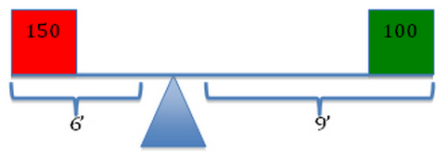
May 27 — Imagine two people sitting on opposite ends of a 15-foot teeter-totter. The laws of physics dictate that the seesaw will balance if the product of the first mass (w1) and its distance (d1) from the fulcrum (i.e. the balancing point) is equal to the product of the other mass (w2) and its distance (d2) from the fulcrum. Thus, the physicist can show that the teeter-totter will be in balance when the fulcrum is placed 6 feet from the end holding a 150lb person and 9 feet from the end holding a 100lb person. Moreover, the laws of physics ensure that an imbalance will arise if the mass or the relative position of one of the people is changed.


The laws of accounting allow us to demonstrate that similarly powerful concepts apply to the science of economics. Beginning with the simple identity for GDP in a closed economy, we have:

[1] Y = C + I + G, where:

   Y = GDP = National Income
   C = Aggregate Consumption Expenditure
   I = Aggregate Investment Expenditure
   G = Aggregate Government Expenditure

For economists, this is as obvious as stating that a linear foot is the sum of 12 sequential inches. It simply recognizes that the total amount of money spent buying newly produced goods and services will yield an equivalent income to the sellers of these products. Thus, it demonstrates that expenditures are a source of income.

Once earned, income can be allocated in one of three ways. At the end of the day, all income (Y) will be spent (C), saved (S) or used in payment of taxes (T):

[2] Y = C + S + T

Since they are equivalent expressions for Y, we can set equation [1] equal to equation [2], giving us:

C + I + G = C + S + T

Or, after canceling (C) from both sides and moving terms around:

[3] (S – I) = (G – T)

Equation [3] shows that there is a direct relationship between what’s happening in the private sector (S – I) and what’s happening in the public sector (G – T). But it is not the one that Pete Peterson, Erskin Bowles, or President Obama would have you believe. And I want you to understand why they are wrong.

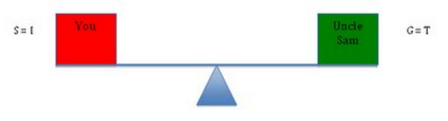
To understand the argument, imagine that you and Uncle Sam are sitting on opposite ends of a teeter-totter. You represent the private sector, and your financial status is given by (S – I). Your budget can be in balance (S = I), in deficit (S < I) or in surplus (S > I). When your financial status is positive (S > I), you are net saving. When your financial status is negative (S < I), you are net borrowing. Uncle Sam’s financial status is equal to (G – T), and, like yours, his budget may be balanced (G = T), in deficit (G > T) or in surplus (G < T). When you interact, only three outcomes are possible.
First, it is conceivable that (S = I) and (G = T) so that (S – I) = 0 and (G – T) = 0. When this condition holds, the teeter-totter will level off with each of you experiencing a balanced budget.

In the above scenario, the government is balancing its receipts (T) and expenditures (G), and you are balancing your savings and investment spending. There is no net gain/loss.

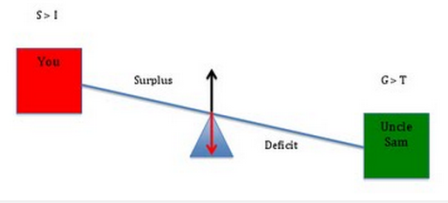
But suppose the government begins to spend more than it collects in taxes (i.e. G > T). How will Uncle Sam’s deficit affect your position on the teeter-totter? The answer is as straightforward as increasing the mass of the person on the right-hand side of the seesaw. As Uncle Sam’s financial position turns negative, your financial position turns positive.

This should make intuitive as well as mathematical sense, because when Uncle Sam runs a deficit, you receive more financial assets than you lose through taxation. Put simply, Uncle Sam’s deficit lifts you into a surplus position. Moreover, bigger deficits mean bigger surpluses for you.

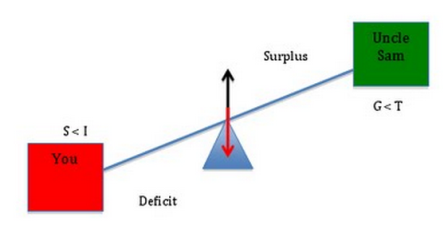
Finally, let’s see what happens when Uncle Sam tightens his belt. Suppose, for example, that we were able to duplicate the much-coveted surpluses of 1999-2001. What would (and did!) happen to the private sector’s financial position?

Because the economy’s financial flows are a closed system – every payment must come from somewhere and end up somewhere – one sector’s surplus is always the other sector’s deficit. As the government “tightens” its belt, it “lightens” its load on the teeter-totter, shifting the relative burden onto you.

This is not rocket science, but it appears to befuddle scores of educated people, including President Obama, who said, “small businesses and families are tightening their belts. Their government should, too.” This kind of rhetoric may temporarily boost his approval ratings, but the policy itself will undermine the efforts of the very families and small businesses that are trying to improve their financial positions.

* I’ll be back with a second installment that shows what happens when we ‘open’ the economy to take into account the foreign sector (and the relevant financial flows). Many of us have been working with financial balance equations for years (see herefor references), so the current effort is nothing new. I am merely trying to make the arguments more accessible by changing the way they are presented.

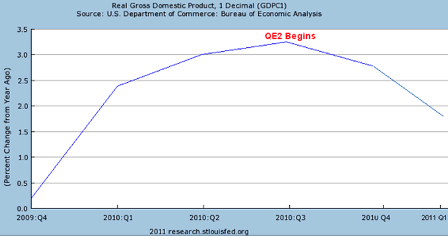
GDP Gain Just 1.8%

No actual evidence, but my point remains that if the executive branch can cut spending they don’t like simply by not spending what’s authorized by Congress, they can take the pressure off demands for other spending cuts.

Also, again conjecture on my part, the QE and zero rate ‘tax’ (reduced interest income) may be what’s keeping a lid on growth here much like what’s happened to Japan for nearly 20 years.

As previously discussed, with 0 rates seems to me taxes can be quite a bit lower for any given size govt (larger deficit) without being ‘inflationary’. Unfortunately our fearless leaders are all going the other way.

Economic Growth Disappoints as GDP Gain Just 1.8%

May 26 (Reuters) — Surging gasoline prices and sharp cutbacks in government spending caused the economy to grow only weakly in the first three months of the year. Consumer spending slowed even more than previously estimated.

The Commerce Department says the overall economy grew at an annual rate of 1.8 percent in the January-March quarter.

That was the same as the government’s first estimate a month ago. Consumer spending grew at just half the rate of the previous quarter. And a surge in imports widened the U.S. trade deficit.

Many economists believe the economy is growing only slightly better in the current April-June quarter. Consumers remain squeezed by gas prices near $4 a gallon and renewed threats from Europe’s debt crisis.

GS MACRO FORECAST CHANGES

As suspected Q2 forecasts being revised down most everywhere, and now 2012 estimates being trimmed as well

GS MACRO FORECAST CHANGES:

-> 2011 US GDP now 2.6% from 3.1%. 2012 now 3.2% from 3.8%.
-> We have lowered Global GDP forecast to 4.3% from 4.8%, modestly raised our inflation forecasts & extended monetary tightening cycle in several EM economies. Also extended forecasts of USD weakness. “Revisions outlined here reflect impacts of two major shocks the global economy absorbed over last six months: tightening of the oil supply, and effects of the disaster in Japan”
-> EM ’11 GDP Growth now at 7.1% from 7.5% and ’12 at 7% from 7.2%.
-> World ’11 Inflation at 4.3% from 3.5% and ’12 at 3.2% from 3.1%. Emerging Markets ’11 Inflation at 6.1% from 5.8% and 4.7% from 5.2%.

QE and Real GDP

To which they respond ‘monetary policy works with a lag’

And to which I add, yes, it lags until the next fiscal adjustment kicks in.

;)

>   
>   But equities continue to peform relatively well.
>   

Yes, they should be ok with any positive top line growth.

The risks that remain are a hard landing in China, a euro zone meltdown, and fiscal responsibility in the US and Japan.

More on the euro zone deficit report

Yes, the deficit went from 6.3% to 6% of GDP, but the question remains as to whether they are at the point where further slowing from austerity measures continue to reduce the overall deficit or, instead, an induced slowdown begins to increase it.

Euro Zone 2010 Deficit Shrinks, Debt Rises

April 26 (Reuters) — The euro zone’s aggregated budget deficit fell last year as most countries slashed government spending to restore market confidence in public finances, but the debt still grew, Eurostat data showed.

The European Union’s statistics office said on Tuesday the budget deficit in the euro zone in 2010 was 6.0 percent of gross domestic product, down from 6.3 percent in 2009. Public debt, however, rose to 85.1 percent from 79.3 percent in 2009.

All euro zone countries except Germany, Ireland, Luxembourg and Austria improved their budget balance last year, but debt rose in all euro zone countries except Estonia.

Eurostat said Greece, which was forced to seek emergency funding from the euro zone last year because it was effectively cut off from market borrowing due to its large debt, cut its budget gap to 10.5 percent of GDP from 15.4 percent in 2009.

This is well above the initial target of the Greek austerity programme of 8 percent and even above the latest estimate from the European Union and the International Monetary Fund of 9.6 percent.

Greek public debt rocketed to 142.8 percent of GDP from 127.1 percent in 2009.

Ireland saw its budget deficit more than double to 32.4 percent of GDP last year from 14.3 percent in 2009 and its debt jumped to 96.2 percent from 65.6 percent as the country had to borrow to bail out its banking sector.

Robert Reich’s no so innocent fraud

Obama’s Real Budget Plan (and Why It’s a Huge Gamble)

By Robert Reich

Here’s the part of interest to me:

Yet what are the chances of a booming recovery? The economy is now growing at an annualized rate of only 1.5 percent. That’s pitiful. It’s not nearly enough to bring down the rate of unemployment, or remove the danger of a double dip. Real wages continue to drop. Housing prices continue to drop. Food and gas prices are rising. Consumer confidence is still in the basement.

Fair enough, now on to the problem and the remedy:

By focusing the public’s attention on the budget deficit, the President is still playing on the Republican’s field. By advancing his own “twelve year plan” for reducing it – without talking about the economy’s underlying problem – he appears to validate their big lie that reducing the deficit is the key to future prosperity.

Promising rhetoric there- deficit reduction isn’t the answer!

The underlying problem isn’t the budget deficit.

Really getting my hopes up now!

It’s that so much income and wealth are going to the top that most Americans don’t have the purchasing power to sustain a strong recovery.

****sound of a balloon deflating****

Until steps are taken to alter this fundamental imbalance – for example, exempting the first $20K of income from payroll taxes while lifting the cap on income subject to payroll taxes, raising income and capital gains taxes on millionaires and using the revenues to expand the Earned Income Tax Credit up to incomes of $50,000, strengthening labor unions, and so on – a strong recovery may not be possible.

Message to Bob:

I suspect you understand taxes function to regulate aggregate demand, not to fund expenditures per se?

So please don’t blow smoke and instead just state that the tax cut part of your proposal is meant to add to aggregate demand,

And that the tax increase part is to achieve your vision of social equity without subtracting very much from aggregate demand.

Instead, by doing it the way you are doing it, you are implying that the deficit per se is of economic consequence.

This makes you part of the problem, rather than part of the answer, as you are supporting the deficit myths which are preventing any actual solution from being implemented.

Robert B. Reich has served in three national administrations, most recently as secretary of labor under President Bill Clinton. He also served on President Obama’s transition advisory board. His latest book is Supercapitalism.

What happened to Q1?

This is typical of recent announcements:

“With most of the news on 1Q growth now in, the GDP “bean count” looks even softer than it did a couple of weeks ago. The most recent disappointments have come on the export side—with trade now set to subtract significantly from growth in the quarter—and from inventories. Consequently, we are downgrading our real GDP growth estimate to 1¾% (annualized), from 2½% previously (and from 3½% not too long ago).”

So what went wrong?

Maybe, as I guessed at just prior to year end:

The effect of world austerity was underestimated, particularly in Europe and China?

The effects of income channel from QE2 (remember the Fed turning over $79 billion to the tsy that the economy would have earned if the Fed hadn’t bought/owned those securities?) were underestimated?

The effect of the year end tax adjustment was less than anticipated, as work for pay that was eliminated maybe had higher propensities to consume than the 2%, one year FICA reduction?

Rising gasoline prices slowed things down some?

Rising food price as we burn up our food supply for fuel wreak havoc world wide?

So how about Q2, which is starting about as high as Q1 did?

High food and gasoline prices continue.

Supply disruptions from the Japan.

The Fed owns more tsy secs and has thereby removed more interest income from the economy.

World austerity intensifies, now including the US.

China’s inflation fight intensifies.

And business top line growth starting to falter from modest levels?

And this time the fiscal safety nets are in jeopardy as govt’s believe they have ‘run out of money’ and need to tighten up, with Japan now the prime example, looking at tax hikes to ‘pay for’ earthquake damage.