retail sales, mtg purchase apps, global highlights

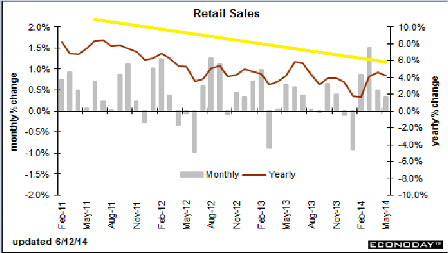
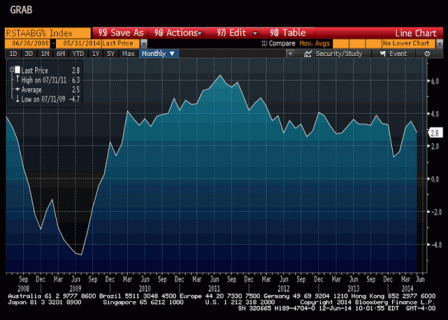
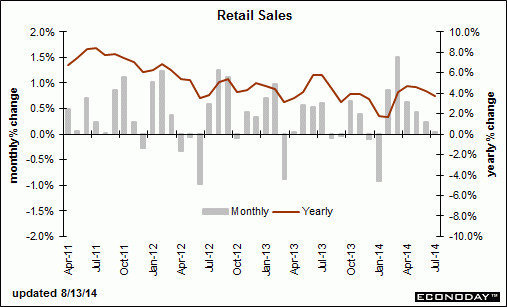
Growth decelerating for 3 consecutive months:


Highlights
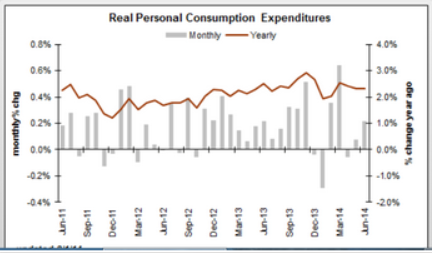
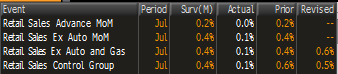
Retail sales disappointed for a second month in a row. Retail sales were flat in July, following a 0.2 percent gain the month before (originally up 0.2 percent). Analysts forecast for a 0.2 percent rise in July.

Motor vehicles slipped 0.2 percent, following a decrease of 0.3 percent in June. Excluding motor vehicles, sales edged up 0.1 percent, following an increase of 0.4 percent in June. Forecasts were for 0.4 percent. Excluding motor vehicles and gasoline, sales nudged up 0.1 percent in July after jumping 0.6 percent the prior month. The median market forecast for July was for 0.3 percent.

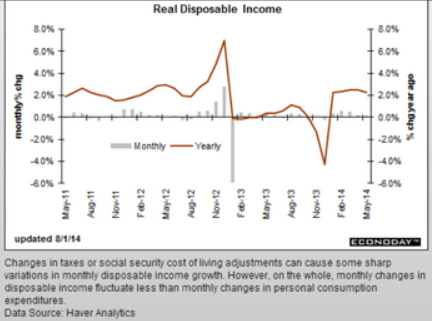
While consumer spending was healthy in the second quarter, that does not appear to be the case for the third quarter based on July data.
Mtg purchase apps down for the week and down 10% year over year:

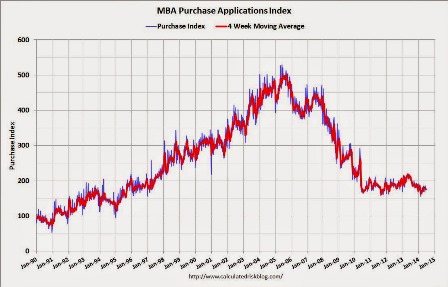
MBA Purchase Applications


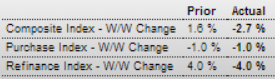
Demand for purchase applications remained flat in the August 8 week, down 1.0 percent for the second straight week. Year-on-year, purchase applications are down 10.0 percent. Demand for refinancing is also weak, down 4.0 percent in the week. The declines come despite a dip in mortgage rates where the average 30-year mortgage rate for conforming loans ($417,500 or higher) fell 2 basis points to 4.24 percent.
Home Price Growth Slowdown a Mixed Trend for Economy (WSJ) Single-family housing prices rose 4.4% in the year that ended in the second quarter, the slowest annual pace since 2012, according to a report released Tuesday by National Association of Realtors. The association found that median prices for existing single-family homes grew year-over-year in 122 of 173 metropolitan areas it tracked, while prices declined in 47 metro areas. Only 19 areas showed double-digit year-over-year price increases, a substantial drop from the 37 cities that showed such increases in the first quarter.While the median existing single-family home price between the second quarters of 2013 and 2014 rose 7.3% in the West to $297,400, home prices in the Northeast fell 0.9% to $255,500, the report said.

Japan GDP shrinks sharper than after 1997 tax hike (Nikkei) The Cabinet Office said in a preliminary report Wednesday that real gross domestic product for April-June contracted at an annualized rate of 6.8% from the previous quarter. The decline was steeper than in the same quarter of 1997, after sales tax was raised from 3% to 5%. At that time, the economy shrank 3.5%. Economic and Fiscal Policy Minister Akira Amari was unfazed by the big contraction. “The backlash will ease down the road,” he said at a news conference after the GDP results were announced. He said the economy will return to a mild recovery path after summer. “Production shifts to overseas are well underway,” said Amari, indicating that the export decline this time is a long-term structural trend.

China July property investment slows, sales drop sharply (Reuters) Property investment grew 13.7 percent in the first seven months from a year ago, down from an annual rise of 14.1 percent in the first half. Newly started property construction dropped 12.8 percent in the January to July period from the same time a year ago, though the decline easing from an annual drop of 16.4 percent in the first six months. Meanwhile, property sales dropped 16.3 percent in July in terms of floor space, according to Reuters calculations based on official data. That compared with a 0.2 annual drop in June. The NBS data showed mortgage loans fell 3.7 percent in the first seven months of 2014, unchanged from the first half.


Surprisingly weak China July money data cast doubts on recovery’s durability (Reuters) China’s total social financing (TSF) aggregate fell to 273.1 billion yuan ($44.34 billion) in July, about one seventh of that in June. The People’s Bank of China took the unusual step of issuing a statement immediately after the data, reassuring markets that credit and financing growth was still reasonable and that it had not changed its monetary policy. Non-performing loans have now risen for 11 straight quarters, the central bank’s statement said. Chinese banks made 385.2 billion yuan ($62.53 billion) worth of new yuan loans in July, down sharply from 1.08 trillion yuan in June and well below expectations of 727.5 billion yuan, central bank data showed on Wednesday.–

Overly tight fiscal globally continues to put the squeeze on output and employment.

This email is going to pmc donors in advance of being posted on my website.
If you wish to be removed from this list just let me know thanks!

Consumer credit, wholesale trade, productivity and costs

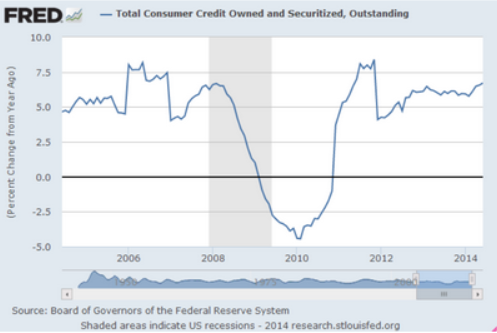
This has been going the wrong way since the post winter April ‘surge’:

Highlights
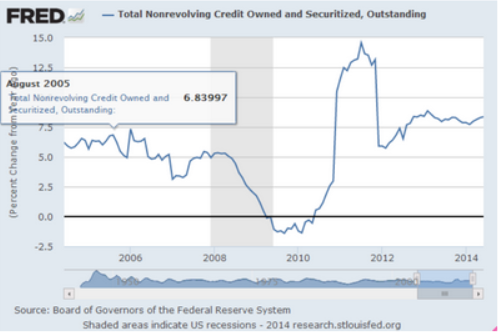
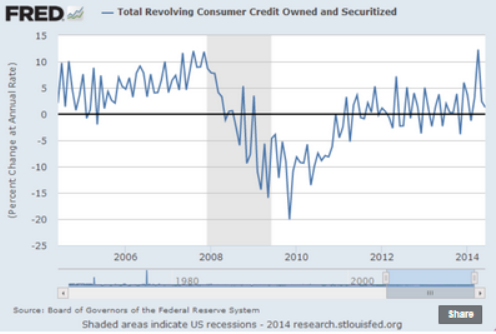
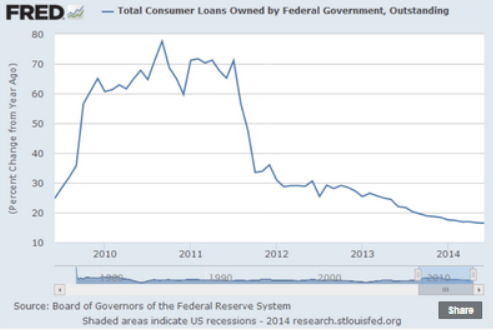
Consumer credit rose $17.3 billion in June and was driven once again by the nonrevolving component, which rose $16.3 billion on vehicle financing and also the government’s continued acquisition of student loans from private lenders. The revolving component, which is key for retailers, did rise but not very much, up $0.9 billion following a revised $1.7 billion rise in May that followed a rare surge in this category of $8.8 billion April. Aside from vehicles, consumers remain reluctant to take on new debt.

Growth rate of student loans continues to slow:

Trade numbers resulted in upward Q2 GDP revisions, while today’s inventory report means downward revisions:

Wholesale Trade


Highlights
Wholesale inventories rose 0.3 percent in June, a modest rise in line with a modest 0.2 percent gain in wholesale sales that leaves the stock-to-sales ratio unchanged at a lean 1.17. Activity has been strong in the auto sector with wholesale sales of autos jumping 2.1 percent, following gains of 1.4 percent and 3.1 percent in the prior two months. The gain in sales made for a 0.3 percent draw in wholesale inventories of autos, one that will have to replenished which is a plus for auto production.

Outside of autos, inventory draws are scarce but do include a major 5.3 percent draw in farm products which follows prior consecutive monthly draws of 4.4 percent and 0.4 percent. How much the draws in farm products will be replenished is uncertain given an 8.1 percent drop in wholesale sales for farm products during the month, not to mention current concern over the Russian embargo of US food products.

Turning back to sales, paper products, professional equipment (including computers), lumber, and metals show strong gains, all matched by what are likely desired builds on the inventory side. Weakness in sales, outside of farm products, includes chemicals, hardware, groceries, and apparel, groups all showing on the inventory side what are likely to be unwanted builds.

Outside of autos, this report on net points to soft growth in the wholesale sector during June. Next inventory data will be the business inventories report next Wednesday.

“Inventories are a key component of gross domestic product changes. The component that goes into the calculation of GDP—wholesale stocks excluding autos—increased 0.4 percent.

A report this week showed stocks of nondurable goods at manufacturers rose far less than the government had assumed in its advance second-quarter gross domestic product estimate published last week.

In that report, the government said inventories contributed 1.66 percentage points to GDP growth, which expanded at a 4.0 percent annual pace.

Wholesale inventories in June were held back by a decline in automobiles and nondurable goods.

Sales at wholesalers rose 0.2 percent after increasing 0.7 percent in May. There were declines in sales of nondurable goods, hardware and apparel.”

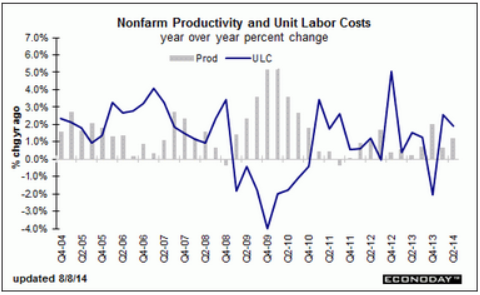
Unit labor costs below expectations:

Recent charts

If you haven’t donated to the PMC yet you can do so here.

I just finished the 2 day ride. :)

100% of all donations go to Dana Farber in Boston, THE premier cancer research center.

And I’m in the process of narrowing this mailing list to those who donate.

;)

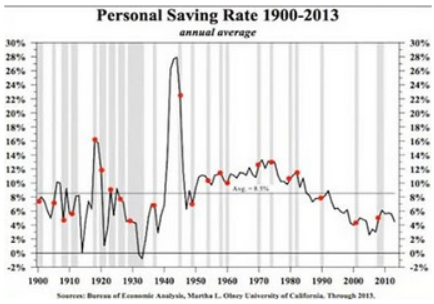
Notice that the govt deficit and savings rate more pretty much together?

Car sales off of last months pace, but forecasts for this year are for a slower rate of growth than last year:


Full size image

No sign of ‘consumer acceleration’ here?


Full size image

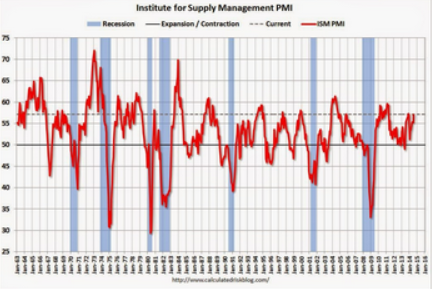
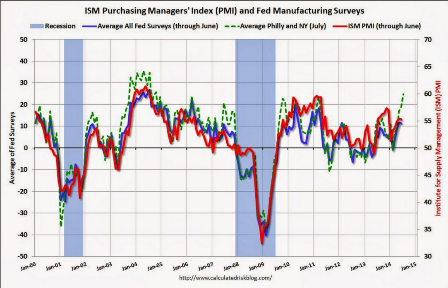
Manufacturing continues chugging along at it’s usual 4% rate of growth:

PMI Manufacturing Index:


Full size image

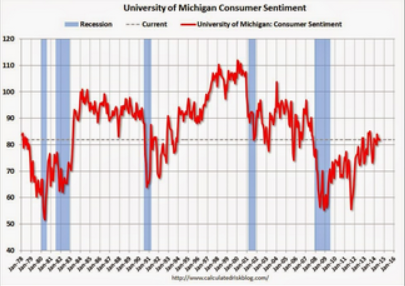
And Consumer Sentiment continues to bob around at levels that were the pretty much the lows of prior cycles:


Full size image

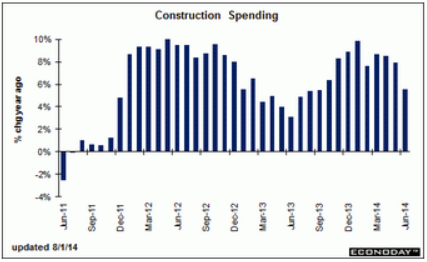
Slipping a bit after the year end surge to beat expiring tax credits?

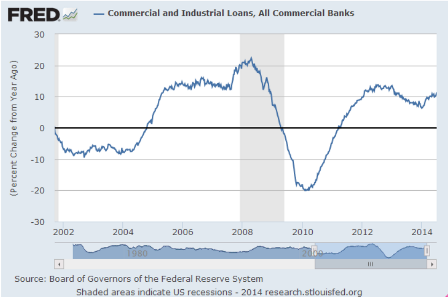
Bank lending flattening some after growing to fund unsold Q2 inventories?

Q2 could be revised to anything over the next couple of months, seems, as was Q1.

But at least for now the chart is what it is:


Highlights
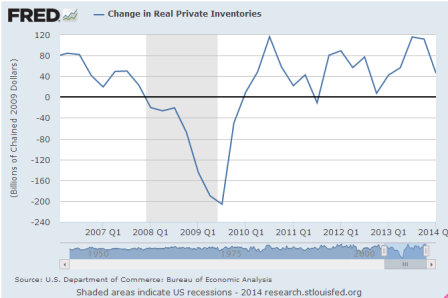
The second quarter rebounded more than expected from the adverse weather impacted first quarter. While there were a number of strong components, the rebound was led by inventory growth.

GDP

A few charts/comments below. More after the first revision to Q2 come out. Looks to me like the macro constraint narrative is still intact.

Just a word here about state and local govt spending adding to GDP. Yes, there was an increase in spending. But tax receipts also went up, which subtracts from private spending. The thing to watch is net state and local spending, including borrowing to spend. I don’t have any charts, but anecdotally state and local budgets are said to be ‘improving’ which means less net spending.

GDP


Highlights
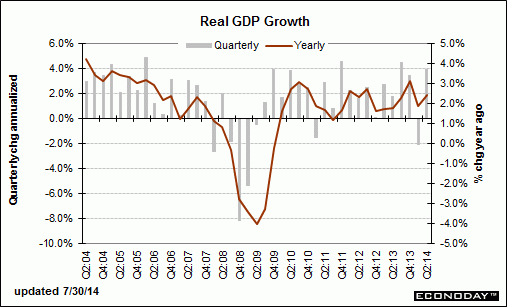
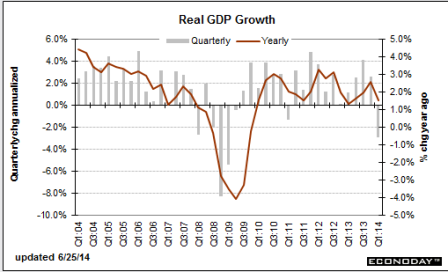
The second quarter rebounded more than expected from the adverse weather impacted first quarter. While there were a number of strong components, the rebound was led by inventory growth. The advance estimate for the second quarter posted at a healthy 4.0 percent annualized, following an upwardly revised decline of 2.1 percent in the first quarter (previously down 2.9 percent). The median forecast was for 3.1 percent. Today’s release includes annual revisions.

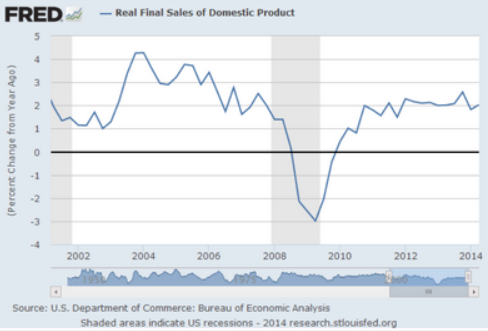
Final sales of domestic product rebounded 2.3 percent after dipping 1.0 percent in the first quarter. Final sales to domestic purchasers gained 2.8 percent in the second quarter, compared to 0.7 percent in the first quarter.

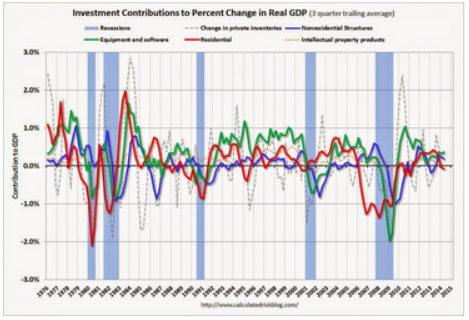
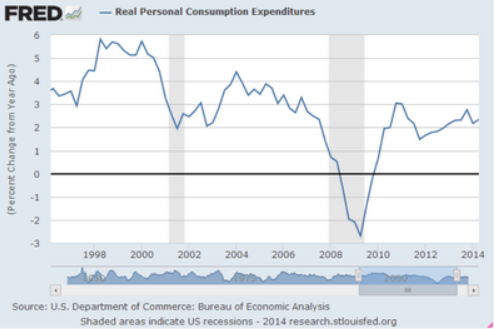
Turning to components, inventory investment jumped $93.4 billion after rising $35.2 billion in the first quarter. Importantly, personal spending posted a robust 6.2 percent gain, following a 1.0 percent rise in the prior quarter. Durables PCEs were particularly strong with nondurables healthy. Services posted on the soft side.

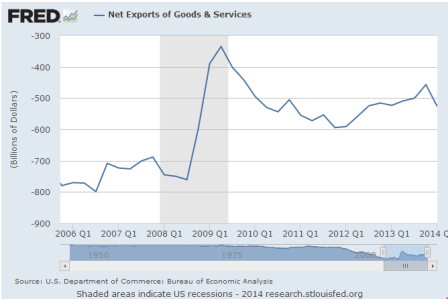
Residential investment rebounded notably in the second quarter and nonresidential investment was healthy. Government purchases were up but soft and net exports worsened notably.

On the price front, the chain-weighted price index firmed to a 2.0 percent increase, up from 1.3 percent in the first quarter. The core chain index increased 1.8 percent in the second quarter from 1.2 percent in the prior quarter.

Turning to annual revisions, 2013 on an annual average basis was revised up to 2.2 percent versus the prior estimate of 1.9 percent; 2012 revised down to 2.3 percent from 2.8 percent; and 2011 revised down to 1.6 percent from 1.8 percent.

Overall, the second quarter numbers point to a return to forward momentum after the deep freeze first quarter. While inventories led second quarter growth, this should not be disconcerting as the lack of production in the first quarter meant that significant inventory rebuilding was needed. Additionally, other GDP components (net exports being the key exception) were healthy.


Full size image

Average basic monthly wage posts 1st gain in June in over 2 years

July 31 (Kyodo) — The average basic monthly salary at companies with at least five employees rose 0.3 percent in June from a year earlier to 243,019 yen, marking the first rise in two years and three months, the labor ministry said Thursday. This year’s “shunto” spring labor offensive resulting in many unions winning a pay-scale increase pushed up the figure, according to the Health, Labor and Welfare Ministry. The total monthly average, including bonuses, increased 0.4 percent to 437,362 yen. Nonscheduled cash earnings, such as overtime compensation, grew 1.9 percent to 19,058 yen. Real wages, adjusted for inflation, decreased 3.8 percent, down over 3 percent for the third consecutive month following the consumption tax hike in April.

Housing and Philly Fed

Note the Nov/Dec mini spike to capture year end tax credits (my story) followed by familiar down for the winter, then up, then back down some pattern.

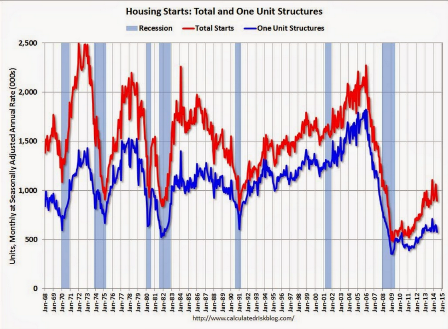
Yes, you can have a low output gap without housing, and yes, manufacturing is chugging along nicely. But overall the charts show declining monthly growth rates of retail sales, industrial production, and housing starts, as what’s looking more and more like the macro constraint of the relentless demand leakages continue to take their toll.

Housing Starts


Highlights
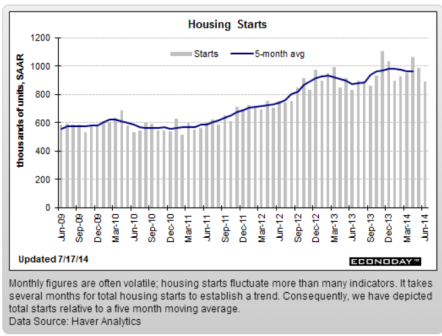
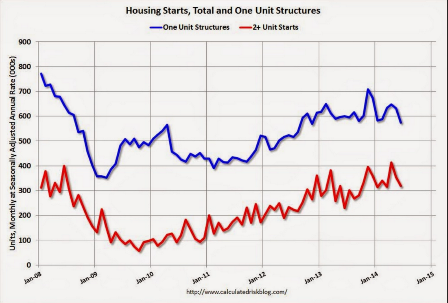
Fed Chair Janet Yellen was right to worry about the housing sector during Congressional testimony this week. Starts in June disappointed sharply, declining another monthly 9.3 percent after decreasing 7.3 percent in May. June starts came in at 0.893 million units annualized, up 7.5 percent on a year-ago basis. Expectations were for 1.026 million units.

The fall in the latest month was led by the multifamily component but closely followed by the single-family component. Multifamily family starts dropped 9.9 percent after falling 14.7 percent in May. The single-family component declined 9.0 percent in June, following a 2.6 percent dip the prior month.

Building permits also lost ground. Permits declined 4.2 percent after decreasing 5.1 percent in May. June’s 0.963 million units annualized was up 2.7 percent on a year-ago basis. Analysts forecast 1.038 million units for June.

The housing sector still needs propping up by the Fed. This sector is losing steam instead of improving. Recent NAHB HMI have pointed to start weakness with weak numbers on traffic.


Full size image


Full size image


Full size image


Full size image

Industrial production, mtg purchase apps charts, homebuilder’s index

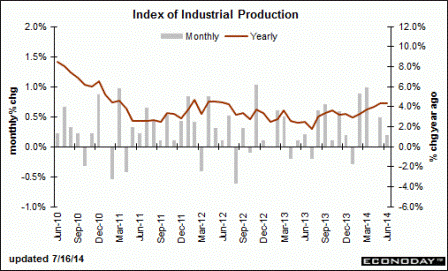
Slowed in Q1, rebound in Q2, H1 about the same old 4% rate IP usually grows at as previously discussed:

Industrial Production


Highlights
As suggested by production worker hours, industrial production was soft in June. Industrial production slowed to a rise of 0.2 percent, following a jump of 0.5 percent in May. Expectations were for a 0.4 percent boost. The manufacturing component decelerated to a modest 0.1 percent gain after jumping 0.4 percent the prior month. The median market forecast was for 0.4 percent. Mining was healthy with a 0.8 percent increase, following a 1.1 percent surge in May. Utilities declined 0.3 percent, following a drop of 0.4 percent in May.

Manufacturing excluding motor vehicles increased 0.2 percent in June after a 0.3 percent rise in May.

Within manufacturing, the production of durable goods increased 0.4 percent in June and rose at an annual rate of 8.8 percent in the second quarter. In June, the gains were broad based among durable manufacturing industries, with increases of 1.0 percent or more in the indexes for nonmetallic mineral products, for primary metals, for fabricated metal products, for aerospace and miscellaneous transportation equipment, and for furniture and related products. The production of nondurable goods moved down 0.3 percent in June. In June, the output of petroleum and coal products fell 2.7 percent, in part because of a disruption at a major refinery; the production of apparel and leather declined 1.3 percent, and the index for food, beverage, and tobacco products moved down 0.6 percent.

The overall capacity utilization rate in June held steady at 79.1 percent. The latest number came in slightly lower than the consensus projection for 79.2 percent.

For the second quarter as a whole, manufacturing production rose at an annual rate of 6.7 percent after increasing 1.4 percent in the first quarter, suggesting that second quarter GDP will rebound nicely from the first quarter freeze shock.

We are seeing some volatility in manufacturing numbers recently. But on average, growth is healthy.

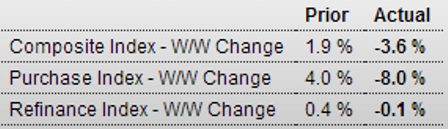
Mortgage purchase apps still way soft:

MBA Purchase Applications

Highlights
The purchase index fell 8.0 percent in the July 11 week, more than reversing a 4.0 percent gain in the prior week. The refinance index was little changed, down 0.1 percent in the week. Rates were little changed in the week with the average 30-year rate for conforming loans ($417,500 or less) up 1 tenth to 4.33 percent. Watch for the housing market index later this morning at 10:00 a.m. ET.

MBA purchase applications:


Full size image

National Association of Home Builders index up:


Full size image


Full size image

Big snap back in second quarter growth less likely

No mention yet of the deficit being too small…

At sub 3% we comply with the Maastricht limits.
Maybe the plan is to join the euro?
Why else would we allow this?
;)

Big snap back in second quarter growth less likely

By Patti Domm

(CNBC) — After a shocking contraction in first quarter GDP, economists on Thursday pared back growth forecasts for the second quarter due to weaker consumer spending.

Consumer spending in May rose just 0.2 percent, half of what was expected, after being flat in April. Spending by consumers accounts for more than two-thirds of U.S. economic activity, and the lowered growth forecasts now raise concerns that the economy will not be able to rebound to the more than a 3 percent growth rate widely expected for the balance of the year.

Goldman Sachs economists trimmed second quarter tracking GDP to 3.5 percent from 4.1 percent, and Barclays economists said tracking GDP for the second quarter fell to 2.9 percent from 4 percent. At a pace below 3 percent, the economy could show contraction for the first half due to the steep first quarter decline of 2.9 percent.

The median estimate for second quarter GDP fell by a half percent to 3 percent, according to the CNBC Rapid Update of economists forecasts.

charts and comments GDP, durables, mtg apps, etc.

>   
>   On Wed, Jun 25, 2014 at 8:52 AM, Sheraz wrote:
>   
>   Very weak US numbers
>   

And not one ‘nice call’ email!!!
And yesterday’s stock market action suggests a possible data leak???
:(

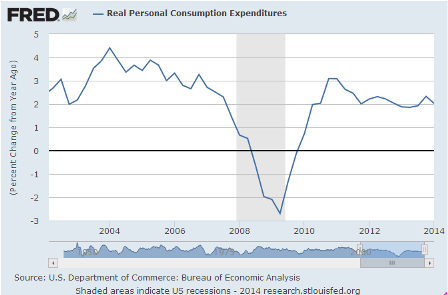
US 1Q GDP has been revised lower by far than expected. After having initially been reported as a 0.1% rise, then a 1% contraction, the third release shows that GDP growth is now reported as -2.9 QoQ% annualised, which leaves annual growth at just 1.5%YoY.


The consensus expectation was for a -1.8% reading. The damage was largely done through the private consumption component, which is now reported as rising just 1% versus 3.1% previously.

Also ‘smoothing’ from numbers that looked high to me in H2 and an adjustment to ACA related healthcare expenses previously booked as PCE:


Full size image

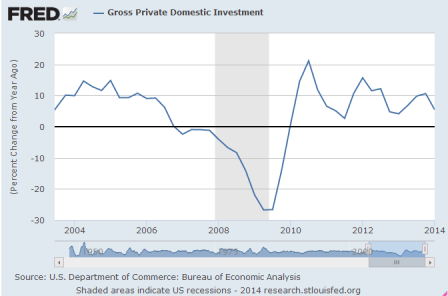
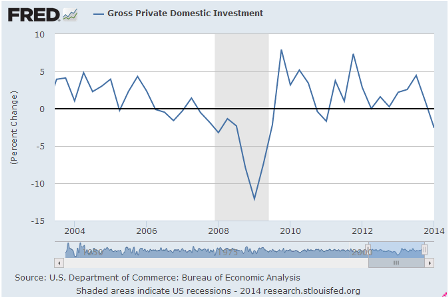
Gross private investment remained an 11.7% contraction

Maybe after a Q4 surge due to expiring tax credits?


Full size image


Full size image

while government consumption was left at -0.8%. However, exports were revised down and imports revised up meaning that the contribution from net trade is to subtract 1.5% from GDP growth rather than 0.95% as previously announced.

Reversing a similar, prior blip up, as previously discussed:


Full size image

Nonetheless, reaction should be fairly muted given widespread expectations of a sharp bounceback in 2Q14 and the fact that the weather had such a damaging impact on 1Q activity. Indeed, we suspect that we could see GDP rise by more than 5% annualised in 2Q.

And if so, H1 would be +1% :(

High frequency numbers for the quarter have looked good while inventories should also make a significantly positive contribution after having been run down sharply.

After having been run up in H2. We’ll see where they go from here.

And, as previously discussed after the jump up in Q3, inventory accumulation seldom leads a boom:


Full size image

Mortgage purchase apps still dismal:

According to the MBA, the unadjusted purchase index is down about 18% from a year ago.


Full size image

And May durables not so good either:

Highlights
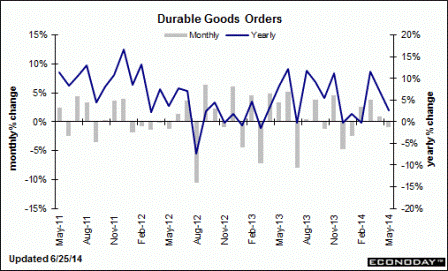
Durables orders were much weaker than expected for May. Durables orders fell 1.0 percent in May after rising 0.8 percent in April. Analysts forecast 0.4 percent. Excluding transportation, orders slipped 0.1 percent, following a 0.4 percent gain in April. Market expectations were for 0.3 percent.

Transportation fell 3.0 percent after a 1.7 percent rise in April. The latest dip was from weakness in nondefense aircraft. Motor vehicles and defense aircraft orders rose.

Outside of transportation, gains were seen in primary metals, fabricated metals, and “other.” Declines were posted for machinery, computers & electronics, and electrical equipment.

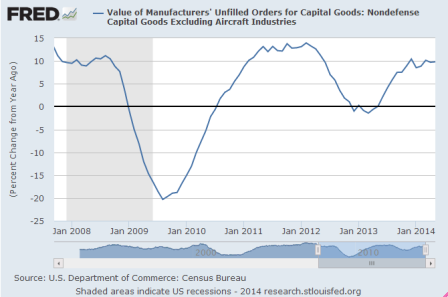
On a positive note, there was improvement in equipment investment. Nondefense capital goods orders excluding aircraft rebounded 0.7 percent in May after decreasing 1.1 percent the month before. Shipments of this series rebounded 0.4 percent after a 0.4 percent dip in April.

The good news is this series is muddling along ok:


Full size image

The latest durables report is in contrast to recently positive regional manufacturing surveys and also the sharp jump in manufacturing production worker hours of 0.8 percent for May. But durables data are very volatile and we likely need a couple of more months of data before taking a negative tone on this sector.

The next leg to fall may be employment, as the 1.2 million people who lost long term benefits at year end may have been taking menial jobs at the rate of maybe 75,000/month or more for 6 months or so, which may have front loaded the monthly jobs numbers. If so, monthly job gains may fall into the 100,000 range soon.

So in general it was down for the winter, back up some, and we’ll see what happens next.

The ‘survey’ numbers and professional forecasts look promising, however it still looks to me like we are under the macro constraint of a too low govt deficit that’s struggling to keep up with the unspent income/demand leakages, with scant evidence of help from growth in private credit expansion.

And I tend to agree with Fed Chair Yellen here, which would tend to keep rates lower/longer if she gets her way. However I don’t agree that low rates somehow support aggregate demand, so I don’t see the likelihood of any call from the Fed or other forecasters for the fiscal relaxation I’ve been proposing.

Yellen may be poised to rewrite Fed’s rule book on wages, inflation

June 25 (Reuters) — “My own expectation is that, as the labor market begins to tighten, we will see wage growth pick up some to the point where … nominal wages are rising more rapidly than inflation, so households are getting a real increase in their take home pay,” Federal Reserve Chair Janet Yellen said last week, adding: “If we were to fail to see that, frankly, I would worry about downside risk to consumer spending.” Over the last year Fed staff changed their main model for forecasting wage and price inflation to reflect evidence that companies were adjusting prices more slowly than in prior years.

My immediate proposals remain 1) A full FICA suspension, which raises take home pay by 7.6%, and, for businesses that are competitive, lowers prices as well, restoring sales/output/employment in short order 2) A $10/hr federally funded transition job for anyone willing and able to work to promote the transition from unemployment to private sector employment 3) A permanent 0 rate policy with Tsy issuance limited to 3 mo bills. 4) Unrestricted campaign contributions, however, say, 40% of any contribution goes to the opposition…

Recent charts

I’m starting to believe my own narrative…
;)

Soft for the winter, up some, then moderating again.

All under the ongoing macro constraint of aggressive automatic stabilizers that brought the deficit down even with a negative GDP quarter, and some degree of path dependency with weakness taking something away from subsequent periods.

Not to mention the story about 1.2 million who lost benefits at year end taking menial jobs, boosting headline employment, not adding to personal income as their pay was about the same as the lost benefits, and front loading job growth as ultimately more headcount isn’t a function of benefits lost. We’ll see.

And a world getting tougher to export to. Weaker CNY isn’t helping, for example.

First, another firm revises Q1 down further, and Q2 up some as well:

GOLDMAN: “… we are taking our tracking estimate for Q1 [GDP] down to -1.9% [and] raising our tracking estimate for Q2 by 0.3pp to 3.8%”

If these turn out to be correct, it implies H1 GDP will come in under 1%, and also implies 2014 somewhere around 2% of H2 can print over 3%.

The fiscal noose tightens. If the deficit is going to average 2.8% of GDP for the year and started higher than that and has been coming down, it means it’s running lower than that ‘instantaneously’- maybe around 2% of GDP or so:

Treasury: Budget Deficit declined in May 2014 compared to May 2013

By Bill McBride

June 11 (Calculated Risk) — The Treasury released the May Monthly Treasury Statement today. The Treasury reported a $130 billion deficit in May 2014, down from $138 billion in May 2013. For fiscal year 2014 through May, the deficit was $436 billion compared to $626 billion for the same period in fiscal 2013.

In April, the Congressional Budget Office (CBO) released their new Updated Budget Projections: 2014 to 2024. The projected budget deficits were reduced for each of the next ten years, and the projected deficit for 2014 was revised down from 3.0% to 2.8%. Based on the Treasury release today, I expect the deficit for fiscal 2014 to be lower than the current CBO projection.

Retail sales showing the down for the winter, up, then lower growth pattern, in the context of the longer term drift lower in growth:


Full size image

The retail sales ‘control group’ (ex food, autos, building materials, and gas stations) shows the same pattern even more clearly:


Full size image

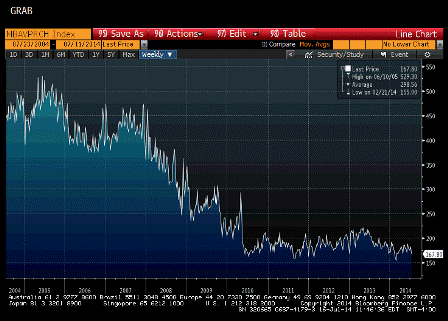
Lastly, keep an eye on crude prices. Looked to me like the spike in 2008 might have been the catalyst for the collapse in demand…