Personal Income and Outlays, ECI, Chicago PMI, Consumer Sentiment, GDP related

Income and spending and pricing low and lower than expected:

Personal Income and Outlays
er-10-30-1
Highlights
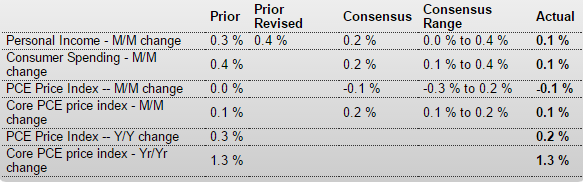
Inflation is not building based on the Fed’s favorite reading, the core PCE price index which inched a lower-than-expected 0.1 percent higher in September with the year-on-year rate steady and flat at only plus 1.3 percent. These results will not lift the odds for a December hike at the next FOMC.

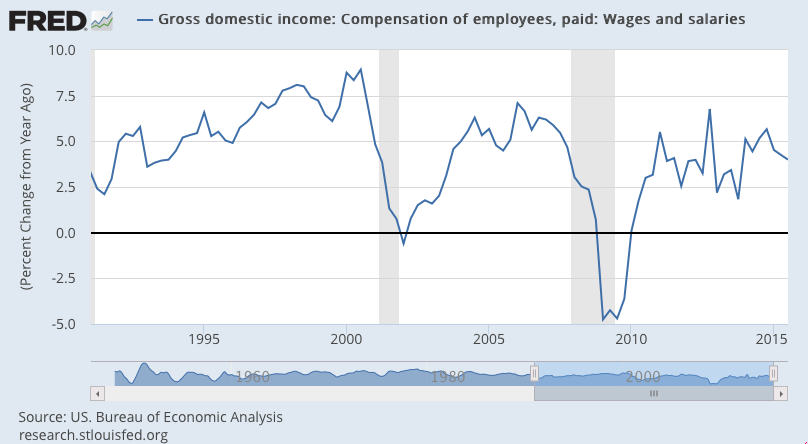
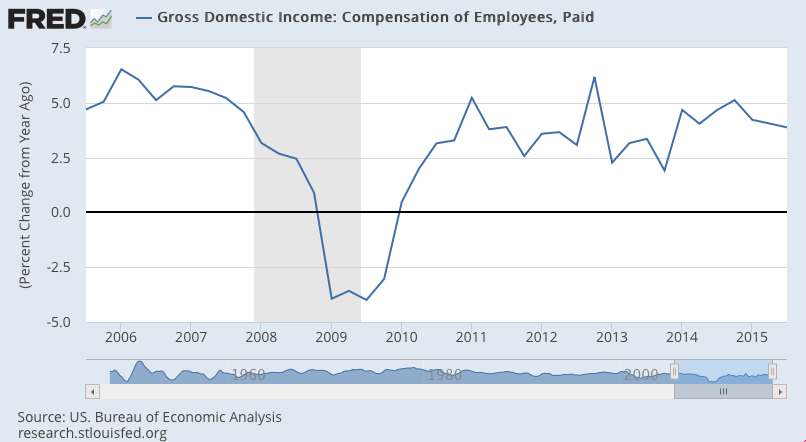
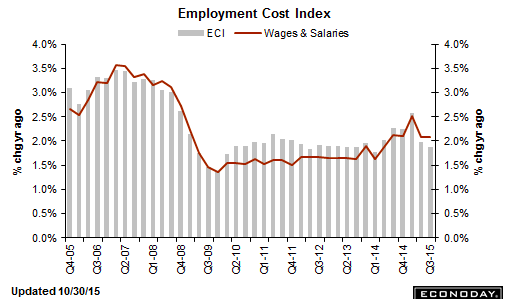
Income and spending data also came in below expectations, at plus 0.1 percent each vs expectations for plus 0.2 percent each. Income got no boost from wages & salaries in September which were unchanged following, however, strong gains of 0.5 percent in the two prior months that underscore this morning’s employment cost index which shows pressure in the third quarter. Spending in September was pulled down by a 1.2 percent plunge in nondurable goods that likely reflects the low price of fuel. Spending on durable goods, driven by vehicles, rose a strong 0.8 percent with spending on services up a solid 0.4 percent.

Other details include a 0.1 percent decline for the total PCE price index, again an effect likely based on fuel. Here the year-on-year rate is barely over zero at plus 0.2 percent. The savings rate continues to edge higher, up 1 tenth to 4.8 percent in a gain that hints at strength for future consumer spending.

Third-quarter consumer activity slowed in September, pointing to lack of momentum for October consumer data. Still, the consumer is in charge in the U.S. economy and, given low unemployment, the outlooks for holiday spending and fourth-quarter acceleration are favorable.
er-10-30-2
Nice move up here:

Chicago PMI
er-10-30-3
Highlights
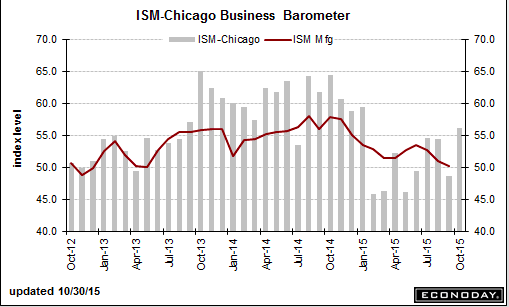
Volatility is not that unusual for the Chicago PMI which surged 7.5 points from September and 6.0 points over consensus to a 56.2 level that points to sudden acceleration and solid growth this month for the whole of the Chicago economy. New orders and especially production are showing strength with both at their best levels of the year. The production reading, in fact, surged nearly 20 points in a reminder of how volatile this series can be.

Inventories are also up sharply, suggesting that Chicago businesses may be ramping up for stronger output going into the holidays. Hiring fell back to neutral following three months of gains and, in another negative, order backlogs are down for an eighth straight month. And for a third straight month, prices are in contraction.

Advance indications on the October economy are mixed with a sweep of regional Fed surveys pointing to another month of contraction for the factory sector but other readings, including this one, mixed to upbeat. Still, the volatility of this report should limit its impact on the month’s outlook.

er-10-30-4
er-10-30-5
Nothing here to push the Fed:
er-10-30-6
er-10-30-7
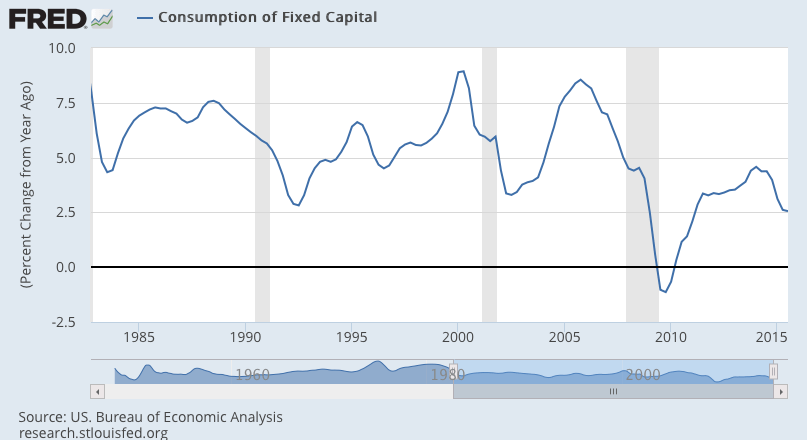
Typical very late cycle pattern here:
er-10-30-8

GDP, Pending Home Sales

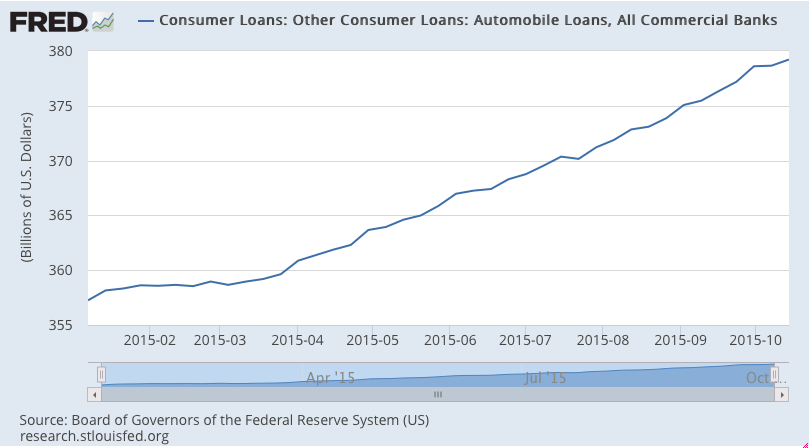
A weak number and Q4 not looking so good either. Domestic spending decelerating as incomes fade from reduced capex. Slowing investment, weak exports, and inventory reductions should also continue into Q4 as top line growth continues to fade. And lower prices speak to lower demand. Vehicle sales also looking to slow into Q4 as per recent vehicle loan stats and industry forecasts.

GDP
er-10-29-1
Highlights
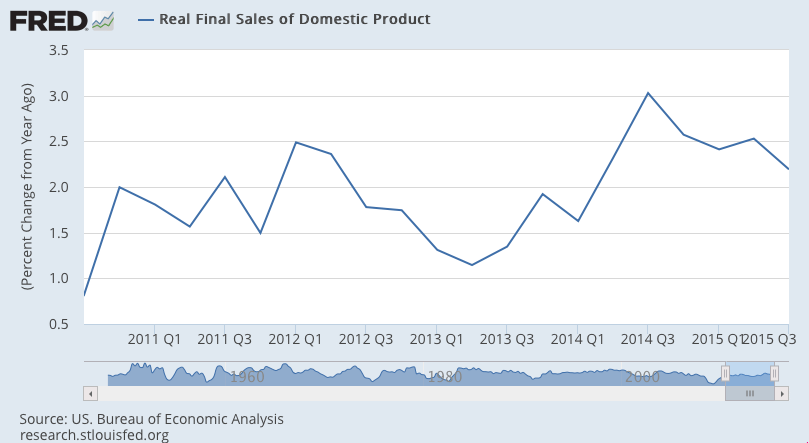
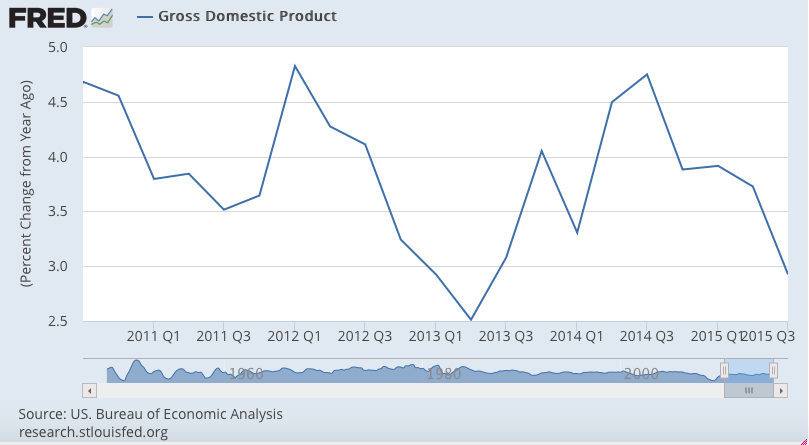
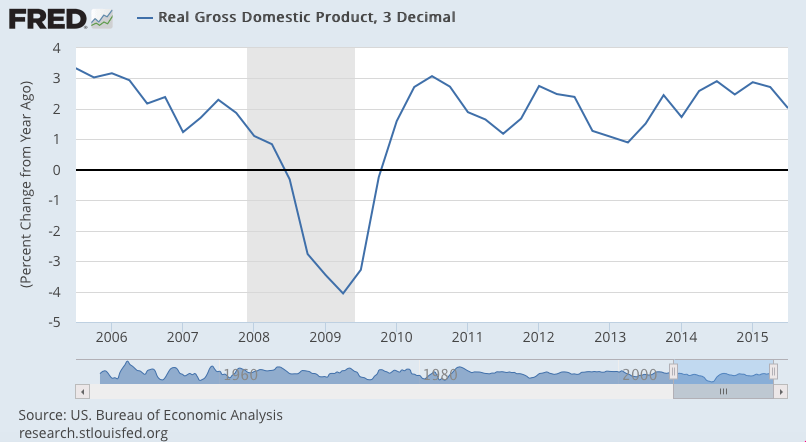
Steady domestic spending helped to prop up GDP growth in the third-quarter which came in at an annualized 1.5 percent, just shy of expectations. Final sales rose a very respectable 3.0 percent in the quarter in a gain that points to underlying momentum for the fourth quarter. Both residential and nonresidential investment slowed in the third quarter with both net exports and especially inventories also pulling down GDP. The price index came in a little lower than expected at plus 1.2 percent.

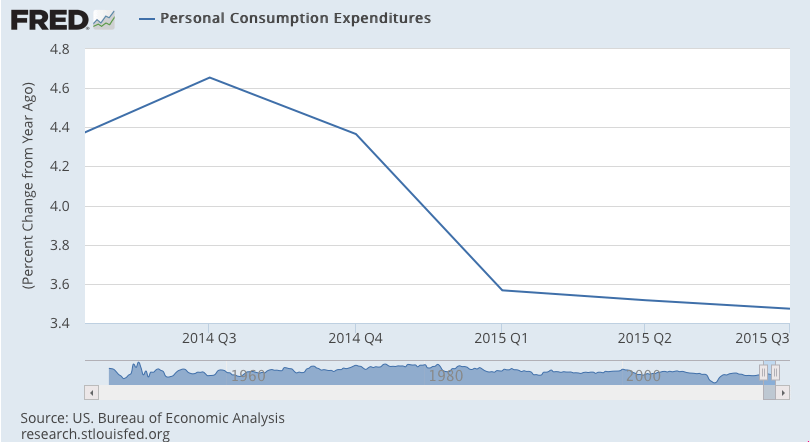
Personal consumption expenditures slowed 4 tenths but are still a major highlight at a plus 3.2 percent rate. Service spending, an area insulated from global factors, continues to show solid resilience. But it was spending on durables, including vehicles, that was the strongest consumer category in the quarter. Government purchases, another area of domestic-centered spending, also contributed to the quarter’s growth.

The quarter’s 1.5 percent rate is only 2 tenths lower than the average growth of the prior four quarters and comes against a difficult 3.9 percent comparison in the second quarter. Not a great result but not bad either.

Decelerating since the oil price collapse:
er-10-29-2
Decelerating since the collapse in oil prices:
er-10-29-3
er-10-29-4
er-10-29-5
Housing continues it’s pull back from the blip as previously discussed and another negative for Q4 GDP:

Pending Home Sales Index
er-10-29-6
Highlights
The outlook for the housing sector has turned lower this week, first on Monday’s very weak new home sales report followed by today’s September index on pending sales of existing homes which is down a very sharp 2.3 percent. The report cites lack of low priced homes on the market as a key negative that is pulling down total sales and keeping out first-time buyers. Uncertainty in the financial markets is also cited, perhaps making buyers take a wait-and-see approach.

Year-on-year, pending sales are up only 3.0 percent which is very weak and far below the nearly double-digit pace for final sales of existing homes. All regions show low to mid single-digit declines in the month.

The housing sector, which just last week seemed a certain area of strength, may now be a liability for the economy.

US Trade

This is just for ‘goods’ but seems to be counter to all other releases reporting weak exports, but it has been zig zagging it’s way lower and August was particularly weak. And note the weakness in car imports:

International trade in goods
er-10-28-3
Highlights
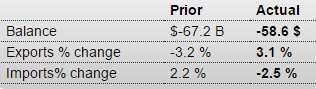
September reversed August’s outsized goods trade gap, coming in at $58.6 billion vs $67.2 billion. Exports jumped 3.1 percent following August’s 3.2 percent decline with wide gains in consumer goods, autos, industrial supplies and capital goods. Imports fell 2.5 percent following the prior month’s 2.2 percent gain. Decreases are wide including industrial supplies, capital goods, autos and consumer goods. The results do point to slowing demand but, because imports are counted as a subtraction in the national accounts, they should nevertheless give a boost to third-quarter GDP estimates.

And this typical commentary from today on why the Fed isn’t hiking:

The decision comes amid multiple data points that show a weakening in the economy, particularly in job gains and exports. Inflation measures the Fed follows also reflect little in the way of wage and price pressures, while economists are anticipating a muted holiday shopping season.

Atlanta Fed, Oil inventory, Chemical Index, Mtg Purchase Apps

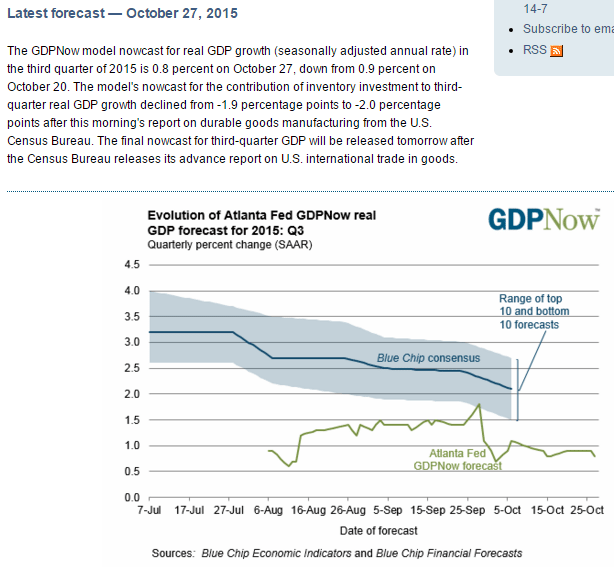
Down to .8:
er-10-28-1

Crude inventory that used to pile up from high cost shale production is coming down as drilling is way down and existing well output declines some 70% in its first two years. Meanwhile, US imports increase as domestic production decreases:

Crude stocks at the Cushing delivery hub fell by 748,000 barrels, data from the industry group, the American Petroleum Institute, showed late on Tuesday.

Iraq’s southern oil exports have reached 3.10 million barrels so far this month, indicating continued high output from the larger members of the Organization of the Petroleum Exporting Countries.

The premium for crude for delivery in 12 months’ time over that for December delivery, or contango, rose to its highest in six weeks, often a sign that investors expect supply to be far more plentiful in the near term. LCOc12

On the physical market, the contango in the North Sea derivatives market, which underpins Brent futures, rose to its highest since early September this week, reflecting how excess barrels are weighing on near-term prices.

“The global glut is still very much weighing on investors minds at the moment,” said Ben le Brun, a market analyst at OptionsXpress in Sydney.

“Some of the major corporates such as BP are talking about sluggish prices through 2016,” he added.

BP (BP.L) on Tuesday announced further spending cuts and more asset sales over the coming years to tackle an extended period of low oil prices and help pay for its $54 billion U.S. oil spill settlement.

September 2015 Chemical Activity Barometer Continues to Decline

The Chemical Activity Barometer (CAB) dropped 0.3 percent in October, following a upwardly revised 0.3 percent decline in September and 0.1 percent decline in August.

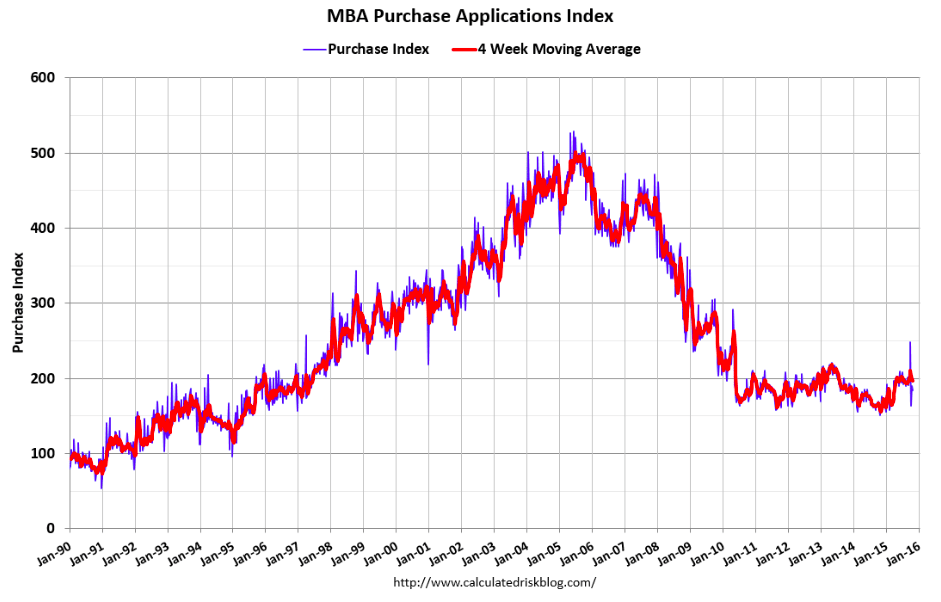
After a few wiggles due to govt changes purchase apps have settled back down and remain low and depressed:

The Refinance Index decreased 4 percent from the previous week. The seasonally adjusted Purchase Index decreased 3 percent from one week earlier. The unadjusted Purchase Index increased 7 percent compared with the previous week and was 23 percent higher than the same week one year ago.
er-10-28-2

Confidence, Richmond, PMI Services

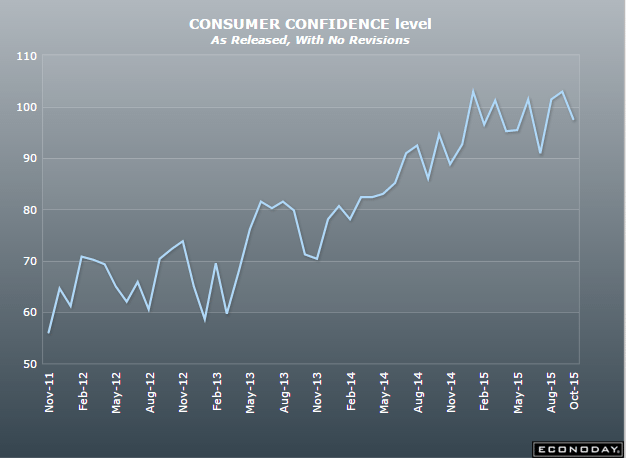
A lot less than expected based on jobs assessment, and note the drop in car buying plans:

United States : Consumer Confidence
er-10-27-13
Highlights
A decline in the assessment of the current jobs market pulled down the consumer confidence index to a lower-than-expected 97.6 in October. This is about 2.4 points below Econoday’s low-end forecast and 5.0 points below a revised September.

Consumers are saying there are fewer jobs available then there were in September and more say jobs are hard to get. But the latter reading, at 25.8 percent, is still low and consistent with low rates of unemployment. Still, these readings are weaker than September and helped pull down the present situation component by a sizable 8.2 points to 112.1.

The six-month outlook shows much less monthly weakness compared to September with the component down 2.8 points to 88.0. Buying plans are mixed with cars down but both houses and appliances up. Inflation expectations are steady at 5.1 percent which is moderate for this reading.

Jobs are at the heart of consumer confidence and today’s report will limit expectations for strength in the October employment report. This report may also limit expectations for retail sales in October including, based on buying plans, sales of vehicles.
er-10-27-14
United States : Richmond Fed Manufacturing Index
er-10-27-15
Highlights
The Richmond Fed makes it five for five, that is five regional Fed reports all showing negative headlines for October. The Richmond Fed index did improve, however, to minus 1 from September’s minus 5. New orders came in at zero following the prior month’s steep contraction of minus 12. But backlog orders, at minus 7, are down for a third month which is not a plus for future shipments or employment. Shipments in October fell to minus 4 from minus 3 which is also a third month of contraction. Hiring is still positive, unchanged at plus 3, but continued growth here is uncertain. Price data are mute with prices received showing slight contraction as they are in other reports. This morning’s report on durable goods orders showed another month of broad weakness in September and this report, together with the other regional reports, point to another weak month for the factory sector in October.

United States : PMI Services Flash
er-10-27-16
Highlights
Growth in the nation’s service sector is solid but a little slower this month than in September. The services PMI flash for October came in at 54.4 for the slowest rate of growth since the severe weather of January. The report cites a third straight slowdown in new business which is also at its weakest point since January. Though the service sector is insulated to a degree from foreign effects, the report does note that less favorable global conditions are making customers less willing to spend.

Backlogs are down for a third month which is the worst run in two years and hiring has slowed to the weakest level since February. The outlook, though still favorable, is near a three-year low. Price data show little change for inputs and only a fractional gain for prices charged. This report fits in with the general soft tone of economic data, softness that will perhaps be a key focus of tomorrow’s FOMC statement.

Healthcare Premiums, UK Gap, EU Credit Growth, Durable Goods, Redbook Retail Sales, Oil

Last I checked this ‘counts’ as ‘personal consumption expenditure’:

Premiums for Health Insurance Bought on Exchanges to Climb in 2016

Oct 26 (WSJ) — The Obama administration said many consumers will see noticeable premium increases when buying health coverage on insurance exchanges in 2016. Federal officials said Monday that the price of the second-lowest-cost midrange “silver plan”—a key metric for premiums around the country—will increase by 7.5% on average across the three-dozen states that rely on Washington to administer the health law for them. And 60% of enrollees—across 30 of the largest markets in the U.S.—will see the average rate for that benchmark plan rise by 6.3%.

Also decelerating since oil prices collapsed:
er-10-27-1
Up off the bottom some but no where near enough to levels historically coincident with lower unemployment, etc:
er-10-27-2
Bad and the prior month revised down, and with employment growth slipping motor vehicles could be hit next:

United States : Durable Goods Orders
er-10-27-3
Highlights
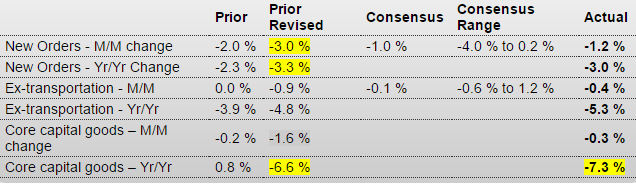
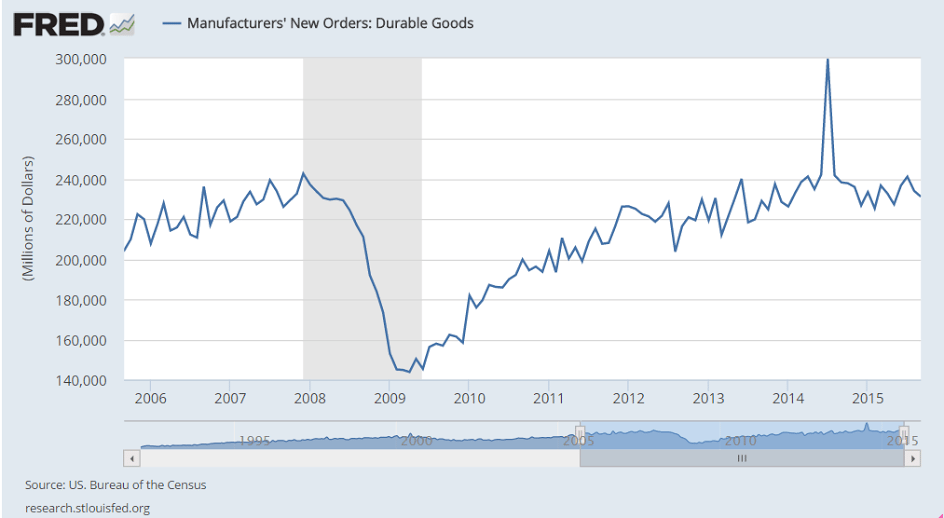
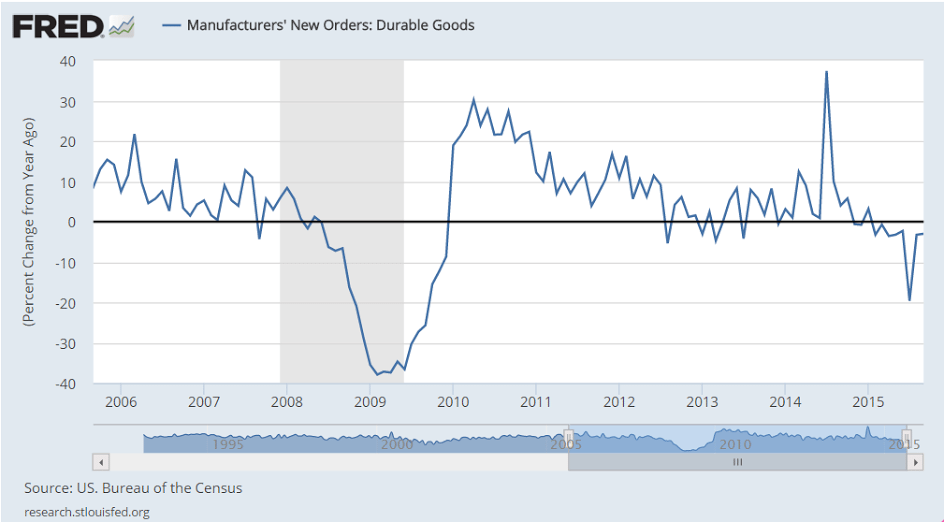
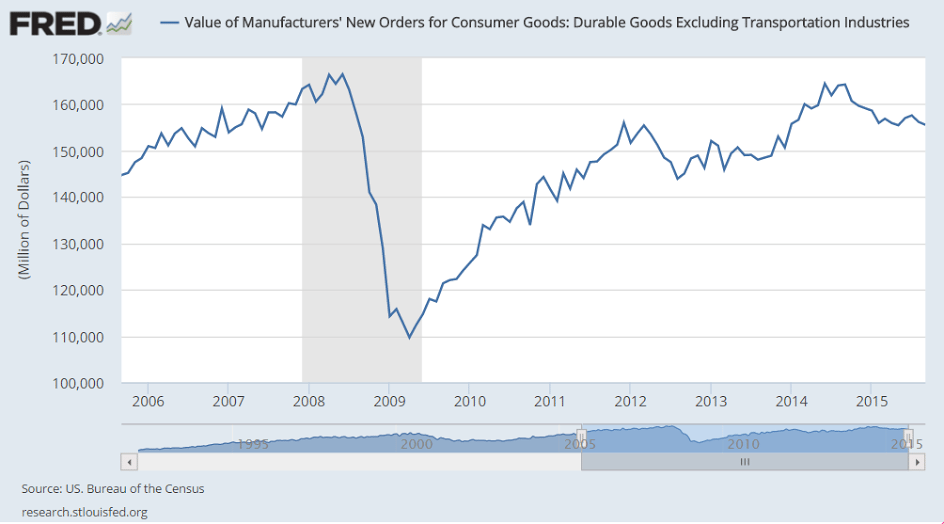
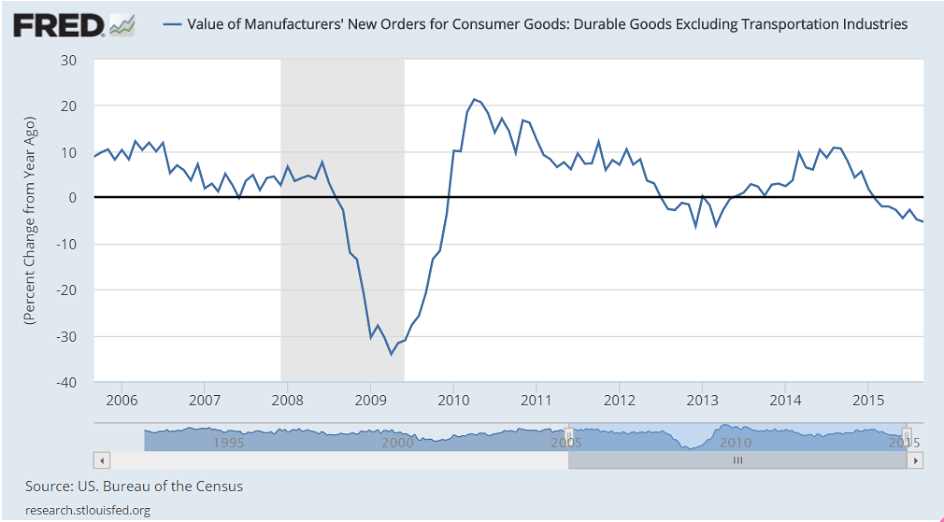
The factory sector is showing cracks with orders contracting slightly more than expected, down 1.2 percent in September with August’s contraction revised lower to minus 3.0 percent. Other readings are likewise weak with ex-transportation down 0.4 percent following a downward revised 0.9 percent decline in August and with core capital goods orders down 0.3 percent after falling a downward revised 1.6 percent in August.

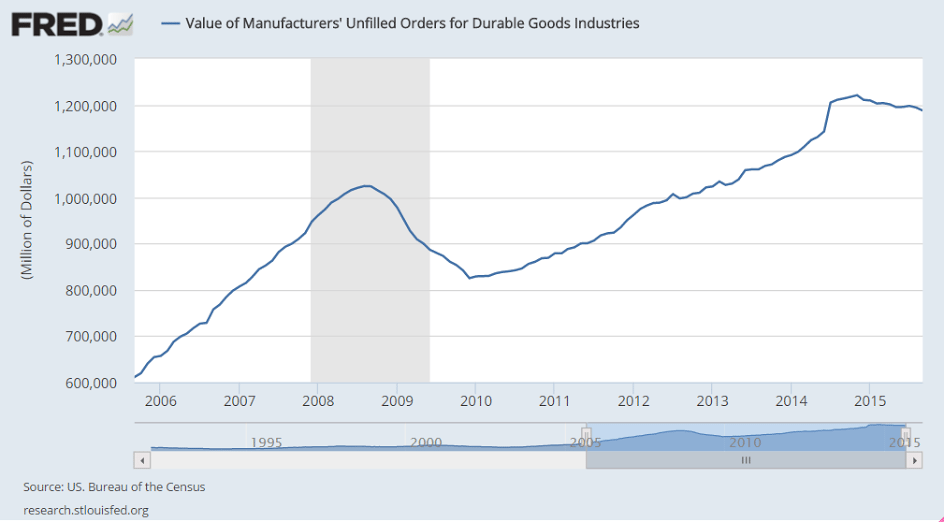
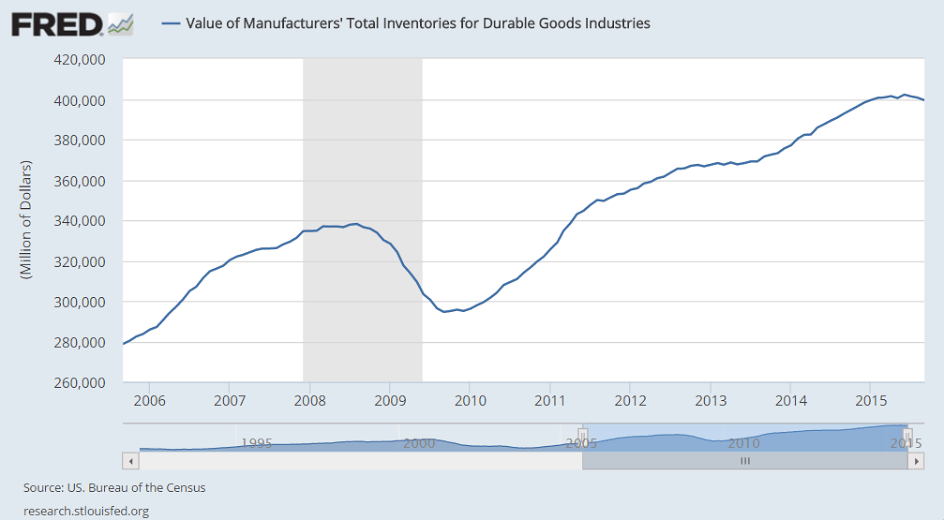
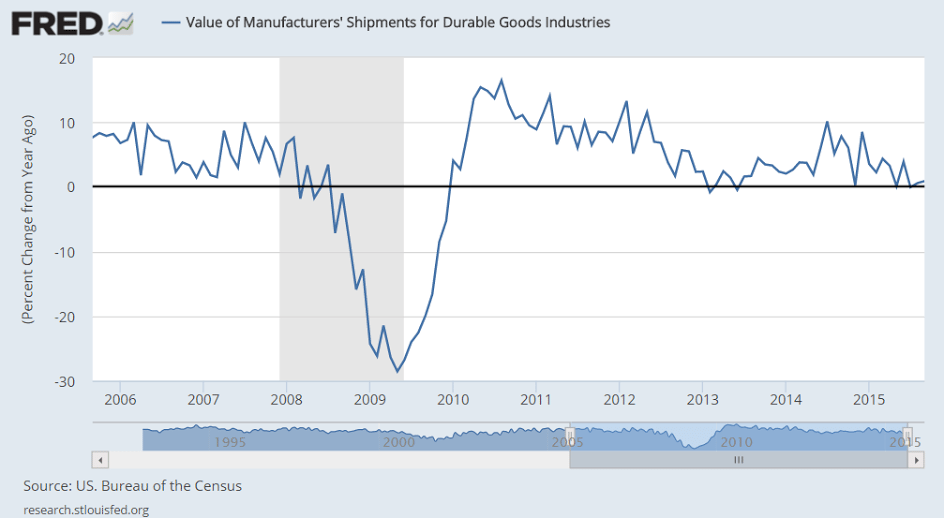
Other readings include a second straight and sharp 0.6 percent decline in unfilled orders and a third straight decline in inventories, down 0.3 percent which is the sharpest decline since May 2013. The decline in unfilled orders suggests that factories, lacking new orders, are working down backlogs while the decline in inventories points to growing caution in the business outlook. But factories are keeping up shipments which is good for GDP, up 0.2 percent after August’s 0.5 percent decline with core capital goods shipments up 0.5 percent after a 0.8 percent decline.

Motor vehicles are a positive in the report, showing a 1.8 percent gain in new orders and a 1.6 percent gain in shipments with both reversing similar sized declines in August. Also positive are electrical equipment and fabricated metals, with both perhaps getting a boost from construction, along with defense aircraft and defense capital goods.

Industries showing declines in new orders include primary metals, machinery, and computers & electronics. Orders for civilian aircraft fell 62 percent in September following a 23 percent decline in August.

This report falls in line with industrial production data where manufacturing in September slipped for the fourth time in five months. Weakness in exports is the balancing factor tipping the factory sector away from growth.

er-10-27-4
er-10-27-5
er-10-27-6
er-10-27-7
er-10-27-8
er-10-27-9
er-10-27-10
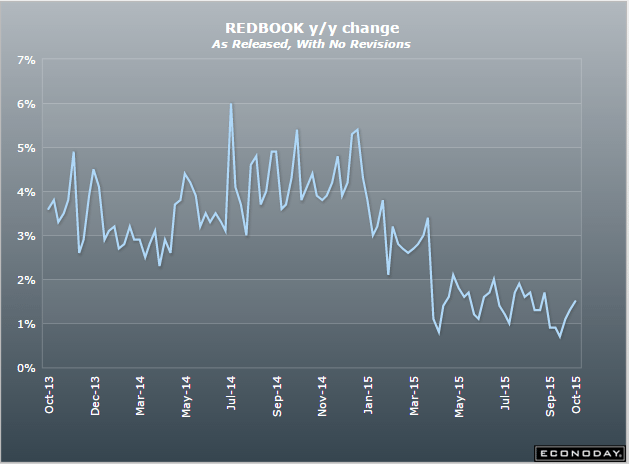
Redbook retail sales still growing at depressed rates:
er-10-27-11
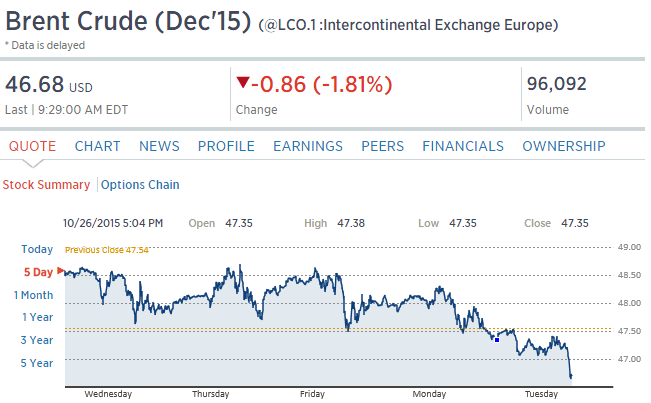
Price continues to fall as the increased Saudi discounts continue:

er-10-27-12

Truck tonnage, Philly Fed Coincident Index, ECB policy, Credit Check

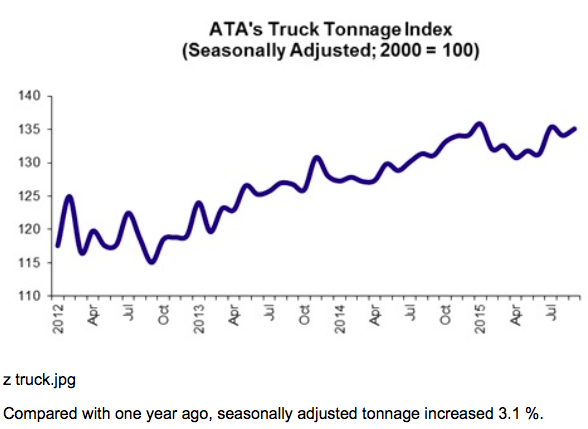
Signs of stabilizing:
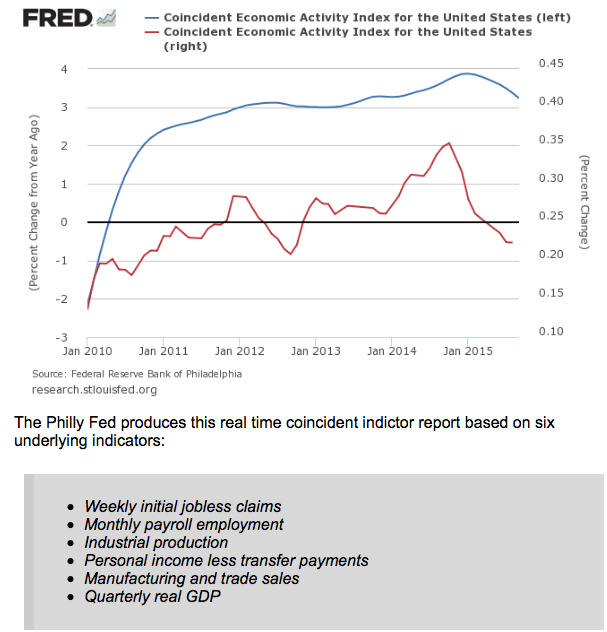
er-10-25-1
er-10-25-2

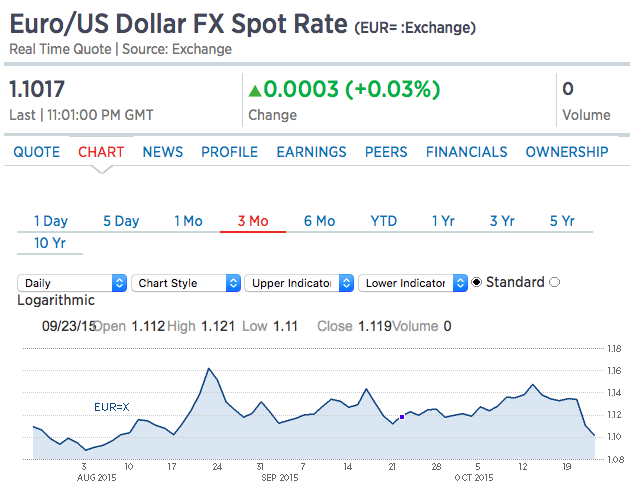
So the ECB threatened more negative rates and QE, both placebos at best, analogous to spraying the crowd with a barrage of blanks, which nonetheless dispersed the crowd. However, with the record and growing euro area 31 billion trade surplus last month and a growing US trade deficit augmented by increased petro imports as domestic production falls, I expect those fundamentals to dominate:
er-10-25-3

Interesting how growth that supported GDP in 2014 peaked as oil price broke down:
er-10-25-4
This new indicator now shows 2 weeks flattening, but not enough history to make a call based on it:
er-10-25-5
This, too, changed slope after oil supported growth reversed:
er-10-25-6
The growth rate remains historically very low (particularly given the ultra low rates?). Some of the increase is due to the drop in ‘all cash’ purchases, some due to the higher sales prices, etc.
er-10-25-7

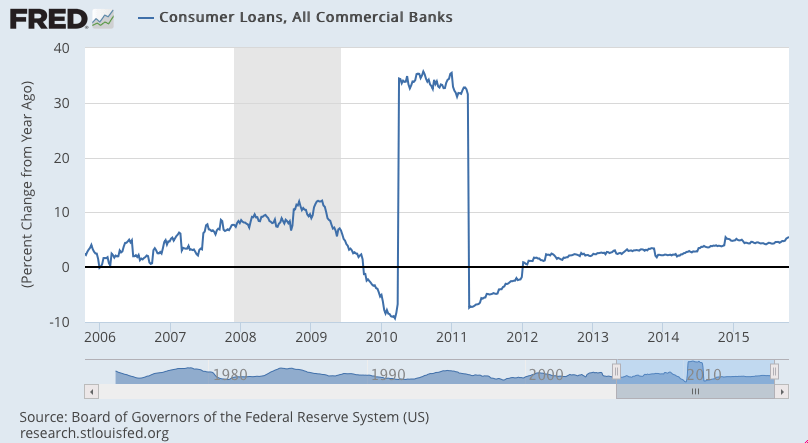
The growth rate has picked up some as it tends to do when entering a recession and consumers borrow extra for a while as incomes are stretched before breaking:
er-10-25-8

Philly Fed State Index, ECRI, Rail cars

er-10-23-1

ECRI’s WLI Growth Index Declines Again and Remains In Contraction

ECRI’s WLI Growth Index which forecasts economic growth six months forward – declined and remains in negative territory. This index had spent 28 weeks in negative territory, then 15 weeks in positive territory – and now is in its tenth week in negative territory. Also discussed below is the coincident and lagging index which is in decline.

Rail Week Ending 17 October 2015: Contraction Continues

Week 41 of 2015 shows same week total rail traffic (from same week one year ago) and monthly total rail traffic (from same month one year ago) declined according to the Association of American Railroads (AAR) traffic data. Intermodal traffic modestly expanded year-over-year, which accounts for approximately half of movements. but weekly railcar counts continued in contraction.

Existing Home Sales, Chicago Fed, Leading Indicators, KC Fed

Higher than expected, not directly a contributor to GDP or a measure of output.
The change in fed mtg regs that caused the blip and mtgs and subsequent reversal
needs to play out here as well:

Existing Home Sales
er-10-22-2
Highlights
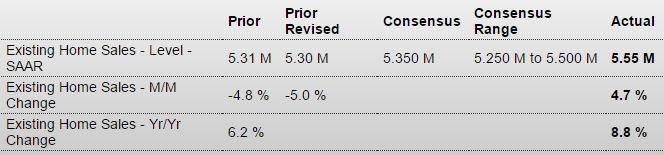
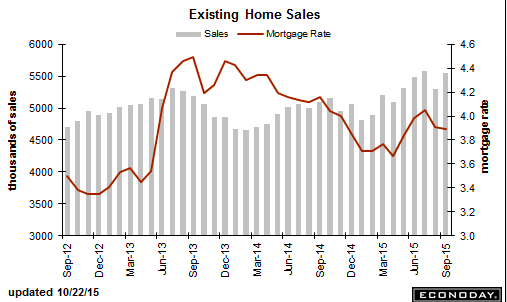
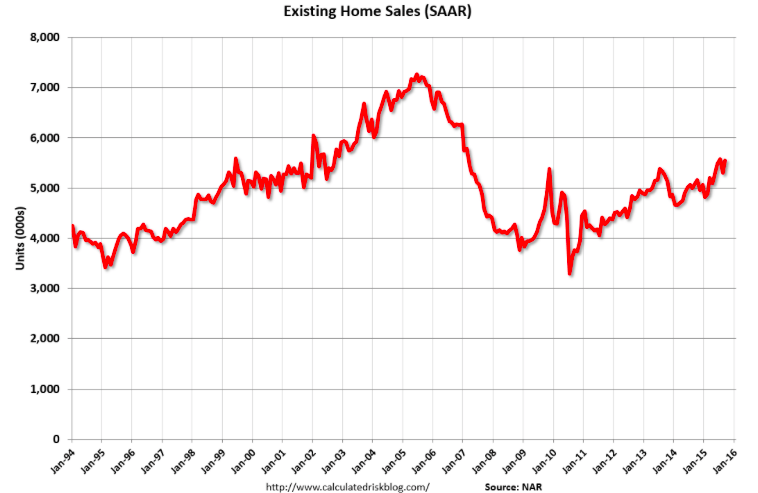
Existing home sales bounced back very strongly in September, up 4.7 percent to nearly reverse the prior month’s revised decline of 5.0 percent, a decline that now looks like an outlier on a steadily rising slope. The month’s annual sales rate, at 5.55 million, is just beyond Econoday’s top-end forecast while the year-on-year percentage gain, at plus 8.8 percent, is back where it was during the sales gains of the spring. This report is a big plus for the housing outlook, suggesting that demand for existing homes is nearly as strong as demand for new homes.

er-10-22-3
er-10-22-4
Yet another bad one here:
Chicago Fed National Activity Index
er-10-22-5
Highlights
September was a weak month across the economy. The national activity index came in at minus 0.37, a negative score that points to lower-than-average economic growth for the month. Production is the weakest component in the report, down 0.18 and reflecting in part export troubles in manufacturing. Sales/orders/inventories are at zero while the personal consumption & housing component is at minus 0.08. Employment is also in the negative column, at minus 0.11.

Weakness in September followed similar weakness in August where the index is at a revised minus 0.39. The 3-month average is at minus 0.09, down from plus 0.01 in August. This report is a reminder that, as long as economic data are weak, the doves can hold sway in the FOMC.

This hasn’t been useful with rates at 0 as the yield curve is one of its leading components.

But even with the positive yield curve its now gone negative:
er-10-22-6
Still negative but not as negative:

Kansas City Fed Manufacturing Index

er-10-22-7

Highlights
The Kansas City manufacturing sector came up for badly needed air in October, ending a long run of deep contraction. The composite came in at only minus 1 which is an eighth straight decline but much improved from nearly double digit declines in prior months. The real positive is the new orders index which, at plus 7, ended nine dismal months of straight contraction. But backlogs, at minus 4, are in a 10th month of uninterrupted contraction with employment, at minus 3, in a ninth month of contraction. Orders will have to pick up before employment will turn higher. Other readings include a plus 4 for production, which hints at relative strength for October production and shipment data, and a negative 3 for finished goods prices in yet another negative indication on inflation. This report, coming from one of the weakest energy-hit regions of the economy, is a marginal plus for the manufacturing outlook.