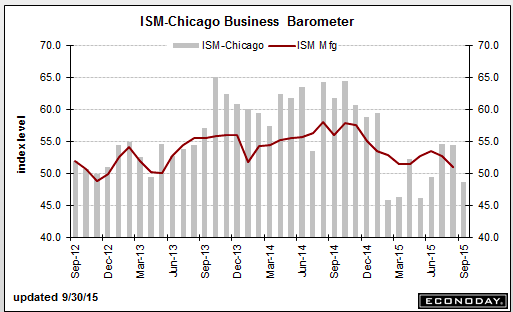
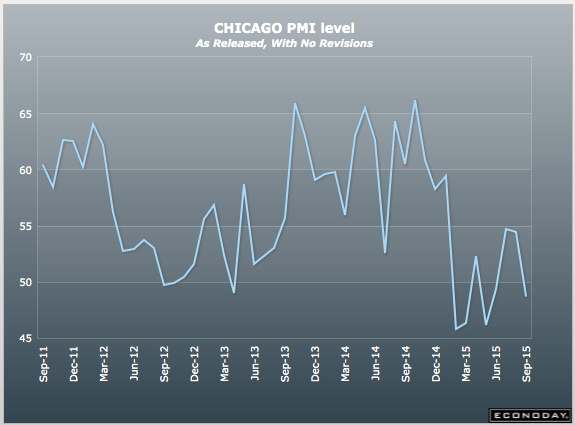
Exports, Energy Layoffs, Tax data, Restaurant Performance Index

This is a prelude to the reality of soft exports and rising imports impacting GDP reports:

U.S. Goods Exports Plummet as Dollar Rises, Commodity Prices Fall

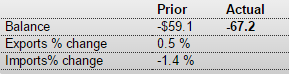
Sept 29 (WSJ) — Exports of goods slid a seasonally adjusted 3.2% to $123.09 billion as overseas sales of industrial supplies—which includes oil—autos, consumer goods and foods all fell, according to the Commerce Department’s advance report on trade in goods. Imports, meanwhile, advanced 2.2% to $190.28 billion on a surge in consumer goods and a smaller rise in capital goods, widening the trade gap. The goods deficit expanded 13.6% to $67.19 billion last month. The Commerce Department is due to release the full report on trade on Oct. 6.

This is still happening nearly a year after oil prices collapsed.

Energy layoffs still in progress, including nat gas companies:

Chesapeake cuts 15% of workforce on oil slump

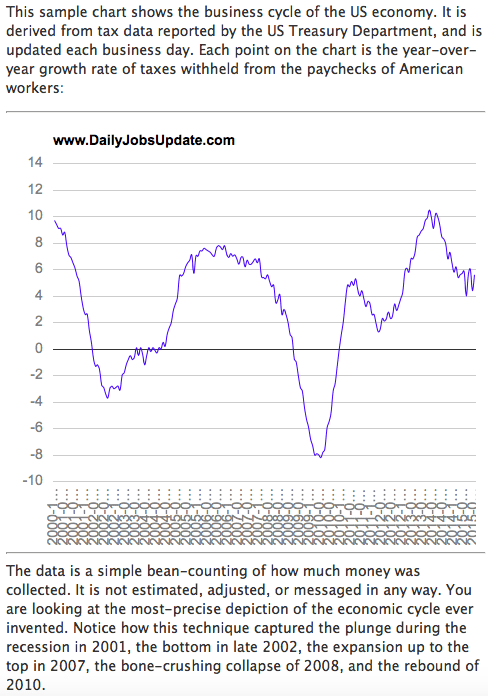
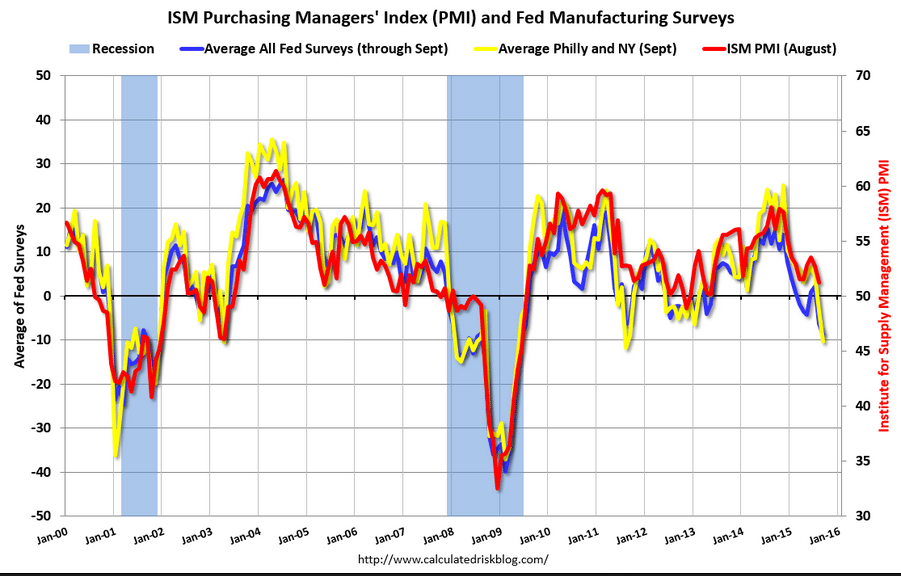
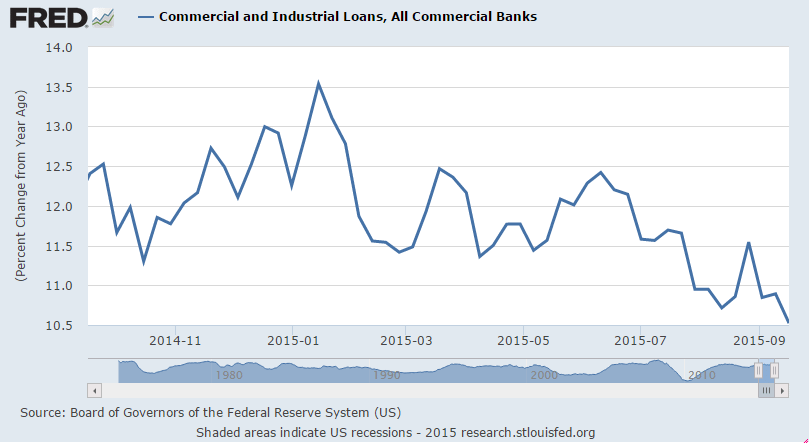
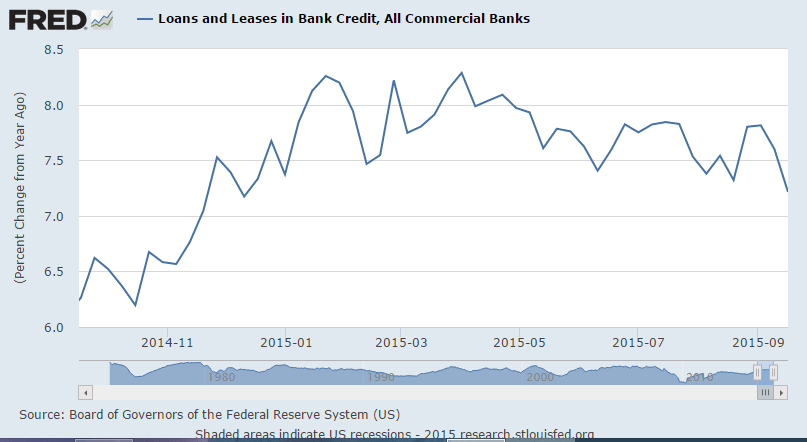
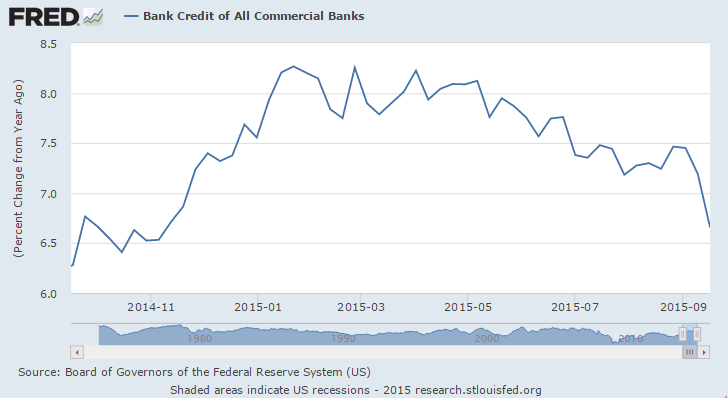
Looks like historically this chart leads the cycle down:
er-10-1

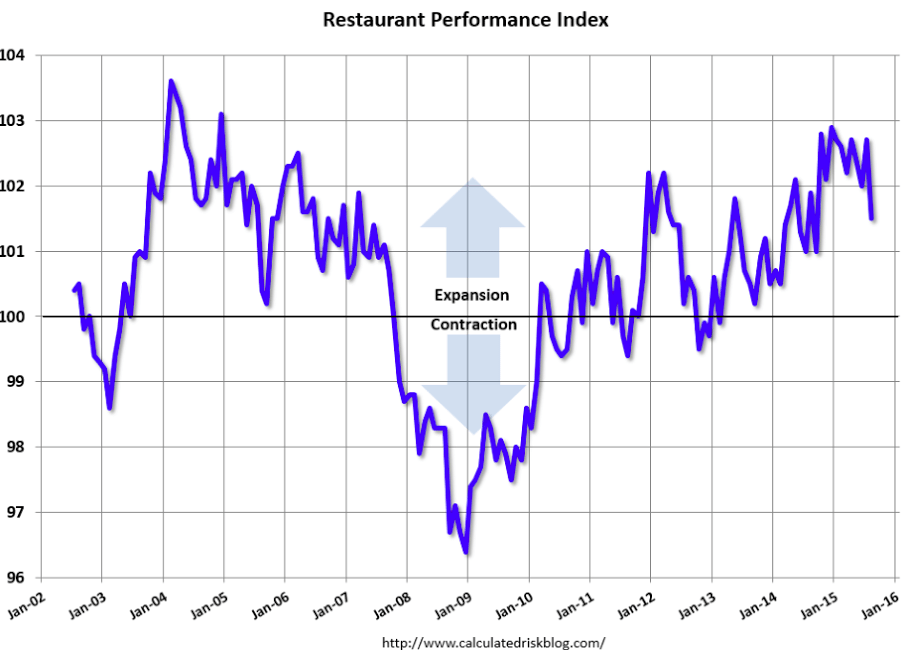
Now looking like it’s faded after oil prices collapsed, vs expectations of the opposite:
er-10-2

Mtg Purchase Apps, Chicago PMI, ADP, Euro Comment

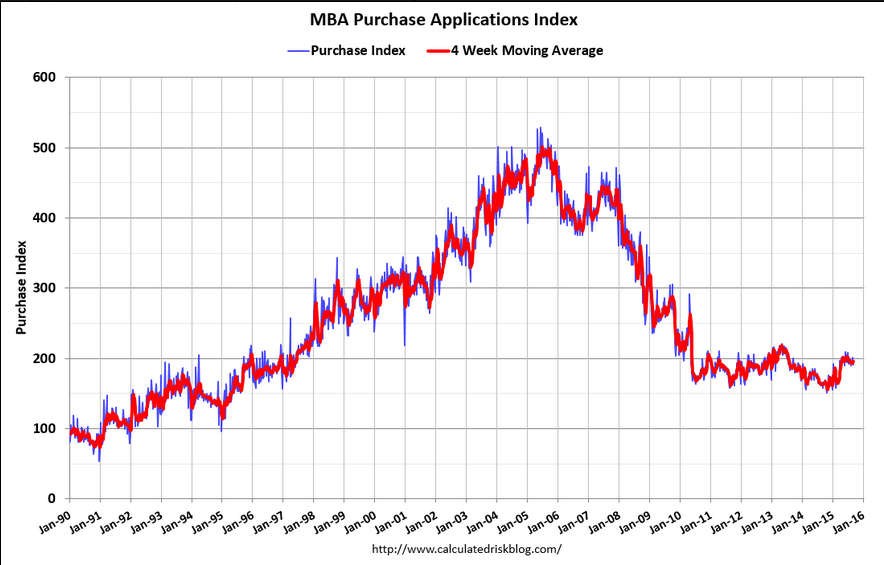
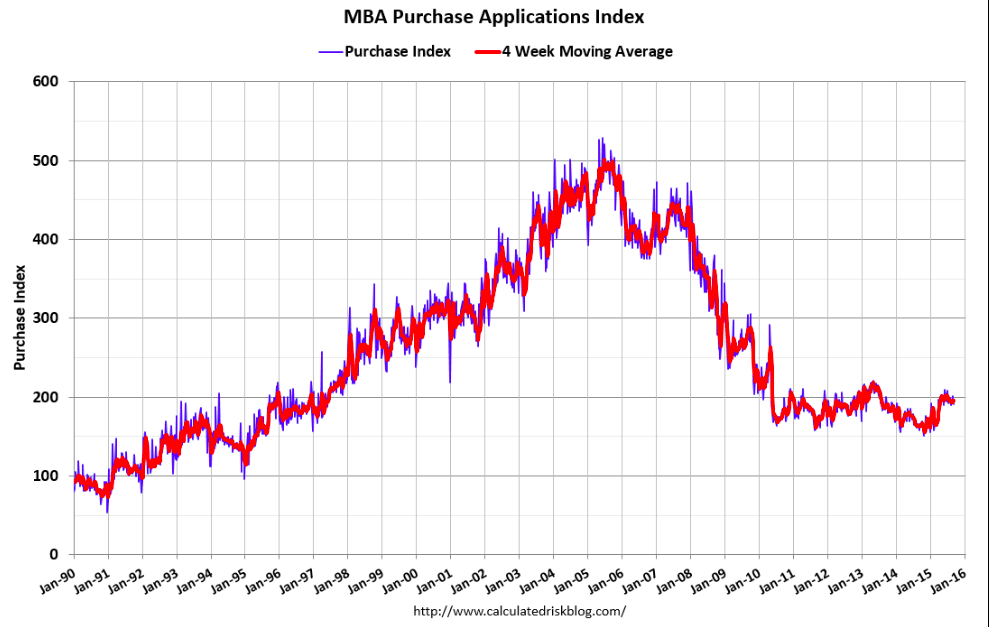
This is still going nowhere, and, most recently, trending lower, and obviously not responding positively to the ultra low rates of the last several years:

MBA Mortgage Applications
er-9-30-1
Highlights
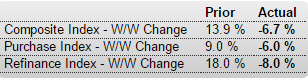
After surging in the prior week following the FOMC’s decision against a rate hike, mortgage activity fell back in the September 25 week. The purchase index fell 6 percent in the week but still remains up strongly year-on-year, at plus 20 percent. The refinance index fell 8.0 percent in the week. Rates continued to move lower in the week with the average 30-year mortgage for conforming loans ($417,000 or less) down 1 basis point to an average 4.08 percent.
er-9-30-2
Yet another negative shock.

And note that it all went bad after the collapse in oil prices:

Chicago PMI

er-9-30-3
er-9-30-4
er-9-30-5

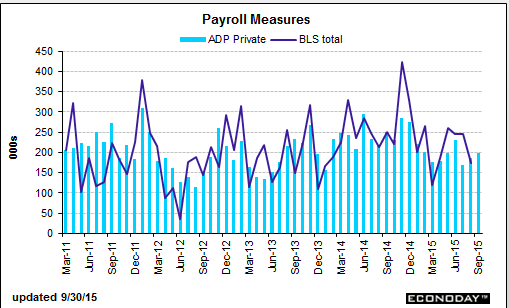
This is their forecast for Friday’s number, and the downward trend since November continues for both ADP and the BLS payroll series:

ADP Employment Report

er-9-30-6
Highlights
ADP’s call for Friday’s September employment report is on the high side but only slightly, at 200,000 for private payroll growth vs Econoday expectations for 190,000. ADP’s call for August, an initial 190,000 now revised to 186,000, proved much stronger than the initial government total of 140,000. Today’s result won’t likely shake up the outlook for Friday’s employment report where another month of moderate improvement is expected.
er-9-30-7

From ADP:

Goods-producing employment rose by 12,000 jobs in September, off from 15,000 the previous month. The construction industry added 35,000 jobs in September, almost double the 18,000 gained in August. Meanwhile, manufacturing dropped into negative territory losing 15,000 jobs in September, the worst showing since December 2010.

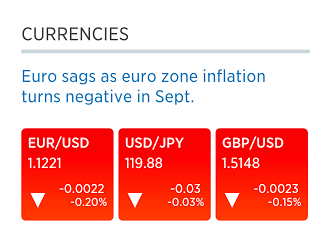
Revealing CNBC headline, as ultimately ‘purchasing power parity’ does hold. That is, high inflation means the value of the currency is falling, and longer term currencies that experience high inflation depreciate vs currencies with low inflation. That is, high inflation policy is not the stuff of strong currencies, regardless of interest rates.

So what the headline is implying, at best, is that the ECB policy response will be to lower rates/do more QE to promote inflation, and thereby weaken the currency. It is also probably implying that a lower rate and QE per se make
the euro weaker.

My narrative is a bit different. I see the deflation as further supporting the euro area’s record high and growing trade surplus, a force which fundamentally drives the euro higher, as non residents continuously sell their currencies to buy euro to pay for imports from the euro area. This ultimately drives the euro higher, as happened with the yen for the 2 decades it ran large and persistent trade surpluses, along with a zero rate policy, and far more QE than the ECB or the Fed has done.
er-9-30-8

Cartoon, US International Trade, India, Redbook Retail Sales, China Comments, Consumer Confidence

image (3)
As previously discussed, trade deficit increasing:

United States : International trade in goods

dt-9-29-1

Definition
The Census Bureau is now publishing an advance report on U.S. international trade in goods. The BEA will incorporate these data into its estimates of exports and imports for the advance GDP estimates. This is expected to reduce the size of revisions to GDP growth in the second estimates.

Just maybe the higher rates have been supporting the higher inflation? And supporting growth?

India cuts policy rate by bigger-than-expected 50 bps

Sept 29 (Reuters) — The Reserve Bank of India cut its policy interest rate to a 4-1/2 year low of 6.75 percent on Tuesday, in a bigger-than-expected move that, with inflation running at record lows, could help an economy in danger of slowing down.

A Reuters poll last week showed only one out of 51 economists had expected a 50 basis points cut in the repo rate , while 45 had expected a 25 bps cut.

The RBI had previously cut interest rates three times this year, lowering it by 25 basis points each time.

The RBI justified the bigger reduction, saying consumer inflation was likely be running at 5.8 percent, below the 6 percent target for January, thanks partly to the government’s efforts to contain food prices.
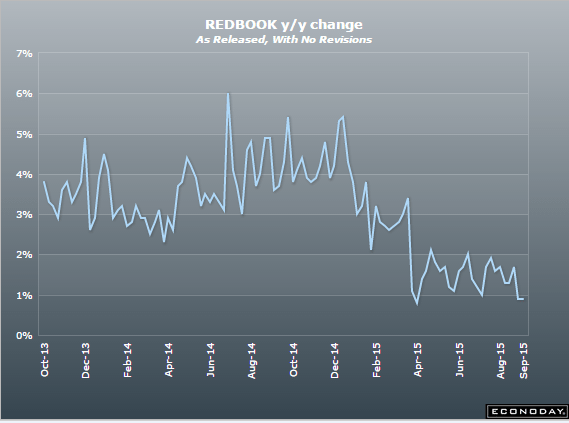
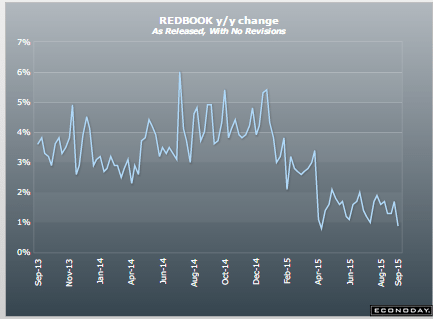
Redbook retail sales dismal and dragging along the lows:
image (4)

Barclays analysts visited China and came back saying it was one of the most bearish trips they’ve ever taken

Good number here but not confirmed by sales reports, at least not yet:

Consumer Confidence
dt-9-29-2

Trucking Tonnage, Earnings Per Share

ATA Truck Tonnage Index Fell 0.9% in August

AAmerican Trucking Associations’ advanced seasonally adjusted For-Hire Truck Tonnage Index declined 0.9% in August, following a revised increase of 3.1% during July. In August, the index equaled 134.2 (2000=100), down from 135.3 in July. The all-time high of 135.8 was reached in January 2015.

Compared with August 2014, the SA index increased 2.1%, which was below the 4% gain in July. Year-to-date through August, compared with the same period last year, tonnage was up 3.3%.

After such a robust July, it is not too surprising that tonnage took a breather in August,” said ATA Chief Economist Bob Costello. “The dip after a strong gain goes with the up and down pattern we’ve seen this year.”

Costello said a few factors hurt August’s reading, including soft housing starts and falling factory output.

“As I said last month, I remain concerned about the high level of inventories throughout the supply chain. This could have a negative impact on truck freight volumes over the next few months,” he said.

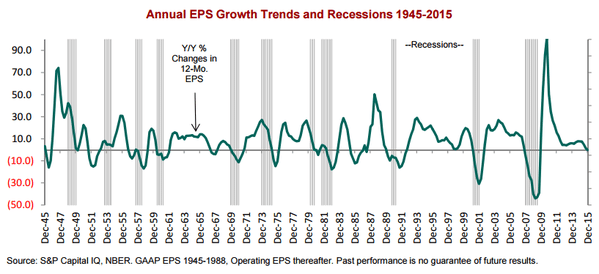
eps-gdp-trends

Personal Income, Pending Home Sales, Dallas Fed, China

Been almost a year, and still looks to me like the oil price collapse was an unambiguous negative for the US and global economies. And for the same reasons. For every buyer of oil who benefited, a seller of oil lost exactly that much. That leaves the drop in capex, as well as the continued decrease in net government spending, which has yet to be ‘replaced’ by alternative spending. Apart from inventory building…

Personal Income and Outlays
er-9-28-1
Highlights
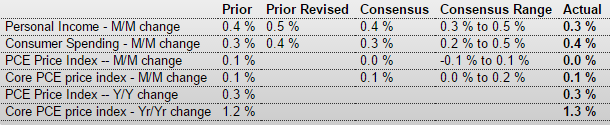
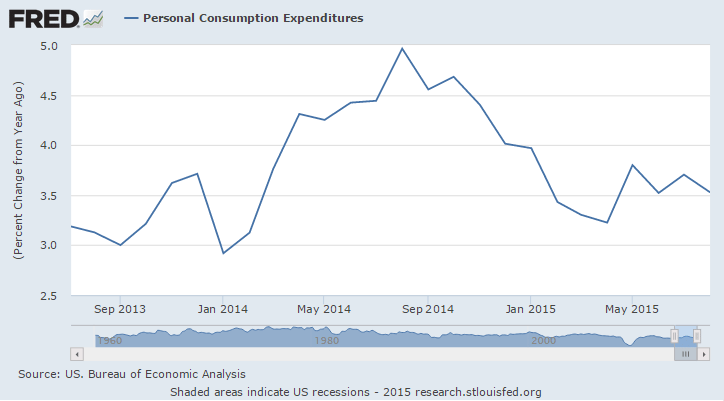
The consumer is making money and spending money at the same time that inflation is very quiet. Personal income rose 0.3 percent in August which is on the low side of expectations but July is now revised 1 tenth higher to a very solid 0.5 percent. And the wages & salaries component is also very solid, at plus 0.5 and 0.6 percent the last two months. Turning to spending, the gain is 0.4 percent which is 1 tenth above consensus with July revised 1 tenth higher to 0.4 percent also.

Inflation readings came in as expected, at no change for the PCE price index and up only 0.1 percent for the core. Year-on-year, overall prices are up only 0.3 percent, which is unchanged from July, with the core ticking 1 tenth higher to 1.3 percent which is still well below the Fed’s 2 percent target.

The savings rate is solid at 4.6 percent and has been edging lower from 4.9 percent in April. This may be a sign of confidence among consumers who are now willing to spend while saving less. Other details include a rise for rents but a dip for proprietor income.

This report is very healthy but how it plays for the FOMC is uncertain. Income and spending would justify a rate hike but not the inflation readings.

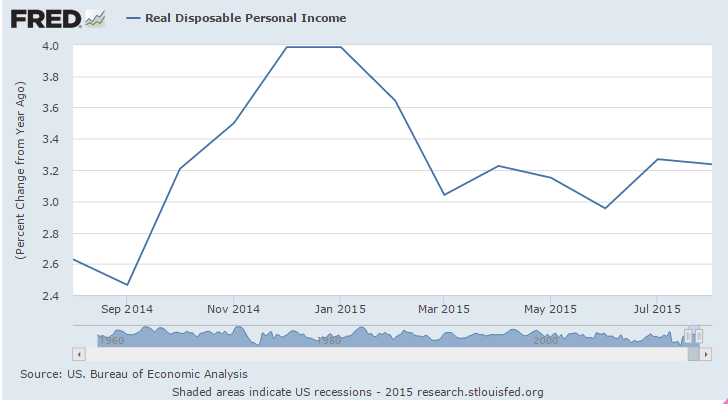
Note the ‘peaks’ back around November when oil prices collapsed:
er-9-28-2
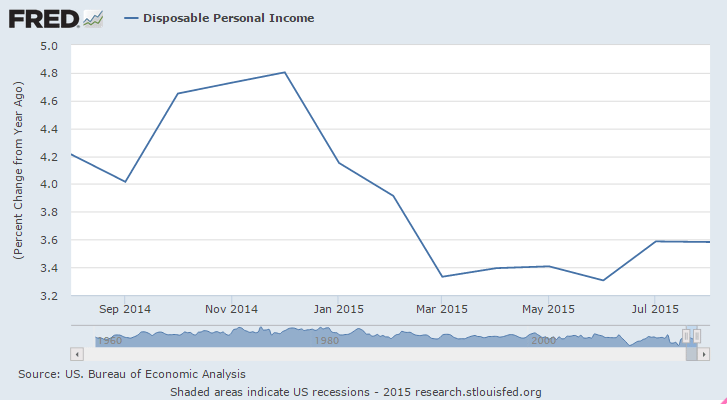
This is before inflation adjustment:
er-9-28-3

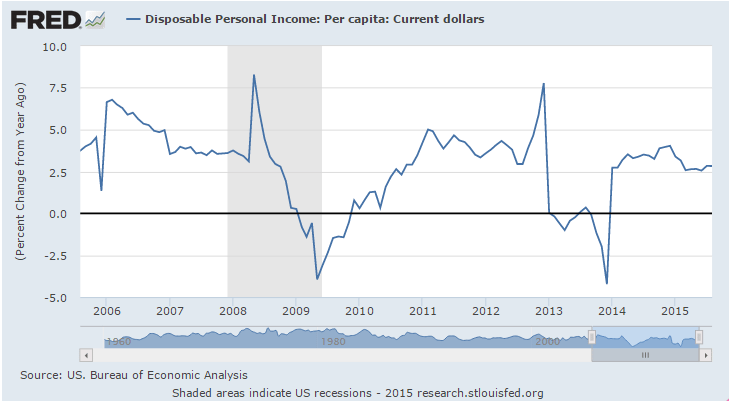
And this is per capita:
er-9-28-4
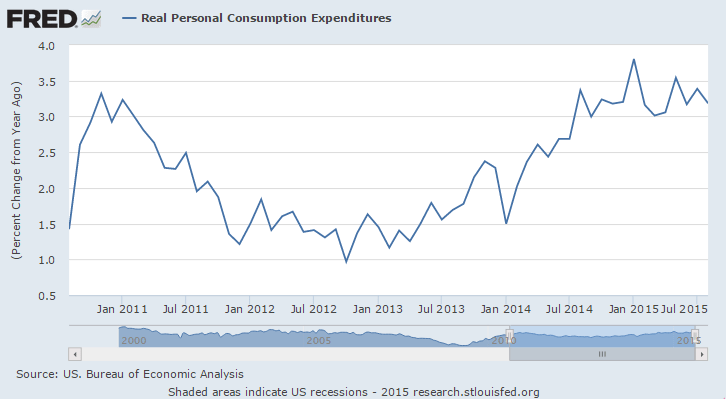
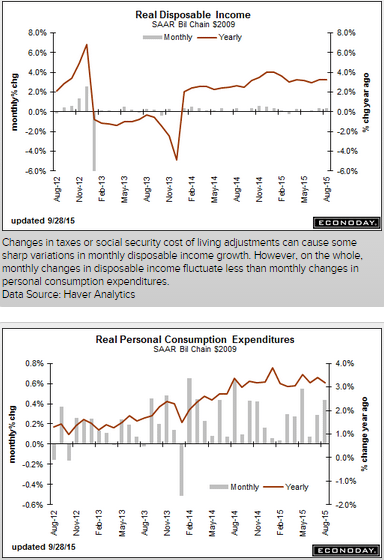
And on the consumption side:
er-9-28-5
er-9-28-6
er-9-28-7
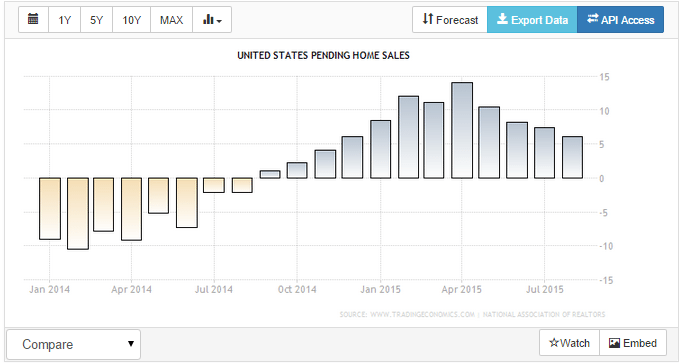
Slipping back as previously suggested:

Pending Home Sales Index
er-9-28-8
Highlights
The existing home sales market looks to remain flat in the coming months based on the pending home sales index which fell a disappointing 1.4 percent in August. Three of four regions posted declines led by the Northeast at 5.6 percent with the South, which is by far the biggest housing region, down 2.2 percent. Only the West posted a gain, at 1.8 percent.

Existing home sales are being limited by lack of homes on the market which itself, however, reflects softness in home prices and general demand. But there is strength in housing and that’s in new home sales and construction. Watch for Case-Shiller home price data on tomorrow’s calendar.
er-9-28-9

Less worse, but remains negative:

Dallas Fed Mfg Survey
er-9-28-10
Highlights
The Dallas Fed rounds out a full run of negative indications on the September factory sector with the general activity index remaining in deeply negative ground at minus 9.5. New orders are at minus 4.6 which, however, is an 8 point improvement from August. Production is actually in positive ground at 0.9.

Other readings include a decline in the workweek and the fifth straight contraction for employment. Price readings show little change for inputs but, like other reports, contraction for finished prices.

The Texas economy has been depressed all year by the energy sector while the nation’s factory sector continues getting hurt by weak foreign demand and strength in the dollar.

Looks a lot like a recession, no?
er-9-28-11

China’s industrial restructuring cuts power use, freight volume

Sept 26 (Xinhua) — Zhang Xiaoqiang, executive deputy director of China Center for International Economic Exchanges. Zhang admitted that there were some doubts about China’s economic growth rate in the first half (H1), as two key indicators of economic growth, namely power consumption and freight volume, dropped remarkably. The discrepancy between economic growth and the two key indicators’s growth in the first six months did not fit with previous patterns, but industrial restructuring is a new factor, and should be taken into account when analyzing the new situation, he said.

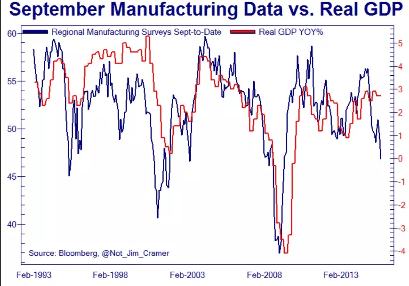
Q2 GDP, Atlanta Fed, Manuf. vs Real GDP chart, Corp Debt, Rail Traffic

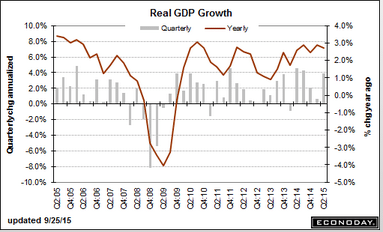
Revised up, but same story as previously discussed, with several volatile series moving up and likely to revert at least that much in Q3 when reported late October:

GDP
er-9-25-1
Highlights
Personal spending was stronger than thought in the second quarter, helping to drive real GDP to a very solid 3.9 percent annualized rate. Boosted by the consumer, final sales also rose 3.9 percent for a 4 tenths upward revision.

Personal consumption expenditures were revised 5 tenths higher to 3.6 percent as the service spending component, reflecting strength in travel, was revised 7 tenths higher to 2.7 percent. Revisions to goods spending were mixed with durables down 2 tenths to a vehicle-led surge of 8.0 percent with nondurables up 2 tenths to 4.3 percent. Consumer strength is also evident in a 1.5 percentage point upward revision to residential fixed investment, now at 9.3 percent.

But businesses also contributed to the quarter’s growth as nonresidential fixed investment, driven by structures, is revised 9 tenths higher to 4.1 percent. Another plus in the report is a downward revision to inventory growth.

The second quarter managed in the end to meet what were tough expectations for a big bounce from the transitory factors of the first quarter when growth came in at only 0.6 percent. The outlook for the third quarter, however, is so far subdued, at roughly the 2 percent area.

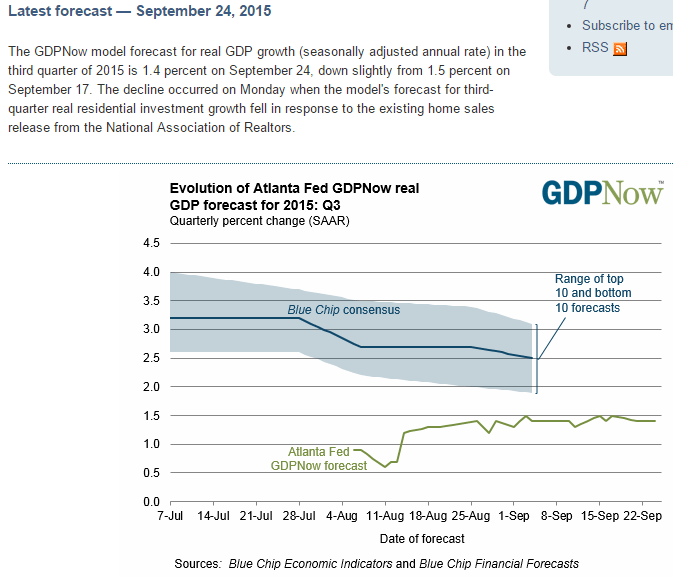
Q3 forecast revised down a tenth:
er-9-25-3

Atlanta Fed revises its Q3 forecast down a tenth:
er-9-25-2
Interesting chart:
er-9-25-4
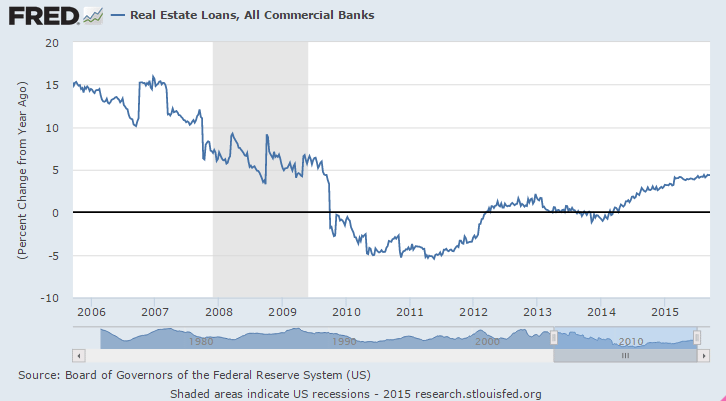
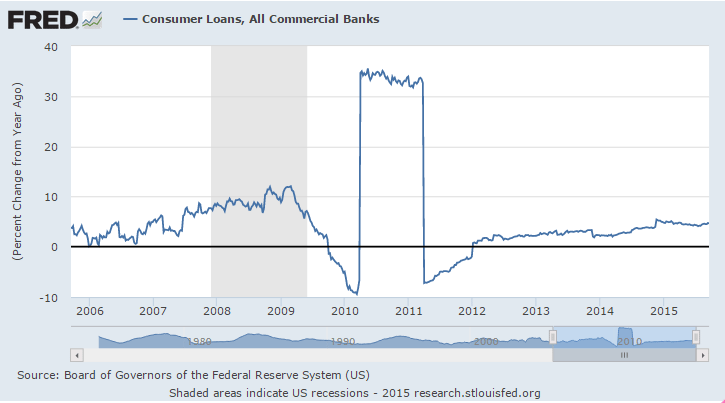
Corps are borrowing to buy each other’s debt, not to invest, seems, so net credit expansion for sector not as high as some suggest?

Big Buyers of Corporate Debt Are Other Corporations

(WSJ) — Companies reaching for better returns on their cash have found a new favorite investment—other companies’ bonds—and they are loading up. More than half of corporate cash held by U.S. companies this August was invested in investment-grade corporate bonds, a record, according to investment-software company Clearwater Analytics. Meanwhile, treasurers have reduced their companies’ holdings of more traditional investments such as U.S. Treasurys, commercial paper and bank certificates of deposit.

Rail Week Ending 19 September 2015: Year-over-Year Trends Continue to Degrade

Week 37 of 2015 shows same week total rail traffic (from same week one year ago) declined according to the Association of American Railroads (AAR) traffic data. Intermodal traffic insignificantly expanded year-over-year, which accounts for approximately half of movements. but weekly railcar counts continued in contraction. This cannot be a positive data point for the USA economically.

Posted in GDP

Durable Goods Orders, Chicago Fed, KC Fed, Philly Fed State Indicator, Claims, New Home Sales

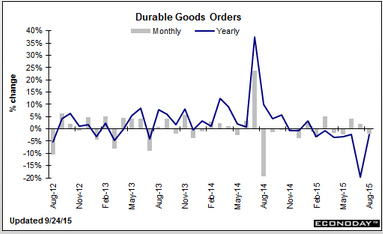
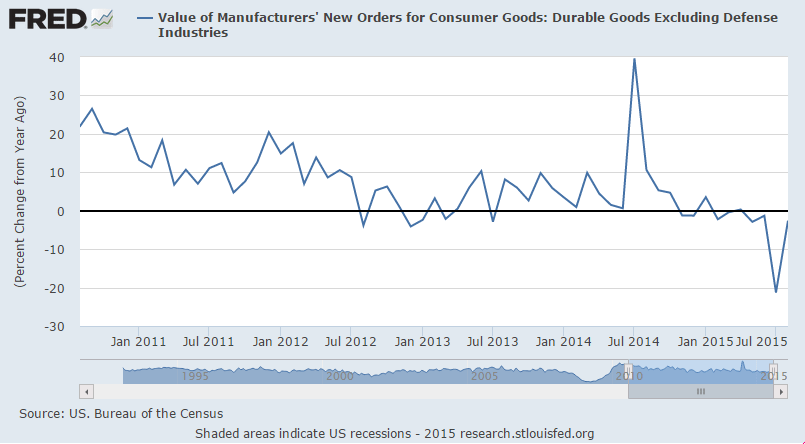
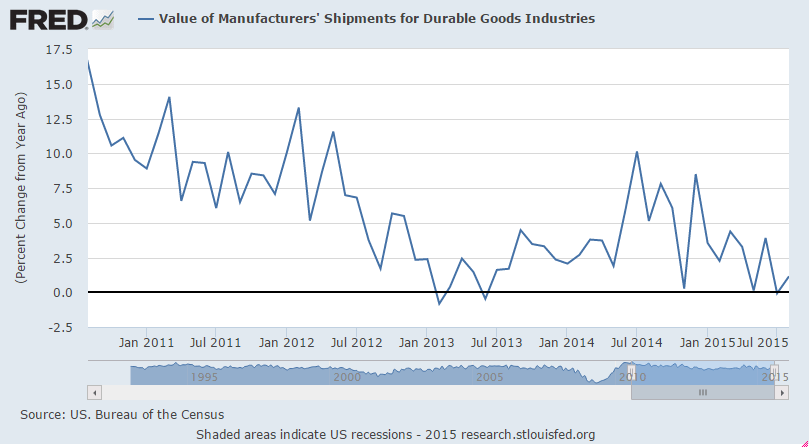
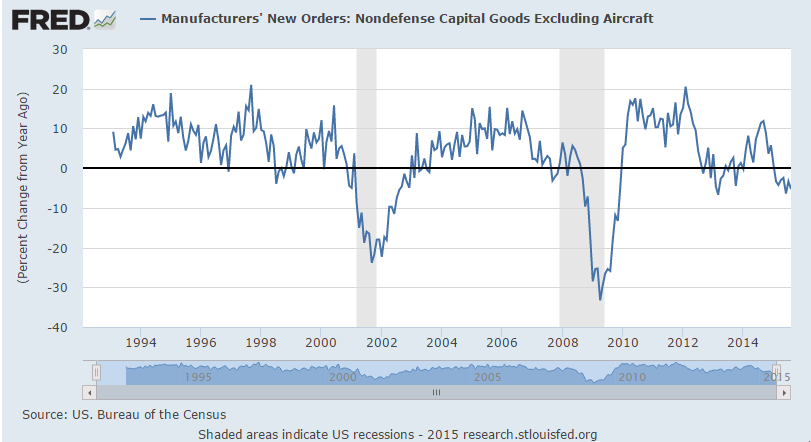
Weak capital goods expenditures and another report indicating weak exports:

United States : Durable Goods Orders
er-9-24-1

Highlights
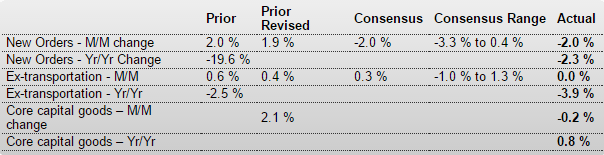
Transportation equipment, specifically aircraft orders, are once again skewing durable goods orders which fell 2.0 percent in August as expected. Excluding transportation, durable goods were unchanged which is slightly lower than expected. Weakness here in part reflects a pause for capital goods as nondefense ex-auto orders slipped 0.2 percent following two prior months of very solid growth. This report falls in line with last week’s industrial production data where manufacturing basically held flat in August. Weakness in exports is the balancing factor tipping the factory sector away from growth.

er-9-24-2
er-9-24-3
er-9-24-4
er-9-24-5
Not good:

United States : Chicago Fed National Activity Index
er-9-24-6
Chicago Fed National Activity Index in the United States decreased to -0.41 in August from an upwardly revised 0.51 in July of 2015, the lowest since January of 2014. All four broad indicators declined from July: production (-0.3 from +0.36); employment (-0.01 from +0.18); personal consumption and housing (-0.08 from -0.06); sales, orders, and inventories (-0.03 from +0.03). Chicago Fed National Activity Index in the United States averaged 0 from 1967 until 2015, reaching an all time high of 2.66 in September of 1983 and a record low of -4.96 in December of 1974. Chicago Fed National Activity Index in the United States is reported by the Federal Reserve Bank of Chicago.

Another bad one:

Kansas City Fed Manufacturing Index
er-9-24-7
Highlights
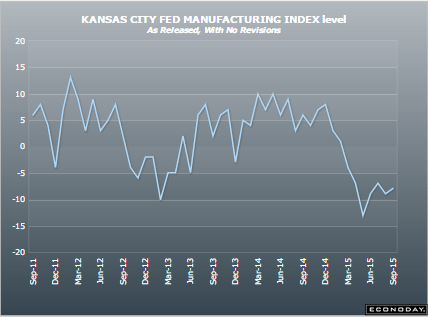
At an index of minus 8, contraction continues apace in the Kansas City manufacturing sector which reports export weakness tied to the strong dollar and energy-sector weakness tied to low commodity prices. Metals and machinery are showing particular weakness with new orders at minus 8 and backlog orders at minus 12. Employment is at minus 7 with the workweek at minus 12. Despite contraction in the workweek, production is the only component in the plus column, but just barely at plus 1. Price data, like for many other reports, show contraction for both inputs and outputs.

Manufacturing was basically flat in August, as evidenced by this morning’s durable goods report. And the early indications on September, including the Kansas City report, are all pointing to increasing weakness.
er-9-24-8

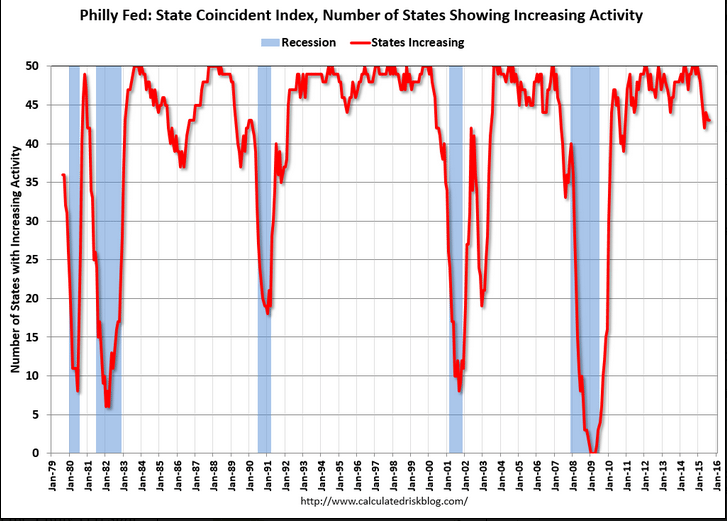
Still looking suspect:
er-9-24-9
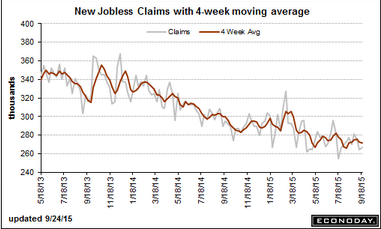
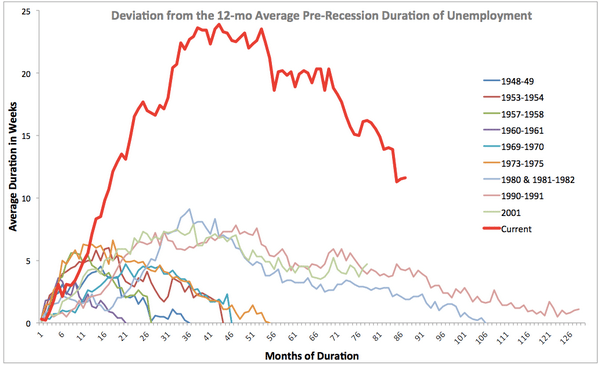
I’m still suspecting there’s something keeping more people from filing than in prior cycles:
er-9-24-10
This looks a touch better but could just be some buying in front of fears of rate hikes. And still very depressed historically:

New Home Sales
er-9-24-11
Highlights
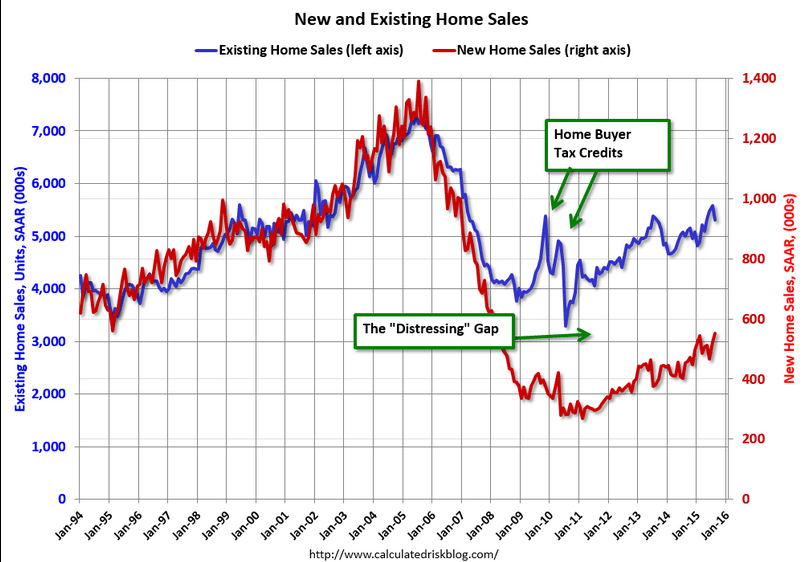
Because of a small sample, new home sales can be very volatile month-to-month as they are in the August report where, at 552,000, the annual rate came in far above the high-end estimate. This is the highest rate since February 2008. Adding to the momentum is a 15,000 upward revision to July.

In especially welcome news for builders, the sales strength pulled supply relative to sales even lower, to 4.7 months from 4.9 months. Still, low supply is a constraint on sales in contrast to pricing which remains favorable, at a median $292,700 for a 0.5 percent gain on the month but at a paltry year-on-year gain of only 0.3 percent. By comparison, the year-on-year sales gain is 22 percent.

Regional data show August strength for the Northeast and more importantly the South which, for new home sales, is larger than all other regions combined. Year-on-year, sales in the South are up 28 percent which leads the regions. At the rear is the West where sales growth, however, is still in the double digits at plus 11 percent.

Volatility aside, this report is impressively strong and likely marks an upturn for housing data which, like Monday’s existing home sales report, had been showing limited and uneven strength.

er-9-24-12

Redbook Retail Sales, Richmond Fed, Architectural Index, Mtg Purchase Index, Chemical Activity Barometer, China, Unemployment Duration Chart

No sign of improvement:
er-9-23-1

Bad:

Richmond Fed Manufacturing Index
er-9-23-2
Highlights
Early indications on the September factory sector are negative and now include a minus 5 headline from the Richmond Fed. New orders, unfortunately, are even more deeply in the negative column at minus 12 which points to even weaker activity in the months ahead. Shipments are already in the negative column for a second straight month at minus 3. And manufacturers in the region have already worked down their backlogs to keep up production with backlogs in deep contraction at minus 24 and minus 15 the last two months. Employment is in the plus column but just barely at 3 and it won’t stay there for long if orders and production continue to weaken. Price readings are moderating further to round out an unpleasant picture of unexpected slowing. Last week’s Philly Fed report and especially the Empire State report also pointed to weakness this month. Watch for the manufacturing PMI on tomorrow’s calendar which will give a national look at the September factory sector.

Down as well:
er-9-23-3
Moved up some for the week but as per the chart still drifting a bit lower:
er-9-23-4

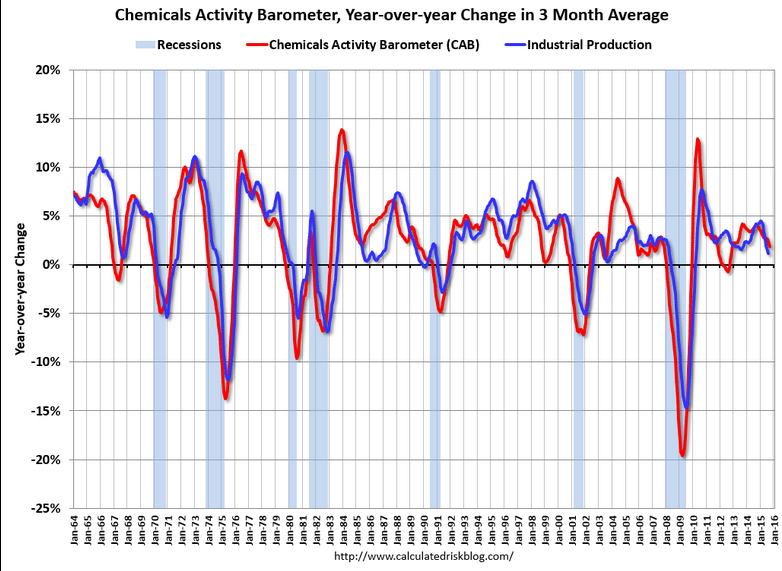
Looks like it’s maybe heading south:

September 2015 Chemical Activity Barometer Says Economy Will Continue to Slow

from the American Chemistry Council

The Chemical Activity Barometer (CAB), dropped 0.4 percent in September, following a revised 0.2 percent decline in August. The pattern shows a marked deceleration, even reversal, over second quarter activity. It is unlikely that growth will pick up through early 2016.
er-9-23-5

‘Markit’ reports like this PMI are always suspect but narrative is interesting:

PMI Manufacturing Index Flash
er-9-23-6
Highlights
Growth in Markit’s manufacturing sample remains as slow as it’s been since October 2013, stuck at 53.0 for the September flash. The reading is the same as the final August result and little changed from August’s flash of 52.9. It’s also below the recovery’s 54.3 average.

Growth in new orders is the slowest since January with businesses citing caution among customers and subdued business conditions. Export orders, hurt by weak foreign demand and strength in the dollar, have been very weak this year but did improve slightly in the latest report. Slow orders are leading the sample to slow hiring and trim inventories. The latest gain for employment is only marginal and the weakest since July last year.

Prices are especially weak in the report, showing the first drop in four months for input costs and the first drop in finished goods since August 2012. Fed policy makers, concerned by low inflation, are likely to take special notice.

The 53.0 headline points to more strength than many of the details of the report. Together with the September run so far of regional surveys, the manufacturing sector does not look like it’s having much of a month. Watch for durable goods orders tomorrow for definitive data on August followed by the Kansas City manufacturing update for September.

Fiscal does work if they ‘do what it takes’. Maybe the policies of the western educated kids has been over ruled by their elders?

Production declines further as total new orders fall at faster pace

Sept 23 (Markit) — Flash China General Manufacturing PMI at 47.0 in September (47.3 in August). Manufacturing Output Index at 45.7 in September (46.4 in August). The decline indicates the nation’s manufacturing industry has reached a crucial stage in the structural transformation process. Overall, the fundamentals are good. The principle reason for the weakening of manufacturing is tied to previous changes in factors related to external demand and prices. Fiscal expenditures surged in August, pointing to stronger government efforts on the fiscal policy front.

er-9-23-7