Here’s how I remember it all.
I didn’t look anything up, with the idea that memories matter.
The ‘golden age’ from WWII was said to have ended around 1973. Inflation and employment was remembered as relatively low, productivity high, the American middle class thriving.
Why? Keynes was sort of followed. The Kennedy tax cuts come to mind. But also of consequence and ignored was the fact that the US had excess crude production capacity, with the Texas Railroad Commission setting quotas, etc. to support prices at maybe the $2.50-$3.00 price range. And stable crude prices, though maybe a bit higher than they ‘needed’ to be, meant reasonable price stability, as much was priced on a cost plus basis, and the price of oil was a cost of most everything, directly or indirectly.
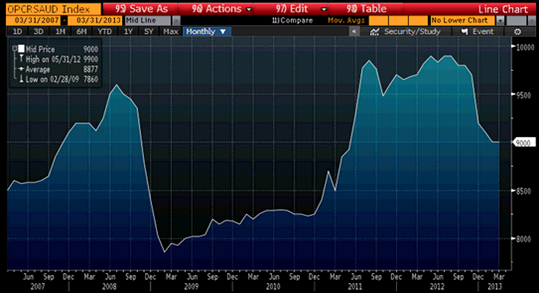
But in the early 1970’s demand for crude exceeded the US’s capacity to produce it, and Saudi Arabia became the swing producer, replacing the Texas Railroad commission as price setter. And, of course, price stability wasn’t their prime objective, as they hiked price first to about $10 by maybe 1975, which caused a near panic globally, then after a too brief pause they hiked to $20, and finally $40 by maybe 1980.
With oil part of the cost structure, the consumer price index, aka ‘inflation’, soared to double digits by the late 70’s. Headline Keynesian proposals were largely the likes of price and wage controls, which Nixon actually tried for a while. But it turned out the voters preferred inflation to their government telling them what they could earn (wage controls on organized labor and others) and what they could charge. Arthur Burns had the Fed funds rate up to maybe 6%. Miller took over and quickly fell out of favor, followed by tall Paul in maybe 1979 who put on what might be the largest display of gross ignorance of monetary operations with his borrowed reserve targeting policy. However, a year or so after the price of oil broke as did inflation giving tall Paul the spin of being the man who courageously broke inflation. Overlooked was that Jimmy Carter had allowed the deregulation of natural gas in 1978, triggering a massive increase in supply, with our electric utilities shifting from oil to nat gas, and OPEC desperately cutting production by maybe 15 million barrels/day in what turned out to be an unsuccessful effort to hold price above $30, as the supply shock was too large for them and they drowned in the flood of no longer needed oil, with prices falling to maybe the $10 range where they stayed for almost 20 years, until climbing demand again put the Saudis in the catbird seat. Meanwhile, Greenspan got credit for that goldilocks period that again was the product of stable oil prices, not the Fed (at least in my story.)
So back to the 70’s, and continuous oil price hikes by a foreign monopolist. All nations experienced pretty much the same inflation. And it all ended at about the same time as well when the price of crude fell. The ‘heroes’ were coincidental. In fact, my take is they actually made it worse than it needed to be, but it did ‘get better’ and they of course were in the right place at the right time to get credit for that.
So back to the 70’s. With the price of oil being hiked by a foreign monopolist, I see two choices. The first is to try to let there be a relative value shift (as the Fed tries to do today) and not let those price hikes spill into the rest of the price level, which means wages, for the most part. This is another name for a decline in real terms of trade. It would have meant the Saudis would get more real goods and services for the oil. The other choice is to let all other price adjust upward to keep relative value the same, and try to keep real terms of trade from deteriorating. Interestingly, I never heard this argument then and I still don’t hear it now. But that’s how it is none the less. And, ultimately, the answer fell somewhere in between. Some price adjustment and some real terms of trade deterioration. But it all got very ugly along the way.
It was decided the inflation was caused by unions trying to keep up or stay ahead of things for their members, for example. It was forgotten that the power of unions was a derivative of price power of their companies, and as companies lost pricing power to foreign competition, unions lost bargaining power just as fast. And somehow a recession and high unemployment/lost output was the medicine needed for a foreign monopolist to stop hiking prices??? And there was Ford’s ‘whip inflation now’ buttons for his inflation fighting proposal, and Carter with his hostage thing adding to the feeling of vulnerability. And the nat gas dereg of 1978, the thing that actually did break the inflation two years later, hardly got a notice, before or after, and to this day.
As today, the problem back then was no one of political consequence understood the monetary system, including the mainstream Keynesians who had been the intellectual leadership for a long time. The monetarists came into vogue for real only after the failure of the Keynesians, who never did recover, and to this day I’ve heard those still alive push for price and wage controls, fixed exchange rates, etc. etc. in the name of price stability.
So in this context the rise of Thatcher types, including Reagan, makes perfect sense. And even today, those critical of Thatcher type policies have yet to propose any kind of comprehensive proposals that make any sense to me. They now all agree we have a long term deficit problem, and so put forth proposals accordingly, etc. as they are all destroying our civilization with their abject ignorance of the monetary system. Or, for some unknown reason, they are just plain subversive.
Thatcher?
It was the blind leading the blind then and it’s the same now.
And that’s how I remember it/her.
And i care a whole lot more about what happens next than about what happened then.
:(