2008-05-09 US Economic Releases


[Skip to the end]


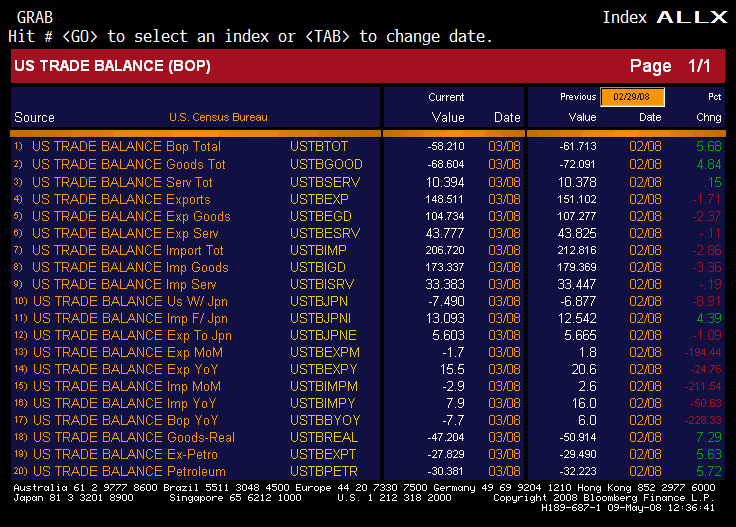
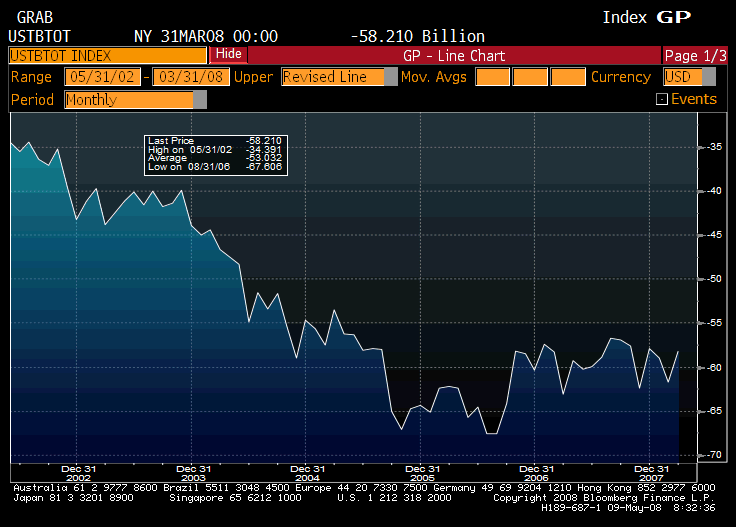
2008-05-09 Trade Balance

Trade Balance

Survey -$61.0B
Actual -$58.2B
Prior -$62.3B
Revised -$61.7B

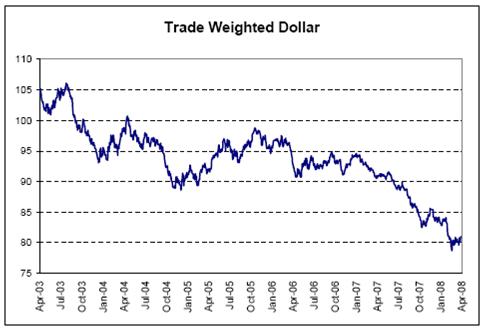
Better than expected.  Without foreign CBs and monetary authorities accumulating USD reserves, I expect the trade balance to fall to near zero, and the USD will probably fall until we get there.

Note that saying the dollar will fall until the trade balance goes to zero is not the same as saying the falling USD directly causes the trade gap to go to zero.  Yes, they are linked, but loosly and over longer periods of time, so this can be a choppy and ugly process as US real terms of trade continuously decline.

Exports up 15.5% year over year, though down a bit in March.

Street talking Q1 revisions will kick gdp up to the 1-1.5% range and more for Q2 with fiscal now kicking in.

Most of the data is coming out better than expected and showing some modest improvement.

Credit spreads seem to have peaked with the Bear Stearns raid.

Financial sector still being hit/disrupted with its continuing credit and liquidity issues as the Fed creeps towards removing some of the self imposed landmines in its own monetary operations procedures.

Housing may have bottomed but still muddling through at very low levels.

The rest of the economy doing reasonably well and leaving the financial sector in its wake.

Modestly rising GDP means the output gap is at least stable.

The question for the Fed is the level of GDP that corresponds to non inflationary growth – what they call the ‘speed limit’ for optimal long term GDP.

Seems hard to make the case that higher GDP growth won’t add to upward price pressures from levels already too high.

Meanwhile, consumers hit with higher food/crude prices still working but buying less as their remaining output gets exported.

Welcome to the new US export economy – looks good, feels bad, and the Fed and Tsy think the trade balance moving towards zero (less consumption more exports) is a ‘good thing’ .

[top][end]

2008-05-09 Trade Balance TABLE

Trade Balance TABLE


[top]

2008-05-03 Weekend update (in brief)


[Skip to the end]

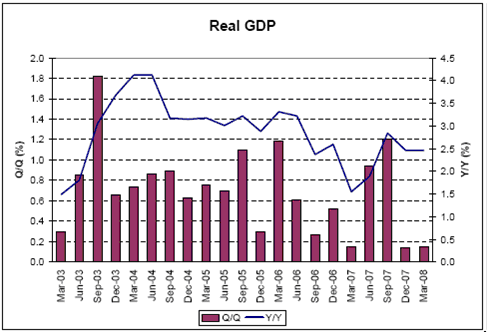
2008-05-03 Real GDP

No recession here, and Q1 likely to be revised higher when March trade numbers come out.

Q3 could be 2% depending on the multiplier from the fiscal package, and by Q3 other government spending will be kicking in for the elections and housing is unlikely to be subtracting from GDP. It could even be adding by then.

As suspected, the current weak housing market has been offset by strong exports.

Financial sector losses have nothing to do with GDP unless they somehow reduce aggregate demand.

The prime suspect was the credit channel, but so far the evidence shows only limited damage due to tighter credit conditions, and not the downward spiral feared by the Fed and many other private economists.

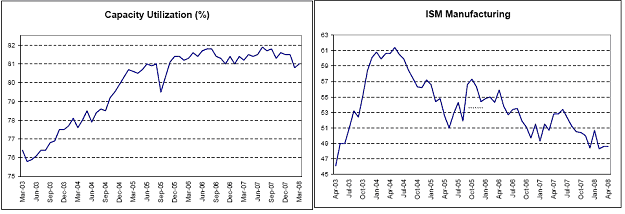
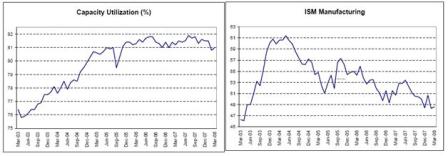
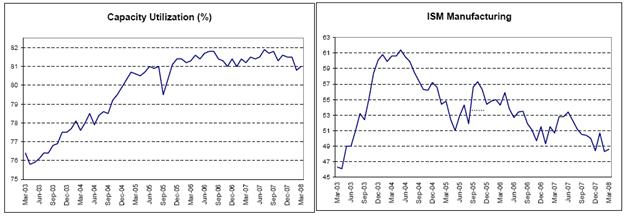
2008-05-03 Capacity Utilization, ISM Manufacturing

On the soft side, but no recession.

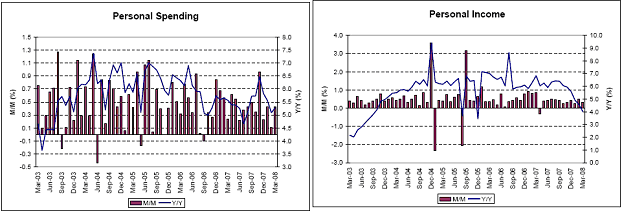
2008-05-03 Personal Spending, Personal Income

The consumer is muddling through as best as can be expected in an export economy.

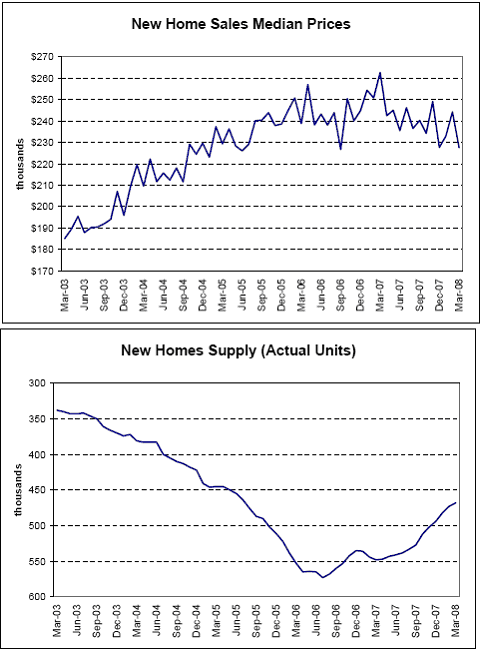
2008-05-03 New Home Sales Median Prices, New Home Suppy (Actual Units)

Median prices are soft and may or may not have bottomed, as actual inventories have worked their way down to relatively normal levels for a relatively normal sales pace (which we don’t have yet).

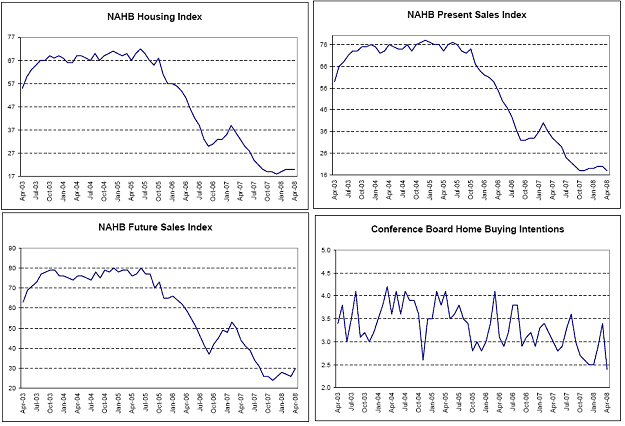
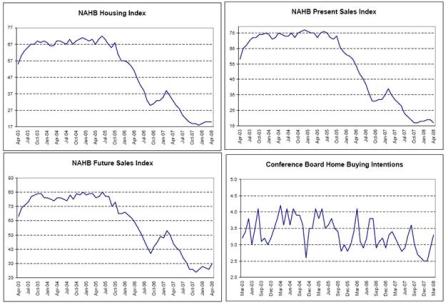
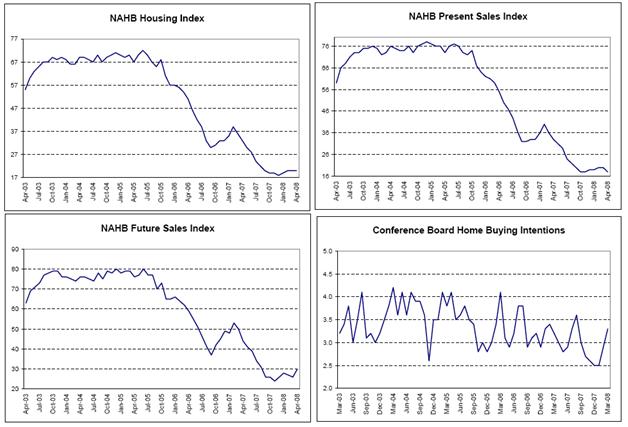
2008-05-03 NAHB Housing Index, NAHB Present Sales Index, NAHB Future Sales Index, Conference Board Home Buying Intentions

The bulk of the adjustment may have been bottoming around October/November.

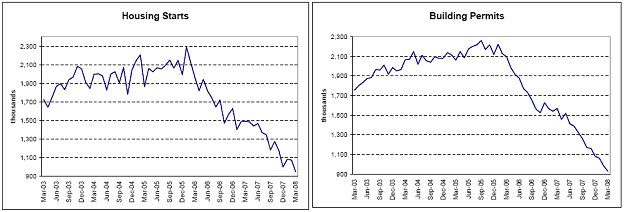
2008-05-03 Housing Starts, Building Permits

Low starts have reduced supply as builders and buyers remain cautious.

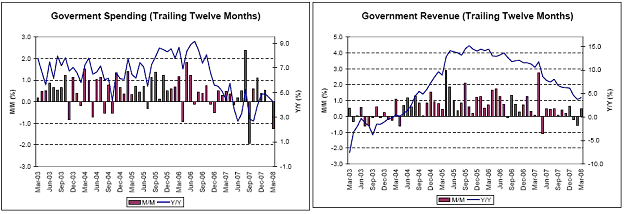
2008-05-03 Government Spending, Government Revenue

Government spending is roaring back and added nicely to Q1 GDP (March print above has timing issues and wasn’t functionally as low as indicated).

Revenue also holding up, indicating no recession yet.

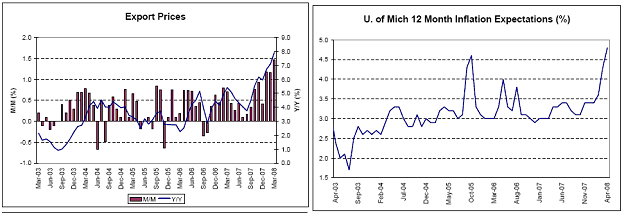
2008-05-03 Export Prices, U. of Michigan 12 Month Inflation Expectations

Every price chart is looking higher, and expectations have elevated, and the Fed keeps cutting rates. Who would’ve thought?

Fisher and Plosser make the mainstream case and are outvoted.

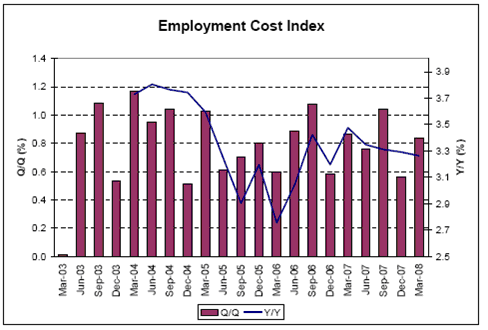
2008-05-03 Employment Cost Index

Wages remain ‘well contained’.

(If you don’t count import prices from China..)

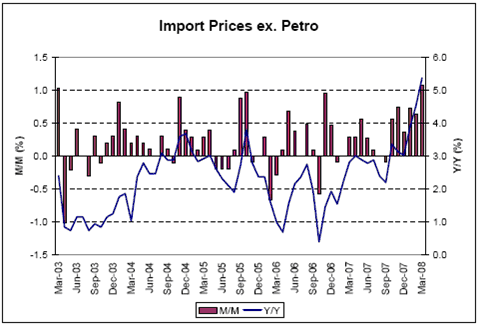
2008-05-03 Import Prices ex. Petro

Globalization is now inflationary.

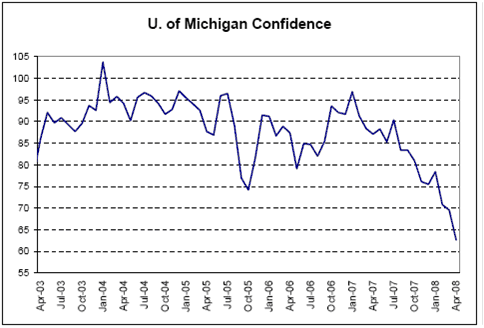
2008-05-03 U. of Michigan Confidence

All the confidence surveys look about this weak, and at recession type levels, and about 90% of voters think we are in a recession.

American’s aren’t used to an export economy with declining real terms of trade – a mercantilist concept publicly supported by Bernanke and Paulson.

And they don’t seem to like it.


[top]

2008-05-02 US Economic Releases


[Skip to the end]


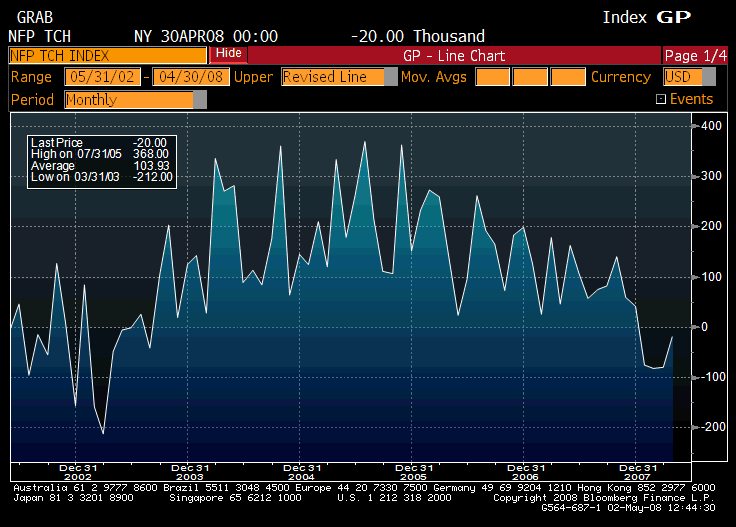
2008-05-02 Change in Nonfarm Payrolls

Change in Nonfarm Payrolls (Apr)

Survey -75K
Actual -20K
Prior -80K
Revised -81K

Upside surprise – staying above recession levels, and a lagging indicator.

[top]


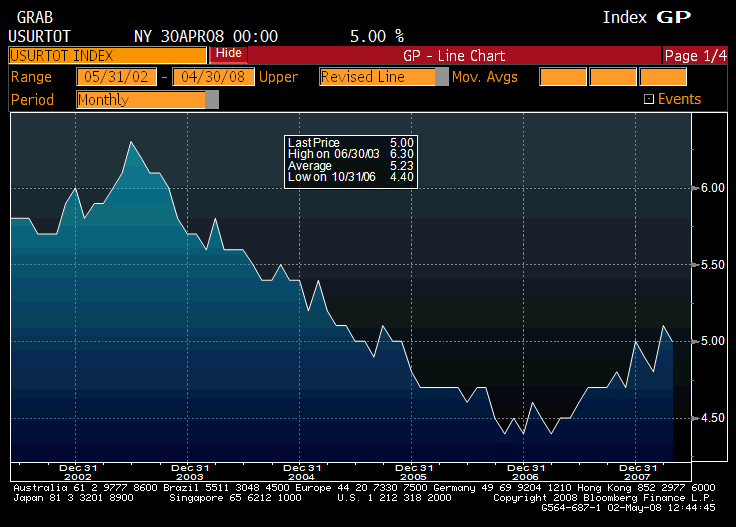
2008-05-02 Unemployment Rate

Unemployment Rate (Apr)

Survey 5.2%
Actual 5.0%
Prior 5.1%
Revised n/a

Still trending higher, but not at recession levels, and a lagging indicator as well.

And still very near what the fed considers full employment, putting inflation expectations at risk of elevating for the mainstream.

[top]


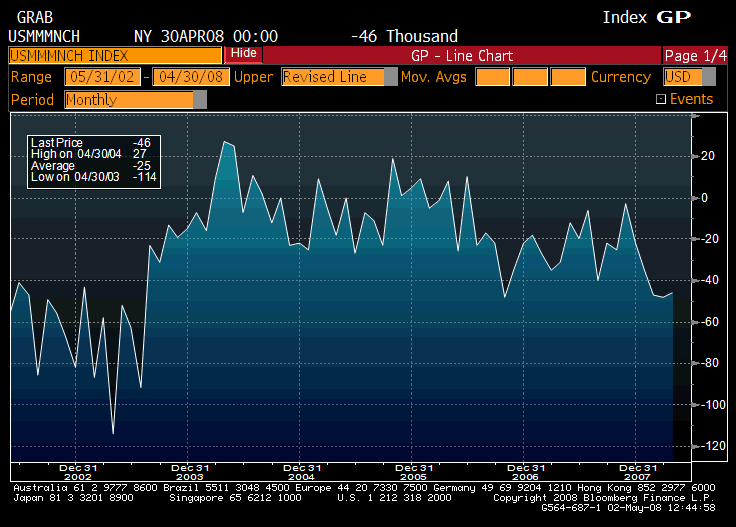
2008-05-02 Change in Manufacturing Payrolls

Change in Manufacturing Payrolls (Apr)

Survey -35K
Actual -46K
Prior -48K
Revised n/a

Better than expected, not at recession levels.

[top]


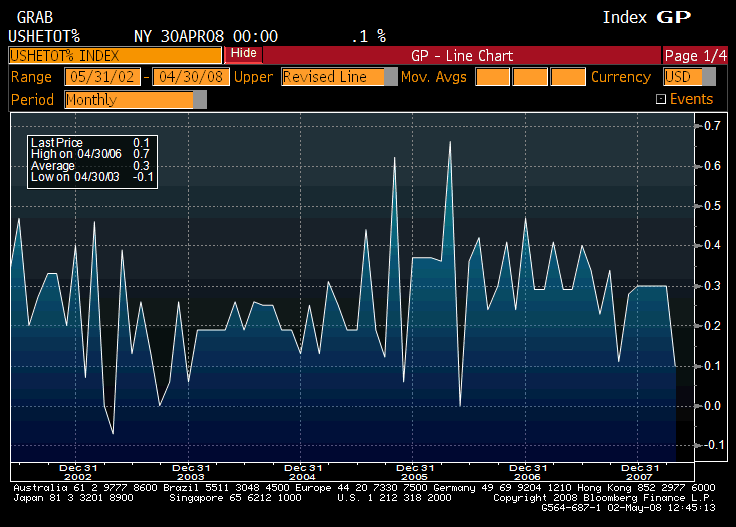
2008-05-02 Average Hourly Earnings MoM

Average Hourly Earnings MoM (Apr)

Survey 0.3%
Actual 0.1%
Prior 0.3%
Revised n/a

Lower than expected, indicating wages still well anchored, at least in this report.

[top]


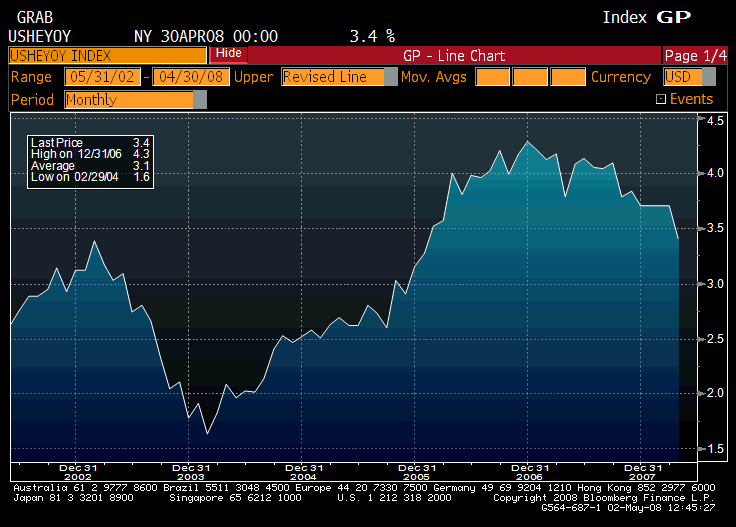
2008-05-02 Average Hourly Earnings YoY

Average Hourly Earnings YoY (Apr)

Survey 3.6%
Actual 3.4%
Prior 3.6%
Revised n/a

Coming off some but still moving up at a reasonably pace.

[top]


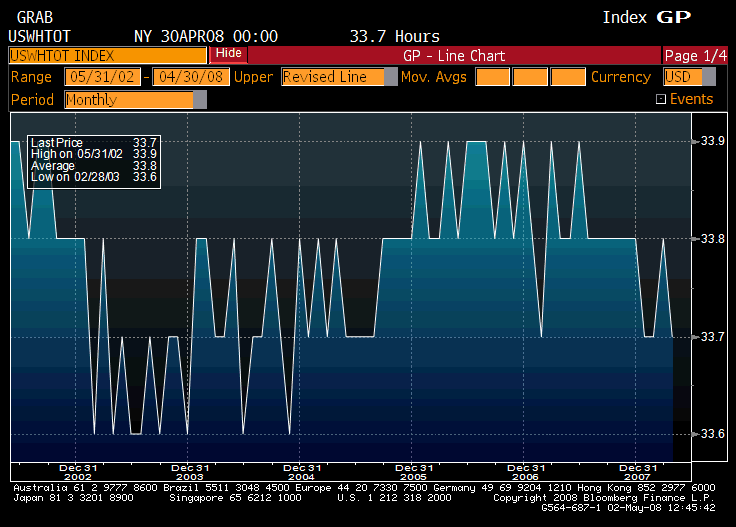
2008-05-02 Average Weekly Hours

Average Weekly Hours (Apr)

Survey 33.7
Actual 33.7
Prior 33.8
Revised n/a

[top]


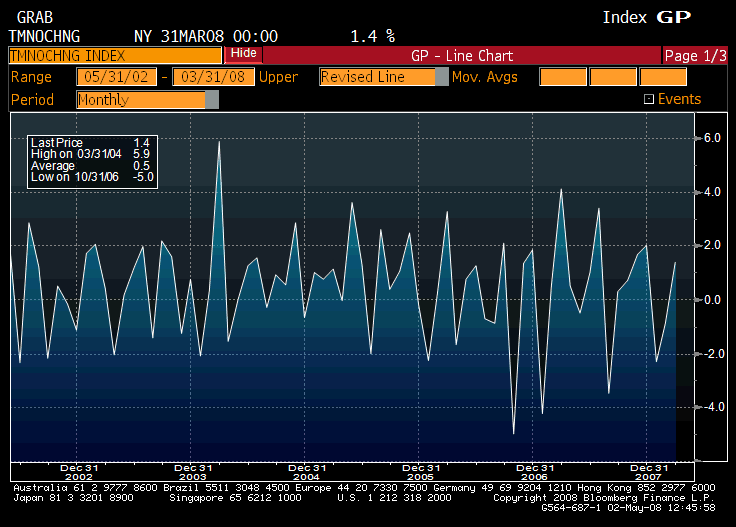
2008-05-02 Factory Orders

Factory Orders (Mar)

Survey 0.2%
Actual 1.4%
Prior -1.3%
Revised -0.9%

[top]


2008-05-02 Factory Orders TABLE

Factory Orders TABLE

Upside suprise, same story – domestic weak, export sector strong.

[top]

FOMC Analysis

On Thu, May 1, 2008 at 7:43 AM, Karim wrote:

Sorry for delay—was in transit yday.

Recent information indicates that economic activity remains weak. Household and business spending has been subdued and labor markets have softened further. Financial markets remain under considerable stress, and tight credit conditions and the deepening housing contraction are likely to weigh on economic growth over the next few quarters.

Note: Economic activity not weakening further and credit conditions not tightening further, but remain ‘weak’ and ‘tight’, respectively. Housing contraction still deepening and labor market still softening.

So we remain stuck around 0% growth with tight credit conditions and a worsening labor market..

Although readings on core inflation have improved somewhat, energy and other commodity prices have increased, and some indicators of inflation expectations have risen in recent months. The Committee expects inflation to moderate in coming quarters, reflecting a projected leveling-out of energy and other commodity prices and an easing of pressures on resource utilization. Still, uncertainty about the inflation outlook remains high. It will be necessary to continue to monitor inflation developments carefully.

Note: Removed ‘inflation remains elevated’ and uncertainty about inflation has not increased, but ‘remains high’.

Feeling a little better about inflation but way too early to sound all-clear.

The substantial easing of monetary policy to date, combined with ongoing measures to foster market liquidity, should help to promote moderate growth over time and to mitigate risks to economic activity. The Committee will continue to monitor economic and financial developments and will act as needed to promote sustainable economic growth and price stability.

Note: Removed downside risks remain and ‘act in a timely manner’.

Don’t see growth falling much below the -1% to +1% range and will likely not ease at the June meeting.

I agree with former FOMC member Poole who described the statement as ‘hardly a loud and clear signal’ of a pause.

I think the Fed stands ready to ease further if fiscal action (notable in its absence in the statement) and prior eases don’t gain traction over the course of H2.

Agreed with all.

The FOMC continues to ‘trust their models’ and forecast declining inflation.

The economy continues to muddle through with GDP just north of 0, with CPI remaining north of 4% for what is adding up to a substantial period of time.

What the Fed is saying is that the current output gap/’resource utilization level’ is more than adequate to bring down cpi as per their forecasts.

This is what the mainstream would call a very high risk strategy, with the risk being that the cost of bringing down inflation later will be a lot higher than it would have been to bring it down sooner.


2008-05-01 US Economic Releases


[Skip to the end]


2008-05-01 Challenger Job Cuts YoY

Challenger Job Cuts YoY (Apr)

Survey n/a
Actual 27.4%
Prior 9.4%
Revised n/a

Seem to be drifting higher.

[top]


2008-05-01 Personal Income

Personal Income (Mar)

Survey 0.4%
Actual 0.3%
Prior 0.5%
Revised n/a

Not the stuff of recessions.

[top]


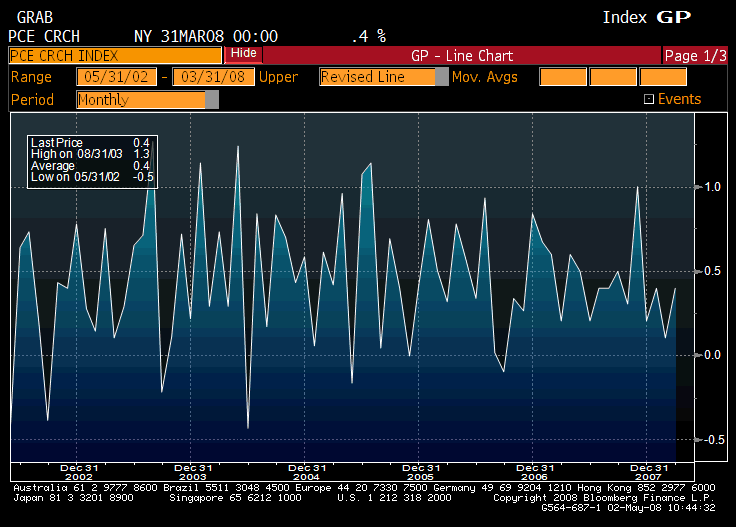
2008-05-01 Personal Spending

Personal Spending (Mar)

Survey 0.2%
Actual 0.4%
Prior 0.1%
Revised n/a

Muddling through.

[top]


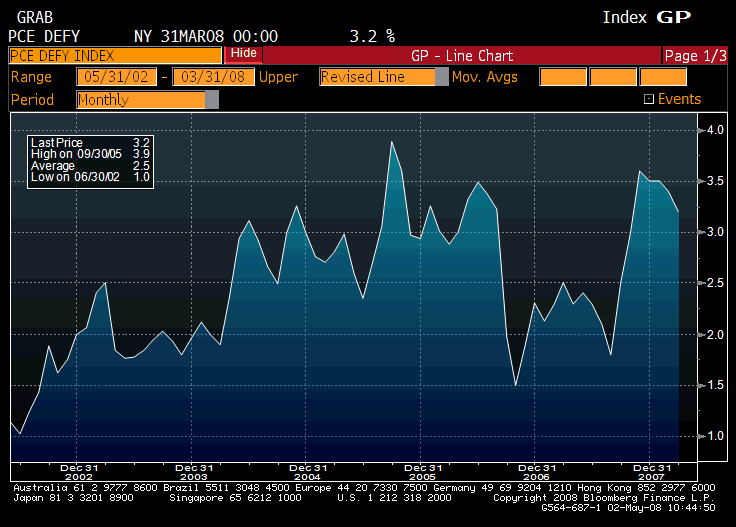
2008-05-01 PCE Deflator YoY

PCE Deflator YoY (Mar)

Survey 3.2%
Actual 3.2%
Prior 3.4%
Revised n/a

Still far too high for comfort for a mainstream economist.

[top]


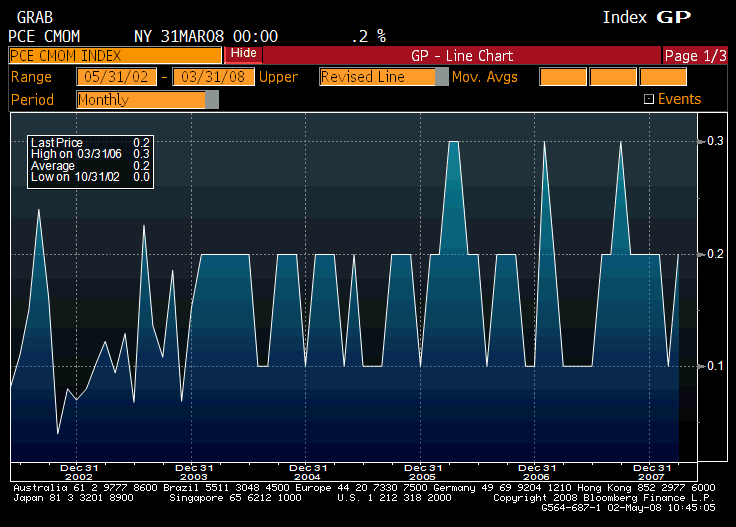
2008-05-01 PCE Core MoM

PCE Core MoM (Mar)

Survey 0.1%
Actual 0.2%
Prior 0.1%
Revised n/a

I’m anticipation more 0.3%s for the rest of this year.

[top]


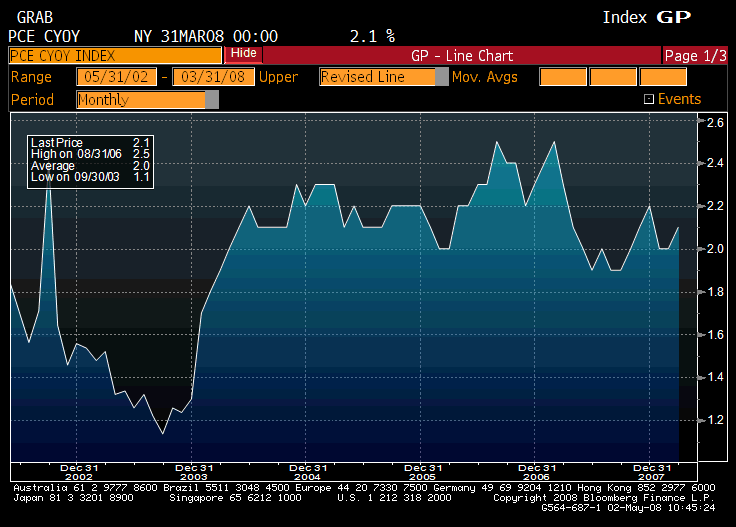
2008-05-01 PCE Core YoY

PCE Core YoY (Mar)

Survey 2.0%
Actual 2.1%
Prior 2.0%
Revised n/a

Starting to move back up.

[top]


2008-05-01 Initial Jobless Claims

Initial Jobless Claims (Apr 26)

Survey 365K
Actual 380K
Prior 342K
Revised 345K

No recession yet.

[top]


2008-05-01 Continuing Claims

Continuing Claims (Apr 19)

Survey 2950K
Actual 3019K
Prior 2934K
Revised 2945K

No recession yet.

[top]


2008-05-01 ISM Manufacturing

ISM Manufacturing (Apr)

Survey 48.0
Actual 48.6
Prior 48.6
Revised n/a

Staying above recession levels.

[top]


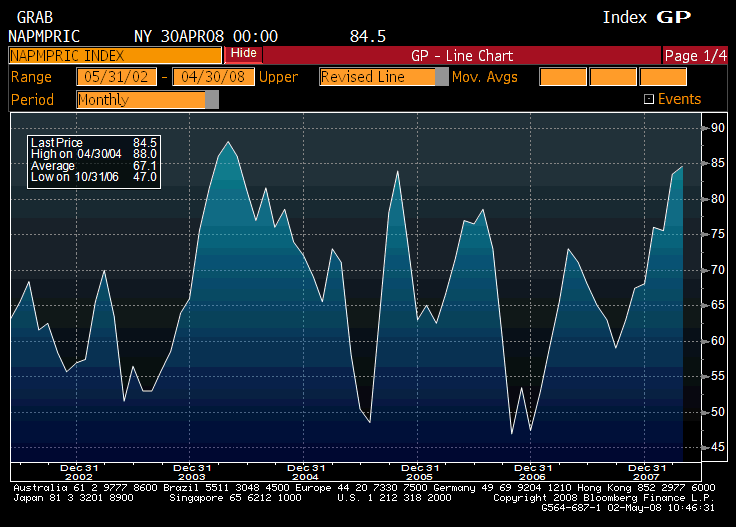
2008-05-01 ISM Prices Paid

ISM Prices Paid (Apr)

Survey 83.5
Actual 84.5
Prior 83.5
Revised n/a

Inflation ripping!

[top]


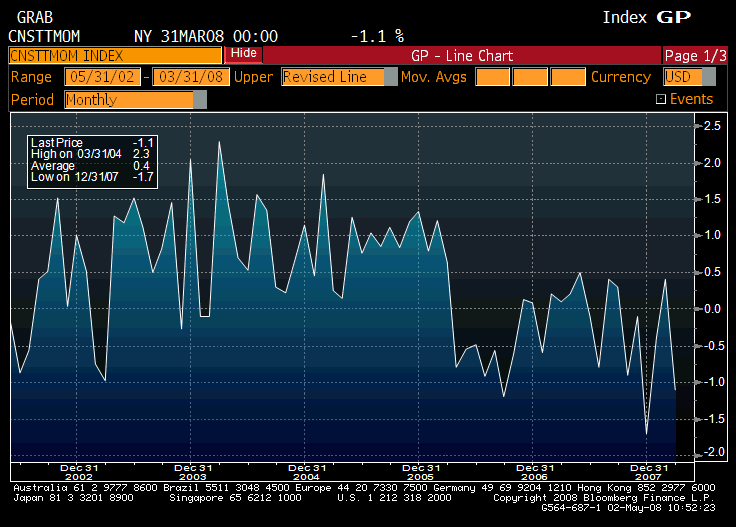
2008-05-01 Construction Spending MoM

Construction Spending MoM (Mar)

Survey -0.7%
Actual -1.1%
Prior -0.3%
Revised 0.4%

[top]


2008-05-01 Construction Spending YoY

Construction Spending YoY (Mar)

Survey n/a
Actual -3.4%
Prior -2.2%
Revised n/a

Still weak.

[top]


Total Vehicle Sales (Apr)

Survey 15.0M
Actual
Prior 15.1M
Revised

[comments]

[top]


Domestic Vehicle Sales (Apr)

Survey 11.4M
Actual
Prior 11.1M
Revised

[comments]


[top]

2008-04-30 US Economic Releases


[skip to the end]


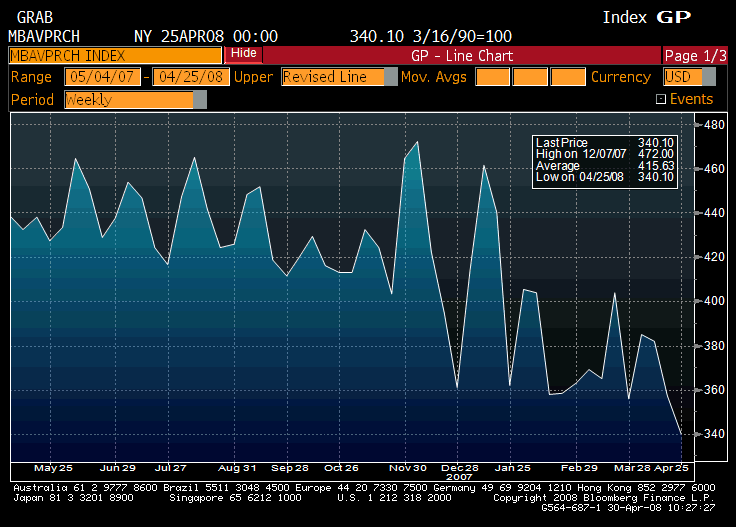
2008-04-30 MBAVPRCH Index

MBAVPRCH Index (Apr 25)

Survey n/a
Actual 340.1
Prior 357.3
Revised n/a

Definately looking weak. Winter is over, and tax rebates are in the mail.


2008-04-30 MBAVREFI Index

MBAVREFI Index (Apr)

Survey n/a
Actual 1905.2
Prior 2286.3
Revised n/a

Settling down as well.


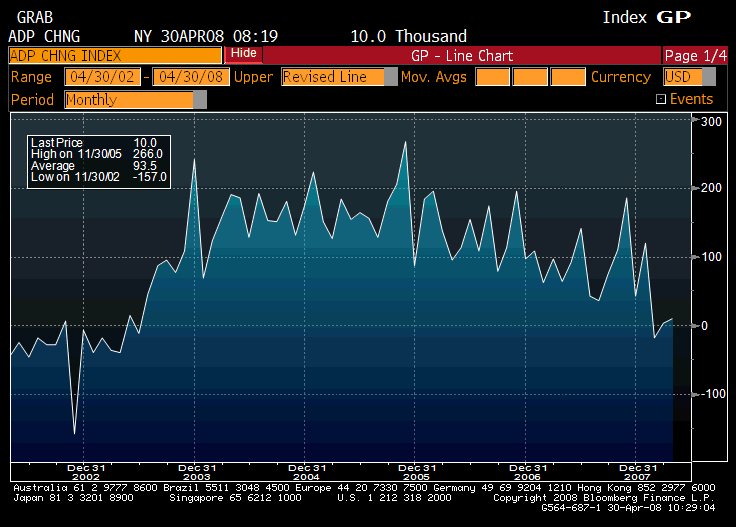
2008-04-30 ADP Employment Change

ADP Employment Change (Apr)

Survey -60K
Actual 10K
Prior 8K
Revised 3K

Employment growth continues to slow over time but not yet signaling recession.

Non-farm payrolls muddling through as well.


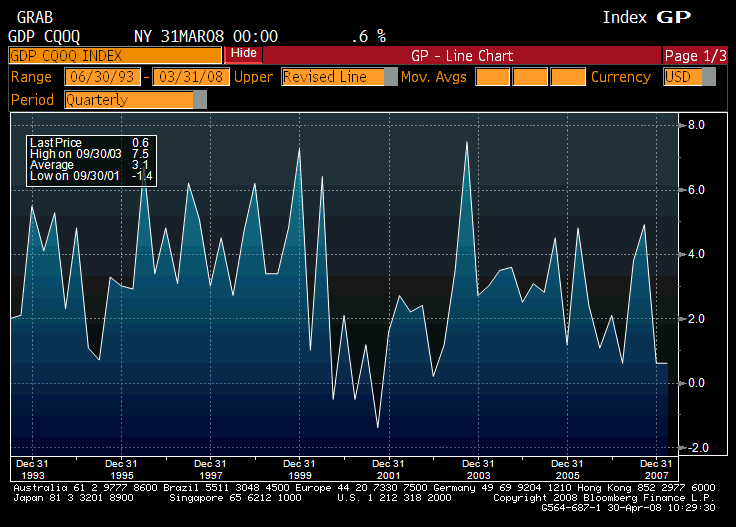
2008-04-30 GDP QoQ Annualized

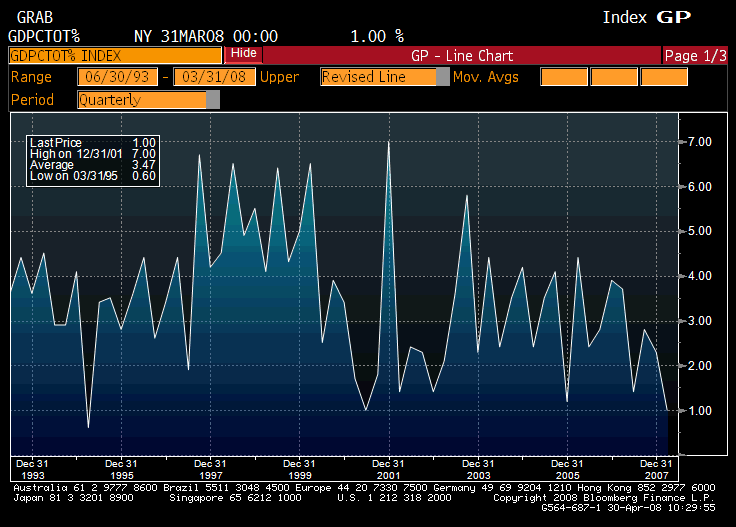
GDP QoQ Annualized (1Q A)

Survey 0.5%
Actual 0.6%
Prior 0.6%
Revised n/a

Still in the black, and my guess is it’s likely to be revised up with the March trade numbers that are due in in a couple of weeks.


2008-04-30 Personal Consumption

Personal Consumption (1Q A)

Survey 0.7%
Actual 1.0%
Prior 2.3%
Revised n/a

Also holding up better than expected, and rebates are on the way.


2008-04-30 GDP Price Index

GDP Price Index (1Q A)

Survey 3.0%
Actual 2.6%
Prior 2.4%
Revised n/a

Better than expected, still high, and with crude continuing to move up it’s going up as well.


2008-04-30 Core PCE QoQ

Core PCE QoQ (1Q A)

Survey 2.2%
Actual 2.2%
Prior 2.5%
Revised n/a

The trend is up, and the Fed is monitoring it closely…


2008-04-30 Employment Cost Index

Employment Cost Index (1Q)

Survey 0.8%
Actual 0.7%
Prior 0.8%
Revised n/a

Looks under control, but not a brake on inflation.


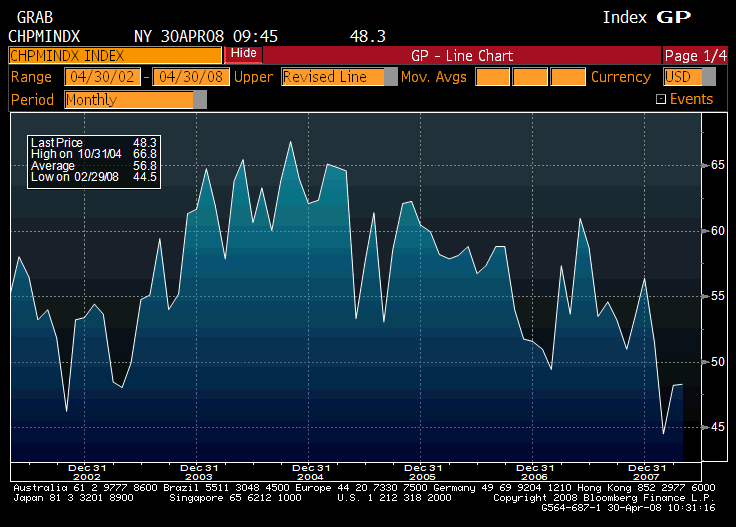
2008-04-30 Chicago Purchasing Manager

Chicago Purchasing Manager (Apr)

Survey 47.5%
Actual 48.3%
Prior 48.2%
Revised n/a

A touch better than expected, but still trending lower.


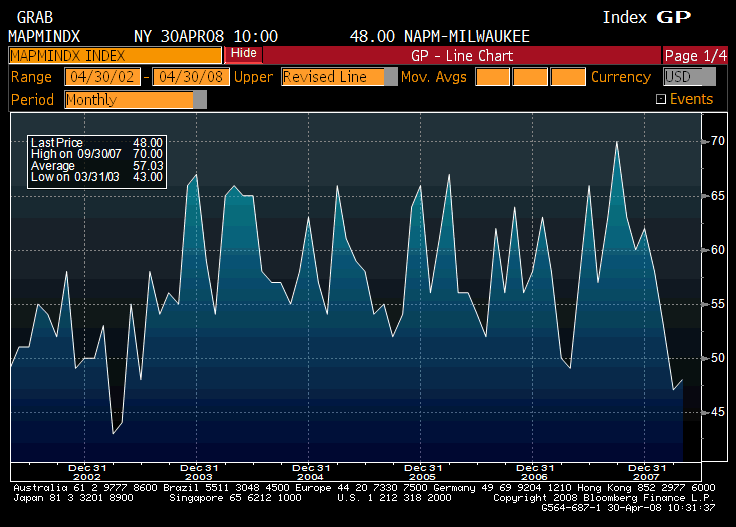
2008-04-30 NAPM-Milwaukee

NAPM-Milwaukee (Apr)

Survey n/a
Actual 48.0
Prior 47.0
Revised n/a

Also not down to recession levels yet.


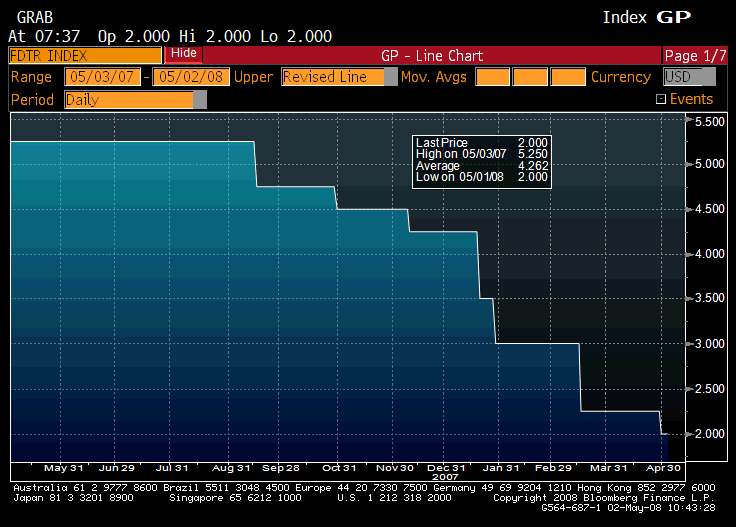
2008-04-30 FOMC Rate Decision

FOMC Rate Decision (Apr 30)

Survey 2.00%
Actual 2.0%
Prior 2.25%
Revised n/a

[comments]


[top]

Current Proposals


Proposals that Happen to Be
within the Mainstream Paradigm

For the Fed:

  1. In general, don’t use the liability (deposit) side of banking as a source of market discipline.
  2. Specifically, eliminate most of the interbank markets by lending directly to US FDIC insured banks vs any/all ‘bank legal’ collateral in any size at the Fed’s target interest rate.
    1. This would reduce domestic FF/LIBOR type spreads to minimal levels, remove bank funding risks, and eliminate the need for the Fed’s TAF and the lending facility.
    2. Banks are already permitted to own only what is permissible by the OCC and other banking law, and fund it with FDIC (government) insured deposits. Therefore, unsecured Fed lending to FDIC insured banks does not add any ‘taxpayer risk’ that the government already accepts and directly manages.

For the Tsy:

  1. Encourage foreign CB’s to re-engage in ‘currency manipulation’ via buying USD to help their exporters.
  2. Encourage monetary authorities to accumulate their reserves in USD financial assets.
  3. Open a securities lending facility that offers all Treasury securities through repurchase agreements to the primary dealers in unlimited quantities at Fed Funds less 0.25%.

For Congress:

  1. Outlaw biofuels – way too dangerous to human life and may already be in the process of killing more humans than WWII.
  2. Manage the output gap with tax cuts or net spending increases.
  3. Stop worrying about US solvency (including solvency of social security).
  4. Use fiscal policy as a tool to meet real economic goals.
  5. Reduce energy consumption by lowering the national speed limit to 30 mph for private motor vehicle transportation over three years:
    1. Reduces driving.
    2. Decreases energy consumption per mile.
    3. Redirects where people live due to the implied price of travel time.
  6. Eliminate tax advantages for savings plans including pensions and individual retirement accounts:
    1. Savings does not function to fund investment.
    2. There are other viable options to having individual savers and money managers directing real investment.
    3. Outlaw passive commodity strategies for existing pension and retirement funds.
  7. Eliminate income taxes and use a national real estate tax to anchor the currency
    1. I estimate compliance costs at up to 15% of GDP.
    2. Compliance issues reward, encourage, and promote a culture of cheating that extends to all law.
    3. The infrastructure is already in place at the local level for a national real estate tax:
      1. Compliance and legal costs are minimal.
      2. The tax rates can be progressive based on values, efficiency, and other standards that advance public purpose.
    4. Use luxury taxes to moderate consumption that is outside of public purpose:
      1. These taxes function to reduce consumption.
      2. The success of these taxes is judged by how little they collect and thereby serve to reduce the targeted consumption.
  8. Eliminate sales taxes and other remaining transactions taxes as these function as internal tariffs:
    1. Transactions taxes work against internal comparative advantage.
    2. Transactions taxes work against specialization of labor.
  9. Legalize all recreational drugs:
    1. Takes the money out of illegal trafficking.
    2. Eliminates drug-related violence.
    3. Moves the social issue from the police to the churches.
  10. Do not allow healthcare costs to continue as a marginal cost of production (business should not fund healthcare, government should):
    1. Distorts pricing and optimal resource utilization.
    2. Workers do not tend to be less healthy than unemployed people.

Proposals that May Be
a Bit Outside of the Mainstream Paradigm

Offer a national service job to anyone willing and able to work which lets the market determine the budget deficit:

  1. An employed bufferstock is a more effective price anchor than today’s bufferstock of unemployed.
  2. Adds to useful output.
  3. Reduces real costs of negative social issues.
  4. Acts as a countercyclical fiscal ‘stabilizer’.

Drop the Fed Funds rate to zero and leave it there permanently:

  1. Inflation is not a function of the nominal rate set by the Fed.
  2. Output and employment is not a function of interest rates.
  3. Nominal interest rates support the rentier class and thereby reduce real output at the expense of those working.

2008-04-25 Valance Chart Review

Twin themes remain:

  • Weakening demand continues from Q2 2006
  • Price indexes continue higher as Saudis continue to hike prices and let quantity adjust
  • Markets are pricing in the end of Fed Funds cuts due to diminished systemic deflationary risk and escalating inflation readings.

    2008-04-25 Capacity Utilization, ISM Manufacturing

    Down, but not out.

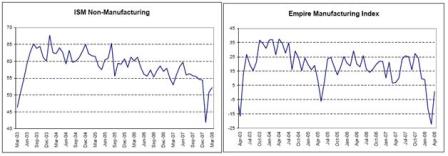
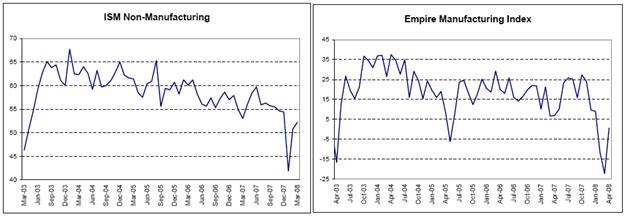
    2008-04-25 ISM Non-Manufacturing, Empire Manufacturing Index

    Most surveys are still trending down but not in collapse.

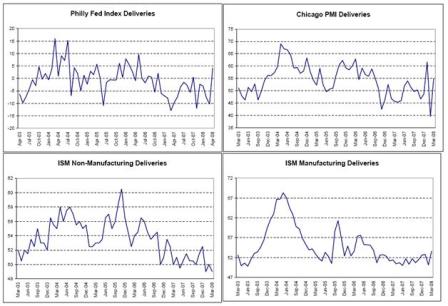
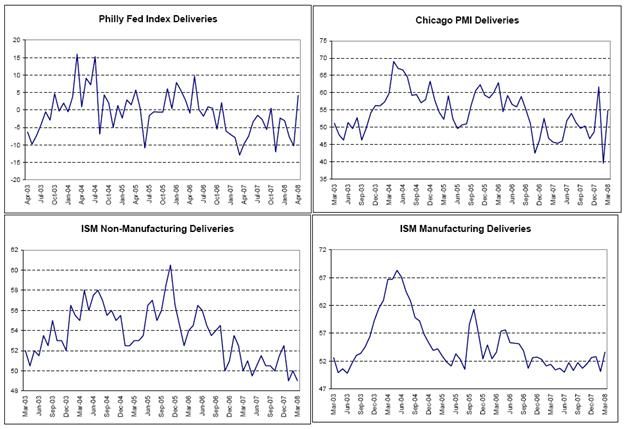
    2008-04-25 Philly Fed Index Deliveries, Chicago PMI Deliveries, ISM Non-Manufacturing Deliveries, ISM Manufacturing Deliveries

    Actual deliveries still on the low side but exceeding expectations.

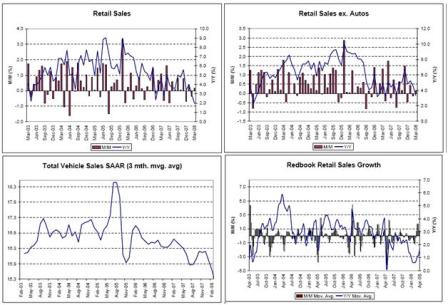
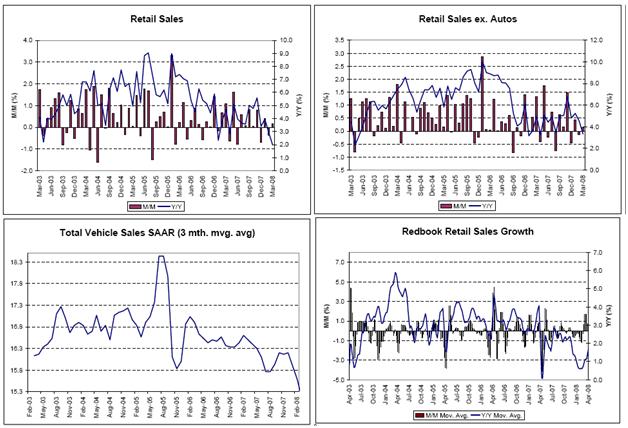
    2008-04-25 Retail Sales, Retail Sales ex. Autos, Total Vehicle Sales, Redbook Retail Sales

    Weak but could be worse. Looking more and more like an export economy.

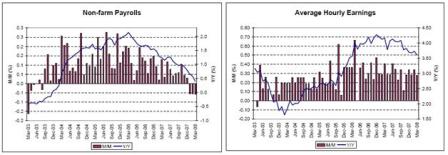
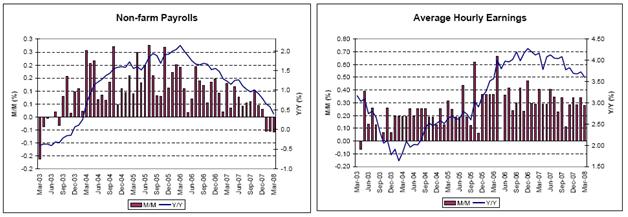
    2008-04-25 Non-farm Payrolls, Average Hourly Earnings

    A weak first quarter for payrolls but above previous recession levels.

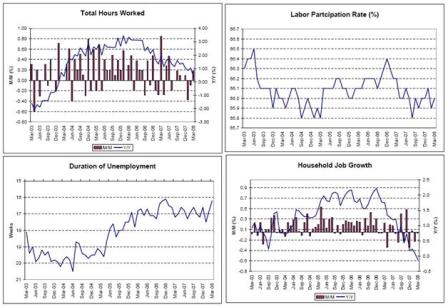
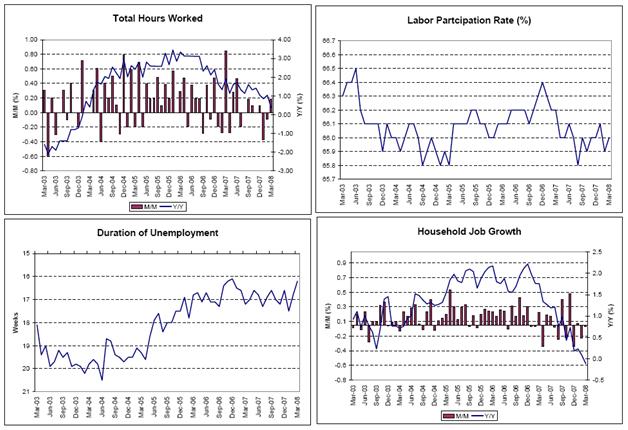
    2008-04-25 Total Hours Worked, Labor Participation Rate, Duration of Unemployment, Household Job Growth

    Weakness, but not all that bad yet, and jobless claims fell again last week.

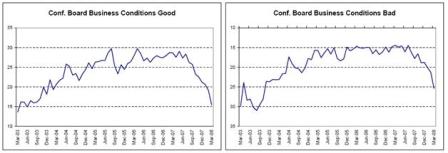
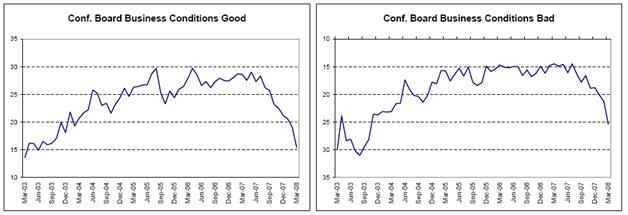
    2008-04-25 Conf. Board of Business Conditions Good, Bad

    These kinds of surveys still looking very negative.

    2008-04-25 NAHB Housing Index, NAHB Present Sales Index, NAHB Future Sales Index, Conference Board Home Buying Intentions

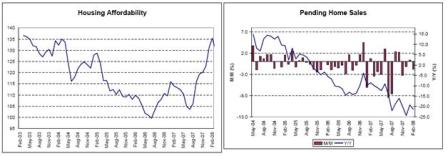
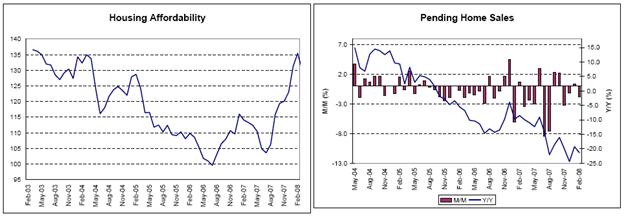
    2008-04-25 Housing Affordability, Pending Home Sales

    Housing may have stopped subtracting from GDP as of Q2.

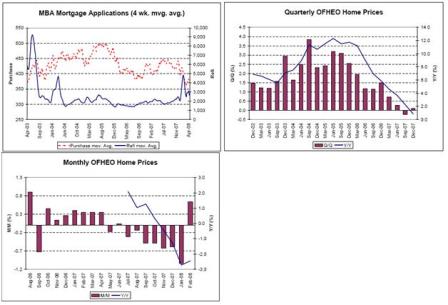
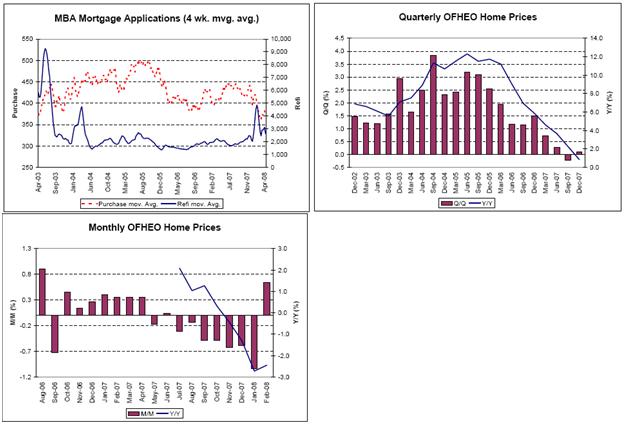
    2008-04-25 MBA Mortgage Applications, Quarterly OFHEO Home Prices, Monthly OFHEO Home Prices

    Applications may be turning up after a slow Q1. Some signs home prices are stabilizing as well.

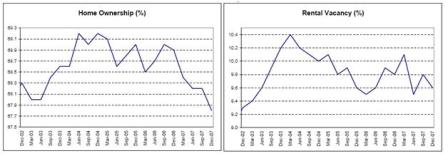
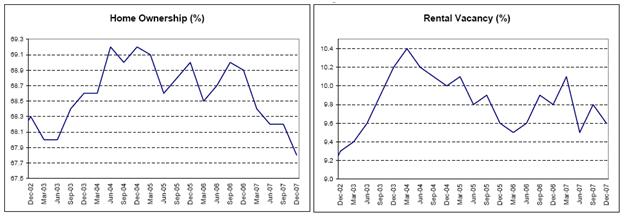
    2008-04-25 Home Ownership, Rental Vacancy

    Low rental vacancies might support rent increases and the OER calculation in CPI.

    Low home ownership due to negative sentiment means pent up buying demand.

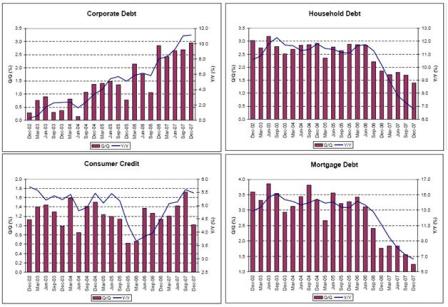
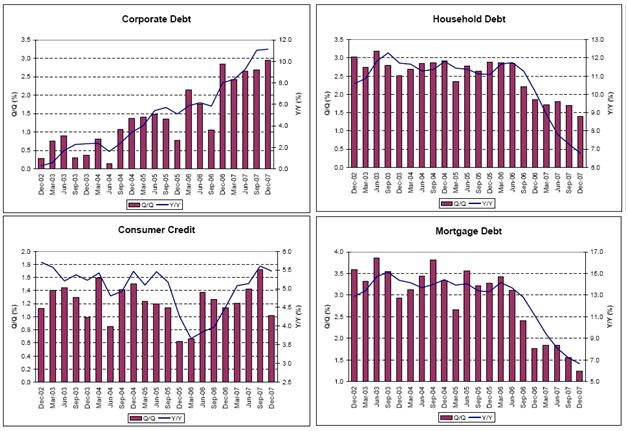
    2008-04-25 Corporate Debt, Household Debt, Consumer Credit, Mortgage Debt

    Households are recharging their debt batteries?

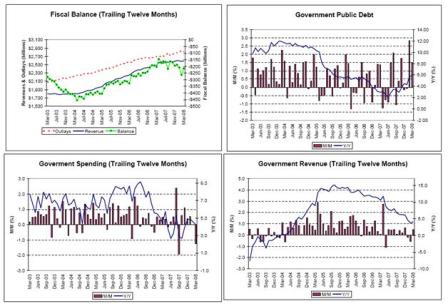
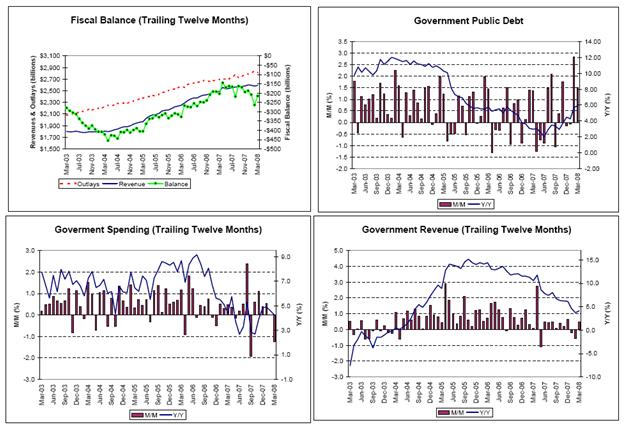
    2008-04-25 Fiscal Balance, Government Public Debt, Government Spending, Government Revenue

    Net Federal spending on the rise this year, with fiscal package kicking in next week.

    March government spending was down due to a timing issue – expect a strong increase in the June report.

    Revenues muddling through at better than recession levels.

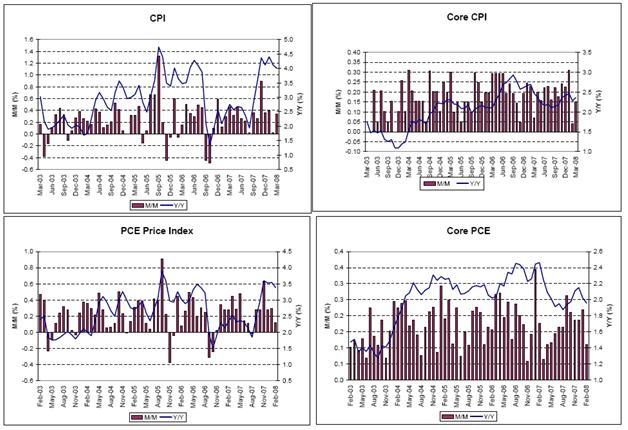
    2008-04-25 CPI, Core CPI, PCE Price Index, Core PCE

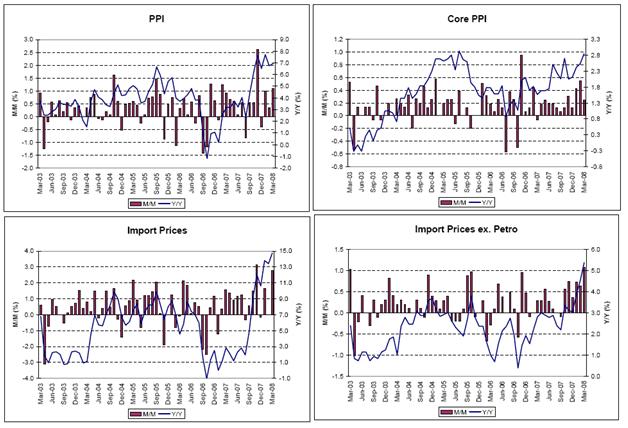
    2008-04-25 PPI, Core PPI, Import Prices, Import Prices ex. Petro

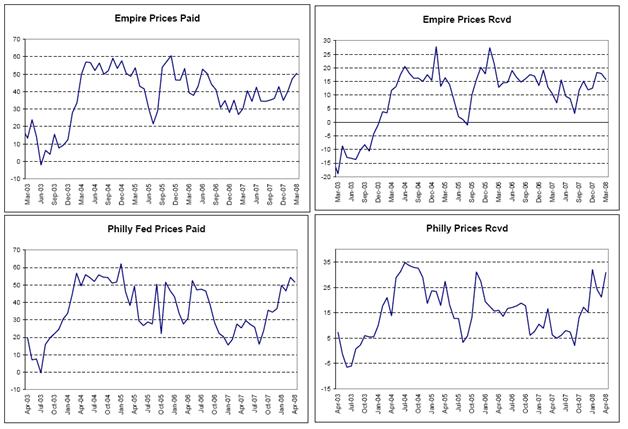
    2008-04-25 Empire Prices Paid, Empire Prices Rcvd, Philly Fed Prices Paid, Philly Prices Rcvd

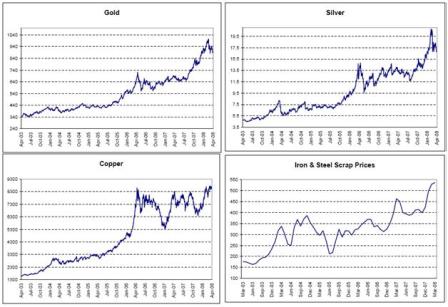
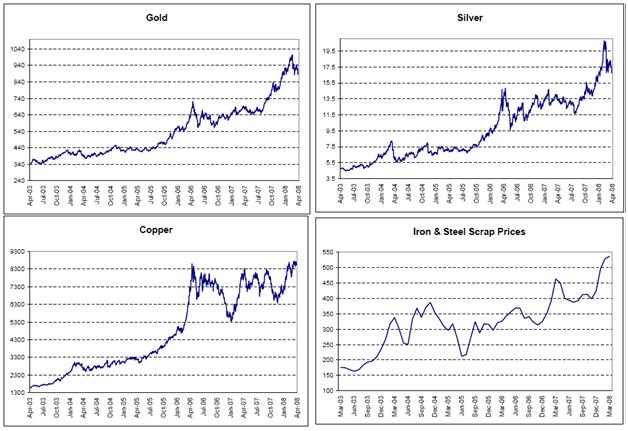
    2008-04-25 Gold, Silver, Copper, Iron & Steel Scrap Prices

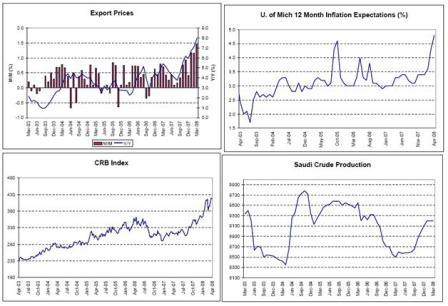
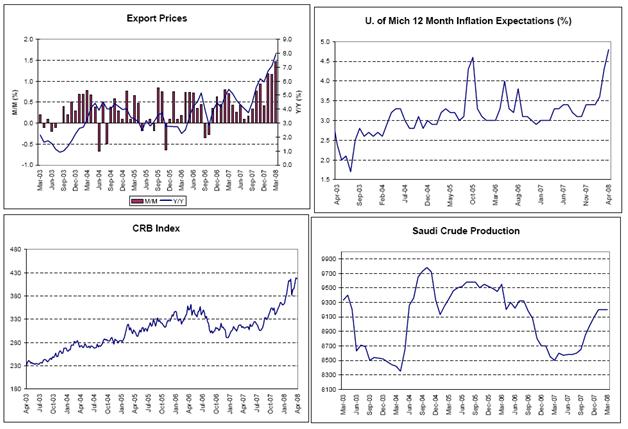
    2008-04-25 Export Prices, U. of Mich 12 Month Inflation Expectations, CRB Index, Saudi Crude Production

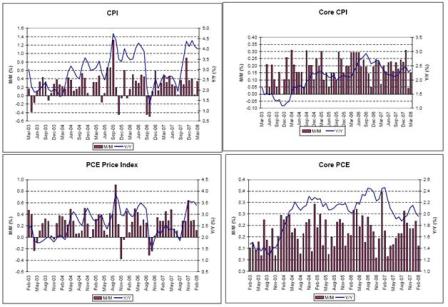
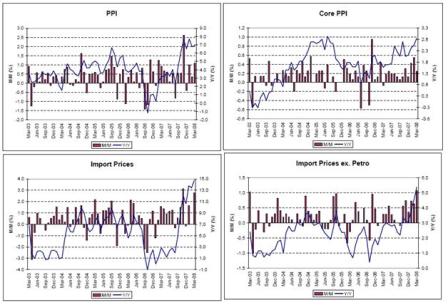
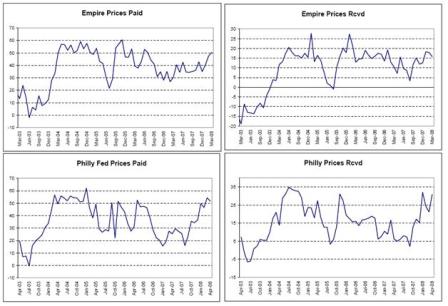
    Inflation is ripping, and we will see next week if the Fed finally considers it the greater risk.

    Many in the mainstream have thought it the greater risk all along with only the threat of catastrophic systemic deflationary risk due to ‘market functioning’ possibly the greater risk.

    With the fear of catastrophic systemic risk fading and the Fed Funds rate below most inflation measures, markets have priced in a higher chance of the Fed not cutting the Fed Funds rate.

    Saudi production remains firm at current prices; so, I expect more hikes.

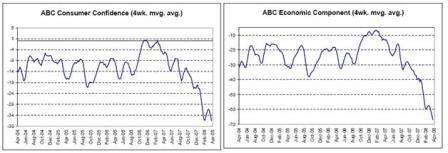
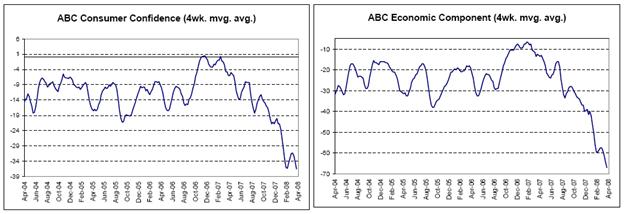
    2008-04-25 ABC Consumer Confidence, ABC Economic Component

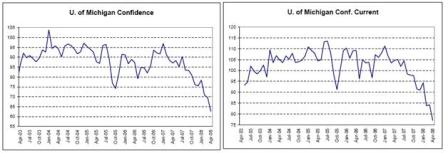
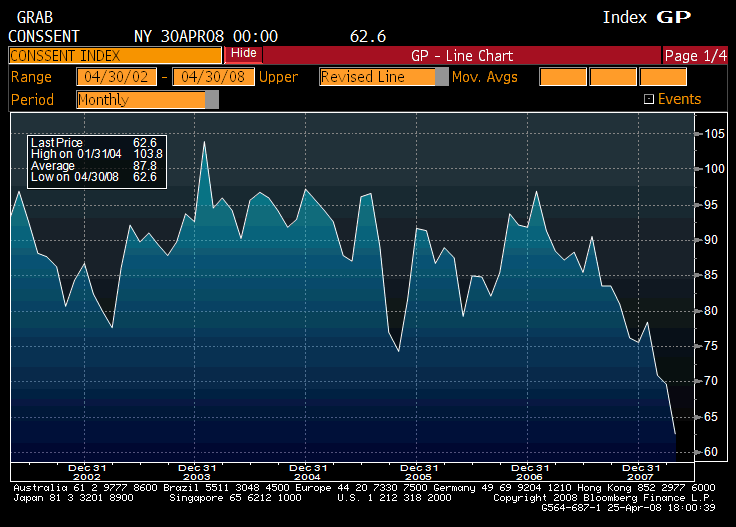
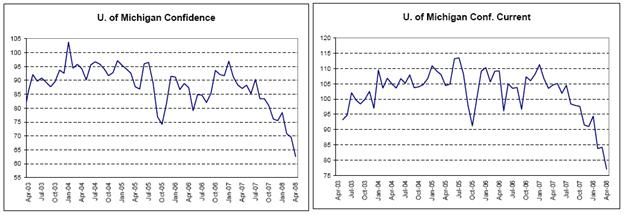
    2008-04-25 U. of Michigan Confidence, U. of Michigan Conf. Current

    Confidence remains very low, as the realities of an export economy and reduced real terms of trade hurt the lower income groups disproportionately.

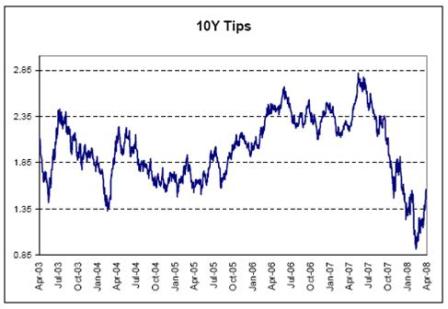
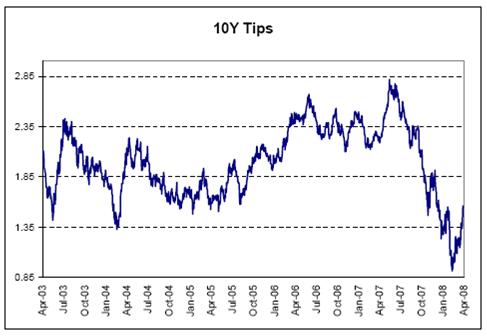
    2008-04-25 10Y Tips

    Tips are starting to discount higher real rates from the Fed.

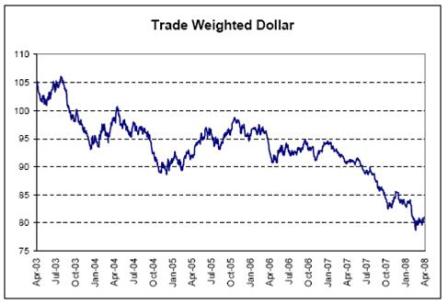
    2008-04-25 Trade Weighted Dollar

    The dollar continues under pressure.

    Without the support of the CBs and Monetary authorities, it may continue lower until the US trade gap narrows substantially.

2008-04-25 US Economic Releases

2008-04-25 U. of Michigan Confidence

U. of Michigan Confidence (Apr F)

Survey 63.2
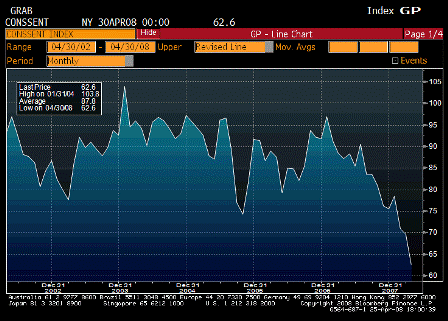
Actual 62.6
Prior 63.2
Revised n/a

From Karim:

Even weaker than expected at 62.6 vs initial estimate of 63.2.

5-10yr inflation expectations move to higher end of recent range from 3.1% to 3.2%

Following changes from March to April:

  • Personal finances 93 to 86
  • Buying conditions for durable goods 124 to 112
  • 12mth economic outlook 46 to 40

Comments below from Survey itself:

  • The Expectations Index, a component of the Index of Leading Economic Indicators, fell by 11.3% from March, by 21.7% from

January of 2008, and by 39.2% from its January 2007 peak. While that steep falloff indicated a recession even before the latest

decline, the accelerated pace of the decline points toward a longer and potentially deeper downturn. Although the tax rebate

will boost spending temporarily, the global rise in food and fuel prices, the declines in home values, and changes in credit

conditions are likely to persist for some time and lengthen the period of stagnation in consumption. Coupled with weaker job

and income growth, these factors have the potential to cause deeper cutbacks in consumption than now anticipated.

  • Never before in the long history of the surveys have so many consumers reported hearing news of unfavorable economic

development as in the April survey. The most commonly heard news was about job losses, rising prices, and the fallout from

the housing and credit crisis. Nearly nine-in-ten consumers thought that the economy was now in recession. When asked

about prospects for the economy during the year ahead, three-in-four consumers expected bad times financially, the highest

proportion since 1980.

  • Long term inflation expectations rose slightly to 3.2% in April from 2.9% in March and 3.1% in April 2007. Unlike the inflationary era of the

1970’s, when nearly all prices posted persistently large increases, the recent increase in inflation has been dominated by fuel

and food prices. It would take significant and prolonged increases in interest rates to quell the impact of the global rise in food

and fuel prices on domestic inflation, increases that may not be either politically possible nor economically justified.

  • Uncertainty about future income and job prospects has had a devastating impact on buying plans, with consumers citing these

uncertainties three times as frequently as they did a year ago. Purchase plans for furniture, appliances, home electronics, and

similar goods fell to their lowest level since the early 1980s, with one-third of all consumers specifically mentioning their

uncertainty about jobs and incomes as their primary reason. Vehicle buying plans also fell to their lowest level since the 1990

recession, with one-third of all consumers citing uncertainty about jobs and incomes as well as the future price of gasoline.

Good report, agreed with all.

A few added comments.

This is a revision of a number has already been out for a while, so it should already be mostly discounted by the markets.

Mainstream economics (not me) would argue that while high food and energy prices are external negative supply shocks, and initially ‘relative value stories’ the Fed has to be careful not to ‘accommodate’ them with low interest rates that support demand as that can cause inflation expectations to elevate and turn a relative value story into an inflation story.

Additionally, mainstream economics assets that low inflation is a necessary condition for optimal long term growth and employment. And while the cost of bring down inflation now may be high, the cost of letting inflation expectations elevate and bringing down inflation later is much higher.

In fact, some in the mainstream argue that had the Fed not supported demand with rate cuts beginning back in August, the cost in lost output to bring inflation back down would have been far lower than the cost to bring it down now after inflation expectations have started to elevate.

It remains to be seen where the Fed stands on this. So far they have been willing to let inflation expectations begin to rise as they focused on keeping the US downturn to a minimum in the face of perceived systemic risk.

Markets are now pricing in the end of rate cuts even as weakness persists, in anticipation of the Fed having reached its tolerance for inflation.

2008-04-24 China News Highlights

Interesting statements here. China can’t afford politically to allow growth to slow sufficiently to cut employment growth, inflation not withstanding. This stance ultimately weakens the currency, one way or another:
(Bloomberg) China should stick with its tight monetary policy unless the economy’s expansion slows to below 9 percent, a National Bureau of Statistics official said. “Below 9 percent, it means the tightening is overdone and needs to be loosened,” Zheng Jingping, the bureau’s chief engineer, said at a seminar in Beijing today. The economy expanded by 10.6 percent in the first quarter. Premier Wen Jiabao is balancing the risk of a slump in the world’s fastest-growing major economy against the threat from inflation that is close to an 11-year high. A 1 percentage point slowdown in the U.S. economy will take 5 percentage points off China’s export growth, the Chinese Academy of Social Sciences said in a report today. “A reasonable combination for this year is 4.8 percent inflation and 9.7 percent GDP growth,” said Zheng. Inflation may be between 4.5 percent and 5.5 percent, he added. The government aims to cap price gains at 4.8 percent.

Highlights:

Shanghai Stock Index Surges 9.3%, Most in Six Years, After China Cuts Tax (Bloomberg)
China Economic Growth Must Stay Above 9 Percent, Statistics Official Says (Bloomberg)
Yuan Declines as Chinese Export Growth May Slow Further, Dollar Rebounding (Bloomberg)
China to Expand Oil Refining Capacity by 24% by 2010, Sinopec Group Says (Bloomberg)