2008-08-19 US Economic Releases


[Skip to the end]


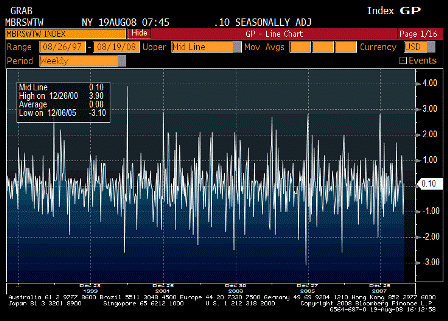
ICSC-UBS Store Sales WoW (Aug 19)

Survey n/a
Actual 0.1%
Prior 1.1%
Revised n/a

[top][end]

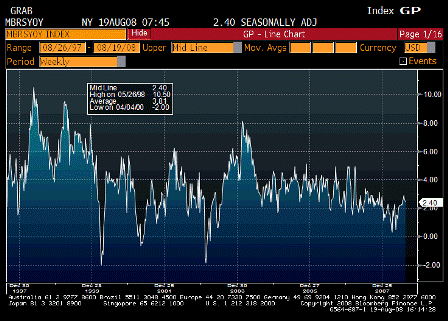
ICSC-UBS Store Sales YoY (Aug 19)

Survey n/a
Actual 2.4%
Prior 2.6%
Revised n/a

Doing just fine, especially considering the financial sector is gone.
[top][end]

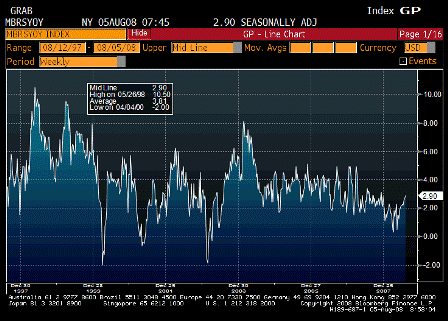
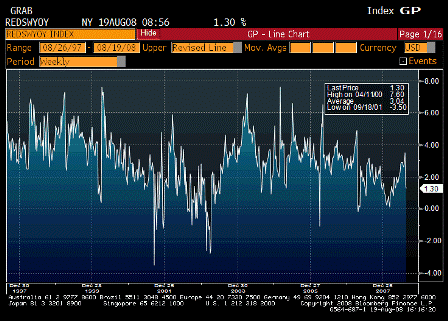
Redbook Store Sales Weekly YoY (Aug 19)

Survey n/a
Actual 1.3%
Prior 1.5%
Revised n/a

[top][end]

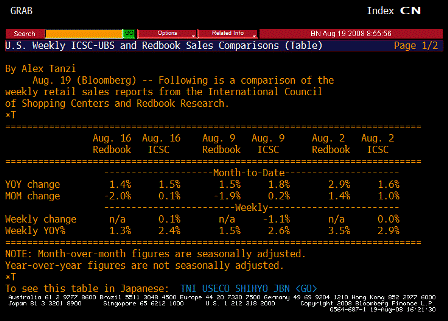
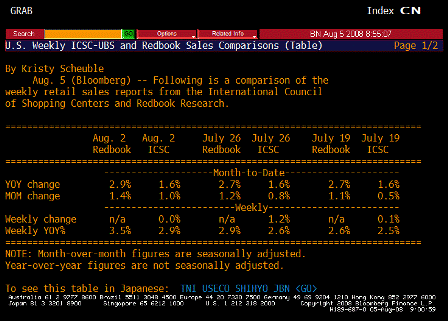
ICSC-UBS Redbook Comparison TABLE (Aug 19)
[top][end]


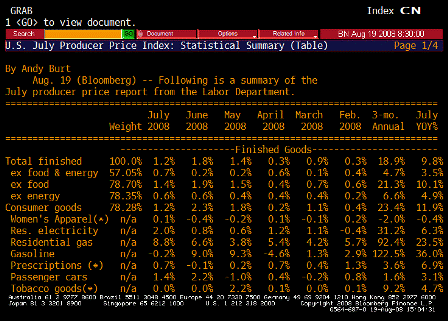
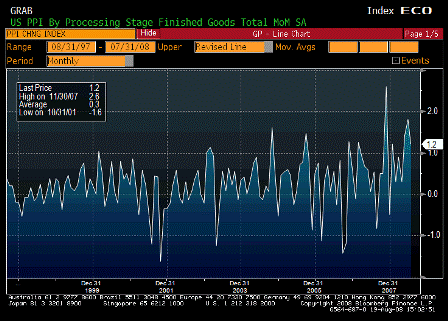
Producer Price Index MoM (Jul)

Survey 0.6%
Actual 1.2%
Prior 1.8%
Revised n/a

Up more than expected.

[top][end]

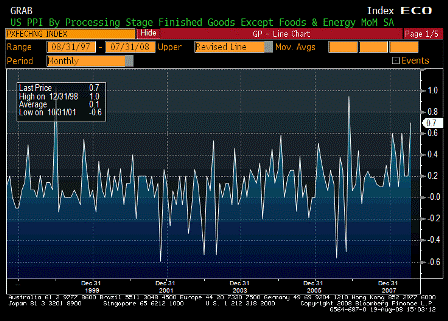
PPI Ex Food & Energy MoM (Jul)

Survey 0.2%
Actual 0.7%
Prior 0.2%
Revised n/a

Core nudging up a touch…

[top][end]

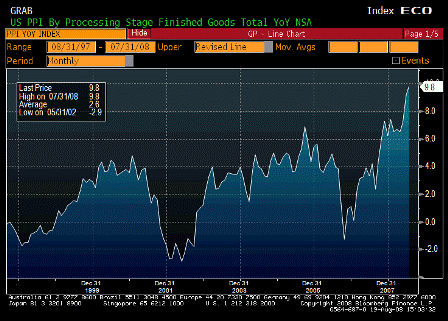
Producer Price Index YoY (Jul)

Survey 9.3%
Actual 9.8%
Prior 9.2%
Revised n/a

Just a little blip up that’s starting to make the 1970s look tame.
[top][end]

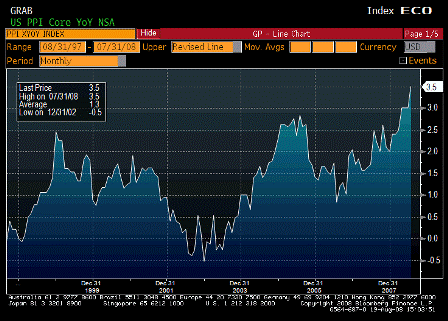
PPI Ex Food & Energy YoY (Jul)

Survey 3.2%
Actual 3.5%
Prior 3.0%
Revised n/a

Cute little break out here too.

[top][end]

PPI TABLE 1 (Jul)

[top][end]

PPI TABLE 2 (Jul)

[top][end]

PPI TABLE 3 (Jul)

Karim writes:

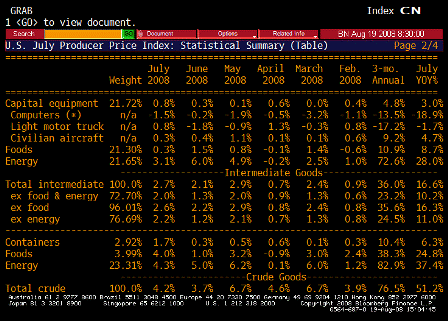
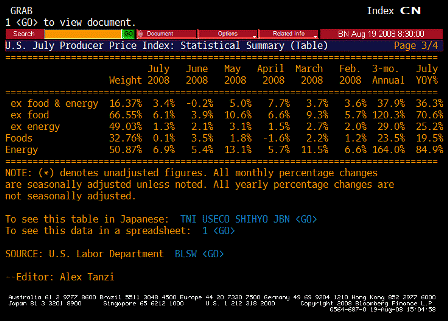
  • PPI for July up 1.2% and 0.7% ex-food and energy
  • Core driven by cars and trucks the past 2mths (seems out of line w/cpi data) and medical
[top][end]

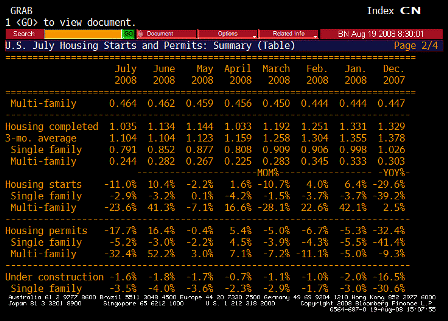
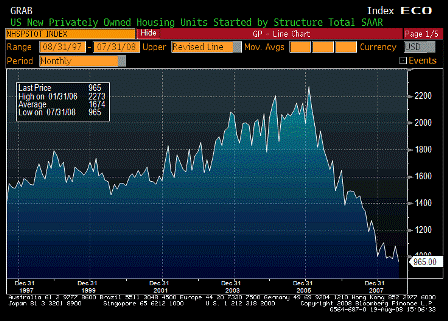
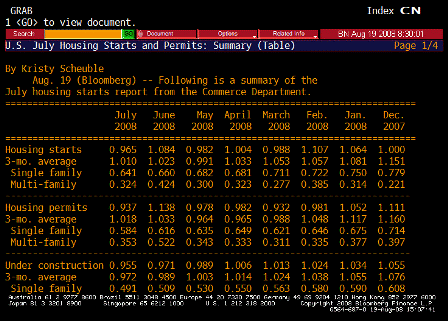
Housing Starts (Jul)

Survey 960K
Actual 965K
Prior 1066K
Revised 1084K

A bit higher than expected, and last month revised up.

Averaging out the last couple of months or so to smooth the NY situation indicates a leveling off and probably a bottom.
[top][end]

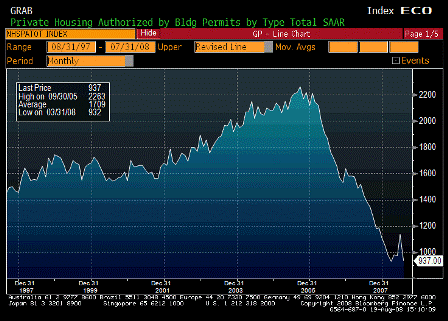
Building Permits (Jul)

Survey 970K
Actual 937K
Prior 1091K
Revised 1138K

Down, but last month revised up. Same as above.
[top][end]

Housing Starts TABLE 1 (Jul)

[top][end]

Housing Starts TABLE 2 (Jul)

[top][end]

Housing Starts TABLE 3 (Jul)

Karim writes:

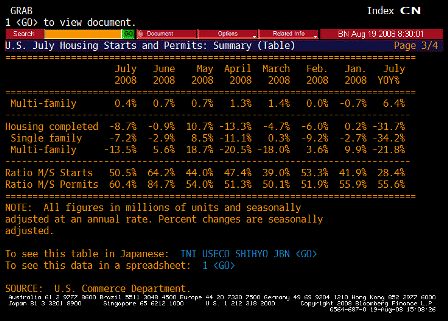
  • Starts fall 11% after upward revision to June (now up 10.4%)
  • Noise in data still surrounds multi-family due to change in NYC building code (multi-family dropped 23.6% after rising 41.3% in June)
  • Single family drops another 2.9% after 3.2% drop in June and now down 39.2% y/y
  • Same story with permits, down 17.7% m/m after 16.4% rise in June
  • Single family permits down 5.2% m/m after -3% in June and down 41.4% y/y
  • Multi-family down 32.4% m/m after up 52.2% m/m in June
[top][end]

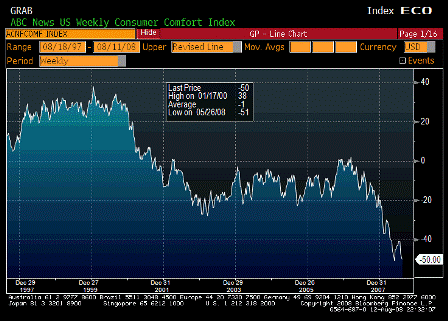
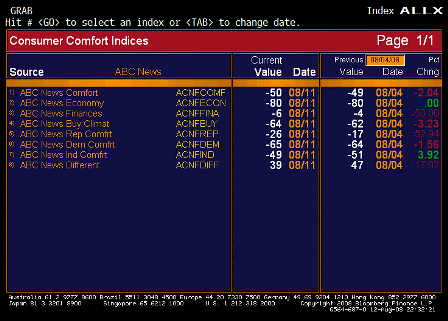
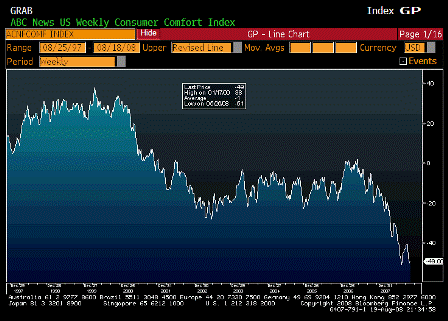
ABC Consumer Confidence (Aug 17)

Survey -50
Actual -49
Prior -50
Revised n/a

very low, may be bottoming, confidence being hurt by inflation.


[top]
2008-08-15 US Economic Releases


[Skip to the end]


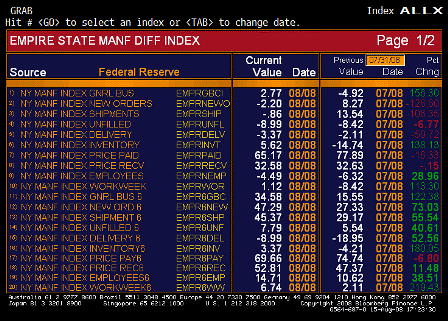
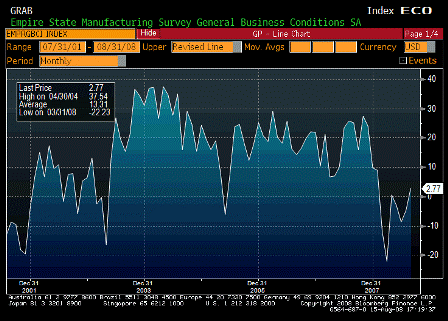
Empire Manufacturing (Aug)

Survey -4.0
Actual 2.8
Prior -4.9
Revised n/a

Yet another series that could be making a comeback, albeit from very low levels.

Even the work week went up.

Prices paid still way high, and prices received high and moved higher.

[top][end]

Empire Manufacturing ALLX (Aug)

[top][end]


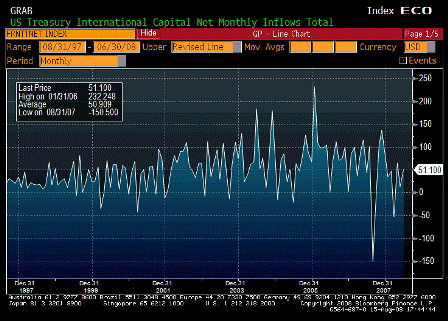
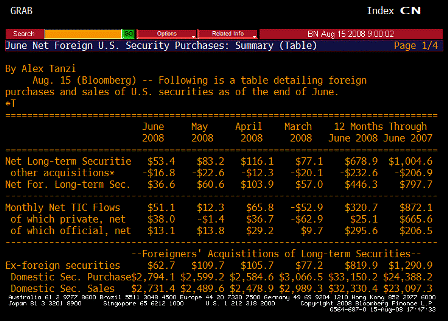
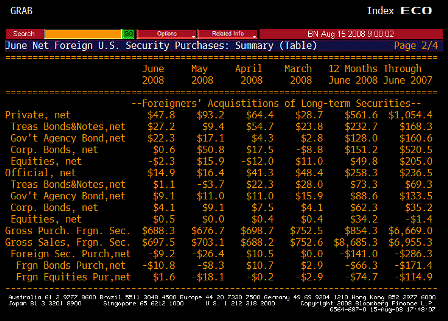
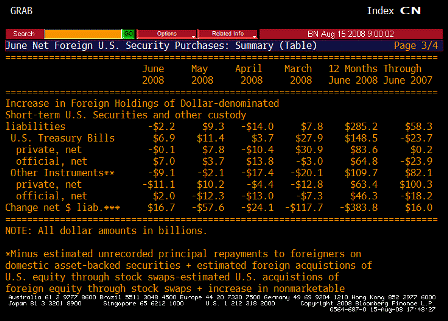
Net Long-term TIC Flows (Jun)

[top][end]

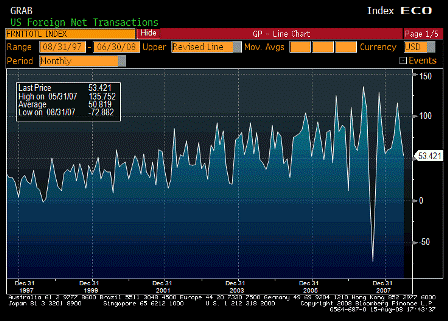
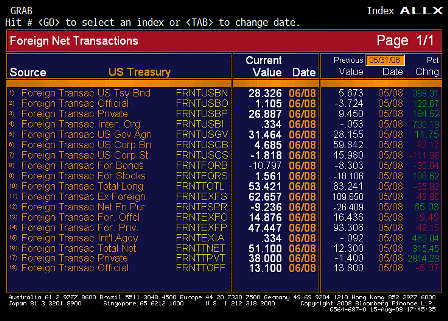
Total Net TIC Flows (Jun)

Survey n/a
Actual $51.1B
Prior -$2.5B
Revised $12.3B

Should be slowing with trade flows reversing.

[top][end]

TIC ALLX (Jun)

[top][end]

TIC TABLE 1 (Jun)

[top][end]

TIC TABLE 2 (Jun)

[top][end]

TIC TABLE 3 (Jun)

[top][end]


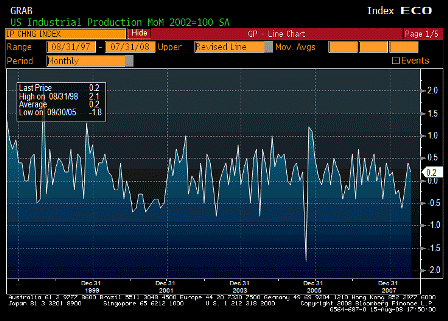
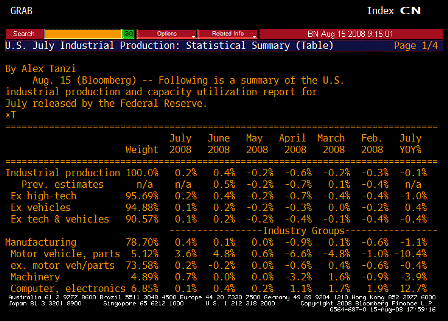
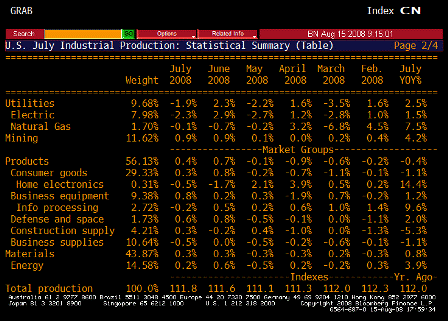
Industrial Production MoM (Jul)

Survey 0.0%
Actual 0.2%
Prior 0.5%
Revised 0.4%

A little better than expected.

[top][end]

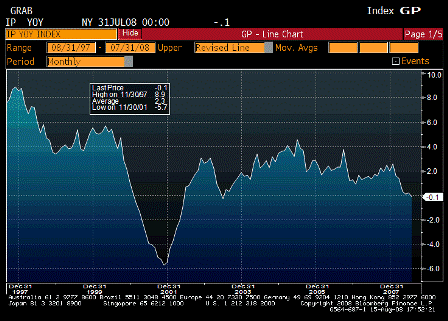
Industrial Production YoY (Jul)

Survey n/a
Actual -0.1%
Prior 0.2%
Revised n/a

Certainly not a collapse.

Being helped by the relatively weak USD.

[top][end]


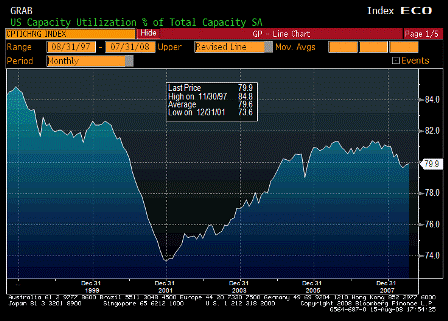
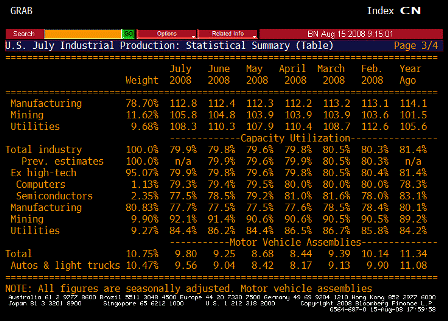
Capacity Utilization (Jul)

Survey 79.8%
Actual 79.9%
Prior 79.9%
Revised 79.8%

No collapse here either.

The Fed’s counting on slack to bring prices down.

[top][end]

[top][end]

Capacity Utilization TABLE 2 (Jul)

[top][end]

Capacity Utilization TABLE 3 (Jul)

[top][end]


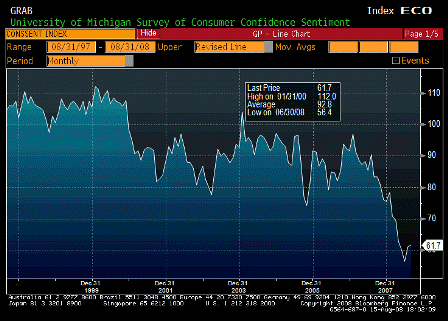
U of Michigan Confidence (Aug P)

Survey 62.0
Actual 61.7
Prior 61.2
Revised n/a

This too looks like it has bottomed from very low levels.

‘Inflation’ still hurting confidence.


[top]
2008-08-13 JN News Highlights


[Skip to the end]

Highlights:

Economy Shrinks Annualized 2.4% On Weak Domestic Demand


Articles:

Economy Shrinks Annualized 2.4% On Weak Domestic Demand

(Nikkei) Declining consumer and capital spending contributed to pushing down Japan’s gross domestic product 0.6% in real terms from the previous quarter during the April-June period, for an annualized rate of minus 2.4%, according to preliminary data released Wednesday by the Cabinet Office.

The first contraction in four quarters was also attributed to a drop-off in exports amid the U.S. economic slowdown.

Domestic demand contracted 0.6%, with personal spending shrinking 0.5% as price hikes for a number of daily necessities dampened consumer sentiment. The weaker demand also reflected the fact that the previous quarter had one more day than in normal years because 2008 is a leap year.

Capital spending declined 0.2%, while housing investment slid 3.4%. Overall domestic demand pushed down GDP growth by 0.6 percentage point.

Exports, which had until recently driven economic growth, fell 2.3%, meaning overseas demand failed to push up GDP growth in the three months ended June.

In nominal terms, GDP contracted 0.7% for an annualized rate of minus 2.7%.

Fails to mention it grew at over 3% in the prior quarter, so the two quarter average is marginally positive. Japan data seems to have more noise than US data.

Also note the nominal measure over the last year:

Nominal GDP Q/Q:

Q2/08 -0.7%
Q1/08 +0.2%

Q4/07 -0.1%
Q3/07 flat


Lots of noise due to ‘inflation’ as they measure it.

Yes, a soft quarterly report, but as expected or slightly better than expected on most counts.

Same twin themes as the US: weakness and higher prices.

And lots of talk about a fiscal program over there.


[top]
2008-08-13 UK News Highlights


[Skip to the end]

Highlights:

BoE Cuts Growth Forecasts, Jobless Climbs
U.K. Unemployment Rose the Most Since 1992 in July
Surge in credit card debt charge-offs
U.K. Homebuilders Fall as Unemployment Rise May Worsen Slump


Article snip:

BoE Cuts Growth Forecasts, Jobless Climbs (Bloomberg) The BoE cut its forecast for U.K. economic growth and held out the prospect of lower interest rates as unemployment rose the most in almost 16 years in July. Governor Mervyn King said the inflation rate will fall below the 2 % target in two years if policy makers keep the benchmark interest rate at 5 %.

But not if they cut is the implication as well.


[top]
2008-08-13 US Economic Releases


[Skip to the end]


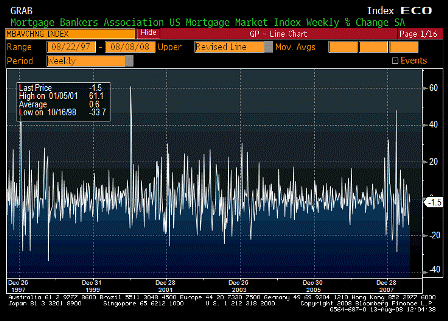
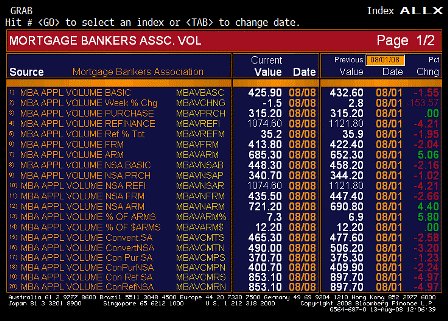
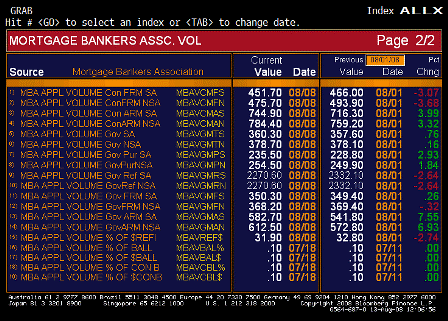
MBA Mortgage Applications (Aug 8)

Survey n/a
Actual -1.5%
Prior 2.8%
Revised n/a

Muddling through on the low side as mortgage bankers lose market share to banks.

[top][end]

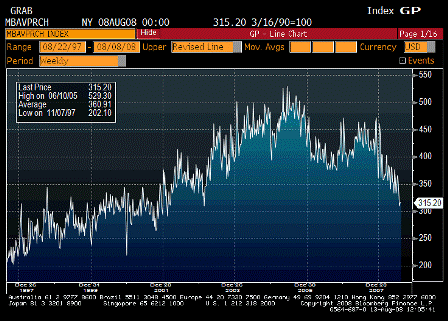
MBA Purchasing Index (Aug 8)

Survey n/a
Actual 315.2
Prior 315.2
Revised n/a

Flat at low levels.

May do better as the seasonal adjustments get easier.

[top][end]

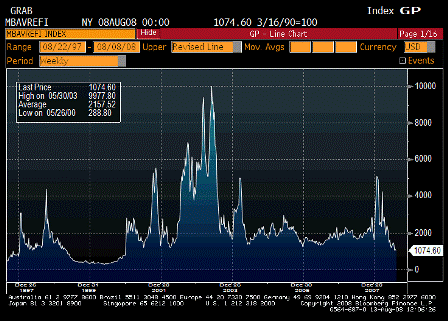
MBA Refinancing Index (Aug 8)

Survey n/a
Actual 1074.6
Prior 1121.8
Revised n/a

Slowing, as bulk of resets are past and rates are doing nothing.

[top][end]

MBA ALLX 1 (Aug 8)

[top][end]

MBA ALLX 2 (Aug 8)

[top][end]


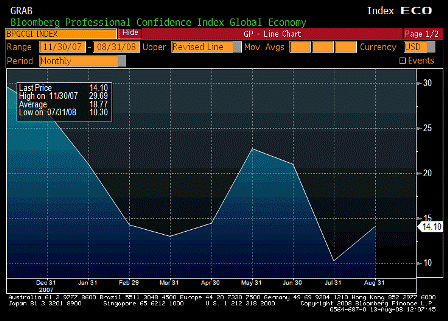
Bloomberg Global Confidence (Aug)

Survey n/a
Actual 14.10
Prior 10.30
Revised n/a

Low, but improving.

[top][end]


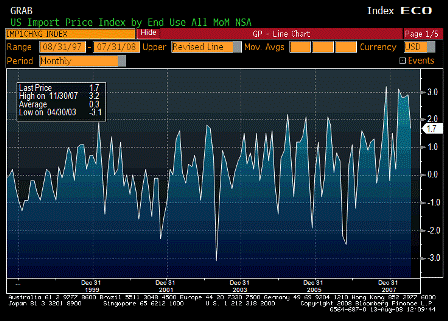
Import Price Index MoM (Jul)

Survey 1.0%
Actual 1.7%
Prior 2.6%
Revised 2.9%

Scary stuff if you are responsible for the value of the currency.

[top][end]

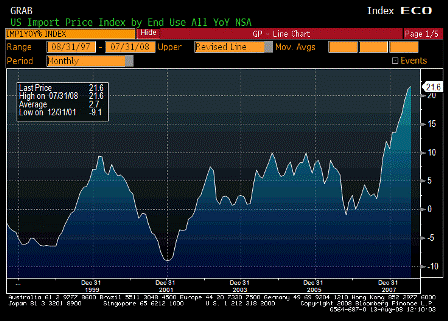
Import Price Index YoY (Jul)

Survey 20.4%
Actual 21.6%
Prior 20.5%
Revised 21.1%

‘Inflation’ flooding in through the open window.

[top][end]

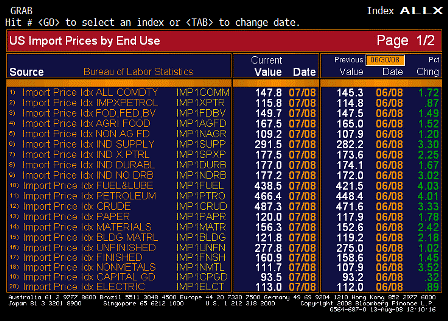
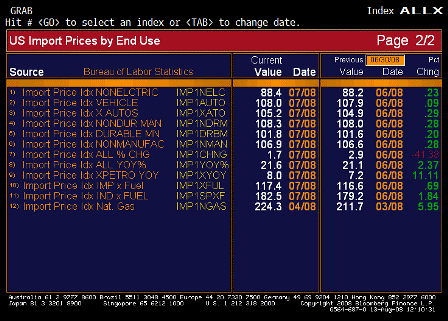
Import Price Index ALLX 1 (Jul)

[top][end]

Import Price Index ALLX 2 (Jul)

Karim writes:

Import prices continue uptrend

  • Headline +1.7% m/m; ex-petroleum up 0.9% m/m

Yes and ex petro 8% year over year and still rising. And this takes time to pass through to core CPI.

  • Expect headline to be below core for the next few mths though

Yes, if gasoline stays down.

But rental vacancies took a small turn down, and owner equivalent rent already printed a 0.3%, and seems with starts so far down there has to be a shortage of actual units available to live in. Also, lots of catching up to do in other core measures, like medical and others which had some prints on the low side.

All of their costs are rising and push up prices with various lags.

And Russia has demonstrated they can do whatever they want and there’s nothing anyone can do about it.

Not good…

[top][end]


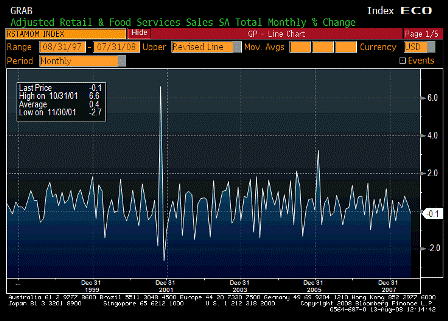
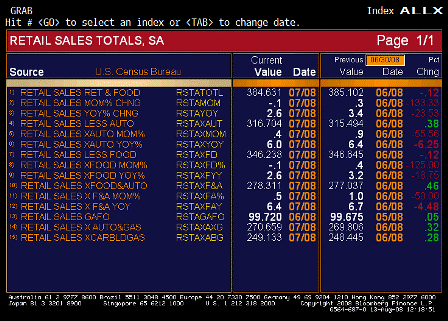
Advance Retail Sales MoM (Jul)

Survey -0.1%
Actual -0.1%
Prior 0.1%
Revised 0.3%

Down some as expected due to weak car sales, but prior month revised up.

Sometimes if people don’t buy cars they buy other things…

[top][end]

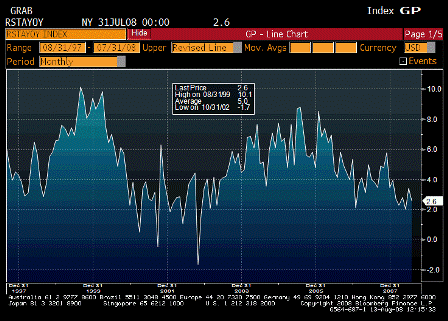
Advance Retail Sales YoY (Jul)

Survey n/a
Actual 2.6%
Prior 3.4%
Revised n/a

Still looks to be moving off a bottom.

[top][end]

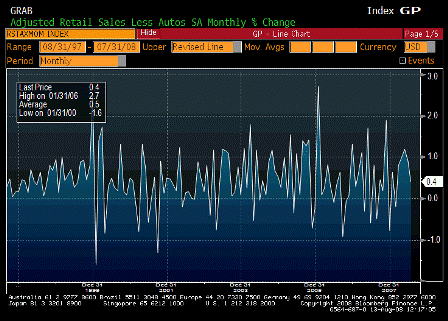
Retail Sales Less Autos MoM (Jul)

Survey 0.5%
Actual 0.4%
Prior 0.8%
Revised 0.9%

Looks okay, a tenth below expectations but prior month revised up the same tenth.

[top][end]

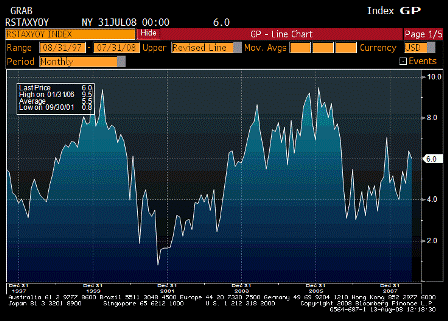
Retail Sales Less Autos YoY (Jul)

Survey n/a
Actual 6.0%
Prior 6.4%
Revised n/a

Looking reasonably firm.

[top][end]

Advance Retail Sales ALLX (Jul)

On Wed, Aug 13, 2008 at 8:54 AM, Karim writes:

Retail sales generally weak but in line with expectations

  • Headline -0.1% m/m; ex-gas -0.2% m/m; ex-autos +0.4%; control group +0.3%
  • Rebate checks did trickle in through July so some help from there
  • Looks like real PCE off to flat start in Q3, perhaps explaining Fisher’s remark yesterday that ‘we will broach zero growth’ in the second half of the year

The FOMC now has a multi year history of underestimating GDP and inflation.

Seems with Q2 GDP now looking like 3% or more, and the first half therefore averaging maybe over 2%, and year over year gdp still pushing 3%, they would either adjust or downgrade their GDP forecasting model.

Same with their inflation forecasting model, as cpi moves through 5% and core elevates from levels not long ago forecast at not a lot more than half that.

Looking more and more like the real economy did bottom in Q4 2007, as private forecasters are now starting to project positive gdp for Q3 and Q4, and some for Q1 2009 as well.

And even if the saudis keep crude at current levels core cpi should continue to march higher for many more quarters as it all catches up to the shift from $20 crude to $100+ crude.

Yes, the financial sector continues to have issues, may severe, but blood is flowing around the clot as the real economy moves forward.

Housing starts peaked in the early 1970s at 2.6 million with only 215 million people and no secondary market or housing agencies- just a bunch of dumb s and l’s taking in deposits and making mortgages (is used to work at one back then).

Today with 50% more people we call 2 million units gangbusters.

The financial innovation is all predatory at the macro level, though at the micro level we’d grown dependent on it for sure.

Yes, US exports are reducing foreign GDP growth, but their are signs they are moving to support domestic demand with fiscal measures, including Japan, the UK, and even some talk from the eurozone, and even china announced lower inflation numbers to justify supporting growth.

And Saudi crude output shows no sign of world net supply going up. Current price action just some kind of massive ‘inventory adjustment’.

Yes, that can change but hasn’t yet.

[top][end]


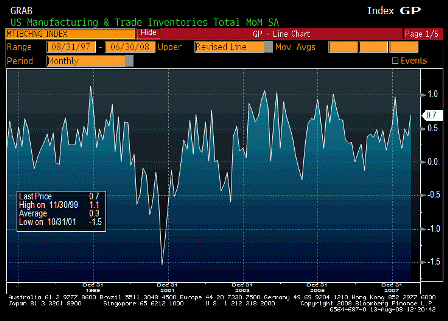
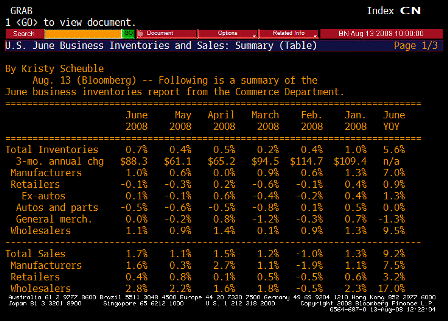
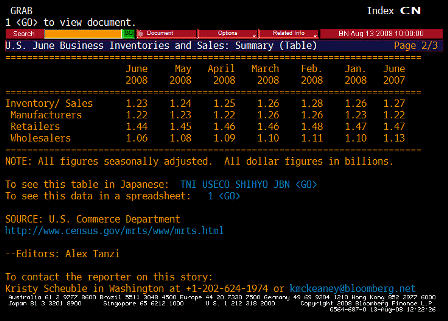
Business Inventories MoM (Jun)

Survey 0.5%
Actual 0.7%
Prior 0.3%
Revised 0.4%

3% Q2 GDP means more inventory is needed.

Also, this and previous inventory data for June higher than expected which means Q2 might be revised up that much more as very low inventory levels were estimated with the initial 1.9% release for Q2 GDP.

[top][end]

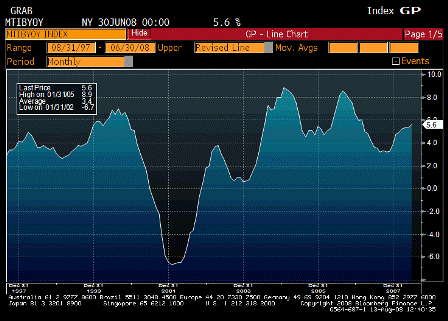
Business Inventories YoY (Jun)

Survey n/a
Actual 5.6%
Prior 5.3%
Revised n/a

Not the usual recession pattern.

The real sector seems well managed.

The financial sector is another story. They don’t count mbs inventory, for example, in this series…

[top][end]

Business Inventories TABLE 1 (Jun)

[top][end]

Business Inventories TABLE 2 (Jun)


[top]
2008-08-12 US Economic Releases


[Skip to the end]


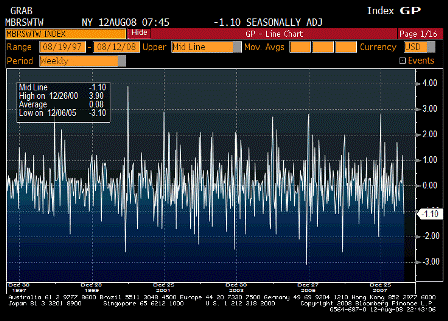
ICSC-UBS Store Sales WoW (Aug 12)

Survey n/a
Actual -1.1%
Prior 0.0%
Revised n/a

[top][end]

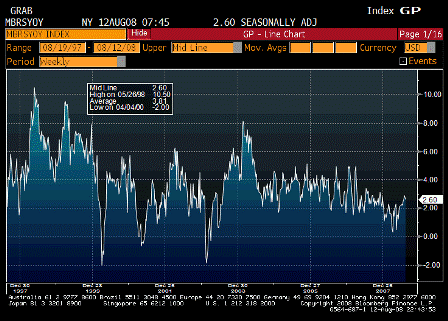
ICSC-UBS Store Sales YoY (Aug 12)

Survey n/a
Actual 2.6%
Prior 2.9%
Revised n/a

Year over year looking fine.

[top][end]

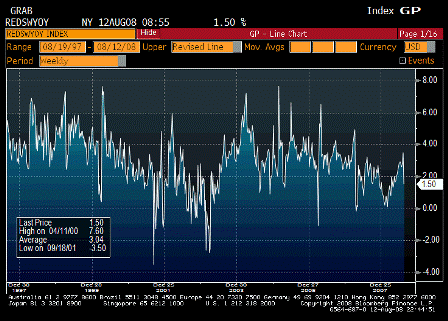
Redbook Store Sales Weekly YoY (Aug 12)

Survey n/a
Actual 1.5%
Prior 3.5%
Revised n/a

Softer but no collapse.

[top][end]

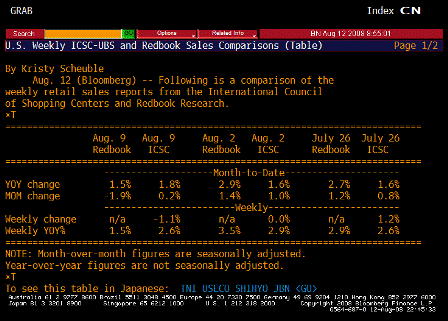
ICSC-UBS Redbook Comparisson TABLE (Aug 12)

[top][end]


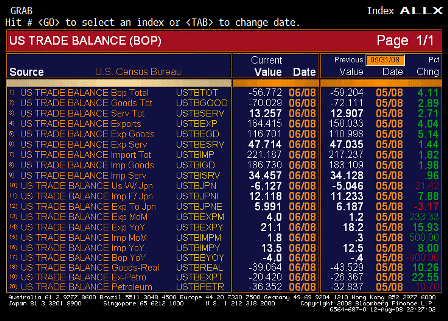
Trade Balance (Jun)

Survey -$62.0B
Actual -$56.8B
Prior -$59.8B
Revised -$59.2B

Lower than expected and moving lower even with crude prices up in June.

I still think last months number was too high which is part of the reason for the June drop.

[top][end]

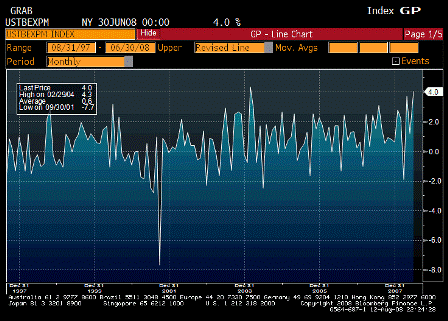
Exports MoM (Jun)

Survey n/a
Actual 4.0%
Prior 1.2%
Revised n/a

Government and exports continue to support GDP.

Q2 now looking to be revised to maybe north of 3%.

[top][end]

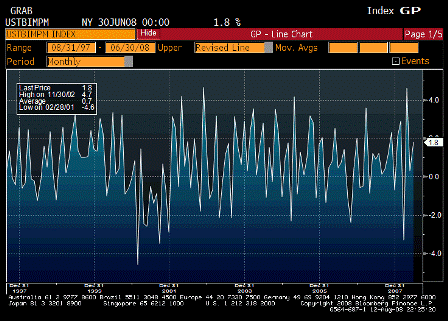
Imports MoM (Jun)

Survey n/a
Actual 1.8%
Prior 0.3%
Revised n/a

Up due to crude and gasoline prices.

[top][end]

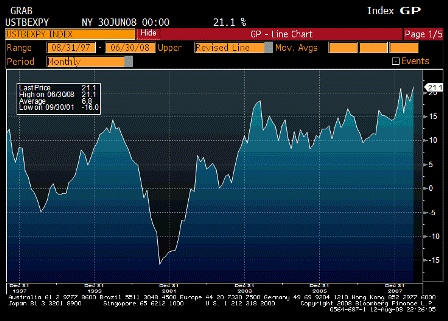
Exports YoY (Jun)

Survey n/a
Actual 21.1%
Prior 18.2%
Revised n/a

Looking more like an export economy every day. Weak domestic consumption and ok employment.

Workers earn enough to drive to work and eat, and the rest of their output gets exported to someone else.

[top][end]

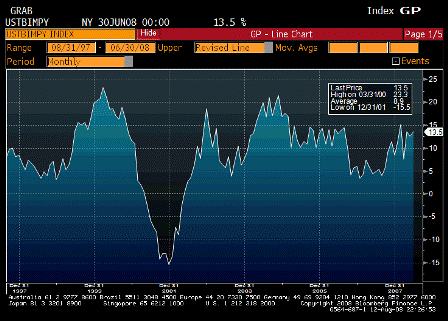
Imports YoY (Jun)

Survey n/a
Actual 13.5%
Prior 12.5%
Revised n/a

Mostly petro and product prices.

Other imports are down.

[top][end]

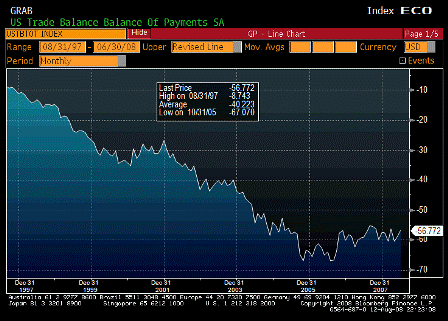
Trade Balance ALLX (Jun)

Ex petro down to about 20 billion.

[top][end]


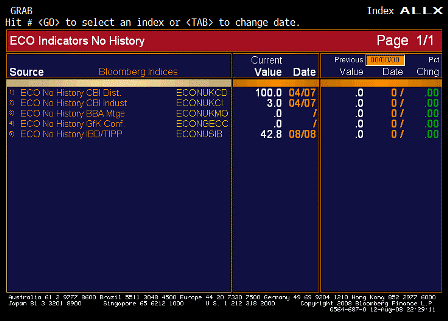
IBD-TIPP Economic Optimism (Aug)

Survey 39.0
Actual 42.8
Prior 37.4
Revised n/a

Up some, but less than expected.

[top][end]


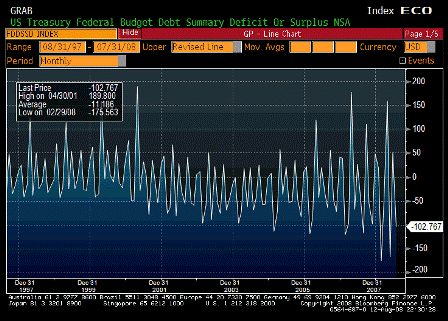
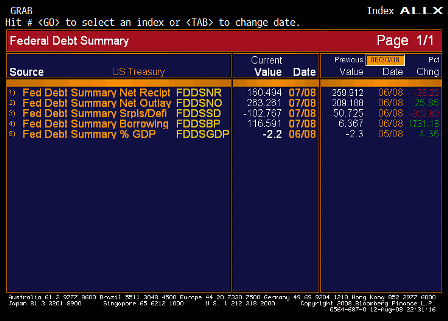
Monthly Budget Statement (Jul)

Survey -$95.0B
Actual -$102.8B
Prior -$36.4B
Revised n/a

Government spending and exports supporting GDP more than most anticipate.

[top][end]

Monthly Budget Statement ALLX (Jul)

[top][end]


ABC Consumer Confidence (Aug 10)

Survey n/a
Actual -50
Prior -49
Revised n/a

Bumping along the bottom.

Inflation hurting confidence as wages remain ‘well contained’.

[top][end]

ABC Consumer Confidence ALLX (Aug 10)


[top]
2008-08-07 UK News Highlights


[Skip to the end]

Highlights:

ECB Leaves Interest Rates at Seven-Year High to Fight Inflation
German industrial orders drop
Western European Car Sales Fall by 6.7% in July, JD Power Says
German June Exports Rise the Most in Nearly Two Years
German Economy Contracted as Much as 1.5% in 2Q
French Trade Deficit Expands to Record as Euro Curbs Exports
Italian June Production Stalls as Record Oil Prices Damp Growth
Fall in output fuels Spanish recession fears


Article snip:

ECB Leaves Interest Rates at Seven-Year High to Fight Inflation (Bloomberg) – The ECBkept interest rates at a seven-year high to fight inflation even as evidence of an economic slump mounts. ECB policy makers meeting in Frankfurt left the benchmark lending rate at 4.25 %, as predicted by all 60 economists in a Bloomberg News survey. The bank, which raised rates last month, will wait until the second quarter of next year to cut borrowing costs, a separate survey shows. The ECB is concerned that the fastest inflation in 16 years will help unions push through demands for higher wages and prompt companies to lift prices. At the same time, record energy costs and the stronger euro are strangling growth. Economic confidence dropped the most since the Sept. 11 terrorist attacks in July and Europe’s manufacturing and service industries contracted for a second month. ECB President Jean-Claude Trichet will hold a press conference 2:30 p.m. to explain today’s decision.

Same as UK, less costly to address inflation now rather than support growth and address inflation later if it gets worse.

It’s been said in the US that the Fed needs to firm up the economy first, and then address inflation. To most Central Bankers this makes no sense, as they use weakness to bring inflation down.

In their view that means the Fed wants to get the economy strong enough to then weaken it.

The Fed majority sees it differently.

They agree with the above.

However, for the last year they have been forecasting lower inflation and lower growth were willing to take the chance that supporting growth would not result in higher inflation.

Now, a year later, the FOMC is faced with higher inflation and more growth than the UK and Eurozone, and systemic ‘market functioning’ risk remains.

The FOMC continues to give the latter priority as they struggle with fundamental liquidity issues that stem from a continuing lack of understanding of monetary operations.


[top]
TimesOnline: Latest on BoE rate setting

The mainstream view remains the cost of a near term recession in order to bring prices under control now is far less than the cost of a recession later if you support growth now and let prices continue higher.

Bank of England holds interest rate at 5%

by Gary Duncan, Grainne Gilmore

The Bank of England rebuffed mounting concerns over the rapidly weakening economy today and held interest rates at 5 per cent as it pursued its drive to quell soaring inflation.

The tough verdict from the Bank’s rate-setting Monetary Policy Committee (MPC) brushed aside pleas from business leaders and trade unions for a cut in base rates to shore up Britain’s growth, amid growing fears that the country is on the brink of recession.

The Bank’s decision came after headline consumer price inflation leapt to a 10-year high of 3.8 per cent in June, well above the Bank’s 2 per cent target, and amid expectations that it could hit 5 per cent over the summer, following swingeing increases in household gas and electricity bills imposed by utility companies.

The MPC had been widely expected to spurn pressure for a rate cut today in a bid to make clear its determination to bring inflation back to the target set by the Chancellor. The committee will almost certainly have discussed raising rates this morning, as it did last month, when Professor Tim Besley, voted for an immediate increase. He is expected to have done so again today, and may have been joined by other hawkish MPC members.

The Bank will set out its thinking more clearly next week when it publishes its latest forecasts for the economy in its quarterly Inflation Report. That is expected to emphasise the dilemma that the MPC confronts, with inflation set to soar far above target in the next few months, even as the economy slides towards a severe downturn.

The quandary facing the Bank was underlined yesterday as the International Monetary Fund sharply cut its forecasts for Britain’s growth this year and next, while issuing a warning that it saw “little scope” for interest rates to fall, although it also saw no need for an immediate rate rise.

Today’s no-change verdict by the MPC came despite bleak economic news in recent days, which have produced danger signs of recession.

Concern that Britain’s growth had ground to a virtual halt last month, and could even be in the grip of recession, were inflamed this week after bleak figures revealed growing frailty in the most critical parts of the economy.

These included shrinking activity in the services sector, the economy’s engine room that account for three quarters of the UK’s output, as well as in manufacturing.

The services sector, spanning businesses from cafes and leisure centres to accountancy and law firms, shrank for a third month in succession last month, according to the latest purchasing managers’ survey, regarded by the Bank as a key gauge of economic conditions.

Although services activity edged up from a seven-year low that was plumbed in June, the survey pointed to an even sharper slowdown ahead, with levels of outstanding business for the sector’s companies falling for a tenth month in a row, and inflows of new business dropping to a record low.

At the same time, it emerged that manufacturing is suffering its first sustained run of decline since 2001, after its output fell in June for a fourth month in a row, dropping by 0.5 per cent.

The figures were among the latest data confirming the dire plight of the economy, and came after official confirmation that the pace of Britain’s overall growth slowed to just 0.2 per cent in the second quarter, its weakest rate of expansion for three years.

The falling housing market remains a key source of economic anxiety, with the Nationwide Building Society reporting that house prices tumbled by a further 1.7 per cent last month, leaving them down 8.1 per cent on last year – their sharpest annual pace of decline since 1991.

The high street is also being badly hit by the downturn, with official figures showing that retail sales plunged by 3.9 per cent in June – their biggest monthly drop for 22 years.

Yesterday, the International Monetary Fund added to the mood of pessimism as it cut its forecast for Britain’s growth this year and next to only 1.4 per cent, and 1.1 per cent, respectively. The prediction of the UK’s worst performance since the end of the last recession raised the spectre of two years of economic misery.

In May, Mervyn King, Governor of the Bank, was forced to write an explanatory letter to the Chancellor, required by law, explaining why inflation had risen more than 1 point above its 2 per cent target, after it climbed to its then-high of 3.3 per cent. Mr King has admitted that he expects to write more such letters this year.

The Bank’s inflation headache has been further aggravated by signs of further severe price pressures in the pipeline to the consumer, Manufacturers’ costs rose at a record 30 per cent annual rate in June, and prices for goods leaving factories rose by a record 10 per cent. Inflation is being stoked by a sharp slide in the pound, by about 12 per cent over the past year, which lifts Britain’s bills for imported products.

However, there has been some let up in international food and energy costs, with oil prices tumbling by 13 per cent in a month, and prices for food products are also on the slide.

Re: UK economy


[Skip to the end]
(an email exchange)

>   
>   
>   On Wed, Aug 6, 2008 at 12:25 AM, Prof. P. Arestis wrote:
>   
>   Dear Warren,
>   
>   Just received the piece below. The situation over here is getting
>   worse but pretty much as expected.
>   
>   Recession signalled by key indicators of British economy
>   
>   
>   Best wishes, Philip
>   

Dear Philip,

Yes, seems tight fiscal has finally taken its toll and is now reversing the ugly way – falling revenues and rising transfer payments.

Without support from government deficit spending, consumer debt increases sufficient to support modest growth are unsustainable.

And with a foreign monopolist setting crude oil prices ‘inflation’ will persist until there is a large enough supply response,

It’s the BoE’s choice which to respond to, though ironically changing interest rates is for the most part ceremonial.

All the best,
Warren


[top]

2008-08-05 US Economic Releases


[Skip to the end]


ICSC-UBS Store Sales WoW (Aug 5)

Survey n/a
Actual 0.0%
Prior 1.2%
Revised n/a

Flat, but year over year still looking ok.

[top][end]

ICSC-UBS Store Sales YoY (Aug 5)

Survey n/a
Actual 2.9%
Prior 2.6%
Revised n/a

Continues higher into today’s meeting.

By itself, generally not an important number for the Fed.

[top][end]

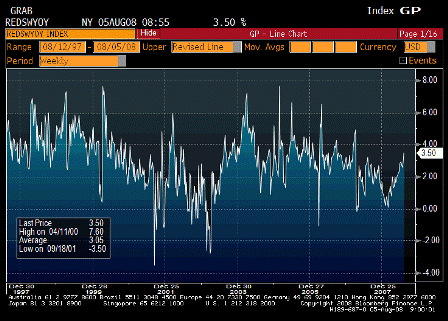
Redbook Store Sales Weekly YoY (Aug 5)

Survey n/a
Actual 3.5%
Prior 2.9%
Revised n/a

Also moving up, even after rebates have gone out.

[top][end]

ICSC-UBS Redbook Comparison TABLE (Aug 5)

[top][end]


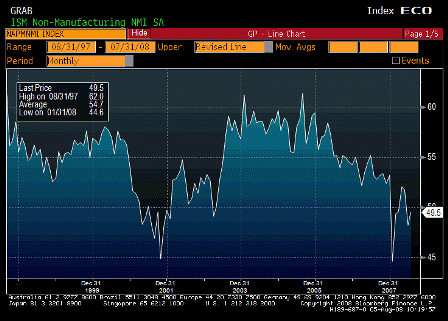
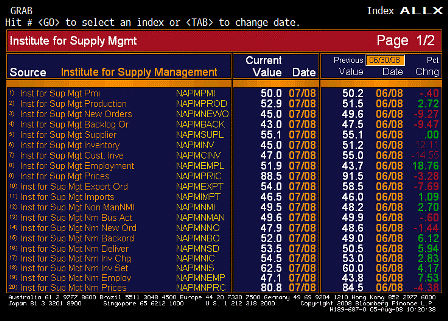
ISM Non-Manufacturing Composite (Jul)

Survey 48.8
Actual 49.5
Prior 48.2
Revised n/a

Better than expected, seems to be holding at muddle through levels.

[top][end]

ISM Non-Manufacturing Composite ALLX 1 (Jul)

[top][end]

ISM Non-Manufacturing Composite ALLX 2 (Jul)


Karim writes:

  • Employment up, export orders and prices paid down were largest movers. Number is for July, so employment number doesn’t seem consistent with NFP data for same month.
  • Export orders do seem consistent with recent data out of Europe and Japan (Eurozone retail sales for June that came out today showed down 3.1% y/y).
  • “Our business remains at about the same level as the previous month, with continued focus on cost reduction.” (Finance & Insurance)

    “The general state of the home-building industry has not changed since last month; however, with the commodity and code changes going into 2009, we face much higher construction costs and reduced margins across the entire supply chain.” (Construction)

    Right, prices to rise even as volumes remain low, as headline leaks into core via cost push.

    “Continue to see slowdown in local economy.” (Health Care & Social Assistance)

    “While still positive, the overall outlook for 2008 for our company is not as high as earlier in the year.” (Wholesale Trade)

    “Governmental spending for services is up this period.” (Professional, Scientific & Technical Services)

    Yes, government deficit spending on the rise.

    July June
    2008 2008
    Index 49.5 48.2

    While below 50, this still implies positive GDP growth and is not collapsing as feared.

    Activity 49.6 49.9
    Prices Paid 80.8 84.5

    Still way high.

    New Orders 47.9 48.6
    Employment 47.1 43.8

    Agreed – not in sync with other employment indicators, but the other numbers reflect large numbers of new entrants to the labor market – a higher labor force participation rate.

    So these companies maybe planning employment increases, but falling short of those new people now reported to be looking for work

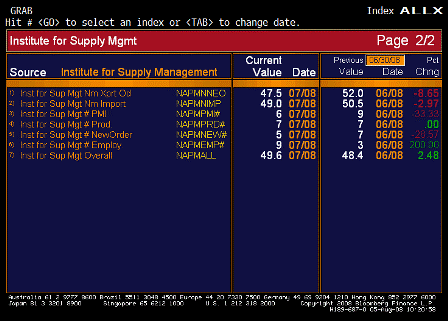
    Export Orders 47.5 52.0
    Imports 49.0 50.5

    [top][end]

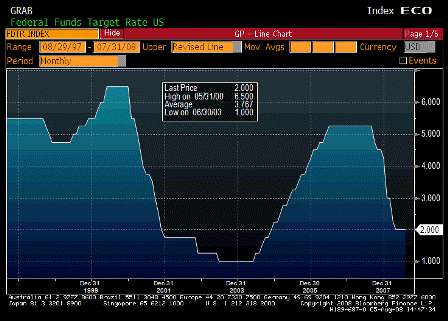
    FOMC Rate Decision (Aug 5)

    Survey 2.00%
    Actual 2.00%
    Prior 2.00%
    Revised 2.00%

    Fisher voting to hike, and others placated by stronger anti-inflation rhetoric.

    History will not be kind to this Fed.


    Karim writes:

    • Bland statement-1 dissent (Fisher)
    • Dovish-
        <
      • Economic activity ‘expanded’ in the 2nd qtr (no mention of ongoing expansion)
      • Labor markets have softened further and markets remain under considerable stress
      • No mention that downside risks to growth have diminished (as they did last time)

    Hawkish-Upside risks to inflation are also of ‘significant’ concern (new)

    Bottom Line: No guidance of anything imminent (i.e., Sep move is off the table). October 29 meeting is 1 week before election and Nov payrolls report, so December meeting earliest likely to see a move, if any.

    NEW

    Economic activity expanded in the second quarter, partly reflecting growth in consumer spending and exports. However, labor markets have softened further and financial markets remain under considerable stress. Tight credit conditions, the ongoing housing contraction, and elevated energy prices are likely to weigh on economic growth over the next few quarters. Over time, the substantial easing of monetary policy, combined with ongoing measures to foster market liquidity, should help to promote moderate economic growth.

    Inflation has been high, spurred by the earlier increases in the prices of energy and some other commodities, and some indicators of inflation expectations have been elevated. The Committee expects inflation to moderate later this year and next year, but the inflation outlook remains highly uncertain.

    Although downside risks to growth remain, the upside risks to inflation are also of significant concern to the Committee. The Committee will continue to monitor economic and financial developments and will act as needed to promote sustainable economic growth and price stability.

    OLD

    Recent information indicates that overall economic activity continues to expand, partly reflecting some firming in household spending. However, labor markets have softened further and financial markets remain under considerable stress. Tight credit conditions, the ongoing housing contraction, and the rise in energy prices are likely to weigh on economic growth over the next few quarters.

    The Committee expects inflation to moderate later this year and next year. However, in light of the continued increases in the prices of energy and some other commodities and the elevated state of some indicators of inflation expectations, uncertainty about the inflation outlook remains high.

    The substantial easing of monetary policy to date, combined with ongoing measures to foster market liquidity, should help to promote moderate growth over time. Although downside risks to growth remain, they appear to have diminished somewhat, and the upside risks to inflation and inflation expectations have increased. The Committee will continue to monitor economic and financial developments and will act as needed to promote sustainable economic growth and price stability.


    [top]