Japan’s housing starts down yet higher than US


[Skip to the end]

With maybe half the population, and with housing in a slump, Japan still has more actual housing starts than the US.

While the Obama plan is ‘not my first choice’ for a fiscal adjustment, it isn’t ‘nothing’ either, and should be more than sufficient stabilize aggregate demand, albeit at low levels.

This, coupled with low and falling physical inventories, could easily set off a somewhat jobless recovery that initially shows some very high percentage increases in many areas.

The Obamaboom is on the way, along with its consequences.

Japan’s housing starts decline 19% in January

Feb 27 (Kyodo) — Japan’s housing starts fell 18.7% year on year to 70,688 units in January, the second straight month of decline, according to data released Friday by the Land Ministry.

Starts for owner-occupied houses fell 10.8% to 20,057, making for the fourth consecutive month of decline, while those for rental houses dropped 18.4% to 31,628, the second straight month of decline. Starts for condominiums for sale also fell for the second straight month, plunging 26.4% to 18,434.


[top]

2009-03-02 USER


[Skip to the end]


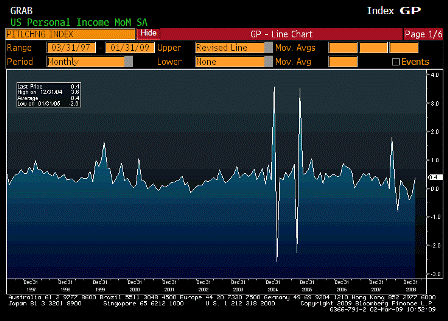
Personal Income MoM (Jan)

Survey -0.2%
Actual 0.4%
Prior -0.2%
Revised n/a

[top][end]

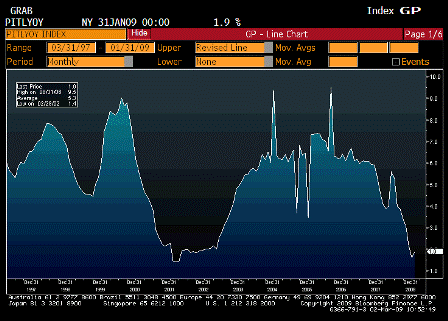
Personal Income YoY (Jan)

Survey n/a
Actual 1.9%
Prior 1.6%
Revised n/a

[top][end]

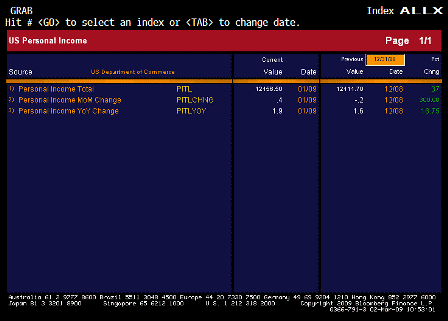
Personal Income ALLX (Jan)

[top][end]

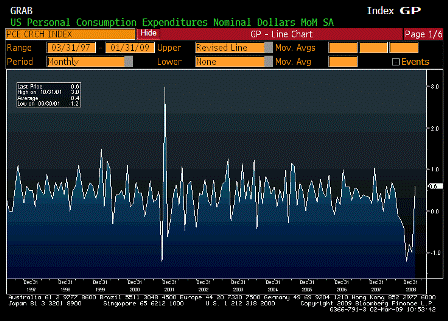
Personal Spending (Jan)

Survey 0.4%
Actual 0.6%
Prior -1.0%
Revised n/a

[top][end]

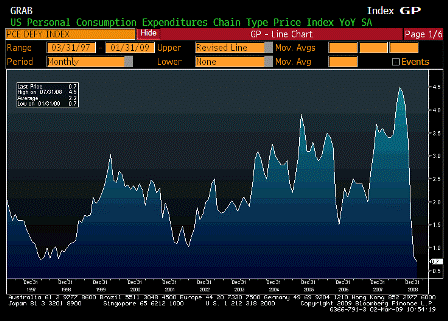
PCE Deflator YoY (Jan)

Survey 0.5%
Actual 0.7%
Prior 0.6%
Revised 0.8%

[top][end]

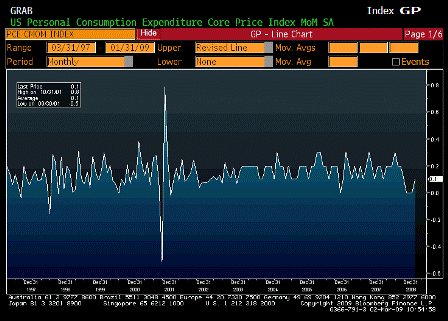
PCE Core MoM (Jan)

Survey 0.1%
Actual 0.1%
Prior 0.0%
Revised n/a

[top][end]

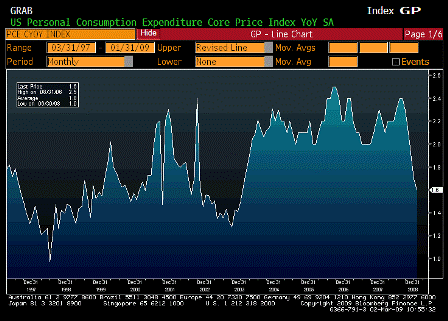
PCE Core YoY (Jan)

Survey 1.6%
Actual 1.6%
Prior 1.7%
Revised n/a

[top][end]

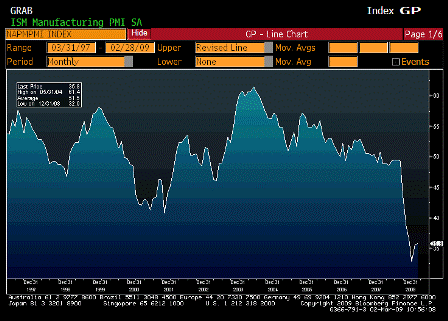
ISM Manufacturing (Feb)

Survey 33.8
Actual 35.8
Prior 35.6
Revised n/a

[top][end]

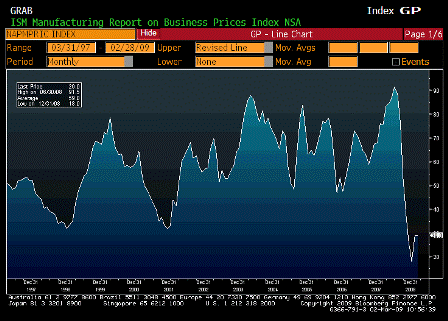
ISM Prices Paid (Feb)

Survey 33.5
Actual 35.8
Prior 35.6
Revised n/a

[top][end]

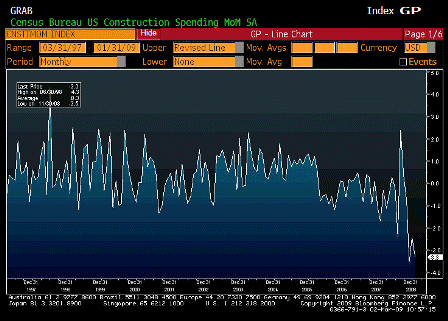
Construction Spending MoM (Jan)

Survey -1.5%
Actual -3.3%
Prior -1.4%
Revised -2.4%

[top][end]

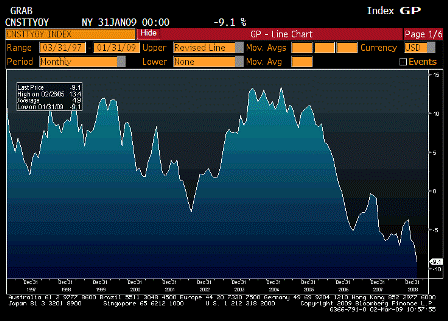
Construction Spending YoY (Jan)

Survey n/a
Actual -9.1%
Prior -6.7%
Revised n/a


[top]

2009-03-02 CREDIT


[Skip to the end]

 
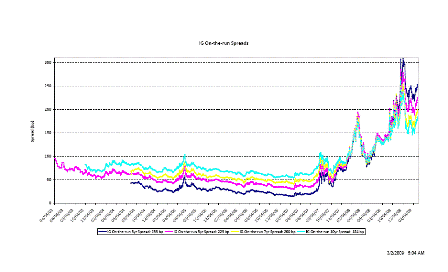
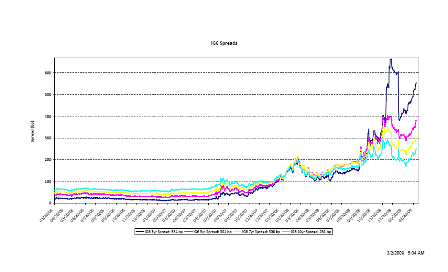
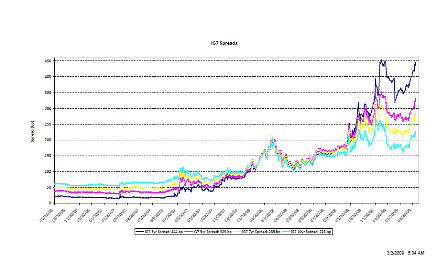
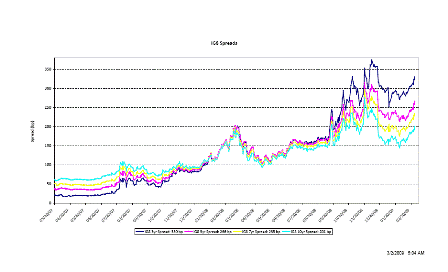
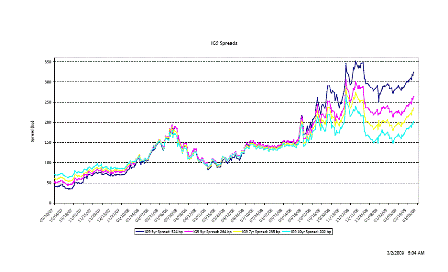
While several spreads are heading back towards the wides, along with equities, trading volume is up as securities trade more at levels based somewhat more on analysis rather than simply forced liquidations.

IG On-the-run Spreads (Mar 02)

[top][end]

IG6 Spreads (Mar 02)

[top][end]

IG7 Spreads (Mar 02)

[top][end]

IG8 Spreads (Mar 02)

[top][end]

IG9 Spreads (Mar 02)


[top]

Excerpt from Bernanke’s testimony


[Skip to the end]

BROWN: Specifically, what worked that Roosevelt did? What did we learn from that? What worked that applies to now?

BERNANKE: Well, there were two things that he did almost within months of taking office that were extremely important. One was the bank holiday and the subsequent measures, like the deposit insurance program that stabilized the banking system.

Yes, deposit insurance allowed banks to fund themselves on an unsecured basis via federal deposit insurance.

The lesson was the liability side of banking is not the place for market discipline.

Which is why I’ve been proposing all along that the Fed needs to get immediate permission from Congress to lend to member banks on an unsecured basis. This would instantly clear up the interbank lending issues.

The problem is the FOMC doesn’t understand reserve accounting and how the monetary system actually works.

And it’s a point I’ve been making all morning, that we need to stabilize the banks.

And they need borrowers to have sufficient net incomes to make their payments. Hence my payroll tax holiday.

The second thing he did was to take the U.S. off the gold standard, which allowed the Federal Reserve to ease monetary policy, allowed for a rise in prices, which, after three years of horrible deflation, allowed for recovery.

Yes, it removed the supply side constraints on the ‘money supply’ with the gold standard this constraint makes it problematic for even the Treasury to fund its deficit spending, as competition to borrow a finite amount of reserves drives up interest rates.

When the currency is instead allowed to float interest rates are then instead set by the government rather than market forces. This allows the Fed to cut rates and the Treasury to deficit spend without risking the loss of gold reserves.

So those were the two perhaps most important measures that he took.

He did some counterproductive things, like the National Recovery Act, which put the floors under prices and wages and prevented necessary adjustment.

Excuse me??? His new Keynesian roots are showing. They believe lower wages will allow labor markets to ‘clear’ when deficits are too small to support demand.

The most controversial issue recently, of course, has been fiscal policy and I think there are two sides to that.

The classic work on this by an old teacher of mine from MIT, E. Cary Brown, said that fiscal policy under Roosevelt was not successful, but only because it wasn’t tried, and he argued that it wasn’t big enough relative to the size of the problem.

True!

Other people, other writers have argued that this wasn’t the right medicine.

So that one is more controversial, but if you ask me what I think the most important things were, I think they had to do with stabilizing monetary policy and stabilizing the financial system.

Which he hasn’t yet been able to do.


[top]

BMA/LIBOR mids


[Skip to the end]

Closing at the tights of the day.

One of the only ways to hedge higher tax rates.

BMA/LIBOR mids

Start Term Frequency Gross Net MBA Fwd Hedge Cost Floor Wgt Cap Wgt
5.00 5.00 12 98.74% 90.56% -8.18% 3.996% 60.5 -62.6
5.00 10.00 12 102.13% 92.92% 4.032% -9.21% 65.1 -70.5
2.00 8.00 12 96.91% 86.52% 3.653% -10.40% 58.1 -58.4
7.00 8.00 12 103.55% 93.98% 4.087% -9.57% 66.9 -73.8
5.00 15.00 12 103.83% 93.02% 3.957% -10.81% 67.3 -74.5
10.00 10.00 12 107.48% 93.70% 3.931% -13.78% 72.2 -83.0
15.00 15.00 12 110.80% 90.35% 3.686% -20.45% 76.6 -90.8
20.00 10.00 12 112.13% 88.71% 3.637% -23.42% 78.4 -93.9
15.00 5.00 12 108.82% 90.67% 3.764% -18.15% 74.0 -86.1

Using cap and floor hedge ratios from existing trades:

5.00 5.00 12 98.74% 92.94% 3.996% -5.79% 33.0 -13.0
10.00 10.00 12 107.48% 99.11% 3.931% -8.37% 38.0 -24.0
1.00 15.00 4 99.80% 88.40% 3.637% -11.40% 20.0 -15.0

**1×15 including 12% rate hedge

Feb-26-09 Change from Feb-25-09 Change from Feb-19-09 Change from Dec-31-08
3M 77.37500 -1.12500 -0.62500 -10.12500
6M 79.75000 -1.25000 -0.75000 -9.25000
1Y 83.62500 -1.25000 -0.50000 -6.87500
2Y 86.12500 -1.25000 -0.50000 -5.37500
3Y 88.25000 -1.25000 -0.50000 -4.25000
4Y 90.12500 -1.25000 -0.50000 -3.37500
5Y 91.50000 -1.25000 -0.50000 -2.75000
6Y 92.43750 -1.12500 -0.37500 -2.56250
7Y 93.37500 -1.00000 -0.25000 -2.37500
8Y 94.00000 -1.08330 -0.33330 -2.41670
9Y 94.62500 -1.16670 -0.41670 -2.45830
10Y 95.25000 -1.25000 -0.50000 -2.50000
12Y 96.75000 -1.25000 -0.50000 -2.25000
15Y 98.5000 -1.25000 -0.50000 -2.50000
20Y 100.37500 -1.25000 -0.37500 -3.37500
25Y 101.62500 -1.18750 -0.43750 -3.75000
30Y 102.87500 -1.12500 -0.50000 -4.12500
40Y 103.87500 -1.37500 -0.50000 -4.3750


[top]
2009-02-27 USER


[Skip to the end]


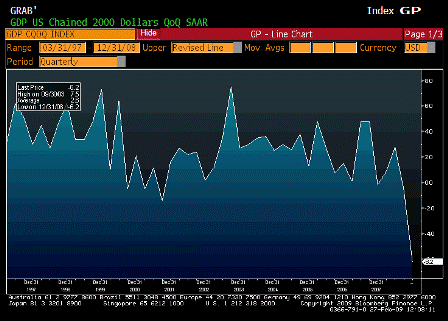
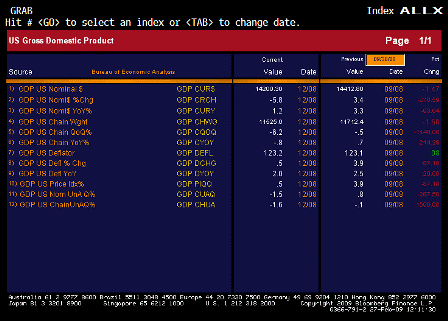
GDP QoQ Annualized (4Q P)

Survey -5.4%
Actual -6.2%
Prior -3.8%
Revised n/a

[top][end]

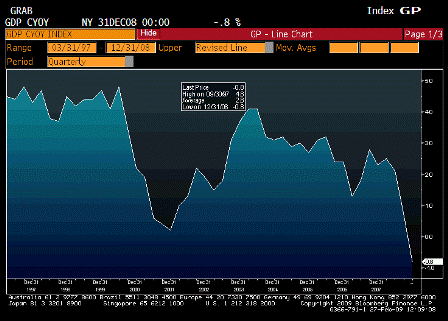
GDP YoY Annualized Real (4Q P)

Survey n/a
Actual -0.8%
Prior 0.7%
Revised n/a

[top][end]

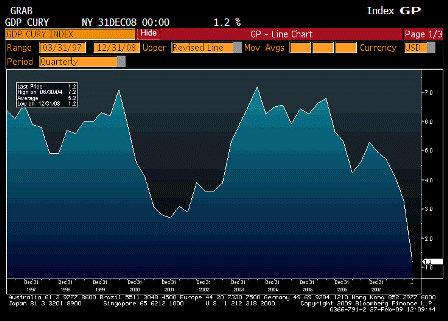
GDP YoY Annualized Nominal (4Q P)

Survey n/a
Actual 1.2%
Prior 3.3%
Revised n/a

[top][end]

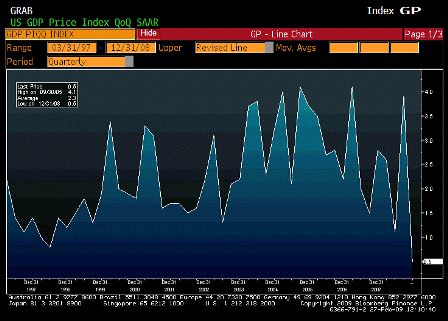
GDP Price Index (4Q)

Survey -0.1%
Actual 0.5%
Prior -0.1%
Revised n/a

[top][end]

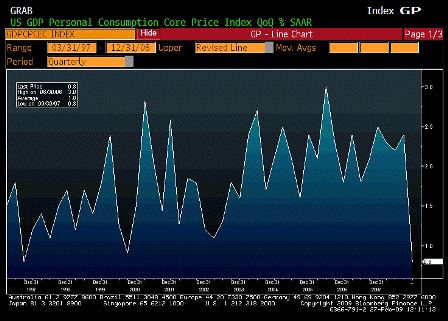
Core PCE QoQ (4Q)

Survey 0.6%
Actual 0.8%
Prior 0.6%
Revised n/a

[top][end]

GDP ALLX (4Q P)

[top][end]

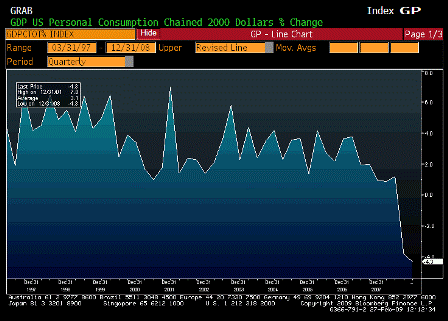
Personal Consumption (4Q)

Survey -3.7%
Actual -4.3%
Prior -3.5%
Revised n/a

[top][end]


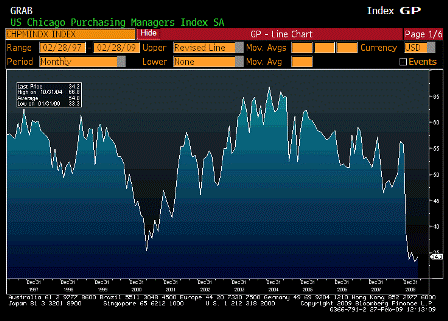
Chicago Purchasing Manager (Feb)

Survey 33.0
Actual 34.2
Prior 33.3
Revised n/a

[top][end]


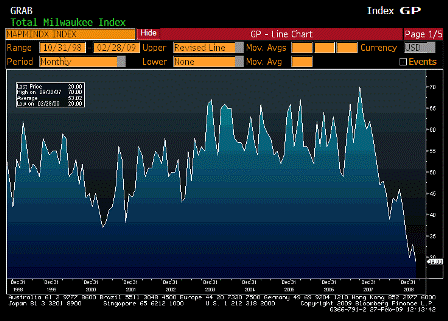
NAPM Milwaukee (Feb)

Survey 32.0
Actual 29.0
Prior 33.0
Revised n/a

[top][end]


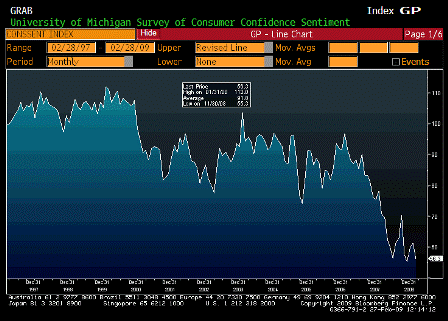
U of Michigan Confidence (Feb F)

Survey 56.0
Actual 56.3
Prior 56.2
Revised n/a

[top][end]

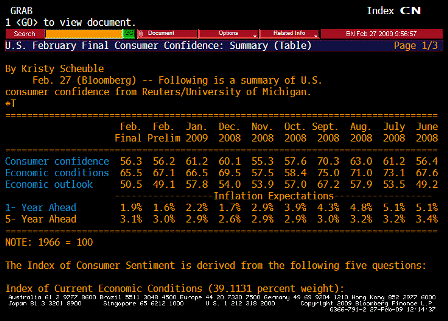
U of Michigan TABLE Inflation Expectations (Feb F)


[top]
2009-02-26 USER


[Skip to the end]


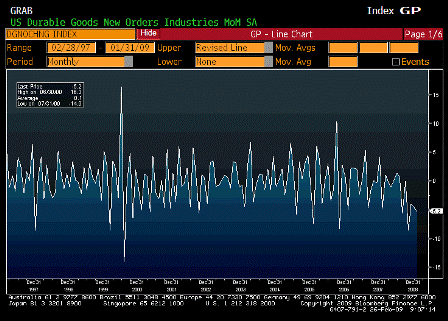
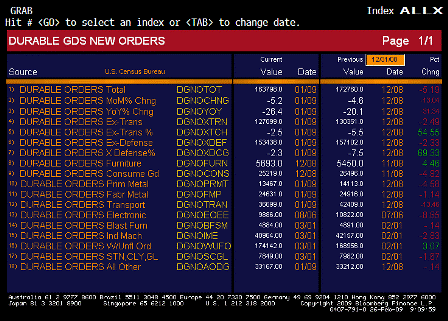
Durable Goods Orders (Jan)

Survey -2.5%
Actual -5.2%
Prior -2.6%
Revised -4.6%

 
Karim writes:

  • -5.2% m/m; December revised from -2.6% to -4.6%
  • Ex-aircraft and defense -5.4% m/m and -34.4% last 3mths at an annualized rate

[top][end]

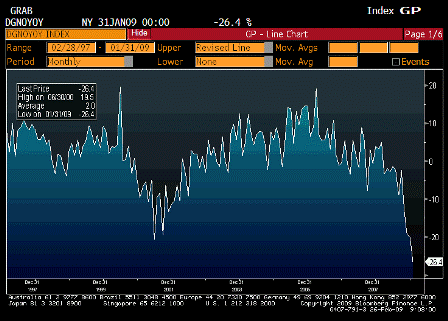
Durable Goods Orders YoY (Jan)

Survey n/a
Actual -26.4%
Prior -20.1%
Revised n/a

[top][end]

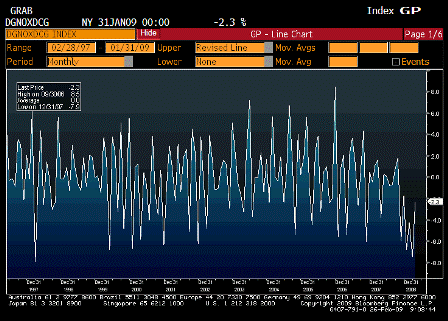
Durables Ex Defense MoM (Jan)

Survey n/a
Actual -2.3%
Prior -7.5%
Revised n/a

[top][end]

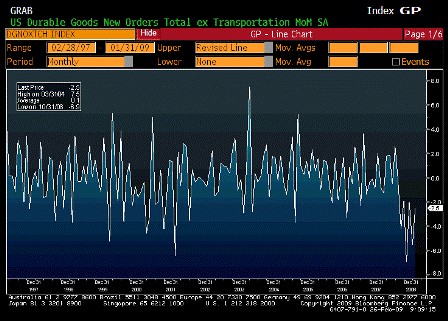
Durables Ex Transportation MoM (Jan)

Survey -2.2%
Actual -2.5%
Prior -3.6%
Revised -5.5%

[top][end]

Durable Goods ALLX (Jan)

[top][end]


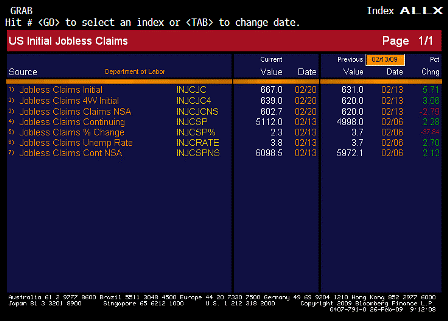
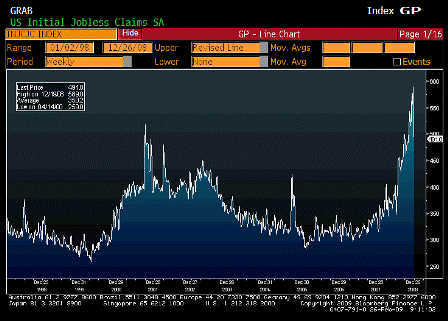
Initial Jobless Claims (Feb 21)

Survey 625K
Actual 667K
Prior 627K
Revised 631K

 
Karim writes:

  • Initial claims up 36k to new cycle high of 667k
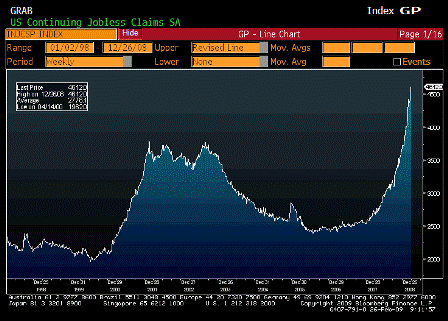
  • Continuing claims up another 14k to new cycle high of 5112k

[top][end]

Continuing Claims (Feb 14)

Survey 5025K
Actual 5112K
Prior 4987K
Revised 4998K

[top][end]

Jobless Claims ALLX (Feb 21)

[top][end]


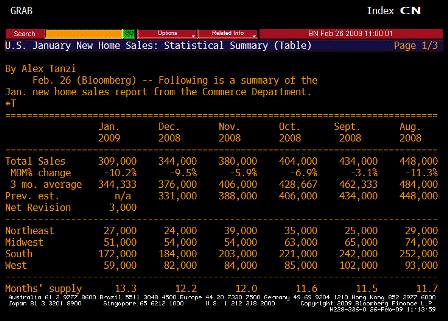
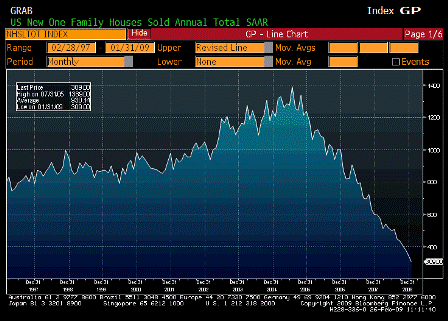
New Home Sales (Jan)

Survey 324K
Actual 309K
Prior 331K
Revised 344K

[top][end]

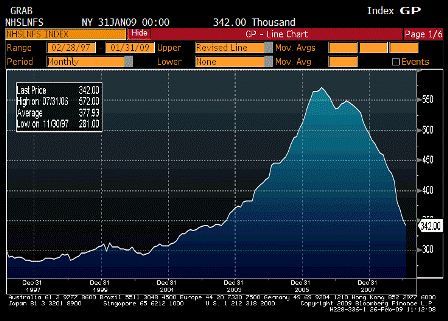
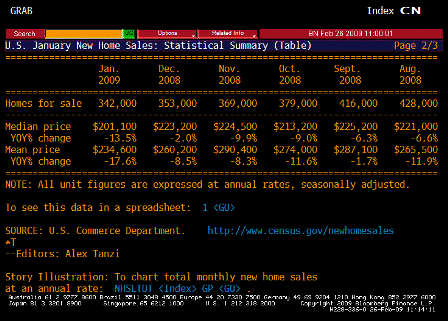
New Home Sales Total for Sale (Jan)

Survey n/a
Actual 342.00
Prior 353.00
Revised n/a

[top][end]

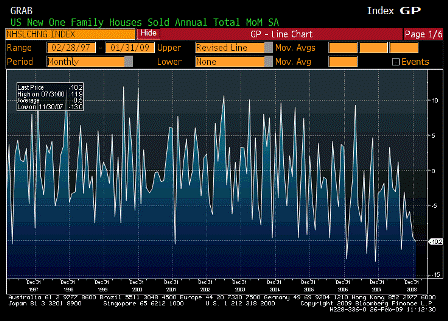
New Home Sales MoM (Jan)

Survey -21.%
Actual -10.2%
Prior -14.7%
Revised -9.5%

[top][end]

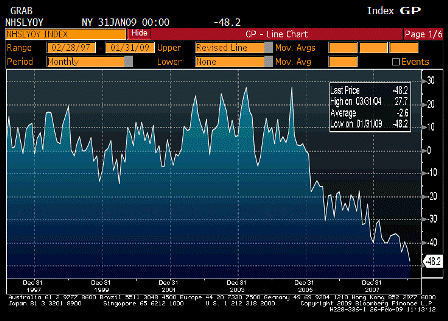
New Home Sales YoY (Jan)

Survey n/a
Actual -48.2%
Prior -42.7%
Revised n/a

[top][end]

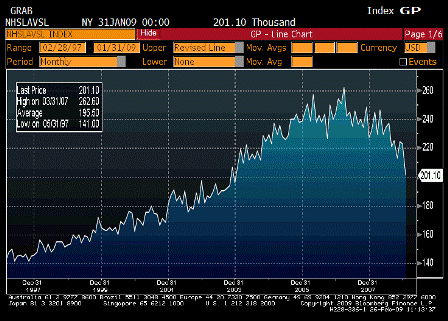
New Home Sales Median Price (Jan)

Survey n/a
Actual 201.10
Prior 223.20
Revised n/a

[top][end]

New Home Sales TABLE 1 (Jan)

[top][end]

New Home Sales TABLE 2 (Jan)


[top]
2009-02-25 USER


[Skip to the end]

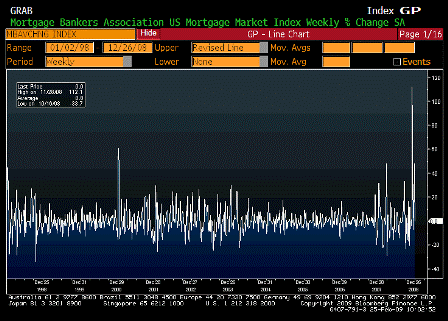
MBA Mortgage Applications (Feb 20)

Survey n/a
Actual -15.1%
Prior 45.7%
Revised n/a

[top][end]

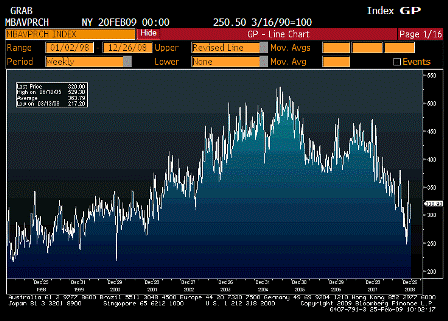
MBA Purchasing Applications (Feb 20)

Survey n/a
Actual 250.50
Prior 257.30
Revised n/a

[top][end]

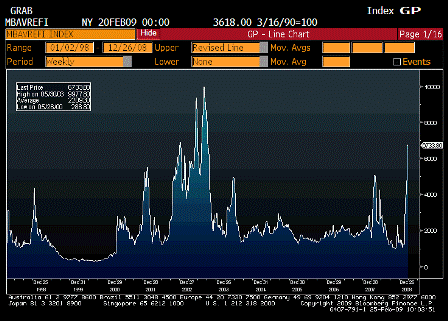
MBA Refinancing Applications (Feb 20)

Survey n/a
Actual 3618.00
Prior 4472.90
Revised n/a

[top][end]

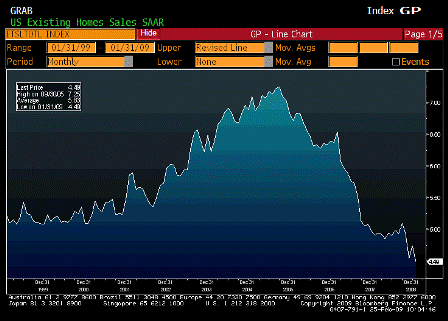
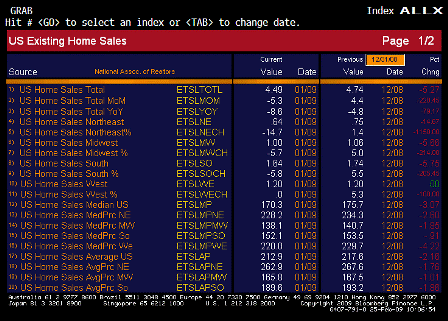
Existing Home Sales (Jan)

Survey 4.79M
Actual 4.49M
Prior 4.74M
Revised n/a

[top][end]

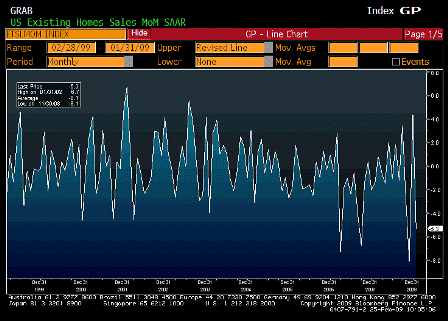
Existing Home Sales MoM (Jan)

Survey 1.1%
Actual -5.3%
Prior 6.5%
Revised 4.4%

[top][end]

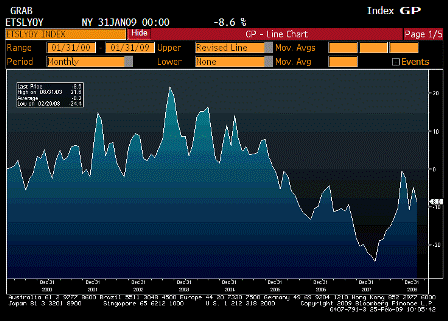
Existing Home Sales YoY (Jan)

Survey n/a
Actual -8.6%
Prior -4.8%
Revised n/a

[top][end]

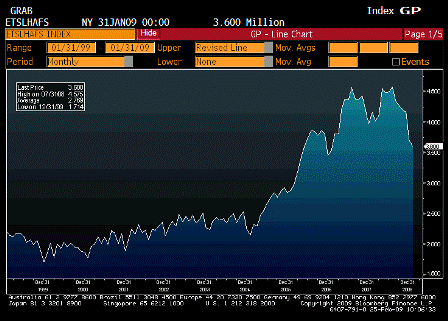
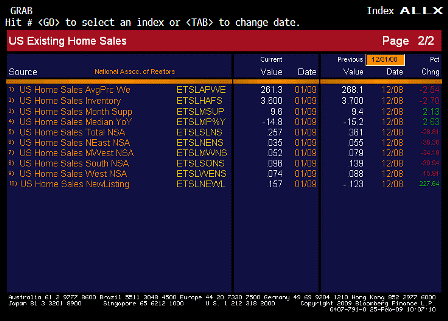
Existing Home Sales Inventory (Jan)

Survey n/a
Actual 3.600
Prior 3.700
Revised n/a

 
Foreclosure sales peaked?

[top][end]

Existing Home Sales ALLX 1 (Jan)

[top][end]

Existing Home Sales ALLX 2 (Jan)


[top]