more QE nonsense

Aztec economics- sacrifices made the sun rise…

The same logic also proves QE likewise prevented elephant attacks in Rome this year…

ECB Loans Data Suggests QE is Working

By Todd Duell

March 26 (WSJ) — Data showed lending to firms and households rose in February, with loans to corporates rising by €8 billion and loans to households by €1 billion. Moreover, the broad monetary aggregate M3 was up 4% in February in annual terms, above January’s growth of 3.7%. The M1 component of M3 has increased in recent months, having risen by 9.1% on the year in February, after 8.9% in January. The central bank also launched a program last year of conditional four-year loans to banks, designed to encourage commercial banks to pass funds on to eurozone businesses.

Posted in ECB

personal income and outlays, pending home sales, Dallas Fed

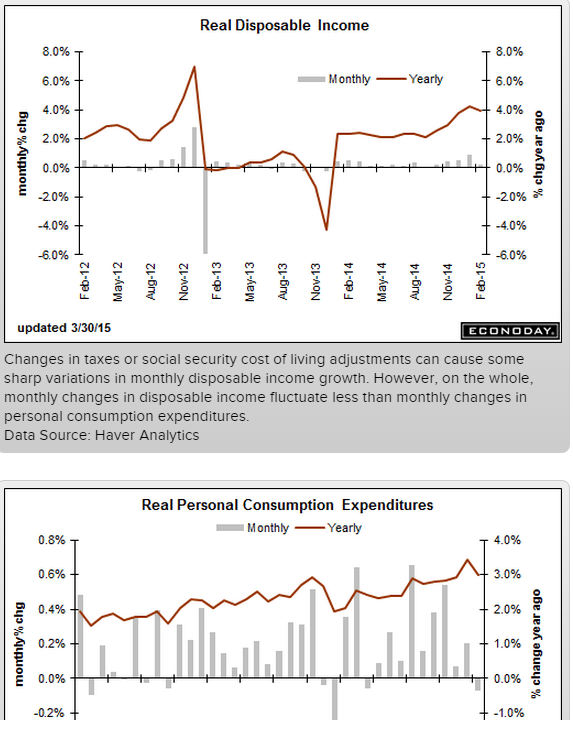
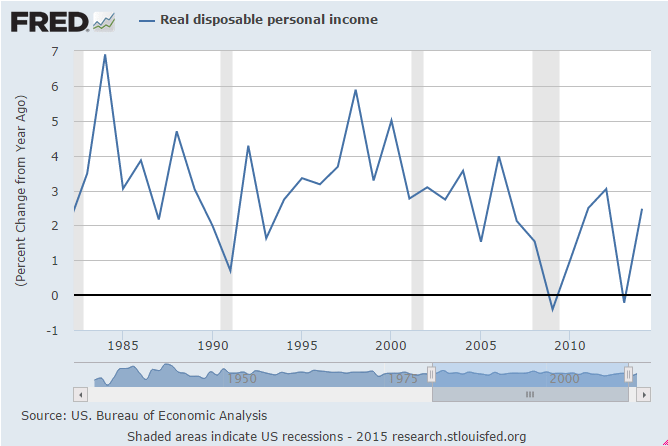
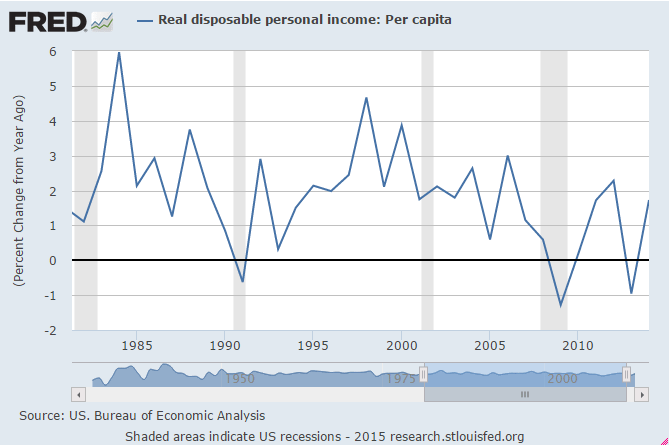
Personal income as reported up .4 with spending only up .1 = increased savings. However, while that counts most of the income gained by those who gained from the oil price decline, I suspect it does not include quite a bit of the income lost by those who got hurt by the decline in oil prices, as that lost ‘income’ is often outside the definition of ‘income’ included in this report. And much of that lost income that is included is likely estimated, as much of it goes unreported on a monthly or even quarterly basis. If so, both income and savings are being over reported by what I’m thinking is about .2 on the income side, which pushes the savings down below ‘normal’ and is also consistent with declining personal consumption expenditures.

Personal Income and Outlays
personal-income-feb-table
Highlights
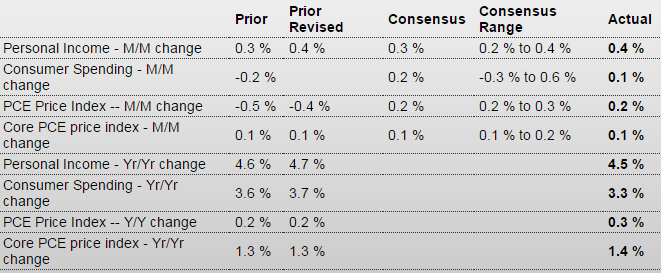
In February, personal income growth remained healthy but spending and inflation were soft. Personal income advanced 0.4 percent after posting an equal gain of 0.4 percent in January. February topped expectations for a 0.3 percent gain. The wages & salaries component increased 0.3 percent, but followed a robust 0.6 percent the prior month.

Personal spending made a partial rebound of 0.1 percent after declining 0.2 percent in January. Analysts forecast a 0.2 percent rise. Durables fell 1.0 percent, following a 0.4 percent rise in January. Nondurables made a 0.4 percent comeback after plunging 2.5 percent in January. Services advanced 0.2 percent after a 0.4 percent boost in January.

Prices at the headline level rebounded a moderate 0.2 percent, following three declines including 0.4 percent for January. Market expectations were for 0.2 percent. The core PCE price index rose 0.1 percent, matching the pace in January and expectations.

Income growth was moderately strong in February. But spending has been softening in recent months due to adverse weather and lower energy prices. But the consumer sector has fuel for spending. Inflation continues to be low and well below the Fed’s target of 2 percent year-ago inflation, meaning the Fed likely will stick with no rate hike before mid-year.
personal-income-feb-graph

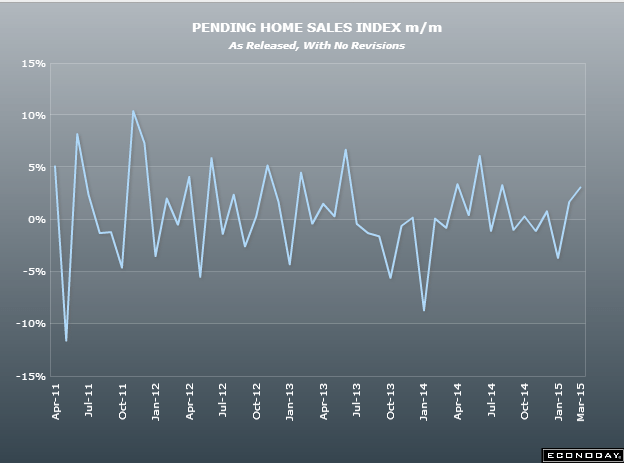
Better than expected but it remains at depressed levels with easy comparisons with last year’s extra cold winter compared with this year’s colder than average winter, which some how resulted in a 35,000 home jump- a 157% increase- in new home sales in the northeast to cause that report to spike some.

Pending Home Sales Index
pending-home-sales-feb-table
Highlights
Pending home sales picked up steam in February, up a much stronger-than-expected 3.1 percent on top of a 1.2 percent revised gain in January. This is the first back-to-back gain since April and May last year. Today’s report is a second shot in the arm for the ever-lagging housing sector, following last week’s big surge in new homes sales.

By region, the Midwest shows a strong February gain for pending sales as does the West, a region where sales of existing homes have been flat. The South, by far the largest housing region, and the Northeast, by far the smallest, show small monthly declines.

Year-on-year, pending home sales, which are defined as contract signings for existing homes, are up a robust-looking 12.0 percent which is a 6th straight increase. But this is misleading as many deals fall through. Final sales of existing homes, in data posted last week, are up only 4.7 percent year-on-year.
pending-home-sales-feb-graph

Unambiguous big fat whopping negative, therefore largely unreported:

Dallas Fed Mfg Survey
dallas-fed-march
Highlights
Texas factory activity declined in March. The production index, a key measure of state manufacturing conditions, fell to minus 5.2, posting its first negative reading in nearly two years.

Other measures of current manufacturing activity also reflected contraction in March. The new orders index pushed further into negative territory, coming in at minus 16.1, and the growth rate of orders index remained negative for a fifth consecutive month but edged up to minus 15.3 in March. The shipments and capacity utilization indexes slipped to more negative readings, minus 8.7 and minus 6.4, respectively.

Perceptions of broader business conditions were rather pessimistic for a third month in a row. The general business activity index declined 6 points to minus 17.4 in March, while the company outlook index was largely unchanged at minus 4.

Labor market indicators reflected slight employment declines and shorter workweeks. The March employment index dipped to minus 1.8, its first negative reading since May 2013. Thirteen percent of firms reported net hiring, compared with 14 percent reporting net layoffs. The hours worked index has been gradually declining for six months and came in at minus 5.3 in March, down from minus 1.6 in February.

Prices declined in March, and upward pressure on wages continued to ease slightly. The raw materials prices index fell to minus 9.4, its lowest reading since May 2009. The finished goods prices index pushed further negative to -9.8, also reaching a low not seen since 2009. The wages and benefits index came in at 15.6, down from 16.8 in February.

Expectations regarding future business conditions remained fairly weak in March. The index of future general business activity edged down to 3, while the index of future company outlook inched up to 12.8. Both indexes remain well below the levels seen throughout 2014. Indexes for future manufacturing activity, however, improved markedly in March. The indexes of future production, capacity utilization and growth rate of orders posted double-digit gains from their February readings.

According to the Dallas Fed report, both manufacturing and prices are soft-leaving the Fed in a likely dovish mode. Texas has the second largest manufacturing sector, following California. So far, regional manufacturing surveys point to sluggish manufacturing activity in March.

new from Bernanke

In case there was any doubt…

>   
>   (email exchange)
>   
>   On Mon, Mar 30, 2015 at 11:28 AM, Scott wrote:
>   

New from Bernanke:

Why are interest rates so low?

Bad:
what matters most for the economy is the real, or inflation-adjusted, interest rate (the market, or nominal, interest rate minus the inflation rate). The real interest rate is most relevant for capital investment decisions, for example.

The equilibrium interest rate is the real interest rate consistent with full employment of labor and capital resources, perhaps after some period of adjustment.

Large deficits will tend to increase the equilibrium real rate (again, all else equal), because government borrowing diverts savings away from private investment.

Good:
Contrary to what sometimes seems to be alleged, the Fed cannot somehow withdraw and leave interest rates to be determined by “the markets.”

[the Fed] has no choice but to set the short-term interest rate somewhere.

Credit Check, Fed check

Not much going on this week and not much to concern the Fed?

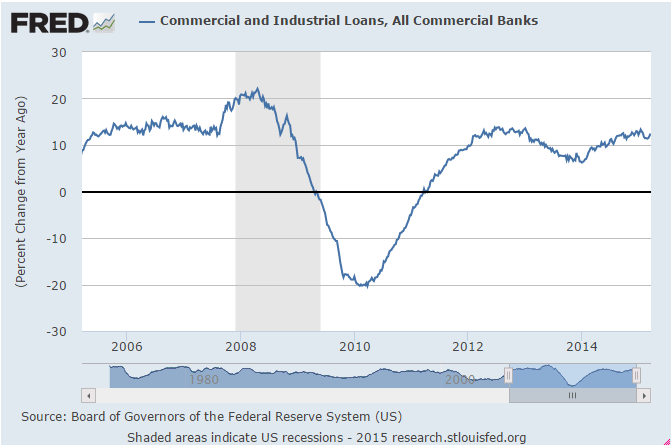
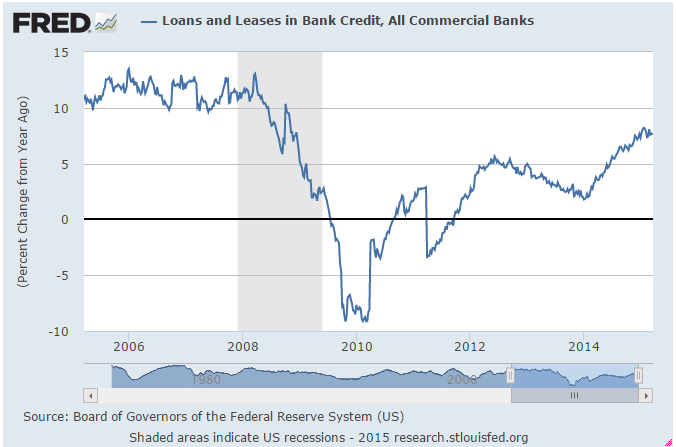
The way they see things, isn’t the point of raising rates to slow credit growth?

Are they thinking 0 rates and QE has caused excessive credit expansion?
;)
cc-fc-1
cc-fc-2
cc-fc-3
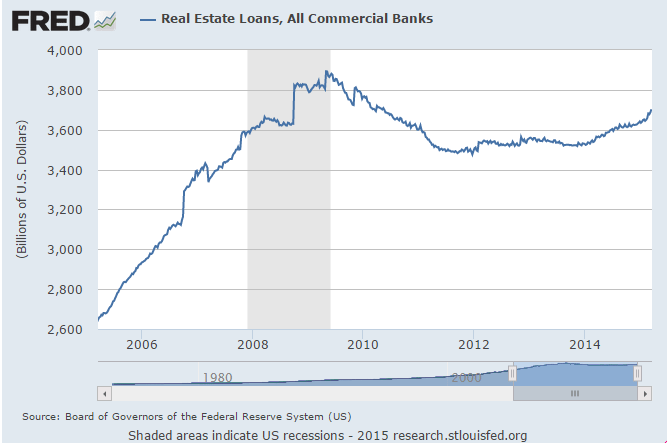
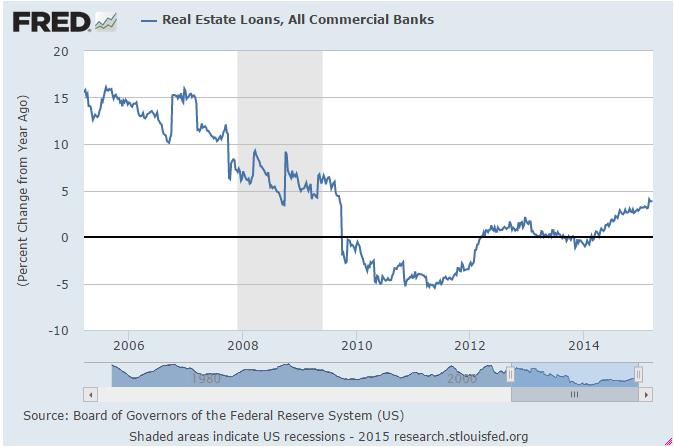
Aha! Real estate related borrowing is picking up a bit- time to slam the brakes on that market!!!??? :(
cc-fc-4
cc-fc-5
Or hike because they think it’s time to slow excessive income growth caused by the low rates?
cc-fc-6
cc-fc-7
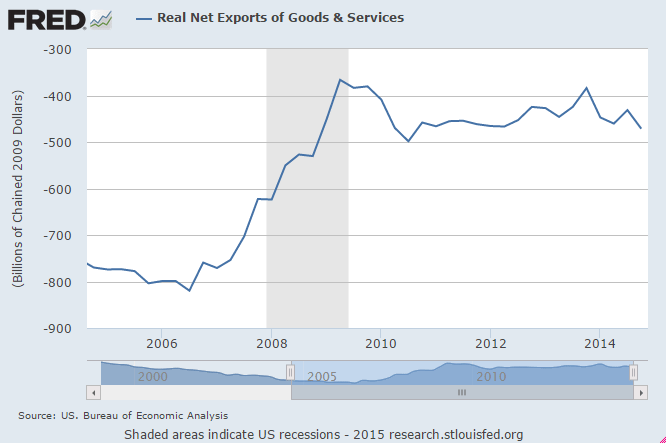
Or maybe they think rate hikes will help the dollar that they think is already too strong as our trade deficit grows even as our petroleum bill falls???
cc-fc-8
cc-fc-9
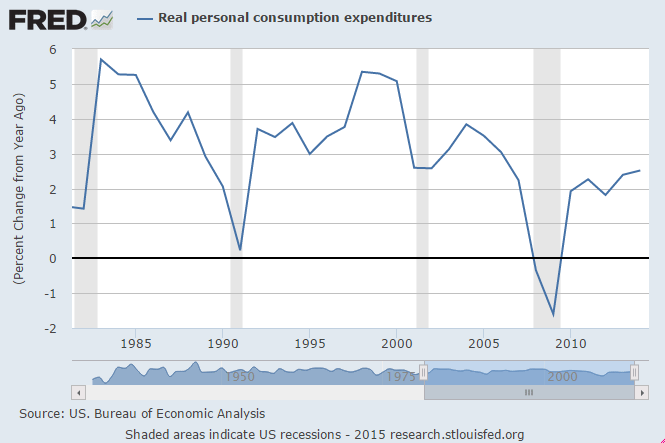
Low rates causing runaway consumer spending???
cc-fc-10
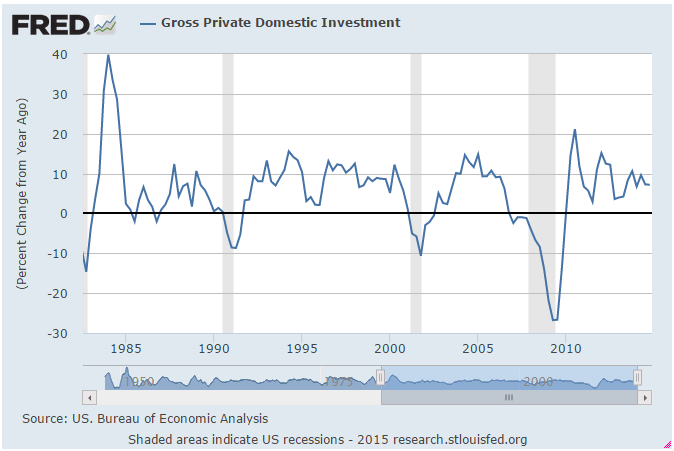
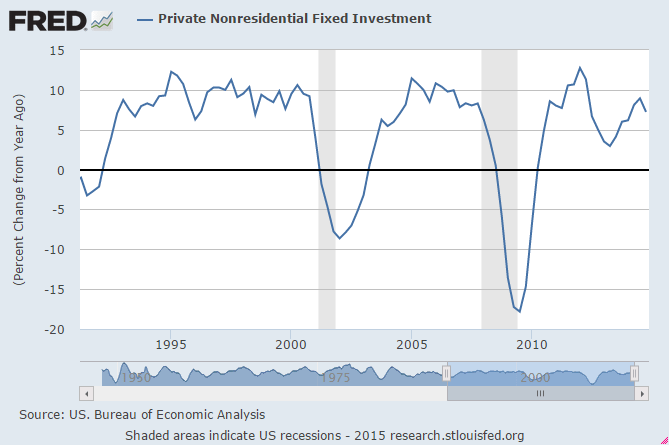
Should have know, 0 rates and QE caused an investment boom!!!??? :(
cc-fc-11
cc-fc-12
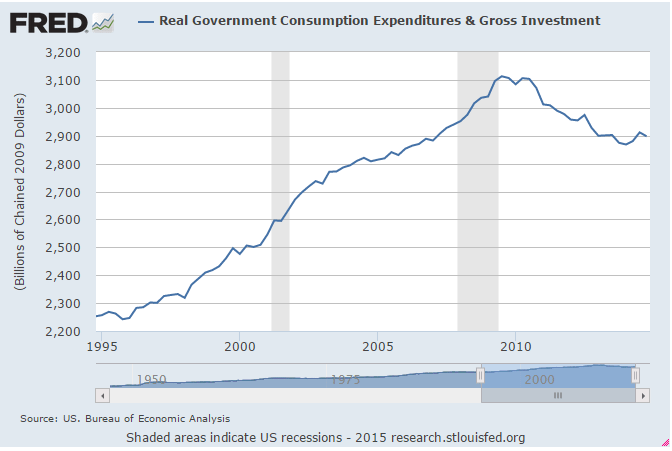
Maybe they think they need rate hikes to somehow cool govt spending??? :(
cc-fc-13
Makes me wonder what channels the hawks are watching???

Like Lockart at the Atlanta Fed who’s pushing for rate hikes?
cc-fc-14

Jobless claims, Market pmi, KC Fed manuf index, trucking tonnage, rail traffic

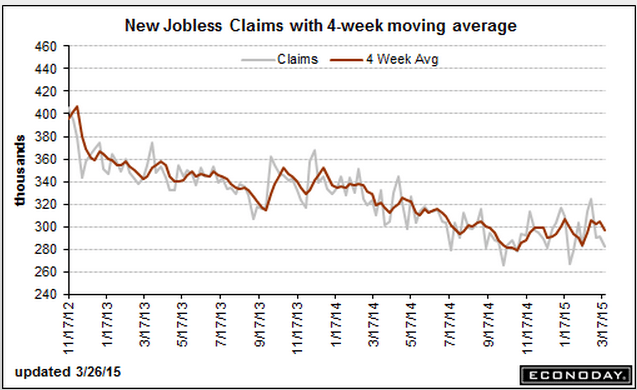
Remain towards the lows, means layoffs still tame:
claims-3-26-graph
This looks reasonable as well, but the Markit surveys are always suspect,
and expectations fell:

United States : PMI Services Flash
pmi-services-flash
Highlights
The manufacturing sector may be sputtering but not the service sector, based on Markit’s flash PMI which is up strongly for a second straight month, to a 6-month high of 58.6 in final March vs 57.1 in final February (57.0 February flash). The final reading for January was 54.2.

Respondents are citing improvement in economic conditions, strengthening consumer confidence, and new product launches as pluses. New orders are at a 6-month high and backlogs are at a 5-month high. Employment is also up.

A negative however, and one seen in other data, is a downgrade in expectations. Those seeing a rise in business over the next 12 months is the lowest since June 2012.

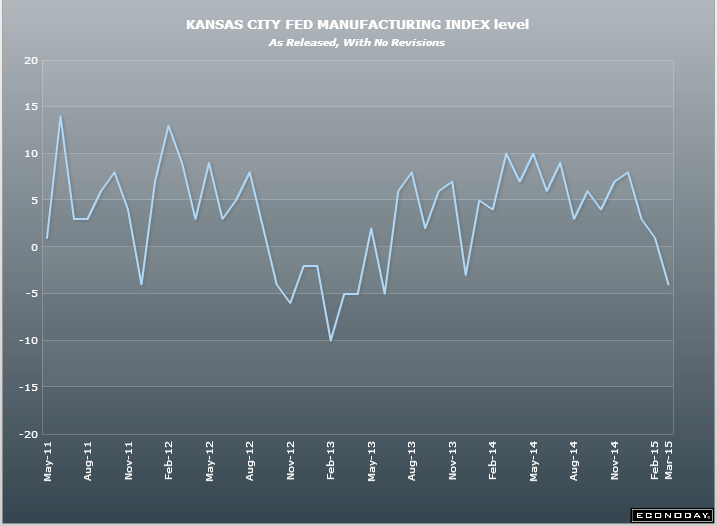
Yet another depressed Fed survey:

United States : Kansas City Fed Manufacturing Index
kc-fed-mar
Highlights
Tenth District manufacturing activity declined in March, and producers’ expectations moderated somewhat but remained slightly positive. Most price indexes continued to decrease, with several reaching their lowest level since 2009. In a special question about the West Coast port disruptions, 32 percent of firms said it had affected them negatively.

The month-over-month composite index was minus 4 in March, down from plus 1 in February and 3 in January . The composite index is an average of the production, new orders, employment, supplier delivery time, and raw materials inventory indexes. The overall slower growth was mostly attributable to declines in plastics, food, and chemical production and continued weakness in metals and machinery. Looking across District states, the largest decline was in Oklahoma, with moderate slowdowns in Kansas and Nebraska.

Other month-over-month indexes decreased from the previous month. The production and shipments indexes fell after rising last month, and the new orders and order backlog indexes dropped to their lowest levels in over two years. In contrast, the employment and new orders for exports indexes inched higher but remained negative. The finished goods inventory index eased from 3 to minus 2, and the raw materials inventory index also moved into negative territory.

Year-over-year factory indexes also decreased. The composite year-over-year index declined from 9 to minus 2, and the production, shipments, new orders, and employment indexes also moved into negative territory. The capital expenditures index eased from 9 to 3, and the order backlog index decreased further. Both inventory indexes moderated somewhat.

Most future factory indexes eased slightly but remained positive. The future composite index moved down from 11 to 4, and the future production, shipments, and new orders index also decreased moderately.
kc-fed-mar-graph

Trucking tonnage and rail traffic not looking so good:

Mortgage purchase apps, Durable goods orders

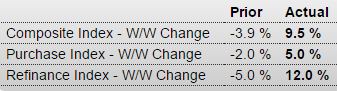
Still looking stone cold dead to me, with risk of going even lower.

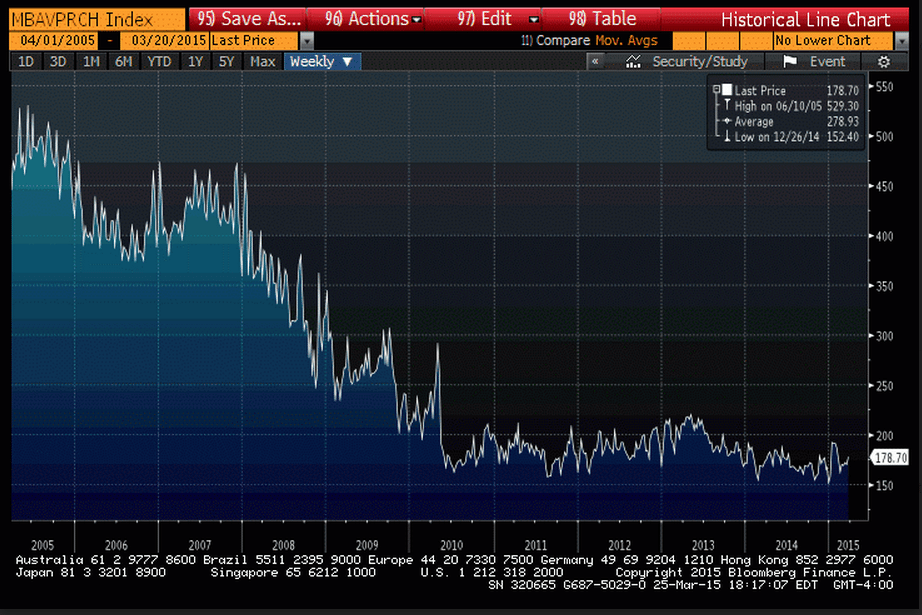
Purchase apps up only 3% from a dismal period last year:

MBA Mortgage Applications
mba-3-18

purchase-apps-10yr

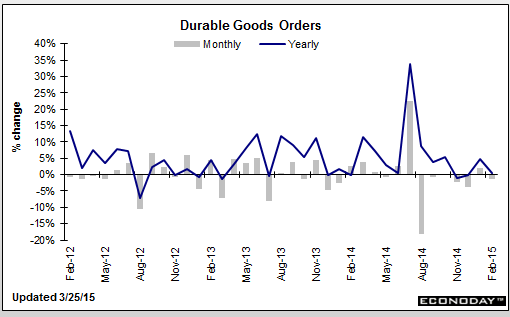
Way below expectations and prior month revised down, causing GDP estimates to be further cut as well:

Durable Goods Orders
dgo-feb-table
Highlights
The manufacturing sector continues to look weak. Durables orders fell 1.4 percent in February after rebounding 2.0 percent the month before. Market expectations were for a 0.7 percent gain. Excluding transportation, the core declined 0.4 percent, following a 0.7 percent drop in January. Analysts projected a 0.3 percent gain in February.

Transportation dropped 3.5 percent, following a monthly rebound of 8.8 percent the prior month.

Motor vehicles slipped 0.5 percent, nondefense aircraft decreased 8.9 percent, and defense aircraft fell 33.1percent.

Outside of the core, orders were mixed. Industries that advanced were primary metals and electrical equipment. Declines were seen in fabricated metals, machinery, computers & electronics, and “other.”

Nondefense capital goods orders excluding aircraft were down 1.3 percent, following a 0.9 percent dip in January. Shipments of this series were flat in February after rising 1.0 percent the month before.

The latest orders numbers point to continuing weakness in the manufacturing sector and may soften Fed hawk rhetoric-especially taking into account the latest sluggish March manufacturing surveys.
dgo-feb-graph

GDP growth estimates tumble

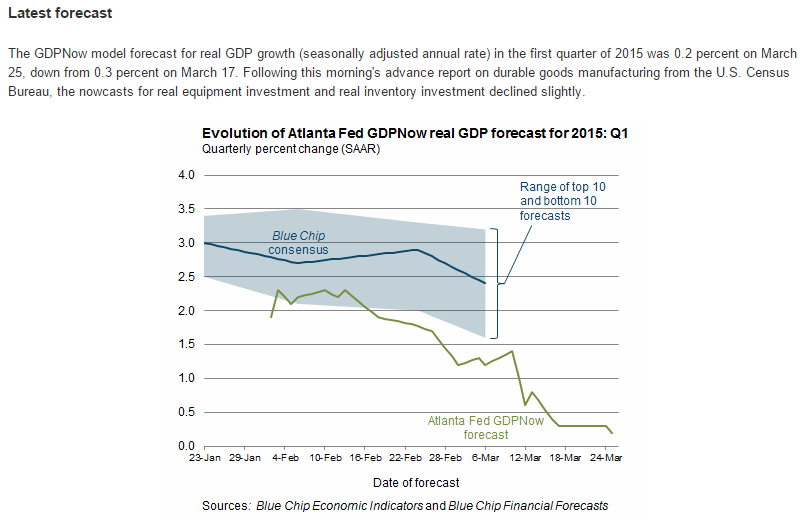
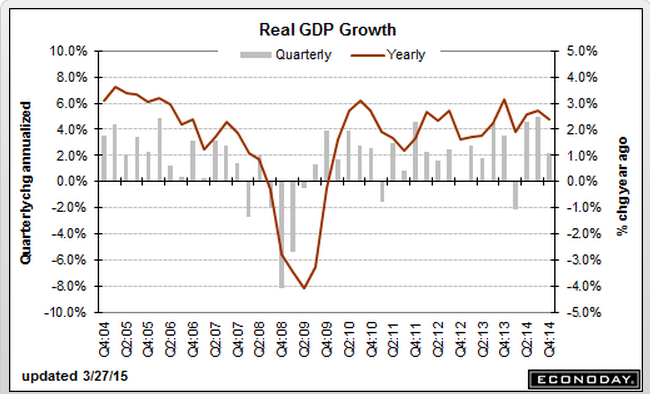
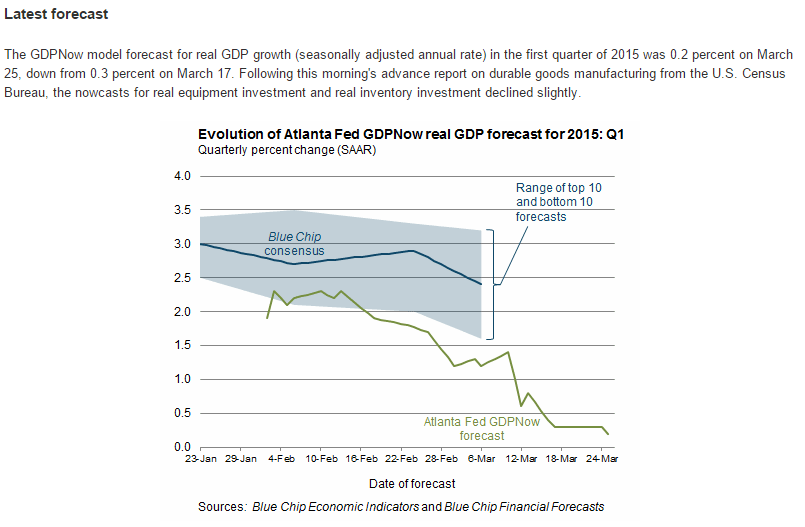
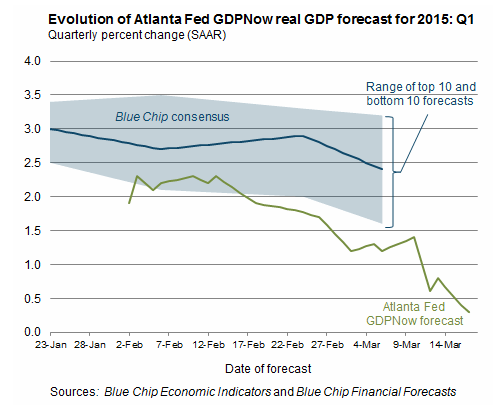
March 25 (WSJ) — At least one first-quarter tracking estimate is already close to zero. The Federal Reserve Bank of Atlanta on Wednesday put its gauge at 0.2%, down from its earlier estimate of 0.3%. Macroeconomic Advisers trimmed its estimate down to 1.2% from 1.5% beforeWednesday. The U.S. economy contracted at a 2.1% annual pace in the first quarter of 2014, a drop many economists attributed to severe winter weather. The economy bounced back with growth at a 4.6% pace in the second quarter, 5% in the third quarter and 2.2% in the fourth quarter.

Weak U.S. business spending data points to tepid first quarter growth

March 25 (Reuters) — Non-defense capital goods orders excluding aircraft dropped 1.4 percent last month after a downwardly revised 0.1 percent dip in January. The so-called core capital goods orders were previously reported to have increased 0.5 percent in January. Shipments of core capital goods rose 0.2 percent last month after slipping by a revised 0.4 percent in January. They were previously reported to have gained 0.1 percent in January. Order books for core capital goods dropped 0.3 percent after barely rising in January.

trade anecdotes, CPI, FHFA House Price Index, New home sales, Richmond Fed, PMI

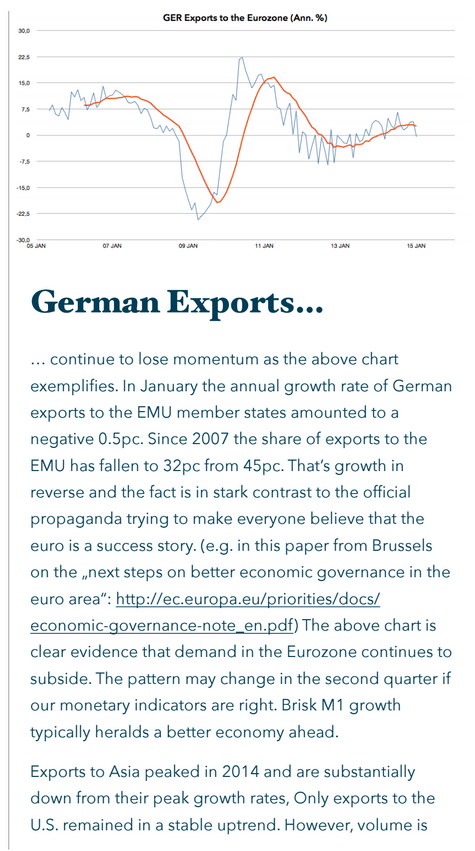
It’s the net exports, paid for by non residents selling their currency to buy euro to spend, that drives up the euro until the net exports cease and trade goes negative. And with the rigidities/J curve/etc. the move up could be extreme, with the ECB unable to dampen it due to ideological restrictions on fx purchases.

German private sector output increases at strongest rate in eight months

March 24 (Markit) — German private sector output increases at strongest rate in eight months () Germany Composite Output Index at 55.3 (53.8 in February), Services Activity Index at 55.3 (54.7 in February), Manufacturing PMI at 52.4 (51.1 in February), and Manufacturing Output Index at 55.4 (52.2 in February). Survey participants noted that a positive economic environment combined with strengthening demand from both domestic and foreign markets accounted for much of the rise in new orders. Manufacturers reported the sharpest rise in new export business for eight months in March. Panel members partly attributed this to a weaker euro.

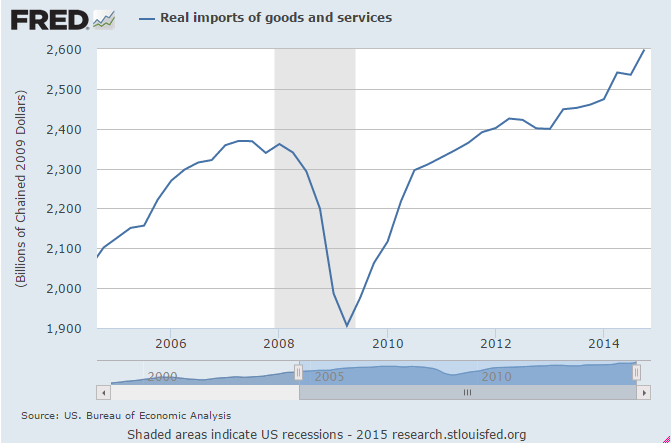
And the market of consequence for net exports is the US, where non petro imports continue their strong growth, with the strong dollar demand from portfolio shifting and speculators likewise having driven it to current levels that give the euro zone a cost advantage:

Italian-made version of iconic Jeep goes on sale in US

By Joseph Szczesny

March 23 (AFP) — US off-roaders seeking to rev up the four-wheel drive of a Jeep might soon find out that their American icon is made in Italy.

In a sign of what comes with the takeover of Chrysler by Italian giant Fiat, US auto dealers have begun selling the Italian-made Jeep Renegade.

Brisk exports a plus, but consumption key to full-blown recovery

March 24 (Nikkei) — Brisk exports a plus, but consumption key to full-blown recovery (Nikkei) “Production and exports are picking up,” State Minister for Economic and Fiscal Policy Akira Amari told a press conference. The index for transport equipment — including automobiles — rose 4% on the month, helped by increased shipments to the U.S. and Europe. The index for electronic parts and devices climbed 1.7% amid brisk exports to Asia. The ministry projects that the index for production machinery will drop 0.3% in February and 7.3% in March, and that the index for transport equipment will fall 1.6% and 0.5%.

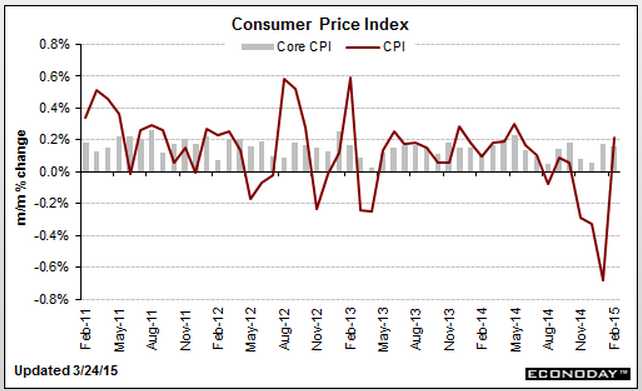
As expected, still below Fed’s targets:

Consumer Price Index

cpi-feb-table
cpi-feb-graph

Less than expected and looks to still be softening to me:

FHFA House Price Index
fhfa-jan-table
Highlights
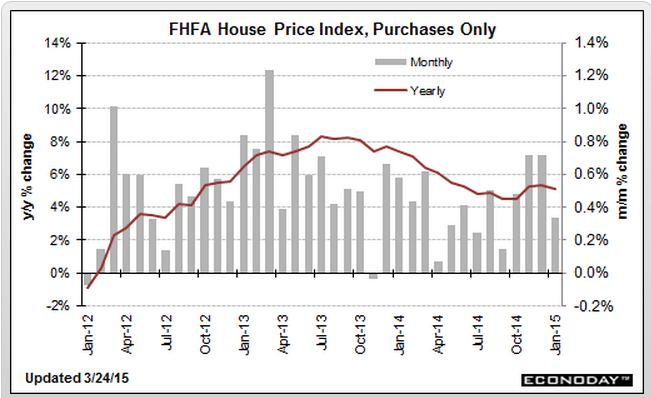
House prices continue to rise in January but at a slower pace. FHFA house prices advanced 0.3 percent, following a gain of 0.7 percent in December. Analysts projected a 0.5 percent gain for January. The year-ago rate came in at 5.1 percent, compared to 5.4 percent in December.

Regionally, six Census regions reported gains in January while three declined.

fhfa-jan-graph

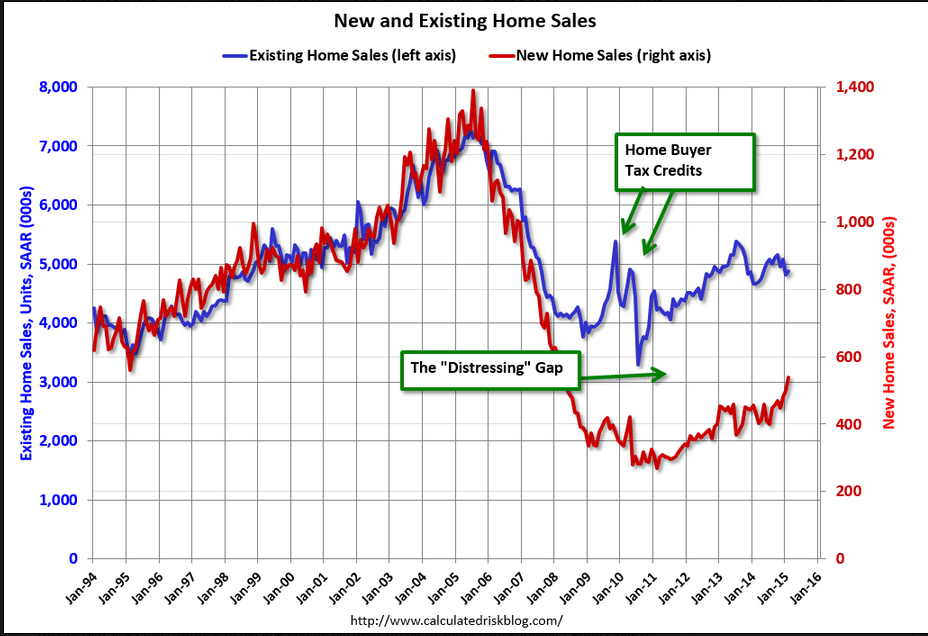
Better than expected, and only slightly suspect, and still severely depressed vs prior cycles even as the population has grown:

New Home Sales

new-home-sles-feb-table
Highlights
In a positive jolt out of the housing sector, new home sales picked up sharply in February to a 539,000 annual rate. Adding to the good news is a big upward revision to January, to 500,000 from 481,000. These are the first two 500,000 readings going all the way back to April and May of 2008.

The gain drew down what was already thin supply on the market, to 4.7 months at the current sales rate vs 5.1 and 5.3 months in the prior two reports. The current reading is the lowest since June 2013 and will undoubtedly encourage builders to expand construction. The lack of supply, however, did not lift prices where the median fell a sharp 4.8 percent in the month to $275,500. Sellers, in fact, seem to be giving price concessions with the year-on-year price up only 2.6 percent.

Looking at sales by region shows a big surge in the Northeast where, however, sales levels compared to other regions are very low. Sales in the Midwest, which is also a small region for new home sales, fell sharply in the month as they did in the West, a large region for sales that represents 23 percent of all sales. Sales, however, were very strong in the South, a region that makes up a whopping 59 percent of all sales and where sales are back to where they were in February 2008.
new-home-sales-feb-gaph

Lower than expected and not good:

Richmond Fed Manufacturing Index

richmond-fed-mar
Highlights
March has not been a good month for the Richmond manufacturing sector where the index fell into contraction, to minus 8 vs zero in February. Order readings, both for new orders and backlogs, are down substantially as are shipments and the workweek. Hiring, however, remains respectable, at least for now. Price readings show only the most marginal pressure.

The early signals from the regional manufacturing reports (that is this report together with last week’s Philly Fed and Empire State reports) are all showing weakness in orders, a trend also highlighted by this morning’s PMI flash where weakness in export orders is specifically cited. Just last week, the FOMC underscored weak exports as a major factor holding back economic growth.

PMI Manufacturing Index Flash

pmi-flash-mar
Highlights
The manufacturing sector has gotten off to slow start this year but may have picked up slightly in March, based at least on the PMI flash which is at 55.3, a 5-month high and vs 55.1 in final February and 54.3 in mid-month February. New orders are also at a 5-month high as rising domestic sales offset declining export sales and weak sales out of the oil sector. Output is at a 6-month high and employment at a 4-month high. Input costs are down for a 3rd straight month and output prices are rising at their slowest pace in 3-1/2 years.

The decline in export sales is of special note in this report which cites concerns among respondents that the dollar’s strength against the euro is hurting demand. Last week’s FOMC statement pointed to weak exports as a major factor holding down growth. This report in general has been running noticeably hotter than hard data from the government which have been no better than flat, if that, and which would correspond to a roughly 50 level for the PMI.

Chicago Fed, Existing home sales

More bad new, and, again consumption down even with lower gas prices:

Chicago Fed National Activity Index
chicago-fed-feb-table-2
Highlights
The economy has indeed gotten off to a slow start this year, confirmed by the national activity index which came in at minus 0.11 in February vs minus 0.10 in January. The 3-month average is now in negative ground, at minus 0.08 in February vs plus 0.26 in January.

The weakest component in February is for personal consumption & housing, at minus 0.17. The component for production-related indicators, at minus 0.07, is the second weakest. These readings offer tangible confirmation that both housing and manufacturing are pulling down economic growth.

But employment, importantly, continues to be the bright spot for the economy, at plus 0.11 with sales/orders/inventories fractionally positive at plus 0.02.

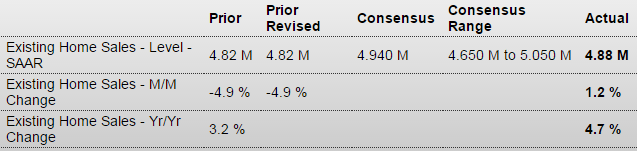
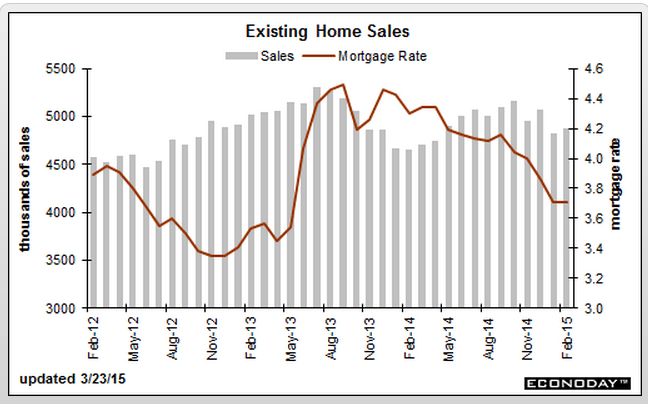
Also less than expected and depressed:

Existing Home Sales
existing-home-sales-feb
Highlights
Existing home sales bounced 1.2 percent higher in February to a 4.88 million annual pace which is above January’s 4.82 million but still isn’t that strong. The year, in fact, opens with the two weakest months for existing home sales since April last year. The year-on-year rate, however, is showing strength, at plus 4.7 percent in February for the strongest reading since October 2013.

The data are split between single-family homes and condos with the single-family component in front which is encouraging, up 1.4 percent to a 4.10 million pace and a year-on-year gain of 5.9 percent. The condo component was unchanged in February at 0.540 million for a year-on-year minus 3.6 percent.

The South is by far the largest region for total sales and rose 1.9 percent in February for a year-on-year plus 6.0 percent. The West and Midwest are the next largest regions with the Midwest unchanged in the month and up 4.9 percent year-on-year with the West up 1.9 percent in February for a year-on-year gain of 2.8 percent. February sales fell 6.5 percent in the Northeast, which lags in the distance in size. The year-on-year rate for the Northeast is plus 3.6 percent.

Existing homes on the market are still on the scarce side, at 4.6 months of supply and unchanged from January. A year ago, the rate was 4.9 months. Prices firmed in the latest report, up 2.5 percent to a median $202,600 and a respectable 7.5 percent ahead of a year ago. Note, however, that price data in this report are subject to volatility. Still the year-on-year reading is the best since February last year.

The housing market is soft though there are some signs of life in this report including the month’s gain for single-family sales. New home sales, like sales of existing homes, have also been soft and a decline is expected in tomorrow’s data.
existing-home-sales-feb-graph

Oil Price Drop Hurts Spending on Business Investments

By Nick Timiraos

March 22 (WSJ) — Business capital spending rose 6% last year due to gains from a broad base of U.S. industries. The drag from energy this year could cut that growth rate in half in 2015, according to Goldman Sachs. Moreover, equity analysts at the bank estimate capital spending globally by energy companies in the S&P 500 will fall 25%. Already, energy companies in the S&P 500 have announced about $8.3 billion in spending cuts. Excluding energy, capital spending will grow 4% for S&P 500 companies this year, says Citi.

Think of it this way- portfolios and speculators sold euro for dollars last year to people who sold dollars to buy euro to then make purchases from the EU, as the EU ran a trade surplus and the US ran a trade deficit.

So those euro that were sold were ‘reabsorbed’ by euro exporters who used them to pay expenses domestically, etc. as tight fiscal policy in the EU continued to keep euro in short supply.

That means the euro ‘aren’t there’ to be repurchased should the portfolios and speculators attempt to rebalance until they drive the euro high enough to reverse the trade flows.

;)

Lockhart on rate hikes

Huh?
Has he seen his own Atlanta Fed’s forecast?
Might make more sense to say no rate hike unless prospects improve…
;)

Fed’s Lockhart sees interest rate ‘liftoff’ by September

March 20 (CNBC) — Atlanta Federal Reserve President Dennis Lockhart said Friday he expects the U.S. central bank to raise interest rates at either its June, July or September policy meetings, barring a significant downturn in the U.S. economy.

atl-nowcast-3-20