EU growth, NY Fed consumer survey

A bit of growth in the EU supported by the low euro from the CB euro selling and consequent trade/current account surplus. However, without ECB euro selling the fundamentals will inevitably firm the euro until that growth component ceases. But meanwhile, watch for signs of ECB hawkishness:

Ever so slowly, the euro zone economy awakes

By Jeremy Gaunt

Jan 10 (Reuters) — Economic growth was running at an annual rate of 1.6 percent in the third quarter, roughly twice the average annual growth rate between 2003 and 2014 (itself dragged down by the sharp contraction of 2009). Unemployment has been falling fairly steadily. It was at 10.5 percent in November, which is high, but the lowest in more than four years and well below the 12 percent of 2013. In the first half of 2015, for example, big gun Germany’s export growth to China fell to just 0.8 percent and engineering exports shrank by 4.9 percent. Yet German gross domestic product (GDP) growth was running at 1.8 percent at last count even with the slide.

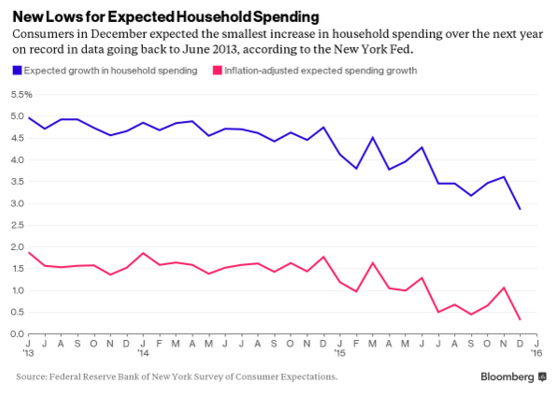
Latest from the NY Fed:
er-1-11-1
er-1-11-2

Consumer Credit, Jobs comments

This is going nowhere:

Consumer Credit
er-1-9-1
Highlights
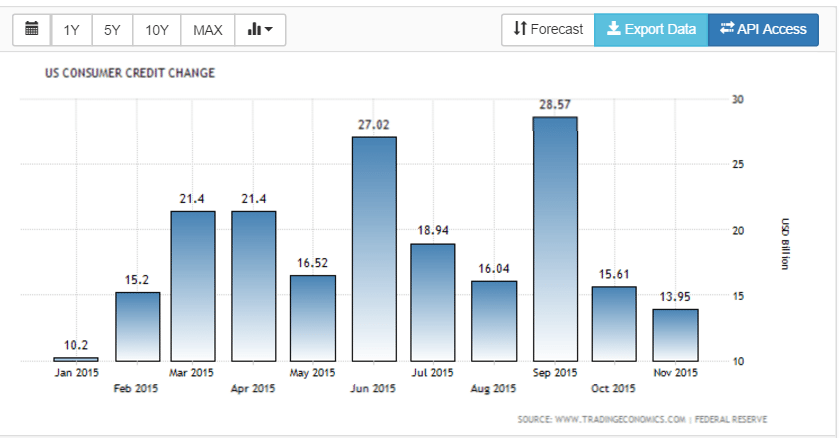
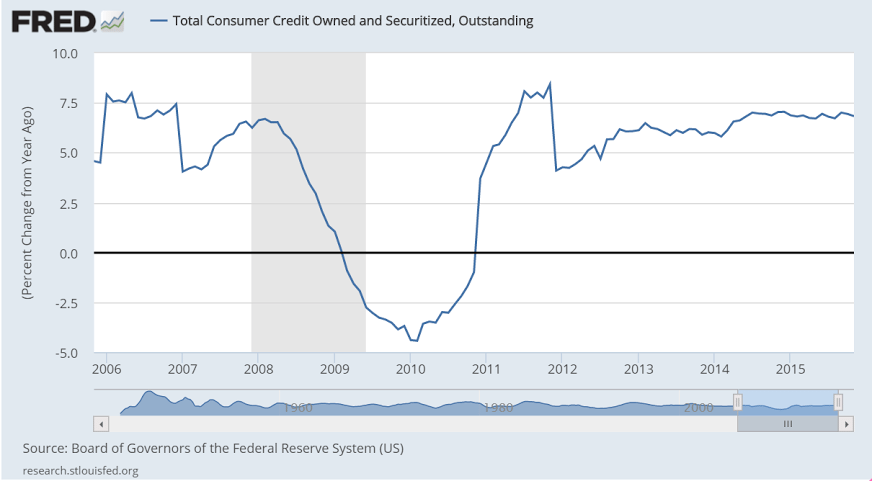
Revolving credit showed substantial life in November, up $5.7 billion and helping to boost total consumer credit by $14.0 billion. Nonrevolving credit, boosted by auto financing and student loans, has been the foundation of strength for this series during the whole recovery, but less so in November when it added only $8.3 billion for the smallest contribution since February 2012. But it’s the gain for revolving credit, growing at an annualized 7.4 percent in the month, and the implication for credit-card use that are important for what to expect in holiday spending. The results here are positive.

Consumer credit in the United States increased by 13.95 USD billion in November of 2015, lower than a downwardly revised 15.61 USD billion in October and below market expectations of a 18.25 USD billion gain. Revolving credit rose by 5.65 USD billion, following an upwardly revised 0.65 USD billion in October while nonrevolving credit slowed to 8.29 USD billion from 15.55 USD billion.

er-1-9-2
er-1-9-3

The jobs report looks suspect to me. For one thing, with GDP growth way down, and little if any top line corporate growth, why the hiring? That is, if the numbers are not revised, it means productivity is running negative- more jobs for the same output.
er-1-9-4

The December jobs report is not necessarily indicative of a strong economy in the U.S., Art Cashin of UBS said Friday.

“Not to be a wet blanket, but that jobs number is a little suspect. If you look at the household survey: 485,000 [and] 35 percent of those went to people under the age of 19. Another chunk went to people over 55; only 16,000 out of 485,000 jobs went to people between the ages of 24 and 55,” Cashin told CNBC’s “Squawk Alley.”

“That sounds like a lot of part-time hiring to me,” he said

Merrill: Warm Weather “added nearly 100,000 jobs in December”

Jobs, Wholesale trade, China, Rail traffic

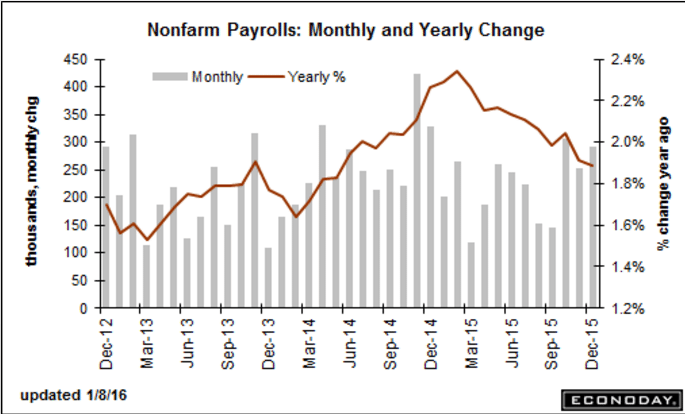
Anyone notice that the annual growth rate of employment continues the deterioration that began with the collapse in oil capex?
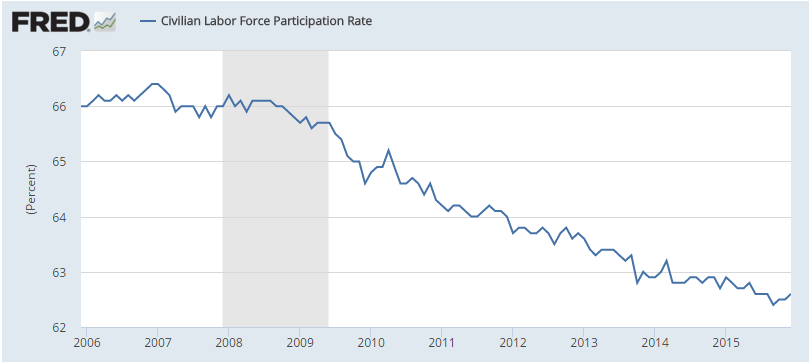
Or that, once again, it looks like most all the new jobs were taken by people previously considered out of the labor force?
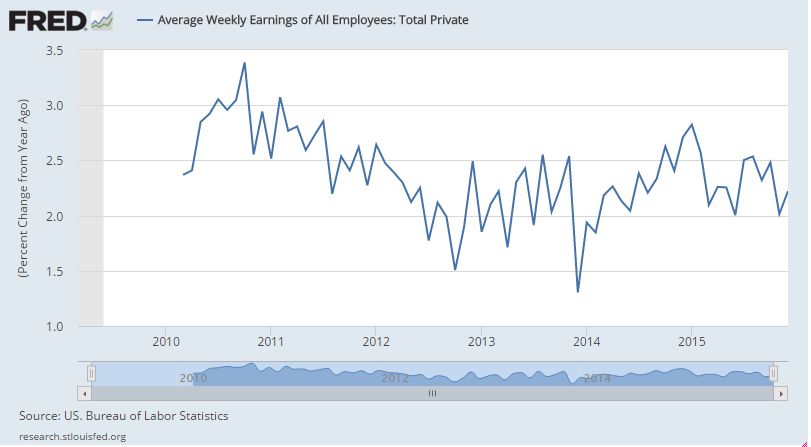
And the anemic wage growth also contributes to the narrative of a continuously deteriorating plight for people trying to work for a living:

Employment Situation
er-1-8-1
Highlights
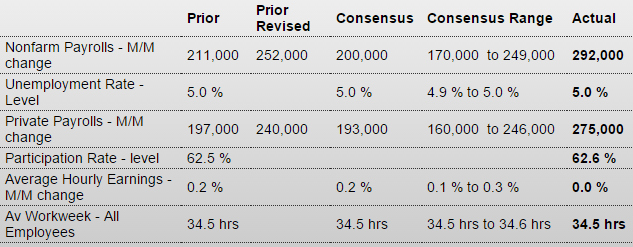
The labor market is stronger than most assessments with December results well outside top-end estimates and big upward revisions underscoring the strength of prior months. Nonfarm payrolls jumped 292,000 in December which is 92,000 above the consensus and 43,000 above Econoday’s high forecast. The gain importantly is led by professional & business services which is considered a leading component for future hiring and which rose 73,000 for the second outsized gain of the last three months. Construction, boosted by the nation’s unseasonable weather, has also been adding workers, up 45,000 in December. Upward revisions to the two prior months total 50,000 with November now at 252,000 and October over 300,000 at 307,000.

Despite payroll strength, the unemployment rate held steady at 5.0 percent as more people looked for work in the month. The labor force participation rate improved 1 tenth to 62.6 percent as did the employment-to-population ratio, to 59.5 percent. Wages, also despite the payroll strength, came in unchanged though the year-on-year rate, boosted by an easy year-ago comparison, rose 2 tenths to 2.5 percent which, however, is lower than many expected. The average workweek held unchanged at 34.5 hours while manufacturing hours slipped 0.1 percent which will pull down estimates for next week’s industrial production report.

Turning back to industry payrolls, the bureau of labor statistics is highlighting a 34,000 rise in temporary help services. This is a subcomponent of professional & business services and is considered an especially sensitive barometer for future hiring. Other industries posting gains include trade & transportation at 31,000, government at 17,000, and manufacturing at a modest 8,000. Mining payrolls, hurt by low commodity prices, continue to contract, down 8,000 and are one of the few industries in the minus column.

This report is strong and should confirm confidence that the U.S. economy is, or at least was in December, largely insulated against global weakness. The strength of this report is certain to grab global attention though the lack of wage punch underscores the two-track economy and the Fed’s dilemma — strong job growth but weak inflation.
er-1-8-2
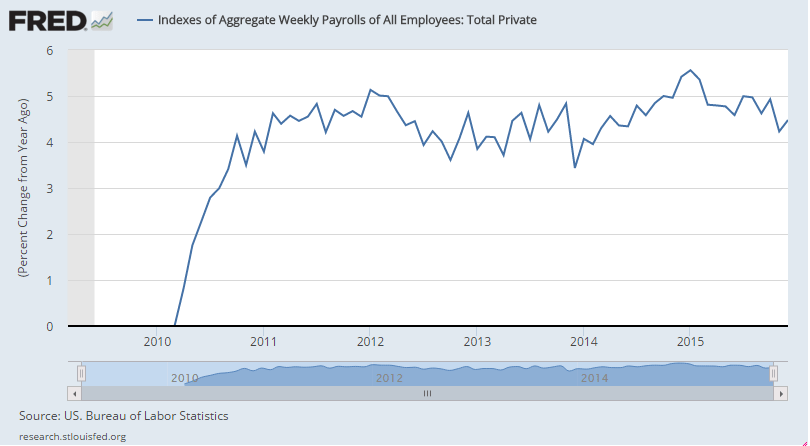
Also decelerating since the oil capex collapse:
er-1-8-3
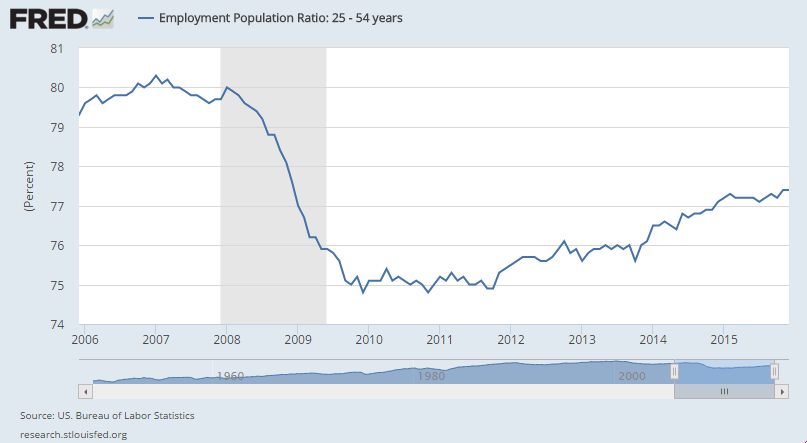
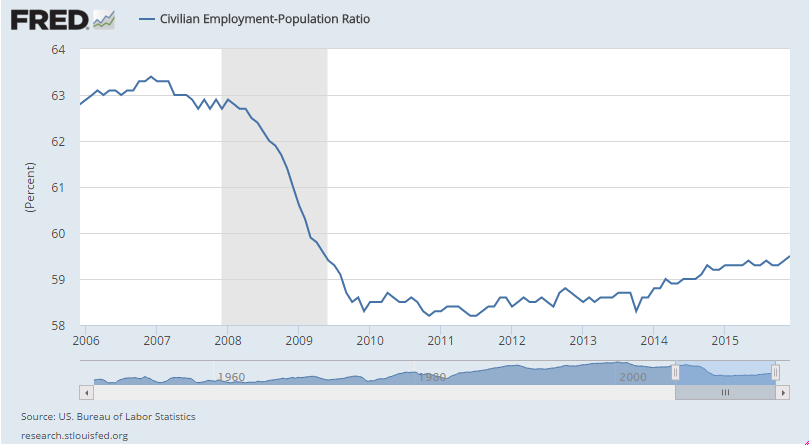
So 10 million + people decided all at once they didn’t ever want to work anymore in 2008? That is, we still have massive ‘slack’ in the ‘labor market’ best I can tell:
er-1-8-4
er-1-8-5
er-1-8-6
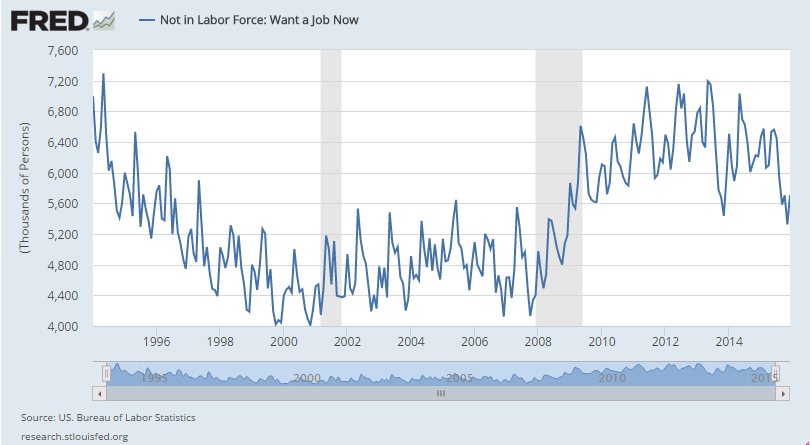
And this is still higher than it was in the prior recession:
er-1-8-7
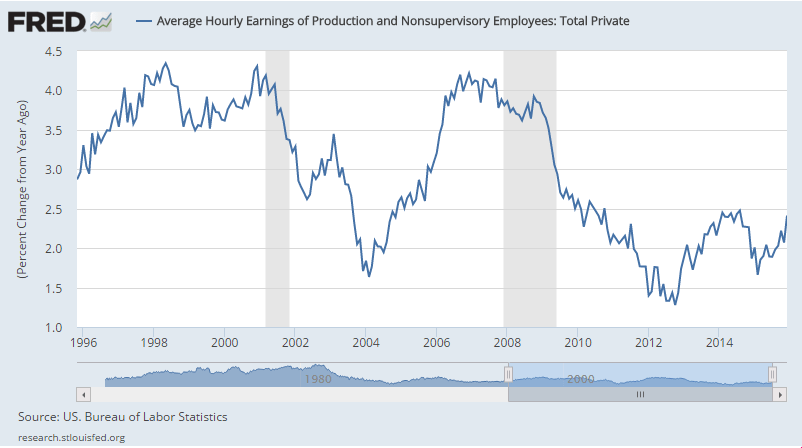
Earnings continue to grow only at depressed rates, maybe because of all the ‘slack’ in the ‘labor market?’
er-1-8-8
er-1-8-9
Inventories fell, but sales fell even more, so the inventory to sales ratio went up.
Not good!!!

Wholesale Trade

er-1-8-10
Highlights
Wholesale inventories fell a sizable 0.3 percent for a second straight month in November. Sales at the wholesale level fell an even sharper 1.0 percent in the month and, despite the decline in inventories, drove the stock-to-sales ratio up to 1.32 vs 1.31 in the two prior months. A year-ago, the ratio was at 1.23 in what is confirmation that inventories in the sector remain heavy. Inventories of farm products and petroleum rose due to weak sales while inventories of furniture and metals fell on strong sales. Previously released data on the factory sector show a 0.3 percent inventory contraction in November. The missing piece, retail inventories, will be posted following next week’s retail sales report.
er-1-8-11
‘Monetary Policy’ in this case means currency management. So we called China a currency manipulator and predator when they bought fx reserves to keep their currency from getting too strong too fast from FDI flows, etc., and then when they let their currency float as FDI flows reversed we criticized them.

And we had a ‘strong dollar policy’ while at the same time telling China their currency needed to appreciate when they were buying fx to moderate the appreciation. It’s all be continuous ‘talking out of both sides of the mouth’

And with a large trade and current account surplus it’s only a matter of time until China is again accumulating fx reserves to keep their currency from appreciating. But in light of the current criticism of their weakening currency, maintaining ‘stability’ when it’s back in appreciation mode may be applauded.

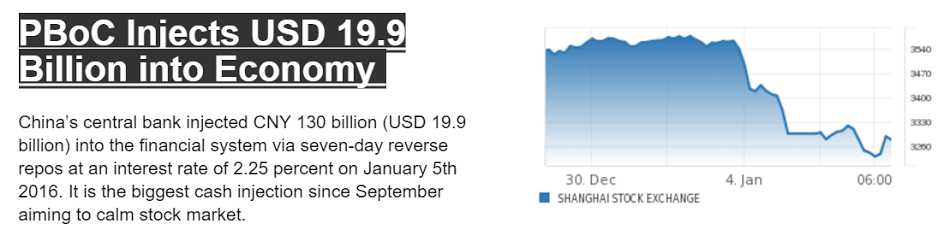
China central bank to maintain prudent monetary policy, keep yuan stable

ECB comment, Retail Sales, Fed Atlanta, Oil comment

Seems there’s no wisdom on the topic of ‘money’ anywhere of consequence:

No ‘plan B’ for ECB despite still low inflation: Praet

Jan 6 (Reuters) — Executive Board member Peter Praet said various factors, notably low oil prices and less buoyant emerging economies, meant it was taking longer to reach the goal of inflation of close to but below 2 percent. “We need to be attentive that this shifting horizon does not damage the credibility of the ECB,” he added. “There is no plan B, there is just one plan. The ECB is ready to take all measures necessary to bring inflation up to 2 percent. If you print enough money, you get inflation. Always. If, as is happening now, the prices of oil and commodities are tumbling, then it’s more difficult to drive up inflation,” he said.

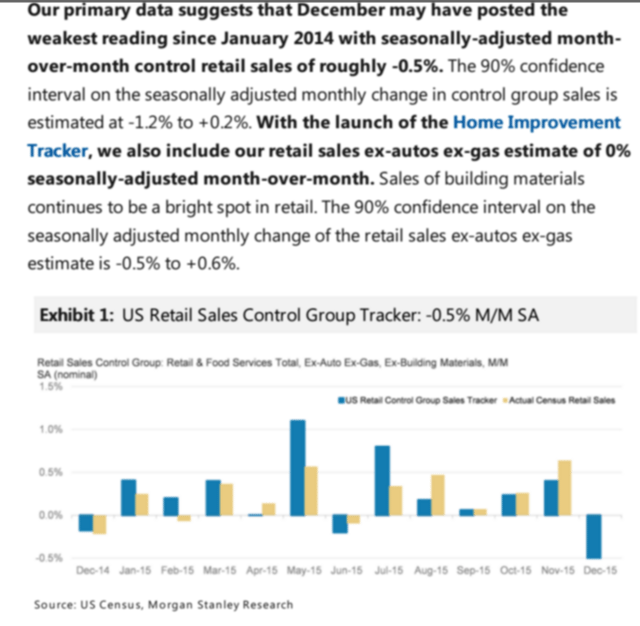
From Morgan Stanley:

er-1-7-1

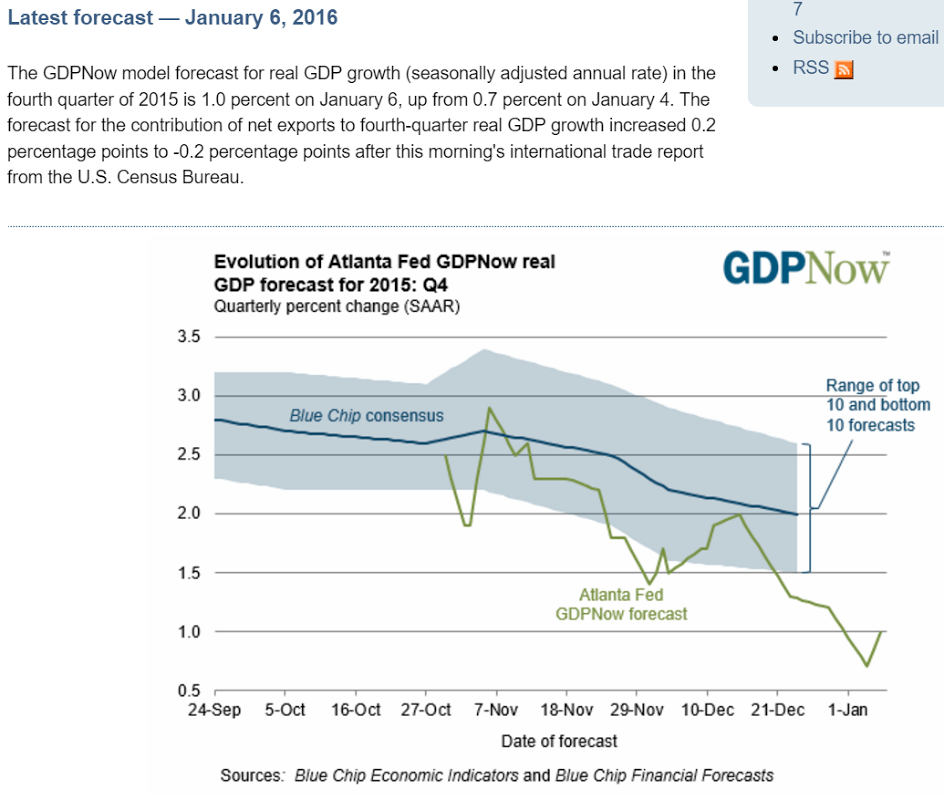
Up to 1% for Q4 on the trade number, which is subject to revision.

And DB is forecasting +.5%.
er-1-7-2
The still don’t seem to understand it’s only about pricing, not quantity:

Brent Crude Oil Drops Below $35

World’s benchmark oil fell by more than 4.8% to below $35 a barrel around 9:30 AM NY time, extending a third consecutive day of losses. It is the lowest price since 2004 as oversupply worries increased as tensions between Saudi Arabia and Iran diminish chances of major producers cooperating to cut production.

Not to forget their models use the oil futures prices, which express storage charges, as indications of future spot prices, and that this ‘rookie error’ tends to inflate their inflation forecasts:

A number of members commented that it was appropriate to begin policy normalization in response to the substantial progress in the labor market toward achieving the Committee’s objective of maximum employment and their reasonable confidence that inflation would move to 2 percent over the medium term.

However, some members said that their decision to raise the target range was a close call, particularly given the uncertainty about inflation dynamics, and emphasized the need to monitor the progress of inflation closely.

Saudi pricing, Mtg purchase apps, ADP, Trade, Factory orders, ISM non manufacturing

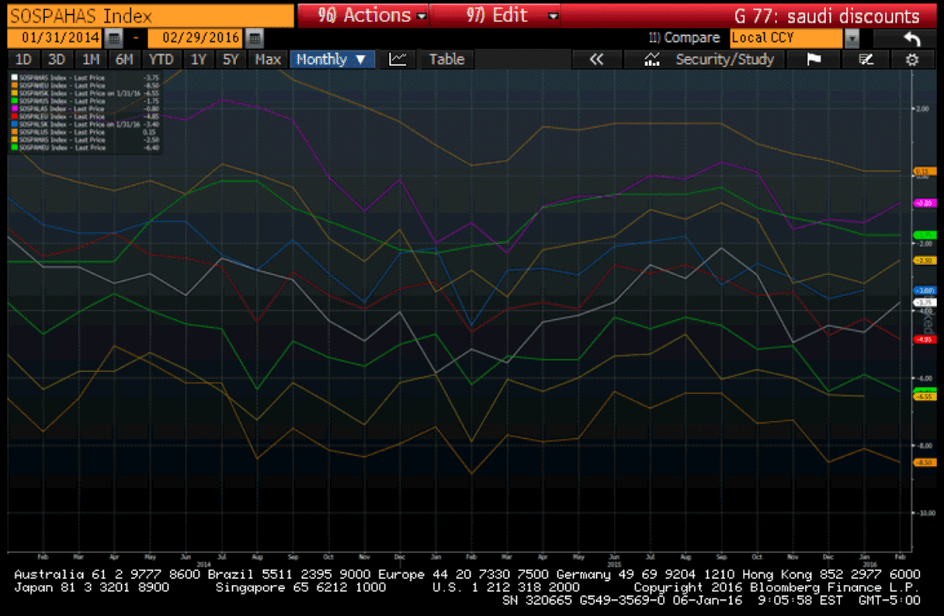
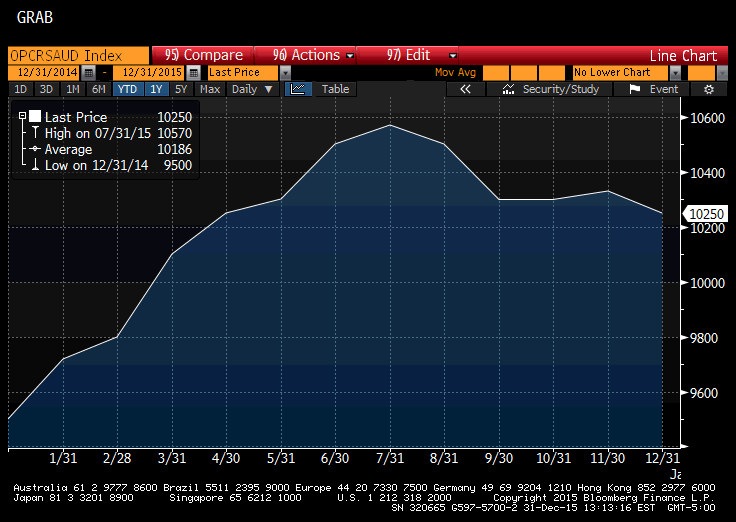
Saudi discounts for February. Some reduced, some increased, so probably more same- prices fall until Saudi output hits its capacity:
er-1-6-1
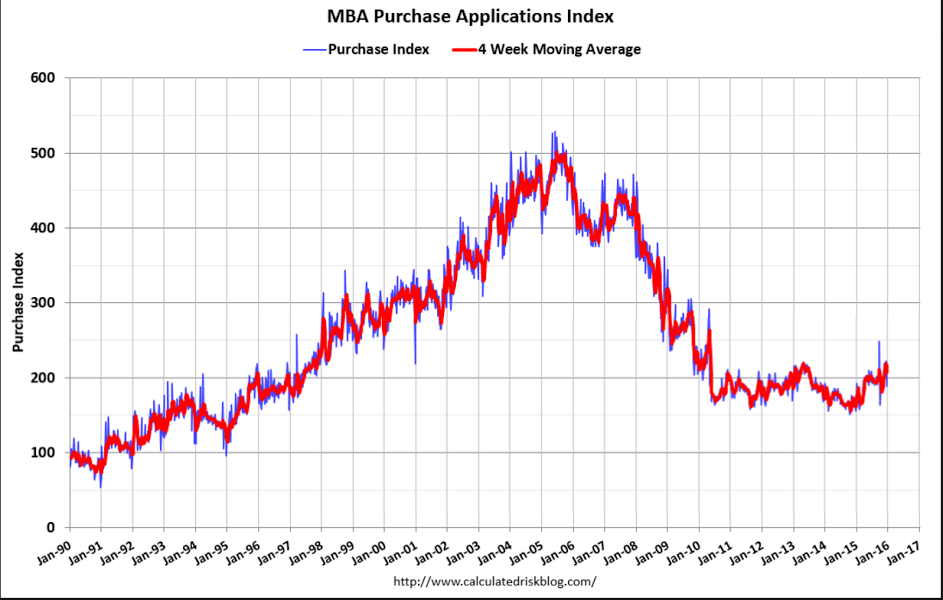
Zig zagging a lot recently, now back down to where they’ve been for a while:

MBA Mortgage Applications
er-1-6-2
Highlights
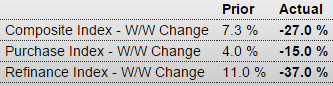
Mortgage application activity fell sharply in the two weeks ended January 1, down 15 percent for home purchases and down 37 percent for refinancing. Rates were steady in the period with the average 30-year mortgage for conforming balances ($417,000 or less) up 1 basis point to 4.20 percent. Weekly data can be volatile during the shortened holiday weeks, making the latest results difficult to read. This series will resume its weekly periods beginning next week.
er-1-6-3

This is a forecast for Friday’s jobs report:

ADP Employment Report
er-1-6-4
Highlights
ADP is calling for unusual strength in Friday’s employment report, at 257,000 for private payrolls which is far outside Econoday’s consensus at 190,000 and well outside the high estimate for 227,000. Strength of this degree would underscore the health of the labor market and would begin to seal expectations for a rate hike at the March FOMC. ADP isn’t always an accurate barometer for the employment report but today’s results could definitely affect the markets.

A bit smaller than expected, but again, both imports and exports are falling:

International Trade
er-1-6-5
Highlights
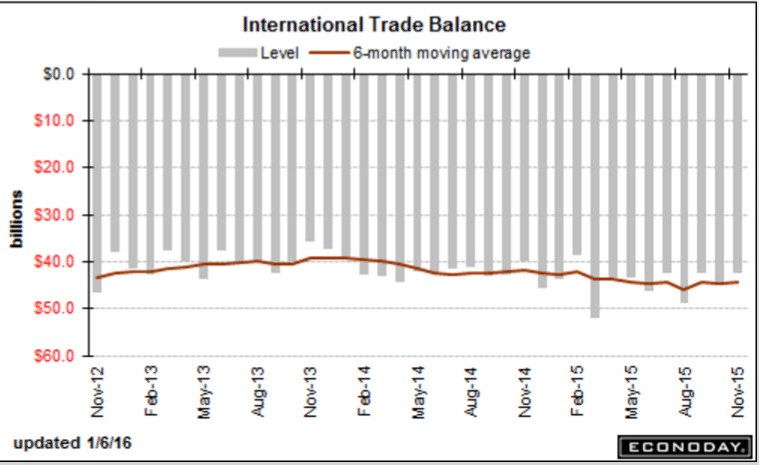
The nation’s trade balance, reflecting weak cross-border activity, narrowed in November to $42.4 billion from a revised $44.6 billion in October. Exports fell 0.9 percent in the month to $182.2 billion with industrial supplies and consumer goods showing the most weakness. Imports fell 1.7 percent to $224.6 billion with both consumer goods and capital goods showing declines.

Despite low oil prices, the petroleum gap widened by $0.9 billion to $5.4 billion due to rising demand. The price of imported oil fell 88 cents to $39.24 for the lowest level since February 2009.

The trade gap with China narrowed by $1.7 billion in the month to $31.3 billion while the gap with Europe widened by $0.4 billion to $13.8 billion. The gap with Mexico narrowed by $1.2 billion to $5.2 billion.

The nation’s fourth-quarter trade balance adjusted for inflation is still trending slightly above the third-quarter which will pull down GDP. But the takeaway from today’s report is slowing global trade.
er-1-6-6

Negative growth continues here:

Factory Orders
er-1-6-7
Highlights
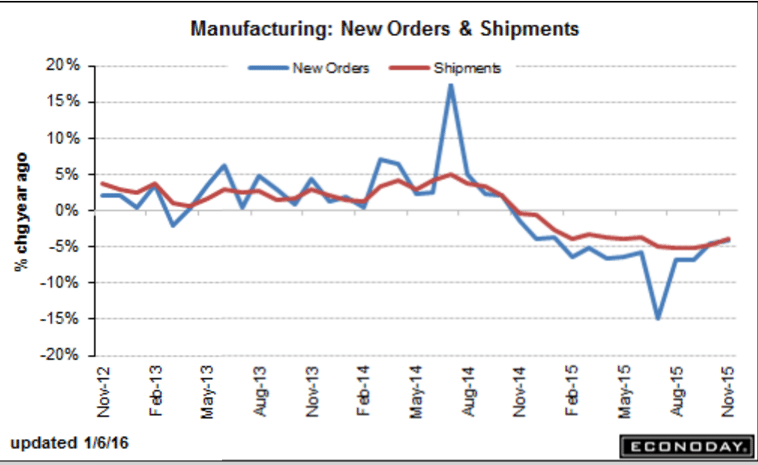
Flat is a good description of the nation’s factory sector as factory orders slipped 0.2 percent in November, making October’s revised 1.3 percent gain look like a rare outlier. Durable goods orders were unchanged in the month while orders for non-durable goods fell 0.4 percent on price weakness for petroleum and coal.

Capital goods data, unfortunately, are mostly weak including a 0.3 percent decline for core orders. Shipments of core capital goods fell 0.6 percent in November and follow October’s 1.0 percent decline in readings that will pull down the business investment component of the fourth-quarter GDP report.

Outside of orders, total shipments edged 0.2 percent higher to end a string of declines that go all the way back to July. Inventories also offer good news, falling 0.3 percent and bringing down the inventory-to-shipment ratio to a less heavy 1.35 vs October’s 1.36. Unfilled orders are another positive, rising 0.2 percent following a 0.3 percent gain in October.

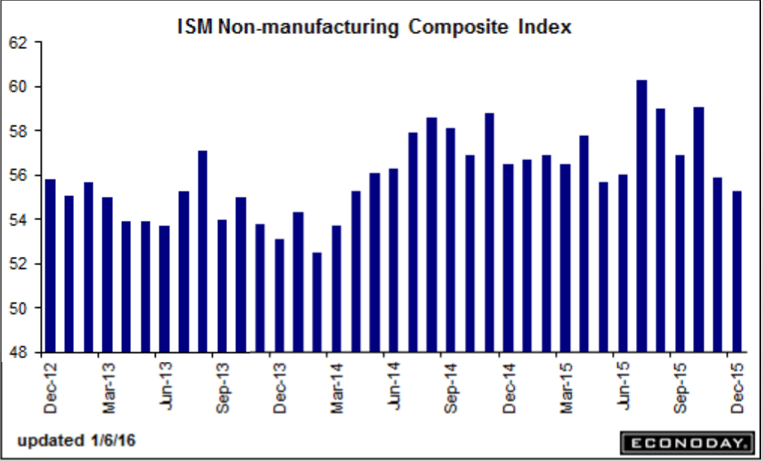
The factory sector is not exactly robust, the result of weak demand for U.S. exports and also weakness in the domestic energy sector reflected in this report by a 13.6 percent monthly plunge in orders for mining & oil field machinery. But the nation’s economy is not narrowly focused on the factory sector, evidenced by healthy readings in today’s ISM non-manufacturing report.

er-1-6-8
Yes, it’s above 50, but the chart indicates the non manufacturing growth rate is melting away:
er-1-6-9

Bank of China, Port traffic, Redbook retail sales, Car sales early indication

This does nothing apart from supporting their policy rate:
er-1-5-1

Port Traffic Grew at Slowest Rate Since Recession in 2015

Container traffic rose only 0.8% last year at the 30 busiest ports worldwide, the smallest increase since 2009, according to an estimate by Alphaliner

By Robbie Whelan

Jan 4 (WSJ) — Container traffic at the world’s busiest ports grew last year at its slowest rate since the recession, according to an estimate by Alphaliner, a shipping industry data provider.

Demand was held back by a lack of “peak season,” the months heading into the holidays when manufacturers normally ship large quantities of goods to retailers globally. This year, traffic in the top 30 ports sank 0.9% in the third quarter, the first decline over those months since 2009, Alphaliner said.

For the full year, Alphaliner projects container traffic rose 0.8%, the smallest increase since 2009. Weak demand has left carriers struggling to find customers to fill their ships, even as new vessels hit the seas at a record pace. Last year, ships with a combined capacity of 1.7 million twenty-foot containers entered the global fleet. To combat the lower ocean freight rates resulting from excess capacity, ship owners and operators have idled more than 1.3 million TEUs of capacity.

Doing better as year over year comps get easier:
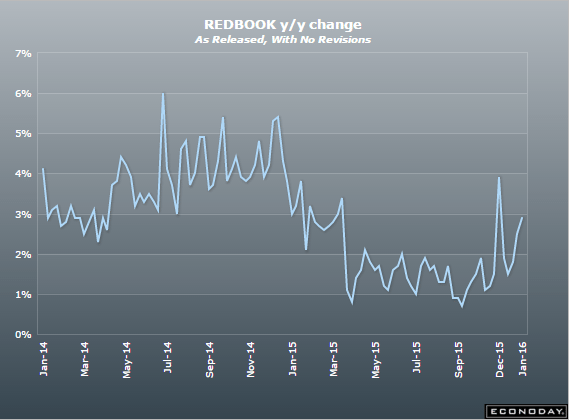
er-1-5-2

The Big Three are in and December sales are running below expectations down about 5 percent from November vs expectations for a 1 to 2 percent decline. Car sales are especially weak with sales of light trucks down only slightly. The Big Three account for roughly half of all sales. Foreign brands will be posting their results through the session.

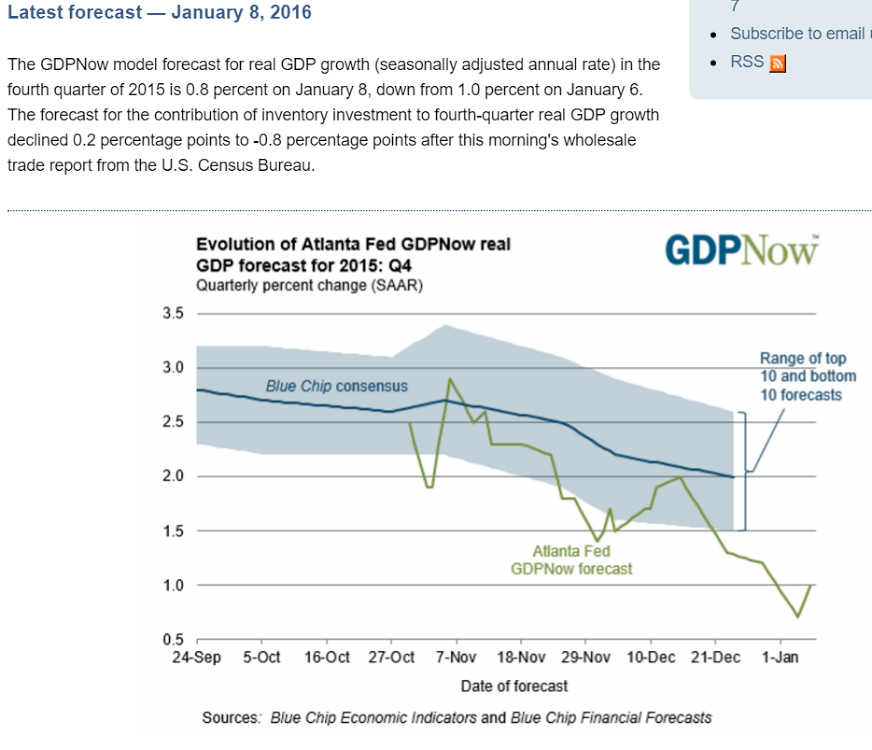
Fed Atlanta Q4 GDP forecast is +.7%

Down to only .7% for Q4 GDP forecast. JPM went down to 1% today as well.

It’s a bit below the DC Fed’s 3%+ forecasts earlier in the year, when the lower price of oil was presumed to be an unambiguous positive for growth, further supported by the massive monetary stimulus of near 0 rates and trillions of QE.

And a bit below their latest, similar forecasts of a couple of weeks ago when they judged the economy ‘solid’ and raised rates.

er-1-4-6

Posted in GDP

PMI Manufacturing, ISM Manufacturing, Construction Spending, Canada PMI, China Manufacturing PMI

Bad:

PMI Manufacturing Index
er-1-4-1
Highlights
The manufacturing PMI has been consistently running warmer than other manufacturing surveys which helps put into context the disappointment of December’s slowing to 51.2, down from 52.8 in November. The final reading for December is 1 tenth lower than the mid-month flash. Near stagnation in new orders is a key negative in the report, one that points to further slowing for the headline index in coming readings. Orders are still growing but at their slowest pace of the recovery, since September 2009. Backlog orders are contracting sharply, the most since September 2009 as well. The report points to widespread weakness across orders including for export orders where manufacturers continue to site strength in the dollar as a negative.

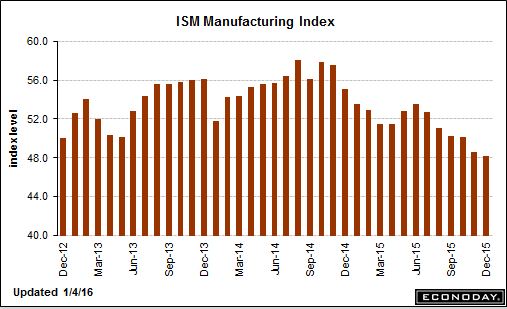
Very bad, employment down, but export orders did manage a bounce:

ISM Mfg Index
er-1-4-2
Highlights
ISM manufacturing sample is reporting the weakest conditions since July 2009. At 48.2, December is much lower than Econoday’s 49.2 consensus and is only the third sub-50 reading of the recovery. But the story is much the same as it was in November which came in at 48.6 with both months showing slight contraction underway for both new orders and production. Employment in the sample, however, is noticeably weaker than November, at 48.1 for a more than 2 point decline and the second sub-50 reading in the last three months. A sizable 4.5 point rise for new export orders to 51.0 is a positive in the report. Inventories are steady and low but the sample still say inventories are a little bit high which betrays caution in their outlook. Prices for raw materials continue to contract, a reminder that low oil and commodity prices are making it difficult for the Fed to reach its 2 percent inflation target. This report points to ever softer conditions for a sector that, held down by energy and weak foreign demand, showed very little life during 2015.
er-1-4-3

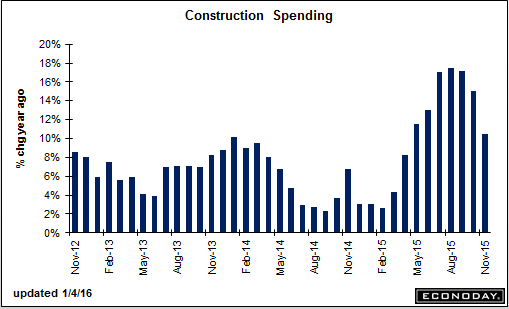
And more bad. Note the ‘processing error’ which resulted in reductions to prior months. As suspected, things have been worse than reported ever since the collapse in oil capex a little over a year ago. And as the chart shows, the blip up as the NY tax credit expired in June continues to reverse:

Construction Spending
er-1-4-4
Highlights
Construction spending had been a highlight of the U.S. economy but less so with November’s report where the headline fell 0.4 percent, far below the Econoday consensus for plus 0.7 percent. The year-on-year gain for spending, at 10.5 percent, is the lowest since April last year. Today’s report also includes sharp downward revisions to prior months, the result of a processing error going back to January last year. October’s initial 1.0 percent monthly gain is now cut 7 tenths to 0.3 percent while September is now at plus 0.2 percent vs an initial plus 0.6 percent.

The processing error, unfortunately for the housing outlook, is centered in the residential component where prior strength has been cut back. Still, residential spending rose 0.3 percent for a second month in a row that follows September’s very solid 1.2 percent gain. Spending on new single-family homes has been rising strongly with the year-on-year rate at a very solid plus 9.3 percent. Spending on multi-family homes did fall in November but has been in fact booming in prior months, up 24.5 percent year-on-year.

Spending on nonresidential construction has also been solid, down in November but with the year-on-year rate at plus 13.6 percent. Public spending has been led by the educational component, up 15.2 percent year-on-year, with highway spending behind at plus 5.6 percent.
er-1-4-5

Canada Manufacturing PMI at Record Low

Jan 4 — The RBC Canadian Manufacturing PMI dropped to 47.5 in December of 2015 from 48.6 in the previous month. It is the fifth contraction and the lowest reading on record due to weak output, new orders and employment.

China Caixin Factory Activity Contracts for 10th Month

Jan 4 — The Caixin Manufacturing PMI in China dropped to 48.2 in December of 2015 from 48.6 in November and below market expectations. While the reading was the lowest in 3 months, factory activity has been in a contraction since March. Production declined for the seventh time in the past eight months, driven in part by a further fall in total new work. Client demand was weak both at home and abroad, with new export business falling for the first time in three months. Manufacturers continued to trim their staff numbers and reduce their purchasing activity in line with lower production requirements. Meanwhile, deflationary pressures persisted, as highlighted by further marked declines in both input costs and selling prices.

Saudi production

The Saudis post prices and let their clients buy all they want at the posted prices.

So their policy has been to discount the price of their oil vs benchmarks until their sales increase to meet their production capacity, which is reportedly 12 million bpd.

That means the price goes low enough to cause other suppliers to cut back, such as US shale producers, which translates into higher Saudi sales and output. Or demand has to increase.

Seems they haven’t made much progress so far, as the discounting policy continues:

sg2015123147596

Chicago PMI, Jobless claims

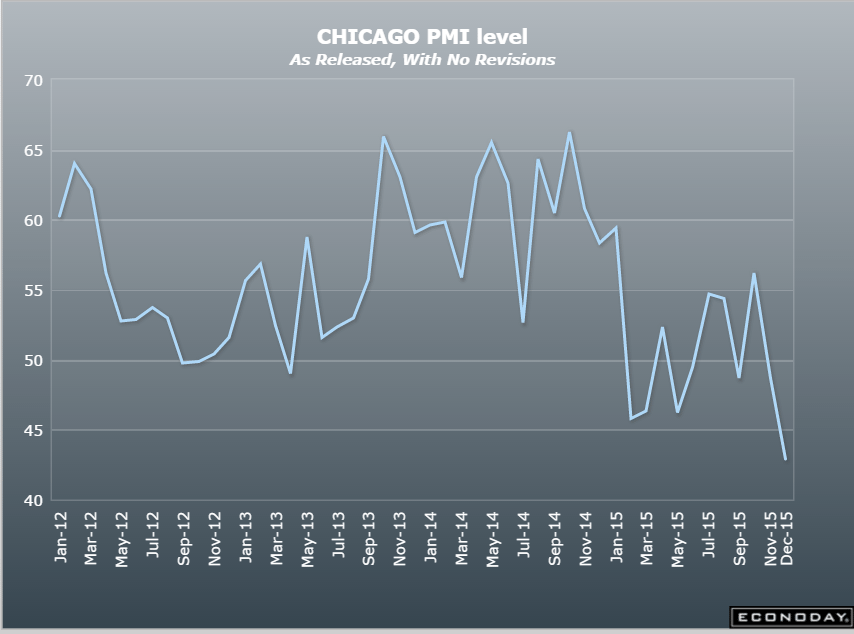
Way below consensus and way bad:

Chicago PMI
er-12-31-1
The Chicago Business Barometer contracted at the fastest pace since July 2009, falling 5.8 points to 42.9 in December from 48.7 in November

There was also ongoing weakness in New Orders, which contracted at a faster pace, to the lowest level since May 2009. The fall in Production was more moderate but still put it back into contraction for the sixth time this year. The Employment component, which had recovered in recent months, dropped back below the 50 neutral mark in December, leaving it at the lowest since July.
er-12-31-3

Jobless Claims
er-12-31-2
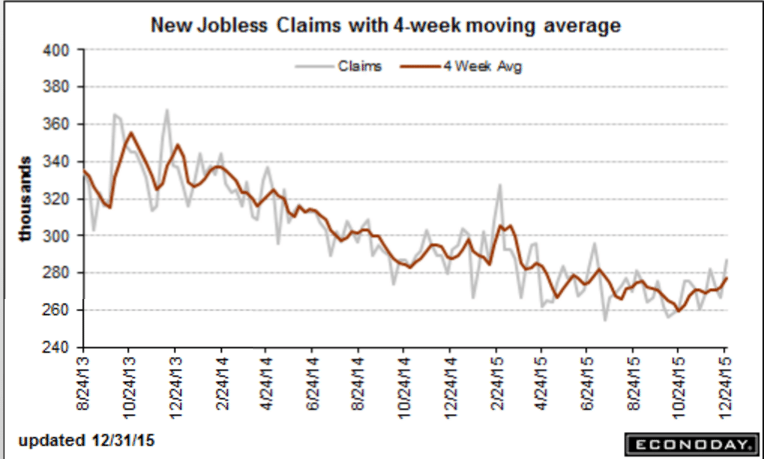
Highlights
Initial jobless claims unexpectedly jumped 20,000 to 287,000 in the December 26 holiday week, the highest level since the July 4 holiday week. The Econoday consensus expected an increase of 3,000 to 270,000. The 4-week moving average was up 4,500 to 277,000 in the December 26 week, the highest since the July 18 week. The level of continuing claims increased 3,000 to 2.198 million in the December 19 week. The seasonally adjusted insured unemployment was unchanged at 1.6 percent in the December 19 week. It should be noted that readings in this report can be volatile during the holiday weeks.
er-12-31-4

HNY!