Macroeconomic Review


[Skip to the end]

Briefly, in mid 2006, I had written that the Fed’s financial obligations ratios suggested that the federal deficit had gotten too small to sustain the kind of growth we’d been seeing, and that aggregate demand would moderate until the economy got weak enough to get the federal deficit to probably about 5% of GDP as had been the case in most previous cycles.

And, at the same time, rising crude prices due to monopoly pricing power would drive up CPI.

I had also thought the Fed would keep rates steady or increase them as inflation expectations rose, and that the higher interest rates would further drive up CPI and support incomes through the interest income channel as the non government sectors are large (equal to the size of the outstanding Treasury securities) net savers.

GDP growth did start declining and CPI did start climbing, as did inflation expectations. However I was wrong about the Fed’s reaction as they cut rates long before CPI peaked. Ironically they made the right move regarding inflation, but the rate cuts did remove interest income and contribute to the decline in aggregate demand. The Q2 08 fiscal package more than offset that, however, and real GDP remained positive for the first half of 08.

The end of the fiscal package coincided with the Great Mike Masters Inventory Liquidation which was larger than I had ever imagined, lasting to year end, and driving GDP to unheard of post war negative numbers, particularly in the housing sector.

By year end the rapid increase in unemployment and the decline in tax revenues combined to increase the federal deficit to over 5% of GDP, boosting the USD net financial equity of the monetary system and slowing the decline of personal income to the point of ending the inventory liquidation and reversing the decline in the rate GDP some time during Q1.

Q2 GDP is currently looking to be somewhere near flat and maybe positive, with housing slowly on the mend as well, and with inventories starting from extremely low levels.

My proposals for fiscal policy once the inventory liquidation was in progress were the payroll tax holiday, revenue sharing for the states, and funding a job for anyone willing and able to work that included health care. This would have eliminated the need for unemployment to rise and GDP to fall as the means of restoring the federal budget deficit to levels necessary to sustain output and employment.

All with the caveat that energy prices would resume their climb as soon as stability was restored if there was not a credible plan in place to immediately cut US domestic crude oil consumption.

The Obamaboom is now underway due to the ‘automatic stabilizers’ described above, and the additional fiscal adjustments are now kicking in as well. Unfortunately we got here that ugly way, via rising unemployment and falling taxable incomes- a real and tragic cost that is, sadly, water under the bridge.

And, unfortunately, our crude consumption has dropped only modestly and is already increasing as GDP stabilizes, even at current levels of unemployment. As a consequence, crude prices are headed north again, and will support headline and eventually core CPI through the cost structure, as cost push ‘inflation’ resumes after pausing for the inventory liquidation. While off of last year’s highs, food prices are now rising from levels that are about double those of a few years ago and crude prices nearly triple earlier levels.

The US fiscal expansion is also likely to drive imports, with rising crude prices increasing the US import bill as well.

This keeps a lid on domestic employment as unemployment remains high and real wages stagnate, meaning increases in real consumption and wealth due to productivity increases and (some) employment gains necessarily flow to the ‘top.’

It also means US dollars will be ‘easier to get’ overseas which puts downward pressure on the USD. The Fed and Administration is prone to look at this as a ‘good thing’ as they view increased ‘competitiveness’ that drive increased exports ‘necessary’ to ‘balance the trade account.’

For the real economy, rising prices of imports while nominal wages are contained decreases real standards of living as workers use up their take home pay on food and energy and export a greater share of their output rather than consume it. This is what happens with an administration that doesn’t understand that exports are real costs and imports real benefits.

The Fed will soon be looking at sub trend GDP, unacceptably high unemployment, a falling dollar, rising headline CPI and rising inflation expectations.

Recent history says they will keep rates low as long as they perceive an continuing output gap.

The administration will see the same data and be hesitant to blame the Fed for inflation, for fear of triggering higher interest rates.

Ironically, this disturbing scenario is currently a historically a near ideal environment for nominal equity prices, so the administration will also be seeing increasing wealth in the financial sectors, at the senior management level, and in the investor classes in general, while pondering what to do about unemployment in the face of rising inflation.


[top]

2009-05-08 UK News Highlights


[Skip to the end]

This highlights my macro themes.

Highlights

U.K. Producer Prices Increase Most in 10 Months

Rising crude prices driving up CPI.

U.K. Homebuyers Bet Property Recovery to Be Illusory

No one believes fiscal policy works.

Julius Says BOE Risks Woes of ‘Love Affair’ By Printing Money

Everyone is afraid ‘quantitative easing’ has ramifications beyond dropping targeted rates a few basis points.

U.K. Income Gap Reaches Widest in Five Decades, Researchers Say

The income gap will only get wider with the recovery as unemployment keeps real wages in check and the real wealth flows upward.


[top]

Posted in UK

2009-05-08 USER


[Skip to the end]

Karim writes:

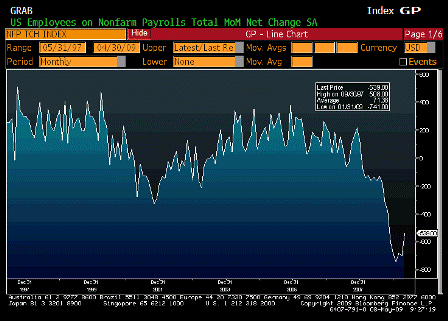
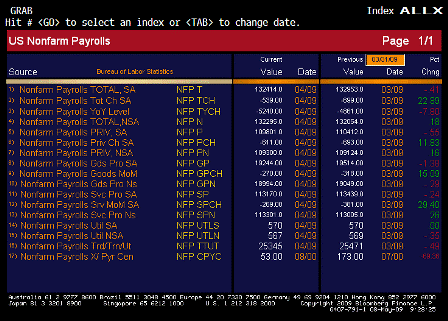
  • NFP -539k; net revisions -66k, and +60k contribution from census workers (census workers will add about 75k jobs/mth thru year-end)
  • Underlying trend doesn’t show any real change
  • Index of aggregate hours down another 0.6% and avg weekly earnings up 0.1%
  • Wage and salary component of personal income will be down again (hours x jobs x wages)
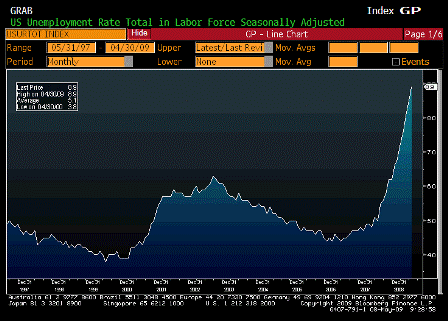
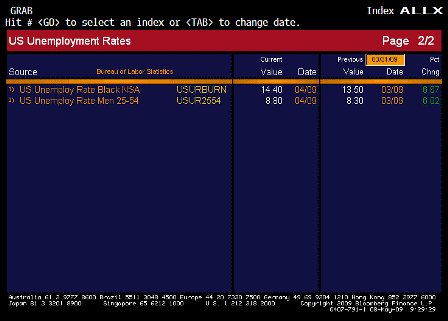
  • Unemployment rate up from 8.54% to 8.87%; total unemployment rate up from 15.6% to 15.8%
  • Only good news was diffusion index rising from 20.3 to 28.2
  • Consensus on CNBC was this would be the ‘last, really bad number’, mostly on grounds of running out of people to fire.
  • I guess ‘really bad’ wasn’t ‘really defined’, but judging by the workweek data, doesn’t seem like material improvement anytime soon.


Change in Nonfarm Payrolls (Apr)

Survey -600K
Actual -539K
Prior -663K
Revised -699K

[top][end]

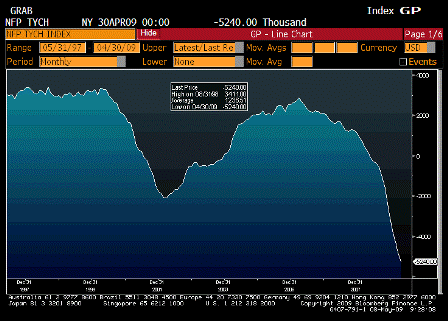
Change in Nonfarm Payrolls YoY (Apr)

Survey n/a
Actual -5240.00
Prior -4861.00
Revised n/a

[top][end]

Nonfarm Payrolls ALLX (Apr)

[top][end]

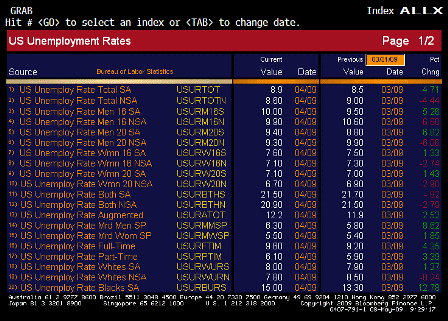
Unemployment Rate (Apr)

Survey 8.9%
Actual 8.9%
Prior 8.5%
Revised n/a

[top][end]

Unemployment Rate ALLX 1 (Apr)

[top][end]

Unemployment Rate ALLX 2 (Apr)

[top][end]

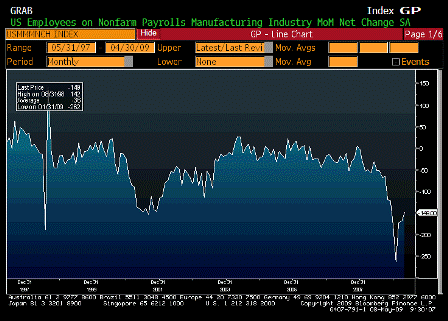
Change in Manufacturing Payrolls (Apr)

Survey -155K
Actual -149K
Prior -161K
Revised -167K

[top][end]

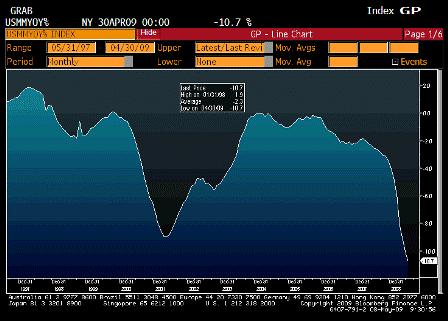
Change in Manufacturing Payrolls YoY (Apr)

Survey n/a
Actual -10.7%
Prior -10.0%
Revised n/a

[top][end]

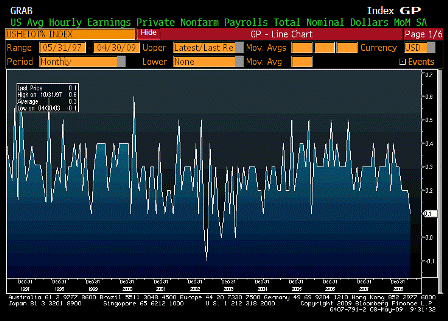
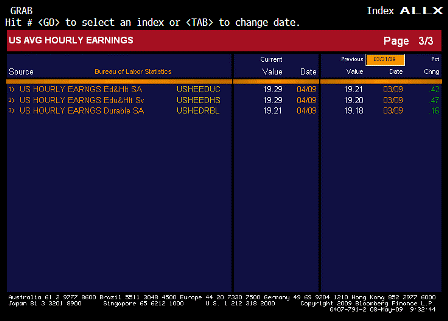
Average Hourly Earnings MoM (Apr)

Survey 0.2%
Actual 0.1%
Prior 0.2%
Revised n/a

[top][end]

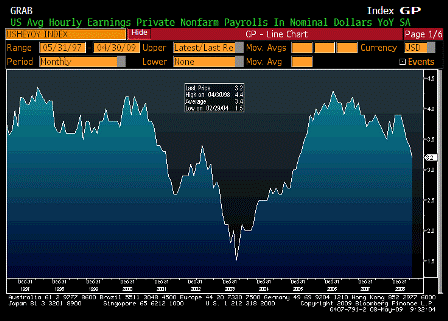
Average Hourly Earnings YoY (Apr)

Survey 3.3%
Actual 3.2%
Prior 3.4%
Revised n/a

[top][end]

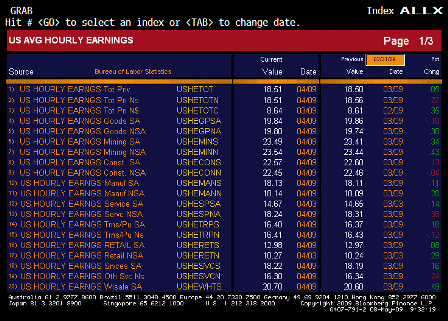
Average Hourly Earnings ALLX 1 (Apr)

[top][end]

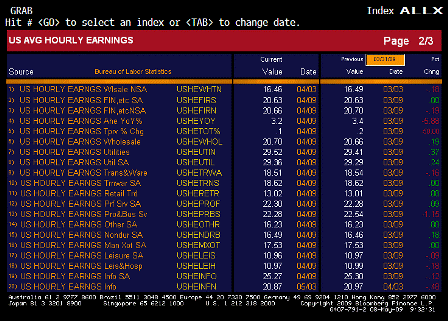
Average Hourly Earnings ALLX 2 (Apr)

[top][end]

Average Hourly Earnings ALLX 3 (Apr)

[top][end]

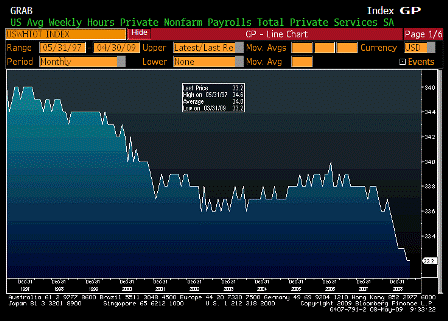
Average Weekly Hours (Apr)

Survey 33.2
Actual 33.2
Prior 33.2
Revised n/a

[top][end]


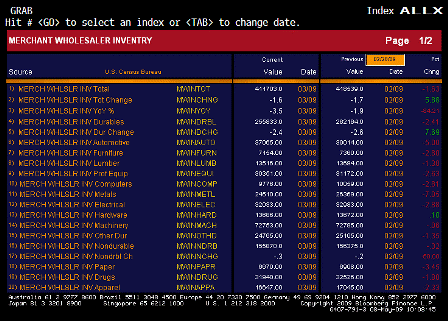
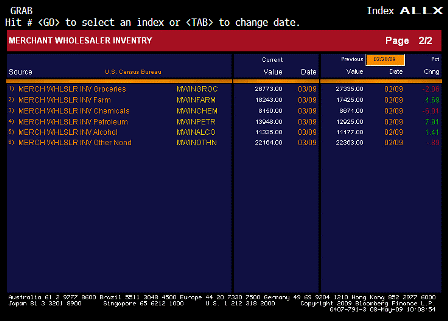
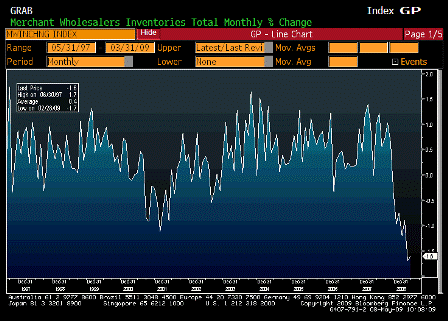
Wholesale Inventories MoM (Mar)

Survey -1.0%
Actual -1.6%
Prior -1.5%
Revised -1.7%

[top][end]

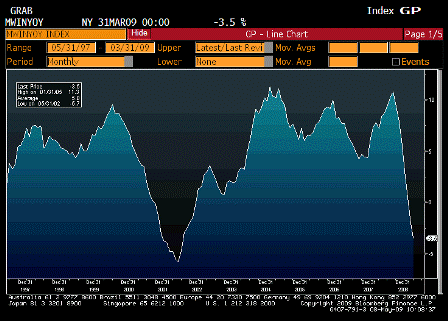
Wholesale Inventories YoY (Mar)

Survey n/a
Actual -3.5%
Prior -1.9%
Revised n/a

[top][end]

Wholesale Inventories ALLX 1 (Mar)

[top][end]

Wholesale Inventories ALLX 2 (Mar)


[top]

2009-05-07 USER


[Skip to the end]


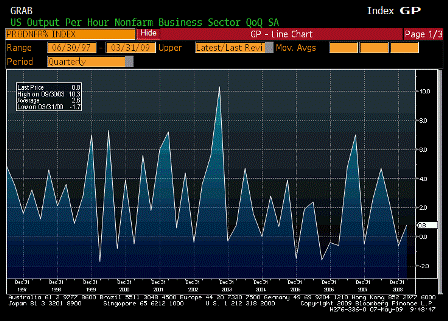
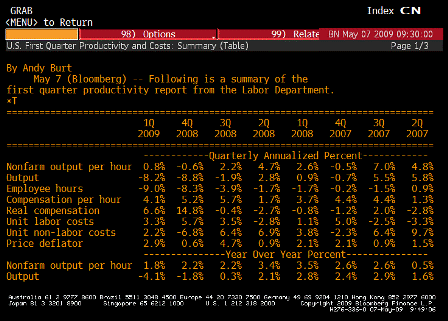
Nonfarm Productivity QoQ (1Q P)

Survey 0.6%
Actual 0.8%
Prior -0.4%
Revised -0.6%

[top][end]

Nonfarm Productivity TABLE 1 (1Q P)

[top][end]

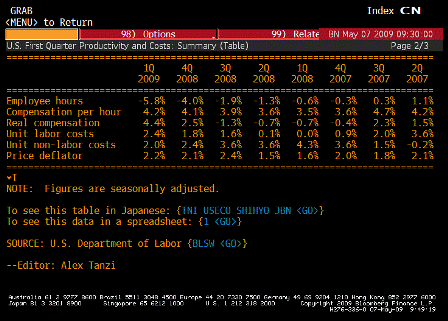
Nonfarm Productivity TABLE 2 (1Q P)

[top][end]

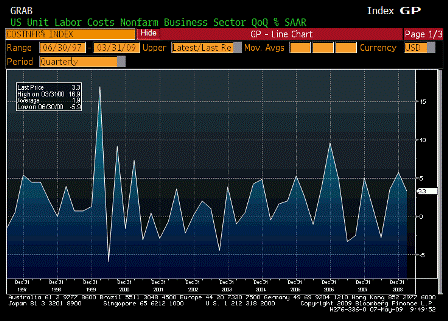
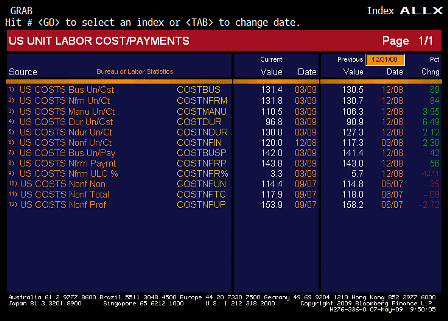
Unit Labor Costs QoQ (1Q P)

Survey 2.7%
Actual 3.3%
Prior 5.7%
Revised n/a

[top][end]

Unit Labor Costs ALLX (1Q P)

[top][end]


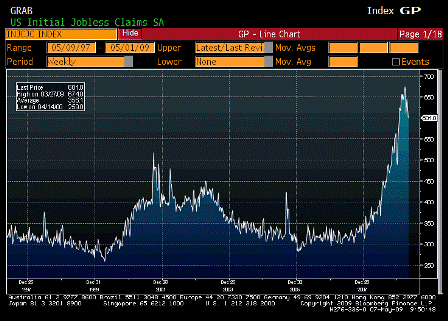
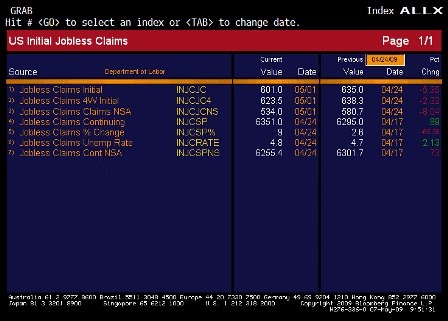
Initial Jobless Claims (May 2)

Survey 635K
Actual 601K
Prior 631K
Revised 635K

[top][end]

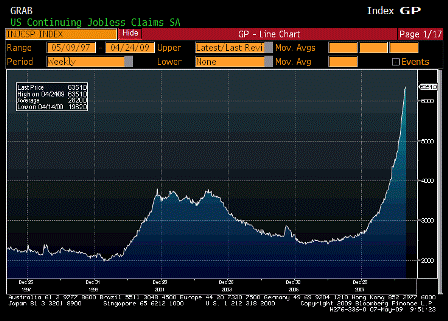
Continuing Claims (Apr 25)

Survey 6350K
Actual 6351K
Prior 6271K
Revised 6295K

[top][end]

Jobless Claims ALLX (May 2)


[top]

2009-05-06 USER


[Skip to the end]


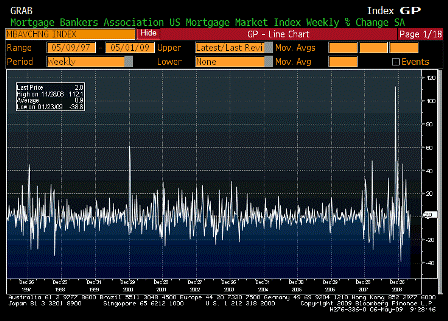
MBA Mortgage Applications (May 1)

Survey n/a
Actual 2.0%
Prior -18.1%
Revised n/a

[top][end]

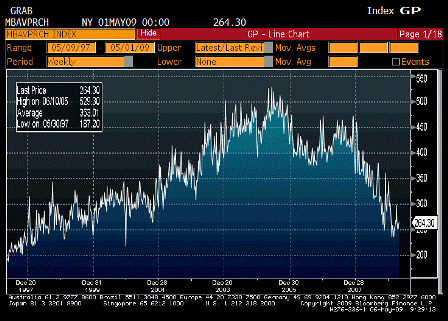
MBA Purchasing Applications (May 1)

Survey n/a
Actual 264.30
Prior 251.60
Revised n/a

[top][end]

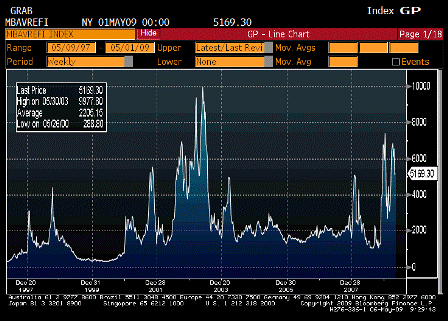
MBA Refinancing Applications (May 1)

Survey n/a
Actual 5169.30
Prior 5108.20
Revised n/a

[top][end]


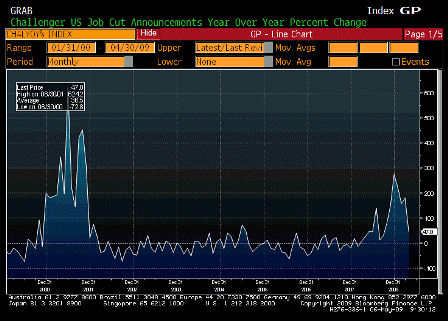
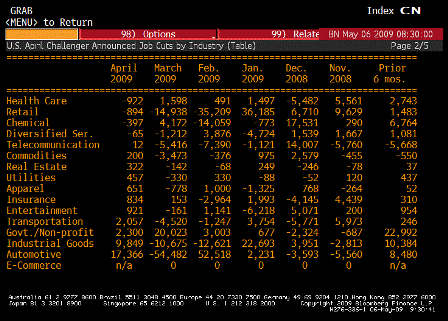
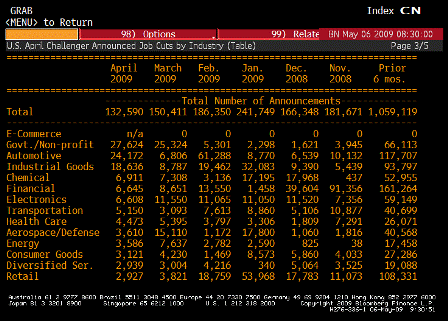
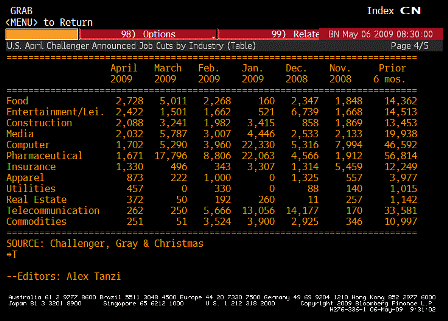
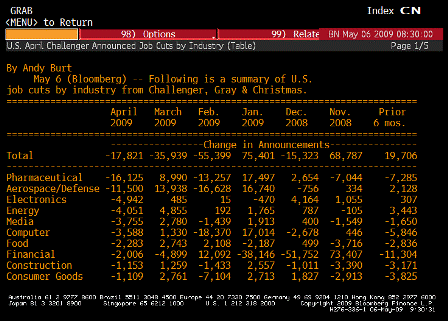
Challenger Job Cuts YoY (Apr)

Survey n/a
Actual 47.0%
Prior 180.7%
Revised n/a

[top][end]

Challenger Job Cuts TABLE 1 (Apr)

[top][end]

Challenger Job Cuts TABLE 2 (Apr)

[top][end]

Challenger Job Cuts TABLE 3 (Apr)

[top][end]

Challenger Job Cuts TABLE 4 (Apr)

[top][end]


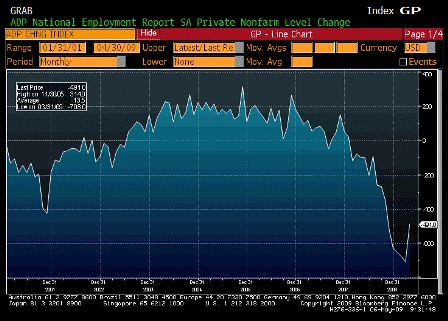
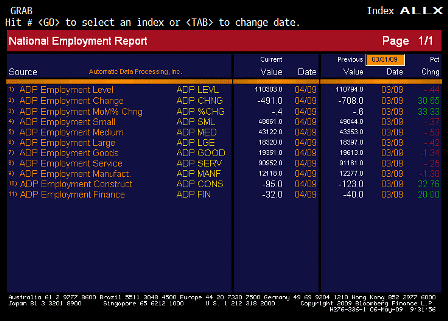
ADP Employment Change (Apr)

Survey -645K
Actual -491K
Prior -742K
Revised -708K

[top][end]

ADP ALLX (Apr)


[top]

Bernanke


[Skip to the end]

Karim writes:

Bernanke Testimony (All quotes in italics)

  • We are likely to see further sizable job losses and increased unemployment in coming months
  • Recent data also suggest that the pace of contraction may be slowing, and they include some tentative signs that final demand, especially demand by households, may be stabilizing. In coming months, households’ spending power will be boosted by the fiscal stimulus program, and we have seen some improvement in consumer sentiment. Nonetheless, a number of factors are likely to continue to weigh on consumer spending, among them the weak labor market and the declines in equity and housing wealth that households have experienced over the past two years. In addition, credit conditions for consumers remain tight.
  • The housing market, which has been in decline for three years, has also shown some signs of bottoming
  • The available indicators of business investment remain extremely weak.
  • Conditions in the commercial real estate sector are poor.
  • We continue to expect economic activity to bottom out, then to turn up later this year.
  • The supply of mortgage credit is still relatively tight, and mortgage activity remains heavily dependent on the support of government programs or the government-sponsored enterprises.
  • Investors seemed to adopt a more positive outlook on the condition of financial institutions after several large banks reported profits in the first quarter, but readings from the credit default swap market and other indicators show that substantial concerns about the banking industry remain.

The section below appears to warn about the impact of rising rates, wider credit spreads, and weaker equities. i.e., the Fed wont be looking to snuff out any rallies. Also, slack to expand even after recovery takes hold, meaning disinflation continues, with ‘expectations’ being main factor preventing deflation.

  • An important caveat is that our forecast assumes continuing gradual repair of the financial system; a relapse in financial conditions would be a significant drag on economic activity and could cause the incipient recovery to stall.
  • Even after a recovery gets under way, the rate of growth of real economic activity is likely to remain below its longer-run potential for a while, implying that the current slack in resource utilization will increase further. We expect that the recovery will only gradually gain momentum and that economic slack will diminish slowly. In particular, businesses are likely to be cautious about hiring, implying that the unemployment rate could remain high for a time, even after economic growth resumes.
  • In this environment, we anticipate that inflation will remain low. Indeed, given the sizable margin of slack in resource utilization and diminished cost pressures from oil and other commodities, inflation is likely to move down some over the next year relative to its pace in 2008. However, inflation expectations, as measured by various household and business surveys, appear to have remained relatively stable, which should limit further declines in inflation.


[top]
South Africa’s Unemployment Rate Increases to 23.5%


[Skip to the end]

Good place for the federal government to fund minimum wage jobs for anyone willing and able to work and turn the nation into a model of prosperity overnight.

South Africa’s Unemployment Rate Increases to 23.5%

by Nasreen Seria and Mike Cohen

May 5 (Bloomberg) — South Africa’s unemployment rate, the highest of 62 countries tracked by Bloomberg, rose in the first quarter as the economy probably entered a recession for the first time in 17 years.

The jobless rate increased to 23.5 percent from 21.9 percent in the previous three months, Statistics South Africa said in a report released in Pretoria today. The number of people out of work rose to 4.18 million from 3.87 million.

“Manufacturing and mining are under strain, and we can expect these numbers to worsen,” said Fanie Joubert, an economist at Efficient Group in Pretoria. “We’re unlikely to see a recovery until the fourth quarter.”

The ruling African National Congress, which won a fourth consecutive five-year mandate in April 22 elections, has pledged to make “decent work opportunities” the focus of its economic policy. The government is aiming to cut the unemployment rate to 14 percent by 2014.


[top]
Latest on Obama and Chrysler


[Skip to the end]
Not to bore you with this, but it’s a no win situation in that if the secured creditors lose, the entire credit structure becomes uncertain, and if the secured creditors win, the deal breaks down and Obama, an all star law graduate, loses credibility and political power as the deal falls apart and Chrysler folds unless there is additional public funding.

And with GM next, there’s no telling what might happen to both the automakers and the entire supply chain and distribution network.

Chrysler Non-TARP Lenders Object to Auction Plan

by Christopher Scinta and Tiffany Kary

May 4 (Bloomberg) — A group of Chrysler LLC’s secured lenders is seeking to block the bankrupt company’s plan to sell its business at auction this month, arguing that the U.S. government is violating federal law to preserve the automaker.

The group, calling itself Chrysler’s non-TARP lenders, in reference to the Troubled Assets Relief Program, seeks to block the proposed sale to an alliance led by Fiat SpA, as well as a request by the U.S. automaker for approval of a $4.5 billion Treasury loan to finance the reorganization.

Secured lenders that agreed to the Fiat deal, including JPMorgan Chase & Co.,Citigroup Inc. and Goldman Sachs Group Inc., had conflicts of interest because they had also accepted TARP funds, the group said.

The process is “tainted” because it was dominated by the government, the lenders argued in papers filed today in U.S. Bankruptcy Court in Manhattan. The group also said the short period of time given to evaluate the sale was improper and the hearing on bid procedures that began today should be delayed. The judge delayed the hearing until 2:30 p.m. tomorrow, ordering the members of the lender group to reveal their identities.

‘Improperly Attempts’

The sale “improperly attempts to extinguish their property rights without their comment,” attorneys for the objecting lenders wrote in court papers.

“The sale motion should be denied because it seeks approval of a sale that cannot be approved under the bankruptcy code,” they argued. “The court should not permit a patently illegal sales process to go forward.”

Chrysler’s planned alliance with Turin, Italy-based Fiat, would create the world’s sixth-largest carmaker. Chrysler, based in Auburn Hills, Michigan, wasn’t able to pursue the merger outside bankruptcy because of opposition by the objecting lenders.

Under bankruptcy law, offers for bankrupt companies or their assets are generally subject to the possibility of higher bids at a court-supervised auction.

The Fiat offer, to be made from an as-yet unnamed entity formed by the Italian automaker, Chrysler employees and other parties, will be the lead bid in an auction, which is typically required for assets sold in bankruptcy. Chrysler is asking U.S. Bankruptcy Judge Arthur Gonzalez to approve bidding rules for an auction that would require creditor objections to the sale be submitted by May 11, followed by a May 15 deadline for competing bids. The bankrupt company seeks a May 21 hearing to approve the winning bid, according to the court filing.

Listed Assets

Chrysler, in its April 30 filings, listed assets of $39.3 billion and liabilities of $55.2 billion, making it the fifth-largest bankruptcy in U.S. history, according to data compiled by Bloomberg News.

Chrysler’s proposed sale favors junior creditors over senior creditors and would improperly channel the proceeds to specific creditor groups, the objecting lender group said in the court filing.
In court today, Thomas Lauria, a lawyer for the secured lender group, said some of its members have received death threats. In response to the judge’s demand that the members of his group be revealed, Lauria said the identities of more lenders would be revealed “promptly.”


[top]