2008-04-11 US Economic Releases

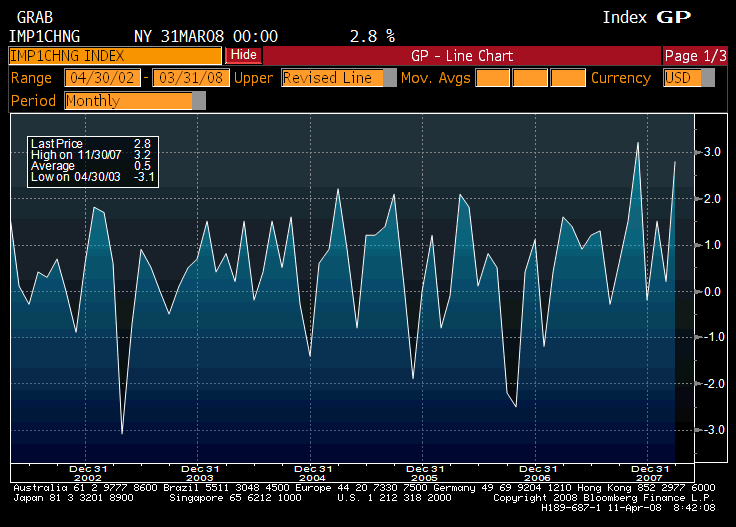
2008-04-11 Import Price Index MoM

Import Price Index MoM (Mar)

Survey 2.0%
Actual 2.8%
Prior 0.2%
Revised n/a

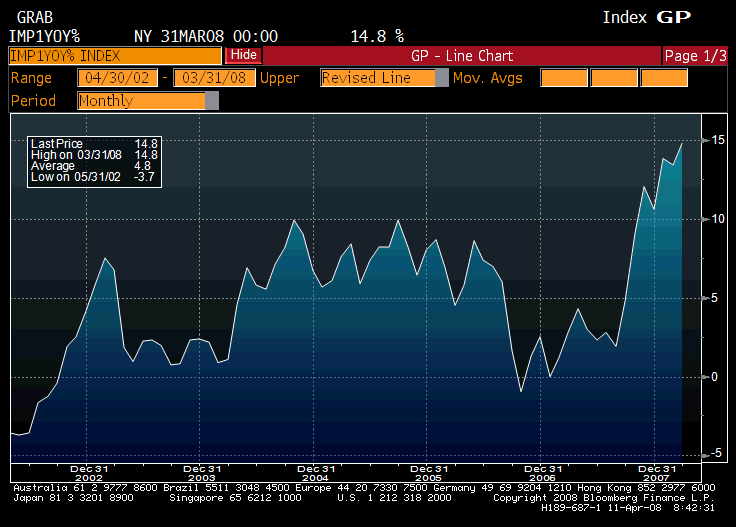
2008-04-11 Import Price Index YoY

Import Price Index YoY (Mar)

Survey 13.7%
Actual 14.8%
Prior 13.6%
Revised 13.4%

This is a very strong inflation channel.
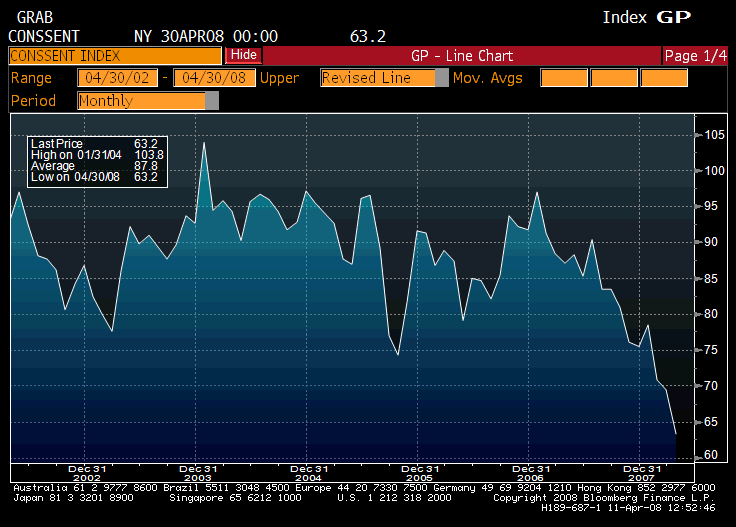

2008-04-11 U. of Michigan Survey

U. of Michigan Confidence (Apr P)

Survey 69.0
Actual 63.2
Prior 69.5
Revised n/a

From Karim:

  • Michigan survey takes out low from 1990-91 recession; prior lowest point was March 1982. Decline was from 69.5 to 63.2
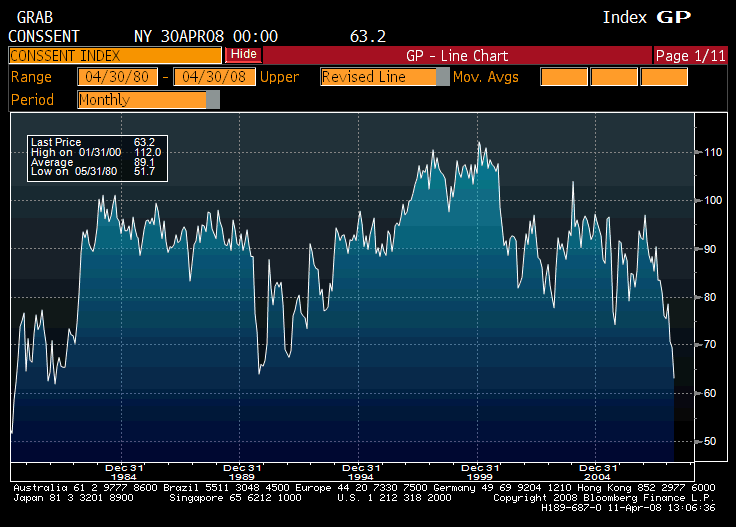
2008-04-11 U. of Michigan Survey since 1980

U. of Michigan Survey since 1980

Interesting how low ‘confidence’ is in light of how much better GDP and employment is doing now vs then.

Part of it is the rising influence of the media, and part are the factors behind the export boom that are causing us to consume less and instead export more of our own output.

The channel this time around is rising costs for food and energy take away the purchasing power power needed to buy the rest of our output, and foreigners get to consume it instead via US exports.

  • 5-10yr inflation expectations move to higher end of recent range
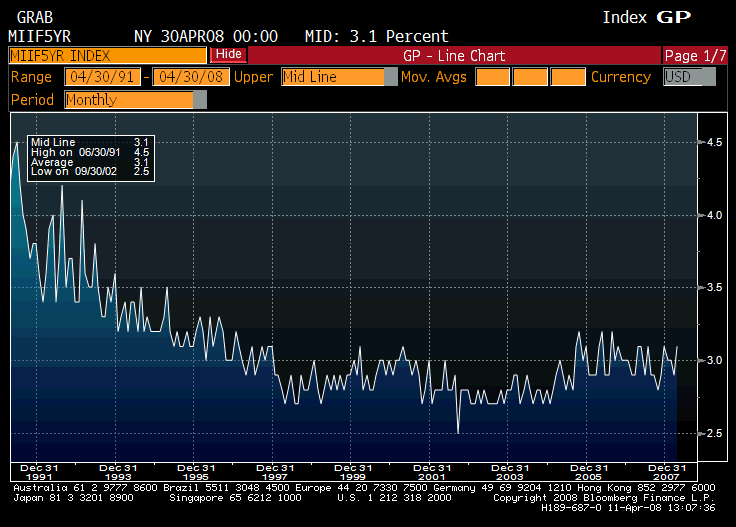
2008-04-11 U. of Michigan 5yr Ahead Inflation Expectations

5yr Ahead Inflation Expectations

Yes, it’s part of the equation, as above, and the FOMC ‘knows’ it can’t allow inflation expectations to elevate.

While the Fed gives the 5 year more weight, it also watches the one year, particularly when it spikes.
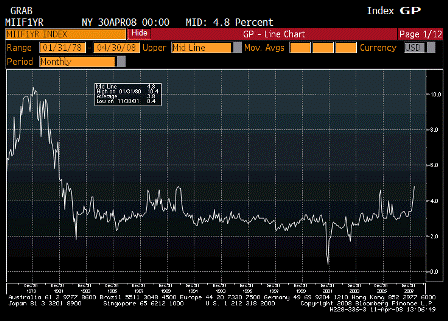
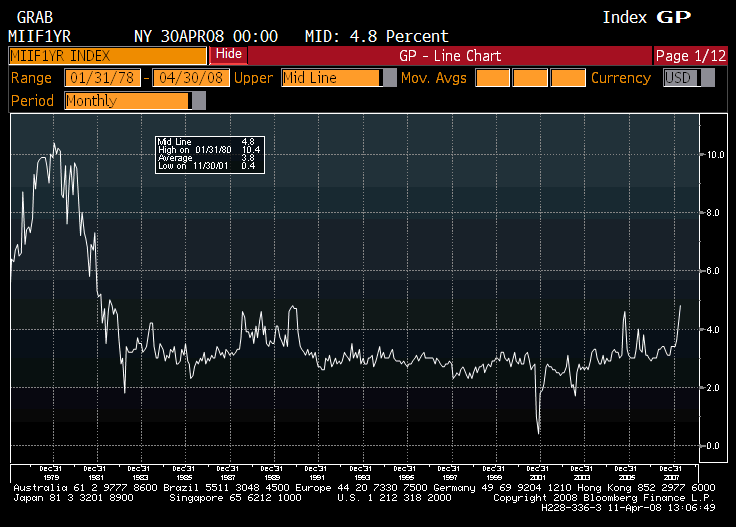
2008-04-11 1yr Inflation Expectations

1 yr Inflation Expectations

In today’s report the one year survey hit 4.8%, they highest since one 4.8% reading in 1990. The only time it’s been higher was during the ‘great inflation’ of the 70’s- early 80’s.

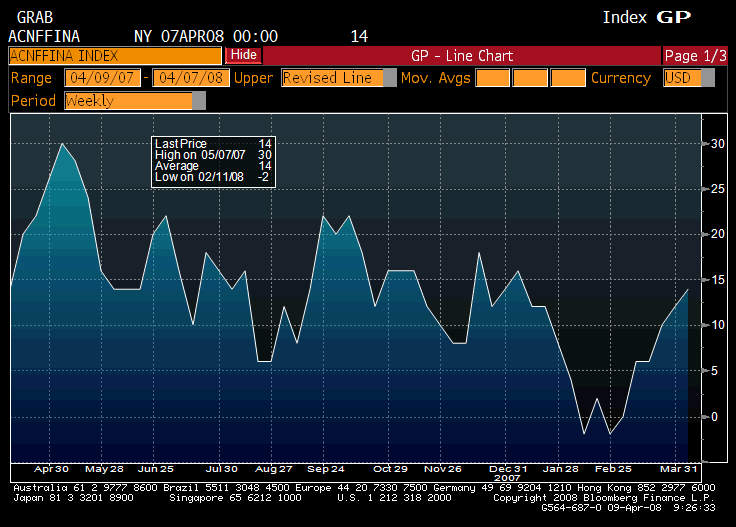
  • Worsening confidence also visible in job leavers component of employment report-% of workers who voluntarily leave their jobs (chart 3). Tends to rise when times are good and vice-versa. When declining, tends to be associated with lower wage growth and core CPI (an important piece of the output gap argument).

Other comments from Michigan survey make from grim reading:

  • There have only been a dozen other surveys that have recorded a lower level of consumer sentiment in the more than fifty-year history of the survey.

  • Consumers expected gains in their nominal incomes of just 1.0% in April, the smallest gain expected in three decades.

  • Three-in-four consumers expected bad times financially in the overall economy during the year ahead, the largest proportion recorded since 1980, and the fourth highest proportion in more than fifty years.

  • A record 41% of all home owners reported that their home had lost value during the past year
  • Just 5% of all consumers expected the unemployment rate to decrease in the year ahead, the smallest proportion ever recorded.

  • Uncertainty about future income and job prospects has had a devastating impact on buying plans, with consumers citing these uncertainties three times as frequently as they did a year ago. Purchase plans for furniture, appliances, home electronics, and similar goods fell to their lowest level since the 1990 recession, with one-third of all consumers specifically mentioning their uncertainty about jobs and incomes as their primary reason. Vehicle buying plans also fell to their lowest level since the 1990 recession, with one-third of all consumers citing uncertainty about jobs and incomes as well as the future price of gasoline.

That’s the Bernanke vision as per his latest congressional testimony- less consumption and more exports and investment. Looks good, feels bad.
Market update

Inflation ripping:
Oil up, grains and commodities up, and dollar down, as continued US demand at higher prices for energy transfers more $US to foreigners who don’t want to accumulate them.

Weakness continues:
Stocks down and credit spreads looking wider, and claims lower but have nonetheless worked their way higher since year end and only rising exports keep GDP at ‘muddling through’ levels.

Interest rates down:
As markets continue to believe Fed won’t even begin to act vs inflation, and will do ‘whatever it takes’ to narrow the output gap to zero, in total contrast to mainstream economic theory.

Re: Pension fund passive commodity strategies

(an interoffice email)

>
>   On Wed, Apr 9, 2008 at 4:05 PM, Pat wrote:
>
>   What about the continued allocation increases from non-end
>   users of commodities? From what I’ve read allocations by
>   pensions have gone higher even with the rising prices as well
>   as a whole host of new entrants (ETFs, HF’s, etc…) Are these
>   compounding the problem or are they the root of the
>   commodity price inflation?
>
>

passive commodities are part of the landscape for sure:

  1. put upward pressure on competitive commodity spot prices
  2. put downward pressure on the $
  3. add to gdp
  4. in general, help ‘monetize’ saudi crude price hikes
  5. put upward pressure on crude futures
  6. serves no public purpose

WSJ: Taul Paul chimes in

The FOMC take this very seriously:


Volcker’s Demarche

On the dollar, Mr. Volcker’s blunt talk of crisis is a welcome tonic to the devaluationist consensus that now dominates Washington. The world has been staging a run on the greenback, with damaging results if it continues. Mr. Volcker noted that when “concerns about recession are rife,” the central bank will be tempted to “subordinate the fundamental need to maintain a reliable currency” to the impulse to shore up a flagging economy. The danger is that you lose both battles, as the U.S. did in the 1970s, and wind up with stagflation.

The present climate, Mr. Volcker told his audience, reminded him of nothing so much as the early 1970s. Then as now, certain commodity prices were rising fast – he cited oil and soybeans as two examples. Then as now too, these were explained away as speculative price run-ups and not as a harbinger of a broader inflationary trend.

We all know how that ended, and Mr. Volcker knows better than anyone. He was the one who, at the end of that decade, had to step in and raise interest rates to punitive levels to break the back of that bout of inflation. With commodity prices spiking again – soybeans are $12 a bushel today compared to $7 a year ago – Mr. Volcker is warning the Fed not to let inflationary expectations become embedded once again.

ABC personal finance subcomponent

2008-04-09 ABC News Washington Post US Weekly Personal Finance Index

ABC personal finance subcomponent

Down but not out.

Weakness, but probably no recession as per Bernanke’s latest address before Congress.

Inflation ripping, as Fed staff raises it’s near term forecast.

The Fed ‘fights inflation’ with ‘slack’.

The Fed waiting for slack to be reduced before turning its attention to inflation is illogical at best.

Without the much anticipated further decline in home prices the Fed will find itself that much further ‘behind the inflation curve’.

The Fed needs the housing decline for its models to forecast inflation returning to comfort zones.

Re: Food prices (cont)

(a set of interoffice emails)

Sanjiv to me
9:10 AM Reply
See the riots in Haiti over food prices?

Mike to me
9:03 AM Reply
Much of it caused by financial intermediaries

YES, TO THE EXTENT THERE ARE EXCESS INVENTORIES.

BIOFUELS, TO THE EXTENT THE FOOD/ACREAGE HAS BEEN USED FOR FUEL

On Wed, Apr 9, 2008 at 9:02 AM, Brian wrote:

Did you see the news in the Philippines last night? The government is going to start increasing wages to help people deal with rising food and energy costs. Interesting approach toward combating inflation.

Yes, the mainstream calls that ‘monetizing’ the price increases. Given a shortage, giving people more funds doesn’t add to supply in the short run, and, (twist on Keynes coming) when it comes to food shortages in the short run we’re all dead.

Bloomberg: Egypt’s Soaring Food Prices Bring Bread Lines, Deficit Pressure

This is destabilizing and escalating.

Egypt’s Soaring Food Prices Bring Bread Lines, Deficit Pressure

By Abeer Allam and Daniel Williams


(Bloomberg) Atyat Musa Bakri, a Cairo mother of nine children, was waiting in line to buy subsidized bread for the third time in one day.

“The more cheap bread I can get, the better,” she said as a crowd of about 30 women jostled at a bakery in the Boulaq district. “The price of everything is going up and up, so I save on this. I spend all morning buying cheap bread.”

Bread is just about the only affordable food these days in Egypt, where rising commodity and energy prices have sent unsubsidized food prices up 20 percent or more in the past year. The rising cost of subsidies is damaging the government’s efforts to reduce its budget deficit.

About 500 political activists and textile workers at the Mahallah El-Kobra factory in northern Egypt were arrested and dozens were wounded in clashes with police on April 6 as the government clamped down on a one-day national strike to protest food inflation. In Mahallah itself, demonstrators threw stones at police phalanxes and set fire to trash.

The government-owned Egyptian Gazette newspaper said April 1 that seven people have died since the beginning of the year in brawls in bread lines.

Egyptian inflation accelerated to 12.1 percent in February, the fastest pace in 11 months, the Cairo-based Central Agency for Public Mobilization and Statistics reported March 19. Food and beverage prices increased 16.8 percent, while non-subsidized bread and grain prices jumped 27 percent. Dairy products and eggs rose 20.1 percent.

2008-04-07 EU Highlights

Today’s headlines not conducive of a rate cut.

And the only thing the ECB sees that’s keeping inflation from being a lot worse is the strong euro.

ECB’s Liebscher Sees Risk of Wage-Price Spiral, Kurier Reports
German Output Unexpectedly Increases on Construction
French Trade Deficit Shrinks to 2.8 Billion Euros on Exports
Spanish House Prices Rising Slower Than Inflation
ECB’s Quaden Calls Belgian Inflation `Rather Bad’
German BDB Banking Association Says Economy Is `Robust’

2008-04-04 US Economic Releases

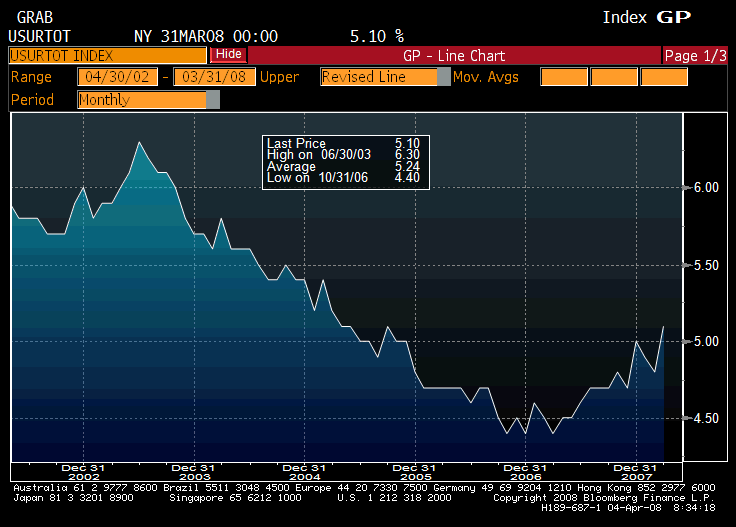
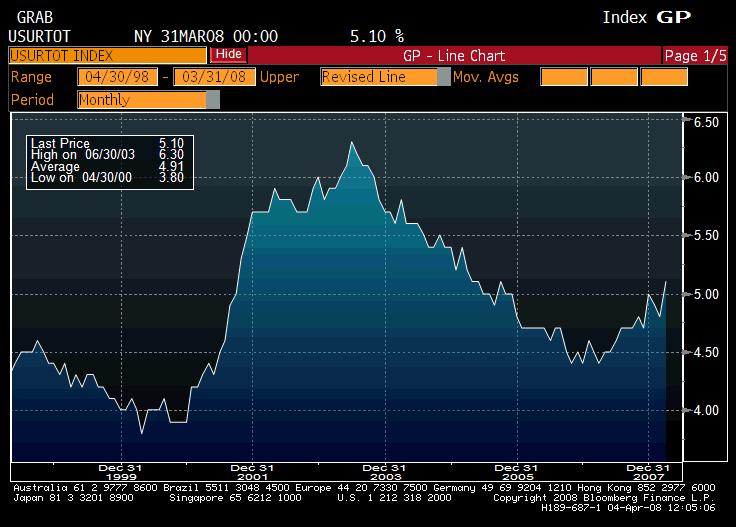
2008-04-04 Unemployment Rate

Unemployment Rate (Mar)

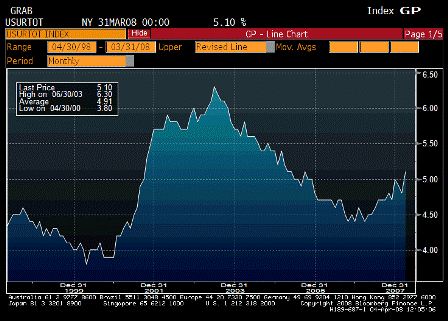
2008-04-04 Unemployment Rate since 1998

Unemployment Rate since 1998

Survey 5.0%
Actual 5.1%
Prior 4.8%
Revised n/a

From Karim:

Very weak report. Among the high(low)lights:
Unemployment rate rises from 4.8% to 5.1%
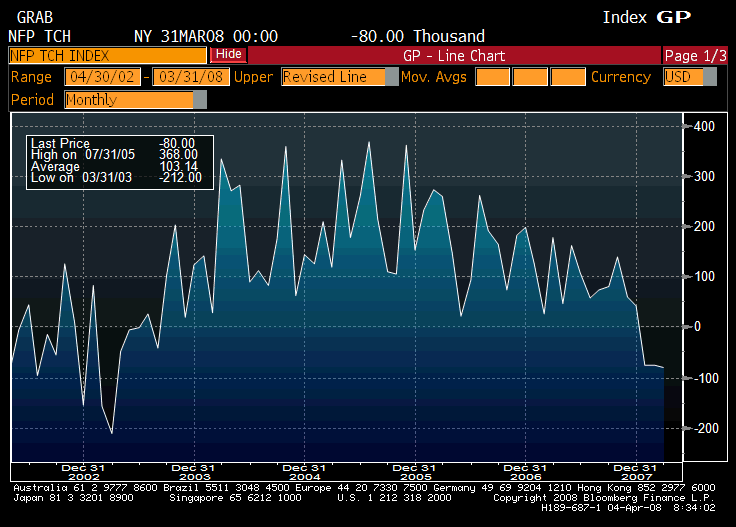
NFP -80k; net revisions -67k (Jan and Feb now down -76k in each month)
Household survey shows 434k rise in number of unemployed
Construction -51k; manufacturing -48k;retail -12k; professional and business services -35k; education +42k; government +12k
Index of aggregate hours up 0.2% but down -1.2% annualized in Q1; all but assuring negative Q1 growth
Diffusion index up from 43.6 to 47.6


2008-04-04 Change in Nonfarm Payrolls

Change in Nonfarm Payrolls (Mar)

Survey -50K
Actual -80K
Prior -63K
Revised -76K

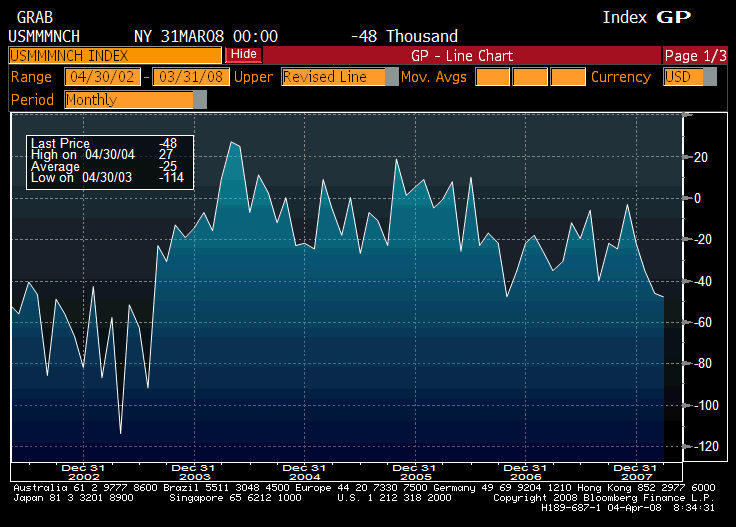
2008-04-04 Change in Manufacturing Payrolls

Change in Manufacturing Payrolls (Mar)

Survey -35K
Actual -48K
Prior -52K
Revised -46K

Payrolls lower than expected, previous months revised down some, confirming Q1 GDP somewhere around zero, and a flattish start for Q2 as well.

Not much of a market response, as this kind of weakness is no longer seen to threaten ‘market functioning’.

The perception of tail risk to market functioning is greatly diminished due to market perceptions that the Fed/Tsy is standing by to ‘write the check’ and that the checks won’t bounce.

Yes, they can be inflationary, and make the USD go down, but govt checks will clear and nominal demand can be sustained as desired.

The balance of risks are slowly returning to the more traditional/mainstream inflation vs growth and the appropriate interest rate policy to sustain the output gap necessary for price stability.

New data points for the Fed:

flat growth at best,

5.1% unemployment,

and yet demand is high enough to keep crude over $105, food prices skyrocketing, inflation at 4%, and the dollar falling like a stone and driving other import prices up.

And for as long as they can remember their forecasting models for prices have been unreliable at best.

Weaker growth with higher inflation likely tips their models to requiring a higher output gap (higher unemployment) to bring inflation down over their two year horizon.


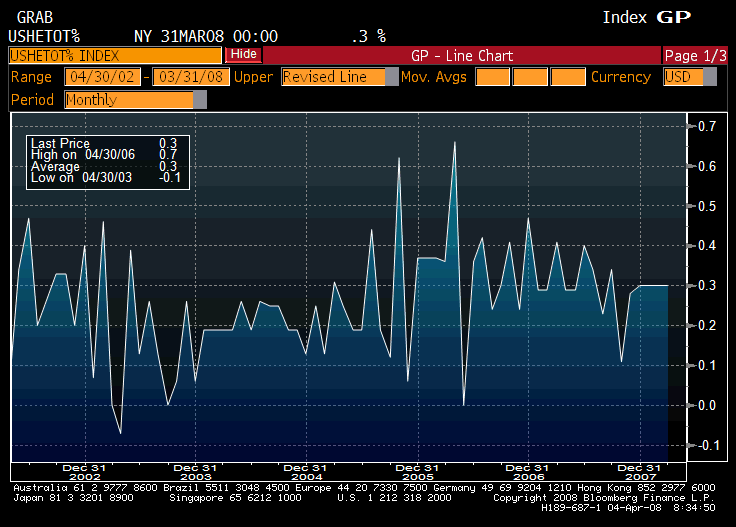
2008-04-04 Average Hourly Earnings MoM

Average Hourly Earnings MoM (Mar)

Survey 0.3%
Actual 0.3%
Prior 0.3%
Revised n/a

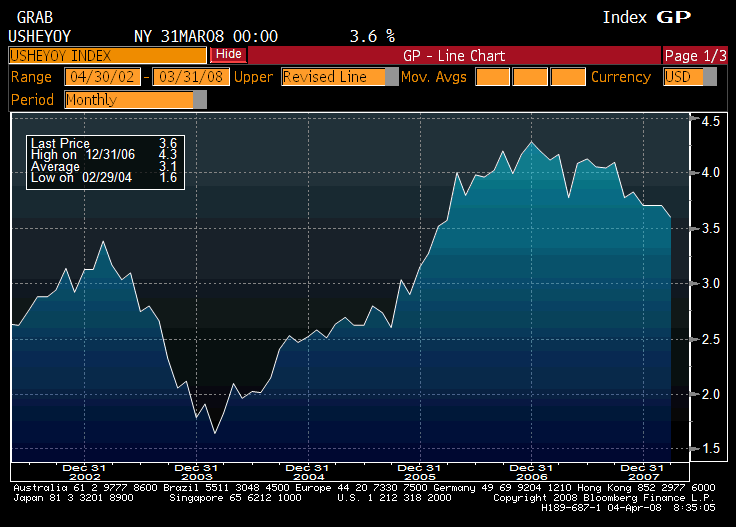
2008-04-04 Average Hourly Earnings YoY

Average Hourly Earnings YoY (Mar)

Survey 3.6%
Actual 3.6%
Prior 3.7%
Revised n/a

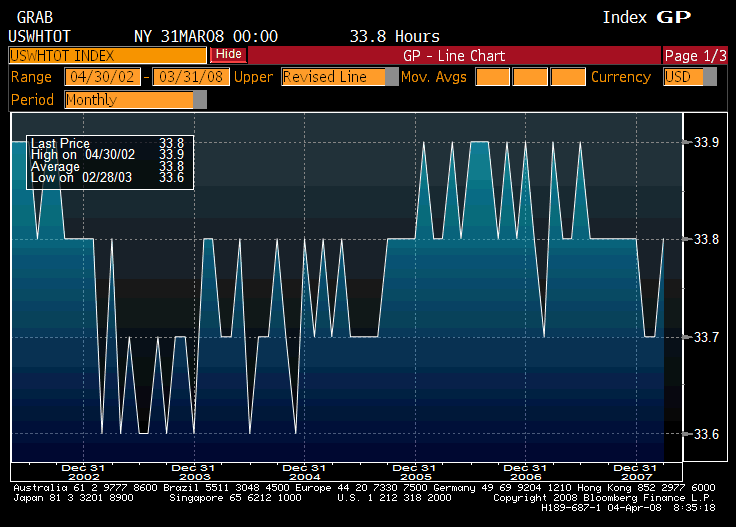
2008-04-04 Average Weekly Hours

Average Weekly Hours (Mar)

Survey 33.7
Actual 33.8
Prior 33.7
Revised n/a

Never actually goes down.