2008-06-10 US Economic Releases


[Skip to the end]


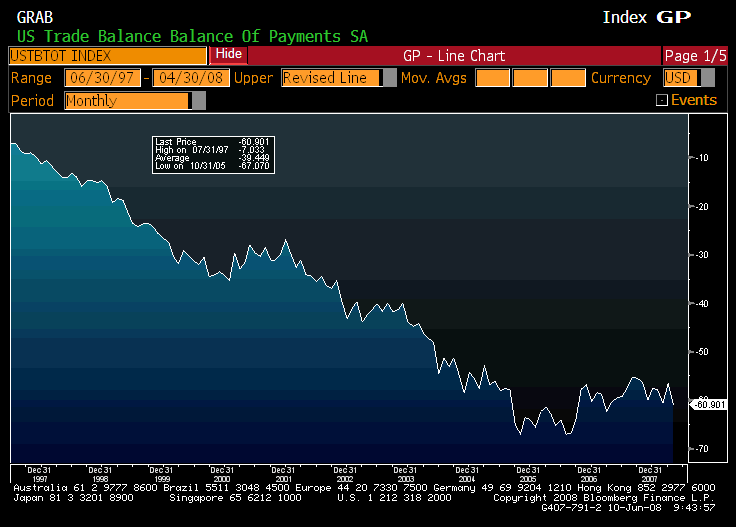
2008-06-10 US Trade Balance

Trade Balance (April)

Survey -$60.0B
Actual -$60.9B
Prior -$58.2B
Revised -$56.5B

A bit of a backup due to petroleum prices but gradually getting smaller as CB’s and Monetary authorities have cut back their rate of accumulation of $US financial assets.

[top][end]

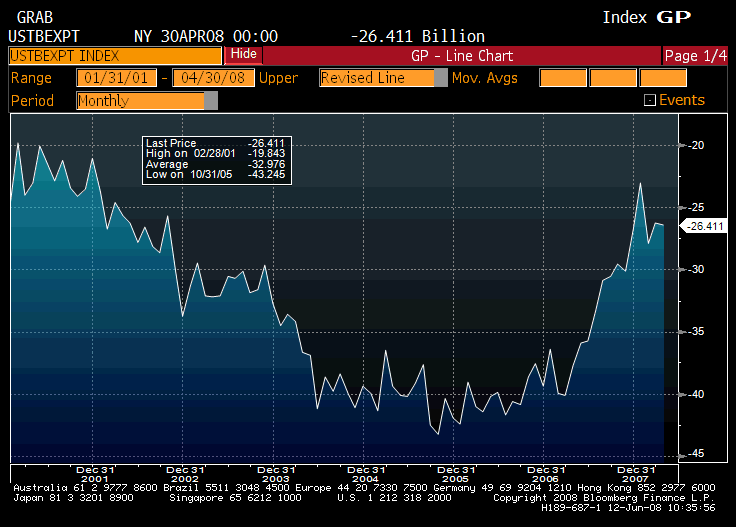
2008-06-10 Trade Balance Ex Petrol

Trade Balance Ex Petrol (Apr)

Survey n/a
Actual -$26.411B
Prior -$26.284B
Revised n/a

This has been quickly reversing and offsetting the higher prices paid for crude oil imports.

[top][end]

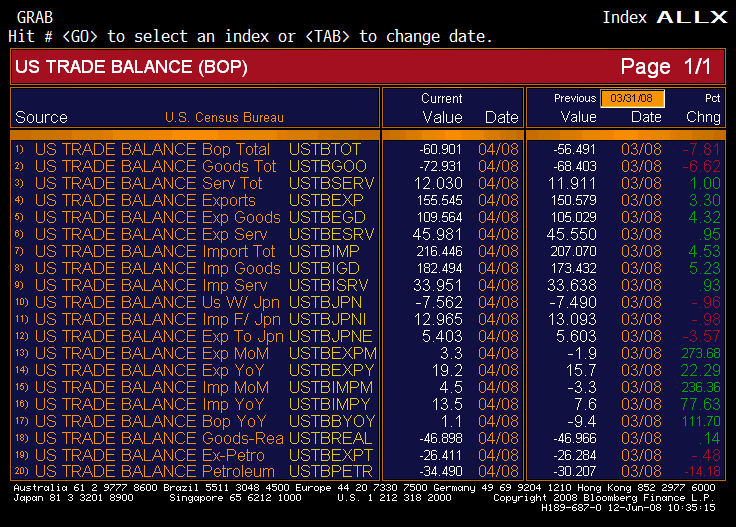
2008-06-10 Trade Balance ALLX

Trade Balance ALLX (Apr)

Lots of interesting data here, as, in general, exports continue to increase at emerging market type rates.

[top][end]


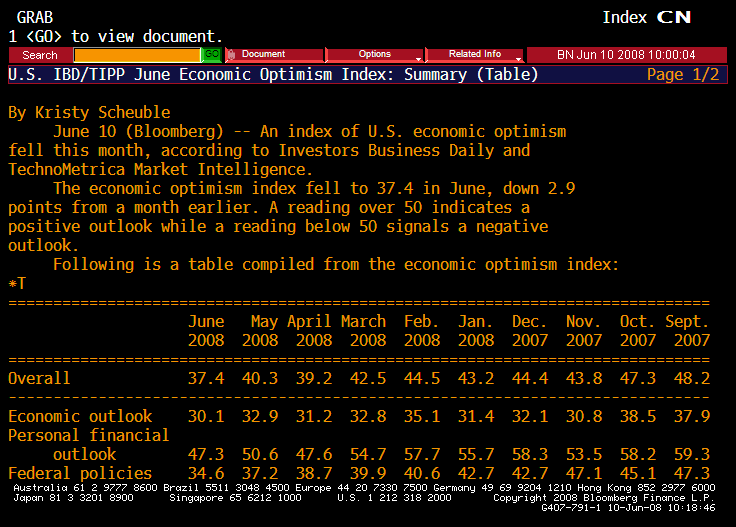
2008-06-10 IBD TIPP Consumer Confidence TABLE

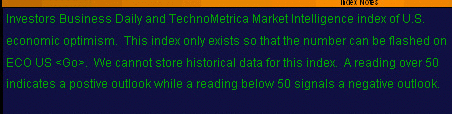
IBD/TIPP Economic Optimism (Jun)

Survey 40.0
Actual 37.4
Prior 40.3
Revised n/a

Inflation taking a bite into optimism.

[top][end]


2008-06-11 ABC Consumer Confidence

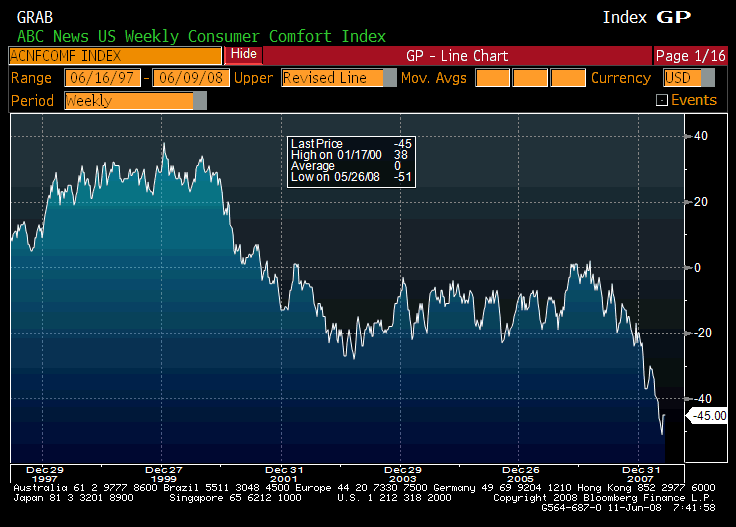
ABC Consumer Confidence (June 8)

Survey -47
Actual -45
Prior -45
Revised n/a

A little better but still low due to weak equities and high inflation.


[top]

2008-06-10 EU News Highlights


[Skip to the end]

German Wholesale Prices Rise the Fastest in 26 Years
French Industrial Production Rises 1.4%, Led by Cars
Italian Production Unexpectedly Increased in April
ECB’s Trichet Says Price Stability Is Vital for Jobs, Growth
Liikanen Says ECB Must Anchor Inflation Expectations
Germany’s Mirow Says Inflation Concerns `Clearly Increased’
Bundesbank’s Zeitler Sees IMF Raising German Growth Forecast
IHT: ECB Chief Warns Against Oil Shock Suppliers, Workers and
ECB Drains Cash From European Money Market to Counter Imbalance
European Bonds Fall on Higher-Rate Bets to Tackle Inflation

All supportive of rate hikes today, and the Fed’s notion that they would cut because the US was ‘stealing demand’ via US exports is falling by the wayside.

For Central Bankers, inflation expectations are an absolute determinant.

[top]

Bloomberg: Jason Furman now top dog for Obama


[Skip to the end]

Obama Names Rubin Ally Furman to Economic Policy Post

by Kim Chipman and Matthew Benjamin

(Bloomberg) Barack Obama’s presidential campaign today named Jason Furman, who worked closely with former Treasury Secretary Robert Rubin, as economic policy director.

Not a good sign – Ruben has the fundamental accounting identity of national income accounting- government deficit = non-government surplus – completely confused. He thinks deficits take away from savings when they add to savings.

Furman, 37, most recently worked as an economist and budget expert at the Brookings Institution in Washington, where he headed the Hamilton Project, an economic policy research group aligned with the Democratic Party that was founded by Rubin, now chairman of Citigroup Inc.’s executive committee.

A bunch of deficit terrorists.

Obama today begins a two-week tour of tightly contested states including Missouri and Florida to tout his plan for jumpstarting a slowing economy. The Illinois senator says he, not Republican rival John McCain, is best suited to create jobs, provide tax relief and revive the middle class. Obama, who has struggled to attract lower-income workers, seeks to link McCain to what he deems the failed policies of President George W. Bush.

All he’s going to do is link himself to higher taxes and link McCain to tax cuts. Not a good strategy!

Hamilton Project

Furman’s appointment allies Obama’s campaign with leading economic centrists in the Democratic Party, foremost among them is Rubin, 69, who helped found the Hamilton Project in 2006 and is on the group’s advisory council. Furman is a former adviser to 2004 Democratic presidential nominee John Kerry.

Rubin orchestrated President Bill Clinton’s economic policy of promoting free trade and reducing the federal budget deficit.

Clinton caught the tail wind of the 5% GDP deficits of the early 90’s that pumped in income and savings, and allowed the economy to expand until the surpluses generated by the countercyclical tax structure destroyed almost $1 trillion in net financial equity and caused the economy to collapse in 2000.

Obama says he favors free-trade pacts as long as they include stronger protections for workers and the environment. He also advocates budgeting rules that require new spending proposals or tax changes be paid for by cuts to other government programs or new revenue-generating sources.

Pay Go – he’s all about ‘fiscal responsibility’ which is the road to high unemployment, slow growth, and expanded inequality.

Furman and Austan Goolsbee, a University of Chicago economist who until recently was Obama’s top economic adviser, told reporters today that Obama’s “pay-as-you-go” position contrasts with McCain’s. They claim that the Republican senator from Arizona doesn’t provide details about how he would pay for his economic proposals.

McCain has it backwards and is anti-deficit as well, as he wants to cut taxes now to bring deficits down later. But while that strategy is confused, at least it will initially add to demand, employment, and growth. And inflation…

Consequence of Bush Policies

They also criticized McCain, 71, for what they say are proposals that would increase the federal budget deficit and fail to provide short-term stimulus to the economy

Most any increase in the deficit will add aggregate demand and help support GDP.

and tied him to Bush policies they said were responsible for the current economic slowdown.

He let the deficit get too small as it tailed off after the 2003 fiscal package.

Note they never mention inflation, and McCain probably doesn’t either. When you believe the Fed alone is responsible for inflation, you can run any deficit you want without worrying about it. And it was Bernanke who ran to Congress urging them to add to the deficit not long ago, indicating he also believes inflation is solely up to the Fed.

“We did not arrive at the doorstep of our current economic crisis by some accident of history,” Obama said today. “This was not an inevitable part of the business cycle that was beyond our power to avoid. It was the logical conclusion of a tired and misguided philosophy that has dominated Washington for far too long.”

Right – fiscal responsibility is the enemy, and both parties push it.

McCain’s campaign responded today, saying that Obama’s proposals will lead to higher taxes, further weaken the economy and hurt job creation.

Why is Obama taking the initiative of branding himself as the symbol of higher taxes?

“While hardworking families are hurting and employers are vulnerable, Barack Obama has promised higher income taxes, Social Security taxes, capital gains taxes, dividend taxes, and tax hikes on job creating businesses,” McCain spokesman Tucker Bounds said in a statement.

Obama opens the door to damaging counter-punches with every economic initiative.

Neither party has any obvious economic initiative to ‘fix’ things, so they are both better off allowing the other to lead and then get shot down by the press. Obama seems to be falling into this trap more than McCain.

McCain Fundraiser

McCain today attended a fund raiser in Richmond, Virginia, raising $800,000 for his campaign and other Republicans.

Obama today repeated his calls for a middle-class tax cut, an overhaul of energy policy, the rebuilding of the country’s infrastructure, protection of Social Security and making college more affordable.

And, as per ‘Pay Go’ higher taxes elsewhere to pay for it.

He also singled out Exxon Mobil Corp., the world’s biggest oil refiner. Obama said he would seek to tax oil companies such as Irving, Texas-based Exxon on their record profits.

First, these wouldn’t be nearly enough. Second, he opens himself to all kinds of destructive criticism he can’t respond to about the presumed failures of this in the past, effects on investment and equity prices in general if government can target specific companies for extra taxes, etc. Also, about 75% of Americans are shareholders, and want their stock to do better.

“We’ll use the money to help families pay for their skyrocketing energy costs and other bills,” Obama said today.

The critics will say that directing more money to help pay for energy will only encourage more consumption, even higher prices, and inflation, as well as promote all kinds of environmental damage.

Obama says that McCain’s tax proposals would result in almost $2 trillion in breaks for companies, including $1.2 billion for Exxon alone.

You hear this with every election, and with subsequent examination of the details, it always seems to evaporate.

The Congress is in Democratic hands, and Obama was a senator, so why didn’t he/doesn’t he propose this kind of legislation?

Furman said in an interview that the Obama campaign’s economic goal is based on “broadly shared, bottom-up growth,” similar to the views espoused by groups such as the Hamilton Project and the Economic Policy Institute, a Washington research group funded partly by labor unions.

Not a source of broad based support.

‘Empower People’

“You need to empower people to make the economy work for them,” Furman said.

Sounds like Reagan?

As Obama’s economic policy director, Furman said his priority would be to expand the range of advice and proposals flowing to the presumptive Democratic nominee by reaching out to a wider group of economists.

???

“My key mandate, which came directly from the senator, is to bring him a diverse set of voices and ideas, because that’s the kind of debate he likes to hear to make up his mind about his economic agenda,” Furman said. He named Rubin, former Treasury Secretary Lawrence Summers and former Federal Reserve Vice Chairman Alan Blinder as advisers the campaign would turn to.

Bringing back both Rubin and Summers- Letting the foxes back into the chicken coop.

Furman also named Jared Bernstein of the Economic Policy Institute and James Galbraith, a University of Texas economist and son of economist John Kenneth Galbraith, who was an adviser to President John F. Kennedy.

Galbraith and Ruben on the same team? What’s next, Mitt Romney as Obama’s VP?

Furman attended Harvard University in Cambridge, Massachusetts and the London School of Economics and received a doctorate in economics from Harvard. He worked as an economist in the Clinton administration and at the World Bank.

Goolsbee will continue to play a leading role in the campaign, Furman said.

Why not?!


[top]

Bernanke on inflation expectations


[Skip to the end]

Elevated inflation expectations are unacceptable to a mainstream Central Banker, and Bernanke seems to be clearly telling us we’ve reached his limits.

To get ahead of the ‘inflation curve’ will mean interest rates of at least the 5.25% level of last August, when the FOMC didn’t cut because inflation was deemed too high.

While GDP growth is lower now, inflation is a lot higher now. And while GDP was higher then, their forecast for growth had been deteriorating through year end, and now it’s both above expectations and improving.

“The latest round of increases in energy prices has added to the upside risks to inflation and inflation expectations,” Bernanke said in remarks prepared for delivery to a conference organized by the Boston Federal Reserve in Chatham, Mass.

“The Federal Open Market Committee will strongly resist an erosion of longer-term inflation expectations, as an unanchoring of those expectations would be destabilizing for growth as well as for inflation,” Bernanke said.


[top]

2008-06-09 US Economic Releases


[Skip to the end]


2008-06-09 Pending Home Sales MoM

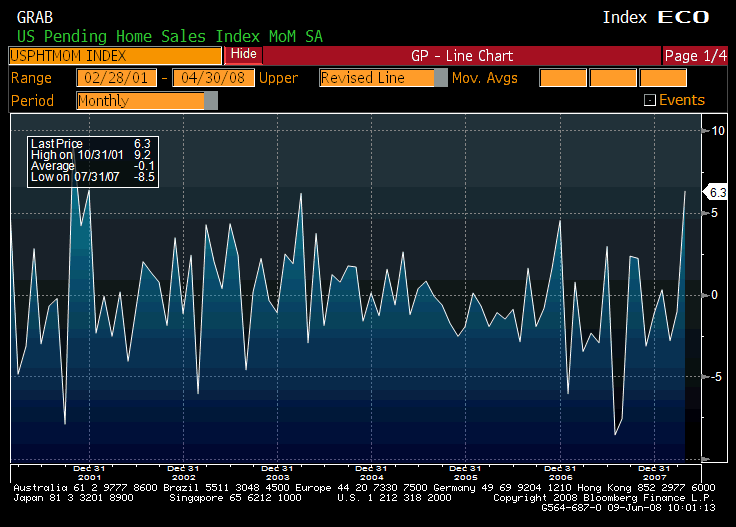
Pending Home Sales MoM (Apr)

Survey -0.4%
Actual 6.3%
Prior -1.0%
Revised n/a

[top][end]


2008-06-09 Pending Home Sales YoY

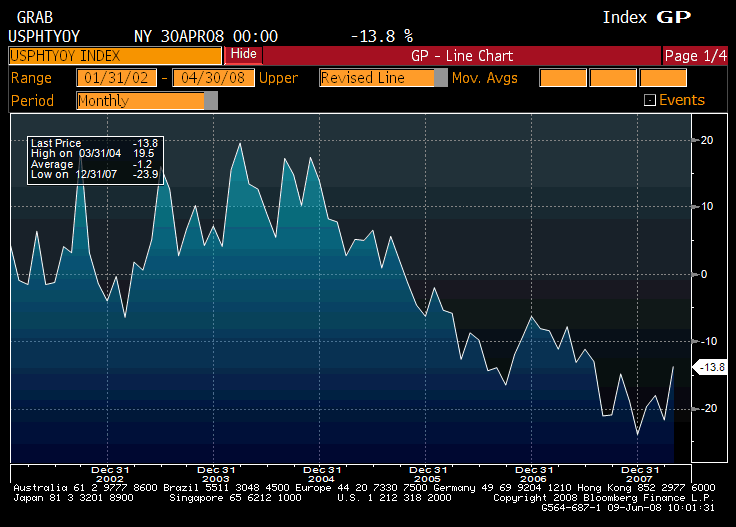
Pending Home Sales YoY (Apr)

Survey n/a
Actual -13.8%
Prior -21.7%
Revised n/a

[top][end]


2008-06-09 Pending Home Sales ALLX

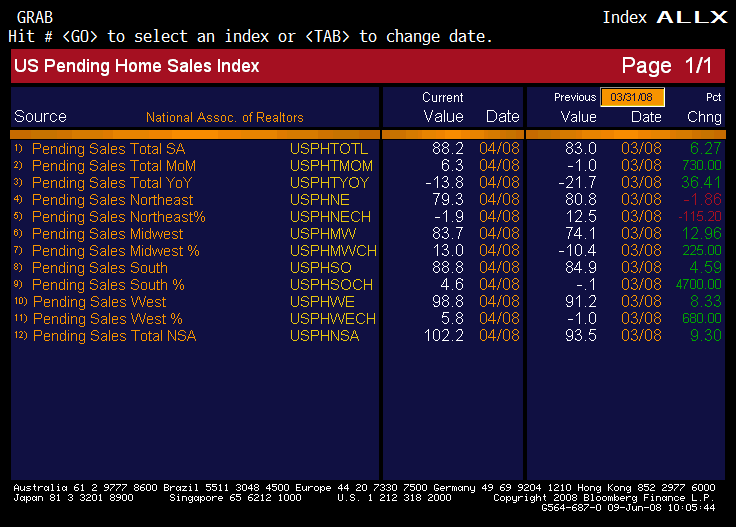
Pending Home Sales ALLX

Yet another better than expected release.

Might be too strong to call this a blow out number, but only because it’s from a low base.

The northeast was about flat, the rest of the regions up.

For a while I’ve been suggesting we bottomed in the Oct/Nov period and it still looks like that could be about right.

Note the large jump in the non seasonally adjusted numbers.

Prices should be (irregularly) moving up as well.

And housing will be expected to subtract less from GDP. Might even start adding soon.

The Fed is getting what it perceives as ‘further and further behind the inflation curve’ as CPI continues higher and GDP moves higher.

And much of the financial sector is getting left behind as the real economy moves forward without it.

Friday’s unemployment info was a lagging indicator and now it’s fading from market memory as well as evidenced by the large increases in market interest rates.


[top]

Re: Korea


[Skip to the end]

(an interoffice email)

>
> On Mon, Jun 9, 2008 at 5:05 AM, Sean wrote:
>
> Today Korea announced a plan to spend $10bb to counter the effects of
> rising oil prices. The $100bb will include tax rebates and subsidizing
> power providers. This is with GDP growing at 5.8% ( although expected
> to slow to the mid 4% range and CPI at 4.9% – the package is expected
> to add 0.2% to GDP.
>
> There is no political will in Asia to avoid measures that sustain demand
> for energy related products – subsidy cuts have been very small and the
> outcry loud enough to prevent further meaningful cuts. Inflation is
> ripping in Asia, the second round effects are unavoidable and its going
> to be imported to the US.
>
>

Thanks, looks like Japan cpi break evens have a long way to go!


[top]

2008-06-06 Economic Releases


[Skip to the end]


2008-06-06 Change in Nonfarm Payrolls

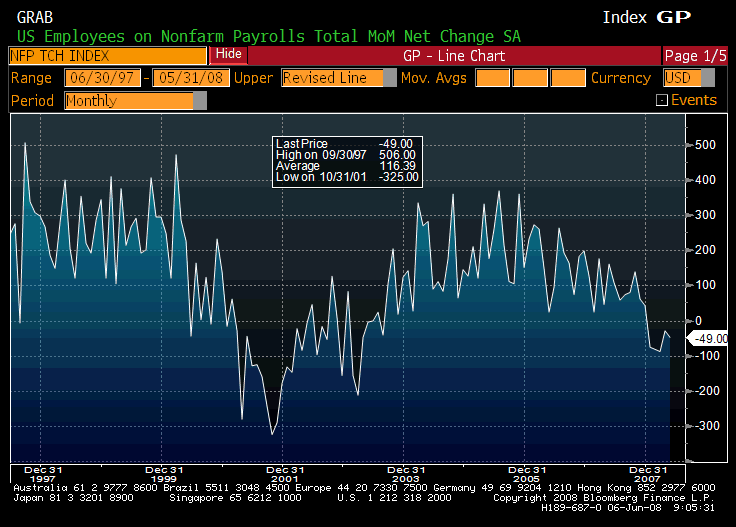
Change in Nonfarm Payrolls (May)

Survey -60K
Actual -49K
Prior -20K
Revised -28K

Down 49,000 was better than expected.
Previous months revised down an additional total of 15,000.

[top][end]


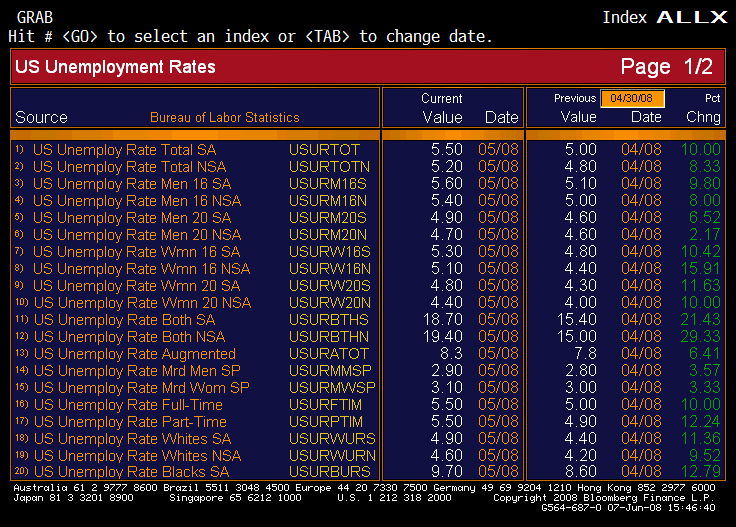
2008-06-06 Unemployment Rate

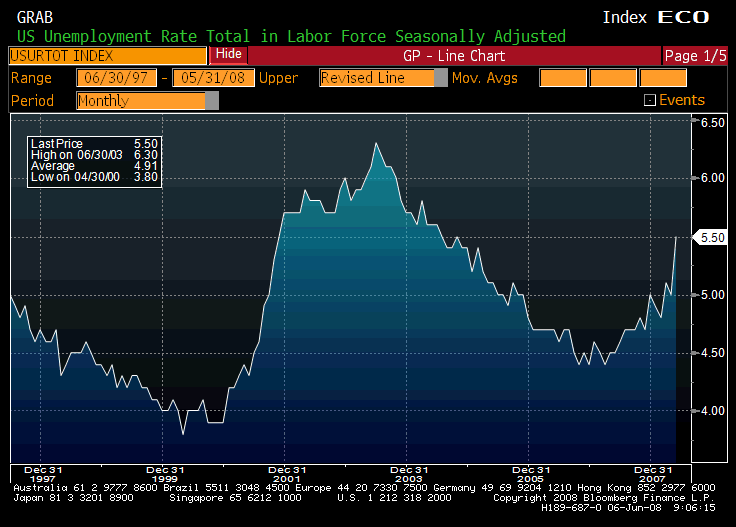
Unemployment Rate (May)

Survey 5.1%
Actual 5.5%
Prior 5.0%
Revised n/a

[top][end]


2008-06-06 Unemployment Rate ALLX

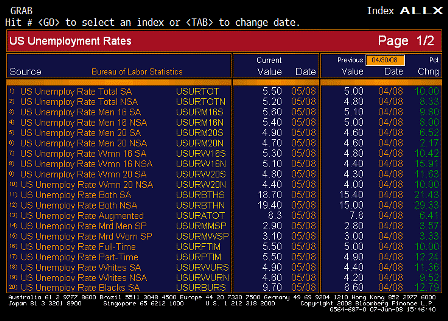
Unemployment Rate ALLX

Total employment is over 138 million, and the seasonal adjustment dropped the actual number by over 1.5 million jobs.

So this report is fighting strong seasonal adjustments.

5.5% unemployment from the household survey is a lot worse than expected.

Seems 500,000 new job seekers entered the labor force in that survey, apparently a statistical quirk added that many teenagers and 20-24 year olds out of sync with seasonal adjustments.

Even so, the labor markets remain on the weak side.

But they are strong enough to support crude at $131.72 (as Saudi oil production continues to grow at even these higher prices and headline inflation) is well north of 4%, as the May CPI is expected to show.

Employment is also strong enough to yield positive GDP growth – no recession yet.

[top][end]


2008-06-06 Change in Manufacturing Payrolls

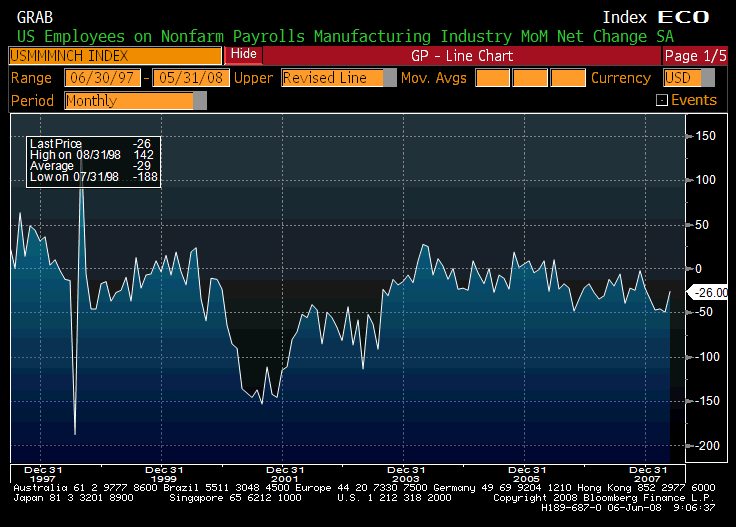
Change in Manufacturing Payrolls (May)

Survey -40K
Actual -26K
Prior -46K
Revised -49

Better than expected, in line with other recent report.

[top][end]


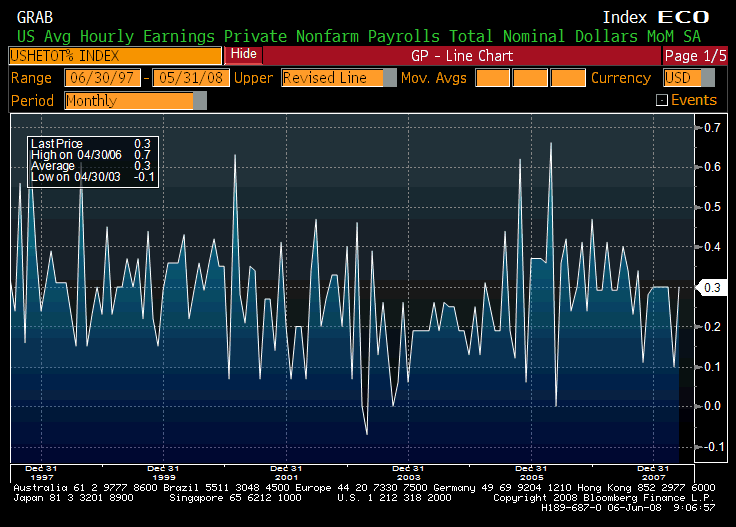
2008-06-06 Average Hourly Earnings MoM

Average Hourly Earnings MoM (May)

Survey 0.2%
Actual 0.3%
Prior 0.1%
Revised n/a

A touch higher than expected, but not that bad.

[top][end]


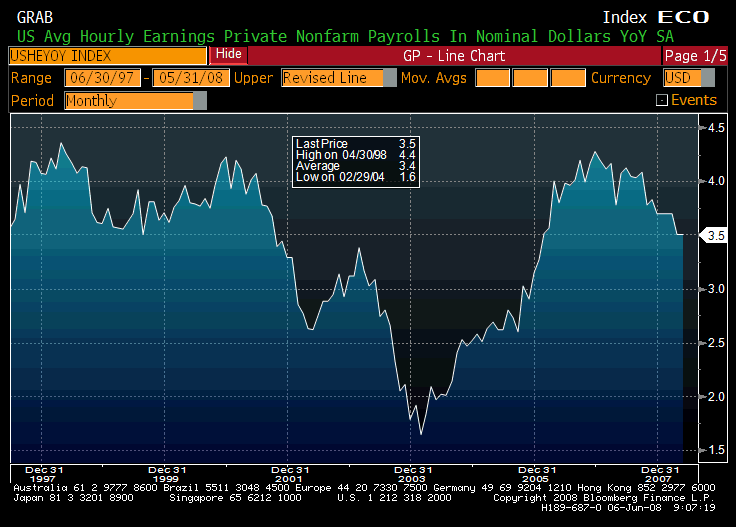
2008-06-06 Average Hourly Earnings YoY

Average Hourly Earnings YoY (May)

Survey 3.4%
Actual 3.5%
Prior 3.4%
Revised 3.5%

Also a bit higher than expected, but still not moving higher.

‘Wage inflation’ is not the issue, nor is it necessary condition for problematic inflation, especially in an export economy.

[top][end]


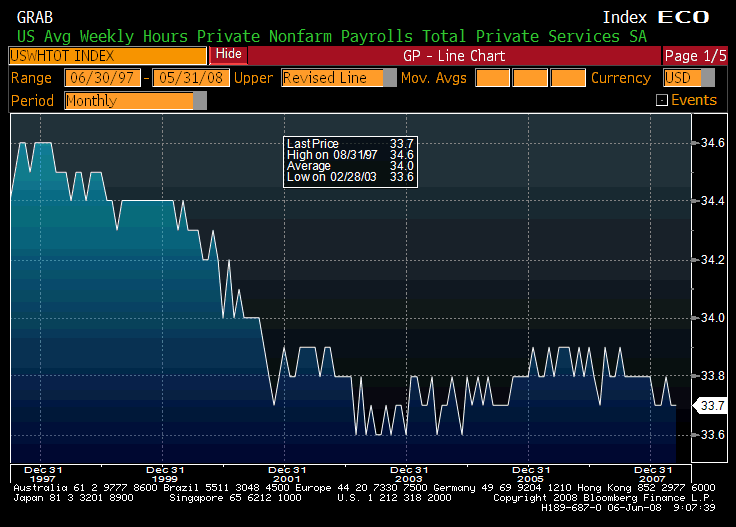
2008-06-06 Average Weekly Hours

Average Weekly Hours (May)

Survey 33.7
Actual 33.7
Prior 33.7
Revised n/a

Holding steady.

[top][end]


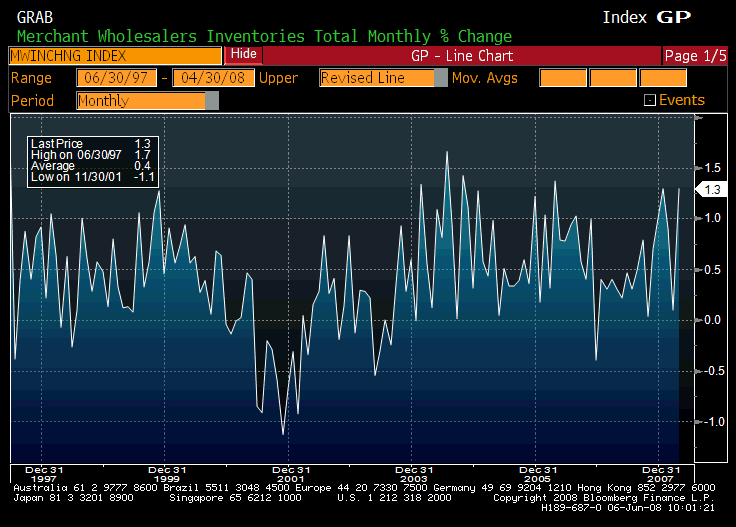
2008-06-06 Wholesale Inventories MoM

Wholesale Inventories MoM (April)

Survey 0.4%
Actual 1.3%
Prior -0.1%
Revised 0.1%

Higher than expected, but not at recession levels yet.

[top][end]


2008-06-06 Wholesale Inventories YoY

Wholesale Inventories YoY (April)

Survey n/a
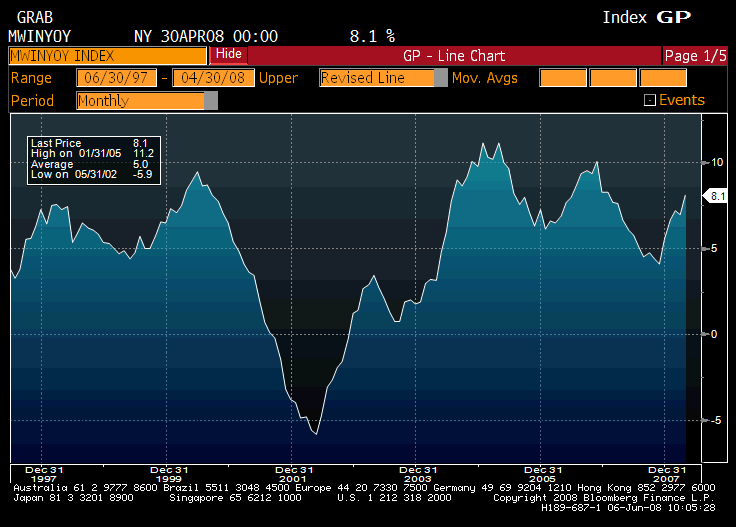
Actual 8.1%
Prior 7.0%
Revised n/a

Higher than expected, but still not all that high.

[top][end]


2008-06-06 Consumer Credit

Consumer Credit (April)

Survey $7.2B
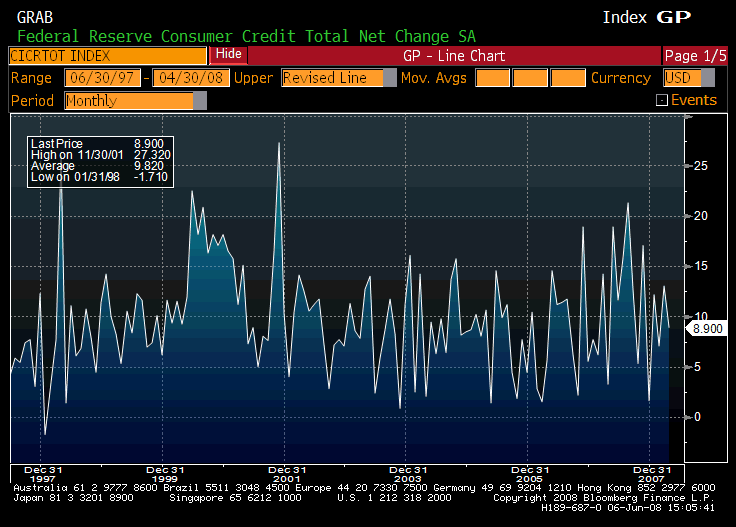
Actual $8.9B
Prior $15.3B
Revised $13.1B

This month a bit better than expected, last month revised down a bit. Consumer credit seems to be chugging along at better than recession levels.


[top]

May 2008 Saudi oil output up


[Skip to the end]

2008-06-06 Saudi Oil Production

Saudi Oil Production

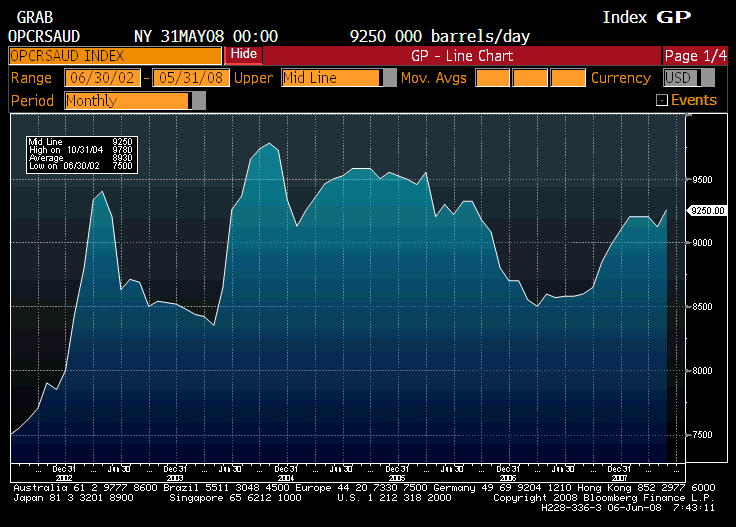
This does not bode well for oil prices.

Increased Saudi output means demand has increased at current prices, and the Saudis (and Russians, etc.) remain firmly positioned as ‘price setter’.

The Saudis continue to have the only excess supply, with about 1.5 million bpd excess capacity.

The Mike Masters sell off seems to be over. Actual legislative effort could cause a subsequent temporary sell off but will not dislodge the Saudis from total control.

The only thing that can dislodge their ability to set price is a net supply response in excess of 5 million bpd, which is highly unlikely in the near future.

Any efforts to increase aggregate demand to support growth will also function to support prices.

My twin themes remain:

  1. Weakness (low domestic demand supported by exports) as GDP muddles through. No recession yet, but could happen down the road should exports falter.
  2. Higher prices as Saudis remain as price setter, continuously hiking prices, and inflation continues to march higher, and our real terms of trade and standard of living continues to deteriorate.

‘Solutions’ remain:

  1. pluggable hybrids – this switches demand from crude to coal, and dislodges the Saudis from being price setter.
  2. dropping the national speed limit to 30 mph for private ground transportation. (Just heard JKG dropped the national limit to 35 mph during WWII)

Biofuels continue to link crude to food, and the political response to food shortages and markets allocating life by price is likely to continue to be ‘cash’ payments regardless of inflationary consequences. The body count is likely to exceed that of WWII over the next few years and is probably already in the millions.


[top]

2008-06-05 EU News Highlights


[Skip to the end]

Highlights:

France’s Unemployment Rate Drops to 7.5%, Insee Says

Scary low rate for the ECB.

German 2008 Tax Revenue to Grow More Than Expected

Fuel for the hawks, Germany’s unemployment is too low for them as well.

ECB May Keep Benchmark Rate at Six-Year High

For sure. And there will be discussion of hikes.

Spain April Industrial Production Contracts on Euro’s Advance

The ECB wants this kind of slack, but still not enough for them.

OECD Official Urges Fed, ECB to Put Rates on Hold

Yes, as they sure aren’t going to cut as Bernanke originally hoped.

They never bit on his bait to start an international race to the bottom with rate cuts/inflation.

The Fed thought the rising euro and the loss of demand to the US, as US exports rose, would cause the ECB to blink and cut rates.

Instead, the falling dollar and ripping US inflation has caused the Fed to start talking about hikes.

In the mainstream paradigm, the ECB was right in not cutting while the Fed is coming under fire for cutting aggressively into a triple negative supply shock, letting inflation expectations start to elevate, and risking a much larger slowdown bringing inflation down from much higher levels.

European Bonds Fall on Speculation ECB to Highlight Inflation


[top]

Bernanke headlines


[Skip to the end]

Bernanke comments on inflation:
(source = Bloomberg)

1) 14:48 Fed’s Bernanke says high energy price ‘provides incentive for ac

2) 14:47 Bernanke Says Inflation `Significantly Higher’ Than Fed Wants

3) 14:45 BULLET: FED: Bernanke’s address at Harvard compares current..>

4) 14:45 *BERNANKE SAYS INFLATION `SIGNIFICANTLY HIGHER’ THAN FED WANTS

5) 14:45 *BERNANKE SAYS OIL PRICE RISE POSES `SIGNIFICANT CHALLENGES’

6) 14:45 *BERNANKE: HIGH ENERGY PRICE `PROVIDES INCENTIVE FOR ACTION’

7) 14:45 *BERNANKE SPEAKING AT HARVARD COMMENCEMENT IN MASSACHUSETTS

8) 14:45 *BERNANKE SAYS PRICE STABILITY `A TOP PRIORITY’ FOR FED

9) 14:45 *BERNANKE SEES `LITTLE’ SIGN OF `1970S-STYLE WAGE-PRICE SPIRAL’

10) 14:45 *BERNANKE: RISE IN INFLATION EXPECTATIONS `SIGNIFICANT CONCERN’


[top]