Hong Kong and deflation


[Skip to the end]

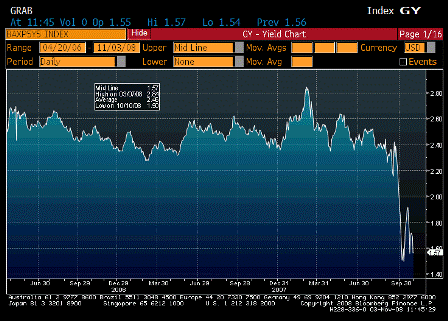
The Hong Kong currency board arrangement means net Hong Kong financial assets (AKA money supply) can grow only via net exports (and/or external debt).

This means market forces work to sustain net exports ‘at any cost’.

The usual result is a deflationary mess, until ‘competitiveness’ is achieved to the extent net exports are sufficient for funding the domestic desire for net financial assets.

See ‘Exchange rate policy and full employment’ at www.mosler.org for more details of this process.

Yes, the monetary authority can intervene and give up its reserves to a ‘savings hungry’ domestic market, but at the risk of quickly running out of reserves needed to facilitate convertibility of Hong Kong dollars on demand.

Best I can tell, currency boards were originally instruments of colonial exploitation, designed to force net exports to the mother country.

Today, that’s an enormous price to pay for ‘currency stability’.

Hong Kong Home Sales Post Biggest Drop Since 1999

By Kelvin Wong and Nipa Piboontanasawat

Nov. 4 (Bloomberg) — Hong Kong’s home sales posted the biggest drop by volume in almost nine years, as local lenders tightened mortgage lending amid a slowdown in the economy.

The number of residential units that changed hands in the city last month slumped 58.1 percent to 4,719, according to a Land Registry statement today. That’s the largest drop since November 1999 and the fourth straight month of declines.

By value, sales of residential units dropped 63 percent from a year earlier to HK$16.3 billion ($2.1 billion).

The economic outlook, coupled with declines in the Hong Kong stock market, have curbed demand for real estate and led potential buyers to expect cheaper prices. The Hang Seng Index has dropped 48 percent this year.

Home prices on Hong Kong island, which houses some of the world’s most expensive apartments, had their biggest weekly drop in the week ended Oct. 19, according to figures compiled by Centaline Property Agency Ltd.


“We’ll probably see even worse figures for the following month,” said Wong Leung-sing, an associate director of research at Centaline. “Then things should improve slightly as many
people may try to buy at low prices.”

Hong Kong’s bank lending rose 13 percent in September, the slowest pace in 13 months, and almost half the 24 percent increase in August.


[top]
Rush to join the euro


[Skip to the end]

As the Belgian bank giant Fortis collapses, citizens of that country appreciate the bonheur of belonging to the eurozone. Had it not been for the euro, Belgium would have devalued and sharply increased interest rates — just as Iceland was forced to do. The banking and financial crisis is quickly changing perceptions. Across Europe, there is a bit of a scramble to join the euro. Politicians from Scandinavia to Eastern Europe, fearful of the abyss, are re-evaluating the wisdom of going it alone (Denmark, Sweden, Norway) or postponing structural reform (Hungary, Poland). Brazil and Mexico have secured a swap line from the Federal Reserve Bank. When it comes to liquidity conditions, size seems to matter after all.

‘Had it not been for the euro, Belgium would have devalued and sharply increased interest rates — just as Iceland was forced to do.’

Yes, but only because they don’t understand what other options are, like sustaining output and growth via fiscal measures, setting interest rates where they want them for further public purpose (including the option of a zero rate policy), and letting private corps with external currency debt problems default on them and convert them to equity in bankruptcy while sustaining the ongoing business as desired for further public purpose (keeping the banks open while they are legally getting reorganized) etc etc.

It’s the blind leading the blind.


[top]
Re: Eurozone to stick to their budget rules


[Skip to the end]

This will keep a lid on euro aggregate demand in the eurozone for a while as budget deficits grow due to falling revenues and increasing transfer payments.

Larger national deficits are needed to sustain output and employment, but also add systemic risk due to their peculiar institutional structure.

Eurozone to honour budget rules as econ faces stall

By Dave Graham and Anna Willard

BRUSSELS, Nov 3 (Reuters) – Euro zone finance ministers pledged on Monday to stick to European Union budget rules even though economic growth is seen halting next year, in a deal the European Commission hailed as needed policy cooperation.

“This is not the time to let the deficits rip,” said Jean-Claude Juncker, chairman of monthly talks among the finance ministers of the 15-country currency area.

“We don’t want to indulge in an orgy of spending and indebtedness — in essence, mortgaging future generations,” he told a news conference after their Monday talks.

The ministers backed European Commission forecasts that the aggregate budget gap of the euro countries would rise to 1.8 percent of gross domestic product in 2009 from 1.3 percent seen this year and to 2.0 percent in 2010, unless policies change.

They also supported the Commission’s estimate that euro zone economic growth would slow to a mere 0.1 percent next year from 1.2 percent expected in 2008 in the wake of the financial crisis.

EU Economic and Monetary Affairs Commissioner Joaquin Almunia said the widening of the deficit, mainly as a result of a natural fall in revenues and a rise in expenditure, already constituted a significant fiscal stimulus for the euro zone.

>   
>   On Mon, Nov 3, 2008 at 11:18 PM, James K. wrote:
>   
>   sad, sad.
>   
>   ”This is not the time to let the deficits rip,” said Jean-Claude Juncker,
>   chairman of monthly talks among the finance ministers of the
>   15-country currency area.
>   

Their loss, our gain, if we play our cards right and accommodate their desire for export driven growth- preferably with their exports going to us.

Might happen if we have the right fiscal package and trade policy to support imports.


[top]
2008-11-04 USER


[Skip to the end]


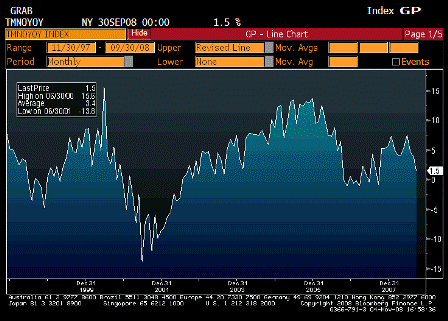
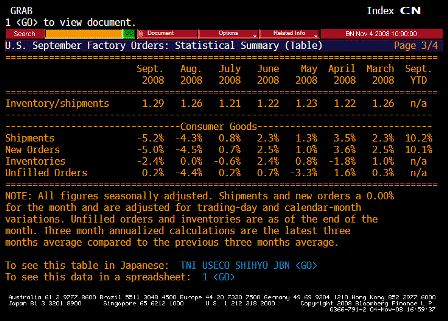
Factory Orders YoY (Sep)

Survey n/a
Actual 1.5%
Prior 3.9%
Revised n/a

 
Dip down, but not terrible yet.

[top][end]

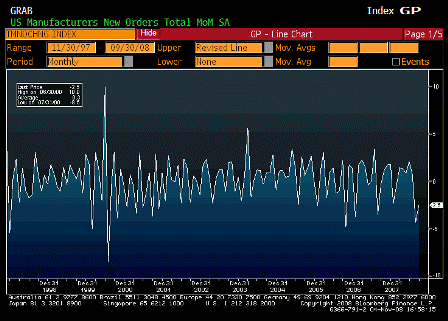
Factory Orders MoM (Sep)

Survey n/a
Actual -2.5%
Prior -4.3%
Revised n/a

 
Down, but down less than last month.

[top][end]

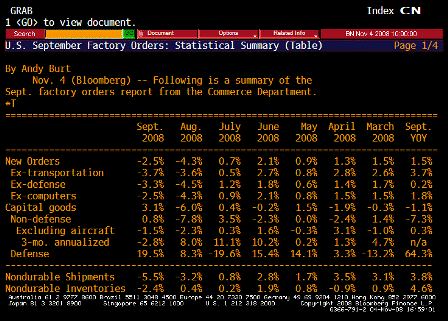
Factory Orders TABLE 1 (Sep)

[top][end]

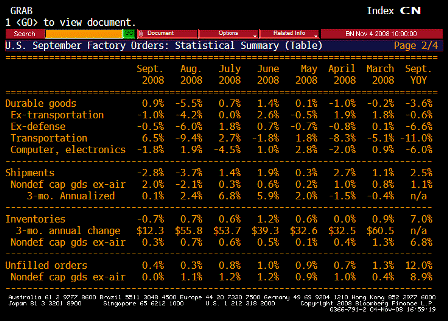
Factory Orders TABLE 2 (Sep)

[top][end]

Factory Orders TABLE 3 (Sep)

[top][end]

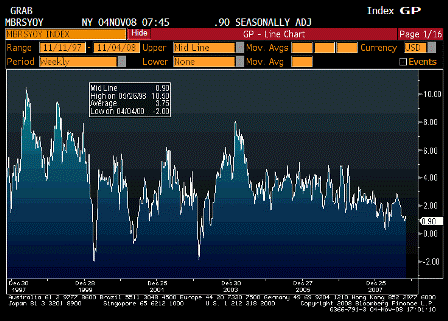
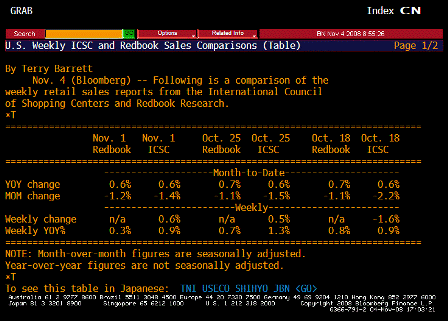
ICSC UBS Store Sales YoY (Nov 4)

Survey n/a
Actual .90%
Prior 1.30%
Revised n/a

 
Looks to still be weakening but off the bottom and still positive.

[top][end]

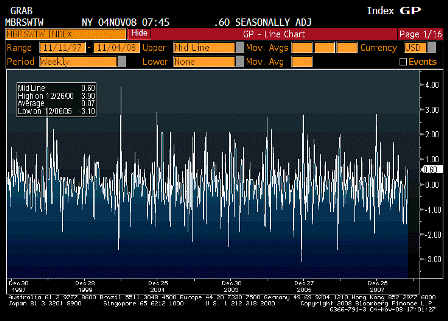
ICSC UBS Store Sales WoW (Nov 4)

Survey n/a
Actual 0.60%
Prior 0.50%
Revised n/a

 
Same, still on the plus side.

[top][end]

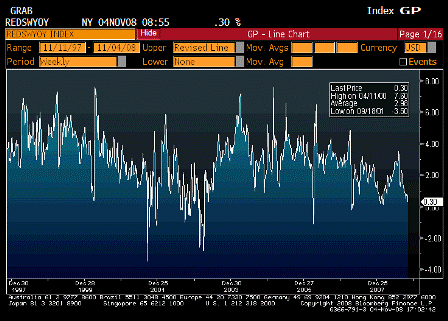
Redbook Store Sales Weekly YoY (Nov 4)

Survey n/a
Actual 0.30%
Prior 0.70%
Revised n/a

 
Looking lower, but still off the recent lows.

[top][end]

Redbook Store Sales MoM (Nov 4)

Survey n/a
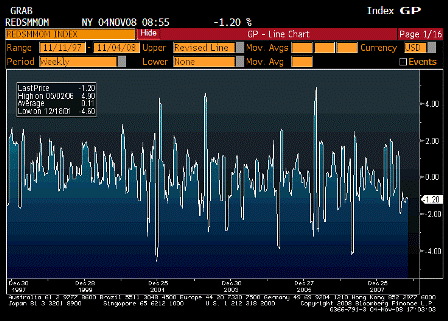
Actual -1.20%
Prior -1.10%
Revised n/a

[top][end]

ICSC UBS Redbook Comparison TABLE


[top]
China News Highlights


[Skip to the end]

Much of the world seems to be going this way.

Enough fiscal will turn this around.

China’s Hu Calls for Efforts to Increase Demand, Xinhua Says

By Wang Ying

Nov. 1 (Bloomberg) — Chinese President Hu Jintao said the government needs to continue efforts to boost domestic demand to bolster financial stability and counter the impact of the global credit crisis, the state-run Xinhua News Agency reported.

The authorities will continue to consolidate the “foundational position” of agriculture and to deepen economic reforms and openness, Hu was quoted as saying. Hu spoke during a visit to the northwestern province of Shaanxi between Oct. 28 and Oct. 29, according to the report late yesterday.

China’s economy, the world’s fourth largest, expanded in the third quarter by 9 percent from a year earlier, the slowest pace since 2003. The government lowered interest rates three times in the past two months, increased export rebates and cut property transaction taxes.


[top]
2008-11-03 USER


[Skip to the end]


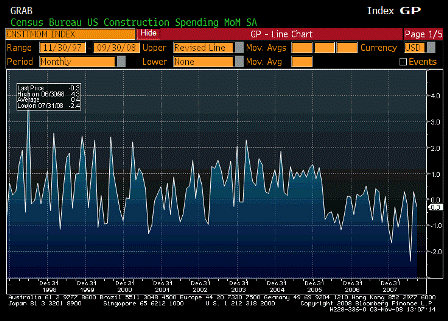
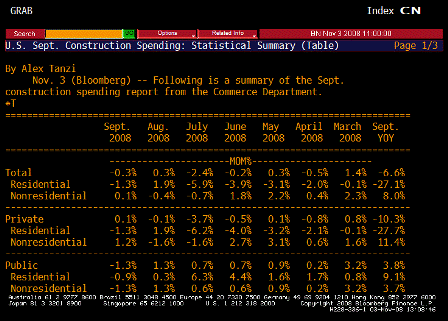
Construction Spending MoM (Sep)

Survey -0.8%
Actual -0.3%
Prior 0.0%
Revised 0.3%

 
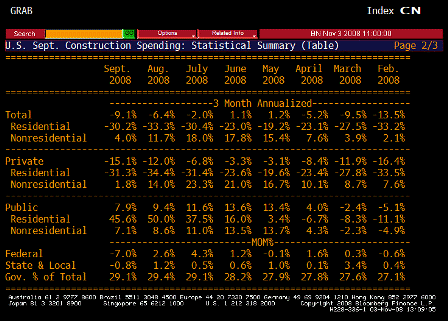
Better than expected and last month revised up.
Seems real estate is the only sector doing better than expected.

[top][end]

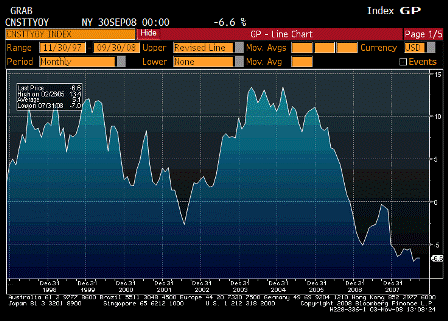
Construction Spending YoY (Sep)

Survey n/a
Actual -6.6%
Prior -6.6%
Revised n/a

 
Still looking down, but seems to be leveling off.

[top][end]

Construction Spending TABLE 1 (Sep)

[top][end]

Construction Spending TABLE 2 (Sep)

[top][end]

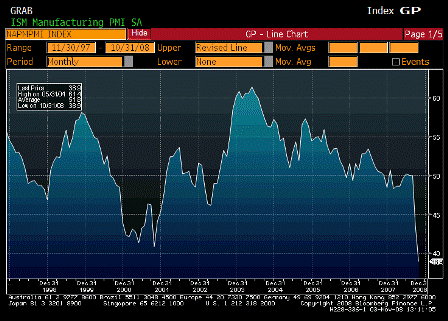
ISM Manufacturing (Oct)

Survey 41.0
Actual 38.9
Prior 43.5
Revised n/a

 
Fell off a cliff.

[top][end]

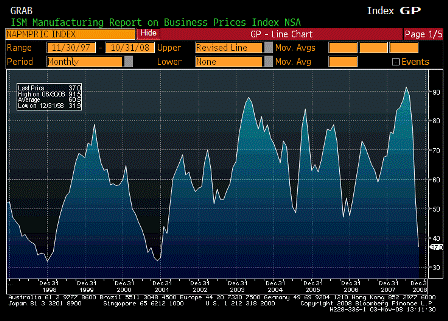
ISM Prices Paid (Oct)

Survey 48.0
Actual 37.0
Prior 53.5
Revised n/a

 
Also a very large drop.


[top]
Re: Banks cutting foreign currency loans in Eastern Europe


[Skip to the end]

(email exchange)

Thanks!

>   
>   On Fri, Oct 31, 2008 at 7:25 AM, Bob wrote:
>   

`Panic’ Strikes East Europe Borrowers as Banks Cut Franc Loans

By Ben Holland, Laura Cochrane and Balazs Penz

Oct. 31 (Bloomberg)- Imre Apostagi says the hospital upgrade he’s overseeing has stalled because his employer in Budapest can’t get a foreign-currency loan.

The company borrows in foreign currencies to avoid domestic interest rates as much as double those linked to dollars, euros and Swiss francs. Now banks are curtailing the loans as investors pull money out of eastern Europe’s developing markets and local currencies plunge.

Foreign-denominated loans helped fuel eastern European economies including Poland, Romania and Ukraine, funding home purchases and entrepreneurship after the region emerged from communism. The elimination of such lending is magnifying the global credit crunch and threatening to stall the expansion of some of Europe’s fastest-growing economies.

Plunging Currencies

Since the end of August, the forint has fallen 16 percent against the Swiss franc, the currency of choice for Hungarian homebuyers, and more than 8 percent versus the euro. Foreign- currency loans make up 62 percent of all household debt in the country, up from 33 percent three years ago.

That’s even after a boost this week from an International Monetary Fund emergency loan program for emerging markets and the U.S. Federal Reserve’s decision to pump as much as $120 billion into Brazil, Mexico, South Korea and Singapore. The Fed said yesterday that it aims to “mitigate the spread of difficulties in obtaining U.S. dollar funding.”

Plunging domestic currencies mean higher monthly payments for businesses and households repaying foreign-denominated loans, forcing them to scale back spending.

No More Dreaming

The bulk of eastern Europe’s credit boom was denominated in foreign currencies because they provided for cheaper financing.

Before the current financial turmoil, Romanian banks typically charged 7 percent interest on a euro loan, compared with about 9.5 percent for those in leu. Romanians had about $36 billion of foreign-currency loans at the end of September, almost triple the figure two years earlier.

In Hungary, rates on Swiss franc loans were about half the forint rates. Consumers borrowed five times as much in foreign currencies as in forint in the three months through June.

‘Serious Problems’

Now banks including Munich-based Bayerische Landesbank and Austria’s Raiffeisen International Bank Holding AG are curbing foreign-currency loans in Hungary. In Poland, where 80 percent of mortgages are denominated in Swiss francs, Bank Millennium SA, Getin Bank SA and PKO Bank Polski SA have either boosted fees or stopped lending in the currency.

The east has been the fastest-growing part of Europe, with Romania’s economy expanding 9.3 percent in the year through June, Ukraine 6.5 percent and Poland 5.8 percent. The combined economy of the countries sharing the euro grew 1.4 percent in the period.

IMF Help

Ukraine, facing financial meltdown as the hryvnia drops and prices for exports such as steel tumble, on Oct. 26 agreed to a $16.5 billion loan from the IMF.

Hungary on Oct. 28 secured $26 billion in loans from the IMF, the EU and the World Bank. The government forecast a 1 percent economic contraction next year, the first since 1993.

These come with ‘conditions’ which means contractionary fiscal adjustments.

Panicked Customers


Romanian central bank Governor Mugur Isarescu sounded the alarm in June, saying the growth of foreign-currency loans was “excessively high and risky,” especially because Romanians with their communist past aren’t used to the discipline of debt.


`Cheaper, Riskier’

Turkish savings in foreign currencies exceeded loans by about 30 percent as of the end of 2007, according to a January Fitch report. In Poland foreign exchange loans were double deposits, and in Hungary they were triple.

“We’ve been observing a return to a good old banking rule to lend in a currency in which people earn,” said Jan Krzysztof Bielecki, chief executive officer of Poland’s biggest lender, Bank Pekao SA. It stopped non-zloty lending in 2003. “Earlier, banks competed on the Swiss franc market watching only sales levels and not looking at keeping an acceptable risk level.”


[top]
2008-10-31 USER


[Skip to the end]


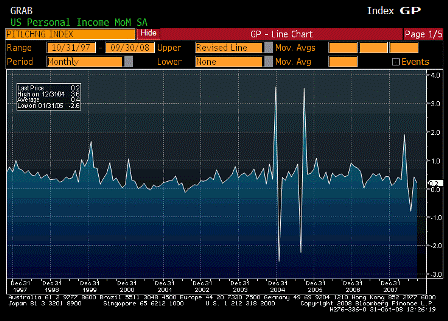
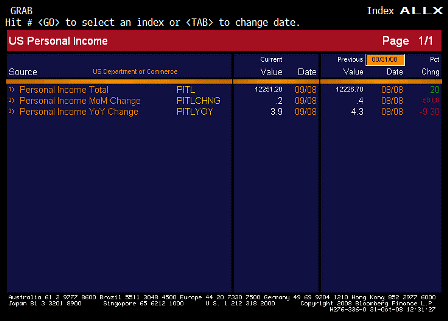
Personal Income MoM (Sep)

Survey 0.1%
Actual 0.2%
Prior 0.5%
Revised 0.4%

 
A tick better than expected but last month revised down same.

[top][end]

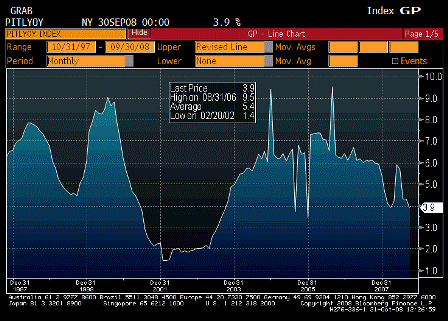
Personal Income YoY (Sep)

Survey n/a
Actual 3.9%
Prior 4.3%
Revised n/a

 
Looks to be on the decline as expected.

Lower interest rates are also a drag on income, as households are net savers.

[top][end]

Personal Income ALLX (Sep)

[top][end]

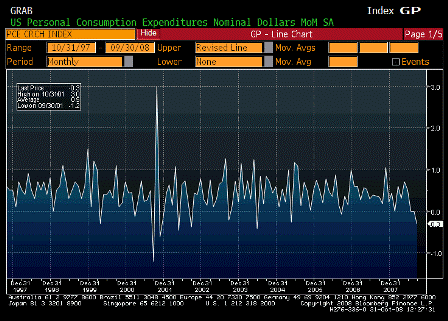
Personal Consumption MoM (Sep)

Survey -0.2%
Actual -0.3%
Prior 0.0%
Revised n/a

 
Worse than expected and took dive as the publicity around the credit crisis petrified businesses and consumers.

[top][end]

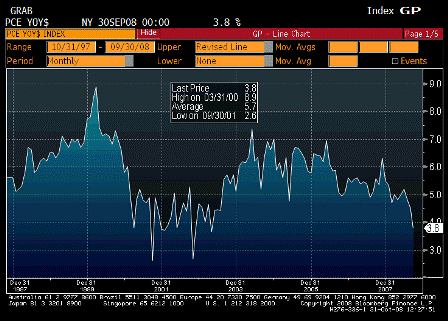
Personal Consumption YoY (Sep)

Survey n/a
Actual 3.8%
Prior 4.5%
Revised n/a

 
Heading south but still growing some.

[top][end]

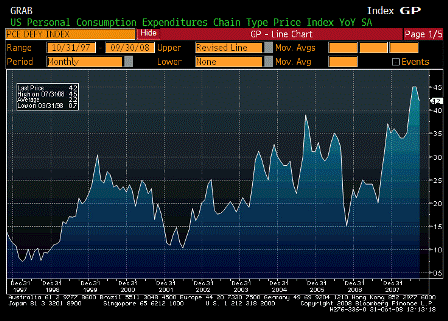
PCE Deflator YoY (Sep)

Survey 4.1%
Actual 4.2%
Prior 4.5%
Revised n/a

 
Higher than expected and staying high even with commodities coming down.

[top][end]

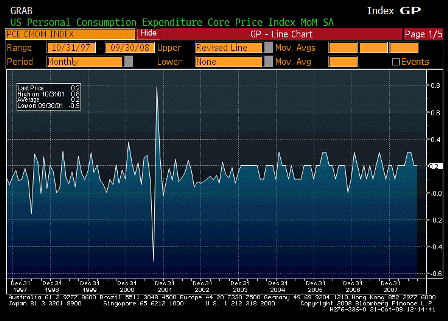
PCE Core MoM (Sep)

Survey 0.1%
Actual 0.2%
Prior 0.2%
Revised n/a

 
Higher than expected.

[top][end]

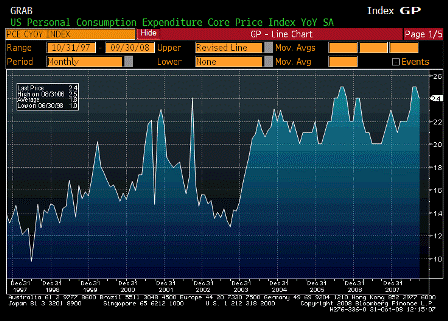
PCE Core YoY (Sep)

Survey 2.4%
Actual 2.4%
Prior 2.6%
Revised 2.5%

 
Holding firm, at least for now.

[top][end]

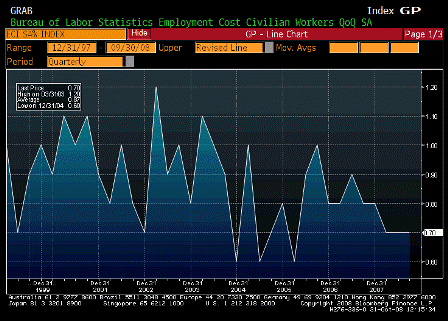
Employment Cost Index (3Q)

Survey 0.7%
Actual 0.7%
Prior 0.7%
Revised n/a

 
Well contained.

[top][end]

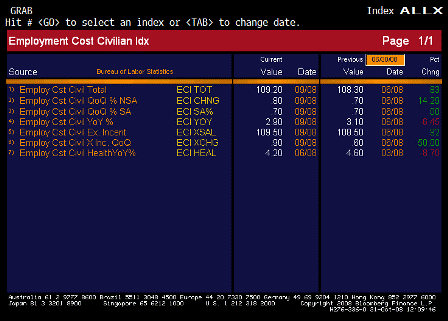
Employment Cost Index ALLX (3Q)

 
The surveys have a large subjective component, and have all taken dives recently.

[top][end]

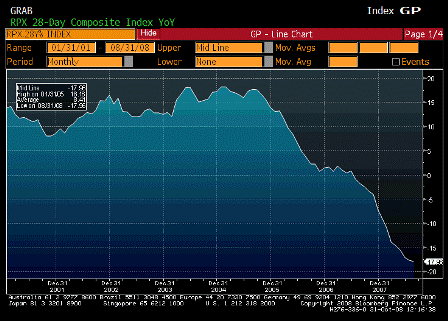
RPX Composite 28dy YoY (Aug)

Survey n/a
Actual -17.96%
Prior -17.76%
Revised n/a

[top][end]

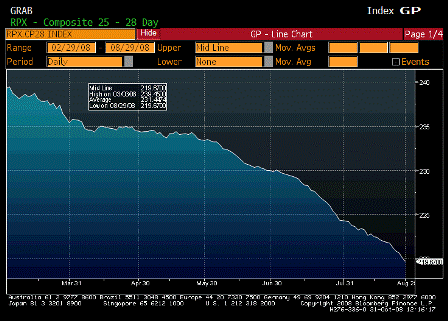
RPX Composite 28dy Index (Aug)

Survey n/a
Actual 219.67
Prior 224.28
Revised n/a

[top][end]

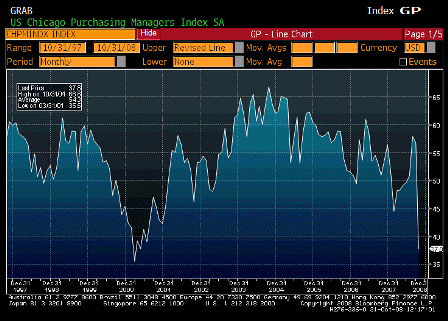
Chicago Purchasing Manager (Oct)

Survey 48.0
Actual 37.8
Prior 56.7
Revised n/a

[top][end]

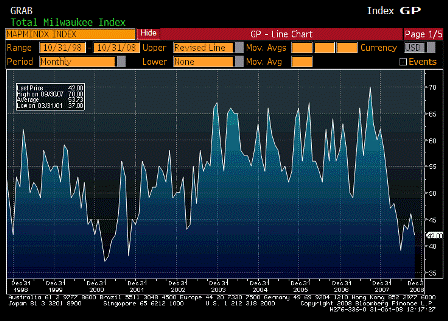
NAPM Milwaukee (Oct)

Survey n/a
Actual 42.0
Prior 46.0
Revised n/a


[top]