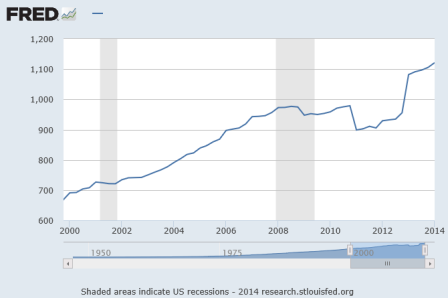
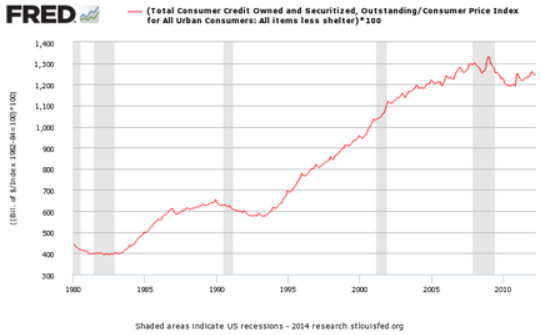
A few credit related charts

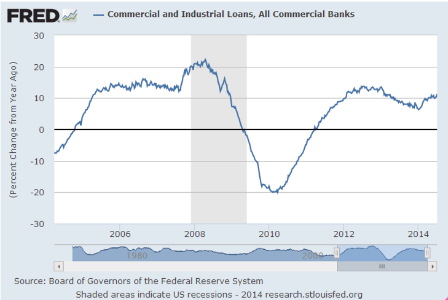
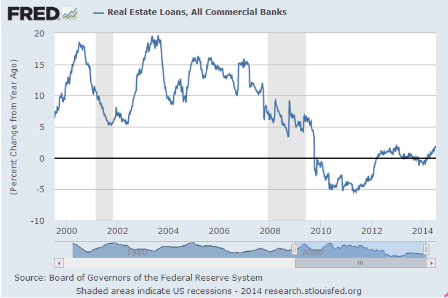
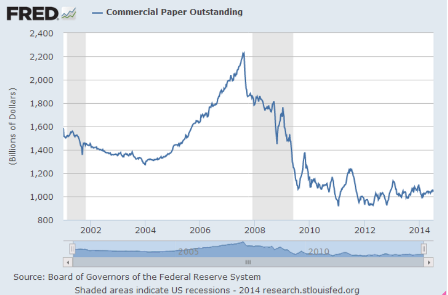
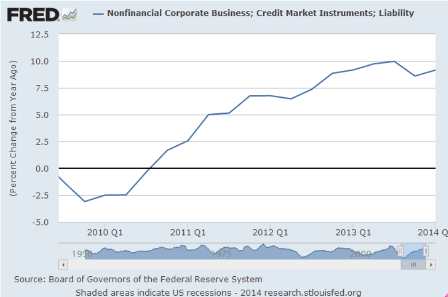
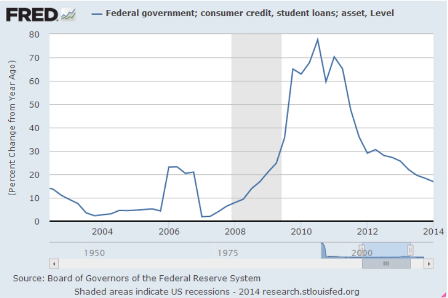
Maybe just a bounce from a dip/shift from/to bank lending. We’ve been here before and turned down. And in the last cycle growth was much higher and lagged the end of the cycle:


Full size image

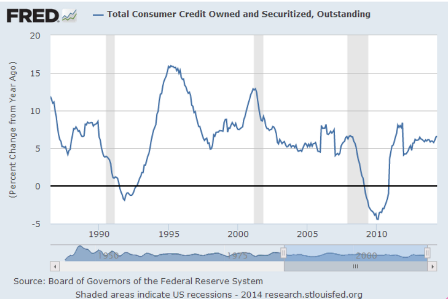
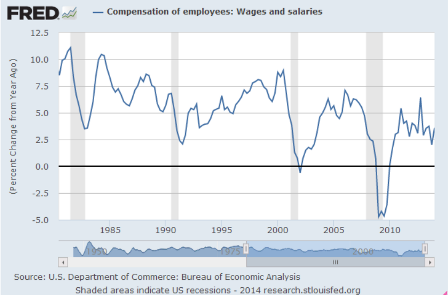
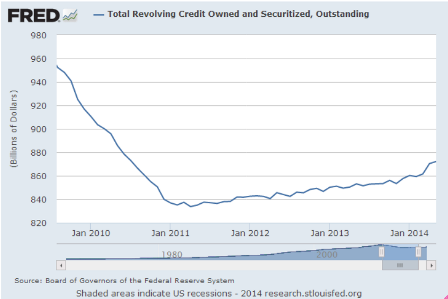
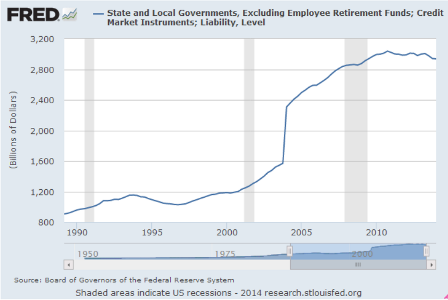
Year over year- a relatively small blip up at the end, but in general looks boring to me:


Full size image

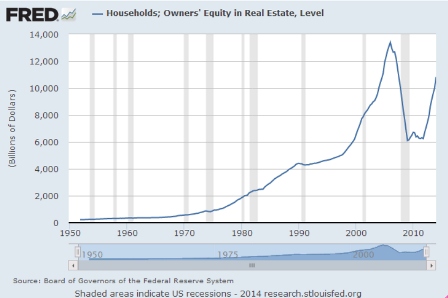
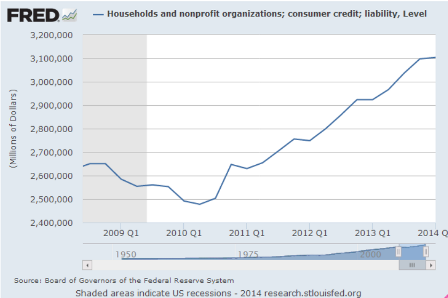
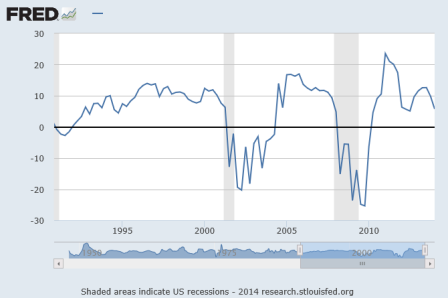
Same here. The latest blip up looks like just a bit of vol.

And also note that it tends to go up before a recession?


Full size image


Full size image
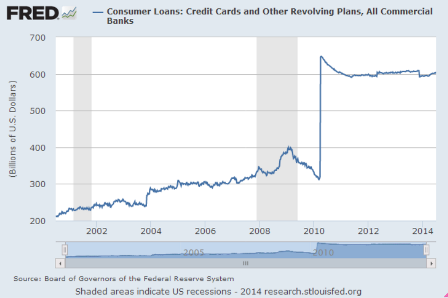
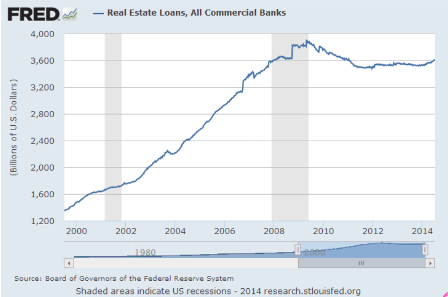
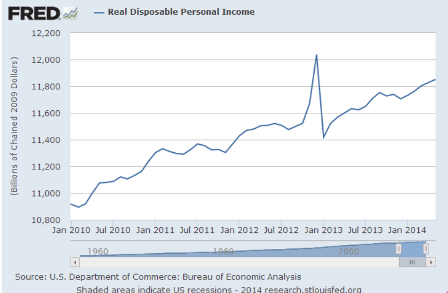
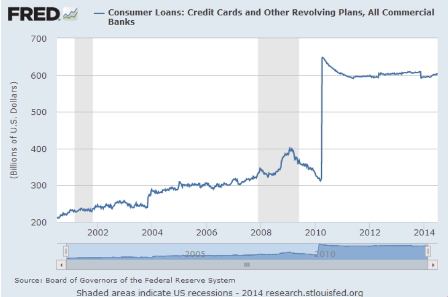
Not much happening here, either:

Full size image


Full size image


Full size image


Full size image
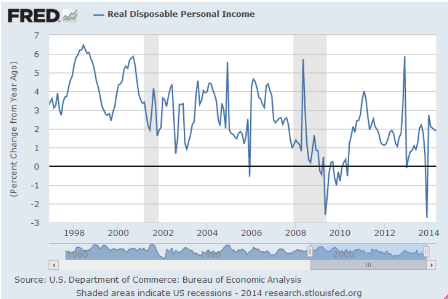
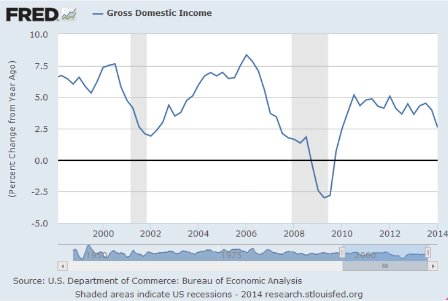
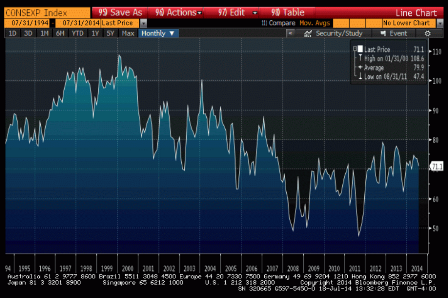
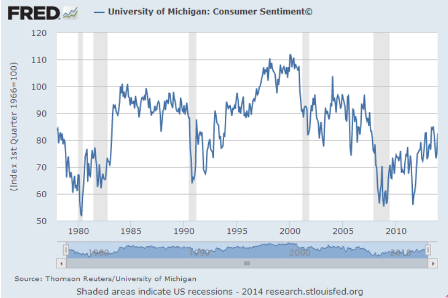
Seems to be a macro constraint on income:

Full size image


Full size image


Full size image

Time to say goodbye? Schauble Calls on Italy to Pursue Structural Reform

Schäuble Calls on Italy to Pursue Structural Reform

By Andrea Thomas

July 16 (WSJ) — German Finance Minister Wolfgang Schäuble called on Italy to pursue its ambitious structural reform efforts if it wants to boost its economic-growth prospects. “Especially since growth forecasts for Italy have been reduced recently, it’s important to reform and cut the debt level convincingly,” he said. Italian Prime Minister Matteo Renzi has presented ambitious and broad-based reforms, he added. “The Stability and Growth Pact is the foundation for politico-economic cohesion in Europe,” said Mr. Schäuble. “The Stability and Growth Pact provides sufficient flexibility. It’s doesn’t stand in the way of structural reforms; quite the opposite, it promotes them.”

This is a direct response to Prime Minister Renzi who asked for what can be described as a minuscule amount flexibility with the deficit rules. (Note that Schauble didn’t even say said reforms would boost growth, only ‘growth prospects’, whatever that means.)

The problem is that for any given level of govt spending (a political decision) tax liabilities are too high to allow ‘savings desires’ to be accommodated. And ‘the debt level’ is best thought of as the ‘money supply’ (deposits at the CB) that’s the euro ‘savings’/net financial assets of the non govt sectors.

Said another way, the currency itself is the EU’s public monopoly, and the mass unemployment is necessarily the evidence that the monopolist is restricting the ‘supply’ of net financial assets demanded by the economy.

Said another way, for all practical purposes said reforms don’t increase aggregate demand. At best they address what I call distributional issues.

My proposal is for Italy to deliver an ultimatum to the EU giving them 30 days to relax the 3% deficit limit and eliminate the 60% debt/GDP limit.

If the EU refuses, Italy has two choices:

1. Do nothing as the destruction of their civilization continues,

2. Begin taxing and spending in ‘new lira’ with fiscal policy that promotes output and employment.

And note that if they do go to ‘new lira’ and retain their now constitutionally mandated balanced budget requirement, it will all get even worse.

Housing and Philly Fed

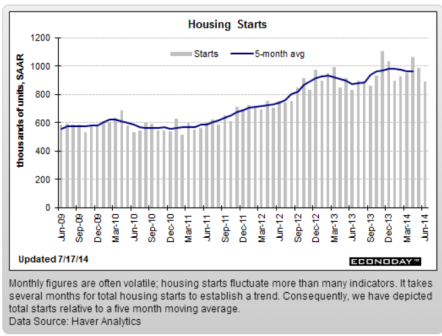
Note the Nov/Dec mini spike to capture year end tax credits (my story) followed by familiar down for the winter, then up, then back down some pattern.

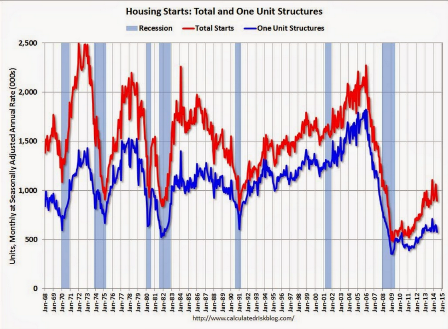
Yes, you can have a low output gap without housing, and yes, manufacturing is chugging along nicely. But overall the charts show declining monthly growth rates of retail sales, industrial production, and housing starts, as what’s looking more and more like the macro constraint of the relentless demand leakages continue to take their toll.

Housing Starts


Highlights
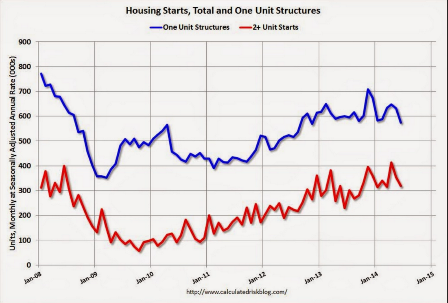
Fed Chair Janet Yellen was right to worry about the housing sector during Congressional testimony this week. Starts in June disappointed sharply, declining another monthly 9.3 percent after decreasing 7.3 percent in May. June starts came in at 0.893 million units annualized, up 7.5 percent on a year-ago basis. Expectations were for 1.026 million units.

The fall in the latest month was led by the multifamily component but closely followed by the single-family component. Multifamily family starts dropped 9.9 percent after falling 14.7 percent in May. The single-family component declined 9.0 percent in June, following a 2.6 percent dip the prior month.

Building permits also lost ground. Permits declined 4.2 percent after decreasing 5.1 percent in May. June’s 0.963 million units annualized was up 2.7 percent on a year-ago basis. Analysts forecast 1.038 million units for June.

The housing sector still needs propping up by the Fed. This sector is losing steam instead of improving. Recent NAHB HMI have pointed to start weakness with weak numbers on traffic.

Full size image


Full size image


Full size image


Full size image

Industrial production, mtg purchase apps charts, homebuilder’s index

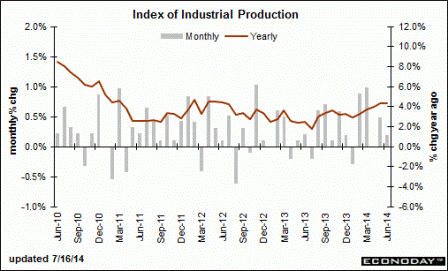
Slowed in Q1, rebound in Q2, H1 about the same old 4% rate IP usually grows at as previously discussed:

Industrial Production


Highlights
As suggested by production worker hours, industrial production was soft in June. Industrial production slowed to a rise of 0.2 percent, following a jump of 0.5 percent in May. Expectations were for a 0.4 percent boost. The manufacturing component decelerated to a modest 0.1 percent gain after jumping 0.4 percent the prior month. The median market forecast was for 0.4 percent. Mining was healthy with a 0.8 percent increase, following a 1.1 percent surge in May. Utilities declined 0.3 percent, following a drop of 0.4 percent in May.

Manufacturing excluding motor vehicles increased 0.2 percent in June after a 0.3 percent rise in May.

Within manufacturing, the production of durable goods increased 0.4 percent in June and rose at an annual rate of 8.8 percent in the second quarter. In June, the gains were broad based among durable manufacturing industries, with increases of 1.0 percent or more in the indexes for nonmetallic mineral products, for primary metals, for fabricated metal products, for aerospace and miscellaneous transportation equipment, and for furniture and related products. The production of nondurable goods moved down 0.3 percent in June. In June, the output of petroleum and coal products fell 2.7 percent, in part because of a disruption at a major refinery; the production of apparel and leather declined 1.3 percent, and the index for food, beverage, and tobacco products moved down 0.6 percent.

The overall capacity utilization rate in June held steady at 79.1 percent. The latest number came in slightly lower than the consensus projection for 79.2 percent.

For the second quarter as a whole, manufacturing production rose at an annual rate of 6.7 percent after increasing 1.4 percent in the first quarter, suggesting that second quarter GDP will rebound nicely from the first quarter freeze shock.

We are seeing some volatility in manufacturing numbers recently. But on average, growth is healthy.

Mortgage purchase apps still way soft:

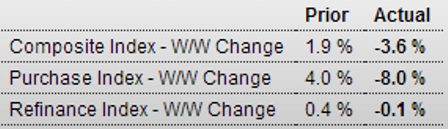
MBA Purchase Applications

Highlights
The purchase index fell 8.0 percent in the July 11 week, more than reversing a 4.0 percent gain in the prior week. The refinance index was little changed, down 0.1 percent in the week. Rates were little changed in the week with the average 30-year rate for conforming loans ($417,500 or less) up 1 tenth to 4.33 percent. Watch for the housing market index later this morning at 10:00 a.m. ET.

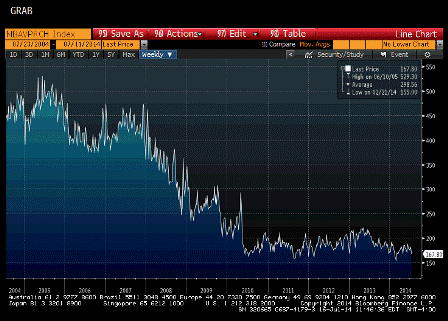
MBA purchase applications:


Full size image

National Association of Home Builders index up:


Full size image


Full size image

Retail sales, credit expansion review, Empire manufacturing

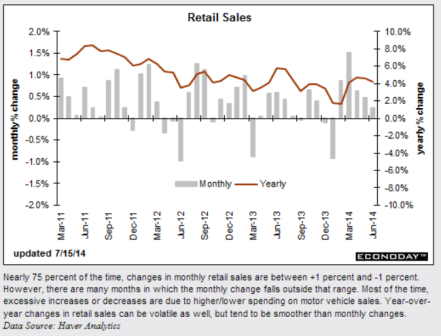
Still looking like a macro constraint/fading aggregate demand. Strong auto sales, for example, coincides with less of something else:

And this is the so called retail sales ‘control group’ that excludes food, gas, building materials and autos:

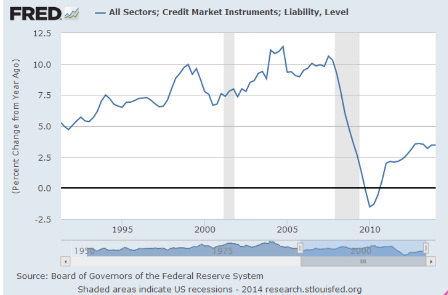
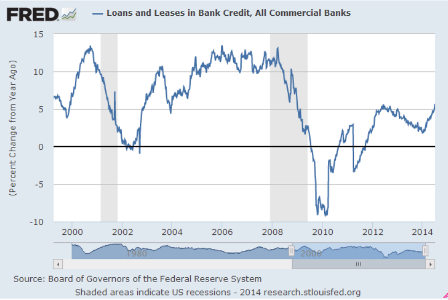
This market for loans overall remains subdued indicating banks getting a share of what was the ‘shadow bank’ business.

And the growth rates are generally well below prior cycles:

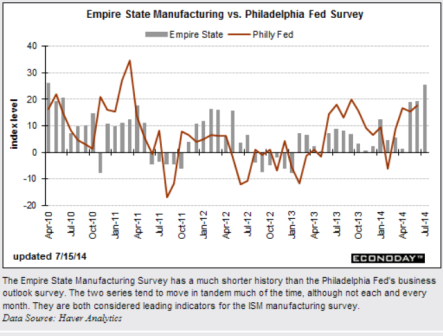
Meanwhile, manufacturing, a relatively small part of the economy, keeps chugging along, with overall output/industrial production most often growing at about 3-4% year over year:


Highlights
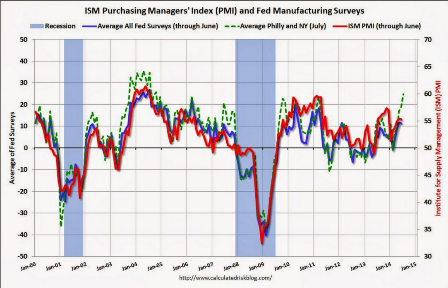
Manufacturing activity is accelerating sharply, at least in the New York region based on the Empire State index which is at a very strong 25.60 in the July reading. New orders are very strong at 18.77, up from an already strong 18.36 in June, as are shipments at 23.64. Employment is a special positive, at 17.05 vs 10.75 in June.

Other readings, however, are less favorable with unfilled orders in contraction at minus 6.82. Price readings show some pressure with input prices at plus 25.00 and finished prices up about 2.5 points to 6.82. Optimism is also down as the 6-month general conditions index fell more than 10 points to 28.47.

Consumer debt ratios

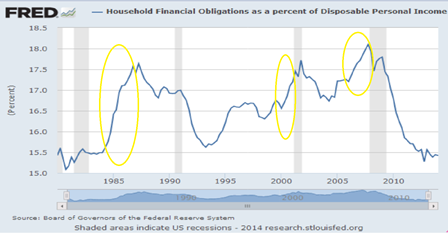
Circled are the credit expansion from the ‘regrettable’ S and L expansion (over $1 trillion back when that was a lot of money), the ‘regrettable’ .com/Y2K credit expansion (private sector debt expanding at 7% of GDP funding ‘impossible’ business plans), and most recently the ‘regrettable’ credit expansion phase of the sub prime fiasco.

All were credit expansions that helped GDP etc. but on a look back would not likely have been allowed to happen knowing the outcomes.

So the question is whether we can get a similar credit expansion this time around to keep things going/offset the compounding demand leakages that constrain spending/income/growth.

Japan, for example, has been very careful not to allow a ‘regrettable’ private sector credit expansion since the last one came apart in 1991…

So yes, debt ratios look low, but without some kind of ‘regrettable’/fraudulent/etc. impetus this is about all we can expect given the demand leakages, etc?

And not to forget this an average of higher and lower income earners, with income being skewed upwards to those with lower propensities to spend. I had suspected the consumer would make a move, somewhat as in past cycles, but then FICA and sequesters took away a large chunk of the income/ammo needed to support it, while the demand leakages continued.


Full size image

Federal government tax receipts

Federal government current tax receipts: Personal current taxes


Full size image

Federal government current receipts: Contributions for government social insurance


Full size image

The automatic fiscal stabilizers got some help from the FICA hike to cut net govt spending and throw a wet blanket over growth and maybe take a year or two off the duration of this cycle.

Lots of indicators looking very late cycle to me now.

This year’s deficit is now running less than 3% of GDP- about the same as the EU.
:(