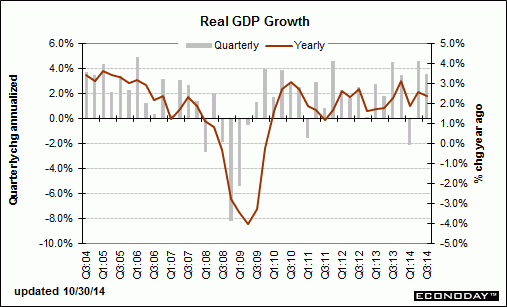
Q3 GDP Up 3.5%

First look, which tends to get revised substantially as more info is released.

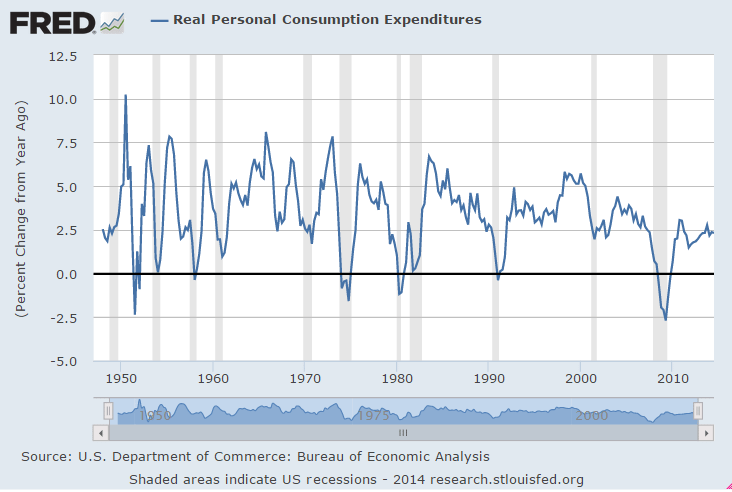
gdp-tgdp-gConsumption looks discouraging, especially longer term, and it appears to be at ‘stall speed’:

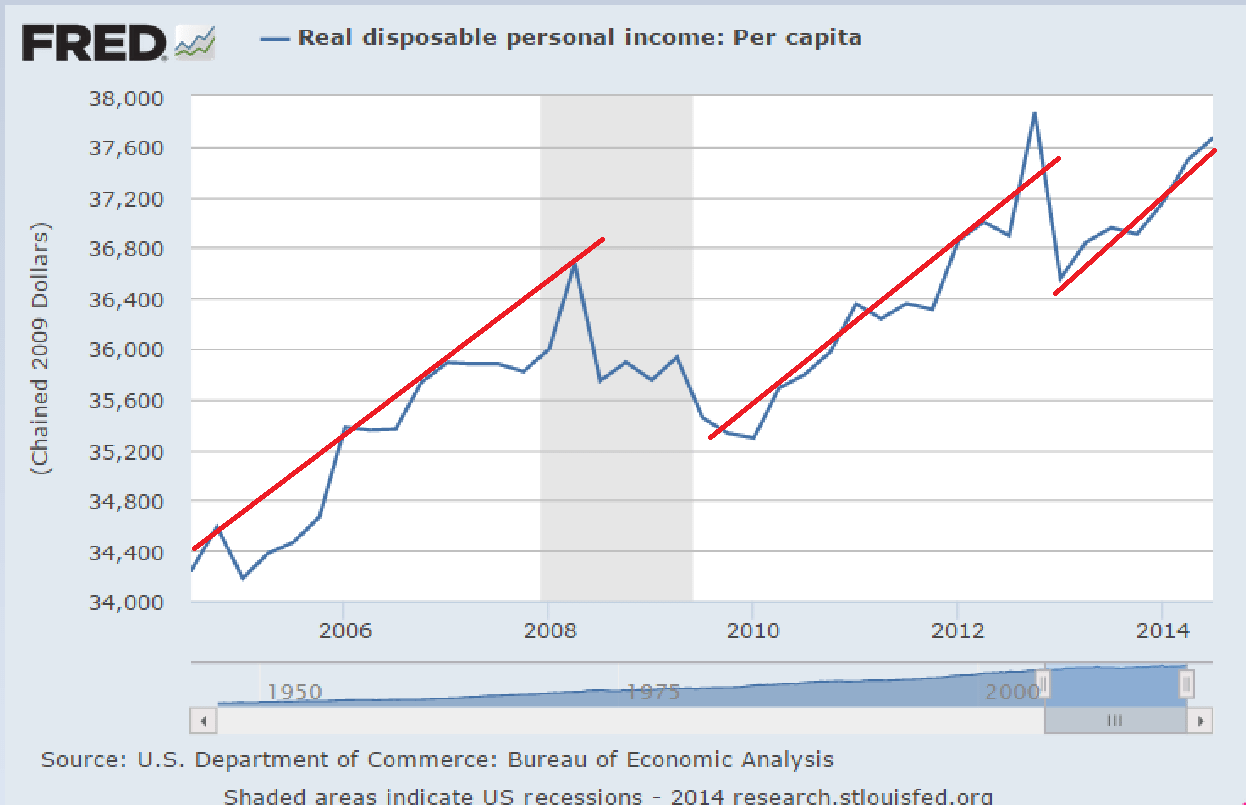
gdp-rYou can see how after tax income keeps ratcheting down:

pi-g

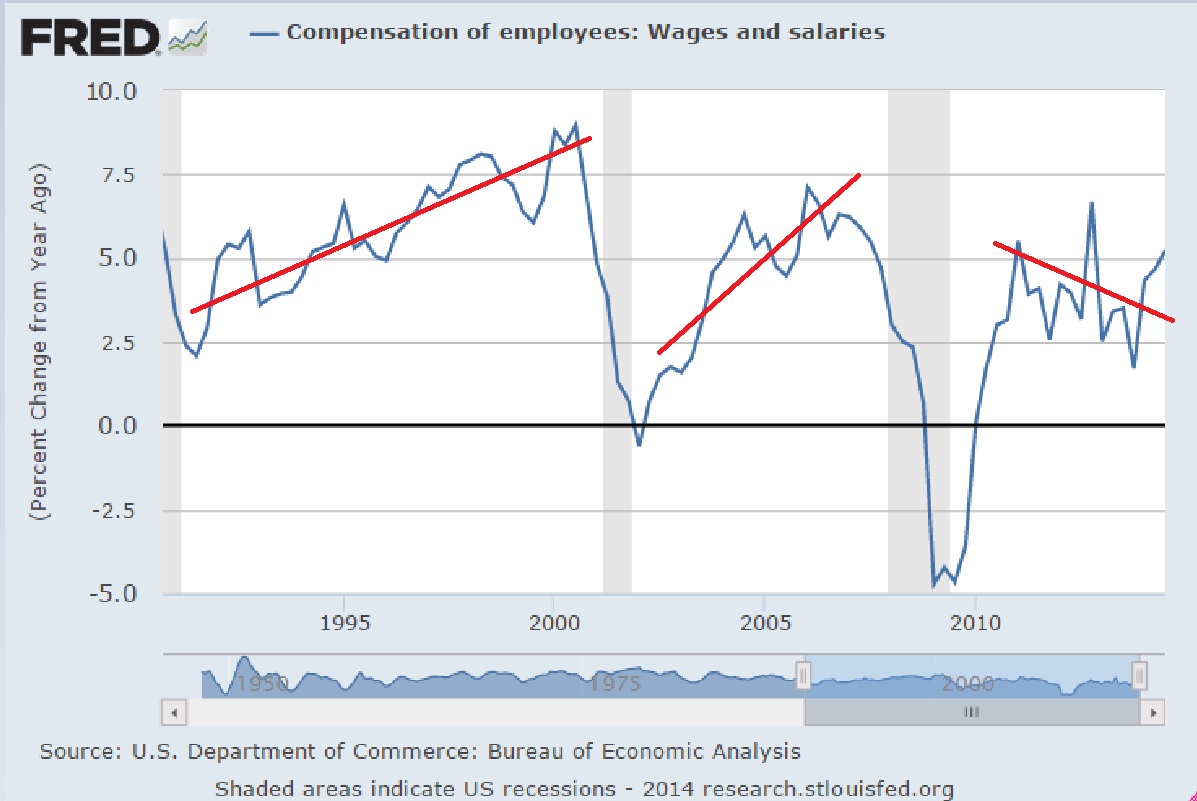
Wages used to go up faster with growth, but seems not this time:

price-index

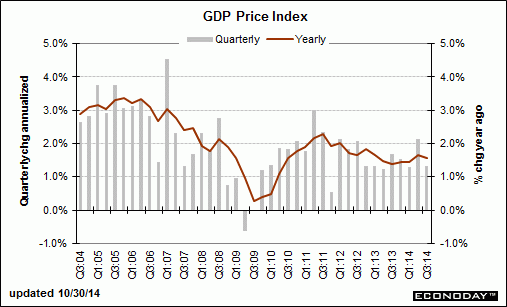
Prices getting further from Fed’s 2% target, not closer: cons

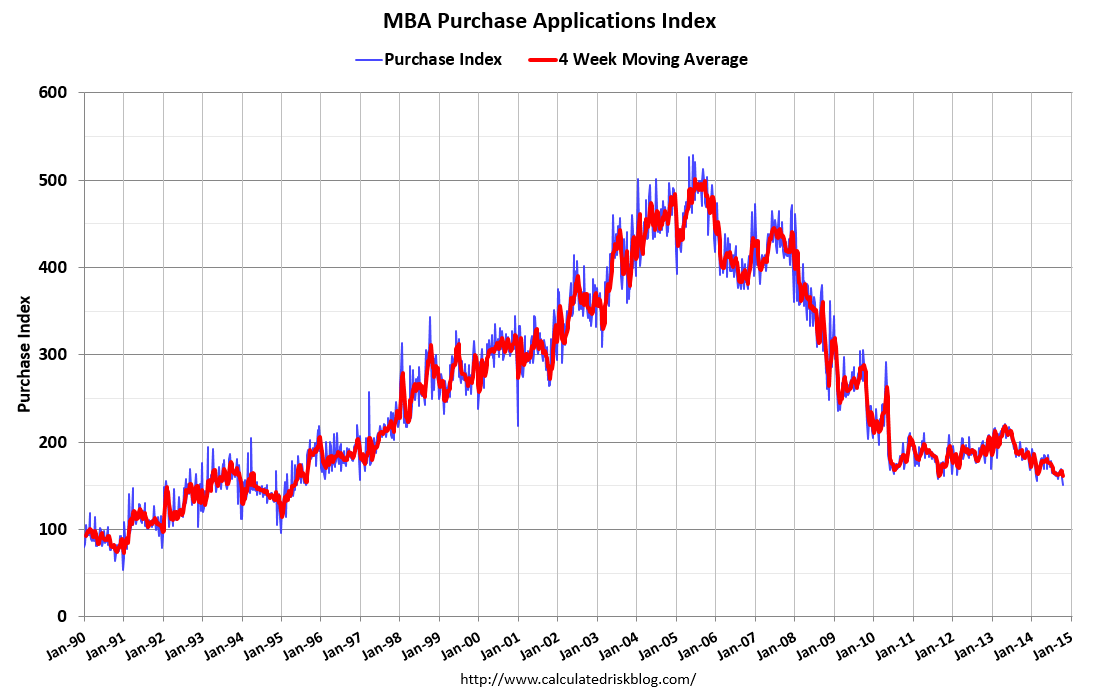
Mortgage Purchase Applications Fall Even Further

This continuing decline is particularly troubling as cash buyers are also on the decline, and home sales are already at severely depressed levels by any measure.

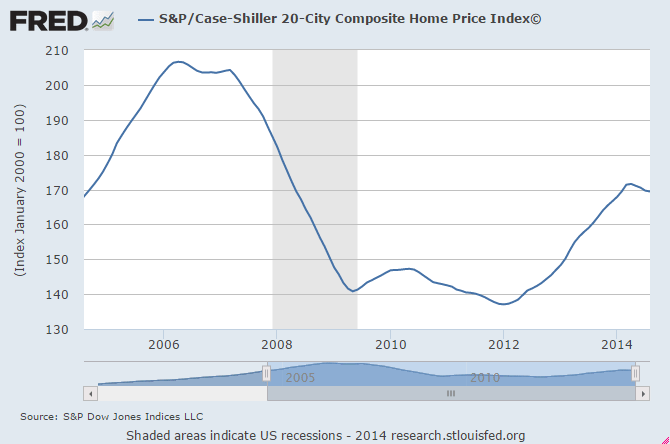
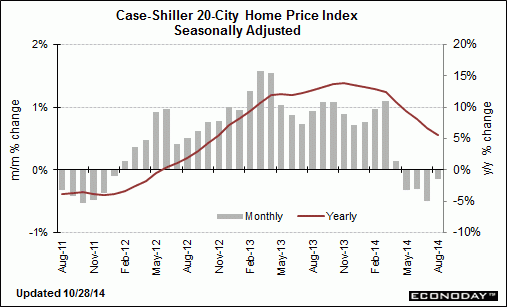
Furthermore, prices have also been falling month to month, and the year over year gains are heading towards negative territory as well.

This cycle may now be over.

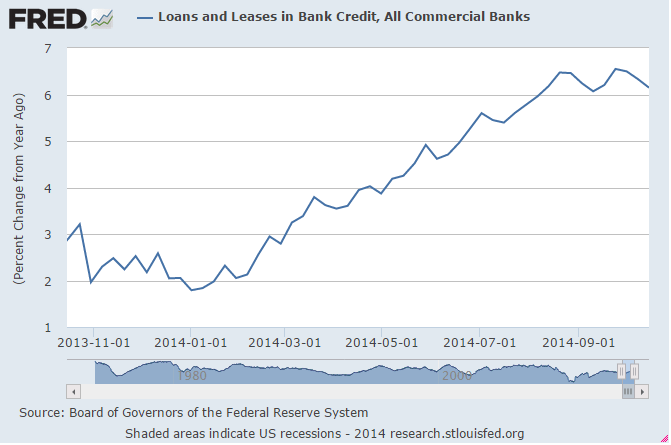
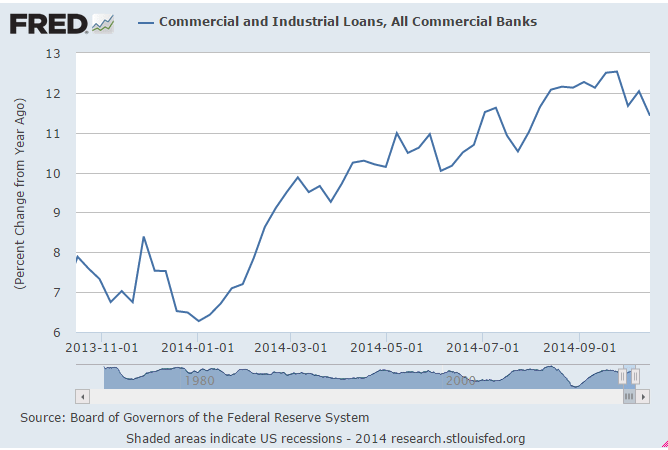
With the federal deficit this low in the context of today’s credit conditions, income lost in one slow period is a drag on the next period, as credit expansion can’t keep up with unspent incomes and it all goes into reverse.

MBA Purchase Applications

mort-table

Highlights
The big drop this month in mortgage rates has yet to raise demand for purchase applications which, in the October 24 week, fell a sharp 5.0 percent for the second straight week. And the trend for purchase applications is suddenly moving lower with the year-on-year rate, which had been in the low negative double-digits, now at minus 15 percent.

From the MBA: Mortgage Applications Decrease in Latest MBA Weekly Survey

Mortgage applications decreased 6.6 percent from one week earlier, according to data from the Mortgage Bankers Association’s (MBA) Weekly Mortgage Applications Survey for the week ending October 24, 2014. …

The Refinance Index decreased 7 percent from the previous week. The seasonally adjusted Purchase Index decreased 5 percent from one week earlier. … The seasonally adjusted purchase index and conventional purchase index were the lowest since February 2014, while the government purchase index was the lowest since August 2007.

MBAOct292014 sp-cs


Italy Surrenders

Reads like Renzi sold out to Brussels and the Italian exporters:

Italy Revises Budget to Avoid Clash With Brussels  (WSJ) Italy backed away from a clash with the European Commission over its 2015 budget on Monday by agreeing to use a €3.3 billion ($4.18 billion) reserve it had initially earmarked for tax cuts to reduce its deficit instead. The government of Prime Minister Matteo Renzi said it would now use the €3.3 billion of funds in reserve to help meet the EU budget requests. A further €1.2 billion from minor budget adjustments will also be redirected to satisfy Brussels. The funds will allow Italy to reduce its structural deficit by more than it had initially planned in its budget. Economy Minister Pier Carlo Padoan had already indicated that Italy could use the funds in reserve to address possible requests from the commission.

Euro vs $US

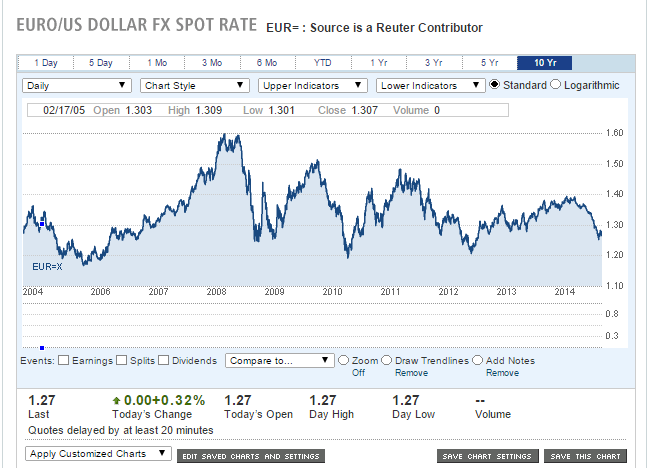
The euro is up vs the $US today in spite of near universal positioning for it to fall,

including technical indicators pointing to further declines.
I see lots of positives for the euro and one negative.
Positives:
1.  $US went up/euro down due to portfolios buying/selling for the ‘wrong’ reasons (for example- Turkey sold 12 billion euro of reserves)
     a.  end of Fed QE- this entirely psychological, as QE in the first instance functions as a tax that removes interest income from the economy
     b.  potential for Fed rate hikes- this is backwards as well- 0 rates are a deflationary/contractionary bias
     c.  negative ECB rates function as a tax removing net euro financial assets from the economy
     d.  proposed ECB asset purchases would remove additional euro interest income from the economy

2.  The EU overall is running a trade surplus, which in the first instance reduces the rest of worlds net euro financial assets

3.  The deflationary forces have depressed wages for exporters, tipping wage ppp in their favor.

4.  EU proactive deficit reduction, assisted by the lower rates on govt. securities, continues (albeit at a slower pace) to reduce the supply of net euro financial assets in the non govt. sectors of the economy.

5.  Lower energy prices help EU more than the US due to higher US domestic energy output.

The major negative is the possibility that the ECB is selling euro through it’s Belgium branch, which has been reporting large increases in $US Tsy holdings.

If the ECB is selling euro it can keep it down to any level it desires.  It’s a political choice.  Market forces are not applicable.

Best I can tell, however, the selling has not been from the ECB, but I have no first hand knowledge.

Therefore I see the ‘fundamentals’ aligned for a strong euro that can potentially go back through the highs, with any proposed further action by the ECB further strengthening it, whether they know it or not.

However, those forces strengthening the euro are also further damaging the economy, which puts more political stress on the EU overall.

And this political stress that will intensify as the euro rises has the potential to end the current institutional arrangements and cause the euro to cease to exist.

That is, I can see the euro going up in value until it becomes worthless.

Reminds me of the saying:
“A man chases a woman until she catches him”
;)

And what I don’t know is whether the portfolio shifting that has driven the euro down for the ‘wrong’ reasons has run its course. If there is more to come it could sell off further until the underlying fiscal and trade flows cause it to reverse.

eu-usd

New home sales


Whoops, last month’s ‘acceleration’ revised away.

Again, with purchase mtgs down and cash buyers down, hard to see total sales rising. And prices down as well, continuing that troubling tendency…

nhs-sept-table

Highlights

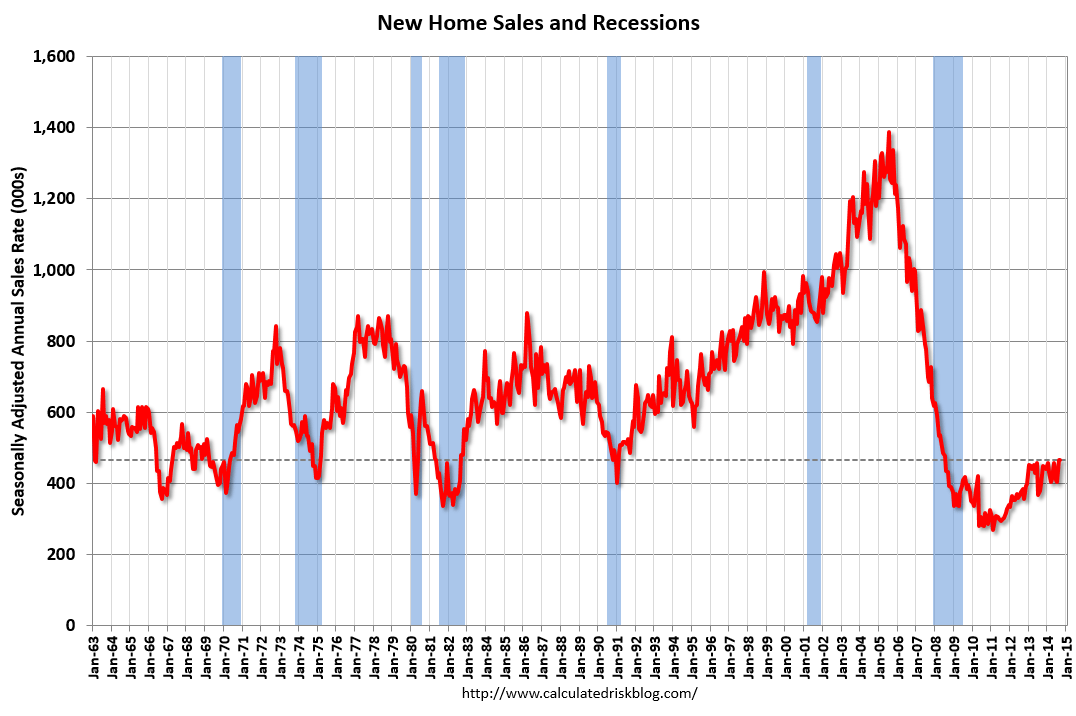
New home sales, at a 467,000 annual rate, managed to top August’s great surge but only after August was revised sharply lower, from 504,000 to 466,000. Still, September’s 467,000 rate is the best of the recovery, going back to July 2008 with August’s 466,000 right behind in second place.

Price concession may be a key factor behind the September and August gains, gains that have lifted sales from this year’s earlier run in low 400,000s. The median price plunged a monthly 9.7 percent to $259,000. The year-on -year rate is in the minus column, at minus 4.0 percent, for only the second time in the last two years. Before this month, the year-on-year price was trending upward in the high single digits.nhs-sept-graph

NHSSept2014