- Leading Indicators (Released 10:00 EST)
- Leading Indicators ALLX (Released 10:00 EST)
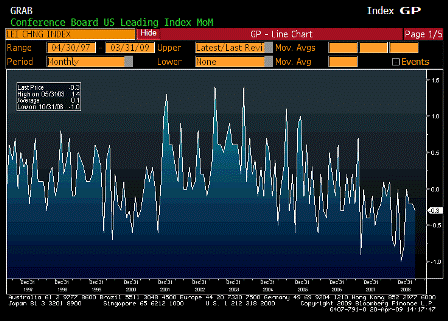


Leading Indicators (Mar)
| Survey | -0.2% |
| Actual | -0.3% |
| Prior | -0.4% |
| Revised | -0.2% |
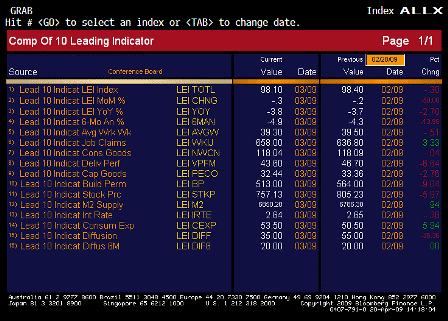
Leading Indicators ALLX (Mar)
[top]

| Survey | -0.2% |
| Actual | -0.3% |
| Prior | -0.4% |
| Revised | -0.2% |
[top]
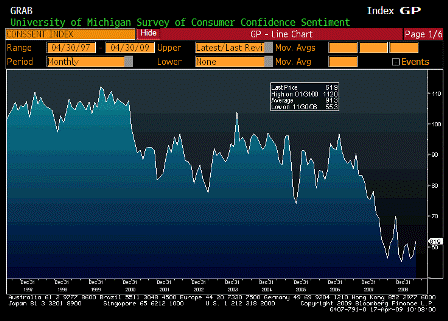
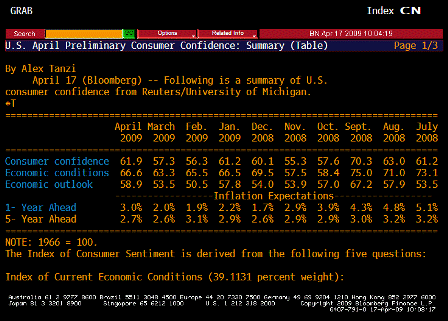
| Survey | 58.5 |
| Actual | 61.9 |
| Prior | 57.3 |
| Revised | n/a |
[top]
Largest year over year drop in a while after hovering around flat year over year.
Might be why Saudis decided to cut prices recently.
I’m looking for consumption to increase as GDP stabilizes and then return to positive territory as global automatic stabilizers and proactive fiscal policies add net financial assets.
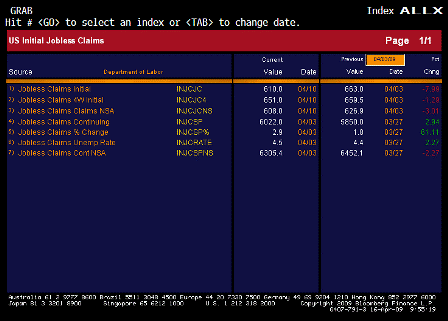
Crude Oil Rises After Unexpected Decline in U.S. Jobless Claims
by Mark Shenk
April 16 (Bloomberg) — Daily fuel demand averaged over the past four weeks was 18.7 million barrels, down 5.2 percent from a year earlier, according to the department.
[top]
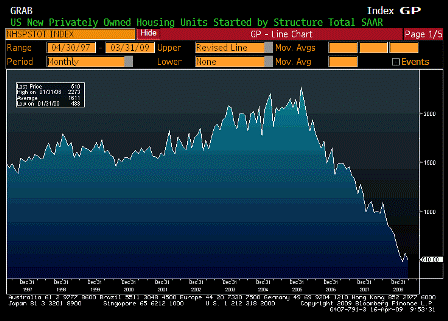
| Survey | 540K |
| Actual | 510K |
| Prior | 583K |
| Revised | 572K |
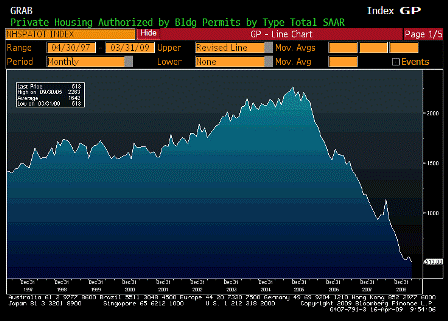
| Survey | 549K |
| Actual | 513K |
| Prior | 547K |
| Revised | 564K |
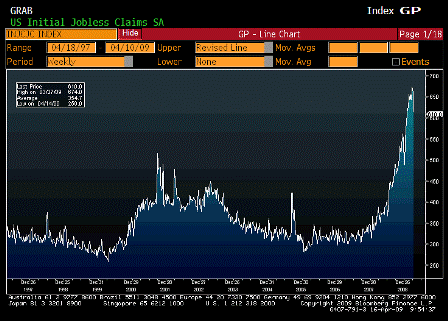
| Survey | 660K |
| Actual | 610K |
| Prior | 654K |
| Revised | 663K |
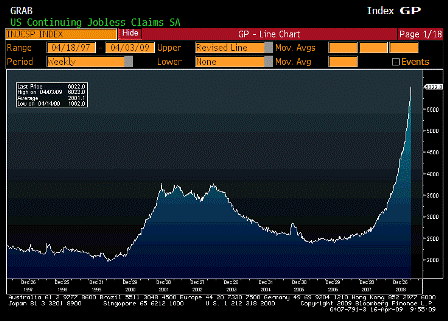
| Survey | 5893K |
| Actual | 6022K |
| Prior | 5840K |
| Revised | 5850K |
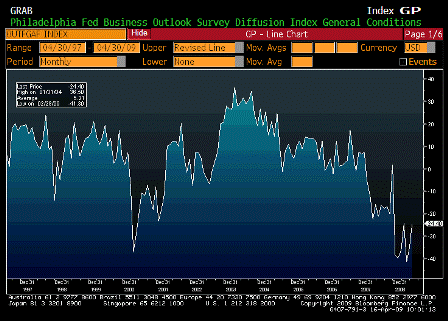
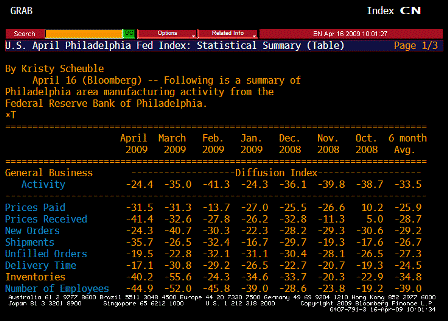
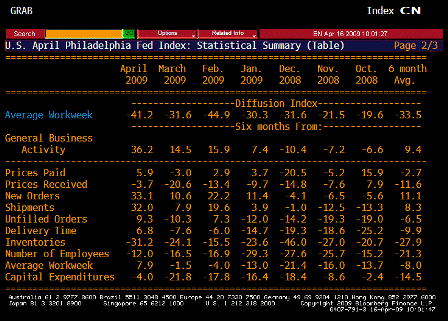
| Survey | -32.0 |
| Actual | -24.4 |
| Prior | -35.0 |
| Revised | n/a |
[top]
This was written 10 years ago when they were on the right track:
Finance and Economics Discussion Series
by Darrel S. Cohen and Glenn R. Follette
(Fed) — Abstract: This paper presents theoretical and empirical analysis of automatic fiscal stabilizers, such as the income tax and unemployment insurance benefits. Using the modern theory of consumption behavior, we identify several channels–insurance effects, wealth effects and liquidity constraints- -through which the optimal reaction of household consumption plans to aggregate income shocks is tempered by the automatic fiscal stabilizers. In addition we identify a cash flow channel for investment. The empirical importance of automatic stabilizers is addressed in several ways. We estimate elasticities of the various federal taxes with respect to their tax bases and responses of certain components of federal spending to changes in the unemployment rate. Such estimates are useful for analysts who forecast federal revenues and spending; the estimates also allow high- employment or cyclically-adjusted federal tax receipts and expenditures to be estimated. Using frequency domain techniques, we confirm that the relationships found in the time domain are strong at the business cycle frequencies. Using the FRB/US macro-econometric model of the United States economy, the automatic fiscal stabilizers are found to play a modest role at damping the short-run effect of aggregate demand shocks on real GDP, reducing the “multiplier” by about 10 percent. Very little stabilization is provided in the case of an aggregate supply shock.
[top]
I like this line from Bill Black:
“These Democrats want to maintain America’s pre-eminence in global financial capitalism at any cost.”
Yes, they think it important for some measurement of ‘power’ that has nothing to do with our real standard of living. Like pyramid building or something like that.
I do think with net interest margins now north of 4% (thanks to government policy) and GDP stabilizing due to deficits in excess of 6% of GDP, and more fiscal on the way, the banks can now earn their way out of just about anything.
All they need is a year or two of very modest GDP growth. And it doesn’t bother me a bit that the legacy issues and past frauds might keep their net earnings depressed during that recovery time.
What does bother me is that it seems nothing has been done to remedy the fundamental flaws that support the ‘more trouble than it’s worth’ financial sector.
These include tax advantaged ‘savings’ incentives including pension rules, ira’s, corporate reserves, etc. as well as laws that support and enforce the trading of financial instruments.
[top]
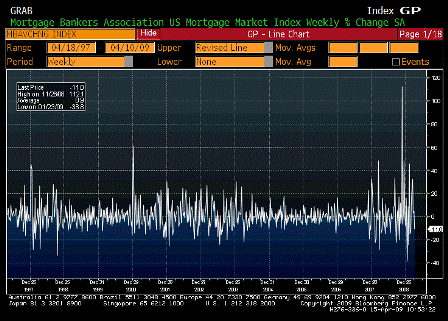
| Survey | n/a |
| Actual | -11.0% |
| Prior | 4.7% |
| Revised | n/a |
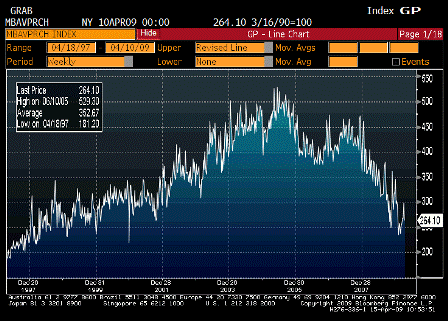
| Survey | n/a |
| Actual | 264.10 |
| Prior | 297.70 |
| Revised | n/a |
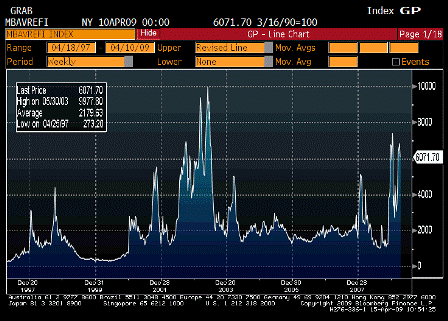
| Survey | n/a |
| Actual | 6071.70 |
| Prior | 6813.50 |
| Revised | n/a |
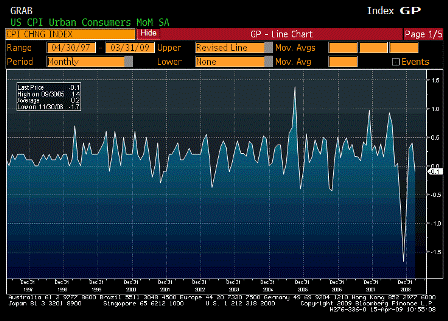
| Survey | 0.1% |
| Actual | -0.1% |
| Prior | 0.4% |
| Revised | n/a |
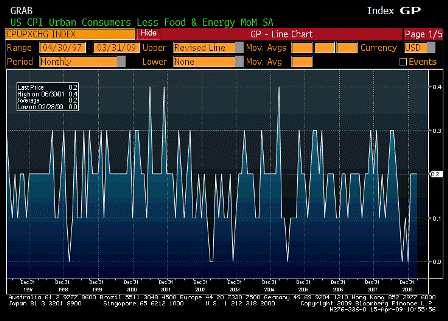
| Survey | 0.1% |
| Actual | 0.2% |
| Prior | 0.2% |
| Revised | n/a |
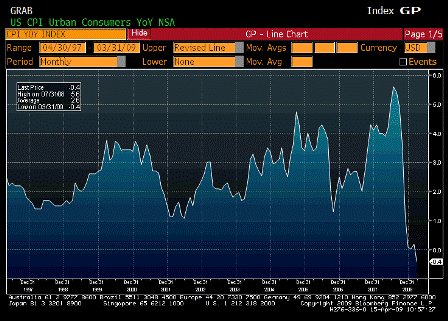
| Survey | -0.1% |
| Actual | -0.4% |
| Prior | 0.2% |
| Revised | n/a |
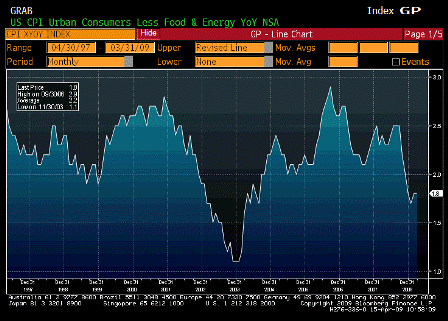
| Survey | 1.7% |
| Actual | 1.8% |
| Prior | 1.8% |
| Revised | n/a |
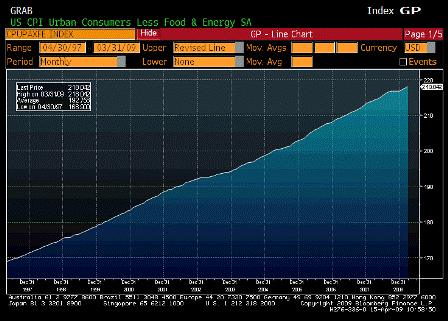
| Survey | n/a |
| Actual | 218.042 |
| Prior | 217.670 |
| Revised | n/a |
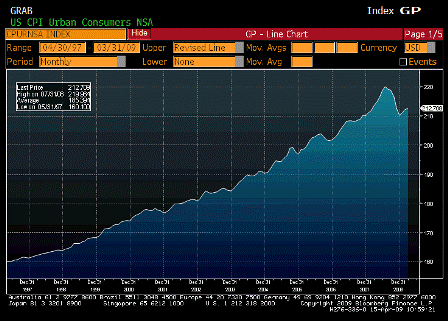
| Survey | 212.900 |
| Actual | 212.709 |
| Prior | 212.193 |
| Revised | n/a |
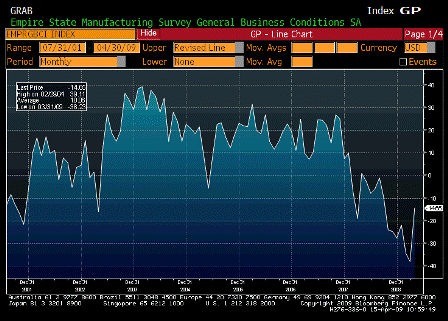
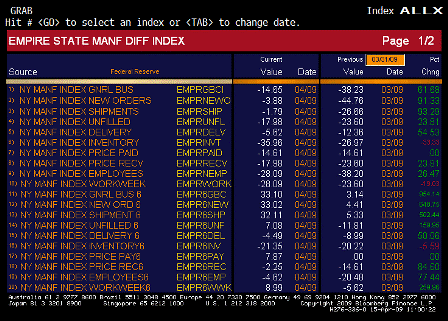
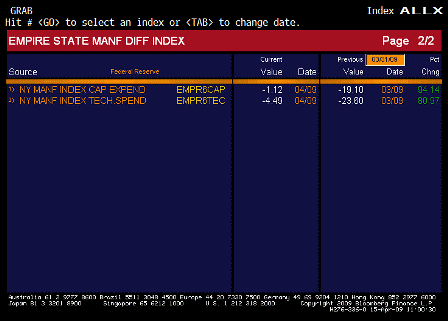
| Survey | -35.00 |
| Actual | -14.65 |
| Prior | -38.23 |
| Revised | n/a |
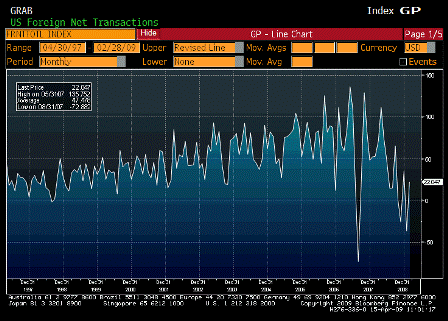
| Survey | $14.0B |
| Actual | $22.0B |
| Prior | -$43.0B |
| Revised | -$36.8B |
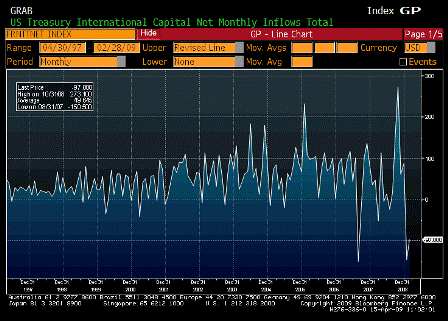
| Survey | n/a |
| Actual | -$97.0B |
| Prior | -$148.9B |
| Revised | -$146.8B |
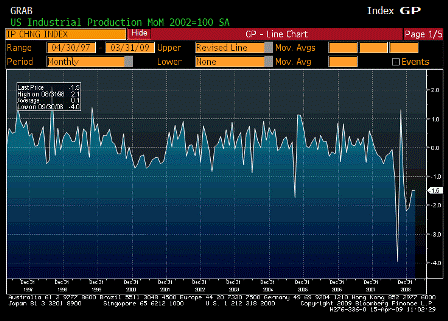
| Survey | -0.9% |
| Actual | -1.5% |
| Prior | -1.4% |
| Revised | -1.5% |
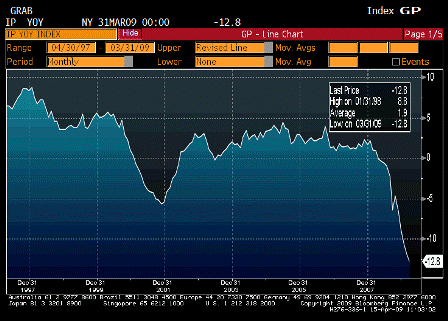
| Survey | n/a |
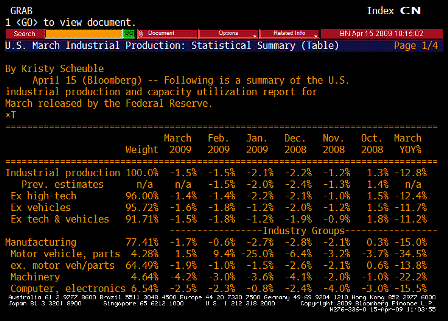
| Actual | -12.8% |
| Prior | -11.8% |
| Revised | n/a |
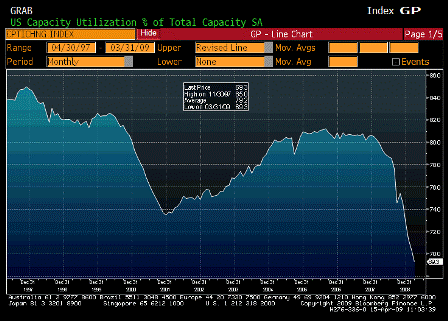
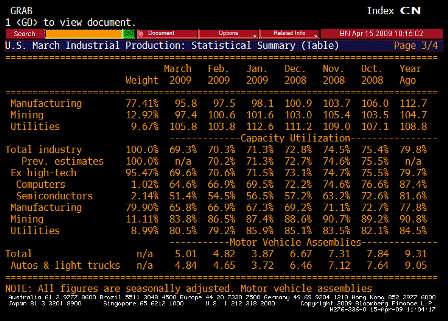
| Survey | 69.6% |
| Actual | 69.3% |
| Prior | 70.9% |
| Revised | 70.3% |
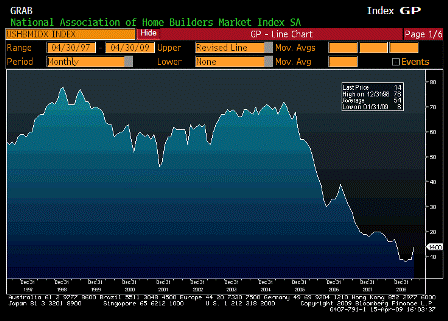
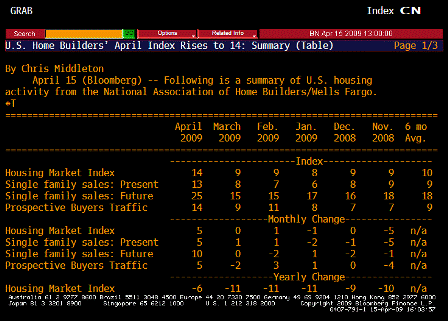
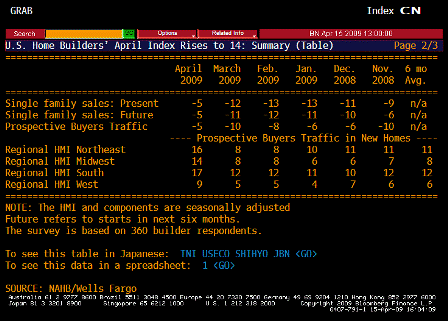
| Survey | 10 |
| Actual | 14 |
| Prior | 9 |
| Revised | n/a |
[top]
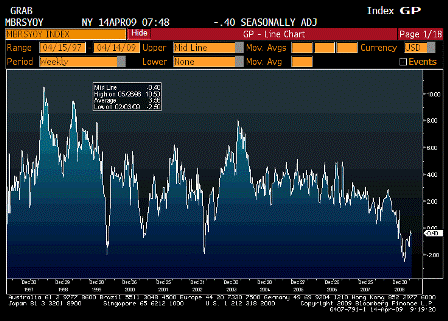
| Survey | n/a |
| Actual | -0.4% |
| Prior | -0.3% |
| Revised | n/a |
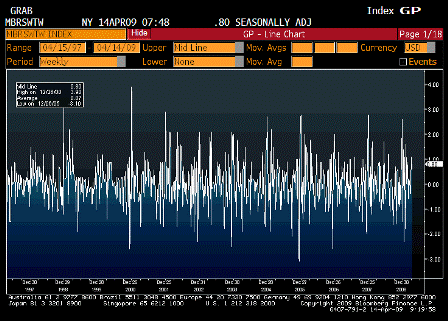
| Survey | n/a |
| Actual | 0.8% |
| Prior | 0.6% |
| Revised | n/a |
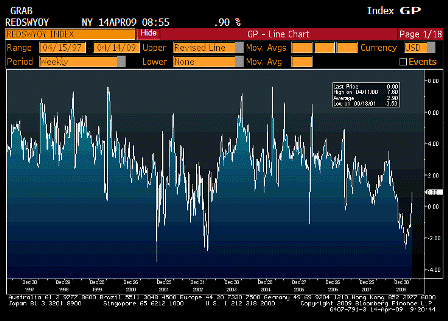
| Survey | n/a |
| Actual | 0.9% |
| Prior | 0.4% |
| Revised | n/a |
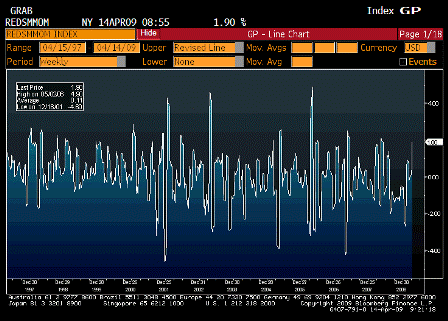
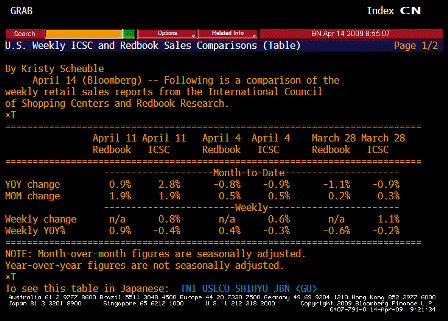
| Survey | n/a |
| Actual | 1.9% |
| Prior | 0.5% |
| Revised | n/a |
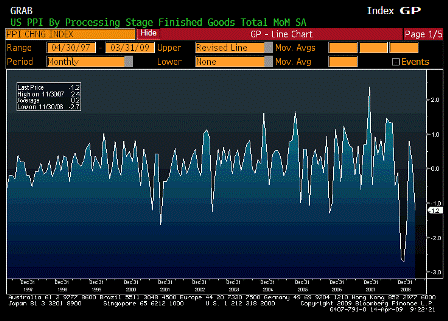
| Survey | 0.0% |
| Actual | -1.2% |
| Prior | 0.1% |
| Revised | n/a |
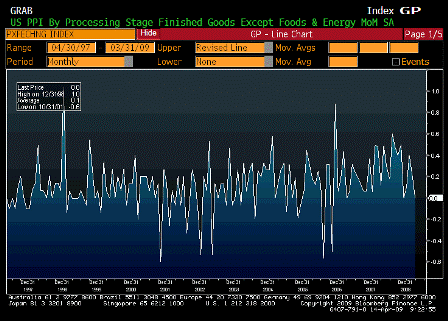
| Survey | 0.1% |
| Actual | 0.0% |
| Prior | 0.2% |
| Revised | n/a |
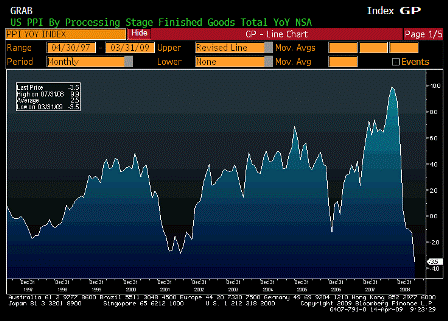
| Survey | -2.2% |
| Actual | -3.5% |
| Prior | -1.3% |
| Revised | n/a |
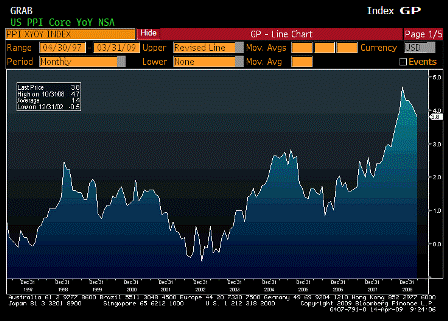
| Survey | 4.0% |
| Actual | 3.8% |
| Prior | 4.0% |
| Revised | n/a |
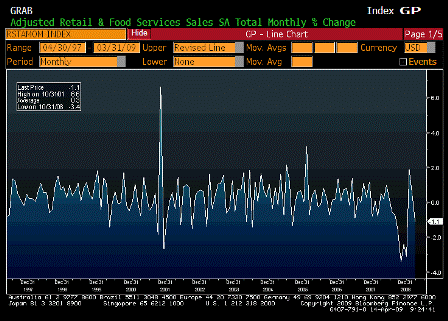
| Survey | 0.3% |
| Actual | -1.1% |
| Prior | -0.1% |
| Revised | 0.3% |
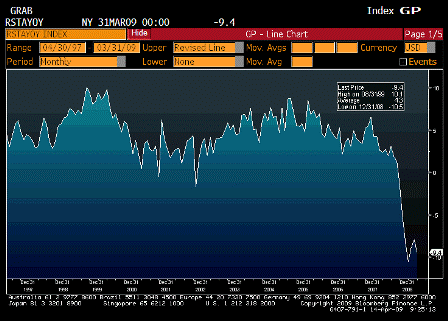
| Survey | n/a |
| Actual | -9.4% |
| Prior | -7.9% |
| Revised | n/a |
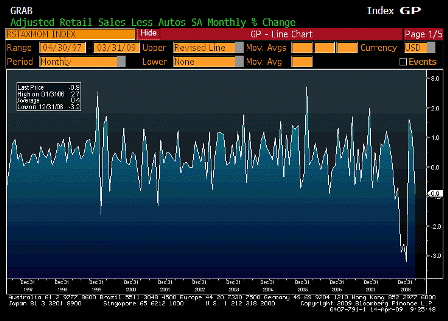
| Survey | 0.0% |
| Actual | -0.9% |
| Prior | 0.7% |
| Revised | 1.0% |
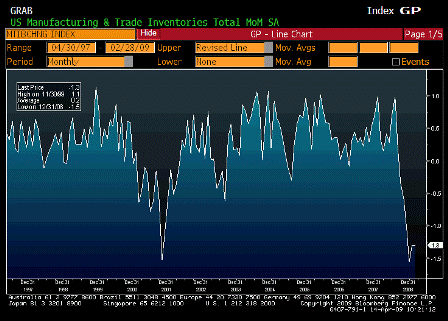
| Survey | -1.2% |
| Actual | -1.3% |
| Prior | -1.1% |
| Revised | -1.3% |
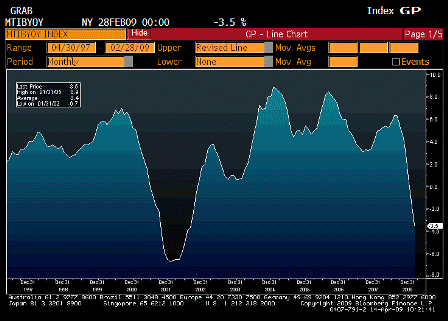
| Survey | n/a |
| Actual | -3.5% |
| Prior | -1.7% |
| Revised | n/a |
[top]
If you’re interested in a 7 AM breakfast Saturday morning in Midtown, please email me at warren.mosler@gmail.com.
I’ll be heading to the airport around 9:30am.
Thanks,
Warren
| 8:00-9:00 am | BREAKFAST AND REGISTRATION |
| 9:00-9:30 am | WELCOME AND INTRODUCTION Dimitri B. Papadimitriou, The Levy Institute |
| 9:30-10:30 am | SPEAKER
“Unpleasant Arithmetic”Bruce Kasman, JPMorgan Chase and Co. |
| 10:30 am -12:15 pm | SESSION 1- ASSESSMENT OF FED/TREASURY RESPONSE TO CRISIS MODERATOR: Greg Hannsgen, The Levy Economics Institute William Kurt Black, University of Missouri- Kansas City “Return of the State”Marshall Auerback, RAB Capital PLC “Setting the Agenda for Financial Reform”Jane D’Arista, Political Economy Research Institute, University of Massachusetts Amherst “Fatal Reversal: From Single Payer to Free Markets and Back Again”Thomas Ferguson, University of Massachusetts Boston |
| 12:15-2:30 pm | LUNCH SPEAKER: Dennis P. Lockhart, Federal Reserve Bank of Atlanta |
| 2:30- 3:15 pm | SPEAKER
“Always the Same, Always Different”James Grant, Grant’s Interest Rate Observer |
| 3:15- 5:00 pm | SESSION 2- PROPOSALS ON ALTERNATIVE FINANCIAL REGULATION MODERATOR: Jane D’Arista, Political Economy Research Institute, University of Massachusetts Amherst Alan S. Blinder, Princeton University Christine M. Cumming, Federal Reserve Bank of New York Michael Greenberger, The University of Maryland School of Law Martin Mayer, The Brookings Institution |
| 5:00- 5:15 pm | COFFEE BREAK |
| 5:15- 6:30 pm | SESSION 3- ASSESSMENT OF FED/TREASURY RESPONSE TO CRISIS MODERATOR: Greg Hannsgen, The Levy Economics Institute “Minsky and the Regulation of the Financial Systemâ€ÂÂJan Kregel, The Levy Economics Institute and University of Missouri–Kansas City “Structural Contagion: Some Implications of the International Transmission of Financial Fragilityâ€ÂÂC. P. Chandrasekhar, Jawaharlal Nehru University “Reregulating the Financial Systemâ€ÂÂMario Tonveronachi, University of Siena “Financial Regulation and the Financial Instability Hypothesis: A Ponzi-finance Approach to Financial Reformâ€ÂÂEric Tymoigne, The Levy Economics Institute and California State University, Fresno |
| 6:30- 7:30 pm | RECEPTION |
| 7:30 pm | DINNER SPEAKER: “A Minsky Meltdown: Lessons for Central Bankers?â€ÂÂJanet L. Yellen, Federal Reserve Bank of San Francisco |
| 8:30-9:00 am | BREAKFAST |
| 9:00-9:45 am | SPEAKER Robert J. Barbara, ITG |
| 9:45- 10:30 am | SPEAKER
“Financial Crisisâ€â€ÂA Threat to European Economies”Norbert Walker, Deutsche Bank |
| 10:30-10:45 am | COFFEE BREAK |
| 10:45 am -12:00 pm | SESSION 4- THE INSTITUTIONAL SHAPE OF THE FUTURE FINANCIAL SYSTEM MODERATOR: Jan Kregel, The Levy Economics Institute and University of Missouri–Kansas City Richard Bookstaber, Author and financial economist “Does Changing Boxes on the Regulatory Organization Chart Alter Minsky’s Fragility?â€ÂÂ
|
| 12:00-1:15 pm | SESSION 5- CURRENT CONDITIONS AND FORECASTS MODERATOR: Ajit Zacharias, The Levy Economics Institute “U.S. Economic Outlookâ€ÂÂDean Maki, Barclays Capital “Economic and Financial Market Outlook”James W. Paulsen, Wells Capital Management “What Happens at Growth Rate Cycle Upturns?”
|
| 1:15-3:15 pm | LUNCH SPEAKER: Henry Kaufman, Henry Kaufman & Company, Inc. |
| 3:15- 4:00 pm | SPEAKER Joseph E. Stiglitz, Columbia University |
| 4:00- 6:00 pm | SESSION 6- ALTERNATIVE STIMULUS AND BAILOUT PROPOSALS MODERATOR: Dimitri B. Papadimitriou, The Levy Economics Institute James K. Galbraith, The Levy Economics Institute and University of Texas at Austin “Alternative Proposals for a U.S. Nonconvertible Currency Regimeâ€ÂÂWarren Mosler, Valance Company, Inc “Riding the Debt Deflation Guardrailsâ€ÂÂ
|
| 6:00- 6:30 pm | RECEPTION |
[top]
He’s right on this point. Functionally it is fiscal expansion, though not all that much as a percentage of world GDP.
The question is whether I’s warranted to support demand and how to decide which nations should get it:
ECB’s Stark raps move to boost IMF drawing rights
by Marc Jones
April 7 (International Business Times) — European Central Bank Executive Board member Juergen Stark was quoted on Tuesday as criticizing decisions made at the G20 summit to boost the IMF’s Special Drawing Rights (SDRs).
Stark suggested in a newspaper article that the decision was potentially inflationary as it would create “helicopter money” and that it had not been properly thought out.
Last week leaders from the Group of 20 wealthy and emerging economies agreed to support a general allocation of $250 billion worth of International Monetary Fund’s SDRs alongside other measures to boost the Fund’s firepower.
Countries hit particularly hard by the global economic crisis would be allowed to increase their SDR share by using those of another country which may not need them.
The results of the G20 summit have been broadly welcomed by policymakers by Stark questioned whether this decision was needed.
“That is pure money creation. That is helicopter money for the globe,” he was quoted as saying in an article in German business daily Handelsblatt.
“There was no examination of whether there is a global need for additional liquidity at all… One used to take a lot of time to examine something like this,” he said.
[top]