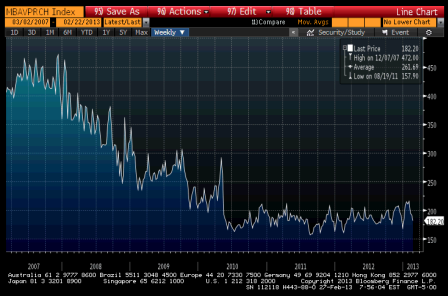
Brits May Have to Work Until 75, Thanks to China

Stupid taken to new heights.

Retirement is about no longer producing real goods and services and instead living off of the real output of others, incuding China’s exports to you.

The only way this could make any sense is if China somehow was going to force the UK to net export at some time in the future, sort of like war reparations.

Not that the UK might not lose a war to China and be forced to export, but if history is any guide, China and the rest will still be pressing on with net export strategies, like Japan has done for the last 65 years and going strong.

And, of course, keeping millions who want to work from working (unemployment) is entirely counterproductive with regards to real output as well.

Brits May Have to Work Until 75, Thanks to China

By Katie Holliday

Feb 27 (CNBC) — A colossal savings glut in China, the world’s second largest economy, means British workers in their twenties will only be able to retire at 75, a report by the Center for Economic and Business Research (Cebr) showed on Thursday.

According to the report, excessive savings in emerging economies, especially in China, and the country’s growing share of the global economy will keep yields and interest rates down for many years. This will leave pension funds underfunded keeping annuity rates low.

“To retire at close to the standard of living that they (U.K. workers) have previously enjoyed, they will have to extend their working life and cut their number of years of retirement by working till they are much older than the present retirement age,” said Douglas McWilliams, executive chairman of economics consultancy Cebr.

The state pension age in the U.K. is 65 for men and 60 for women currently, but it is set to steadily rise to 66 for both by 2020, as set by the government’s Pensions Bill in October 2012.

McWilliams pinpointed China’s savings glut as a key driver behind this trend.

China’s population holds a staggering 25 percent of the world’s savings, the report found, rising from $153 billion in 1990 to a likely $4.5 trillion this year – a figure Cebr expects to grow further.

Austerity

Weak state finances following austerity measures will also make it difficult for British workers to retire before the age of 75, the report said.

The U.K. economy was stripped of its Triple-A rating by credit ratings agency Moody’s this week on concerns over its subdued growth prospects and rising debt burden.

The British government is currently undergoing vigorous austerity, but the cuts have come at the expense of growth. The economy emerged from a nine-month recession in the third quarter of last year with 0.9 percent growth, however , it then contracted more than expected by 0.3 percent in the final quarter of last year.

According to Cebr, the long-term cost of the austerity measures will outweigh the cost of bailing out banks during the financial crisis.

It estimates that the cost of bailing out the banks will have cost the British taxpayer about 120 billion pounds ($181 billion) eventually, while the problems of excess deficits built up since 2000 will have cost the economy 1.5 trillion pounds by 2025.

“It will be well in the late 2020s at the earliest before austerity policies can be eased up,” said McWilliams.

Interest rates in the U.K. meanwhile are likely to stay low for at least 20 years, the report from Cebr said.

“Even the [U.K.] Pensions Regulator admits that most pension schemes are underfunded and many will never be able to be fully funded while low yields persist without bankrupting their guarantors,” McWilliams said.

“And for those on direct contribution pension schemes, the annuity yields that they are able to buy are unlikely to rise much from today’s very depressed levels. Workers could save more. But they are unlikely to do so and if they did so around the world, they would only add to the glut of savings that is a fundamental cause of the problem,’ he added.

Direct contribution pension schemes are retirement plans where an employer matches its employee’s contribution of his or her earnings each year.

Time to Learn Mandarin?

The tendency towards saving in China means the Chinese will eventually own a quarter of the world’s assets, as they invest heavily abroad to use up their savings, said Cebr.

“So far the Chinese have invested heavily in areas like Africa and South America which the West has neglected as well as in U.S. Treasury bonds. But they will have to turn increasingly to other assets like companies and properties in the West including U.K. companies,” he said.

“Better start learning Mandarin – your next boss may be Chinese,” said McWilliams.

Efficiency of China’s economy ‘sliding’

More evidence the Chicago educated offspring have taken charge. Good luck to them…

Efficiency of China’s economy ‘sliding’

Feb 28 — The efficiency of China’s economy is slipping, with money flowing much slower betweendifferent sectors than in the past, according to analysts.

They said this is despite the fact that the nation has a considerable amount of social financing— an approach to managing money that delivers a social dividend and an economic return.

Liu Yuhui, director of the financial lab at the Chinese Academy of Social Sciences, agovernment think tank, said although financing activities in the country appear to be rampant,most of the newly borrowed money is used to repay debts instead of forming revenue amongcompanies.

“We can see that the ratio of money to gross domestic product has been increasing, whichmeans the economy needs increasing capital to promote than previously.”

Last year, social financing, which included bank and non-bank loans, bond issuance and stocksales, set a record high of nearly 16 trillion yuan ($2.54 trillion). The ratio of M2, a broadmeasure of money supply, against GDP stood at a record high of 188 percent at the end of lastyear.

The proportion of the increase in enterprises’ one-year deposits to total social financingdropped to 20 percent in 2012 from 40 to 50 percent seven years earlier, Liu said.

“Accumulation of debts is pushing up the leverage ratio among companies, with the wholeeconomy more difficult to shore up.”

He said that by adding loans extended to local governments through financing vehicles, theproblem becomes more severe.

Liu estimated local government debt in the financial system at somewhere between 13 trillionyuan and 14 trillion yuan, with interest rates to be paid each year standing at 700 billion yuanto 800 billion yuan.

Rolling over loans has become a widely adopted measure among Chinese banks since lastyear as lending extended during the financial crisis to stimulate economic growth graduallybecame due but could not be paid back on time.

According to a survey released by the China Banking Association at the end of last year, morethan half of the 850 bankers surveyed said they support the practice of rolling over matureloans, saying this offers a way to ensure projects have good cash flow and that the loans willeventually be repaid following a grace period.

Many banks would rather maintain the lending as long as interest rates could be paid, insteadof classifying the loans as non-performing assets, Liu said.

China’s M2 growth accelerated substantially to a 22-month high of 15.9 percent year-on-year inJanuary from 13.8 percent in December.

In January, commercial banks extended more than 1 trillion yuan in new loans, and bank off-balance-sheet and non-bank channels offered another 1.5 trillion yuan of new credit to theeconomy, according to data from the People’s Bank of China, the central bank.

Social financing reached 2.54 trillion yuan last month, up 1.56 trillion yuan year-on-year.

The increase in enterprises’ deposits in January, which stood at 117.9 billion yuan, was muchlower than that of individuals’ savings, which stood at 749.9 billion yuan.

Stephen Green, chief China economist at Standard Chartered Bank, warned last year that foran economy with an already high leverage level, “re-leveraging up” increases overall macrorisk, as many financial crises are foreshadowed by an increase in leverage.

Zhao Xijun, deputy dean of the school of finance at Renmin University of China in Beijing, saidthe current monetary condition basically matches well with the economy, judging by thefluctuation of consumer goods and asset prices.

“It’s very difficult to measure the impact after the central bank issued money, and controlswhere the capital flows into. Price levels could be a fair and final criteria to draw a conclusion.”

He said the declining proportion of companies’ deposits to total financing could also betranslated into their increasing involvement in asset transactions as the financial marketdevelops.

Formation of social capital contributed to more than 50 percent of GDP growth last year,maintaining a strong engine for the economy, although probably much of the money went intoasset transactions, Zhao said.

Euro-Area Inflation

I wonder if any of the early models had this much ‘inflation’ with this large of an output gap…

Euro-Area Inflation Rate Declined in January on Energy, Services

By Angeline Benoit

February 28 (Bloomberg) — The euro-area inflation rate fell in January, led by slower price growth for energy and services.

Annual consumer-price growth slowed to 2 percent from 2.2 percent in December, in line with an initial estimate on Feb. 1, the European Union’s statistics office in Luxembourg said today. In the month, prices fell 1 percent.

The European Central Bank will probably maintain its benchmark interest rate at 0.75 percent next week, according to a Bloomberg News survey of economists. The ECB will update its December economic forecasts after the euro area’s recession deepened in the fourth quarter. The European Commission sees inflation at 1.8 percent this year and 1.5 percent in 2014.

The annual core inflation rate, excluding volatile costs such as energy, alcohol and tobacco, fell to 1.3 percent in January from 1.5 percent a month earlier, today’s report showed. The cost of energy rose 3.9 percent after a 5.2 percent annual gain in December, while services-price growth slowed to 1.6 percent from 1.8 percent. Food, alcohol and tobacco costs rose 3.2 percent.

European Union car sales last month fell to the lowest level for a month of January since the data series began in 1990. Manufacturers in the region have announced 30,000 job cuts and five plant shutdowns since July, with Renault (RNO) and Peugeot outlining domestic workforce reductions of 17 percent.

Comments on the Italian election results

With austerity now well understood to increase deficits, only PSI remains to decrease deficits. With strong political support surfacing, as per Grillo’s positions on repudiating debt.

So there is the deflationary impact of PSI. The flight to maybe actual cash even at the institutional level to avoid PSI. Portfolio shifts out of the euro, no bid for anything but bunds until they too threaten PSI which would be down the road as German exports to other members fade and their deficit rises as well.

The answer is ECB guaranteed funding and deficit limits hiked to at least 8% of GDP for all members. The problem is there is no political channel to get from here to there?

Exports, domestic credit expansion, and fiscal policy are all going the wrong way.

The remaining question is how much the population can take before it snaps?

All the talk about shorting US Treasury securities and JGB’s looks to have been a bit premature…
;)

OpenEurope: What Happens Next in Italy?

The Grillo factor

Beppe Grillos Five Star Movement received over 25% of the vote exceeding all expectations. Though Berlusconi and Grillo are both populist and anti-austerity, in many ways, theyre also each others antithesis one representing the old sclerotic system, the other a new, impulsive anti-establishment future. Grillo is clearly a new breed in Italian politics. He has been very critical of Italys euro membership, and wants a referendum to decide whether the country should leave the single currency. Hes also suggested that Italy should consider refusing to pay back at least part of its huge public debt.

As previously discussed, the PSI has irresistible political appeal?

China Needs Tighter Monetary Policy, State Research Agency Says

The narratives of the last few months leave me not expecting a lot from China. Not long ago 7.5% growth was described as a ‘hard landing’ and it probably still means same.

The out of paradigm western educated kids are probably now well entrenched and we all know what that means.

China Headlines:

China Needs Tighter Monetary Policy, State Research Agency Says

Tells me they have serious inflation/corruption issues.

More Chinese cities ready for property tax pilots

Property taxes, functionally, are price increases, so while they keep headline prices and credit expansion in check, they don’t help affordability.

PBOC continues to drain liquidity from banks

Just offsetting operating factors to sustain rate targets.

China to tighten shadow banking rules

Worried about consumer fraud, corruption, and maybe inflation.

Fed governor Jerome H. Powell

And it all still goes unchallenged by the media.

I received this from an associate:

Discussion of “Crunch Time: Fiscal Crises and the Role of Monetary Policy”

“Three important propositions underlie the authors’ argument on this issue:

The federal government’s fiscal path is unsustainable under current policies.

If the market concludes that a government either cannot or will not service its debt, the central bank may be forced to choose ultimately between monetization leading to inflation or standing by as the government defaults–the threat of “fiscal dominance.”

The Federal Reserve’s balance sheet is currently very large by historical standards and still growing. The process of normalizing the size and composition of the balance sheet poses significant uncertainties and challenges for monetary policymakers.

I believe all of these statements to be true. They are also widely, if not universally, accepted.”

>   
>   Powell cites this one which is really bad (perhaps not surprisingly, it was edited by an
>   economist from the German Finance Ministry)
>   

the sequester

Thanks!
Change ‘stipulated’ to ‘stupulated’…
;)

If they only knew ‘the debt’ was just a reserve drain…
:(

The sequester is a group of cuts to federal spending set to take effect March 1, barring further congressional action.

President Obama signs the Budget Control Act into law. (Pete Souza/White House)

The sequester was originally passed as part of the Budget Control Act of 2011 (BCA), better known as the debt ceiling compromise.

It was intended to serve as incentive for the Joint Select Committee on Deficit Reduction (aka the “Supercommittee”) to come to a deal to cut $1.5 trillion over 10 years. If the committee had done so, and Congress had passed it by Dec. 23, 2011, then the sequester would have been averted.

Obviously, that didn’t happen.

A deal was reached to avert the cliff, in which the sequester was delayed to March 1.

The cuts are evenly split between domestic and defense programs, with half affecting defense discretionary spending (weapons purchases, base operations, construction work, etc.) and the rest affecting both mandatory (which generally means regular payouts like Social Security or Medicaid) and discretionary domestic spending. Only a few mandatory programs, like the unemployment trust fund and, most notably, Medicare (more specifically its provider payments) are affected. The bulk of cuts are borne by discretionary spending for either defense or domestic functions.

Food stamps are exempt from the sequester. (For The Washington Post)

Most mandatory programs, like Medicaid and Social Security, and in particular low-income programs like Temporary Assistance for Needy Families (TANF, or welfare) and the Supplemental Nutritional Assistance Program (SNAP, or food stamps) were exempt from the sequester.

The 2013 sequester includes:

  • $42.7 billion in defense cuts (a 7.9 percent cut).
  • $28.7 billion in domestic discretionary cuts (a 5.3 percent cut).
  • $9.9 billion in Medicare cuts (a 2 percent cut).
  • $4 billion in other mandatory cuts (a 5.8 percent cut to nondefense programs, and a 7.8 percent cut to mandatory defense programs).

That makes for a total of $85.4 billion in cuts. Note: numbers here updated to latest CBO figures; thanks to Center for Budget and Policy Priorities for noting the difference from initial OMB numbers.

More will be cut in 2014 and later; from 2014 to 2021, the sequester will cut $87 to $92 billion from the discretionary budget every year, and $109 billion total.

The sequester cuts discretionary spending across-the-board by 9.4 percent for defense and 8.2 percent for everything else. But no programs are actually eliminated. The effect is to reduce the scale and scope of existing programs rather than to zero out any of them.

The National Institutes of Health will see budget cuts in the billions if the sequester goes through. (J. Scott Applewhite/Associated Press)

Here are just a few. Update: Note that these are rough estimates based on numbers put out by OMB before the fiscal cliff deal:

  • Aircraft purchases by the Air Force and Navy are cut by $3.5 billion.
  • Military operations across the services are cut by about $13.5 billion.
  • Military research is cut by $6.3 billion.
  • The National Institutes of Health get cut by $1.6 billion.
  • The Centers for Disease Control and Prevention are cut by about $323 million.
  • Border security is cut by about $581 million.
  • Immigration enforcement is cut by about $323 million.
  • Airport security is cut by about $323 million.
  • Head Start gets cut by $406 million, kicking 70,000 kids out of the program.
  • FEMA’s disaster relief budget is cut by $375 million.
  • Public housing support is cut by about $1.94 billion.
  • The FDA is cut by $206 million.
  • NASA gets cut by $970 million.
  • Special education is cut by $840 million.
  • The Energy Department’s program for securing our nukes is cut by $650 million.
  • The National Science Foundation gets cut by about $388 million.
  • The FBI gets cut by $480 million.
  • The federal prison system gets cut by $355 million.
  • State Department diplomatic functions are cut by $650 million.
  • Global health programs are cut by $433 million; the Millenium Challenge Corp. sees a $46 million cut, and USAID a cut of about $291 million.
  • The Nuclear Regulatory Commission is cut by $55 million.
  • The SEC is cut by $75.6 million.
  • The United States Holocaust Memorial Museum is cut by $2.6 million.
  • The Library of Congress is cut by $31 million.
  • The Patent and Trademark office is cut by $156 million.

While military salaries are exempt from the sequester, benefits like tuition assistance and the TRICARE program (which provides health care to personnel and their families, among others) are not.

The Congressional Research Service has written that a sequester may not “reduce or have the effect of reducing the rate of pay an employee is entitled to” under their federal pay scale. However, the sequester is likely to cause furloughs, which amount to unpaid time off, or, basically, a pay cut.

Stephen Fuller, an economist at the libertarian-minded George Mason University, puts the number at 2.14 million jobs lost. That includes the direct loss of 325,693 jobs from defense cuts (including 48,147 civilian employees at the DoD) and 420,529 jobs from non-defense cuts (including 229,116 federal workers — the rest, by and large, are contractors). The rest of the jobs losses are indirect, resulting in a 1.5 point increase in the unemployment rate. However, Fuller’s estimates predate the delay in the sequester passed in December, and other analysts are more measured. Macroeconomic Advisers estimates the sequester will add only 0.25 points to the unemployment rate, a sixth of the impact Fuller predicts.

The CBO estimates that the combined federal fiscal tightening taking place in 2013 is knocking 1.5 points off GDP growth for the year. Of that, about 5/8 of a percent (or 0.565%) is due to the sequester. Macroeconomic Advisers similarly estimates that the sequester will shave off 0.6 points from the year’s growth rate. George Mason economist Stephen Fuller’s estimates are more dramatic, putting the loss of 2013 GDP at $215 billion, reducing the growth rate of GDP by two thirds. However, Fuller’s estimates precede the shrinking of the sequester.

President Obama has been vague on how he’d replace the sequester. (Pablo Martinez Monsivais/AP)

President Obama has been less specific than his colleagues in Congress on how he wants to see the sequester replaced, but he has suggested that, in lieu of a bigger deficit reduction deal, he wants to see the 2013 sequester replaced with a package of tax increases (including loophole closures and increases on the wealthy) and spending cuts.

Sens. Patty Murray (seated, left) released Senate Democrats’ sequester plan. (Mike Theiler/Reuters)

House Democrats, led by Budget Committee ranking member Chris Van Hollen, proposed replacing the $85 billion in 2013 sequester cuts with a mix of tax increases — including a “Buffett rule”-style minimum tax on income above $1 million and repeal of tax subsidies for oil companies — and spending cuts, notably including a reduction in farm subsidy payments to farmers and an increase in flood insurance premiums.

Most of these policies would be spread over a decade rather than falling entirely in 2013.

Senate Democrats, led by Budget Committee Chairwoman Patty Murray, introduced the American Family Economic Protection Act, which replaces the 2013 sequester with $110 billion in spending cuts and tax increases, spread out over the course of a decade. Like the House plan, these policies include a “Buffett rule,” the closure of tax loopholes for oil companies and cuts to farm subsidies. Additionally, the Senate bill cuts military spending in excess of the sequester’s cuts.

Both the Senate and House Democrats’ plans allow the sequester to take effect at the beginning of 2014.

House Speaker John Boehner, right, has laid out the Republican position on replacing the sequester. (Joshua Roberts/Bloomberg)

As part of John Boehner’s “plan B” approach to avoiding the fiscal cliff (embarked upon after initial talks with the White House broke down), the House on Dec. 20, 2012, passed the Spending Reduction Act of 2012. The plan would have replaced the 2013 defense sequester with a variety of spending cuts, including cuts to food stamps, the Affordable Care Act and Dodd-Frank (including eliminating the “orderly liquidation authority” at the center of the legislation). It would have reduced the size of the domestic sequester in proportion to the $19 billion in discretionary savings included in the bill.

Republicans have conceded that they won’t be able to pass the bill again, even in the House, but it provides a model for what Republicans want in a temporary replacement: no tax increases, no defense cuts and considerable domestic spending reductions.

The AARP (whose activists are pictured here) is among many groups resisting the sequester’s domestic cuts. (Melina Mara/The Washington Post)

Just about every interest group wants to stop the sequester and just about none wants to see it take effect. Aerospace and defense companies, along with universities reliant on defense research funding, have launched Second to None, a coalition battling the defense cuts. A group of almost three thousand organizations, including the NAACP, AARP, Children’s Defense Fund, the Wilderness Society, Greenpeace, Human Rights Campaign, the Innocence Project, and many, many more, have warned about the impact of the non-defense discretionary cuts in the sequester. Physicians and medical research organizations, including the American Medical Association, the American Pediatrics Association and many others, are resisting the discretionary cuts to medical research, and in particular the National Institutes of Health. Liberal groups like MoveOn and the Working Families Party are also getting in on the action.

The Tea Party-affiliated FreedomWorks has put out a letter calling for ObamaCare to be defunded so as to match the expected post-sequester spending level without letting the sequester take effect.