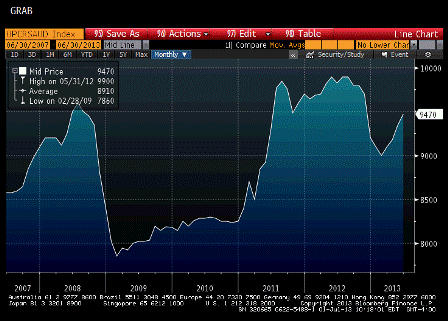
Note the year over year decline with the FICA hike and then the sequesters…
;)
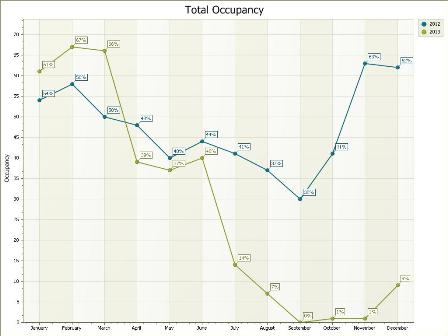
Full size image

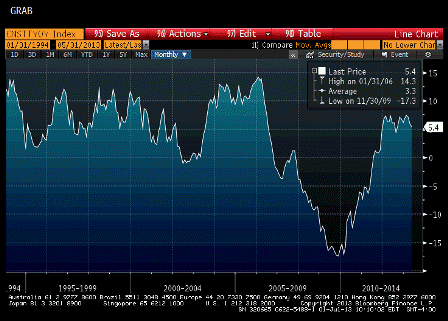
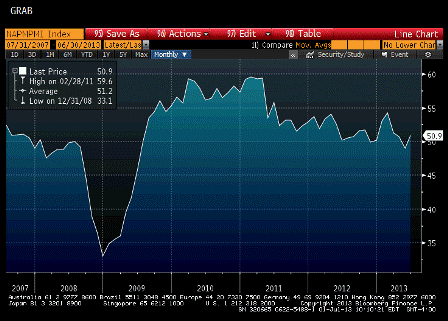
Construction spending and PMI still look to me to be relatively low and, if anything, modestly decelerating? And details and revisions looking worse as well.
Also, the talk remains, once the drag from the tax hikes and spending cuts is out of the way, growth will accelerate.
Except the govt deficit was contributing maybe 7% of GDP last year before the fiscal adjustments, and when the proactive fiscal adjustments stop reducing the deficit the support will probably be below 4% of GDP as the modest growth we’ve been having is also reducing the deficit via the automatic fiscal stabilizers.
And if that reduction of fiscal support isn’t offset by some other agent spending that much more than his income than before, the output doesn’t get sold and GDP/output/employment doesn’t happen.
Yes, corporations and individuals have the ability to increase their deficit spending to fill the gap, but so far they have not shown any sign of being willing to further extend themselves.
Construction Spending Y/Y:
PMI:
The tax hikes and sequester have already turned housing starts sideways but any bets the rate hike will get the credit?
;)
Still contracting but at a reduced pace.
Germany a bit worse and other up a bit may show the squeeze has caused a bit of a shift from Germany to other members as the pie continues to shrink?
In any case, a reduced pace of deterioration does nothing to alleviate the ongoing and intense social pressure that is driving members to the breaking point.
And apparently the EU rejected my proposal for funding 5 billion euro over 5 years to rebuild earthquake damage in Italy, even though the proposal was perfectly legal and well within the spirit of EU policy, etc. My proposal was to allow corporations to accelerate a mere 5 billion of tax payments from 10 years forward where the EU forecasts show excess revenues, to be applied over the next 5 years for the rebuilding of the recent damage to L’Aquila that killed over 300 people.
And most disturbing is that the rejection has every appearance of malice.
And clearly any monetary arrangement, such as the euro zone, that can’t find a way to rebuild earthquake damage of a fraction of a % of GDP in the face of gaping output gap makes no economic sense whatsoever.
Euro Zone June Manufacturing PMI Rises to 16-Month High of 48.8
July 1 (Bloomberg) — Manufacturing output in the euro zone improved in June to a 16-month high, a sign that the economy was stabilizing, albeit slowly.
The euro zone June Purchasing Managers’ Index for the manufacturing sector rose to a 16-month high of 48.8, up from the flash estimate of 48.7 and May’s reading of 48.3.
But the readings for individual countries revealed a more mixed picture.
The data were particularly strong for Italy, where June manufacturing PMI rose to 49.1, the highest since July 2011 and Spain, where manufacturing PMI rose to 50 in June from 48.1 in May. French PMI also rose to 48.4 in June from 46.4 in May. A reading above 50 indicates an expansion, while a reading below indicates a contraction.
However, German manufacturing activity contracted for the fourth consecutive month in June, coming in below expectations at 48.6.
“I think it tells us two things. One, it tells us that the euro zone as a whole is gradually beginning to stabilize. I think that’s obviously very good news. Probably, the more important part of the data is the split and the fact that we are beginning to see stronger PMI data from the likes of Spain and Italy. That may settle some people’s concerns about the recovery in those countries,” Darren Williams of AllianceBernstein told CNBC.
The euro zone has been in a recession for a year-and-a-half and any signs of stabilization will ease pressure on the European Central Bank to expand monetary policy to boost growth.
“June’s improved purchasing managers’ survey supports hopes that overall manufacturing activity across the euro zone is on the brink of stabilization. This reinforces hopes that euro zone GDP could finally have stopped contracting in the second quarter after a record six quarters of decline,” Howard Archer, European economist at IHS Global Insight said.
But Archer added that conditions remain far from easy for euro zone manufacturers. “The upside for domestic demand in the euro zone remains constrained by restrictive fiscal policy in many countries (despite increased flexibility now being allowed on fiscal targets), still tight credit conditions, high and rising unemployment, and limited consumer purchasing power.”
The PMI readings came ahead of inflation data which showed that euro zone consumer inflation accelerated to 1.6 percent in June from 1.4 percent in May. Meanwhile, unemployment for the euro zone rose to a record high 12.1 percent in May, from a revised rate of 12 percent in April.
Student loan rates double after Congress fails on fix
July 1 (Fox News) — Interest rates on federally subsidized Stafford student loans doubled overnight, soaring from 3.4 percent to 6.8 percent after Congress failed to reach a deal.
Though lawmakers potentially could still pass a bill to undo the damage, Congress’ Joint Economic Committee has estimated the increase — unless and until it is reversed — will cost the average college student an additional $2,600.
Democrats have sought to keep interest on Stafford loans low, saying poor and middle class students need the help to get a college education. Republicans have proposed linking student loans to the financial markets instead of letting Congress set federal lending rates. President Obama included a variation of that market-based approach in the budget he sent to Congress earlier this year, leaving his fellow Democrats trying to block his efforts.
“Why Senate Democrats continue to attack the president’s plan is a mystery to me, but I hope he’s able to persuade them to join our bipartisan effort to assist students,” Don Stewart, a spokesman for Senate Minority Leader Mitch McConnell, said last week
Senate Majority Leader Harry Reid said that a proposal to tie loan rates to the 10-year treasury note yield could never pass the Senate and that he couldn’t back something that doesn’t include stronger protections for students and parents.
“There is no deal on student loans that can pass the Senate because Republicans continue to insist that we reduce the deficit on the backs of students and middle-class families, instead of closing tax loopholes for the wealthiest Americans and big corporations,” Adam Jentleson, a spokesman for Reid, told Fox News last week. “Senate Democrats continue to work in good faith to reach a compromise but Republicans refuse to give on this critical point.”
Democrats said the Senate would consider voting on a one-year extension of the current interest rates July 10, after a recess for the 4th of July holiday. But Massachusetts Senator Elizabeth Warren said that the party preferred to include a comprehensive student loan measure in a long-range law governing colleges and universities.
“We need a one-year patch to keep interest rates from doubling on student loans,” Warren told the Associated Press last week. “That buys us the time.”
This is the video of the MMT vs Austrian debate held a few weeks ago at the Columbia Law School in NYC.
Note Professor Murphy’s statement of the Austrian position on interest rates beginning at 14.25, and then my response beginning at 35.28, followed by Professor Murphy’s comments about me being right but that he doesn’t like the system.
Trumped!!!
:(
JAPAN’S NISHIMURA-STRONG GROWTH MEASURES NEEDED SO JAPAN CAN WITHSTAND FISCAL CONSOLIDATION
Classic headline!!!!
Ireland falls back into recession despite multibillion-euro austerity drive
By Henry McDonald
June 27 (Guardian) — Ireland is back in recession for the first time since its 2010 bailout, official figures have confirmed.
Irish GDP shrank 0.6% in the first quarter of 2013, but the recession was confirmed when official data revised down the economy’s performance in the final three months of 2012 to a decline of 0.2%. It means that Ireland has endured three successive quarters of contraction, despite the presence in Ireland of multinationals such as Apple, Google, IBM and several big pharmaceutical companies.
The blow comes as Ireland reels from the unfolding Anglo Irish Bank scandal, in which executives at the bailed-out bank were caught on tape joking about their multi-billion euro rescue in 2008 and, at one point, singing “Deutschland über Alles” as they quipped about German deposits shoring up the bank.
The output drop reflects an ongoing depression in consumer demand, amid unemployment of nearly 14%. Personal expenditure declined by 3% between the fourth quarter of 2012 and the first quarter of 2013. The decrease in demand reflects Irish consumers’ fears for their jobs and a reluctance to get into debt following the credit-fuelled spending boom of the Celtic Tiger years. Exports fell by 3.2% in the first quarter, in a stark reversal for an economy that had enjoyed an export-led recovery.
The slip back into recession will be deeply disappointing for the Fine Gael-Labour coalition, which has slashed public spending in a bid to drive down the country’s debt while placating the troika of the International Monetary Fund, European Union and European Central Bank who bailed out the country in 2010. Ireland’s deputy prime minister, Eamon Gilmore, admitted this week that the Anglo Irish revelations could harm attempts to win further debt relief from the European Union.
On a brighter note, the construction industry in the Republic is showing some signs of recovery. The latest figures point to a 2.1% increase in building across the state in a sector which was devastated by the property crash of 2008-09, and which has been a huge factor in lengthening the country’s dole queues.
>
> (email exchange)
>
> On Thu, Jun 27, 2013 at 11:23 AM, wrote:
>
> From CS: Low interest rates and the interest income shortfall. Lower interest rates may
> support the economy in the broad, but the interest income shortfall is a substantial
> side-effect. Interest income is currently tracking $1.029 trillion at an annual rate
> almost $400bn below the peak level of summer 2008. By comparison, wages and
> salaries are up $539bn over the same period, and government transfer payments are
> up $572bn.
>
Thanks!
(and govt’s a net payer of interest)