Purchase apps, Retail sales, Industrial production, Inventoriese, Analyst comments

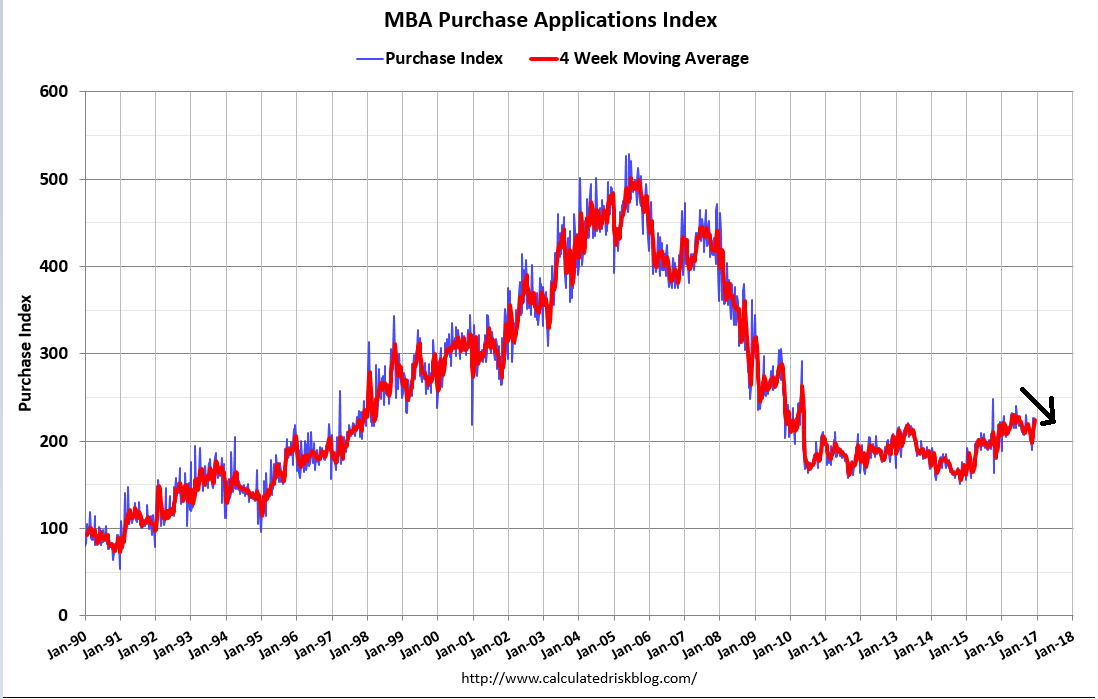
Continues to decline. One less reason for the Fed to hike today…
121401

Highlights

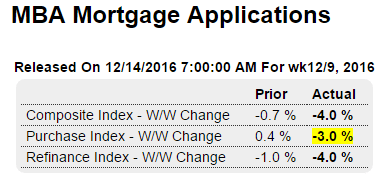
Rising interest rates continue to take their toll on mortgage activity, with purchase applications for home mortgages falling a seasonally adjusted 3.0 percent in the December 9 week, while refinancing applications fell 4.0 percent. The purchase index now stands just 2 percent above its reading a year ago, a 1 percentage point decline from the prior week. Reaching the highest level since October 2014, the average interest rate on 30-year fixed-rate conforming mortgages ($417,000 or less) rose 1 basis point from the prior week to 4.28 percent.

Though it is nearly a foregone conclusion that the Fed will hike the Fed funds target range by 25 basis points today, potential home-buyers and refinancing homeowners will be sensitive to rhetoric explaining the decision for clues about the frequency and magnitude of future rate hikes. Upwardly revised inflation expectations have pushed up mortgage rates by more than 50 basis points since the Presidential election, taking them to a level about 70 basis points higher than the 3-year lows seen in July.
121402
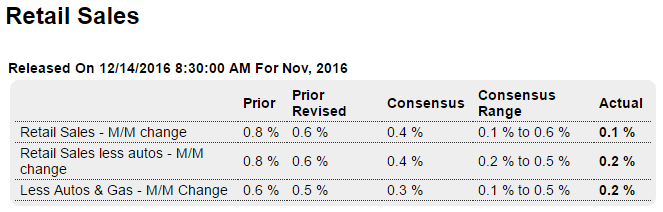
Very low growth and prior month revised down:
121403

Highlights

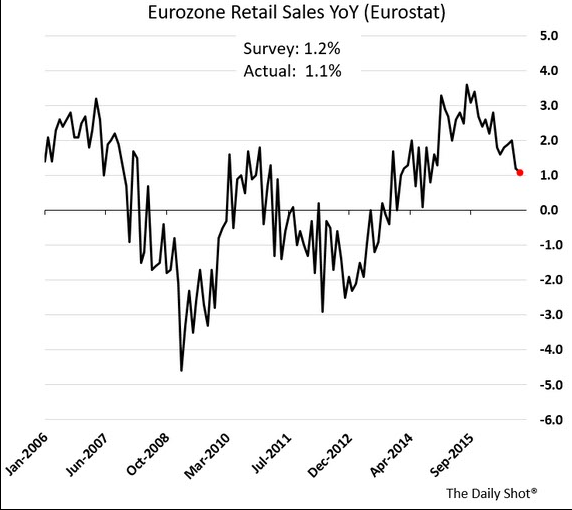
The details are a little bit better than the retail sales headline for November which could manage only a 0.1 percent gain. Auto sales, which had been very strong in prior months, fell 0.5 percent in the month for the sharpest drop since March. But most other components managed to show gains though only marginal ones with nonstore retailers (ecommerce) and electronics & appliance stores up only 0.1 percent as was the key general merchandise category.

But there is strength in the report as restaurants, up 0.8 percent, posted their best gain since February. This is a discretionary category that points to underlying consumer strength. Furniture and furnishings posted a very strong 0.7 percent gain with building materials and gardening equipment a respectable 0.3 percent. Gains for these two readings are consistent with strength in the housing sector.

Excluding autos, retail sales rose 0.2 percent while excluding both autos and gasoline, the latter not a major factor in the November report, sales also rose 0.2 percent. These are light gains for a month when consumer confidence shot higher, but outside of the monthly swing lower for autos, much of this report is constructive and won’t likely be holding down expectations for the holiday shopping season.

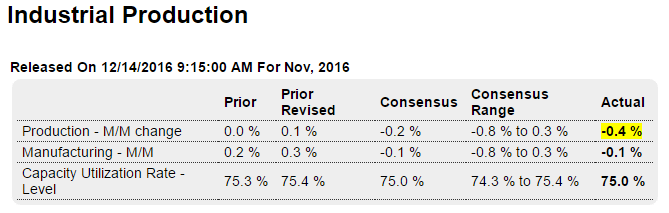
Another bad one:
121404

Highlights

Unseasonably warm weather pulled utility output lower and total industrial production along with it which fell 0.4 percent in November. Utility output fell 4.4 percent in the month for the third steep decline in a row. Manufacturing output was soft, down an as-expected 0.1 percent in the month though October is revised 1 tenth higher to a gain of 0.3 percent.

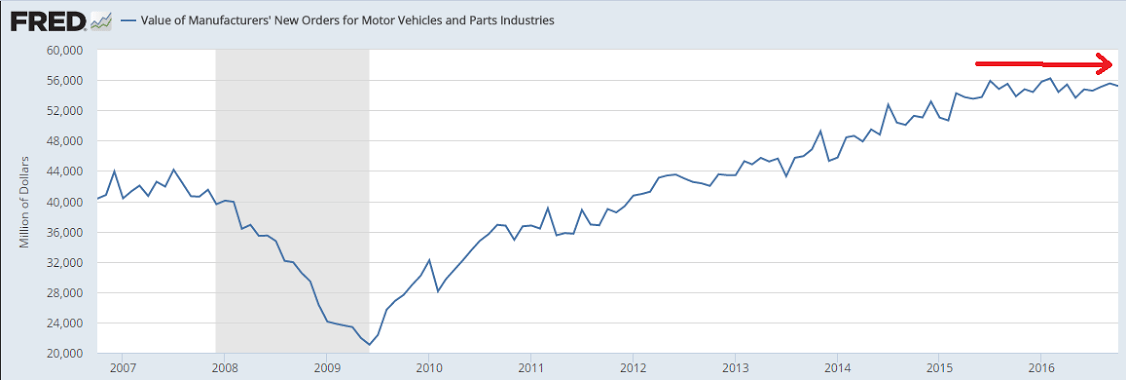
But most of the readings for manufacturing are weak. Motor vehicle production, which had been a leading strength for manufacturing with five straight gains, fell a steep 2.3 percent in the month with assemblies of light trucks going into reverse. Hi-tech goods, also a leading strength, could only manage a 0.1 percent gain. Market groups show a 0.5 percent decline for consumer goods and a 0.3 percent dip for business equipment, the latter once again a disappointment for the business investment and productivity outlooks.

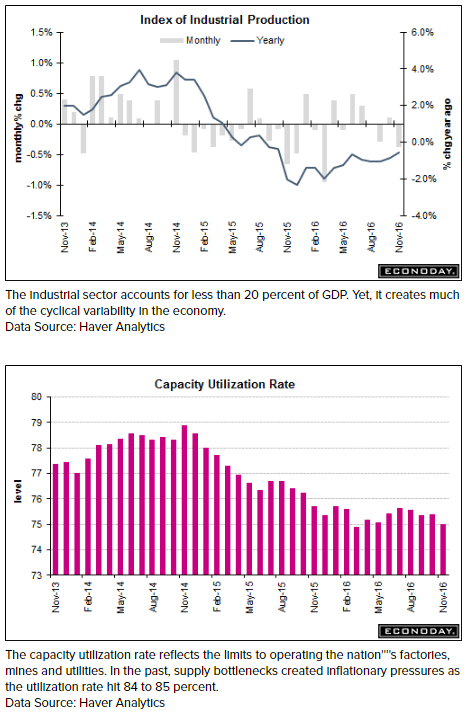
Overshadowed by manufacturing and utilities, mining had a very strong month, up 1.1 percent following October’s 1.9 percent gain. The recent gains for mining have trimmed its year-on-year decline from the high single digits to and mid-single digits, at minus 4.6 percent in the latest data. For comparison, year-on-year manufacturing production is in the plus column but only at 0.1 percent. Utilities are down 1.9 percent with total industrial production down 0.6 percent.

With the dip for manufacturing, today’s report offers the first definitive look at the November factory sector, one that will not be raising fourth-quarter GDP estimates. Advance looks at December’s factory conditions follow tomorrow with the closely watched regional reports from the Philly and New York Feds.
121405
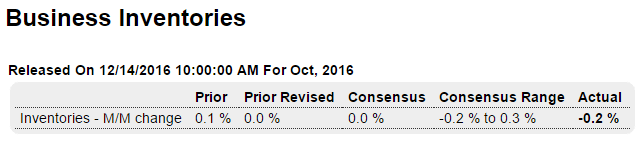
Also not good for GDP as sales are low and inventories are being worked down rather than new goods being produced, and there’s still a long way to go:
121406

Highlights

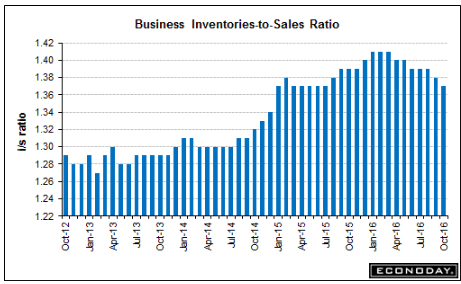
High levels of unwanted inventories are not an issue for the year-end economy, based on a 0.2 percent decline in business inventories in October along with a 1 tenth downward revision to September which is now unchanged. Looking at components, both retail and wholesale inventories fell 0.4 percent in the month with manufacturing inventories unchanged.

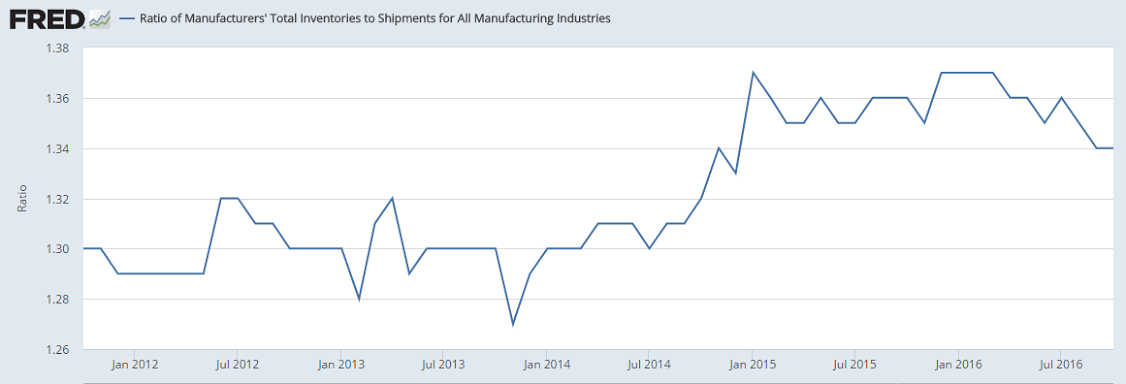
Inventories are best measured against sales which, for business sales overall, rose a very strong 0.8 percent in October to pull the inventory-to-stocks ratio down to 1.37 from 1.38. The strength in sales and lack of inventory build points to the need to rebuild inventories which is a plus for the production and employment outlooks.
121407

Economists chop growth outlook after consumers shop less than expected

By Patti Domm

Dec 14 (CNBC) — Between the miss in retail sales and softer industrial production, JPMorgan chopped its forecast to 1.5 percent GDP growth from 2 percent for the fourth quarter, a disappointment after the third quarter’s 3.2 percent pace.

Goldman Sachs Chief Economist Jan Hatzius said he lowered tracking fourth-quarter GDP to 2 percent from 2.1 percent, and Barclays lowered the tracking pace to 1.8 percent after weaker retail sales and industrial production.

“When the economy is running at 2 percent-ish … portions of the economy are kind of in recession at any point in time. There are cracks. We had some concerns about the strength of imports. Imports of consumer and capital goods are soft. The business spending side still seems quite soft to us. We have concerns auto sales will come down just because the pace is unsustainable,” said Gapen.
Small business survey, McConnell, Redbook retail sales

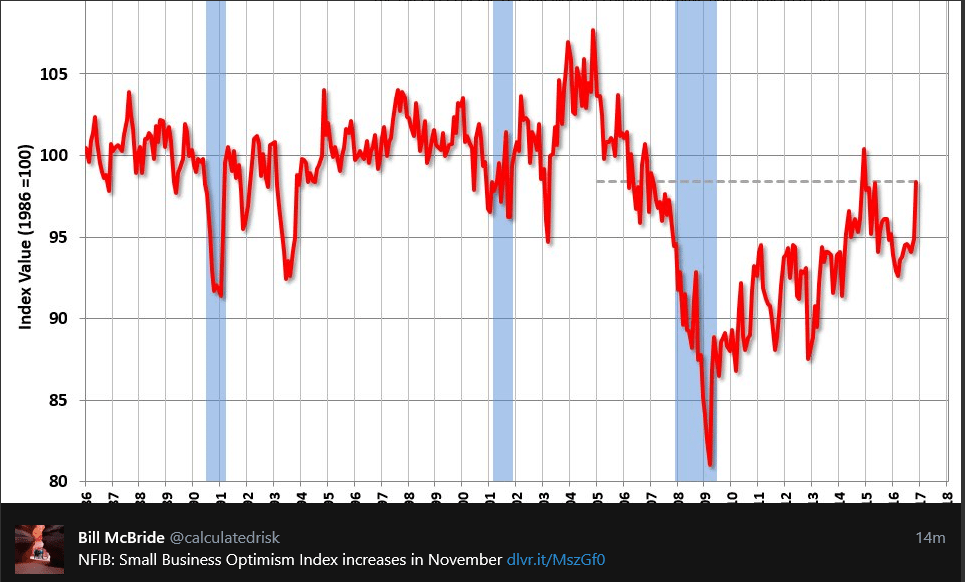
Nice Trumped up spike, led entirely by expectations the new President would make everything better, but even with that low by historical standards:
121301

Highlights

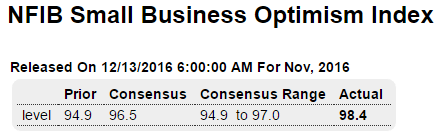
The small business optimism index rose a sharp 3.5 points in November to 98.4, significantly exceeding expectations and posting the highest reading since May 2015. The NFIB said small business optimism remained flat leading up to Election day, but then rocketed higher, ignited by business owners’ expectations of better business conditions in Washington. At 98.4, the index is above the 42-year average, only the third time it has broken above since 2007.
All but 2 of the 10 components of the index posted gains in November. The largest gain was recorded in expectations of the economy to improve, which rose 19 points to 12, followed by expectations of higher real sales, up 10 to 11. The lone decline was in capital outlays, down 3 points to a still strong 24. Current inventories were unchanged at minus 4.

The optimistic outlook also improved an already rosy employment picture, with current job openings rising 3 points to 31. Plans to create new jobs were up 5 points from October to 15 percent, the strongest reading since the recovery.

Despite the general optimism, business owners remained quite down on earnings trends, which nudged up only 1 point to the still lowest reading of all components at minus 20. On the other hand, the net percent of owners raising average selling did rise 3 points to 5 percent, and looking ahead, a net 19 percent planned price hikes, up 4 points.

“What a difference a day makes,” said Juanita Duggan, President and CEO of the National Federation of Independent Business (NFIB). “Before Election Day small business owners’ optimism was flat, and after Election Day it soared.”

The bifurcated data was even more dramatic.

Job creation plans increased from a net nine percent through November 8th to a net 23 percent after the election. Expected higher sales rose 16 points, from a net four percent to a net 20 percent. Expected better business conditions, the biggest mover in the survey, rose from a net -6 percent to a net 38 percent, a massive 44-point spike.

“If higher optimism can be sustained, I expect that in the coming months we’ll see an increase in business activity, such as hiring and expanding,” said Dunkelberg.

121302

President-elect Donald Trump’s race to enact the biggest tax cuts since the 1980s went under a caution flag Monday as Senate Majority Leader Mitch McConnell warned he considers current levels of U.S. debt “dangerous” and said he wants any tax overhaul to avoid adding to the deficit.

“I think this level of national debt is dangerous and unacceptable,” McConnell said, adding he hopes Congress doesn’t lose sight of that when it acts next year. “My preference on tax reform is that it be revenue neutral,” he said.

During a news conference, McConnell also poured cold water on the idea of a massive stimulus package, effectively laying out markers on taxes and spending that that could cramp Trump’s ambitions.

Back to recessionary levels of growth:

121303

Trade, Factory orders, Redbook retail sales, Saudi pricing, Comments on Trump tactics

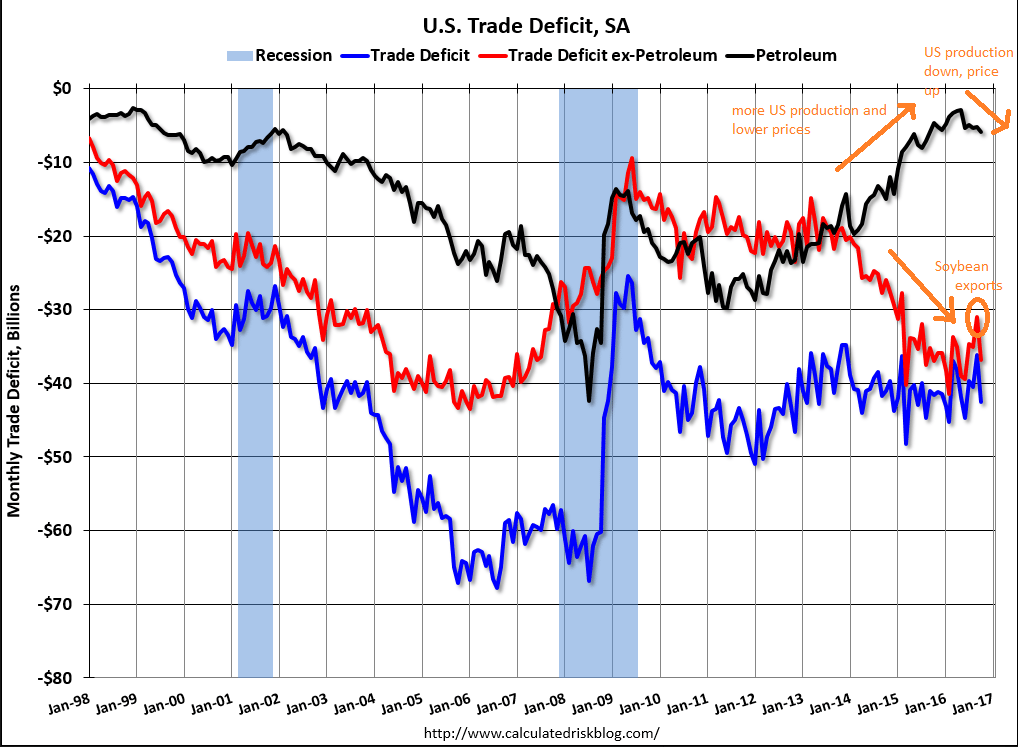
Trade deficit moving back out. I expect a lot more to come this quarter and next. Oil is getting more expensive and the quantity imported is up as well. The ‘one time’ soybean export bulge is behind us, and global trade in general has slowed.

Wouldn’t surprise me if Trump responds by having the US start buying foreign currencies, which would send the dollar lower to offset ‘foreign currency manipulation’. And, of course, he’d show a ‘profit’ in fx purchases as the dollar falls:

120601

Highlights

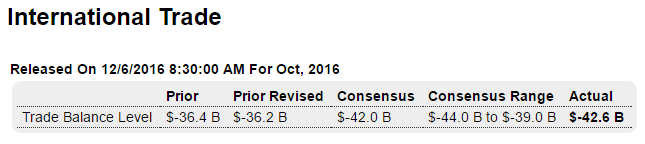
The nation’s trade deficit widened substantially in October, to a higher-than-expected $42.6 billion and reflecting a 1.8 percent decline in exports and a 1.3 percent rise in imports. The nation’s trade deficit in goods totaled $63.4 billion offset only in part by a small rise in the trade surplus in services to $20.8 billion.

Goods exports were soft across the board including for foods/feeds/beverages (down $1.4 billion in the month) and also industrial supplies (down $1.0 billion). Exports of consumer goods fell $0.9 billion with exports of capital goods, barely in the plus column, held down by a $0.6 billion dip in civilian aircraft. The offset is services exports which at $63.3 billion is the highest on record and largely reflects global demand for the nation’s technical and managerial services.

The import side of the data show heavy U.S. buying, at a $231.3 billion total in the month which the highest since August last year. Details show a $1.1 billion increase in capital goods which is a negative for the national accounts but a positive for the nation’s productive investment. Imports of consumer goods shot up $2.4 billion ahead of the holidays.

By country, the gap with China narrowed by $1.4 billion to $31.1 billion reflecting unusually high U.S. exports to China. The gap with the EU widened to $13.1 billion, with Mexico to $6.2 billion and with Japan to $5.9 billion.

The widening trade deficit in October gets the net export component of fourth-quarter GDP on the wrong foot.

120602
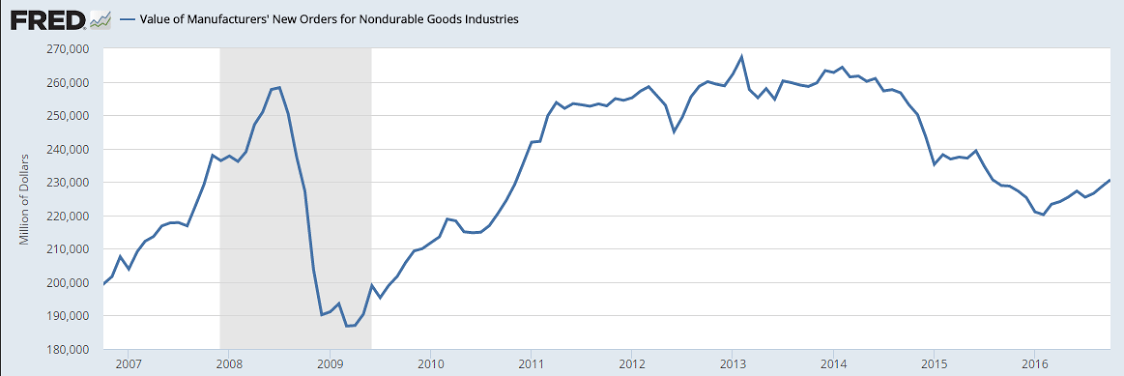
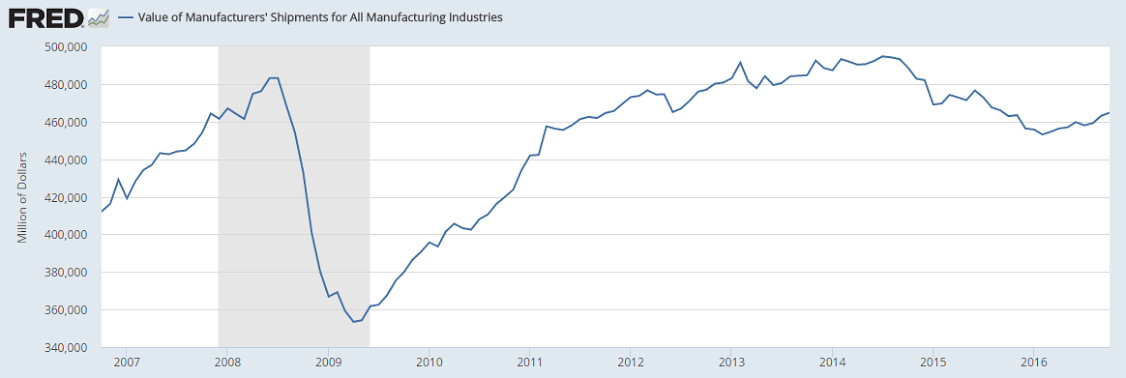
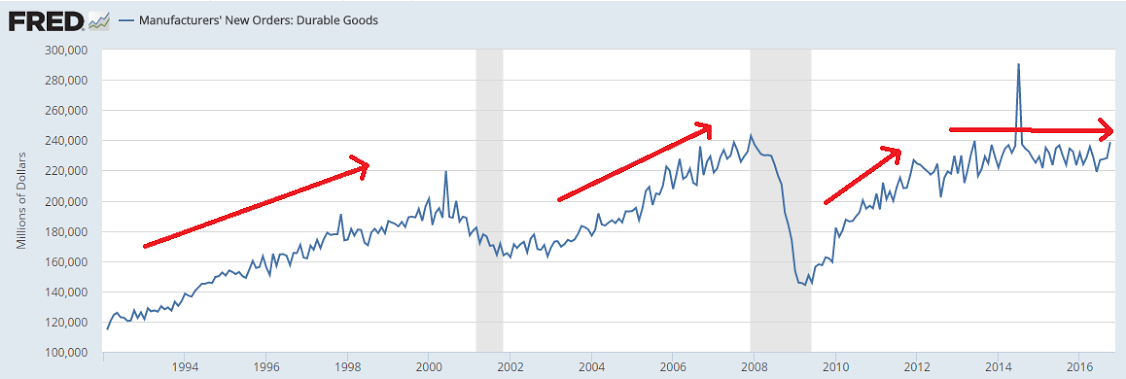
As previously discussed, manufacturing is a lot smaller than the service sector, and after falling to lower levels with the collapse in oil related capital expenditures growth is resuming at the lower levels, as the lack of aggregate demand moves deeper into the service sector:

120603

Highlights

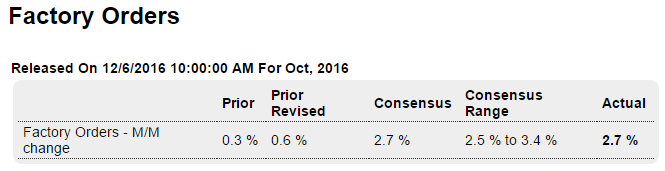
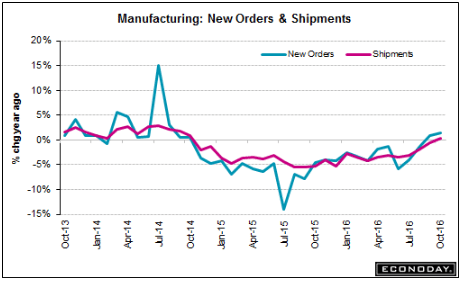
October was a very strong month for the factory sector as durable goods orders rose 2.7 percent. Aircraft (both civilian and defense) was October’s special strength, excluding which the gain in orders falls sharply but still comes in at a very solid 0.7 percent. Another plus in the report is a 3 tenths upward revision to September to plus 0.6 percent, a gain driven by an upgrade for aircraft orders in that month.

Core capital goods orders (nondefense excluding aircraft) did rise in October but not much, up only 0.2 percent and well short of offsetting a 1.5 percent decline in September. Weakness here points to trouble for business investment in the fourth-quarter GDP report. And shipments for this category have gotten off to a bad start in the quarter, down 0.1 percent in October.

But other readings are favorable including a useful 0.4 percent rise in total shipments and a 0.7 percent gain for unfilled orders which had been in long contraction. Inventories are not a problem in the sector, unchanged in the month with the stock-to-sales ratio holding at 1.34.

Advance readings on factory conditions in November have been mostly positive which, together with this report and a respectable 0.3 percent gain for the manufacturing component of the industrial production report point to year-end momentum for a sector that has otherwise had a flat 2016.

120604

120609

120610

120611

120607
Inventories still high and working their way lower:

120608
Growth falling back from the mini spike up. A ‘normal’ economy, before the collapse in oil capex, used to show 3-4% increases and more:

120606

Looks like a price cut, indicating they don’t want prices up quite this high?


*Saudi arabia cuts all Jan OSPS to US except for extra light
*Saudi Arabia raises diffs on all grades to NWEur/MED
*Saudi Jan Arab Light to Asia at -75c vs plus 45c
*Saudi cuts Jan pricing for light crudes to Asia.

The job of the executive branch, headed by the President, is to enforce the law.

And it’s perfectly legal for companies to move production, etc. to other countries.

However, the President elect is seeking to have companies that are acting legally alter their business plans by using leverage/retribution such as threatening tariffs and altering govt. contracting terms and conditions.

Unconstitutional abuse of executive power?

Payrolls, Vehicle sales, Carrier

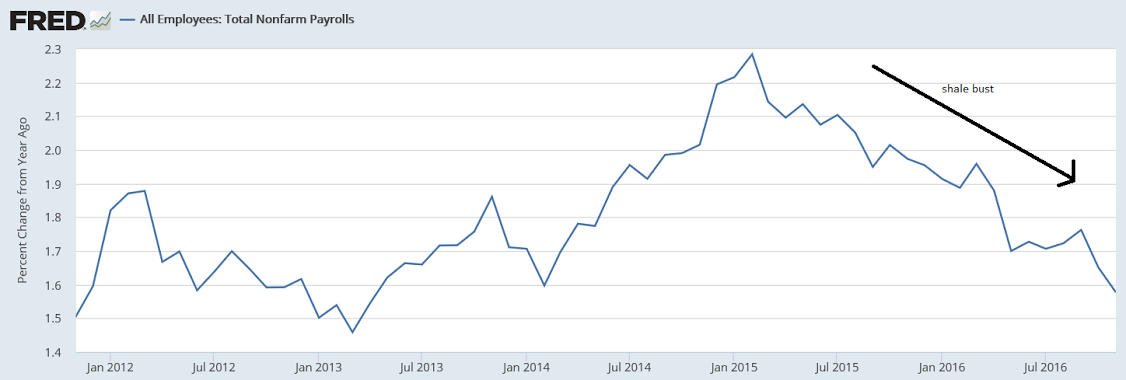
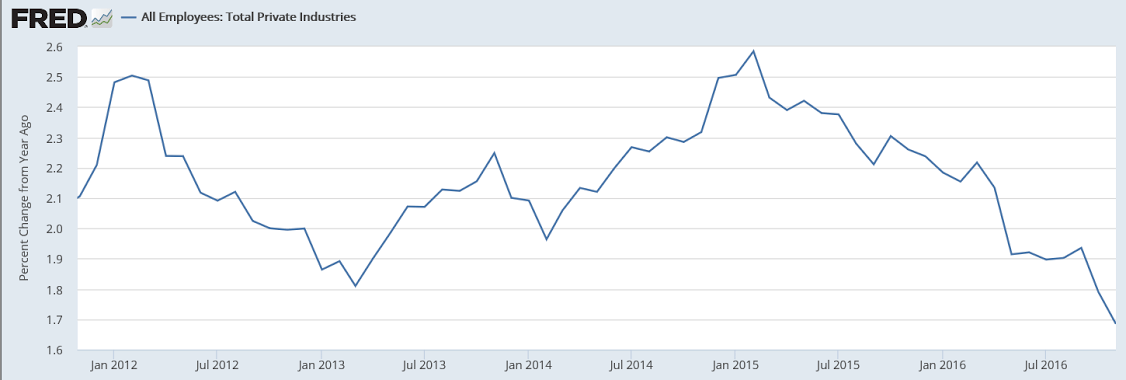
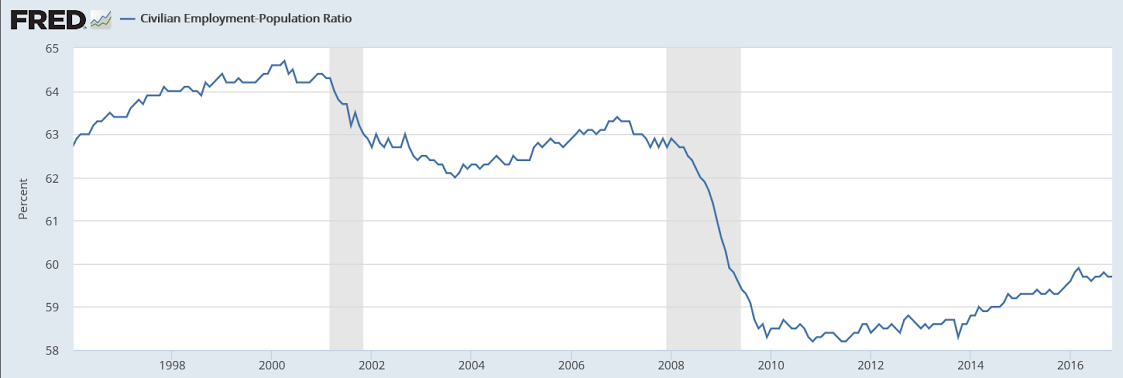
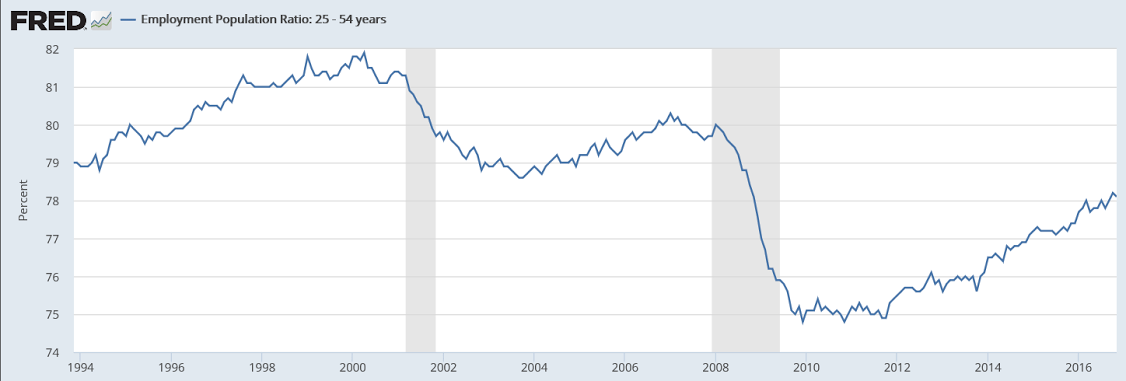
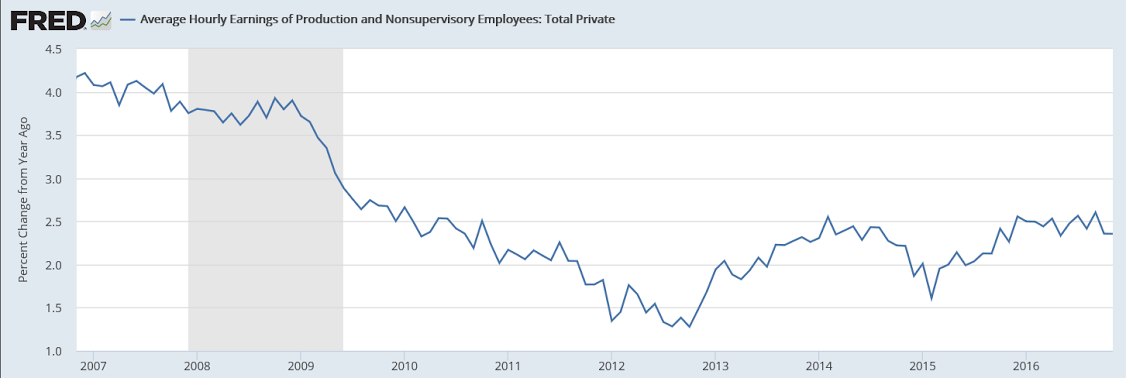
Year over year growth continues to decelerate, and wage growth remains critically low. And participation rates further evidence a massive shortage of aggregate demand, and it’s all only getting worse:

120201

120202

Highlights

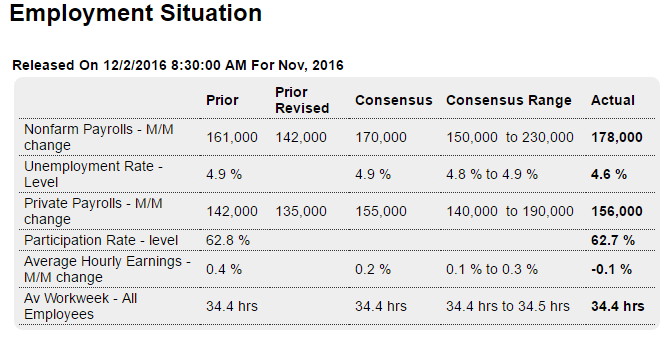
Payroll growth is solid and the unemployment rate is down sharply, but not all the indications from the November report employment are favorable. Nonfarm payrolls rose 178,000 in November to just beat out expectations with revisions no factor, as a sharp downward revision to October, now at 142,000, is offset by a nearly as sharp upward revision to September, now at a sizable 208,000. The unemployment rate fell a very sharp 3 tenths to 4.6 percent for the lowest reading of the cycle, since August 2007.

But now the less positive news. The dip in the unemployment rate is tied, not to greater growth in employment, but to a dip in the participation rate, down 1 tenth to 62.7 percent. And a headline negative in the report is a surprise 0.1 percent decline in average hourly earnings, the first negative reading of the year and more than reversing October’s very strong 0.4 percent gain and driving down the year-on-year rate from a cycle high of 2.8 percent back down to 2.5 percent where it last was in August.

But payrolls are positive and led in November by another major gain for professional & services, up 63,000, and a 14,000 gain for the temporary help subcomponent. Gains in these readings point to demand for short-term labor in lieu of finding full-time labor. Construction is another positive, up 19,000 and reflecting strength in residential building. A negative is an 8,000 decline in retail which indicates that retailers are not gearing up much for the holidays.

For policy makers, the unemployment rate is now at their long-term target though participation is soft — and inflation is still lagging, factors that will give the doves some debate points at what is otherwise likely to be a rate-hike meeting the week after next.

120203

120204

120205

120206

120207
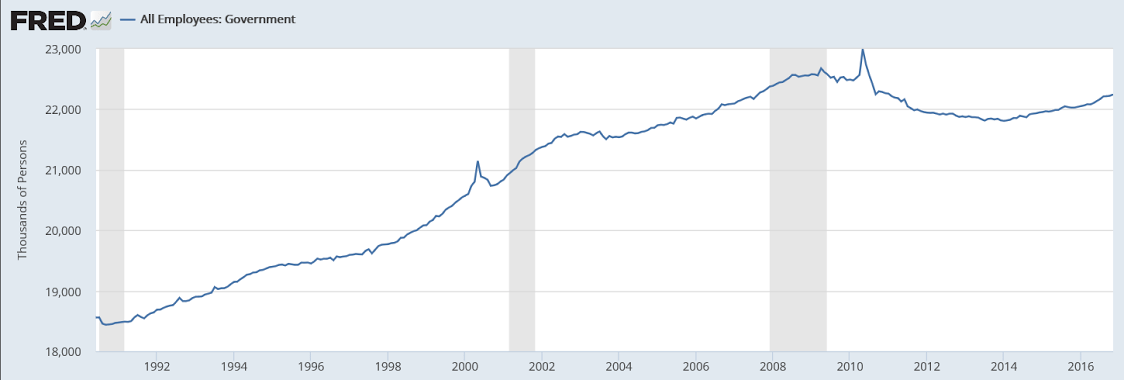
We’ll see if Trump can do the Tea Party’s bidding as well as Obama did when it comes to keeping down the size of government:

120208
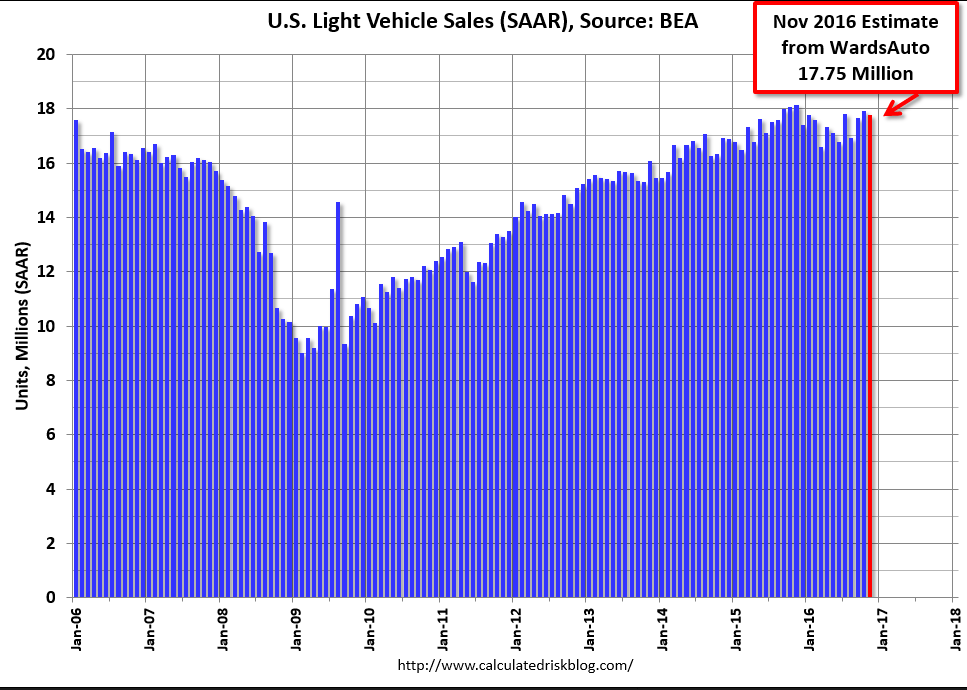
Car sales used to contribute to GDP growth. Not any more, seems:

Based on a preliminary estimate from WardsAuto, light vehicle sales were at a 17.75 million SAAR in November.

That is down about 2% from November 2015, and down 0.9% from the 17.91 million annual sales rate last month.

From John Sousanis at WardsAuto November 2016 U.S. LV Sales Thread: Light Trucks, Extra Days Boost November Volumes

With two extra selling days in November, U.S. automakers outpaced same-month year-ago sales on a volume basis, despite a 4.6% decline in the daily sales rate (DSR).

Strong light-truck sales were a key factor in November sales, as the industry delivered 1,372,402 LVs – 48,904 more than it did a year-ago, over the course of 25 selling days (vs. 23 last year).

Year-to-date sales for the industry reached 15.783 million units, giving the first 11 months of 2016 a lead of just 17,542 units over like-2015 heading into December – and keeping alive the prospect that 2016 will break the single-year sales record set last year.

Read more at http://www.calculatedriskblog.com/#SD8fhLAodoqC8dsL.99

120209
So much for Trump ‘deal making’ hopes:

Trump’s deal with United Technologies includes $7 million in financial incentives provided by Indiana to keep 1,100 jobs at Carrier, the company’s heating and air conditioning unit, in the state. However, Carrier still plans to move roughly 1,300 other jobs to Mexico and close another facility in Indiana.

Chain store sales, PMI and ISM surveys, Construction spending, Auto sales, Delinquencies

120110

Highlights

Chain stores are reporting mixed to lower year-on-year rates of November sales compared to October. Today’s results do not hint at another month of strength for the government’s ex-auto ex-gas retail sales reading which posted very strong monthly gains of 0.6 percent and 0.5 percent in October and September.

Manufacturing muddling through at current levels:

Markit Manufacturing PMI:

120101

120102

120103

120104

Highlights

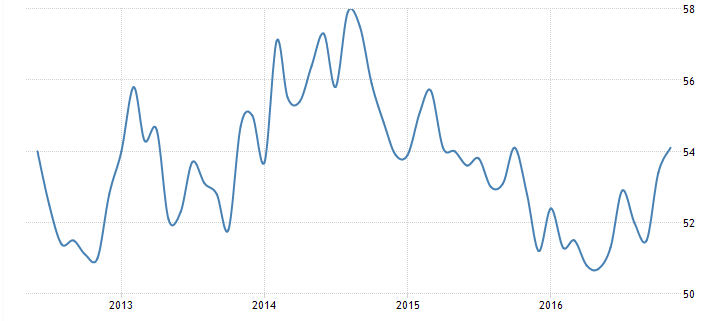
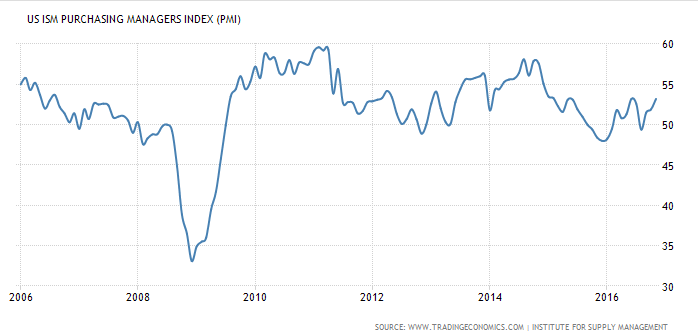
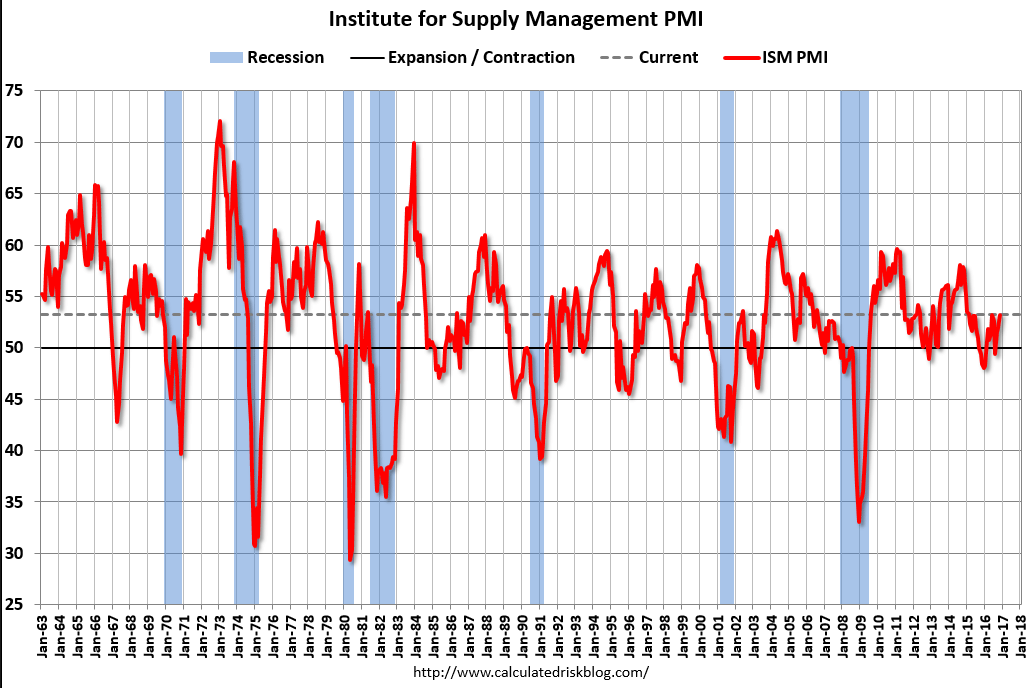
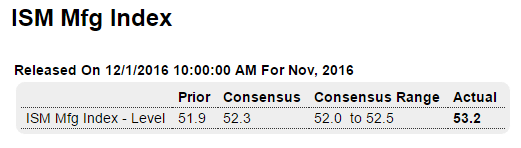
Durable orders picked up in October and the momentum appears to have extended to November, based on the sum of advance indications on the month including the ISM manufacturing composite which is up a solid 1.3 points to 53.2. Growth in new orders improved 9 tenths to a more respectable 53.0 with export orders holding over break-even 50 at 52.0. Production rose 1.4 points in the month to 56.0 with supplier deliveries showing significant delays and perhaps demand-related congestion in the supply chain, up 3.5 points to 55.7 and contributing significantly to the strength in the headline composite.

Other details include little change for inventories or backlog orders and modest growth in employment, down 6 tenths to 52.3. Prices paid shows moderate upward pressure, unchanged at 54.5.

This report is a little less hot than other November indications including from the Philly Fed, but the direction it points to is favorable.

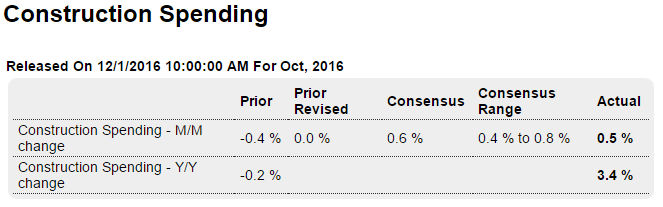
Up, and last month revised higher as well. Year over year up 3.4%, remaining historically low:

120105

Highlights

Construction spending rose a solid 0.5 percent in October with the prior two months both revised sharply higher, up 4 tenths from the initial estimate for September to unchanged and up a full percentage point for August which, like October, now stands at 0.5 percent. Today’s revisions point to an upward revision for third-quarter GDP.

Residential is the strong suit in the October report with both single-family and multi-family homes up 2.8 percent in the month, gains offset in part by a contraction in home improvements. Private nonresidential fell 2.1 percent in the month though public spending shows solid gains led by the Federal government and including highways and streets.

This report is noted for its volatility and the October edition only adds to the reputation. Construction may not be quite as flat as it appeared in prior months in what may perhaps be a positive not only for fourth-quarter GDP but even perhaps for construction payrolls in tomorrow’s employment report.

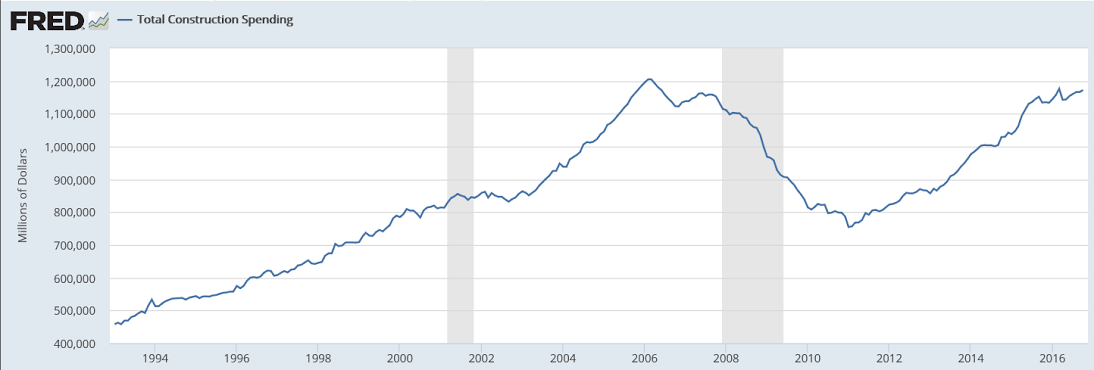
This is not adjusted for inflation:

120106
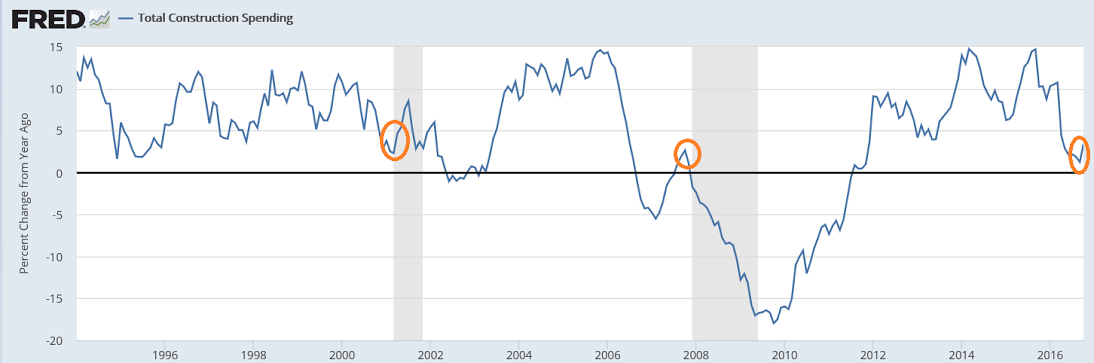
Anything under 5% annual growth has been associated with recession:

120107

Highlights

With about half the results in, November unit vehicle sales are trailing October’s results and are about in line with the Econoday consensus for a 2.7 percent decline to a 17.8 million annualized rate. The early results point to softness for the motor vehicle component of the government’s retail sales report which posted very strong gains of 0.8 percent and 0.7 percent in October and September.

120108
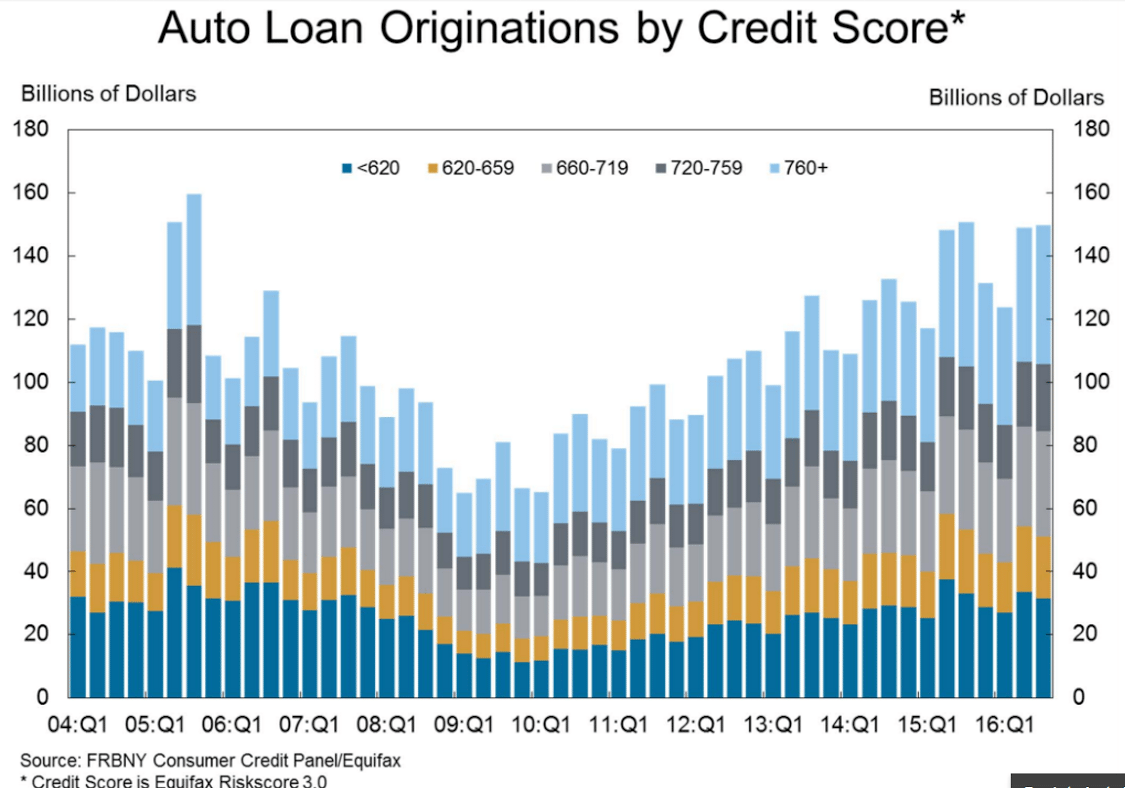
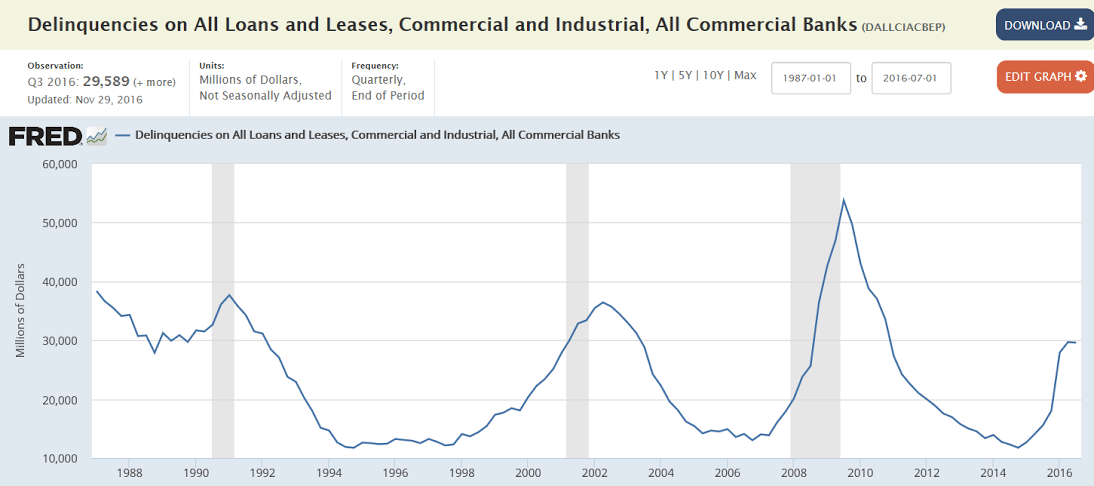
Rising bank loan delinquencies have historically been associated with recessions:

120109

GDP, Consumer confidence, Redbook retail sales, Headlines

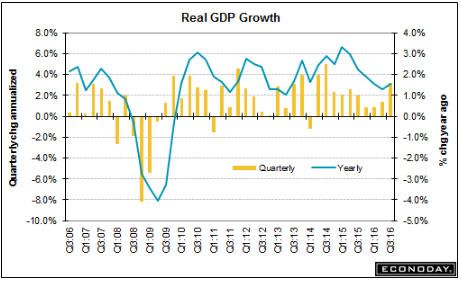
Revised up a bit as expected, pretty much all from revising up consumer spending. And it’s still a soybean export and inventory building story:

112901

Highlights

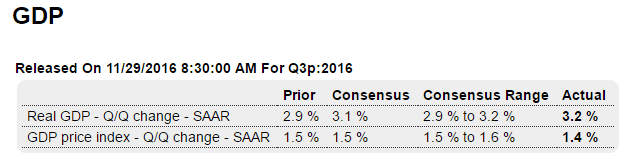
The third quarter has gotten a meaningful upgrade. The second estimate is 3 tenths higher than the first, at a plus 3.2 percent annualized rate and which includes an upgrade for consumer spending and, in further good news, a downgrade in inventory growth. Personal consumption expenditures rose at a 2.8 percent pace in the quarter, up 7 tenths from the initial estimate and, outside the 4.3 percent surge in the second quarter, the best showing by the consumer since second quarter last year. Inventories added $7.6 billion in the quarter, down from an initial $12.6 billion in a revision that held down the quarter’s GDP but which will ease concerns of unwanted overhang that could slow fourth-quarter production.

Other details include less downward pull from residential investment, a component that had been strongly positive in prior quarters, and a downgrade for nonresidential investment which is now only marginally in the plus column. Net exports shaved $521.0 billion from the quarter’s total, little changed from the initial estimate, with government purchases a small positive. Price data were shaved lower with the GDP price index revised down 1 tenth to only 1.4 percent.

This report points to greater-than-expected consumer momentum going into the current quarter, helping to explain the big 0.8 percent surge in retail sales for October. The consumer has jobs and is the driving force of the economy.

112902
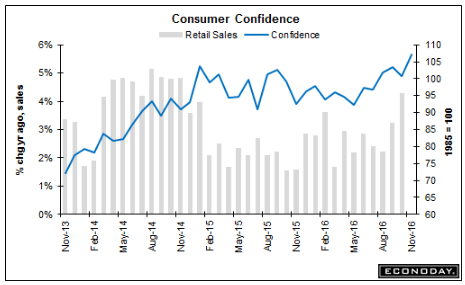
An early show of confidence in the new President:

112903
Looks hopeful, but didn’t work out so well last time there was a mini spike like this:

112904

Smartphone sales set for a screeching slowdown across the globe this year, IDC says

UBS warns of ‘near-term’ iPhone weakness as data shows Apple being cautious with inventory

The market’s newest risk: Trump venting ‘frustrations through his Twitter account’

Why Donald Trump won’t change – CNN
Winning the presidency didn’t change Donald Trump — and it’s increasingly clear that actually being president won’t change him either.

Trump hasn’t had a news conference since July – USA Today
Trump hasn’t had a news conference since July. On Monday afternoon, a lectern with “Trump” written in gold letters was wheeled upstairs inside Trump Tower.

Redbook retail sales, Mortgage purchase apps, PMI manufacturing, Consumer sentiment, New home sales

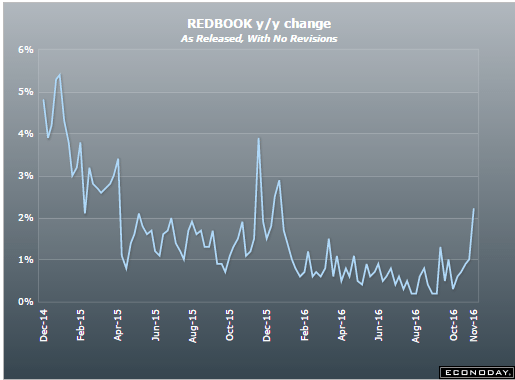
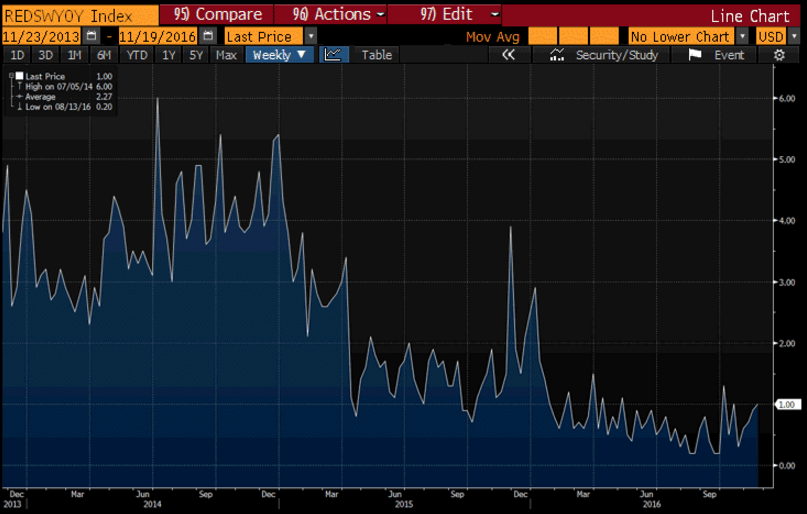
Notable only in that analysts are calling the latest 1% increase ‘strong growth’…

112301
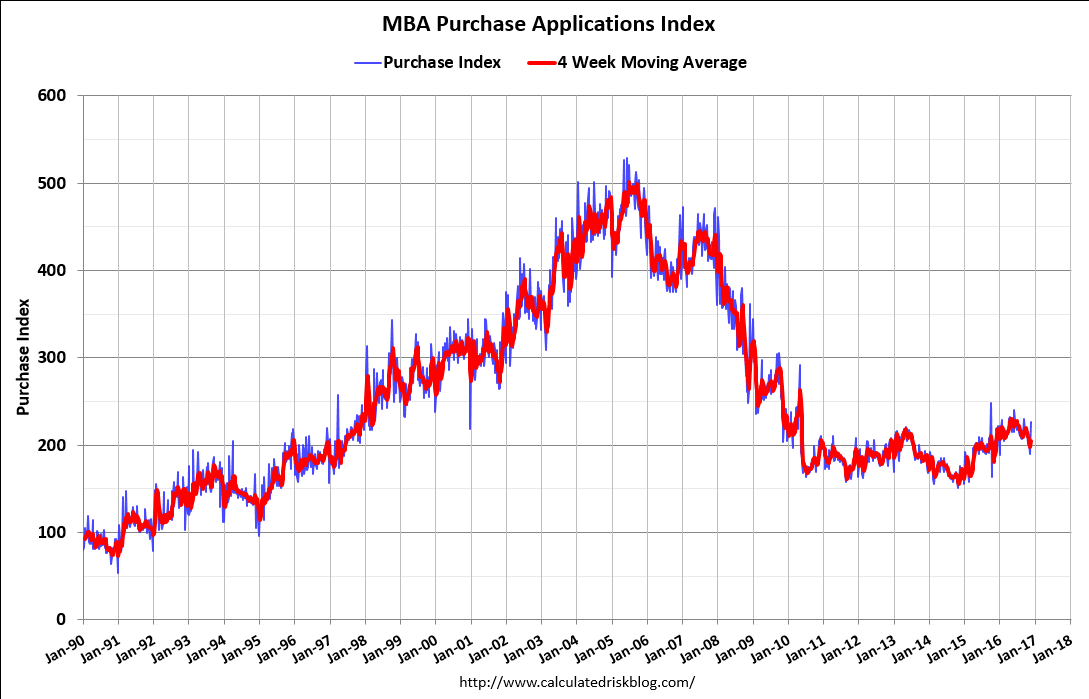
First a big move down, now a rush to get in ahead of fed rate hikes. But still remains depressed by historical standards:

112302

Highlights

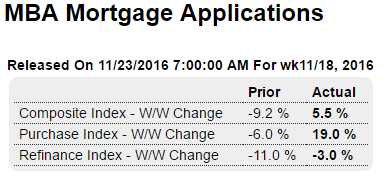
Rising interest rates are causing some volatility in mortgage activity, with purchase applications for home mortgages increasing by an outsized, seasonally adjusted 19 percent in the November 18 week after falling 6 percent in the prior week, while refinancing applications declined by 3 percent following an 11 percent fall. The weekly change put the Purchase Index back up to 11 percent above the level a year ago. The average interest rate on 30-year fixed-rate conforming mortgages ($417,000 or less) jumped 21 basis points to 4.16 percent following the prior week’s 18-basis-point increase.

112303
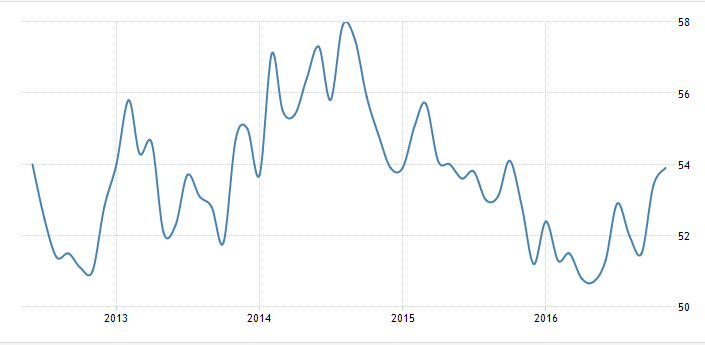
A bit better than expected, as manufacturing chugs along at the lower levels:

112304

Highlights

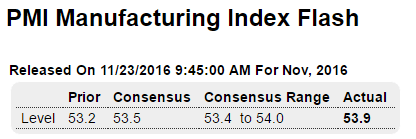
November flash manufacturing PMI reading climbed to 53.9 from 53.4 in October, signaling a further solid improvement in overall business conditions across the manufacturing sector. The headline index was the highest since October 2015, largely reflecting robust output and new business growth during the latest survey period.

Production volumes have now increased for six consecutive months and the latest rise was the strongest since March 2015 thanks to improving underlying demand and generally supportive domestic economic conditions. New order growth picked up to its fastest for 13 months in November. Anecdotal evidence suggested that increased sales to domestic clients had driven the latest upturn in new work. However, new export orders rose only marginally, which manufacturers linked to competitive pressures and the strong dollar in particular.

Higher levels of incoming new business resulted in a further increase in unfinished work. The rate of backlog accumulation was the fastest since July, which some firms attributed to capacity pressures and stronger-than-expected sales. This contributed to a modest rebound in payroll numbers, although the pace of staff hiring remained slightly weaker than its post-crisis trend.

Manufacturers indicated that cost pressures remained subdued with the latest rise in input prices softer than during October and well below the long run survey average.

112305
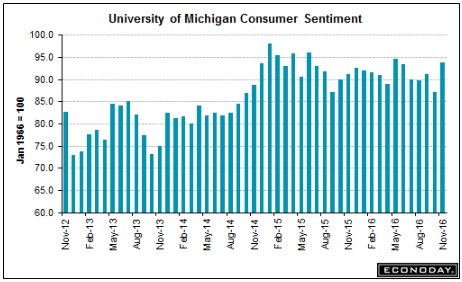
Popped back up with the election:

112306
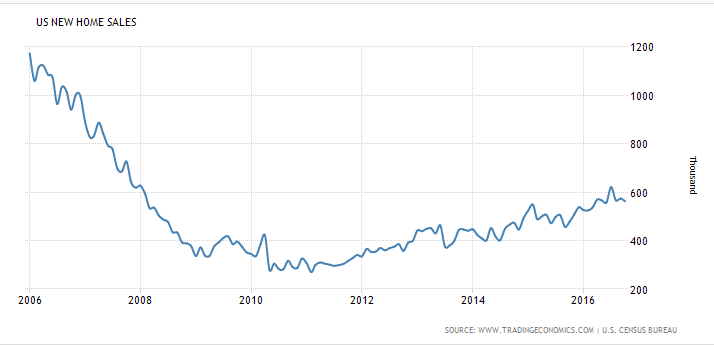
New home sales fall in line with permits, which have been relatively flat, so makes sense that sales have flattened out:

112307

Highlights

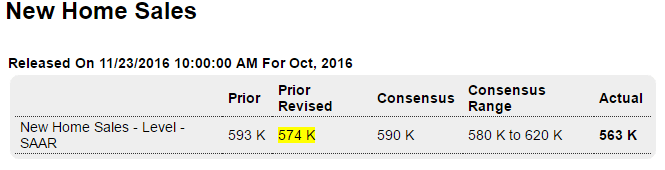
October sales of new single family houses declined 1.9 percent to a weaker than expected an annualized rate of 563,000. On the year, sales were up 17.8 percent. Expectations were for an annualized rate of 590,000. September sales were revised down substantially to 574,000 from 593,000. The October pace was behind the third quarter pace but in line with the second quarter average.

Three of the four regions saw a decline in sales. Sales declined 9.1 percent in the Northeast, dropped 13.7 percent in the Midwest and were 3.0 percent lower in the South. However, sales were up 8.8 percent in the West.

The supply of new homes on the market increased 2.9 percent to 246,000 and the strongest since September 2009. The supply of new homes on the market climbed to 5.2 percent from 5.0 percent.

112308
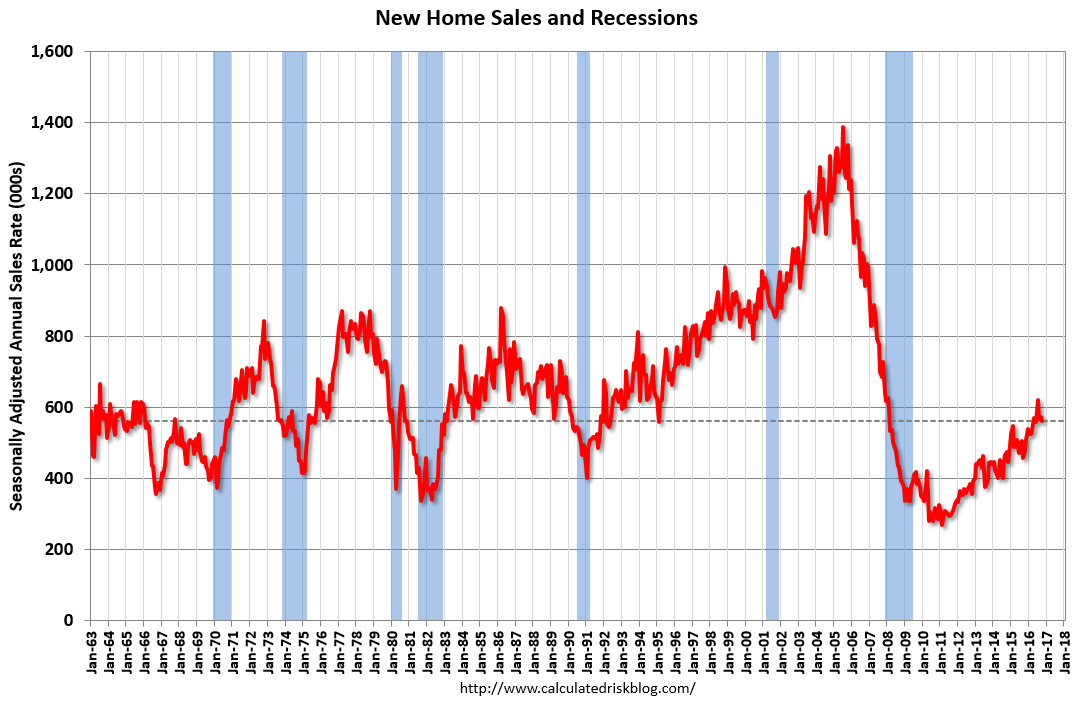
Longer view shows how depressed housing is, and this chart is not population adjusted:

112309

Retail sales, Empire manufacturing, Redbook retail sales, Business inventories

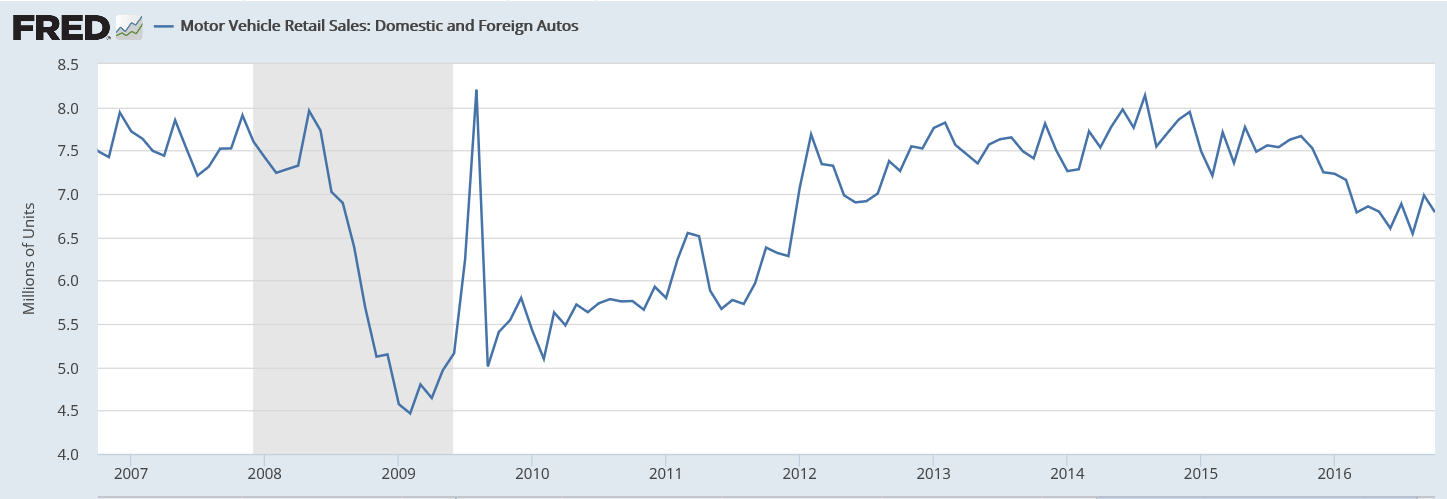
Good report, driven by autos, which were up from last month though down from last year. However, on a year over year basis vehicles sales if anything seem to be moderately declining, and so won’t be contributing to growth as they had in the past. So a glimmer of hope here, but guarded to say the least:

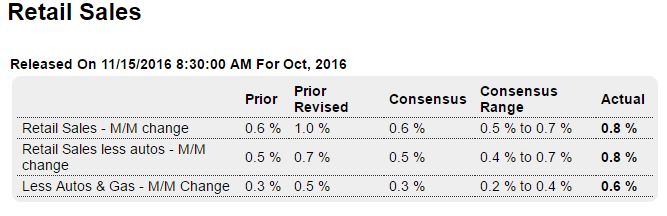
111501

Highlights

The consumer started the fourth-quarter better than expected and finished the third-quarter even stronger than that. Retail sales jumped 0.8 percent in October with September revised 4 tenths higher to plus 1.0 percent. The data show wide gains for both months led by the most important component of all, autos which rose 1.1 percent in October on top of September’s 1.9 percent surge. Building materials & garden equipment are also very strong, up 1.1 percent following September’s 1.8 percent gain with both pointing to strength for residential investment. Non-store retailers are also a standout and reflect strength in e-commerce, up 1.5 percent and up 0.9 percent in the two months.

Excluding autos doesn’t pull down the gain at all in October, at plus 0.8 percent, and only shaves 3 tenths from September where the ex-auto reading is a revised plus 0.7 percent. Price effects for gasoline are giving the data a boost but nothing severe with the ex-auto ex-gas gains at 0.6 percent and 0.5 percent for September.

This is a very impressive report and will raise estimates for fourth-quarter GDP and raise revision estimates for third-quarter GDP. Strength in the labor market is having its positive effects on the consumer.

Retail sales also received a boost from receipts at service stations, which advanced 2.2 percent on rising gasoline prices.

7.6% jump in health care related sales, 10 months this year vs last year:

111513

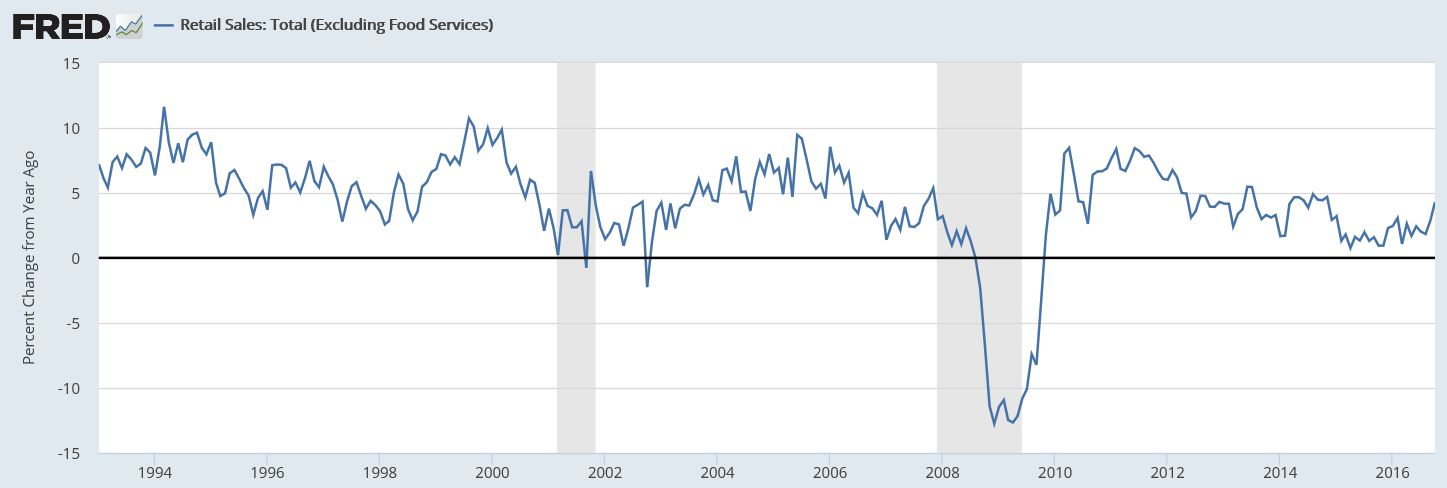
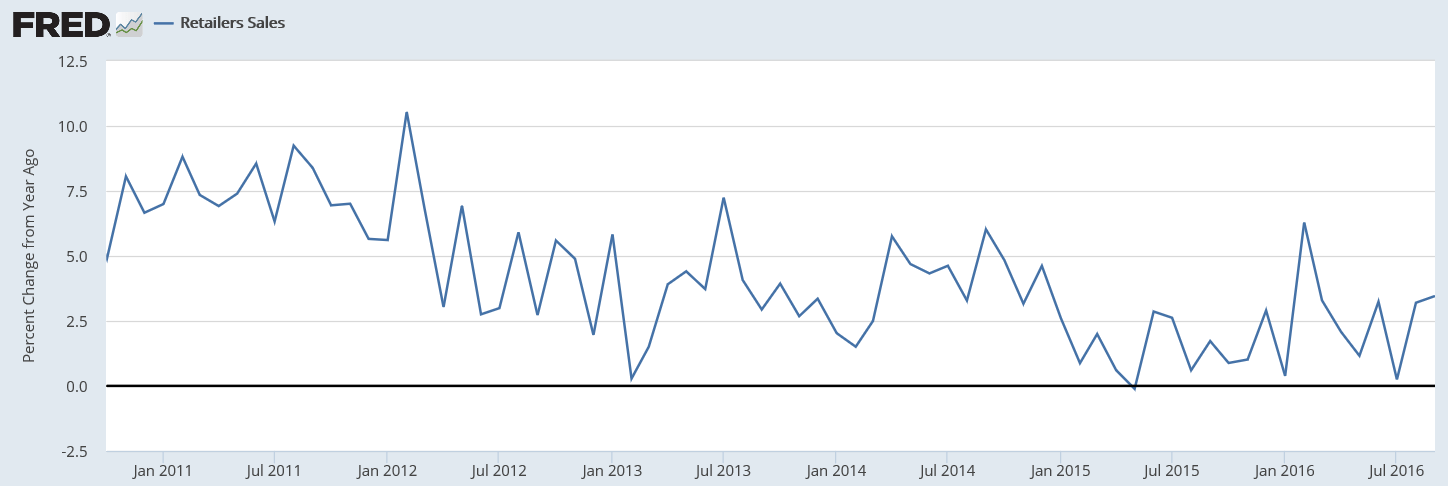
The chart shows retail sales, not adjusted for inflation, have been running near ‘stall speed’ for a while, and blips up like this tend to revert back, so best to reserve judgement here regarding strength of the economy:

111502

111503
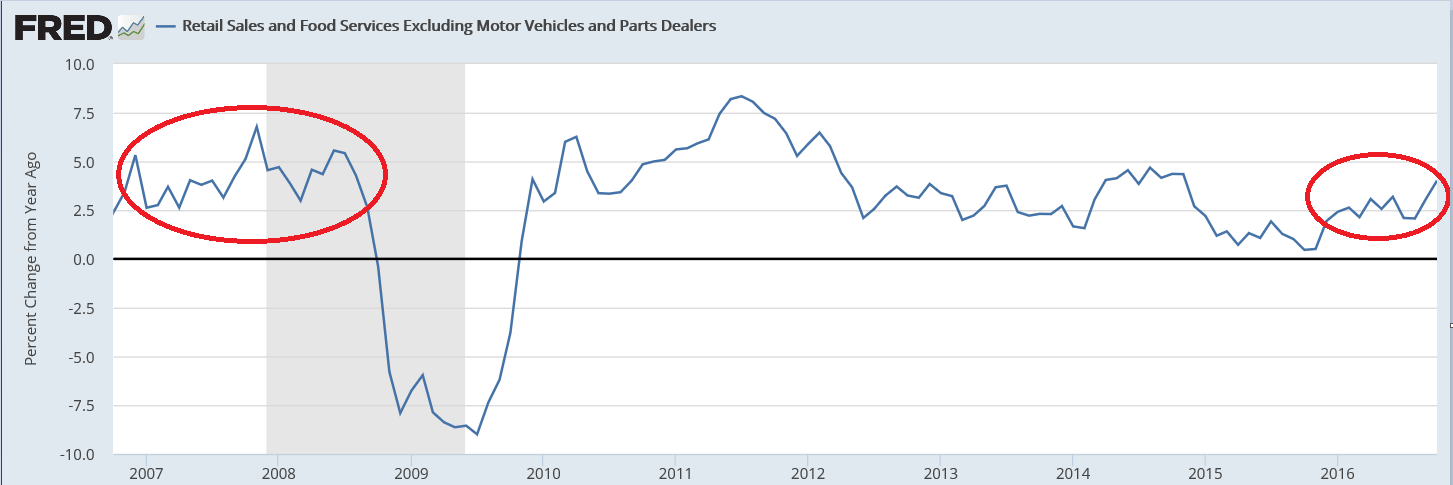
Just making the point here that these types of levels of growth have been consistent with recession in the past:

111504
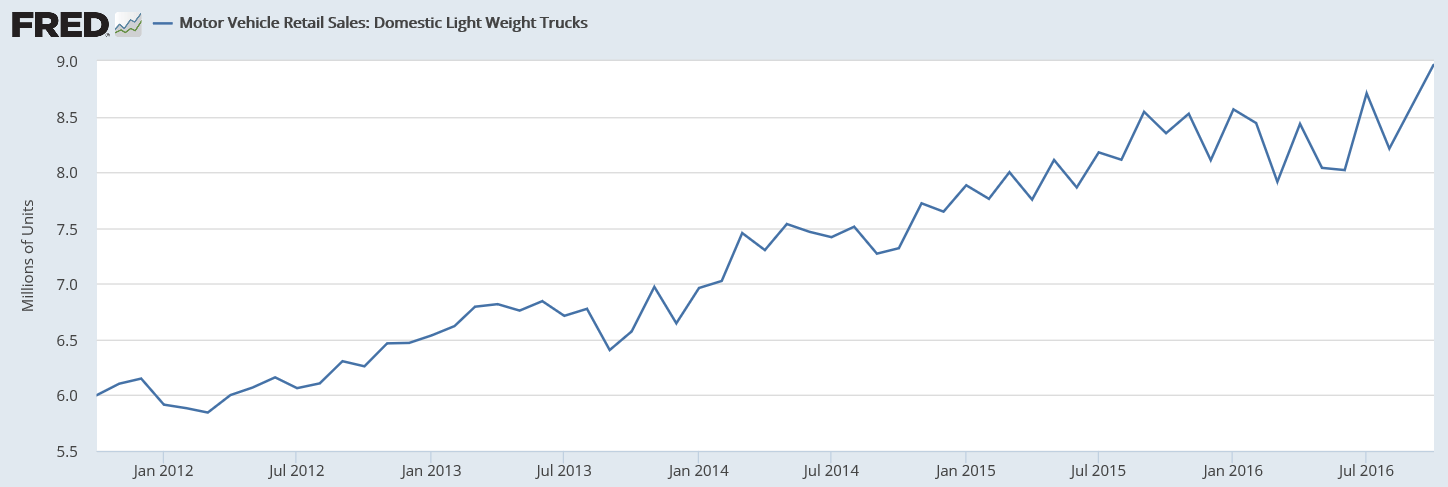
The move up in autos was in light weight truck, which the chart shows zig zags up and down, though generally moving higher:

111505

111506

111507
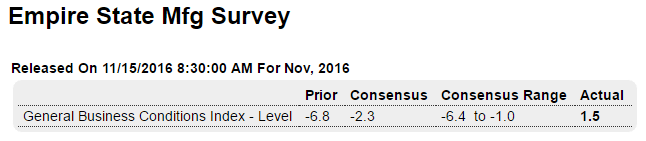
Another better than expected report, but note that employment isn’t looking so good:

111508

Highlights

The Empire State report has been soft but is showing life this month, at a headline 1.5 for November for the first positive reading since July. New orders are up a modest but still constructive 3.1 in November though unfilled orders remain deeply in the negative column at minus 12.7. Shipments are up, at plus 8.5 following two months of decline, but employment continues to contract, at minus 10.9. Costs and selling prices are in the plus column but moderating. Also moderating is the 6-month outlook, down 7.1 points to 29.9 which is on the soft side for this reading. Still, the gain for new orders and shipments are important positives in this report which, if confirmed by strength in Thursday’s Philly Fed report, may begin to lift expectations for what has been a stubbornly flat factory sector.

111509

Highlights

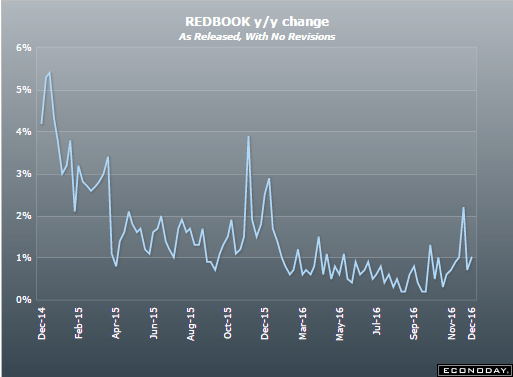
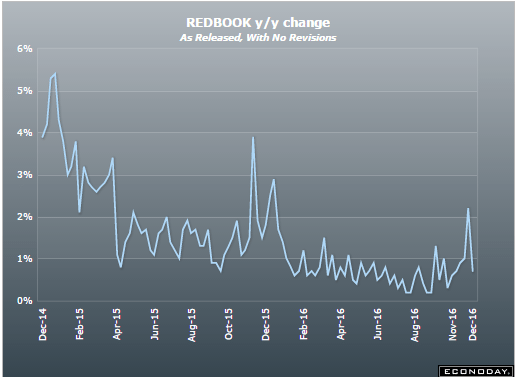
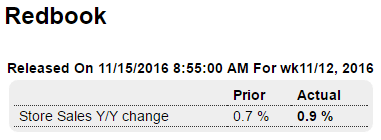
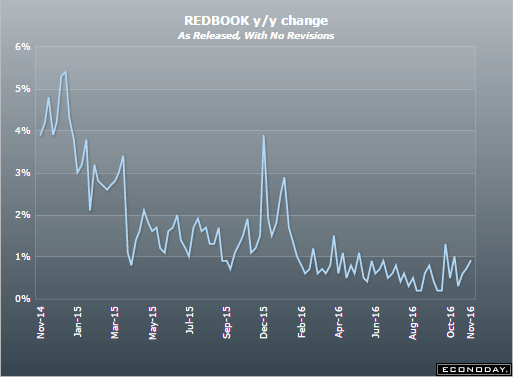
This morning’s October retail sales report is very strong, in contrast to Redbook’s same-store sample which remains soft, at a year-on-year plus 0.9 percent in the November 12 week. Still, the gain is the best since mid-October and if extended to the coming weeks could point to another strong retail sales report for November.

111510
Inventories are working their way lower, but still too high, and so continue to be a drag on output:

111511

Highlights

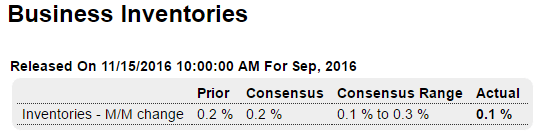
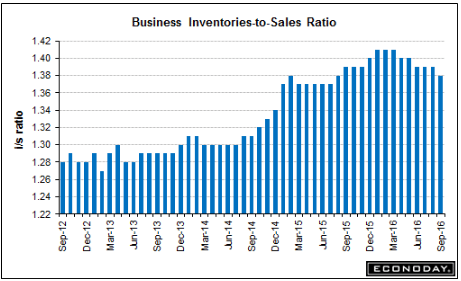
Inventories proved tame in September, rising only 0.1 percent against a sharp 0.7 percent gain in sales that pulls the inventory-to-sales ratio one notch leaner to 1.38 from 1.39. High levels of inventories were a concern going into the fourth quarter but this morning’s very strong retail sales report may in fact point to the need to build inventories further.

111512

Retail sales, NFIB sales, Election comments

Online sales growth now decelerating as well:
110901
NFIB small business sales

110902
Trump won largely because people couldn’t bring themselves to vote for Clinton, and not so much because anyone like him or his presumed agenda. And along the way he destroyed the Republican party, which may or may not sit
so well with Republicans in Congress.

So it’s not like he has a mandate to do anything or that he can rely on Republican support for anything.

Regarding his proposed tax cuts, under current law bills can’t be introduced in Congress unless they are ‘paid for’, so, for example, to introduce a tax cut it has to be paid for by spending cuts. Yes, Congress could change the law or override
it but that would require Senate approval, and that takes a 60% majority that Republicans don’t have.

So my point is that at best it’s going to take a very long time to get anything done. And the way all the charts are decelerating it could all get pretty ugly waiting for the kind of fiscal adjustment needed to reverse course.

Jolts, Small business index, Redbook retail sales

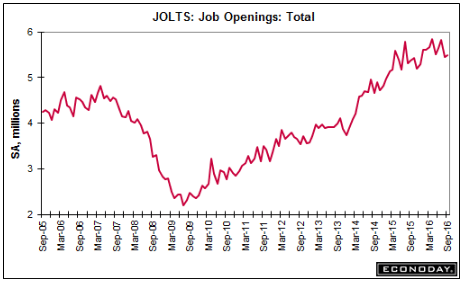
When this chart heads lower as it’s doing it’s all over:

110801
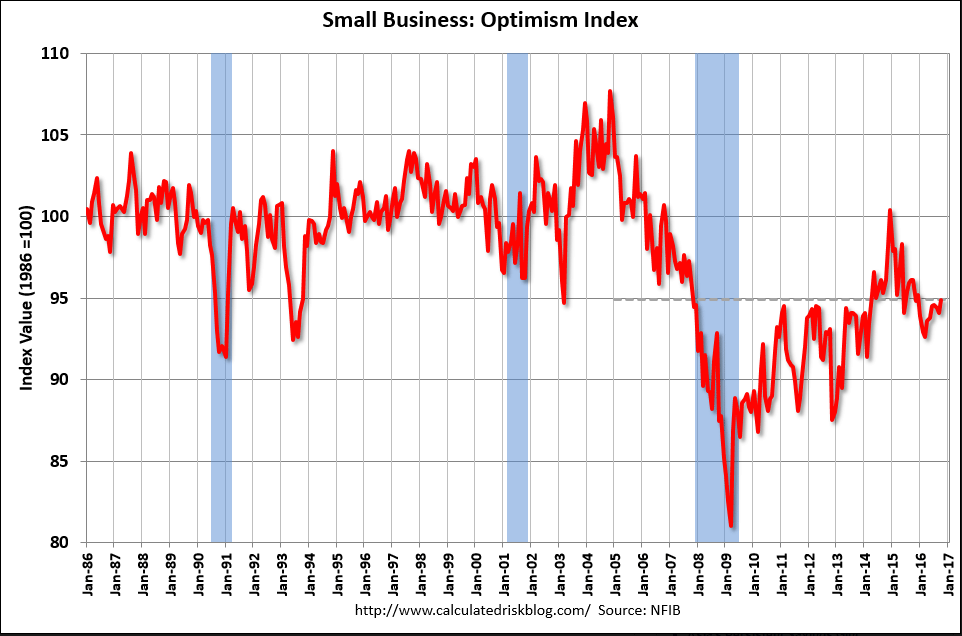
The chart is well below what in the past were recession levels, and still looking like it can go a lot lower:

110802

Highlights

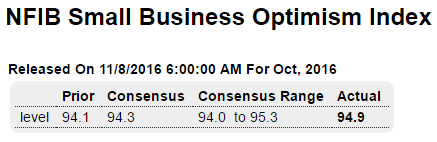
The small business optimism index rose 0.8 points in October to 94.9, slightly exceeding expectations and extending a rebound from the 2-year low at 92.6 set in April. Of the 10 components of the index, 5 posted gains, 3 were down and 2 remained unchanged. The largest gain was recorded in plans to increase inventories, which rose a strong 9 points from the September level to a net 2 percent. The net percent of owners considering stocks too low also rose by 3 points to a net negative 4 percent, reflecting stronger consumer spending in the third quarter. And the already tight labor market tightened further, with 28 percent of owners reporting jobs they could not fill, up 4 points from September. A net 25 percent of owners reported raising worker compensation, a 3 point increase from September. Capital outlays, a leading strength of the index recently and important for future growth, remained at a strong 27 percent, the second highest reading of the recovery.

But after a 12-point jump in expectations of improvement in business conditions to 0 percent in September, small business owners revised their optimism back down in October, with the index falling 7 points to a net minus 7 percent. Expectations of future increases in sales dimmed by 3 points for a net negative 4 percent of owners. Despite this, a net 9 percent still thought that now was a good time to expand, up 2 points from the prior month. Earnings, however, continued as the biggest source of pessimism and the weakest component of the index, worsening by 1 point as a net negative 21 percent of owners reported an improvement in quarter on quarter profits.

Prices remained subdued, as a net 2 percent of owners reported raising prices, up 3 points from September, and a net 15 percent plan to hike prices, down 3 points.

110803
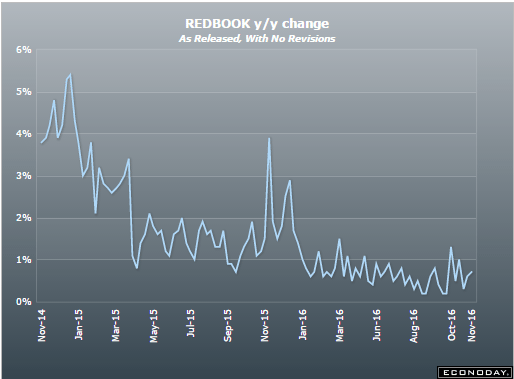
This measure of retail sales remains depressed, maybe because health care premiums have diverted retail consumption?

110804

110805

110806