US Govt. Budget report


[Skip to the end]

U.S. Government Releases FY 2008 Financial Report

Washington – The Treasury Department and the Office of Management and Budget today released the Fiscal Year 2008 Financial Report of the United States Government. The report details the U.S. government’s current financial position, as well as its short-term and long-term financial outlook, complementing the President’s Budget to be released in the spring of 2009.

“Throughout this unprecedented year, the Treasury Department has worked to achieve and maintain the stability of the financial system with short-term actions, but we must not forget the long-term needs that pose a significant threat to our country’s fiscal sustainability,” said Treasury Secretary Henry M. Paulson, Jr. “The projected costs for Medicare, Medicaid and other social programs are much greater than the resources that will be available to pay for them. Changes are needed to ensure these programs are fiscally sustainable.”

Just in case you thought Paulson knew something about reserve accounting and monetary operations.

“It is without question that we face extraordinary challenges in our financial markets and the larger economy,” said OMB Director Jim Nussle. “As a result, the bottom-line budget results in the short-term are sobering. It is imperative to continue to aggressively confront today’s challenges. Functioning markets and a healthy economy will not only help put the federal budget back on a path towards balance, but will position us to take on inevitable future economic challenges, such as the our nation’s biggest budgetary challenge, the entitlement crisis.”

At least Nussle ducks the S word (sustainable).

I suspect he knows sustainability isn’t an issue.

And that government deficits equal non government savings of USD financial assets, etc.


[top]

2008-12-16 USER


[Skip to the end]


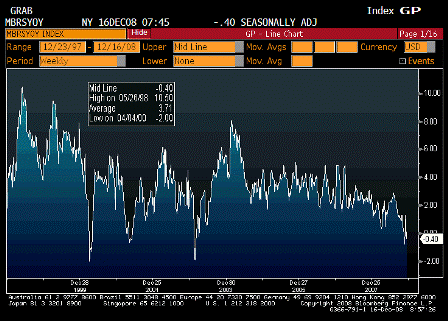
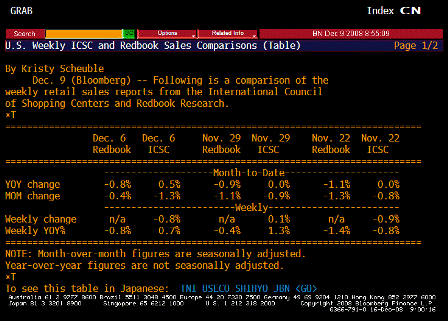
ICSC UBS Store Sales YoY (Dec 16)

Survey n/a
Actual -0.40%
Prior 0.40%
Revised n/a

 
Continues to move lower.

[top][end]

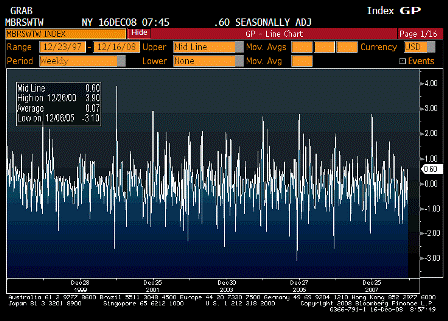
ICSC UBS Store Sales WoW (Dec 16)

Survey n/a
Actual 0.60%
Prior -0.80%
Revised n/a

[top][end]

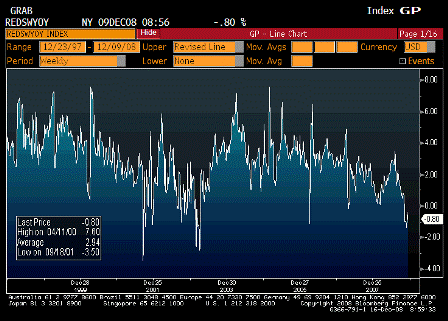
Redbook Store Sales Weekly YoY (Dec 9)

Survey n/a
Actual -0.80%
Prior -0.40%
Revised n/a

 
Continues to move lower.

[top][end]

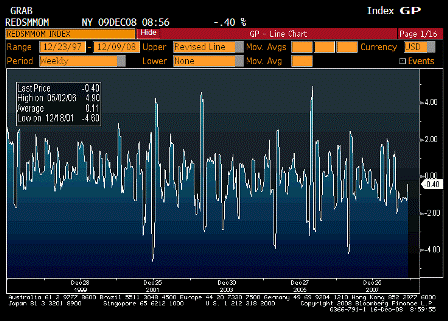
Redbook Store Sales MoM (Dec 9)

Survey n/a
Actual -0.40%
Prior -1.10%
Revised n/a

[top][end]

ICSC UBS Redbook Comparison TABLE (Dec 9)

[top][end]

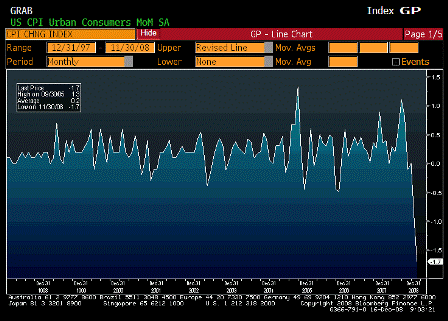
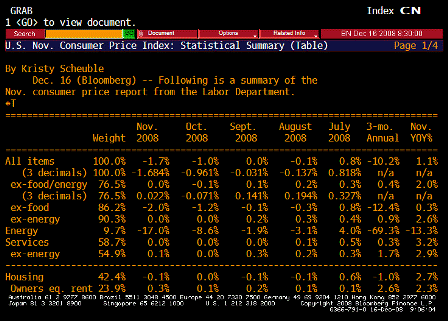
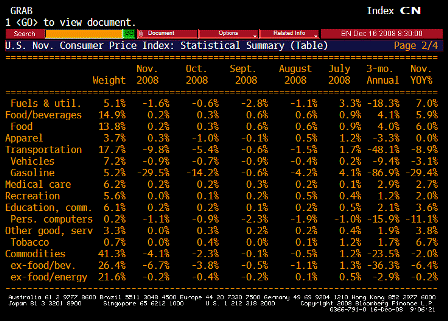
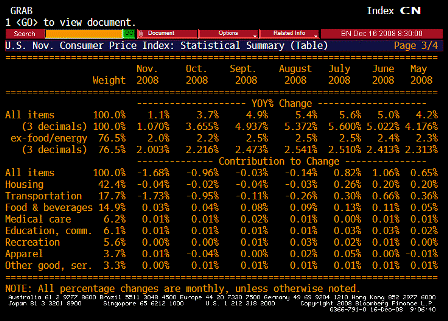
Consumer Price Index MoM (Nov)

Survey -1.3%
Actual -1.7%
Prior -1.0%
Revised n/a


Karim writes:

  • Headline CPI dropped 1.7% M/M in November after 1.0% decline last month (Y/Y now at +1.1%)
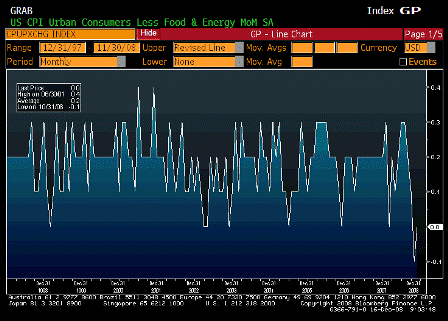
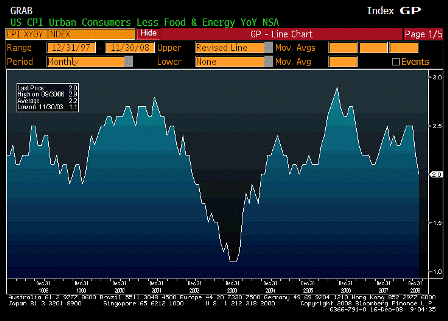
  • Core was flat in November after 0.1% decline (Y/Y at 2.0% and 3 month annualized at 0.4%… core is decelerating quickly and inflation certainly not a concern for Fed at this point)
  • OER was up 0.3% M/M, but partly due to a decline in utility prices that increases economic rents

[top][end]

CPI Ex Food and Energy MoM (Nov)

Survey 0.1%
Actual 0.0%
Prior -0.1%
Revised n/a

[top][end]

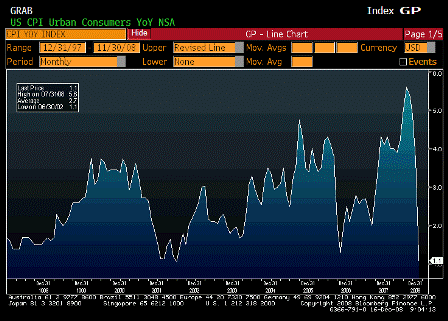
Consumer Price Index YoY (Nov)

Survey 1.5%
Actual 1.1%
Prior 3.7%
Revised n/a

 
Way down, as crude oil and gasoline are lower than they were last year.

[top][end]

CPI Ex Food and Energy YoY (Nov)

Survey 2.1%
Actual 2.0%
Prior 2.2%
Revised n/a

 
Core drifting lower though owner equivalent rent went up .30% as utility costs fell and rents stayed about the same.

[top][end]

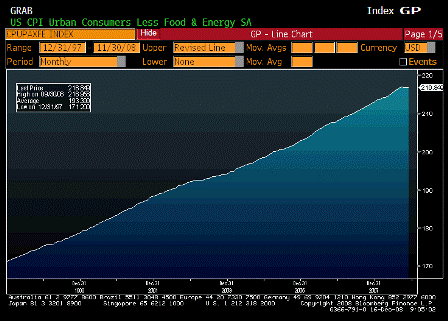
CPI Core Index SA (Nov)

Survey n/a
Actual 216.849
Prior 216.801
Revised n/a

[top][end]

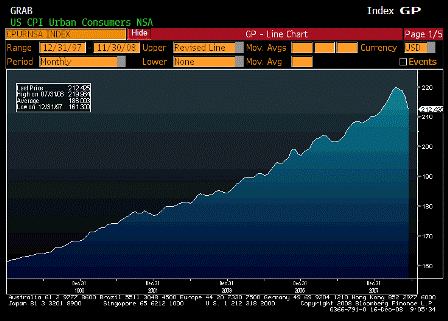
Consumer Price Index NSA (Nov)

Survey 212.699
Actual 212.425
Prior 216.573
Revised n/a

[top][end]

Consumer Price Index TABLE 1 (Nov)

[top][end]

Consumer Price Index TABLE 2 (Nov)

[top][end]

Consumer Price Index TABLE 3 (Nov)

[top][end]

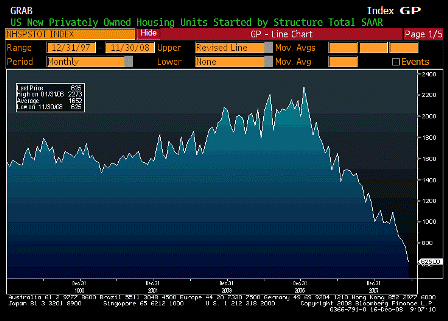
Housing Starts (Nov)

Survey 763K
Actual 625K
Prior 791K
Revised 771K

 
Keeps falling as the headlines have the public and financial institutions scared stiff.

Karim writes:

  • Housing Starts dropped to 625k in November (record low with about 50 years of data!) from 771k last month and 1,179k last year (this should put more downward pressure on residential investment in GDP through early 2009)
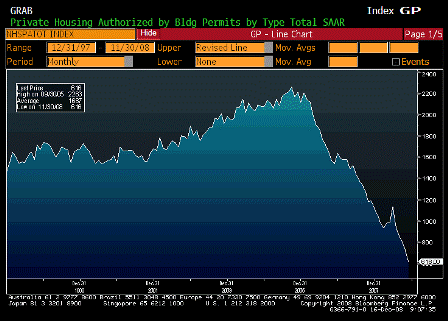
  • Permits dropped to 616k in November (record low with about 50 years of data!) from 730k last month and 1,111k last year
  • Token “Sliver” lining- less pressure on inventories from new homes

[top][end]

Building Permits (Nov)

Survey 700K
Actual 616K
Prior 708K
Revised 730K

[top][end]


[top]

Re: Fed cut


[Skip to the end]

(email exchange)

The Fed has no way of ‘pumping money into the economy’ = they only alter interest rates.

Except by making loans they don’t plan on collecting (the swap line advances to CB’s?)

Which is functionally equivalent to fiscal spending which does add income and financial assets to the economy.

>   
>   Rodger wrote:
>   
>   You and I were talking about a 0% fed funds rate. Almost there, now. Last I
>   heard, down to .25%. It will have no benefit. Wait, correction on that. There
>   will be one benefit. It gets us almost to the point where the Fed will stop
>   focusing on useless interest rate cuts, and start pumping money into the
>   economy. I hope.
>   
>   Rodger
>   


[top]

Re: Fed swaps up $85.6 to $628B


[Skip to the end]

(email exchange)

Thanks, way up!

Probably means USD credit is tightening up for non-US institutions, and maybe the unlimited lines are starting to get used for a lot more than just funding previously existing assets.

>   
>   On Fri, Dec 12, 2008 at 9:53 PM, Cesar wrote:
>   
>   Fed swaps up $85.6 to $628B.
>   


[top]

2008-12-15 USER


[Skip to the end]


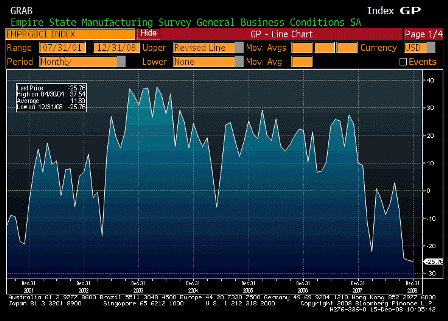
Empire State Manufacturing Survey (Dec)

Survey -28.00
Actual -25.76
Prior -25.43
Revised n/a

[top][end]

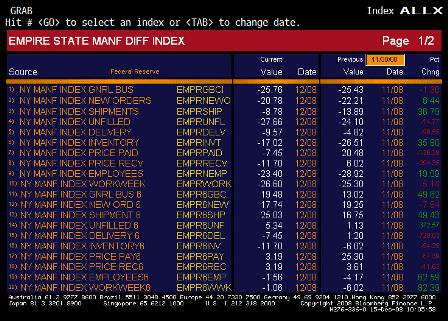
Empire State Manufacturing Survey ALLX 1 (Dec)

[top][end]

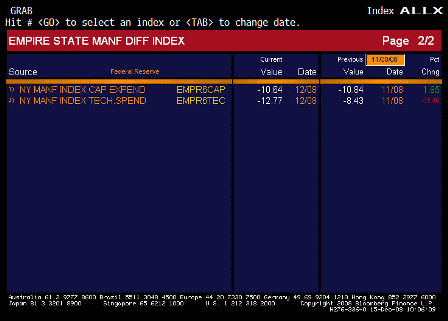
Empire State Manufacturing Survey ALLX 2 (Dec)

[top][end]

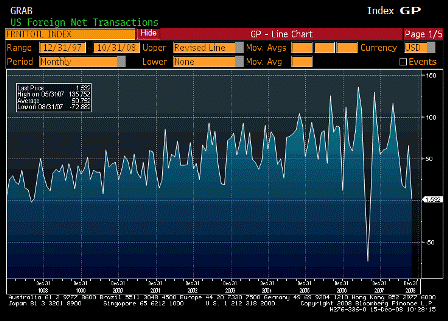
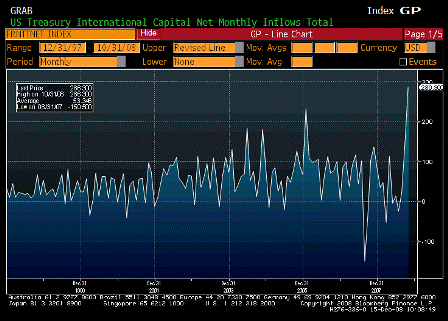
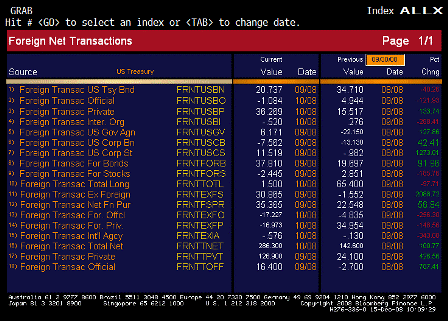
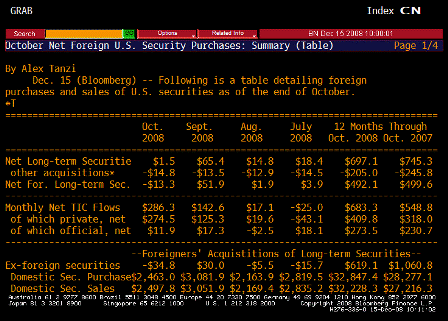
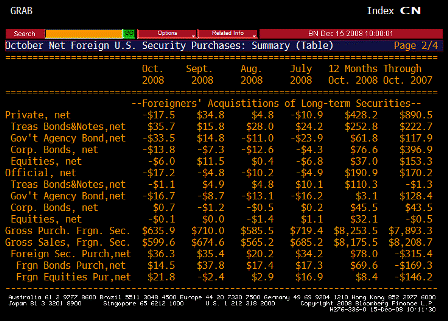
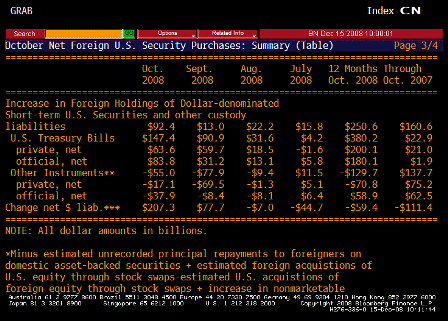
Net Long Term TIC Flows (Oct)

Survey $40.0B
Actual $1.5B
Prior $66.2B
Revised $65.4B

[top][end]

Total Net TIC Flows (Oct)

Survey n/a
Actual $286.3B
Prior $143.4B
Revised $142.6B

[top][end]

TIC ALLX (Oct)

[top][end]

TIC TABLE 1 (Oct)

[top][end]

TIC TABLE 2 (Oct)

[top][end]

TIC TABLE 3 (Oct)

[top][end]

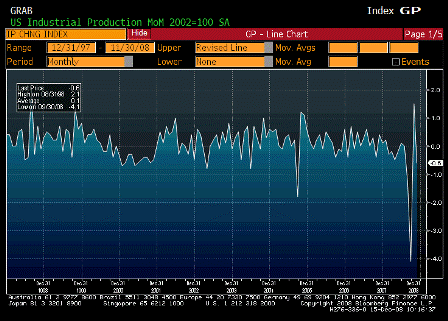
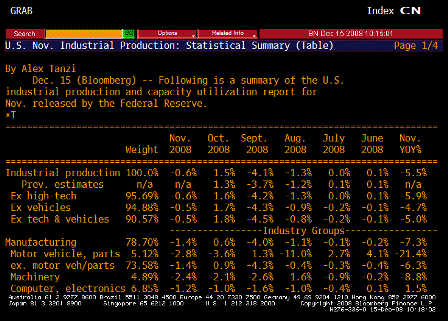
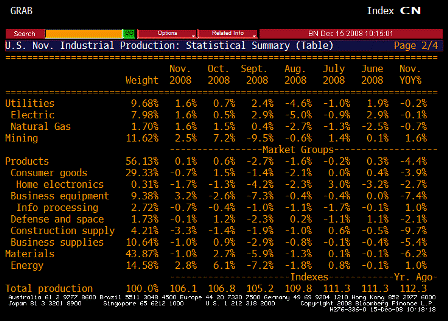
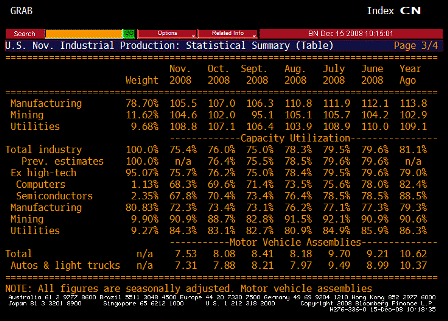
Industrial Production MoM (Nov)

Survey -0.8%
Actual -0.6%
Prior 1.3%
Revised 1.5%

[top][end]

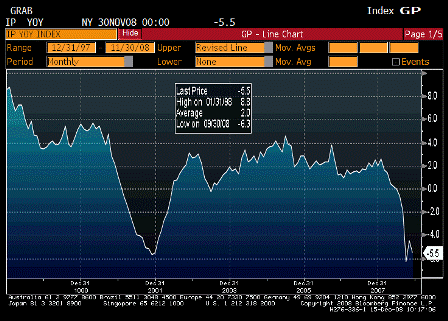
Industrial Production YoY (Nov)

Survey n/a
Actual -5.5%
Prior -4.5%
Revised n/a

[top][end]

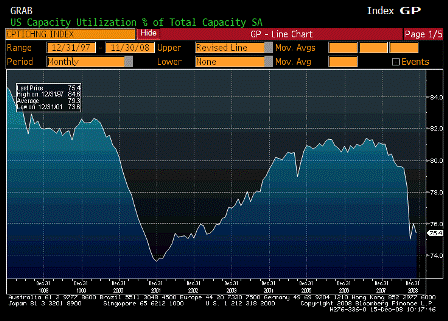
Capacity Utilization (Nov)

Survey 75.6%
Actual 75.4%
Prior 76.4%
Revised 76.0%

[top][end]

Capacity Utilization TABLE 1 (Nov)

[top][end]

Capacity Utilization TABLE 2 (Nov)

[top][end]

Capacity Utilization TABLE 3 (Nov)


[top]

2008-12-12 USER


[Skip to the end]


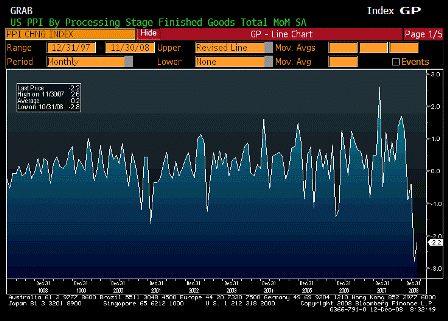
Producer Price Index MoM (Nov)

Survey -2.0%
Actual -2.2%
Prior -2.8%
Revised n/a

[top][end]

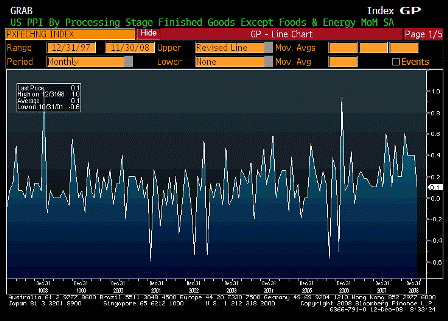
PPI Ex Food and Energy MoM (Nov)

Survey 0.1%
Actual 0.1%
Prior 0.4%
Revised n/a

[top][end]

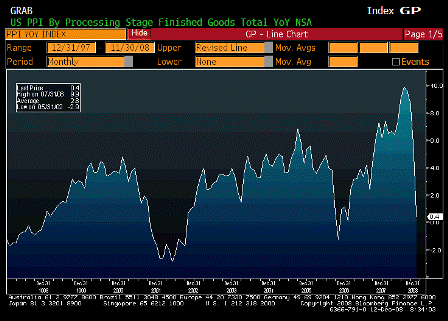
Producer Price Index YoY (Nov)

Survey 0.2%
Actual 0.4%
Prior 5.2%
Revised n/a

[top][end]

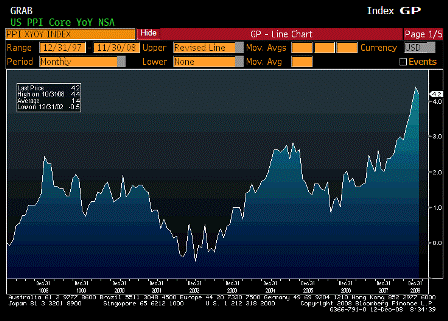
PPI Ex Food and Energy YoY (Nov)

Survey 4.2%
Actual 4.2%
Prior 4.4%
Revised n/a

[top][end]

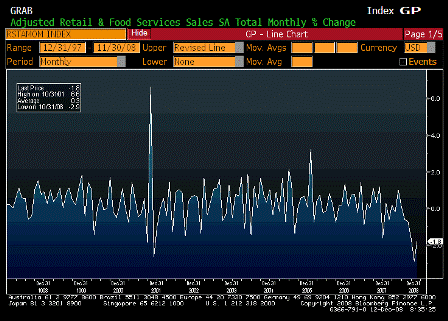
Advance Retail Sales MoM (Nov)

Survey -2.0%
Actual -1.8%
Prior -2.8%
Revised -2.9%

[top][end]

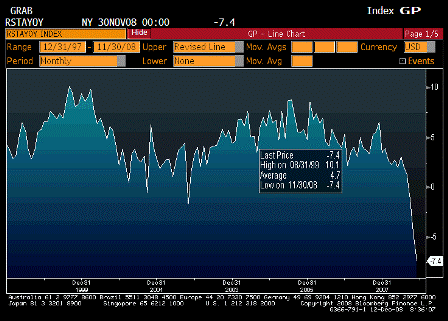
Advance Retail Sales YoY (Nov)

Survey n/a
Actual -7.4%
Prior -4.6%
Revised n/a

[top][end]

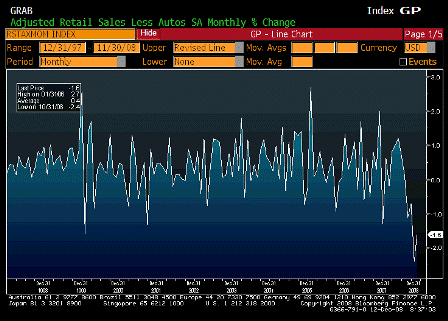
Retail Sales Less Autos MoM (Nov)

Survey -1.8%
Actual -1.6%
Prior -2.2%
Revised -2.4%

[top][end]

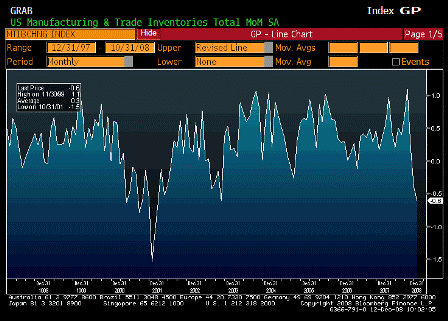
Business Inventories MoM (Oct)

Survey -0.2%
Actual -0.6%
Prior -0.2%
Revised -0.4%

[top][end]

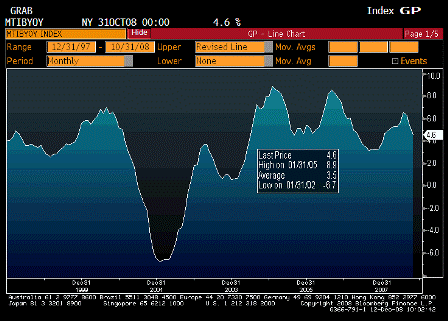
Business Inventories YoY (Oct)

Survey n/a
Actual 4.6%
Prior 5.4%
Revised n/a

[top][end]

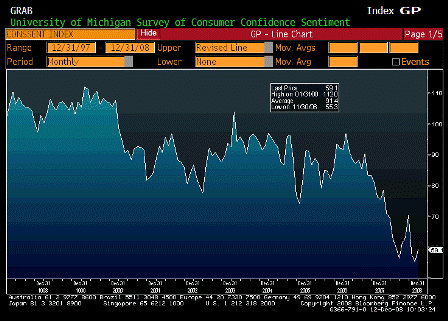
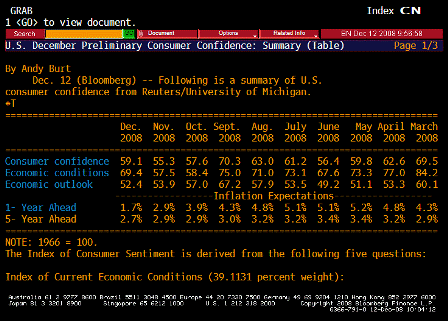
University of Michigan Confidence (Dec P)

Survey 54.5
Actual 59.1
Prior 55.3
Revised n/a

[top][end]

University of Michigan TABLE Inflation Expectations (Dec P)


[top]

2008-12-11 USER


[Skip to the end]


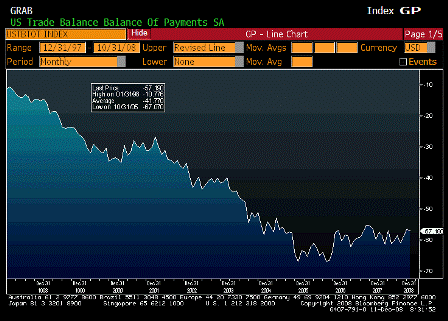
Trade Balance (Oct)

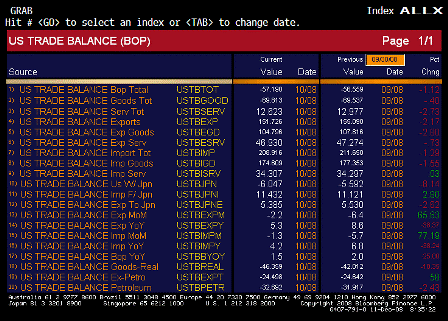
Survey -$53.5B
Actual -$57.2B
Prior -$56.5B
Revised -$56.6B

[top][end]

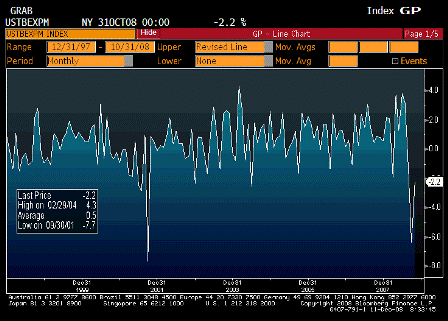
Exports MoM (Oct)

Survey n/a
Actual -2.2%
Prior -6.4%
Revised n/a

[top][end]

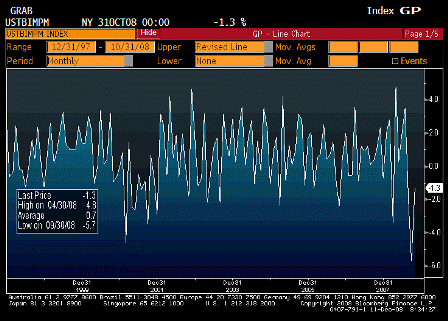
Imports MoM (Oct)

Survey n/a
Actual -1.3%
Prior -5.7%
Revised n/a

[top][end]

Exports YoY (Oct)

Survey n/a
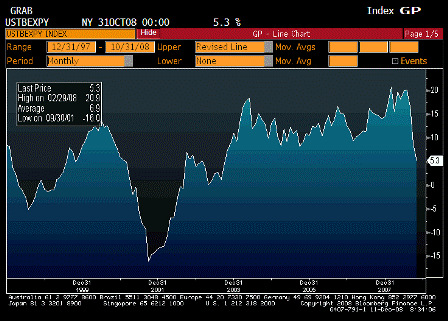
Actual 5.3%
Prior 8.6%
Revised n/a

[top][end]

Imports YoY (Oct)

Survey n/a
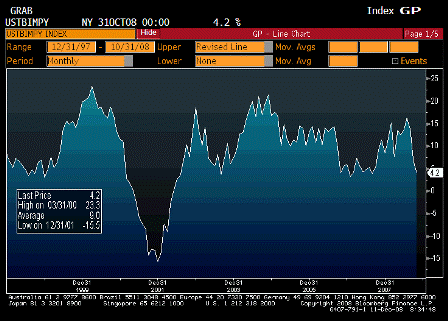
Actual 4.2%
Prior 6.8%
Revised n/a

[top][end]

Trade Balance ALLX (Oct)

[top][end]

Import Price Index MoM (Nov)

Survey -4.9%
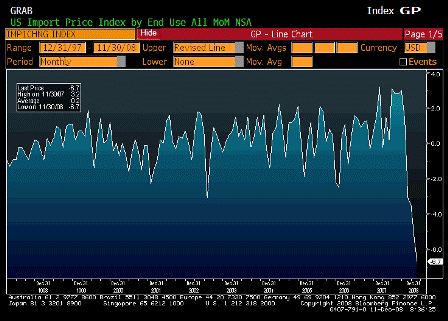
Actual -6.7%
Prior -4.7%
Revised -5.4%

[top][end]

Import Price Index YoY (Nov)

Survey -2.0%
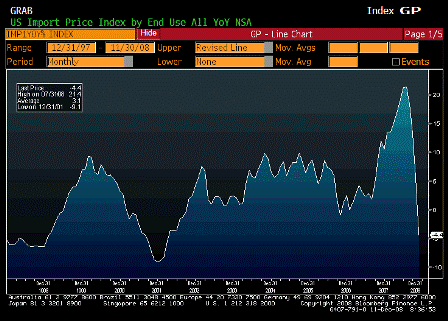
Actual -4.4%
Prior 6.7%
Revised 5.7%

[top][end]

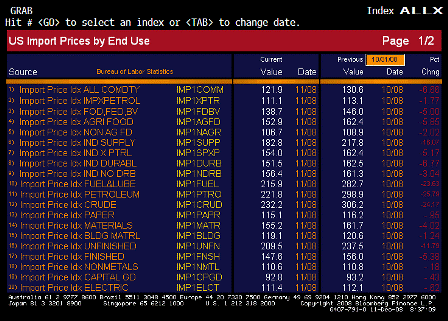
Import Price Index ALLX 1 (Nov)

[top][end]

Import Price Index ALLX 2 (Nov)

[top][end]

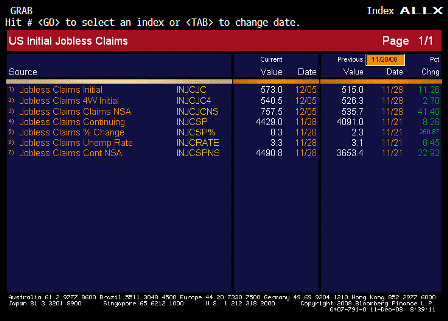
Initial Jobless Claims (Dec 6)

Survey 525K
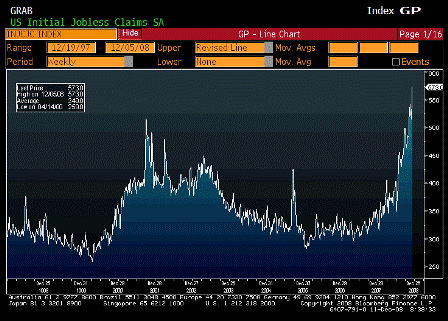
Actual 573K
Prior 509K
Revised 515K

[top][end]

Continuing Jobless Claims (Dec 15)

Survey 4100K
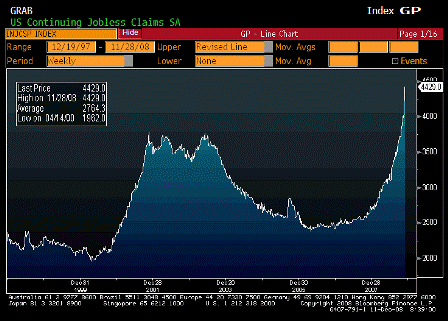
Actual 4429K
Prior 4087K
Revised 4091K

[top][end]

Jobless Claims ALLX (Dec 6)


[top]

Re: Will the Fed Issue Debt?


[Skip to the end]

(email exchange)

Paying interest on reserves is functionally identical to issuing debt.

The difference would just be the different maturities.

This could be used to support higher short term rates, if that’s what they want.

Lots of CB’s have done this.

>   
>   On Thu, Dec 11, 2008 at 12:50 AM, Scott wrote:
>   
>   I hope all is well down under. This is interesting!
>   

BOTTOM LINE: News reports indicate that Fed officials may be considering issuing debt. At this stage, we do not know how credible this is. They certainly do not need this to expand their balance sheet but may be motivated either by perceptions that existing options (reserve expansion) are too inflationary or by plans to acquire longer-term risky assets. The idea is not without risk as the existence of Federal Reserve debt would provide the basis on which markets could then take positions on the solvency of the central bank.

MAIN POINTS:

1. According to news reports, Fed officials are considering issuance of debt as an alternative way of expanding their balance sheet. Apart from the fact that these reports have appeared in several places, which often signals that they have some basis, we do not know if Fed officials are seriously considering this alternative. If they are, we think they would need Congressional authorization before proceeding and suspect they would seek it even if they did not think it necessary from a legal standpoint.

2. The idea is a bit puzzling as the Fed already has an effective means of expanding its balance sheet without limit by creating reserves. For example, if officials want to increase the size of an existing liquidity facility or create a new one, all they have to do is extend a loan in one of these facilities and credit the reserve account of the bank that borrows the funds. (If the counterparty is not a bank, then the Fed can provide the funds as Federal Reserve notes – i.e., “print money”). In normal circumstances this would push the federal funds rate down, which officials might not want to do, but currently the effective funds rate is so close to zero that this would not seem to be a significant consideration.

3. So why consider the alternative of issuing debt? We can think of two motivations:

a) Fed officials are uncomfortable with the speed with which the monetary base (bank reserves plus currency in circulation) has expanded over the past two months, either on their own account or because the public may see this as creating a huge inflation problem down the road. In the week ended December 3, the monetary base was $1.47trn; three months earlier it was $843bn. However, in our view this is a misguided concern for a couple of reasons:

i) At a time when concerns about deflation are mounting, Fed officials should want the public to see its current liquidity program as inflationary, to prevent such concerns from translating into expectations that prices will fall in a broad-based and sustained fashion.

ii) Such concerns usually take as an implied premise that the liquidity will be difficult to remove – in essence that the Fed will find itself on a razor’s edge of having to withdraw massive amounts of liquidity in a very short period once the economy starts to improve. This is highly unlikely in our view. By our reckoning, the output gap is already 4% of GDP (unemployment is about 2 points above the natural rate, and each point is worth 2% of GDP) and likely to go much higher before the economy starts to grow at a trend rate. This should give the Fed plenty of time to put its balance sheet back in order before inflation becomes a genuine risk.

Moreover, as the economy starts to improve, the excess liquidity should unwind on its own, as banks’ needs for liquidity facilities diminish in a natural fashion and the Fed begins to raise the federal funds rate target.

b) The other possible motivation is to lay the financing groundwork for large-scale direct purchases of longer-term risky assets, such as private-label mortgages and corporate bonds (which would also require congressional approval). If this is the motivation, then one implication is that the debt would be long-term in nature (again, we have no way of knowing what officials themselves are thinking in this regard). The idea would be such financing might need to be in place long after the liquidity facilities have been unwound, as the assets thus acquired take time to mature or be sold back into the private markets.

4. If the Fed were to issue debt, some interesting questions and possible unintended consequences arise, which we simply raise at this point for further discussion: (a) how would Fed debt stand relative to Treasury debt of comparable maturity? Would it be senior, junior, or pari passu? (b) would it be subject to some limit, as the Treasury’s debt is, and if not could this facilitate a situation in which some programs currently authorized for the Treasury (like TARP) would effectively be financed by comparable operations undertaken by the Fed? (c) if Fed debt does come into existence and begin to trade in the markets, prices on such debt (and on the inevitable CDS to be based on it) would allow the markets effectively to trade on the credibility of the central bank. It is not obvious to us that Fed officials would really want this to happen.


[top]

2008-12-10 USER


[Skip to the end]

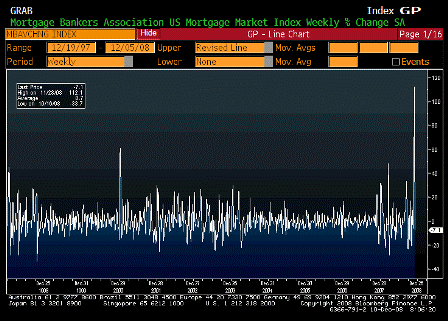
MBA Mortgage Applications (Dec 5)

Survey n/a
Actual -7.1%
Prior 112.1%
Revised n/a

[top][end]

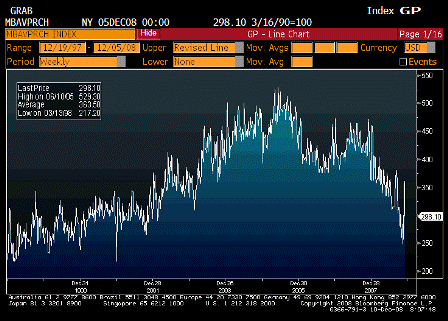
MBA Purchasing Applications (Dec 5)

Survey n/a
Actual 298.10
Prior 361.10
Revised n/a

[top][end]

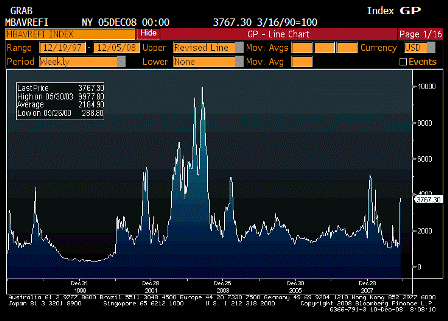
MBA Refinancing Applications (Dec 5)

Survey n/a
Actual 3767.30
Prior 3802.80
Revised n/a

[top][end]

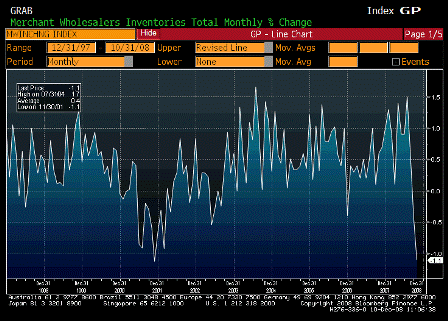
Wholesale Inventories MoM (Oct)

Survey -0.2%
Actual -1.1%
Prior -0.1%
Revised -0.4%

[top][end]

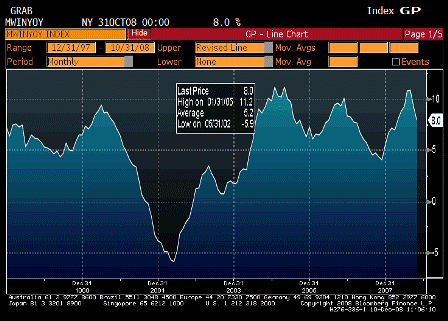
Wholesale Inventories YoY (Oct)

Survey n/a
Actual 8.0%
Prior 9.3%
Revised n/a

[top][end]

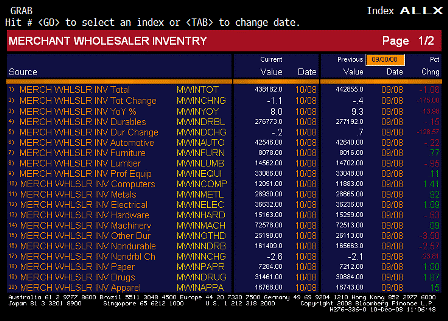
Wholesale Inventories ALLX 1 (Oct)

[top][end]

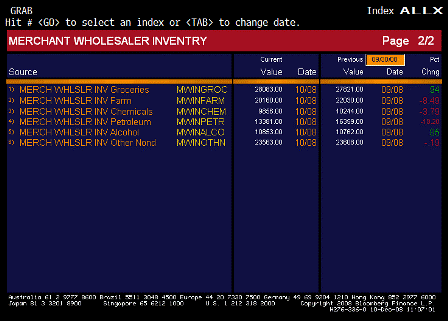
Wholesale Inventories ALLX 2 (Oct)


[top]