Pending home sales, Consumer confidence

Another bad one:

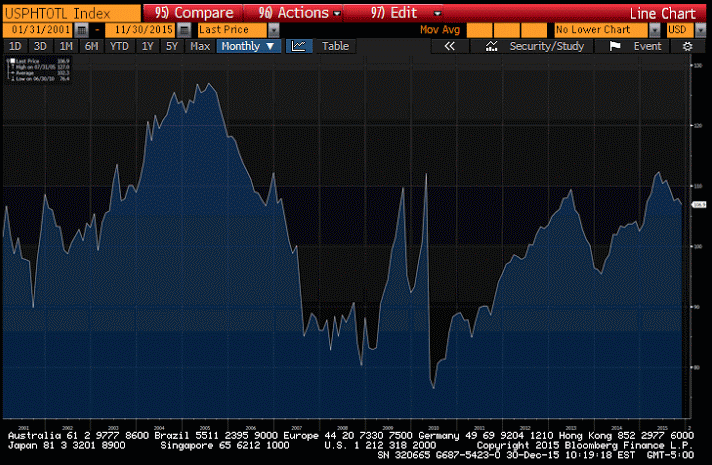
Pending Home Sales Index
er-12-30-1
Highlights
Pending home sales in November declined for the third time in four months as buyers continue to battle both rising home prices and limited homes available for sale. The pending home sales index was down 0.9 percent but up 2.7 percent from a year ago. Modest gains in the Midwest and South were offset by larger declines in the Northeast and West.

November’s dip continued the modestly slowing trend seen ever since pending sales peaked to an over nine year high back in May. NAR said that home prices rose too sharply in several markets, there were mixed signs of an economy losing momentum and waning supply levels all contributed to headwinds in recent months despite low mortgage rates and solid job gains.

The Northeast decreased 3.0 percent but is still 4.3 percent above a year ago. In the Midwest the index rose 1.0 percent and and is now 4.1 percent above November 2014. Pending home sales in the South increased 1.3 percent and are 0.5 percent higher than last November. The index in the West declined 5.5 percent but remains 4.5 percent above a year ago.

(not population adjusted…)

er-12-30-2

er-12-30-3

Trade, Capex, Japan tax hike, Redbook retail sales, Saudi spending cuts

Not good for Q4 GDP. Remember, lower oil prices were supposed to reduce our trade deficit…
;)

International Trade in Goods
er-12-29-1
Highlights
November’s international trade goods deficit narrowed to $60.5 billion from the revised $63.0 billion in October. October’s estimate previously was minus $58.4 billion. Expectations were for a deficit of $60.9 billion. Both exports and imports continued to decline on the month. Goods exports were down 2.0 percent while imports were 1.8 percent lower. Weak categories for imports were industrial supplies & materials and capital goods excluding auto. Export categories showing weakness include foods/feeds/beverages, industrial supplies and consumer goods excluding autos.

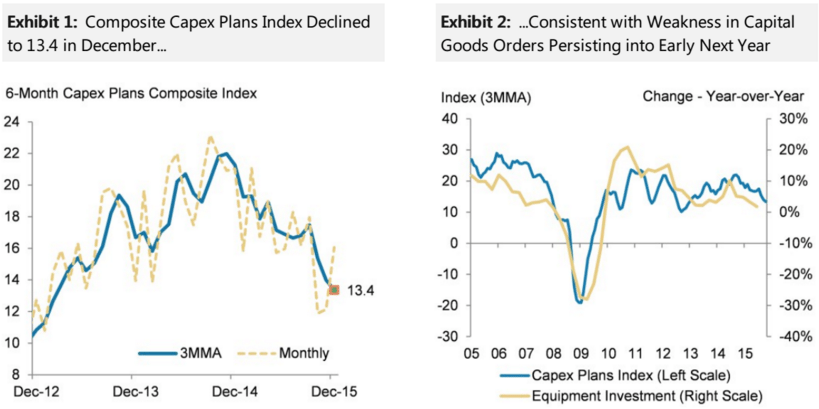
This is from Morgan Stanley. Capital expenditures are generally a large source of agents spending more than their incomes, offsetting those spending less than their incomes. This is not good- orders back to 2008 types of levels:
er-12-29-2
As before ‘the beating will continue until morale improves’:

Opposition to Japan’s sales tax hike falls below 50%

Dec 28 (Nikkei) — Public opposition to an April 2017 consumption tax increase has declined after the ruling coalition agreed on a food exemption backed by a majority of eligible voters, the latest Nikkei Inc./TV Tokyo poll shows. At 47%, fewer than half of respondents to the weekend poll opposed the tax increase, down 9 percentage points from October. Support for raising the tax gained 6 points to 42%. The tax hike will take the rate to 10%. Prime Minister Shinzo Abe’s Liberal Democratic Party and coalition partner Komeito seek to keep the tax on food, excluding alcohol and restaurant meals, at the current 8%.

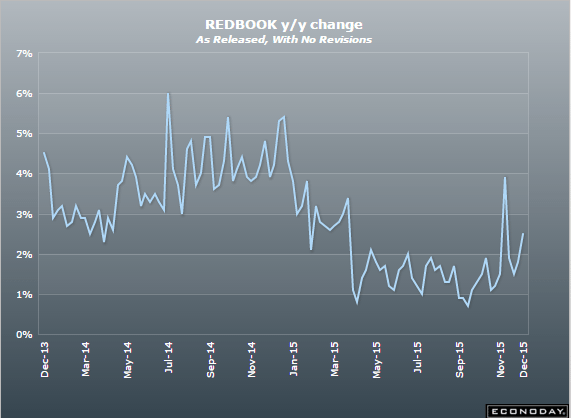
Sales growth improving some from depressed levels:
er-12-29-3
Lots of similar cuts for next year, as oil related spending reductions continue:

Saudis Plan Unprecedented Subsidy Cuts to Counter Oil Plunge

Dec 28 (Bloomberg) — Saudi Arabia reduced energy subsidies and allocated the biggest part of government spending in next year’s budget to defense and security. Authorities announced increases to the prices of fuel, electricity and water as part of a plan to restructure subsidies within five years. The government intends to cut spending next year and gradually privatize some state-owned entities and introduce value-added taxation as well as a levy on tobacco. The government recorded a budget deficit of 367 billion riyals ($98 billion) in 2015. That’s about 16 percent of gross domestic product.

Dallas Fed, Japan restarting nukes

From bad to worse:

Dallas Fed Mfg Survey
er-12-28-1
Highlights
Texas factory activity increased for a third month in a row in December. The production index, a key measure of state manufacturing conditions, rose from 5.2 to 13.4, indicating stronger growth in output. Some other indexes of current manufacturing activity also reflected growth in December, but the survey’s demand measures showed continued weakness.

New orders, an indicator of incoming demand, declined at a faster pace. The index has been below zero for five months and fell to minus 8.9 in December. The growth rate of orders index has been negative for more than a year and dipped 7 points to minus 14.3 this month. Meanwhile, the capacity utilization and shipments indexes posted their fourth positive readings in a row and inched up to 7.8 and 7.6, respectively.

Perceptions of broader business conditions weakened markedly in December. The general business activity index has been negative throughout 2015 and plunged to minus 20.1 this month. After pushing just above zero last month, the company outlook index fell 10 points in December to minus 9.7, its lowest level since August.

The survey’s price measures pushed further negative in December. The raw materials prices index declined to minus 8.6, suggesting a slightly steeper drop in input costs than last month. The finished goods prices index was negative all year and moved down to minus 15.9. Meanwhile, the wages and benefits index moved up to plus 20.4, indicating stronger wage growth.

Expectations regarding future business conditions were mixed in December. The index of future general business activity fell 9 points to minus 1.4, while the index measuring future company outlook fell but remained positive at 6.6. Indexes for future manufacturing activity declined but remained strongly positive.

Japan restarting a nuke, this will move trade towards surplus and eventually add support for the yen:

Japan court rules to restart Takahama nuclear reactors

Unemployment claims, NYC apts, Japan spending, interview in Truth-Out

er-12-26-1

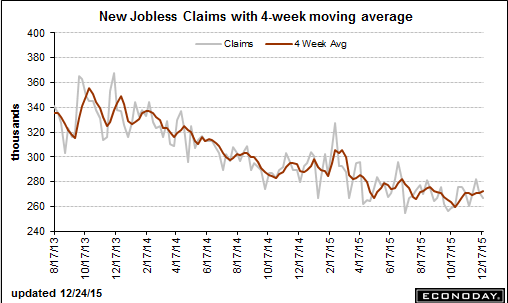
Claims readings could be distorted because a smaller share of those potentially eligible for benefits are applying. The share of recently unemployed workers seeking benefits has fallen this year to just above 50%, according to the National Employment Law Project, a group that advocates for the unemployed.

The rate is down from record high of almost 80% just after the recession ended.

The application rate typically declines as expansions age, but the current pace is the lowest in 15 years. NELP Policy Analyst Claire McKenna said the low rate reflects a vastly different labor market for those who recently lost their jobs versus the long-term unemployed.

The unemployment rate for those out of work for five weeks or less fell below prerecession levels this year. The rate for those out of work for six months or more is well down from 2009, but it remains about double the rate recorded in mid-2007.

“This late into a very slow recovery you have a sizable population of unemployed people that are less likely to establish eligibility for benefits,” Ms. McKenna said. In past cycles, even those workers who didn’t find long-term jobs would have landed shorter-term work that subsequently allowed them to again seek for benefits.

Must be a consequence of income reductions for people getting oil related revenues…

;)

er-12-26-2
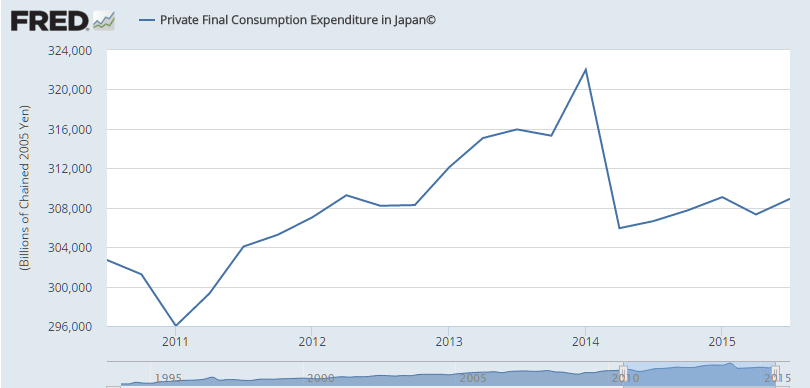
Spending is the measure of ‘policy success’ for the households:

Japan : Household Spending
er-12-26-3

December 1 chart. Can you spot the hike in the consumption tax?
er-12-26-4

Economist Warren Mosler: If the EU Doesn’t Loosen Its Deficit Limits, Greece Should Leave the Euro

Six years into Greece’s economic crisis and following successive “bailouts,” there still seems to be no light at the end of the tunnel. Greece’s economy continues to shrink and unemployment remains at record high levels while the Syriza-led government coalition has reneged on its promises of radical change and ending austerity. The troika, in turn, continues to insist that strict austerity measures, including budget cuts and mass privatizations, be enforced in Greece.

In this interview, economist Warren Mosler, a leading figure in the field of modern monetary theory and the cofounder of the Center for Full Employment and Price Stability at the University of Missouri-Kansas City, discusses money, debt and the role of the European Union’s deficit limits in perpetuating the crisis, and shares the proposals he believes could help lead Greece out of its crisis.

Mtg purchase apps, Durable goods orders, New home sales, Personal income and outlays, Chemicals Activity Barometer

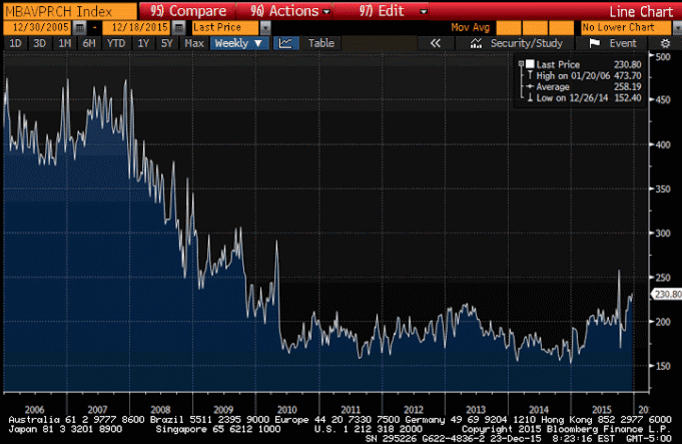
Up some this week. Been bouncing around a lot with looming Fed hike, regulation changes, etc. but mtg apps and home sales remain depressed:
er-12-23-2-11
More bad here:

Durable Goods Orders
er-12-23-2-10
Highlights
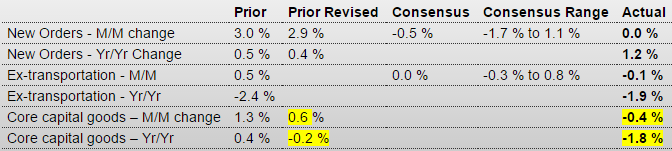
October was a rare good month for the factory sector, not November where manufacturing production in the industrial production report was no better than unchanged and now new orders were also unchanged. Excluding transportation, orders dipped into the minus column though just barely at minus 0.1 percent.

Capital goods had turned higher in October but, once again, November is a different story with core orders down 0.4 percent and October’s gain shaved in half, and more so from plus 1.3 percent to a revised plus 0.6 percent. Year-on-year, core orders are down a very weak looking 1.8 percent. Core shipment data are also in the negative column, at monthly losses of minus 0.5 percent and minus 1.0 percent for the last two months which is a very poor opening for fourth-quarter business investment.

Outside of core capital goods, shipments in this report did show strength, up 0.9 percent vs, however, a 1.2 percent drop in October. Inventories fell 0.3 percent as manufacturers, facing soft demand, continue to work their stocks lower. The inventory-to-shipments ratio fell 2 notches to a less heavy 1.64. In another positive, unfilled orders rose for a second month, up 0.2 percent following October’s 0.3 percent gain.

Turning to industry data, vehicle orders bounced back, aircraft orders swung lower while electrical equipment, belying construction strength, fell for a second month. Machinery orders were down as were orders for primary metals.

The factory sector, held down by weak exports and weak energy-related demand, appears to be finishing up a soft 2015 on another soft note.

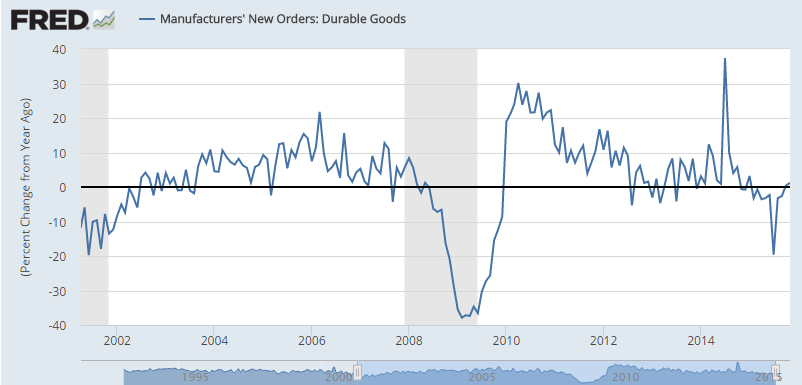
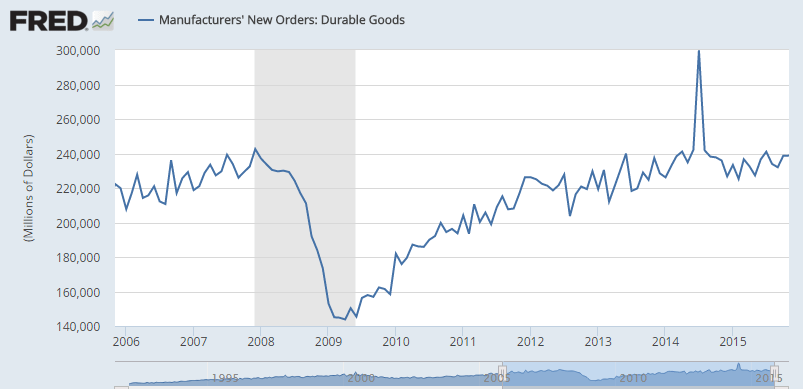
This is not adjusted for inflation. Note it’s only been hovering around the $240 billion level where it was back in 2007:
er-12-23-2-9

er-12-23-2-8

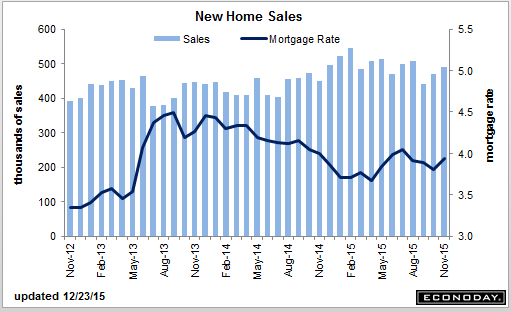
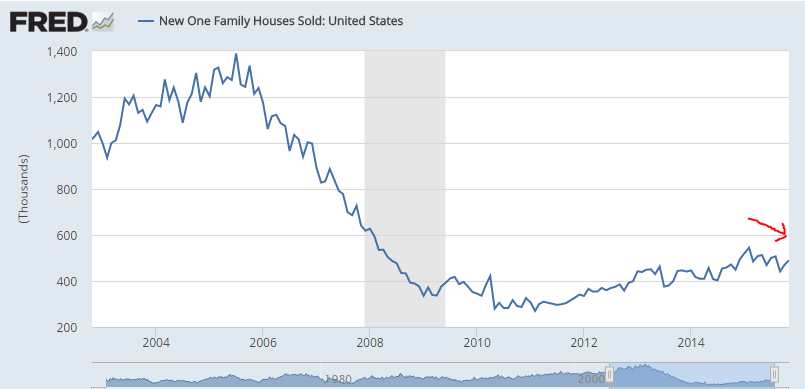
Less than expected and last month revised down as well, as the trend remains lower since peaking when oil capex collapsed, though no one seems to notice…:

New Home Sales

er-12-23-2-7
Highlights
Rising construction is bringing supply into the housing sector and helping to lift new home sales, which rose 4.3 percent in November to what is still however a lower-than-expected annualized rate of 490,000. The month-to-month gain follows a very strong 6.3 percent rise in October which, however, has been revised sharply lower to 470,000 from an initial 495,000. Houses for sale rose 5,000 in the month to 232,000 which is up from 210,000 in November last year. At the current sales rate, supply is at 5.7 months which, because of the rise in sales, is down slightly from October. Still, rising permit data point to more homes coming into the market.

Price data are also constructive, up 6.3 percent in the month to a median $305,000 with the year-on-year, which had been negative, up 0.8 percent. Still, this is a modest year-on-year rate and, relative to the very strong 9.1 percent year-on-year sales gain, points to discounting. Prices in this report appear to have room to move higher.

Regional sales data have the West up more than 20 percent in the month with the year-on-year rate at plus 4.7 percent. Sales in the South, which is by far the largest region, rose 4.5 percent in the month for an outstanding year-on-year gain of 19.4 percent. The Midwest and Northeast both show monthly and yearly declines.
er-12-23-2-6
er-12-23-2-5

Personal Income and Outlays
er-12-23-2-4

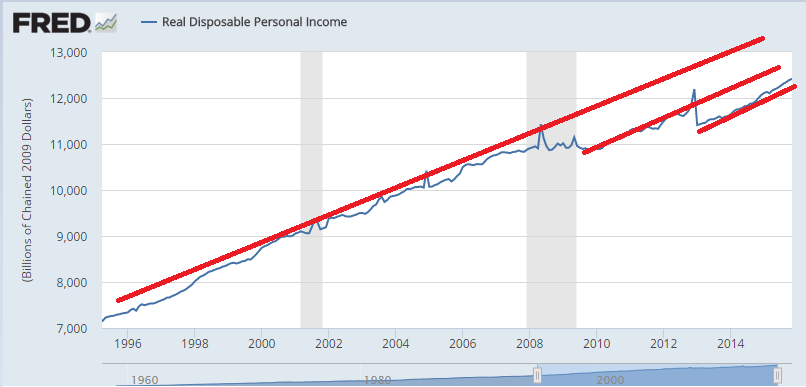
So the problem is, unlike prior recessions, personal income took a substantial hit after 2008 and then didn’t grow fast enough to make up for lost ground. Then it took another hit with the tax hikes and sequesters and again hasn’t grown fast enough to make up for the prior hit:
er-12-23-2-3
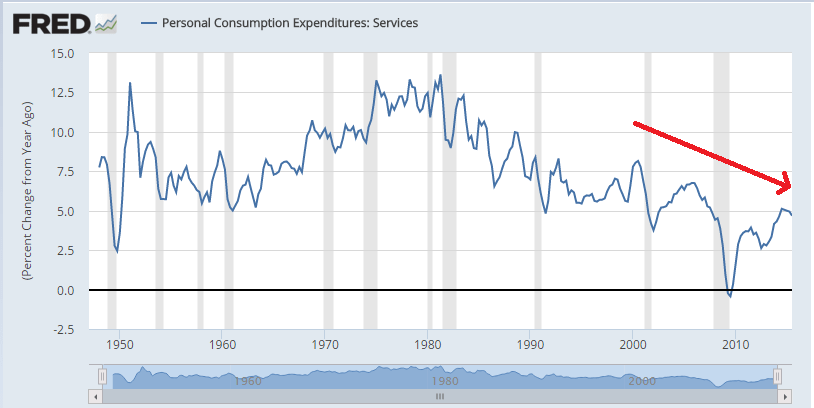
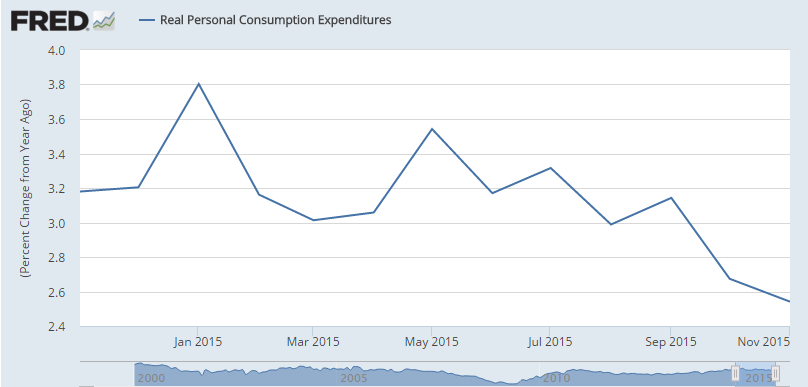
And consumption continues to decelerate since the oil capex collapse about a year ago:
er-12-23-2-2

er-12-23-2-1

Personal spending

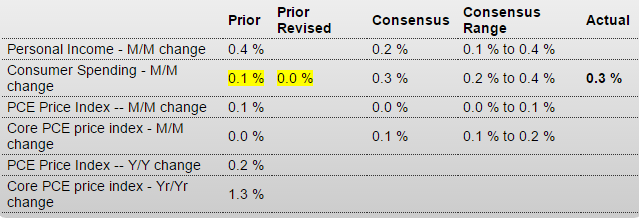
Consumer spending revised down for last month. Seems best to wait for at least the first revision before commenting.
;)

And still waiting for the consumer to spend his gas savings?
;)

United States : Personal Income and Outlays
er-12-23-1

Highlights
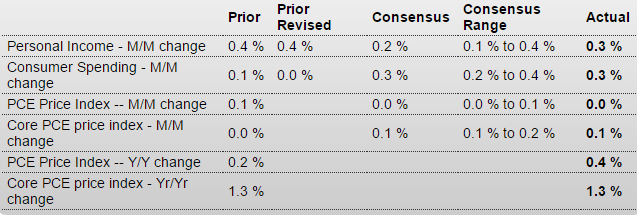
Because of a glitch at the Bureau of Economic Analysis, the personal spending portion of the personal income & spending report was posted early. Personal spending rose an as-expected and very respectable 0.3 percent in November with October revised 1 tenth lower to no change. Spending on durables was strong in the month, up 0.7 percent following a 0.3 percent dip in the prior month. Nondurables spending rose 0.5 percent while services, the largest spending component, rose 0.2 percent. The remainder of the report will be posted as scheduled at 8:30 a.m. ET tomorrow morning.

This is not adjusted for inflation, but there hasn’t been much change in inflation for quite a while before the latest dip in headline inflation. And note that given the size of the collapse in 2008 the subsequent growth has been that much more anemic:
er-12-23-2
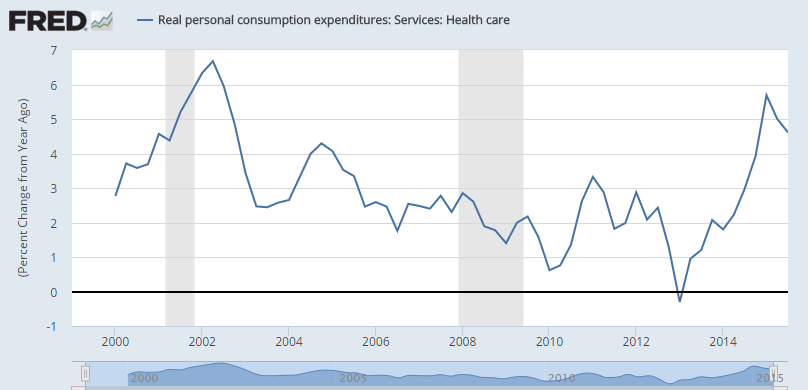
This one is inflation adjusted, and has turned down in the last year. And it includes health care premiums which had a one time addition of some 6 million new premium payers which contributed to the ‘bulge’:
er-12-23-3
er-12-23-4

Oil prices, Existing home sales chart

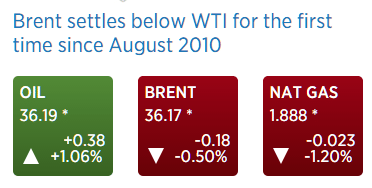
This means ‘the swamp has been drained’ and falling production has eliminated the trapped oil in Cushing that caused WTI to be at a discount to Brent. In fact, Brent should trade at a discount to WTI when the shortage is fully eliminated, reflecting transportation costs to the US.

This, however, does not mean there’s any kind of national shortage or that prices will go up as unlimited imports are continuously available at then current prices, and last I saw the Saudis are still discounting their crudein an attempt to sell their full capacity output as previously discussed:
er-12-22-2-1
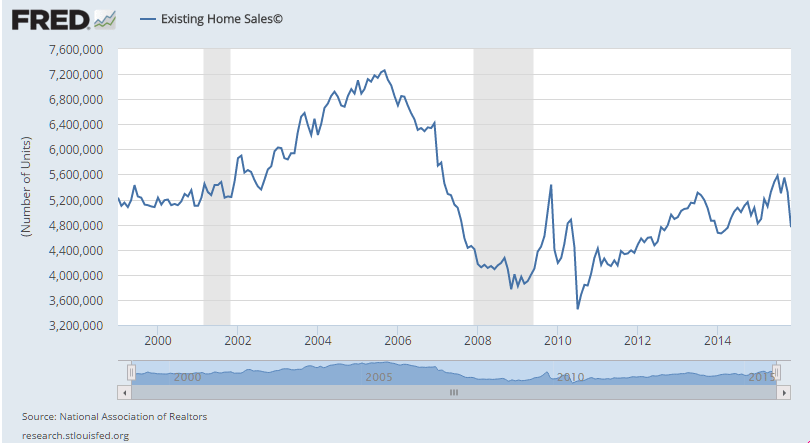
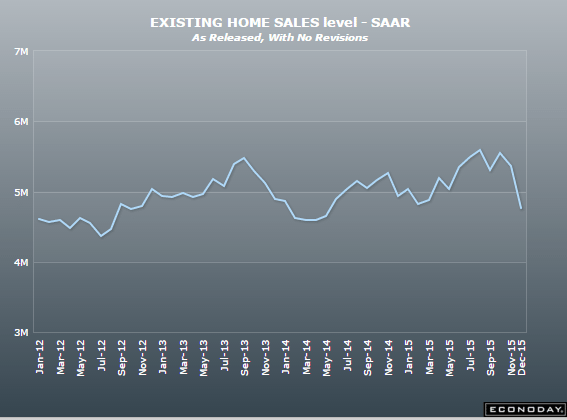
This chart puts it in historical perspective. Housing was forecast to be the ‘driver’ of growth. Unfortunately all it’s done is turn south like most all the other stats, and nothing has stepped up to replace the lost oil capex which had stepped up to offset the tax hikes and sequesters. And remember the population grows at about 3 million per year, so it’s even worse on a per capita basis:

er-12-22-2-2

GDP, existing home sales, Richmond Fed

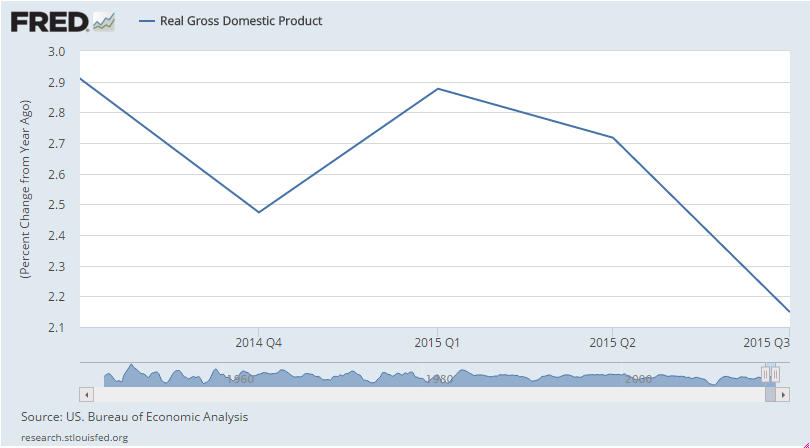
Not so good since oil capex collapsed about a year ago:
GDP
er-12-22-7
Highlights
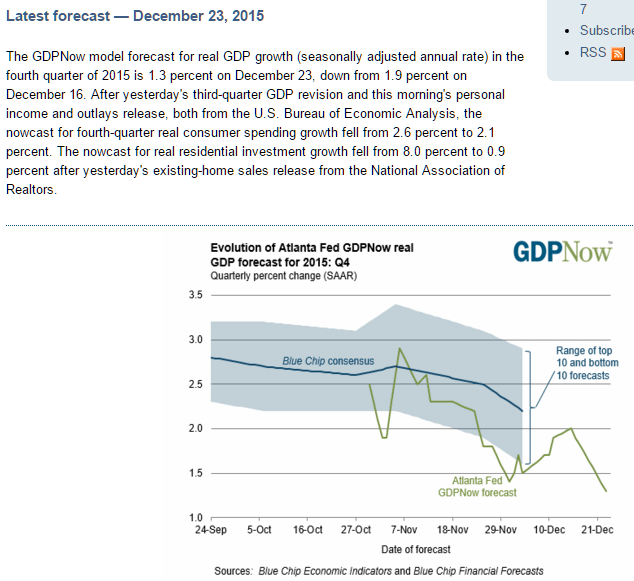
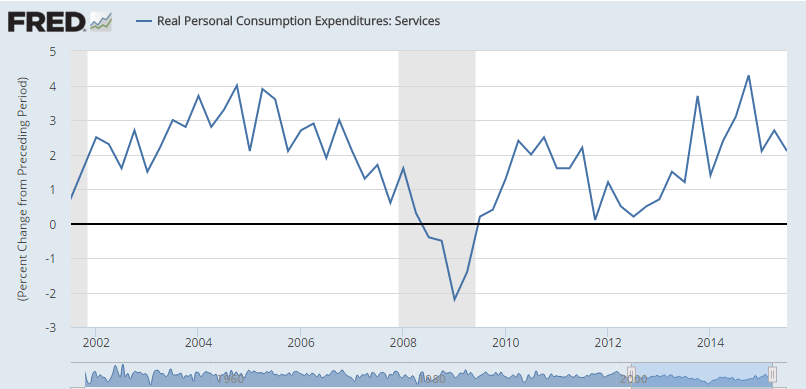
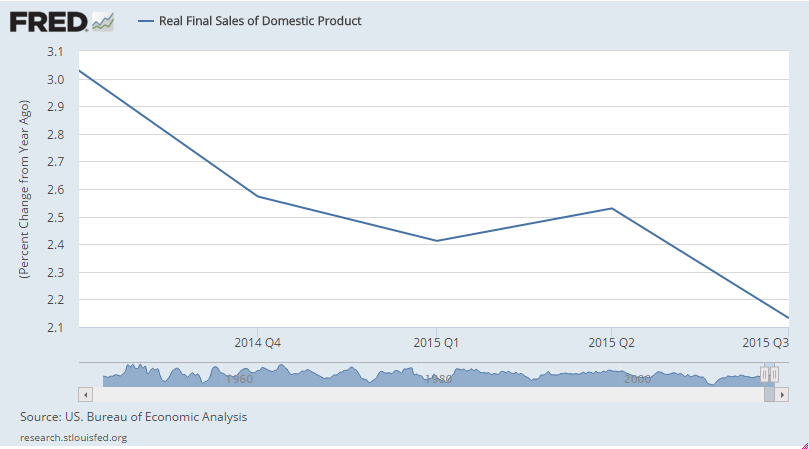
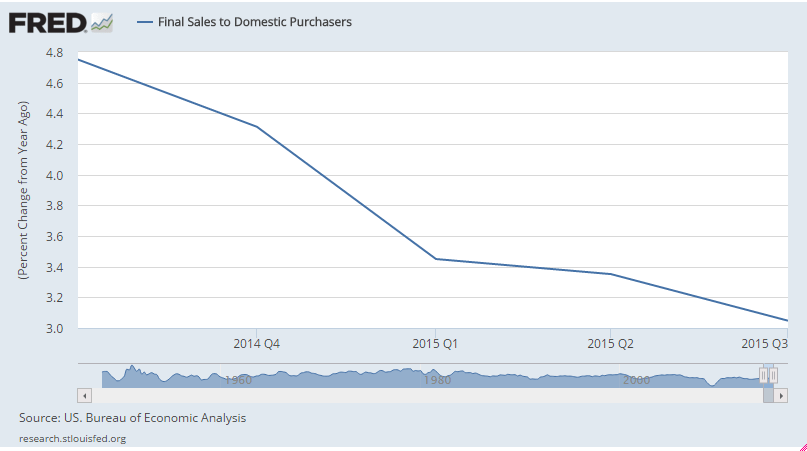
A downward revision to inventories pulled down the third revision to third-quarter GDP, coming in at an annualized and expected rate of 2.0 percent. Revised inventory growth, at $85.5 billion vs an initial $90.2 billion, was the most negative factor in the quarter, which is actually a plus of sorts as businesses held down inventories due to slowing sales, a move that should limit future disruptions in production and employment. Personal consumption expenditures include a downward revision to service spending, now at an annualized 2.1 percent for a 1 tenth decline. The drag from net exports was raised slightly to $11.5 billion. On the plus side, residential fixed investment was upgraded to a very strong 8.2 percent for a 9 tenths upward revision. Nonresidential fixed investment was also upgraded, up 2 tenths to an annualized plus 2.6 percent in the quarter. In sum, the third-quarter came in at a respectable rate, down from an outsized 3.9 percent bounce in the second quarter that followed a weather depressed 0.6 percent rise in the first quarter. Fourth-quarter GDP is tracking at roughly 2 percent and is likely to get a bounce from the current spree of mild weather.

er-12-22-6

er-12-22-5

er-12-22-4
Serious miss here, and now down from last year. My guess is that there was some buying was accelerated prior to the rate hike:

Existing Home Sales
er-12-22-3

er-12-22-2
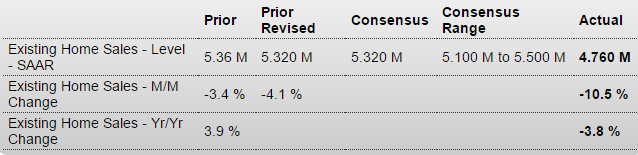
“U.S. home resales posted their sharpest drop in five years in November, a potential warning sign for the health of the U.S. economy although new regulations on paperwork for home purchases may have driven the decline.

The National Association of Realtors said on Tuesday existing home sales plunged 10.5 percent to an annual rate of 4.76 million units. That was the sharpest decline since July 2010. October’s sales pace was revised slightly lower to 5.32 million units.

Housing has been providing a sizable boost to U.S. economic growth this year as a strengthening labor market and low interest rates have helped young adults to leave their parents’ homes.”

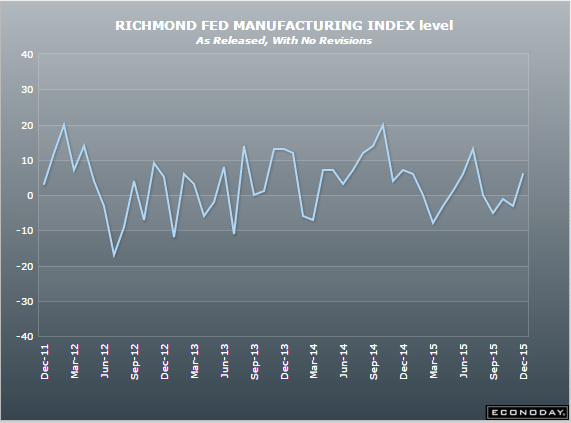
This went up some, so it will probably make all the headlines:

er-12-22-1