Michigan survey and a small rant

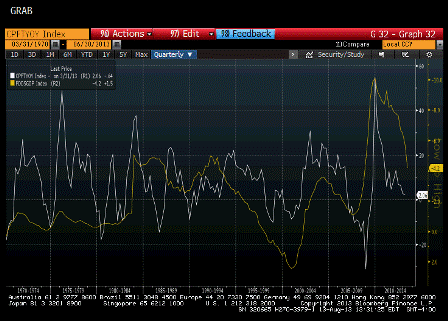
Funny how sentiment follows stocks…

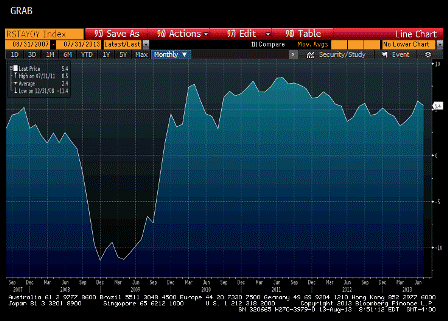
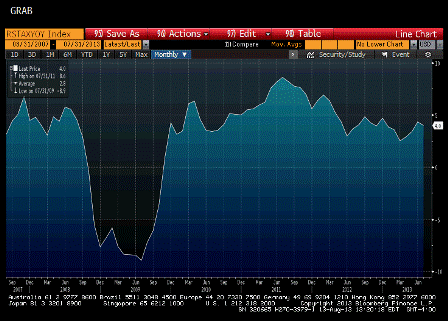
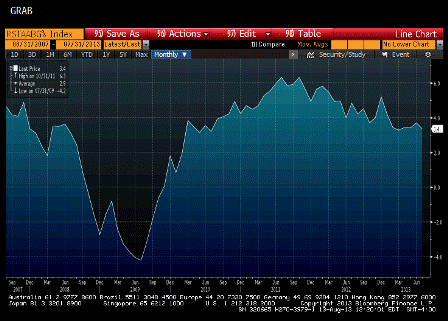
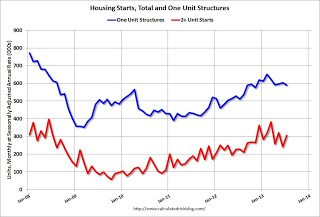
And how housing has gone flat all year is dismissed.

Not to forget jobless claims are about people losing their jobs and not about anyone getting a job. Yes, claims have correlated to new jobs, but that’s a different matter. For example, ‘at the limit’, you could have 0 claims as no one loses their job, but also no new jobs.

And how about the Fed not pushing back on the higher rates that have slowed mortgage purchase applications? No more ‘doing what it takes’ to error on the side of ‘ease’, because new jobs have been holding at close to a measly 200,000, just enough to keep the participation rate at 30+ year lows? Feels a lot to me like ‘outside pressure’ as discussed? Hard to believe the chairman wants his legacy to be ‘just when things finally looked to be turning he allowed rates to spike and quash it all’???

All in the context of ‘austerity didn’t work in the euro zone or the UK, and now the US is ‘proving’ the same, as private sector credit expansion fails to step up to plate as the public sector deficit is proactively cut and auto stabilizers and demand leakages continue aggressively.

US consumer sentiment much lighter than expected in August

August 15 (CNBC) — U.S. consumers, bracing for higher interest rates and slightly slower economic growth, were a bit less optimistic in August as sentiment retreated from last month’s six-year high, a survey released on Friday showed.

The Thomson Reuters/University of Michigan’s preliminary reading on the overall index on consumer sentiment slipped to 80.0 from 85.1 in July, the highest since July 2007.

August’s result was well below the 85.5 reading expected by economists.

Consumers’ view of current economic conditions showed the biggest decline, and most expected the pace of growth to ease slightly. However, these changes were not large enough to upend “the prevailing view that the economic expansion will continue,” survey director Richard Curtin said in a statement.

China’s Treasury Holdings Fall 21 Bln Amid Fed Talk on Taper Timing

I’d guess most of that was runoff of short term bills so wouldn’t alter the longer term rates but it also might be the case that China told the fed they wouldn’t buy any more secs unless they ceased QE.

The Fed doesn’t realize that we don’t need China or anyone else to keep interest rates on tsy’s anywhere we want them, so it’s likely intimidated by that kind of threat that China perhaps has already begun carrying out to make the point, as it did in 2011 when it let its entire bill portfolio run off and only started buying again after Bernanke’s ‘strong dollar’ speech and twist instead of QE, etc.

China’s Treasury Holdings Fall Amid Fed Talk on Taper

By Daniel Kruger

August 15 (Bloomberg) — Holdings of Treasuries in China, the largest foreign lender to the U.S., fell in June for the first time in five months amid discussion by Federal Reserve officials about slowing the pace their bond purchases.

China’s stake dropped by $21.5 billion in June, or 1.7 percent, to $1.276 trillion, according to Treasury Department data released yesterday. Yields climbed after June 19 when Fed Chairman Ben S. Bernanke said policy makers might reduce the size of their $85 billion a month in purchases of Treasuries and mortgage securities in coming months.

The pullback by China comes as overseas holdings of Treasuries have grown $26.8 billion, or 0.5 percent this year, the slowest pace since a 2.8 percent decline in the first six months of 2006. Treasuries have lost 3.1 percent this year, according to Bank of America Merrill Lynch indexes, headed for the worst performance since 2009.

“What you saw was a knee-jerk reaction” from China, said Adrian Miller, director of fixed-income strategies at GMP Securities LLC in New York. The drop wasn’t “any kind of a message as to a concerted effort to wind down excess exposure because of some duration risk given the Fed’s tapering goals,” he said.

Treasury Selloff

China’s holdings in May were $1.297 trillion, less than the $1.316 trillion reported by the Treasury last month. The Treasury revises the data on a monthly basis based on the nationality of the beneficial holder of the debt, while the initial figure is derived from the location of the purchase.

The benchmark 10-year Treasury yield rose 36 basis points or 0.36 percentage point, to 2.49 percent in June. It touched 2.82 percent yesterday, the highest since Aug. 1, 2011.

The decline in China’s stake “does help explain why the Treasury market sold off in June,” said Michael Pond, head of global inflation-linked research at Barclays Plc, one of 21 primary dealers that trade with the Fed.

Currency reserves have risen 5.6 percent through June to $3.5 trillion, according to data from the People’s Bank of China. Reserve growth in 2012 was 4.1 percent, the slowest pace since 1998, the data show. Reserves had grown at a double-digit pace for 11 consecutive years.

China’s Treasury position has risen $55.4 billion or 4.5 percent so far this year after a 5.9 percent increase in 2012. The holdings declined 0.7 percent to $1.152 trillion in 2011, the first annual decline on record going back to 2001.

Investors in China held 11.1 percent of the $11.4 trillion of marketable U.S. debt in June compared with a record 14 percent in June 2009.

All foreign investors owned 49.1 percent of the marketable debt, the least since May 2011, the data, known as Treasury International Capital, show.

Demand for the debt from overseas investors fell by $56.5 billion, or 1 percent in June to $5.6 trillion. It was the first three-month decline in overseas holdings since 2001.

taper tantrum!

The low jobless claims number seem to have sent markets into full taper mode. Stocks down due to fears of what happens without the presumed Fed support, and bonds higher in yield due to fears of what happens when the Fed slows down purchases.

And so while the ‘better jobs’ outlook that’s driving tapering is arguably good for stocks, markets are saying it’s not good enough to outweigh the higher bond yields and therefore the higher ‘discount rate’ for asset valuations.

Point here is, as previously discussed, the Fed will be cutting back it’s QE unless stocks fall hard enough to change their minds.

Which could very well happen.

While desperate circumstances that drive a large number of people to take on extra jobs at any pay to survive show ‘improvement’ in claims and payrolls, that’s not necessarily good enough for stocks, which look to earnings growth through top line growth, which is looking highly suspect.

And the higher mortgage rates have already pulled the rug out from under mortgage purchase applications and homebuilder stocks, etc. the one green shoot beginning to drive credit expansion.

And Walmart again pointing to the year end tax hikes slowing things down and low income growth keeping them from improving, and nothing in the rest of today’s numbers cause me to think top line is shifting gears, as least not for the better. And more ‘fiscal responsibility’ may be coming soon as both sides agree there is a long term deficit problem, and score political points for doing something about it.

All in the context of the macro issue where for gdp sales = income and a cut in net income from proactive deficit reduction means credit expansion elsewhere has to rise to the occasion to offset ever growing demand leakages.

Egypt and higher oil prices isn’t helping either. It wouldn’t be the first time oil price spikes toppled a suspect economy.

Walmart:


“The retail environment remains challenging in the U.S. and our international markets, as customers are cautious in their spending. Net sales in the first six months were below our expectations, so we are updating our forecast for net sales to grow between 2 and 3 percent for the full year versus our previous range of 5 to 6 percent,” said Holley. “This revision reflects our view of current global business trends, and significant ongoing headwinds from anticipated currency exchange rate fluctuations.”


“Across our International markets, growth in consumer spending is under pressure,” said Doug McMillon, Walmart International president and CEO. “Consumers in both mature and emerging markets curbed their spending during the second quarter, and this led to softer than expected sales. While this creates a challenging sales environment, we are the best equipped retailer to address the needs of our customers and help them save money.

During the 13-week period, the Walmart U.S. comp was negatively impacted by lower consumer spending due to the payroll tax increase and lower inflation than expected. Comp traffic decreased 0.5 percent, while average ticket increased 0.2 percent.

“While I’m disappointed in our comp sales decline, I’m encouraged by the improvement in traffic and comp sales as we progressed through the quarter. The 2 percent payroll tax increase continues to impact our customer,” said Bill Simon, Walmart U.S. president and CEO. “Furthermore, we also expected an increase in the level of grocery inflation, which did not materialize in a meaningful way. We were pleased that both home and apparel had positive comps.

Egypt Spirals Out Of Control


The violence that has plagued Egypt since the ouster of President Mohamed Morsi on July 3 has finally spiraled out of control. Clashes broke out across Egypt on Wednesday when police tried to break up two protests in support of Morsi. The Healthy Ministry says at least 525 were killed in the violence, and 3,717 were injured. The interim government declared a month-long state of emergency, a tool Egyptian rulers have frequently used to crack down on perceived threats. Cairo was quiet Thursday morning, but Morsis Muslim Brotherhood party has called for protests later today.

Defining “Base Money” with floating fx- The Great Reframation

With fixed fx/convertible currency ‘base money’ doesn’t include govt secs as those obligations are claims on govt reserves (gold, fx, etc.), which are part of ‘national savings’ as defined.

However, with today’s floating fx/non convertible currency tsy secs (held outside of govt) are logically additions to ‘base money’, as the notion of a reduction of govt reserves (again, gold, fx, etc) is inapplicable to non convertible currency.

That is, with today’s floating fx, I define base money as currency in circulation + $ balances in Fed accounts. And $ balances in Fed accounts include both member bank ‘reserve accounts’ and ‘securities accounts’ (tsy secs). And to me, it’s also not wrong to include any other govt guaranteed debt as well, including agency paper, etc.

That is, with floating fx, ‘base money’ can logically be defined as the total net financial assets of the non govt sectors.

(Note, for example, that this means QE does not alter base money as thus defined, which further fits the observation that QE in today’s context is nothing more than a tax that removes interest income from the economy.)

And deficit reduction is the reduction in the addition of base money to the economy, with the predictable slowing effects as observed.

The point of this post is to ‘reframe’ govt deficit spending away from ‘going into debt’ as it would be with fixed fx, to ‘adding to base money’ as is the case with floating fx where net govt spending increase the economy’s holdings of govt liabilities, aka ‘tax credits’.

Feel free to distribute!

corp profits and the federal deficit

Funny how little attention, if any, is focused on how corporate profits are a function of federal deficit spending?

Ideology conflicts?

Nothing ‘new’ about the idea that deficit spending and profits are related:

Kalecki’s most famous contribution is his profit equation.


In this model total profits (net taxes this time) are the sum of capitalist consumption, investment, public deficit, net external surplus (exports minus imports) minus workers savings.”

In any case, without an increase in net exports or some kind of material increase in credit expansion the decline in the federal deficit is highly problematic.

Corporate profits and the deficit as a % of GDP:


Full size image