Oil comments, Trump talk

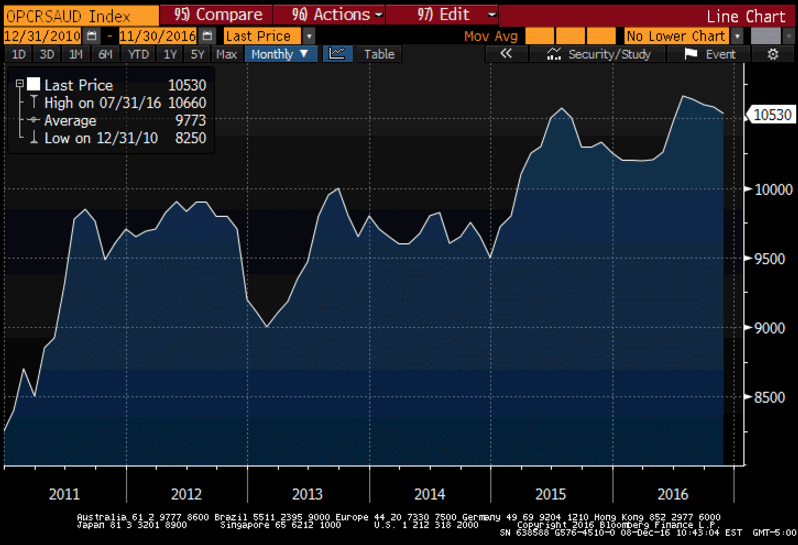
At this point in time higher oil prices are an unambiguous negative for the US economy. The higher prices will drain low income consumer $, and while incomes for higher end consumers with oil related income will benefit, I don’t see them increasing spending as fast as the low end cuts back. Also, with the US importing more oil and at higher prices, incomes of foreign oil producers will benefit but, again, I don’t see them buying as many more US goods and services.

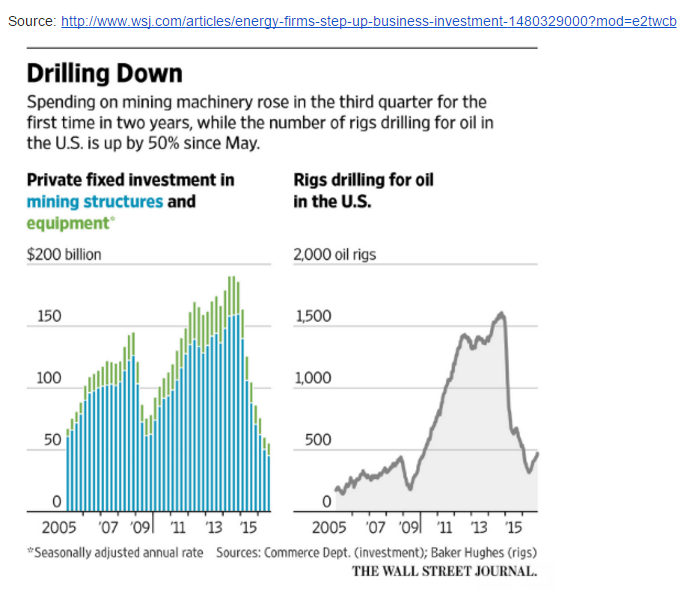
And oil capex spending is asymmetrical, in that it collapsed a lot faster when prices fell then it will recover with prices rising. So I suspect that source of spending growth will be slow in coming, particularly with the very real risk of prices collapsing again should the Saudis so decide, etc.

121201

Seems it’s Trump’s nature to look for spending cuts for bragging rights, the largest of which would be bringing down the deficit and debt, which not long ago he said he’d pay off in 8 years. And with the multiplier far higher on these kinds of spending cuts than any of his tax proposals, odds are the macroeconomic consequences are contractionary:

Trump takes aim at Pentagon’s ‘revolving door’ and Lockheed Martin’s $400 billion F-35 program

By Christian Davenport

Just over a year after Northrop Grumman won the multi-billion dollar contract to build a next-generation stealth bomber, the company appointed Mark Welsh, who was serving as Air Force Chief of Staff at the time of the contract award, to its board.

This isn’t about US govt. spending, but same results:

Boeing’s $16B aircraft deal with Iran Air faces challenges

Boeing has government approval to fill Iran Air’s $16 billion aircraft order, but it may still be grounded by Congress. And President-elect Trump, who has criticized the Iran nuclear accord that allowed the deal to take off, could eventually have a say …

Michigan survey, Inventories

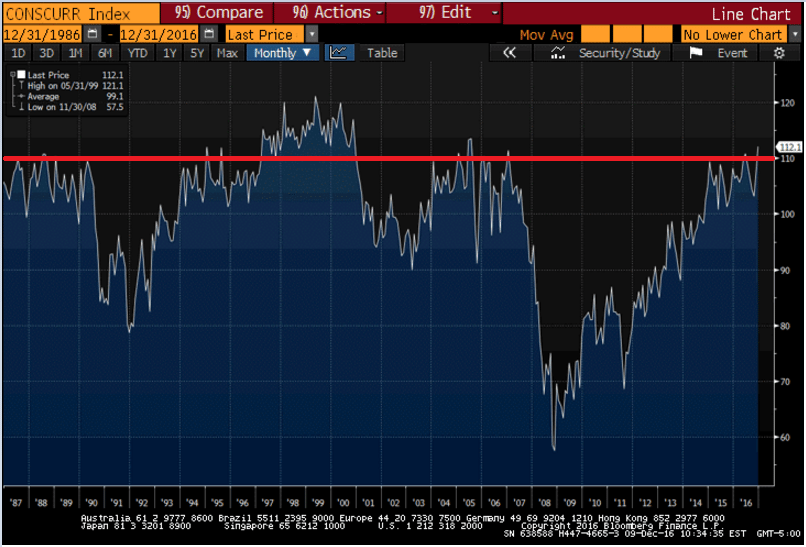
Post election euphoria? In any case, as per the chart, historically it doesn’t tend to stay this high for long:

120901

Highlights

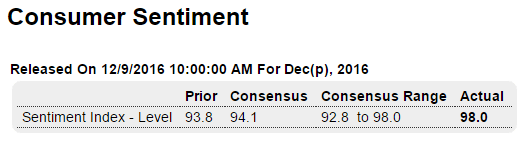
Post-election confidence continues to build, lifting consumer sentiment by more than 4 points to a 98.0 level that hits the very outside of the Econoday range and is 1 tenth away from the index’s recovery peak hit last year. Consumers specifically cite expectations of new economic policies as the biggest positive. A rise in the current conditions component, up 4.5 percent from November to 112.1, offers an early indication of strength for December’s holiday spending while a gain for expectations, up 4.3 percent to 88.9, points to confidence in the jobs outlook. But the rise in spirits isn’t translating to any improvement for inflation with both the 1-year and 5-year outlooks down 1 tenth, to 2.3 percent and 2.5 percent respectively. Inflation aside, this report is another signal that the economy may be closing out the fourth-quarter with strong momentum.

120902
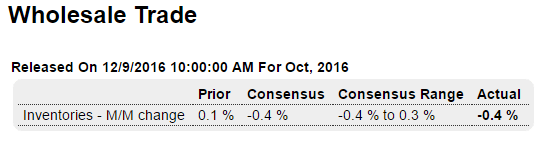
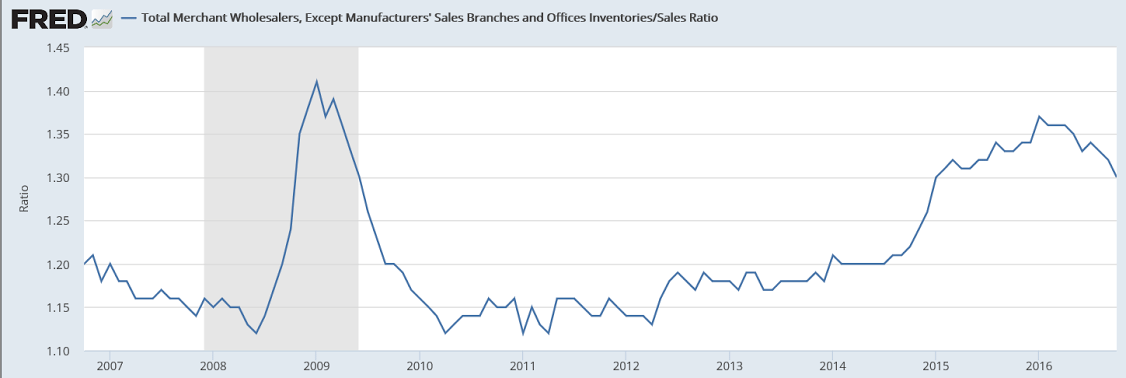
Inventories resume their decline which means less new output and lower GDP, as too high inventory to sales ratios do their thing:

120903

Highlights

Inventories were looking heavy going into the fourth quarter but, given strength in demand, are turning out to be perhaps too lean. Inventories at the wholesale level fell 0.4 percent in October, drawn down by a 1.4 percent surge in wholesale sales. The mismatch drops the stock-to-sales ratio from 1.32 to 1.30 for the lowest reading in nearly two years. Advance data for retail point to a similar decline for retail inventories to be posted next week while factory inventories, posted earlier in the week with the factory orders report, were unchanged.

Looks to me like maybe 1.2 would be normal indicating there’s a long way to go:

120904

120905
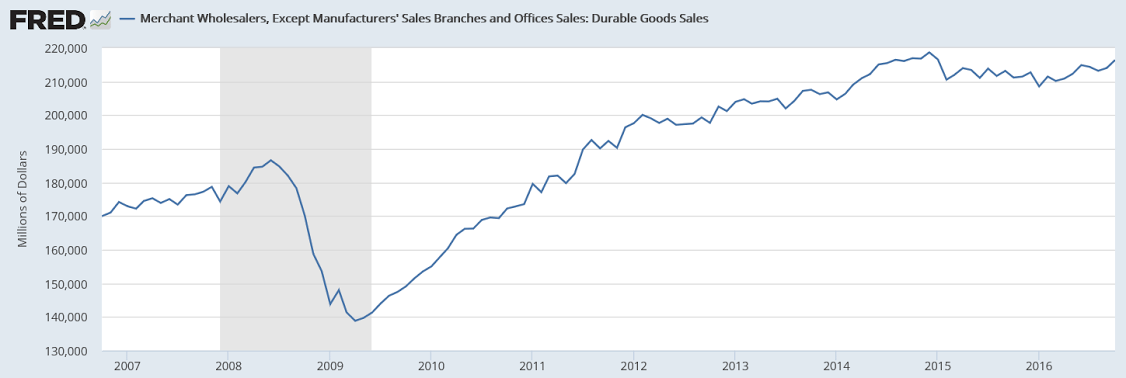
Sales have recovered but remain well below ‘normal’:

120906
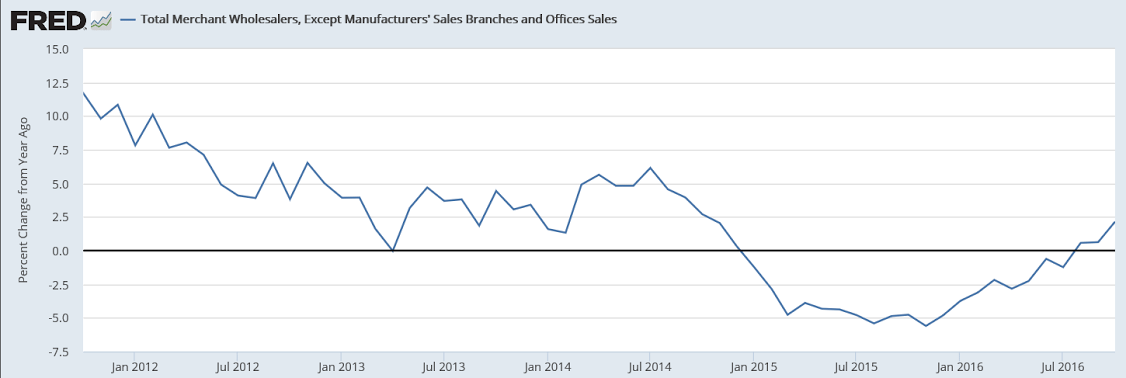
For all practical purposes, these sales have gone flat:

120907

JOLTS, Consumer Credit, Soft Bank

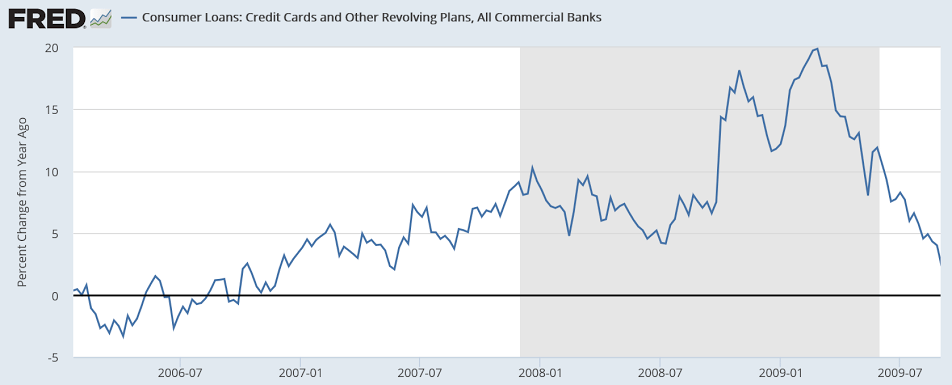
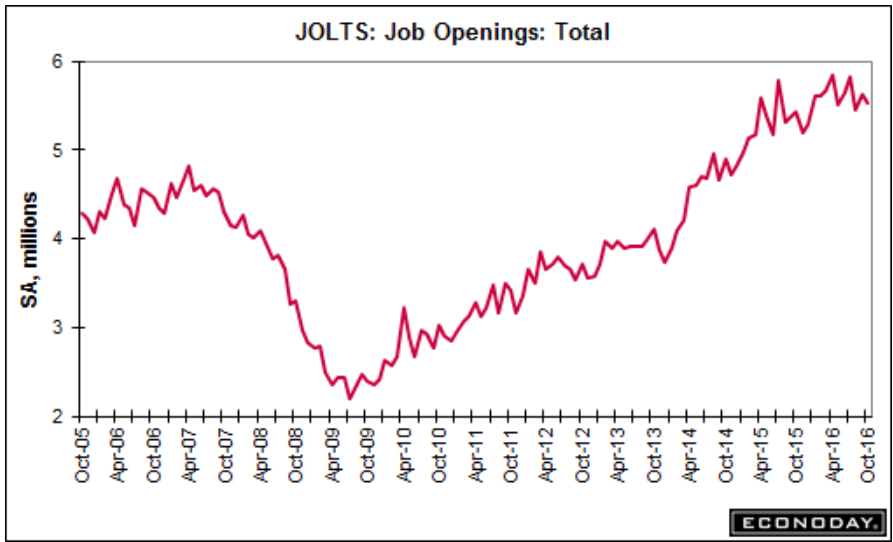
Looks a lot like the top looked back in 2007?

120701
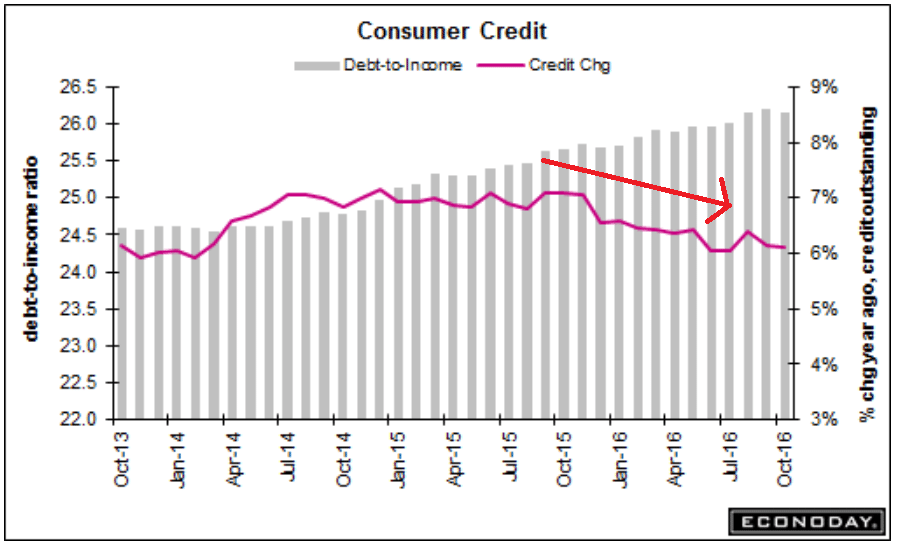
Declining growth of consumer credit means credit driven spending isn’t adding as much to GDP this year as it did last year:
120703

Highlights

Consumer credit keeps expanding including moderate and consistent gains for credit cards. Consumer credit outstanding rose $16.0 billion in October, driven as usual by vehicle financing and student loans but also by revolving credit which is where credit-card debt is tracked. Revolving credit rose $2.3 billion in October for a year-on-year gain of 6.0 percent which is right at the peak for this cycle, last matched in July 2008. Willingness to run up credit cards may point to consumer confidence or on the other hand to stretched budgets but it’s a trend that is a plus for holiday spending.

120702

SoftBank was going big in US long before Trump

By Ari Levy

Dec 7 (CNBC) — “Masa said he would never do this had we (Trump) not won the election!” Trump wrote.

In fact, SoftBank, along with Saudi Arabia’s sovereign wealth fund, announced plans in October for a technology investment fund that could reach $100 billion in size. The $50 billion Son was referencing is tied to that fund, according to The Wall Street Journal.

Trade, Factory orders, Redbook retail sales, Saudi pricing, Comments on Trump tactics

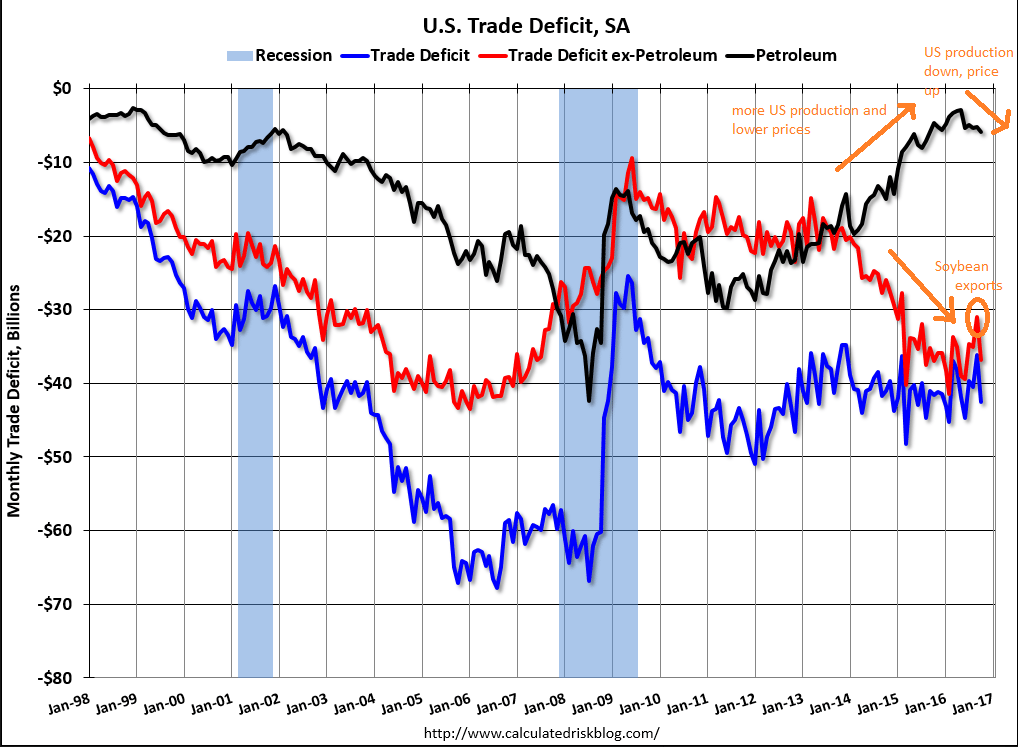
Trade deficit moving back out. I expect a lot more to come this quarter and next. Oil is getting more expensive and the quantity imported is up as well. The ‘one time’ soybean export bulge is behind us, and global trade in general has slowed.

Wouldn’t surprise me if Trump responds by having the US start buying foreign currencies, which would send the dollar lower to offset ‘foreign currency manipulation’. And, of course, he’d show a ‘profit’ in fx purchases as the dollar falls:
120601

Highlights

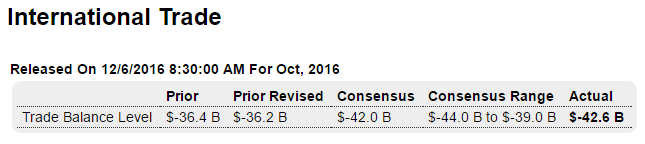
The nation’s trade deficit widened substantially in October, to a higher-than-expected $42.6 billion and reflecting a 1.8 percent decline in exports and a 1.3 percent rise in imports. The nation’s trade deficit in goods totaled $63.4 billion offset only in part by a small rise in the trade surplus in services to $20.8 billion.

Goods exports were soft across the board including for foods/feeds/beverages (down $1.4 billion in the month) and also industrial supplies (down $1.0 billion). Exports of consumer goods fell $0.9 billion with exports of capital goods, barely in the plus column, held down by a $0.6 billion dip in civilian aircraft. The offset is services exports which at $63.3 billion is the highest on record and largely reflects global demand for the nation’s technical and managerial services.

The import side of the data show heavy U.S. buying, at a $231.3 billion total in the month which the highest since August last year. Details show a $1.1 billion increase in capital goods which is a negative for the national accounts but a positive for the nation’s productive investment. Imports of consumer goods shot up $2.4 billion ahead of the holidays.

By country, the gap with China narrowed by $1.4 billion to $31.1 billion reflecting unusually high U.S. exports to China. The gap with the EU widened to $13.1 billion, with Mexico to $6.2 billion and with Japan to $5.9 billion.

The widening trade deficit in October gets the net export component of fourth-quarter GDP on the wrong foot.
120602
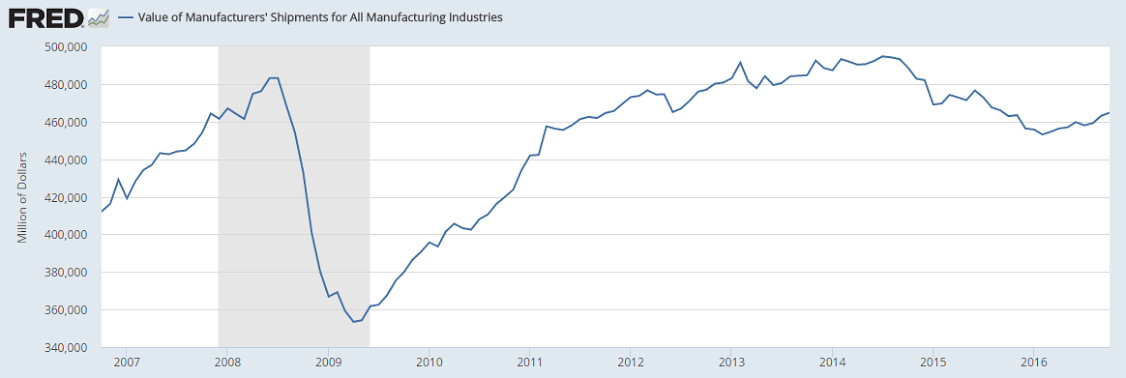
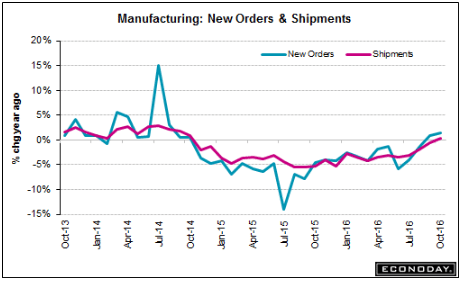
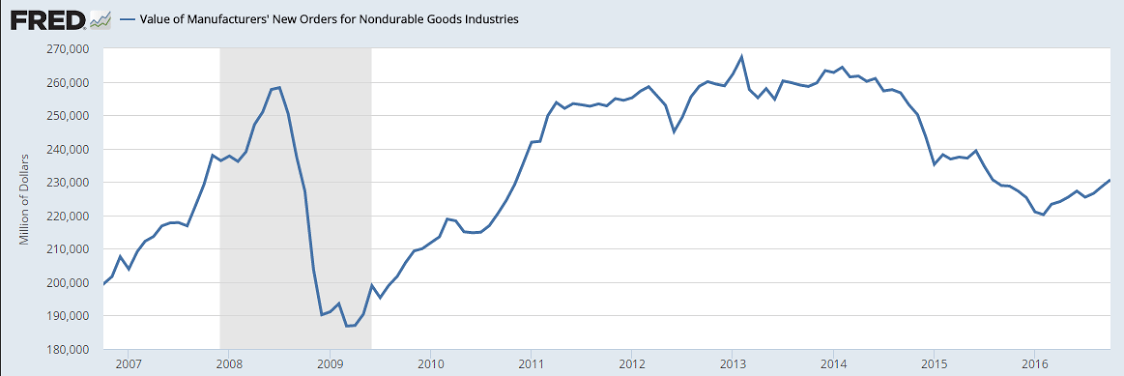
As previously discussed, manufacturing is a lot smaller than the service sector, and after falling to lower levels with the collapse in oil related capital expenditures growth is resuming at the lower levels, as the lack of aggregate demand moves deeper into the service sector:
120603

Highlights

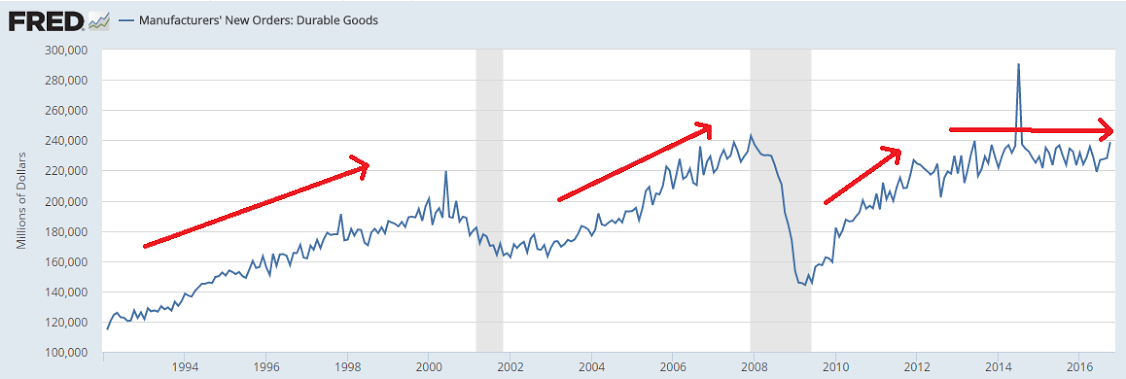
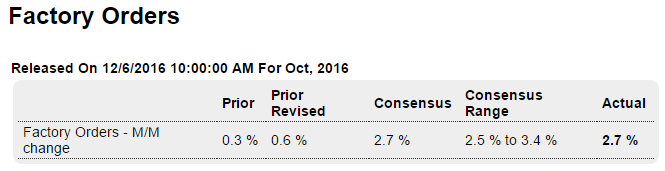
October was a very strong month for the factory sector as durable goods orders rose 2.7 percent. Aircraft (both civilian and defense) was October’s special strength, excluding which the gain in orders falls sharply but still comes in at a very solid 0.7 percent. Another plus in the report is a 3 tenths upward revision to September to plus 0.6 percent, a gain driven by an upgrade for aircraft orders in that month.

Core capital goods orders (nondefense excluding aircraft) did rise in October but not much, up only 0.2 percent and well short of offsetting a 1.5 percent decline in September. Weakness here points to trouble for business investment in the fourth-quarter GDP report. And shipments for this category have gotten off to a bad start in the quarter, down 0.1 percent in October.

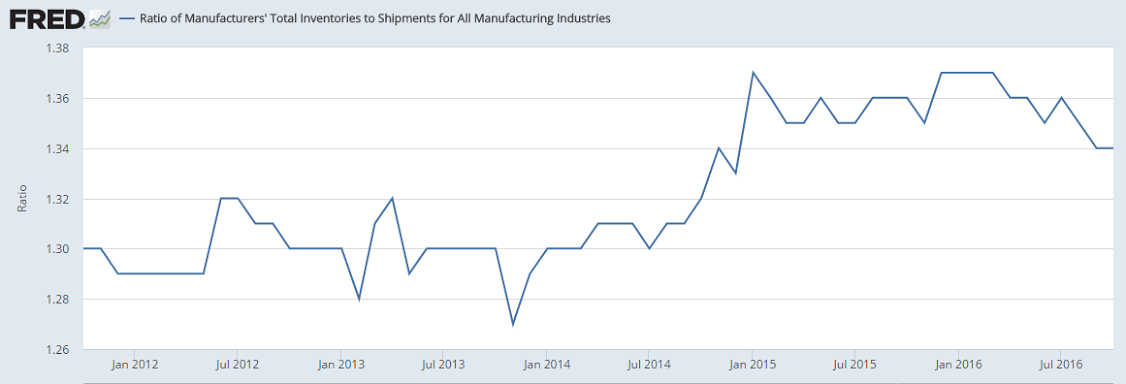
But other readings are favorable including a useful 0.4 percent rise in total shipments and a 0.7 percent gain for unfilled orders which had been in long contraction. Inventories are not a problem in the sector, unchanged in the month with the stock-to-sales ratio holding at 1.34.

Advance readings on factory conditions in November have been mostly positive which, together with this report and a respectable 0.3 percent gain for the manufacturing component of the industrial production report point to year-end momentum for a sector that has otherwise had a flat 2016.
120604

120609

120610

120611

120607
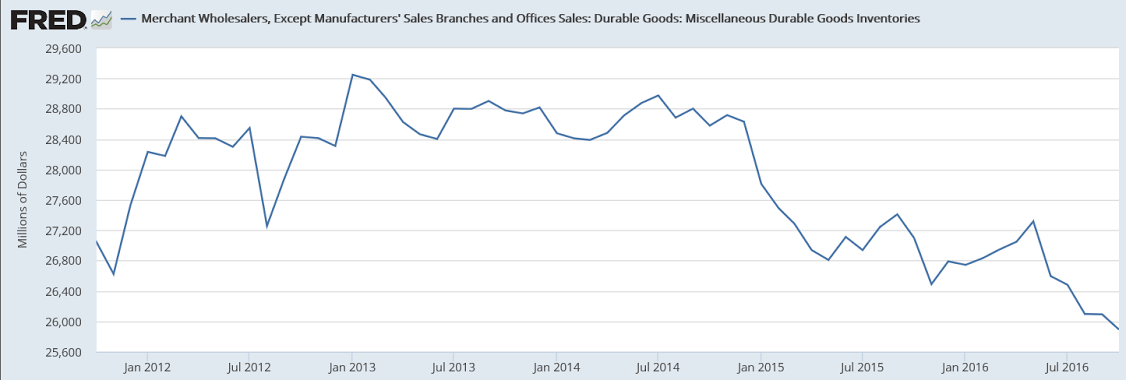
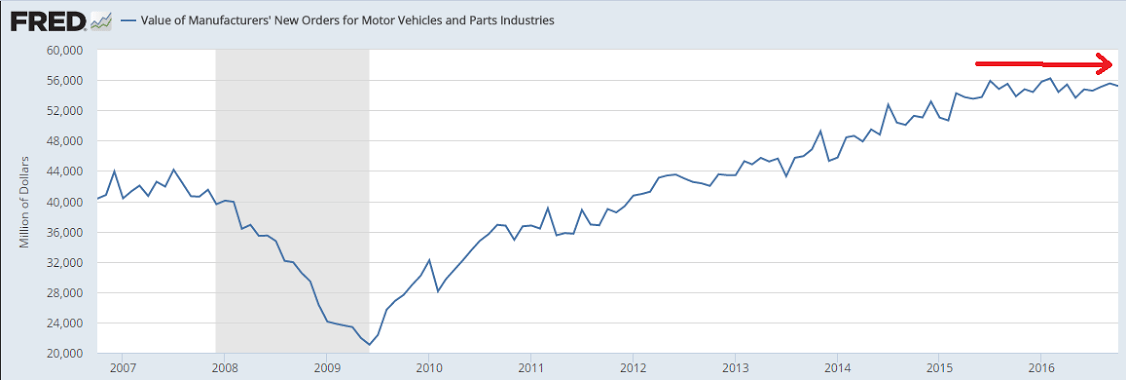
Inventories still high and working their way lower:
120608
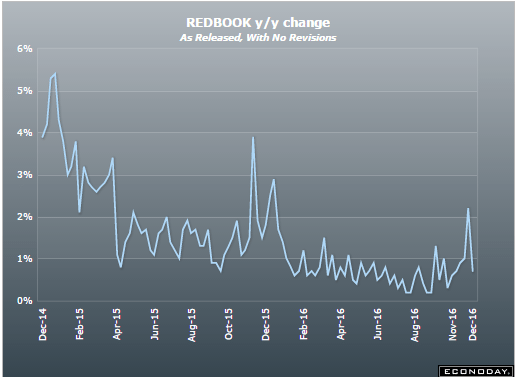
Growth falling back from the mini spike up. A ‘normal’ economy, before the collapse in oil capex, used to show 3-4% increases and more:
120606

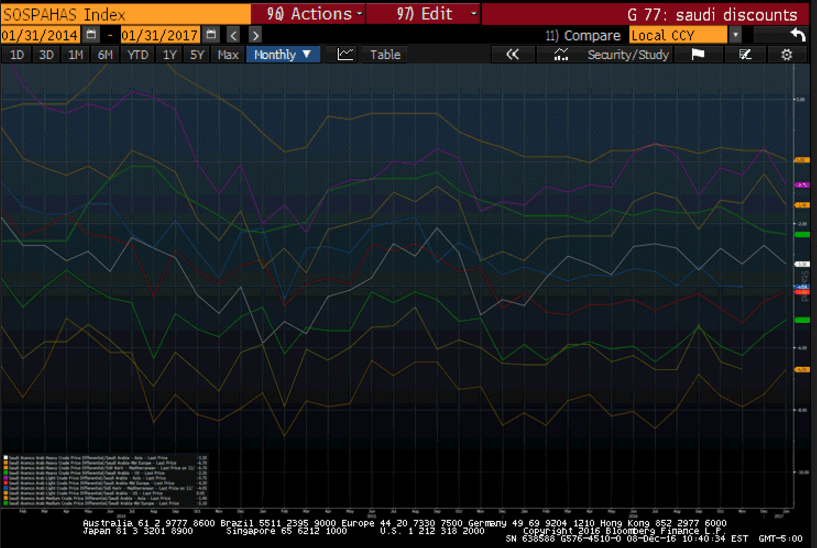
Looks like a price cut, indicating they don’t want prices up quite this high?


*Saudi arabia cuts all Jan OSPS to US except for extra light
*Saudi Arabia raises diffs on all grades to NWEur/MED
*Saudi Jan Arab Light to Asia at -75c vs plus 45c
*Saudi cuts Jan pricing for light crudes to Asia.

The job of the executive branch, headed by the President, is to enforce the law.

And it’s perfectly legal for companies to move production, etc. to other countries.

However, the President elect is seeking to have companies that are acting legally alter their business plans by using leverage/retribution such as threatening tariffs and altering govt. contracting terms and conditions.

Unconstitutional abuse of executive power?

Wire article, Trump news, Italy

What Does Modern Money Theory Tell us About Demonetisation?
Dec 5 (The Wire) — Warren Mosler, a founder of MMT, explains the idea of “taxes drive money” using a simple example. He pulls out his visiting card in a classroom and …

Continuous flow of this stuff:
Donald Trump insults China with Taiwan phone call and tweets on trade, South China Sea

PR No. 298 PM TELEPHONES PRESIDENT-ELECT USA Islamabad: November 30, 2016

Prime Minister Muhammad Nawaz Sharif called President-elect USA Donald Trump and felicitated him on his victory. President Trump said Prime Minister Nawaz Sharif you have a very good reputation. You are a terrific guy. You are doing amazing work which is visible in every way. I am looking forward to see you soon. As I am talking to you Prime Minister, I feel I am talking to a person I have known for long. Your country is amazing with tremendous opportunities. Pakistanis are one of the most intelligent people. I am ready and willing to play any role that you want me to play to address and find solutions to the outstanding problems. It will be an honor and I will personally do it. Feel free to call me any time even before 20th January that is before I assume my office.

On being invited to visit Pakistan by the Prime Minister, Mr. Trump said that he would love to come to a fantastic country, fantastic place of fantastic people. Please convey to the Pakistani people that they are amazing and all Pakistanis I have known are exceptional people, said Mr. Donald Trump.

Here’s what he said a year or so ago:

https://youtu.be/2eSnfLbQNe0

Just an FYI, Italy’s 5 Star party, which may take control in the next election, wants to ‘renegotiate terms’ within the EU, including relaxation of fiscal limits, but its ‘Plan A’ is not to leave the euro or the EU.

120512

PMI services, ISM services, Bank loans, Fed labor market conditions index

Post election surveys may prove to be a bit ‘trumped up’, just saying…

120501

120502

Highlights

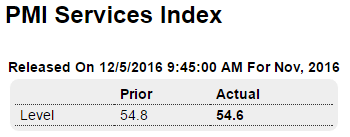
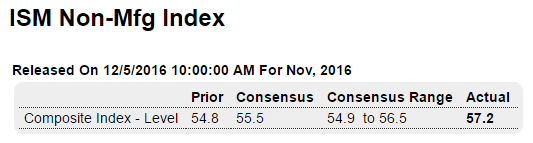
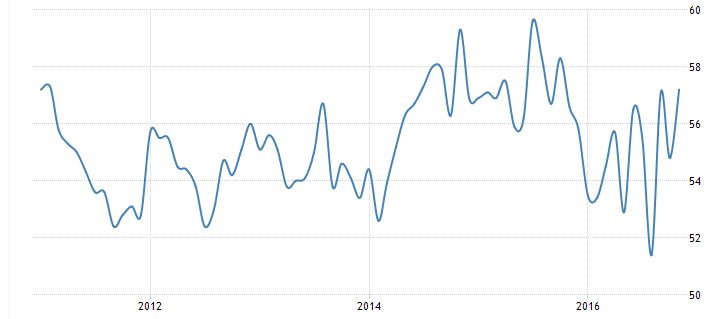
In another sign of strength for the economy, the ISM non-manufacturing index jumped 2.4 points in November to a 57.2 reading that tops Econoday’s high-end forecast. Employment for ISM’s sample, where growth was soft in October, shot more than 5 points higher to an outsized 58.2. Averaging recent scores for this reading puts the trend at a softer but still very respectable mid-50s rate. New orders are very strong, at 57.0, with export orders also at 57.0 in a reminder of the importance of foreign demand for the nation’s service sector. Business activity is a highlight of November’s report at 6l.7.

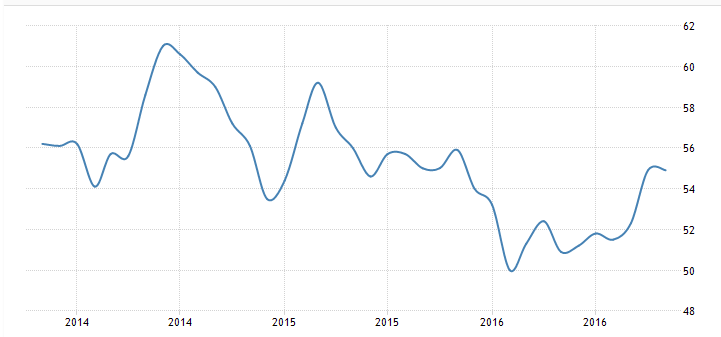
Based on this report as well as the services PMI released earlier this morning, the great bulk of the economy has posted strong numbers through the first two thirds of the fourth-quarter, indications that support a rate hike at next week’s FOMC meeting.

120503
This is the PMI composite PMI which includes both manufacturing and services:

120504
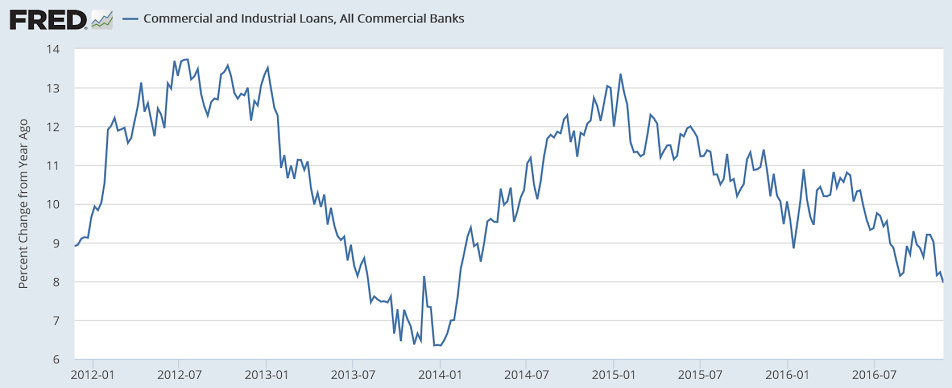
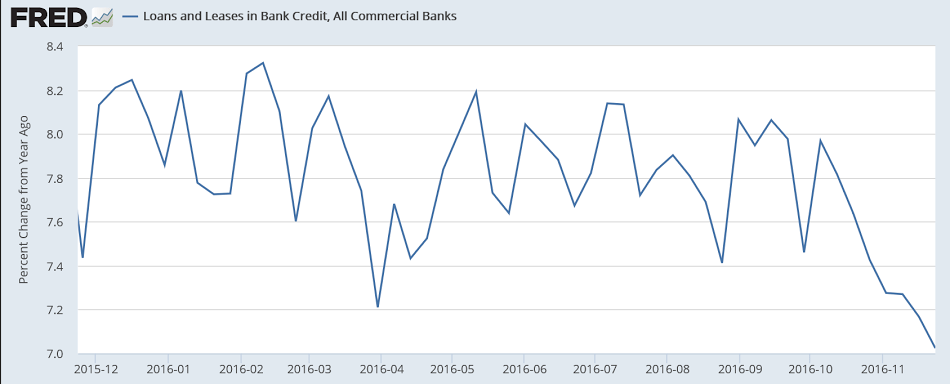
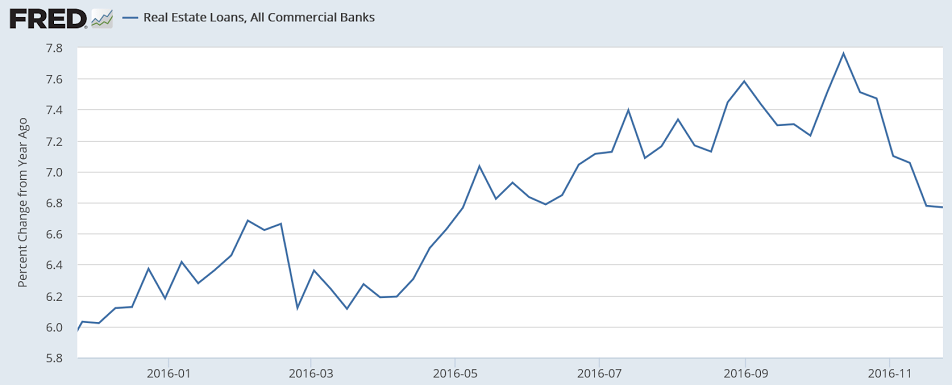
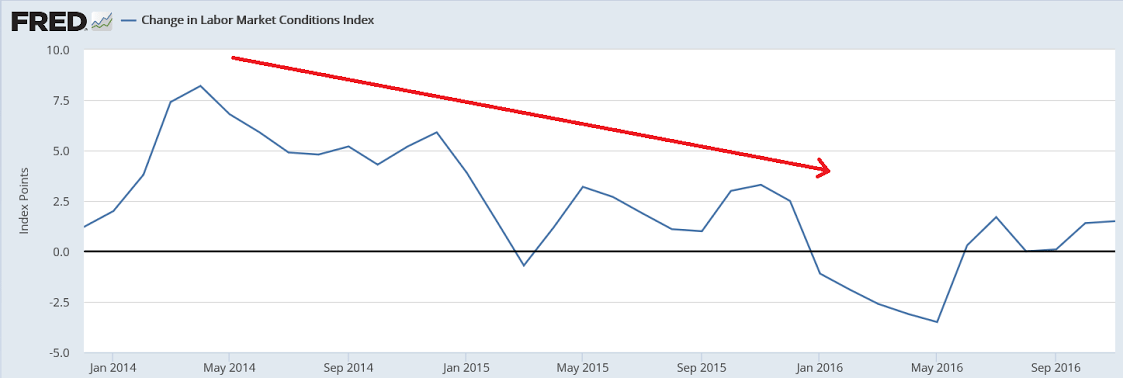
Deceleration continues:

120506

120505

120507

120508

GDP, Rents, Saudis

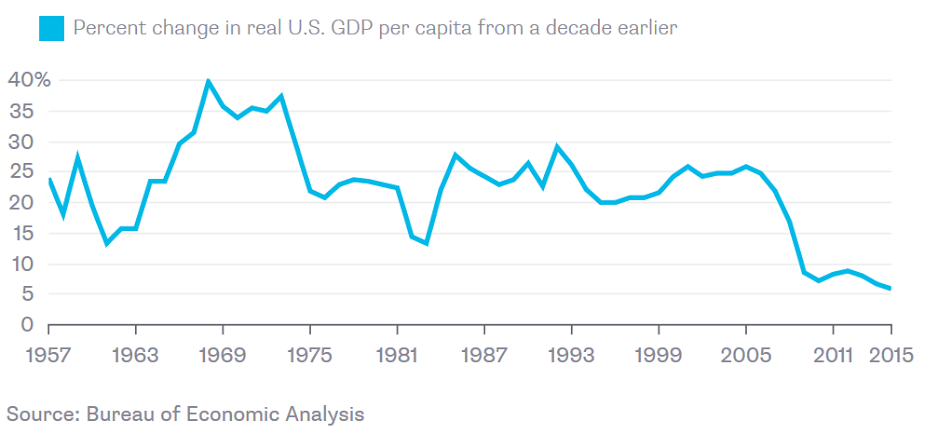
This line shows total GDP growth over the prior 10 years. It makes the point as to just how sudden the latest drop off was and how severe it continues to be. It’s just screaming ‘lack of aggregate demand’ begging a fiscal relaxation of maybe 5% of GDP annually for a while.

120401
Bottom line: It’s always an unspent income story.

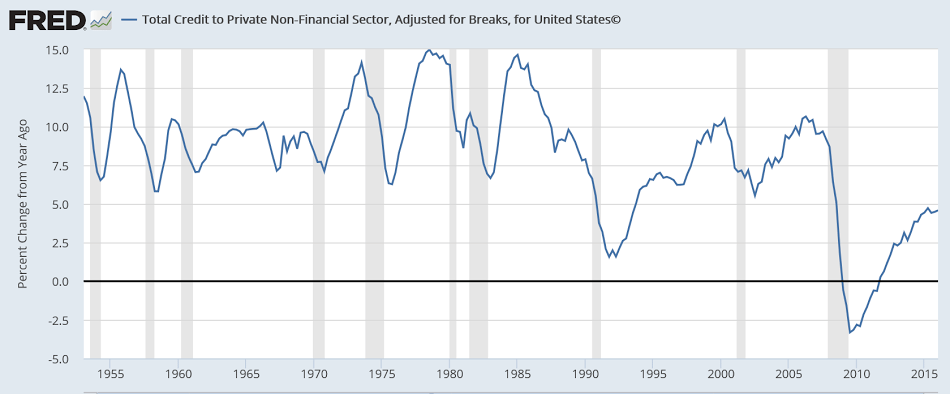
The 2008 financial crisis led to a sharp fall off in private sector deficit spending (credit expansion) that had been offsetting desires to not spend income, which I call ‘savings desires’. And it was in mid 2008, for example, that I proposed a full FICA suspension that would have allowed spending to continue, but from income rather than from debt. However, what happened instead was an attempt to restore private sector credit growth with a zero rate policy that was soon supplemented with quantitative easing, and to date has failed to restore output growth and employment.

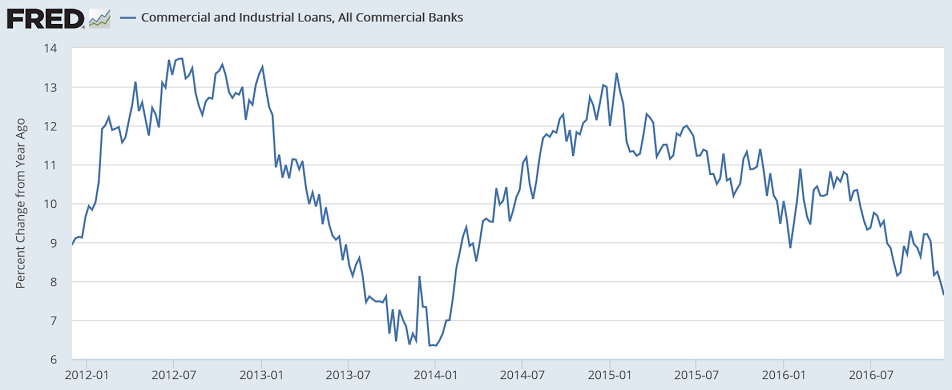
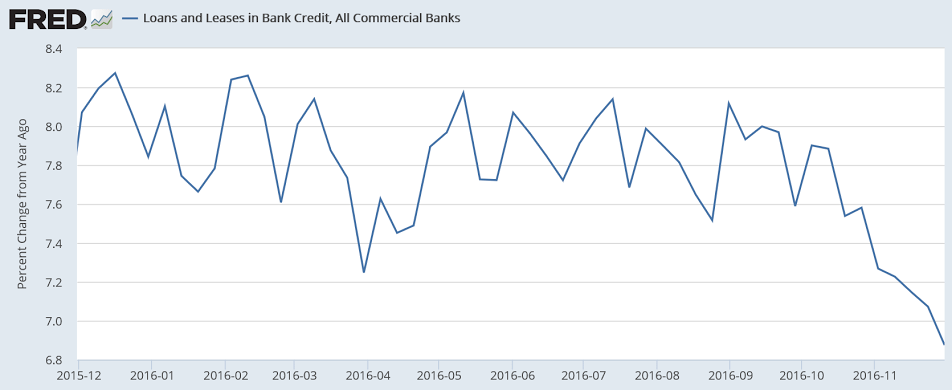
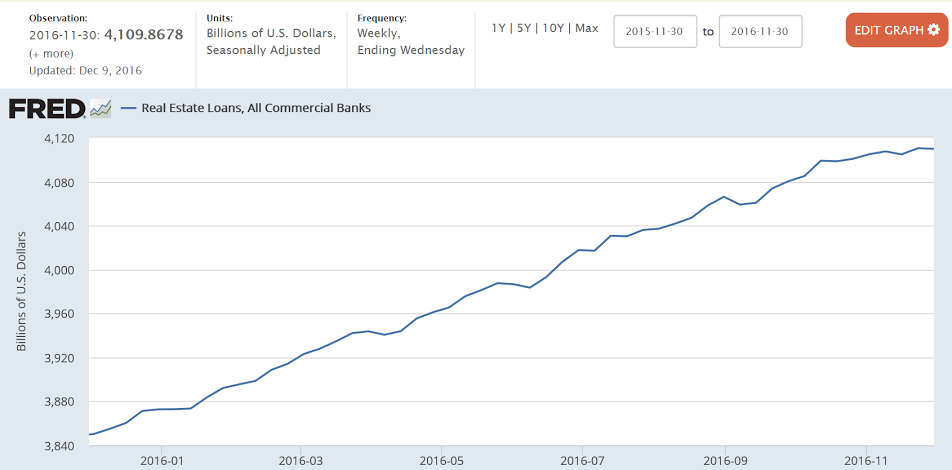
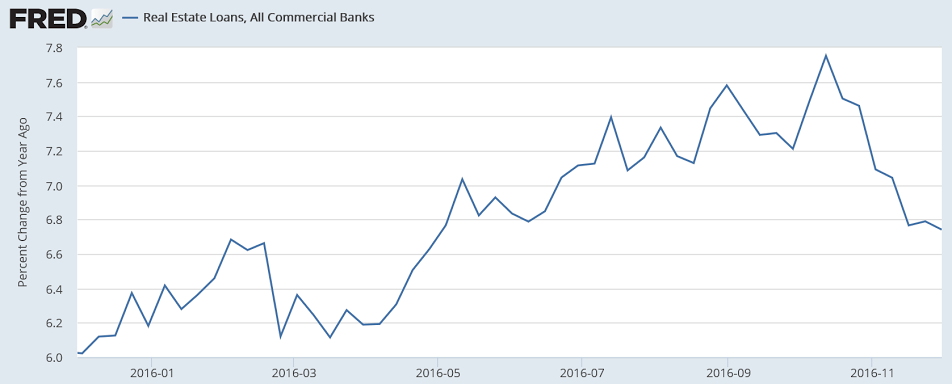
The Fed, however, believes the spark has been ignited and will likely move to ‘remove accommodation’ with a another small rate hike, even as all the indicators I can see continue to decelerate as previously posted and discussed.

120402

http://www.cnbc.com/2016/12/03/rent-prices-show-signs-of-calming-down-with-nyc-san-francisco-and-dc-sliding.html

Frothy rental prices across the nation are showing signs of cooling, recent real estate data show, with the white hot markets of New York City and Washington D.C. offering modest relief to sticker-shocked renters.
In its recent survey of nationwide rent conditions, data from apartment rental site Zumper said that the most expensive markets in the nation saw either flat prices or outright declines—demonstrating evidence of a potential top.

“Among the top ten most expensive rental markets, only one city, Seattle, saw median rent prices for one bedrooms rise this past month, up just a modest 0.5 percent,” Zumper wrote. “Several of these rental markets saw falling prices, including in New York and Boston, while both D.C. and Chicago saw even sharper declines of over three percent.”

Zumper’s National Rent Index showed that prices for a one bedroom apartment rose marginally, by 0.3 percent, across the nation. Yet the cost for a two bedroom unit fell slightly, but is still up more than 2 percent on average since 2015.

However, the data showed more worrisome declines at the micro level of certain cities. The Big Apple’s average rent remained relatively flat around $3000 per month for a one bedroom apartment, but showed the sharpest drop of any top 10 U.S. rental market, Zumper added. One bedroom prices are down by more than 7 percent since last year, while two bedrooms have swooned by nearly 8 percent.

Top five cities such as Boston, San Jose and Oakland—the latter two closely linked to Silicon Valley’s fortunes—also saw flat to falling prices, according to Zumper.

In the perpetually hot San Francisco area, rents have now fallen for five consecutive months, Zumper data showed. A one bedroom now costs about $3,330 on average, and $4,500 for a two bedroom. “Overall, one bedroom rents in San Francisco end the year down nearly 5 percent from where they were twelve months ago, as Bay Area renters are beginning to see a bit of relief after years of accelerating rent prices,” Zumper’s study said.

They set price and ‘insider trading’ is not illegal:

Saudi Arabia discussed oil output cut with traders ahead of Opec

Dec 4 (Financial Times) — Saudi Arabia convened private talks with the world’s largest oil traders in Vienna before Opec’s crunch meeting on whether to cut oil output, seeking views about the likely market reaction should they fail to clinch a deal, it has emerged.

Payrolls, Vehicle sales, Carrier

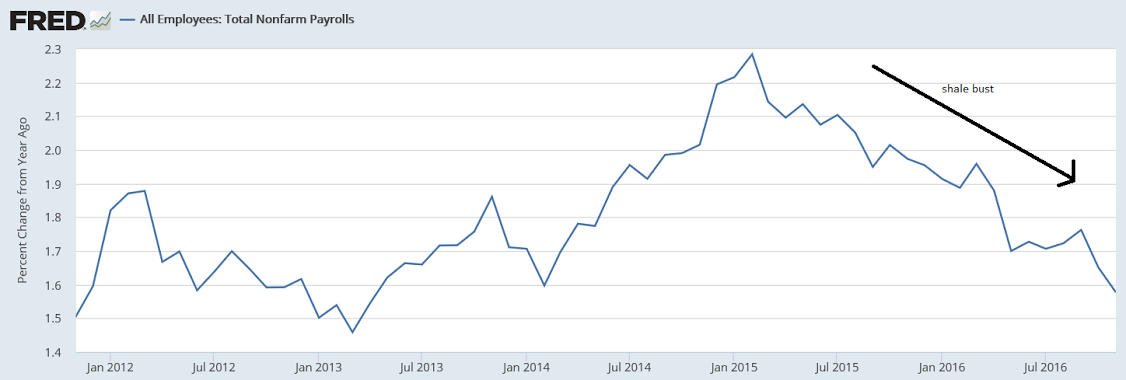
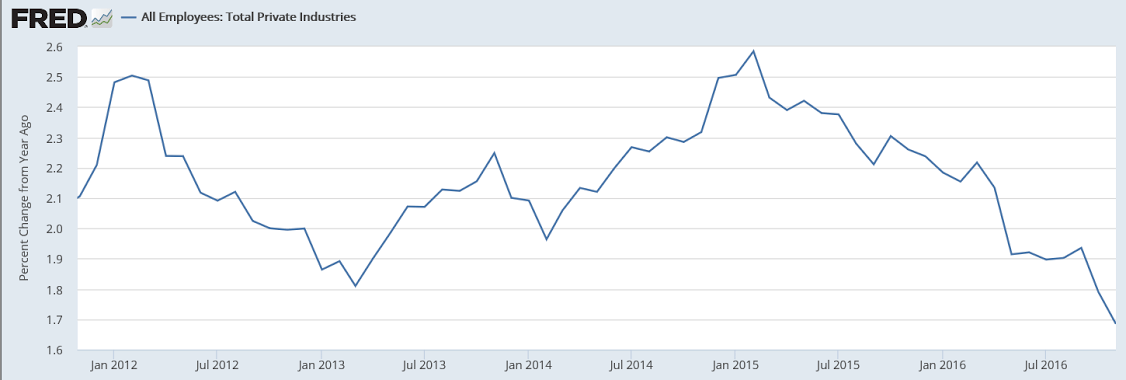
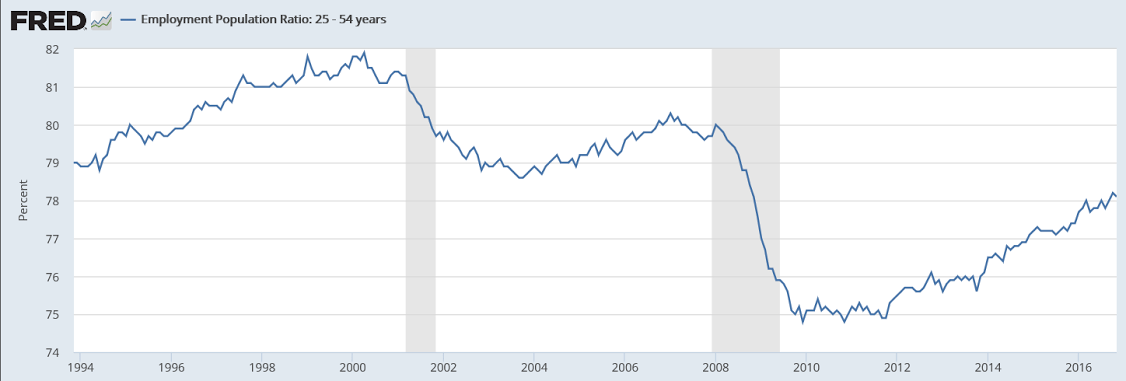
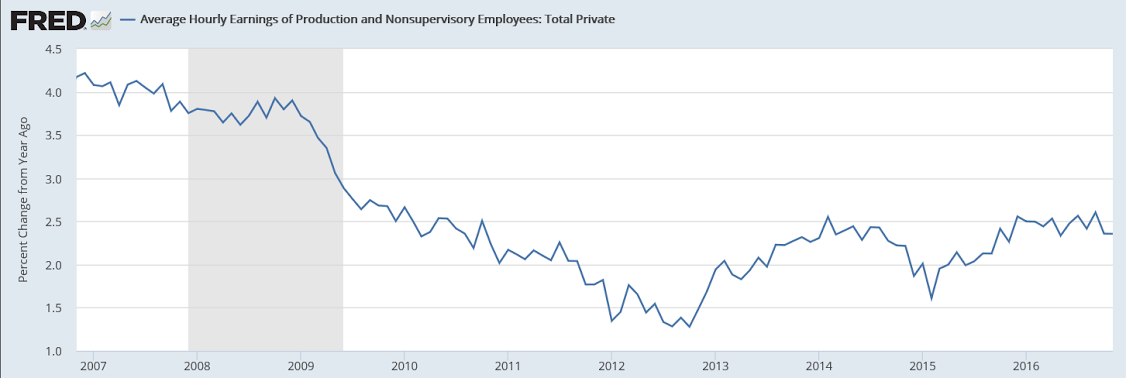
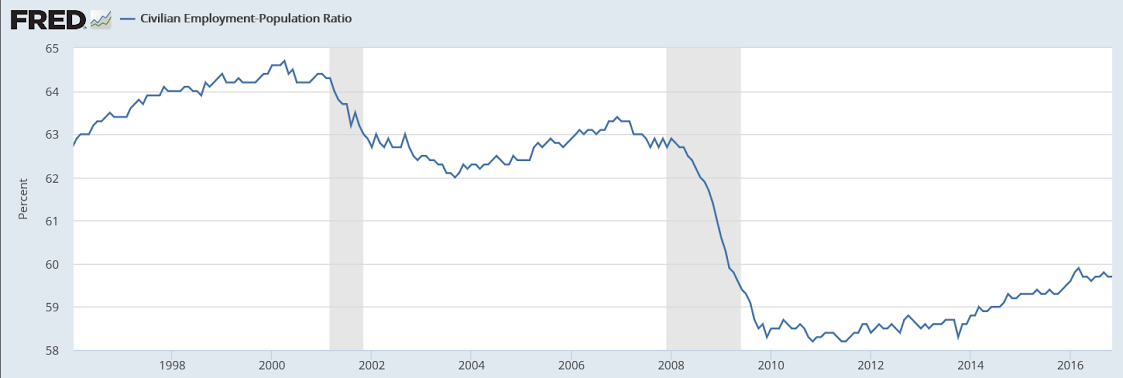
Year over year growth continues to decelerate, and wage growth remains critically low. And participation rates further evidence a massive shortage of aggregate demand, and it’s all only getting worse:

120201

120202

Highlights

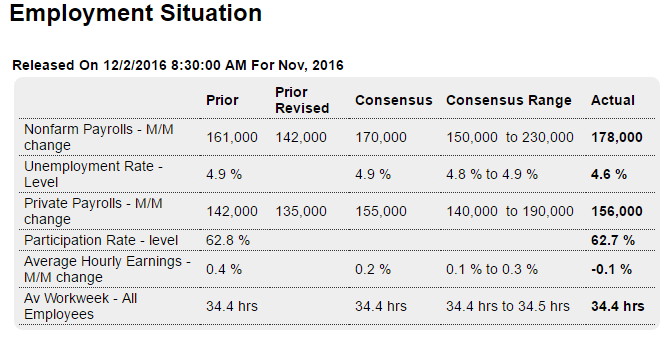
Payroll growth is solid and the unemployment rate is down sharply, but not all the indications from the November report employment are favorable. Nonfarm payrolls rose 178,000 in November to just beat out expectations with revisions no factor, as a sharp downward revision to October, now at 142,000, is offset by a nearly as sharp upward revision to September, now at a sizable 208,000. The unemployment rate fell a very sharp 3 tenths to 4.6 percent for the lowest reading of the cycle, since August 2007.

But now the less positive news. The dip in the unemployment rate is tied, not to greater growth in employment, but to a dip in the participation rate, down 1 tenth to 62.7 percent. And a headline negative in the report is a surprise 0.1 percent decline in average hourly earnings, the first negative reading of the year and more than reversing October’s very strong 0.4 percent gain and driving down the year-on-year rate from a cycle high of 2.8 percent back down to 2.5 percent where it last was in August.

But payrolls are positive and led in November by another major gain for professional & services, up 63,000, and a 14,000 gain for the temporary help subcomponent. Gains in these readings point to demand for short-term labor in lieu of finding full-time labor. Construction is another positive, up 19,000 and reflecting strength in residential building. A negative is an 8,000 decline in retail which indicates that retailers are not gearing up much for the holidays.

For policy makers, the unemployment rate is now at their long-term target though participation is soft — and inflation is still lagging, factors that will give the doves some debate points at what is otherwise likely to be a rate-hike meeting the week after next.

120203

120204

120205

120206

120207
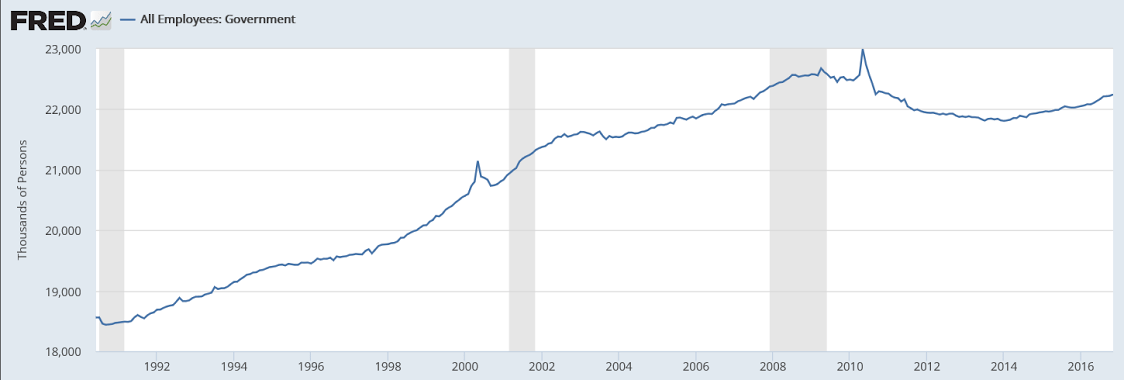
We’ll see if Trump can do the Tea Party’s bidding as well as Obama did when it comes to keeping down the size of government:

120208
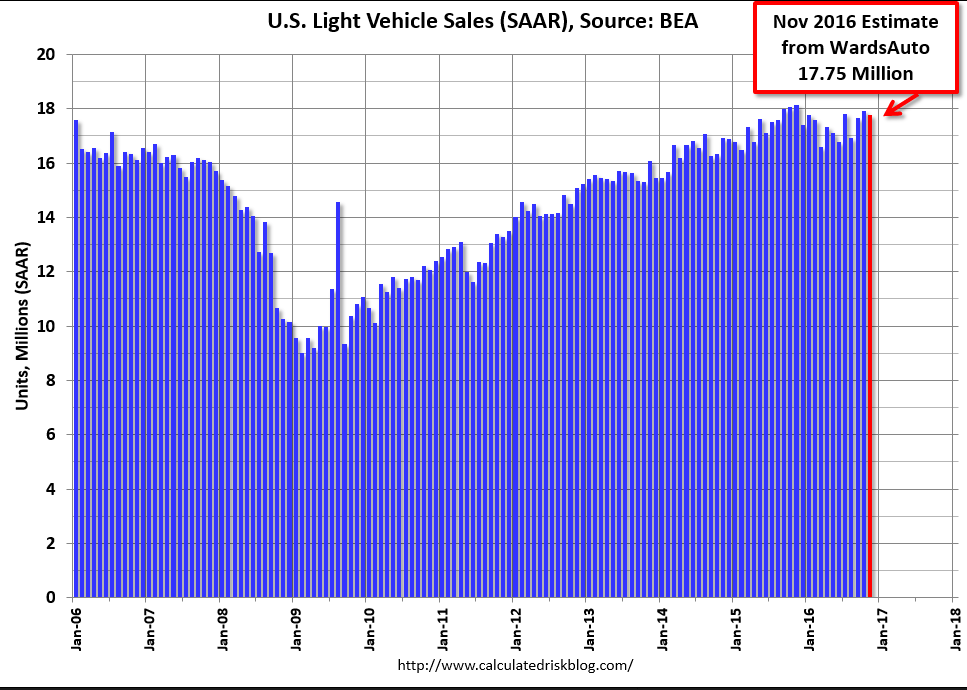
Car sales used to contribute to GDP growth. Not any more, seems:

Based on a preliminary estimate from WardsAuto, light vehicle sales were at a 17.75 million SAAR in November.

That is down about 2% from November 2015, and down 0.9% from the 17.91 million annual sales rate last month.

From John Sousanis at WardsAuto November 2016 U.S. LV Sales Thread: Light Trucks, Extra Days Boost November Volumes

With two extra selling days in November, U.S. automakers outpaced same-month year-ago sales on a volume basis, despite a 4.6% decline in the daily sales rate (DSR).

Strong light-truck sales were a key factor in November sales, as the industry delivered 1,372,402 LVs – 48,904 more than it did a year-ago, over the course of 25 selling days (vs. 23 last year).

Year-to-date sales for the industry reached 15.783 million units, giving the first 11 months of 2016 a lead of just 17,542 units over like-2015 heading into December – and keeping alive the prospect that 2016 will break the single-year sales record set last year.

Read more at http://www.calculatedriskblog.com/#SD8fhLAodoqC8dsL.99

120209
So much for Trump ‘deal making’ hopes:

Trump’s deal with United Technologies includes $7 million in financial incentives provided by Indiana to keep 1,100 jobs at Carrier, the company’s heating and air conditioning unit, in the state. However, Carrier still plans to move roughly 1,300 other jobs to Mexico and close another facility in Indiana.