Housing starts, Chicago Fed, Trump cuts

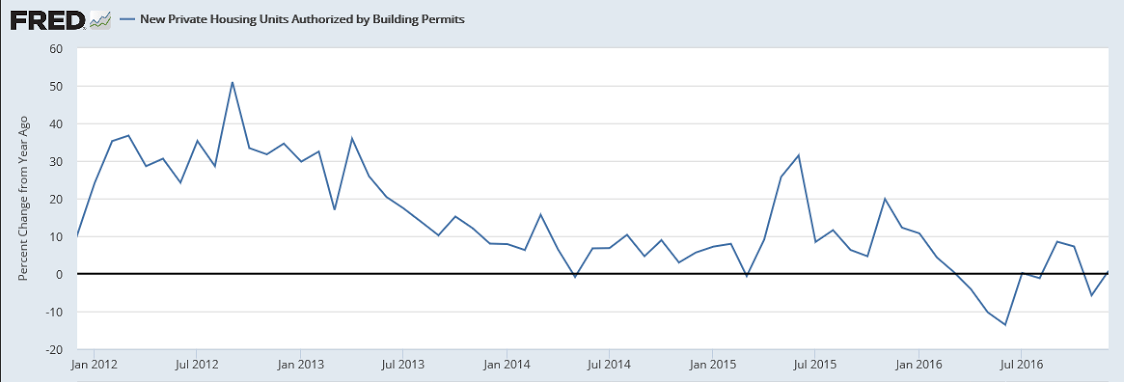
As previously discussed, no homes are built without prior permits, which are going nowhere:

11901

Highlights

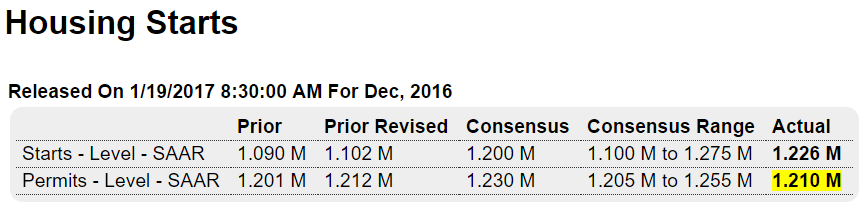
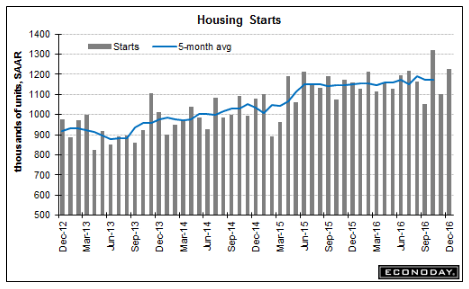
Housing starts extended their wild ride of volatility in December, up 11.3 percent in the month to a 1.226 million annualized rate which beats the Econoday consensus for 1.200 million. But the rise is confined to multi-unit starts which jumped 57 percent to a 431,000 rate, a contrast to the 4.0 percent decline to 795,000 for single-family starts.

Permits, which are subject to less volatility than starts, slipped 0.2 percent in December to a 1.210 million rate which is sizably below expectations for 1.230 million. Here, however, the details favor single-family homes where permits rose 4.7 percent to 817,000 vs a sharp 9.0 percent decline on the multi-unit side to 393,000.

Single-family homes, which pack the most cost and price punch, are the focus of the housing market and today’s results are mixed, with permits a positive but starts a tangible negative. In sum, lack of available supply remains an obstacle to sales acceleration for housing.

Note how flat the 5 month moving average is:

11902
Housing remains a far lower portion of the economy than it was in past cycles, isn’t growing, and not likely to contribute to growth:

11903

11904
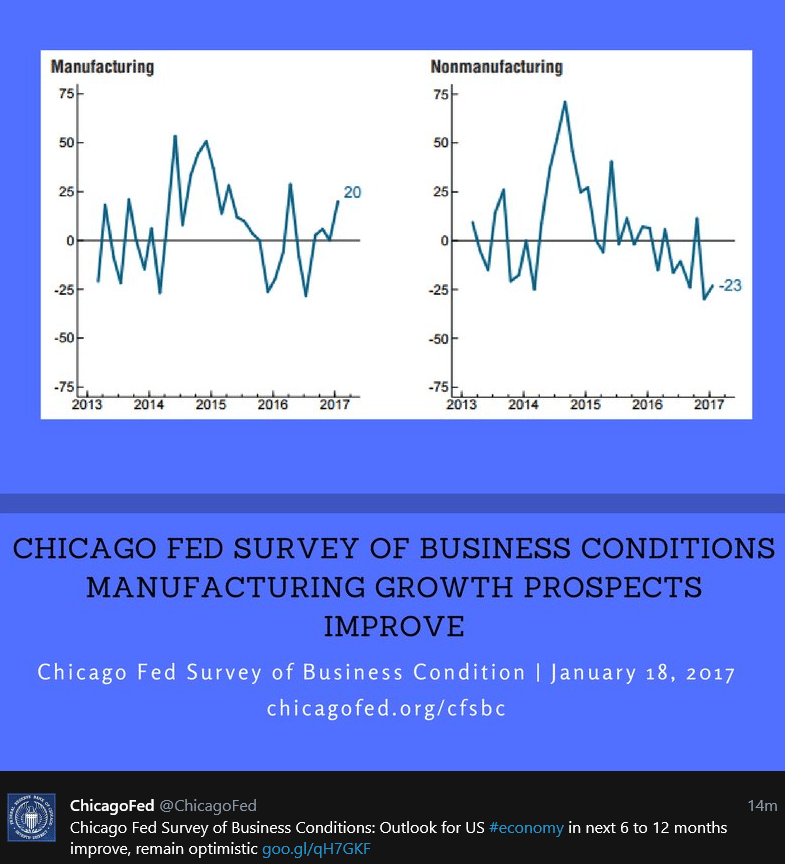
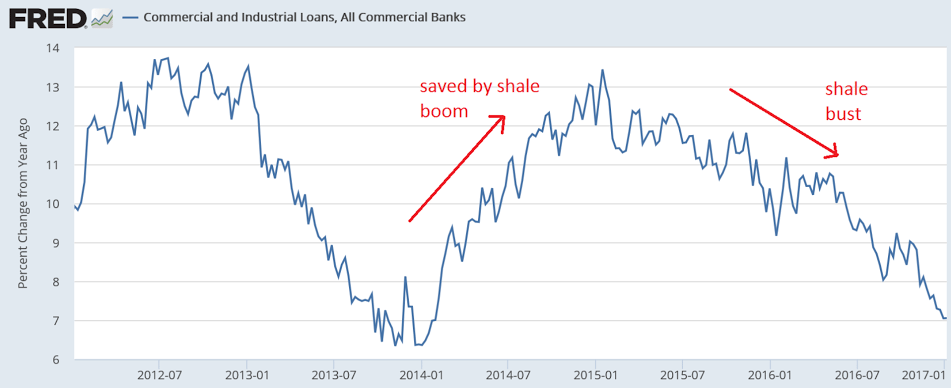
As previously discussed, the weakness that began a couple of years ago with the collapse in oil prices and capex has bled over into the much larger service sector:

11905

This is highly deflationary stuff, even with matching tax cuts, as the tax cuts under discussion have much lower multiples:

Trump Team Seeking Deep Spending Cuts: The Hill

By Derek Wallbank

(Bloomberg) — President-elect Donald Trump’s team working blueprint would cut U.S. federal spending by $10.5t over 10 years, The Hill reports.

  • Plan similar to Heritage Foundation’s spending outline from last year, which also sought $10.5t in spending cuts; would be steeper than Republican Study Cmte’s FY2017 budget, which sought $8.6t in reductions over 10 yrs: The Hill
  • The Hill reports Russ Vought and John Gray leading effort
  • Trump team may release 175-200 page document with summary tables within 45 days and full budget by end of April
  • Mtg apps, Redbook retail sales, Industrial production, Housing market index, CPI, Euro zone and US sectoral balances

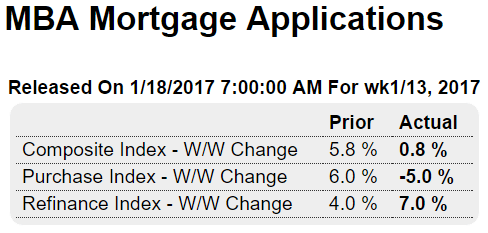
    Back down again, in spite of Trumped up expectations, and going nowhere:
    11801

    Highlights

    Purchase applications for home mortgages fell a seasonally adjusted 5.0 percent in the January 13 week, while applications for refinancing rose 7 percent. Unadjusted, the purchase index increased 25 percent compared to the previous week, however, taking the year-on-year comparison up 17 percentage points from the prior week to minus 1 percent, a strong recovery but still sharply below the 10-percent plus readings seen in October.

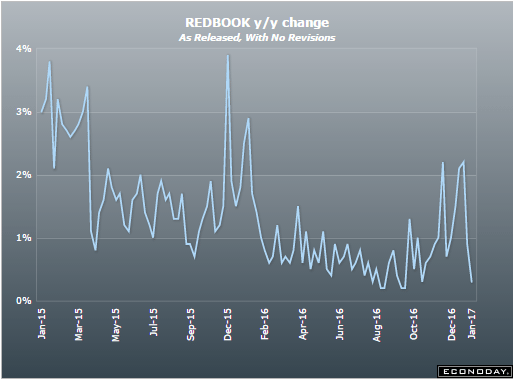
    All the way back down, as previously discussed:
    11802
    There are Trumped up expectations and undesired auto inventory building, and then there’s the reality of a very weak economy:
    11803

    Highlights

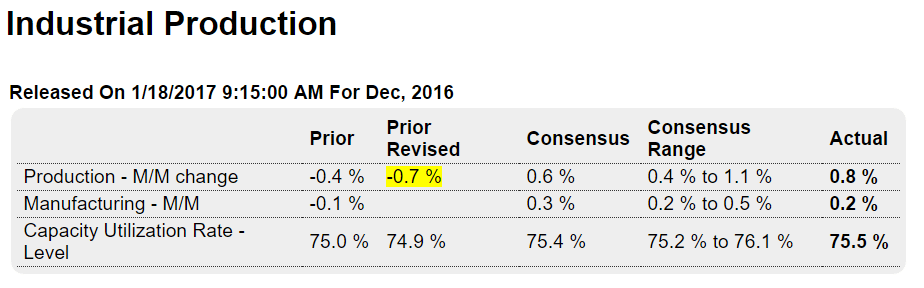
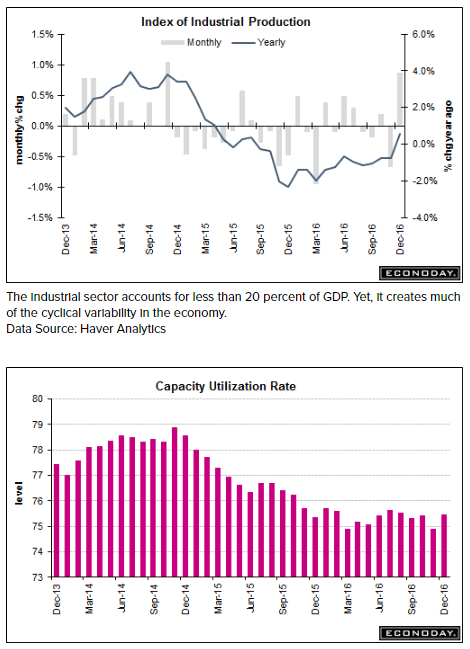
    A weather-boosted 6.6 percent surge in utility output fed an outsized 0.8 percent gain in industrial production for December, one that follows however a downward revised and very sharp 0.7 percent decline in November. The monthly surge for utilities is the greatest since December 1989.

    The big story in this report, however, is another soft reading for manufacturing production where volumes rose only 0.2 percent in the month. And if it wasn’t for a sharp 1.8 percent gain in the vehicle subcomponent, manufacturing would have shown no change at all.

    Mining, which together with utilities and manufacturing, is a main component of the report, and production here was unchanged. Year-on-year rates show mining still at the rear at minus 2.8 percent with utilities at plus 6.2 and manufacturing no better than December’s monthly rate, only 0.2 percent higher.

    Overall capacity utilization rose a sizable 6 tenths to 75.5 percent with the manufacturing component, however, up only 1 tenth to a still subdued 74.8 percent rate in a reminder that excess capacity holds down goods inflation.

    The factory sector, hit by weakness in exports and also energy equipment, struggled through 2016 and apparently could not manage a solid year-end rally. But yesterday’s Empire State did offer a positive advance look on January’s conditions with the next advance look on Thursday from the Philly Fed.

    Industrial Production +0.8% and Capacity Utilization 75.5% in Dec. The monthly increase was driven by a jump in consumer durables, mostly autos, which outweighed the drop in home electronics, to fuel a 1.1% gain, after a 1.0% drop in November. The main impact came from changes in Utilities output, which rebounded 6.6% in December following the 4.6% decline for November as colder weather boosted output.
    11804

    11805
    Trumped up expectations starting to fade:
    11806

    Highlights

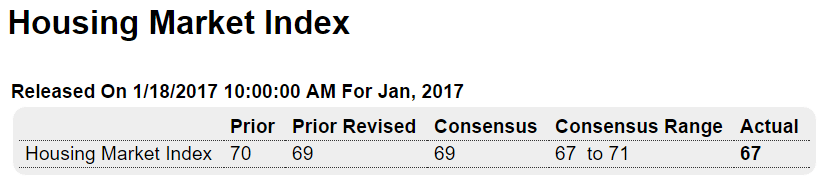
    Home builders are as confident as they have been since the sub-prime boom 10 years ago. The housing market index in January is 67, down just 2 points from a revised and cycle high of 69 in December.

    All the components are strong but strength at the rear is the big story. Traffic held over 50, edging only 1 point lower to 51 for, along with December, the only plus-50 readings in 11 years. Traffic had been very low all cycle and this improvement is an indication of new demand for new homes.

    Sales readings remain very high, at 72 for current sales and 76 for sales 6 months out. These readings hint at strength for tomorrow’s housing starts & permits report.

    The West remains the favorite region for home builders with a 3-month average score of 79. The South follows at 67, the Midwest at 64, and the Northeast far back at 52 but coming out of sub-50 contraction.

    The rise in mortgage rates isn’t denting any of the enthusiasm among home builders for what they see ahead as another strong year, perhaps an even stronger year.

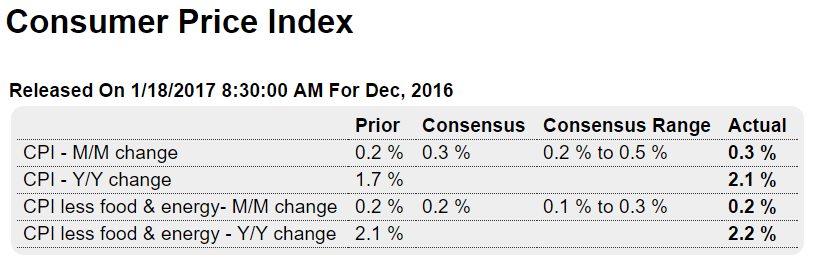
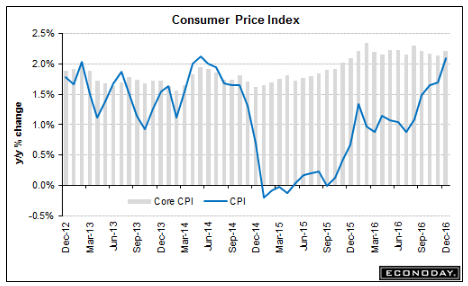
    Currently running at about the Fed’s presumed target rate of 2% due to recent hikes in energy prices:
    11807

    Highlights

    Energy prices are moving higher and are lifting the overall rate of consumer inflation, which now nearly matches the core rate (less food & energy). The CPI rose 0.3 percent in December to lift the year-on-year rate by 4 tenths to 2.1 percent. This yearly rate had been badly trailing the core rate for the past 2-1/2 years, since the oil price collapse in the summer of 2014. Now the overall rate compares with 2.2 percent for the core rate which rose a modest 0.2 percent in December.
    11808
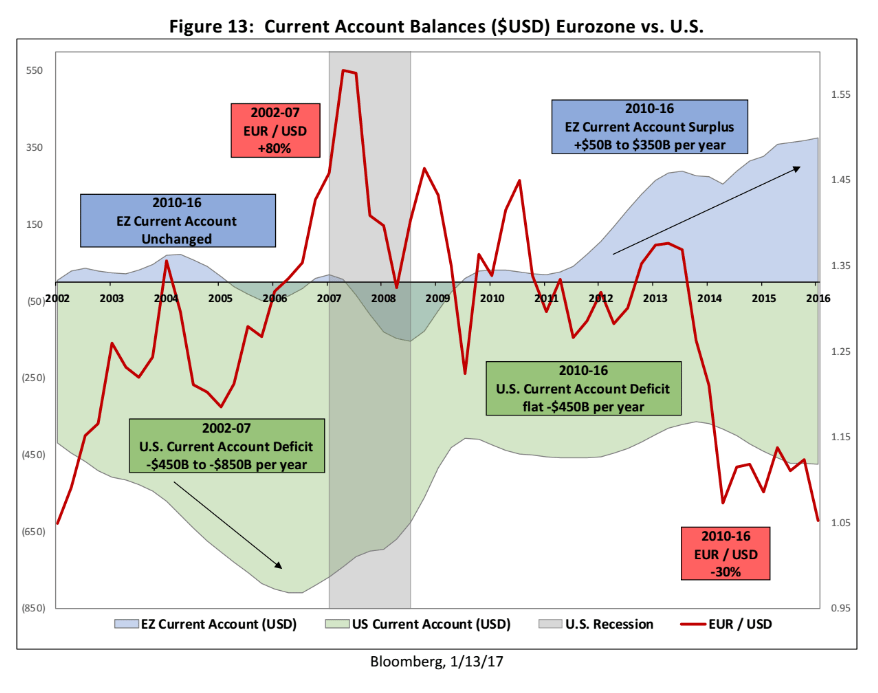
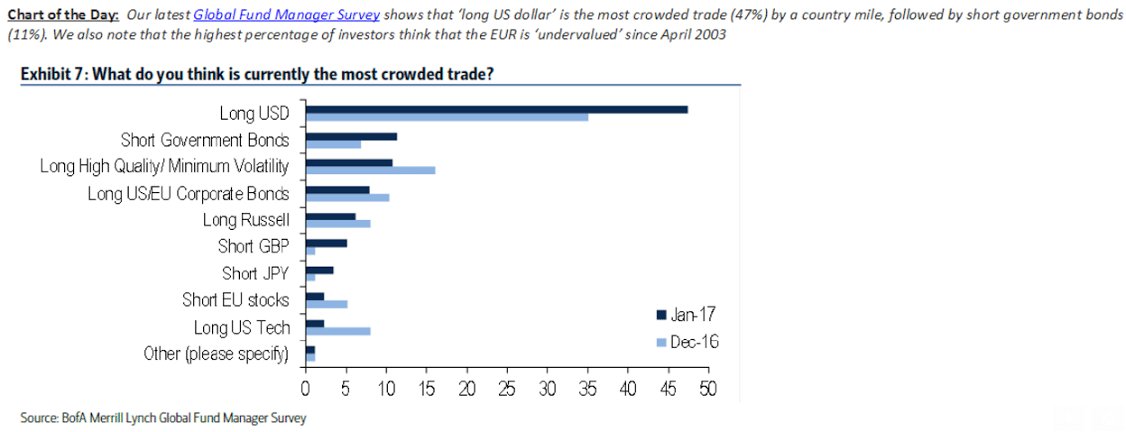
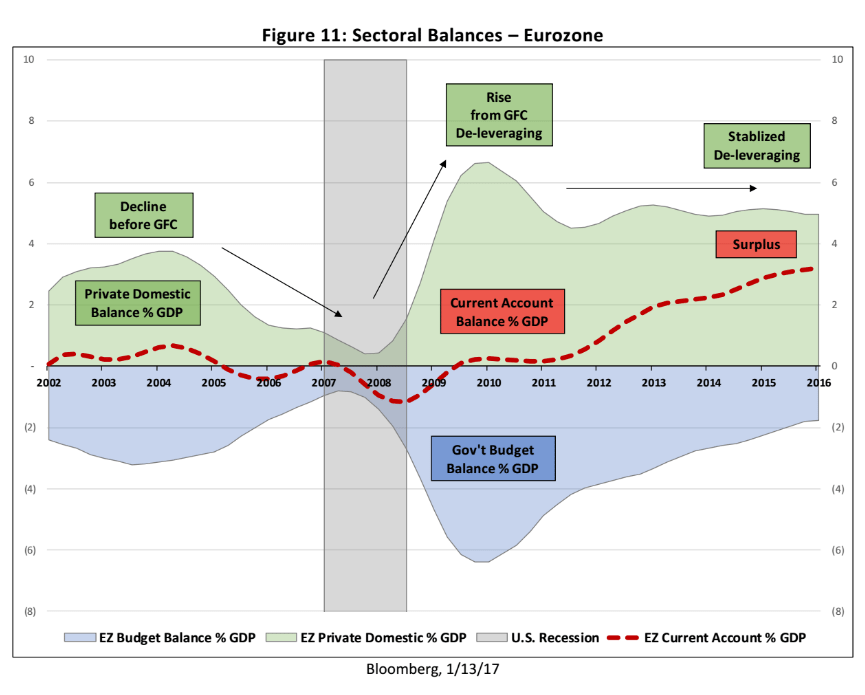
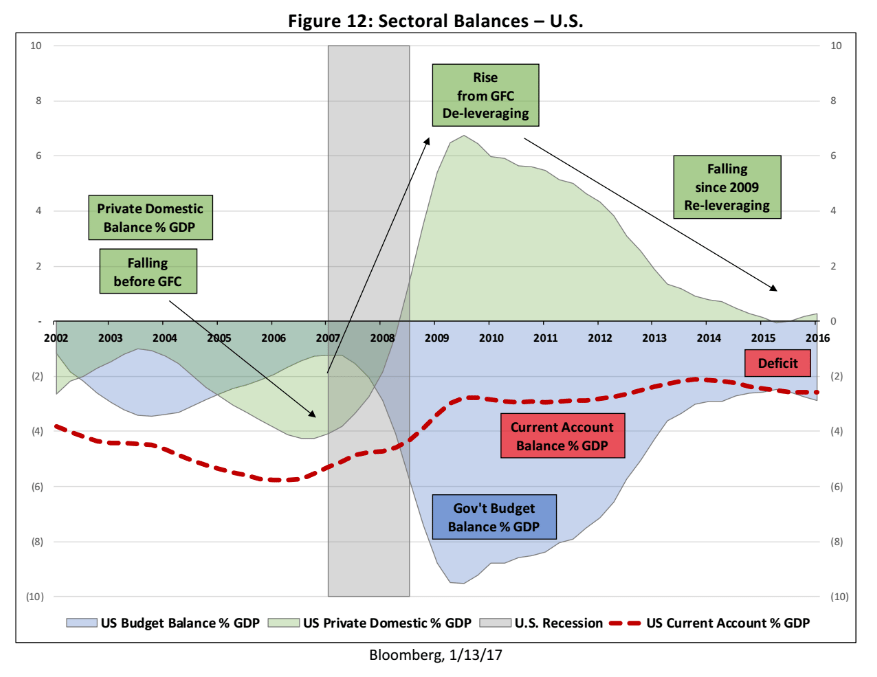
    Porfolio managers have driven the euro down to levels that are supporting a large and growing current account surplus, while the US current account deficit has remained elevated even with the decline of oil prices that historically would have reduced the US current account deficit. The difference is due to the decline in domestic oil output and the rise of oil imports that followed the oil price declines.

    As long as the current account surplus is sustained, the euro zone economy will have that much support as indicated by the Private Domestic Balance in green below. Likewise, the near 0 US Private Domestic Balance also in green, below, indicates that domestic sector will likely remain depressed.

    Should, however, the portfolio shifting run its course, the trade flows will then firm the euro vs the $ until the trade flows reverse course:
    11809

    11810

    11811

    (charts from epc)
    11812

    Euro zone trade, Tax receipts, Trump comments

    Strong euro stuff!

    Eurozone Trade Surplus Widens Ahead Of Expectations
    The Eurozone trade surplus rose to €25.9 billion in November 2016 from €22.9 billion in the same month of the previous year, above market consensus of €22 billion. Exports increased 6 percent while imports went up at a slower 5 percent. Considering the first eleven months of the year, the trade surplus increased to €248.2 billion, compared with €214.3 billion in the same period of 2015.

    Weak US economy stuff:
    11701

    As previously discussed, Trump has repeatedly stated that the value of the dollar vs our trading partners was contributing to our trade deficit, and that he’d take action to keep others from keeping their currencies weak to gain an advantage. While the entire notion is entirely misguided- imports are real benefits and exports real costs, and unemployment best addressed by fiscal adjustment- it looks like he’s beginning to follow through on his campaign rhetoric, which could include having the US accumulate fx reserves, etc. as previously discussed:

    The greenback fell against most peers after Donald Trump told the Wall Street Journal its value is too high in part because China holds down its own currency.

    Likewise, Trumps tax policy was at odds with the general Republican views, suggesting he’ll be moving for something very different than the Republican plan before Congress. He’s already questioned the border tax, saying he’s ‘not loving it’, and instead is asking about spending cuts. Also, note the following story where he articulates his position on taxing the rich. This doesn’t read like he’ll be supporting lowering the higher marginal rates?

    Donald Trump thinks the rich should pay more in taxes than everyone else

    By Max Ehrenfreund

    Aug 24, 2015 (WP) — Helicopter aficionado and Park Avenue resident Donald Trump said Monday morning that the rich should pay more in taxes than the middle and working classes.
    He criticized the idea of taxing all Americans at the same rate, an idea endorsed by some of his rivals for the GOP presidential nod. Sen. Rand Paul (R-Ky.) has proposed levying the same tax on all forms of income and on businesses, which would be able to write off their expenses under his plan. Mike Huckabee, the former governor of Arkansas, has called for taxing sales instead of income, but also at a single rate. Other Republican plans, such as the one put forward by Sen. Marco Rubio (R-Fla.), have more than one rate, but fewer than the seven brackets in the current system.

    Simplifying the tax code is a goal that Trump said he shares, but he also believes that rich Americans should pay more on every dollar of additional income.

    “The one problem I have with a flat tax is that rich people are paying the same as people that are making very little money,” Trump, who is worth an estimated $2.9 billion, said Monday morning on “Fox & Friends.” “I think there should be a graduation of some kind.”

    [What Trump didn’t say about his four big business bankruptcies]

    The Republican front-runner also advocated higher taxes on hedge-fund managers, a position shared by his Democratic opponent Hillary Rodham Clinton.

    Managers at hedge funds are able to count their income as returns on investments, allowing them to pay less in taxes than they would if they reported their earnings as a salary or a wage. It’s known as the carried-interest loophole, and while it’s difficult to know how much it costs the government, one estimate puts the price tag at a whopping $180 billion over 10 years.

    Clinton said she’d close the loophole, and while Trump didn’t mention carried interest specifically, he did say that hedge-fund managers should pay more in taxes.

    “They should be taxed a fair amount of money,” he said, without offering details. “They’re not paying enough tax.”

    He later criticized Clinton as being too close to Wall Street.

    “The hedge-fund guys are the ones that are giving her the money,” he said. “When she was in the Hamptons, she was with the hedge-fund guys.”

    Trump also contrasted managing a hedge fund with his own field, real estate. “It’s one thing if you’re building buildings,” he said. “If you build buildings, you put people to work. These hedge-fund guys, they move around papers.”

    Recently, Trump has been involved in very little actual building, as The Washington Post has reported. Much of his income comes from simply signing his name on various deals around the world. Other investors pay him for the right to use his name in connection with their projects.

    Retail sales, Business inventories, Consumer sentiment, China exports, German GDP

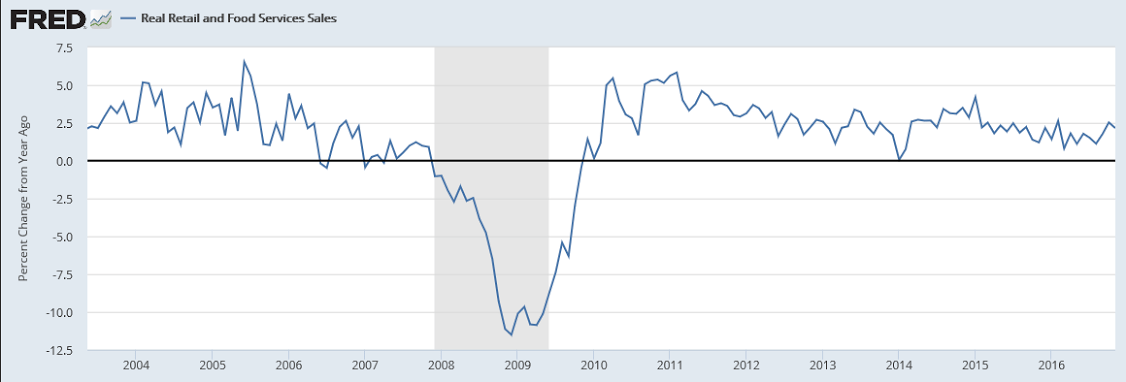
    Less than expected and held up by vehicle sales which were about flat for the year and are unlikely to be any better than that in 2017, and therefore not contributing anything to growth:

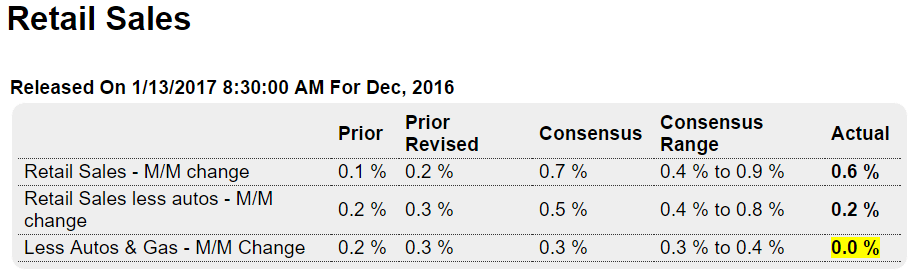
    11301

    Highlights

    Outside of cars, consumers weren’t in much of a spending mood this holiday season. Retail sales did post a very solid gain in December, up 0.6 percent, but without autos the gain falls to only 0.2 percent. And exclude gasoline as well, which isn’t really a common holiday gift, and sales come in dead flat at zero.

    And gifts were on the light side this year based on department store sales which fell 0.6 percent in the month and also electronic & appliance stores where sales fell 0.5 percent. And in a clear sign of discretionary weakness, restaurant sales fell 0.8 percent for the largest monthly decline in a nearly year.

    Vehicle sales, which jumped 2.4 percent in the month, pull the report to the upside as do gasoline sales which rose 2.0 percent. But retail sales excluding gasoline do show a very solid 0.5 percent vehicle-driven gain and underscore that this report, despite the softness in holiday categories, is still a solid plus for fourth-quarter GDP. And there are positives led once again by ecommerce as nonstore retailers saw a 1.3 percent monthly rise.

    The bottom line is best characterized by apparel where sales were flat, posting no change for the second month in a row. Consumer spirits may be very high, and if this benefited retail sales in December it was mostly isolated to vehicles.

    11302
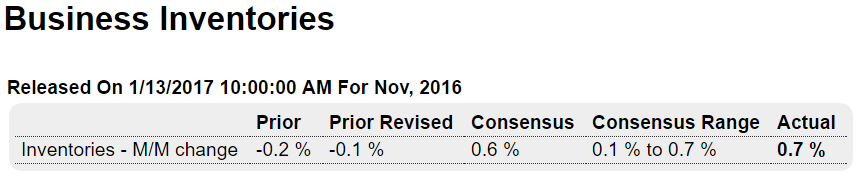
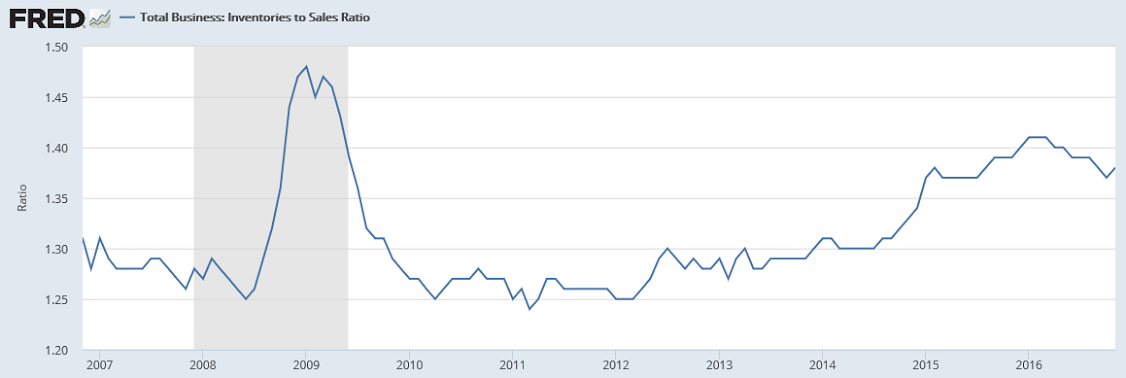
    More bad news on inventories which were already way too high:

    11303

    Highlights

    Data on fourth-quarter inventories are looking heavy, up 0.7 percent in November in an offset to a revised 0.1 percent draw in October. Both retailers and wholesalers show large 1.0 percent builds in November with manufacturers at a 0.2 percent build. Given weakness in total sales, up only 0.1 percent, the stock-to-sales ratio rose 1 tenth in the month to 1.38.

    11304
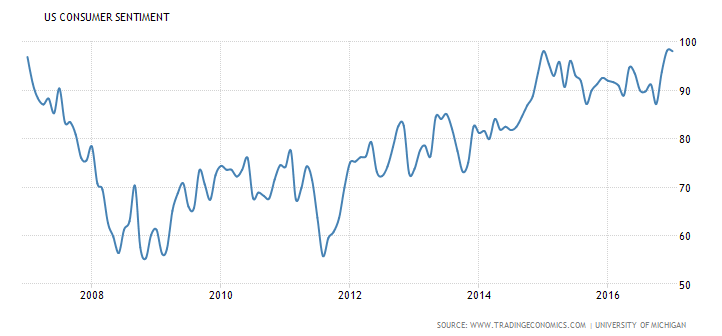
    Still trumped up but moderating some:

    11305

    Post-election confidence readings have been very high but have not equated to the same proportional punch for consumer spending which, nevertheless, has been respectable. The report notes that partisanship is extreme right now with 44 percent of the sample citing the importance of government policies (whether positive or negative). The cycle average for this reference is 20 percent.

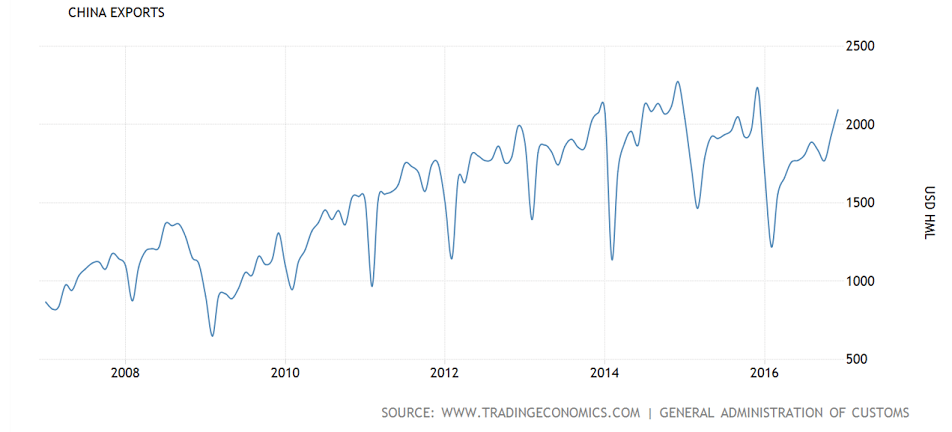
    Exports from China declined by 6.1 percent from a year ago to USD 209.42 billion in December of 2016, following a revised 1.6 percent drop in the prior month while markets expected a 3.5 percent drop. Considering the full year of 2016, sales fell 7.7 percent, the second straight year of decline and the worst since the depths of the global crisis in 2009. In yuan-denominated terms, exports rose 0.6 percent from a year earlier, following a 5.9 percent rise in a month earlier. From January to December of the year, sales dropped by 2 percent.

    11306
    Improving global environment?

    German GDP Grows at Fastest Rate in Five Years

    By Nina Adams and Andrea Thomas

    Jan 12 (WSJ) – Gross domestic product expanded 1.9% in 2016 in inflation-adjusted terms, the Destatis statistics body said on Thursday. This is the highest rate since 2011, beating the government’s own prediction of 1.8% growth. A statistician with Destatis said GDP probably expanded by around 0.5% in the fourth quarter from the third quarter. An official forecast is due Feb. 14. “The restraint seen in the third quarter has been overcome,” the economics ministry said in its monthly report on Thursday, pointing to solid industrial production and an improving global environment.

    Interesting divergence?

    11307

    11308

    US budget gap, Jobless claims, Retail employment, Rail cars

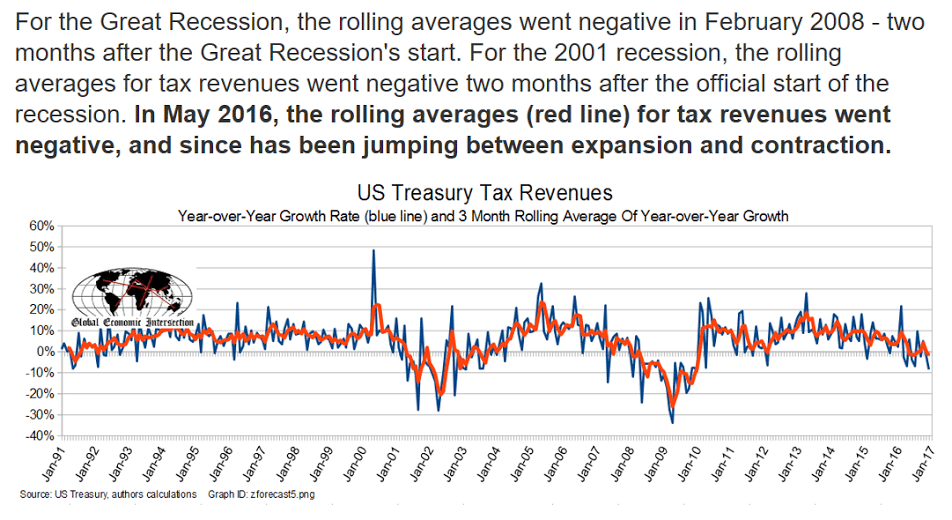
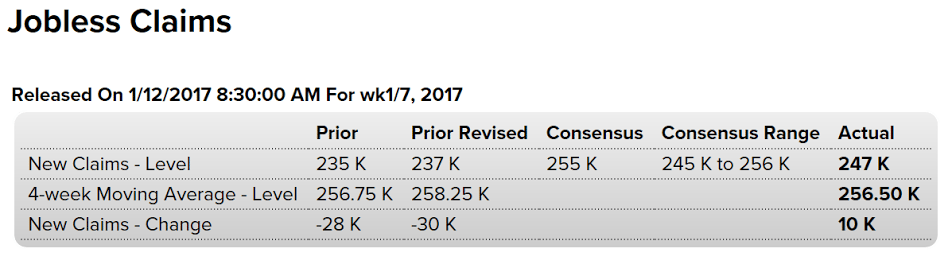
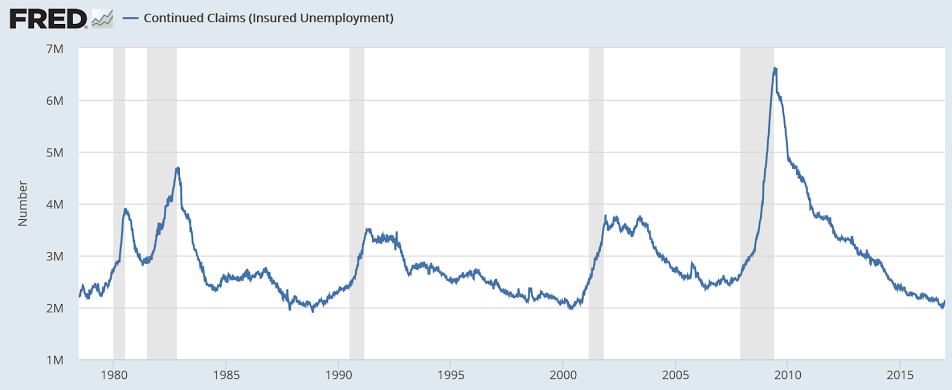
    Seems revenues continue to fall indicating the two years of deceleration of growth may have already gone below 0, and with unemployment claims a lot harder to get that source of transfer payments seems to have been reduced, reducing what otherwise would have been that much counter cyclical deficit spending:

    US Budget Gap Doubles in December

    The US government reported a $28 billion budget deficit in December, a 94.4% increase from a $14.4 billion gap a year earlier and slightly above market expectations of a $25 billion. Receipts slumped 8.9% to $319 billion and outlays fell 4.7% to $347 billion.

    Three months into the government’s fiscal year, the budget deficit is at $208.4 billion vs $215.5 billion this time last year. Outlays are down 3.3 percent so far this fiscal year with Medicare down 11 percent to offset a 16 percent rise in net interest. Receipts are down 3.2 percent with corporate income tax down 11 percent. The deficit for December totaled $27.5 billion.

    11201

    This chart is not population adjusted!

    11202

    Employment in the sector grew by 672,700 workers during the three-month holiday hiring period of 2016, according to an analysis of government employment data by global outplacement consultancy Challenger, Gray & Christmas, Inc. That was down 9.0 percent from the 738,800 jobs added in 2015.

    This marked the third consecutive decline in holiday employment gains. The 2016 -holiday hiring total was the lowest since 647,600 jobs were added to retail payrolls during the closing months of 2010, when the economy was in the first year of recovery following the Great Recession. Said John A. Challenger, chief executive officer of Challenger, Gray & Christmas:

    The retail landscape is going through a sea change. The shift toward online shopping has being ramping up for years. It is obvious in the sales numbers and in the falling level of in-store traffic during the holidays. In this environment, retailers simply don’t need as many extra workers during the holidays.

    Bad start:

    11203

    Discount rate, Fed payment to Treasury, German trade balance, Trump communications

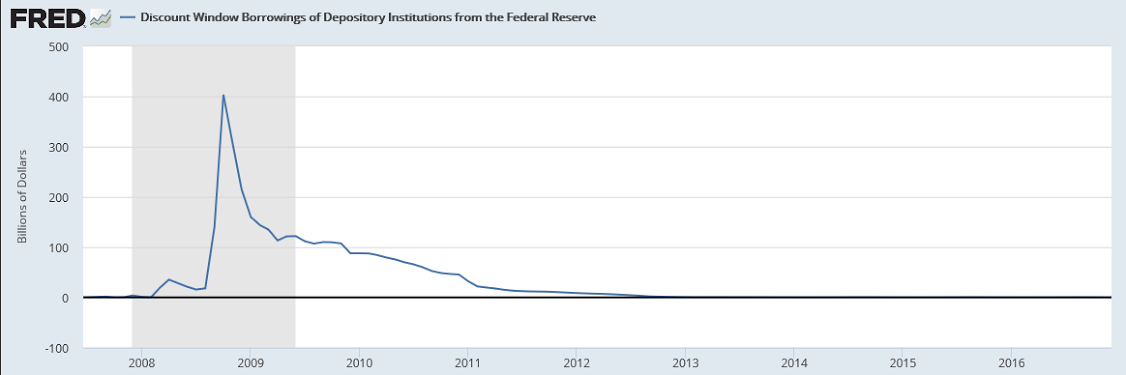
    Note that there was little or no demand from member banks to borrow from the regional reserve banks, yet they decided the rate needed to be higher…
    ;)

    All but one bank requested to raise an interest rate the U.S. central bank places on its loans to commercial banks for the month of December, according to Federal Reserve Board discount rate minutes released on Tuesday.

    The Federal Reserve Bank of Minneapolis asked to leave the discount rate unchanged, according to Fed minutes. The Board of Governors raised the discount rate in December to 1.25 percent from 1 percent.

    Fed directors cited further improvement in the economy, strong consumer spending and a pickup in manufacturing, according to the minutes, and most directors see positive developments in the labor markets.

    Nine Fed members voted to raise the discount rate in November.

    11011a

    Release Date: January 10, 2017

    For release at 12:00 p.m. EST
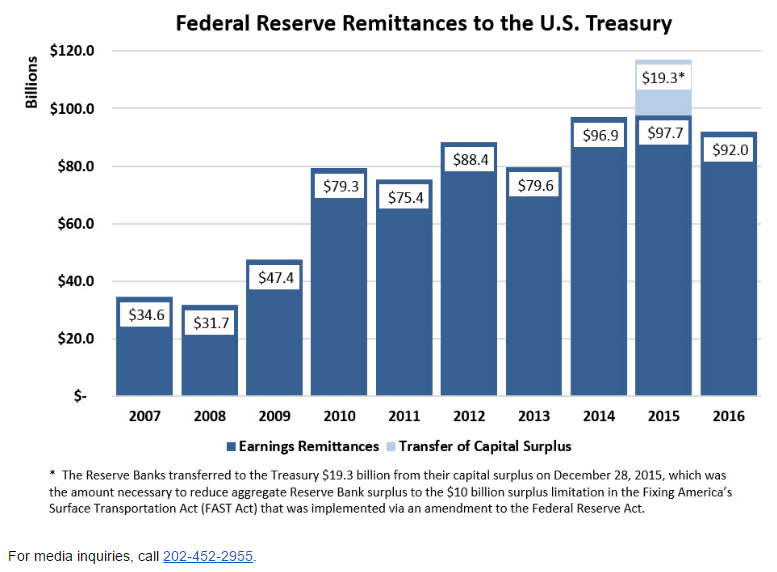
    The Federal Reserve Board on Tuesday announced preliminary results indicating that the Reserve Banks provided for payments of approximately $92.0 billion of their estimated 2016 net income to the U.S. Treasury. The 2016 audited Reserve Bank financial statements are expected to be published in March and may include adjustments to these preliminary unaudited results.

    The Federal Reserve Banks’ 2016 estimated net income of $92.7 billion represents a decrease of $7.6 billion from 2015, primarily attributable to a decrease of $2.5 billion in interest income from changes as a result of the composition of securities held in the Federal Reserve System Open Market Account (SOMA) and an increase of $5.2 billion in interest expense associated with reserve balances held by depository institutions. Net income for 2016 was derived primarily from $111.1 billion in interest income from securities held in the SOMA (U.S. Treasury securities, federal agency and government-sponsored enterprise (GSE) mortgage-backed securities, and GSE debt securities). Operating expenses of the Reserve Banks, net of amounts reimbursed by the U.S. Treasury and other entities for services the Reserve Banks provided as fiscal agents, totaled $4.0 billion in 2016. In addition, the Reserve Banks were assessed $700.7 million for the costs related to producing, issuing, and retiring currency, $709.0 million for Board expenditures, and $596.2 million to fund the operations of the Consumer Financial Protection Bureau. The Reserve Banks had interest expense of $12.0 billion associated with reserve balances and term deposits held by depository institutions, and incurred interest expense of $1.1 billion on securities sold under agreement to repurchase. Additional earnings were derived from income from services of $435 million. Statutory dividends paid to member banks totaled $711.5 million in 2016. No income was transferred to surplus due to the $10 billion aggregate surplus limitation as required by the Federal Reserve Act.

    11012
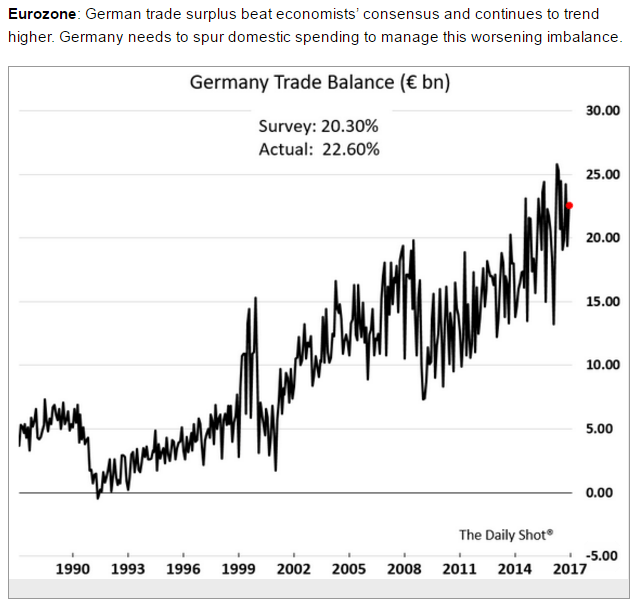
    Again, this is fundamentally strong euro stuff, however there’s no telling when ‘portfolio manager’ selling will run it’s course:

    11013

    A Quinnipiac University poll released Tuesday showed 64 percent of voters surveyed think Trump should not keep a personal Twitter account while in the White House. Only 32 percent of those polled said he should maintain his personal account.

    Republican voters narrowly said Trump should keep his account by a 49 percent to 45 percent margin. Only 18 percent of Democrats said he should maintain his personal account, while 80 percent said he should not. Independents said he should scrap his account by a 65 percent to 31 percent margin.

    Voters who are 18 to 34-years-old most strongly said Trump should get rid of his account, with 71 percent supporting the move.

    Small business index, Redbook retail sales, Jolts, Consumer credit, Retail sales forecast

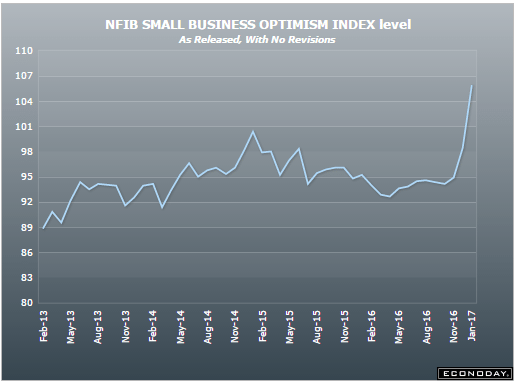
    Still Trumped up expectations:

    11001

    Highlights

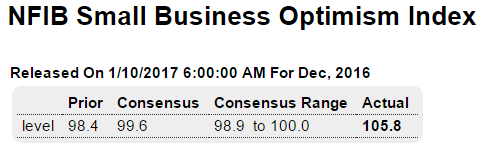
    The small business optimism index soared 7.4 points in December to 105.8, the highest reading since December 2004. The outsized increase far exceeds expectations and follows a robust 3.5-point rise in November. NFIB said business owners who expect better economic conditions accounted for about half of the overall increase, with a net 50 percent of respondents expecting that the economy will improve, a 38 point leap up from November.

    In a magnified repetition of the survey results for November, all but 2 of the 10 components posted gains. The two other optimism components making a big contribution to the index were higher real sales expectations, up 20 points to 31, and the view that now is a good time to expand, which was up 12 points to 23.

    Capital outlays also figured prominently, with plans to increase capital spending jumping 5 points to 29 and 63 percent of respondents reporting outlays in December, 8 points more than in November. Even earnings trends were up 6 points, but remained in negative territory at minus 14.

    Optimism was somewhat subdued on the jobs front, however, as plans of owners to increase employment rose just 1 point to 16 and current job openings registered a 2-point decline, albeit to a still strong 29. According to NFIB, the labor market is getting tighter, allowing workers to ask for better wages, but small business owners are not yet confident enough to raise prices to offset any increase in labor costs. Higher interest rates apparently accounted for the drop in the other declining component, expected credit conditions, which fell 2 points to minus 6.

    11002
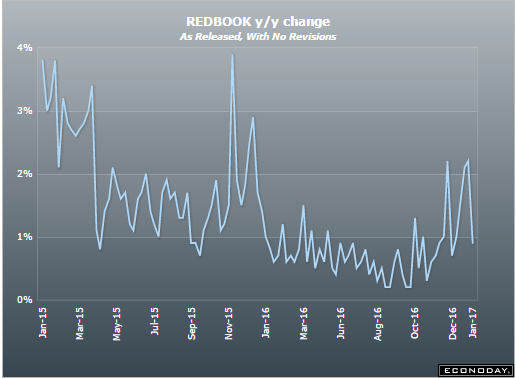
    As previously discussed, looking like the spike is probably a one off event, same as last year:

    11003
    Whatever this is, looks like it’s already rolled over…

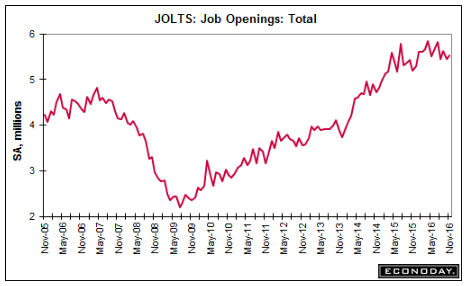
    11004
    Looks like the unsold inventory isn’t under control yet, especially autos where productions cuts are underway:

    11005

    Highlights

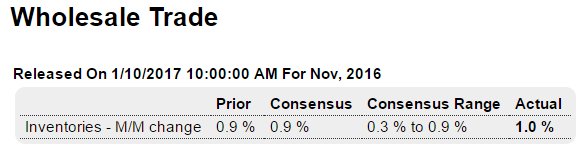
    Wholesale inventories rose very sharply in November, up 1.0 percent compared to 0.9 percent in the advance report and a draw of 0.1 percent in October. The good news is that November’s build is centered in autos (+3.2 percent) where retail sales proved very strong in December. Sales at the wholesale level rose 0.4 percent which compared to the larger gain in inventories pulled up the stock-to-sales ratio to a less lean 1.32 from October’s 1.31. Excluding autos, however, the ratio held unchanged at 1.27.

    Inventories were heavy going into the fourth quarter and though September proved stable, early indications on November inventories (which also include retail and manufacturing) are pointing to a big build. Whether this build will prove a problem for production and employment in the first quarter will depend on how strong consumer spending was during the holidays. Watch for December retail sales on Friday morning followed at midmorning by the business inventories report.

    Production cutbacks building as US momentum slows

    OEM discipline will be tested as sales growth slows. Already there are announcements of coming production cuts to manage inventory, writes Megan Lam

    11006

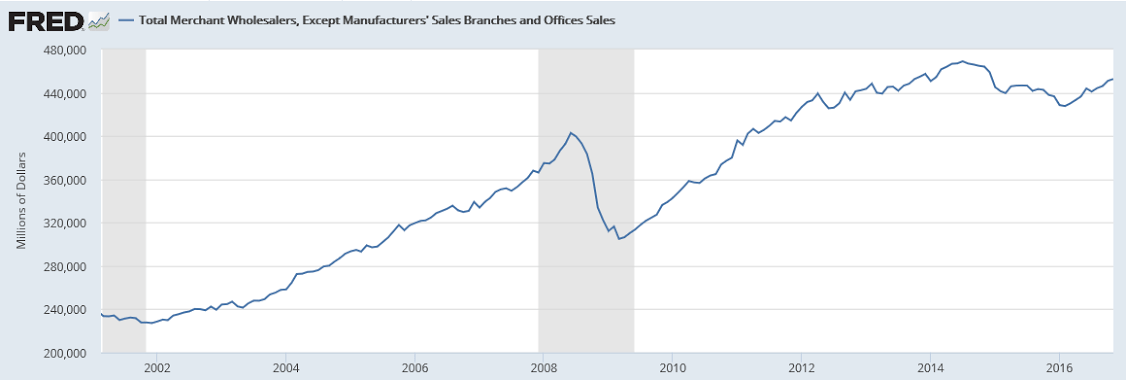
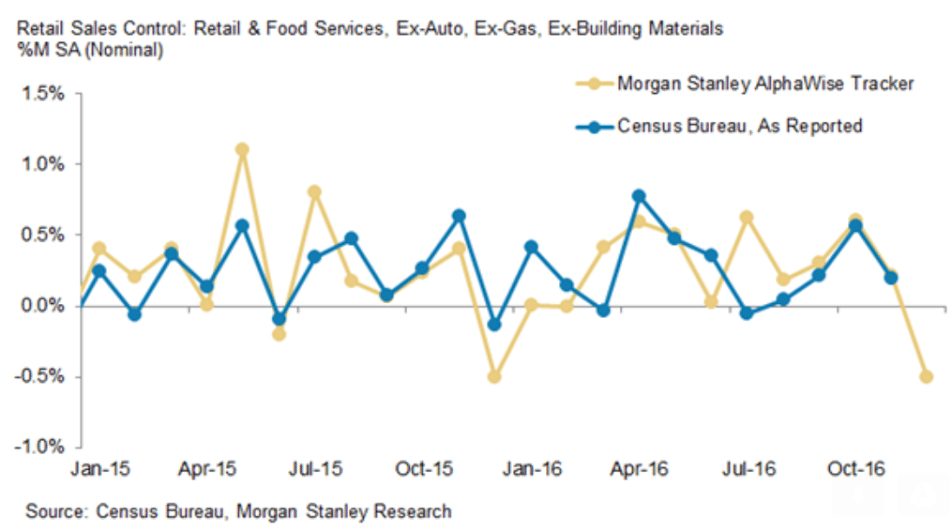
    Total sales (not adjusted for inflation) are still below 2014 levels:

    11007

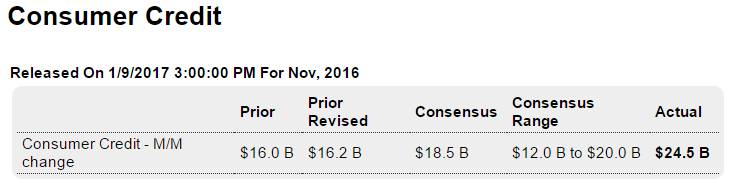
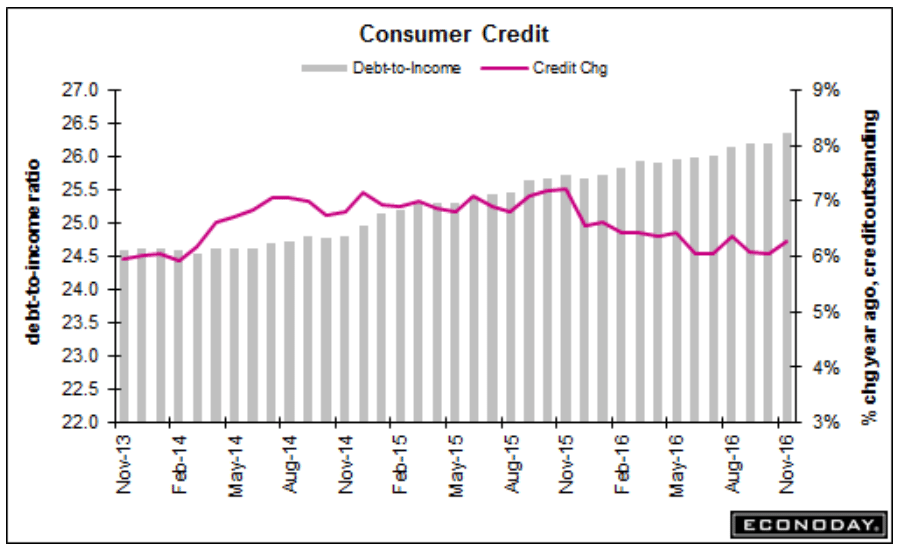
    A bit stronger than expected but the year over year rate of growth continues to be trending lower even as the debt to income ratio increases, which could possibly mean consumers are borrowing more to pay monthly bills:

    11008

    Highlights

    A large increase in revolving credit, one of the largest of the cycle, is likely a positive indication for holiday sales. Revolving credit jumped $11.0 billion in data for November to indicate that consumers are increasingly running up their credit-card debt. Non-revolving credit, up $13.5 billion, is also positive, here reflecting demand for vehicle financing and student loans (which are tracked in this report). Total credit rose $24.5 billion in the month, well above the consensus and also above Econoday’s high estimate. Retail sales for December, to be posted Friday, will offer definitive data on the strength of holiday spending.

    11009

    11010

    Labor market conditions index

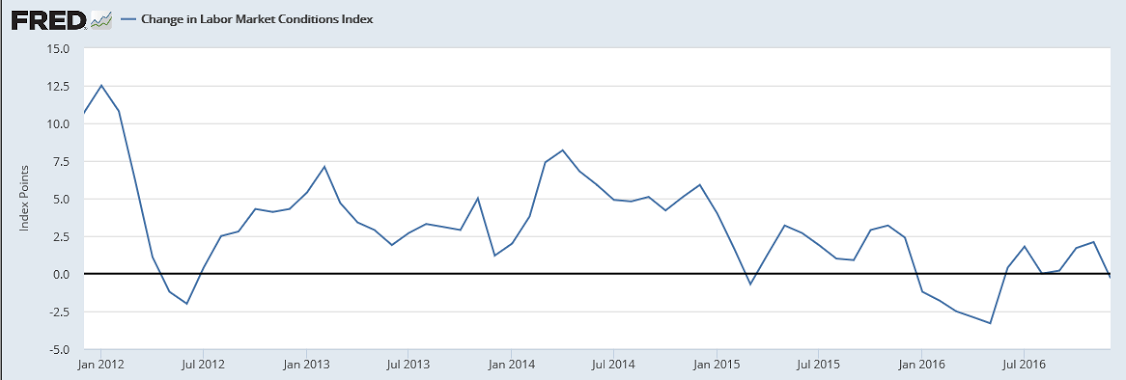
    From the Fed’s research:

    10901

    Highlights

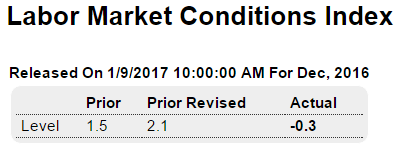
    The economy may be at full employment but it’s not helping the labor market conditions index which remains flat. For the first negative score since May, December’s index comes in at minus 0.3. Based on this report, there may be more slack than suspected and less risk perhaps of wage inflation. Considered experimental, the labor market conditions index, published by the Federal Reserve, is a composite of 19 separate indicators.

    10902

    Credit check

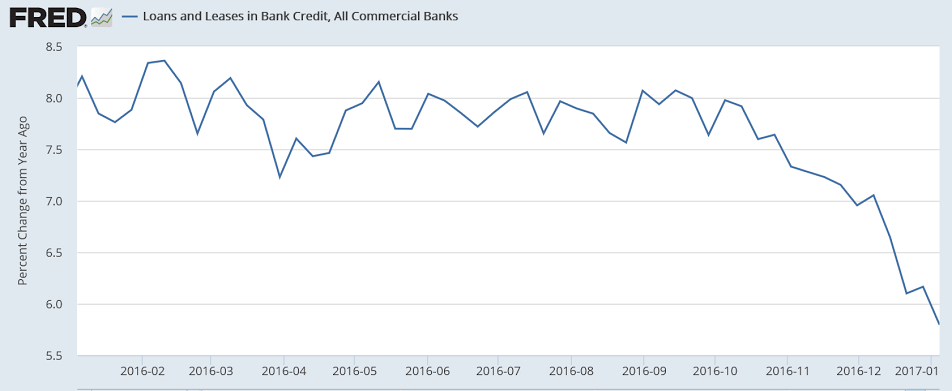
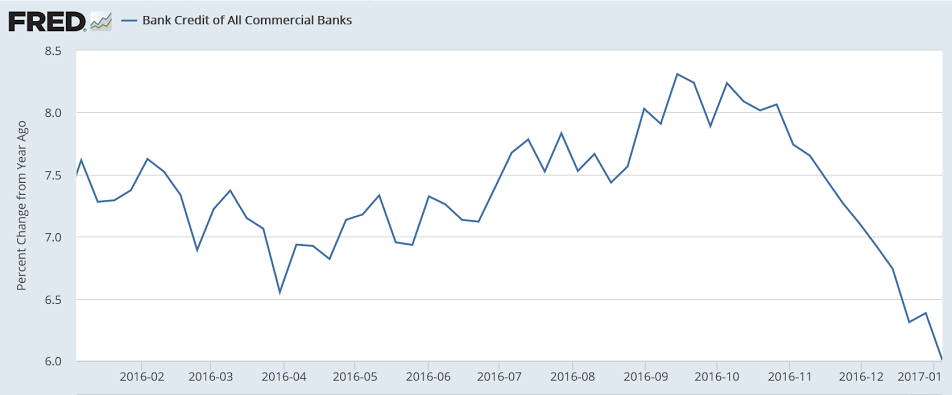
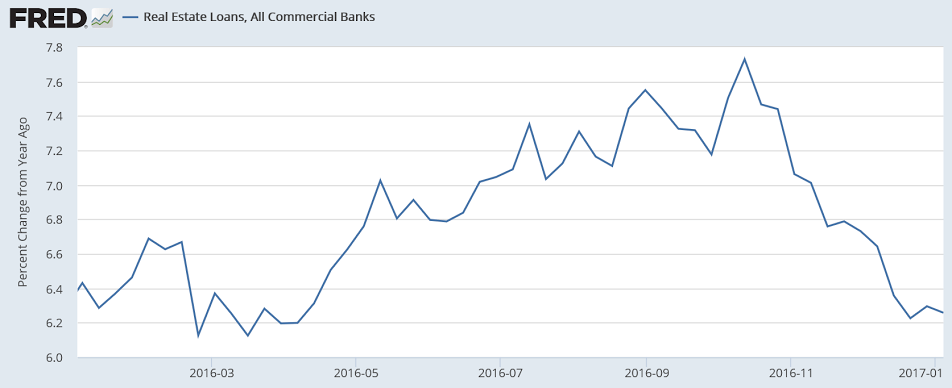
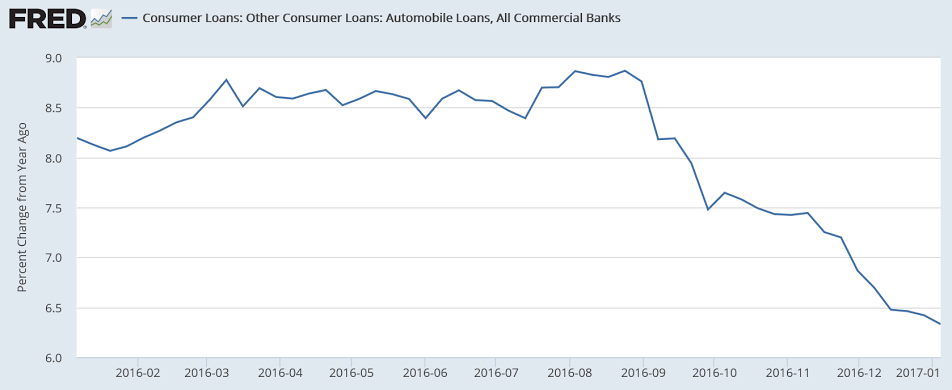
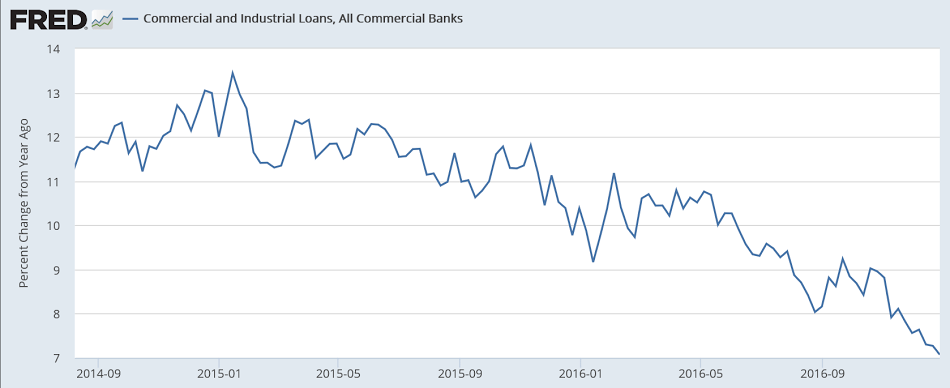
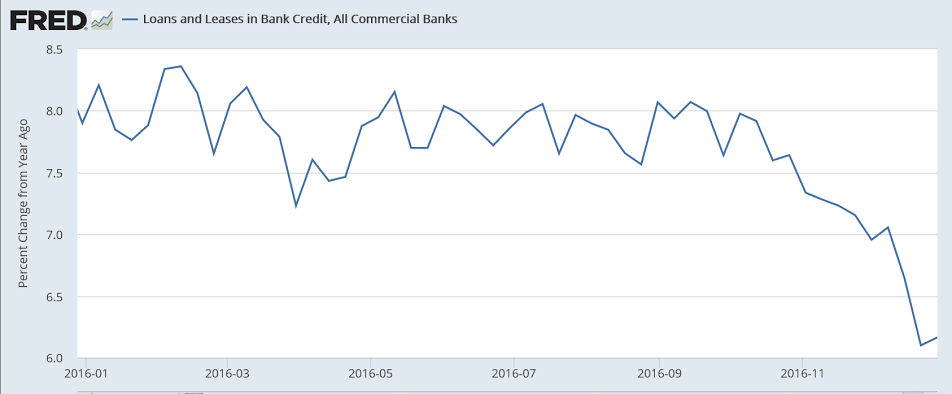
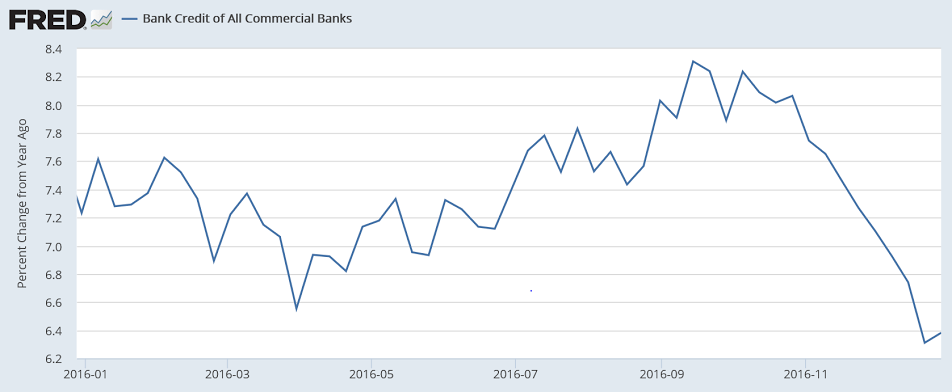
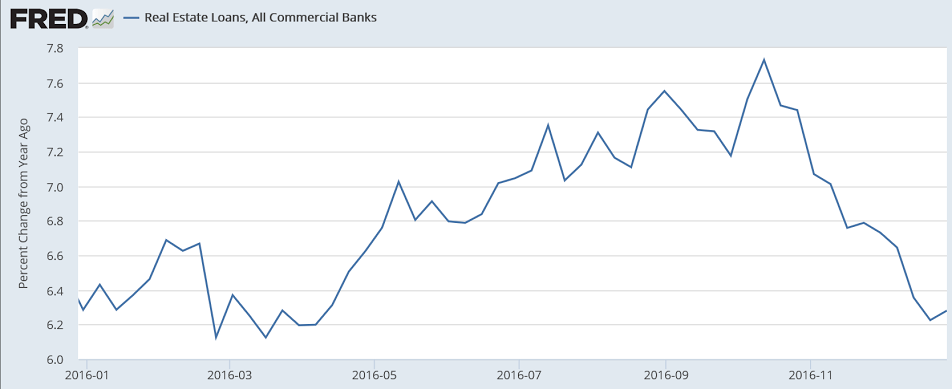
    This is getting serious…

    10701

    10702

    10703

    10704

    10705
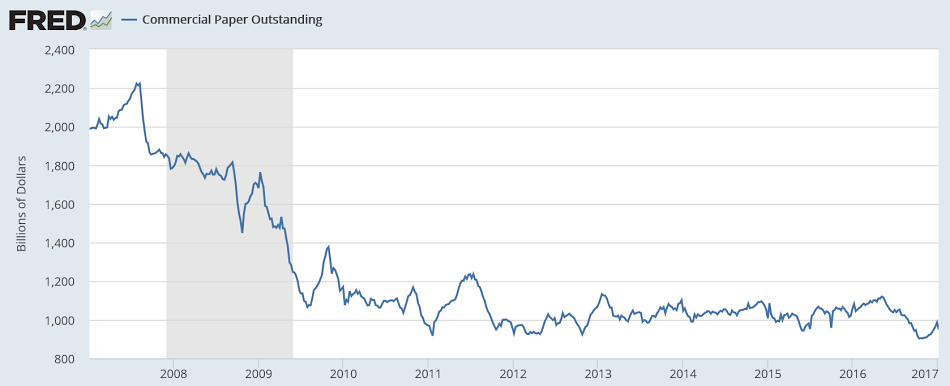
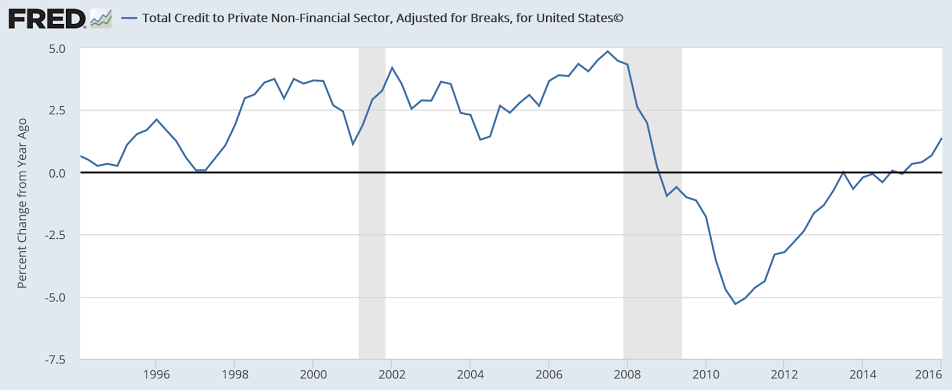
    This came out about a month ago, and it’s only through the first half of last year, but it gives you an idea of the growth rate of private sector credit that’s been associated with economic expansions in the past, and how the lack of private sector credit growth in this cycle coincides with the sub par GDP growth:

    10706