Vehicle sales, Share buybacks, Gasoline demand

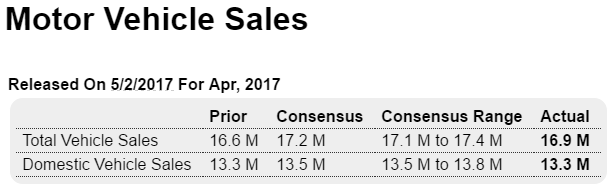
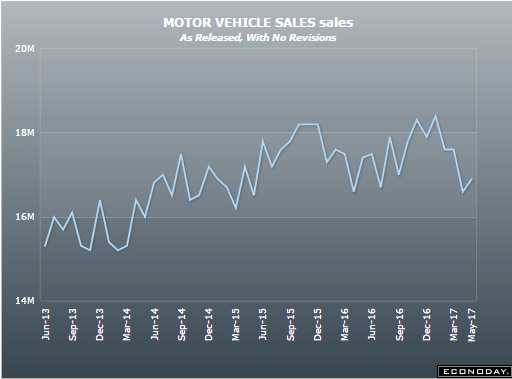
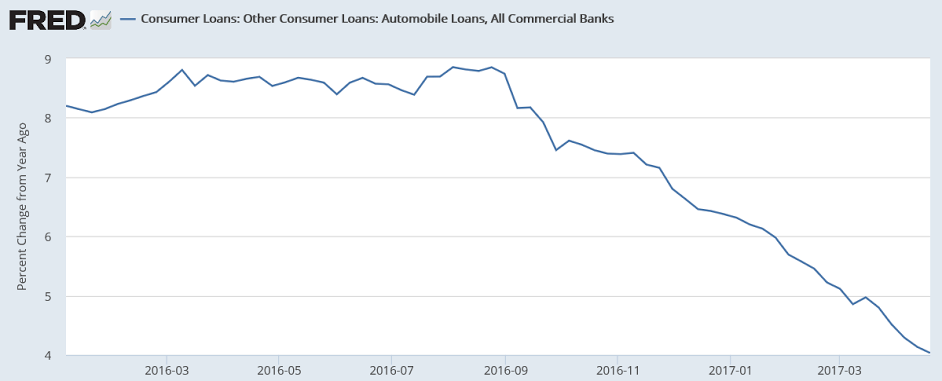
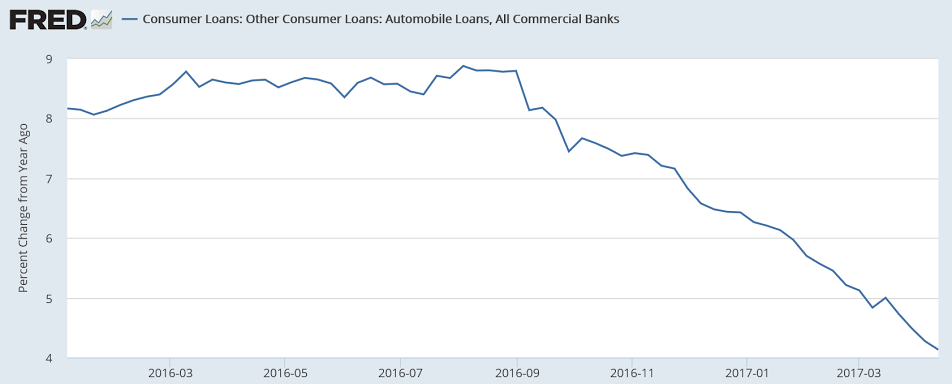
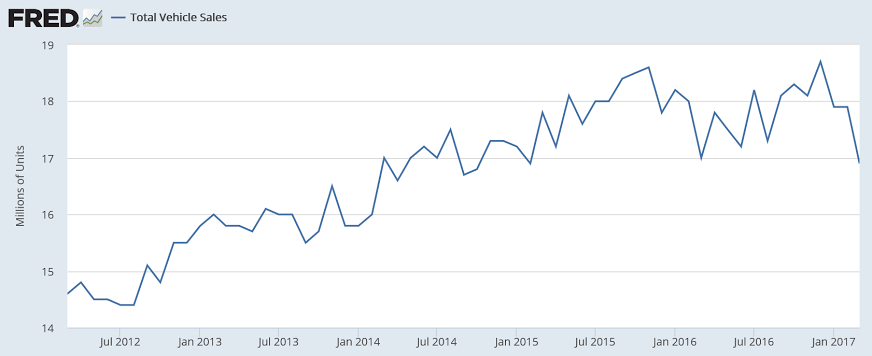
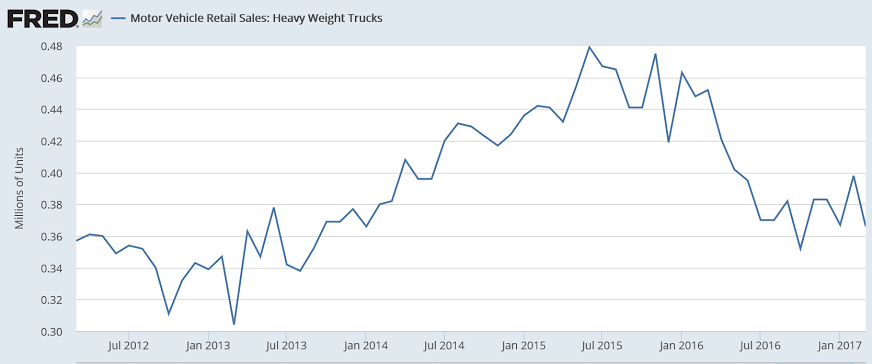
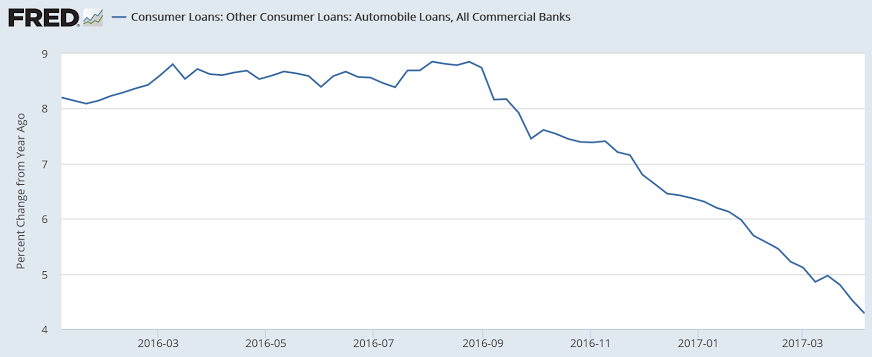
Low and worse than expected, and inline with the deceleration in bank auto lending, as previously discussed, which doesn’t bode well for other sales measures tied to credit expansion:

Highlights

The earliest hint on whether consumer spending bounced back in April is positive. Unit vehicle sales rose from March’s very soft 16.6 million annualized rate to 16.9 million which however is below expectations for 17.2 million. Sales to consumers and sales to businesses are not separated in this report which, when month-to-month change is relatively small like in this case, can cloud the indication for consumer spending.

Vehicle sales in dollar terms fell each month during the first quarter and today’s report points, if not to a gain, at least to stability for April. Sales of North American-made cars and light trucks, at 13.3 million, rose fractionally and not enough to lift the first decimal place. Imports rose to 3.6 million and account for most of the month’s gain.

Personal income and outlays, Construction spending, ISM and Markit manufacturing surveys

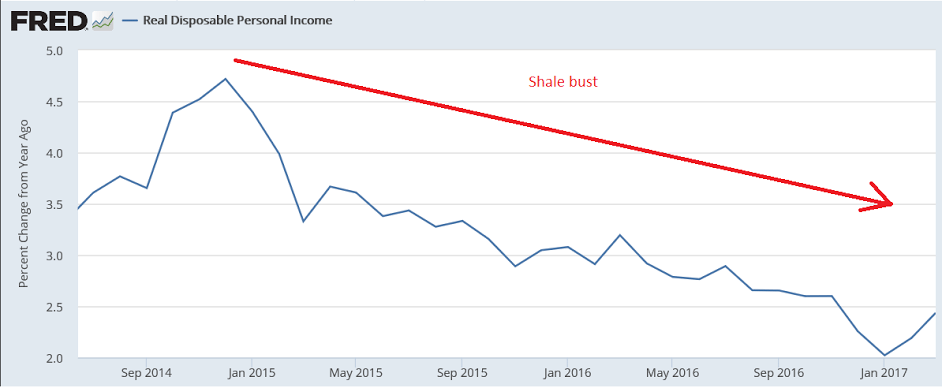
Last month revised lower and low and below expectations this month. Again, in line with decelerating credit data which means persistent weakness in GDP:

Highlights

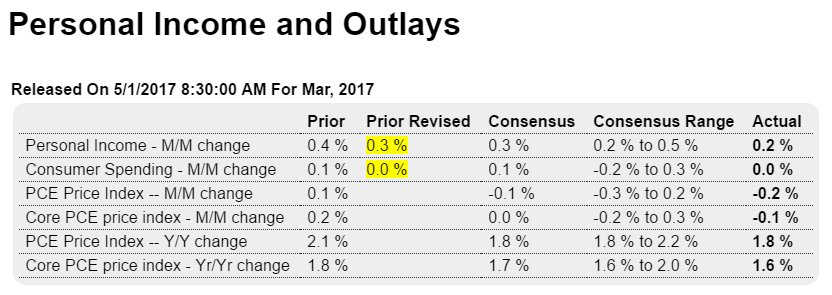
Based on the consumer and based on inflation, FOMC members won’t be feeling much pressure to raise rates at least not any time soon. Consumer spending was unchanged in March, even weaker than Econoday’s 0.1 percent consensus. More startling is the weakest showing in 16-1/2 years for core PCE prices which fell 0.1 percent to take down the year-on-year rate by a sizable 2 tenths to 1.6 percent.

Income is also disappointing, up only 0.2 percent with the wages & salaries component posting a very weak 0.1 percent rise. Consumers nevertheless managed to move money into the bank as the savings rate rose 2 tenths to 5.9 percent (which is another factor behind the weak spending).

The core PCE index is the key inflation gauge for the FOMC and prior to this report members were expressing confidence that it was stable and generally headed toward their 2 percent target. And overall prices which moved above target in February are now back below target, falling a monthly 0.2 percent with the year-on-year rate down a steep 3 tenths to 1.8 percent. First-quarter economic data proved surprisingly weak even by first-quarter standards. The economy has catching up to do.

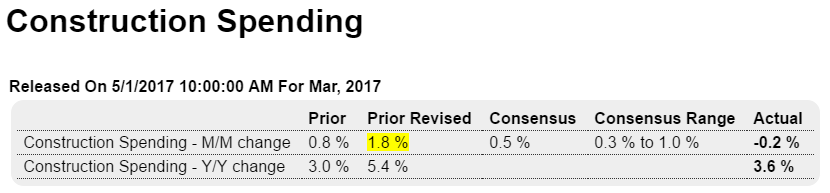
Last month revised higher but followed by a much lower than expected number this month as the annual rate of change continues to work its way lower. And note the drop in non residential spending, where a strong gain was posted in the Q1 GDP estimate:

Highlights

Data on construction spending are subject to unusual volatility, evident in today’s report which came in far below expectations, at minus 0.2 percent vs Econoday’s consensus for a 0.5 percent gain. These results for March, however, are offset by a 1.0 percentage point upward revision to February which now stands at a very strong 1.8 percent.

March’s weakness is tied to a sharp 1.3 percent decline in the private nonresidential component, where spending was especially weak for commercial units as well as office units. Public spending was also weak with educational building down for a 2nd straight month. The positives in the report are in housing with multi-family units extending their strong run with a 2.0 percent monthly gain, supported by a gain for single-family units and another strong month for home improvements.

It’s hard to get a gauge on this report because of its revisions and volatility, and the general weakness in nonresidential construction contrasts with the enormous strength of investment in nonresidential structures in Friday’s first-quarter GDP report. The housing side is more clear with gains backed up by strength in underlying permits and strong demand for new housing. Next up on the construction sector will be Friday’s employment report and construction payrolls which have been mostly solid so far this year.

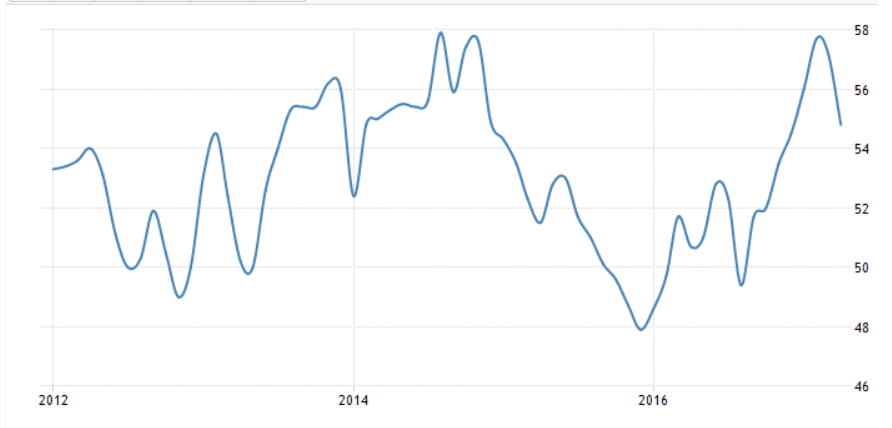
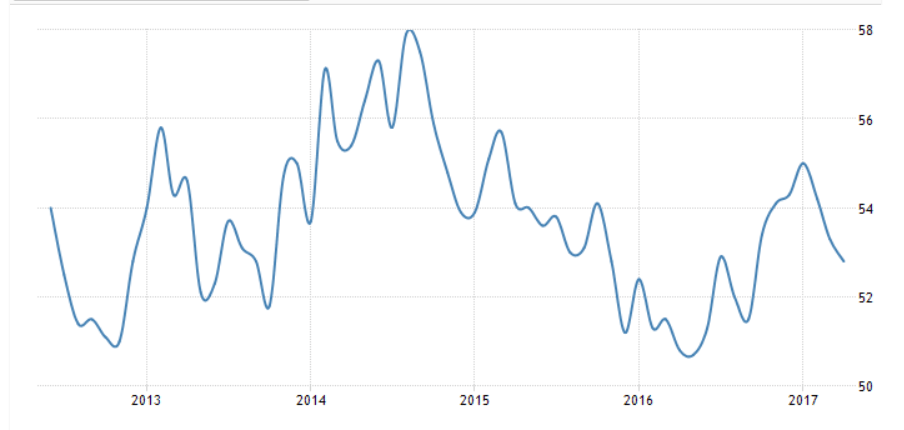
ISM manufacturer’s trumped up expectations continue to revert, as does the Markit manufacturing PMI:

GDP, Repatriation, Credit check

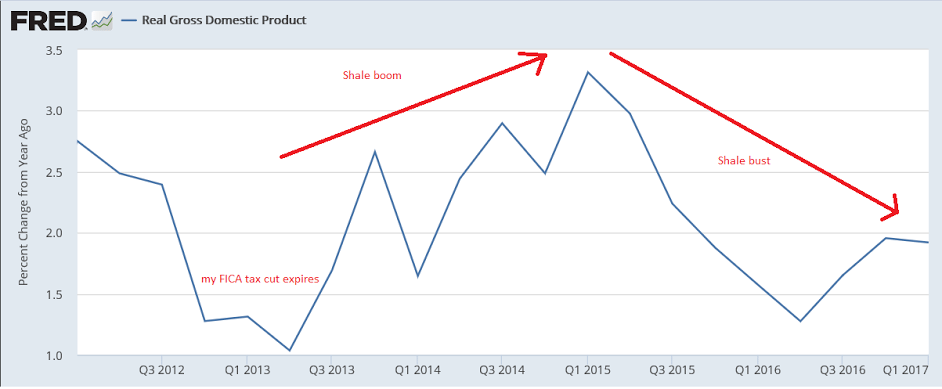
A very low initial print, with inventories down as expected as was consumption growth. And the investment data that did grow strongly is volatile and subject to reversal which would limit q2 growth as well. Expectations have come off some but remain trumped up, even as the hard data shows ongoing weakness.

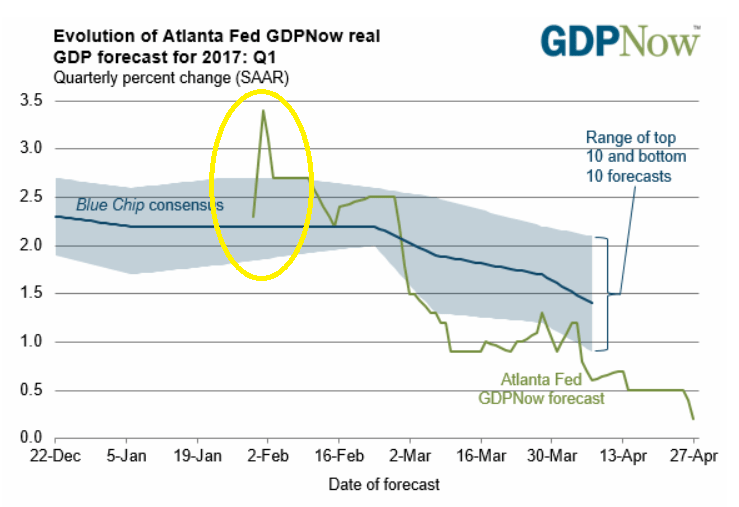
And note how q2 forecasts are now starting up where q1 forecasts were this time 3 months ago:

Highlights

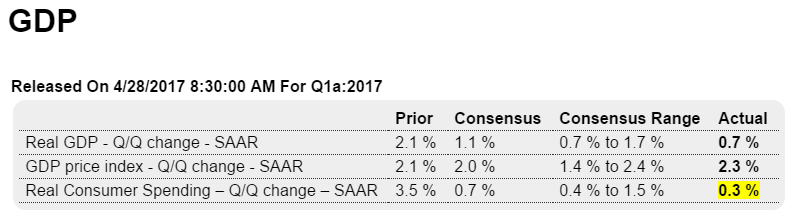
The weakest showing since the last recession for consumer spending held down first-quarter GDP which could manage only a 0.7 percent rate of annualized growth. Consumer spending rose at only 0.3 percent which is by far the worst showing since no change in fourth-quarter 2009.

Weak vehicle sales are a major negative in the quarter’s consumer breakdown, pulling durables down at a 2.5 percent rate and offsetting a 1.5 percent rise in non-durables and a slow 0.4 percent showing for services.

Weakness in consumer spending is strongly associated with recession but not other data in the report. At a 13.7 percent pace, residential investment posted a second straight very strong quarter. And in a rare show of strength, nonresidential investment, which has been subdued, jumped at a 9.4 percent rate with both structures and equipment showing unusual strength. A surge in mining investment is a standout of the report.

The net export gap narrowed slightly which was a small plus for the quarter while a drop in government purchases was a negative. A sizable negative for the quarter was a slowing in inventory build, pulling GDP down by 0.9 percentage points but also keeping in check what may be unwanted stock given the weakness in consumer spending. Looking at final demand, which excludes the inventory effect, final sales rose 1.6 percent which is an improvement from the fourth quarter’s 1.1 percent.

This is a mixed report with the weakness in consumer spending not fitting with the strength in investment. Still, all the sky high confidence readings in the quarter did nothing to help actual spending. In other data, prices show pressure with the GDP price index at 2.3 percent for a 2 tenths gain and the core also at 2.3 percent for a 5 tenths gain.

As previously discussed, it may bring in a few tax $ but it has no effect on the economy:

The last time companies got a break on overseas profits, it didn’t work out well

Meanwhile, this is still flashing red:

New home sales, PMI’s, Vehicle sales, Lumber tariffs

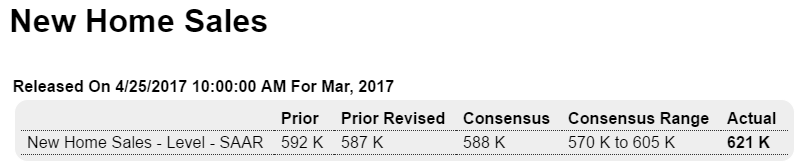
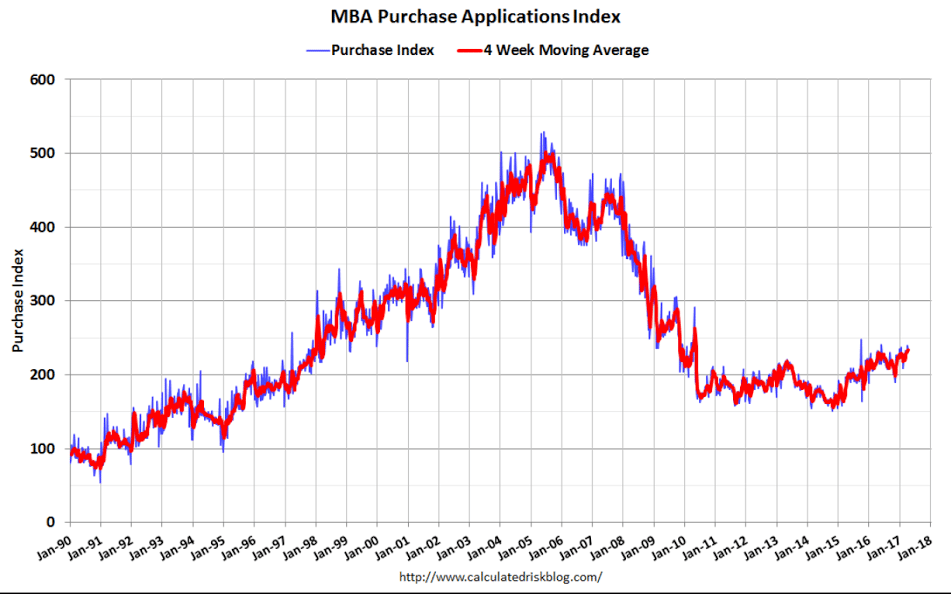
New home sales better than expected, but remember it’s about permits, as no home is built without one:


Note how weak this is vs past cycles:

Annualized rate of total sales keeps working its way lower from last year’s peak of about an 18.5 million pace, which also coincides with the deceleration in auto lending:

From WardsAuto: U.S. Forecast: Mild Sales, Growing Inventory

The report puts the seasonally adjusted annual rate of sales for the month at 17.1 million units, well above last month’s 16.5 million, but below year-ago’s 17.3 million.

The monthly volume will be 3.1% below last year. Beyond one fewer selling day, Easter occurred in April this year, unlike 2016, possibly delaying sales for some shoppers in the second half of the month. …

Sluggish sales in March left inventory levels high, with LV stock of 4.15 million units at month-end. The forecasted April inventory level sits at 4.16 million units, resulting in a fourth straight month above the 4 million mark. The only time this previously happened was in 2004, when five consecutive months surpassed that level. emphasis added

Read more at http://www.calculatedriskblog.com/#qgG4smeX8sUqimOy.99

Who else would complain about someone selling him something at too low a price, and then take action to make sure we all pay 20% more???
;)

Trump Administration Plans to Impose 20% Tariff on Canadian Softwood-Lumber Imports

By Peter Nicholas and Paul Vieira

Apr 24 (WSJ) — The dispute centers on Canadian provinces that have been allegedly allowing loggers to cut down trees at reduced rates and sell them at low prices

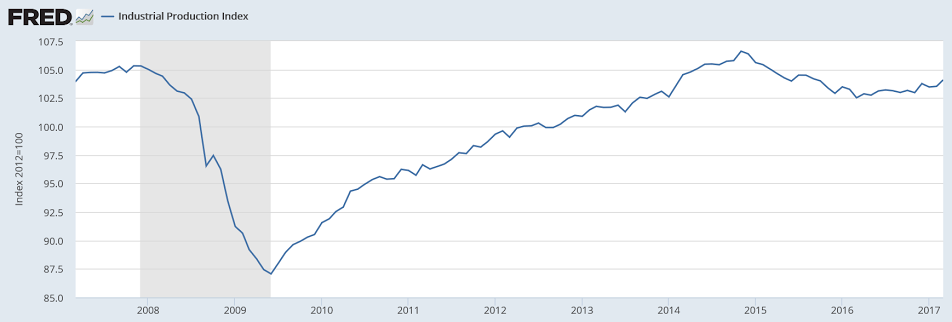
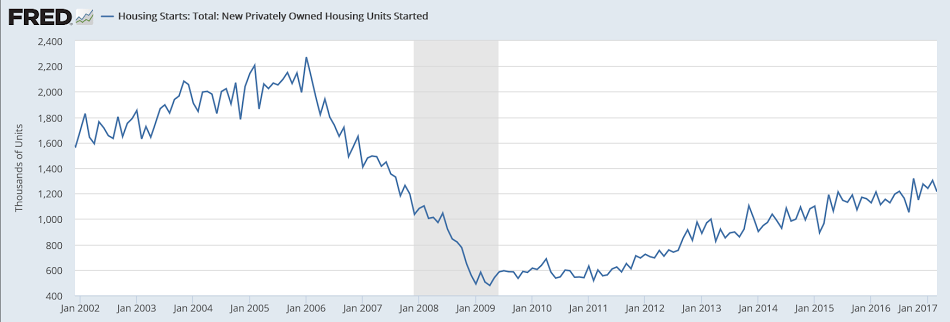
Industrial production, Housing starts, Forecasts, Loan growth

Very modest growth continues from the lows following the crash in oil capex, and note that the numbers are not inflation adjusted:

The painfully slow recovery following the crash continues, and note the numbers are not population adjusted:

Trumped up expectations fading:

Forecasters Lower Growth Outlook as Hopes for Quick Stimulus Fade

By Josh Zumbrun

Apr 13 (WSJ) — Following the election, respondents to The Wall Street Journal’s monthly survey of forecasters significantly raised their estimates for growth, inflation and interest rates. In December, the average forecast called for 2.3% growth in the first quarter. That had fallen to 1.9% in March and dipped again to 1.4% in this month’s survey. In January, 71% of economists in the Journal’s survey were including significant fiscal policy changes in their forecasts. In April, that number was down to 44%. A majority now say “significant” changes are unlikely, although many said a small fiscal boost remains possible.

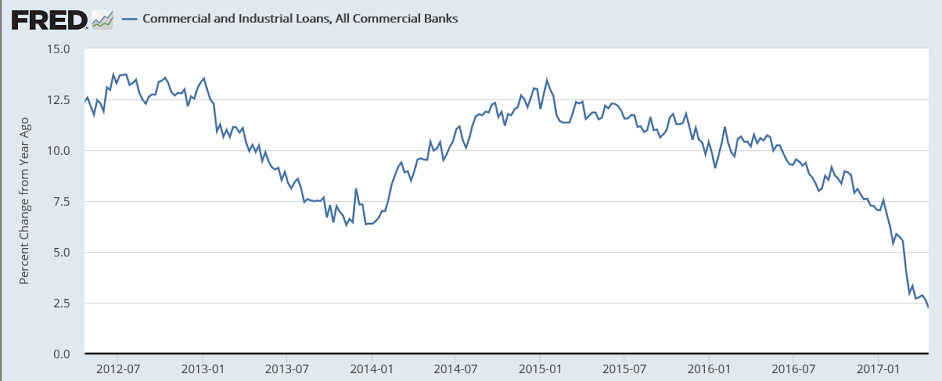
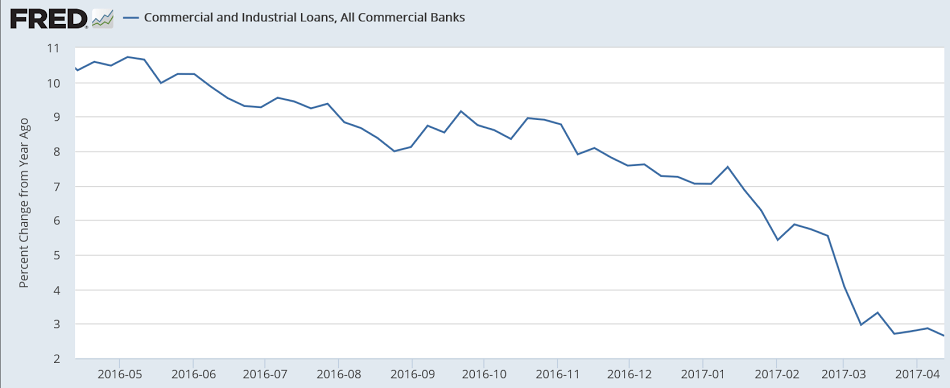
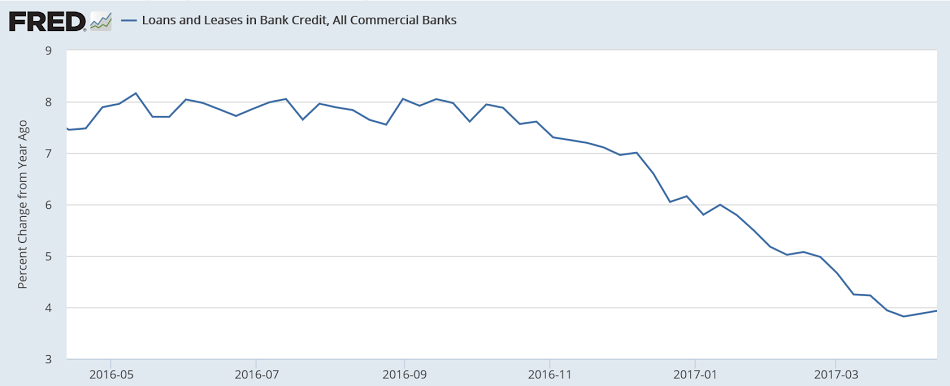
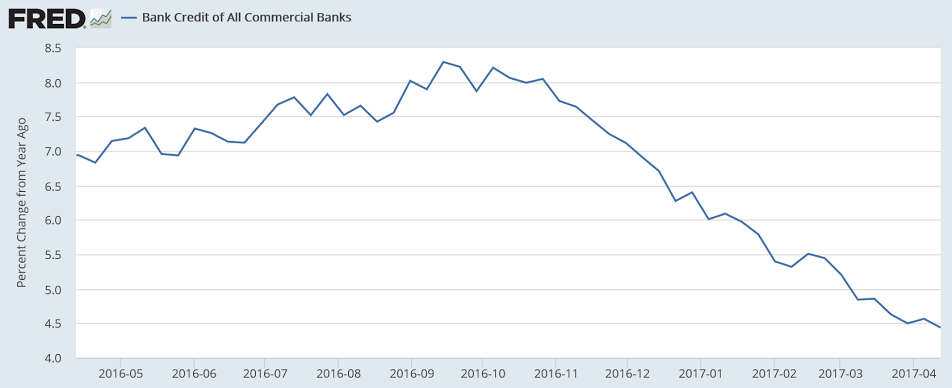
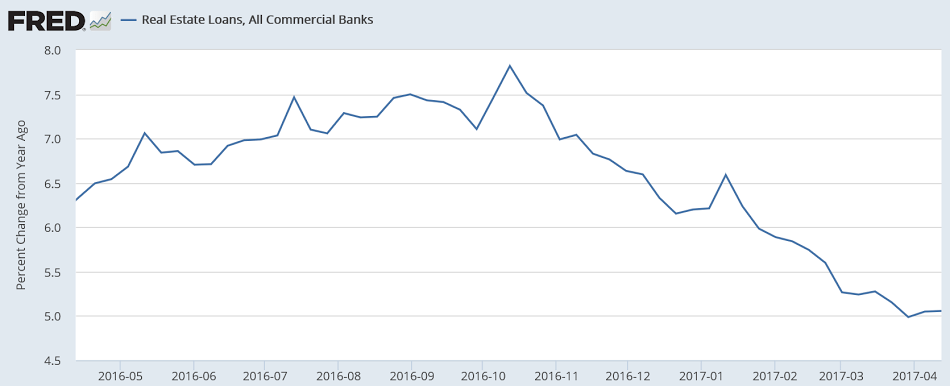
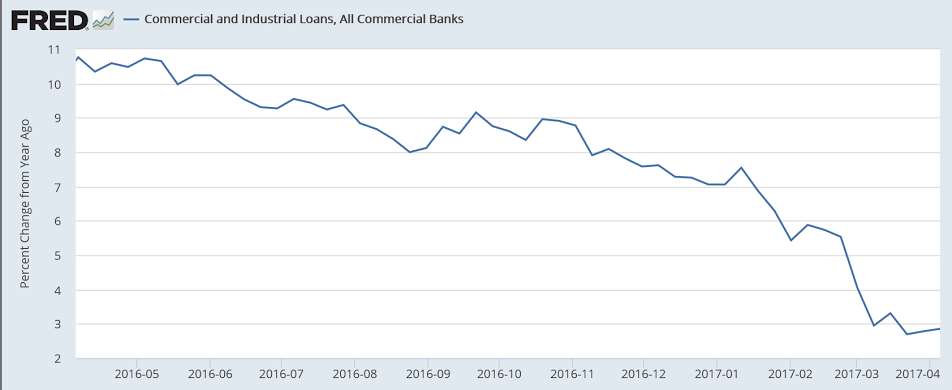
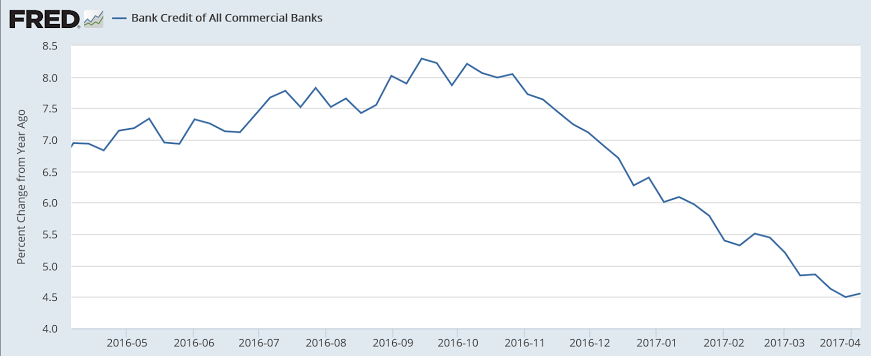
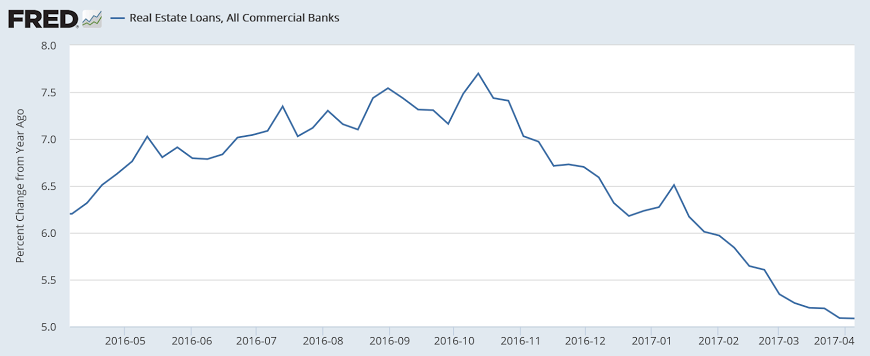
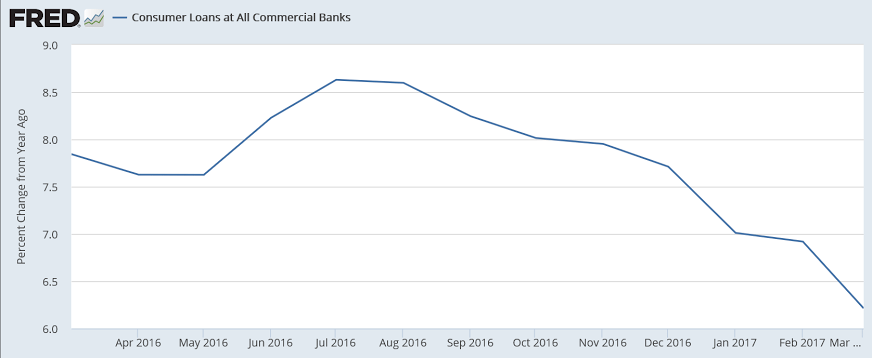
Slowing loan growth finally making the news:

Loan growth stalls despite profit, trading gains at some U.S. banks

By David Henry

Apr 14 (Reuters) — Big U.S. banks revealed more evidence of a slowdown in loan growth in their earnings reports on Thursday. JPMorgan’s core loan portfolio averaged $812 billion during the first quarter, up 9 percent on an annualized basis. But that growth rate has ticked down from 12 percent in the previous quarter and 17 percent a year ago. Wells Fargo’s annual loan growth rate of 4 percent has also been slowing over the past year. Citigroup’s loan book has been skewed by divestitures and its acquisition of a credit-card portfolio. Adjusting for those matters, Citi’s core loan book grew 5 percent in the first quarter.

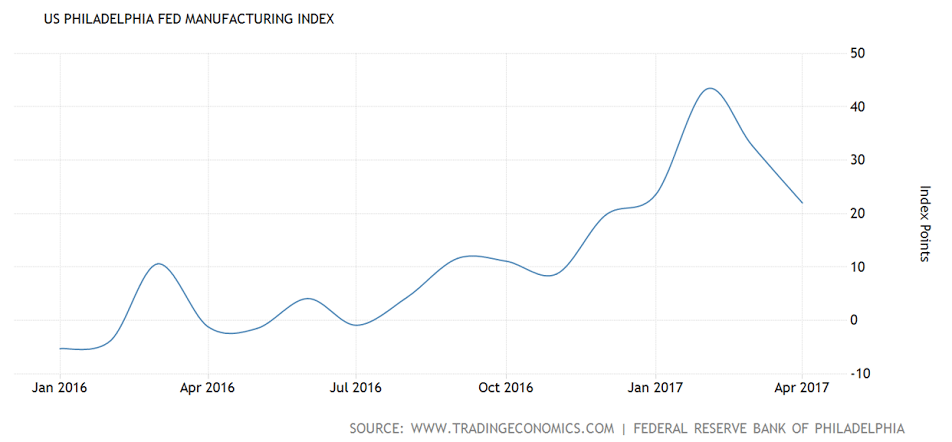
Retail sales, Bank loans, Philly state index

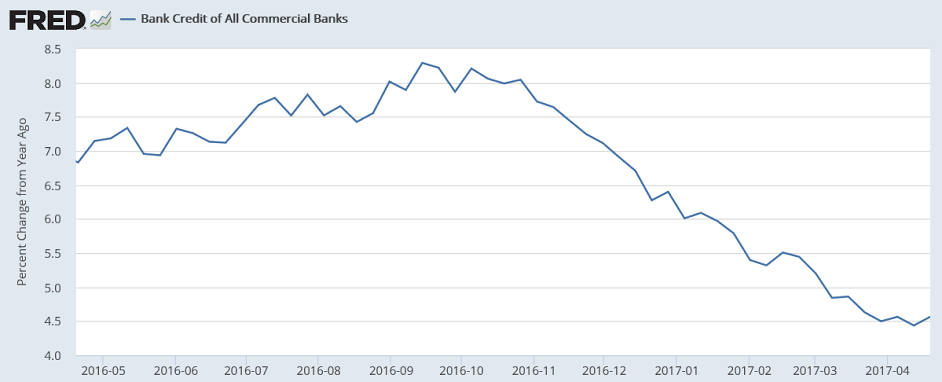
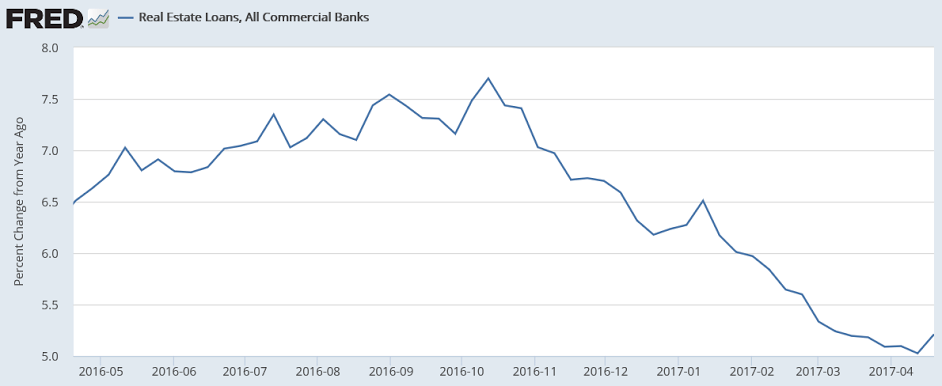
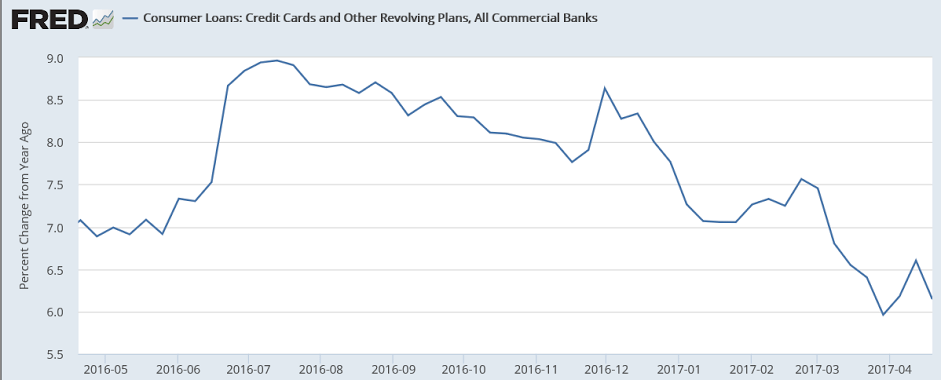
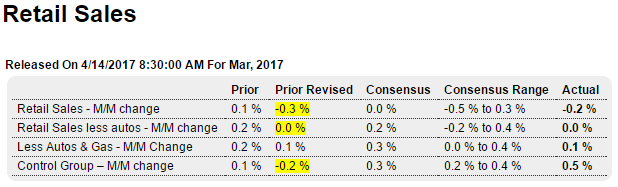
Worse than expected and downward revisions as well. Seems related to what looks like a continuing credit collapse:

Highlights

First-quarter consumer spending is in trouble. Retail sales fell 0.2 percent in March which is under the Econoday consensus for no change. Importantly, February sales are revised sharply lower, to minus 0.3 percent vs an initial gain of 0.1 percent.

Vehicle sales round out the quarter with a 3rd straight sharp decline at minus 1.2 percent. Sales at gasoline stations, due to lower prices, fell 1.0 percent. But when excluding both vehicles and gasoline, sales could only manage — despite sky high consumer confidence — a second straight 0.1 percent increase.

Other areas of weakness include sporting goods which fell 0.8 percent and furniture stores which were down 0.3 percent. And two special areas of weakness are restaurants which fell 0.6 percent for a second straight decline and building materials which fell 1.5 percent. These last two components are excluded in the control group reading which, boosted by a 2.6 percent gain for electronics & appliances and supported by a 0.3 percent increase for general merchandise, rose an outsized 0.5 percent. But even here, February sales for the control group are revised 3 tenths lower and now stand at minus 0.2 percent.

There are plenty of bad luck wildcards for March including heavy weather and late tax refunds. But today’s report also scales down what had already been a disappointing February. Total consumer spending (which includes services) came in with only 0.1 percent and 0.2 percent gains in the first two months of the year and today’s February revision points to the same for February’s retail sales component (note also that January retail sales are revised down 1 tenth to a 0.5 percent gain). Consumer spending makes up 70 percent of GDP and today’s results, however much they may raise expectations for a snap back, are certain to lower expectations for the first quarter.

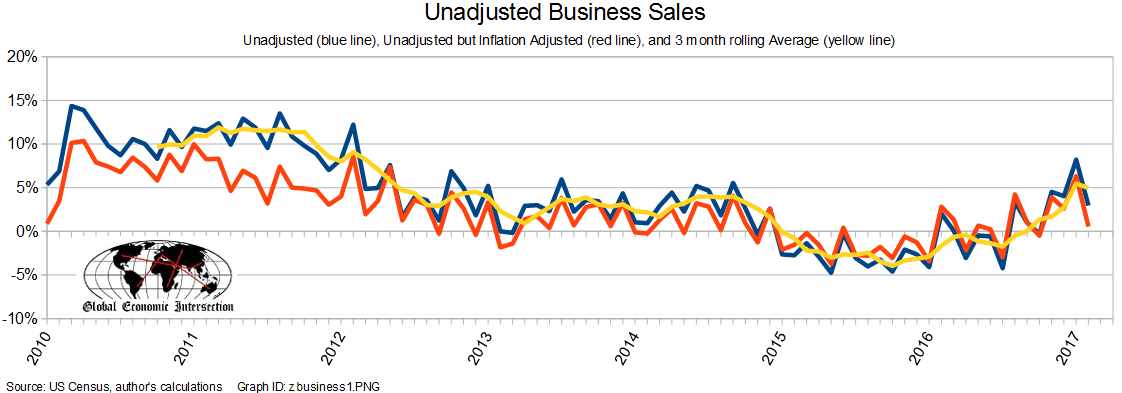
Econintersect Analysis:

  • unadjusted sales rate of growth decelerated 5.3 % month-over-month, and up 3.0 % year-over-year
  • unadjusted sales (but inflation adjusted) up 0.6 % year-over-year
  • unadjusted sales three month rolling average compared to the rolling average 1 year ago decelerated 0.5 % month-over-month, and is up 5.0 % year-over-year.
  • unadjusted business inventories growth rate accelerated 0.4 % month-over-month (up 2.8 % year-over-year with the three month rolling averages showing inventory growth now growing), and the inventory-to-sales ratio is 1.48 which is at recessionary levels (above average for this month in normal times of economic growth).

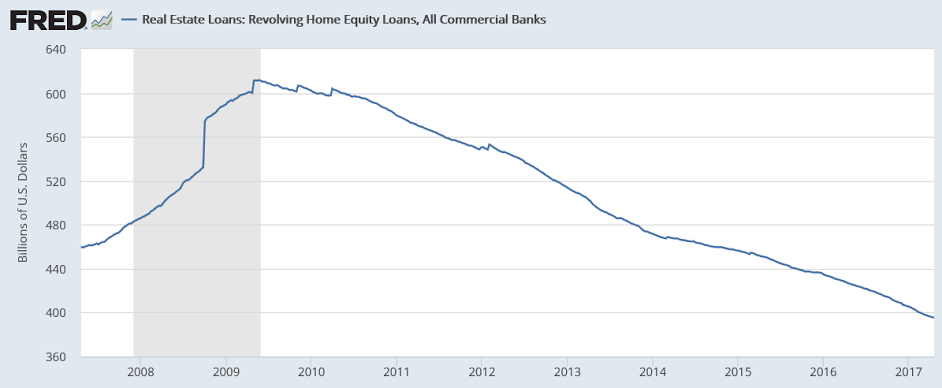
  • No recovery in sight yet for bank credit growth, which has been the engine driving spending:

    Healthcare, Regulation comments, Policy statement

    Looks like no repeal and replace pending:

    I think Paul Ryan is trying to pull a fast one on repealing Obamacare

    On the surface, it looked like a GOP news conference touting a possible compromise with conservatives to help get the health-care reform bill passed. But House Speaker Paul Ryan and his fellow Republicans really just tipped their hand and admitted their top concern isn’t really repealing and replacing Obamacare, it’s keeping what’s left of the Obamacare exchanges up and running.

    Don’t take my word for it. House Energy and Commerce Committee Chairman Greg Walden said it himself when he cheered on the compromise:

    “So this is another step in the right direction and I know we’ll keep working forward in this process in the next couple of weeks as we work to refine our product, improve our product, and get to the goal of saving Americans on their premiums, making sure that the Affordable Care Act exchanges don’t fully collapse, we see examples again of more insurers contemplating pulling out of the market, and our job is to try and reform this process in a timely manner.”
    Sometimes public purpose demands regulation, regardless of ideology.

    One classic example is a football game, where if any one person stands he can see better, but if everyone stands no one can see better and no one can see at all if they are seated. The answer is collective action, where you might have a policy of no one being allowed to stand for more than a few seconds, or something like that.

    Likewise, if there are no federal pollution laws, states then compete with each other where whoever allows companies to pollute has the highest inflow of new companies and the lowest personal tax rates. Again, public purpose is served by having national minimums.

    That is, there is public purpose in preventing what otherwise would be what’s called a ‘race to the bottom.’

    So when dismantling regulation, public purpose is best served by not reinstituting any such races to the bottom, which I have yet to here even discussed.

    Somewhat related are moral hazard issues.

    For example, since bank deposits are federally insured, which has been shown beyond dispute over time to itself serve public purpose, there is no ‘market discipline’ on the liability side of banking, and therefore the asset side begs full regulation and supervision as the savings and loan debacle of the 1980’s and other periods of lax supervision have repeatedly demonstrated.

    Unilaterally announcing we are now the new ‘global police’ raises a few questions?

    Seems to me there are at least dozens of serious infractions daily?

    ‘Holding to account’ and ‘crimes against the innocents’ etc. begs further definition?

    Is launching a few missiles to announce displeasure the President’s precedent?

    Does this policy require legislative initiative?

    And many more.

    Looks to me like drawing a line in the sand with your head in the sand?

    “The U.S. will stand up against anyone who commits crimes against humanity, Secretary of State Rex Tillerson said on Monday, less than a week after Washington launched missile strikes in response to an alleged Syrian chemical attack.

    “We rededicate ourselves to holding to account any and all who commit crimes against the innocents anywhere in the world,” Tillerson told reporters while commemorating a German Nazi massacre committed in Italy in 1944.”