2009-02-02 CREDIT


[Skip to the end]

 
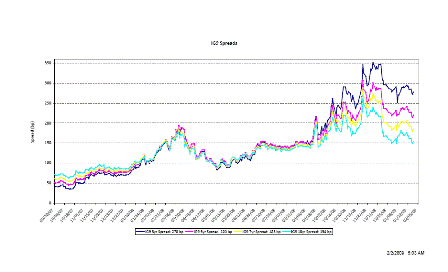
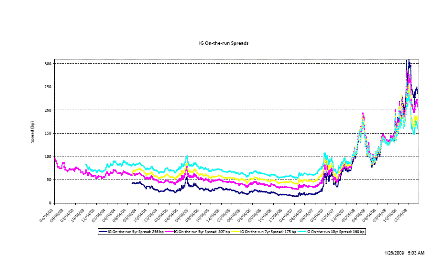
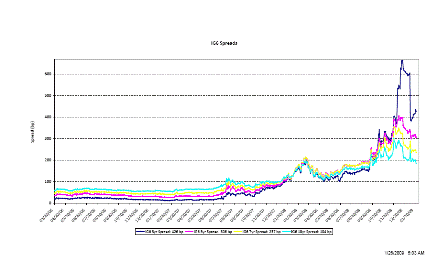
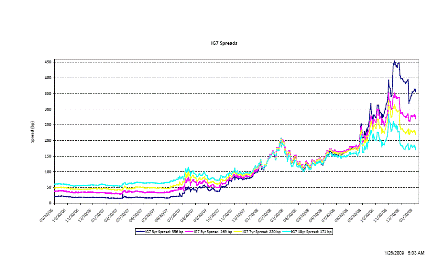
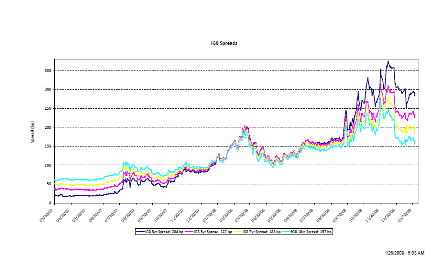
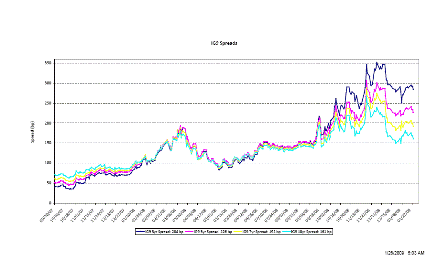
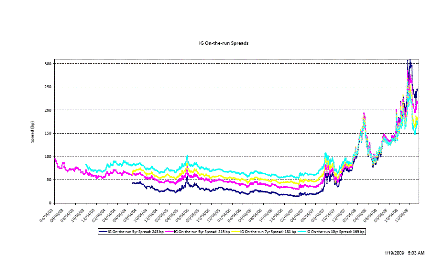
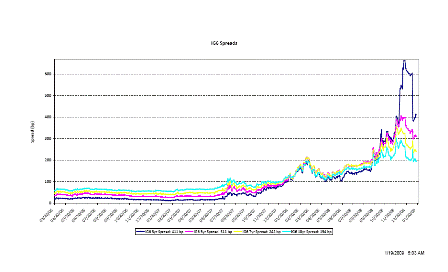
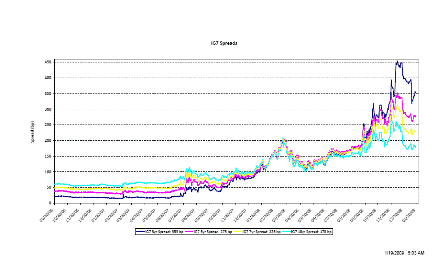
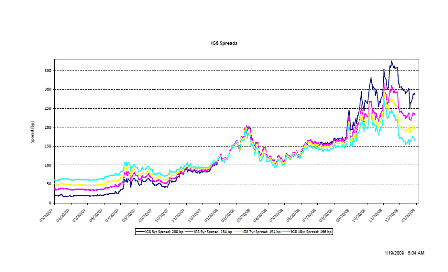
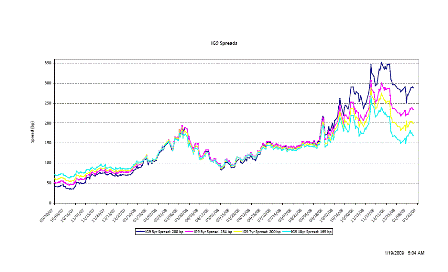
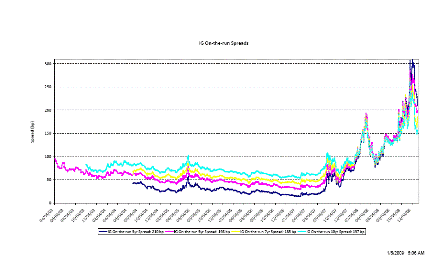
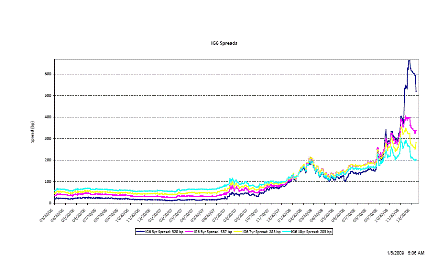
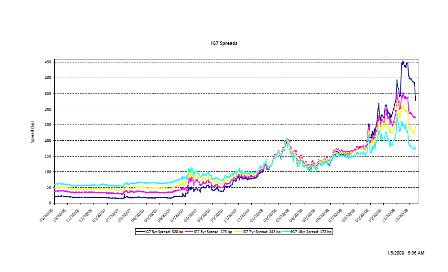
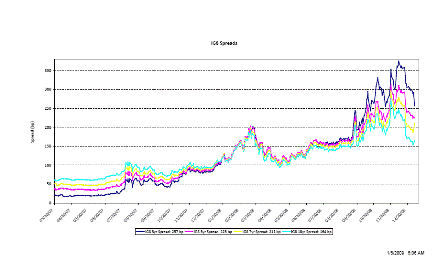
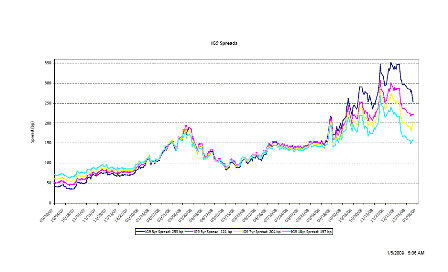
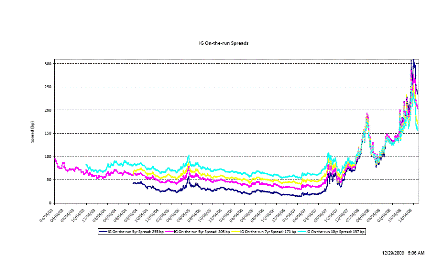
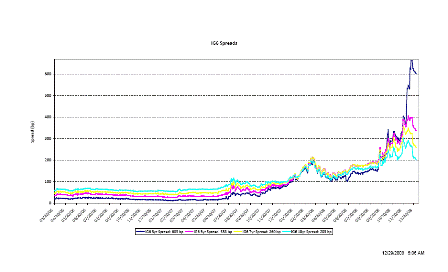
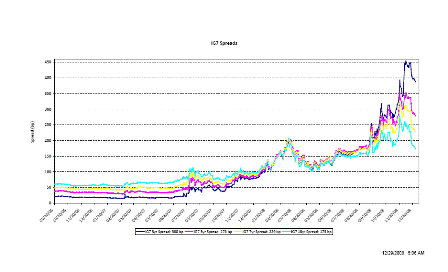
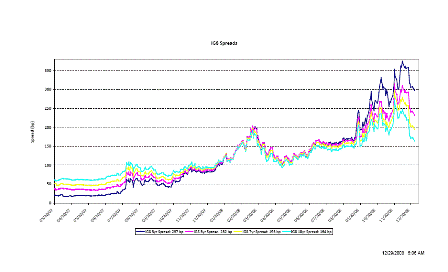
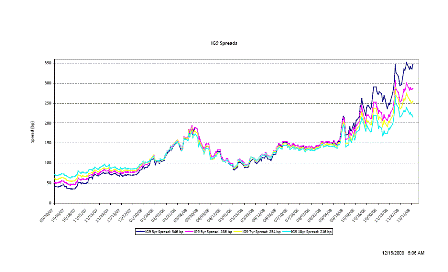
Narrower spreads help support equity prices.

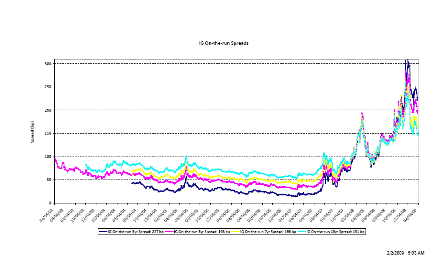
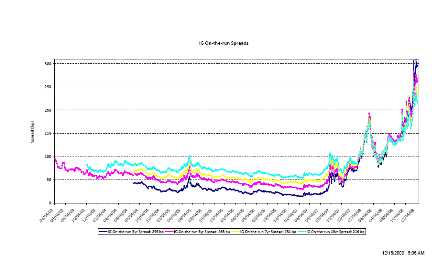
IG On-the-run Spreads (Feb 02)

[top][end]

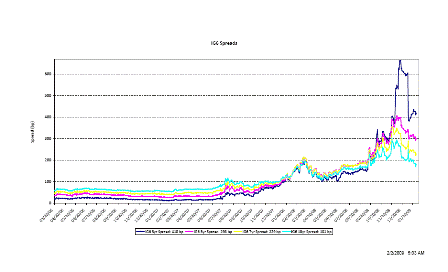
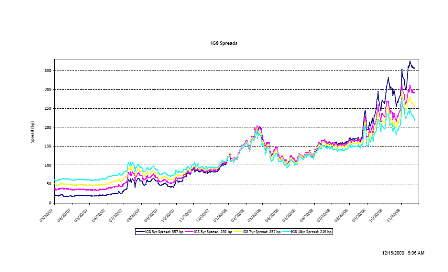
IG6 Spreads (Feb 02)

[top][end]

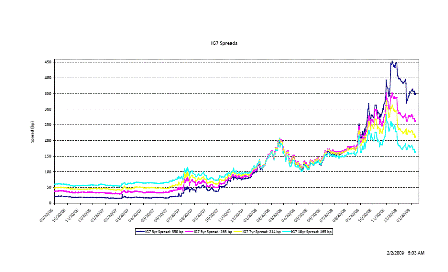
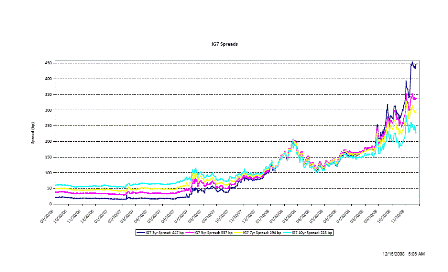
IG7 Spreads (Feb 02)

[top][end]

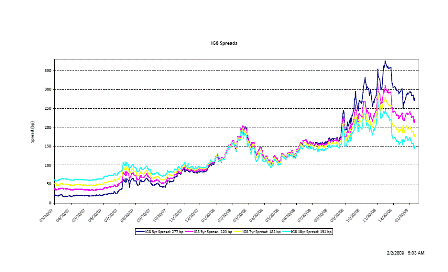
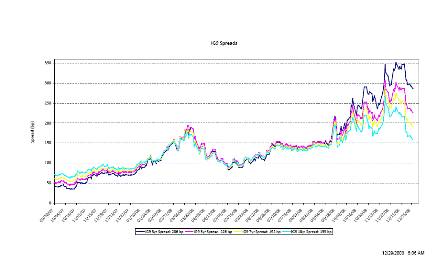
IG8 Spreads (Feb 02)

[top][end]

IG9 Spreads (Feb 02)


[top]

CDS SOVS


[Skip to the end]

RBS SOVEREIGN $$ CDS Indicative levels

Reference Entity 5 yr 10 yr
Germany 53/63 55/65
France 57/67 59/69
Austria 145/160 142/156
Ireland 275/310 270/308
Italy 175/195 175/195
Netherlands 110/128 110/130
Greece 285/310 280/280
Belgium 110/135 108/133
Spain 140/155 138/152
Portugal 138/152 133/150
UK 130/140 120/145

 
** Another leg of aggressive widening in SOV CDS with UK out 20bps, Ireland out 40bps, Portugal/Spain/Italy/Greece out 15/20bps! Seen small buying flows in Belgium/Austria & Italy.


[top]

And the Wolf responds..


[Skip to the end]

(email exchange – in response to previous email)

 
>   
>   On Thu, Jan 15, 2009 at 5:09 PM, Martin Wolf wrote:
>   
>   
>   Inflation is default.
>   

I respectfully do not agree.

Default is failure to make payment as agreed.

There is no zero inflation contract.

In fact, most every currency has inflation most years.

>   
>   Surely that is obvious to everybody.
>   

Credit default contracts don’t include inflation, nor does any other default provision.

>   
>   When the economy finally recovers, the government will end up with a very large debt.
>   

It will be some % of GDP that you may consider ‘very large’.

>   
>   Such debt is owed to bond-holders and serviced by taxpayers.
>   

In the first instance it is serviced by crediting accounts on the Fed’s own spread sheet.

If aggregate demand is deemed too high at that time future governments may opt to raise taxes.

If future govts desire to alter the distribution of real output to those then alive they will be free to do that via the usual fiscal and monetary measures.

>   
>   Politicians who are elected by the latter will want to default on liabilities to the former
>   (particularly if many of them are foreigners) and provide taxpayers with goodies, instead.
>   

Very possible!

>   
>   A burst of inflation is how they have always done it.
>   

Yes.

>   
>   End of story.
>   

As above. If you mean to say deficits will cause inflation, then do that.
Default is the wrong word for an international financial column.
Surely that’s obvious to everyone.

>   
>   I suggest you study the history of Argentina or indeed of the post-first-world-war inflations.
>   

And you can study what the ratings agencies have considered to be defaults.

 
All the best,
Warren

>   
>   Martin Wolf
>   


[top]

2009-01-05 CREDIT


[Skip to the end]

 
Spreads continue to come in, offering continued support for world equity markets.

IG On-the-run Spreads (Jan 05)

[top][end]

IG6 Spreads (Jan 05)

[top][end]

IG7 Spreads (Jan 05)

[top][end]

IG8 Spreads (Jan 05)

[top][end]

IG9 Spreads (Jan 05)


[top]

2008-12-29 CREDIT


[Skip to the end]

 
This continues to offer support for the world’s stock markets.

IG On-the-run Spreads (Dec 29)

[top][end]

IG6 Spreads (Dec 29)

[top][end]

IG7 Spreads (Dec 29)

[top][end]

IG8 Spreads (Dec 29)

[top][end]

IG9 Spreads (Dec 29)


[top]

Re: Fed cut


[Skip to the end]

(email exchange)

The Fed has no way of ‘pumping money into the economy’ = they only alter interest rates.

Except by making loans they don’t plan on collecting (the swap line advances to CB’s?)

Which is functionally equivalent to fiscal spending which does add income and financial assets to the economy.

>   
>   Rodger wrote:
>   
>   You and I were talking about a 0% fed funds rate. Almost there, now. Last I
>   heard, down to .25%. It will have no benefit. Wait, correction on that. There
>   will be one benefit. It gets us almost to the point where the Fed will stop
>   focusing on useless interest rate cuts, and start pumping money into the
>   economy. I hope.
>   
>   Rodger
>   


[top]
Re: Fed swaps up $85.6 to $628B


[Skip to the end]

(email exchange)

Thanks, way up!

Probably means USD credit is tightening up for non-US institutions, and maybe the unlimited lines are starting to get used for a lot more than just funding previously existing assets.

>   
>   On Fri, Dec 12, 2008 at 9:53 PM, Cesar wrote:
>   
>   Fed swaps up $85.6 to $628B.
>   


[top]