Philly Fed, Chicago Fed, Existing home sales, NY state revenue report, Hamptons real estate sales

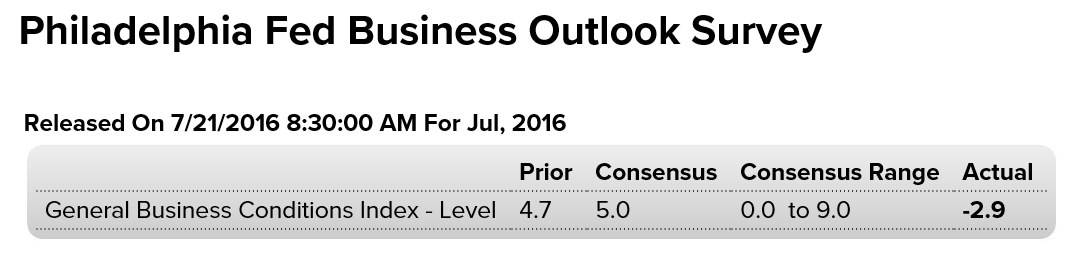
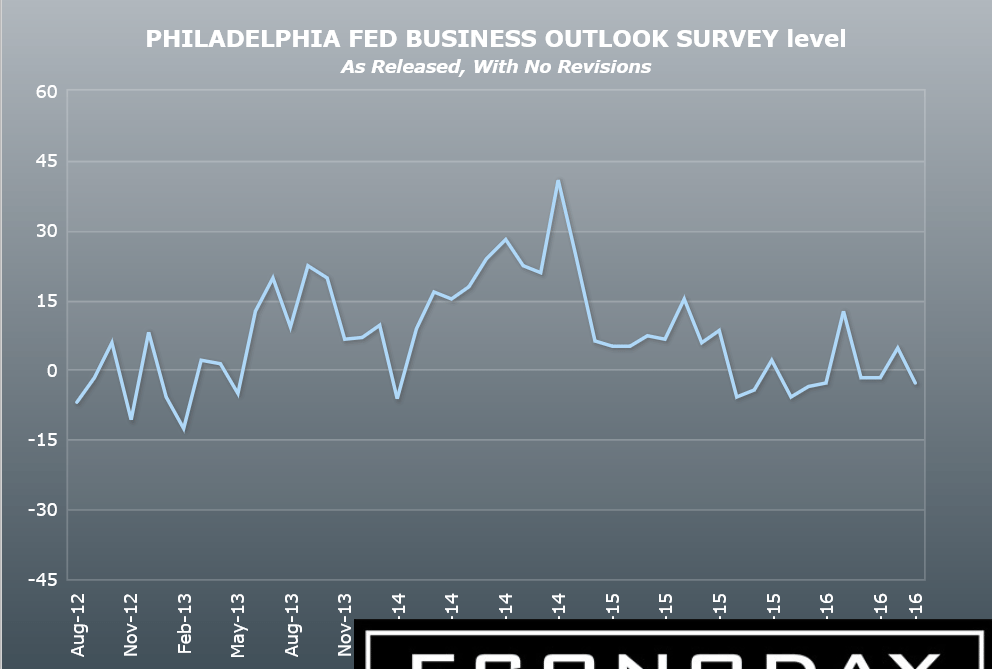
The setbacks continue:

7-21-1
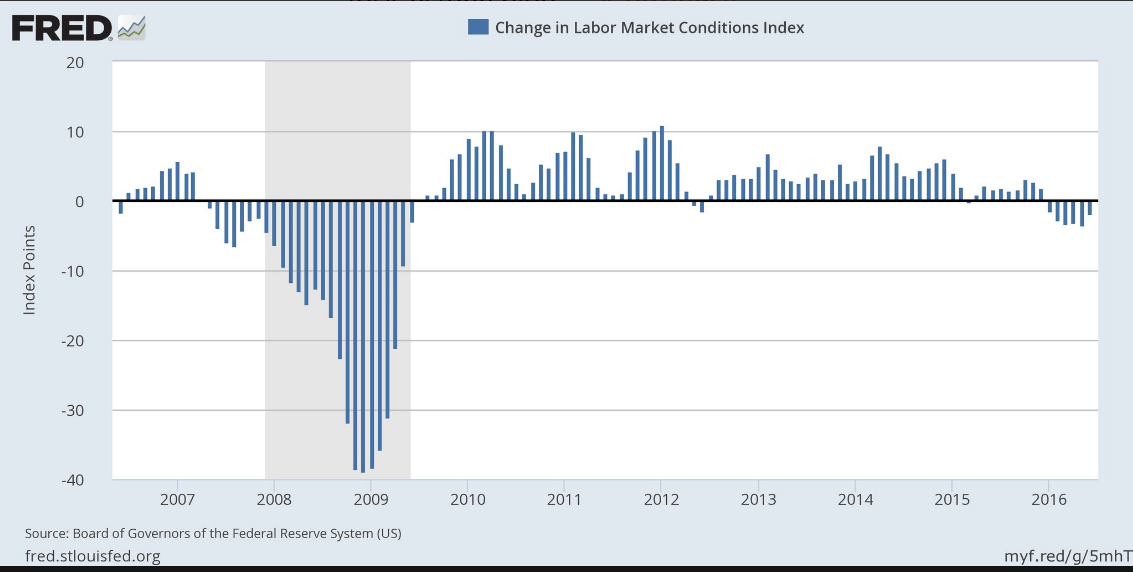
As is the general case, this indicator rose with the oil capex boom then peaked with the collapse in oil capex, and remains in negative territory:

7-21-2
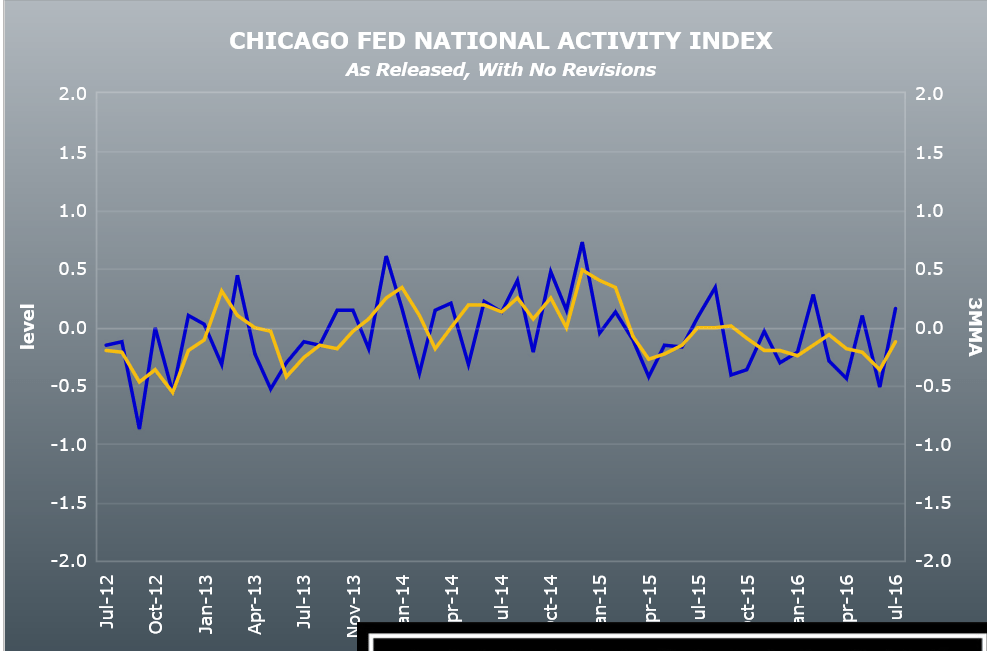
Same here. Peaked when the oil capex boom ended and the 3 month average is still in negative territory:

7-21-3
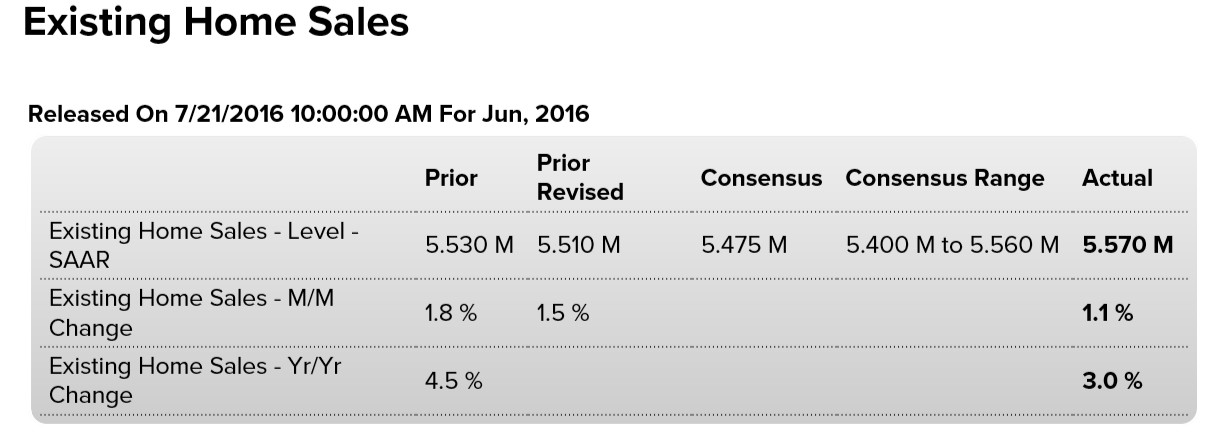
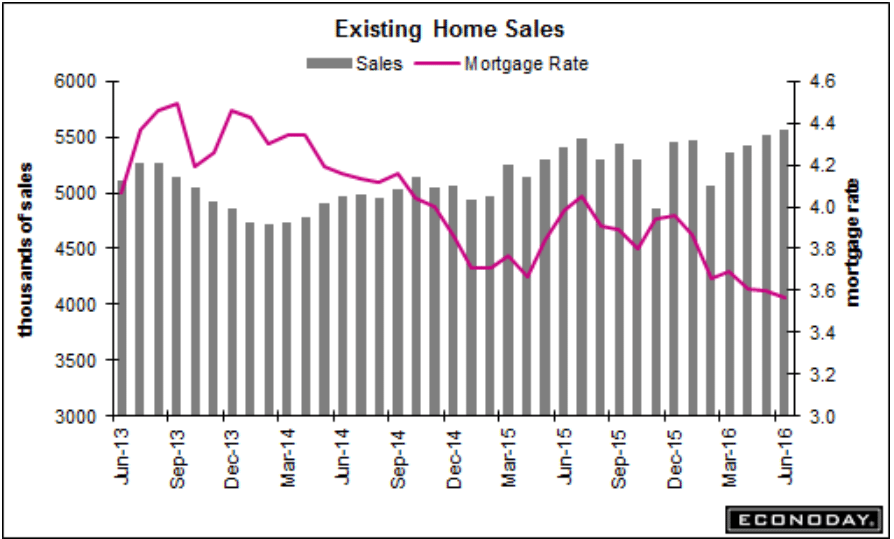
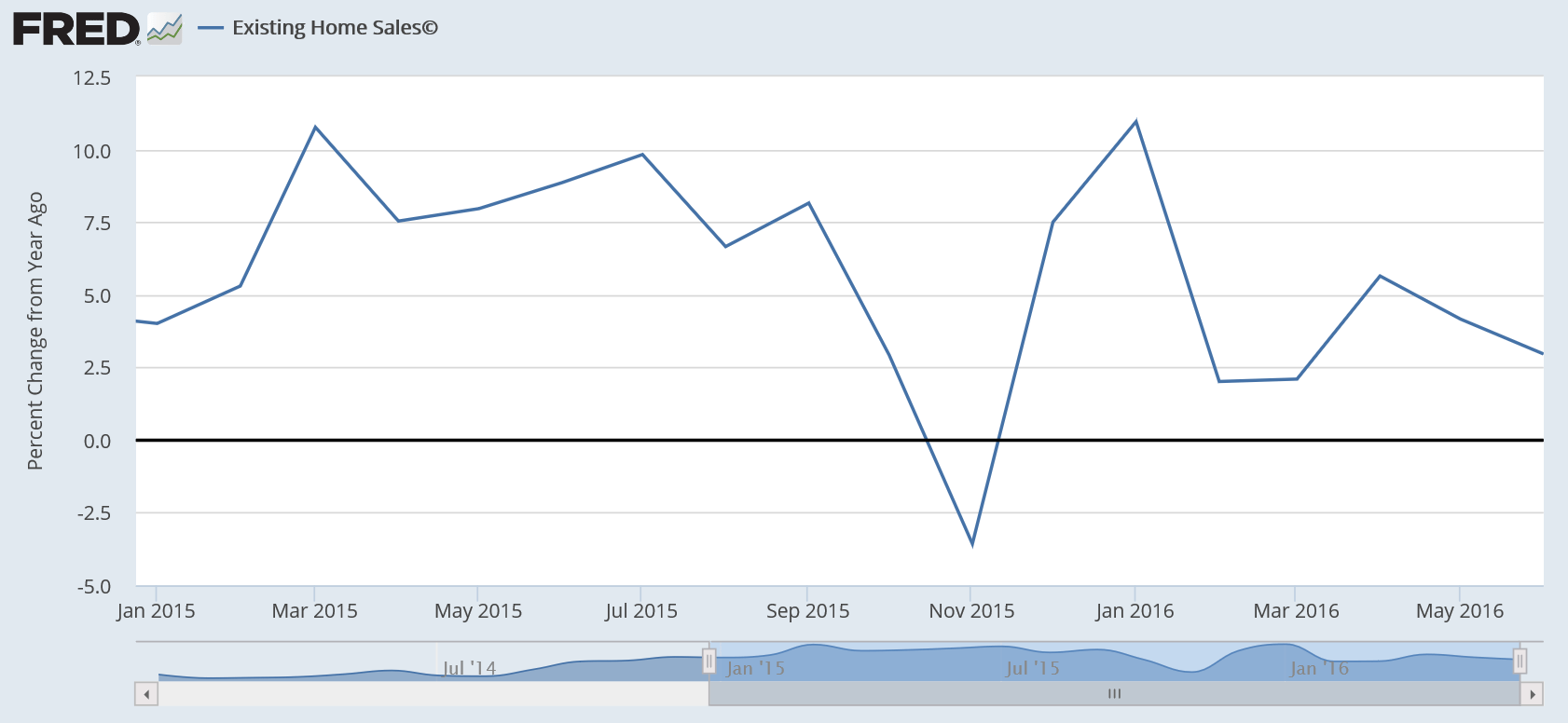
A bit better than expected for the month, but the year over year rate declined:

7-21-4

7-21-5

7-21-6
This NY state revenue report is few weeks old:

http://www.rockinst.org/pdf/government_finance/state_revenue_report/2016-06-30-SRR_103_final.pdf

7-21-7
Highlights:

  • State tax revenue growth slowed significantly in the second half of 2015 and, according to preliminary data, early in 2016.
  • Yearover-year growth was 1.9 percent in the fourth quarter of 2015.
  • Personal income tax revenue growth slowed to 5.1 percent on a year-over-year basis.
  • Growth was weak in sales tax collections, at 2.1 percent, and motor fuels tax at 3.5 percent.
  • Corporate income taxes declined by 9.2 percent.
  • Preliminary figures for the first quarter of 2016 indicate further weakening in state tax collections, at 1.9 percent.
  • Personal income tax growth slowed to 2.3 percent.
  • Preliminary data for April 2016 indicate large declines in personal income tax collections, likely caused by the volatility in the stock market.
  • States project weak growth in tax collections in 2017.
  • The median forecast of income tax and sales tax growth is at 4.0 and 3.8 percent, respectively.
  • Hamptons real estate sales slump 21 percent
    http://www.cnbc.com/2016/07/21/hamptons-real-estate-sales-slump-21-percent.html

    Mtg purchase apps, Gallup index, Euro area current account

    Down again, and you can see from the chart that it’s most recently gone flat after ramping up a bit:

    7-20-1

    7-20-2
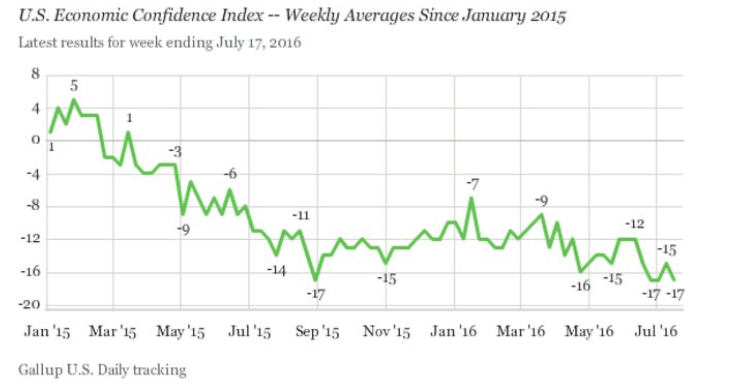
    Just another index that headed south after the collapse in oil capex:

    7-20-3
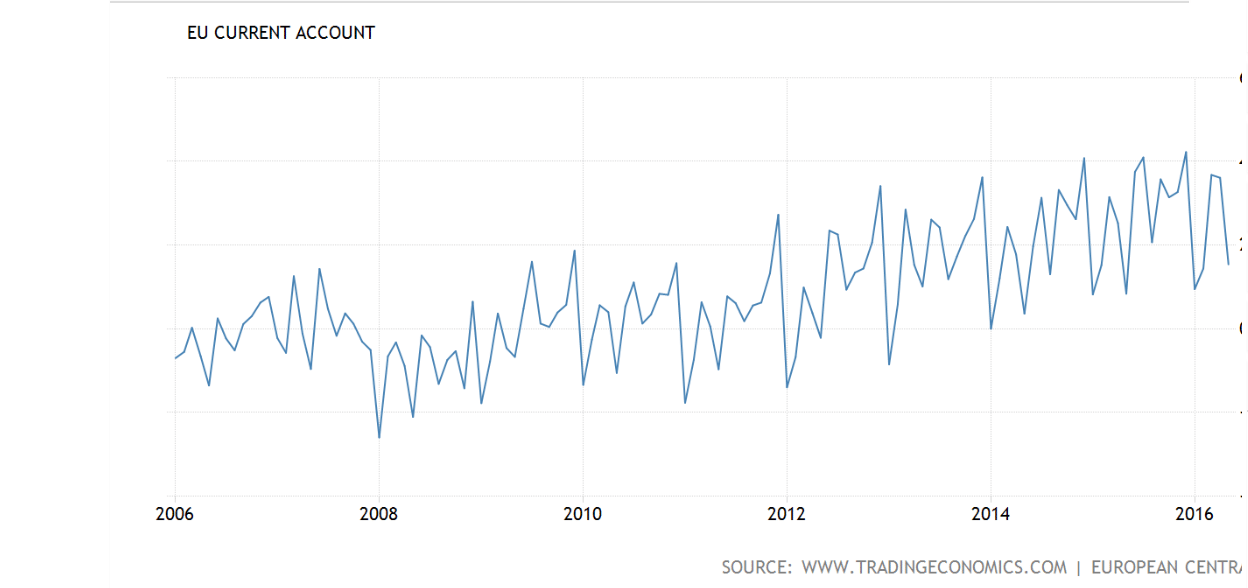
    The euro area current account surplus continues to trend higher:

    Euro Area Current Account

    The current account surplus in the Eurozone came in at €15.4 billion in May of 2016 compared to an €8.4 billion surplus a year earlier. The goods surplus widened 16 percent to €31.1 billion while the services one narrowed slightly by 1.3 percent to €7.5 billion. In addition, the primary income deficit fell 8.6 percent to €14.8 billion and the secondary income gap decreased 14.1 percent to €8.5 billion. If adjusted for seasonal factors, the Eurozone current account surplus narrowed to €30.8 billion euros in May from a record high of €36.4 billion in April.

    7-20-4

    Housing starts, Redbook retail sales, Comments on low rates

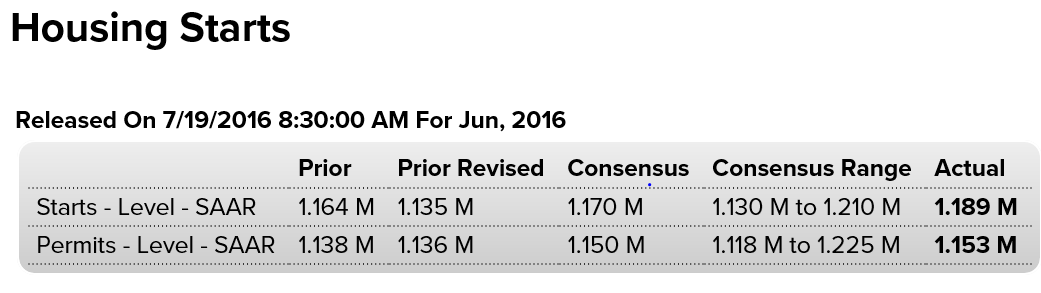
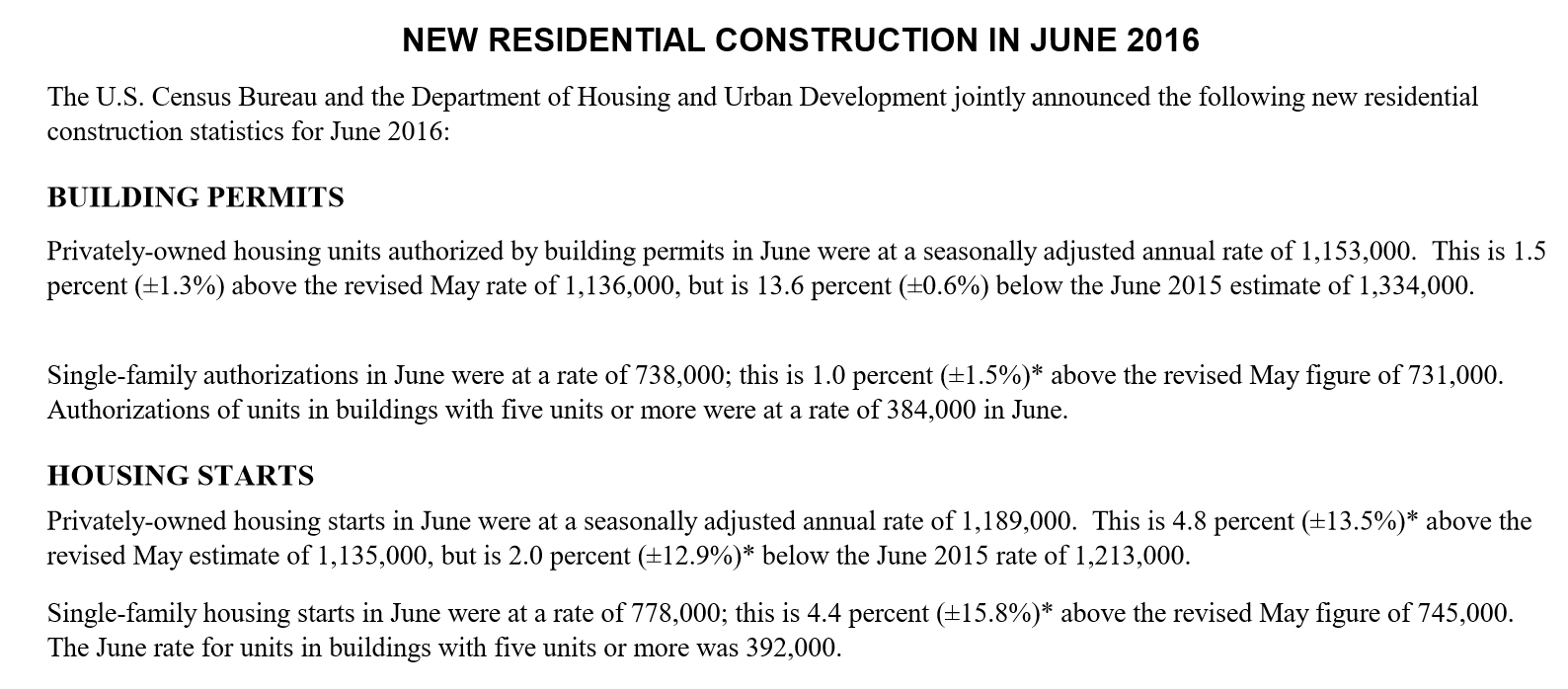
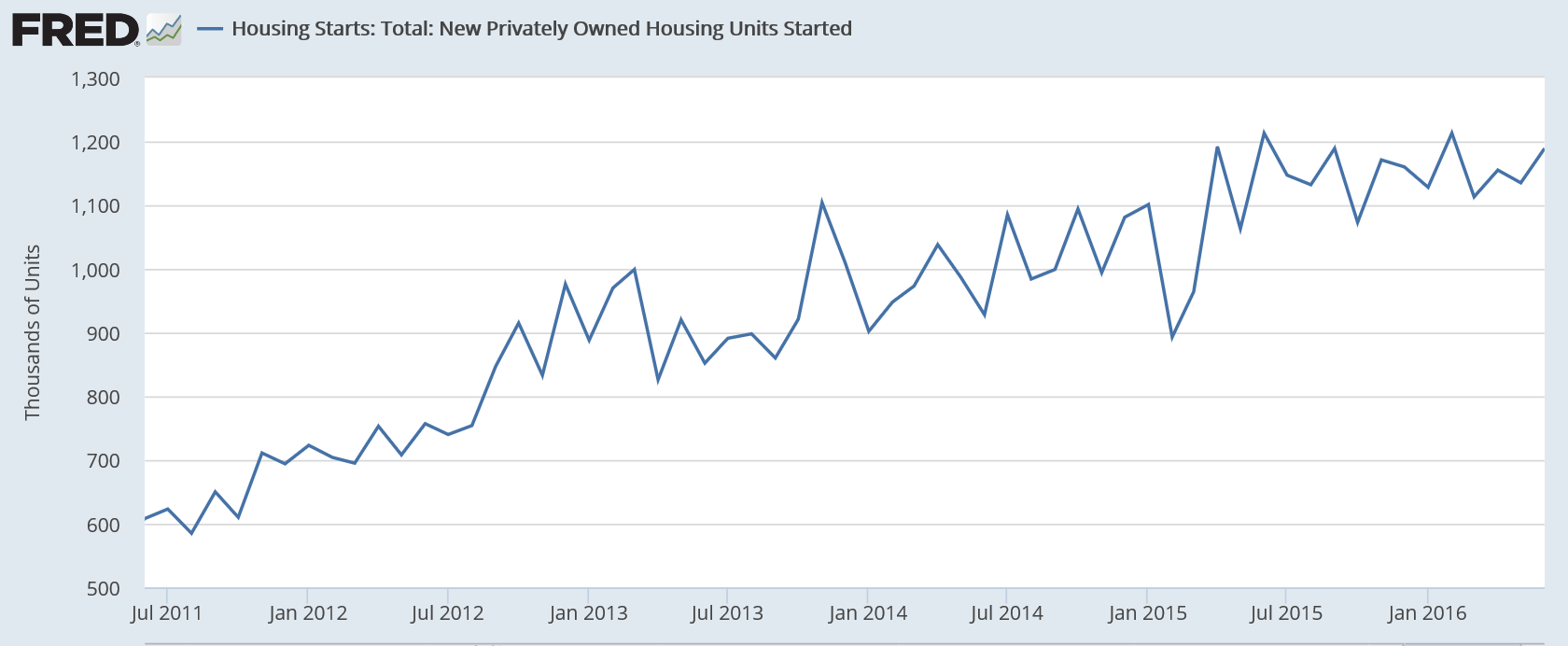
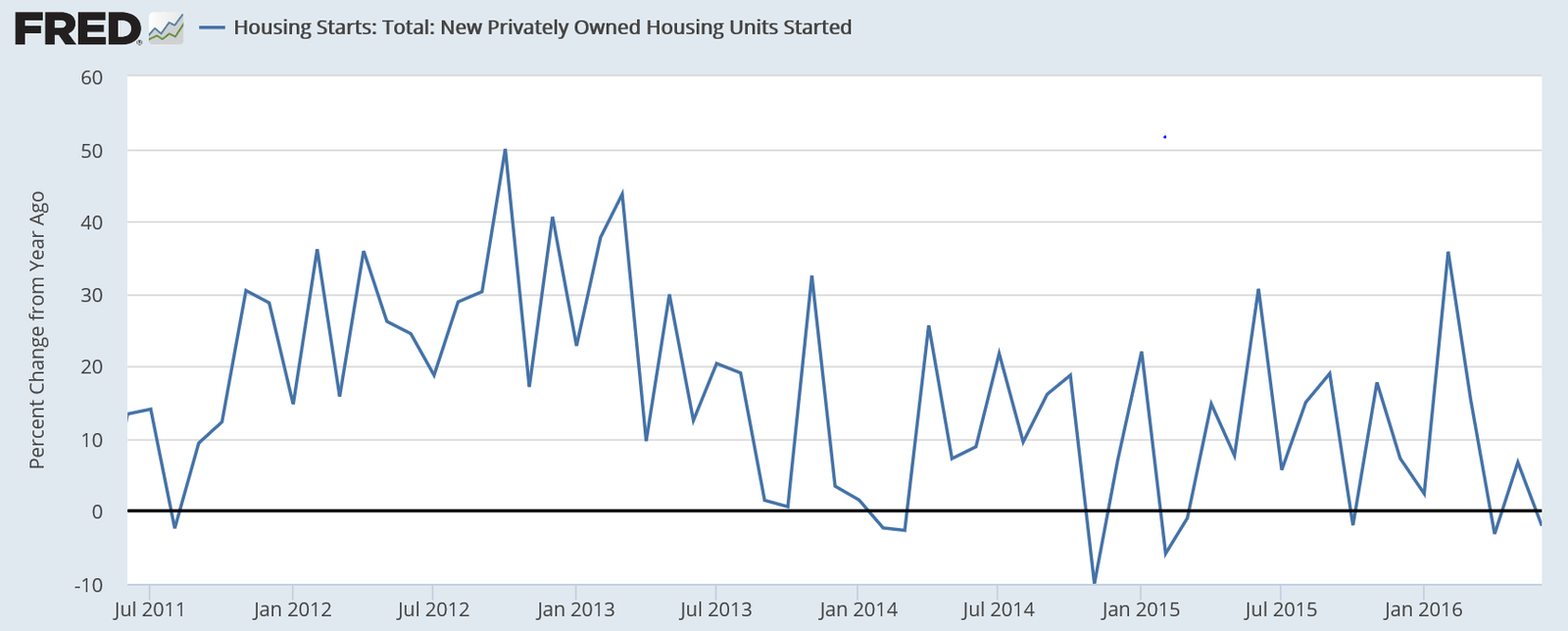
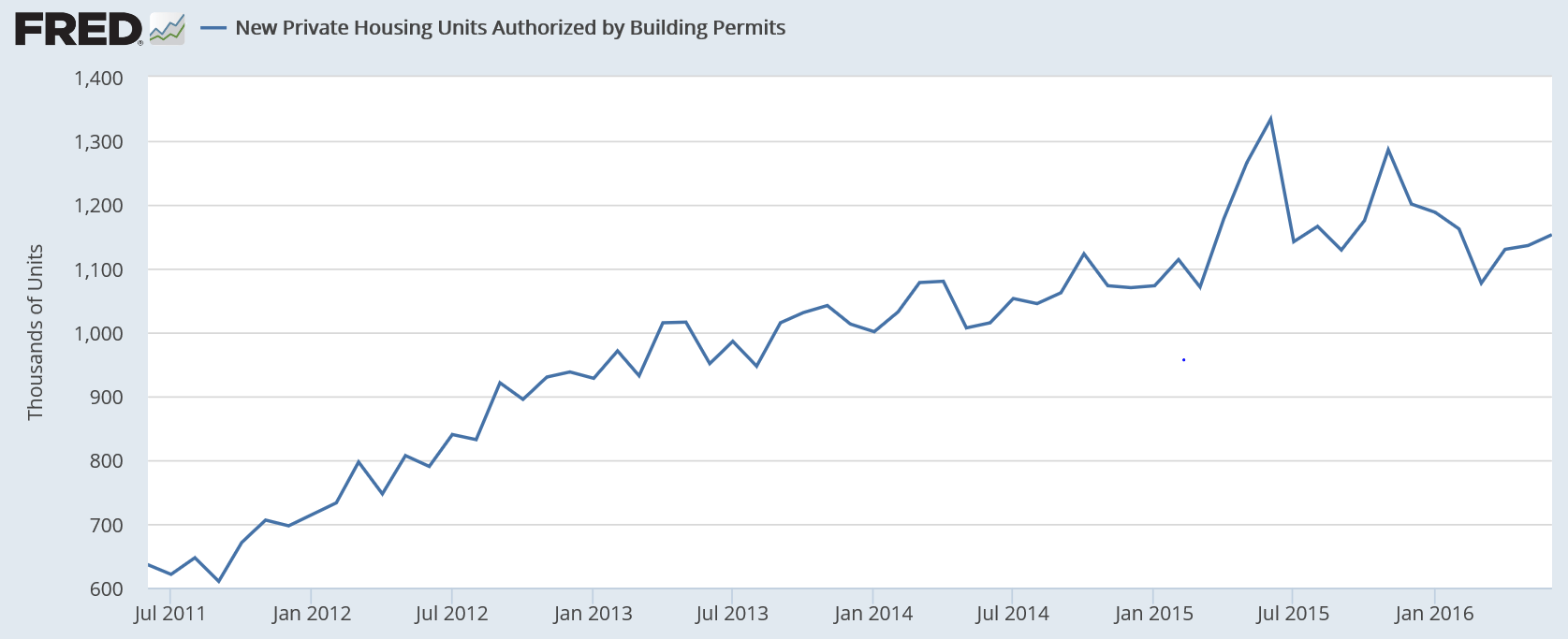
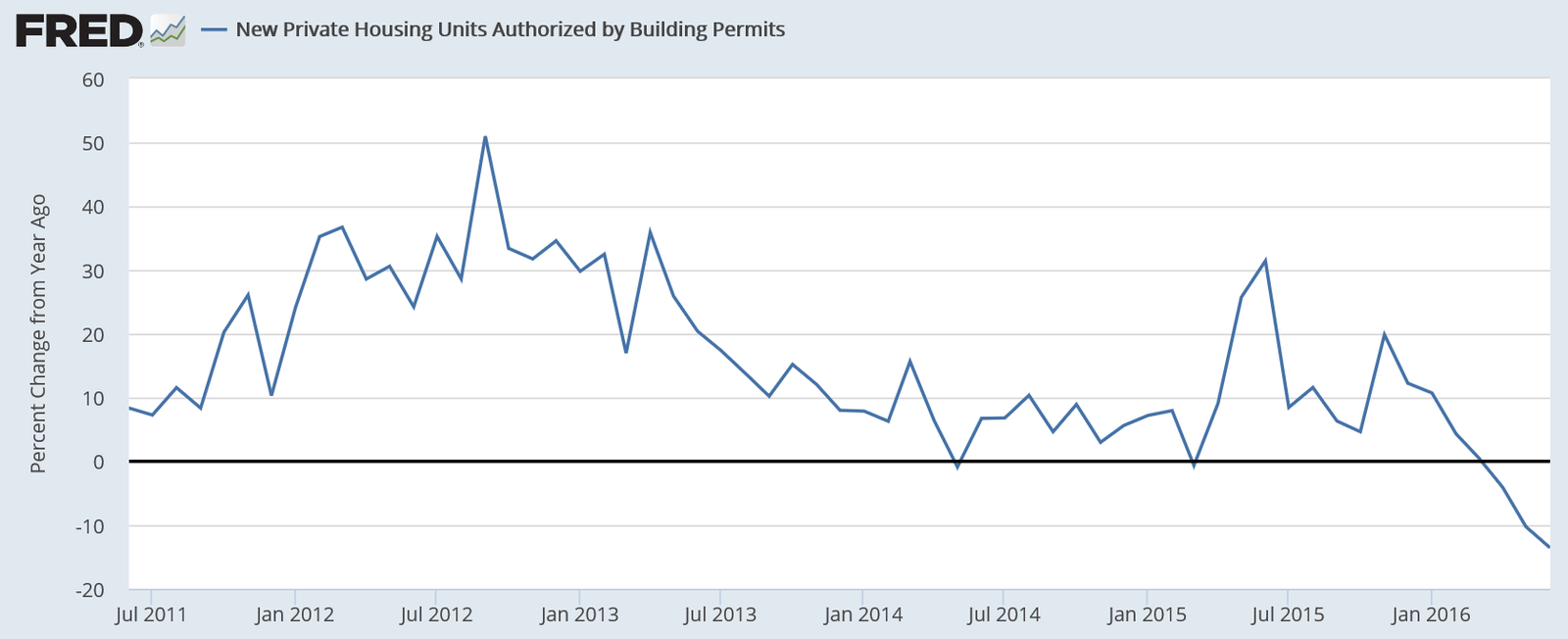
    Last month’s downward revision and the drop in permits make this report particularly negative. Again, looks like housing will be a drag on growth this year vs last year:

    7-19-1

    7-19-2

    7-19-3

    7-19-4

    7-19-5

    7-19-6
    Still trending from bad to worse:

    7-19-7

    With the govt a net payer of interest, rate cuts reduce total interest income for the economy by that amount. But some of the effects are lagged, as indicated below, and are therefore still ongoing, as lower pension returns often result in higher contributions and lower benefits, which reduces aggregate demand:

    Drop in Rates Swells Pension Burdens in U.S.

    By Vipal Monga

    July 18 (WSJ) — Under accounting rules, the declining rates triggered an increase in pension obligations for companies with defined-benefit plans, which offer retirees a set payout. Now, those companies are pursuing a variety of tactics as they struggle to close the resulting gap in pension funding and to avoid steep increases in premium payments to the nation’s pension insurer. The combined pension deficit for S&P 1500 companies ballooned to $568 billion at the end of June, a $164 billion increase from the end of 2015, according to Mercer, a benefits consulting firm.

    Calpers Reports Lowest Investment Gain Since Financial Crisis

    By Timothy W. Martin

    July 18 (WSJ) — The California Public Employees’ Retirement System, or Calpers, said it earned 0.6% on its investments for the fiscal year ended June 30, according to a Monday news release. It was the second straight year Calpers failed to hit its internal investment target of 7.5%. Workers or local governments often must contribute more when pension funds fail to generate expected returns. Calpers oversees retirement benefits for 1.7 million public-sector workers. The last time Calpers lost money was during fiscal 2009 when the fund’s holdings fell 24.8%.

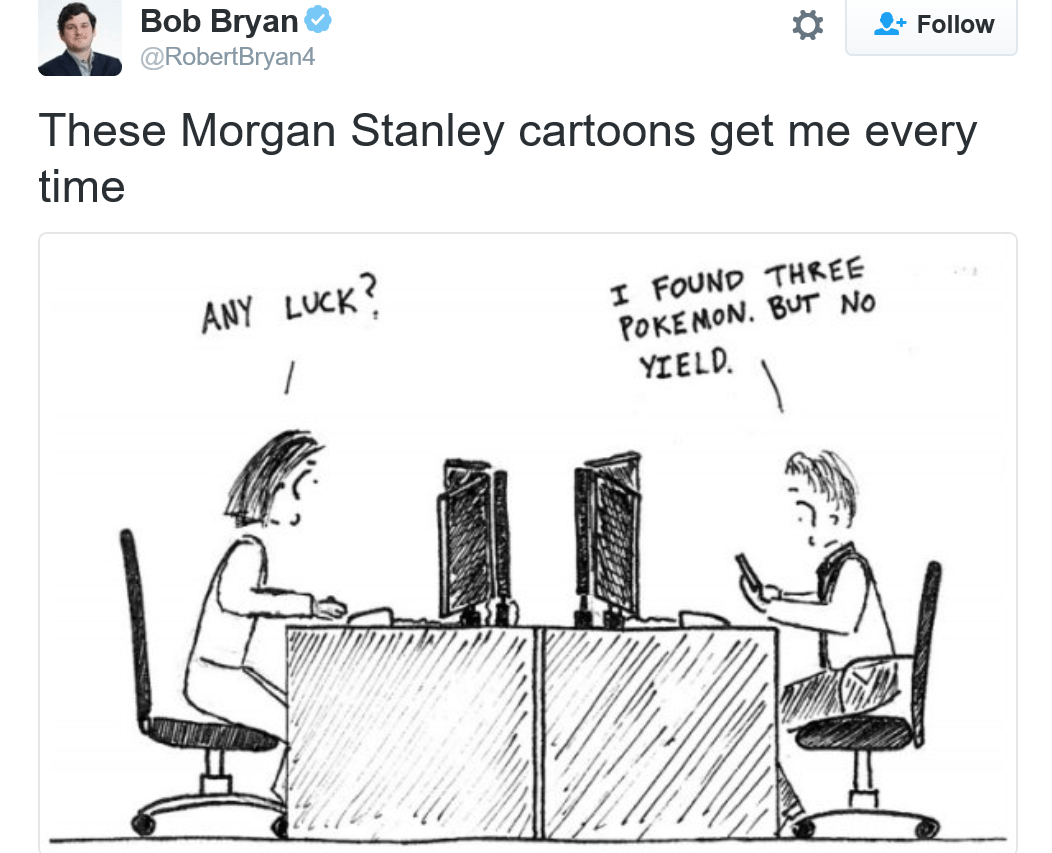
    SNB, Homebuilder optimism, Corporate profits, Morgan Stanley cartoon

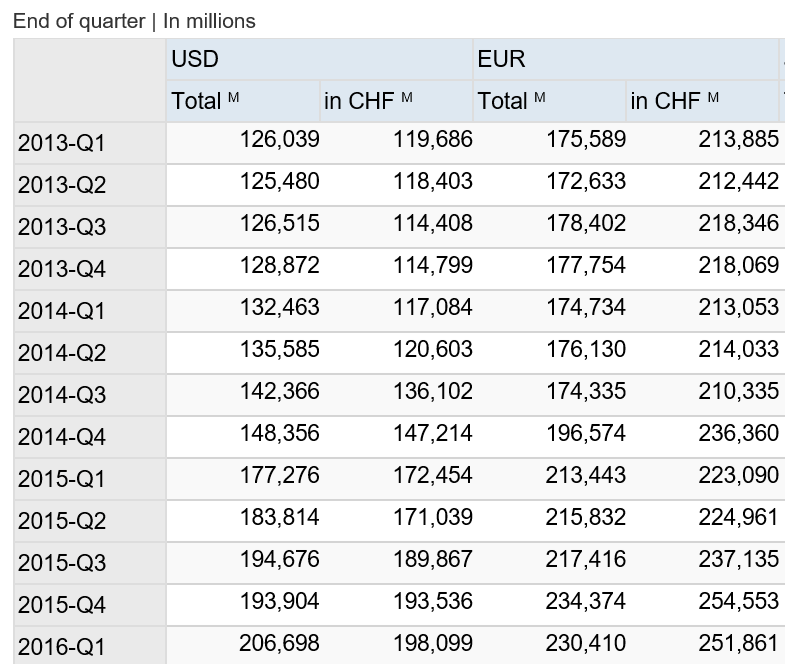
    It looks like the SNB (Swiss National Bank- the central bank) has been building $ reserves faster than euro reserves, which has worked to support the $ vs the euro.

    That is, when they were buying euro to keep their currency down they were selling quite a few of those euro for $ to keep their portfolio ‘balanced’.

    And for the last two quarters reported below, $ holdings went up about 12.5 billion while euro holding fell by about 4 billion, which means the shifting is ongoing.

    This means, for example, that when what I call ‘portfolio managers’ were selling their euro to buy and hold Swiss francs, the SNB was in turn selling more than half of those euro to buy $US, thereby holding both $ and euro as reserves as shown in the tables below.

    Furthermore, there’s no way to know if the SNB is planning to stay at their current balance or continue to shift to $. And even if the Swiss franc weakens for any reason, the SNB is
    under no obligation to sell their euro or $ reserves to buy francs. The Swiss franc is not specifically convertible to euro or any other currency, so those reserves remain at the SNB until they decide to do something else with them.

    Likewise the holders of Swiss francs, should they desire another currency, can only sell them in the market place at market prices.

    So my narrative is that Europeans and other holders of euro, in an attempt to ‘flee to safety’ sold their euro and bought Swiss francs which are nothing more than Swiss tax credits. The SNB then sold more than half of those euro for $ for much the same reason. So the effect on fx markets has been that of large numbers of euro being sold for $, driving down the euro vs the $, which may or may not have run its course.

    I also suspect that those sellers of euro have ongoing euro liabilities and at some point need to sell their francs to buy euro. That is, they are fundamentally ‘short’ euro.

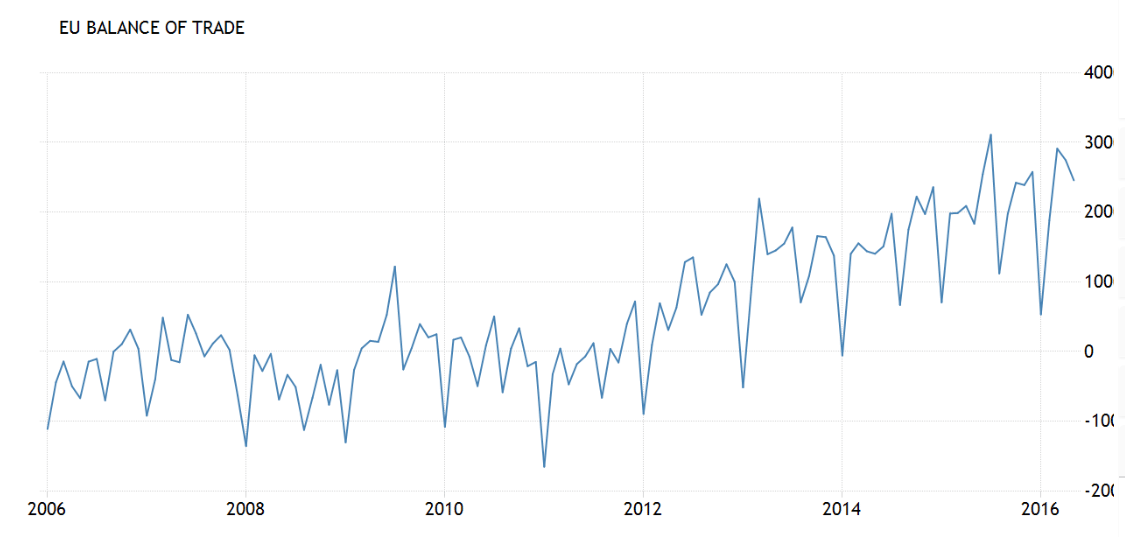
    Meanwhile, the euro, driven down by fear, has worked to generate euro area trade surpluses which are ‘draining’ the euro sold by all the agents selling euro to buy other currencies. And this trade surplus will continue to drain euro from global markets until it reverses.

    SNB reserve report from the SNB website:

    7-18-1
    7-18-2

    7-18-3

    Corporate Profits Set to Shrink for Fourth Consecutive Quarter

    By Kate Linebaugh

    July 17 (WSJ) — More than 90 of the biggest U.S. companies will report results this week. Based on analysts’ forecasts for companies in the S&P 500 index, Thomson Reuters predicted that adjusted earnings per share for the second quarter were down 4.7% from a year earlier. That follows a 5% drop in the first quarter and would be the fourth straight period of declines.
    Revenue, meanwhile, is expected to slip 0.8%, marking the sixth straight quarter of declines, according to Thomson Reuters. For the second quarter, more than 80 S&P 500 companies have issued earnings warnings, according to Thomson Reuters.

    7-18-4

    CPI, retail sales, Empire State Mfg, Industrial production, Business inventories, Consumer sentiment, JPM earnings, UK comment, China comment

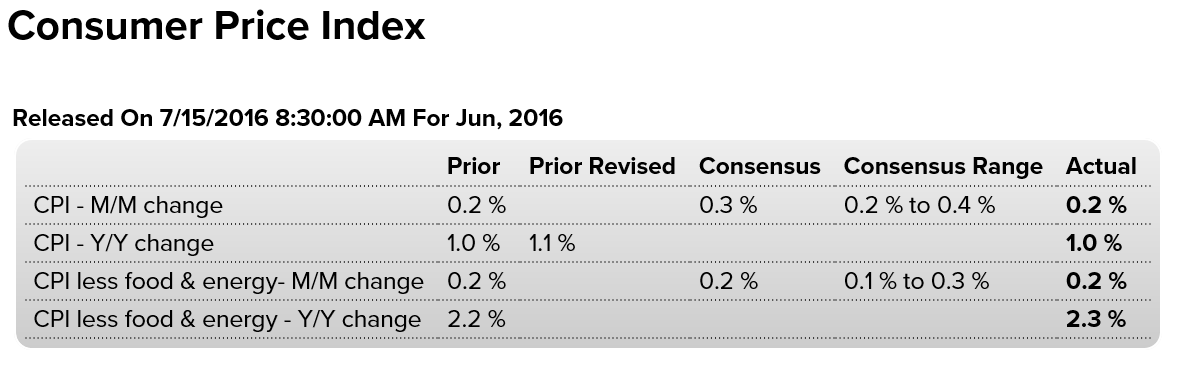
    A bit less than expected- nothing to cause the Fed to be alarmed. You’d think that by now they’d realize that all that rate cutting and so called ‘money printing’ has nothing to do with the price level or ‘accommodation’…:
    7-15-1

    Highlights

    Price pressures evident the last two months down the supply chain are not yet appearing in consumer prices where the CPI rose only 0.2 percent in June for a weak year-on-year rate that is not going in the right direction, at plus 1.0 percent vs 1.1 percent in the prior three months. Ex-food & gas, consumer inflation also rose 0.2 percent with this year-on-year rate moving 1 tenth higher to a respectable but still soft 2.3 percent.

    Strength in service prices was a highlight of yesterday’s producer price report and is also a highlight in this report, up 0.3 percent for the third straight month. This gain helps offset weakness in commodity prices which rose only 0.1 percent. Lodging away from home shows an outsized gain for a second month, at plus 0.6 vs May’s 0.7 percent, though housing overall is flat at only plus 0.2 percent. Transportation rose 0.6 percent in the month with medical care up 0.4 percent, gains offset by a 0.1 percent decline for food and a 0.4 percent dip for apparel.

    Energy prices rose 1.3 percent in the month and follow similar gains in the four prior months, pressure reflecting the pass through from the manufacturing and wholesale sectors. For consumer prices in general, however, this effect is still limited, yet today’s report does show some signs of new life and may boost confidence among policy makers that the inflation picture is improving.

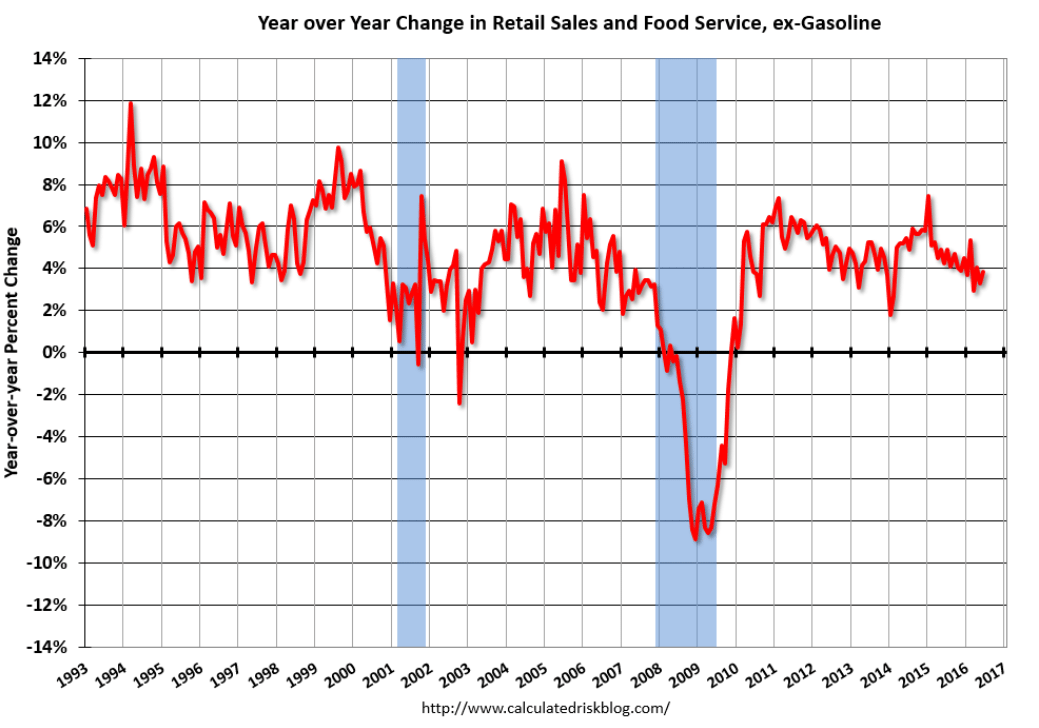
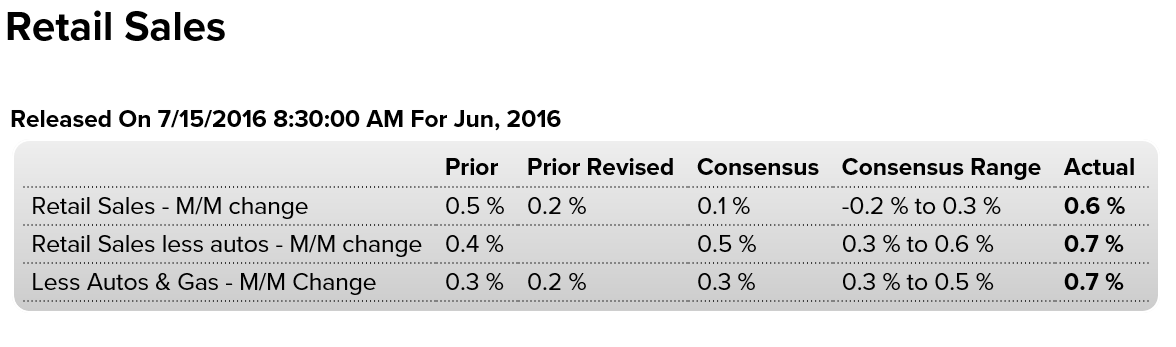
    Pretty large downward revision to last month, when the larger than expected increase was taken as evidence of a recovery. If this revised number had been reported last month it would have been taken as a setback. Watch for that to happen again with this month’s larger than expected increase, and I’ll be watching next month to see if it’s also revised.

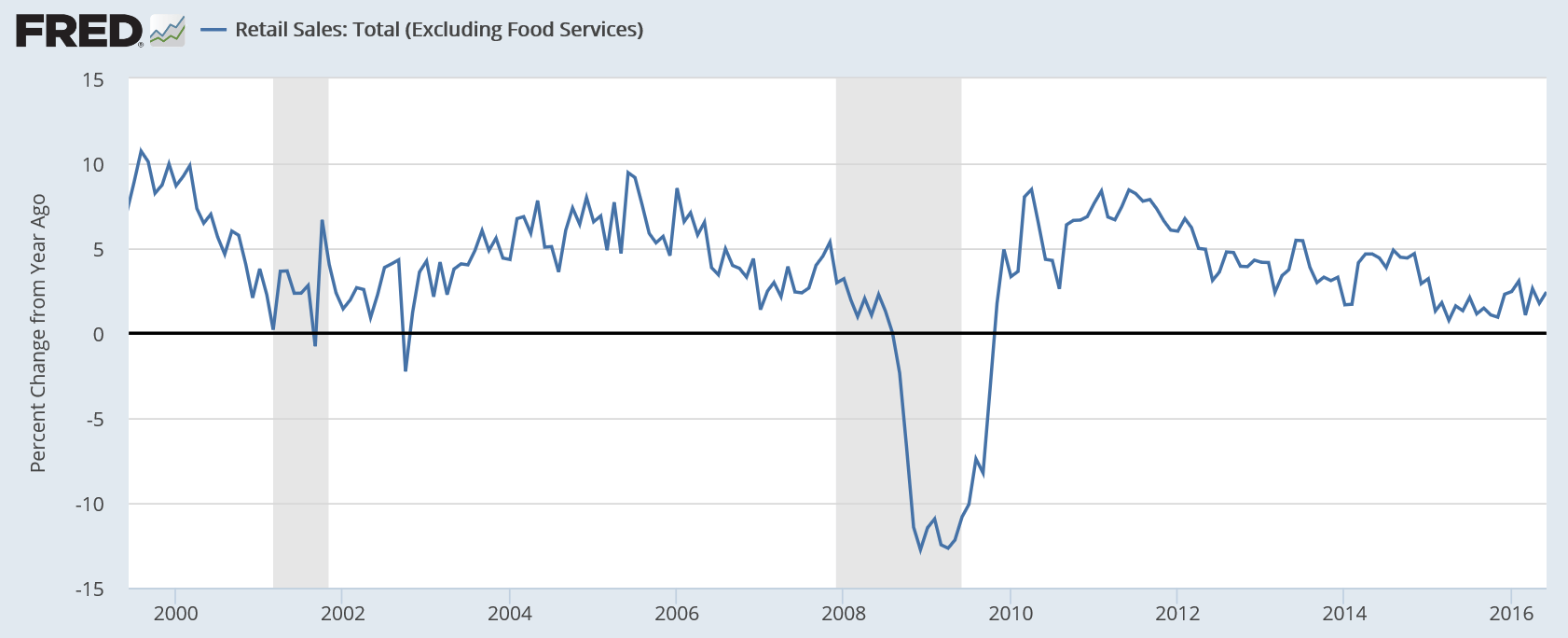
    Also, note that the year over year chart continues to show severely depressed levels of growth and no sign yet of material improvement:
    7-15-2

    Highlights

    June proved a fabulous month for the consumer though May, after revisions, proved only so so. Flat vehicle sales could not hold back retail sales which jumped a much higher-than-expected 0.6 percent in June, with May revised however 3 tenths lower to plus 0.2 percent. Excluding vehicles, June retail sales surged 0.7 percent as did the key ex-auto ex-gas reading.

    Ex-auto ex-gas offers a gauge on underlying trends in consumer spending, a dominant one of which is ecommerce as nonstore retailers popped a 1.1 percent surge in the month which follows even stronger gains in prior months. Department stores, up 0.9 percent, show a big comeback in the month with sporting goods & hobbies strong for a second month. An outsized gain, one that hints at adjustment issues and the risk of a downward revision, is a 3.9 percent surge in building materials & garden equipment, a component that had been lagging.

    This report is a major plus for the second-half economic outlook not to mention coming data on the second quarter (sales for April, after the second revision, are at a standout plus 1.2 percent). The job market is healthy and the consumer is alive and spending.
    7-15-3
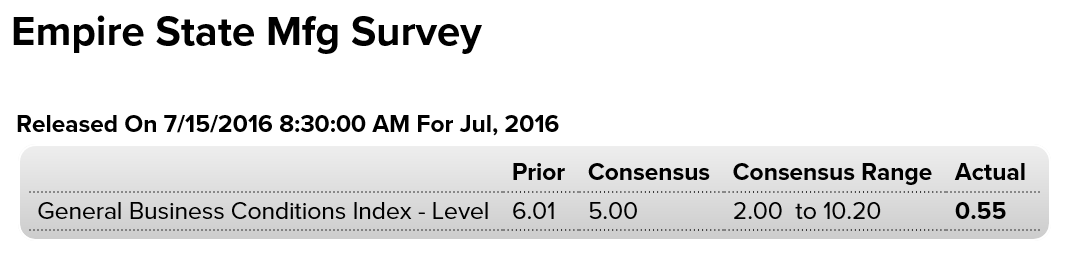
    A setback here:

    7-15-4

    Highlights

    The first anecdotal report on the factory sector for the month of July is not very promising as the Empire State index barely held in the plus column, at 0.55 vs 6.01 in June and minus 9.02 in May. New orders, after jumping to 10.90 in June, are down 1.82 in this month’s report. This combined with yet another contraction for backlogs, at minus 12.09, do not point to strength ahead for other readings. Employment is one of these readings and, after coming in at zero last month, is at minus 4.40. The workweek is also negative as are inventories which continue to contract. Price data are mixed, showing steady energy-related pressure for inputs but no life for selling prices. The factory sector has been up and down this year on a trend that is dead flat. Watch for the industrial production report coming up this morning at 9:15 a.m. ET. It will offer the first definitive data on the factory sector for the month of June.

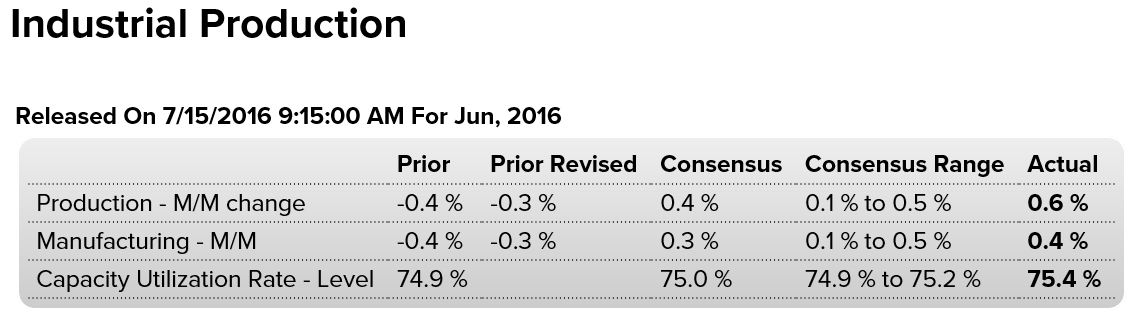
    Better than expected for the month, largely from a gain in vehicle output. However with vehicle sales sagging and down vs last year this month’s gain is likely to be a one time event:
    7-15-5

    Highlights

    Vehicles held down industrial production in May but not in June, making for a big 0.6 percent gain that is just outside Econoday’s high-end estimate. The production of motor vehicles & parts surged 5.9 percent in June following a 4.3 percent drop in May. Year-on-year, this component tops the list with 7.8 percent growth compared to only 0.4 percent growth for manufacturing as a whole. Only due to vehicles, manufacturing managed to put in a good showing in June, up 0.4 percent on the month to reverse a revised 0.3 percent decline in May.

    Headline production also got a big boost from utilities where output rose 2.4 percent in the month. Mining output, which is down 10.5 percent year-on-year, posted a second straight small gain, at plus 0.2 percent which is promising and follows the recovery in energy and commodity prices.

    Looking at details deeper in the report, the output of business equipment rose a solid 0.7 percent but the year-on-year rate, in what is definitive evidence of weakness in business investment, is in the negative column at minus 0.6 percent. The output of consumer goods, up 1.6 percent on the year, rose 1.1 percent in the month in what is another good showing in this report.

    The second quarter had been looking soft before this report and especially this morning’s retail sales report. A June bounce in the factory sector, facing global weakness and unfavorable currency appreciation, may not extend much into the third quarter but it may make a difference in the final readings of the second quarter.

    From the Fed: Industrial production and Capacity Utilization

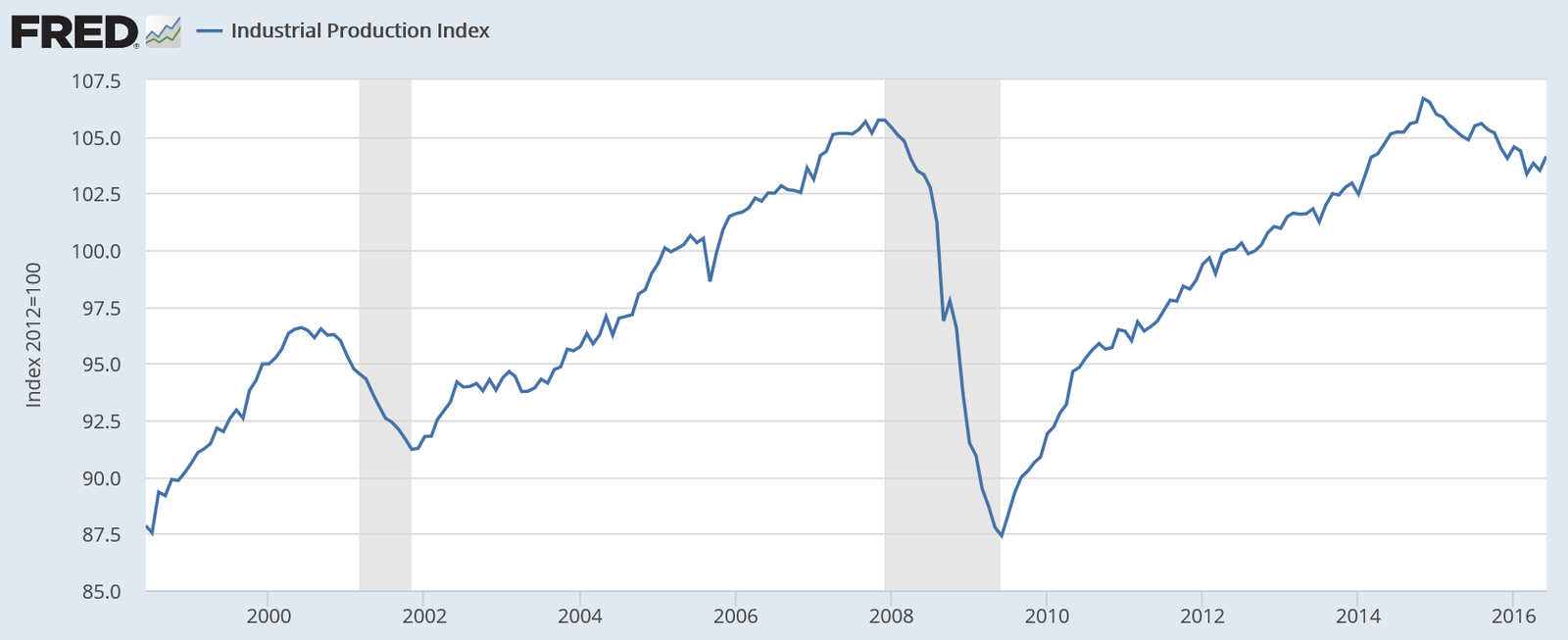
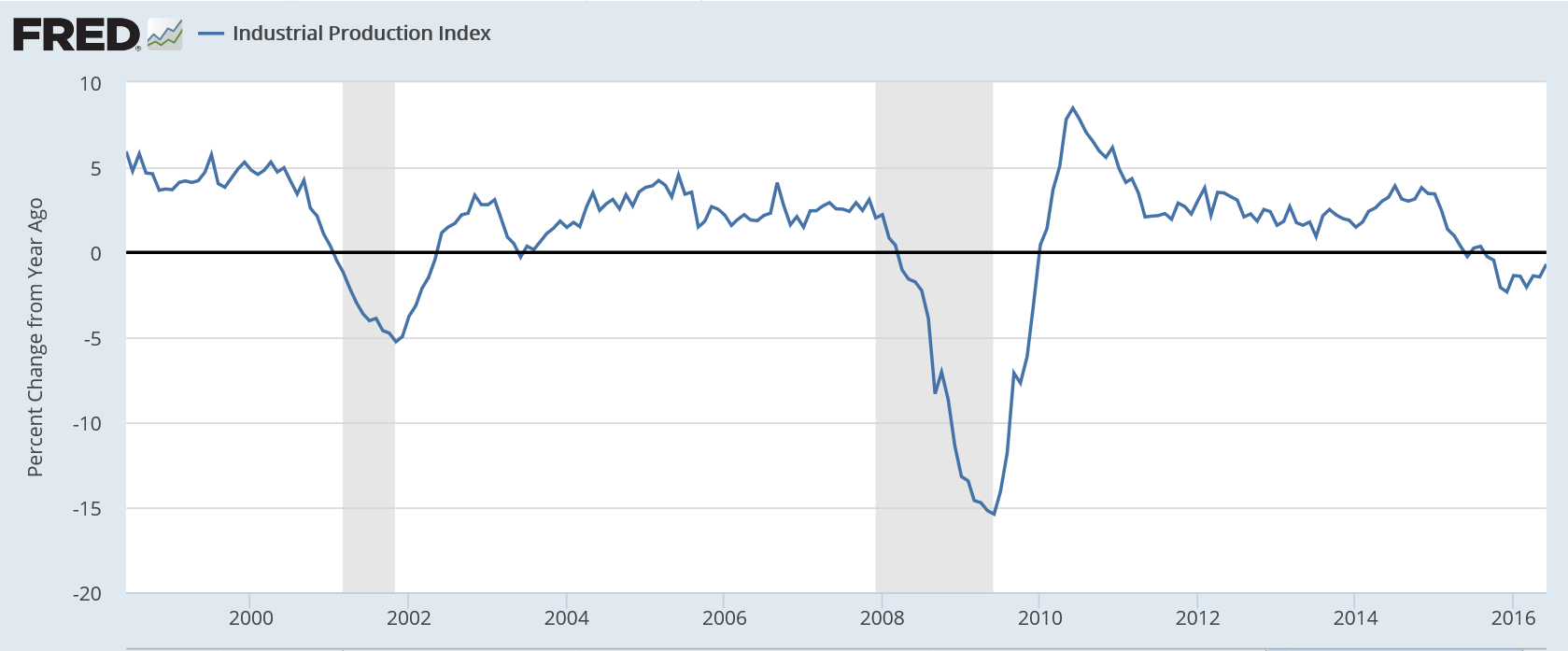
    Industrial production increased 0.6 percent in June after declining 0.3 percent in May. For the second quarter as a whole, industrial production fell at an annual rate of 1.0 percent, its third consecutive quarterly decline. Manufacturing output moved up 0.4 percent in June, a gain largely due to an increase in motor vehicle assemblies. The output of manufactured goods other than motor vehicles and parts was unchanged. The index for utilities rose 2.4 percent as a result of warmer weather than is typical for June boosting demand for air conditioning. The output of mining moved up 0.2 percent for its second consecutive small monthly increase following eight straight months of decline. At 104.1 percent of its 2012 average, total industrial production in June was 0.7 percent lower than its year-earlier level. Capacity utilization for the industrial sector increased 0.5 percentage point in June to 75.4 percent, a rate that is 4.6 percentage points below its long-run (1972–2015) average.

    Read more at http://www.calculatedriskblog.com/#JhY5L16LgIWsMrRf.99

    You can see how weak this cycle is, particularly when compared to prior cycles. The rate of growth has been low and the total is below where it was in 2007:
    7-15-6

    7-15-7

    7-15-8
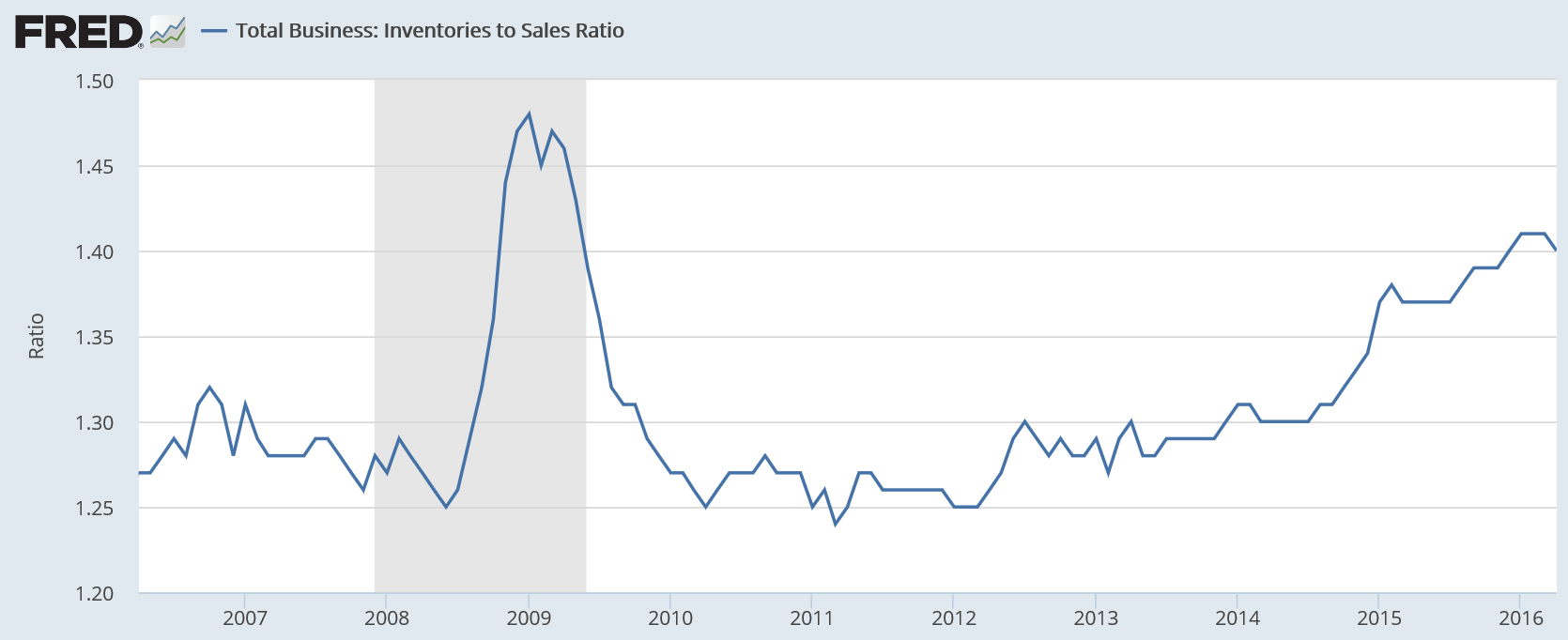
    Still way too high/recession levels:
    7-15-9

    Highlights

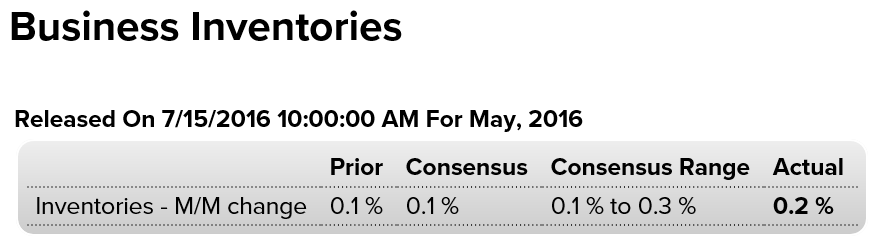
    Businesses are keeping their inventories in check amid slow sales. Inventories rose only 0.2 percent in May following April’s even leaner 0.1 percent rise. Sales in May also rose 0.2 percent keeping the inventory-to-sales ratio unchanged at 1.40, which is a little less lean than this time last year when the ratio was at 1.37.

    Retail inventories did rise an outsized 0.5 percent in May in a build, however, that looks to be drawn down by what proved to be very strong retail sales in June. Manufacturing inventories fell 0.1 percent in May with wholesalers up 0.1 percent.

    Year-on-year, total inventories are up 1.0 percent which looks fat against what is a 1.4 percent decline in sales. With Brexit now in play, businesses are certain to keep ever tightening control over their inventories, a factor that will keep down current GDP growth but will help the outlook for employment and future GDP.

    (this chart not updated yet for today’s 1.40 print)
    7-15-10
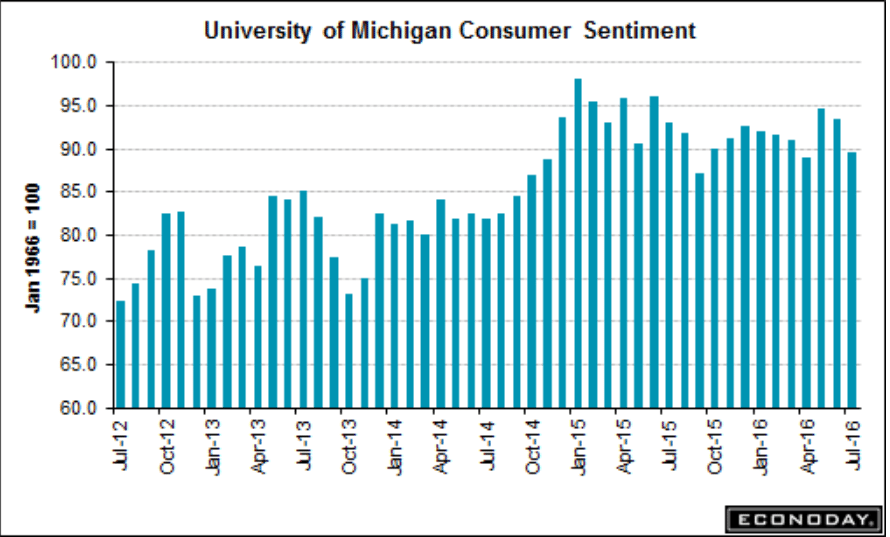
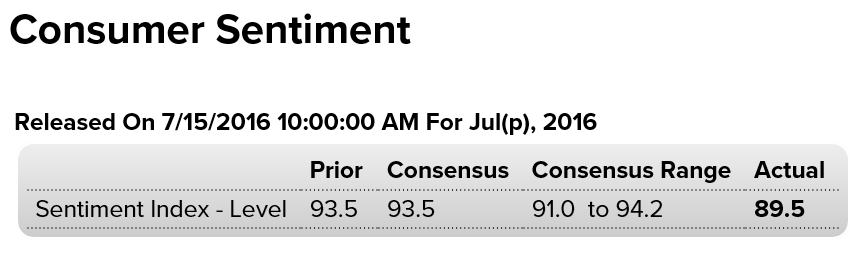
    Big setback here, confirming the downtrend:
    7-15-11

    7-15-12
    Ok, stronger than expected, but down from same quarter last year, with other banks reporting similar or worse, and overall rates of loan growth are decelerating:

    J.P. Morgan Posts Stronger-Than-Expected Results on Trading Surge

    By Emily Glazer and Peter Rudegeair

    July 14 (WSJ) — J.P. Morgan’s second-quarter profit fell slightly from a year earlier, to $6.2 billion. Loan growth topped 10%. Revenue rose 2.4% from a year ago to $24.38 billion. The bank’s net-interest margin fell 0.05 percentage point from the prior quarter to 2.25%. J.P. Morgan’s loan portfolio grew to $858.6 billion. And total net-interest income of $11.4 billion was up 6% from a year earlier. Total consumer loans, excluding credit cards, grew by 14% to $361.31 billion. The bank’s overall provision for credit losses ballooned 50% to $1.4 billion because of reserve increases and higher net charge-offs.

    Looks to me the UK can now threaten not to leave unless they get favorable terms?
    ;)

    ‘Reasonable’ that Britain wants financial services access to EU: Schaeuble

    By Joseph Nasr

    July 14 (Reuters) — UK Treasury Secretary Philip Hammond’s remarks that British financial services should retain access to the European Union’s single market are “reasonable,” German Finance Minister Wolfgang Schaeuble said on Thursday.

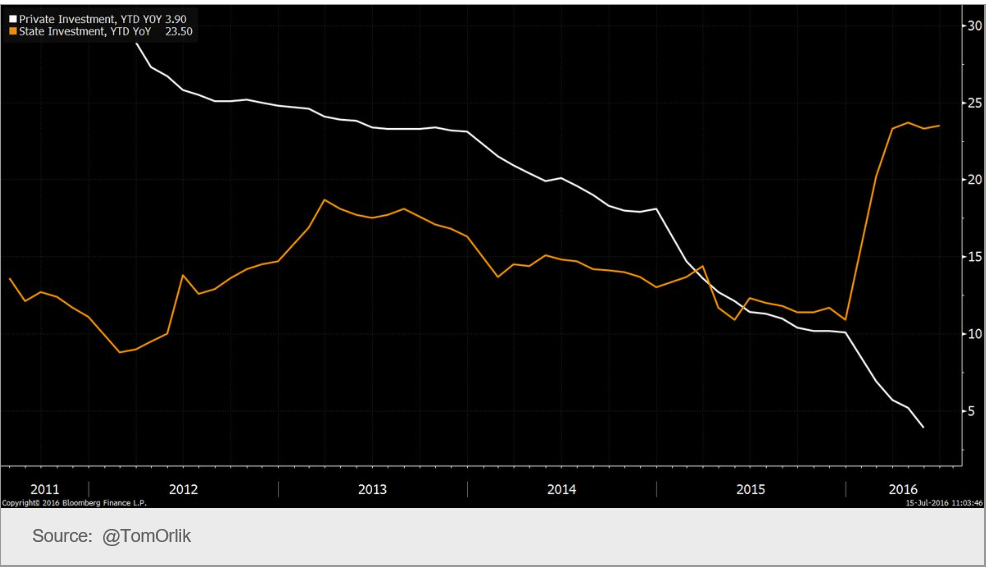
    So maybe those western educated monetarists will recognize that fiscal adjustments do work…:

    China Q2 economic growth beats estimates as stimulus shores up demand

    July 15 (CNBC) — China’s economy narrowly beat estimates Friday with a 6.7 percent expansion on-year in the three months through June. The headline figure was steady from the previous quarter’s 6.7 percent pace. Second quarter Gross Domestic Product (GDP) was up 1.8 percent from the first quarter. The Chinese government is aiming for growth of 6.5 to 7 percent this year. For 2015, Beijing logged 6.9 percent growth. Friday’s release was the first since China tweaked its methodology of compiling data by adding research and development (R&D) spending into its calculations for GDP.

    7-15-13

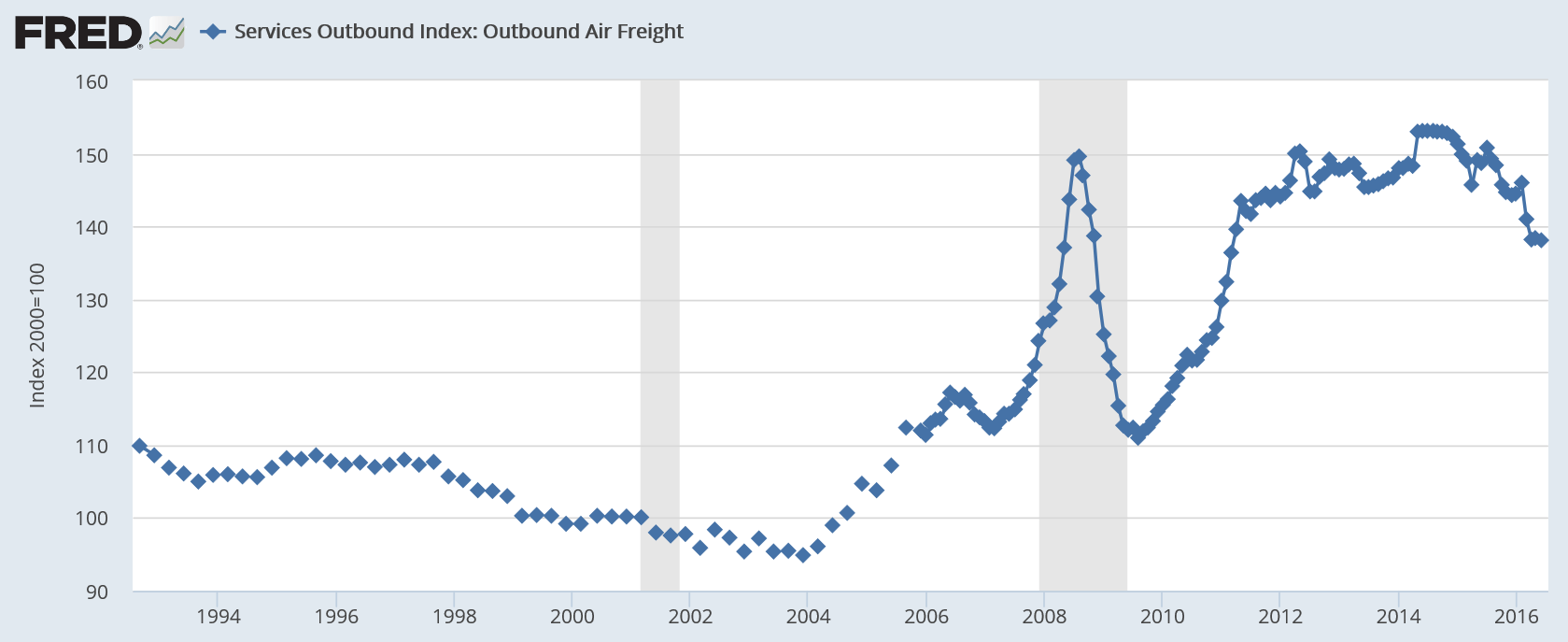
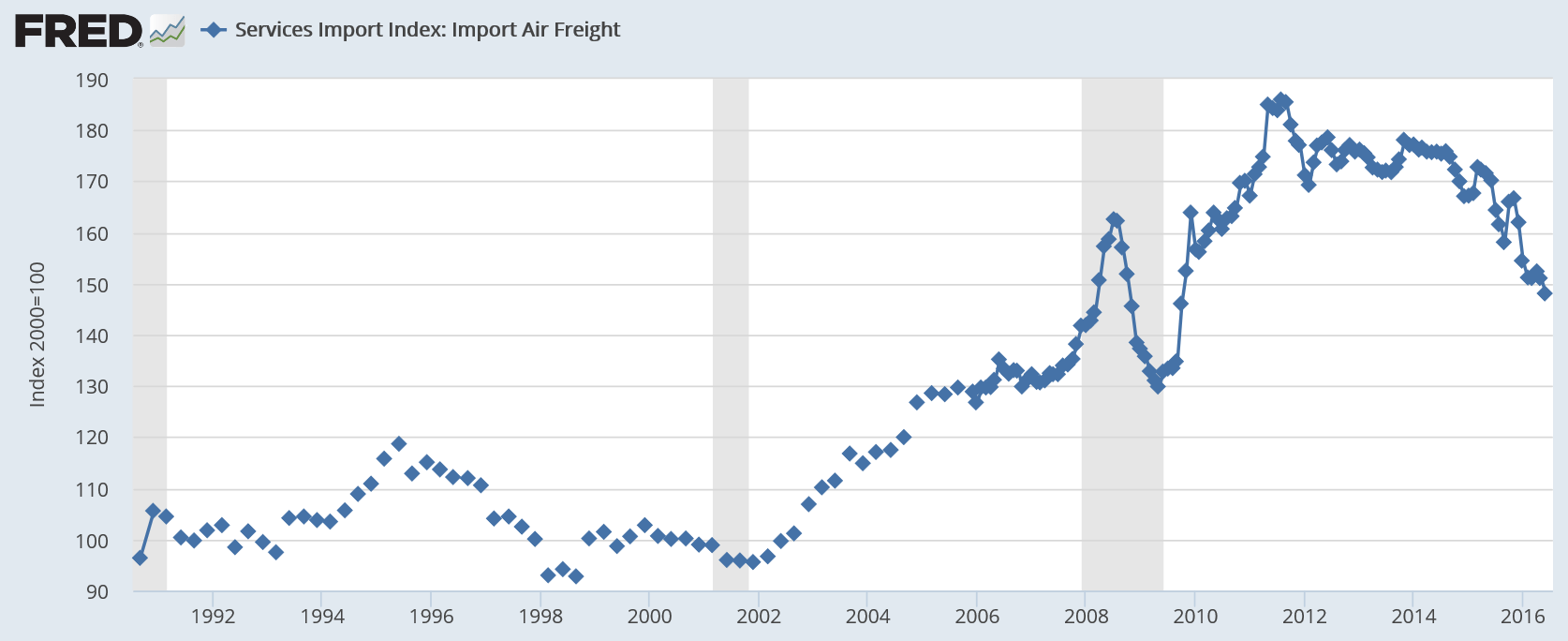
    Treasury budget, Air freight index, Atlanta Fed

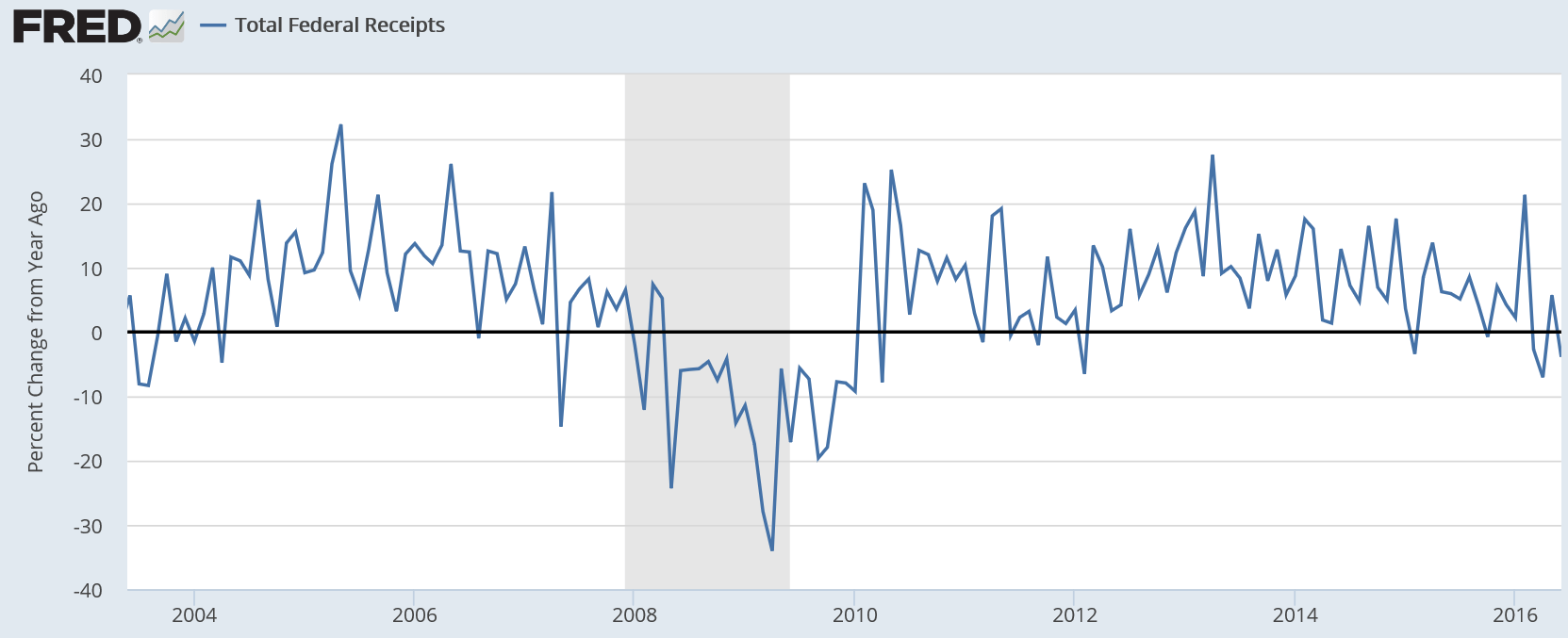
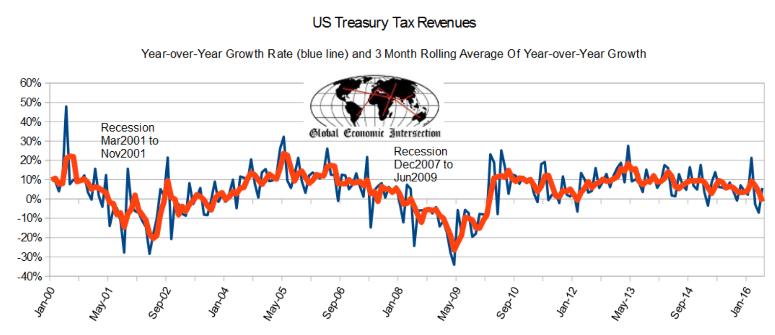
    It was previously noted that Treasury revenue was down, which now is confirmed in this report. This is the beginning of the automatic fiscal stabilizers at work, where weakness translates into
    a larger federal deficit, and persists until deficit spending is sufficient to more than offset unspent income, as is necessary for growth. Private sector deficit spending would also restore growth. However I see only private sector credit growth deceleration, which is generally the case as the private sector historically has a strong tendency to instead be pro cyclical:

    Highlights

    The Treasury did post a $6.3 billion surplus in June but 9 months into the government’s fiscal year the deficit is widening sharply, up 27 percent to $400.9 billion vs $316.4 billion this time last year. The year-to-date gain for receipts is at only 0.9 percent with corporate income taxes down sharply and individual income taxes up only slightly. The spending side of the ledger is up 3.9 percent with net interest costs up 11.9 percent and reflecting what are still comparatively high U.S. rates. Medicare costs are up 4.3 percent year-to-date, offset in part by a 1.1 percent decline for defense.

    Also:

    The latest US Federal government summary recorded a surplus of $6.3bn for June compared with a consensus surplus estimate of around $24.0bn. It followed a $50.5bn surplus in June 2015 and was the weakest June performance for two years. For the first nine months of fiscal 2015/16, the deficit rose significantly to $401bn from $316bn the previous year with sustained deterioration over the past few months.

    Over the fiscal year to date, revenue rose 0.9% from the previous year, maintaining the overall slowdown seen over the past few months. Income taxes increased slightly over the year, but growth has weakened and corporate taxes continued to decline with a 16% annual fall.

    Spending rose 3.9% over the year and there has been a steady increase in spending over the past 12 months. Over the past 12 months, the deficit amounted to 2.9% of GDP from 2.6% previously. Although there were slight distortions caused by calendar adjustments, there is evidence that the overall deterioration in the budget position is accelerating.

    7-13-7
    More evidence of trade collapse:

    7-13-8

    7-13-9
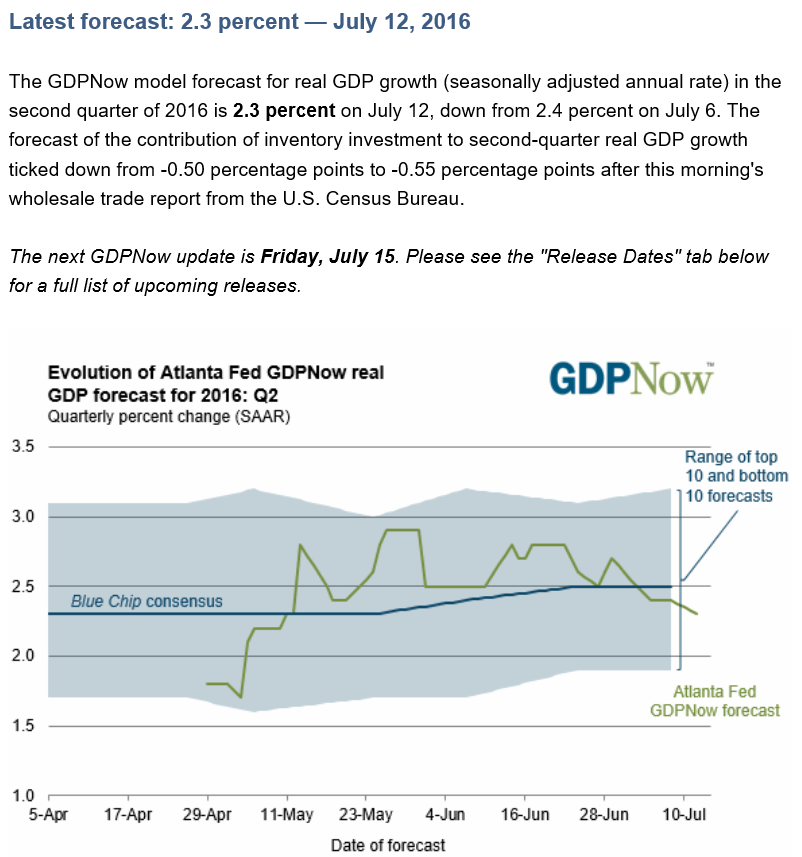
    GDP forecast moving down, most recently on a report for May as excessive and still way too high inventories begin to be worked down, as previously discussed. Lots of time for more of same:

    7-13-10

    7-13-11

    Oil prices, Regional feds, Long term deficit forecasts, China trade

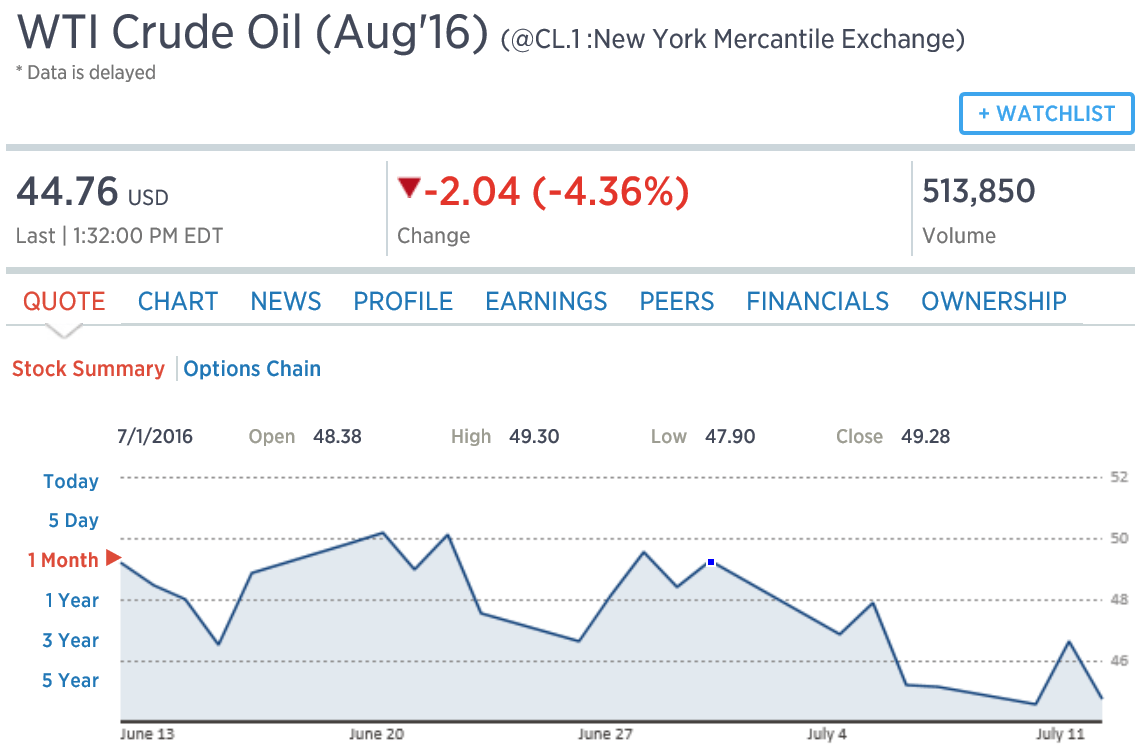
    A few weeks ago I posted the announcement of Saudi price cuts, suggesting this could be meant to bring down prices, which now seems to be happening:

    7-13-5
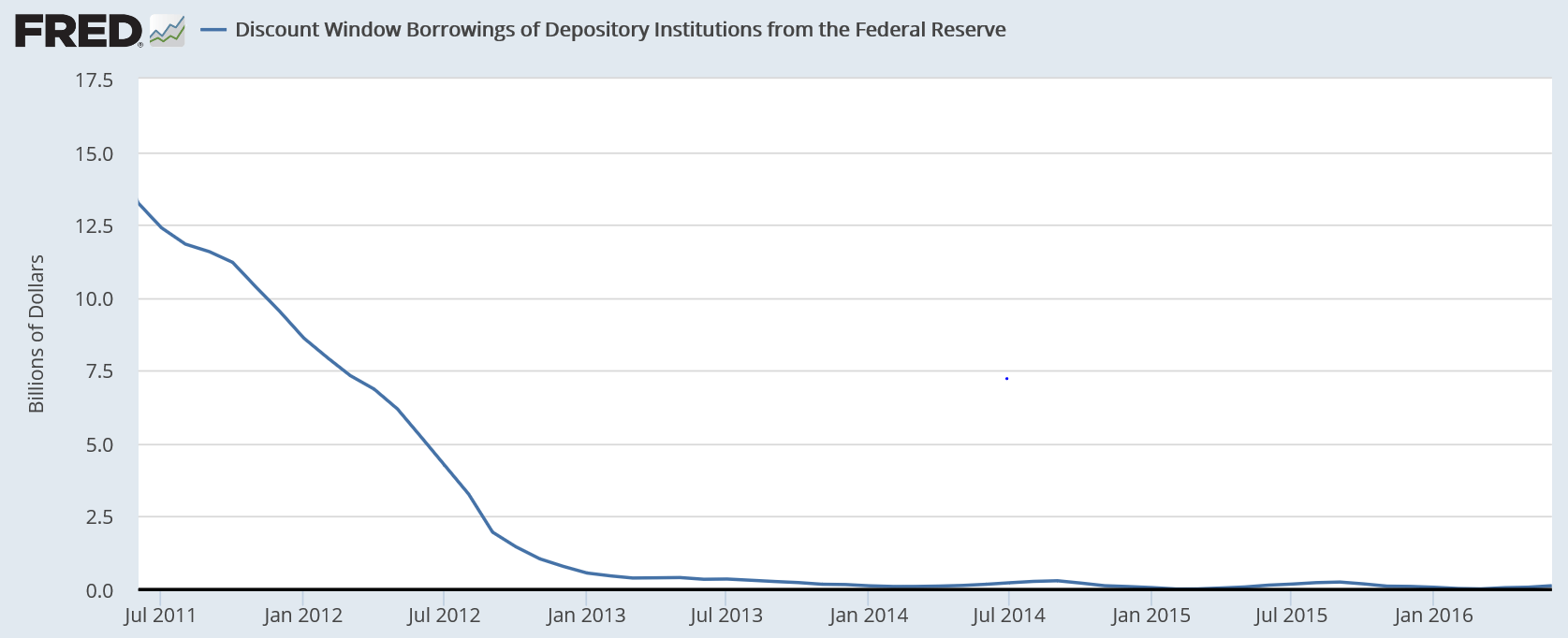
    Again, with no loan demand, they are calling for higher rates, presumably to slow down lending:

    Six Fed banks called for discount rate hike: minutes

    By Lindsay Dunsmuir

    July 12 (Reuters) — The number of regional Federal Reserve banks pushing the central bank to raise the rate it charges commercial banks for emergency loans rose to six in June, minutes from the Fed’s discount rate meeting released on Tuesday showed. The Federal Reserve banks of Kansas City, Richmond, Cleveland and San Francisco continued to push for an increase and were joined this time around by Boston and St. Louis. Those that wanted an increase cited “expected strengthening in economic activity and their expectations for inflation to gradually move toward the 2 percent objective.”

    7-13-6

    At the macro level the only financial problem from Federal deficit spending per se would be some kind of inflation problem. Therefore the burden of proof is on anyone claiming there is a long term deficit problem to show there is a long term inflation problem. So with the Fed’s and CBO’s forecasts at 2%, and with the Treasury TIPS markets showing something less than that, the burden of proof is on those claiming a long term deficit problem to show those forecasts are sufficiently wrong. Yet the ‘headline left’ unquestioningly concedes that there is a long term deficit problem, and the rest is history… :(

    CBO Expects Higher Long-Term Deficits and Lower Interest Rates

    By Nick Timiraos

    July 12 (WSJ) — Federal debt, which has doubled since 2008 to about 75% of gross domestic product, will rise to 122% in 2040, up from an estimate of 107% last year. On the latest forecasts, the national debt would exceed GDP by 2033. Last year’s projections had the U.S. reaching that threshold in 2039. The CBO projects that the debt will reach 141% of GDP in 2046, down from an earlier estimate of 155% made this past January. The latest CBO estimates envision the 10-year Treasury rate, after inflation, reaching just 1.9% over the long term, down from estimates of 2.2% last year and 3% in 2013.

    The drop in imports and exports tells the story of the collapse of global trade. Not good:

    China’s June exports, imports fall more than expected

    July 13 (CNBC) — China’s June exports and imports fell more than expected. In June, exports fell 4.8 percent year-on-year percent, while imports declined 8.4 percent, percent, in U.S. dollar terms. In yuan terms, exports rose 1.3 percent from a year ago while imports declined 2.3 percent. That compared with May exports in dollar-denominated terms tanking 4.1 percent on-year, more than double April’s 1.8 percent fall, while imports edged down 0.4 percent, compared with April’s 10.9 percent drop. In yuan terms, May trade data had painted a different picture, with exports up 1.2 percent on-year and imports 5.1 percent higher.

    Mtg purchase apps, EU deficit limits, Wholesale sales, New home sales per capita

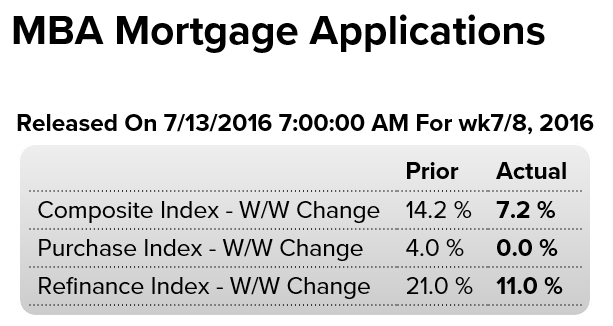
    Unchanged from last week as modest growth from very low levels continues:

    7-13-1

    The seasonally adjusted Purchase Index was unchanged from one week earlier. The unadjusted Purchase Index decreased 20 percent compared with the previous week and was 5 percent lower than the same week one year ago. Last year, the Fourth of July fell on the prior week.
    Read more at http://www.calculatedriskblog.com/#sQ3JkrmqGOvif9t3.99

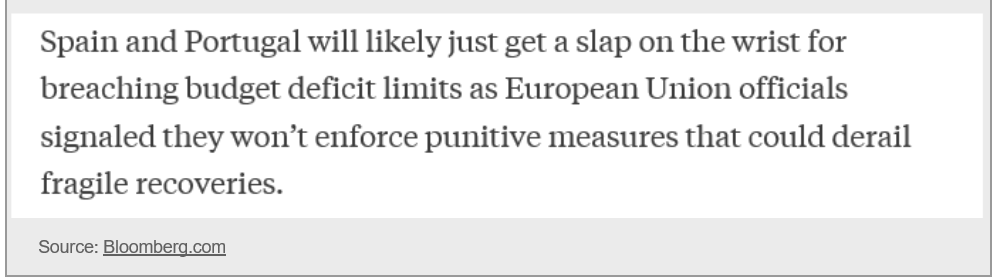
    So now that they know larger deficits are better for an economy, why not raise the 3% limit for all?

    7-13-2
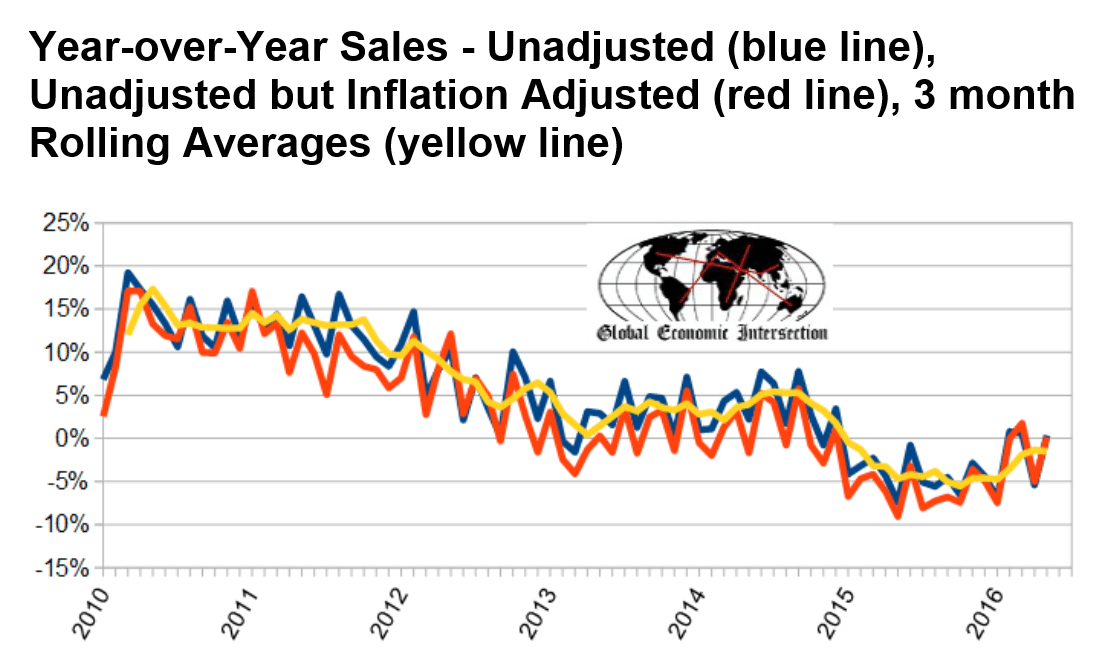
    Low and the 3 month average declined:

    7-13-3
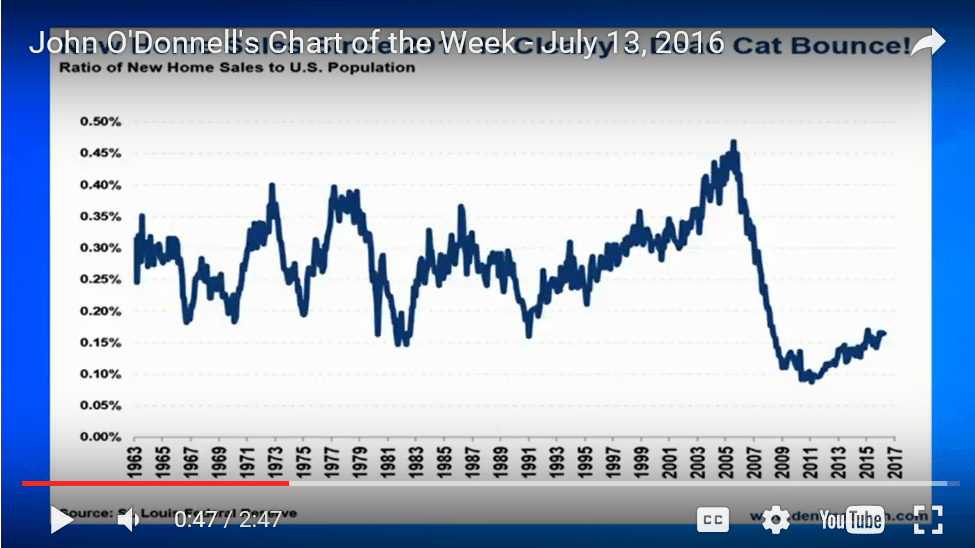
    New home sales per capita still at prior recessions levels:

    7-13-4

    Small business index, Redbook retail sales, Wholesale trade, Jolts

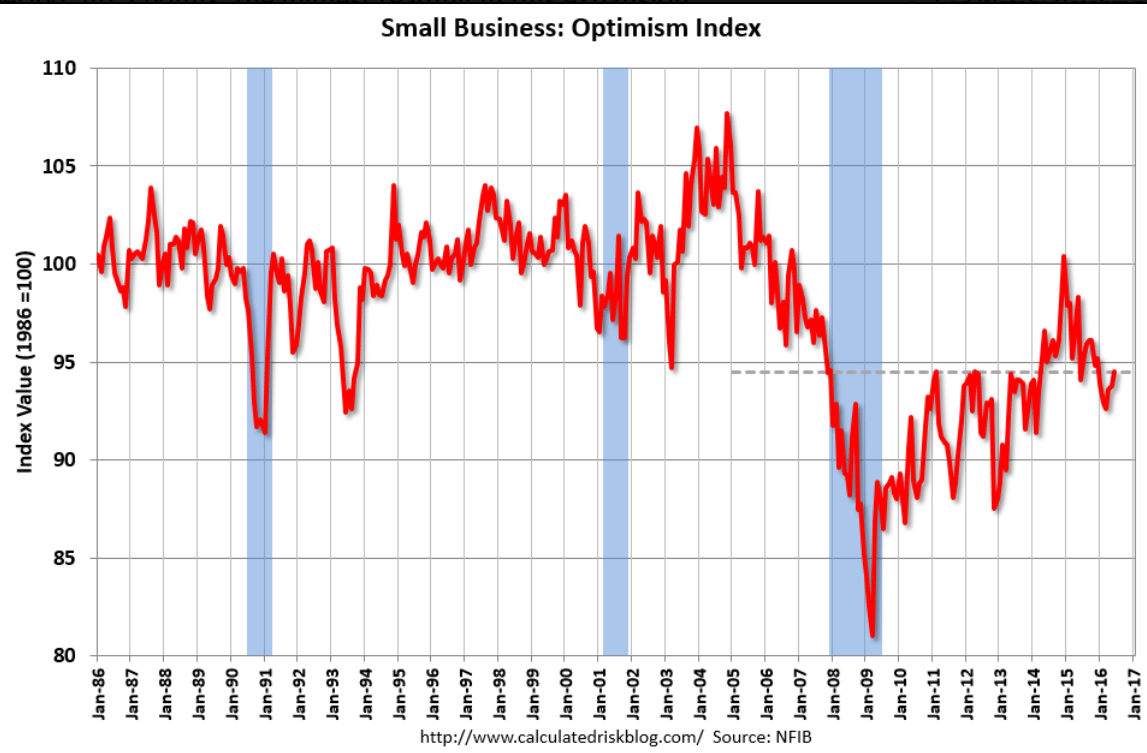
    Up a bit, but still weak and in a downtrend, and employment declining:

    Highlights
    The small business optimism index rose 0.7 points in June to 94.5, the third monthly increase since falling to a 2-year low in March. The improvement in small business optimism slightly exceeded expectations, though the index remains in the downtrend in place since the 100.4 recovery peak set in December 2013 and below the 42-year average of 98. Four of the 10 components of the index posted gains, three fell and three remained unchanged. Expectations that the economy will improve rose 4 points, posting the largest gain just as it did in May, but with the index still negative at minus 9 the majority of business owners continue to expect a worsening of business conditions. The two strongest components of the index recovered from their May declines, with plans to increase capital outlays rising 3 points to an even more solid 26, while job openings were even harder to fill, rising 2 points to 29. Expectations of an improvement in real sales rose 1 point to 2, but plans to increase inventories fell 2 points to a minus 3 and plans to increase employment dropped 1 point to 11. Business owners were slightly less optimistic than in May about now being a good time to expand, with the component falling 1 point to 8, and most continue to be negative about earnings trends, with the component remaining unchanged at minus 20 as the most pessimistic part of the index.

    7-12-1
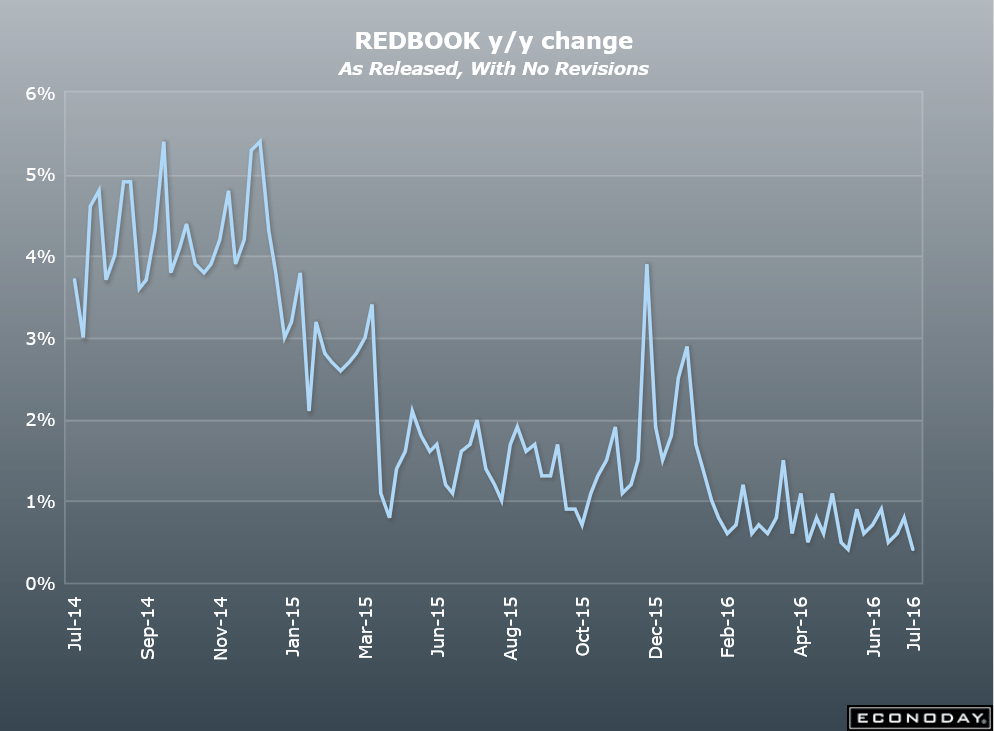
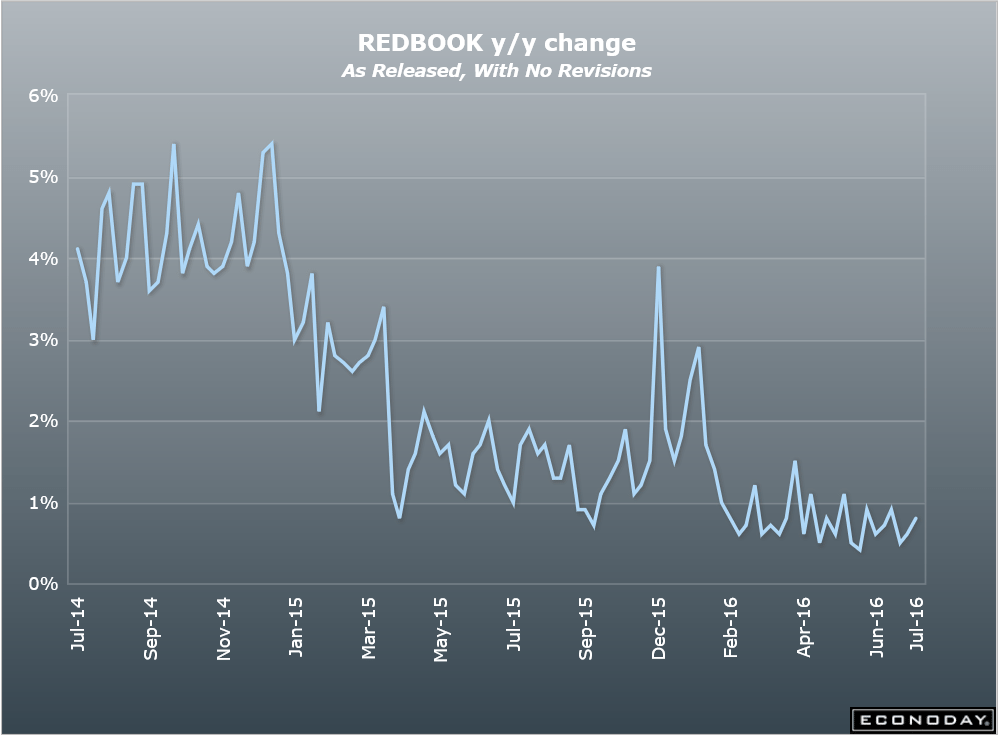
    This measure of retail sales growth continues at recession levels:

    7-12-2
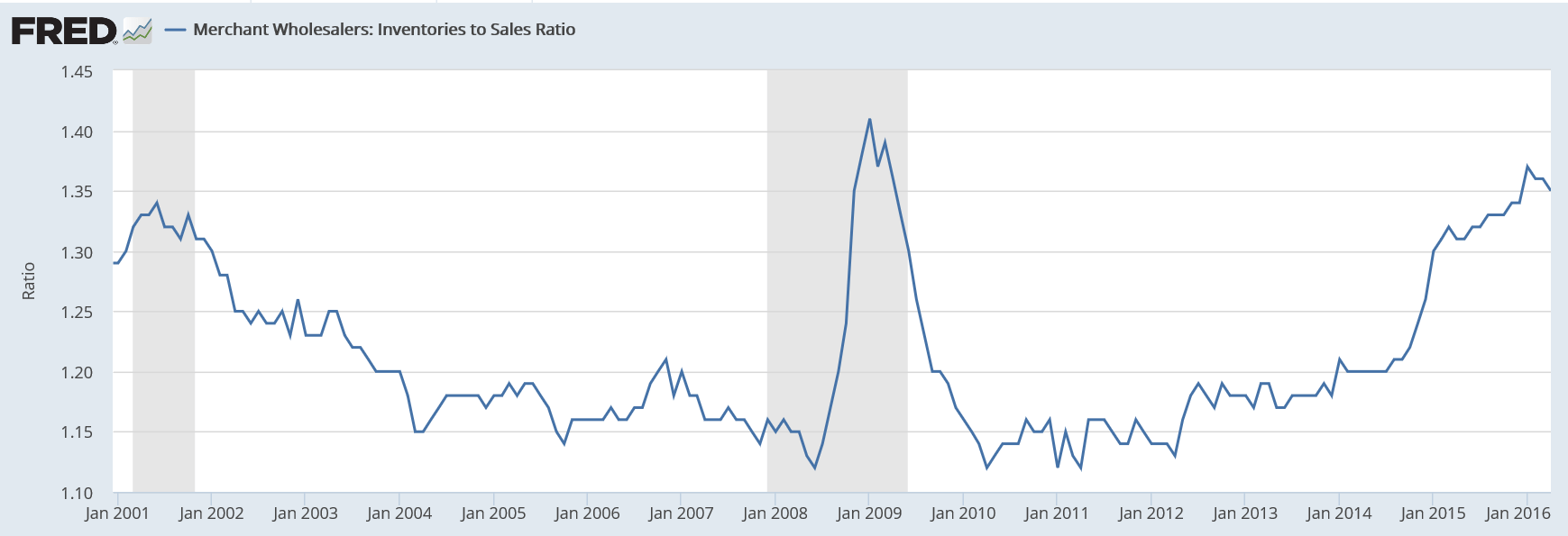
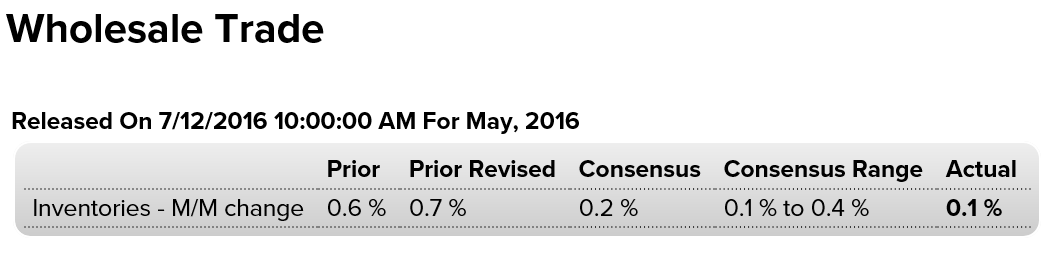
    This May report reads like output has been trimmed to keep inventories, which remain too high, from rising further:

    7-12-3

    Highlights
    Wholesalers held back inventory growth in May, up only 0.1 percent and well under a 0.5 percent rise in sales at the wholesale level. The stock-to-sales ratio is down one notch to 1.35 from 1.36.

    Inventories of two very large components — drugs and autos — fell sharply, making for leaner inventories relative to sales for both. In contrast, wholesale inventories of farm products have been on a sharp climb at the same time that sales have been falling, an unfavorable mix that is lifting the stock-to-sales ratio sharply, to 1.56 vs 1.46 in April and 1.30 in March.

    But in general, inventories have been held successfully in check in line against no more than moderate rates of sales growth. Business inventories will be released Friday and will combine this report together with factory inventories, which slipped 0.1 percent in May, and yet-to-be released data on retail inventories.

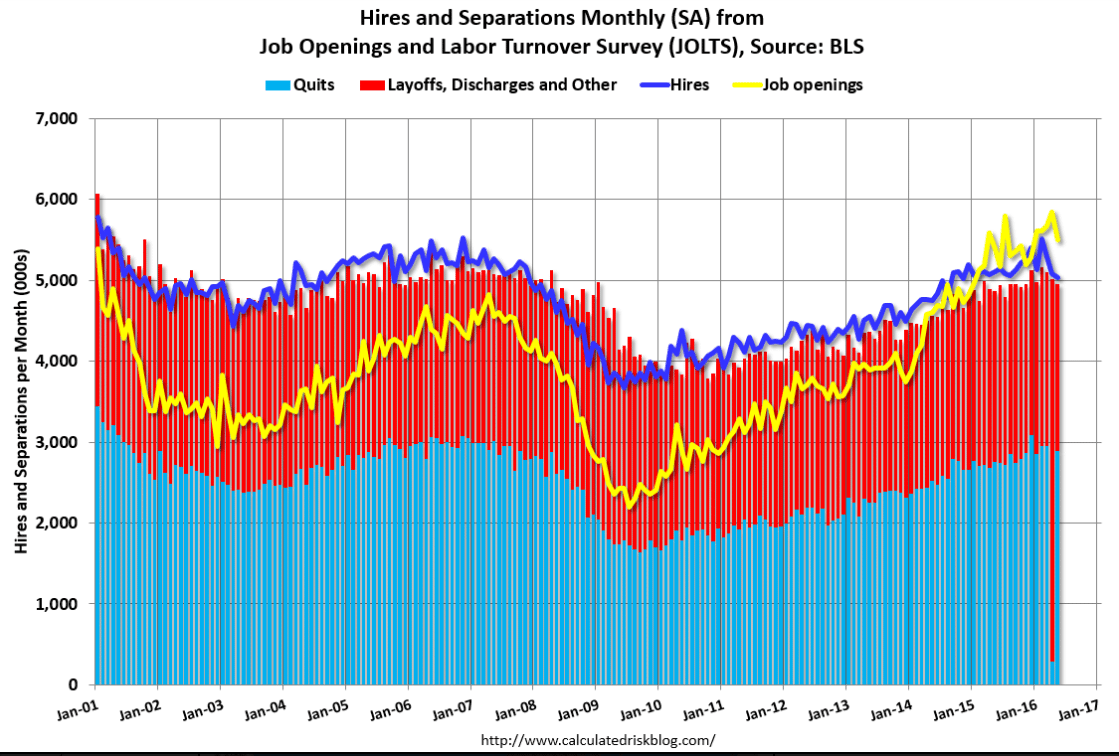
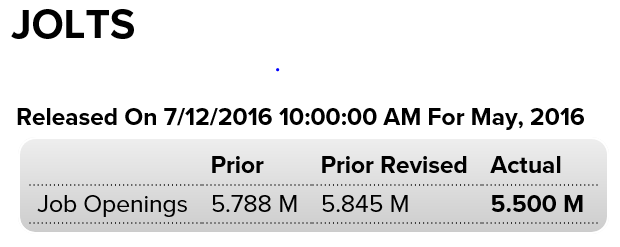
    This report has been showing signs of weakening and now, while April was revised up some, May shows a much larger decline with both job offerings and hires turning lower:

    7-12-4

    Highlights
    Job openings fell sharply in May, to 5.500 million from April’s revised 5.845 million for the lowest rate since February. The results pull down the job openings rate by 2 tenths to plus 3.7 percent, where it also was in May last year. The hiring rate is unchanged at 3.5 percent.

    On the breakup side of the labor market, the quits rate is unchanged at 2.0 percent and is not pointing to much confidence among workers who in general, despite low wage growth, are not moving up to higher paying employers. The separations rate is down 1 tenth to 3.4 percent with the layoff rate unchanged at 1.2 percent.

    Employment data have been up and down of late and this report is itself mixed, showing lack of new punch on the hiring side but favorable conditions on the breakup side.

    7-12-5