Retail sales, $US

Highlights

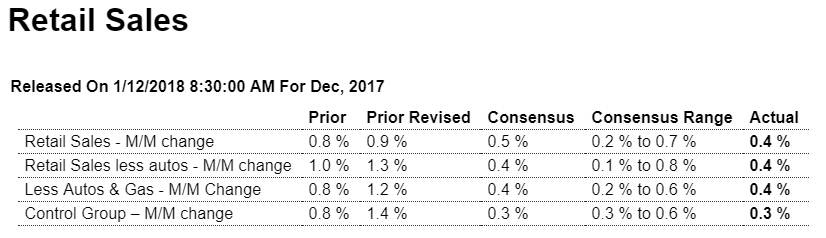
It was a very good holiday shopping season but perhaps not a great one. Retail sales rose a solid 0.4 percent in December which is just shy of Econoday’s consensus though November is revised 1 tenth higher to what is a standout gain of 0.9 percent. Core readings show similar strength with all pointing to a solid consumer contribution to fourth-quarter GDP.

Nonstore retailers, a component which e-commerce dominates, did in fact have a great season. Sales here rose 1.2 percent in December on top of November’s 4.2 percent surge. These gains no doubt came at the expense of brick-and-mortar boxes as general merchandise inched only 0.1 percent and 0.3 percent higher in the two months with the sub-component for department stores down a very noticeable 1.1 percent in December. Clothing stores are another December disappointment, falling 0.3 percent and reflecting price discounting as evidenced in the apparel reading of this morning’s consumer price report.

But furniture stores had a very good season with December and November gains of 0.6 percent and 0.5 percent. And in further evidence of housing strength, building material sales jumped 1.2 percent in December following November’s 0.5 percent gain. Restaurants are also positive with December and November gains of 0.7 and 0.5 percent. Vehicle sales rose 0.2 percent in December with gasoline sales unchanged.

The consumer was alive during the holidays but not unrestrained. Likely gains underway in wages along with the enormous strength in confidence and in the labor market are positives going into the 2018 economy.

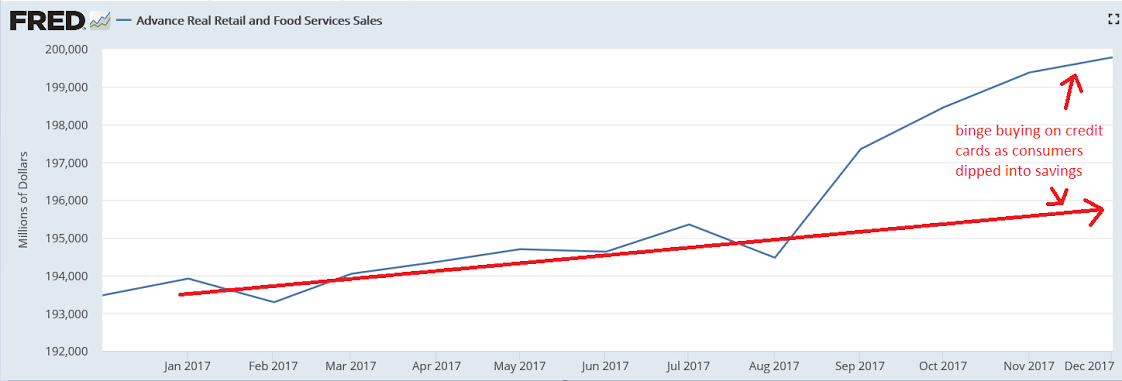
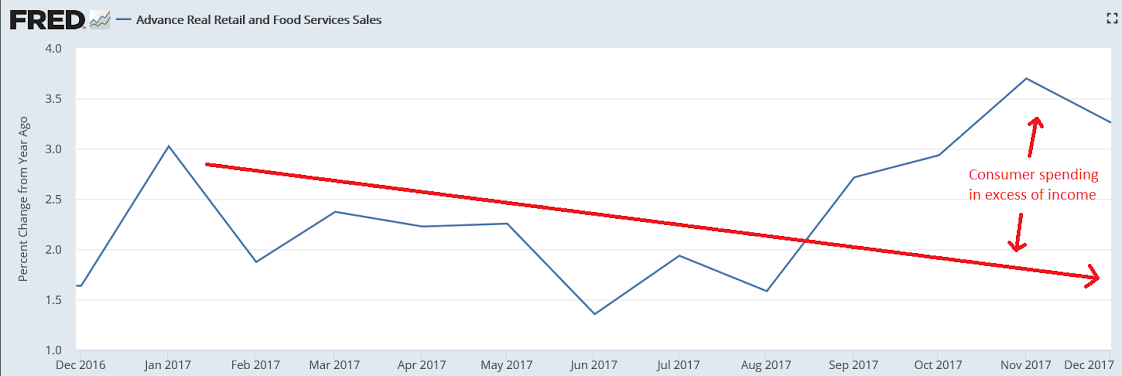
The year end binge buying financed by consumers adding to credit cards as income fell short doesn’t seem at all sustainable:


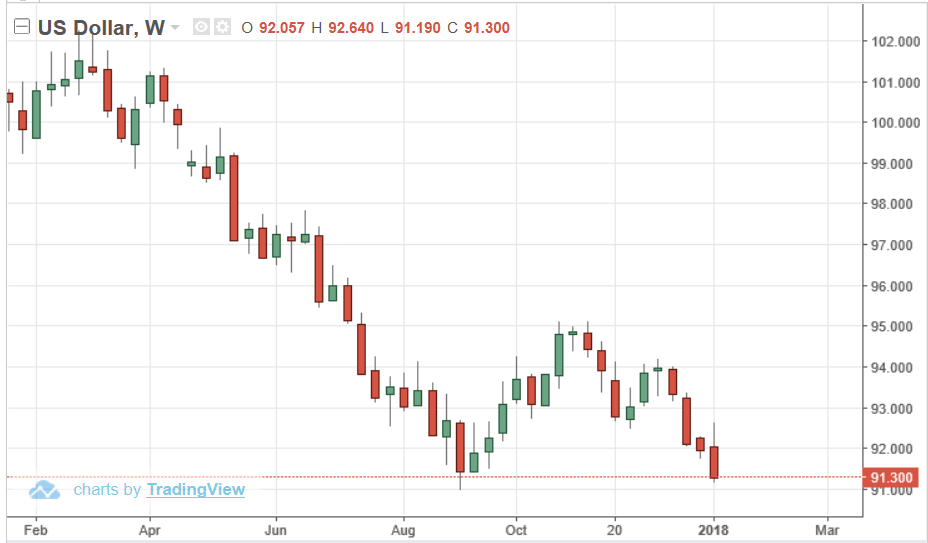
The $US is down maybe 10% since the election, and looks to be going lower as:

1. The relatively large US trade and current account deficits have been getting larger, exacerbated by higher oil prices
2. The President’s trade initiatives are often ‘weak dollar’ stories
3. Fed rate hikes fundamentally weaken the $US via interest income channels
4. US trade policy is reducing non-resident desires to accumulate $US financial assets

So yes, equity prices are higher, but in terms of foreign currencies, such as the euro, not so much. And a lower $US could translate into higher US inflation should import prices increase. Along those lines, the Saudis could be targeting a non-dollar price for their oil, such as the price in euro, for example, which could mean a higher $US oil price. And higher gasoline price can slow the US consumer should income growth continue to lag:

ADP, Light vehicle sales, Wolf quote

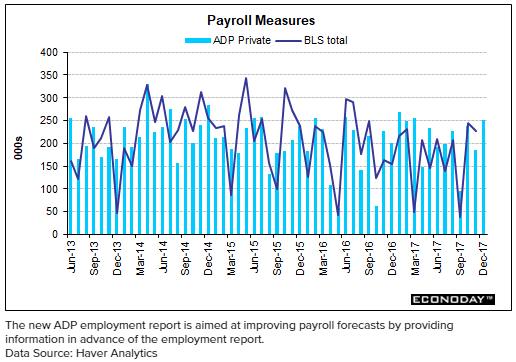
This is ADP’s forecast of tomorrow’s employment number. We’ll see tomorrow how well accurate they were:


A bit higher than expected but down for 2017 vs 2016 (negative growth):

Highlights

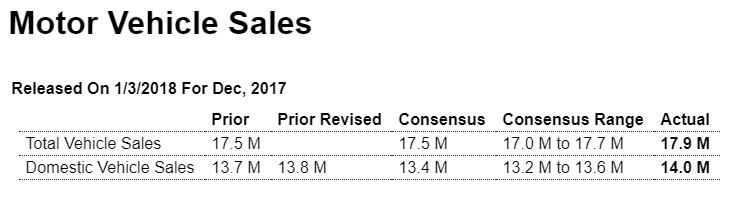
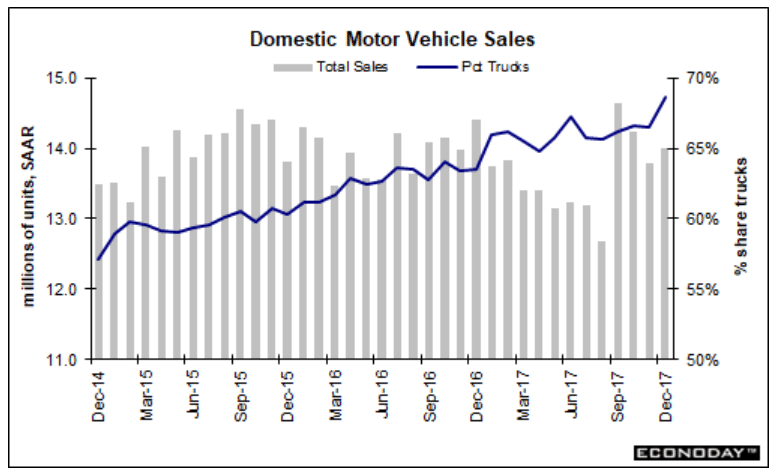
Unit vehicle sales proved solid in December, at a 17.9 million annualized rate vs 17.5 million in November. Outside of October and September, which were driven by hurricane-replacement demand, December’s results are among the very best of the last two years. The results, which easily top Econoday’s high estimate, point to strength for the motor vehicle component of the retail sales report and are a plus for fourth-quarter consumer spending. Domestic-made sales also topped the high estimate, coming in at a 14.0 million rate vs November’s revised 13.8 million.

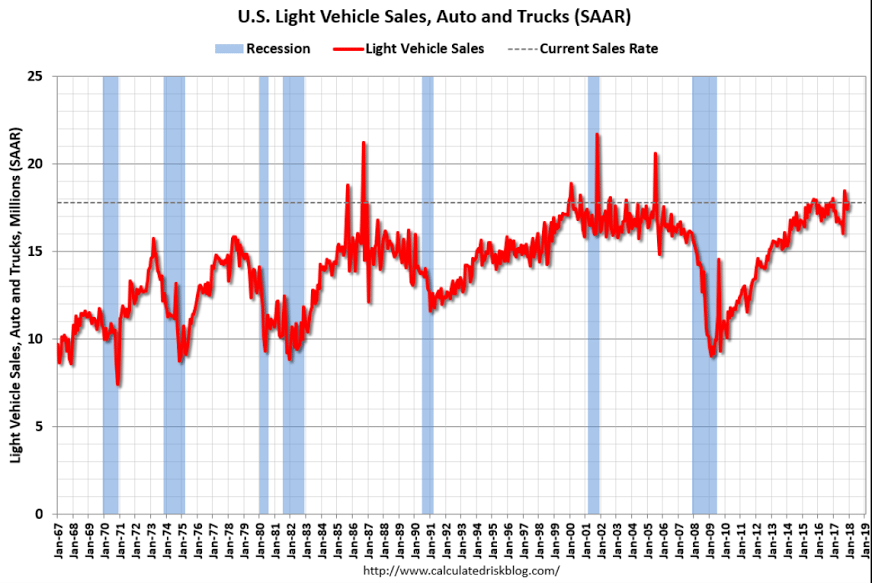
Based on a preliminary estimate from WardsAuto, light vehicle sales were at a 17.79 million SAAR in December.

That is down 1.5% from December 2016, and up 2.2% from last month.

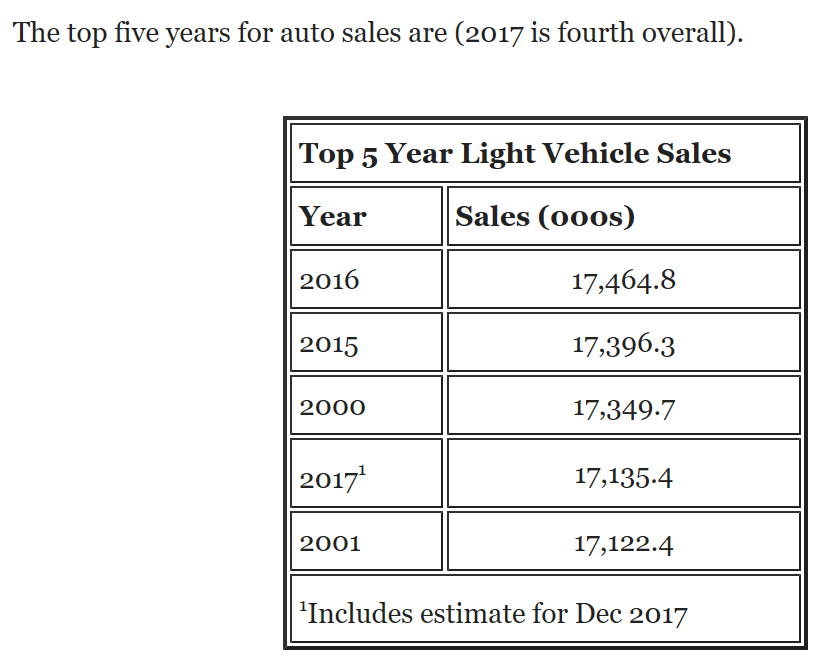
This puts annual sales 17.14 million, down from 17.46 million in 2016.
Read more at http://www.calculatedriskblog.com/#VDdCh1WIl0m8GDhd.99


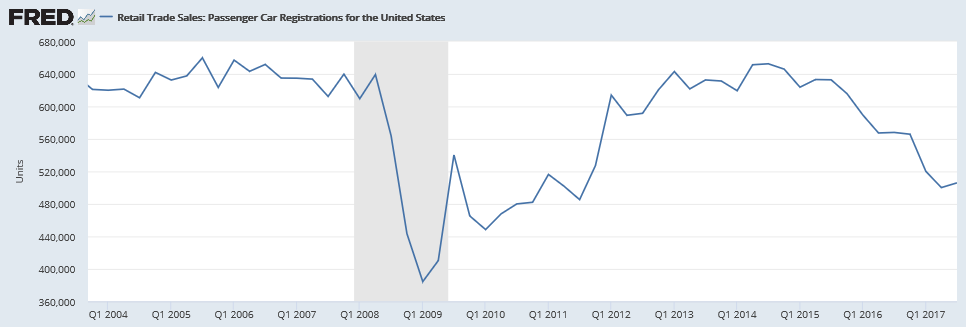
This is not population adjusted:


And in any case it’s turning into an all light truck story:

Annual U.S. Car Sales Drop for First Time Since Financial Crisis

Jan 3 (WSJ) — Though sales fell 1.8% last year as pent-up demand declined and interest faded in sedans and compact cars, auto makers still sold 17.2 million vehicles in 2017, the first time the industry has cleared the 17-million mark three consecutive years, according to IHS Markit. Vehicles now routinely sell for above $32,000, even with average incentives of $4,000 factored in, according to J.D. Power. That is 10% higher than what car buyers were dishing out when the industry’s rally began in 2010. The domestic car business is far healthier than the last time volumes slipped.

From Wolf’s book:

10. Wolff also writes at length about former Goldman Sachs executive Gary Cohn, who leads the president’s National Economic Council. Cohn has privately disagreed with Trump a number of times in the past year. But an April email that, Wolff writes, circulated around the White House “purporting to represent the views of Gary Cohn” takes this to a new level:

“It’s worse than you can imagine. An idiot surrounded by clowns. Trump won’t read anything – not one-page memos, not the brief policy papers; nothing. He gets up halfway through meetings with world leaders because he is bored. And his staff is no better. Kushner is an entitled baby who knows nothing. Bannon is an arrogant prick who thinks he’s smarter than he is. Trump is less a person than a collection of terrible traits. No one will survive the first year but his family. I hate the work, but feel I need to stay because I’m the only person there with a clue what he’s doing. The reason so few jobs have been filled is that they only accept people who pass ridiculous purity tests, even for midlevel policy-making jobs where the people will never see the light of day. I am in a constant state of shock and horror.”

Durable goods orders, Personal income and spending, Bank lending, New home sales, Consumer sentiment

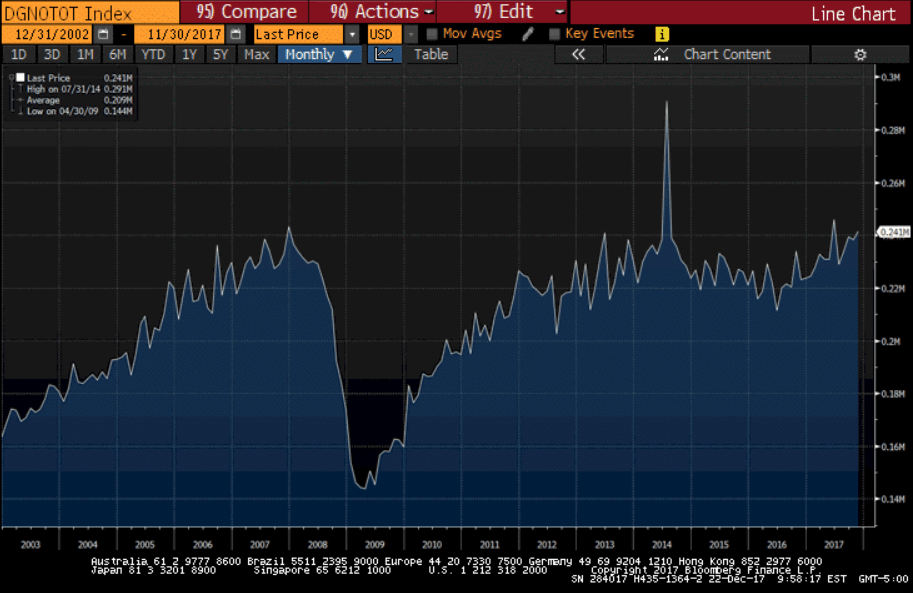
As previously discussed, durable goods and manufacturing, after dipping in 2015 with collapse of oil capex, resumed modest growth from the lower levels which continues:
Highlights

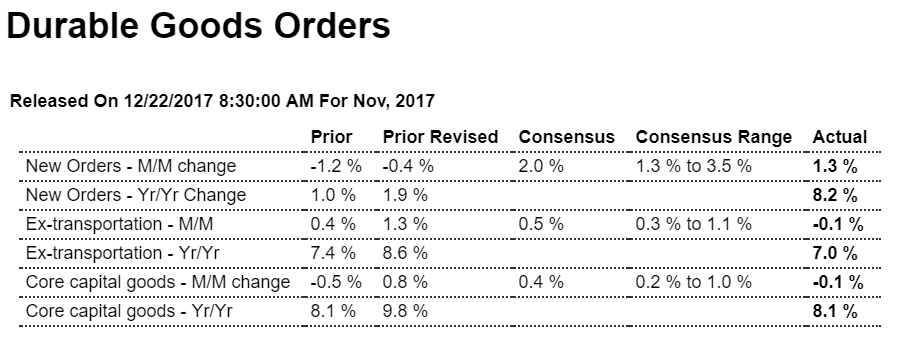
A jump in aircraft skewed durable goods orders 1.3 percent higher in November which however is well below Econoday’s consensus for 2.0 percent and no better than the low estimate. Orders for civilian aircraft, which have been solid this year, rose 31 percent and reflect Boeing’s success at November’s Dubai Air Show. But when excluding aircraft and other transportation equipment, orders slipped 0.1 percent in a drop offset however by a large upward revision to October’s ex-transportation reading which now stands at a very strong 1.3 percent.

Weakness in the latest month and an upward revision to the prior month is also the story for core capital goods orders (nondefense ex-aircraft) which also slipped 0.1 percent in November but with October now up an impressive 0.8 percent. Shipments of core capital goods, which will be part of the business spending component of fourth-quarter GDP, are only moderate, up 0.2 percent and 0.3 percent in November and October respectively.

Both vehicle orders and vehicle shipments have been strong the past two reports, up 1.4 percent for each in November following 1.6 percent gains for each in October. Orders for electrical equipment, reflecting demand for both capital goods and construction, have also been strong as have orders and shipments for primary metals. Orders for machinery, computers and defense aircraft have been mixed.

Other data include a strong 1.0 percent rise in total shipments against only a 0.2 percent build for inventories which drives down the inventory-to-shipments ratio to a yet leaner 1.66 from 1.67. Low inventories in times of expanding demand are a positive for the production and employment outlooks. A disappointment in the report, as it has been all year, are unfilled orders which managed to inch only 0.1 percent in the month.

This is very much like this morning’s personal income & outlays report, mostly strong but still not as strong as expected and with weak spots here and there. And like last week’s release of the 0.2 percent gain for November manufacturing production, the data are pointing to a favorable but perhaps still moderate factory contribution to the fourth-quarter economy.

This is where it still doesn’t add up for me. With personal spending exceeding personal income, spending has been sustained by dipping into savings (and in this latest month spending was ‘forced’ by higher gas prices). And even then this spending more than income usually takes the form of accelerating consumer borrowing, where this time around consumer borrowing is decelerating, making the total prior spending even less probable.

A few things could typically happen. Prior spending could be revised substantially lower, which would make all the pieces fit. Or subsequent spending could sufficiently collapse to restore a more normal savings rate.
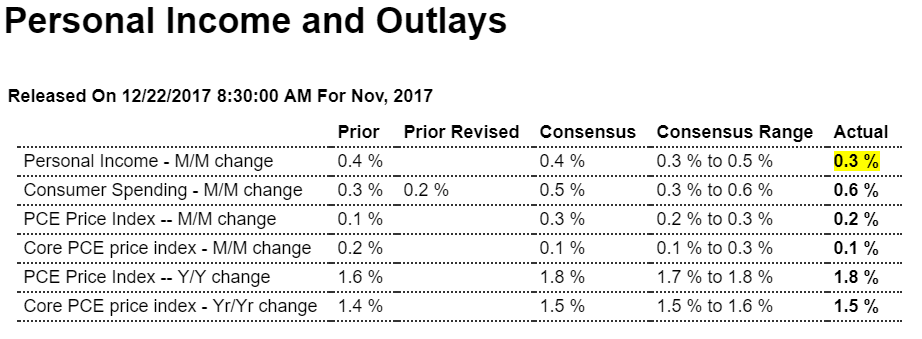
Highlights

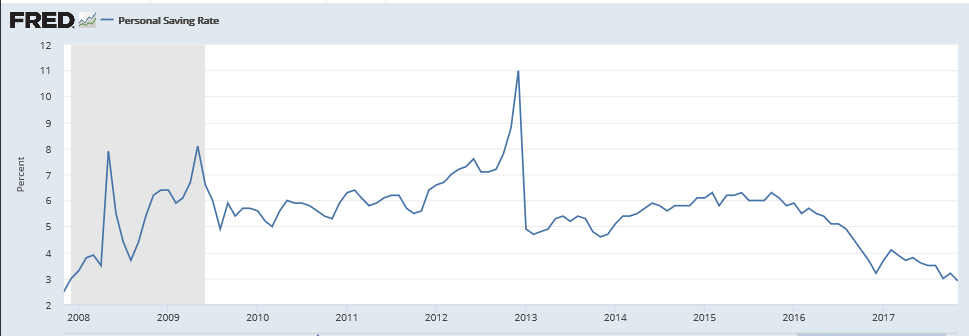
Consumer spending, up 0.6 percent in November, is strong but there are still soft spots in the personal income and outlays report. Income rose only 0.3 percent as transfer receipts from the government fell sharply to offset a respectable 0.4 percent gain in wages and salaries. And behind the rise in consumer spending is a 1.2 percent spike in nondurable spending that reflects higher gasoline prices in the month. Durable spending, held down by a slowing in vehicle sales, was unchanged in November though service spending accelerated 4 tenths to a strong 0.6 percent monthly gain. Behind all the spending was a sharp 3 tenths drawdown in the savings rate to only 2.9 percent which is the weakest showing in 10 years, since November 2007.

The central trouble is once again in the report’s inflation data as the core PCE price index, the most closely followed of any inflation indicator and which excludes energy and food, inched only 0.1 percent higher with the year-on-year rate also 1 tenth higher at 1.5 percent and still far below the Federal Reserve’s 2 percent target. The overall PCE price index rose 0.2 percent with this year-on-year rate up 2 tenths to 1.8 percent.

The inflation data are moving in the right direction but just barely. And while the spending and wage data are favorable, the low level of the savings rate may become a concern especially if the labor market begins to lose strength. For retailers and holiday spending, today’s report is solid but still less than robust. Watch later this morning at 10:00 a.m. ET for the latest update on consumer sentiment.

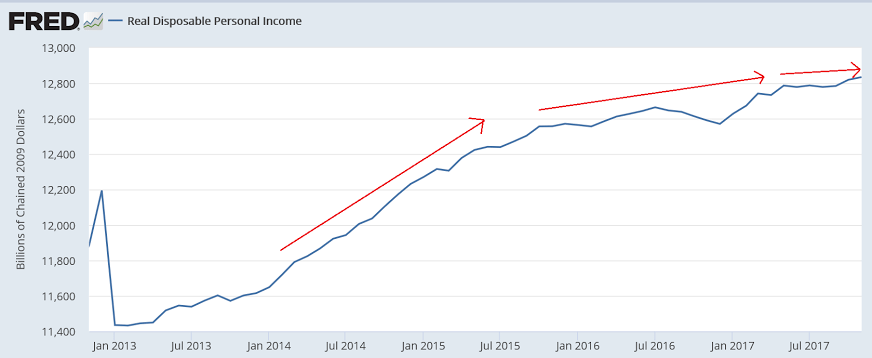
Not how when income growth slowed savings began to collapse:

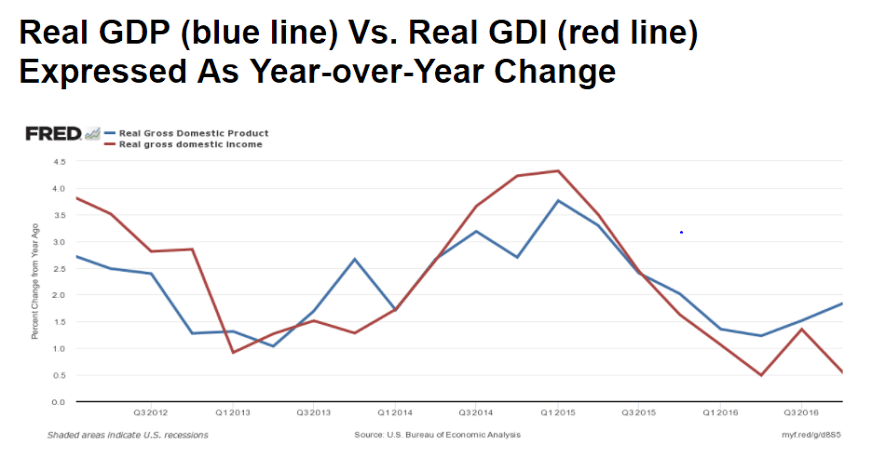
GDP=GDI as the $ received from selling things are also the income from selling those things. But the information for the two series come from different sources, with quite a bit of estimating so the two reports often diverge, etc. Currently reported GDI growth has been decelerating more in line with the above discussions, so it wouldn’t surprise me if future GDP reports quickly work their way lower:

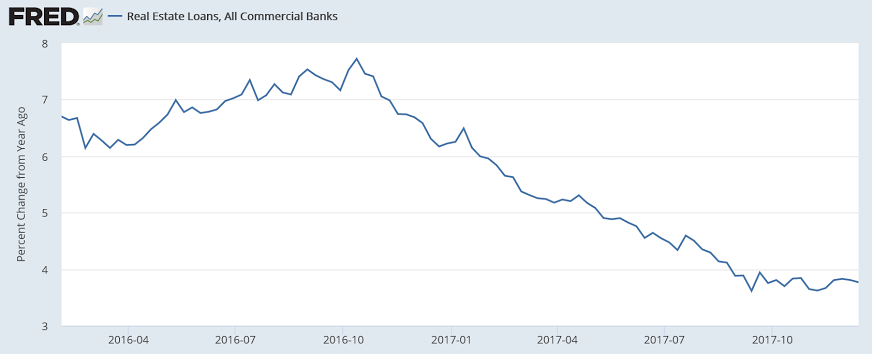
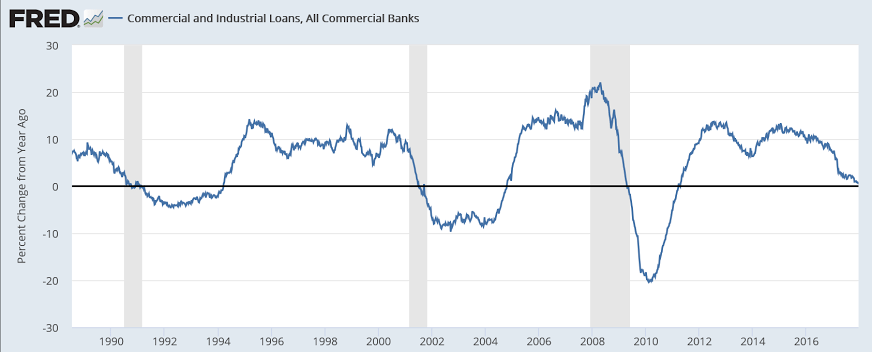
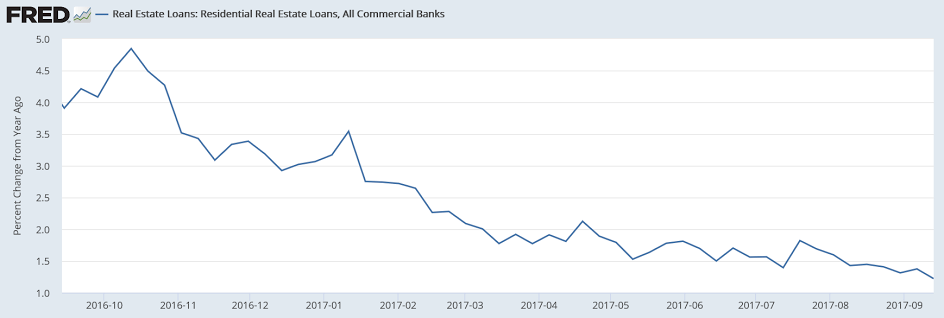
The deceleration in bank lending could be telling us this cycle has ended:

Seems best to wait for the revisions to this month’s report after seeing how much lower the prior reports were revised and how improbably large the increases for the month were:

Highlights

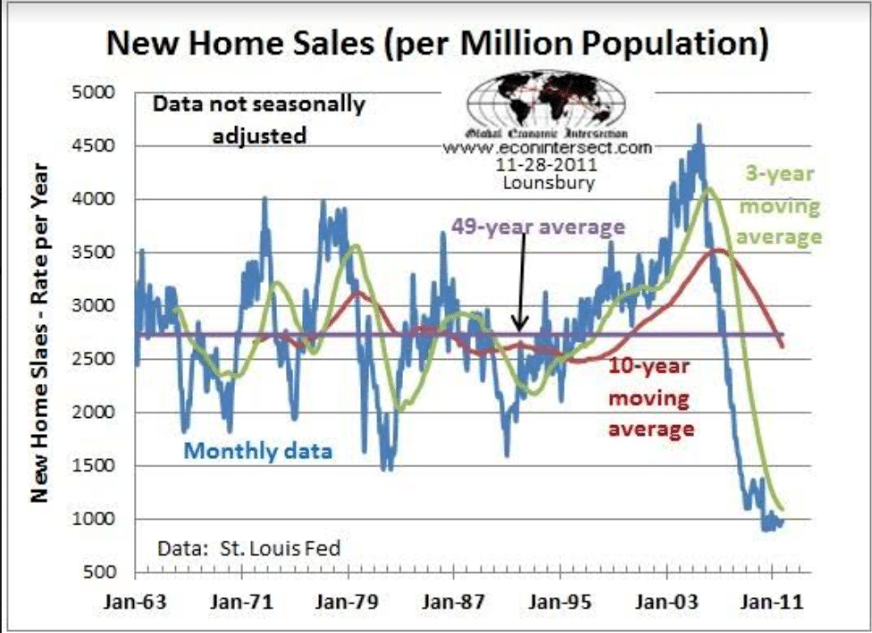
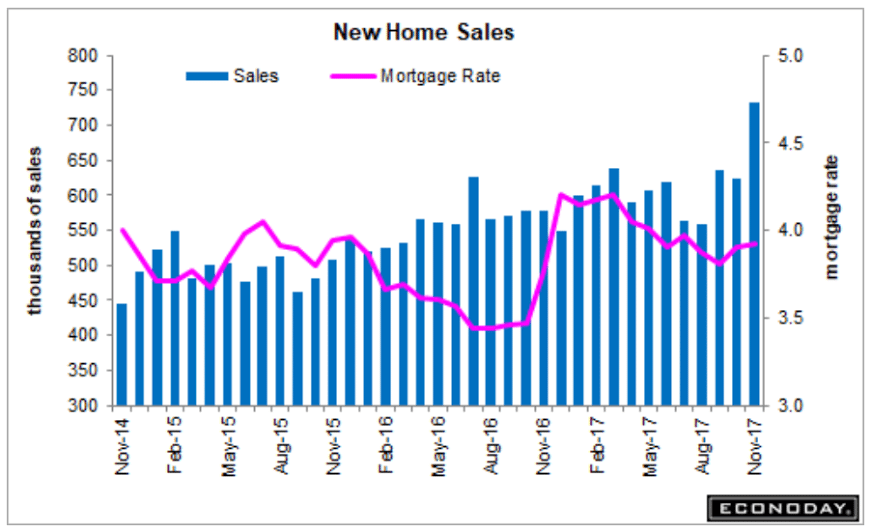
New home sales rose to a 733,000 annualized rate in November for a 17.5 percent monthly spike that is the largest in 25 years. Revisions are only limited offsets, down a net 71,000 in October and September to still 600,000 plus rates of 624,000 in October and 635,000 in September. Acceleration over the last three reports is the strongest since 2003.

But home builders do seem to be giving discounts as the median price fell 0.3 percent in the month to $318,700. Year-on-year, the median is up only 1.2 percent against a 26.6 percent sales surge. On supply, builders are managing to keep pace with the number of new homes on the market unchanged at 283,000 and also unchanged relative to sales, at 4.6 months.

The West and South, the two key regions for new homes, are showing special strength. Sales in the West rose 31.1 percent in the month to a 194,000 rate and a 22.8 percent year-on-year gain, while sales in the South rose a monthly 14.9 percent to 416,000 for a yearly 32.5 percent gain. Sales in the Northeast, both for new homes and existing homes, have been showing unusual acceleration, rising 9.5 percent in the month but to a 46,000 rate that in size is far below other regions.

New home sales are always volatile due to low sample sizes but the report right now is easily the hottest of any economic indicator, in what is certainly a reflection of the strong labor and stock markets as well as favorable pricing. Together with the gains for permits and existing home sales earlier in the week, housing clearly looks to be a leading force for the fourth-quarter economy.

Prior to this latest data point, sales are now looking much weaker than before today’s downward revisions:

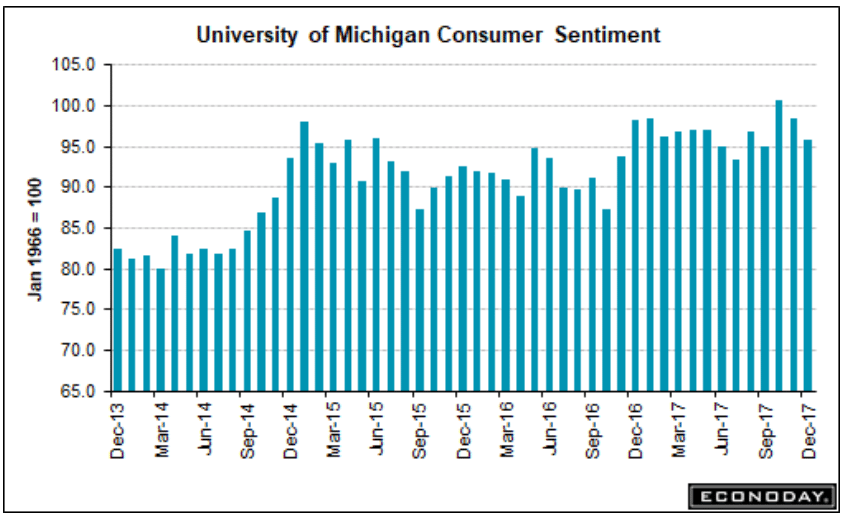
Trumped up expectations coming back down again:
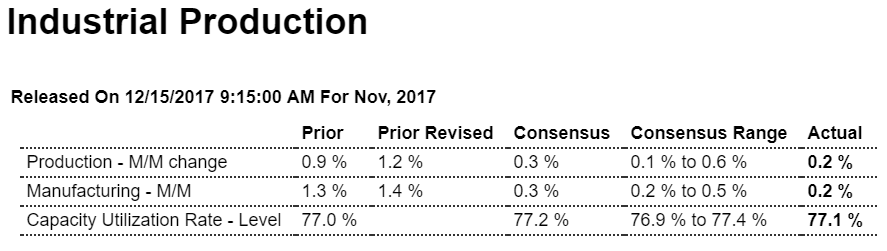
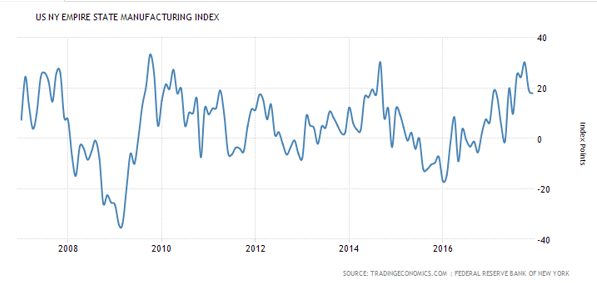
Industrial production, Empire state manufacturing, Retail sales, PMI, Port traffic

Boring:

Highlights

A rise for mining offsets a dip for utilities making a modest 0.2 percent gain for manufacturing the story for November’s industrial economy. This report’s manufacturing component has been the only uneven indicator on the factory sector all year which limits the surprise of November’s results.

Forecasters weren’t calling for much strength in the first place with Econoday’s consensus at only 0.3 percent for manufacturing. Vehicle production, after a run of strength, understandably eased in November to only a 0.1 percent increase with selected hi-tech also slowing but to a still useful 0.3 percent gain. And production of business equipment was even more positive at 0.5 percent and with construction supplies at 0.6 percent. Weakness on the manufacturing side is once again in consumer goods where volumes fell 0.4 percent to underscore the nation’s lack of competitiveness in this important category.

Outside of manufacturing, mining volumes rose 2.0 percent in November to extend its leading performance to year-on-year growth of 9.4 percent. Utility output fell 1.9 percent with this year-on-year rate at 2.3 percent. Turning back for a comparison with manufacturing, this year-on-year rate is a very modest 2.4 percent.

Overall industrial production rose 0.2 percent while capacity utilization rose 1 tenth to a 77.1 percent rate that, in contrast to the slew of anecdotal readings on the factory sector, points to plenty of spare capacity remaining. One notable positive in today’s report is an upward revision to October’s manufacturing production which now stands at a very outsized 1.4 percent, an isolated gain however that reflects hurricane effects.

Given the strength of October manufacturing and despite November’s modest showing, most signals are pointing to an accelerating factory contribution to the fourth-quarter economy. Note that traditional non-NAICS numbers for industrial production may differ marginally from NAICS basis figures.


Quite a bit better than expected, and last month revised up a bit. But not consistent with decelerating personal income stats:

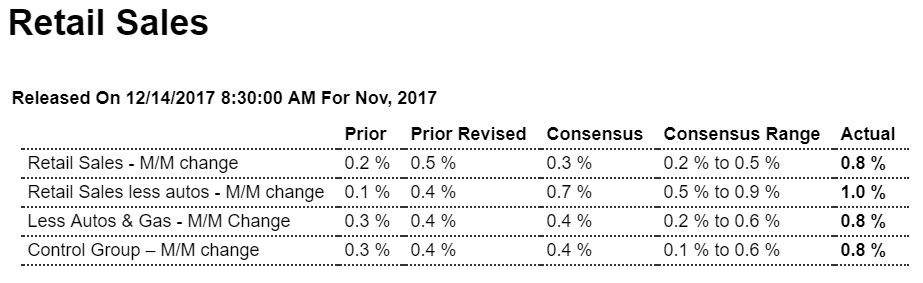
Highlights

The consumer is in gear for the holidays as a very strong retail sales report lifts the outlook for fourth-quarter consumer spending. Retail sales surged 0.8 percent in November which is far beyond expectations and is 3 tenths over Econoday’s high estimate. The data include a strong upward revision to October which now stands at a 0.5 percent gain vs an initial increase of 0.2 percent.

November’s strength comes despite a 0.2 percent decline in auto sales excluding which sales rose a full 1.0 percent. Core readings underscore all the strength: up 0.8 percent for both ex-auto ex-gas and for the control group.

Most major components outside of autos show gains including a standout 2.5 percent jump in nonstore sales which speaks to unusual strength in e-commerce. Electronics & appliances appear to be early holiday favorites with these stores reporting a 2.1 percent jump on top of a 1.2 percent rise in October. Price discounting for apparel that was evident in yesterday’s consumer price report did not hold down totals for clothing stores which gained 0.7 percent for a second straight month. Restaurants also show strength, up 0.7 percent following October’s 0.4 percent rise.

Consumer spending proved a little soft in the third-quarter GDP report at only 2.3 percent annualized growth but today’s report, including the revision, is certain to lift the outlook for fourth-quarter GDP. And it may even encourage talk that the economy, fed by unusual strength in the labor market, could be at the risk of overheating.

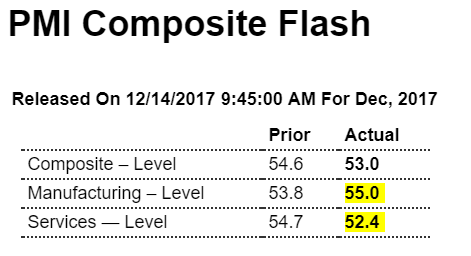
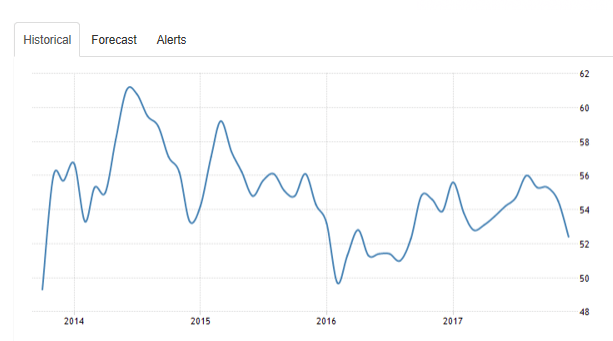
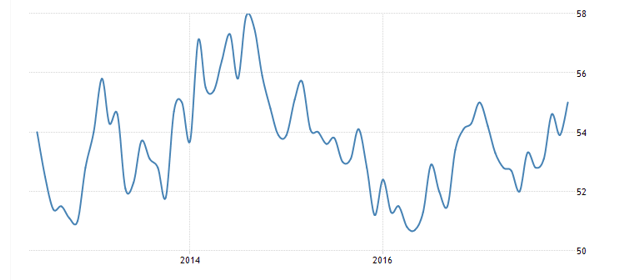
Manufacturing up, services-the much larger sector- down:
Service sector slowdown contrasts with stronger manufacturing performance in December

Dec 14 (Markit) — Flash U.S. Composite Output Index at 53.0 (54.5 in November). Services Business Activity Index at 52.4 (54.5 in November). Manufacturing PMI at 55.0 (53.9 in November). Manufacturing Output Index at 55.7 (54.5 in November). Manufacturing production expanded at the fastest pace since January, while service sector output growth eased to a 15-month low. A similar easing in new business growth was seen across the private sector economy in December. Prices charged inflation eased in December.

Highlights

An 11-month high for manufacturing couldn’t offset a 15-month low for services which pulled down the PMI composite to 53.0 in the December flash and a 9-month low. Manufacturing, at 55.0, is the more closely watched sector for economic change and the results here are very positive with sharp increases posted for new orders, production and especially employment where growth in this sample is the best since September 2014. The gain in employment reflects efforts underway among manufacturers to expand capacity and meet what is strong domestic demand and fulfill the needs of new product launches.

Turning to services, however, the results become subdued at a reading of 52.4 and including loss of momentum for new orders which eased to their lowest level in 8 months. Hiring in this sample is at a 7-month low. Business optimism, which is very strong on the manufacturing side, is much softer in services, at the second lowest readings since June last year.

Outside of input costs for manufacturing, price data in today’s report are soft. Today’s mixed results are of interest, confirming what appears to be a very strong year-end finish for manufacturing and what may be, despite contrary hints in this morning’s retail sales results, a soft finish for services, a sector that may not signal economic pivots with certainty but what is a far larger sector than manufacturing.

Services:

Manufacturing:


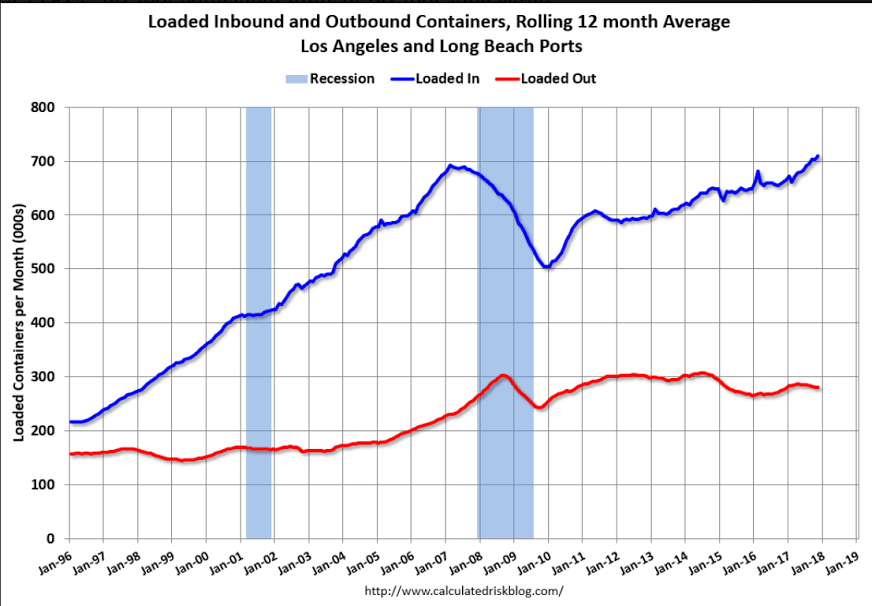
Along with higher oil prices, this also hints at a growing trade deficit:

Trade has been strong – especially inbound – and setting record volumes most months recently. This suggests the retailers are optimistic about the Christmas Holiday shopping season.

In general imports have been increasing, and exports are mostly moving sideways to slightly down recently.

Read more at http://www.calculatedriskblog.com/#dSdAjPHIQVWAOjVv.99

Trade, Redbook retail sales, PMI services, ISM services

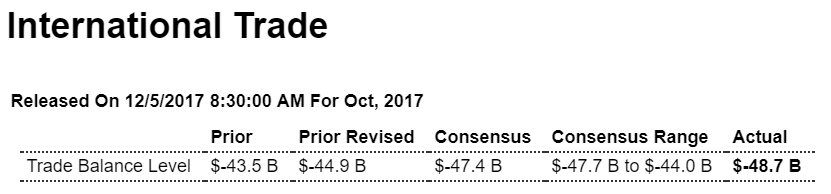
As previously discussed, the US bill for oil imports went up:

Highlights

Fourth-quarter net exports get off to a weak start as October’s trade deficit, at $48.7 billion, comes in much deeper than expected and well beyond September’s revised $44.9 billion. Exports, at $195.9 billion in the month, failed to improve in the while imports, at $244.6 billion, rose a steep 1.6 percent. Price effects for oil, up more than $2 to $47.26 per barrel, are to blame for much of the rise in imports inflating costs of industrial supplies including crude where the deficit rose $1.5 billion to $10.7 billion, but consumer goods are also to blame, imports of which rose $800 million in the month to $50.0 billion.

Exports of capital goods are the largest category on the export side and they fell back $1.2 billion to $43.9 billion and reflect a $1.1 billion drop in aircraft where strength in orders, however, points to better aircraft exports to come. Exports for both vehicles, at $12.6 billion, and consumer goods, at $16.3 billion, both declined.

Country data show the monthly gap with China deepening $600 million to $35.2 billion and with Japan by $1.6 billion to $6.4 billion. The EU gap widened by $2.3 billion to $13.7 billion. The gap with Mexico rose $900 million to $6.6 billion and Canada $1.5 billion deeper at $1.8 billion.

Today’s report is not favorable for fourth-quarter GDP but doesn’t derail at all what has been an ongoing run of mostly solid economic results.

Looks like things are settling down:

Highlights

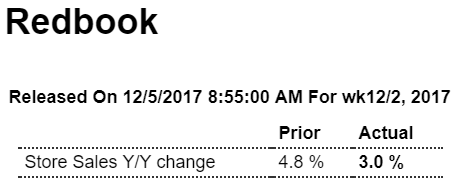
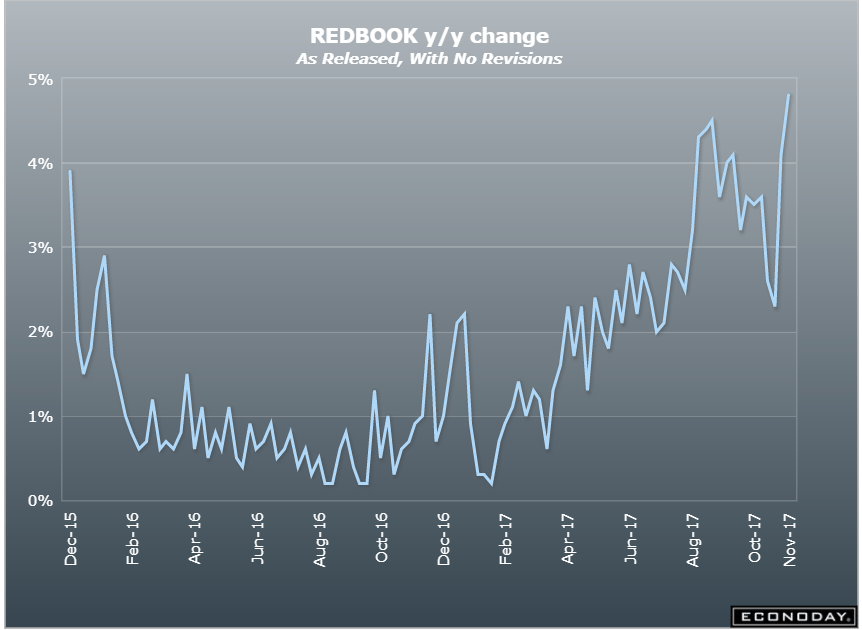
Same store sales were up 3.0 percent year-on-year in the December 2 week, decelerating by a steep 1.5 percentage points from the prior week’s pace. Month-to-date sales versus the previous month were down 0.9 percent, 0.7 percentage points weaker than last week’s reading, while the gain in full month year-on-year sales shed 0.5 percentage points to 3.0 percent. The week’s sharp setback from the strongest reading in 3 years registered in the prior week by retailers in Redbook’s same-store sample may signal more moderate growth in ex-auto ex-gas retail sales during the key Christmas sales period.

The surveys are starting to come off their trumped up levels:

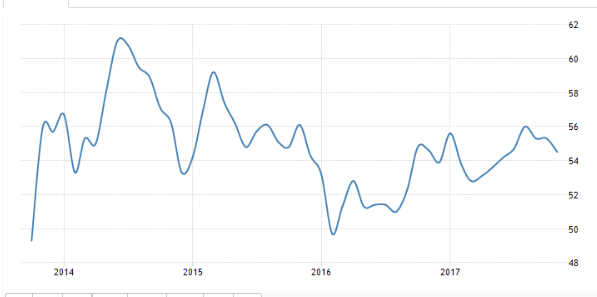
Markit PMI services:


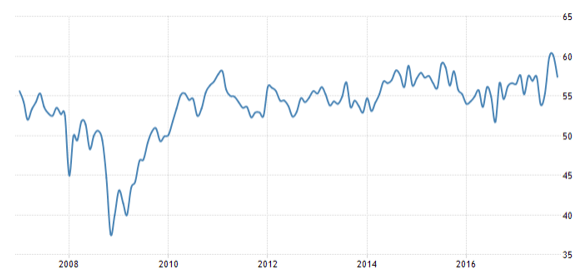
ISM non manufacturing:

Trade, New home sales chart, Redbook retail sales, Consumer confidence

As previously discussed, the food export spike was a one time event:

Highlights

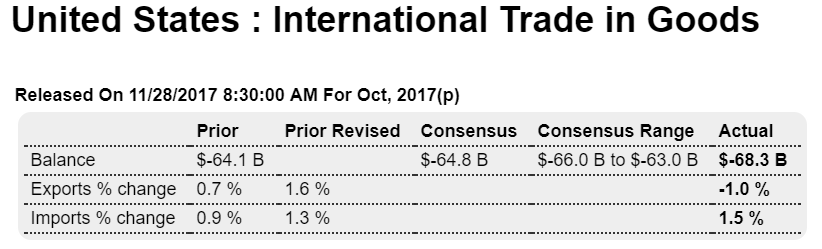
With housing and manufacturing showing strength the outlook for fourth-quarter GDP was building, until that is this morning’s advance trade and inventory data. October’s goods deficit was much higher-than-expected, at $68.3 billion for a very sizable $4.2 billion increase from September. The details speak to weakness with exports down 1.0 percent, reflecting declines for food products and capital goods, while imports rose 1.5 percent on increases in industrial supplies and, once again, consumer goods.

Inventory data for October show draws for both wholesalers and retailers, at minus 0.4 percent and minus 0.1 percent respectively which are both negative for GDP.

Both trade, where the deficit had been narrowing, and inventories, where builds had been rising, were positives for second- and third-quarter GDP but the opening fourth-quarter look at these two components point to understandable give back.

Definitely looking up for ‘same store sales’ and heading back to ‘normal’ levels, but not sure why. Could be due to fewer retail outlets or maybe higher prices?


Up nicely, but check out the details:

Highlights

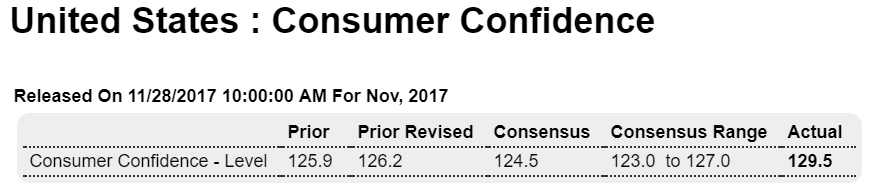
Consumer confidence continues to soar, at 129.5 in November which is a new 17-year high and easily surpasses Econoday’s top estimate. The strength is derived from the labor market where a very low 16.9 percent describe jobs as currently hard to get. This reading is closely watched and will boost expectations for another strong monthly employment report. And extending strength is expected for the labor market with optimists on the jobs outlook surging nearly 4 percentage points to 22.6 percent and nearly double pessimists who are down 6 tenths to only 11.0 percent. Confidence is likewise booming for the stock market where 46.0 percent see stocks rising over the next year which is up 3.8 points from October. Bears are down to 19.0 percent from last month’s 22.7 percent.

The combination of expected gains in jobs together with expected gains for stocks is making for unusual confidence in the year-ahead income outlook where 20.1 percent see gains and only 7.6 percent see declines. This is a core reading and underscores the report’s level of strength.

Not favorable, however, are inflation expectations which are down 2 tenths to 4.5 percent which is very low for this reading. Buying plans are mixed with cars, after a spike in October, back down but with housing up.

Wage growth has been limited but so has price inflation which perhaps is another factor boosting income expectations. In any case, consumer confidence as measured by this report and others is enjoying its best run in a generation.

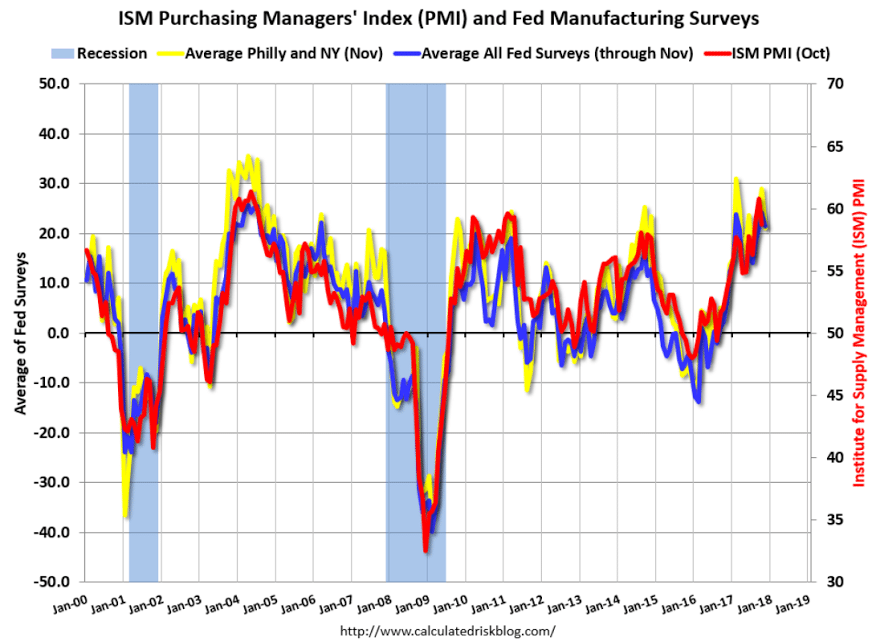
Survey data still optimistic:

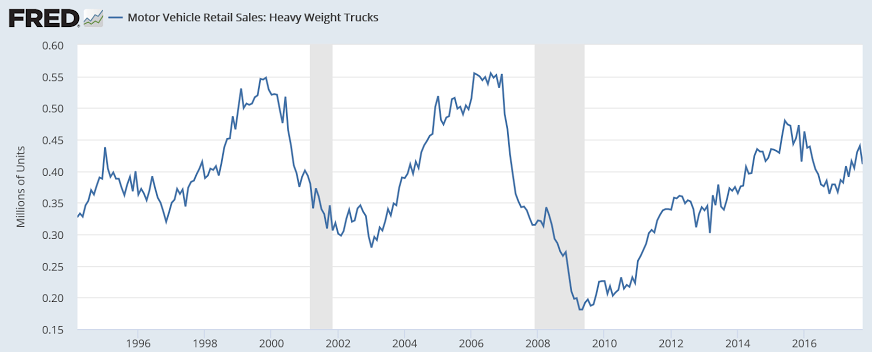
Retail hiring, Container count, Truck sales

October Retail Hiring Lowest In Six Years

from Challenger Gray and Christmas

Fewer major retailers have announced large-scale hiring announcements so far this year, which reflects the drop in the number of October employment gains in the sector. Gains fell 8 percent from last year to 136,700, the lowest October gain since 2011, when the sector added 134,200 jobs.

Imports up and exports down doesn’t help US GDP:

Port of Long Beach: Another Record Month in October

By Bill McBride

Read more at http://www.calculatedriskblog.com/#TgvZqc4qb4gZ5jQb.99

Inbound containers destined for retailers jumped 14.3 percent to 339,013 TEUs. Export boxes decreased slightly, 0.5 percent, to 126,150 containers. Empty containers sent overseas to be refilled with goods increased 28.9 percent, to 204,055 TEUs.

Read more at
http://www.calculatedriskblog.com/#IHELvURAYYMpHj9O.99

Vehicle sales, Trump comments, Greek comments

Nice spike after the hurricane lull:

Highlights

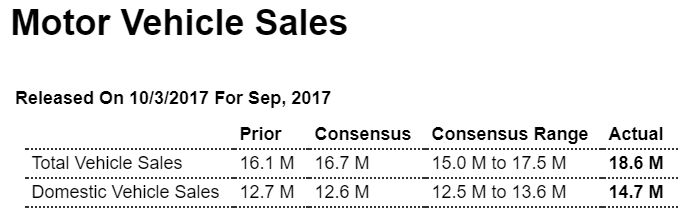
In the strongest monthly sales performance in 12 years, unit vehicle sales shot up to a hurricane-fueled 18.6 million annualized rate in September vs a hurricane-depressed 16.1 million rate in August. September’s rate points squarely at replacement demand following Hurricane Harvey’s flooding of Houston just as the weak August rate pointed to the initial negative effects of the hurricane. Today’s results point to a substantial surge for the motor vehicle component of the retail sales report and a major boost for what was a weak overall report in August. Sales of domestic-made vehicles rose to 14.7 from August’s 12.7 million.

President Trump just set a new standard in his search for flattery, this time in hurricane-ravaged Puerto Rico

He thanked Puerto Rico’s non-voting representative in Congress, Jenniffer Gonzales Colon, for “saying such nice things” about the administration’s response. He repeated his appreciation for Puerto Rico’s governor, Ricardo Rosselló, as someone who “did not play politics.”

The evidence? “He was giving us the highest grades,” the president said.

I got a mention here:

Putting Grexit On The Table: How A Greek Exit From The EU Would Work

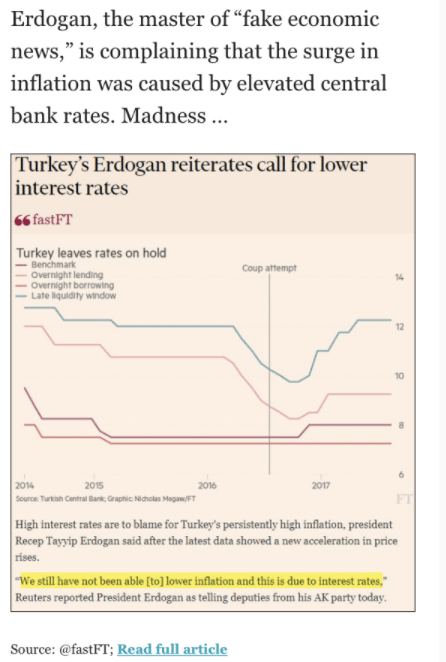
PR note, ADP, Holiday sales, Euro area sales taxes, Erdogan on rates, Tillerson comment, PR bonds

Just noticed this. PR has had over 500,000 move to the states for economic reasons:

For many Puerto Rico residents, it’s time to leave the island

Note: Puerto Rico is not included in the national employment report.

FYI:

Highlights

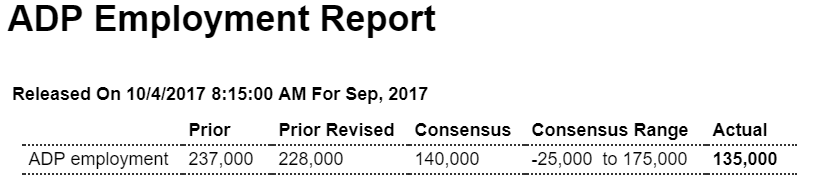
Hurricanes didn’t scramble ADP’s sample too much in September with their private payroll estimate at 135,000 which is very close to Econoday’s consensus for 140,000. The result is down sharply from August but is still constructive and consistent with a strong labor market, especially given the disruptions in Texas from Hurricane Harvey and in Florida from Hurricane Irma.

ADP’s estimate for August is revised only modestly lower, down 9,000 to 228,000 which is still far above the government’s initial total of 165,000. The spread between these readings hint, however uncertainly, at an upward revision to August data in Friday’s employment report.

Econoday’s consensus for private payroll growth in Friday’s report is 117,000 though the range of estimates is very wide, between 20,000 and 150,000. Watch later this morning for the non-manufacturing report from the Institute For Supply Management whose employment index will offer another indication on what to expect for Friday.

Holiday sales not forecast to add any more to growth than they did last year:

Holiday Sales Forecasts Are Rosy, but Not for All Retailers

Oct 3 (WSJ) — On Tuesday, the National Retail Federation said it expects holiday retail sales, which excludes autos, gasoline and restaurants, to increase between 3.6% and 4% in November and December, up from $655.8 billion last year. Last year, holiday spending fell in line with the group’s 3.6% growth forecast, but in 2015 the results were well short of the NRF’s prediction of a 3.7% gain. Christmas falls 32 days after Thanksgiving this year and is on a Monday, not a Sunday, which gives shoppers an extra weekend to shop. “Over all, the industry is very strong,” Matthew Shay, NRF chief executive said on a call with reporters. “Brick and mortar is getting better and more effective online.”

This is a tax increase for the macro economy:

EU to reform sales tax, prepares changes to rates

Oct 3 (Reuters) — The European Commission will propose on Wednesday changes to the way sales taxes are levied in the European Union. The new measures on value-added tax would mostly tackle frauds in which companies pocket VAT revenues from cross-border sales instead of paying them to the local government. The move would also end the practice of companies avoiding VAT by basing themselves in countries with low VAT rates. They will now, as a general rule, have to pay the VAT charged by the country where their products are sold. That principle has already been established by temporary regulations. The proposed reform would make that permanent.

My take is he’s exactly right, as I’ve been suggesting for more than 20 years:

Tillerson reportedly described Trump as ‘a moron’ and was set to resign in July

Rex Tillerson says he ‘never considered’ resigning; does not deny calling Trump ‘moron’

Interesting outburst from the President:

Puerto Rico bonds plunge after Trump pledge to wipe out debt

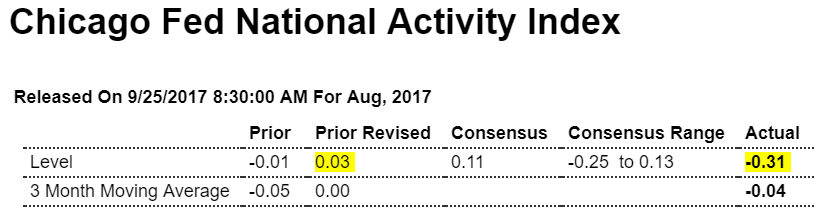
Chicago Fed, Small business optimism, NY Fed comments

Note the shift:

From NY Fed’s Dudley. I added a chart after several of his statements so you can see
what he sees as support for his statements. Looks a lot to me like he’s trying to manage expectations?

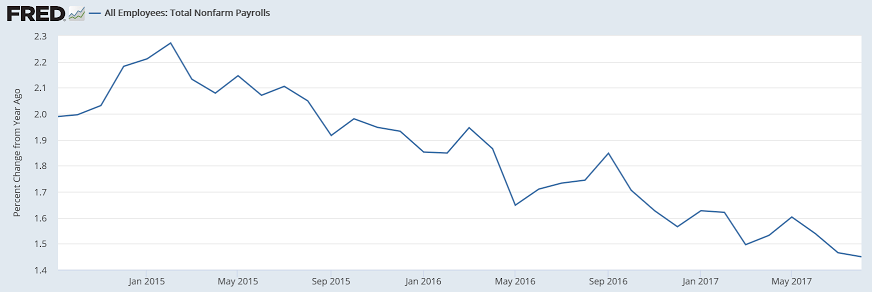
“The fundamentals supporting continued expansion are generally quite favorable. Low unemployment, sturdy job gains,

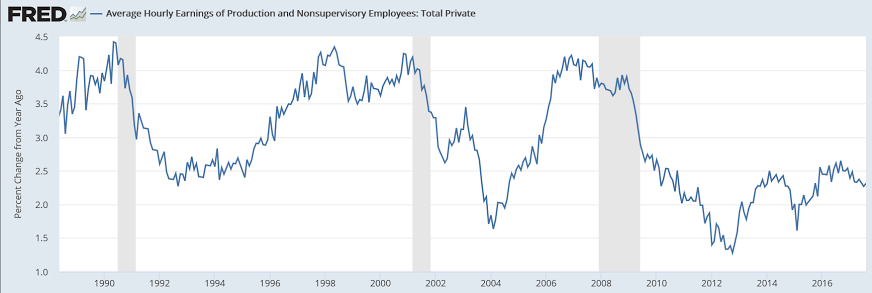
and rising wages—even at a pace below previous expansions—

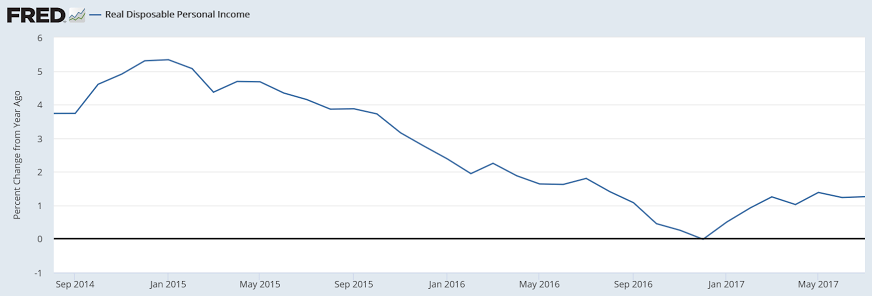
are lifting personal income.

Household wealth has been boosted by rising home and equity prices, and household debt has been growing relatively slowly, contributing to a healthy household balance sheet. Thus, consumer spending should continue to advance in coming quarters.

(the will likely be revised lower as the latest retail sales reports was lower than expected and revised the prior month lower)

Also, this doesn’t show any signs of turning around and contributing more to consumer spending?

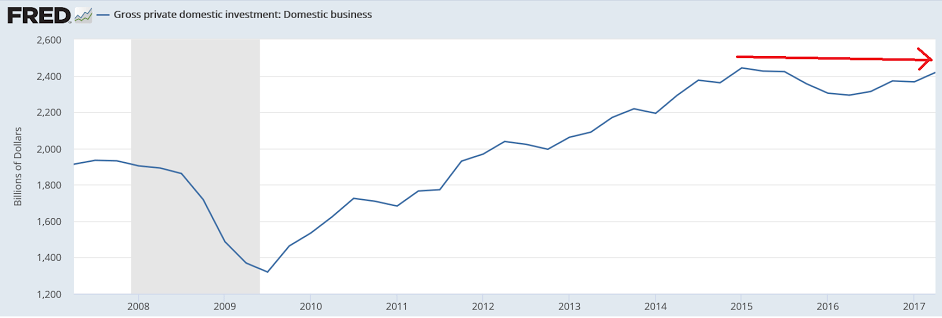
Business fixed investment outlays are also likely to continue to rise.

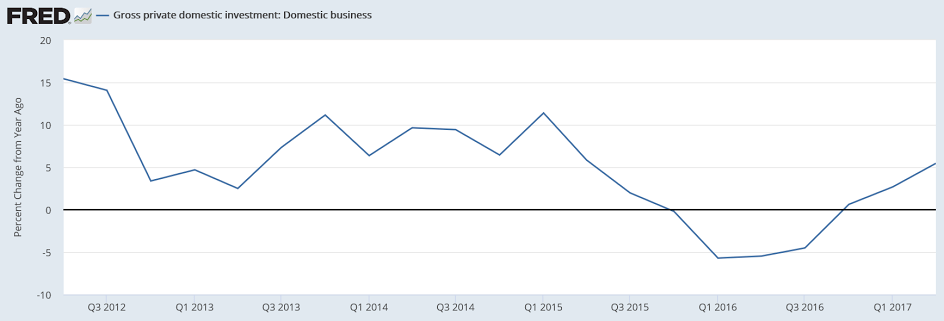
Why? Looks more like it’s flattened out after a dip from the oil capex collapse, especially with the recent softness in consumer spending and personal income:

With the supply of labor tightening, there are greater incentives for businesses to invest in labor-saving technologies.

(There’s been just as large a benefit from investing in labor-saving technologies over the last several years, as real wages aren’t
materially higher than they were.)

Investment spending should also benefit from a better international outlook and improvement in U.S. trade competitiveness caused by the dollar’s recent weakness.

He thinks exports to emerging market nations will pick up?
Again, looks like there’s been a flattening after the collapse of oil capex:

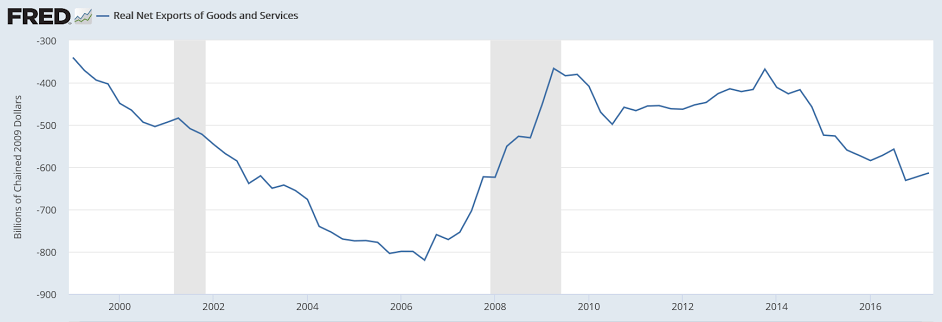
The softer dollar and solid growth abroad also suggest that the trade sector will no longer be a significant drag on economic growth.

Except we have to first get past the J curve effect and the recent higher prices for imported oil before the current trend reverses:

With a firmer import price trend and the fading of effects from a number of temporary, idiosyncratic factors, I expect inflation will rise and stabilize around the FOMC’s 2 percent objective over the medium term.

Agreed that the higher oil prices and other weaker dollar effects could add a few tenths to headline cpi, but core inflation might stay low for longer.

In response, the Federal Reserve will likely continue to remove monetary policy accommodation gradually.

No mention of the strong deceleration of bank loan growth when the only channel from rates to growth is credit…