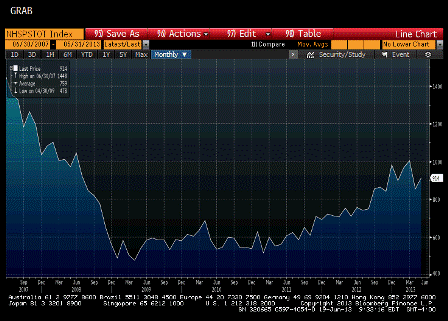
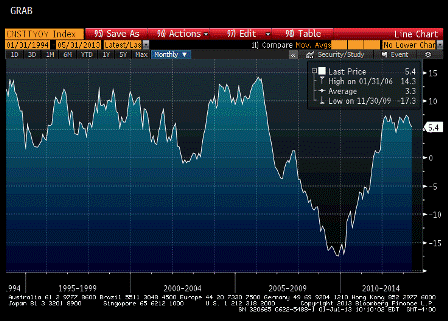
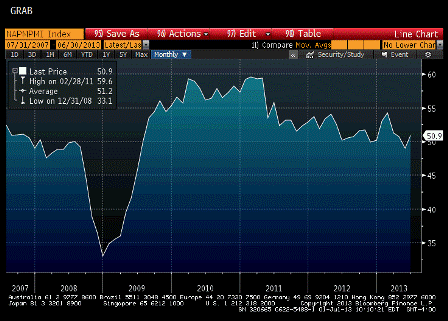
Construction and PMI yoy graphs

Construction spending and PMI still look to me to be relatively low and, if anything, modestly decelerating? And details and revisions looking worse as well.

Also, the talk remains, once the drag from the tax hikes and spending cuts is out of the way, growth will accelerate.

Except the govt deficit was contributing maybe 7% of GDP last year before the fiscal adjustments, and when the proactive fiscal adjustments stop reducing the deficit the support will probably be below 4% of GDP as the modest growth we’ve been having is also reducing the deficit via the automatic fiscal stabilizers.

And if that reduction of fiscal support isn’t offset by some other agent spending that much more than his income than before, the output doesn’t get sold and GDP/output/employment doesn’t happen.

Yes, corporations and individuals have the ability to increase their deficit spending to fill the gap, but so far they have not shown any sign of being willing to further extend themselves.

Construction Spending Y/Y:

Full size image

PMI:

Full size image
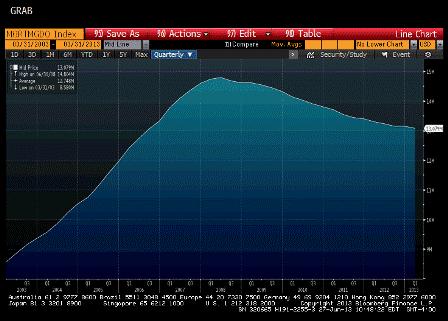
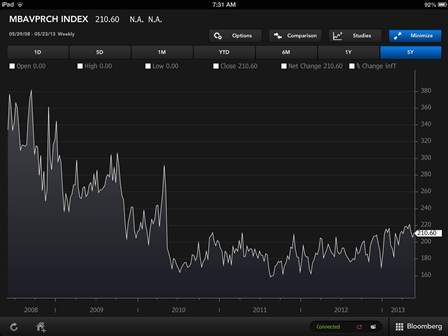
mtg purchase apps down

It still all looks to me like it would look if demand was decelerating from the tax hikes and sequesters, and if QE was in fact a tax.

Mortgage Applications Drop as Interest Rates Surge

June 5 (Reuters) — Interest rates on U.S. mortgages continued to surge last week, rising above four percent for the first time in a year and driving down demand from homeowners to refinance, data from an industry group showed on Wednesday.

Fixed 30-year mortgage rates climbed 17 basis points to average 4.07 percent in the week ended May 31, the Mortgage Bankers Association said. Rates have risen by 48 basis points in the last four weeks, with the most recent upswing driven by nervousness that the Federal Reserve could slow its economic stimulus efforts sooner than had been anticipated.

Last week’s interest rate was the highest since April 2012 and the first time rates have been above 4 percent since early May of last year.

With the Fed keeping borrowing rates low through its massive bond buying program, historically cheap mortgages have been one of the drivers of the recovery in the housing sector as the affordability lured in buyers.

But the recent rise in rates could test potential buyers’ resolve. MBA’s seasonally adjusted index of mortgage application activity, which includes both refinancing and home purchase demand, tumbled 11.5 percent last week.

Demand for refinancing was hit hardest by the acceleration in rates, with applications slumping 15.0 percent. The refinance share of total mortgage activity fell to its lowest level since July 2011 at 68 percent of applications from 71 percent the week before.

The gauge of loan requests for home purchases – a leading indicator of home sales – held up relatively better, falling just 1.6 percent.

The survey covers over 75 percent of U.S. retail residential mortgage applications, according to MBA.

Along with low interest rates, rising prices, a decrease in foreclosures and a tighter supply of available homes have all helped the housing sector get back on its feet.

Fed chairman Ben Bernanke said last month the Fed could scale back the pace of its bond purchases at one of the “next few meetings” if the economic recovery looked set to maintain forward momentum.

The Fed is currently buying $85 billion a month in bonds and mortgage-backed securities. Along with some improving economic data, the comments sowed concerns among investors that the Fed’s ultra-loose policy could end sooner than expected.

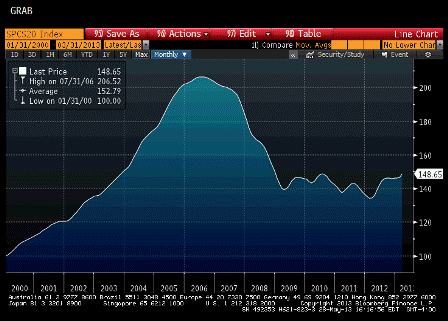
Boom Is Back: US Home Prices Jump Most in Seven Years

I’m sure stocks will surge on this report, which means little or nothing for output and profits, as it’s that kind of market.

As you know, if prices go down, say, 50%, they have to go up 100% to get back to where they started.
So comparing these kinds of % increases from current, depressed levels, to % increases of 7 years ago and calling it a ‘boom’ is highly misleading.

Also, home prices fell below replacement cost during the liquidation phase, so a recovery from those levels happens even in a very slow growth economy.

Boom Is Back: US Home Prices Jump Most in Seven Years

May 28 (Reuters) &#8212 U.S. single-family home prices rose in March, racking up their best annual gain in nearly seven years as the housing recovery continues to provide a source of strength for the economy, a closely watched survey showed on Tuesday.

The S&P/Case-Shiller composite index of 20 metropolitan areas gained 1.1 percent in March on a seasonally adjusted basis, topping economists’ forecasts for 1 percent.

Prices in the 20 cities jumped 10.9 percent year over year, beating expectations for 10.2 percent and the biggest increase since April 2006.

All 20 cities covered by the index saw yearly gains for the third month in a row. Average prices in March were back at their late-2003 levels.

For the first quarter of this year, the seasonally adjusted national index rose 3.9 percent, stronger than the 2.4 percent gain that was seen in the final quarter of last year.

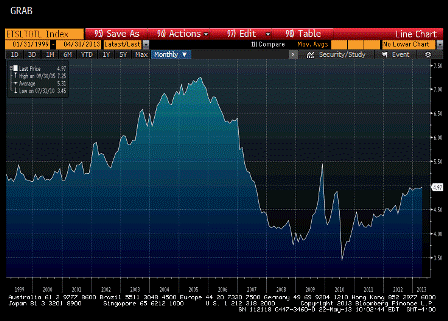
Existing home sales

Looks like it’s pretty much gone sideways this year?


Full size image

CNBC:

First-time buyers, who help drive healthy markets, made up only 30 percent of sales in March. That’s well below the 40 percent typical in a healthy market and down from nearly 33 percent in March 2012. Those buyers purchase from existing homeowners, who then are able to move on to larger houses.