Inventory/sales ratio, PMI’s, Housing starts, Consumer Sentiment

Still elevated:


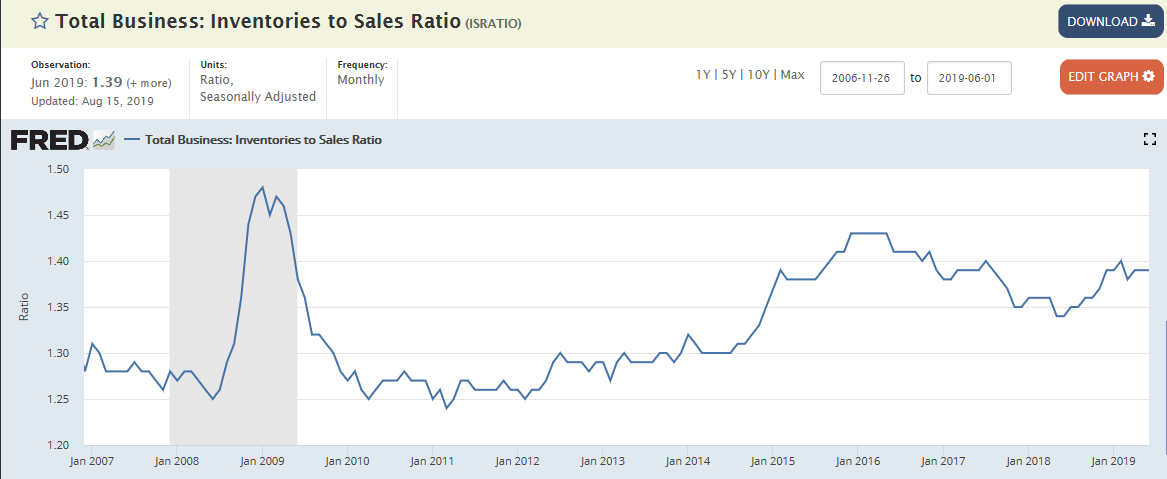
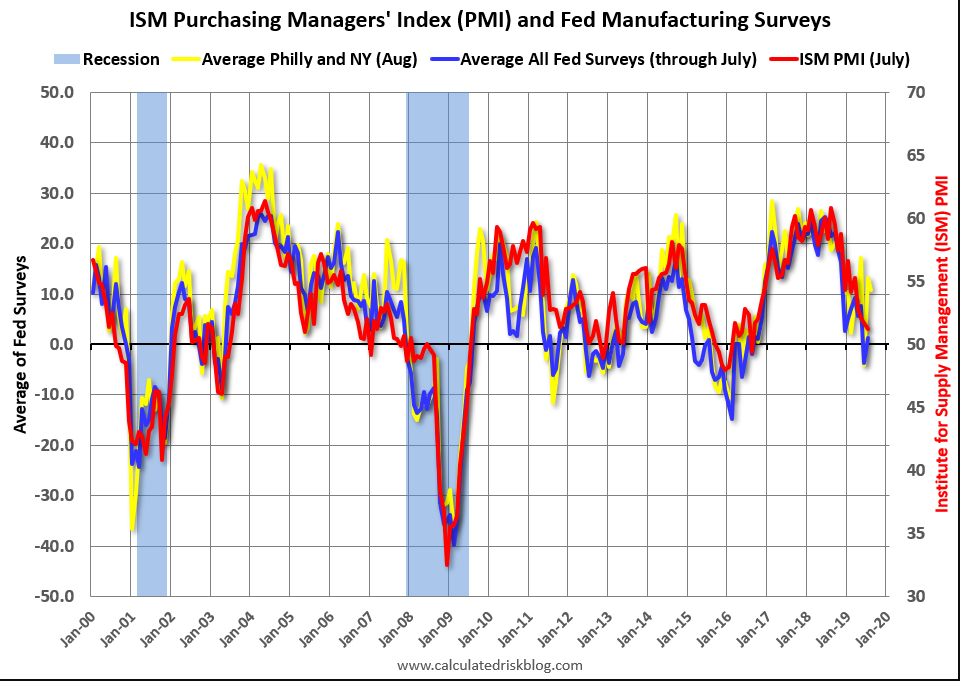
Not looking good:

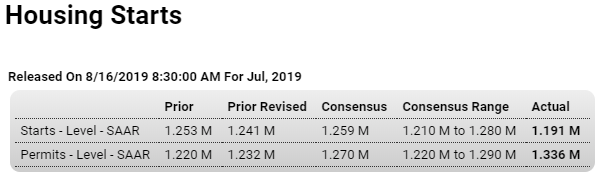
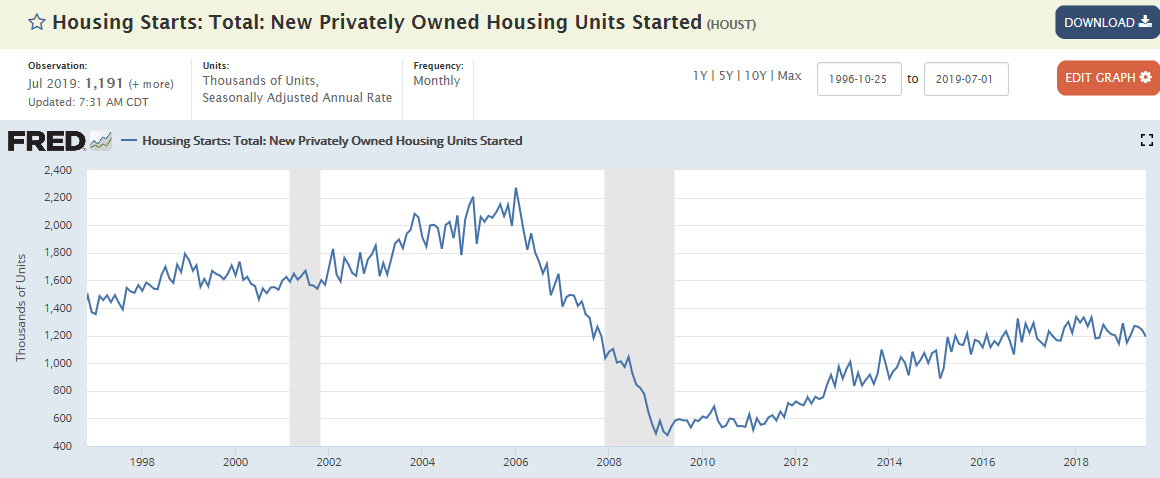
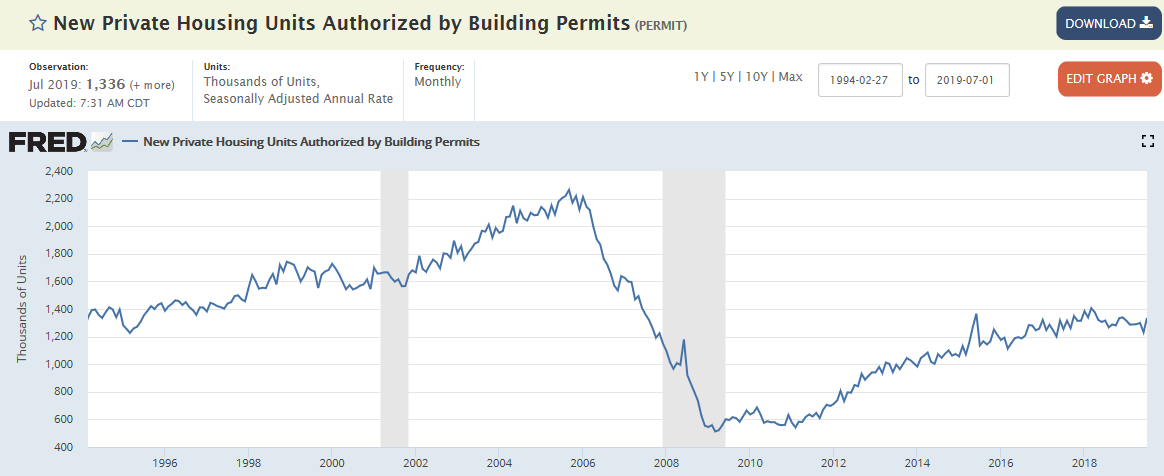
Starts down and rolling over, permits up for the month but still trending lower, as per the charts:
Highlights

A slow turn upward is the indication from a mixed but still positive housing starts and permits report for July, headlined by a much lower-than-expected rate for starts and a much higher-than-expected rate for permits.

Starts, at a total 1.191 million annual rate, were dragged lower by a sharp fall for multi-family homes to a 315,000 annual rate and 2.8 percent contraction from July last year. Yet starts for single-family homes, which are key for the residential component of GDP, actually rose to a 876,000 rate for a 1.9 percent year-on-year gain.

The news on permits, at a total 1.336 million rate, is strong throughout including a jump for multi-family homes to a 498,000 rate for an 11.9 percent yearly gain and a solid rise for single-family homes to a rate of 838,000 which is still down, however, 3.8 percent on the year. Improvement in permits doesn’t point to immediate gains for residential investment but they are a positive for the outlook.

Strong gains for completions cap July’s report, up 7.2 percent on the month to a 1.250 million rate and offering new supply and more choices for buyers and sellers alike. Three-month averages help smooth out the volatility associated with housing data and these have been slowly but clearly curving higher the past several months, at 852,000 for single-family starts versus April’s 2-year low at 829,000. Residential investment has pulled down GDP in each of the last six quarters and though July’s uneven results don’t point yet to relief in the third quarter, they do, along with falling mortgage rates, point to improvement ahead.
Seems to move with the stock market?

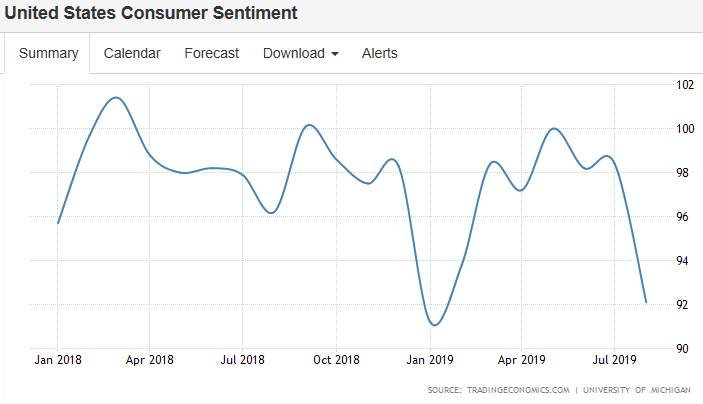
US Consumer Sentiment Drops to 7-Month Low

The University of Michigan’s consumer sentiment for the US fell to 92.1 in August 2019 from 98.4 in the previous month and well below market consensus of 97.2, a preliminary estimate showed. That was the lowest reading since January, as monetary and trade policies have heightened consumer uncertainty about their future financial prospects.
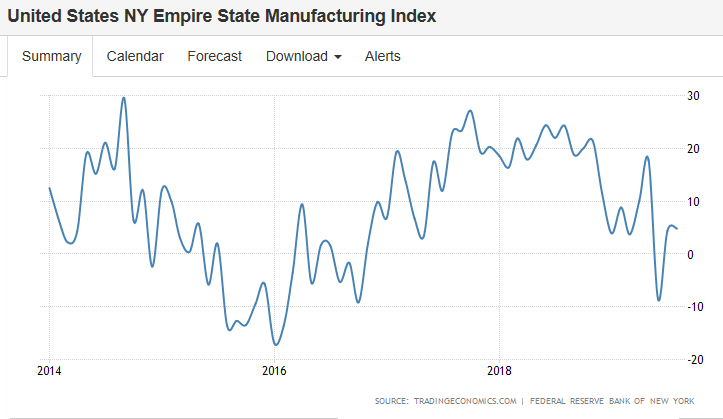
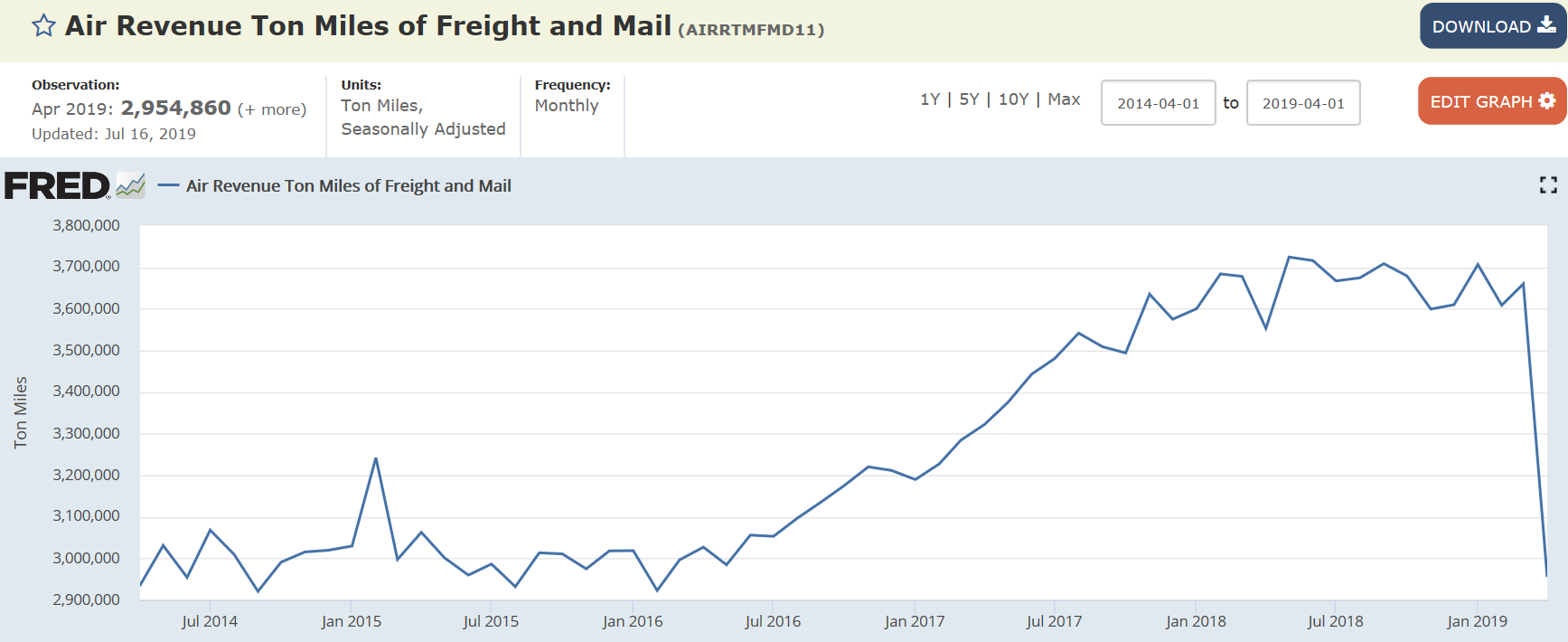
Industrial production, Retail sales, Housing index, NY manufacturing, Trump comments

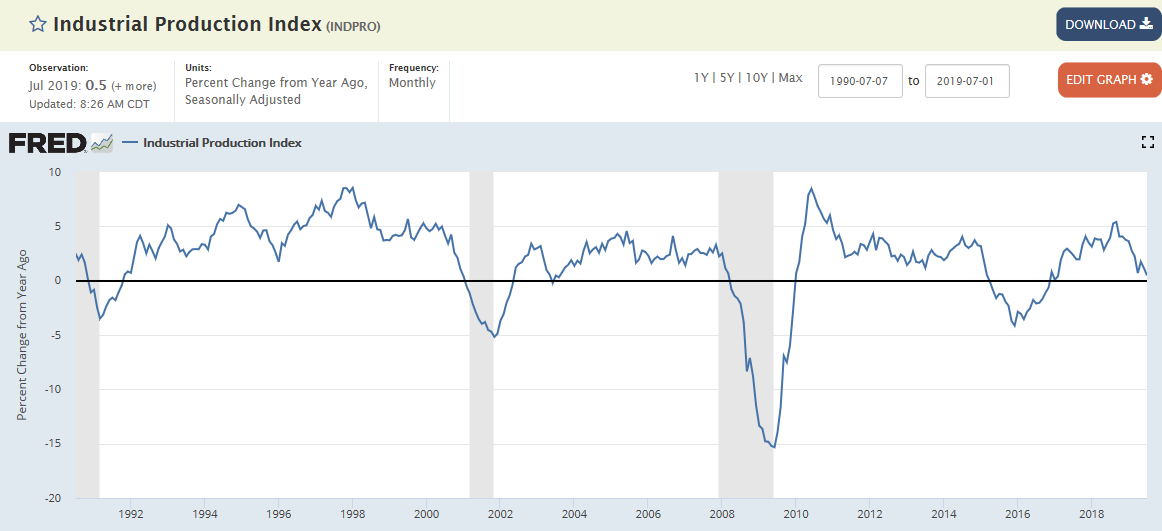
Tariffs doing their thing to the US economy:

Highlights

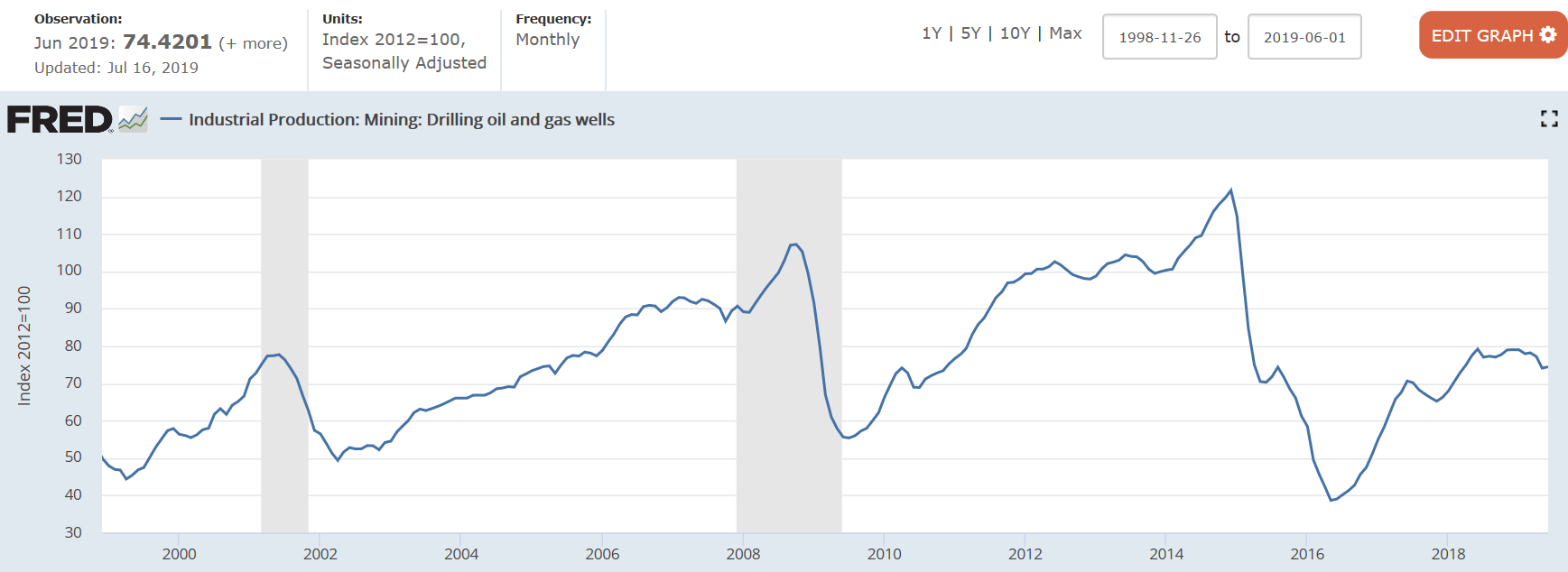
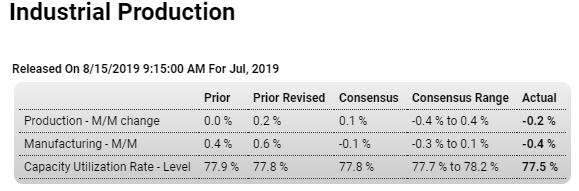
A jump in utility output couldn’t save industrial production in July which, pressured by contraction in both manufacturing and also mining, came in near the low end of Econoday’s consensus range with a 0.2 percent decline. Utilities, where production is affected by the weather and where results are often volatile, jumped 3.1 percent in the month following a 3.3 percent June decline. Outside of this component, however, positives in the July report are scarce.

Manufacturing production fell 0.4 percent in the month to miss the low end of the consensus range. Construction supplies fell 1.0 percent in the latest uneven indication for this sector while motor vehicles, where production had been on the rise, edged back 0.2 percent. Business equipment, an area of particular concern for the Federal Reserve, fell 0.4 percent in the month. Mining, which along with manufacturing and utilities is the third major component in the report, has been contributing strongly to total growth for the past couple of years but not in July as output fell 1.8 percent.

The weakness in this report was signaled by declines in hours worked in the July employment report, yet the results are more negative than expected and will boost arguments at the Federal Reserve for further interest rate cuts. The Fed is especially focused on manufacturing, a sector that is directly exposed to global slowing and global trade tensions and which is structurally considered to account for most of the domestic economy’s cyclical variation.


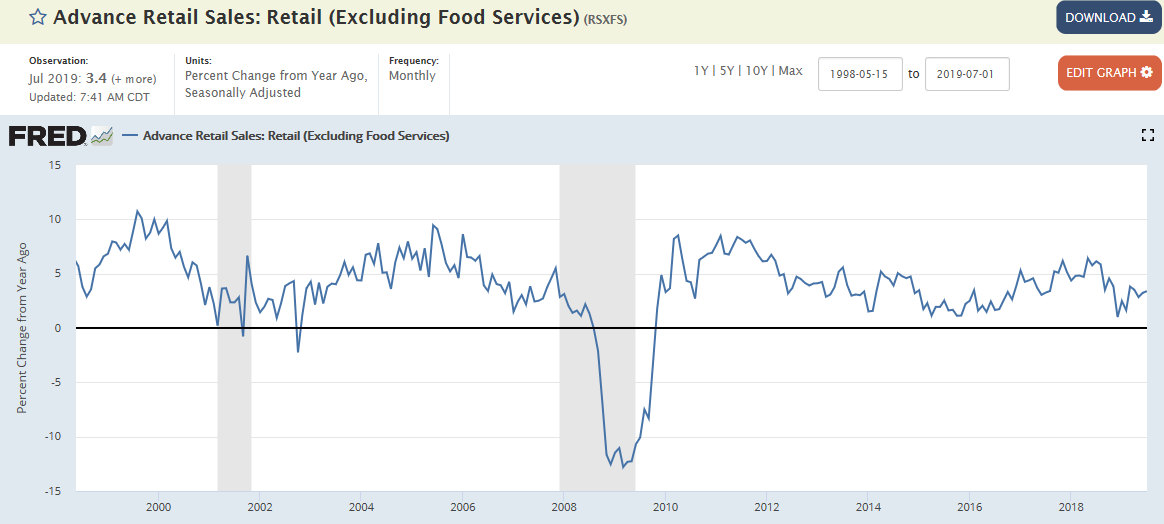
Strong report, subject to revision, and in any case on a year over year basis the gains are still working their way lower:

Highlights

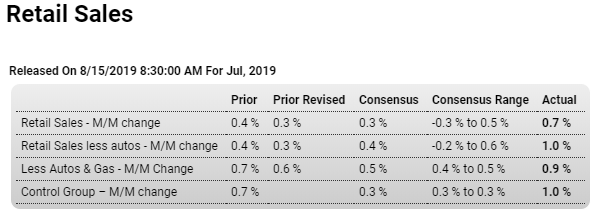
Unexpected strength has not been an overstatement in recent retail sales reports including July’s where all major readings easily surpass Econoday’s consensus range. Total sales rose 0.7 percent, ex-auto up 1.0 percent, ex-auto ex-gas up 0.9 percent, and the control group up 1.0 percent.

Where to start? First the few weaknesses including auto sales which, as indicated by a dip in previously released unit sales, fell 0.6 percent in the month to extend an uneven run for this component. Sporting goods, a small category, also fell while health & personal care stores, a large category, slipped slightly.

Now let’s turn to acceleration and it’s led once again by non-stores, where monthly sales jumped 2.8 percent following gains of 1.9 and 2.3 percent in the two prior months. This component is dominated by e-commerce which is making increasingly greater gains at the expense of brick-and-mortar stores. Department stores have been one of the victims but not in July with a 1.2 percent sales jump. Electronics & appliance stores posted a 0.9 percent gain with clothing stores up 0.8 percent and food & beverage up 0.6 percent. Gasoline stations, benefiting from higher prices, had a strong month with a 1.8 percent gain. Building materials posted a small contribution.

But punctuating the strength and speaking to the underlying discretionary power of the consumer is yet another very strong gain for restaurants, up 1.1 percent following four prior monthly gains of 0.7, 1.1, and 0.7 percent.

The consumer held up second-quarter GDP posting robust and inflation-adjusted annual spending growth of 4.3 percent, a mark that would be difficult to match let alone exceed but that’s a possibility given the strong jump out of the gate for July retail sales.


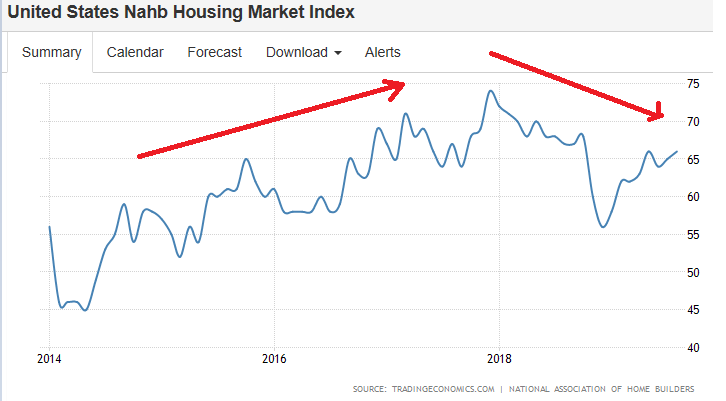
Up a bit but still looking like it peaked about a year and a half ago:


Volatile but also still looks to be working its way lower:

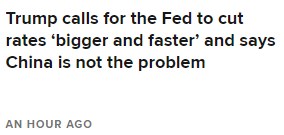
The latest from our ‘shoot first and ask questions later’ President:

Israel bars Democrats Tlaib and Omar from visiting after Trump claims ‘they hate Israel’

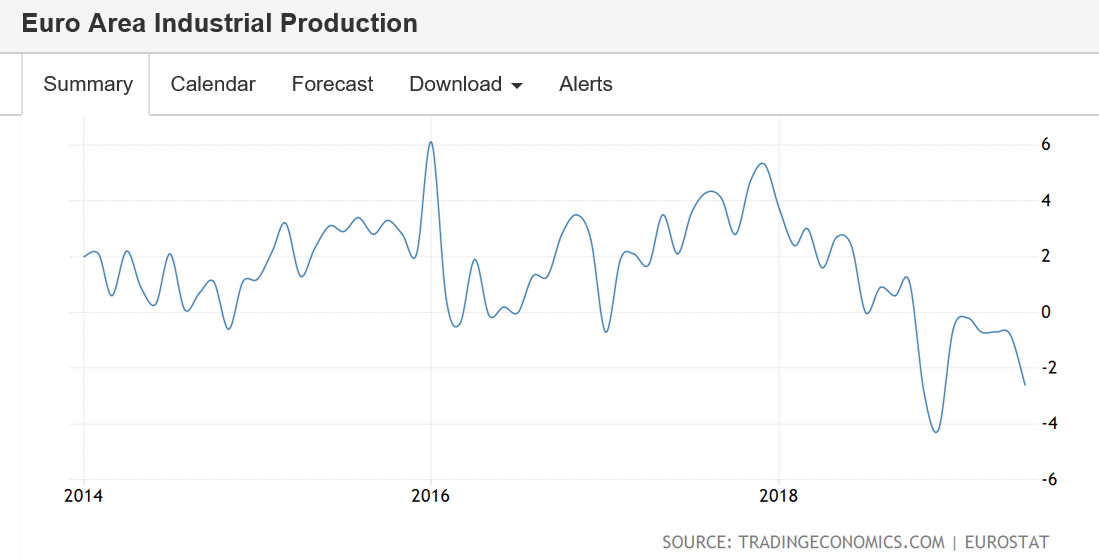
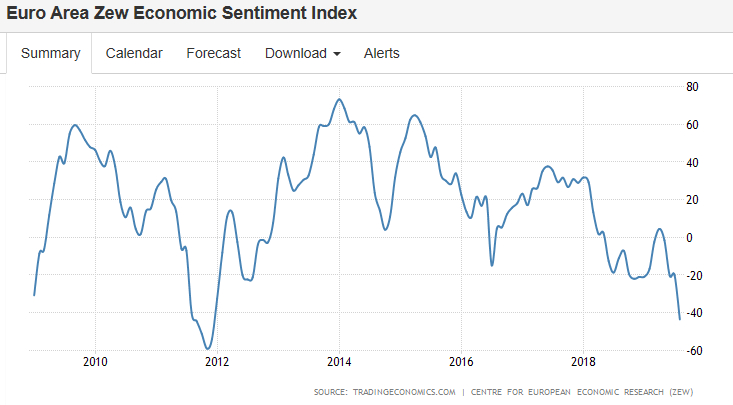
Germany, Euro IP, China

German Economy Contracts in Q2 as Exports Fall

Germany’s gross domestic product contracted by a seasonally-adjusted 0.1 percent on quarter in the three months to June 2019, following a 0.4 percent expansion in the previous period and matching market expectations, a preliminary estimate showed. Net external demand contributed negatively to the GDP, mainly due to a slump in exports, while fixed capital formation in construction also declined.

China Industrial Output: Growth at Over 17-Year Low

China’s industrial production increased 4.8 percent year-on-year in July 2019, the weakest annual gain since February 2002 and below market consensus of 5.8 percent, on the back of

China news, CNBC small business survey

China Vehicle Sales Fall for 13th Month

Vehicles sales in China decreased 4.3 percent from a year earlier in July 2019, the 13th consecutive month of decline, as the economy slows further amid the trade spat with the US. Sales of new energy vehicles (NEVs) tumbled 4.7 percent to 80,000 units, the first yearly drop in more two years, following China’s move to cut NEV subsidies last month.

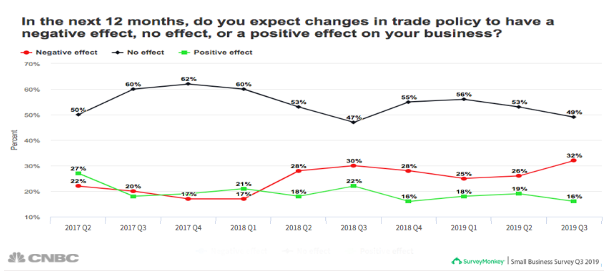
Interesting how the chart shows the belief trade policy would help increased for a bit before going back down:

Auto sales, Auto cutbacks, Central bank gold buying

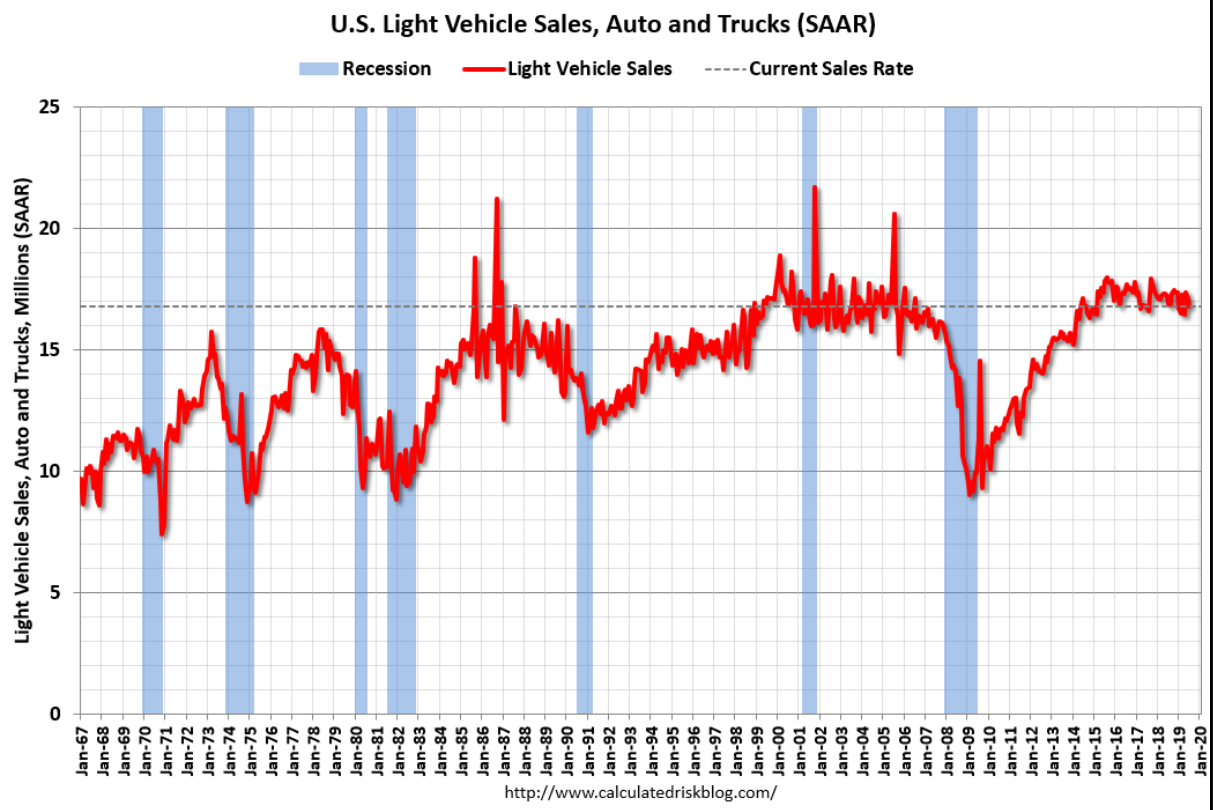
Peaked a few years ago and trending lower:

BEA: July Vehicles Sales decreased to 16.8 Million SAAR

The BEA released their estimate of July vehicle sales on Tuesday. The BEA estimated sales of 16.82 million SAAR in July 2019 (Seasonally Adjusted Annual Rate), down 1.8% from the June sales rate, and down slightly from July 2018.

Sales in 2019 are averaging 16.9 million (average of seasonally adjusted rate), down 1.5% compared to the same period in 2018.

Automakers trim production as market weakens – but hope to avoid wholesale cuts of a decade ago

Industry officials, including General Motors CEO Mary Barra, say they learned critical lessons during the last recession and hope to be more proactive this time around, adjusting production early to stay in line with market demand while avoiding the sort of budget-busting incentives that devastated industry balance sheets a decade ago.

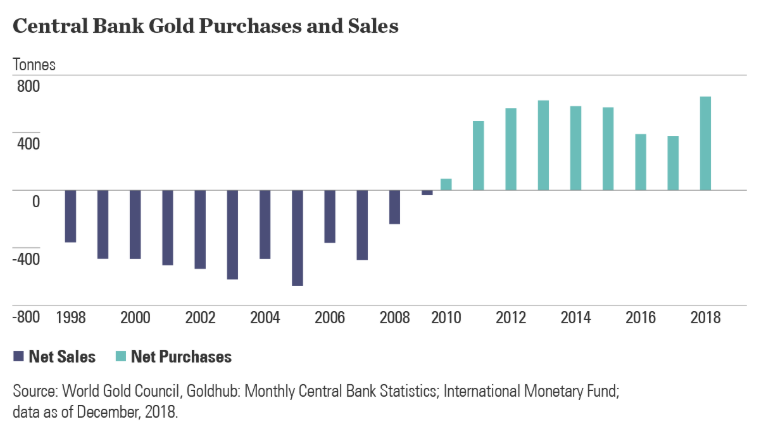
Seems central banks are continuing to buy gold, in case you wondered why the price of gold has been rising. There are no fiscal limits as gold buying doesn’t count as ‘government spending’, and is accounted for on the CB’s books with the gold purchased being the asset, and the newly created central bank deposit the liability. I call it ‘off balance sheet deficit spending’:

Rising price of gold boosts central bank’s forex reserves coffers

Central Bank Gold Buying: One More Positive Signal for Gold in 2019?

Central Bank Gold Buying Continued Unabated In June

Bankruptcy cuts, Wholesale trade, Turkey

Bankruptcy-related job losses invoke grim reminders of Great Recession

In the first seven months of the year, U.S.-based companies announced 42,937 job cuts due to bankruptcy, up 40% from the same period last year and nearly 20% higher than all bankruptcy-related job losses last year, a report released Tuesday concluded. Despite record-low unemployment, bankruptcy filings have not claimed this many jobs since the Great Recession.
“It is the highest seven-month total since 2009 when 50,258 cuts due to bankruptcy were announced,” according to the report by outplacement and business coaching firm Challenger, Gray & Christmas. “In fact, it is higher than the annual totals for bankruptcy cuts every year since 2009.”

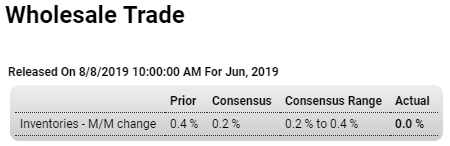
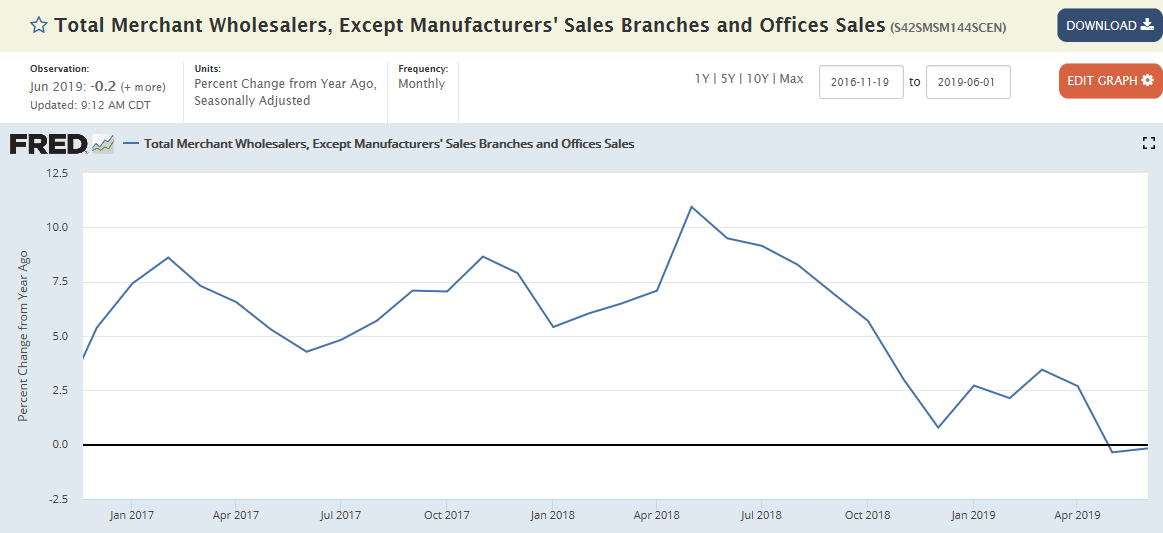
Not good, sales in contraction:

Highlights

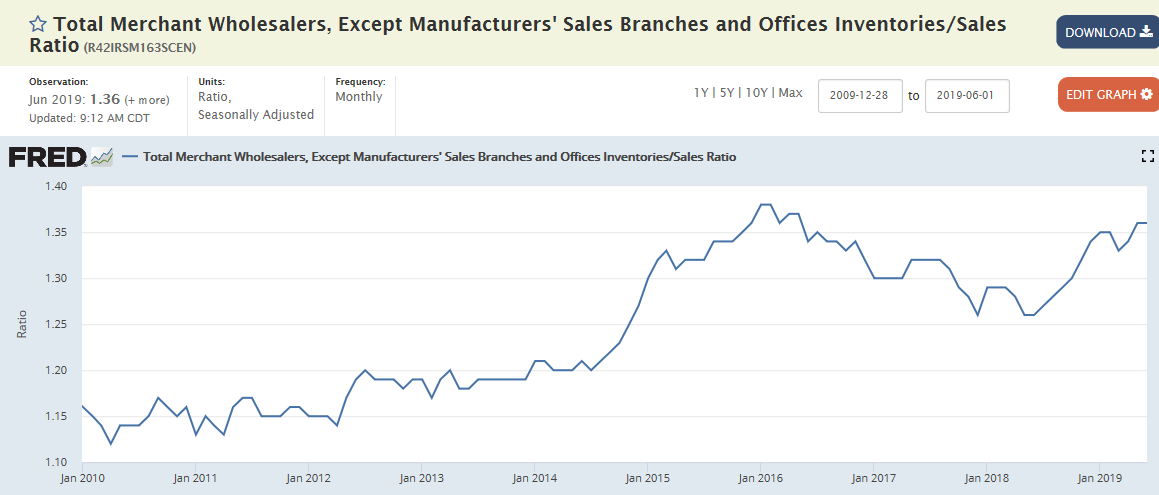
Inventories in the wholesale sector were unchanged in the second estimate, down from a 0.2 percent build in the first estimate (which will be a small negative for second-quarter GDP revisions) and compared to a 0.4 percent build in May. Inventories may be steady but not sales which fell 0.3 percent in the wholesale sector during June after a 0.6 percent decline in May. Year-on-year, sales in June were down 0.2 percent versus a 7.6 percent rise in inventories which hints at a slowing inventory build ahead. Inventories of autos did fall 0.2 percent in June but were still up 17.4 percent on the year. This will likely be a negative for near-term auto production.


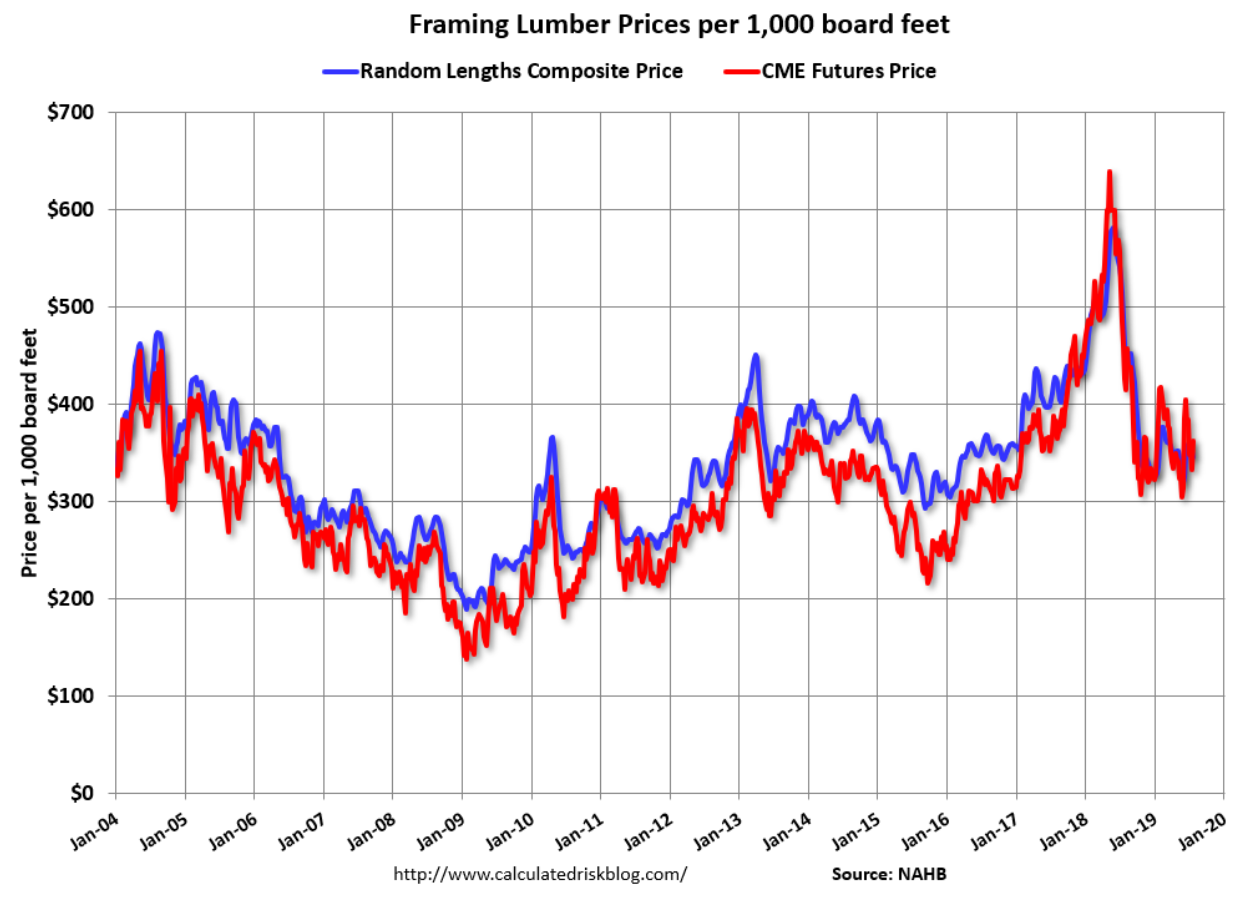
Inventories excessive and rising as sales slow:

Now that the ‘counter-intuitive’ rate cut worked in Erdogan’s favor, good chance more to come?

Turkish Lira

The Turkish lira rose to 5.484 against the US dollar on Thursday, the highest since early April

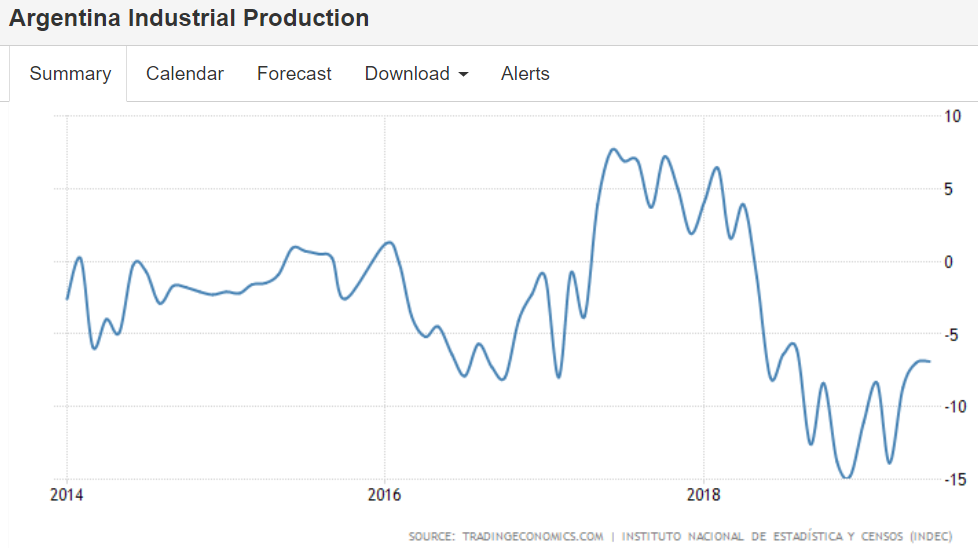
Germany, Argentina, Rate cuts

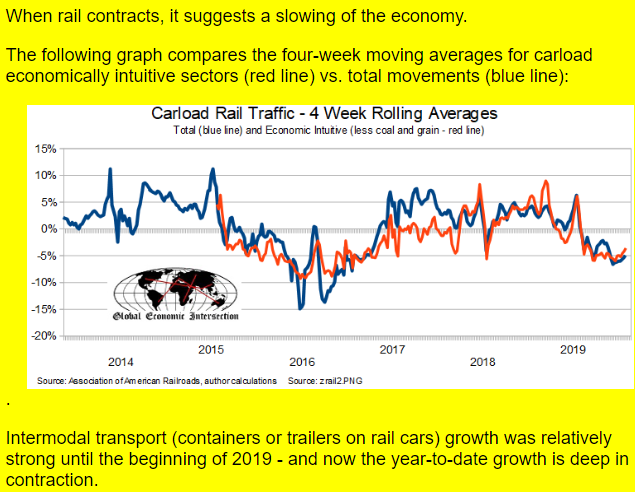
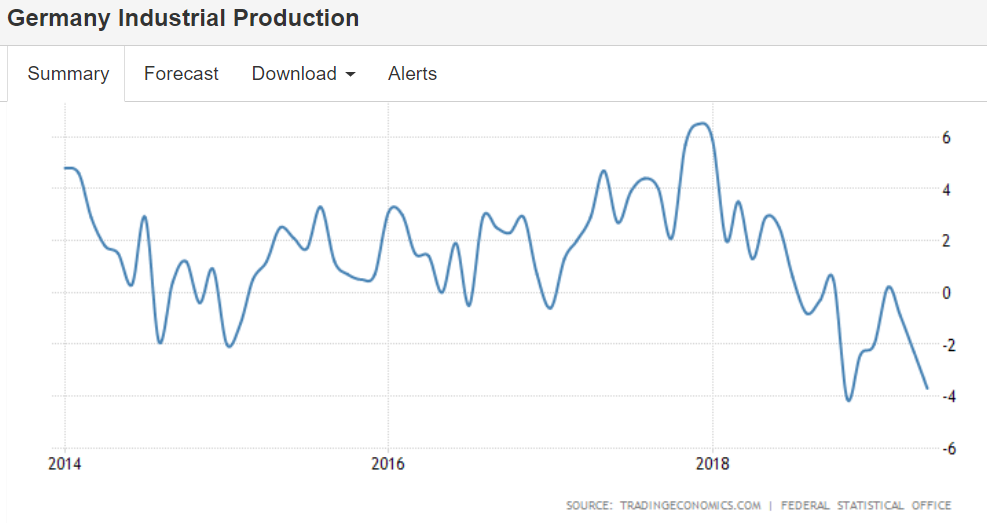
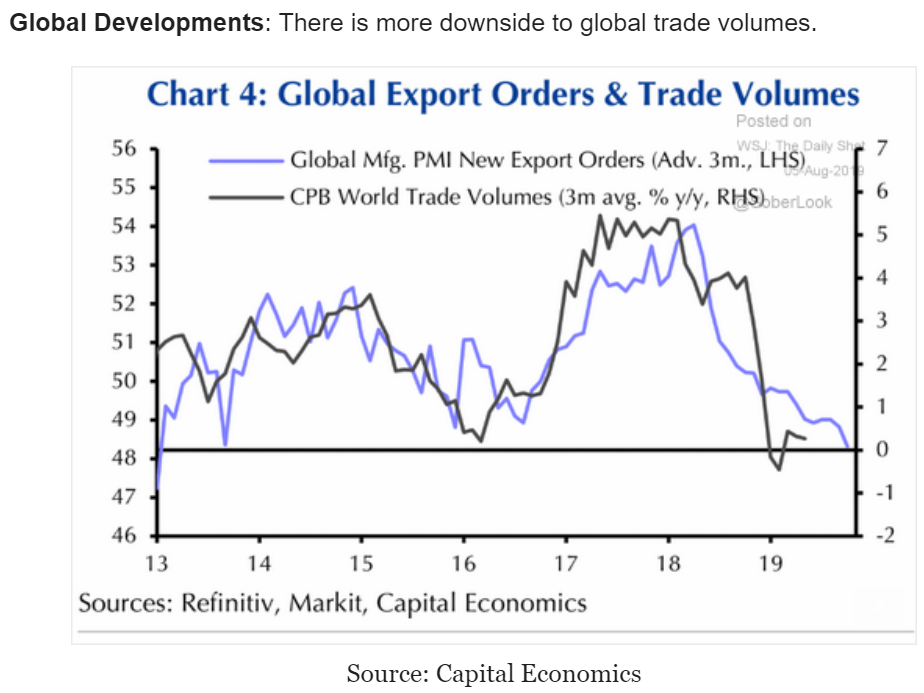
Deep into global industrial contraction:

Not that rate cuts are expansionary, of course, but that they think they are. As the barber quipped, ‘no matter how much I cut off, it’s still too short’ :

Central Banks Across Asia Cut Interest Rates

The Reserve Bank of India cut its benchmark repo rate for a fourth straight meeting by a deeper-than-expected 35bps to 5.4%; the Reserve Bank of New Zealand slashed its official cash rate/OCR by a larger-than-expected 50bps to a fresh record low of 1%; and the Bank of Thailand unexpectedly lowered its policy rate by 25bps to 1.5%.