The Center of the Universe

St Croix, United States Virgin Islands

MOSLER'S LAW: There is no financial crisis so deep that a sufficiently large tax cut or spending increase cannot deal with it.

Archive for the 'China' Category

Euro Bailout Fund Chief Sees No Quick China Deal

Posted by WARREN MOSLER on 28th October 2011

Now it all starts unraveling. It’s all talk- another ‘optical illusion’ with no operational reality I sight. The China participation isn’t a done deal. The 50% haircut isn’t a done deal either as they haven’t yet figured out how to actually do it without a default event. The EFSF contributions aren’t a done deal either.

What they have done is further frightened investors to the point where the ECB will find itself buying a lot more bonds to keep member nation funding in check, while ‘negotiations’ drag on with no resolution, meaning, as previously discussed, this is the resolution.

Hoping i’m wrong…

Euro Bailout Fund Chief Sees No Quick China Deal

By Reuters

October 28 (CNBC) — The head of Europe’s bailout fund said on Friday he does not expect to reach a conclusive deal with Chinese leaders during a visit to Beijing but expects the surplus-rich country to continue buying bonds issued by the fund.

Posted in Bonds, China, ECB, Germany, Greece | 4 Comments »

Crude Oil Update

Posted by WARREN MOSLER on 26th October 2011

Still seems to me that the idea that WTI appreciates to Brent as the Strategic Petroleum Reserve release winds down over the next few weeks is playing out as previously discussed. The WTI discount depends on a serious glut condition persisting, and the wind down of the approx 3.8 million barrels a week being delivered from the strategic petroleum reserve will work to reduce the glut by that amount.

If so, WTI is marching towards $110/barrel which seems to me could trigger substantial market reactions.

And about the same time the super committee deficit reduction talks will be in full swing, euro financing stresses elevated, exacerbated by confirmation of the 0 gdp growth forecasts hit the headlines, and further slowdown news from China complicating things as well.

The ‘answer’ remains as simple as it is further away from political reality than ever, even though the right policy responses couldn’t be more attractive to both sides:

The US budget deficit is too small.

Posted in China, Deficit, Oil, USA | 3 Comments »

Sarkozy Yields on ECB Crisis Role

Posted by WARREN MOSLER on 24th October 2011

He’ll be back…The way things are going there is no alternative, a point market forces continue to make.

And no amount of tea from China, at any price, would be sufficient given current institutional structure and policy.

And more discussion on whether Greece should be allowed to default, even as haircut talk rises to 60%, and as the notion of ‘voluntary’ comes under further discussion. After all, if they don’t have to pay their debts, why should any other member nation have to pay its debts? etc.

Sarkozy yields on ECB crisis role, pressure on Italy

By Julien Toyer and Andreas Rinke

October 24 (Reuters) — European Union leaders made some progress towards a strategy to fight the euro zone’s sovereign debt crisis on Sunday, nearing agreement on bank recapitalization and on how to leverage their rescue fund to try to stop bond market contagion.

But final decisions were deferred until a second summit on Wednesday and sharp differences remain over the size of losses private holders of Greek government bonds will have to accept.

French President Nicolas Sarkozy backed down in the face of implacable German opposition to his desire to use unlimited European Central Bank funds to fight the crisis.

Instead, the euro zone may turn to emerging economies such as China and Brazil for help in underpinning its sickly bond market.

Posted in China, Deficit, ECB, EU, Political | 7 Comments »

Russia Says Close to Final Stage on China Gas Deal

Posted by WARREN MOSLER on 11th October 2011

This is what I’ve proposed the US do with Canada and Mexico- long term contracts for oil and nat gas at ‘fair’ prices would stabilize prices and reduce price disruptions and inflation possibilities of all three economies.

Russia says close to final stage on China gas deal

By Gleb Bryanski

October 11 (Bloomberg) — Russia said on Tuesday it was close to the final stage of a huge gas supply deal with China, in what would be a landmark trade agreement between the long-wary neighbours.

A deal to supply the world’s second biggest economy with up to 68 billion cubic metres of Russian gas a year over 30 years has long been delayed over pricing disagreements.

“We are nearing the final stage of work on gas supplies,” said Russian Prime Minister Vladimir Putin, on his first overseas trip since announcing he was ready to reclaim the Russian presidency.

Putin is hoping his two-day visit will help broaden trade with China, which he expects to grow to $200 billion in 2020 from $59.3 billion last year.

Posted in China, Oil, Russia | 13 Comments »

Shanghai New Home Sales Plunge 77% Y/y to 6-Year Low

Posted by WARREN MOSLER on 10th October 2011

This doesn’t need to mean hard landing, but it means the state has to be that much more countercyclical to hold it all together, and they are facing what they consider a serious inflation problem.

Shanghai New Home Sales Plunge 77% Y/y to 6-Year Low, Uwin Says

Oct. 10 (Bloomberg) — Transactions fell to 85,400 square meters in the week ended Oct. 9, fall of 40% w/w, property consultant Shanghai Uwin Real Estate Information Services Co. says in e-mail statement today.

* New home sales in week of Oct. 9 28% lower than same period during 2008 financial crisis, Uwin chief analyst Zhijian Huang says
* New home supplies slumped 81% w/w in week of Oct.9
* Traditional “golden” September turns weakest month for home sales this year excl. Feb. and Mar.: Huang
* Situation to be more negative for developers should they continue to resist price cuts, and cuts may shift to plunging from gradually falling: Huang

Posted in China | 3 Comments »

Bernanke comments

Posted by WARREN MOSLER on 3rd October 2011

> *DJ Bernanke:US Can Learn From China’s Succesful Economic Growth Story

Right, like how their annual deficit spending has been over 20% of GDP
if you count state lending.

Wonder how he missed that one?

> *DJ Bernanke:Promoting Technology, Education Behind Emerging Nations’ Success
> *DJ Bernanke:Sound Fiscal Policy, Open Trade, Better Rules Behind Emerging Nations’ Success
> *DJ Bernanke:China, India, Other Emerging Nations Can Keep High Growth Rates For Years
> *DJ Bernanke:Over Time, Emerging Economies Like China Will Gradually Slow Down
> *DJ Bernanke:Trade Imbalances Threaten Emerging Nations’ Economic Stability
> *DJ Bernanke:Emerging Nations Will Be Challenged If They Rely On Trade For Growth
> *DJ Bernanke’s Prepared Remarks From Cleveland Clinic Speech

Posted in China, Fed | 3 Comments »

China’s Squeeze on Property Market Nearing ‘Tipping Point’

Posted by WARREN MOSLER on 26th September 2011

If China gets by this we should be ok.
If not, could be a serious setback for a few days,
but ultimately the lower commodity prices are a plus for the US.
And even more of a plus if we knew how to sustain aggregate demand at full employment levels.

China’s Squeeze on Property Market Nearing ‘Tipping Point’
By Bloomberg News

Sept. 23 (Bloomberg) — The squeeze on China’s property market may be reaching a “tipping point” that drives growth lower just when exports are under threat from a global slowdown and investor confidence is plunging, said Zhang Zhiwei, Hong Kong-based chief China economist at Nomura Holdings Inc.
 
Land transactions in 133 cities tracked by Soufun Holdings Ltd., the country’s biggest real-estate website, fell 14 percent by area in August from a month earlier. Prices of new homes declined in 16 of 70 cities last month compared with July, according to government data.
 
Property construction is a mainstay of investment that last year drove more than a half of economic growth while land sales contributed 40 percent of revenues earned by local authorities that have amassed 10.7 trillion yuan ($1.67 trillion) of debt. A funding squeeze on developers risks a “domino effect” as companies needing cash cut prices, forcing others to follow, Credit Suisse Group AG said yesterday.
 
“We’re reaching a tipping point where land sales are dropping much faster than before, developers are losing more access to bank financing, and housing prices are showing weakness,” Nomura’s Zhang said in an interview in Beijing yesterday.
 
The People’s Bank of China has raised interest rates five times over the past year, curbed lending to property developers and raised down payments on home loans as part of Premier Wen Jiabao’s campaign to rein in surging consumer and property prices. The government has also limited purchases of housing in cities where gains have been deemed excessive.
 
Loan Approval Withdrawn
 
Real-estate development accounted for a fifth of China’s urban fixed-asset investment last year, government data show.
 
Shanghai-based Shui On Land Ltd. had a loan approval from a Chinese bank withdrawn after the lender changed its policy, Vincent Lo, the company’s billionaire chairman, said in a Sept. 13 interview. Cancellations by that bank, which he wouldn’t name, are “happening quite frequently” to other developers, he said, adding that the credit squeeze may slow property development.
 
The price of land in Beijing slumped 76 percent in August from a month earlier, while in Guangzhou it plummeted 53 percent, according to Soufun. Land auction failures surged 242 percent in the first seven months of this year because of government curbs on the property market, the Beijing Times reported Aug. 3.
 
Debt Servicing Difficulties
 
The decline may make it more difficult for some of the thousands of companies set up by local governments to service debts taken on to fund infrastructure investment. China Real Estate Information Corp., a Shanghai-based property information and consulting firm, estimates 40 percent of overall local government revenue came from land sales last year.
 
In a sign financing vehicles in some provinces are struggling, the auditor of northeast Liaoning province estimated in July that about 85 percent of such companies in the region had insufficient income last year to cover all their debt servicing payments.
 
Some developers have turned to trust firms for financing, usually in the form of loans that are repackaged into investment products and sold to retail investors. The debt is typically funded by banks or investors themselves, according to Samsung Securities Asia Ltd.
 
Many real-estate companies have received about half of their new financing from trust firms over the past year, according to Jinsong Du, an analyst with Credit Suisse in Hong Kong. New bank lending to property developers in the second quarter of this year sank to 42 billion yuan from 169 billion yuan in the first quarter, he said, citing central bank data.
 
Stocks Drop
 
Shares in China property companies slumped yesterday on concern tightened access to loans will force them to cut prices. Greentown China Holdings Ltd. plunged 16 percent in Hong Kong, the most in almost three years, and was 6.5 percent lower at HK$4.20 at 3:34 p.m. today.
 
Greentown, the largest builder in the eastern province of Zhejiang, yesterday denied media reports the banking regulator ordered trust companies to provide details of their business dealings with the company and its units.
 
The China Banking Regulatory Commission is looking into financing of developers through trust companies as part of a broader evaluation of real-estate lending, a person familiar with the matter said today. The inquiries are part of regular monitoring and aren’t targeting any particular company, said the person, who declined to be identified because the regulator’s queries were meant to be private.
 
The “possibility of developers defaulting on debt has definitely increased and towards the end of the year that’s pretty likely,” Du said in a telephone interview yesterday.
 
‘Tip of the Iceberg’
 
Developer Dalian Rightway Real Estate entered preliminary restructuring talks with lenders after missing a loan repayment, the Hong Kong-based South China Morning Post newspaper reported Sept. 9, citing three unidentified people involved in the situation.
 
Funding problems are just “the tip of the iceberg” and “sharp declines in property sales and prices are likely in the next two to three months,” said Shen Jianguang, an economist at Mizuho Securities Asia Ltd. in Hong Kong.
 
Premier Wen reiterated this month that stabilizing consumer prices remains the government’s top priority and that the direction of government policies won’t change. The slowdown in economic growth is “within expectations,” he said.
 
Too Complacent
 
Consumer-price increases in August slowed to 6.2 percent from a year earlier, down from a three-year high of 6.5 percent the previous month. Economists at Citigroup, Mizuho Securities Asia Ltd. and Macquarie Securities Ltd. say inflation probably peaked in July.
 
Policy makers may be too complacent about the economy’s performance, Mizuho’s Shen said, pointing to the deteriorating outlook for exports as Europe’s debt crisis deepens and the U.S. risks slipping back into recession.
 
The International Monetary Fund this week cut its forecasts for global expansion this year and next and said downside risks to growth are rising.
 
In signs China’s economy is cooling, a preliminary index of purchasing managers released yesterday by HSBC Holdings Plc and Markit Economics showed manufacturing may shrink for a third month in September, the longest contraction since 2009, as measures of export orders and output decline.
 
“The risk of China replaying the hard landing of 2008 is increasing as the property sector cools and exports weaken,” Shen said. “ I fear that once the real economy deteriorates and officials do loosen policies, it will already be too late.”

Posted in China | 15 Comments »

China Causing ‘Growing Frustrations’ With Curbs on Businesses, Locke Says

Posted by WARREN MOSLER on 20th September 2011

So how about all that talk that it’s ‘regulation’ that’s holding back the US economy?

The regulation and govt. ‘interference’ in China is far beyond anything imaginable in the US, yet their growth rates are far beyond
anything imaginable for the US, and they manage higher levels of employment with consumption at only about 35% of GDP.

So what’s the difference?

How about Chinese annual deficits running well over 20% of GDP (state lending is functionally very close to state deficit spending) in the normal course of business?

Much like the US did in WWII?

With similar growth rates?

Ok, so 25% might be a tad too high for the kind of price stability most in the US would prefer.

And so now China is fighting a 6% inflation rate.

Hardly ‘hyper inflation’

And certainly no reason for us not to go to the 12-14% annual deficits we probably need to sustain full employment, given current credit conditions.

In other words, for the size govt. we currently have, we remain grossly over taxed.

China’s Policies Fueling ‘Growing Frustrations,’ Locke Says

 
Sept. 20 (Bloomberg) — U.S. Ambassador to China Gary Locke said the Asian country’s business climate is leading to “growing frustrations” among business and government leaders abroad, planting “seeds of doubt” in the minds of investors.

 
“There is a gap between the goals China identified in its five-year plan and the steps it is taking to achieve them,” Locke told U.S. business executives in Beijing. “Goals like expanding domestic consumption and fostering innovation require an acceleration and expansion of the economic reforms China has undertaken in the last few decades.”

 
Business groups including the Beijing-based American Chamber of Commerce in China, which hosted Locke today, are increasingly concerned that China aims to boost its companies through subsidies and anticompetitive rules at the expense of foreign companies. The European Union Chamber of Commerce in China said this month that discriminatory laws and regulations still impede its members in the world’s second-largest economy.

 
Locke said that foreign businesses face “substantial restrictions” in industries from “aviation to health care to financial services and several others.” To ease investor doubts, Locke said China should abolish restrictive practices like requiring “joint ventures in so many fields” and allowing both local and foreign companies to “make investment decisions without expansive government interference.”

 
Credit Cards

 
Access for financial firms was an area of concern, Locke said, singling out credit cards where he said China’s restrictions had created a domestic monopoly that failed to best serve consumers’ needs. State-owned banks were also skewed toward serving government-sector companies, he said.

 
“A more open and diverse Chinese financial system would help spur China’s economic reform efforts by helping finance the most dynamic firms in the economy and by putting more money in the pockets of the Chinese people through better savings options,” Locke said, according to a copy of the speech handed out to reporters before he spoke.

 
Foreign companies are shut out of industries such as mining, power generation and transportation altogether through China’s policy of selecting “national champions,” he said.

 
China’s policies deny its companies from receiving technology, management skills and jobs that more investment would bring, as well as “creating seeds of doubt in the minds of foreign investors as to whether they are truly welcome in China,” he said.

 
In a report in March, AmCham found 24 percent of respondents to an annual business climate survey said China’s economic reforms had done nothing to improve the environment for U.S. businesses in the country, up from 9 percent who said the same in a poll released last year.

 
No Equal Treatment

 
China’s government hasn’t lived up to Premier Wen Jiabao’s pledge last year that foreign companies would receive equal treatment, the EU chamber said in a report released Sept. 8.

 
Carmakers must take a Chinese partner and are limited to a 50 percent stake in their ventures, while telecommunication companies are effectively shut out from the world’s biggest mobile phone market, the report said. Foreign banks’ ownership of domestic financial firms is capped at 20 percent and overseas wind-turbine makers must tie up with local rivals on the grounds of “national security,” it said.

 
Locke said China’s reform process would be aided by letting its currency, known as the yuan or renminbi, appreciate.

 
Global Responsibility

 
“Allowing the renminbi to appreciate more rapidly would help reduce inflation, including the price of goods and services coming into China, allowing Chinese consumers to buy more with the income that they have,” he said.

 
Locke said China had a responsibility as the world’s second-biggest economy to help revive global growth, adding that reforms and greater market access were “critical to creating jobs in America.”

 
Wen this month said developed nations shouldn’t rely on China to bail out the world economy, and must cut deficits and free up their own markets. The U.S. should “ditch” protectionist measures and “open their arms” to Chinese investments, Xinhua News Agency said in a commentary today.

 
‘Houses in Order’

 
“Countries must first put their own houses in order,” Wen said Sept. 14 at the World Economic Forum in the Chinese city of Dalian. “Developed countries must take responsible fiscal and monetary policies.”

 
After serving as President Barack Obama’s commerce secretary, Locke was named as ambassador after Jon Huntsman resigned in April to run for the 2012 Republican presidential nomination.

 
Locke, 61, a former governor of Washington from 1997 to 2005, also represented the state in Congress from 1982 to 1993. From 2005 to 2008, he was a partner at Davis Wright Tremaine LLP, a business and litigation law firm that represents clients in the U.S. and China.

 
The “single largest barrier” to improved U.S.-China cooperation is the “lack of openness in many areas of Chinese society — including many areas of the Chinese economy,” Locke said.

To contact the editor responsible for this story: Peter Hirschberg at phirschberg@bloomberg.net

Find out more about Bloomberg for iPad: http://m.bloomberg.com/ipad/

Posted in China | 14 Comments »

China- managing to avoid a hard landing while fighting inflation?

Posted by WARREN MOSLER on 16th September 2011

So far looks like a soft landing, as they seem to be successfully regulating state lending, which in China is akin to deficit spending,
sufficiently to slow things down just enough to cool demand just enough to take the edge off of their inflation problem.

So while ‘it’s not over until it’s over’ so far it’s looking promising.

China consumer, business sentiment slips: survey
Sept 16 (MarketWatch) — Chinese households and entrepreneurs are beginning to feel less upbeat about the future, but analysts are divided over whether the mood shift could soon warrant moderate policy easing as authorities seek to cushion the economy from a rapid slowdown.


Sentiment among households, entrepreneurs and bankers weakened in the most recent quarter, according to a survey by the People’s Bank of China released earlier this week.

 
Households’ inflation expectations nudged up to 74.8 from 72.2, while the outlook for income expectations and job expectations declined 50.3 from 52.1, according to the PBOC survey.

 
Meanwhile, confidence among bankers eased to 54.9 from 57. Most of those polled believe further monetary-policy tightening was on the way, with interest rates set to rise in the fourth quarter.


Entrepreneurs’ confidence was battered by higher input costs, slowing orders, and harder-to-access credit. Business confidence fell to 70.2 from 75.8 in the prior quarter.

 
Daiwa Capital Markets analysts said the deteriorating sentiment suggests the PBOC will allow domestic banks to ramp up new lending by an additional 500 billion yuan ($78.32 billion) in the fourth quarter.

 
The higher loan growth should be seen as “fine tuning” of policy toward a “more balanced approach,” the Daiwa analysts said.

 
“The purpose of this loosening is to avoid a hard landing, rather than to engineer another economic boom,” Daiwa said in a note Thursday.

Posted in China | 1 Comment »

CH News – 09.13.11

Posted by WARREN MOSLER on 14th September 2011

Ok news so far for August, some slowing but no sign of a hard landing yet!

On Tue, Sep 13, 2011 at 8:03 AM, Evelyn Richards wrote:
 

HIGHLIGHTS
-China’s retail sales up 17% in Aug
-China’s fixed asset investment up 25% in Jan-Aug
-Yuan Forwards Decline Most in a Month on Greece Debt Concern
-China Aims to Play Role in Stabilizing Europe, Researcher Says
-China August Fiscal Revenue Rises 34.3% on Year, Ministry Says
-China Called on as Emergency Lender as Italy Faces Crisis
-China unlikely to loosen monetary policy
 

China’s retail sales up 17% in Aug
Sep. 13, 2011 (China Knowledge) – China’s retail sales reached RMB 1.47 trillion
in August this year, up 17% year-on-year, said the National Bureau of
Statistics.

Total retail sales in urban areas rose 17.1% year-on-year to RMB 1.28 trillion
last month, while retail sales in rural areas rose 16.4% to RMB 192.2 billion in
the same period.

Retail sales in the catering industry also grew and increased to 16.7%
year-on-year to RMB 171.7 billion in August, while retail sales of consumer
goods rose 17% to RMB 1.3 trillion.

Last month, the retails sales of automobiles continued to top the country’s
retails sales list, reaching RMB 174.6 billion, up 12.4% year-on-year, while
retail sales of oil and related products came in second, hitting RMB 126.7
billion, with a growth of 38.4%.

In the first eight months of this year, the country’s retail sales totaled RMB
11.49 trillion, 16.9% more than in the corresponding period of last year.
Retails sales of automobiles grew 14.9% to RMB 1.29 trillion during the period,
and retail sales of oil and related products amounted to RMB 928.2 billion,
39.5%.
 

China’s fixed asset investment up 25% in Jan-Aug
Sep. 13, 2011 (China Knowledge) – China’s total fixed asset investment surged
25% year on year to RMB 18.06 trillion in the first eight months of this year,
according to statistics released by the National Bureau of Statistics.

The growth rate was 0.4 percentage points lower than that in the first seven
months.

Last month, the country’s fixed asset investment climbed 1.16% from July.

Fixed asset investment in primary industry saw a 23% increase, hitting RMB 417.6
billion, while investment in secondary and investment in tertiary industry grew
27% and 23.6% year on year to RMB 7.92 trillion and RMB 9.73 trillion,
respectively, according to the latest statistics.

The country’s investment in the industrial sector jumped 26.6% year-on-year to
RMB 7.71 trillion, including RMB 638.9 billion in the mining sector and RMB 6.24
trillion in the manufacturing, up 15.9% and 32.2% year on year, respectively.
The power, gas and water producing and supplying industry saw its fixed-asset
investment climb 1.9% year on year to RMB 833.5 billion in the first eight
months.

In the first eight months, investment in real estate development surged up 33.2%
year on year to RMB 3.78 trillion.

Meanwhile, fixed asset investment in China’s eastern, central and western areas
booked notable year-on year increases of 22.6%, 30.1% and 29.4%, respectively.
 

Yuan Forwards Decline Most in a Month on Greece Debt Concern
Sept. 13 (Bloomberg) — China’s yuan forwards dropped the
most in a month amid speculation Greece is nearing default,
which may prompt policy makers to slow the currency’s
appreciation.
The People’s Bank of China set the daily reference rate
0.09 percent lower today, the most in almost four weeks, as
Asian currencies weakened. The chance of a default by Greece in
the next five years has soared to 98 percent as Prime Minister
George Papandreou fails to reassure investors that his country
can survive the euro-region crisis, credit-default swaps showed.
“What you may see actually is a weaker pace of
appreciation,” said Leong Sook Mei, regional head of global
currency research at Bank of Tokyo Mitsubishi UFJ Ltd. in
Singapore. “There was lots of risk aversion with regards to the
Greece issue. The overall trend of appreciation won’t stop as
yet until we see decisive signs of Chinese growth coming off and
inflation easing.”
Twelve-month non-deliverable forwards slid 0.33 percent to
6.3305 per dollar as of 4:58 p.m. in Hong Kong, according to
data compiled by Bloomberg. The premium to the onshore spot rate
was 1.1 percent, compared with 1.2 percent yesterday.
The yuan dropped 0.17 percent to 6.3991 per dollar in
Shanghai, according to the China Foreign Exchange Trade System.
In Hong Kong’s offshore market, the yuan declined 0.02 percent
to 6.3855.
A central bank statement yesterday that inflation is still
too high is “hawkish,” Tim Condon, head of Asia research at
ING Groep NV, said in an e-mailed note today.
Policy makers will want to see a second consecutive month
of lower headline inflation before declaring “victory,” Condon
wrote. He reiterated the bank’s call for one more 25-basis point
increase in benchmark interest rates by the end of the year.
China’s inflation eased in August, rising 6.2 percent from
a year earlier, compared with 6.5 percent in July, which was the
fastest since June 2008.
 

China Aims to Play Role in Stabilizing Europe, Researcher Says
Sept. 13 (Bloomberg) — China is playing its role as a
responsible major world economy and is trying to help stabilize
global confidence by supporting European governments, Zhang
Yansheng, a researcher affiliated with the nation’s top economic
planning agency, said today.
Chinese policy makers are thinking in a “global context”
and about the need to prevent a “domino effect” in the debt
crisis, Zhang said in Beijing today when asked to comment on
reports that China is in talks to make investments in Italy that
may include government bonds. If Italy “falls” it may drag
down Europe, the world and China’s economy, he said.
There is a limit to what China can do to help, Zhang said.
Zhang, who is a researcher at the Institute of Foreign
Economic Research affiliated to the National Development and
Reform Commission, said he was giving his own views on the
matter.
 

China August Fiscal Revenue Rises 34.3% on Year, Ministry Says
Sept. 13 (Bloomberg) — China’s August fiscal revenue rose
34.3 percent from a year earlier to 754.6 billion yuan and
fiscal expenditure rose 25.9 percent to 807.7 billion yuan,
according to a statement on the Ministry of Finance’s website
today.
Fiscal revenue for the first eight months this year rose
30.9 percent to 7.4 trillion yuan, the statement said.
 

China Called on as Emergency Lender as Italy Faces Crisis
Sept. 13 (Bloomberg Businessweek) — China’s status as the fastest- growing major economy and holder of the largest foreign-exchange reserves lured another bailout candidate as Italy struggles to avoid a collapse in investor confidence.

Italian officials held talks in the past few weeks with Chinese counterparts about potential investments in the country, an Italian government official said yesterday, adding that bonds weren’t the focus. Finance Minister Giulio Tremonti met with Chinese officials in Rome earlier this month, his spokesman Filippo Pepe said by phone today, declining to say exactly when the talks took place or what was discussed.

Foreign Ministry spokeswoman Jiang Yu, asked about buying Italian assets, said Europe is one of China’s main investment destinations, without specifically mentioning Italy.

Italy joins Spain, Greece, Portugal and investment bank Morgan Stanley among distressed borrowers that turned to China since the 2007 collapse in U.S. mortgage securities set off a crisis that widened to engulf euro-region sovereign debtors. Stocks rose on the potential Chinese investment in Italy even as previous commitments failed to have a lasting impact.

“It’s a clear pattern of China’s intention to help stabilize the euro area,” said Nicholas Zhu, head of macro- commodity research for Asia at Australia & New Zealand Banking Group in Shanghai and a former World Bank economist. “The benefit to China is that it will help in the perception of host countries if China is viewed as a responsible stakeholder in the global community.”

Bond Auction
Italy today is auctioning as much as 7 billion euros ($10 billion) of bonds to help pay for 14.5 billion euros of bonds maturing on Sept. 15. The euro region’s third-largest economy sold 11.5 billion euros of bills yesterday and priced its one- year notes to yield 4.153 percent, up from 2.959 percent at the previous auction last month.

The yield on Italy’s 10-year bond rose to 5.69 percent as of 10:01 a.m. in Rome, pushing the spread with the equivalent German securities up 13 basis points to 396 basis points. The MSCI Asia Pacific index of stocks advanced 0.3 percent as of 4:50 p.m. in Tokyo after the Standard & Poor’s 500 index gained 0.7 percent overnight.

Chinese Image
For China, any purchases of European debt may allow the world’s largest exporter to be seen as helpful as it rebuffs calls to allow its exchange rate to appreciate at a faster pace. The world’s second largest economy has amassed record currency reserves of $3.2 trillion by selling yuan to limit gains.

Chinese policy makers are thinking in a “global context” and about the need to prevent a “domino effect” in the European debt crisis, Zhang Yansheng, a researcher affiliated with the nation’s top economic planning agency, said today.

China’s central bank referred questions to the State Administration of Foreign Exchange, which didn’t respond to a request for comment. China Investment Corp., the nation’s sovereign-wealth fund, also didn’t respond.

Italy’s bond-yields rose to a euro-era record last month as the region’s sovereign debt crisis spread from Greece, the first to receive a European Union-led bailout. Prime Minister Silvio Berlusconi’s government rushed a 54 billion-euro austerity package to convince the European Central Bank to buy its debt.

Redemptions
Even so, the size of Italy’s debt — at 1.9 trillion euros more than Spain, Greece, Ireland and Portugal combined — leaves it vulnerable to any rise in borrowing costs as it refinances maturing securities. The country still needs to sell about 70 billion euros of debt this year to cover its deficit and finance redemptions.

“We have heard this story before with regard to the likes of Spanish and Portuguese bonds, and in the end it was ECB buying and EU bailouts that seemed to have taken place rather than anything with a Chinese influence,” Gary Jenkins, a strategist at Evolution Securities in London, wrote in a research note.

Any Chinese purchases of euro-region debt to date haven’t produced a lasting cut in yield premiums for Greece, Portugal or Spain.

The extra yield investors demand to buy Greek 10-year debt over German bunds is about 23 percentage points, up from 14 percentage points three months ago. The equivalent spread for Portugal over Germany is 9.5 percentage points, up from 7.7 points over that period. Spain’s gap rose to 3.6 points from 2.5 points.

Too Big
“The issue with Europe is bigger than China alone can help with,” said Ju Wang, a fixed-income strategist at Barclays Capital in Singapore, adding that Italy’s debt load alone is a sum exceeding half the Chinese foreign-exchange reserves. “China probably will continue to help to shore up the euro, but its involvement in direct purchases of troubled Europe debt is unlikely to be too aggressive.”

If Italy “falls” it may drag down Europe, the world and China’s economy, said Zhang, a researcher at the Institute of Foreign Economic Research affiliated to the National Development and Reform Commission.

Japanese Finance Minister Jun Azumi said today that European policy makers should decide themselves whether they need fiscal assistance from Japan. U.S. Treasury Secretary Timothy F. Geithner will travel to Poland on Sept. 16 to participate in a meeting of European government finance officials trying to contain the region’s debt crisis.

‘Helping Hand’
Premier Wen Jiabao said in June that China can offer “a helping hand” to Europe by buying a limited volume of sovereign bonds. The Asian nation pledged that month to buy Hungarian government bonds and agreed to extend a 1 billion euro loan for the financing of development projects in the European country that needed an International Monetary Fund-led bailout in 2008.

Spain’s prime minister secured a Chinese pledge to invest in his nation’s faltering savings banks and in government debt on an April visit to Beijing.

In October, Wen said China will buy Greek bonds to support Greece’s shipping industry, while Chinese state-run banks agreed to $267.8 million in loans to three Greek shippers. President Hu Jintao visited Portugal in November and said China is “available to support, through concrete measures, Portuguese efforts to face the impacts caused by the international financial crisis.”

Diversification
Any Chinese purchases of euro-denominated debt may help it diversify its reserves away from dollars. The biggest foreign owner of U.S. government debt has doubled its holdings of Treasuries in the three years through June to about $1.17 trillion.

China is playing a “white knight” role in assisting Europe and buying itself goodwill that will enable it to purchase more sensitive European assets such as technology companies, according to Stamford, Connecticut-based Faros Trading in a June report. The European Union still has an arms embargo on China, imposed after the Tiananmen Square massacre in 1989.

Some of China’s investments have returned losses. China Investment Corp. paid $3 billion for a 9.4 percent stake in private equity firm Blackstone in 2007 at a 4.5 percent discount to its initial public offering price of $31. The stock traded at $12.31 yesterday, which translates to a loss of more than $1.7 billion loss for China, according to data compiled by Bloomberg.

CIC, as the wealth fund is known, widened its investment horizon to 10 years from five years, the company said in July.

“They are trying to be helpful by diversifying a little within the euro zone community,” Michael Spence, a Nobel laureate in economics, said while attending a conference in Beijing today. “With relatively high yields, if there is a credible plan in Italy — Italy has very low private debt, its public debt is relatively stable if they adopt sensible policies — so could be quite a good investment as well.”
 

China unlikely to loosen monetary policy
Sept 13 (The Australian) – CHINA’s central bank says stabilising prices remains its priority, reinforcing signs that Beijing is unlikely to loosen the reins on the world’s No. 2 economy any time soon despite mounting global uncertainties.

In a statement last night, the People’s Bank of China also gave fresh acknowledgment that its traditional measuring tools have failed to keep up with recent changes in the Chinese financial system. The bank said it is considering issuing an adjusted version of its benchmark measure of the supply of money in the economy to help plug the resulting gaps.

The PBOC’s statement came after economic data over the previous three days showing growth and inflation both easing somewhat, but remaining strong.

The data reinforced a growing consensus among economists that Beijing has likely pressed pause on any big monetary policy moves — after a series of rate increases over the last year — as it balances concerns about the weakness in advanced economies like Europe and the US against ongoing wariness over consumer prices at home.

“There is some control over the causes of rising prices, but they haven’t been eliminated,” the PBOC said last night. “Inflation remains high and stabilising prices remains the top macro-control policy.” The bank said China needs to continue its “prudent” monetary policy and maintain steady and appropriate credit growth.

Data issued by the PBOC on Sunday showed that money-supply growth slowed further last month, which the central bank said was in line with its “prudent” monetary policy. China’s broadest measure of money supply, M2, was up 13.5 per cent at the end of August from a year earlier, slower than the 14.7 per cent rise at the end of July, and below economists’ expectations of 14.5 per cent.

But the PBOC’s statement last night also said it is researching the addition of an “M2-Plus” measure of money supply, because the current M2 measure — which gauges bank deposits and cash in circulation — doesn’t capture funds in wealth management products, which have expanded dramatically this year. That means the M2 readings have understated the total growth in money, which is a factor in inflation.

“The official M2 growth number has become a little less reliable than it once was,” said Standard Chartered economists Li Wei and Stephen Green in a research note last week.

The PBOC noted that growth in lending hasn’t been slow so far this year, pointing out that bank lending in August was up about 10 billion yuan ($1.5bn) from the same month last year, when monetary policy was still loose.

“Overall liquidity conditions are appropriate and banks’ provision levels are normal,” the PBOC said. China’s financial institutions issued 548.5bn yuan of new yuan loans in August, up from 493bn yuan in July and above economists’ expectations of 500bn yuan.

China’s consumer price index rose 6.2 per cent in August from a year earlier, slowing from July’s 6.5 per cent increase, which was the fastest rise in more than three years.

Posted in China | 1 Comment »

China punishes state lenders for lending too much

Posted by WARREN MOSLER on 14th September 2011

While lending was up in August, helping to sustain the economy and avoid a hard landing, seems that might not be repeated in September:

China Bank Lending Quickens as Tightening Relaxes

China’s bank lending quickened to 548.5 billion yuan in August, rebounding from a seven-month low of 492.6 billion yuan in July, due to a slight relaxation in Beijing’s credit tightening campaign.
 

But inflation, not growth, remains the top concern for Beijing and China’s central bank is unlikely to alter its current “prudent” monetary policy stance, analysts said.
 

“August lending was stronger than expected, but it’s too early to say that the central bank is ready to relax,” E Yongjian, an economist with the Bank of Communications in Shanghai, said.
 

“As inflation is relatively high and the external environment remains uncertain, the central bank is expected to maintain its current stance, but it is unlikely to take any big moves like an increase in interest rate or the required reserve ratio,” he added.
 

Sources told Reuters earlier that the People’s Bank of China (PBOC) has punished some state lenders with “designated bills” for lending too much in August.
 

China’s broad money supply, M2, rose 13.5 percent, slowing down further from 14.7 percent in July, the central bank said on Sunday.

Posted in China | 1 Comment »

Claims/Trade/ECB/Fed/swiss/euro

Posted by WARREN MOSLER on 8th September 2011

Seems several reasons Fed unlikely to ‘ease’ further:

GDP continues to move up sequentially since year end

Fed forecasts showing continuing modest growth

Core CPI remains firm

Employment still at least modestly growing (ex Verizon, household sector, etc)

Financial burdens ratios way down indicating the potential for a credit expansion is there.

China and much of the FOMC doesn’t seem to like QE or anything even vaguely related, including long term rate commitments.

Also, with the Swiss ‘peg’ vs the euro, as long as the Swiss remain relatively strong buying the franc, it translates into buying of euro. So this new buyer of euro offers further euro support/deflation to an already highly deflationary environment.


Karim writes:

  • Claims rise 9k to 414k; 400-425k range now holding for about 2mths; not a lot of firing, not a lot of hiring
  • Large drop in trade deficit in July, both nominal and real.
  • Exports rose 3.6% while imports fell 0.2%; supply chain coming back on stream helped industrial exports, while lower oil prices dampened imports
  • Q3 GDP still looking like 2%; forward looking survey measures mixed, with consumer surveys much weaker than business surveys.
  • ECB shifts from ‘inflation risks to upside and policy is accommodative’ to…
  • Inflation risks are ‘balanced’, ‘downside risks’ to growth forecasts (which were reduced), and while policy is still accommodative, financial conditions have tightened
  • While LTROs and SMP help with the transmission of policy, if financial conditions still tighten further, the changed forecasts and biases leave the door open for rate cuts
  • Staff forecasts for inflation were left unchanged at 2.6% for 2011 and 1.7% for 2012; Growth forecasts were cut from 1.9% to 1.6% for 2011, and 1.7% to 1.3% for 2012

Posted in China, ECB, Employment, EU, Fed, GDP, Inflation | 4 Comments »

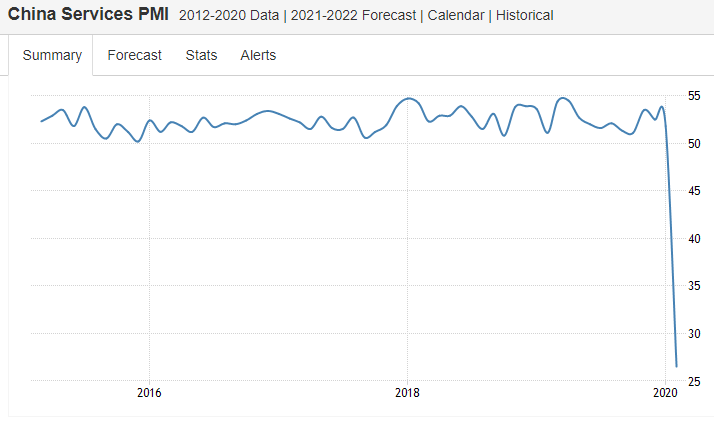
China Services PMI Falls To Record Low On Weak New Order Inflows

Posted by WARREN MOSLER on 6th September 2011

This report leaves open the hard landing possibility, as defined by GDP growth under 6%:

China Services PMI Falls To Record Low On Weak New Order Inflows

September 5 (RTTNews) — An indicator of the health of China’s service sector fell to a record low in August, on the back of weak intake of new orders, latest data from Markit Economics showed Monday.

The seasonally adjusted business activity index fell to 50.6 in August from 53.5 in July, pointing to near stagnation in service sector. An index reading above 50 indicates expansion of the sector, while a reading below 50 suggests contraction.

Slowing new business inflows drove the HSBC China Services PMI reading to the lowest level since the series began in November 2005, HSBC chief economist Hongbin Qu said. This reflects the effect of property and credit tightening measures, the economist added.

“That said, the property market is unlikely to collapse not least because of Chinese households’ low leverage ratio and the fact that credit tightening is likely approaching an end. This, plus resilient consumer spending, suggests China’s service sector is likely to see a moderation in growth, and not a meltdown,” Hongbin said.

The composite output index, that measures activity across both manufacturing and service sectors, recorded a score of 50.4, unchanged from July’s 28-month low. The reading pointed to another marginal expansion in Chinese private sector activity.

On the prices front, average cost burdens faced by service providers continued to rise markedly in August, primarily reflecting pressure from higher salary payments. Despite marked cost rises, service sector firms increased their output prices only marginally in August, as strong competitive pressures restricted their pricing power.

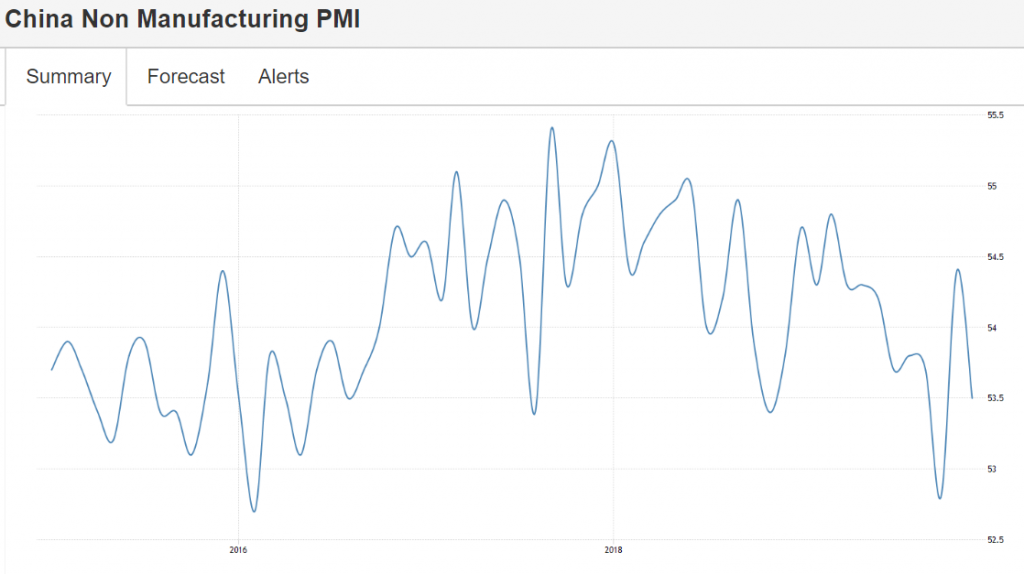
According to data from the China Federation of Logistics and Purchasing, or CFLP, Saturday, China’s non-manufacturing sector growth eased in August, largely driven by a slowdown in railway investment. The CFLP Purchasing Managers’ Index for the non-manufacturing sector fell to 57.6 from 59.6 in July. The PMI survey for the manufacturing sector indicated the activity improved slightly in August, signaling a gradual stabilization of the domestic economic situation.

Despite a slight improvement in overall factory sector performance, exports orders declined, reflecting lackluster growth among overseas economies.

China’s economic growth cooled to 9.5 percent year-on-year in the second quarter from 9.7 percent in the first quarter, according to government data.

Posted in China, GDP | No Comments »

Jackson Hole- comments tomorrow’s speech by Fed Chairman Bernanke

Posted by WARREN MOSLER on 25th August 2011

First, I see no public purpose in burning any crude oil to fly the Chairman and his entourage to make any speech.

He could just as easily deliver this one from the steps of the Fed in DC.
Congress should demand a statement of public purpose before endorsing any travel by its agents.

Next is what I expect from the speech.
The short answer is not much.

I don’t see more QE as the purpose of QE is to bring long rates down, and they are already down substantially. And the Fed now has sufficient evidence to confirm that long rates are mainly a function of expectations of future FOMC votes on rate settings.

To that point, when the Fed announced QE, and market participants believed it would spur growth, and therefore FOMC rate hikes somewhere down the road, long rates worked their way higher. And when the Fed ended QE, and market participants believed the economy would be slower to recover, long rates worked their way lower. Not to mention China hates QE and it still looks to me there’s an understanding in place where China allocates reserves to $US as long as the Fed doesn’t do any QE.

The Fed could cut it’s target Fed funds rate, the cost of funds for the banking system, down to 0 and lower that cost of funds by a few basis points. But those few basis points can hardly be expected to have much effect on anything.

It’s not the Fed has run out of bullets, it’s that the Fed has never had any bullets of any consequence.
And with the few it’s fired, it hasn’t realized the odds are the gun has been pointed backwards.
For example, it still looks to me lower rates, if anything, reduce aggregate demand via the interest income channels.

And QE isn’t much other than a tax on the economy, that also removes interest income.

So look for a forecast of modest GDP growth with downside risks, core inflation remaining reasonably firm even as unemployment remains far too high, all of which support continued Fed ‘accommodation’ at current levels.

Posted in Bonds, CBs, China, Employment, Fed, Interest Rates | 34 Comments »

Morgan Stanley, Deutsche Bank Cut Forecasts for China Growth

Posted by WARREN MOSLER on 18th August 2011

If these forecasts turn out to be correct it means a hard landing was avoided.

However, China’s stock market prices, anecdotal evidence on property prices, and commodity price performance is suggesting it could already be a lot worse than forecast.

Morgan Stanley, Deutsche Bank Cut Forecasts for China Growth

August 17 (Bloomberg) — Morgan Stanley (MS) and Deutsche Bank AG cut estimates for China’s economic growth as the debt burdens and elevated unemployment of developed nations threaten demand for exports.

Morgan Stanley cut a forecast for next year to 8.7 percent from 9 percent, in an e-mailed note today. Deutsche Bank lowered a prediction for this year to 8.9 percent from 9.1 percent, in a report yesterday.

Posted in China | 4 Comments »

Ch News

Posted by WARREN MOSLER on 16th August 2011

More slowing noises.

Jury still out on possible hard landing (GDP under 6%), and elements of the ongoing inflation fight sustains downside risks as well. The cuts in deficit spending and state lending hurt the economy, as the higher interest rates from the bank of china keep upward prices on inflation.

And lots of miguided comments below as well.

Public investment is entirely sustainable, for just one example, but because they believe it’s not, they seem to be trying to move away from it. For example, it’s perfectly ‘sustainable’ (moral hazard issues, efficiencies, etc. aside) to build housing and give it away for no charge.

Analysis: China unlikely to cool investment as its growth engine

Excerpt:

In spite of global clouds, most economists still expect China to grow well above 8 percent in 2012. That is in line with the market refrain that China won’t have a hard landing. A Reuters poll in mid-July showed economists think 2012 growth will be 8.8 percent, well above Beijing’s 7 percent growth target.

REBALANCING, SOME DAY
Some of the 4 trillion yuan ($626 billion) stimulus package announced in 2008 was squandered on ill-advised projects and economists now worry that a sizable fraction of loans to local governments won’t be repaid.

Banks may be wary of extending more large loans, making it difficult for local governments to invest their way to growth in the future.

Last week alone, China halted new railway projects and cut its building target for public housing by 20 percent to 8 million units for 2012, from 10 million.

Yet, economists say little has changed in reality.

China’s bullet trains may be a beguiling metaphor for its rapid urbanization, but rail investment accounted for just a paltry 1.9 percent of total fixed asset investment in the first six months of this year.

If anything, some economists argue Beijing is most likely to increase investment in housing if it decides to stimulate growth in coming months.

HOMES PRICED OUT OF REACH
Soaring property prices have put homes out of reach for many ordinary Chinese, and that has become a source of public ire. Keenly aware of that, Beijing wants to build more public homes to keep them affordable.

And with the real estate market accounting for a quarter of total investment in the first half of this year, China could get decent bang for its buck if it ramps up spending in the sector.

Judging by Beijing’s recent remarks on monetary policy, it appears that China is ready to pause its 10-month policy tightening campaign as rain clouds gather over the world economy.

Alongside wide expectations that China’s inflation is near its peak after hitting a three-year high of 6.5 percent in July, many analysts think Beijing is ready to support economic growth if needed.

To be sure, Beijing says it wants to cure China of its penchant for investment-driven growth. Under its broad five-year economic plan starting from 2011, it envisions a fairer Chinese economy where consumption climbs on rising incomes.

But the grand plan drew skepticism when it was unveiled as it was short on details on how changes would come about.

FEW BIG SPENDERS
Many analysts have said that Chinese consumers cannot pull their weight as big spenders because the bulk of national income goes to the state instead of workers. A flimsy social safety net encourages high saving rates.

Posted in China | 5 Comments »

China’s Economic Growth Targets Cut at Daiwa, Inflation Raised

Posted by WARREN MOSLER on 15th August 2011

A hard landing may be in progress as data continues to soften.

I’m still thinking July and August data will be telling.

China’s Economic Growth Targets Cut at Daiwa, Inflation Raised

August 14 (Bloomberg) — China’s 2012 GDP growth target was cut to 8.5 percent year-on-year from 9 percent at Daiwa Capital Markets, which “weaker external demand growth” and to the government’s “recent efforts” to lower investment growth.
A double-dip recession in Europe and the U.S. would affect growth “even more negatively,” while China would be “unlikely” to announce a big stimulus package, analysts at Daiwa led by Mingchun Sun wrote in a report dated Aug. 12. They raised their 2011 consumer-price inflation forecast to 5.4 percent year-on-year from 4.9 percent.
They also revised down their 2012 export growth forecast to 10 percent year-on-year from 15 percent and lowered their import growth target to 13 percent from 18 percent.

Posted in China, Inflation | 1 Comment »

FOMC Statement(3 dissents)

Posted by WARREN MOSLER on 9th August 2011


Karim writes:

Pretty tepid response in light of the changed assessment of current conditions and outlook. No hike thru early 2013 was already priced, so stating that they are unlikely to hike thru at-least mid 2013 doesn’t buy them that much more in terms of taking out tightening. Also, didn’t apply ‘extended period’ to balance sheet nor say anything about balance sheet composition other than they will review (which they said last time as well). Made indirect reference to QE3 in last paragraph-saying ‘range of tools’ was discussed and they may be employed as appropriate.

Right, careful not to offend China.

New
Information received since the Federal Open Market Committee met in June indicates that economic growth so far this year has been considerably slower than the Committee had expected.

Yes, the first half was revised down which they didn’t expect.
But they did not indicate it has been improving quarter to quarter though Q1 and Q2 GDP and their forecast shows that.

Indicators suggest a deterioration in overall labor market conditions in recent months, and the unemployment rate has moved up. Household spending has flattened out, investment in nonresidential structures is still weak, and the housing sector remains depressed. However, business investment in equipment and software continues to expand. Temporary factors, including the damping effect of higher food and energy prices on consumer purchasing power and spending as well as supply chain disruptions associated with the tragic events in Japan, appear to account for only some of the recent weakness in economic activity. Inflation picked up earlier in the year, mainly reflecting higher prices for some commodities and imported goods, as well as the supply chain disruptions. More recently, inflation has moderated as prices of energy and some commodities have declined from their earlier peaks. Longer-term inflation expectations have remained stable.

Consistent with its statutory mandate, the Committee seeks to foster maximum employment and price stability. The Committee now expects a somewhat slower pace of recovery over coming quarters than it did at the time of the previous meeting

Yes, seems their forecasts are a bit lower, but still higher than the actual Q1 and Q2 results.

and anticipates that the unemployment rate will decline only gradually toward levels that the Committee judges to be consistent with its dual mandate. Moreover, downside risks to the economic outlook have increased. The Committee also anticipates that inflation will settle, over coming quarters, at levels at or below those consistent with the Committee’s dual mandate as the effects of past energy and other commodity price increases dissipate further. However, the Committee will continue to pay close attention to the evolution of inflation and inflation expectations.

That implies the possibility of core moderating some, which Goldman has also forecast.

To promote the ongoing economic recovery and to help ensure that inflation, over time, is at levels consistent with its mandate, the Committee decided today to keep the target range for the federal funds rate at 0 to 1/4 percent. The Committee currently anticipates that economic conditions–including low rates of resource utilization and a subdued outlook for inflation over the medium run–are likely to warrant exceptionally low levels for the federal funds rate at least through mid-2013. The Committee also will maintain its existing policy of reinvesting principal payments from its securities holdings. The Committee will regularly review the size and composition of its securities holdings and is prepared to adjust those holdings as appropriate.

In line with their understanding with China and something closer to a strong dollar policy.

The Committee discussed the range of policy tools available to promote a stronger economic recovery in a context of price stability. It will continue to assess the economic outlook in light of incoming information and is prepared to employ these tools as appropriate.

Voting for the FOMC monetary policy action were: Ben S. Bernanke, Chairman; William C. Dudley, Vice Chairman; Elizabeth A. Duke; Charles L. Evans; Sarah Bloom Raskin; Daniel K. Tarullo; and Janet L. Yellen.

Voting against the action were: Richard W. Fisher, Narayana Kocherlakota, and Charles I. Plosser, who would have preferred to continue to describe economic conditions as likely to warrant exceptionally low levels for the federal funds rate for an extended period.
2011 Monetary Policy Releases

Old
Release Date: June 22, 2011
Information received since the Federal Open Market Committee met in April indicates that the economic recovery is continuing at a moderate pace, though somewhat more slowly than the Committee had expected. Also, recent labor market indicators have been weaker than anticipated. The slower pace of the recovery reflects in part factors that are likely to be temporary, including the damping effect of higher food and energy prices on consumer purchasing power and spending as well as supply chain disruptions associated with the tragic events in Japan. Household spending and business investment in equipment and software continue to expand. However, investment in nonresidential structures is still weak, and the housing sector continues to be depressed. Inflation has picked up in recent months, mainly reflecting higher prices for some commodities and imported goods, as well as the recent supply chain disruptions. However, longer-term inflation expectations have remained stable.

Consistent with its statutory mandate, the Committee seeks to foster maximum employment and price stability. The unemployment rate remains elevated; however, the Committee expects the pace of recovery to pick up over coming quarters and the unemployment rate to resume its gradual decline toward levels that the Committee judges to be consistent with its dual mandate. Inflation has moved up recently, but the Committee anticipates that inflation will subside to levels at or below those consistent with the Committee’s dual mandate as the effects of past energy and other commodity price increases dissipate. However, the Committee will continue to pay close attention to the evolution of inflation and inflation expectations.

To promote the ongoing economic recovery and to help ensure that inflation, over time, is at levels consistent with its mandate, the Committee decided today to keep the target range for the federal funds rate at 0 to 1/4 percent. The Committee continues to anticipate that economic conditions–including low rates of resource utilization and a subdued outlook for inflation over the medium run–are likely to warrant exceptionally low levels for the federal funds rate for an extended period. The Committee will complete its purchases of $600 billion of longer-term Treasury securities by the end of this month and will maintain its existing policy of reinvesting principal payments from its securities holdings. The Committee will regularly review the size and composition of its securities holdings and is prepared to adjust those holdings as appropriate.

Posted in CBs, China, Comodities, Fed, GDP, Inflation, Interest Rates, Karim | 11 Comments »

Equity storm over for a bit

Posted by WARREN MOSLER on 9th August 2011

From Goldman:

Published August 8, 2011

* Following Friday’s downward revisions, we now expect real GDP to increase just 2%-2½% (annualized) through the end of 2012 and the unemployment rate to rise slightly to 9¼% during this period.

This is still higher than the first half, so presumably corporations will have a better second half as well, and they did just fine in the first half.

And with lower gasoline prices, consumers get a nice break there which should firm their spending on other things as well.

The tighter fiscal won’t matter for this year, and markets won’t discount what may happen in November until it’s closer to actually happening.

So still looks to me like the recent sell off in stocks was mainly technical, as the initial knee jerk sell off from the debt ceiling and downgrade uncertainties triggered further selling by those with short options positions, much like the crash of 1987.

And, like then, and unlike early 2008, the current federal deficit seems more than large to me to keep things chugging along at muddle through levels of modest growth, continued too high unemployment, and decent corporate profits and investment.

Yes, risks remain. Europe is a continuous risk, but the ECB, once again, stepped in and wrote the check. China looks to be slipping but the lower commodity prices will help US consumers maybe about as much as they hurt the earnings of some corps.

So for now, with the options related stock selling over, it looks like we’re back to calmer waters for a while.

And Congress goes back to trying to cut the deficit to put people back to work.
Someone needs to tell them they haven’t run out of dollars, they aren’t dependent on China, and they can’t become the next Greece, and so yes, the deficit is too small given the current output gap.

But until then, we keep working to become the next Japan.

Posted in China, Comodities, Congress, Deficit, ECB, Equities, GDP, Government Spending, Japan | 15 Comments »

quick update

Posted by WARREN MOSLER on 8th August 2011

Below are various commodity indices.
If China was in fact melting down in the second half of this year due to cut backs in state spending and lending, and that front loaded into the first quarter, it would look something like that before breaking further.

chart

The Australian dollar is likewise falling, indicating shifting circumstances at China’s coal mine as well.

While good for the US consumer and US domestic demand, it’s not good for the earnings of quite a few
major corporations.

It’s also good for the dollar, which is also not good for corporate foreign earnings translations.

It also brings down headline inflation and could help moderate core CPI as well.

And if China doesn’t like US Fed style QE, ECB style QE- buying member nation debt- has to be all the more distasteful,
and could shift their reserve preference away from the euro.

Especially as the ECB check writing escalates much like it did when it supported the banking system’s liquidity. In theory the ECB’s check writing for the national govts could approach the size of the US budget deficit. Somewhat as ECB liquidity support for the euro member banks is analogous to FDIC insurance for the US banking system.

With the US budget deficit chugging along at about 9% of GDP, domestic demand and earnings should be no worse than they were in the first half of this year, as previously discussed, which means equities should be ok in general, though with some names benefiting as others get hurt.

Posted in Banking, CBs, China, Comodities, Currencies, ECB, Equities | 11 Comments »