GDP, KC Fed

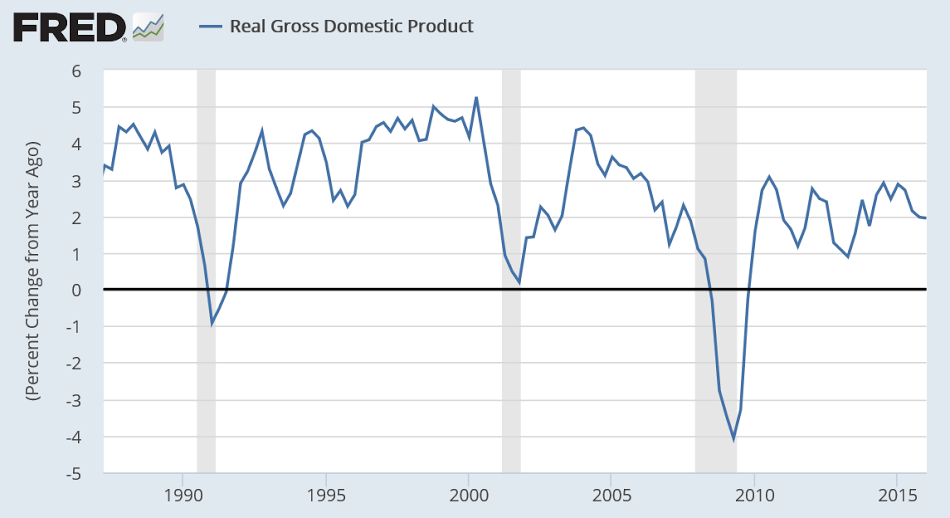
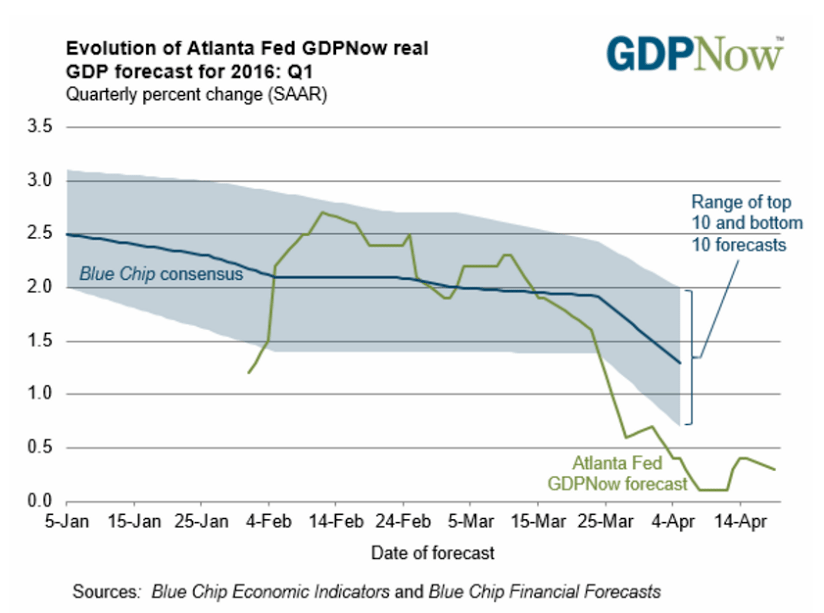
Weak, a bit below expectations, and not much hope left for Q2 either.

And some time last year the govt changed the seasonal adjustments, adding a bit to Q1 and taking some away from the other quarters. So this release included that new seasonal adjustment:

GDP
er-4-28-16-1
Highlights
Consumer spending, largely on services, helped hold up first-quarter real GDP which came in at an annualized plus 0.5 percent rate and just below the Econoday consensus for 0.7 percent. Consumer spending (personal consumption expenditures) rose at a 1.9 percent rate, down only 5 tenths from the fourth quarter. Within this, spending on services rose an in-trend 2.7 percent to offset a 1.6 percent decline in durable goods which were hit by weak vehicle sales.

Residential investment, up 14.8 percent, is a highlight of the report and helped offset a sharp 5.9 percent decline in nonresidential investment where weak energy drilling is taking a big toll. Inventories rose in the quarter but at a slower rate which is a negative for GDP while exports, reflecting weak global demand, were a negative for a second quarter in a row. Government purchases were a small plus in the quarter.

Price data are mixed with the price index up only 0.7 percent in the quarter, down 2 tenths from the fourth quarter. But the core deflator is up, 7 tenths higher to plus 1.9 percent which should get some attention.

The consumer bailed out the first quarter, both on services and also on fixing on their homes. But otherwise the report points to nearly no momentum going into the Spring quarter.

US GDP Growth Slows to 0.5% in Q1

The US economy expanded an annualized 0.5% percent on quarter in Q1, according to the advanced estimate released by the Bureau of Economic Analysis. It is the weakest performance since Q1 2014 as consumer spending slowed, the drag from trade and business inventories worsened and business investment fell for the third straight quarter.

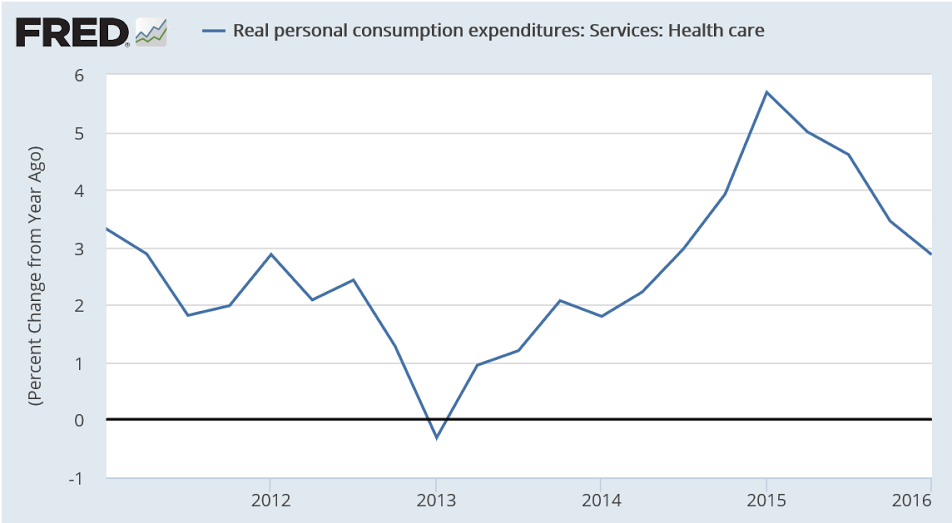
As previously discussed, health care premium count as personal consumption expenditures and GDP, so last year they spiked due to new people being covered by Obamacare, thereby supporting GDP by that much. But that was a one time event and so now consumption, so measured, is softening to where it probably has been all along:
er-4-28-16-2
er-4-28-16-3
Still negative:

Kansas City Fed Manufacturing Index
er-4-28-16-4
Highlights
Oil prices may be higher but steady contraction is the long uninterrupted theme of the Kansas City Fed manufacturing sector where the composite index came in at minus 4 for April. Contraction in new orders is only marginal, at minus 2 for a second straight month, but contraction for backlog orders, at minus 18, remains severe. Employment is also in deep contraction, at minus 12. Output indicators are also weak, at minus 8 for production and minus 9 for the workweek. Selling prices remain in contraction, at minus 6, but raw material prices, at 4, are back in the plus column and reflect the turn around for oil prices. But higher oil prices have yet to give this report much boost where weakness in energy equipment has been a long fixture. Weakness in export orders, at minus 4, has been another fixture.

Mtg purchase apps, Pending home sales, Bank liquidity, Apple

Continues at depressed levels:

MBA Mortgage Applications
er-4-27-1
Highlights
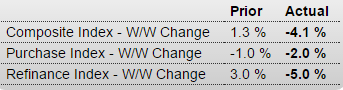
Purchase applications are not pointing to Spring acceleration for the housing sector, down 2.0 percent from the April 22 week with the year-on-year rate continuing to come down, to 14 percent from 17 percent. This rate was as high as 30 percent as recently as March. Refinancing activity also declined, down 5.0 percent in the week. Rates remain very low with the average 30-year mortgage for conforming loans ($417,000 or less) at 3.85 percent for a 2 basis point rise in the week.

About as expected but total activity continued to slow:

International Trade in Goods
er-4-27-2
Highlights
Trade activity slowed sharply in March though the deficit narrowed, down a sharp 9.5 percent to $56.9 billion vs February’s $62.9 billion. Exports fell 1.7 percent to $116.7 billion with consumer goods showing a steep decline together with wide declines for industrial supplies, autos, and foods. A positive, however, is a 1.5 percent uptick in capital goods exports, one that follows a smaller gain in February and hints at resiliency for global business investment. But the import side of the report points at declining domestic demand with consumer goods down a very steep 9.1 percent. Capital goods are also weak, down 3.6 percent. Cross-border activity has been a major negative for the global economy and March’s goods data point to continuing trouble though they will, however, give a lift to first-quarter GDP. This report represents the goods portion of the monthly international trade report which will be posted next Wednesday.

No sign here of housing leading the GDP charge this year:

Pending Home Sales Index
er-4-27-3
Highlights
Growth in the housing sector this year has been mostly soft though today’s pending home sales report does hint at greater strength ahead. The pending home sales index, which tracks contract signing for existing home sales, rose a higher-than-expected 1.4 percent in the March report. Yet the year-on-year rate is showing very little improvement, also at plus 1.4 percent.

Pending home sales surged in the Midwest during February but slowed to only plus 0.2 percent in March. Strength in the latest report is centered in the Northeast and also the South, up 3.2 and 3.0 percent respectively. Year-on-year, the Northeast, which is the smallest region for housing sales, is up 18.4 percent with the Midwest up 4.0 percent.

Existing home sales did show life in March as indicated by this report’s February data with today’s data pointing to further improvement. Still, sales data show little momentum going into the Spring selling season.

This is ridiculous and shows no understanding of banking with floating fx. The way I like to put it is ‘the liability side of banking is not the place for market discipline’. Public purpose is best served by the CB supplying unlimited liquidity at the policy rate, and regulating and supervising the asset side:

U.S. proposes rule to shrink big banks’ liquidity risk

(Reuters) The top U.S. banking regulator on Tuesday released its proposal for establishing a Net Stable Funding Ratio. The ratio is intended to ensure liquidity over a one-year horizon, compared with the liquidity coverage ratio of 2014 requiring banks to hold high-quality assets that could be readily converted into cash within 30 days. The ratio will “discourage reliance on more volatile short-term funding,” the FDIC said in its proposal. The proposal is in line with the international Basel standard set in 2015, according to the FDIC. It differs primarily by providing a narrower definition of a “high-quality liquid asset” and a way to address “trapped liquidity.”

GDP=total final sales, so if Apple sales fall $10 billion for a quarter that’s about .2% of GDP (annualized)?

Apple quarterly earnings, revenue miss Wall Street target

(Reuters) Apple said it was raising its capital return program by $50 billion through a $35 billion increase in its share buyback authorization and a 10 percent rise in the quarterly dividend. Apple said it sold 51.2 million iPhones in its second fiscal quarter, down from 61.2 million in the same quarter a year ago. Earnings of $1.90 per share. Revenue of $50.56 billion. Apple forecast third-quarter revenue of $41 billion to $43 billion, short of the Wall Street consensus of $47.3 billion.
Durable goods orders, Redbook retail sales

Not good.
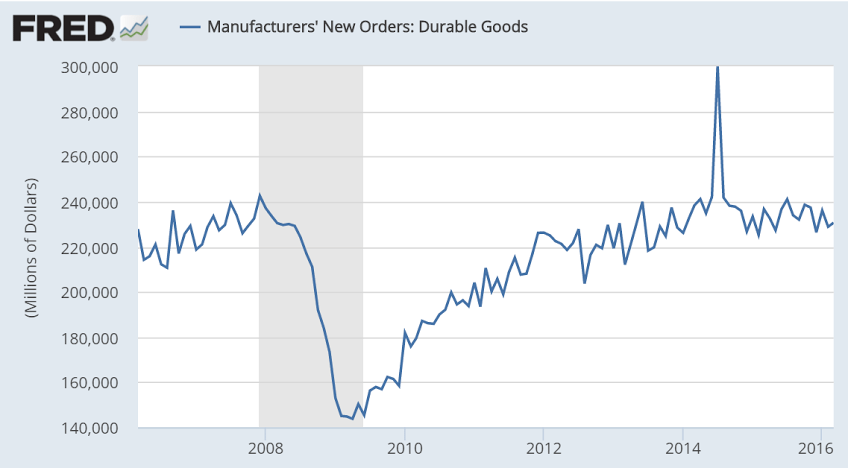
Note the year over year change.
And inventories remain way high:

Durable Goods Orders
er-4-26-1
Highlights
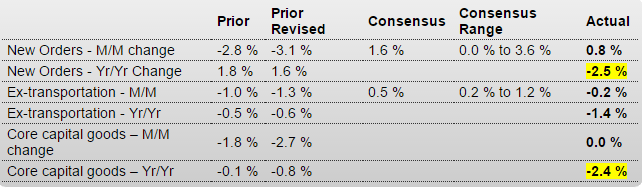
The factory sector posted a respectable March with orders for durable goods up 0.8 percent which follows a revised downswing of 3.1 percent in February and a very solid 4.3 percent gain in January. March reflects a big gain for defense goods which helped offset a downward swing for commercial aircraft. A negative in the report is a 3.0 percent decline for motor vehicle orders reflecting weakness at the retail level.

Data on core capital goods orders are uninspiring, unchanged for new orders in March to extend a soft trend. Shipments for this series, which are inputs into GDP, inched 0.3 percent higher but follow outright declines in the first two months of the quarter.

Shipments in March fell 0.5 percent and unfilled orders fell 0.1 percent. Manufacturers are carefully watching inventories for unwanted builds keeping inventories flat in the month and the inventory-to-shipments ratio unchanged at 1.66.

er-4-26-2
er-4-26-3

New home sales, Dallas Fed

Still weak and worse than expected.

And prices weakening as well:

New Home Sales
er-4-25-1

Highlights
Growth in new homes isn’t spectacular but, given how soft general economic conditions are, the sector is posting moderate and still respectable numbers. March sales came in at a 511,000 annualized rate which is on the low side of expectations but the report includes a 7,000 upward revision to 519,000 for February which now stands as among the very best months since 2008. Year-on-year, sales are up 5.4 percent, right in line with permits which are up 4.6 percent.

Lack of new homes on the market, which has been holding down sales, improved a bit in April, to 246,000 units for a 2.1 percent monthly gain. And sales relative to supply is also improving, to 5.8 months vs 5.6 months in February and 5.1 months a year ago. Supply at 6.0 months relative to sales is generally considered to be consistent with a balanced market.

New homes aren’t showing much price traction, down 3.2 percent in the month to a median $288,000 which is down, not up, 1.8 percent from last year.

er-4-25-2

Still negative and worse than expected:

Dallas Fed Mfg Survey
er-4-25-3
Highlights
The decent of the Dallas Fed report may be flattening out, hopefully. The production index posted its second straight positive reading, at 5.8 in April vs 3.3 in March, but the really good news is new orders which popped into the plus column, to 6.2 following four straight declines. Capacity utilization is another plus, up for a second month.

Still, the overall assessment is negative, at minus 13.9 for the general activity index which is a 16th straight negative score, a run that can be traced back directly to the collapse in oil prices. Employment remains weak, at minus 3.7 for a fourth straight contraction. Price data do show some life with wages up and raw materials, which had been week, also up. Selling prices, however, remain a big negative, at minus 6.6 for what is also a 16th straight month in the wrong column.

Bank lending, quick macro recap

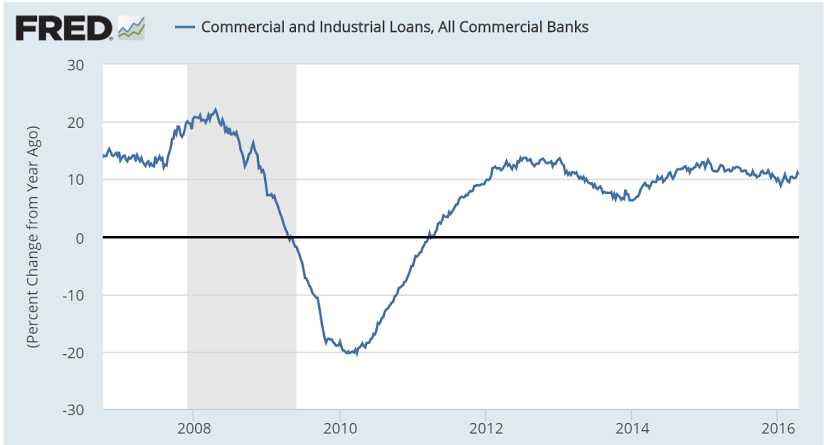
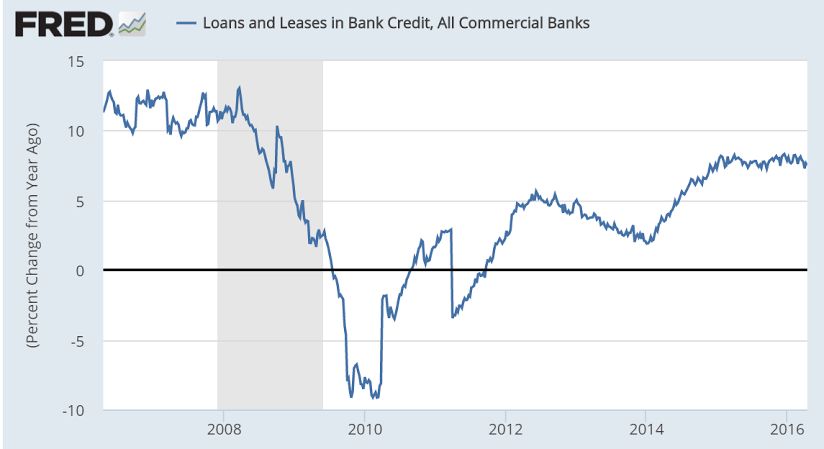
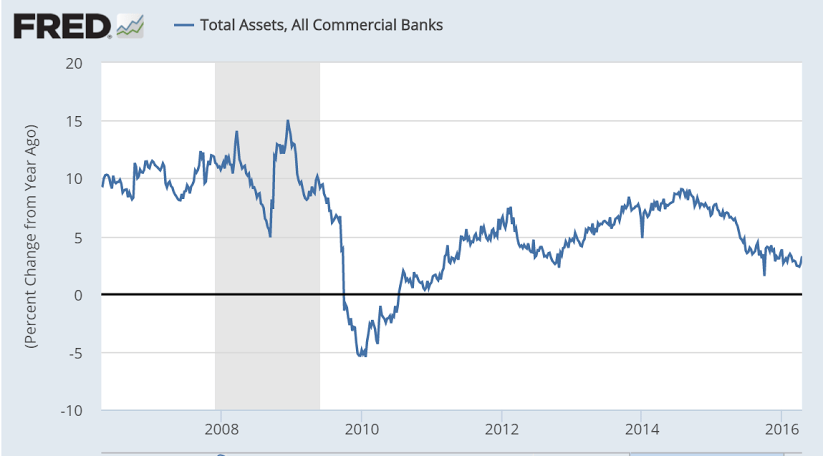
Loan growth remains uninteresting:
er-4-24-1
er-4-24-2
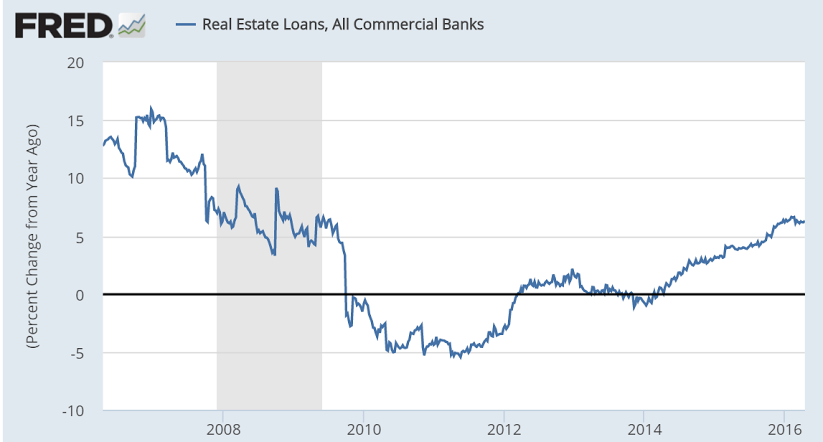
And now real estate loan growth, which wasn’t much to begin with, is showing signs of leveling off:
er-4-24-3

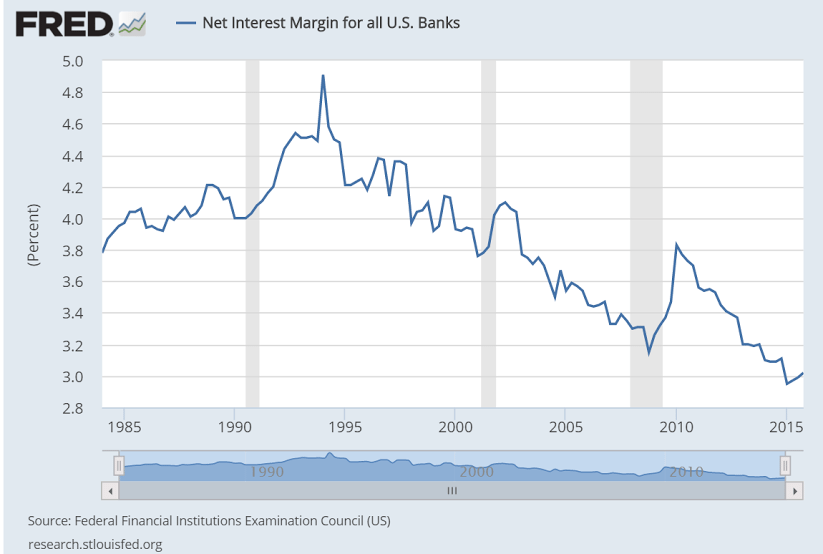
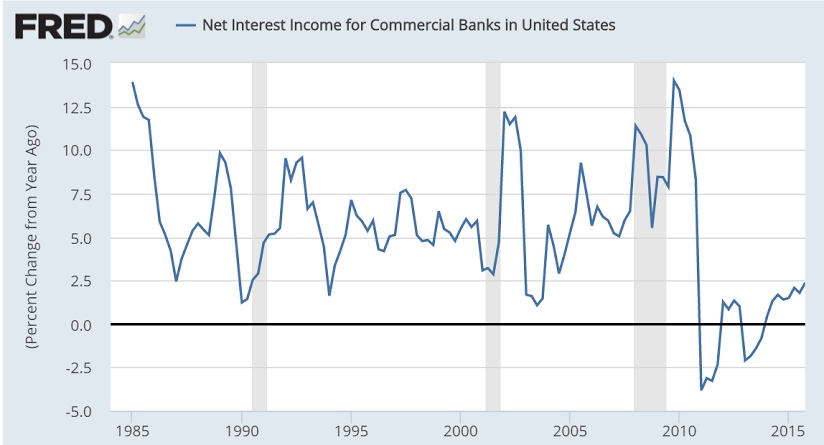
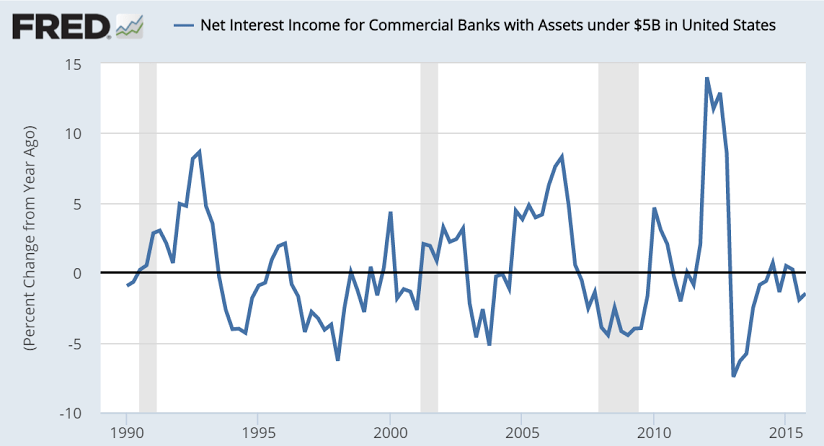
In case you thought today’s macro policies were some kind of gift to banks:
er-4-24-4

er-4-24-5

er-4-24-6

er-4-24-7

er-4-24-8

Again, wouldn’t surprise me if revisions in coming years show the US has been in recession since not long after oil prices got low enough for capex to collapse.

And it’s an old fashioned ‘under consumption theory’ slowdown- any agent that spent less than his income needed to be ‘offset’ by another who spent more than his income, or the output wouldn’t have been sold, etc. Unsold output = rising inventories = cutbacks output = reduced income = reduced sales = reduced income = reduced sales = pro cyclical downward spiral, etc. as income reductions in one sector ‘spread’ to cuts into reduced sales in the rest.

And it reverses only after deficit spending- public or private- gets large enough to offset desires to ‘save’/not spend income.

And it’s happening globally, with maybe some signs of some expansionary fiscal policy in China. But the general policy responses, including those of China, are focused on promoting exports/competitiveness, further promoting a global deflationary 0 sum game race to the bottom, with total trade winding down as well, all from a global lack of aggregate demand. And all as evidenced by massive excess capacity, particularly with regard to labor (UNEMPLOYMENT!).

Yes, there are rumblings of a fiscal response, which could in fact immediately restore global demand, but it’s just talk at the moment, with all the ‘action’ coming from monetary policy, which, unfortunately, the CB’s have backwards. They think they are stepping on the gas pedal, when in fact they are stepping on the brake pedal. And when it doesn’t work, they just step on it that much harder. And after 2 decades of supporting data that shows it doesn’t work, they all say they just need a little more time… :(

The Fed’s in a bit of a different position. Rightly or wrongly- it pretty much doesn’t matter if they are right or wrong- they believe the US economy is doing well enough to start tapping the brakes, as they did with their first rate increase. As previously discussed, that in fact adds a bit to aggregate demand via increased federal spending on interest, but so far the rate hike has been tiny and hasn’t been enough to move the demand needle. And if US GDP continues it’s deceleration and the Fed continues to fail to meet its inflation targets, it’s not impossible for them to reverse course and start lowering rates.

Meanwhile, the charts of the real US economy continue to fall/decelerate with most all pointing south, apart from new claims for unemployment which I believe is due to said claims having been made very hard to get, and not labor market conditions. And unemployment looks low only if you believe the drop in the labor participation rates are largely structural (all the women suddenly got too old to work in 2008…) which I find highly doubtful.

Nor do I see any signs of private sector deficit spending stepping up to the plate to replace lost capex spending, which, by the time it collapsed, was all that was left to support GDP growth.
And note that oil related spending cuts are still in progress. Firms are still cutting capex and US states as well as foreign oil producers are just this year cutting back spending due to reduced energy revenues. And all with no ‘offsets’ from other agents increasing their spending. And it all finally got to corporate top line growth and earnings, which have gone negative.

That all means we have to wait for federal deficit spending to increase which could be a long, ugly process.
er-4-24-9

NY Fed Nowcast report:

er-4-24-10

er-4-24-11

PMI Manufacturing, apt market, ISIS cash

More bad stuff:
er-4-23-1

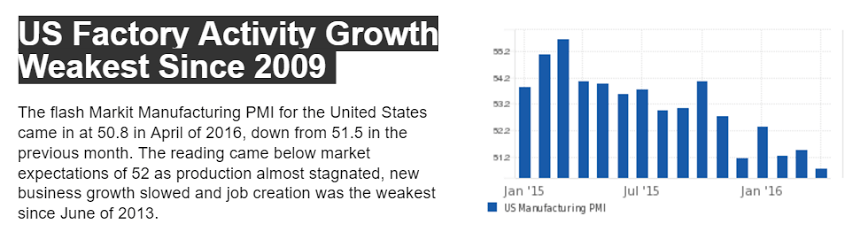
PMI Manufacturing Index Flash
er-4-23-2
Highlights
Early indications on April factory conditions are no better than mixed with strength in the Empire State report offset by yesterday’s flat readings from the Philly Fed and another set of flat readings from today’s PMI flash. The PMI, at 50.8, is still over 50 to indicate monthly growth but is the least above 50 since the beginning of the recovery, in September 2009. Growth in both output and hiring is slowing as is growth in new orders which are being pulled back by contraction in export orders. The report also cites weakness in the energy sector as a continuing negative.

Backlog orders are down, which is a negative for hiring and also points to operating slack. Manufacturers are keeping their inventories down with stocks of purchases dropping sharply. Delivery times are up, not the result of congestion in the supply chain but, the report says, of insufficient stocks and capacity cuts among suppliers. Prices, reflecting oil, are up slightly for the first increase in 7 months.

The report, in a first of sorts compared to other reports, cites the nation’s “political climate” and its relation to the economic outlook as a possible negative. Politics aside, it may still be too soon for the factory sector to see the benefits of this year’s depreciation in the dollar and upturn for oil. One of next week’s calendar highlights will be durable goods orders for March.

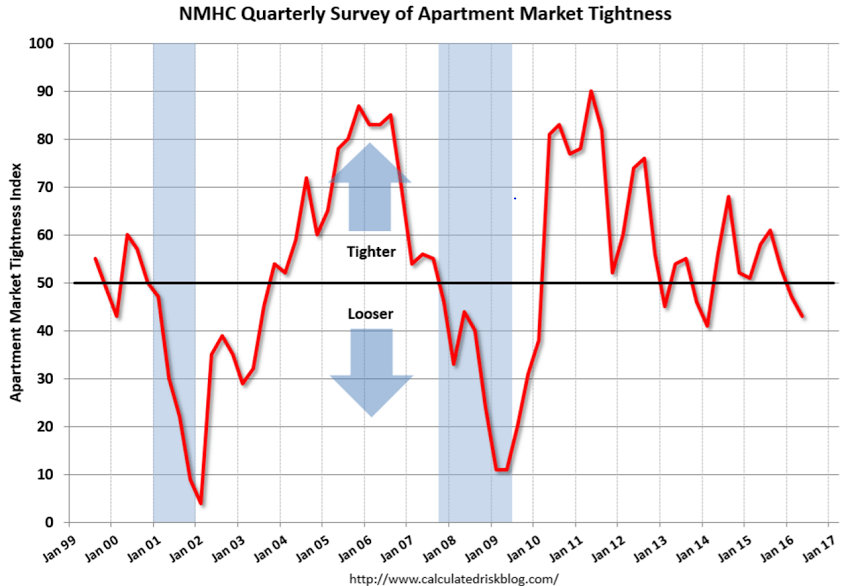
Not so good here either:
er-4-23-3
Another deflationary bias:

US-led coalition incinerated $500M of ISIS cash stockpiles and cut oil revenues

A U.S.-led coalition air campaign destroyed $500 million in Islamic State cash, reports USA Today.

Philly Fed, Chicago Fed, New unemployment claims

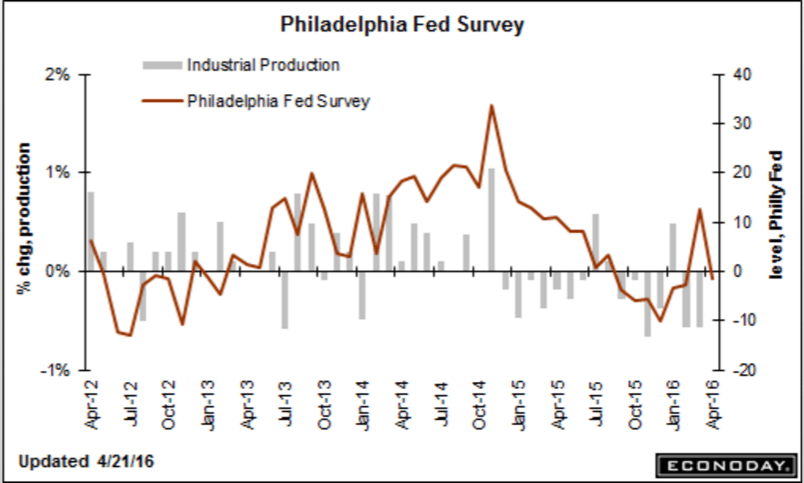
Whoops, back down:

Philadelphia Fed Business Outlook Survey
er-4-21-5
er-4-21-6

Same here:

Chicago Fed National Activity Index
er-4-21-7

If this is indeed falling because benefits have been made that much harder to get it means this channel of increased govt expenditures is disabled, and the cycle will get that much worse before it gets better:

Jobless Claims
er-4-21-8
Highlights
The labor market once again, against a background of soft data, shows itself as the economy’s leading positive. Initial claims fell 6,000 in the April 16 week to a much lower-than-expected 247,000. This is the lowest level since 1973 when, of course, the size of the labor market was much smaller. The 4-week average is down 4,500 to 260,500.

Freight index, Philly Fed state index, Fed labor index, Info graphics

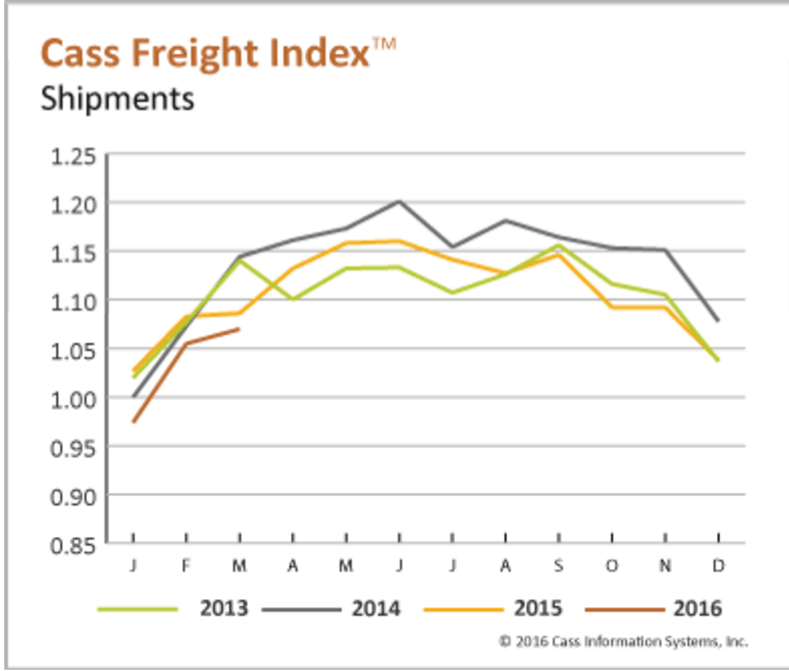
Off to a slow start this year:
er-4-21-1
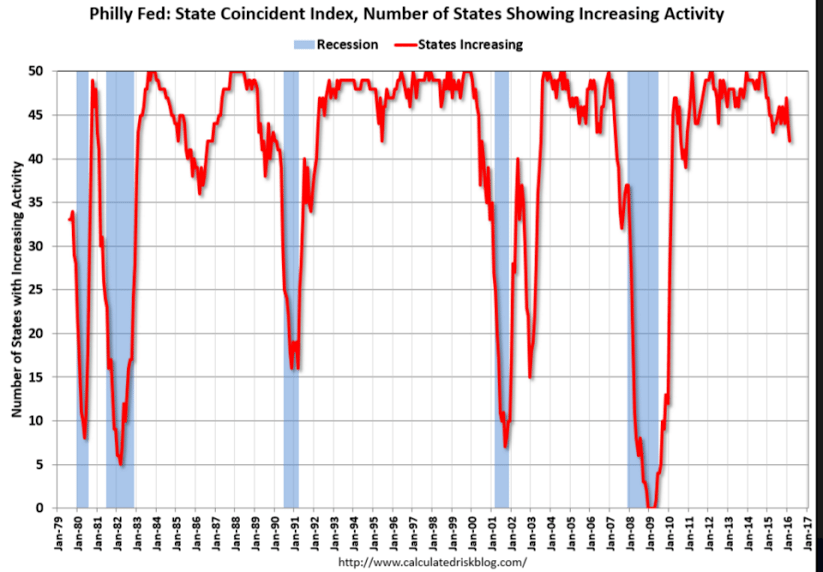
Dropped again:
er-4-21-2
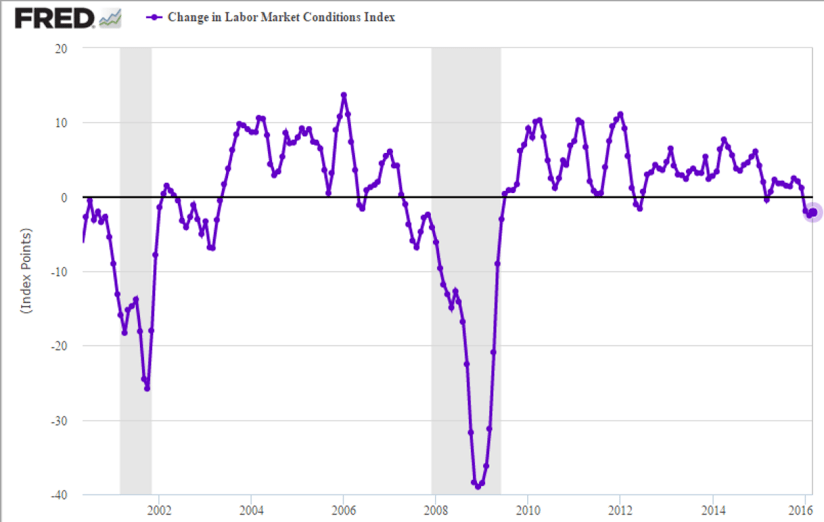
Does the Fed care about it’s internal index?
er-4-21-3
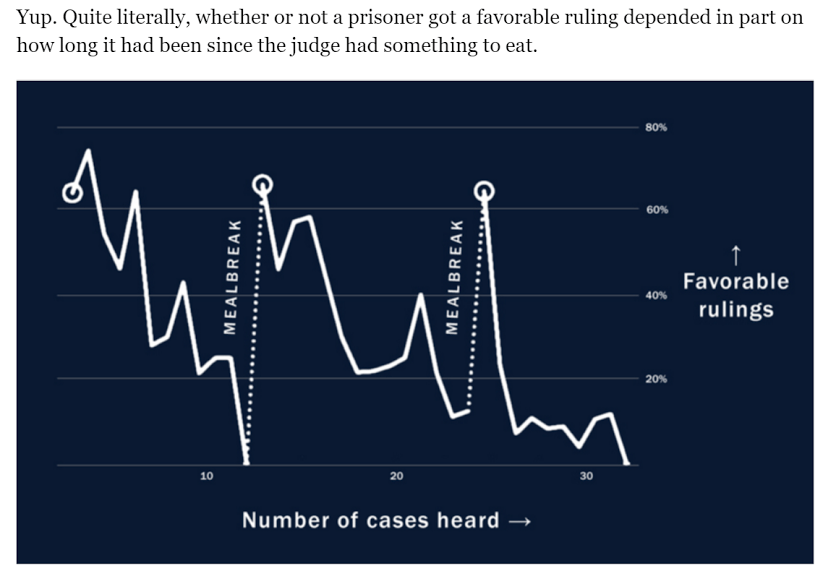
Israeli study:

How Information Graphics Reveal Your Brain’s Blind Spots

er-4-21-4

Houston airport:

Passengers were complaining about the inordinately long time they had to wait to pick up their bags. The airport decided to look more closely at the baggage collection process. They found that passengers typically got off an airplane, walked for about a minute from the gate to the baggage claim carousels, then waited about seven minutes for their bags. That is, most of their time was standing around and waiting.

So the airport changed the location of baggage claim so that it was further from the arrival gates, which meant that passengers were now walking for seven minutes and waiting for only one. The complaints stopped.

Fidelity did a study of all their accounts to see what types of investors performed the best. They found that the best investors were the people who had either forgotten they had an account in the first place — or were dead! In other words, most investors succeed in doing the exact opposite of what they set out to do with their money (presumably, make more of it).

Some of our most peculiar mental quirks highlight just how temperamental our judgments can be. In one study, people holding heavier clipboards perceived issues as more important and more expensive than the people holding lighter clipboards. In another study, people holding a hot cup of coffee judged strangers they met as more warm and friendly than the people who were holding a cold glass of iced coffee.

Existing home sales, Architecture Billings, Commodity prices

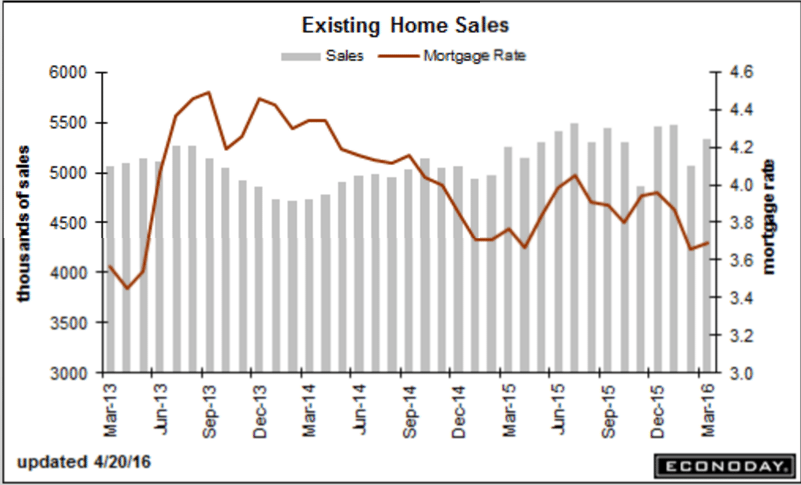
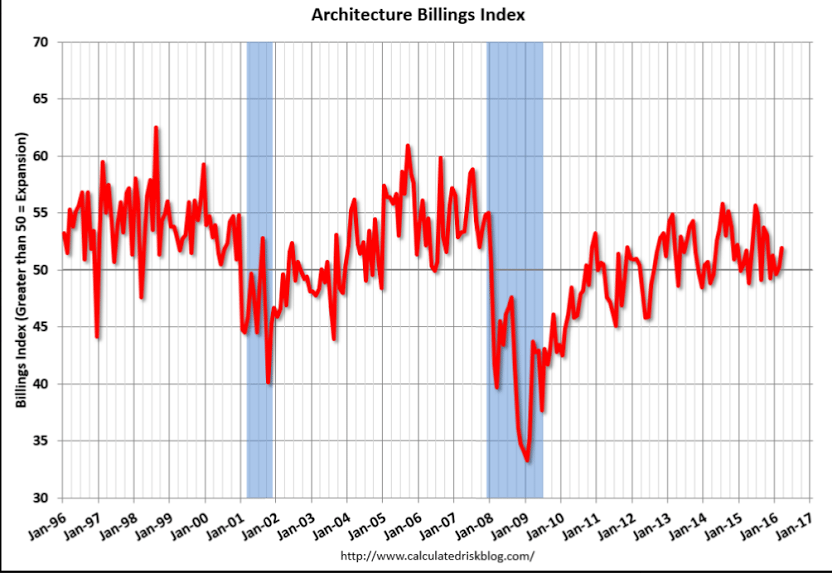
You can see from the chart this is not any kind of ‘engine of growth’ at this point in time:

Existing Home Sales
er-4-20-2
Highlights
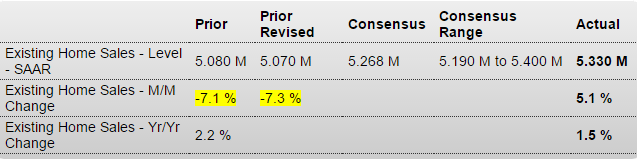
Existing home sales rose more than expected in March, up 5.1 percent to a 5.330 million annualized rate that, however, fails to reverse a downwardly revised 7.3 percent drop in February. And the year-on-year rate, at only 1.5 percent, is decidedly weak. But looking at the first quarter as a whole, which is important for housing data given their volatility, existing home sales are up a much more respectable 4.8 percent.

March’s gain is led by the most important component, single-family homes where the rate rose 5.5 percent in the month to 4.760 million. Year-on-year, single-family homes are up 2.6 percent. The showing for condos is less convincing, up only 1.8 percent in the month for a year-on-year decline of 6.6 percent.

Prices in this report are up, a monthly 5.0 percent for the median for a year-on-year rate of plus 5.7 percent which closely tracks rates in FHFA and Case-Shiller data. The median price for an existing home is $222,700 which, outside of last year’s Spring selling season when the median peaked above $230,000, is the best of the recovery.

er-4-20-3
A bit of improvement for March but in general this series remains depressed compared with prior cycles:
er-4-20-4
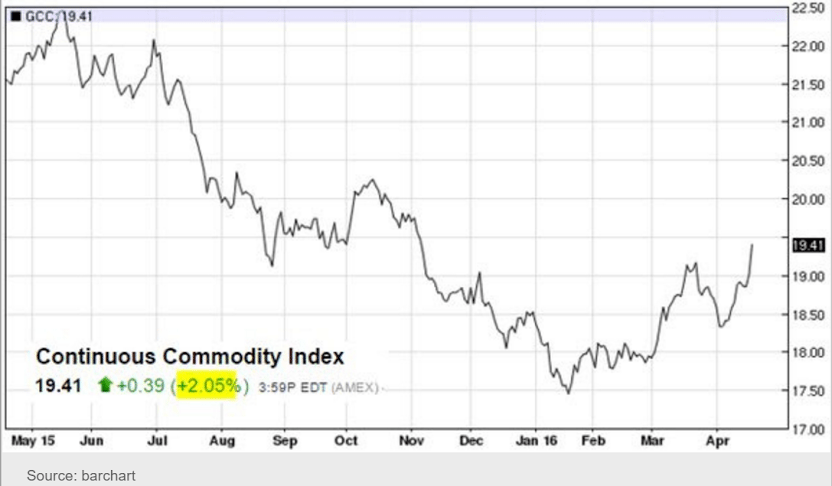
Oil and commodity prices spiking as the $ weakens some. No way for me to tell if there’s something fundamental going on or it’s just volatility from portfolio shifting in very thin markets. (And Saudi pricing being picked up by our news services may not necessarily be what the Saudis are in fact showing their clients):
er-4-20-5

Tech, Japan trade

3 out of top 4 stories not looking good:
er-4-20-1
Global trade still in contraction and larger foreign surpluses most often imply larger US deficits:

Japan Trade Surplus Largest in Over 5 Years

Japan recorded a 754.9 JPY billion surplus in March of 2016, widening sharply from a 223.47 JPY billion surplus a year earlier but below market consensus. It is the largest surplus since October 2010 as exports fell 6.8% yoy while imports dropped by 14.9%.