Trade, Consumer credit

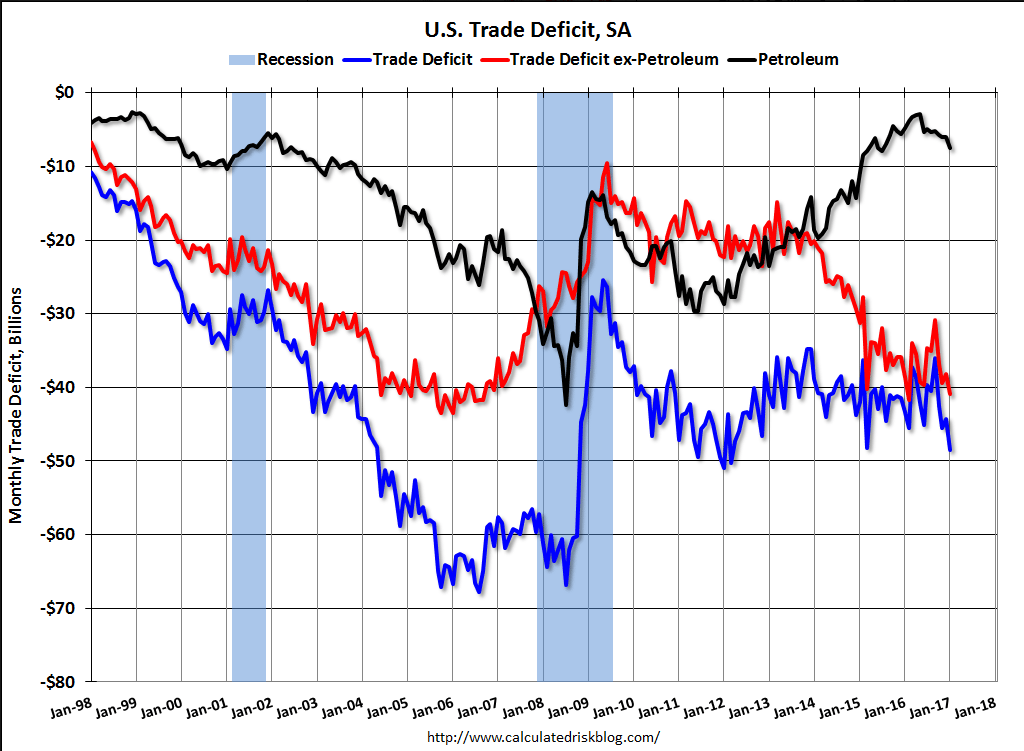
As previously discussed, trade looks to be more negative in q1 than it was in q4:

Highlights

January’s trade deficit came in very deep but at least right on expectations, at $48.5 billion and reflecting a surge in foreign consumer and vehicle imports and higher prices for imported oil.

January imports rose 2.3 percent from December to $197.6 billion with imports of consumer goods jumping 2.4 percent to $52.1 billion and with vehicle imports up 1.3 percent to $13.6 billion. Petroleum imports totaled $15.3 billion in the month, up 19 percent and reflecting both higher prices, at $43.94 per barrel vs December’s $41.45, and a rise in volumes, at 8.4 million barrels per day vs 7.7 million.

Though dwarfed by imports, exports did rise 0.6 percent to $128.0 billion led by industrial supplies (where higher oil prices are at play) and also a 1.3 percent gain for vehicle exports to $13.6 billion as well as a $0.6 billion gain for foods. Exports of capital goods fell a sharp 1.9 percent to $43.5 billion in a decline that only partially reflected aircraft. Exports of services, usually the strength for the U.S., were unchanged in the month at $64.1 billion.

Unadjusted country data show a monthly widening with China, to a monthly deficit of $31.3 billion, and a widening with Canada, at $3.6 billion. Deficits narrowed with the EU, to $11.5 billion, with Japan, to $5.5 billion, and with Mexico, to $4.0 billion.

Strong demand for foreign goods and light demand for U.S. services and capital goods is not a favorable mix for GDP. This report puts first-quarter GDP on the defensive.

Higher oil prices and the end of the one time surge in soybean exports, etc:


A lot worse than expected:

Highlights

Consumers held back on credit-card borrowing in January as nonrevolving credit fell $3.8 billion for the first monthly decline since February last year and the largest since December 2012. But nonrevolving credit, where vehicle financing and student loans are tracked, rose a respectable $12.6 billion and offers a reminder that overall credit growth, including revolving credit, has been steady. Yet, at least for January, nonrevolving credit couldn’t offset the weakness in revolving credit as total credit increased only $8.8 billion for the smallest rise since July 2012.

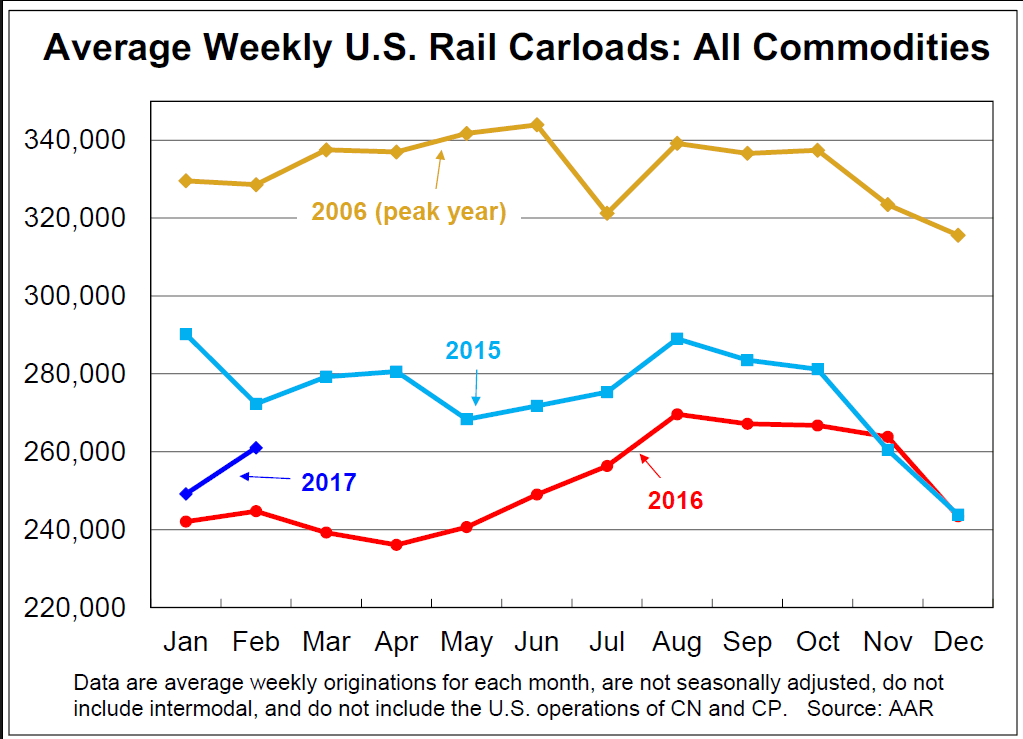
Factory orders, Rail Carloads, Trump comments

Back to slow growth from the lower levels:


Durable goods orders:


Capital goods:


It’s gone from bad to worse. Hard to see how this can continue much longer:

Trump’s Wiretap Claims: What We Know and What We Don’t

White House sources acknowledge that Trump had no idea whether the claims he was making were true when he made them. He was basing his claims on media reports—some of them months old—about the possibility that the Foreign Intelligence Surveillance Court may have authorized surveillance of Trump associates, presumably pursuant to a federal investigation of their ties to Russia.

Later Saturday morning, White House Counsel Don McGahn told staffers to avoid discussions about the president’s tweets or any possible investigation—an order that effectively paralyzed the White House staff for much of the day. Staffers were afraid to talk to one another for fear of running afoul of McGahn’s guidance and even those authorized to talk to the media were nervous about doing so.

At 8:55 on Sunday morning, the White House issued a statement about the president’s tweets and the ensuing controversy. “Reports concerning potentially politically motivated investigations immediately ahead of the 2016 election are very troubling. President Donald J. Trump is requesting that as part of their investigation into Russian activity, the congressional intelligence committees exercise their oversight authority to determine whether executive branch investigative powers were abused in 2016. Neither the White House nor the President will comment further until such oversight is conducted.”

The formal language masks the rather extraordinary work that this statement is doing: The White House is asking Congress to investigate in order to determine whether President Trump’s tweeted claims were true.

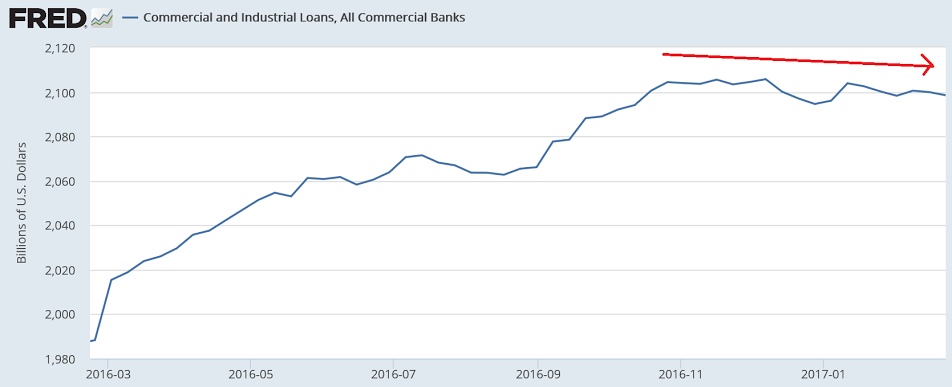
Credit check

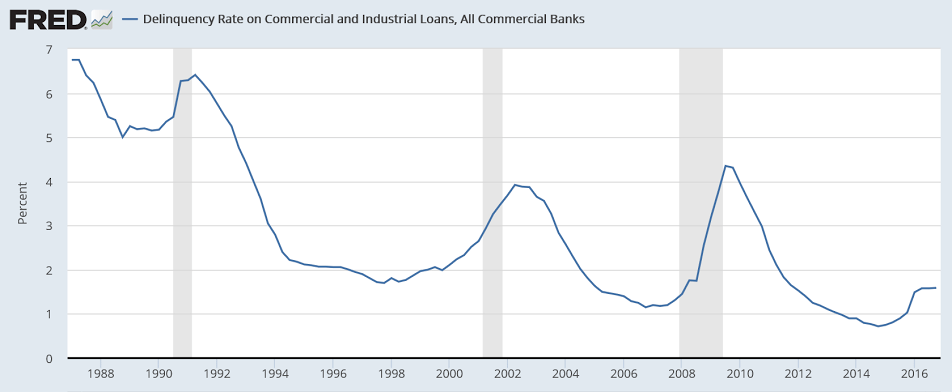
Starting to look seriously ominous:


When delinquencies start going up, banks tend to start tightening up lending standards a bit to keep them in check, which tends to slow down lending, which causes the economy to soften, resulting in a downward spiral that doesn’t end until public sector deficit spending increases sufficiently:

Released Feb 23


For what it’s worth:

Fed Atlanta, Saudi output, Unemployment claims

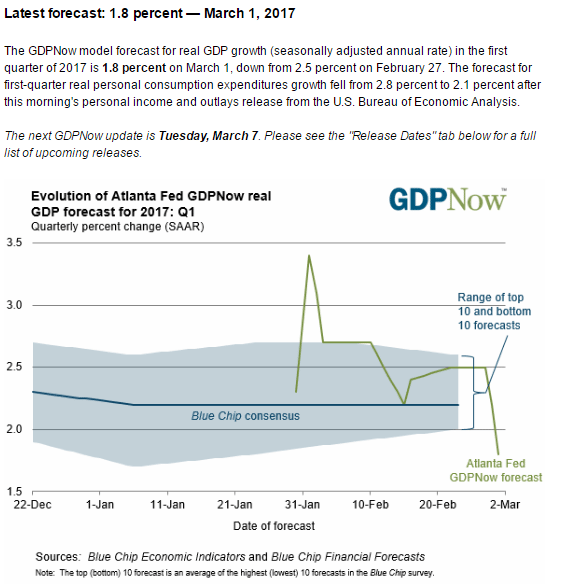
Yes, recent ‘hard data’ has driving down GDP estimates, trumped up expectations not withstanding:


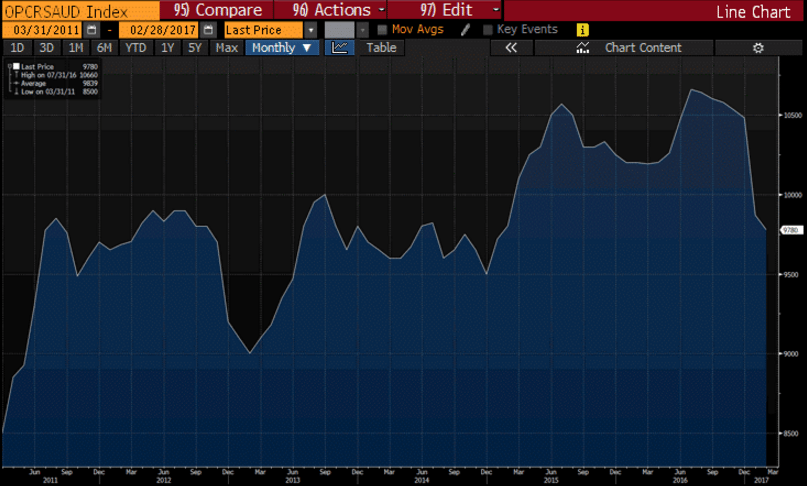
At current pricing the Saudis are seeing less demand, due to others pumping more most likely:

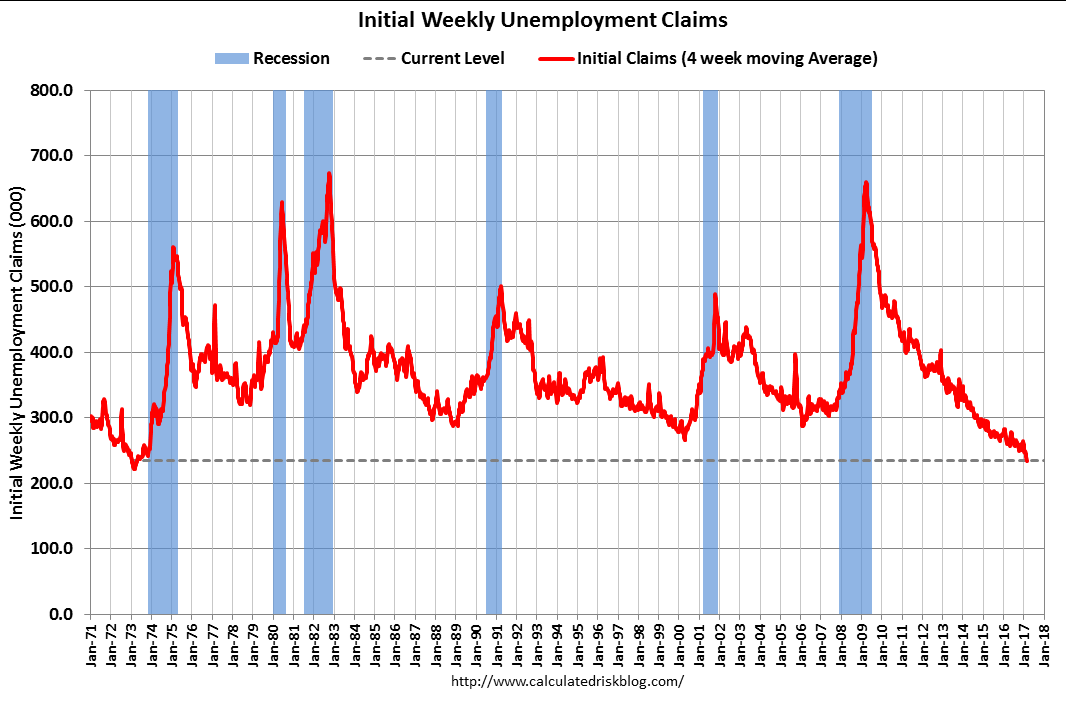
This chart tells me that it’s gotten a lot harder to be eligible for unemployment benefits this cycle, and an automatic fiscal stabilizer the cushioned weakness in prior cycles may have been deactivated as well:

New law makes it harder to get unemployment

New rules make it harder to get unemployment benefits

So this drop, which is even more severe when adjusted for population growth, to less about ‘tight job markets’:

Personal income and spending, Construction spending, Light vehicle sales, Trade, GPD

The theme of trumped up expectations and actual data heading south continues:

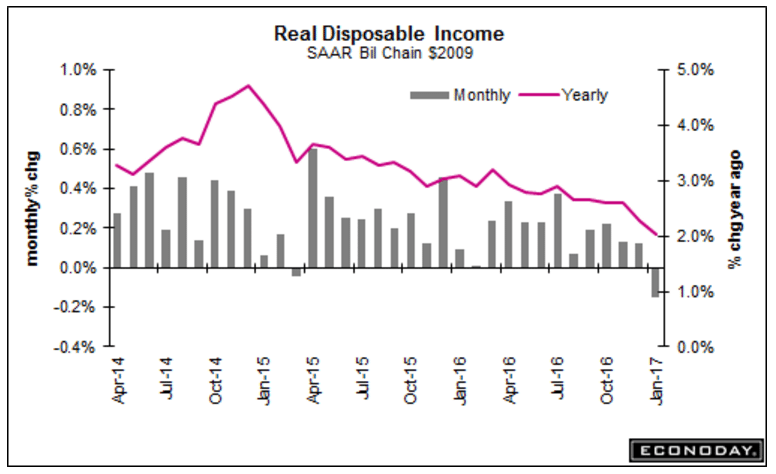
Note the real disposable personal income chart- not good!!

Highlights

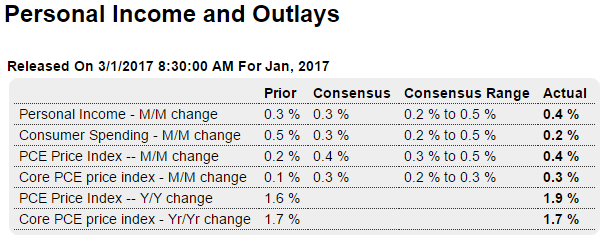
Inflation is nearly at the Fed’s 2.0 percent target, up a sharp 3 tenths to 1.9 percent for the PCE price index which is the strongest rate since April 2012. The monthly gain, reflecting rising energy costs, rose an outsized and higher-than-expected 0.4 percent for the highest reading since February 2013. But the core, which excludes food and also energy, held steady at 1.7 percent though the monthly rate for this reading did rise 0.3 percent which is the largest increase since January last year.

Turning to spending and income, personal consumption expenditures could muster only a 0.2 percent gain, 1 tenth below the Econoday consensus in a marginal gain that belies the enormous strength underway in consumer confidence. And when adjusted for inflation, spending fell 0.3 percent for the largest drop since September 2009.

But income is solid, at a monthly 0.4 percent with the wages & salaries component also rising 0.4 percent. The savings rate steadied in the month, up 1 tenth to 5.5 percent.

The PCE price index will put the pressure on the Fed to raise rates at the mid-month policy meeting. Though it’s not quite at target, its clear upward trajectory makes a successful breach all but certain. Turning back to spending, January’s weak opening points to downward revisions for first-quarter GDP estimates.

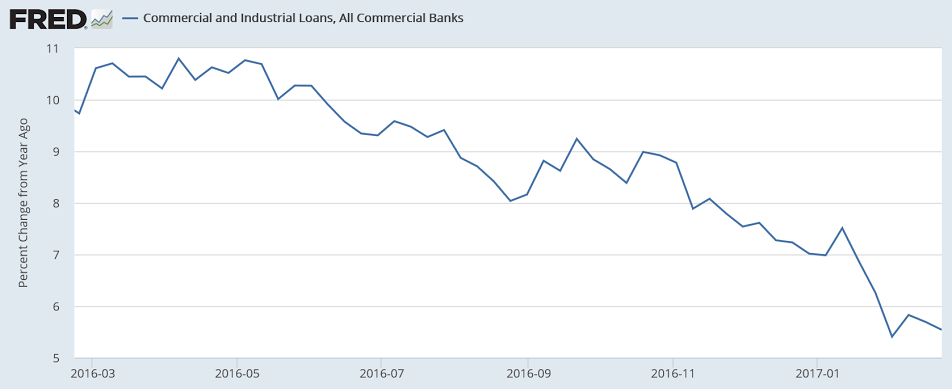
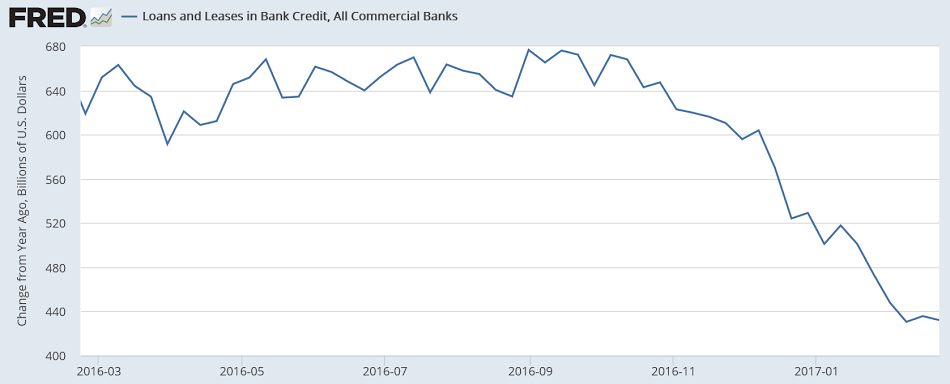
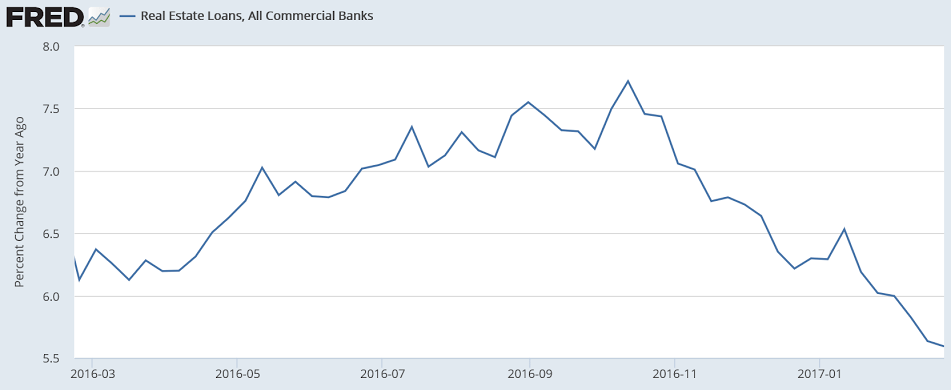
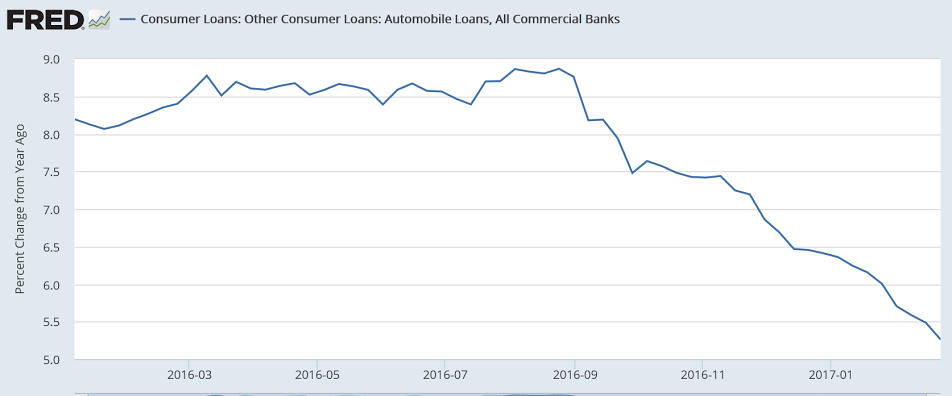
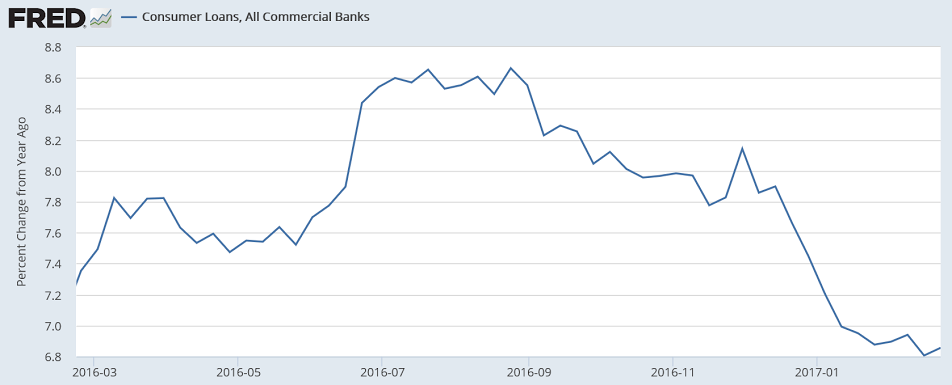
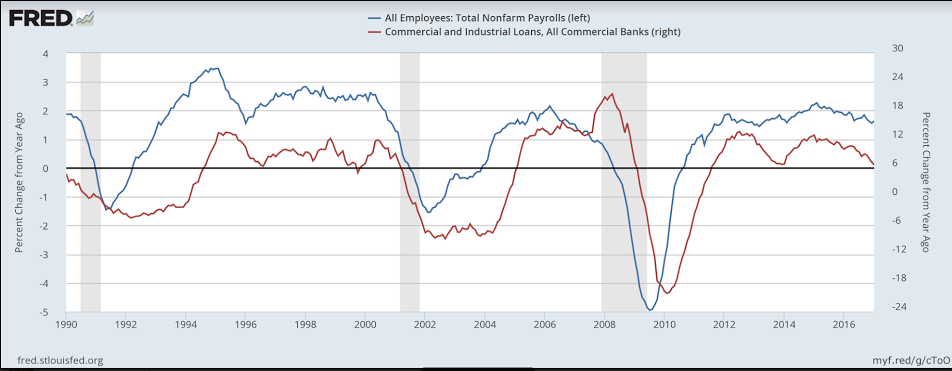
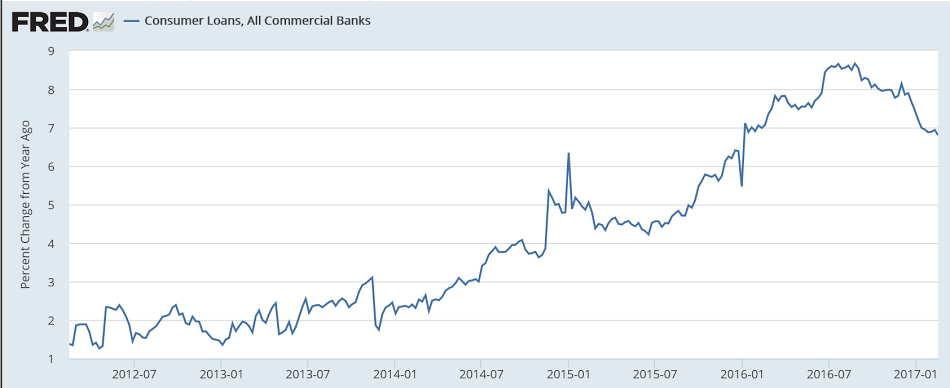
Net income is decelerating in line with previously discussed decelerating credit aggregates:

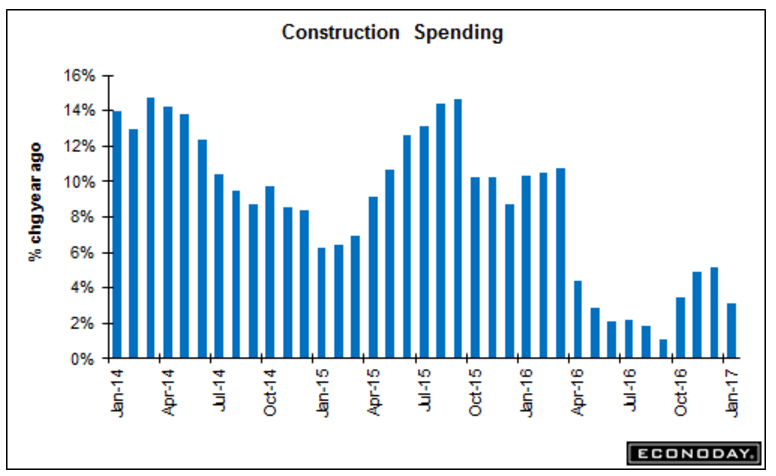
Yes, the weakness was in public spending, but it’s still spending and GDP etc. and hints at the possibility that public construction spending was a bit pumped up in front of the election, as per the chart?
;)
Highlights
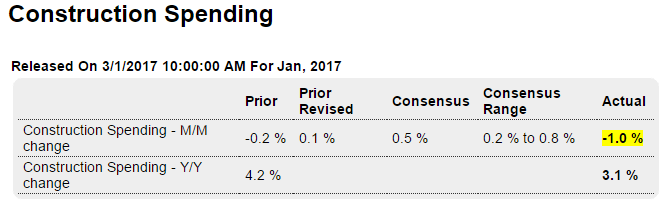
Construction spending fell a sharp 1.0 percent in January but the weakness is in public spending, not residential spending where gains are substantial. Spending on new single-family homes rose 1.1 percent in the month with multi-family spending up 2.2 percent. Year-on-year, single-family spending continues to improve with a 2.3 percent gain while the multi-family category remains very strong at 9.0 percent.

Now the weakness in the report. Public spending posted wide declines including the Federal component, down 7.4 percent in the month, and the state & local component, down 4.8 percent. Totals on educational buildings and highways & streets were all weak.

Private spending on nonresidential building was unchanged in the month with gains for power and manufacturing offsetting declines for transportation, office buildings as well as commercial construction.

But public spending looks to get a boost down the road with new fiscal initiatives while the strength of the report, residential investment, is very solid and looks to improve further given gains in related permits. The housing sector has gotten off to a bumpy start this year though this report is one of strength.

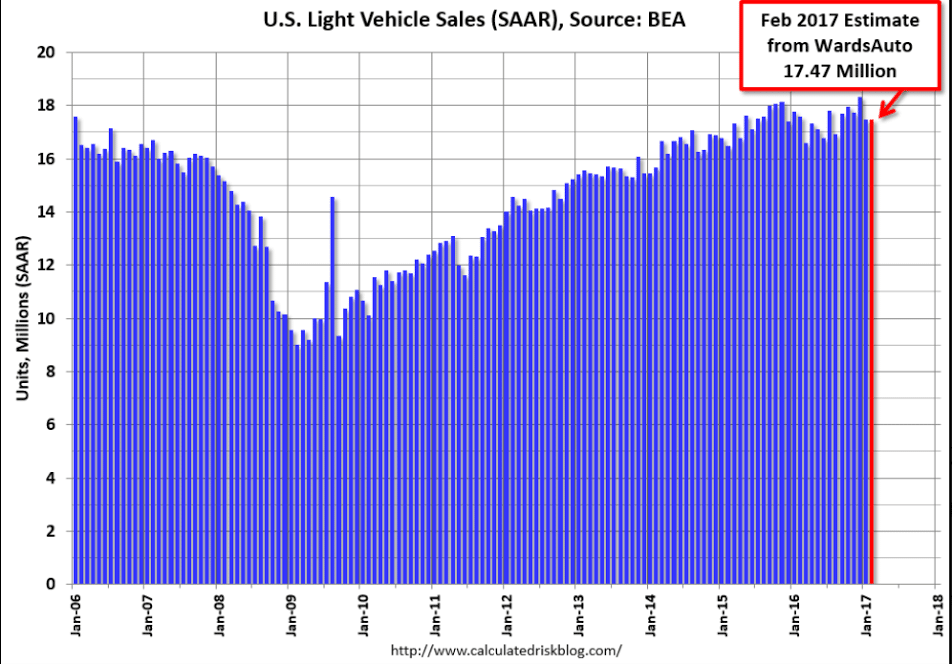
Vehicle sales looking soft again:

U.S. Light Vehicle Sales at 17.5 million annual rate in February

by Bill McBride on 3/01/2017 03:10:00 PM

Based on a preliminary estimate from WardsAuto, light vehicle sales were at a 17.47 million SAAR in February.

That is down about 1% from February 2016, and unchanged from last month.

Read more at http://www.calculatedriskblog.com/#pBORsUyEDpm03RrU.99

Released yesterday:

Trade deficit higher than expected, equals lower GDP estimates:
Highlights

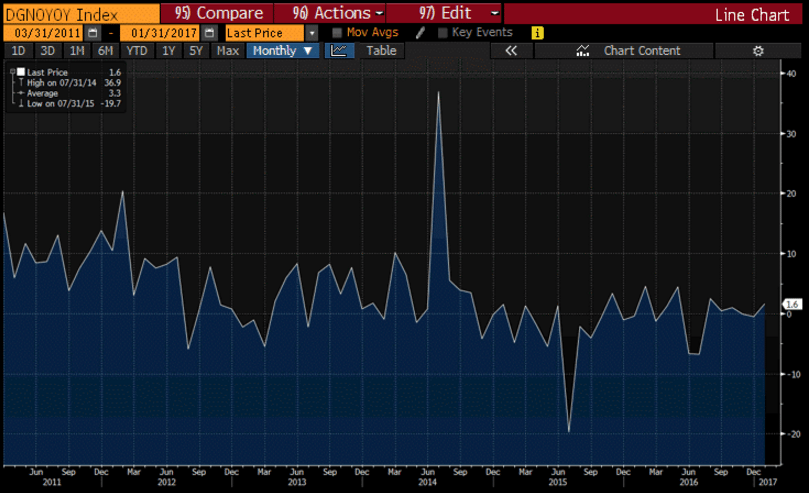
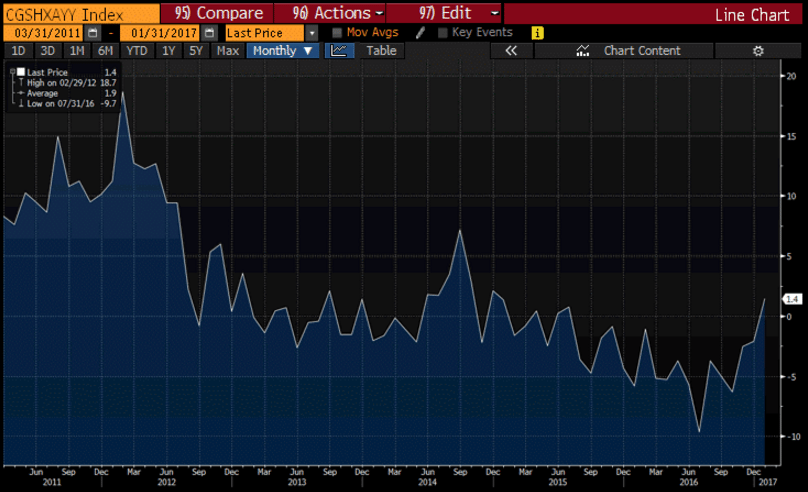
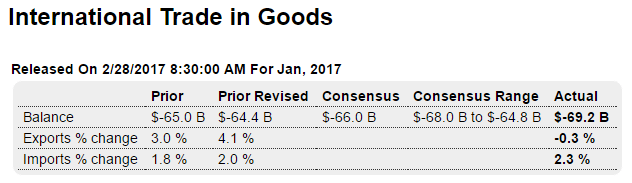
The nation’s goods gap widened sharply in January, to $69.2 billion which is well beyond December’s revised $64.4 billion and outside Econoday’s low estimate. Imports of consumer goods and also vehicles are once again the source of the trade mismatch, surging 4.8 percent and 2.9 percent respectively and helping to lift total imports by 2.3 percent. Exports fell 0.3 percent with weakness in capital goods, down a very sharp 4.6 percent, the unwanted standout feature, one that may deepen in the months ahead based on yesterday’s durable goods report where related orders proved weak. This report will be bringing down early first-quarter GDP estimates.

Not revised up as expected, and q1 at risk as well as we’ve already seen trade and inventories deteriorating:

Highlights

The second revision to fourth-quarter GDP shows little change, actually no change at the headline level which remains at 1.9 percent annualized growth. But good news comes from consumer spending which gets a 5 tenths of a percentage point upgrade to a 3.0 percent rate and a 2.1 percent contribution. Durables, reflecting vehicle sales, are the standout at an 11.5 percent rate (nondurables at plus 2.8 percent and services at plus 1.8 percent). Nonresidential fixed investment gets a small downgrade to a 0.2 percent contribution with residential investment also getting a small downgrade but still solid at a 0.4 percent contribution.

Inventories show little change in the revision, rising what may prove an unwanted $46.2 billion and contributing 9 tenths of a percentage point or nearly half of the quarter’s total growth. Net exports are unchanged, subtracting 1.7 percentage points as exports fell sharply and imports rose even more sharply. Government purchases get a downgrade, contributing only a small fraction to the quarter’s GDP.

The fourth quarter was mixed with negatives led by net exports and the questionable inventory build. But the positives are clear, a consumer that was spending and also investing in housing.


Pending home sales, Durable goods orders, Dallas Fed, Bank loans, Japan

Same story, expectations trumped up but actual numbers not so good:

Bad:

Highlights

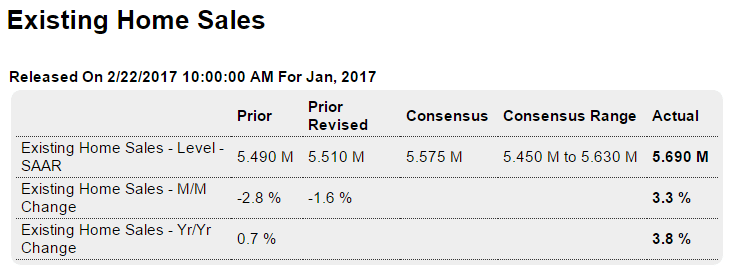
Just when existing home sales seemed to be showing lift the pending home sales index, which tracks initial contract signings, is down 2.8 percent in the January report. This points to weakness for final resales in February and March.

The West is the culprit in January’s data, with contract signings down 9.8 percent in the month for year-on-year contraction of 0.4 percent. The Midwest is also weak, down 5.0 percent in the month for 3.8 percent on-year contraction. The South and the West both show no better than low single digit monthly and yearly gains.

Adding to the bad news is a sharp downward revision to the December index, now at plus 0.8 percent vs an initial 1.6 percent. This hints at less strength for February existing home sales, sales that proved strong in last week’s January report which however is now a memory. This setback for resales follows last week’s sharp downward revision for December new home sales and together they point to a housing sector where growth is suddenly struggling.

Bad:

Highlights

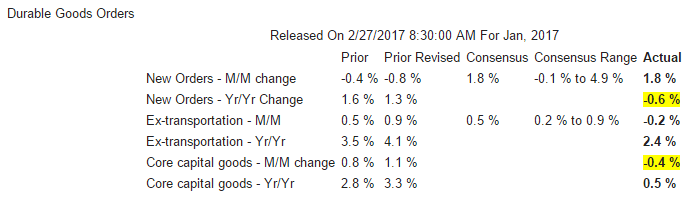
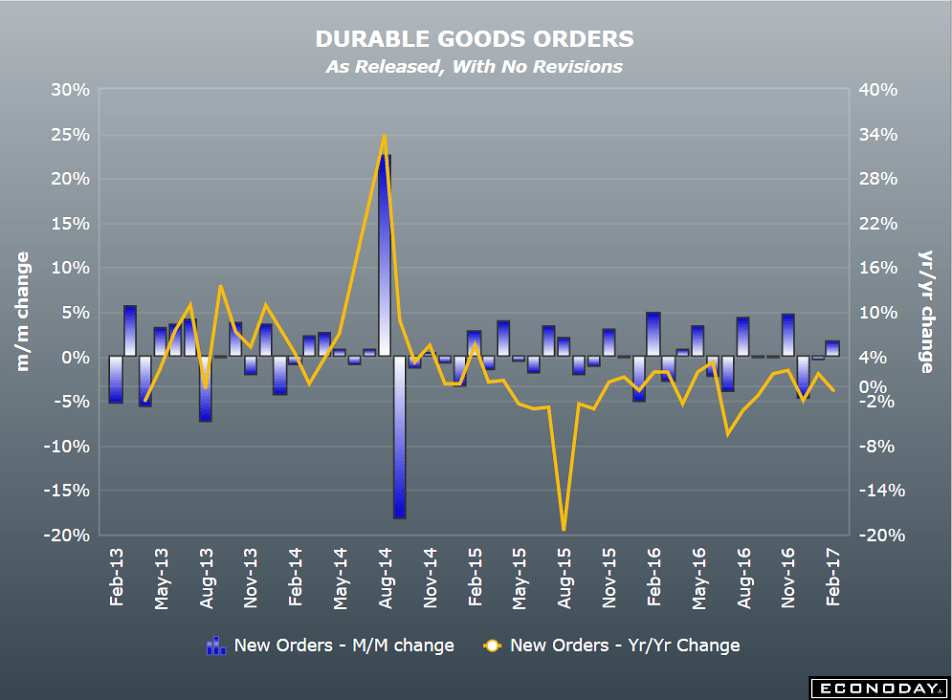
Throw out the all the advance indications that show unusual acceleration in the factory sector, because the meat of the January durable goods report only shows the usual volatility behind which are sagging numbers for key readings. Aircraft, both domestic and defense, skewed durable goods orders sharply higher in January, up 1.8 percent to hit the Econoday consensus. Not hitting the Econoday consensus, however, are orders that exclude aircraft as well as all other transportation equipment. This reading fell 0.2 percent to come in well below Econoday’s low estimate for a 0.2 percent gain.
The worst news in the report is a 0.4 percent decline in orders for core capital goods (nondefense ex-aircraft). This ends 3 months of strength for this reading and pulls the rug out from expectations for a first-quarter business investment boom as indicated by business confidence readings.

Pulling the rug out from the whole factory outlook is yet another contraction for unfilled orders, down 0.4 percent and which have now fallen in 7 of the last 8 months. This is the deepest contraction since the recession and points squarely at lack of hiring for the factory sector. In other data, shipments are down 0.1 percent and inventories are unchanged to keep the inventory-to-shipments ratio unchanged at 1.61.

But aircraft is a big positive in this report though monthly gains are not likely to extend far, if at all. Upward revisions to December are a plus for fourth-quarter revisions while another positive is a 0.2 percent January gain for motor vehicles where the outlook however, given the strength of prior sales gains, is uncertain and will pivot on Wednesday’s release of February unit retail sales. Weak exports have been the Achilles heel of the factory sector and today’s report points to continued lack of demand for U.S. factory goods. Watch for advance data on goods exports in tomorrow’s trade report for January.


Ok, but check out the highlights:

Highlights

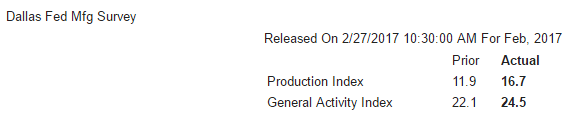
Yet another advance report, in yet another contrast with definitive data, is showing significant strength. Readings are very positive in the Dallas Fed February report including a nearly 5 point gain in production to a very strong 16.7 and a nearly 2-1/2 point gain for general activity to 24.5.

New orders, however, slowed by just more than 4 points to what is a still solid 11.6. Delivery times are taking longer and inventories of inputs are higher, both positive indications of demand. Input costs are up with wage growth solid. Selling prices are even showing traction.

This report may be getting a general lift from easy comparisons as the Dallas factory region is just emerging from 2 years of energy-related weakness. But the wider risk for anecdotal surveys like this one is that, in their low key methodology where respondents often offer general, not numerical, answers to questions, they are picking up improvement in sentiment as opposed to actual measurable improvement in dollars or volumes.

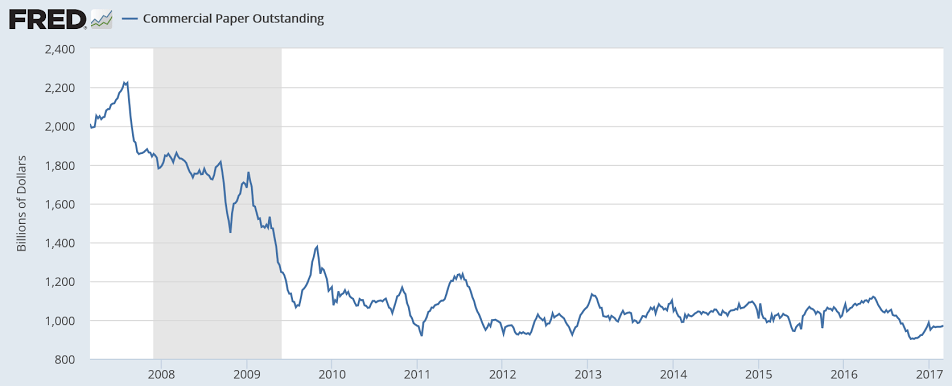
Still in deceleration mode:

Who would’ve thought ‘monetary policy’ doesn’t work (anywhere):

The World’s Most Radical Experiment in Monetary Policy Isn’t Working

Feb 26 (WSJ) — Japan is nearly four years into a Central Bank stimulus effort involving printing trillions of yen and guiding interest rates into negative territory. Bank of Japan governor Haruhiko Kuroda’s shock-and-awe stimulus, launched in April 2013, fizzled after a short-lived spurt of growth and rising prices. Japan fell back into deflation last year. In November, Mr. Kuroda postponed his goal of reaching 2% inflation. He said in a series of speeches last year that an entrenched “deflationary mind-set” stifled hope that wages or prices will rise, limiting the impact of monetary policies such as negative rates.

New home sales, Trucking, Trump comments

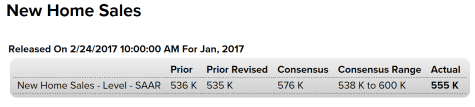
Up, though less then expected. Nothing here to suggest any kind of economic acceleration:

Highlights

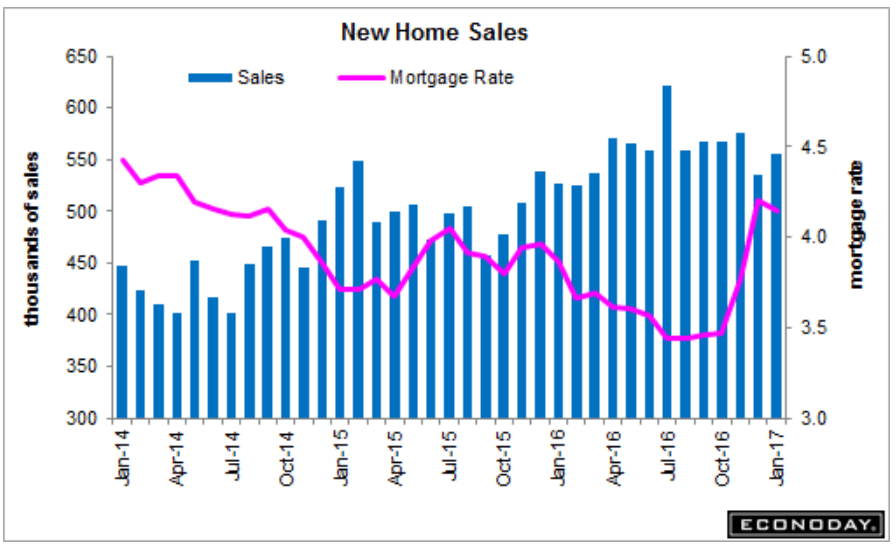
New home sales have lost some traction and it’s not because of tightening supply. At 555,000, January’s annualized pace came in more than 20,000 below the Econoday consensus and includes a big downward revision, not to December which is 1,000 lower at 535,000, but the cycle high in November which has been cut by 23,000 to 575,000. This report is one of the most volatile on the calendar which puts the priority on moving averages including the 3-month average which has fallen steadily from a cycle peak of 587,000 in September to only 555,000 (which is the same as January’s rate).

Supply, however, is no longer as thin as it was, at 5.7 months at the January sales rate vs low 5 month rates through most of last year. The number of new homes on the market, at 265,000 for a 3.5 percent monthly jump, is a new cycle high (since July 2009). Permits for single-family homes have been on the climb which points to more supply ahead.

Rising supply is a negative for prices and at $312,900, the median fell 1.0 percent in the month. The year-on-year rate, however, is still very solid at 7.5 percent.

For regional sales, the West is making the most news right now with a 16.2 percent year-on-year gain to a 151,000 rate. The South, at a 290,000 rate, is down 1.0 percent on the year. The two smaller regions, the Midwest and Northeast, both show gains.

This report is constructive though the pace of the new home market is slowing, perhaps the result of higher mortgage rates or lack of income punch among prospective buyers.


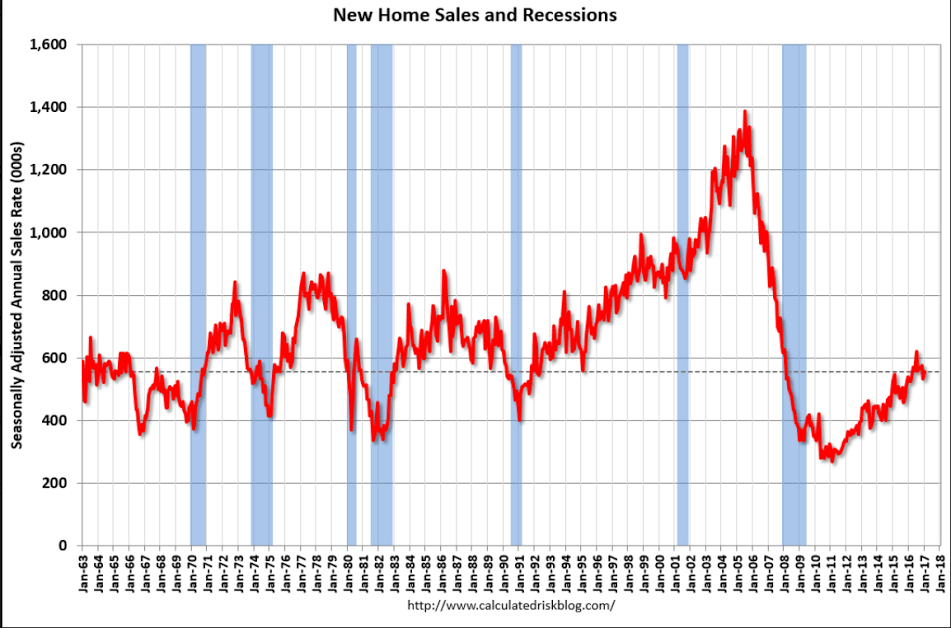
still depressed by historical standards:


Like manufacturing, these seem to have bottomed and is now muddling through at the lower levels, as weakness spread to the service sector:

This makes sense to me:

Donald Trump is dangerous when he’s losing

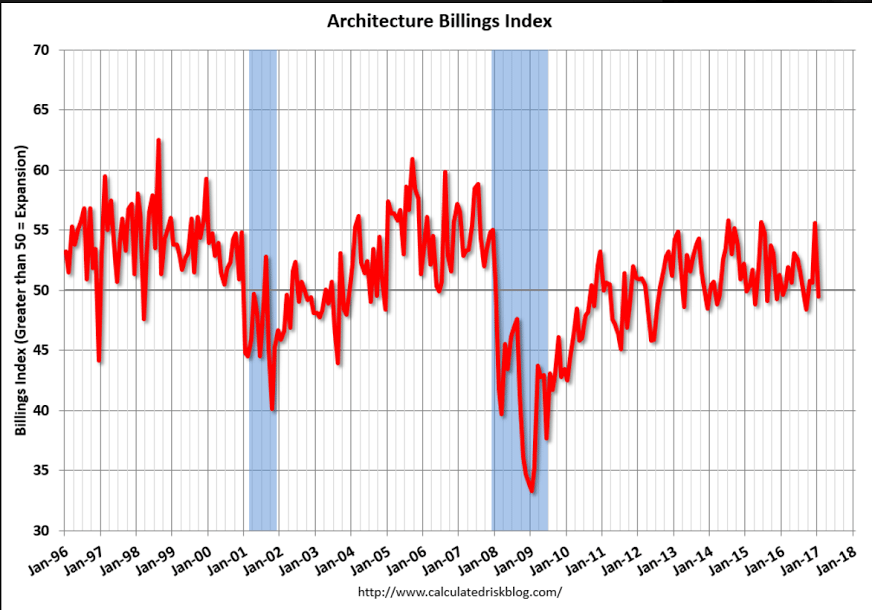
Mtg purchase apps, Existing home sales, Architecture billings

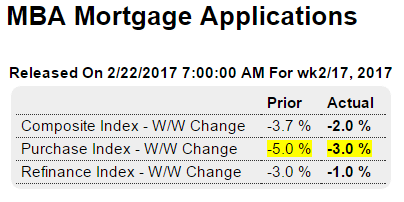
Down again, and these are seasonally adjusted:

Highlights

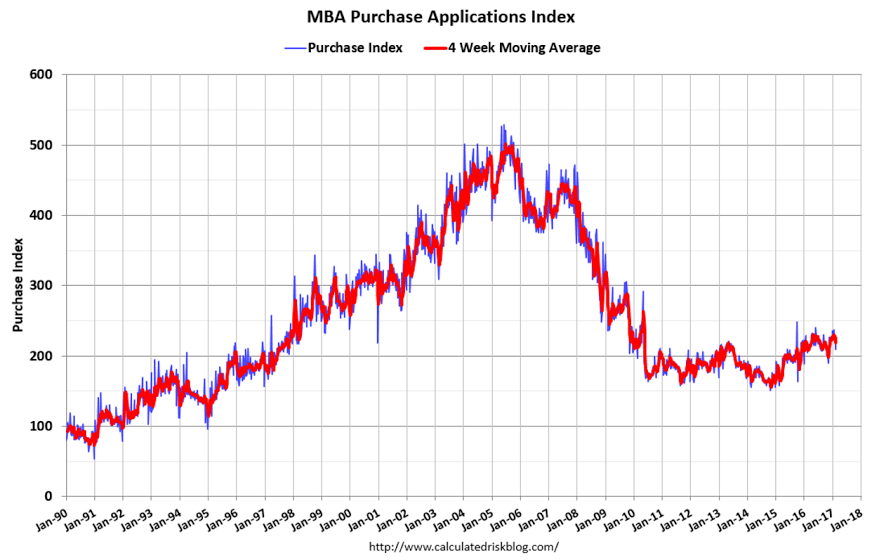
Purchase applications for home mortgages fell a seasonally adjusted 3 percent in the February 17 week, while refinancing applications decreased by 1 percent to the lowest level since January. Unadjusted, the purchase index rose 2 percent from the prior week and was up 10 percent from the year ago week, which included the President’s Day holiday. The refinancing share of mortgage activity continued to decline and was down 0.7 percentage points to 46.2 percent, the lowest level since November 2008. The average interest rate on 30-year fixed rate conforming mortgages ($424,000 or less) rose 4 basis points to 4.36 percent. The second weekly decline in a row for purchase applications could be signalling that home buyers are not as immune to the impact of higher rates as previous data during the post-election rise in mortgage rates indicated.


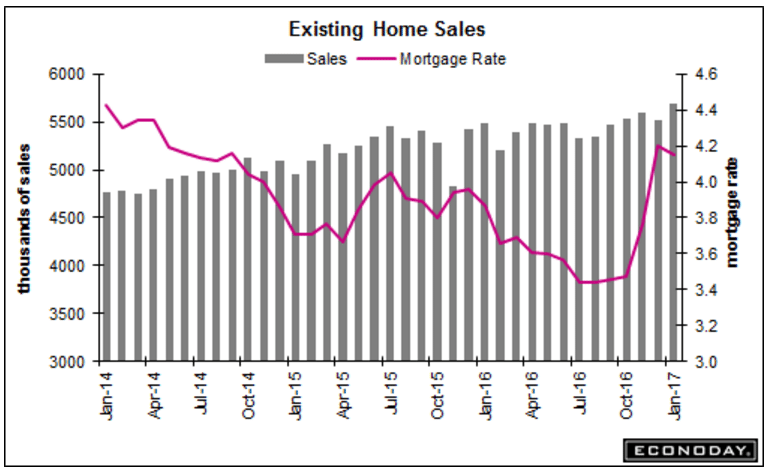
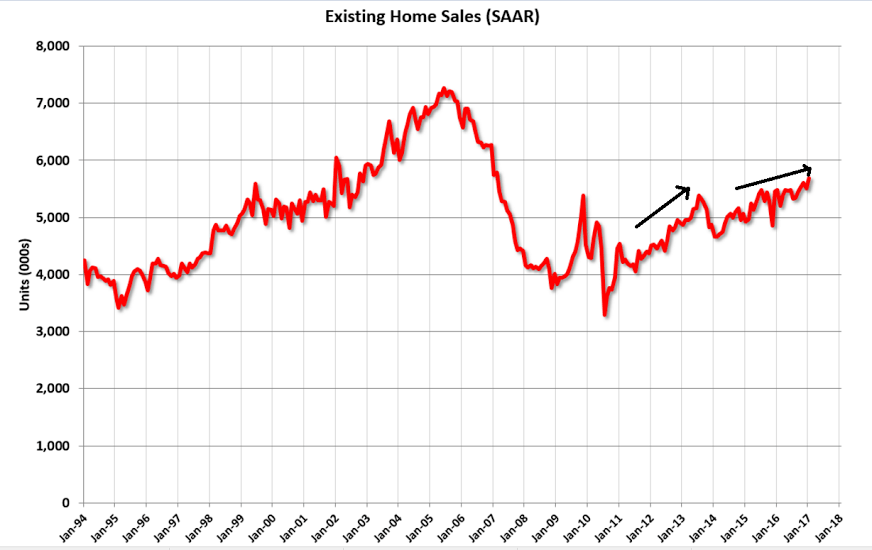
There was a ratcheting back a few years ago followed by slower growth. I now wonder if we’ve got another setback in the works:


And this is not population adjusted:


Dip into negative territory:

PMI, Earnings, euro zone holdings, oil related comments

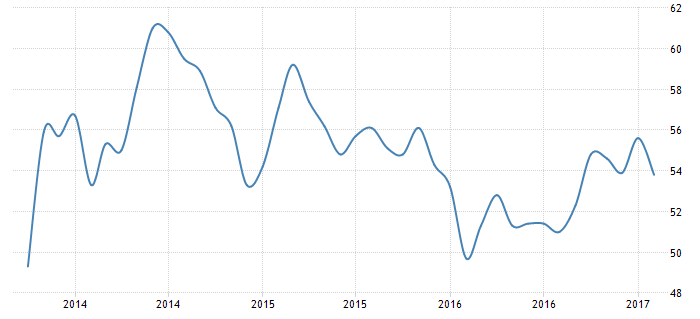
Trumped up expectations cooling a bit?
PMI Manufacturing Index Flash


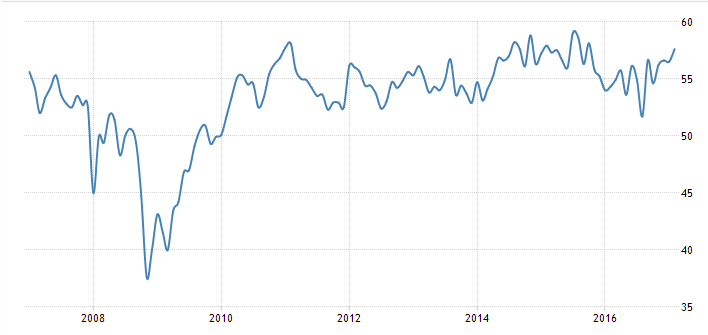
Services:


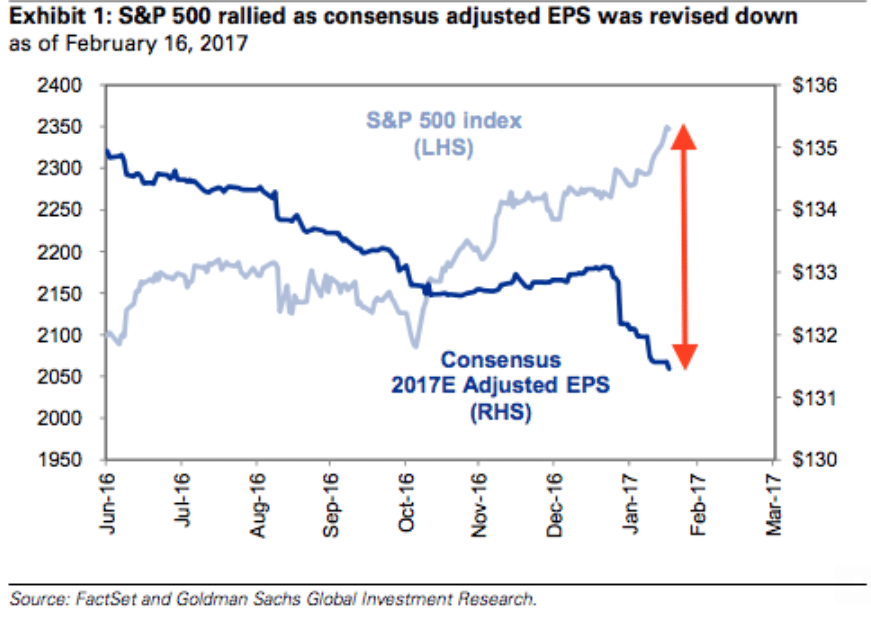
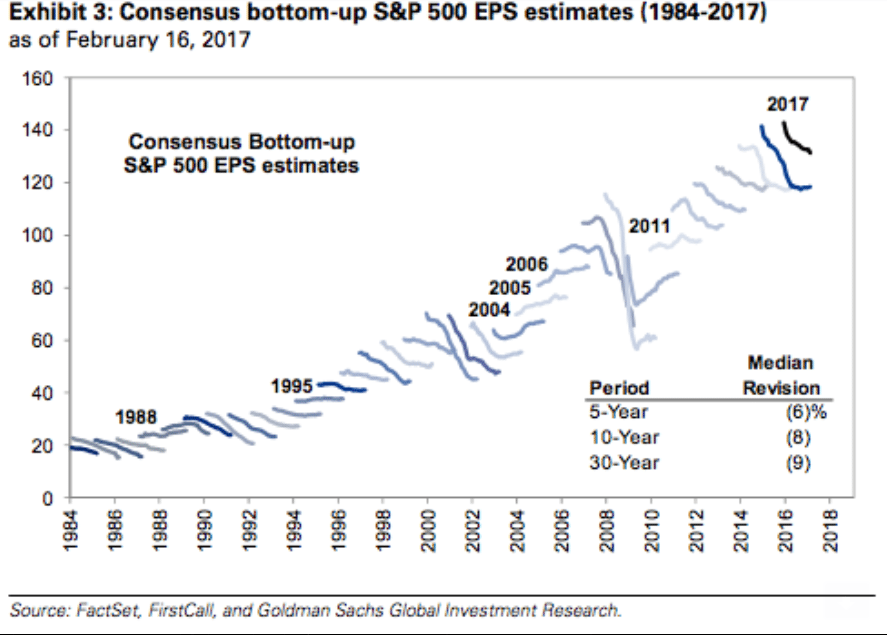
Initial earnings estimates have tended to fall:


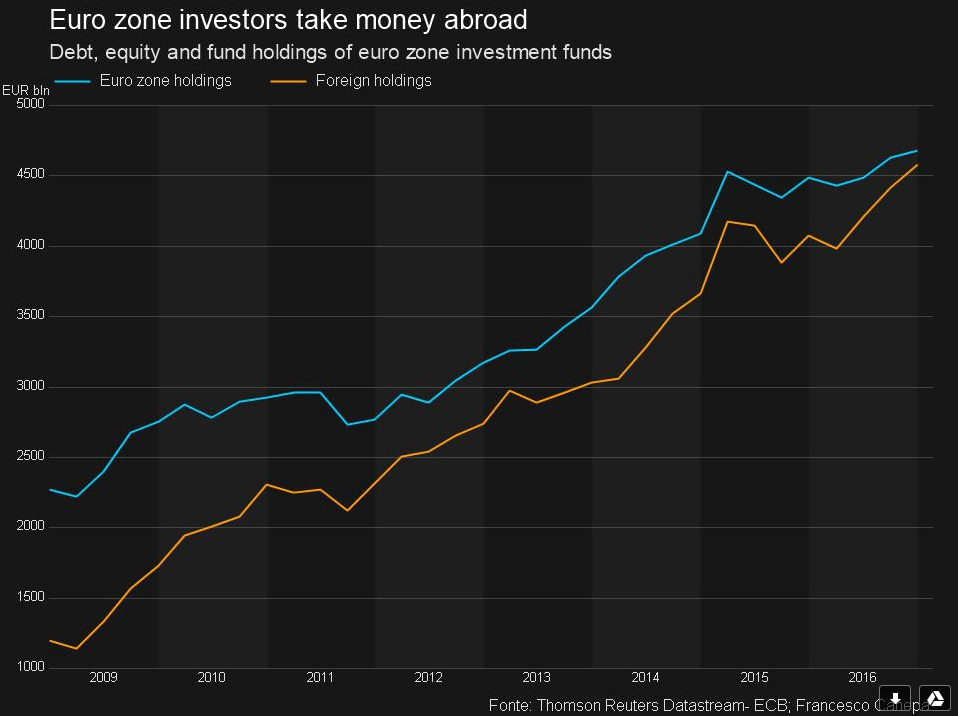
This is extraordinary, as their liabilities are most likely predominately euro denominated, which is what I’d call a ‘fundamental short’ position. That is, this has been part of the ‘portfolio shifting’ that has been keeping the euro down:

Source: http://uk.reuters.com/article/uk-ecb-eurozone-investment-idUKKBN15Z1GE


Reserves capable of being profitable way down with lower prices:

Energy Companies Face Crude Reality: Better to Leave It in the Ground

By Sarah Kent, Bradley Olsen and Georgi Kantchev

Feb 17 (WSJ) — U.S. regulations require companies to take oil reserves off their books if they aren’t profitable at existing prices or can no longer be included as part of five-year development plans. Canada was once thought to hold the world’s third-largest trove of crude. Today, only about 20% of those reserves, or about 36.5 billion barrels, are capable of being profitable, according to energy consultancy Wood Mackenzie. In the decade leading up to the 2014 price collapse, companies spent as much as $200 billion building megaprojects to extract heavy oil in Alberta’s boreal forest.

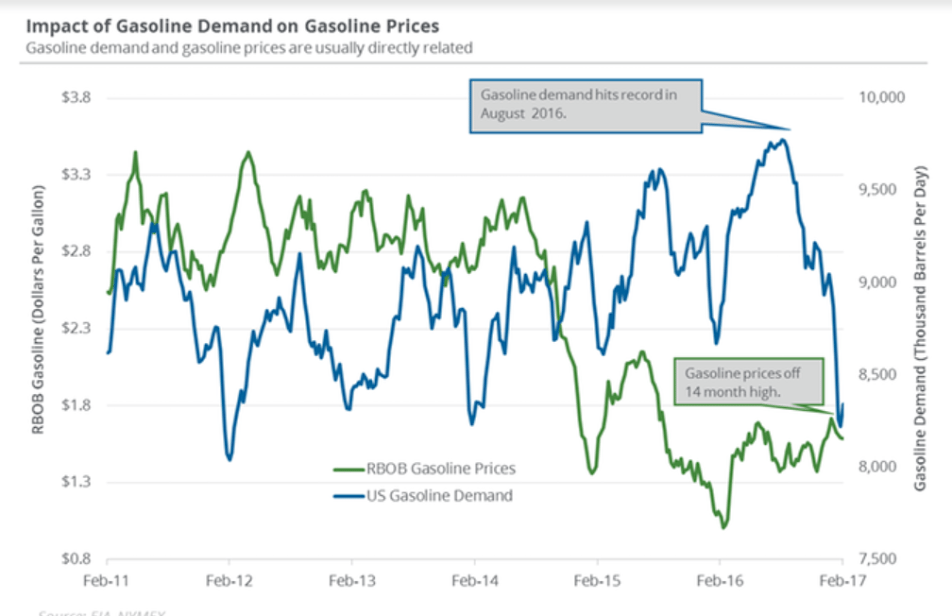
Gasoline demand always falls this time of year but more than expected this year, raising questions of whether demand is fundamentally down even with lower prices, etc: