The week so far

First, thanks to all for contributing to the record $41 million raised this year for Dana Farber by the PMC!!!

This all directly funds the discretionary research that makes Dana Farber what they are- the best!

If you are looking for good news on the economy don’t read the rest…

Industrial Production
ip-table-2

ip-oct

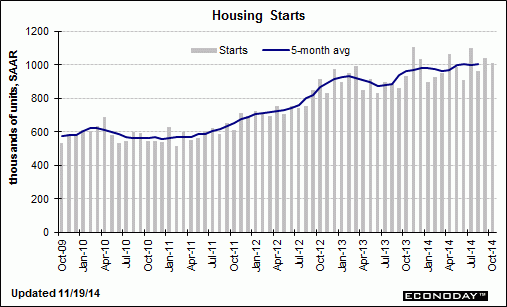
The builders may be a bit more optimistic than before, and there are fewer of them, but housing starts and sales remain weak a about half the usual rate for this point in the cycle,
and a higher % are the smaller/cheaper multifamily units:

Housing Market Index
hm-index

Housing Starts
housing-starts-oct

housing-starts-oct-graph

StartsOct2014
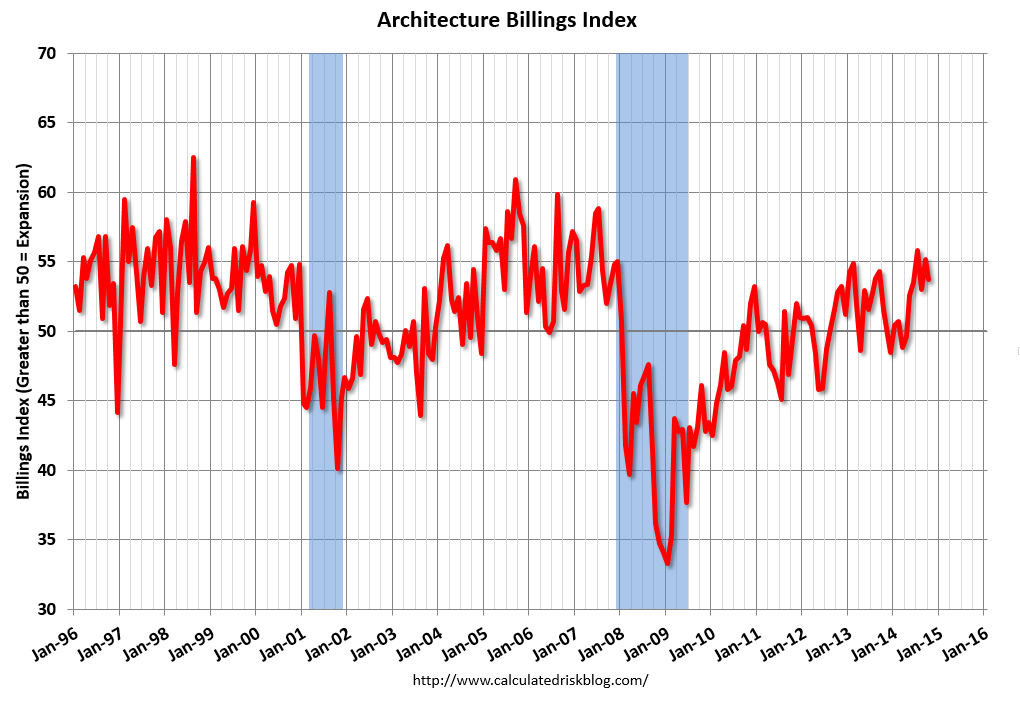
The architectural index slowed some and remains at relative weak levels:
ABIOct2014

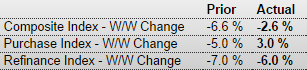
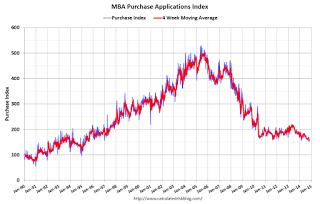
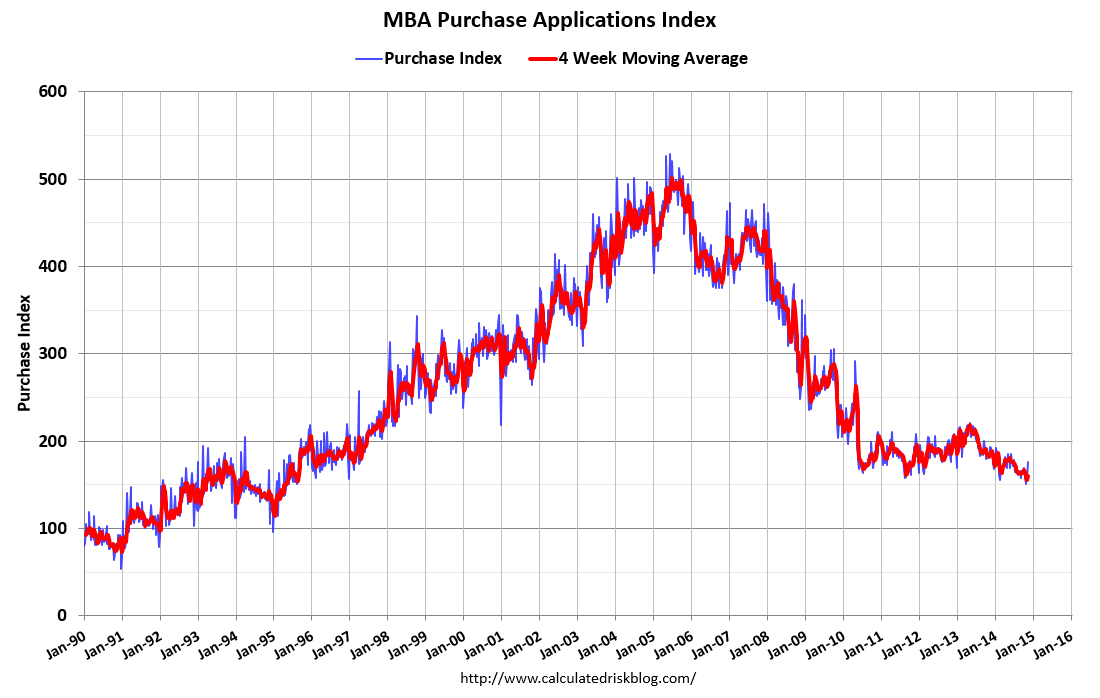
And mtg purchase apps were up some due to seasonal adjustments but remain down 6% year over year:
MBANov192014

Again, seems nothing is growing faster this year vs last year, which as a point of logic means overall growth is less than last year.

And reports of capital spending cuts on energy related investments continue to be reported, while money saved by consumers at the pump is not yet
translating into spending elsewhere.

Exports remain under pressure as well, including reports of containers for export at Long Beach way down, etc.

Q3 GDP had two ‘suspect’ prints that added 2% to Q3’s 3.5% GDP print- an outsized export increase and an outsized govt spending increase, both of which historically ‘mean revert’ with the subsequent report. So excluding those two, Q3 would have only grown by 1.5%, and Q4, if anything, is so far slowing some since Q3. So if the two suspect releases do revert, Q4 could easily be negative.

mortgage purchase apps

Up 1% for the week, but down 11% vs same week last year.

Back to where we were some 20 years ago when the economy was bad and the population was a whole lot lower…

MBA Purchase Applications
mba-11-12
Highlights
Low mortgage rates have yet to give much of a lift to purchase applications for home mortgages. The purchase index rose only 1.0 percent in the November 7 week and is down 11 percent from a year ago. The year-on-year rate is little changed from September when rates started to move lower. The refinancing index did move higher earlier but has been in retreat in recent weeks, down a sharp 11.0 percent from the prior week. The average rate for 30-year conforming mortgages ($417,000 or less) rose 2 basis points in the week to 4.19 percent.

MBANov122014

mtg purchase index, ADP

Finally up a bit for the week!
But now down some 13% vs last year.

Construction, exports, factory orders, all in retreat, and energy investment now on the edge of collapse as oil prices fall.

Q3 already revised down some, with more likely. And odds continue to increase for a negative Q4.

All of which now seems likely to draw spending cuts/proactive deficit reduction from the new Congress?

:(

MBA Purchase Applicationsmba-11MBANov52014

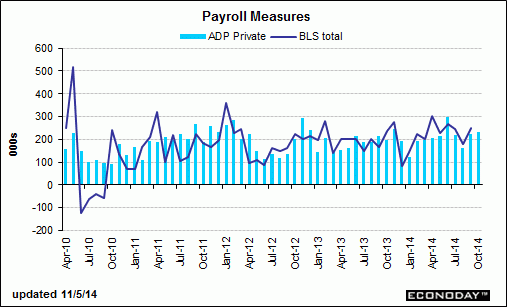
This is a decent jobs number, but a while back this ADP release switched from being a report of their payroll numbers to a forecast the BLS employment report, released on Friday. What they do is take their internal payroll numbers for the actual accounts they service and then use that information along with various surveys and other related data, including seasonal adjustments, to forecast Friday’s release. This is pretty much what the other professional forecasters do, which makes this report ‘just another forecast’ and not a ‘hard number’ report:

Definition
The ADP national employment report is computed from a subset of ADP records that represent approximately 400,000 U.S. business clients and approximately 23 million U.S. employees working in all private industrial sectors. ADP contracted with Moody’s Analytics to compute a monthly report that would ultimately help to predict monthly nonfarm payrolls from the Bureau of Labor Statistic’s employment situation. The ADP report only covers private (excluding government) payrolls.

ADP Employment Report

adp-table-2 adp-graph

New home sales


Whoops, last month’s ‘acceleration’ revised away.

Again, with purchase mtgs down and cash buyers down, hard to see total sales rising. And prices down as well, continuing that troubling tendency…

nhs-sept-table

Highlights

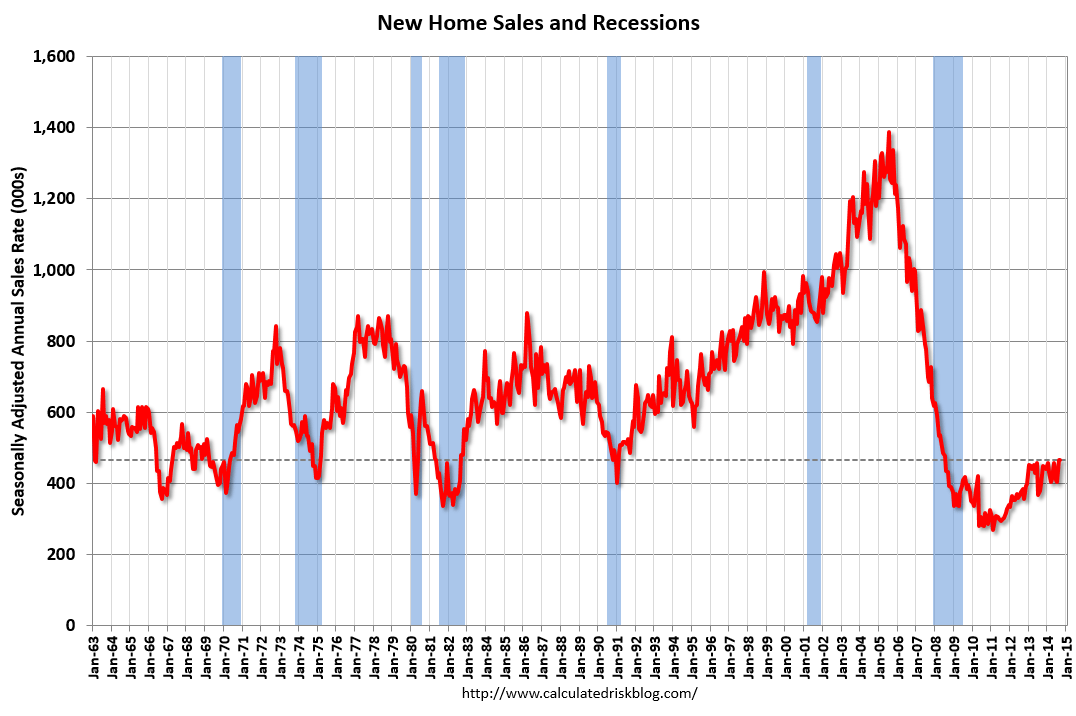
New home sales, at a 467,000 annual rate, managed to top August’s great surge but only after August was revised sharply lower, from 504,000 to 466,000. Still, September’s 467,000 rate is the best of the recovery, going back to July 2008 with August’s 466,000 right behind in second place.

Price concession may be a key factor behind the September and August gains, gains that have lifted sales from this year’s earlier run in low 400,000s. The median price plunged a monthly 9.7 percent to $259,000. The year-on -year rate is in the minus column, at minus 4.0 percent, for only the second time in the last two years. Before this month, the year-on-year price was trending upward in the high single digits.nhs-sept-graph

NHSSept2014

mortgage purchase apps down yet again

And cash buying is down.

Still doesn’t bode well for sales…

Slump in mortgage rates fails to rally home buyers

By Diana Olick

Oct 22 (CNBC) — More proof that low mortgage rates are not the key to home ownership today: Mortgage rates dropped to their lowest level in nearly 18 months last week, causing an 11.6 percent rise in mortgage applications, according to the Mortgage Bankers Association (MBA). The gains, however, were driven entirely by refinances, just as they have been for several weeks.

Refinance applications jumped a whopping 23 percent week-to-week on a seasonally-adjusted basis; volume was at the highest level since November 2013. Mortgage applications to purchase a home saw no boost at all from lower rates, falling 5 percent from one week earlier and 9 percent from a year ago.

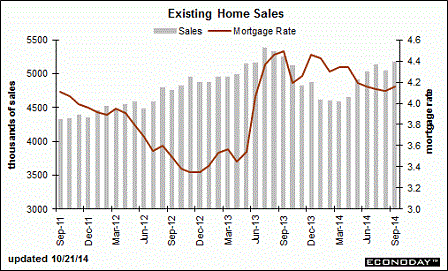
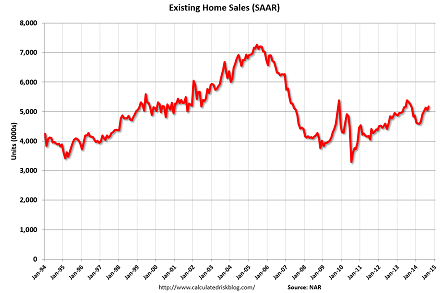
Existing home sales

Not much to get excited about here.

Sales are far below that of prior recoveries, and lower prices is a sign the ‘long cycle’ is over:

Existing Home Sales


Highlights
Existing home sales rose a solid 2.4 percent in September to a higher-than-expected annual rate of 5.17 million. Year-on-year, however, sales remain flat at minus 1.7 percent. Condo sales were the strongest in the month, up 5.2 percent to a 0.610 million rate though sales of single-family homes rose a solid 2.0 percent to a 4.56 million rate. Year-on-year, condo sales show no change with single-family homes at minus 1.9 percent.

The strength in sales moved supply off the market, to a total of 2.30 million homes and condos on the market vs 2.31 million in the prior week. Supply relative to sales fell to 5.3 months vs 5.5 months in August.

Home prices have been falling, which of course are a plus for sales, and are down 4.0 percent on the month to a median $209,700. Year-on-year, the median price is up 5.6 percent.

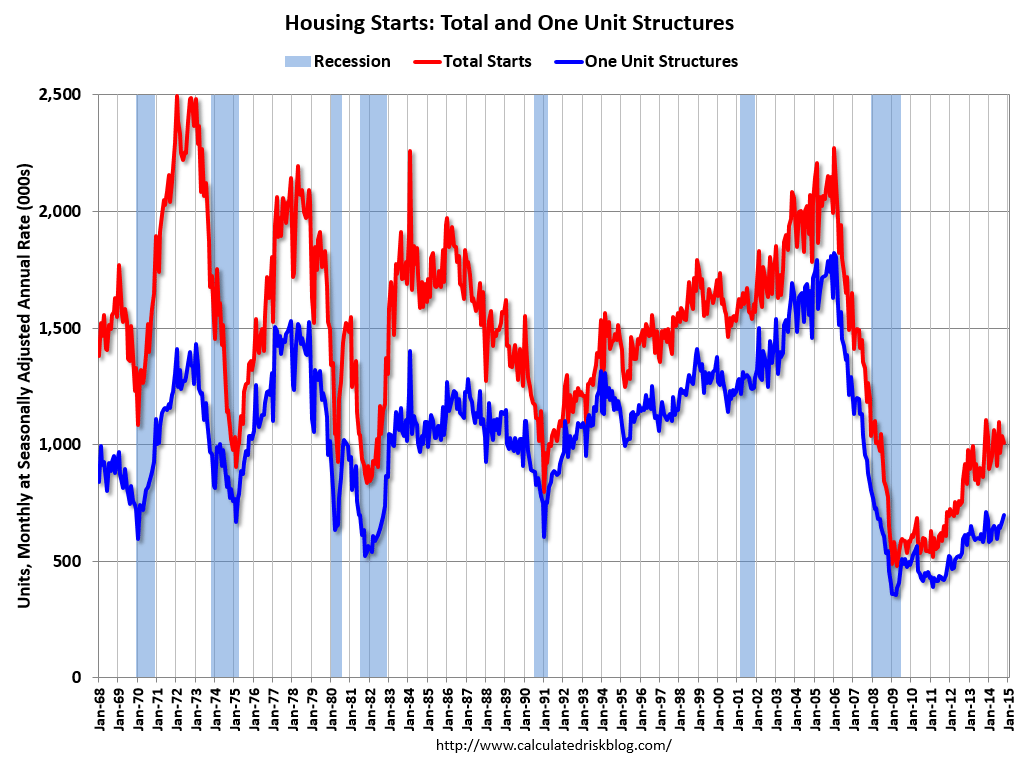
Growth in Housing Starts

Note the highlighted changes in housing starts last year vs this year.

For the economy to grow as much this year as last year, all the pieces have to grow as much, and if any piece doesn’t grow as much, another has to grow that much more to make up for it.

Furthermore, single family is what’s declined, and as a single family unit costs more than a multi family unit, in $ terms it’s worse than this chart shows.

And so far I haven’t seen anything growing that much more than the drop in the rate of growth of housing


NAHB Housing Market Index, IP

This is the home builders index which has been influencing forecaster’s optimism for housing. Note that it’s stalled well below levels of prior cycles, and that there are far fewer home builders this time around as well:

Housing Market Index


Highlights
The drop this month in interest rates isn’t driving up demand for housing, based on weekly mortgage bankers data for purchase applications and now on the housing market index from the nation’s home builders which is down 5 points to 54. The key in October’s report is the traffic component which is down a full 6 points to 41. Lack of traffic points to lack of interest including lack of interest from the important group of first-time home buyers. The report’s two other components are also down with present sales down 6 points to 57 and future sales down 3 points to 64.

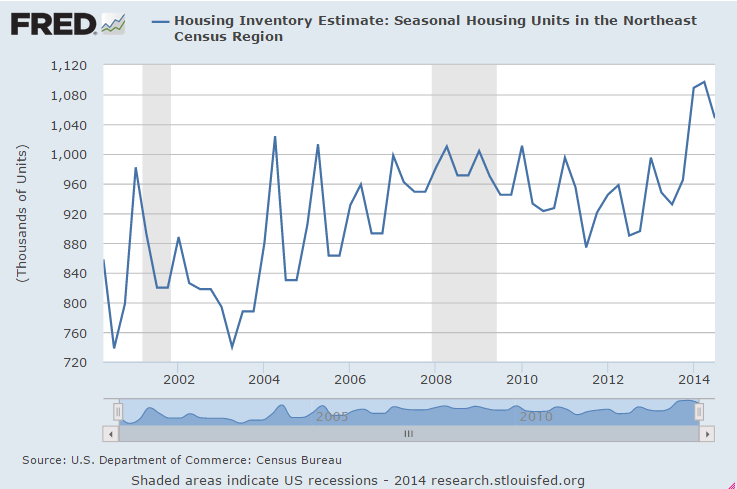
All regions show declines in their composite scores especially the Midwest which is down 8 points to 53 and the West which is down 7 points to 54. The South, which is by far the largest region for new homes, continues to lead, at 59 for a 4 point dip in the month. The Northeast is by the smallest region for new homes and trails in this report at 40 for a 2 point dip.

New home builders can’t blame high interest rates or high unemployment for the weakness in their sector. Housing starts for September will be posted tomorrow morning at 8:30 a.m. ET.

NAHB: Builder Confidence decreased to 54 in October

All three HMI components declined in October. The index gauging current sales conditions decreased six points to 57, while the index measuring expectations for future sales slipped three points to 64 and the index gauging traffic of prospective buyers dropped six points to 41.

Looking at the three-month moving averages for regional HMI scores, the Northeast and Midwest remained flat at 41 and 59, respectively. The South rose two points to 58 and the West registered a one-point loss to 57.

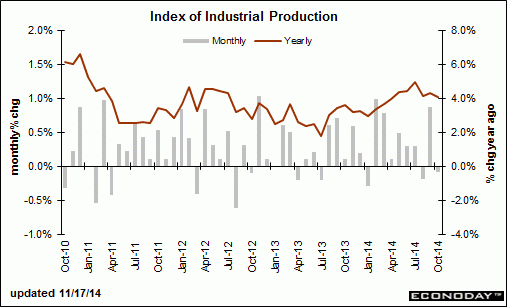
Industrial Production keeps chugging along, reversing last month’s dip so the two month average is about the average annual growth rate:

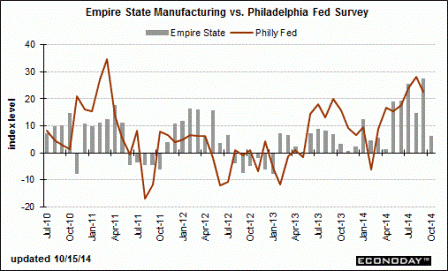
NFIB, Mtg apps, retail sales, Empire State

Today’s releases are causing analysts to reduce their GDP forecasts for Q3, which ended Sept 30. Note the difficulty in forecasting the past when considering the difficulty in forecasting the future…

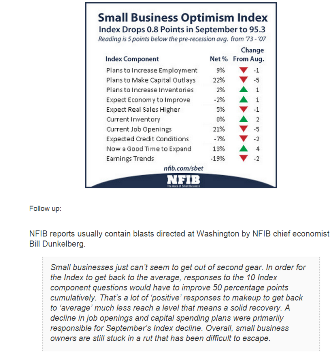
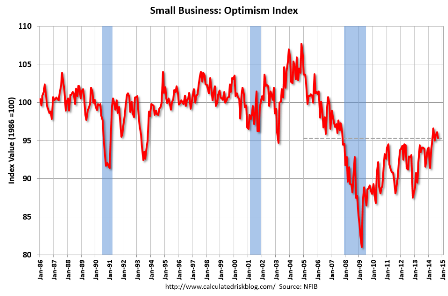
This was released yesterday, turned down from not so good levels:

NFIB Small Business Optimism Index


Full size image

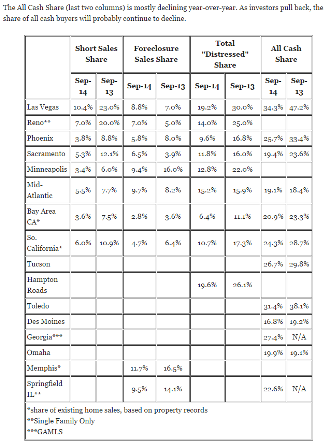
Mtg purchase apps down and cash sales down as well, makes it problematic for total sales to rise?

MBA Purchase Applications


Highlights
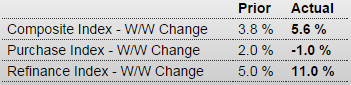
The steep drop underway in mortgage rates is sharply stimulating demand for refinancing but isn’t yet doing much for home purchases. The refinancing index surged 11.0 percent in the October 10 week as the average rate for conforming loans ($417,000 or less) fell 10 basis points in the week to 4.20 percent which is the lowest average since June last year. But in contrast, the purchases index fell 1.0 percent in the week for a year-on-year decline of 4.0 percent.


Full size image

Bank mtg lending way down from a year ago, flattish this year:

At Wells Fargo and Chase, mortgage lending inches up

By Ruth Mantell

Oct 14 (MarketWatch) — Wells Fargo the country’s No. 1 mortgage originator, said it made $48 billion in new home loans in the third quarter, a hair up from the prior quarter, and down 40% from the year-earlier period. Meanwhile, J.P. Morgan Chase JPM the second-largest mortgage lender, said its third-quarter originations hit $21 billion, up from $17 billion in the second quarter, and down 48% from a year earlier. Some qualified borrowers can’t get a mortgage because of many lenders’ strict standards that aim to shield banks from the financial risks that come with the possibility of having to buy back a questionable loan, said John Stumpf, chairman and chief executive at Wells, on aTuesday conference call.

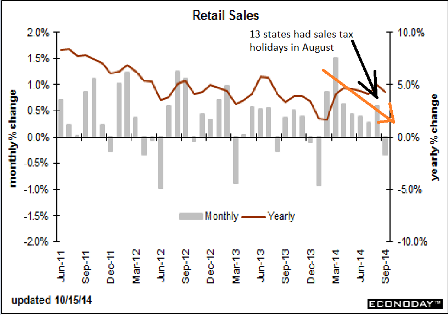
Recall last month when retail sales were up an unexpected .6% I wrote about how 13 state had tax holidays in August which may have moved sales forward from September, which just came out weaker than expected at -.3%, leaving the down trend intact:

Retail Sales


Highlights
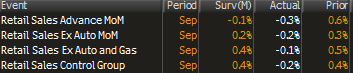
As expected, auto sales and gasoline sales tugged down on retail sales in September. But core numbers were weaker than expected. Retail sales in September declined 0.3 percent after jumping 0.6 percent in August. Analysts forecast a 0.1 percent dip for September. Excluding autos, sales slipped 0.2 percent after gaining 0.3 percent in August. Expectations were for a 0.3 percent increase. Excluding both autos and gasoline sales dipped 0.1 percent, following a jump of 0.5 percent in August. Expectations were for 0.5 percent.

Within the core, softness was seen in declines furniture & home furnishings, building materials, nonstore retailers, clothing & accessories, and sporting goods & hobbies. Gains were posted for electronics & appliances (likely iPhones), health & personal care, general merchandise, and food services & drinking places.

Today’s report is very mixed. It was not surprising that a downswing in autos after a strong August pulled down sales. And the same was expected for gasoline prices pulling down sales. But core sales eased despite a surge in electronics sales. Core sales eased after a very strong August. On a very positive note, food services & drinking places gained a robust 0.6 percent, matching the pace for August.

I don’t put much stock in these as they seem to follow the stock market, as this exceptional drop seems to confirm. Or maybe the stock market leads weakness…