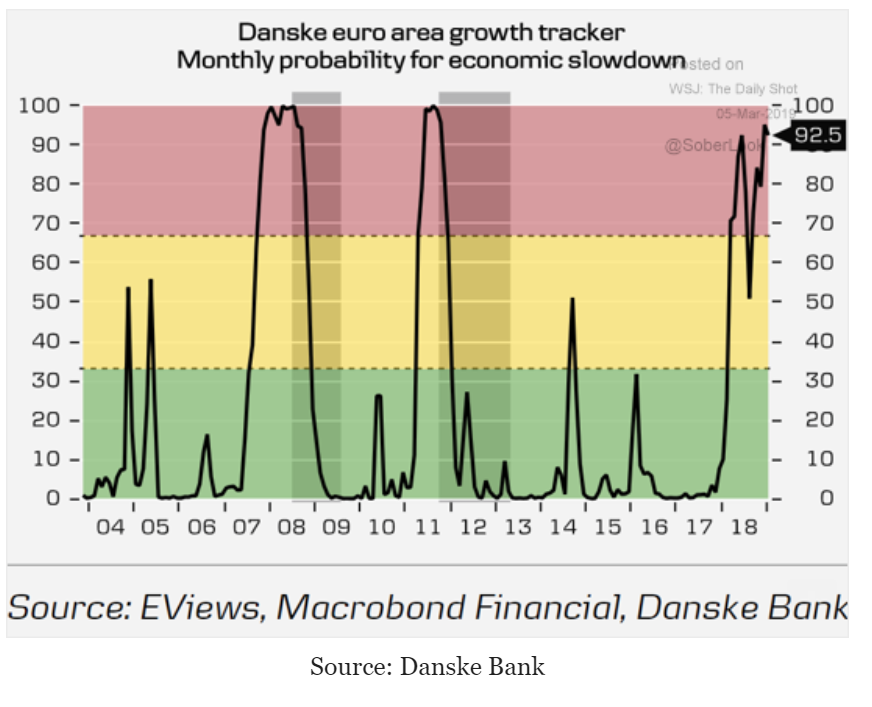
GDP, Pending home sales, Trade, Chem index, Erdogan on rates

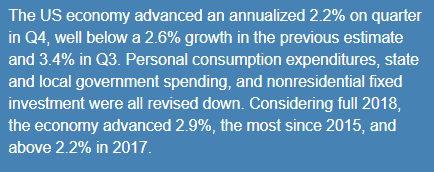
Decelerating faster than previously reported:

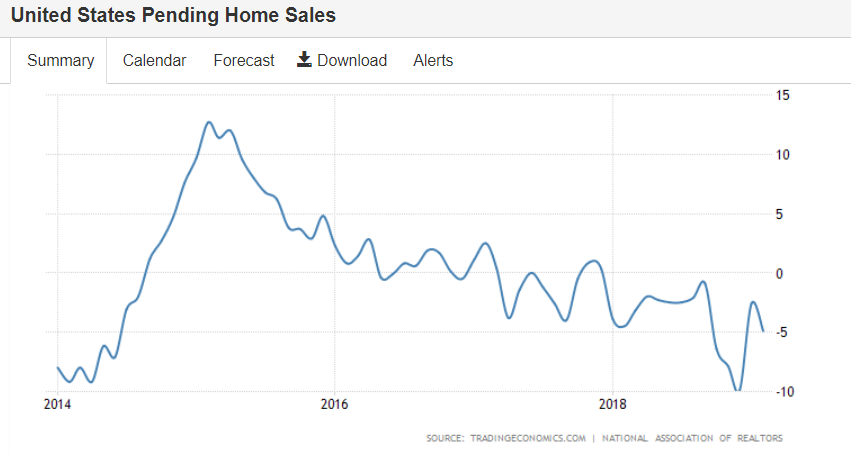
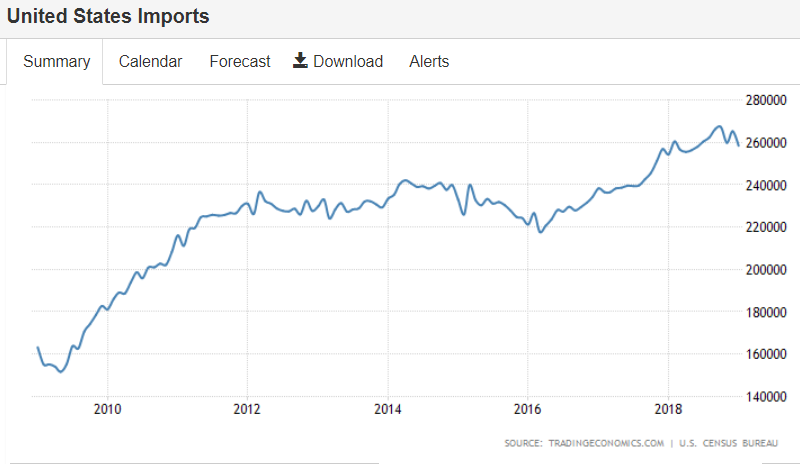
Weakness in imports may be confirming weak US consumer demand:

Highlights

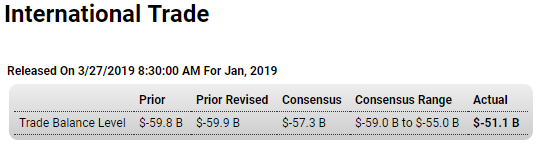
January’s trade deficit came in at a much lower-than-expected $51.1 billion as exports rose a solid 0.9 percent to $207.3 billion while imports fell a sharp 2.6 percent to $258.5 billion. The goods deficit is the surprise in the report, at a still steep $73.3 billion but 10.1 percent lower than December’s outsized $81.5 billion gap. The nations surplus on services exports rose 2.4 percent to $22.1 billion.

Details show a very welcome $1.3 billion rise in food exports, which had been shrinking in prior months, as well as a $1.2 billion gain for vehicle exports. Imports of capital goods fell $3.0 billion, which is good for the deficit but a negative for business investment, while imports of industrial supplies, reflecting a decline for oil, fell $2.3 billion.

Country data show another deep deficit with China, at $34.5 billion but a little less steep than $36.8 billion in December, with deficits with all other major trading partners likewise narrowing.

This reports opens first-quarter net exports on a favorable footing which in turn should lift early estimates for first-quarter GDP.

Erdogan Revives Unorthodox Theory on Interest Rates, Prices

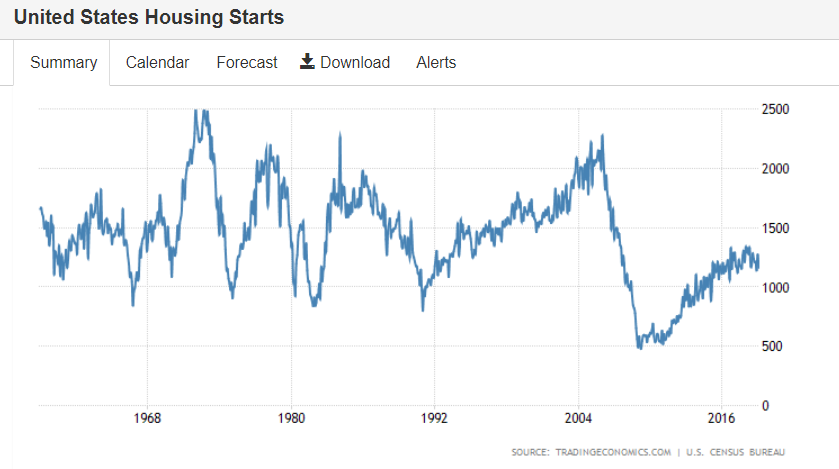
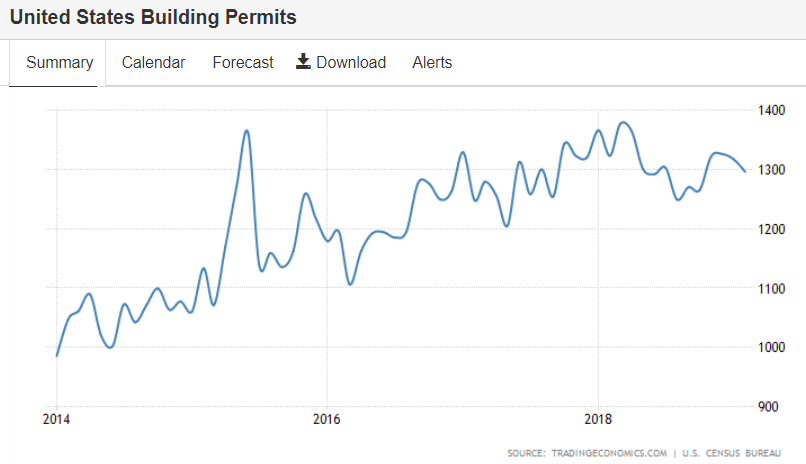
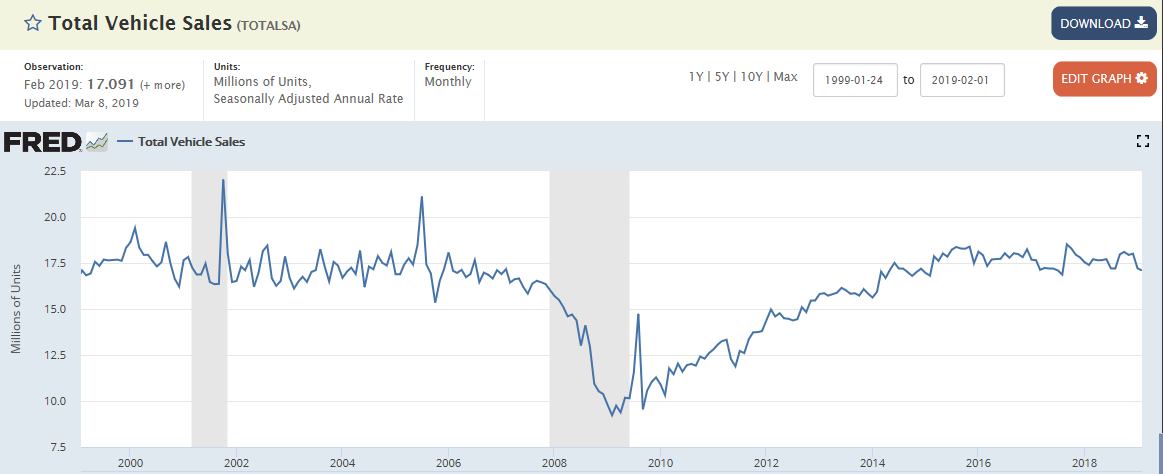
Housing starts, Consumer Confidence, Auto sales, Rail traffic

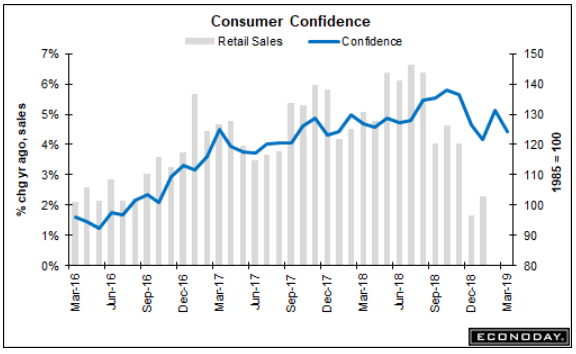
Rolling over:


Also rolling over, and inline with the drop in retail sales:

U.S. auto sales are falling as vehicle prices climb, indicating that buyers at the lower end are getting squeezed out of the new car market, according to a new industry forecast.

First-quarter auto sales are expected to drop by nearly 2.5 percent from a year earlier, to 4 million units, according to J.D. Power and LMC Automotive.

Retail sales, which exclude sales to rental car companies and other commercial businesses, are expected to drop by about 5 percent to 2.9 million units. It’s the first time first-quarter retail sales are projected to fall short of 3 million units in six years, said Thomas King, senior vice president of J.D. Power’s data and analytics division.

Rate policy, Wholesale inventories

While there’s no dispute that there’s been a substantial global economic slowdown, stocks have been doing well due to investor belief that Fed will be there with lower rates to stem the deceleration and reignite growth.

However, seems obvious to me that the Fed’s tools- low rates and QE- aren’t all they are cracked up to be, as per Japan, the euro zone, and the US for the last 10 years.

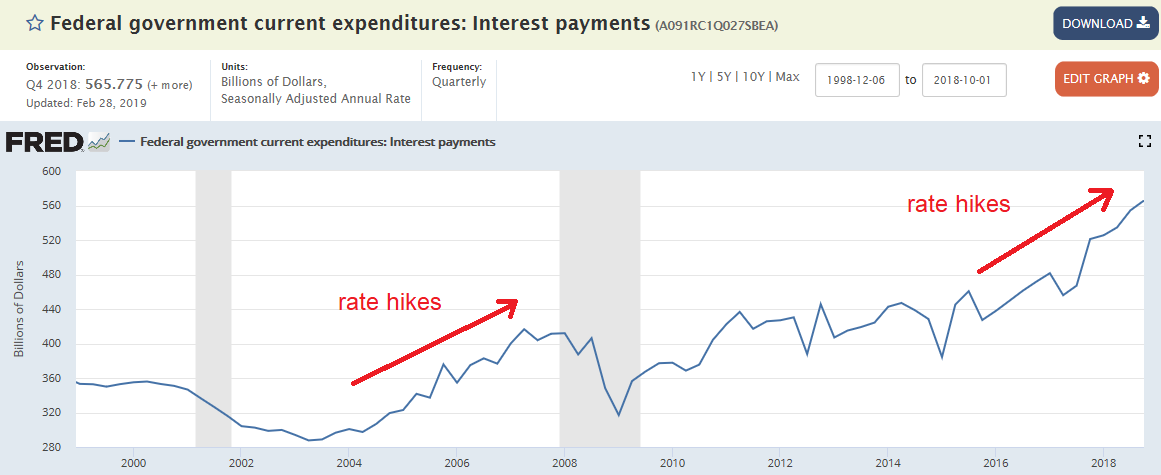
To the contrary, seems to me the Fed may be confusing the accelerator with the brake, as the govt. is a net payer of interest to the economy on $20+ trillion of outstanding treasury securities and interest bearing reserves. That means rate hikes add interest income to the economy as they increase the federal budget deficit, and rate cuts likewise remove interest income from the economy.

Highlights

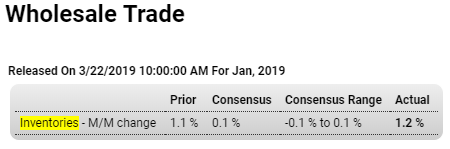
There are few indications of economic slowing that are more convincing than an unwanted build in inventories — and that apparently is what’s underway in the wholesale sector. Wholesale inventories jumped 1.2 percent in January to far exceed anyone’s expectations and are up 7.7 percent year-on-year. Confirmation that this is unwanted comes from sales in the sector which did rise 0.5 percent in January but follow a long stretch of contraction. Year-on-year, sales are up only 2.7 percent. The sector’s stock-to-sales ratio continues to climb, at 1.34 vs 1.33 in December and against 1.28 in January last year. Today’s data confirm the wisdom of the Federal Reserve’s cautious outlook.

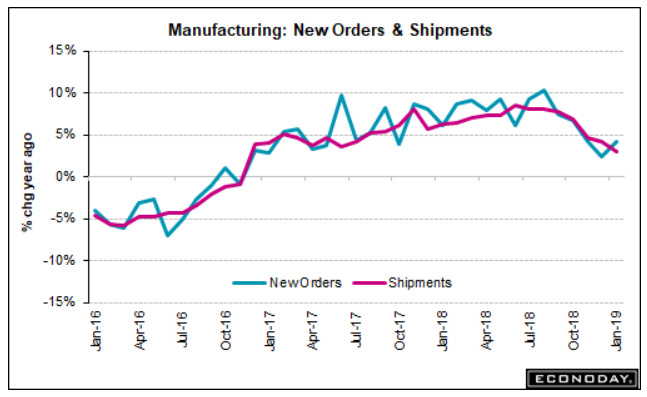
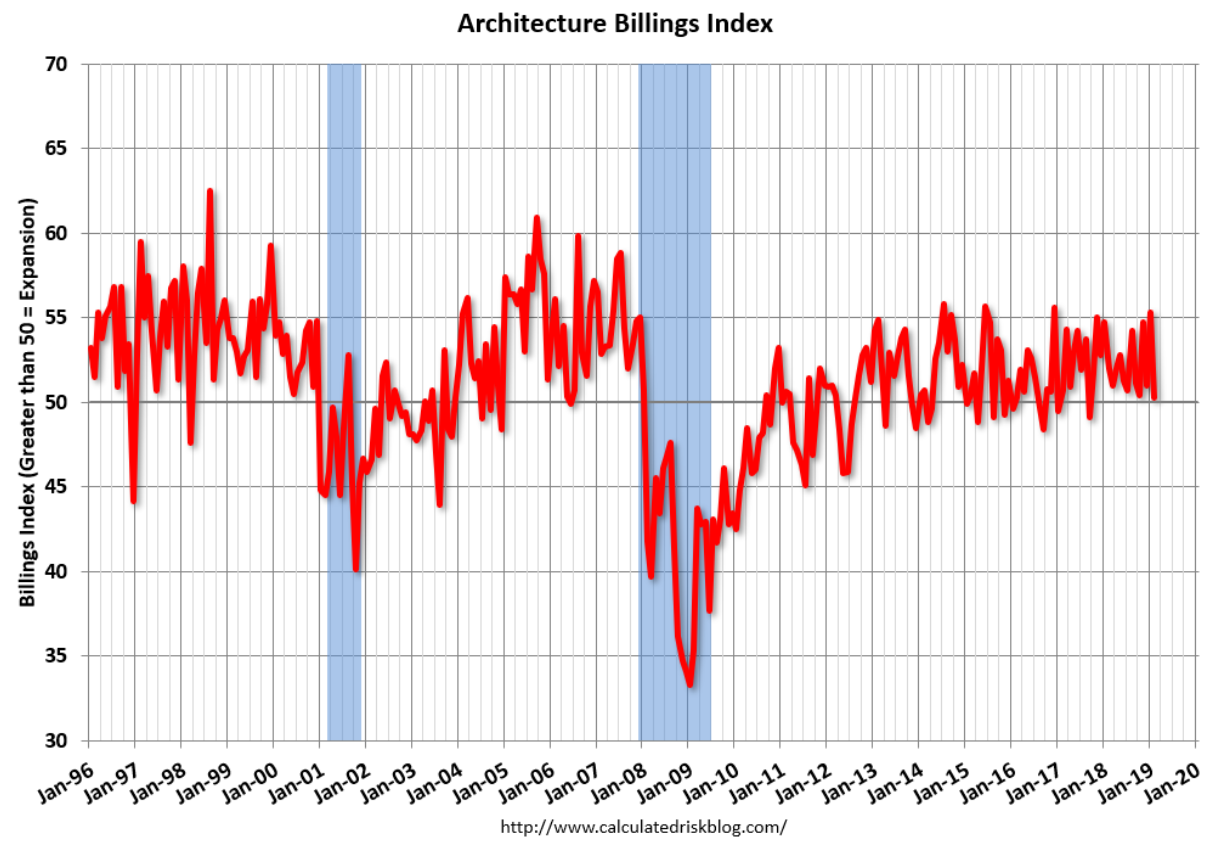
Factory orders, Architecture billing, Corporate outlook

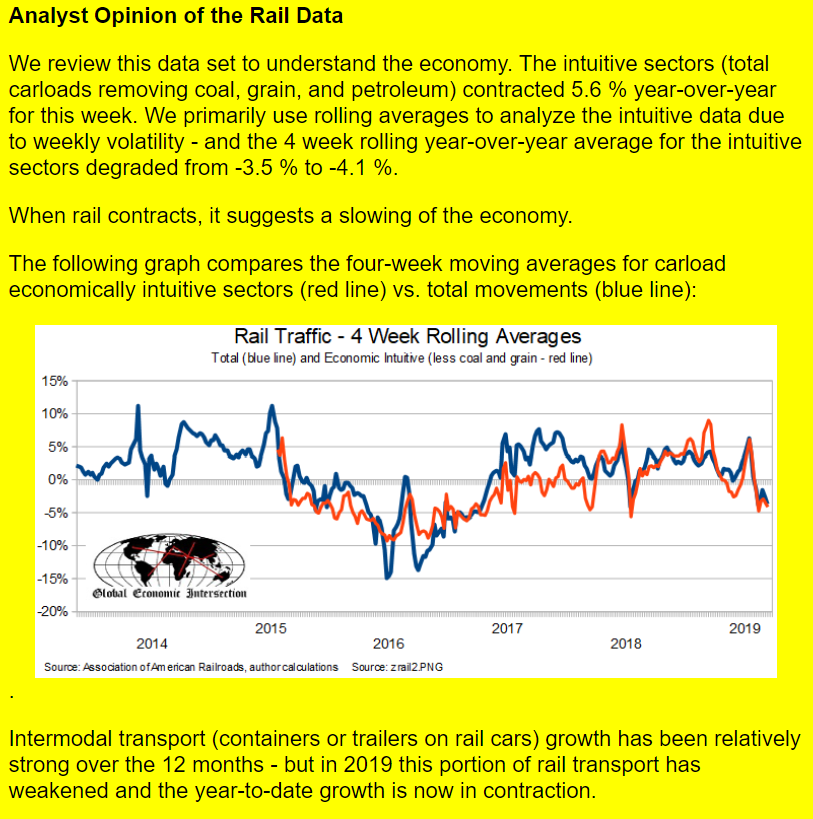
Rolling over:

A growing list of companies from FedEx to BMW are warning about the world economy

  • Executives at FedEx, BMW, UBS and others are describing bleak macro-economic conditions around the world this week, which they say are weighing on business.
  • The head of UBS says it was “one of the worst first-quarter environments in recent history,” while FedEx cited slowing international conditions and weaker global trade growth trends.
  • US manufacturing, and growth forecasts, LA port traffic, Japan trade

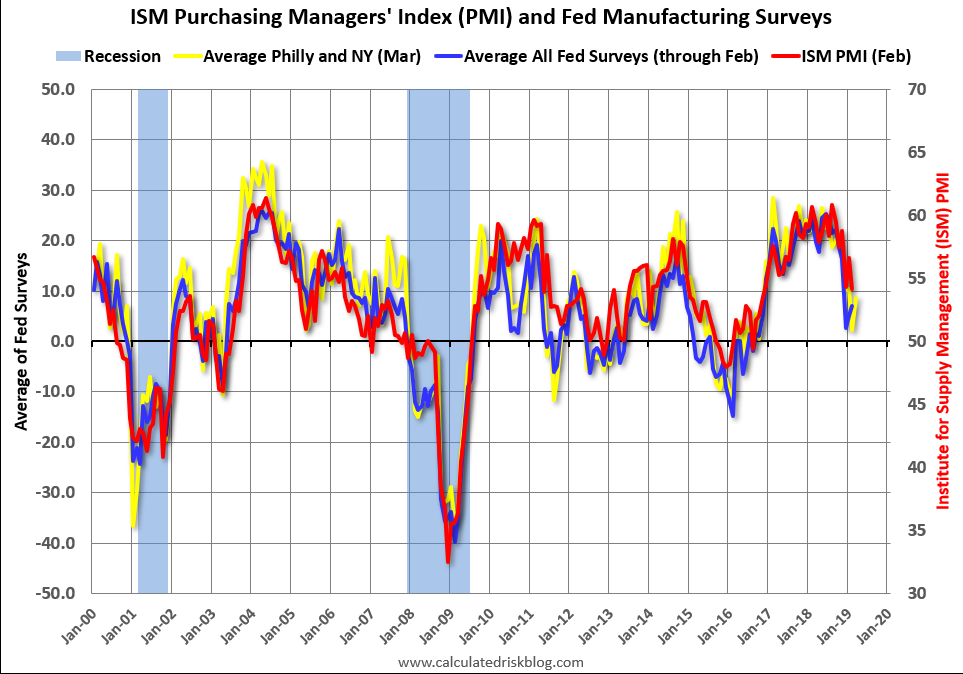
    Decelerating global trade hitting home:

    U.S. manufacturing sector slowing as economy loses steam

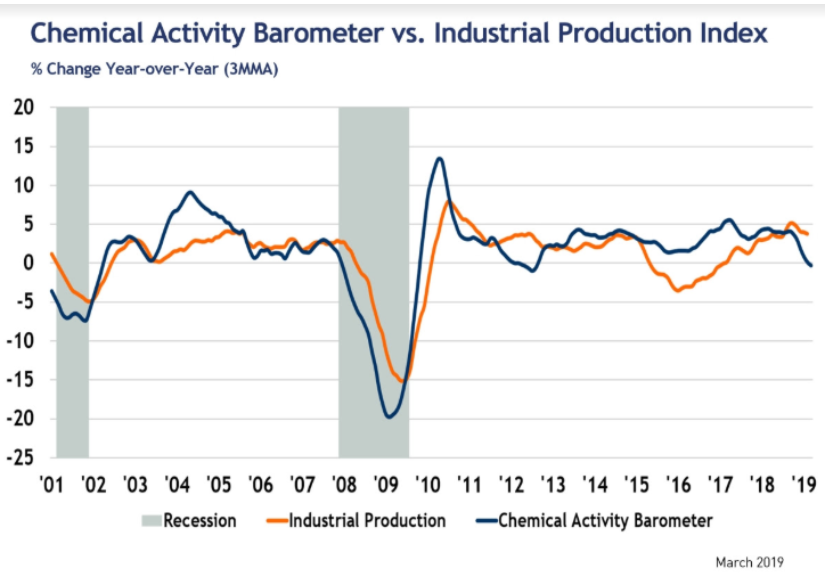
    (Reuters) The Fed said manufacturing production dropped 0.4 percent last month. January was revised up to show output falling 0.5 percent instead of slumping 0.9 percent. Production at factories increased 1.0 percent in February from a year ago. Motor vehicles and parts output slipped 0.1 percent last month after tumbling 7.6 percent in January. Excluding motor vehicles and parts, manufacturing output fell 0.4 percent last month. Capacity utilization for the manufacturing sector fell to a nine-month low of 75.4 percent in February from 75.8 percent in January.

    Economists Cut Forecasts for Jobs and Economic Growth in Early 2019

    (WSJ) Private-sector economic forecasters surveyed in recent days expect U.S. economic output to grow, on average, at a 1.3% pace in the first quarter. That is a sharp drop from the last survey, in early February, when they predicted a 2% growth rate for the January-to-March period. 84.2% said they saw a greater risk that the economy would grow more slowly than that it would grow more quickly over the next 12 months. When asked about the biggest downside risk to their forecasts, 46.8% mentioned trade policy or China.

    LA area Port Traffic Down Year-over-year in February

    Container traffic gives us an idea about the volume of goods being exported and imported – and usually some hints about the trade report since LA area ports handle about 40% of the nation’s container port traffic.

    On a rolling 12 month basis, inbound traffic was down 0.8% in February compared to the rolling 12 months ending in January. Outbound traffic was down 1.2% compared to the rolling 12 months ending the previous month.

    Exports and imports fading:

    Japan logs goods trade surplus of 339 billion yen in February

    (Kyodo) Exports fell for the third straight month in February, slipping 1.2 percent to 6.38 trillion yen. Imports declined 6.7 percent to 6.05 trillion yen. China-bound exports increased 5.5 percent from a year prior, but that failed to make up for a 17.4 percent plunge in January. Japan’s trade surplus against the United States shrank to 624.9 billion yen as a 4.9 percent rise in imports such as aircraft outpaced a 2.0 percent increase in exports. With the European Union, Japan had a trade surplus of 58.2 billion yen as exports grew 2.5 percent while imports edged up 0.5 percent.

    BOJ stands pat but downgrades view of output and exports

    (Nikkei) “The Chinese economy is decelerating,” Gov. Haruhiko Kuroda said. But “stimulus steps are already being taken by the government. Their effects will show up in due course. Many believe that will be in the latter half of this year,” he added. “There are risks to the global economy. They need to be monitored carefully. But continued gradual growth remains our main scenario.” The BOJ downgraded its view of exports and output, saying they have been showing weakness recently. Previously, the central bank described export and output conditions as being “on an expanding trend.”

    Economists Cut Forecasts for Jobs and Economic Growth in Early 2019

    (WSJ) Private-sector economic forecasters surveyed in recent days expect U.S. economic output to grow, on average, at a 1.3% pace in the first quarter. That is a sharp drop from the last survey, in early February, when they predicted a 2% growth rate for the January-to-March period. 84.2% said they saw a greater risk that the economy would grow more slowly than that it would grow more quickly over the next 12 months. When asked about the biggest downside risk to their forecasts, 46.8% mentioned trade policy or China.

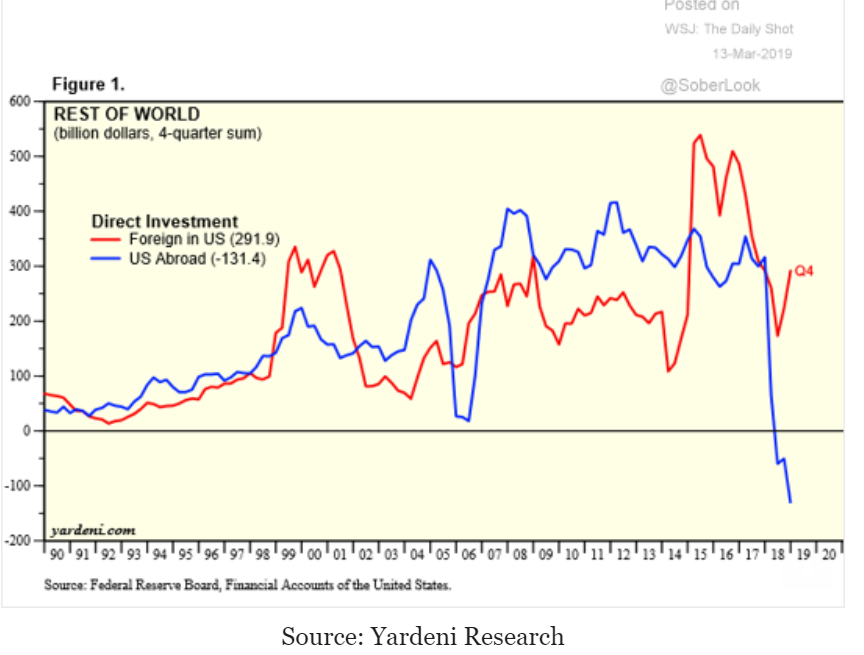
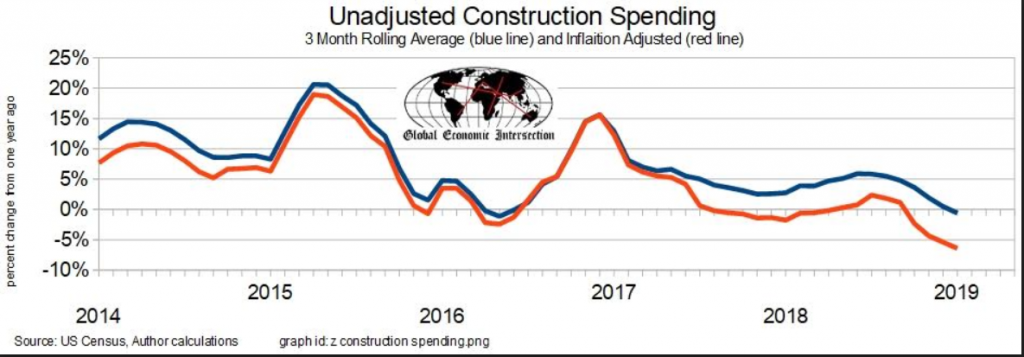
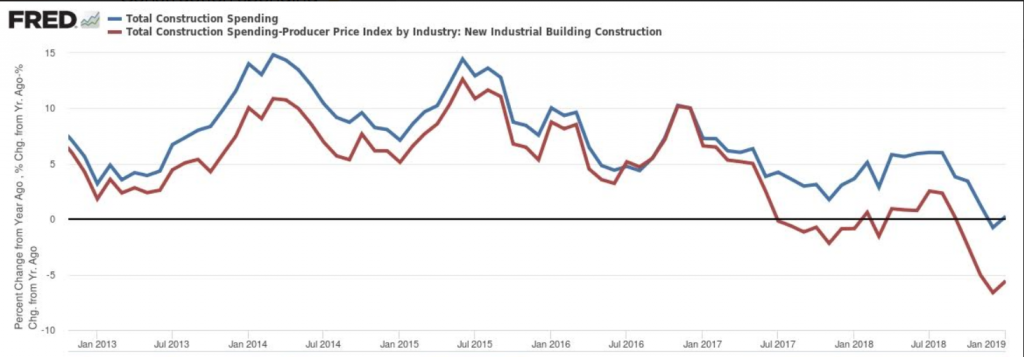
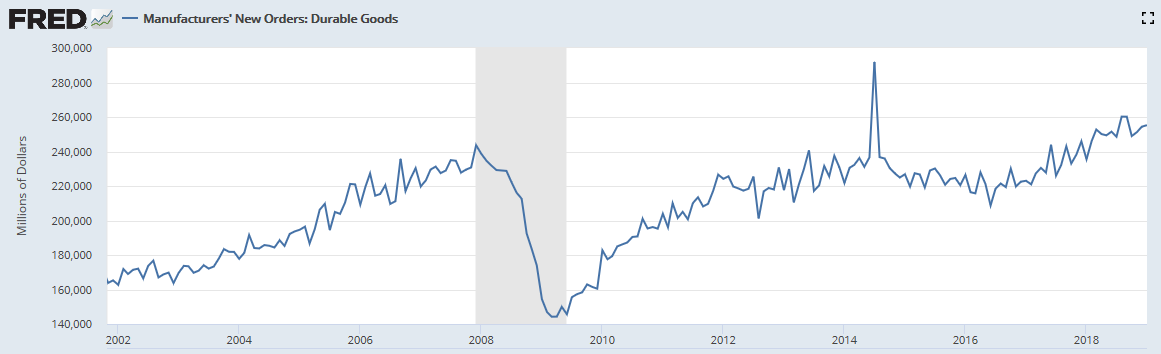
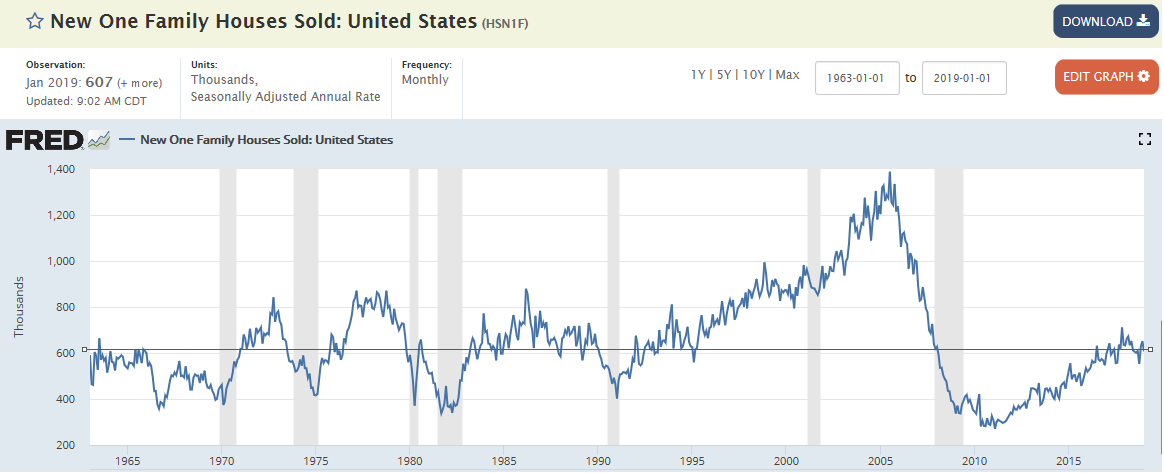
    Roreign direct investment, Construction spending, Durable goods orders, New home sales


    Gone negative year over year adjusted for inflation:


    This series looks to me like it’s flattened and adjusted for inflation remains well below 2008 highs, and hasn’t fully recovered from the collapse of oil capex at the end of 2014:


    New home sales appear to have rolled over at very low levels. They are pretty much only at levels of the early 1960’s when the population was maybe half of what it is today:

    Small business index, BOJ on trade, China, Atlanta Fed

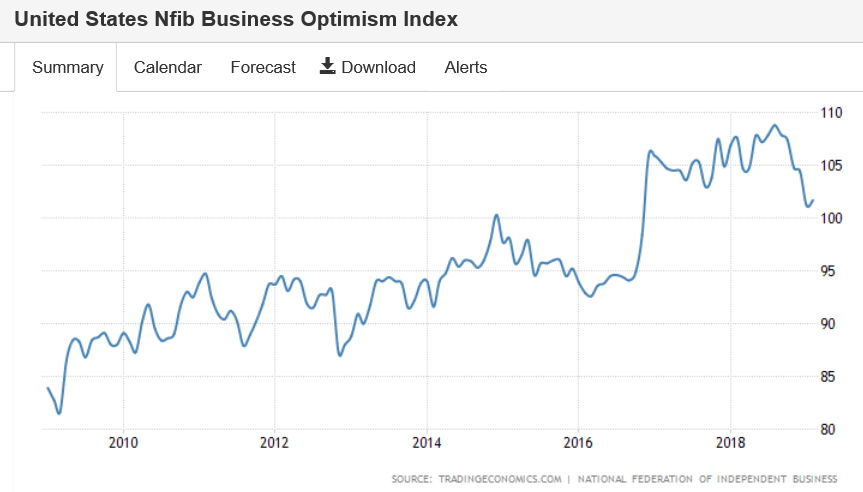
    Trumped up expectations largely reversed:

    Highlights

    At 101.7, the small business optimism index fell short of expectations in February, recovering only 5 tenths of January’s 3.2 point dip. Econoday’s consensus was looking for 102.5 with the low estimate at 101.8. Employment plans lost ground for a second straight month with a turn lower for earnings trends the biggest negative in the month. One plus is that the he outlook for economy, after dropping sharply in January, did turn positive in the month.

    Bank of Japan weighs gloomier view of exports and output

    (Nikkei) “We have no choice but to recognize that recent export and production trends are weak,” said a top official at the central bank, a view echoed by other senior officers there. In January, exports dropped 5.2% from the previous month in real terms, according to BOJ data, and the economy ministry’s index of industrial production shrank for a third straight month. The BOJ at its January policy meeting that both exports and industrial production were “on an increasing trend,” but it is considering revising that language during the two-day meeting ending Friday.

    Sentiment among large Japanese companies plunges in 1Q 2019

    (Nikkei) The Business Survey Index of large companies across all industries stood at minus 1.7 in the first three months of 2019. That is a 6-point drop from the October-December period of 2018. A negative reading means there are more companies that think business conditions are getting worse than there are that think things are improving. The Business Survey Index for Japan’s manufacturing sector, which relies heavily on exports, dropped to minus 7.3 from positive 5.5. Among large companies, the second quarter forecast is minus 0.3, and the period from July to Sep. is plus 5.7.

    China’s top property developers see plunging sales in February

    (Xinhua) China’s top 100 real estate developers saw a sharp monthly decline in its total sales due to the Spring Festival holiday. The total sales volume of China’s top 100 property developers was down by 22.9 percent month-on-month, and 11 percent year-on-year in February, according to China Real Estate Information Corp (CRIC). Floor area sold by Vanke, China’s housing market giant, plunged 22 percent to 2.47 million square meters, with the sales falling 12 percent to 43.19 billion yuan (around 6.4 billion U.S. dollars) month-on-month.

    China car sales drop 17.4% in February to 1.22m units

    (Nikkei) Sales of passenger cars fell 17.4% to 1.22 million units in February, China Association of Automobile Manufacturers, or CAAM, said. Sales of passenger cars and commercial vehicles fell 13.8% to 1.48 million units, while commercial vehicles saw an 8% increase during the month. The sales in February were hurt by weak demand during the Chinese New Year, CAAM said. The slump in February marks the eighth straight monthly decline in auto sales. Vehicle sales in China fell 15.8% in January, following a 2.8% decrease last year.

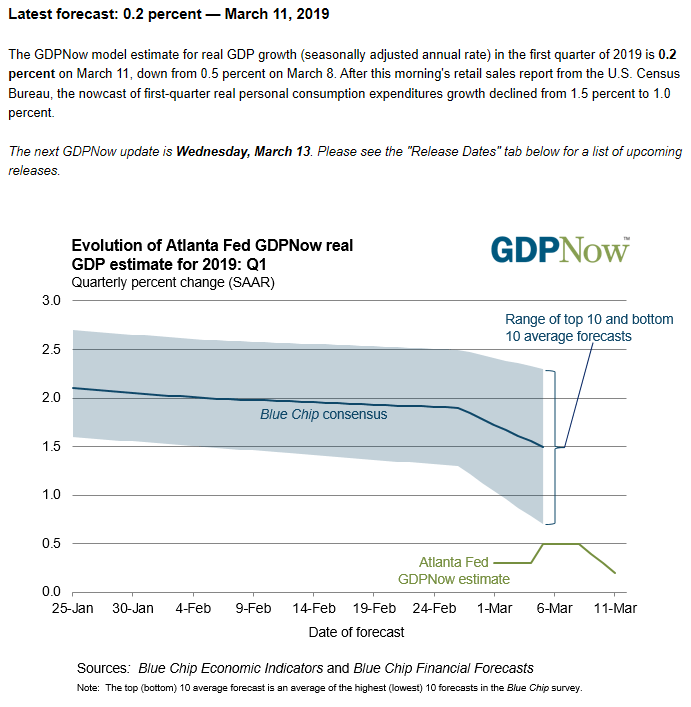
    GDP forecasts are low and falling:

    Retail sales, Non financial corporate and federal debt

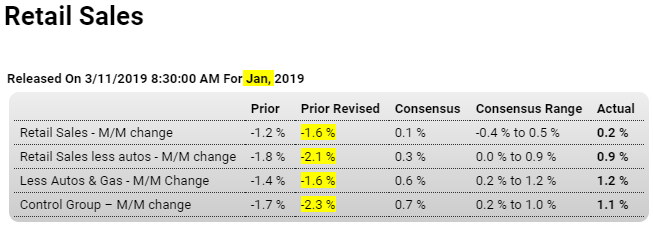
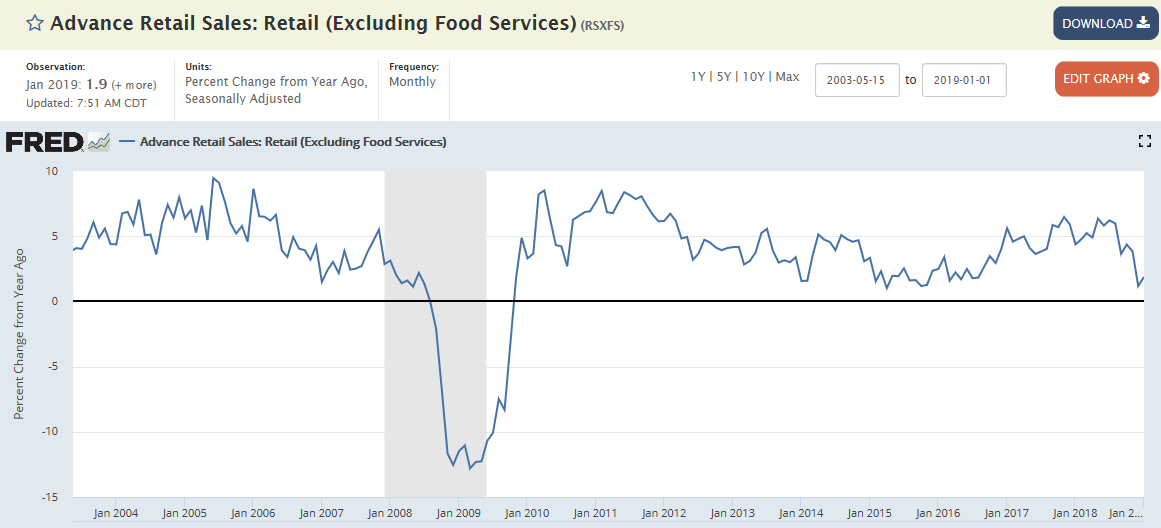
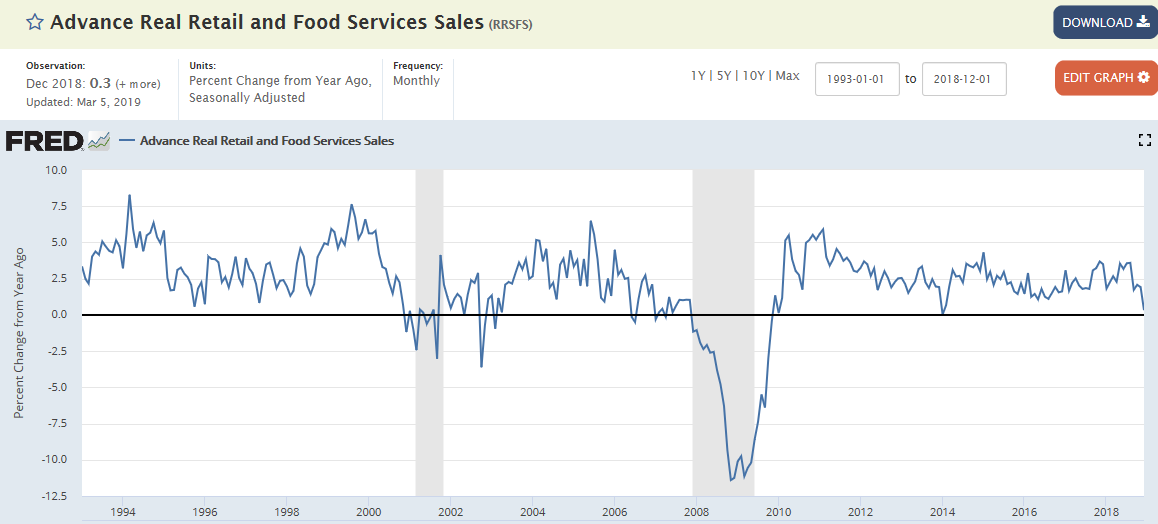
    A bit of an uptic from a very low number, with last month’s data revised still lower and the outlook still looking very soft:

    Highlights

    For retail sales, no period has more seasonal extremes than the busy days of December vs the quiet days of January. This and weather make adjustment difficult and are likely part of the explanation for the extreme volatility of the December and January retail sales reports.

    Retail sales managed only a 0.2 percent headline gain in January after plunging a downward revised 1.6 percent in December. But when excluding autos, where sales were very weak in January, the latest month shows a very strong 0.9 percent gain that hits the top of Econoday’s consensus range. The report’s two core readings — less autos & gas and the control group — also show outstanding gains, of 1.2 and 1.1 percent respectively that reverse tremendous weakness in December at revised losses at 1.6 percent and 2.3 percent.

    General merchandise is as good of place as any to find a reliable gauge to these unusual extremes and at a 0.8 percent January gain vs a 1.5 percent December loss probably puts in a nutshell the underlying message: deep and unusual weakness during the holiday season followed by a respectable bounce back. Nonstore retailers, where e-commerce is tracked, shows the same theme, at plus 2.6 percent in January vs severe contraction of minus 5.0 percent in December.

    Vast swings are apparent through all readings which will have the Census Bureau double checking their adjustments. But it’s not all about adjustments. The government shutdown started late last year and proved a negative not only for consumer confidence readings which plunged but for consumer spending as well. How much has the consumer bounced back? Judging by January’s results the word “somewhat” comes to mind. But advance readings for February have not been favorable whether continued and deep weakness for auto sales or slowing growth in Redbook’s same-store sales tally.

    For the first-quarter GDP outlook, today’s report is positive as it shows acceleration. For the Federal Reserve, the report is right in line with their move toward caution, waiting to see how events are unfolding.

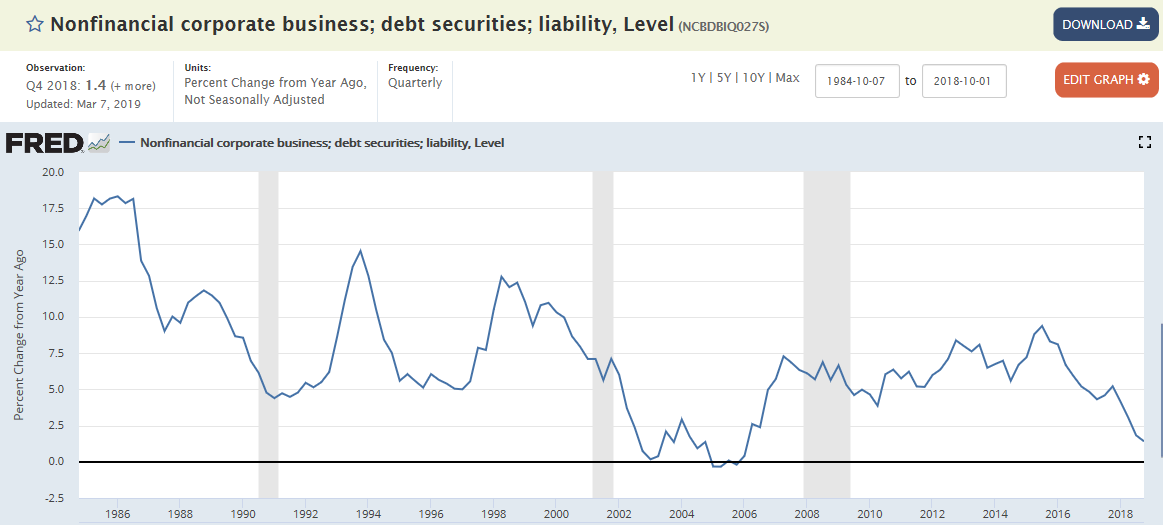
    Deceleration:


    This is adjusted for inflation, and only through December:


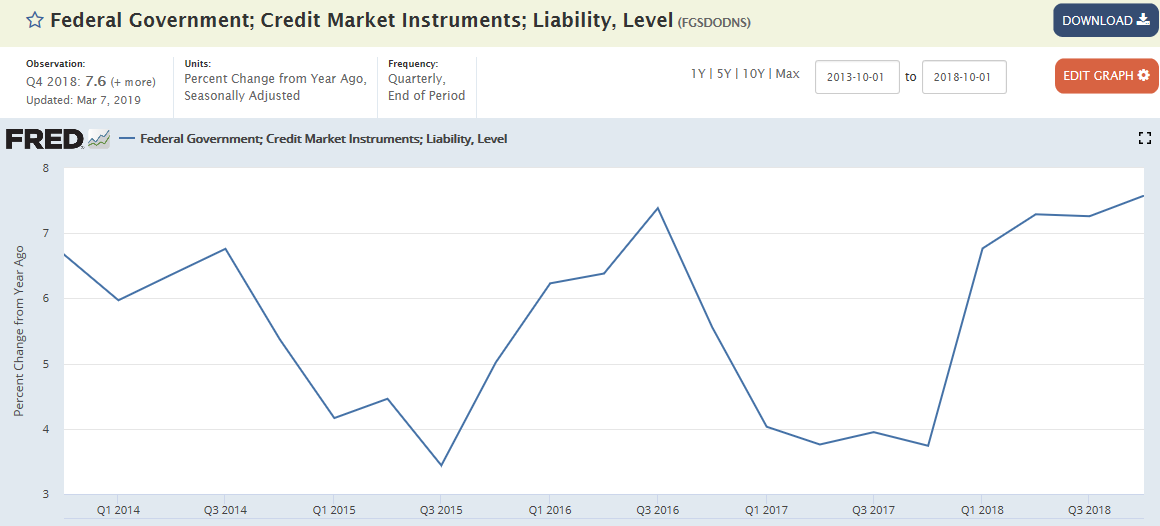
    No growth here:


    Decelerating corporate deficit spending:


    Federal govt. deficit spending has been growing:

    Employment, Housing starts, Euro slowdow, China fiscal, Semiconductor market

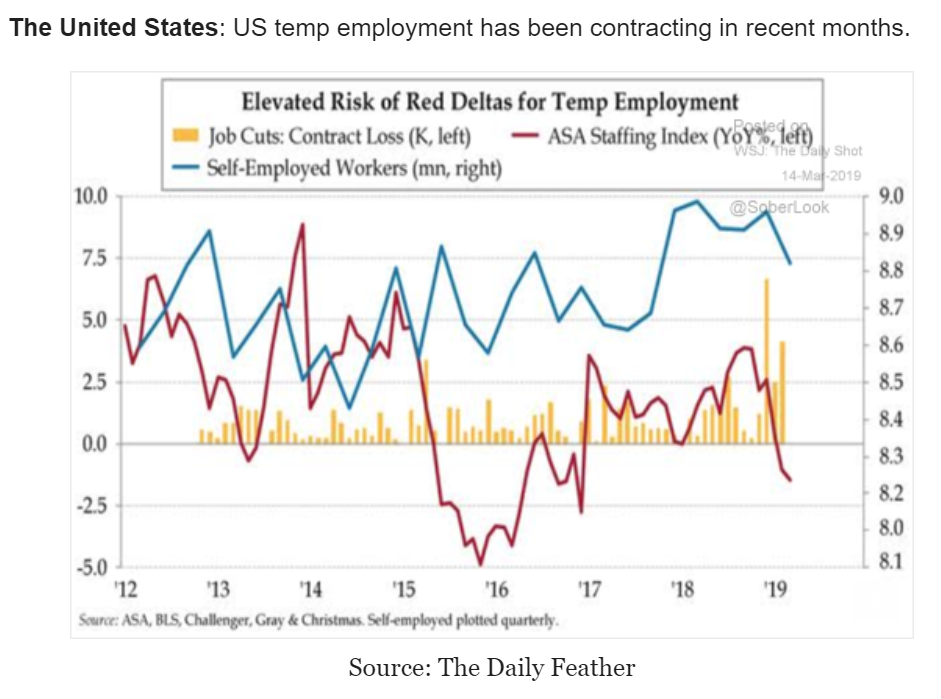
    It will take another few months to know if this is just ‘noise’ or it’s about to go negative. If you average the last two months, for example, it’s about 165,000 each:
    Highlights

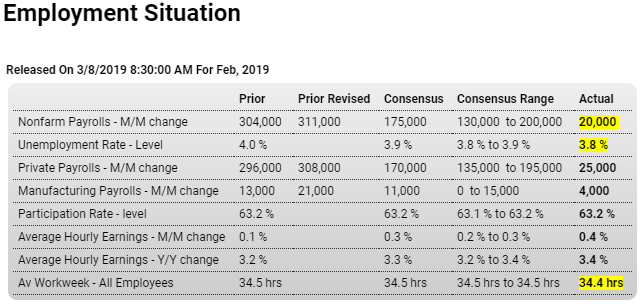
    Averaging extremes is good advice to find an underlying path and February and January payrolls are an immediate example. Nonfarm payrolls rose by only 20,000 last month vs a revised 311,000 rise in January with the average at a very healthy 166,000.

    Payrolls are part of the establishment survey of businesses while the unemployment rate is based on the household survey which includes those who are working but not on payrolls. Here February’s story is much more positive showing a sharp rise in the number of those employed (up 255,000) and a sharp fall in the number of unemployed (down 300,000) that make for an unexpected 2 tenths dip in the unemployment rate to 3.8 percent.

    And wages in today’s report are another indication of labor market strength, jumping 0.4 percent in the month which is outside expectations for a year-on-year rate of 3.4 percent that is at the high end of expectations.

    But payrolls are definitely weak with construction down 31,000 and ending a run of gains while retail, down 6,000, extended its mostly weak performance. One positive sign of labor market demand comes from professional & business services where payrolls jumped 42,000 and include a 6,000 rise for temporary workers in readings that continue to confirm employers are scrambling to build up their staffs.

    Winter is traditionally the most difficult period to seasonally adjust data and related questions are certain to come up to help explain away the volatility in payrolls so far this young year. Though the drop in February may well be cited at the coming FOMC this month as a reason for caution, there is still little question that strong demand for labor, underscored by the rise in average hourly earnings, is the central strength of the U.S. economy.
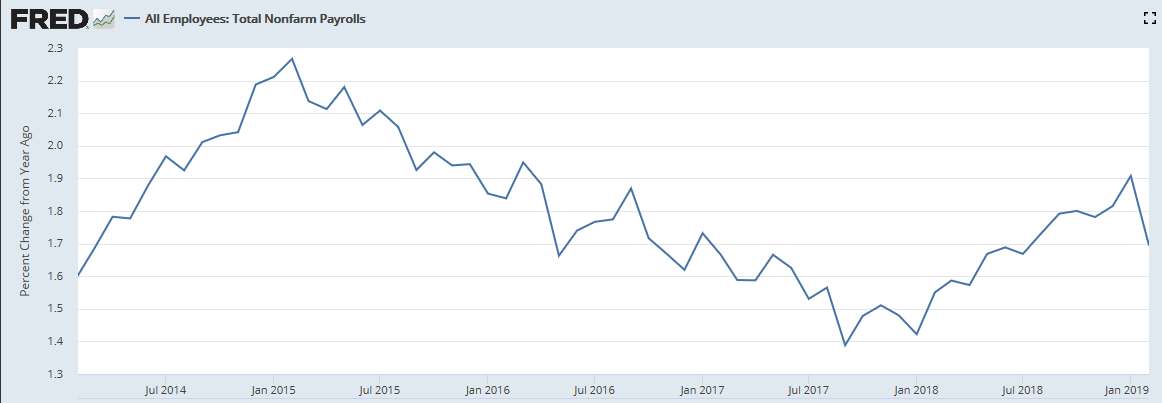
    Up from last month, but, again, looking at the two months together it’s still trending down:
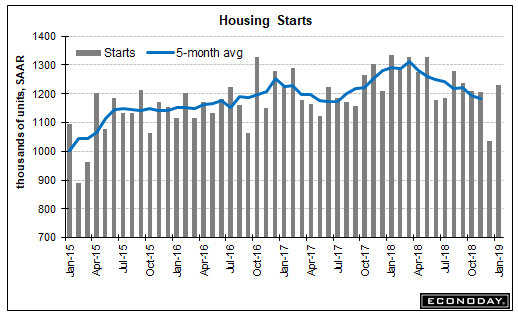
    This is a small step but in the right direction:

    China to raise fiscal deficit target

    (China Daily) China will raise its fiscal deficit target to 2.76 trillion yuan, or 2.8 percent of GDP, this year from 2.6 percent in 2018. The measure is being taken to stabilize economic growth by enlarging government spending, according to the annual Government Work Report. As a major measure to tackle economic risks, the proactive fiscal policy in 2019 will become stronger and more efficient, Premier Li Keqiang said. Total government expenditure is budgeted at over 23 trillion yuan, up by 6.5 percent from last year. “We will refrain from using a deluge of stimulus policies,” Li told participants of the opening of the session.
    Global semiconductor market dips for first time in 30 months

    (Nikkei) Worldwide semiconductor sales receded 5.7% on the year to $35.5 billion in January, according to World Semiconductor Trade Statistics, the first decline in 30 months. A market that had previously expanded at a 20%-plus clip started losing steam in the second half of 2018. Flash memory prices plunged more than 40% in a year. Chinese semiconductor sales between November 2018 and January 2019 crashed by nearly 20% by value compared with August to October, according to WSTS. China accounts for 30-40% of a global semiconductor market that amounted to $469 billion last year.