Employment, Vehicle sales, Factory orders, Headlines, US and Japan services, US and Euro area trade, Credit standards

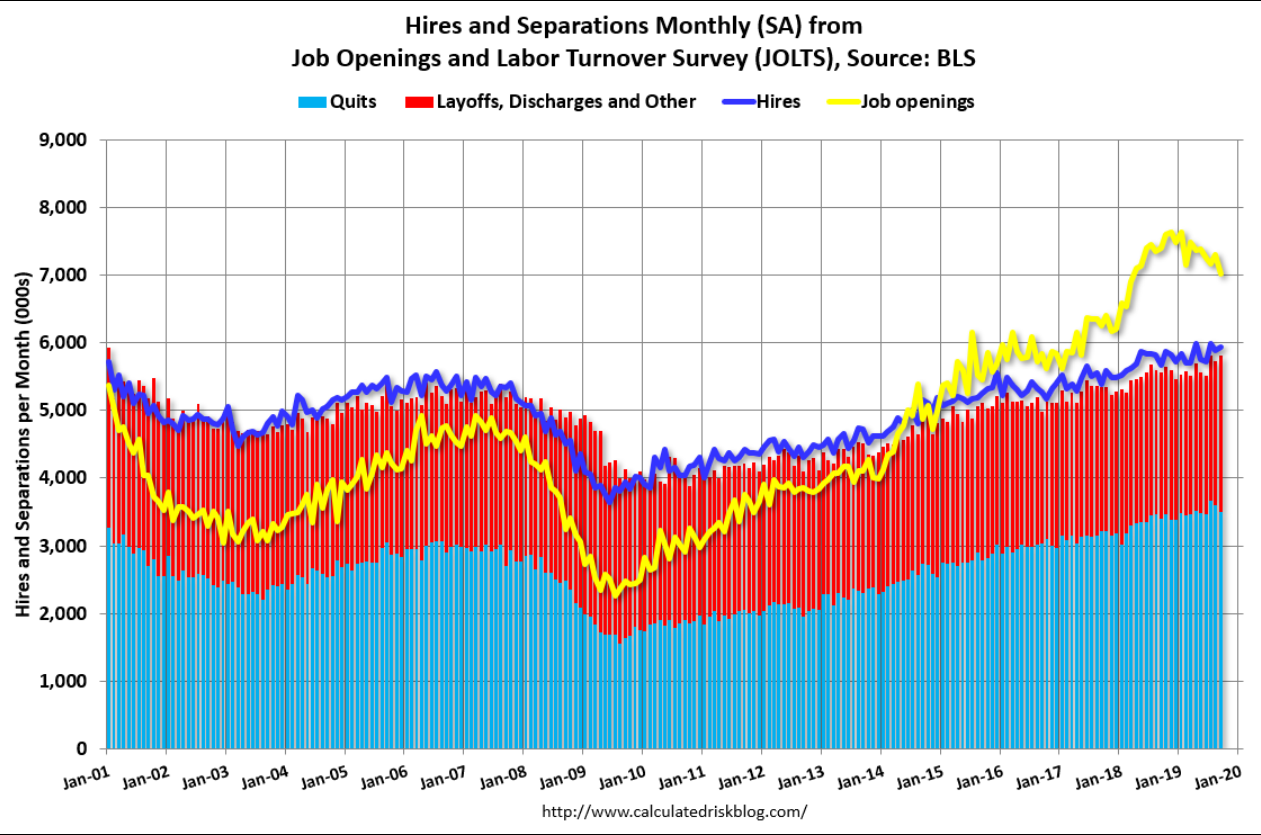
Job openings now in full retreat:

The contraction continues:

Highlights

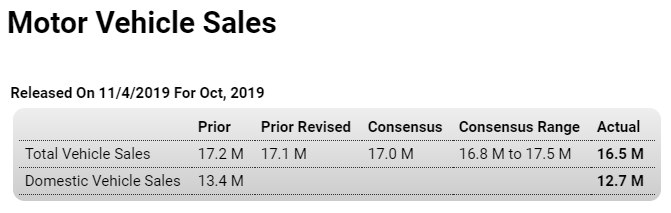
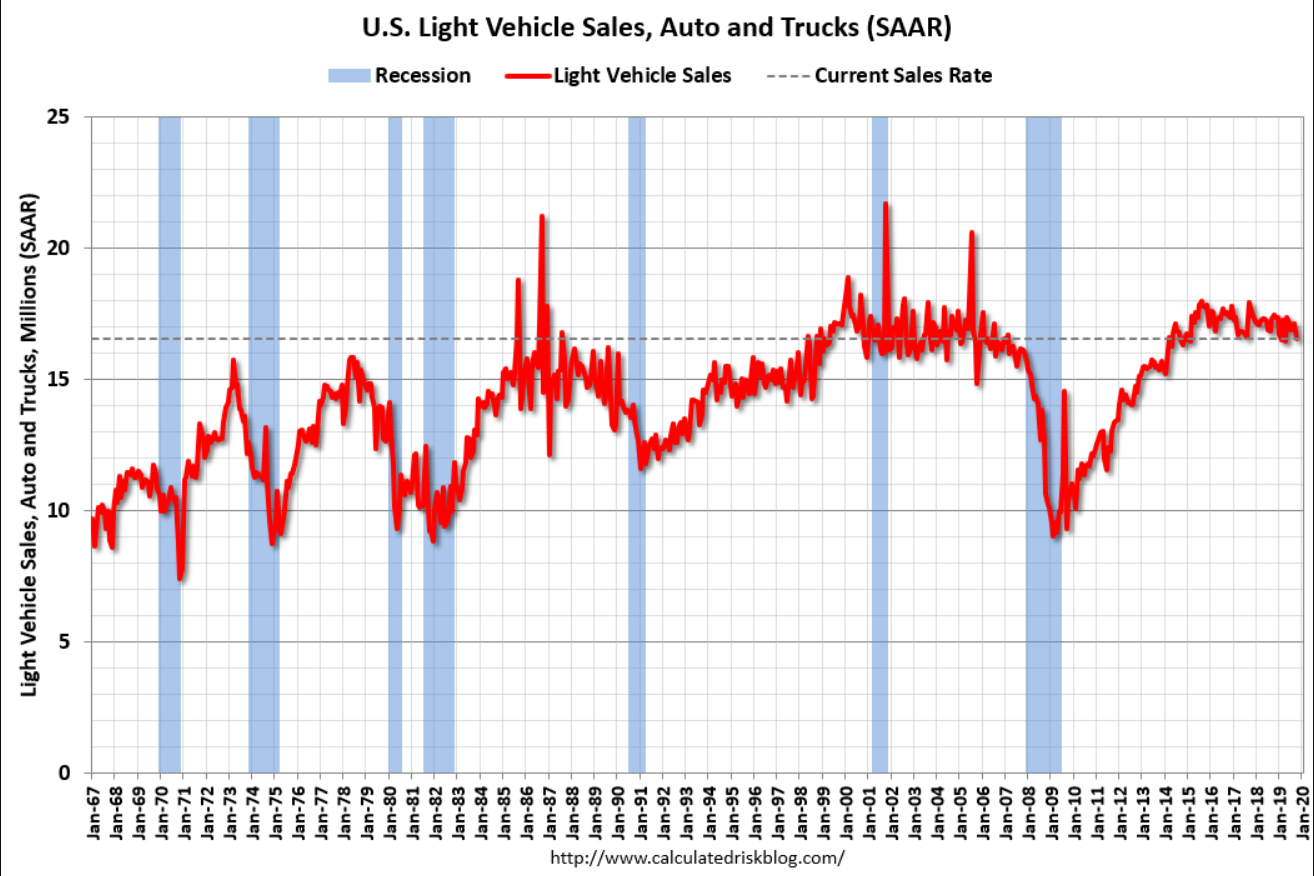
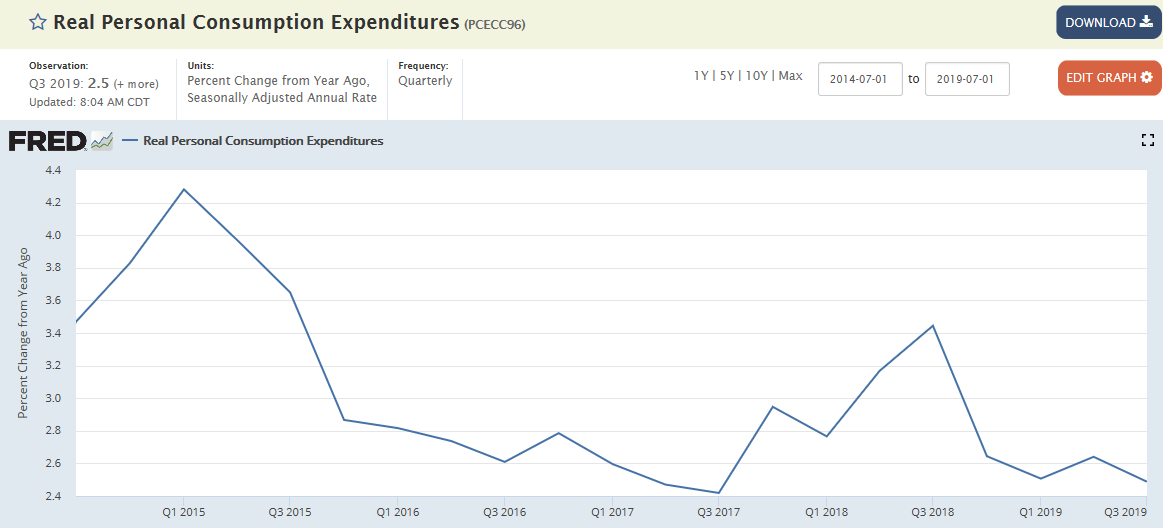
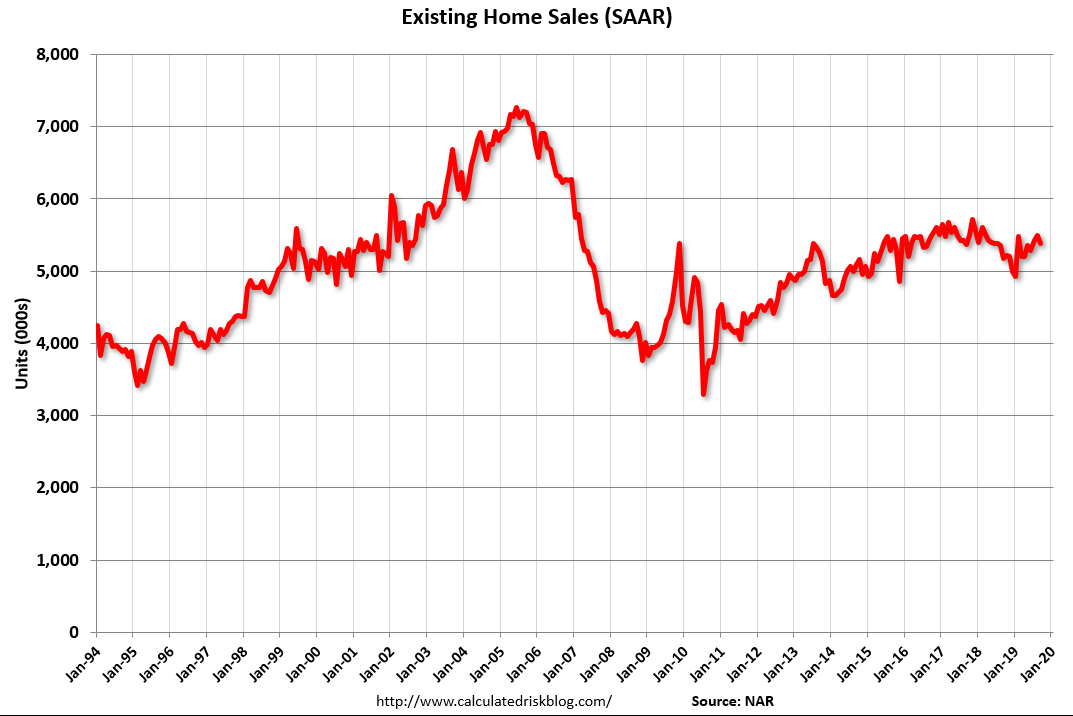
Unit vehicle sales, at a much lower-than-expected annual rate of 16.5 million, proved very soft in October and will lower expectations for next week’s retail sales report. October’s pace is the slowest since April reflecting sharp slowing in light truck sales. Vehicle sales have been soft this year, averaging a 16.9 million pace versus 17.2 million and 17.1 million in the two prior years. Despite this, 2019 has been a good year for overall consumer spending and is the fundamental reason why the Federal Reserve stepped back last week from signaling any further rate cuts.


Typical headlines:


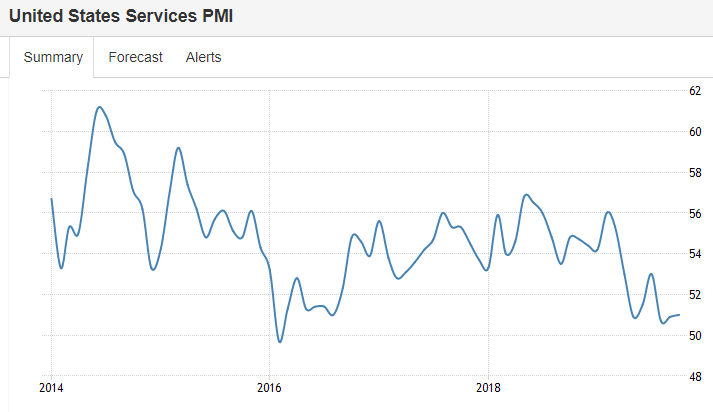
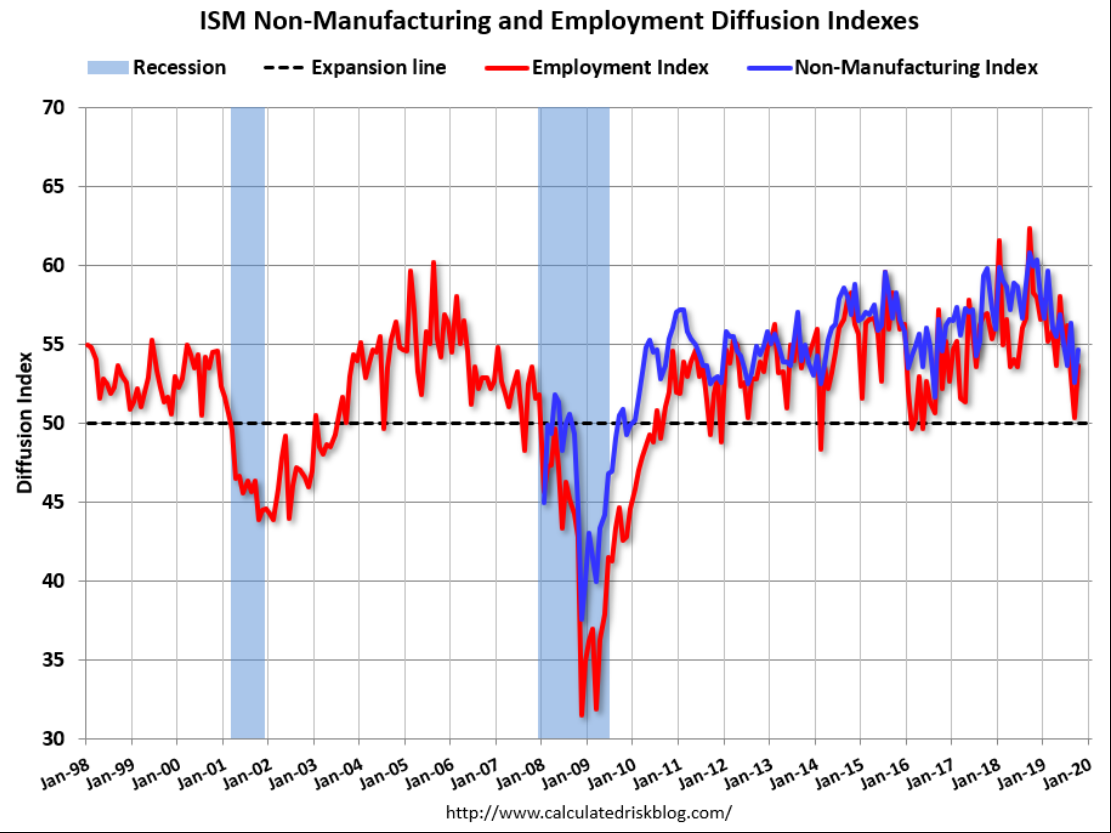
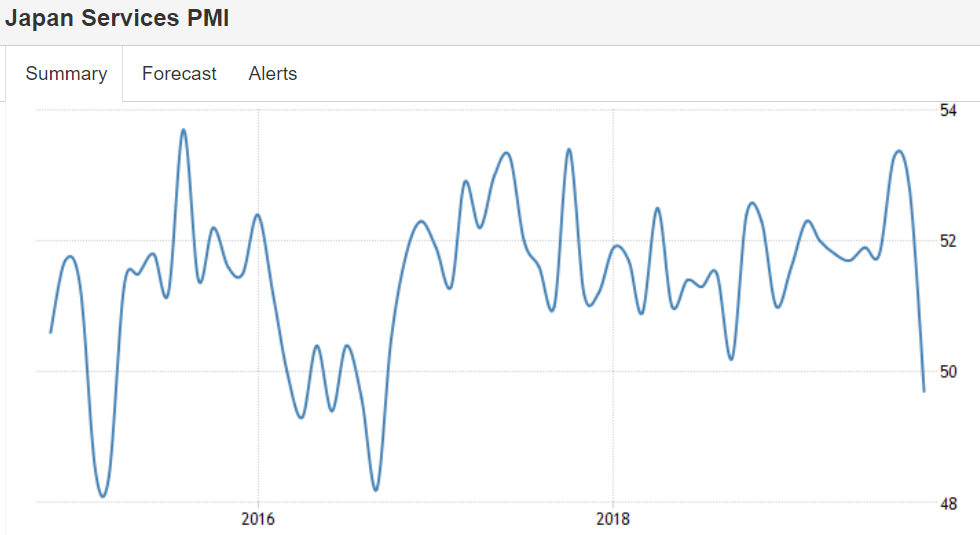
Service sectors following manufacturing into contraction:


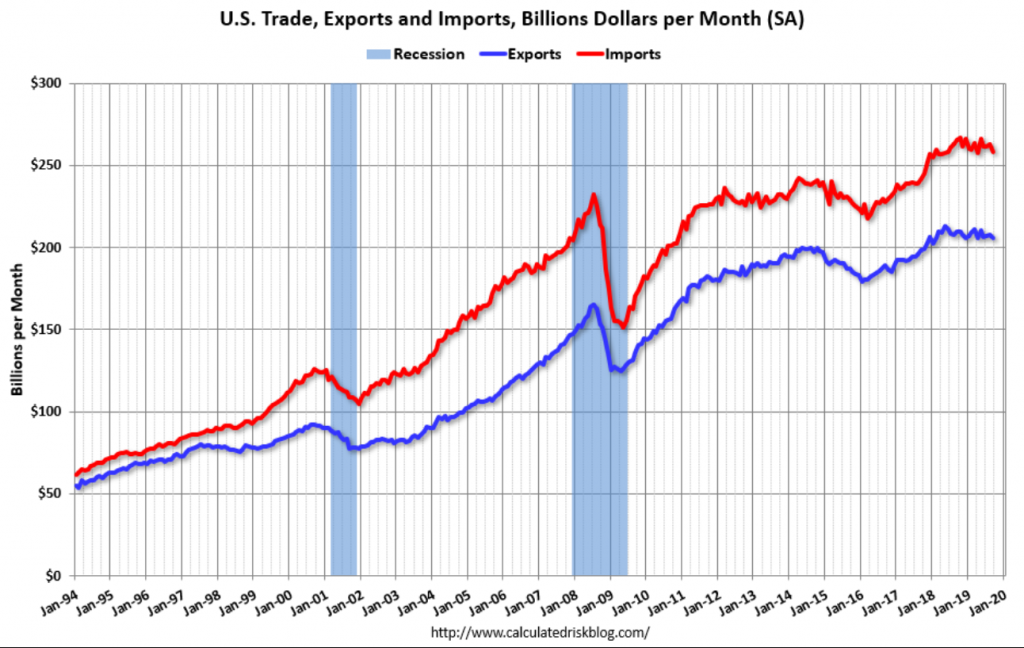
Global trade collapse- imports and exports going down:

Procyclical action underway maybe:

Banks tightened standards on credit cards in third quarter, Fed survey finds

Factory orders, ISM NY, Euro area

Contraction:

Highlights

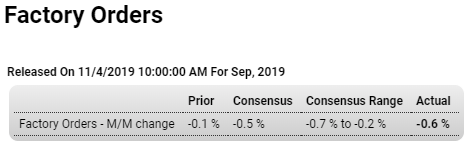
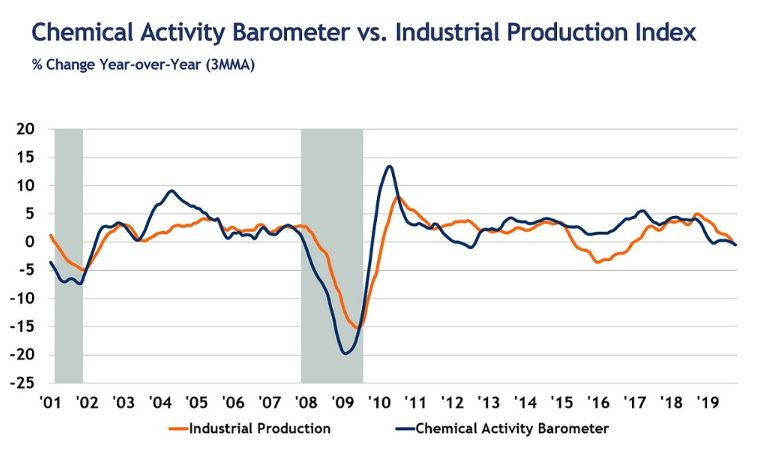
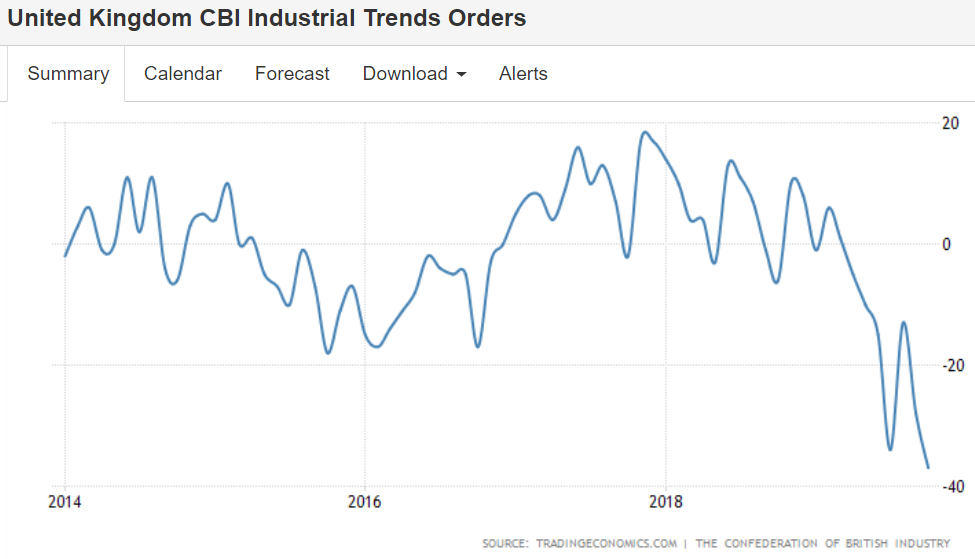
September factory orders fell 0.6 percent with durable goods orders falling 1.2 percent (revised from an initial 1.1 percent decline in last week’s advance data) and nondurable goods (the new data in today’s report) up 0.1 percent. Total unfilled orders have been flat this year and were unchanged in September while inventories rose 0.3 percent in contrast to shipments which fell 0.2 percent. Orders for commercial aircraft, pulled down by the grounding of the Boeing 737 Max, have been struggling this year and were down 11.8 percent in September.

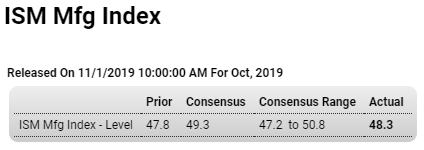
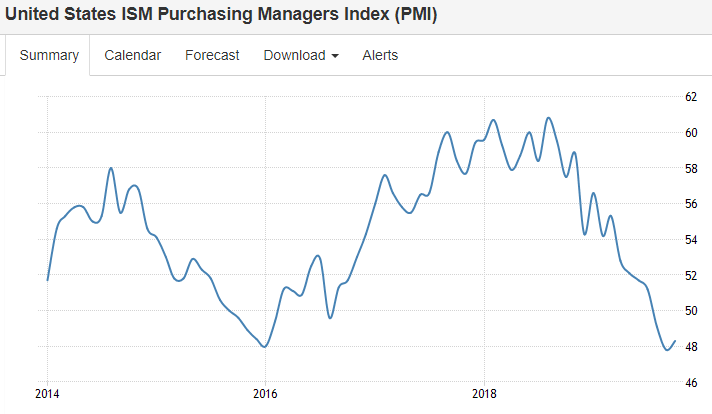
Remains in contraction (below 50):

Employment, Construction, ISM manufacturing, Chicago Fed

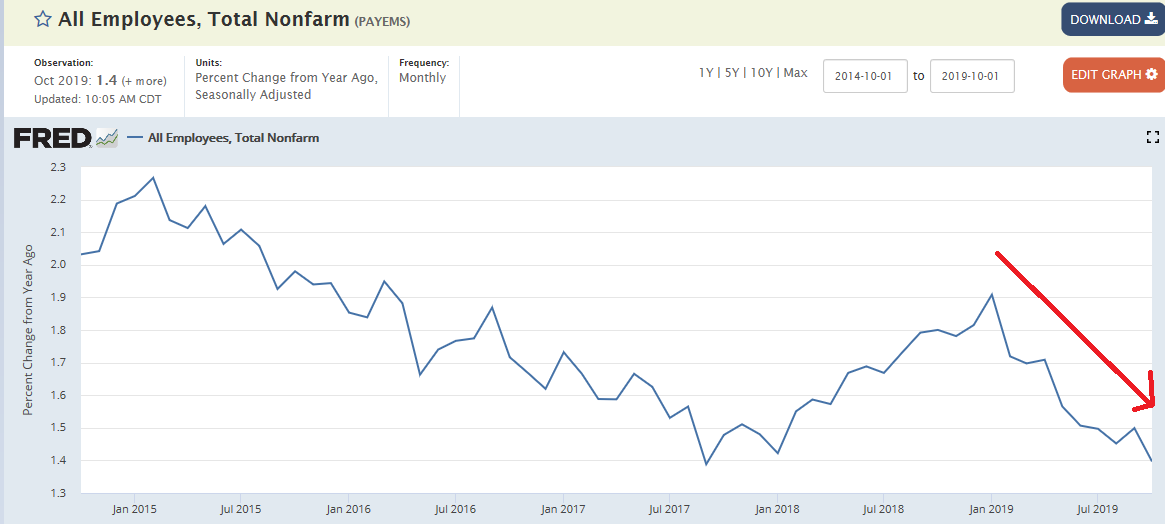
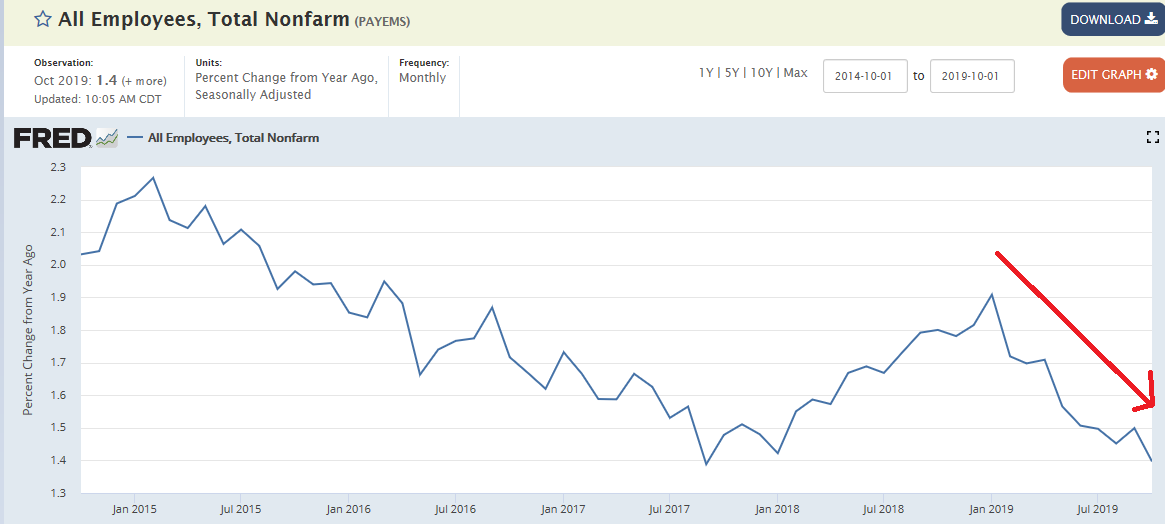
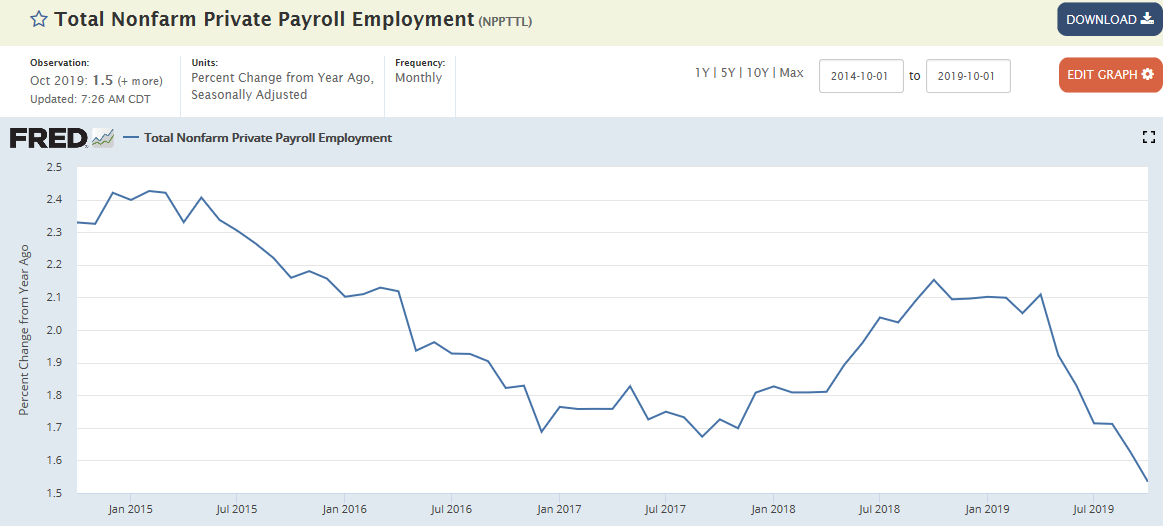
The slow motion train wreck continues unabated and when employment goes bad, it all goes bad:

Highlights

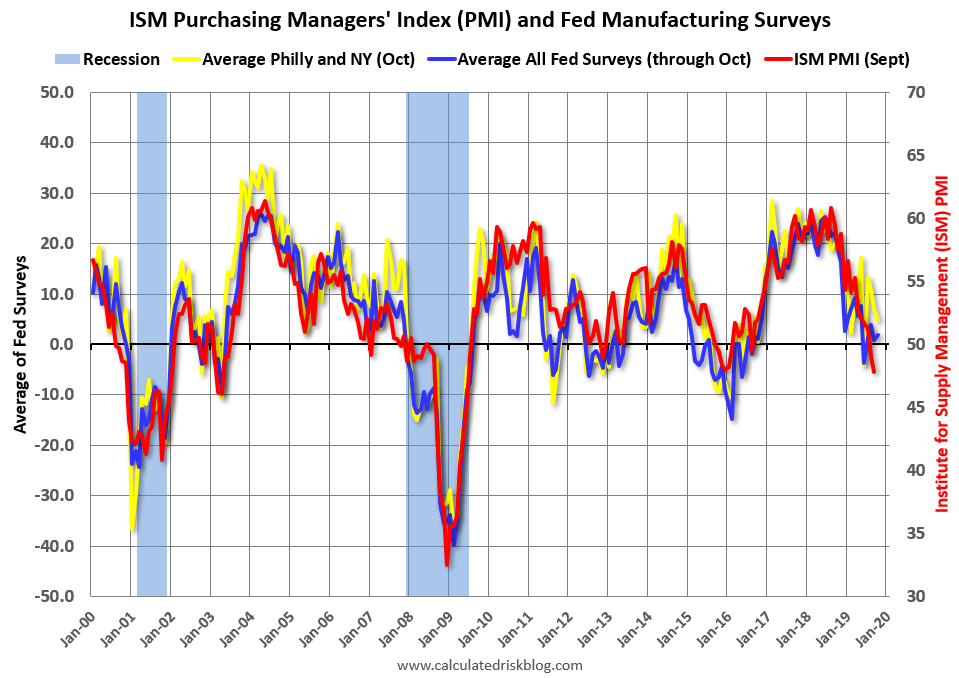
On the low side of expectations but not at increasing rates of contraction are the results of ISM’s manufacturing report for October. At 48.3, the index missed Econoday’s consensus by 1 point but gained a 1/2 point from September. New orders improved nearly 2 points in October but, at 49.1, are still under breakeven 50. New export orders, however, improved markedly, up more than 9 points and back over 50 at 50.4. Yet total backlogs are a major weakness for ISM’s sample, down another point and in deep contraction at 44.1.

Elsewhere contraction is roughly as deep as September, including production down nearly a point to 46.2 and employment up 1.4 points but still under 50 at 47.7. The sample drew down their raw material inventories but less so than September while, in a sign that capacity constraints are minimal, supplier delivery times posted a rare outright decline in the month. Given the indication from delivery times, the prices paid index is not surprisingly pointing to lower prices, down more than 4 points to 45.5.

The good news in this report is the rise in export orders, a move confirmed by the PMI manufacturing report which was released earlier this morning. Yet overall conditions are still very soft and are not pointing to any year-end acceleration for a sector that has been holding back the 2019 economy and where export-related trouble has helped trigger three straight rate cuts from the Federal Reserve.

Rails, Trade, Chicago Fed, Dallas Fed

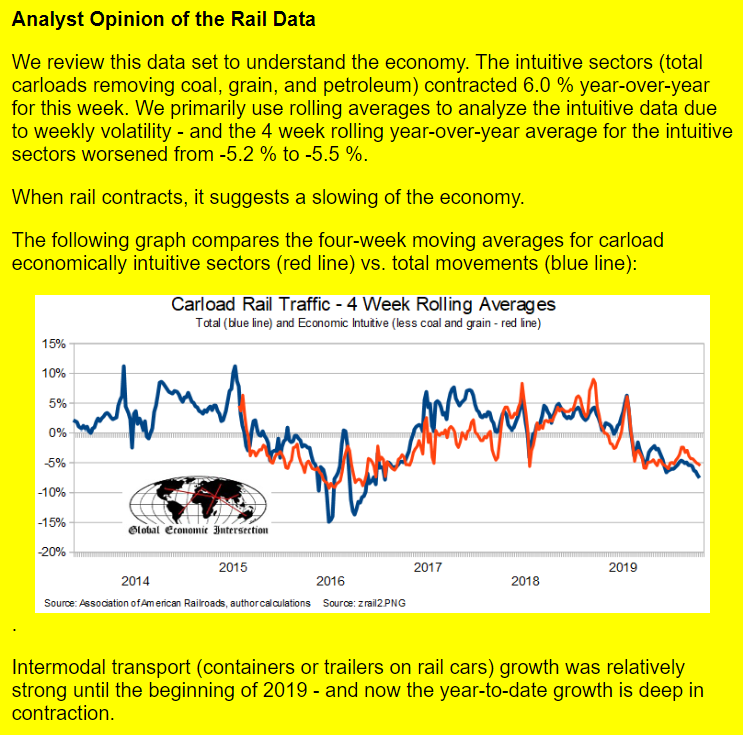
Deep contraction:

Highlights

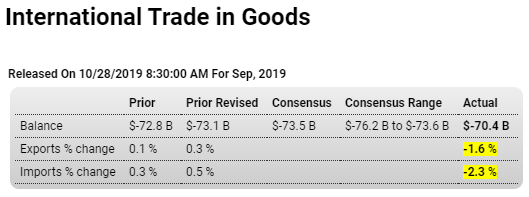
The good news is that the trade deficit in goods narrowed sharply in September to a much lower-than-expected $70.4 billion, but the bad news is both exports and imports, in an indication of economic slowing, fell sharply. Exports dropped 1.6 percent in the month for year-on-year contraction of 3.0 percent, showing an oversized 12.6 percent monthly decline in foods, feeds & beverages that will raise talk of issues with China. Exports of autos were also down sharply, down 7.2 on the month in what may be tied in part to the GM strike which began mid-month September. Imports fell 2.3 percent on the month with this year-on-year decline at a steep 4.6 percent, with consumer goods falling 5.0 percent in the month and with capital goods down 2.3 percent and vehicles down 3.5 percent.

Imports are a negative for the GDP calculation and today’s results, where the decline in imports outstrips the decline in exports, will give a lift to third-quarter GDP estimates (data to be posted this Wednesday). But more fundamentally the results speak of slowing US demand and will not be giving a lift to overall assessments of economic growth, whether domestic or international. Note that bilateral country data aren’t broken out in the advance goods release but will be posted in next week’s trade report that will include services.

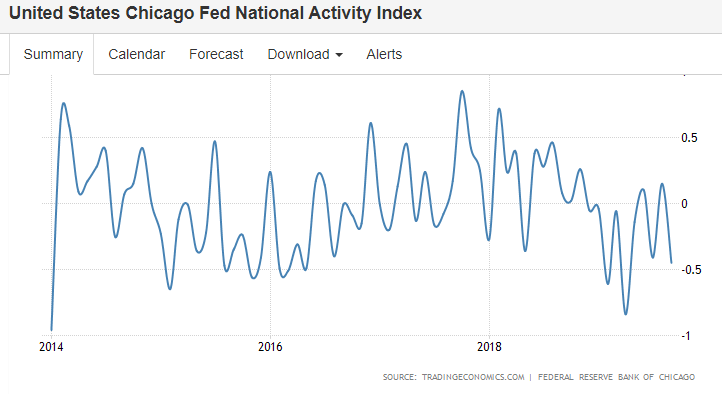
Comfortably below 0:


Also back in negative territory:

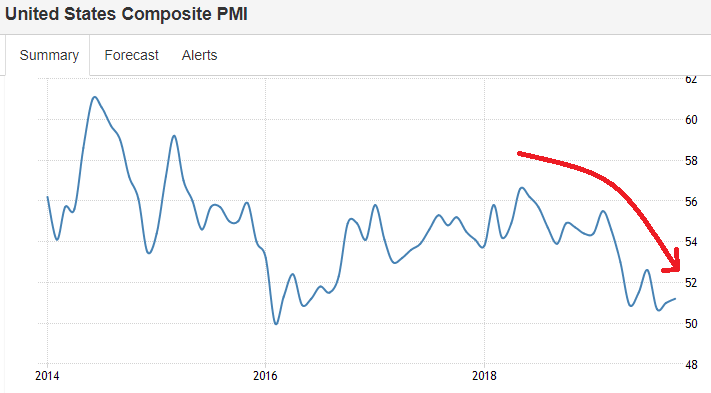
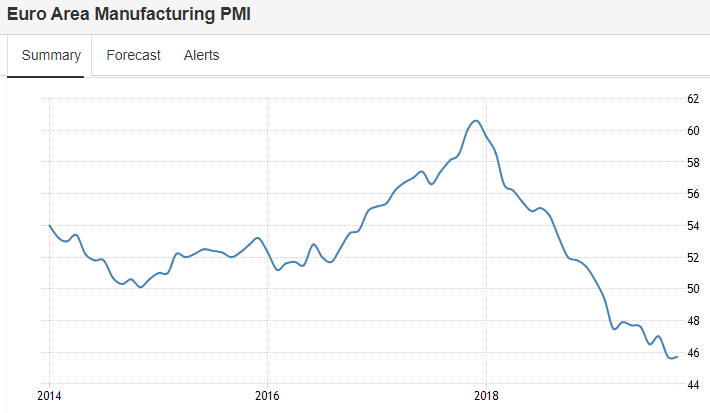
Durables, Manufacturing employment, US composite PMI, Euro area manufacturing

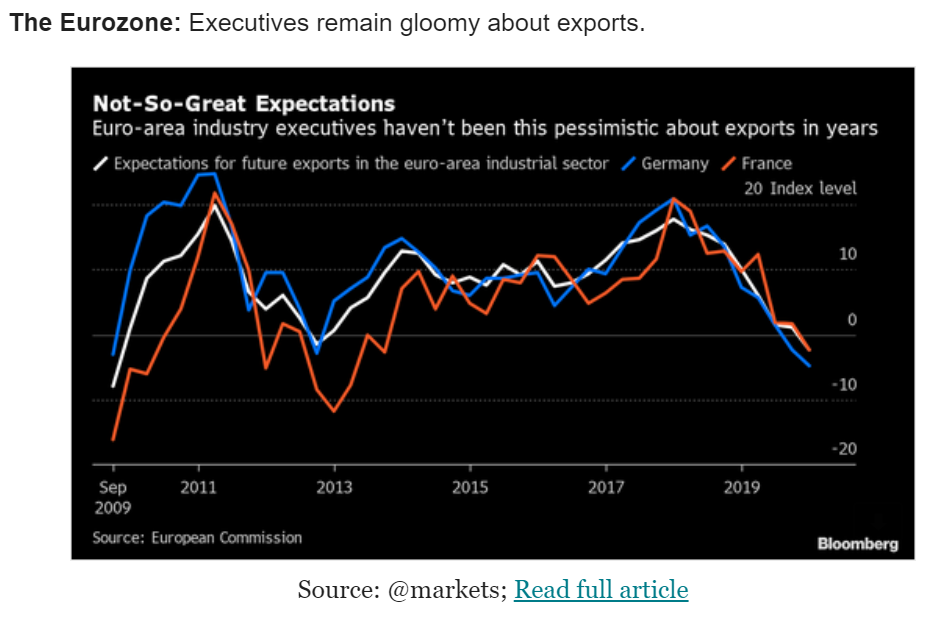
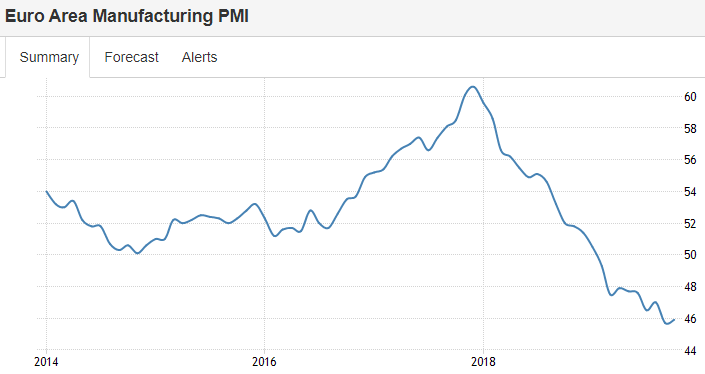
The global collapse continues unabated:
Highlights

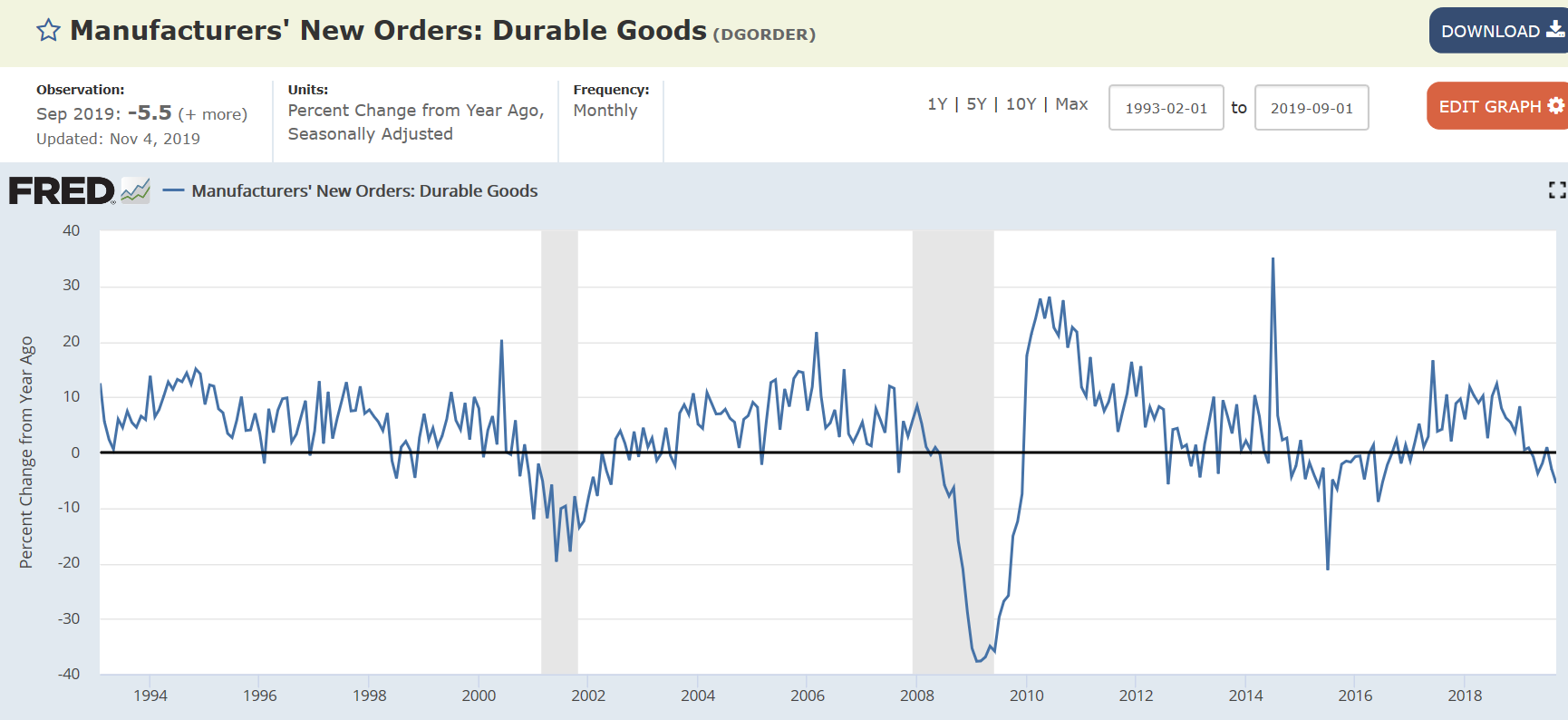
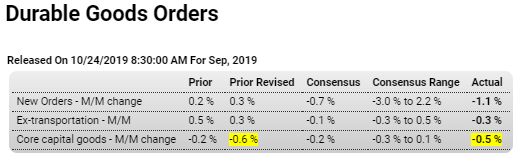
An emphatically weak set of durable goods headlines for September raises the alarm for the health of the manufacturing sector while unexpectedly substantial contraction in capital goods orders deepens specific questions on the outlook for business investment. Durable goods orders fell a monthly 1.1 percent in September, on its face significantly weak but roughly near expectations in contrast to ex-transportation orders which fell 0.3 percent to just make the bottom end of Econoday’s consensus range. Well below the bottom of expectations is a 0.5 percent drop in core capital goods orders (nondefense ex-aircraft), one intensified by a downward revision to August which now shows a 0.6 percent monthly decline that followed no better than no change in July.

Turning back to the headline, an 11.8 percent decline in commercial aircraft is a key negative for September but no surprise for a component, reflecting the Boeing 737 Max grounding, that has been struggling badly this year. Reflecting the GM auto strike is 1.6 percent decline in motor vehicle orders and a 1.5 percent decline in related shipments.

Breaking down capital goods orders, weakness appears to be concentrated in fabrications, down 1.5 percent in the month, and computers which fell 0.9 percent. Machinery actually rose 0.2 percent in the month but benefited from an easy comparison following 0.3 percent and 1.0 percent declines in the prior two months. Communications equipment, like machinery, also rose in September but following steep declines in prior months.

Shipments for core capital goods fell 0.7 percent in September following no change in August and another 0.7 percent decline in July. These three results will be part of the third-quarter GDP mix for nonresidential investment, a component that may well be on a descent and one the Federal Reserve may well tie to weakening global demand for high-end US goods. Today’s results increase the force of those on the FOMC who are pushing for continued rate cuts, including perhaps at next week’s meeting.

Other readings of note include another weak showing for total unfilled orders, at no change, and a 0.4 percent dip for total shipments that follows declines in both August and July. Likely reflecting weakness in shipments is a sharp and perhaps unwanted build in total inventories of 0.5 percent in September.
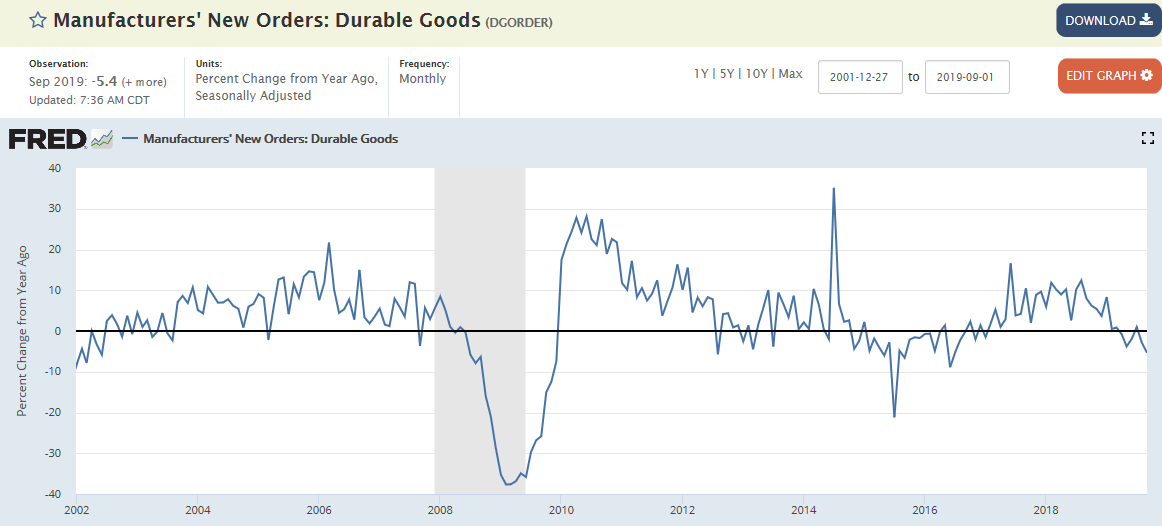
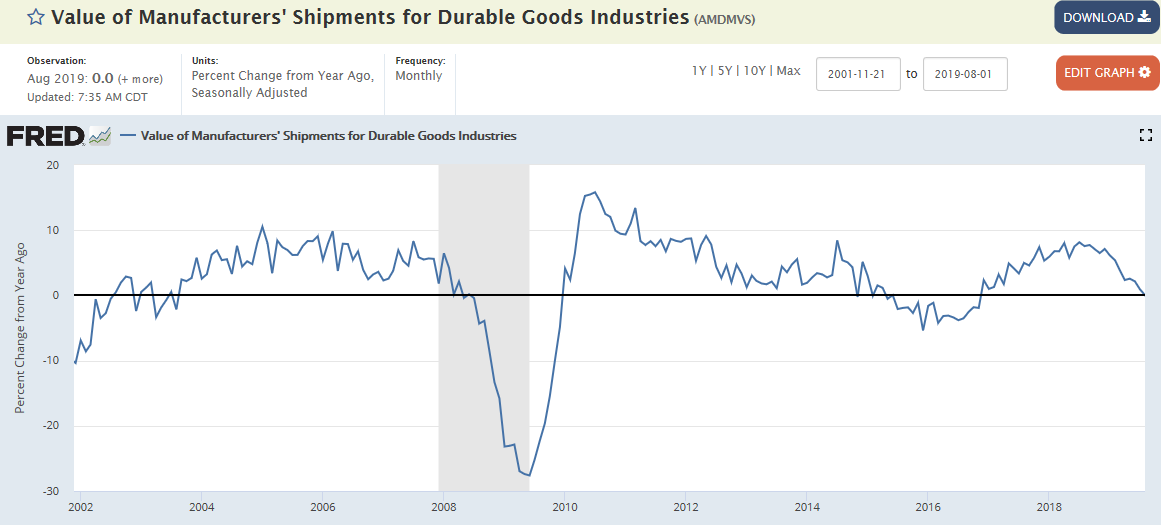
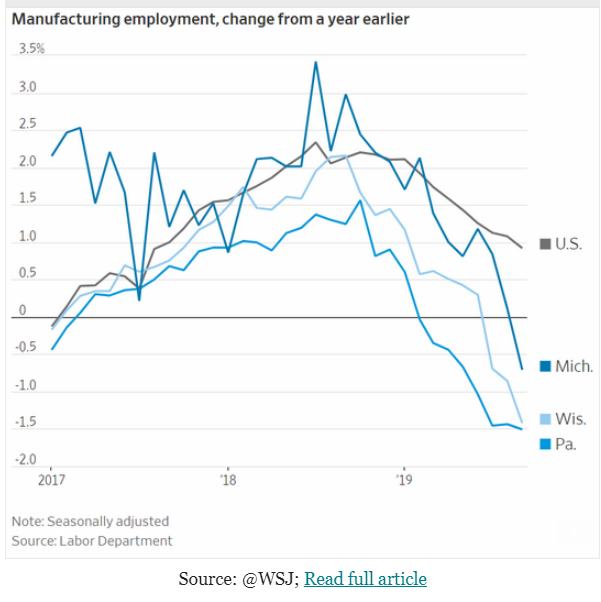
Up a bit for the month but the trend still looking lower:

Deep into contraction:
France, Inventory cycle, Unemployment benefits, Architectural billings

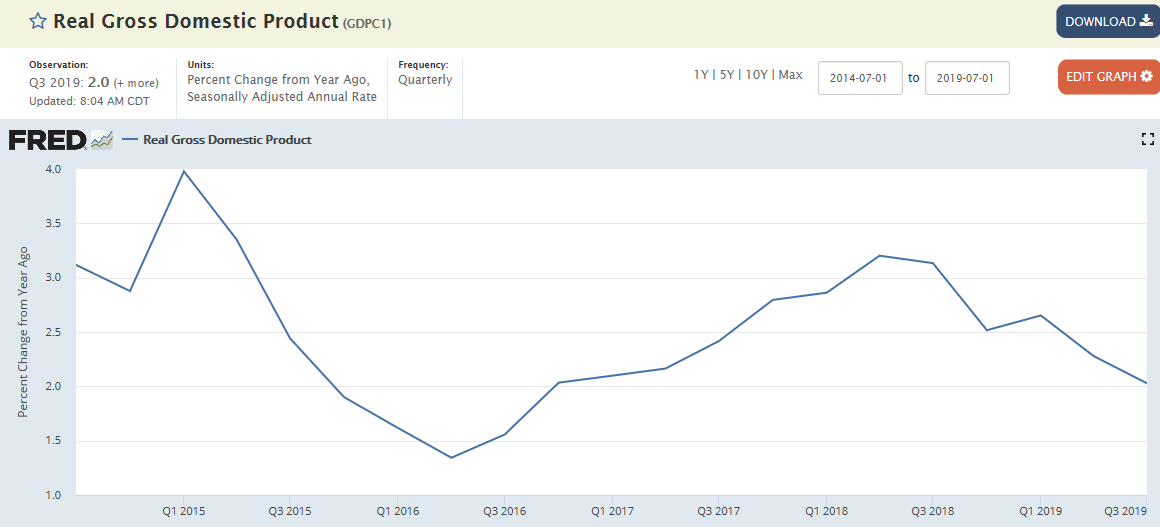
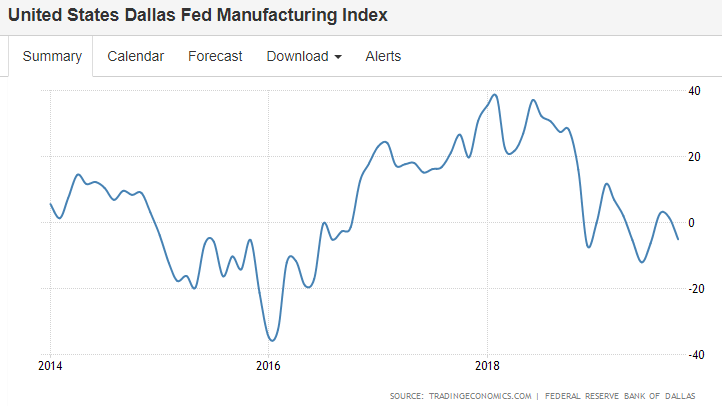
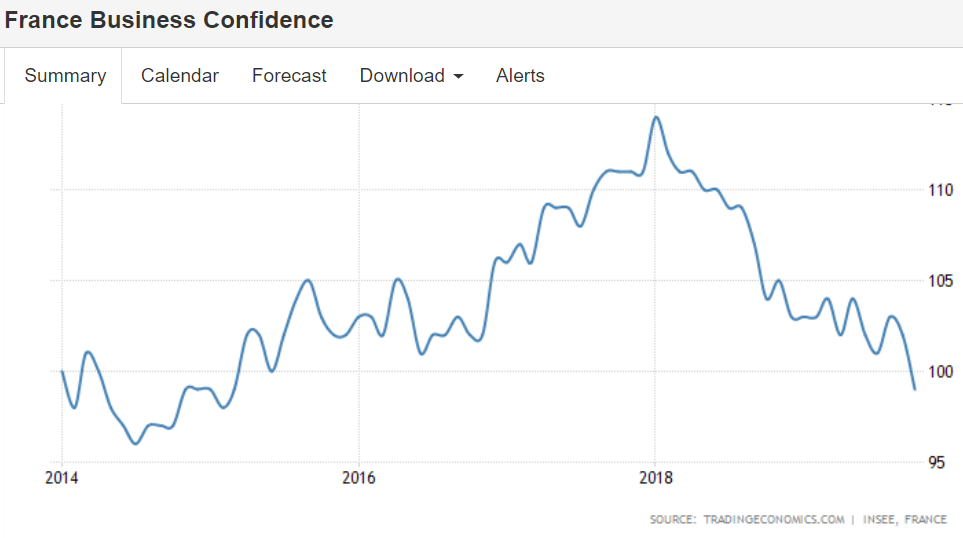
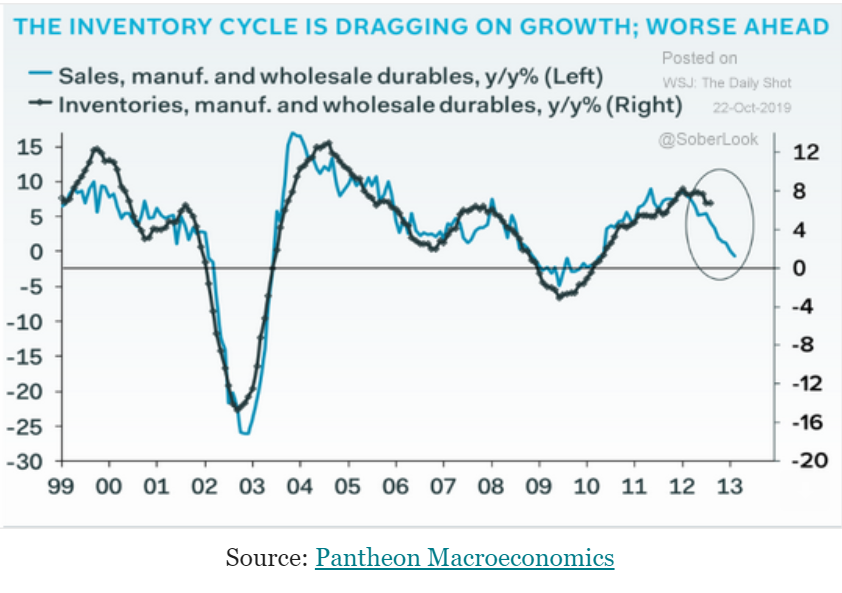
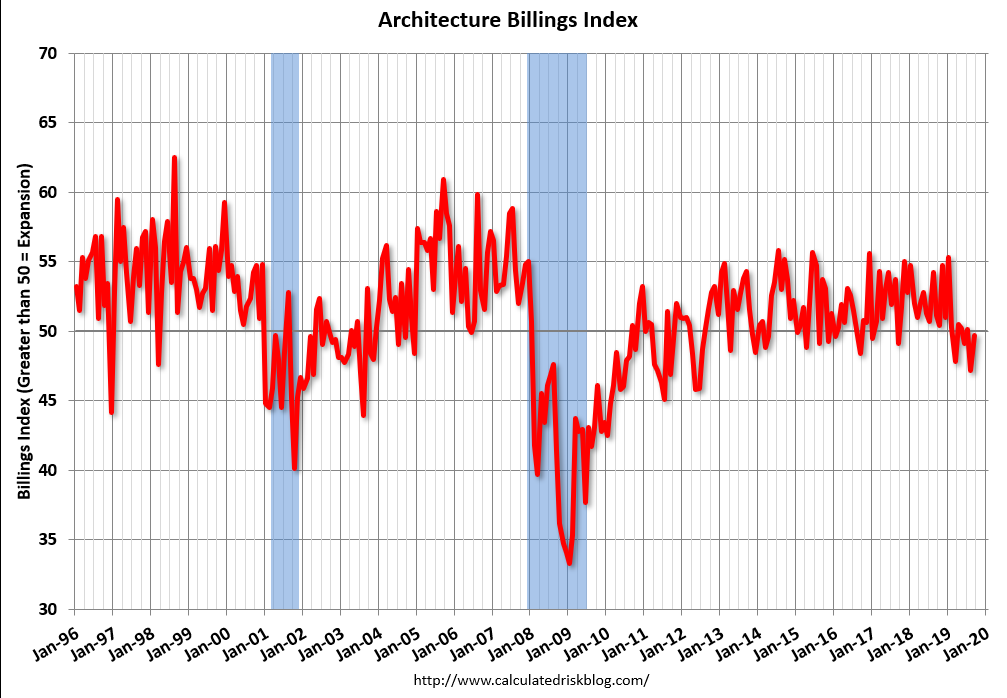
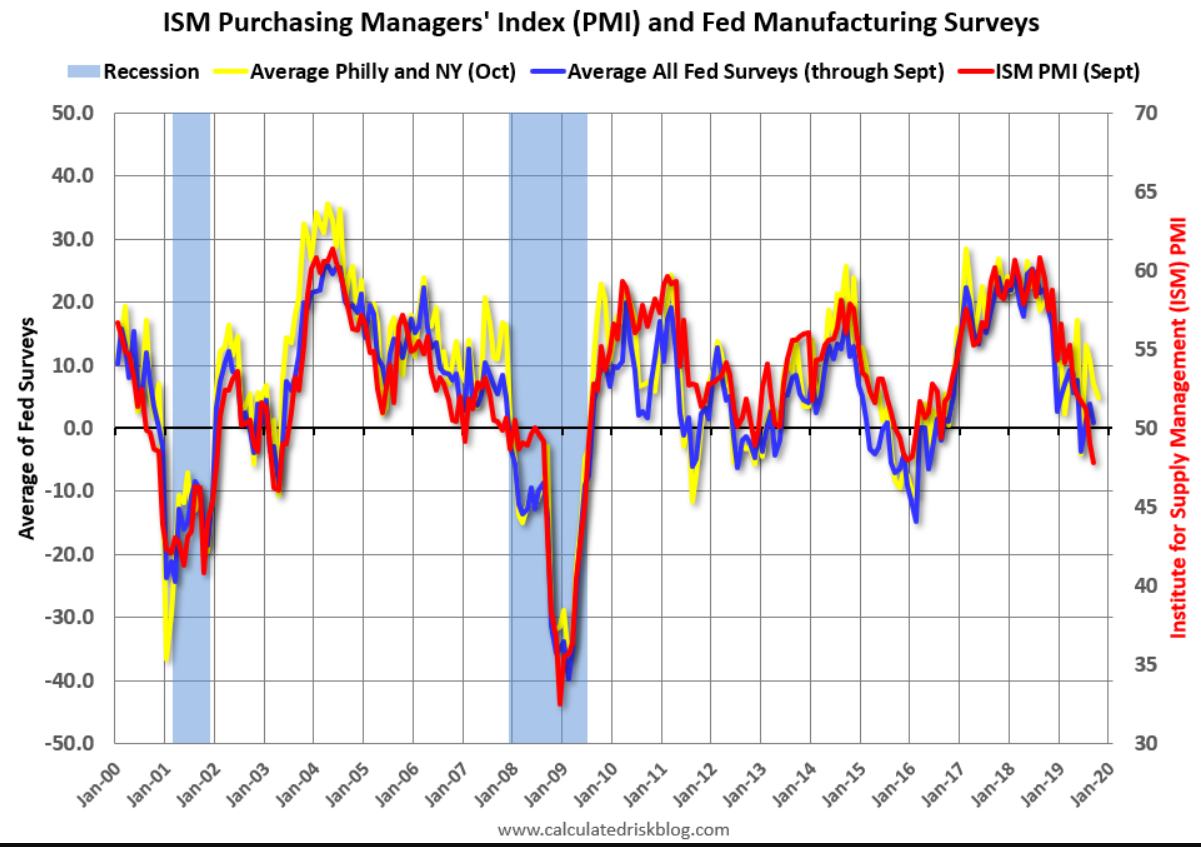
Never seen so many charts that look pretty much like this:
Much harder to get this cycle means that unemployment and benefits as defined are lower than otherwise, and that the counter cyclical stabilizing effect has been disabled:

Most Unemployed People In 2018 Did Not Apply For Unemployment Insurance Benefits

from the Bureau of Labor Statistics

In 2018, 77 percent of the unemployed people who had worked in the previous 12 months had not applied for unemployment insurance benefits since their last job. Of the unemployed who had not applied, 3 out of 5 did not apply because they did not believe they were eligible to receive benefits.

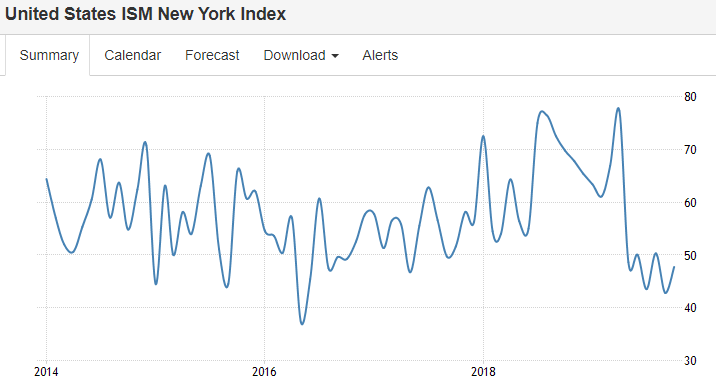
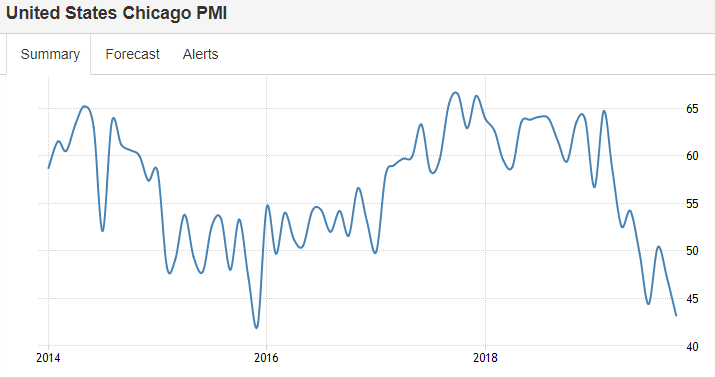
Still below 50 which means contraction, and still trending lower: