Time to tighten up on account of ‘wage inflation’…
Full size image

Little do they know that lowering rates removes interest income from the economy and on the supply side lowers costs and lowers forward prices, thereby reducing inflationary forces…
Mexico central bank unexpectedly cuts rate to spur weak economy
By Michael O’Boyle and Alexandra Alper
June 6 (Reuters) — Mexico’s central bank unexpectedly slashed interest rates to a record low on Friday, saying a sluggish economy gave it room for a one-off cut to spur growth without fanning inflation pressures.
The Banco de Mexico cut its benchmark interest rate by 50 basis points to 3.00 percent, surprising 21 analysts who had unanimously forecast in a Reuters poll that rates would stay on hold.
Latin America’s No. 2 economy barely grew in the first quarter as a harsh winter dragged on growth in the United States, Mexico’s top trading partner, while Mexican tax hikes hit domestic demand.
“Given the greater margin of slack in the economy, the efficient convergence of inflation towards 3 percent is feasible with a lower reference interest rate,” the central bank said in a statement.
Policymakers said they did not expect to further cut rates, suggesting even lower borrowing costs would not be prudent since the United States is expected to begin a tightening cycle and growth in Mexico is forecast to pick up.
The bank’s move stunned markets. Traders reported chaos on trading floors. Mexican bond yields tumbled and the stock market rose to its highest level this year, while the peso currency briefly hit a session low.
Prices for the county’s benchmark 10-year peso bond jumped, pushing down its yield by 33 basis points in the biggest one-day drop since last September. “Banks were really caught off guard,” said one Mexico-based bond broker. The cut was surprising given the bank’s conservative reputation. Analysts speculated the decision was split, reasoning that Gov. Agustin Carstens likely pushed for a bold cut, overriding concerns of other board members about inflation.
In its decision, the central bank said inflation risks have lessened. Annual inflation has been falling since it spiked above the central bank’s 4 percent limit in January, largely due to new taxes on soft drinks and fast food.
But policymakers said there were still risks that economic growth could slow after a weaker-than-expected start to the year. Last month the government cut its estimate for annual growth in 2014 from 3.9 percent to 2.7 percent.
The central bank said despite stronger exports, it was still worried about weakness in domestic spending.
The country’s central bank had not been expected to lower its main rate so far below the current inflation rate, which was 3.44 percent in the 12-month period though mid-May.
In previous years, sharp drops in the peso currency have made Mexican interest rate cuts risky since lower borrowing costs could push yield-hungry investors to dump Mexican fixed income assets and further hurt the currency.
A weak currency can spur inflation through higher import prices. Analysts said the central bank was taking advantage of renewed calm in financial markets and the recent dip in inflation to shore up economic growth.
“They seized the moment,” said Delia Paredes, an economist at Banorte bank in Mexico City. “It was quite a surprise.”
(not saying that any of this is in the Fed’s reaction function- that’s another story)
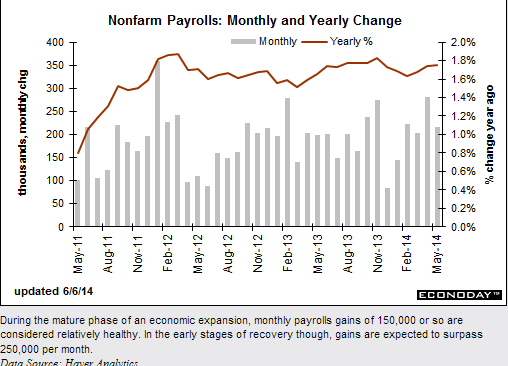
See the ‘down, up some, then leveling off of the red line?
Still growing but ‘leveled off’ at a bit less than 1.8%.
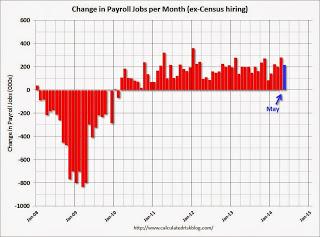
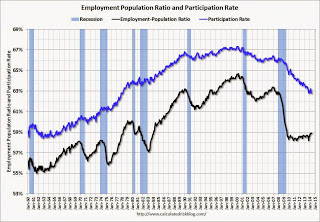
Employment/population ratio collapsed from 2008-2010 and for
all practical purposes has never recovered, and the participation rate
remains at the lows as well:
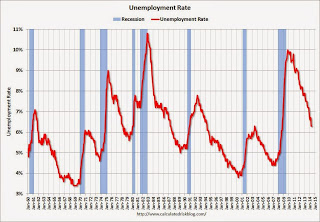
And the unemployment rate is now down to the peak of the last cycle!
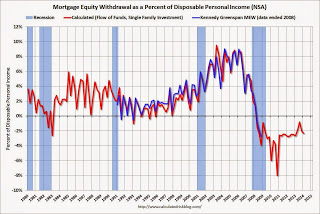
Mortgage Equity Withdrawal still a bit negative:
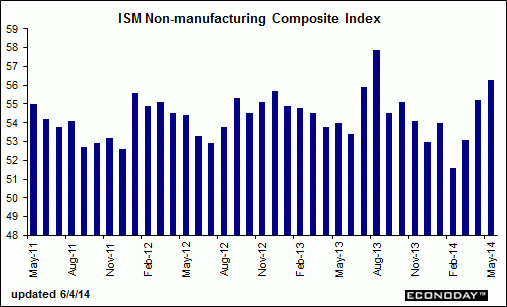
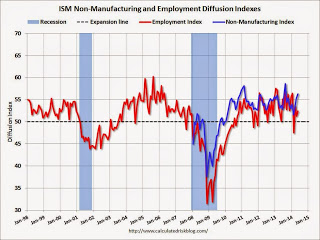
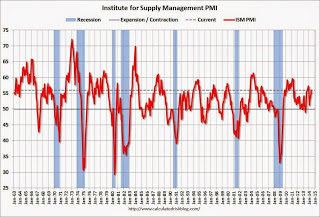
Nice move up for the ISM survey
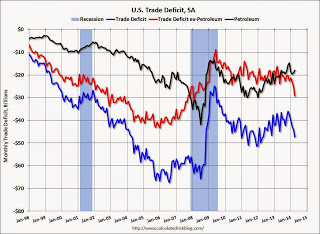
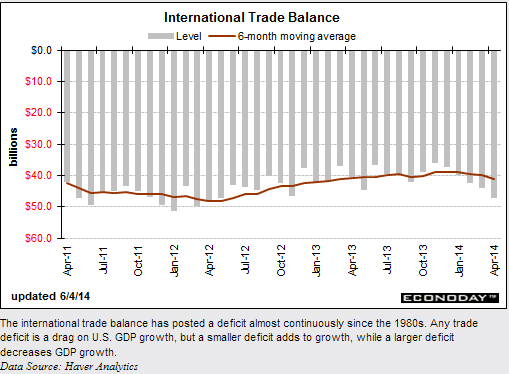
The trade deficit seems to be ticking up a bit, meaning that much less GDP, but it’s volatile month to month:
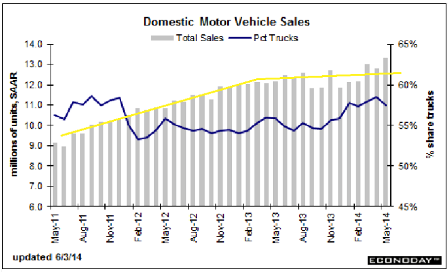
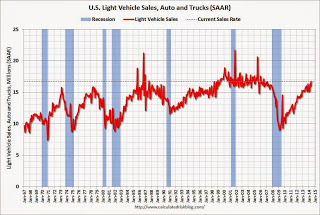
Motor vehicle sales were up and better than expected, but with the winter dip and the subsequent recovery are still averaging a bit less than 16 million for the year. And the longer term pattern looks like the rate of growth flattened some early in 2013. And inventories are still elevated, though not as much as earlier in the year.
We’ll see what comes next:
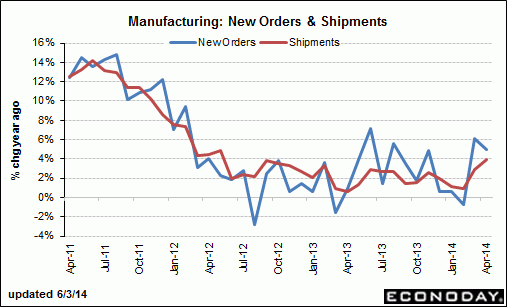
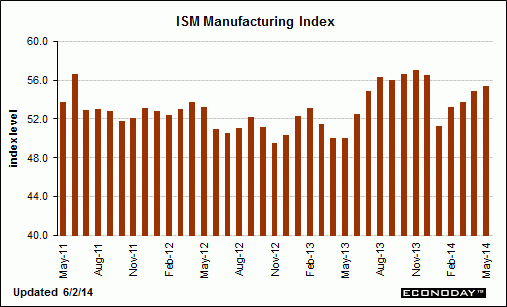
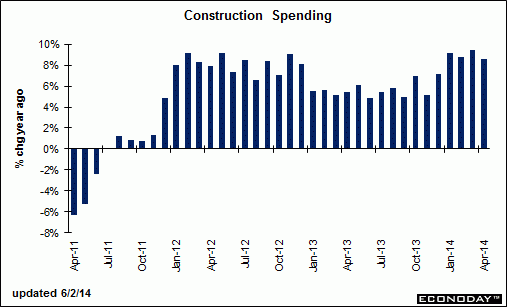
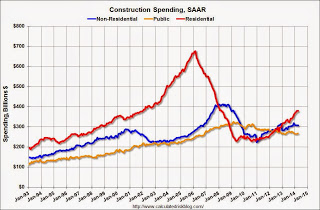
Construction spend was below expectations but chart does’t look too bad:
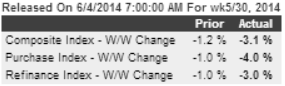
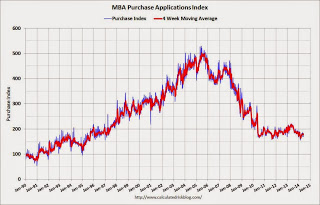
Mtg purchase apps remain depressed, coming in at about 17% below last year:
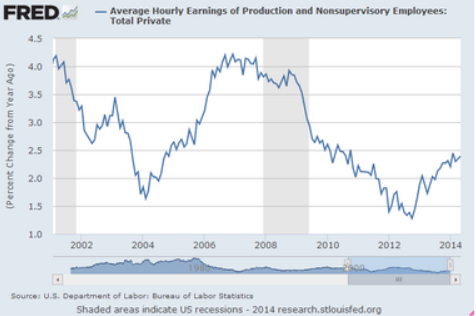
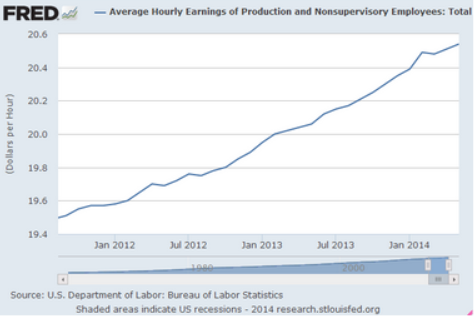
First, the growth rate is still low and from this chart could be leveling off.
Second, for a 40 hour week the average gross wage is only just over $800/week!
Third, the growth rate is not inflation adjusted!
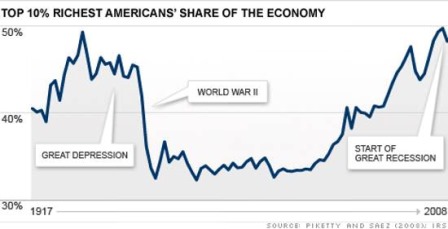
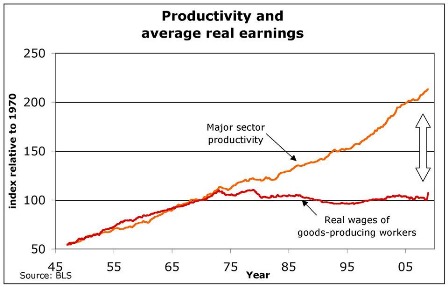
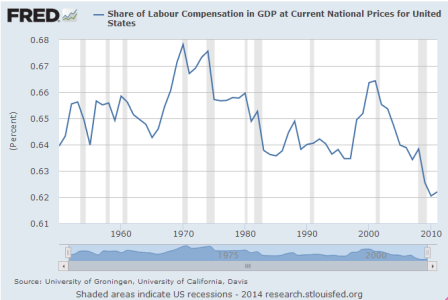
Fourth, the wage share has been falling for decades as productivity increases have gone elsewhere.
And what makes anyone think any of this is a function of interest rates?
Particularly in the direction assumed?
And why is it assumed that increased wages wouldn’t cut into profit margins?
Is the economy assumed to be ‘competitive’ only when it suites?
;)