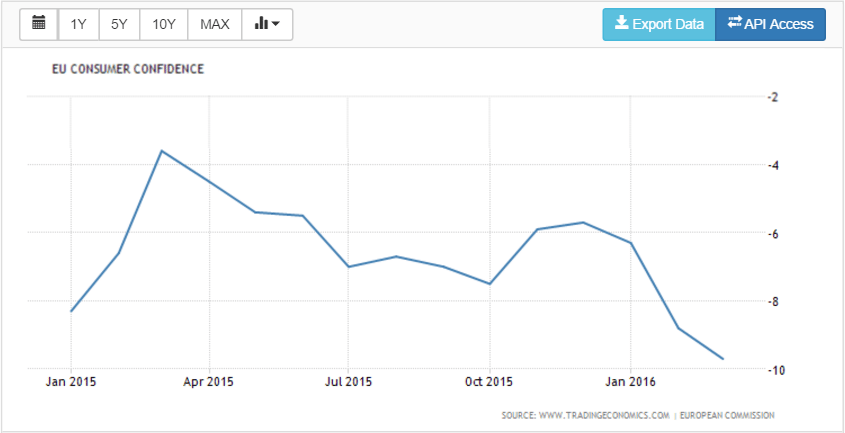
Household formations, Wage growth, Euro area consumer confidence, Chemical activity barometer

Household formations going the wrong way and wages going nowhere:
er-3-22-1-1
From negative to more negative:
er-3-22-1-2

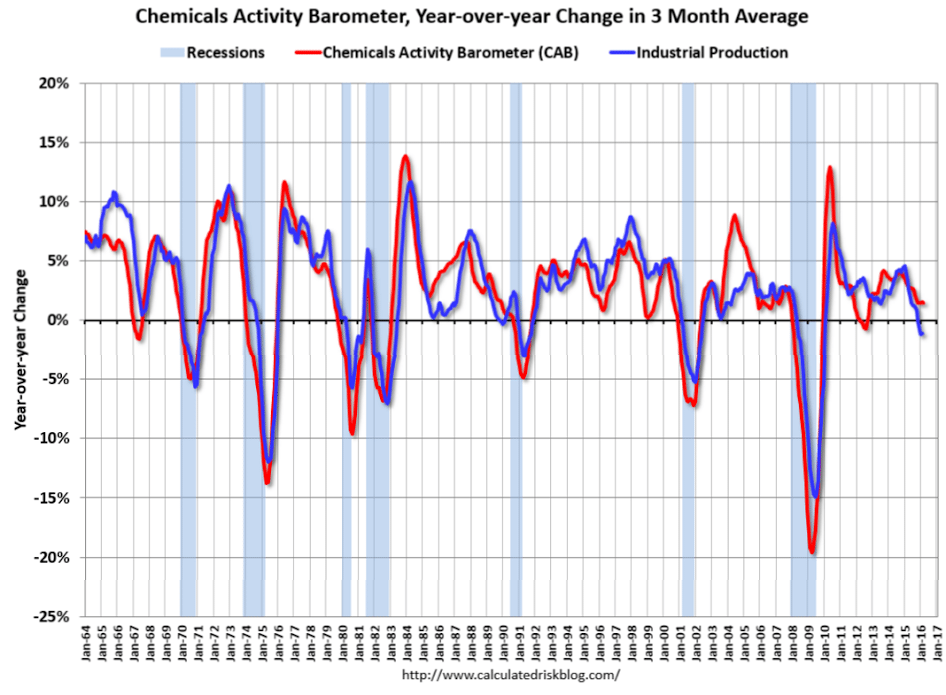
From the American Chemistry Council: Chemical Activity Barometer Expands in March

The Chemical Activity Barometer (CAB), a leading economic indicator created by the American Chemistry Council (ACC), expanded 0.1 percent in March following a revised 0.2 percent decline in February and 0.1 percent downward revision in January. All data is measured on a three-month moving average (3MMA). Accounting for adjustments, the CAB remains up 1.5 percent over this time last year, a marked deceleration of activity from one year ago when the barometer logged a 2.7 percent year-over-year gain from 2014.
er-3-22-1-3

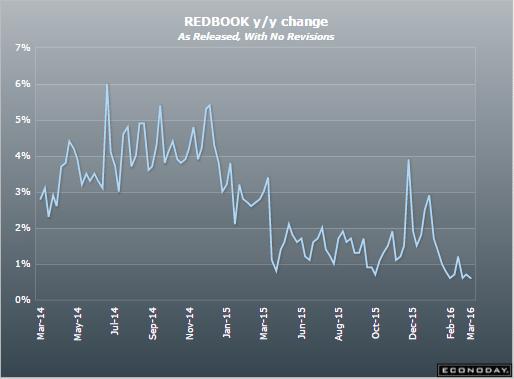
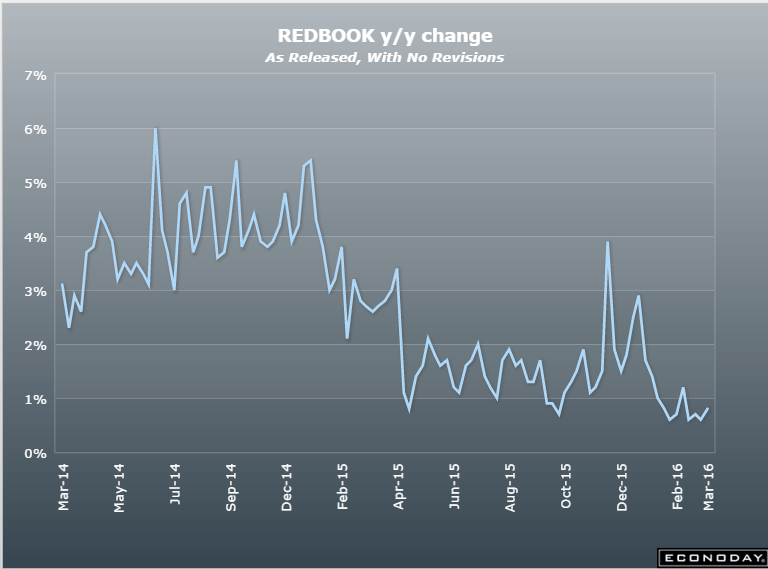
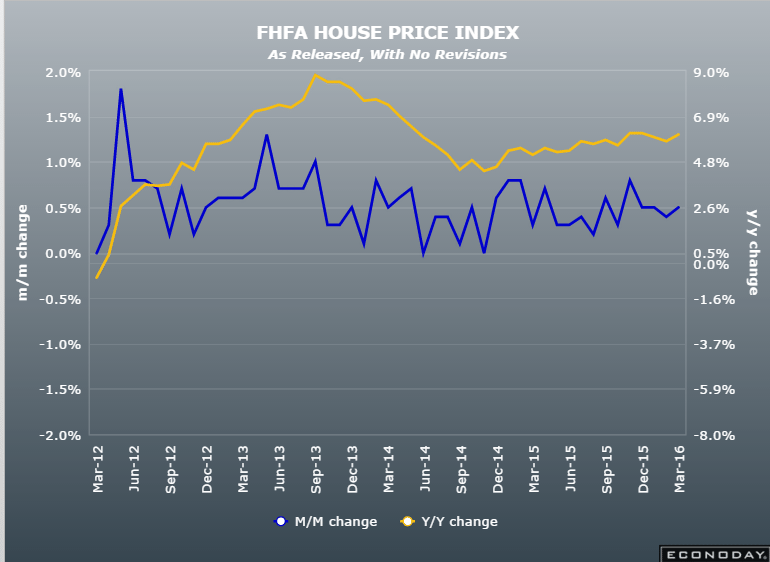
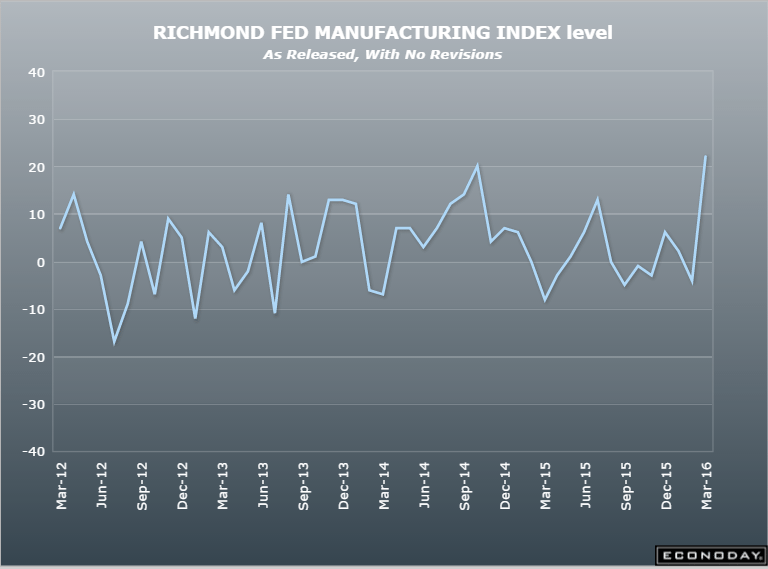
Redbook retail sales, FHFA house price index, Richmond Fed, PMI manufacturing

Continued recessionary type weakness:
er-3-22-1

These are relatively small changes and not quality adjusted:
er-3-22-2
Nice move up! Could just be lots of firms seeing slight improvement after a larger dip:

er-3-22-3

A bit worse than expected:

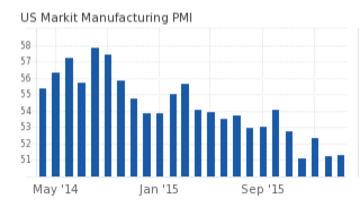
PMI Manufacturing Index Flash
er-3-22-4

Highlights
Early indications on March’s factory activity were positive in both the Empire State and Philly Fed reports, but not from the manufacturing PMI flash which, at 51.4 vs a final 51.3 in February and a February flash of 51.0, points to no significant pickup.

Respondents in the sample continue to report declining demand for energy equipment, the result of low oil prices, and subdued demand for exports, the result of weak global demand tied with the strength of the dollar. A drop in pre-production inventories is a key negative in the report, hinting at a weakening outlook for future business. Destocking is also underway for finished goods which are also on the decline. Production in this sample is near its weakest pace of the last 2-1/2 years. Another negative is a drop in selling prices, only the second of the last 3-1/2 years. On the positive side, both new orders and employment, though soft by recent standards, continue to expand.

er-3-22-5

Existing home sales, Chicago Fed, Florida claims

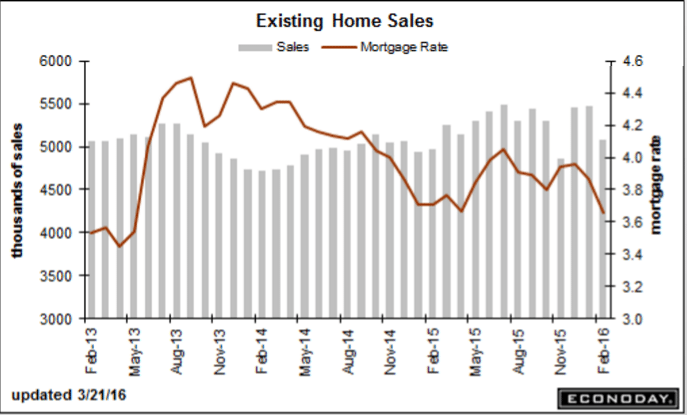
The housing depression continues:

Existing Home Sales
er-3-21-1
Highlights
Housing demand continues to soften with existing home sales down a surprising 7.1 percent in February to a 5.080 million annualized rate. This is much lower than expected and well below Econoday’s low estimate for 5.200 million and is the second lowest rate since February last year. The report is weak throughout with single-family sales down 7.2 percent, at 4.510 million, and condos down 6.6 percent at 570,000. All regions show declines in the month. The drop is described as “meaningful” by the usually upbeat National Realtor Association which compiles the report. The weakness in this report is substantial and represents a downgrade for housing, a sector that was supposed to be a leader of the 2016 economy.

er-3-21-2

Still in negative territory:

Chicago Fed National Activity Index
er-3-21-3
Highlights
A warm weather drop in utility output is a major factor behind a much lower-than-expected reading for the national activity index which came in at minus 0.29 vs Econoday expectations for plus 0.25 in February. The headline’s production component fell to minus 0.21 from January’s plus 0.29, pulled down by a 9.3 percent decline in utility output as well as a 9.9 percent decline in the struggling mining component, both masking a respectable 0.2 percent gain in the report’s most important component, manufacturing output. But there is also weakness in the employment component which contributed only plus 0.03 to the February composite vs January’s plus 0.19, here reflecting a lower contribution from employment expansion in the household survey (530,000 vs January’s 615,000). A smaller negative comes from the personal consumption & housing component, at minus 0.09 vs minus 0.05, with a fractional drag coming from the sales/orders/inventories component, at minus 0.03 vs minus 0.02. The decline in utility output is a one-time event, pointing to a bounce for the February report.

One reason claims are low:
er-3-21-4

My WRKO interview today, Consumer Sentiment, Rail traffic, Fed’s Bullard on rates

WRKO Interview

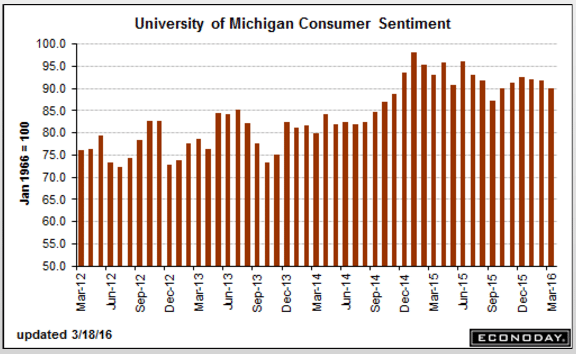
Still drifting lower:

US Consumer Sentiment at 5-Month Low

The University of Michigan’s consumer sentiment for the United States came in at 90 in March of 2016 from 91.7 in the previous month and hitting its lowest reading since October 2015, as both future expectations and current conditions deteriorated sharply. Markets were expecting the index to rise to 92.2.

er-3-18-1

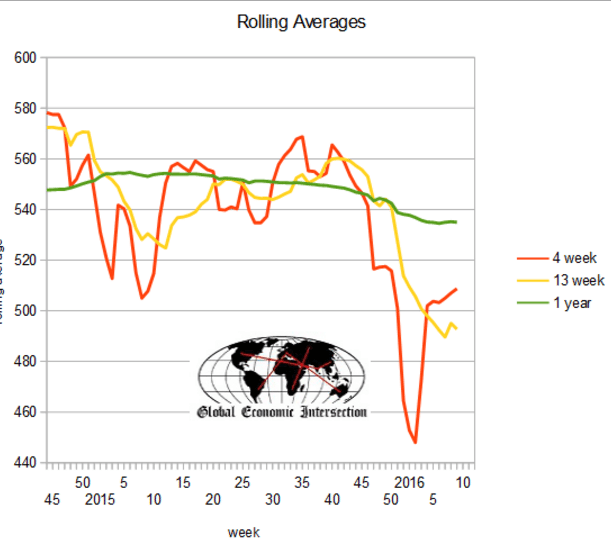
Rail Week Ending 12 March 2016: Rail Returns To Its Slide Into The Abyss

Week 10 of 2016 shows same week total rail traffic (from same week one year ago) declined according to the Association of American Railroads (AAR) traffic data. All rolling averages are again negative and in decline.

Must be reading my stuff???
;)

Low rates may be causing low inflation, St. Louis Fed President James Bullard theorized in Friday remarks.

Bullard, who is a voting member of this year’s Federal Open Market Committee, suggested in prepared remarks for a policy conference in Frankfurt, Germany that the current period of low interest rates and low inflation could potentially persist for a long period of time. Furthermore, raising rates could conceivably increase inflation, he said.

He didn’t conclude this argument was correct, but suggested it deserved further analysis.

The St. Louis Federal Reserve president also discussed the normal argument for raising rates, saying the FOMC’s policy remains extreme, labor markets are close to normal, and inflation is close to the Fed’s target levels.

Philly Fed, Norway, Current account, JOLTS, Euro

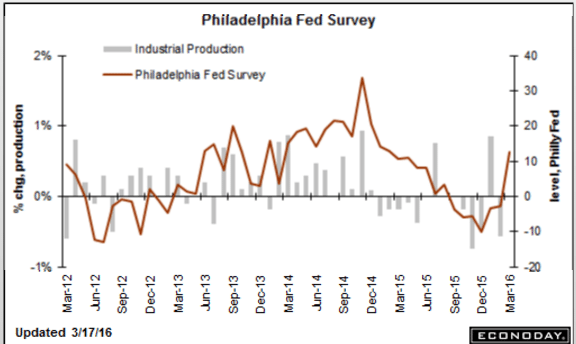
A nice positive print that hopefully signals a turn around, but I need to see at least one more before taking it seriously, as volatility is common with this series:
er-3-17-1
More negative than expected means a downward adjustment for GDP, as do downward revisions of prior prints:

Current Account
er-3-17-2
Highlights
The nation’s current account deficit narrowed in the fourth quarter to $125.3 billion from a revised third-quarter deficit of $129.9 billion. The improvement reflects a smaller trade deficit for goods and a larger trade surplus for services. Balances on income were neutral.

The current account as a percentage of GDP slipped 1 tenth from the third quarter to a very respectable 2.8 percent. For 2015 as a whole, the current account deficit totaled $484.1 billion, equal to 2.7 percent of GDP and up from $389.5 billion and an even lower 2.2 percent of GDP in full-year 2014.

Big downward revision to last month makes current month prints suspect at least until the first revision.

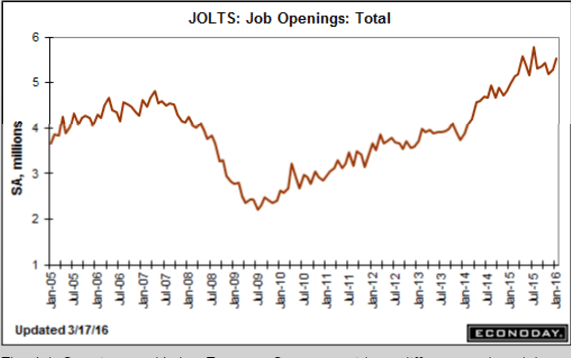
And the chart looks like it may have crested:

JOLTS
er-3-17-3
Highlights
In a mixed report, job openings surged in January to 5.541 million from, however, a sharply downward revised 5.281 million in December (5.607 million initially reported). The quits rate, which jumped in December, fell back a sharp 2 tenths to 2.0 percent and points to less confidence among workers to shift jobs. Despite the downward revision and despite the drop in the quits rate, the reading for January job openings, which in percentage terms is at 3.7 percent for a 1 tenth gain, is a positive for the jobs outlook.

er-3-17-4

Norway’s central bank on Thursday cut its key interest rate to an all-time low of 0.5 percent from 0.75 percent, and raised the prospect of a move into negative territory.

The bank warned that should the Norwegian economy be exposed to further shocks, the possibility of negative rates could not be excluded.

“We have experience from other countries that it’s possible to go beyond the zero lower bound…if necessary, we have extended room for maneuver,” central bank governor Øystein Olsen told CNBC.

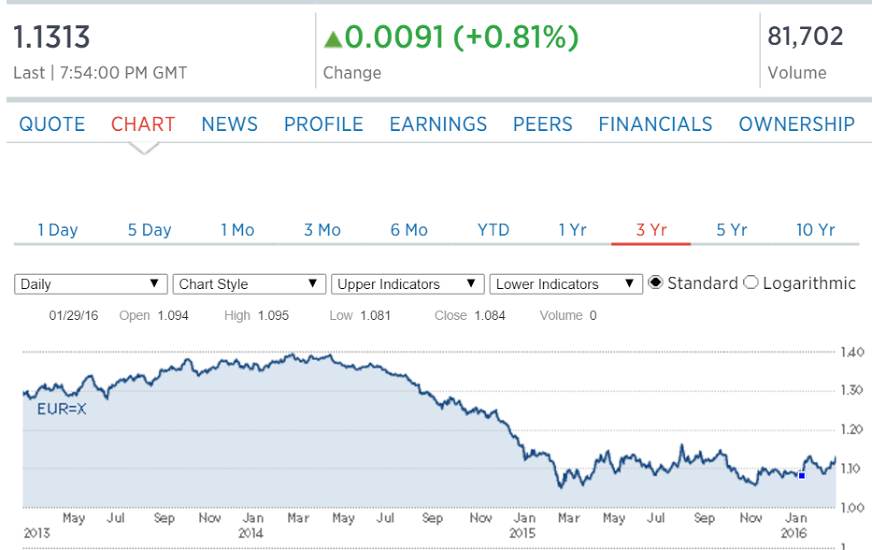
So if the euro area current account surplus trade flows have finally overtaken CB and other portfolio selling and the euro keeps going up and cuts into net exports, things could get highly problematic very quickly:
er-3-17-5

Mtg prch apps, CPI, Housing starts, Industrial production

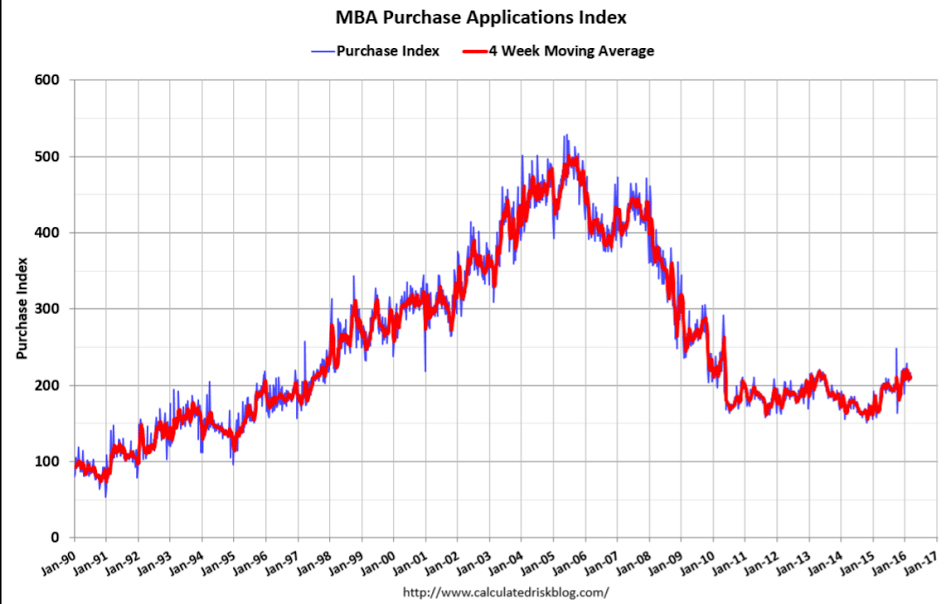
Working their way a bit higher but still seriously depressed:
er-3-16-1
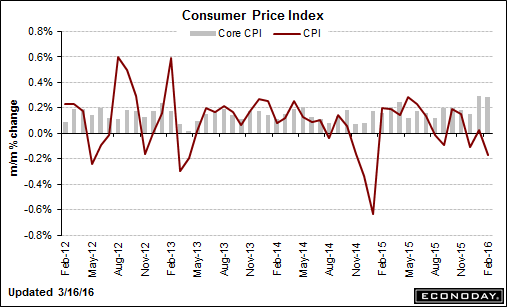
With the year over year CPI increase now only 1% the Fed can only wait and see if headline will catch up to core and ‘justify’ their tightening bias.

Consumer Price Index
er-3-16-2
Highlights
The CPI core is showing pressure for a second month, up a higher-than-expected 0.3 percent in February with the year-on-year rate up 1 tenth to plus 2.3 percent and further above the Federal Reserve’s 2 percent line.

Gains are once again led by health care with medical care up 0.5 percent for a second straight month which includes a 0.9 percent gain for prescription drugs. Shelter also shows pressure, up 0.3 percent as does apparel which is up 1.6 percent for a second straight sharp gain. Food rose percent 0.2 percent with the year-on-year rate at plus 0.9 percent.

Energy prices, which may be on the climb this month, fell a sharp 6.0 percent in February and pulled down the total CPI which came in at minus 0.2 percent with the year-on-year rate at plus 1.0 percent.

But it’s not the total that Fed officials will be watching but the core which — for a second straight month — is signaling what policy makers want, that is upward pressure. This report isn’t dramatic enough to revive much chance for a rate hike at today’s FOMC but it will offer strong arguing point for the hawks.

er-3-16-3
There are no starts without permits, and permits are down:

Housing Starts
er-3-16-4
Highlights
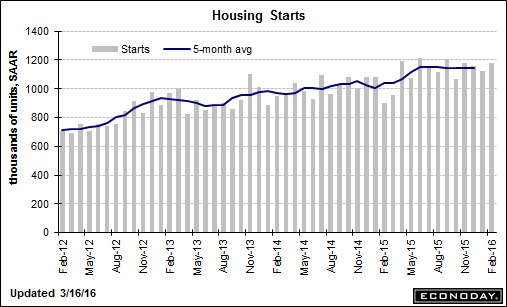
Housing starts & permits are mixed with starts way up but permits, which are the more important of the two, way down. Starts rose 5.2 percent to a 1.178 million annualized rate while permits, which were expected to show no change, dropped 3.1 percent to 1.167 million.

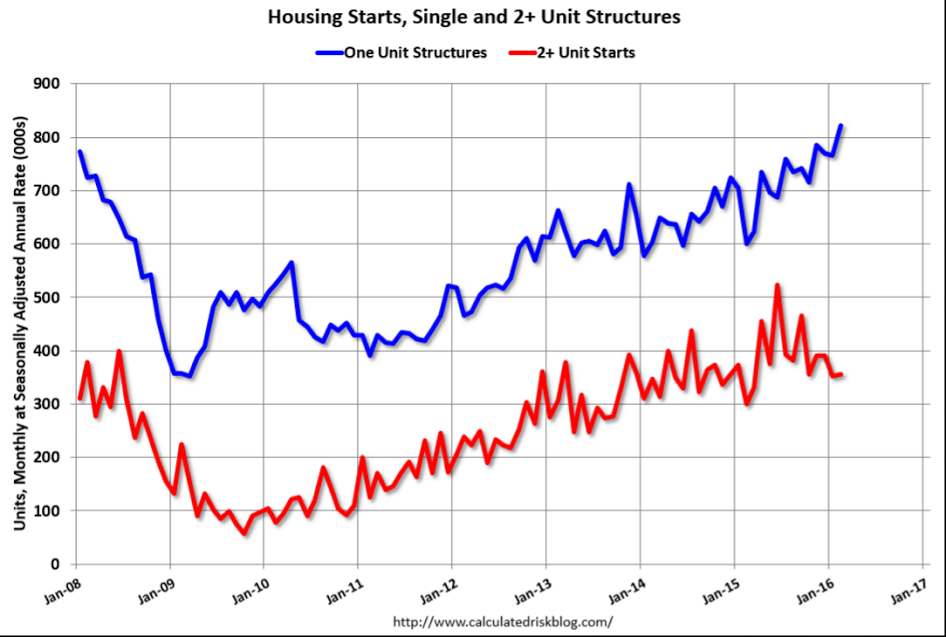
The gain for starts is split between a 7.2 percent surge for single-family homes and a 0.8 percent gain for the multi-family component while the drop for permits is centered in multi-family, down 8.4 percent to a 436,000 rate. But permits for single-family homes, and this is the silver lining in this report, are up 0.4 percent to 731,000. The multi-family component, driven by investment demand, is often very volatile which makes single-family homes the more telling of the two.

Year-on-year, single-family permits are up a very strong 16.8 percent offsetting a 7.6 percent dip on the multi-family side. Regional data for permits show the Northeast out in front with a nearly 36 percent gain and the South in the rear at minus 1.8 percent. The West, which is a key region for new housing, is up 6.5 percent.

The gain for starts will boost ongoing estimates for construction spending while the small gain for single-family permits may help ease concern that housing is losing momentum.

er-3-16-5
And more confirmation that multifamily peaked last June when the NY tax credits expired:
er-3-16-6
And more bad:

Industrial Production
er-3-16-7

Highlights
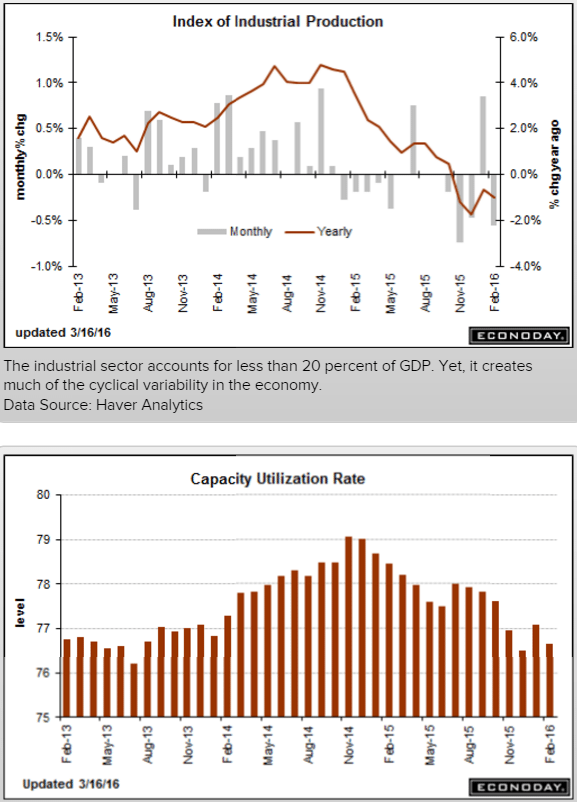
Industrial production fell 0.5 percent in February but includes a respectable and higher-than-expected 0.2 percent gain for manufacturing production which pulls this report to the positive column for the economic outlook. The utility component, down 4.0 percent in February after rising 4.2 percent in January, is very volatile reflecting month-to-month swings this time of year in heating demand. The mining component, down again at minus 1.4 percent, has been weak for the last year reflecting the price collapse for commodities.

But the manufacturing component is the telling component with strength belying broad weakness in regional surveys and pointing perhaps to better-than-expected output for the first quarter. Vehicles have been a center of strength for manufacturing, though production here did slip 0.1 percent in the month, while business equipment is suddenly showing life, up 0.6 percent for a second straight month. The gain for this component hints at a revival for business investment.

Capacity utilization overall is down 0.4 percentage points to 76.7 percent though manufacturing capacity, again the reading to focus on, is unchanged at 76.1 percent. The factory sector has been getting pulled back by weak exports and weak demand for energy equipment though this report, together with positive indications in yesterday’s Empire State report, do suggest, or at least offer the hint, that the worst may over.

Note that the traditional non-NAICS numbers for industrial production may differ marginally from the NAICS basis figures.
er-3-16-8

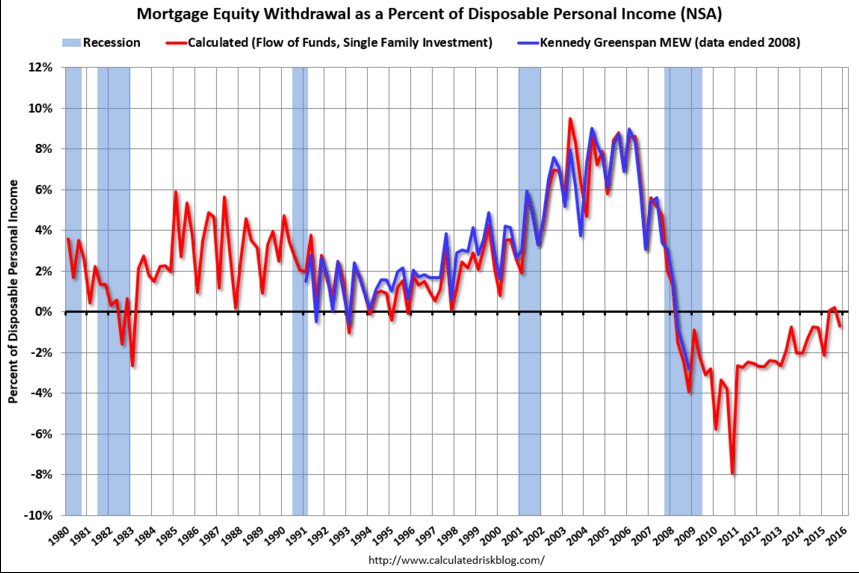
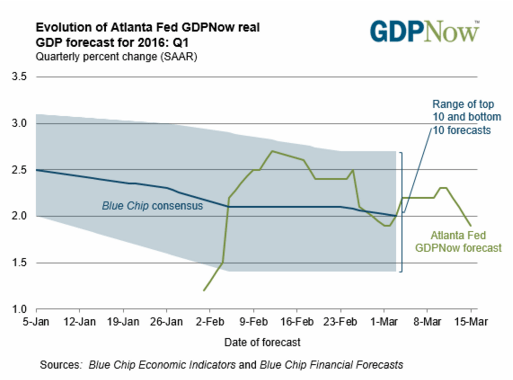
Retail sales, Redbook retail sales, Housing index, Business inventories and sales, Empire manufacturing, MEW, Atlanta Fed

Just plain bad. Including last month’s downward revision.

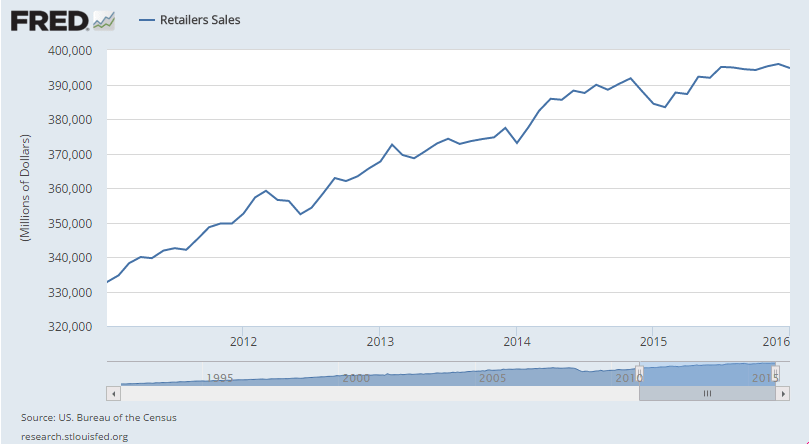
And, again, sales = income, and lower income means less to spend in the next period:

Retail Sales

er-3-15-1
Highlights
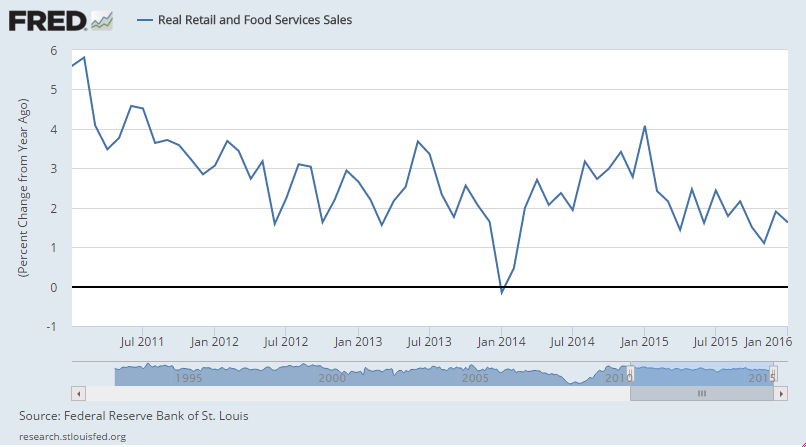
Consumer spending did not get off to a good start after all in 2016 as big downward revisions to January retail sales badly upstage respectable strength in February. January retail sales are now at minus 0.4 percent vs an initial gain of 0.2 percent. The two major sub-readings also show major downward revisions with ex-auto sales now down 0.4 percent vs an initial gain of 0.1 percent and ex-auto ex-gas sales now at minus 0.1 percent from plus 0.4 percent. The latest for this latter core rate is really the main positive in today’s report, up a solid 0.3 percent in February. Total sales for February are weak at minus 0.1 percent as is the ex-auto reading, also at minus 0.1 percent.

But even in the core readings, details are not great with strength so far this year mixed across nearly all categories. Still, year-on-year strength is evident in two key discretionary components which are vehicles, up 6.8 percent, and restaurants which are up 6.4 percent. Non-store retailers, benefiting from growth in ecommerce, are up 6.3 percent. Sporting goods, a smaller discretionary category, are up 6.7 percent. And building materials & garden equipment, in a sign of strength for residential investment, are up 12.2 percent. The downside includes electronics & appliances which are at minus 3.2 percent and department stores down 2.2 percent. The weakest of all of course are gasoline stations, down 15.6 percent on the year as low fuel prices depress dollar sales.

Given the skewing effect of gasoline, the ex-gas total is important to look at it and it’s up 0.2 percent in the month for very respectable yearly growth of 4.8 percent. This reading underscores the silver lining in the report, that retail sales, despite all the negatives, are moving in the right direction. January and February are the lowest sales months of the year, a fact that magnifies adjustment effects and can cause volatility in the readings. But that aside, consumer spending, despite high employment, is struggling to break out of a flat run that included a very soft holiday season.
er-3-15-2
This is year over year change, adjusted for inflation:
er-3-15-3
er-3-15-4

While U.S. retail sales fell less than expected in February, the sharp downward revision to January’s sales could be “devastating” for investors, CNBC’s Jim Cramer said Tuesday.

“I’m just kind of flummoxed. A number comes out that makes us feel great, and then that number is taken away,” Cramer said on “Squawk on the Street.”

;)

Another bad one:

Housing Market Index

er-3-15-5
Highlights
Demand for new homes is solid but lack of available lots and shortages in construction labor are holding back growth. The housing market index came in unchanged in March at a 58 level which however remains well above breakeven 50. Present sales, unchanged at a strong 65, lead the March report followed by future sales which are down 3 points to 61. A plus, however, is a 4 point gain to 43 for buyer traffic which has been weak this whole cycle.

The gain in traffic hints at the drawing power of low mortgage rates and speaks to the strength of the labor market. But there hasn’t been much acceleration in housing nor is any expected in tomorrow’s permits data. The housing sector, which was billed as a strength for 2016, has yet to build any momentum this year.

Also bad:

Business Inventories

er-3-15-6
Highlights
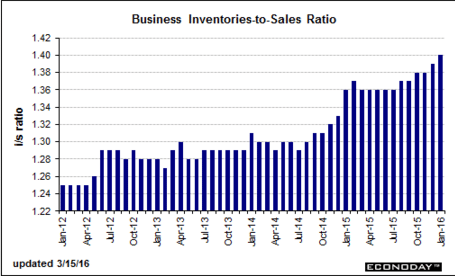
It’s been a weak morning for U.S. economic data and business inventories are no exception. Inventories rose an unwanted 0.1 percent in December against a 0.4 percent decline for sales in a mismatch that drives the stock-to-sales ratio from 1.39 to 1.40 for the fattest reading of the whole cycle, since May 2009. Inventories fell for factories but rose for wholesalers and also for retailers. Sales, however, fell for both retailers and especially for wholesalers. Heavy inventories are a negative for future production and future employment and today’s report points to slowing for both during the first quarter.
er-3-15-7
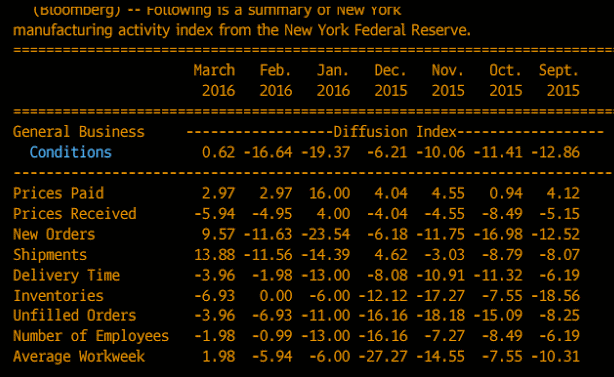
Better than expected but still weak:

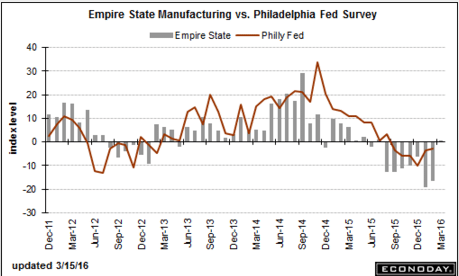
Empire State Mfg Survey

er-3-15-8
Highlights
After seven straight months of contraction, the general conditions index of the Empire State report is back in the plus column, though just barely at 0.62 in a reading that signals fractional strength for factory activity during March. New orders are the report’s most convincing headline, at plus 9.57 to end nine straight months of contraction. Unfilled orders, however, remain in contraction, but only slightly at minus 3.96, as does employment at minus 1.98. Inventories are in contraction as are selling prices. Yet still, the 6-month outlook is picking up, to plus 25.53 for a more than 10 point gain. Shipments are also positive, at 13.88 in what points to strength for the manufacturing component of the March industrial production report, the February edition of which will be posted tomorrow and is expected to be flat. Flat is really the theme of this report which, compared to the deep contraction of prior reports, is relatively good news for a factory sector that has been getting hit by weakness in exports and energy equipment.
er-3-15-9
er-3-15-10
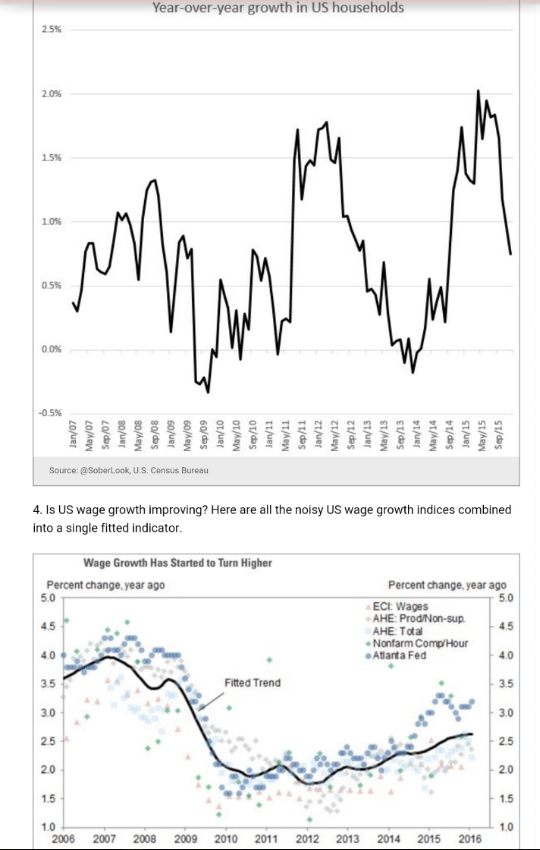
No sign of credit expansion here:
er-3-15-11
er-3-15-12

Rail traffic, Restaurant index, Import and export prices

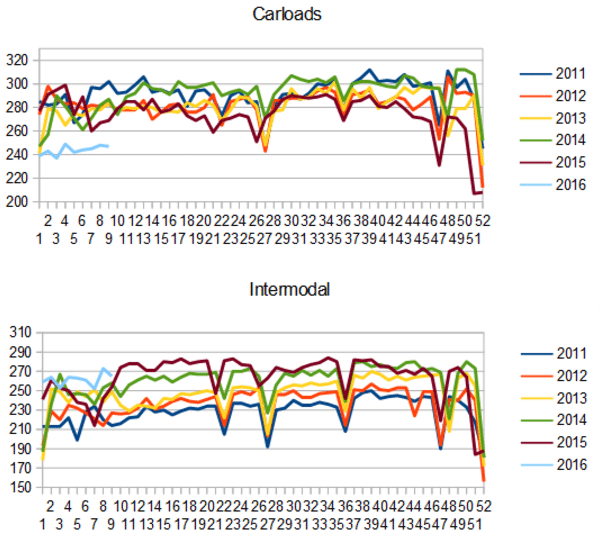
Rail Week Ending 06 March 2016: Worse Than Last Week

Week 9 of 2016 shows same week total rail traffic (from same week one year ago) declined according to the Association of American Railroads (AAR) traffic data. Intermodal traffic continued to improve year-over-year, which accounts for approximately half of movements but the weekly railcar counts remained in contraction. Relatively speaking, this week was worse than last week, and the improvement seen last week is fading.
er-3-11-1
er-3-11-2
er-3-11-3

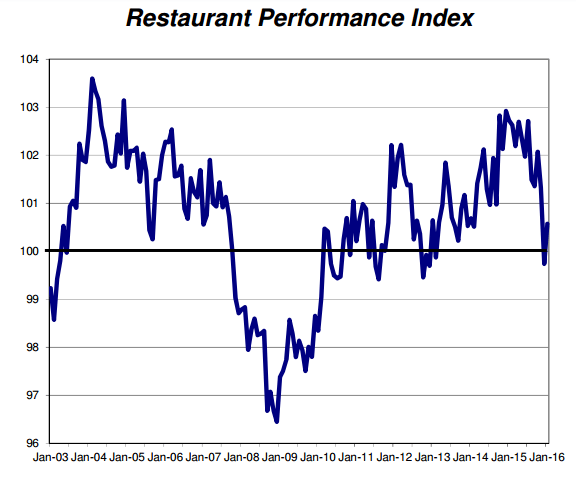
Up a bit in January:
er-3-11-4
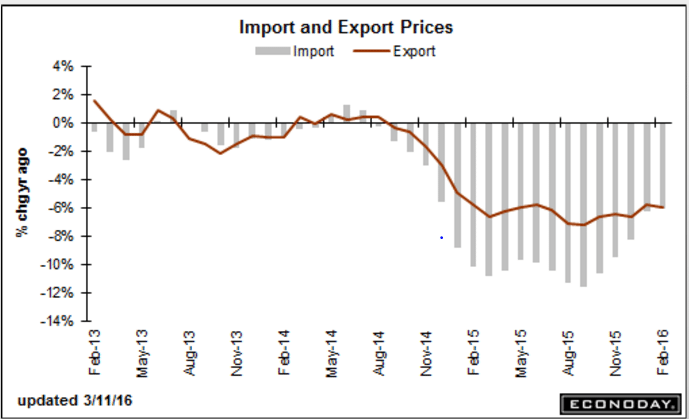
Deflationary forces continue:
er-3-11-5

Commercial real estate, Restaurant index

U.S. Commercial Property Prices Drop for First Time in Six Years

By Kara Wetzel

March 7 (Bloomberg)

Values fell 0.3% in January from prior month, Moody’s says.

Decline is `significant milestone’ showing shift in sentiment

U.S. commercial real estate prices dropped in January for the first time since 2010, a sign of weakening demand by investors after a six-year rally that pushed values to records.

The Moody/RCA Commercial Property Price Index slipped 0.3 percent from December, Moody’s Investors Service said in a statement Monday. The decline was led by office and industrial buildings, which each had a price drop of more than 1 percent.

“This is a significant milestone that signals that a shift in sentiment among commercial-property investors is under way,” Moody’s said in the statement.

Now Coming to the Commercial-Property Market: Defaults

March 8 (WSJ) — New signs of weakness are surfacing in the commercial-property market, ending a half-decade run of improvement with steadily climbing values. Broader market volatility has caused lenders who sell off their loans via bonds known as commercial mortgage-backed securities to grow wary. While the segment made about $100 billion in loans last year, it has come to a virtual halt today, lending executives said. If that continues, it will become more difficult for landlords who took out 10-year loans in 2006 to refinance today.

er-3-9-3

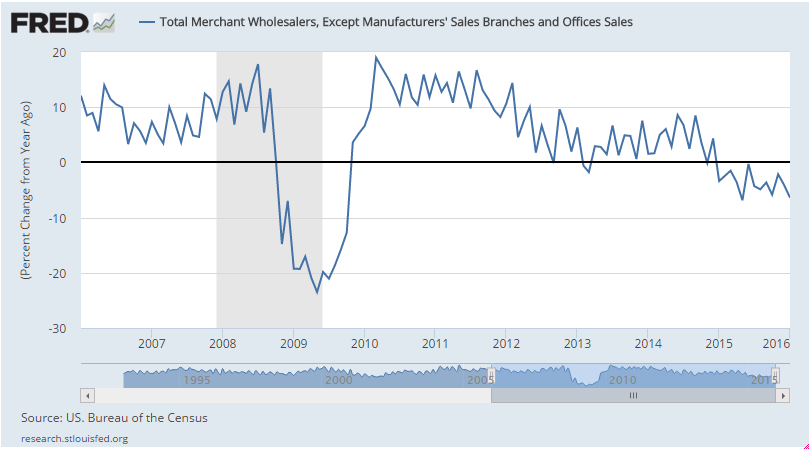
Wholesale trade

As previously discussed, GDP was only as high as it was due to increases in unsold inventory- not good!

Wholesale Trade
er-3-9-1
Highlights
Wholesalers had been keeping their inventories down as sales have slowed but they got behind in January. Inventories rose 0.3 percent in the month which isn’t alarming in itself but relative to sales, which fell 1.3 percent, inventories look heavy. The stock-to-sales ratio rose two notches to 1.35 from 1.33 for the highest reading of the recovery, since April 2009.

Industries where inventories rose relative to sales include furniture, farm products, computers, and autos. Very few industries at the wholesale level show leaner levels in the month.

Year-on-year, wholesale inventories are up 2.0 percent against a 3.1 percent decline for sales. Increases for inventories are a positive for GDP calculations but not for the production or employment outlooks nor for business confidence. Heavy inventories were a question during the fourth quarter and may be becoming one for the first quarter as well.

er-3-9-2

Posted in GDP