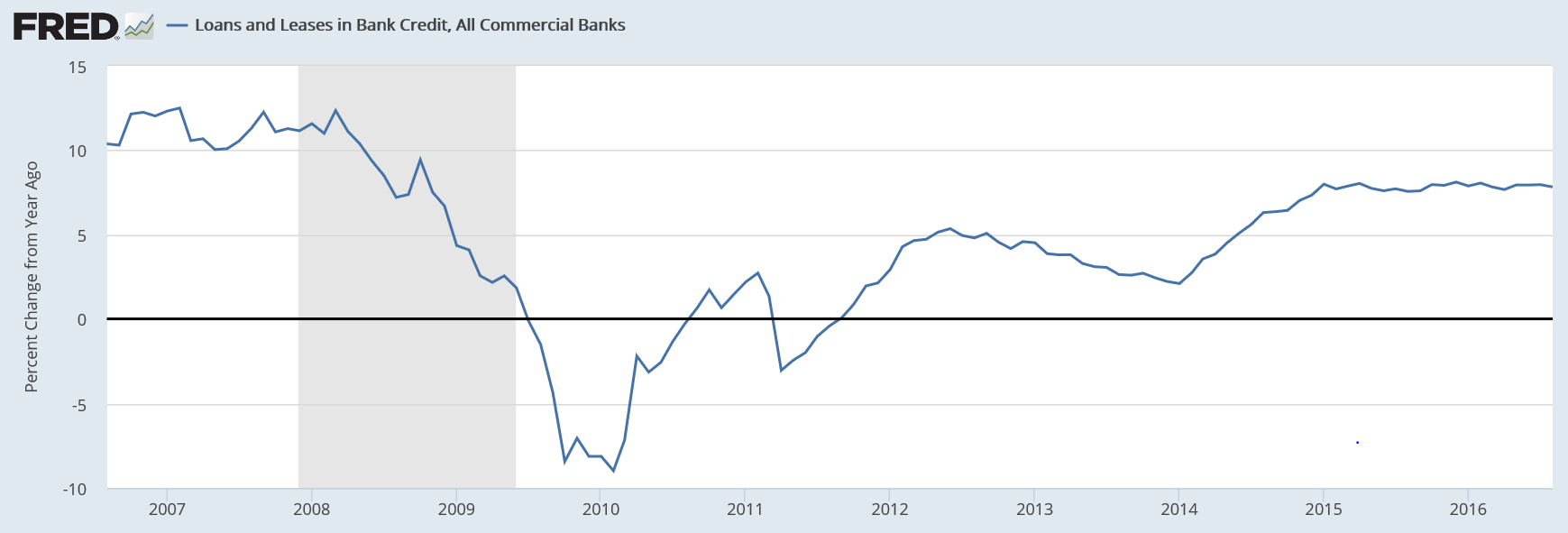
Fed labor market conditions index, NFIB chart, Oil comment

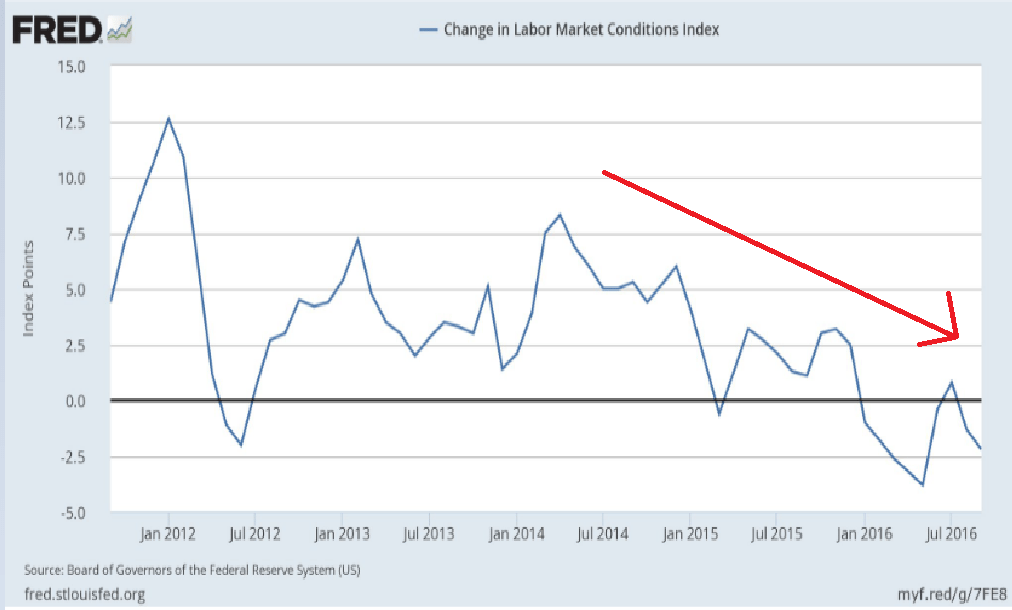
No one seems to know how much weight the Fed gives to this index:
101104

Highlights

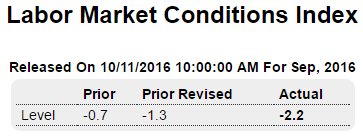
The labor market conditions index came in at minus 2.2 in September, extending its soft trend this cycle.

Definition

The Labor Market Conditions Index is an experimental indicator compiled by the Federal Reserve to track labor market activity. It is a broad composite with 19 components.

Just my imagination that this has been decelerating since the drop in oil capex?

101105
My oil related comments:

Any kind of oil deal with Russia would likely include a price and a quantity. There’s not enough demand for them all to pump flat out, which means they need to set a price and then ‘ration’ who gets to pump how much at that price.

So they probably are discussing how high then can price their oil without triggering excess supply, particularly from the US. And the price has to be specifically defined as either a price in one currency, such as $US, or some kind of basket of currencies, etc.

This kind of comprehensive agreement is a lot more problematic to engineer than a simple output cut.

Meanwhile, Saudis continue as price setter.

This longer term chart shows how low this series is, and note the acceleration during the 2014 shale boom followed by the following deceleration from the collapse of oil prices and oil consequent oil capex that happened about 2 years ago:

101106

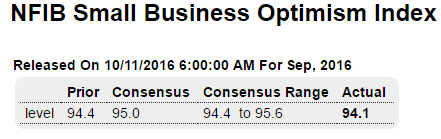
NFIB small business index, Hotel occupancy, Redbook retail sales

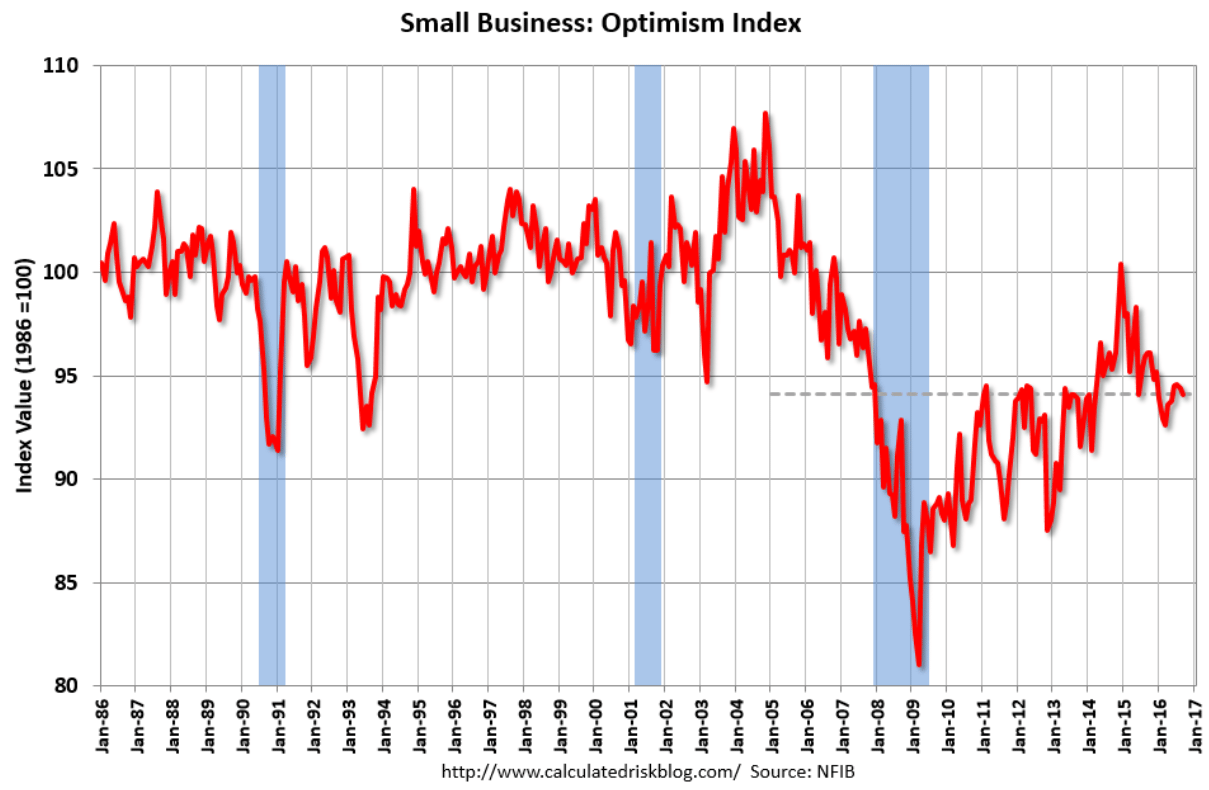
Went down when consensus expectations were for an increase:

101101
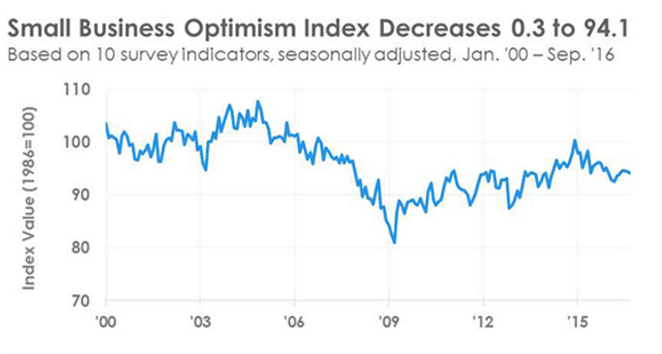
Note that it peaked and then fell when oil capex collapsed:

The NFIB Index of Small Business Optimism dipped 0.03 points in September for the second consecutive month. Increased inventories fell seven points while hard-to-fill job openings plunged six points landing at 24 percent. Six of the 10 indices dropped, washing away the rise in expected business conditions.

101102
Interesting way of saying its going to be down from last year:

Hotels: Occupancy Rate on Track to be 2nd Best Year

Oct 9 by Bill McBride

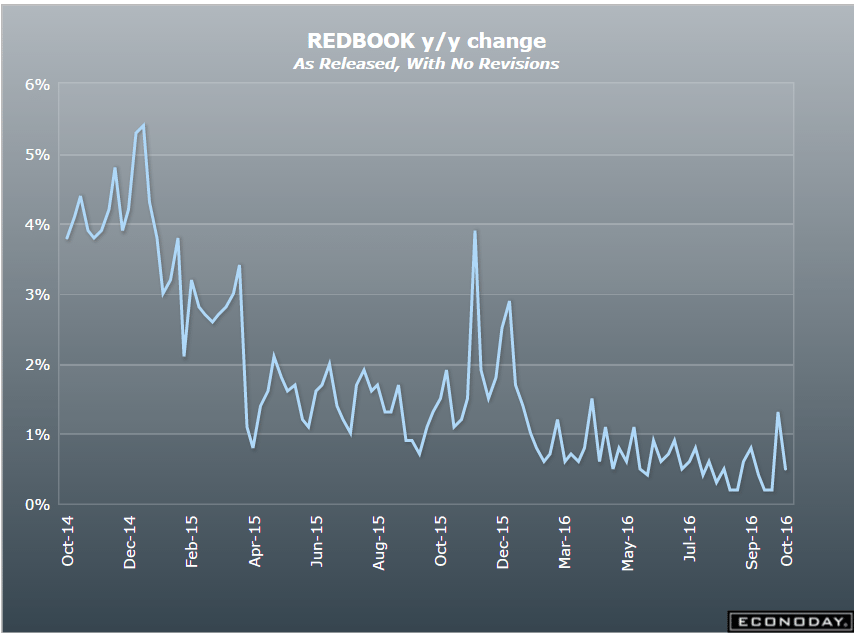
Back down. Before the oil capex collapse 3-4% year over year growth was the norm:

101103

Jobs, Wholesalers sales and inventories, Atlanta Fed GDP forecast

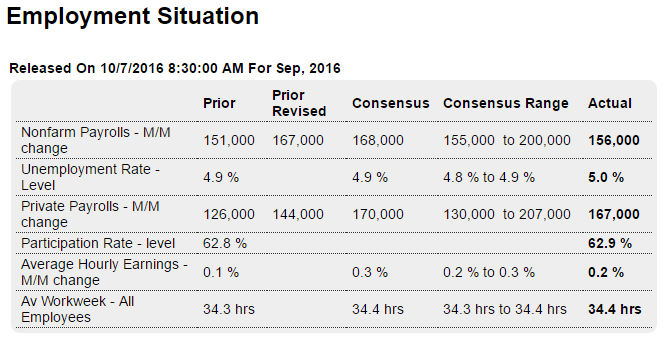
Less than expected, July/August total revised down, earnings gain less than expected. Yes, unemployment was up because the labor force increased, but arguably it was functionally that large in the months before, etc, which means, functionally, unemployment had been that much higher all along, etc. etc. and all to my suspicions that the drop in the participation rate might be close to entirely cyclical, meaning the ‘slack’ might be equiv. to a headline unemployment rate well north of 7%, and the U6 rate well north of 12%. Also recall that the birth/death’ model that estimates jobs from new business formations tends to overstate employment growth when employment growth is declining, so don’t be surprised by more downward revisions:
100701

Highlights

The September employment report is not that strong and the sigh of relief you hear is coming from the Fed which won’t be faced with a pre-election rate hike. Non-farm payrolls rose 156,000, which is at the low end of expectations, while average hourly earnings don’t look that inflationary, at least not on a monthly basis which is up only 0.2 percent and again at the low end of expectations.

But there are definitely positives including a rise in the labor participation rate, up 1 tenth to 62.9 percent, which gave a deceptive lift to the unemployment rate that is 1 tenth higher at 5.0 percent. The increasing inclusion of discouraged workers is one of the Fed’s policy objectives and the participation rate points to improvement. Another positive is a rise in the workweek, up to 34.4 hours from 34.3 hours with the manufacturing week also slightly higher in what is a positive indication for September industrial production.

Manufacturing employment, however, is one of the weak spots in the report, down 13,000 following August’s 16,000 decline. Government payrolls are also a negative, down 11,000 but following a long string of gains. Otherwise the industry breakdown offers mostly good news including a gain for construction, up 23,000 following prior weakness, a 22,000 gain for retail which extends a run of similar gains, and especially a 67,000 rise in professional & business services that includes an outsized gain of 23,000 in temporary help services. This last detail confirms other evidence that employers are having a hard time filling positions.

And there is another positive, and that is movement higher in the year-on-year rate for average hourly earnings, up 2 tenths to 2.6 percent which is still, however, 1 tenth under where it was in July. And with an election coming around, the positives are tame enough. November may be out for a rate hike but today’s report will build expectations, at least for now, for a rate hike at the December FOMC.
100702
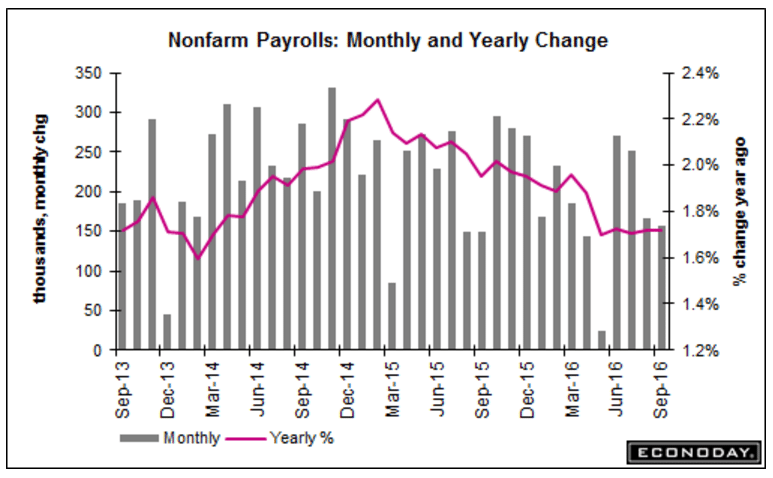
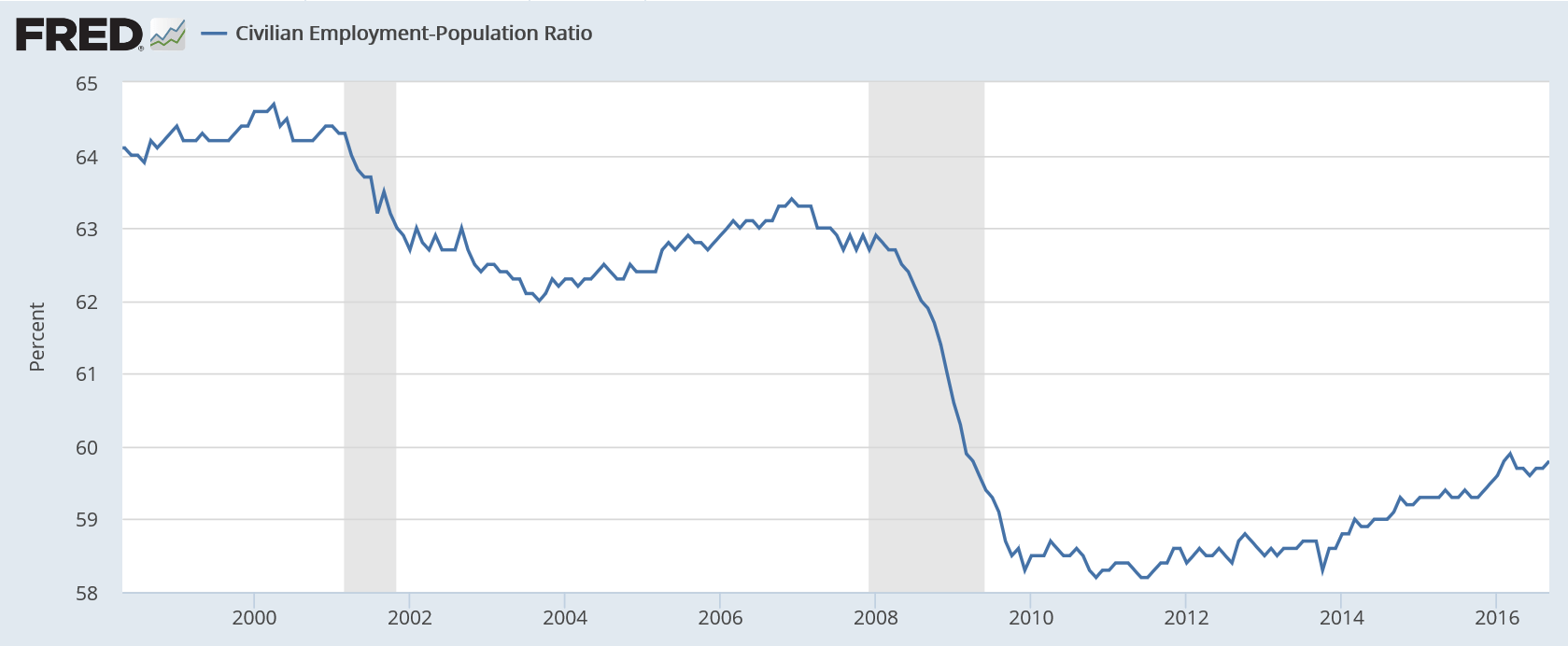
Employment growth not much ahead of population growth, with a long way to go to catch up to prior levels if in fact the drop was largely cyclical:
100703
Down again:

100704

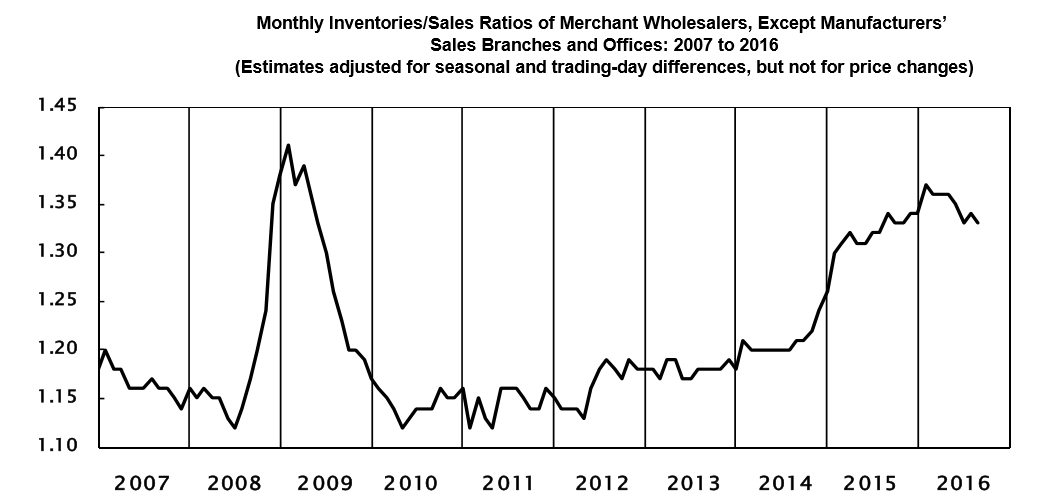
So it looks like August sales were up a bit but July sales were revised down. And inventories continued to decline, contrary to mainstream forecasts, as the inventory to sales ratio came down .1 but remained elevated:

MONTHLY WHOLESALE TRADE: SALES AND INVENTORIES August 2016

Sales.

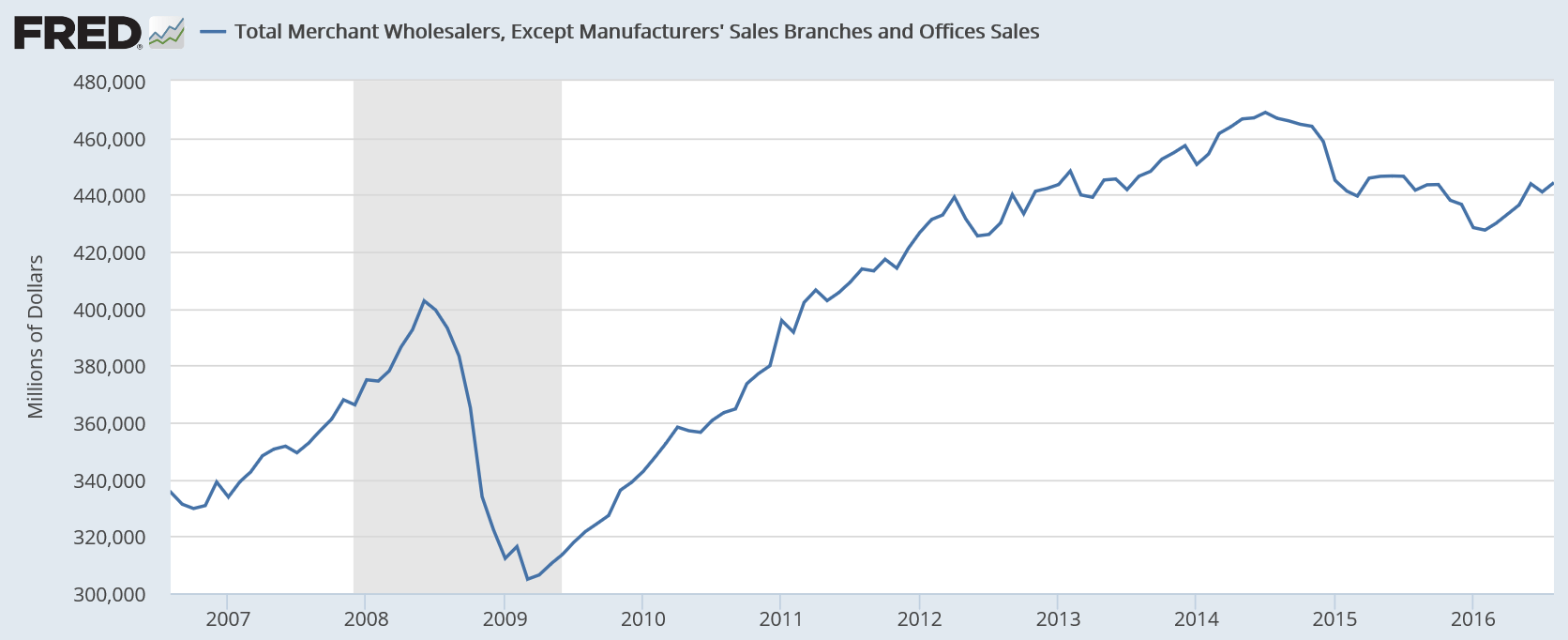
The U.S. Census Bureau announced today that August 2016 sales of merchant wholesalers, except manufacturers’ sales branches and offices, after adjustment for seasonal variations and trading-day differences but not for price changes, were $444.3 billion, up 0.7 percent (+/-0.5%) from the revised July level and were up 0.6 percent (+/-1.2%)* from the August 2015 level.

The June 2016 to July 2016 percent change was revised from the preliminary estimate of down 0.4 percent (+/-0.4%)* to down 0.6 percent (+/-0.4%).

August sales of durable goods were down 0.5 percent (+/-0.7%)* from last month, but were up 0.7 percent (+/-1.8%)* from a year ago.

Sales of machinery, equipment, and supplies were down 2.7 percent from July.

Sales of nondurable goods were up 2.0 percent (+/-0.7%) from July and were up 0.5 percent (+/-1.8%)* from last August.

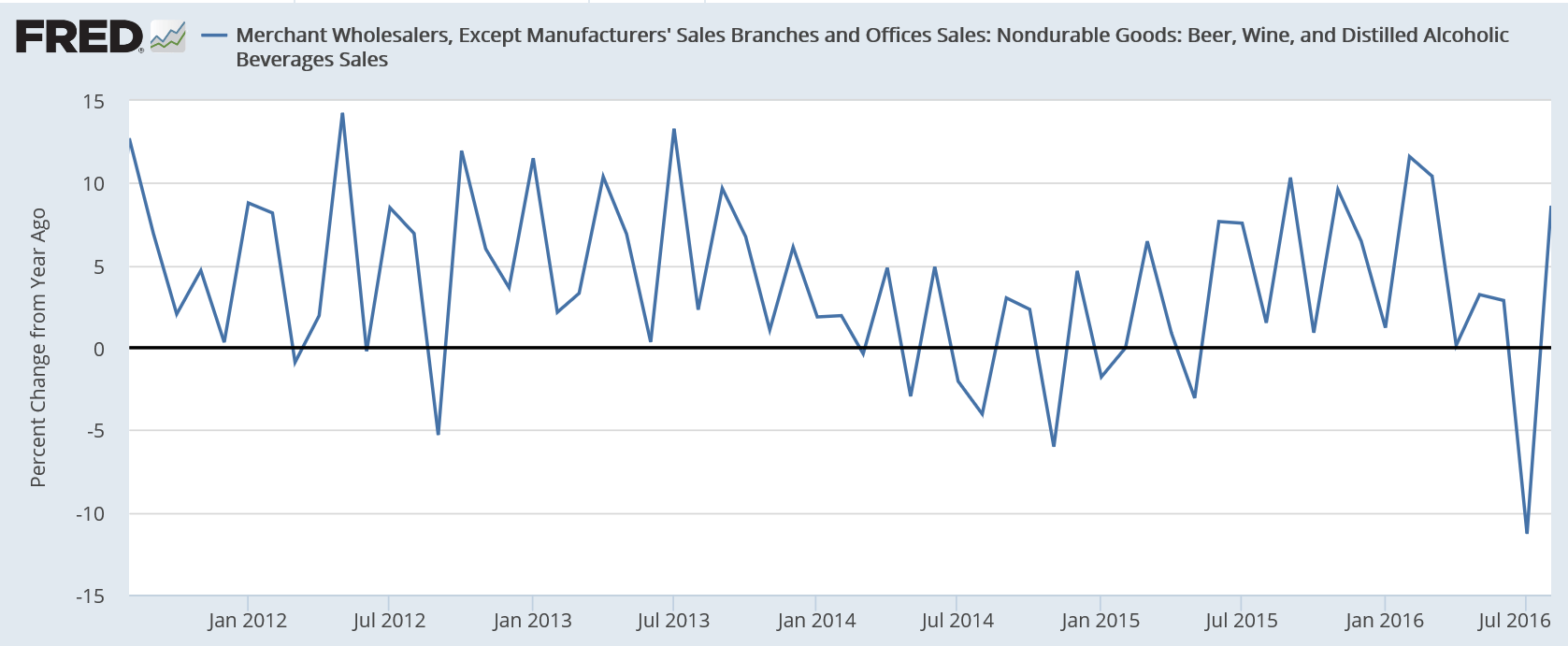
Sales of farm product raw materials were up 6.7 percent from last month and sales of beer, wine, and distilled alcoholic beverages were up 2.2 percent.

Inventories.

Total inventories of merchant wholesalers, except manufacturers’ sales branches and offices, after adjustment for seasonal variations but not for price changes, were $589.1 billion at the end of August, down 0.2 percent (+/-0.4%)* from the revised July level.

Total inventories are down 0.1 percent (+/-1.8%)* from the revised August 2015 level.

The July 2016 to August 2016 percent change was revised from the advance estimate of down 0.1 percent (+/-0.4%)* to down 0.2 percent (+/-0.4%)*.

August inventories of durable goods were up 0.2 percent (+/-0.4%)* from last month, but were down 1.9 percent (+/-1.8%) from a year ago. Inventories of computer and computer peripheral equipment and software were up 1.9 percent from last month. Inventories of nondurable goods were down 0.7 percent (+/-0.5%) from July, but were up 2.8 percent (+/-3.0%)* from last August. Inventories of farm product raw materials were down 7.8 percent from last month and inventories of apparel, piece goods, and notions were down 2.1 percent.

Inventories/Sales Ratio. The August inventories/sales ratio for merchant wholesalers, except manufacturers’ sales branches and offices, based on seasonally adjusted data, was 1.33. The August 2015 ratio was 1.34.
100705
Sales down about 11.5% in July then up about 8.5 in August, so the ‘average’ for the last two months in this volatile series is looking lower vs last year:
100706
This is just sales, not adjusted for inflation:
100707
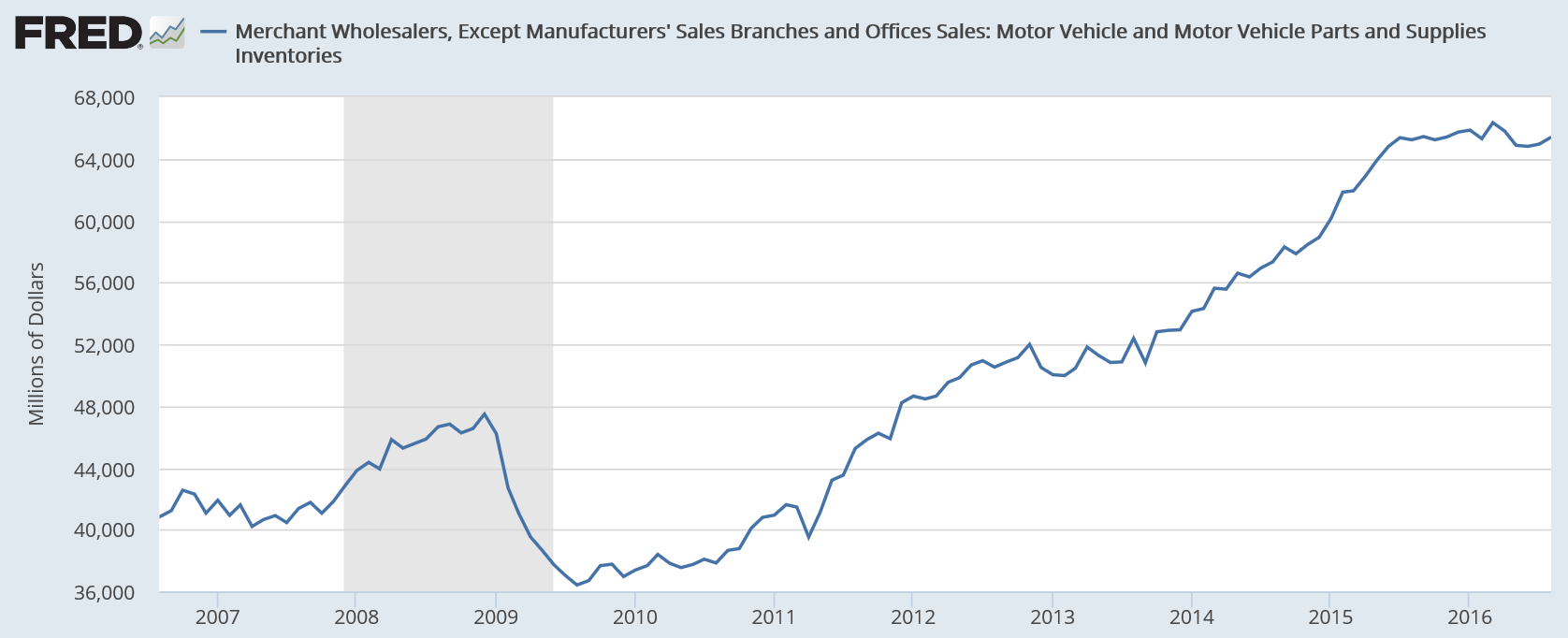
Auto related inventories are no longer adding to GDP growth:
100708

Jobless claims, Chain Store Sales, Fed comment, truck orders, Saudi pricing

This low, and not adjusted for population- tell me it’s not because they are much harder to get, thanks!

Initial Jobless Claims Near Four Decade Low -5k to 249k in latest weekly survey.

In the week ending October 1, the advance figure for seasonally adjusted initial claims was 249k, a decrease of 5k from the previous week’s unrevised level of 254k. The 4-week moving average was 253,500, a decrease of 2,500 from the previous week’s unrevised average of 256k. This is the lowest level for this average since December 8, 1973 when it was 252,250.

Weak:

100601

So begs the question that if he thinks the economy is weak enough to need a fiscal adjustment, why would he vote to increase rates? And while I’m sure he has an answer to that question, I’m also reasonably sure that answer wouldn’t hold up under cross examination: Fed’s Fischer Says Central Banks Need Fiscal Help to Spur Growth

Christopher Condon chrisjcondon

Fed’s Fischer Says Central Banks Need Fiscal Help to Spur Growth

Fed’s Fischer says low neutral rate a sign of potential economic trouble

By Howard Schneider

Oct 5 (Reuters) — Fed Vice Chair Stanley Fischer said he was concerned that the changes in world savings and investment patterns that may have driven down the natural rate could “prove to be quite persistent…We could be stuck in a new longer-run equilibrium characterized by sluggish growth.” As a result, he said, central bankers may face a future where the short-term interest rates set by policymakers never get far above zero, and the unconventional tools used during the financial crisis become a “recurrent” fact of life. “Ultralow interest rates may reflect more than just cyclical forces,” Fischer said, but “be yet another indication that the economy’s growth potential may have dimmed considerably.”

Truck Orders Sank in September

By Robbie Whelen

Oct 5 (WSJ) — Orders for new big-rig trucks fell 27% in September compared with a year earlier, to the lowest level for that month since 2009. Trucking companies ordered 13,800 of the largest type of commercial tractor-trailers in September, according to data provider FTR Transportation Intelligence. “It remains crystal clear that truckers are still struggling to balance excess freight hauling capacity in the context of anemic freight growth,” said Steve Tam, vice president at ACT Research, which reported similar figures. September is typically the weakest month for new truck orders.

The Saudis had previously raised some prices, and now, with oil prices a bit higher, it’s possible they are moving to keep prices from heading higher:

Aramco Cuts Pricing for Oil Sales to Asia as Glut Persists

By Anthony Dipaola

Oct 5 (Bloomberg) — Saudi Aramco cuts Nov. official selling pricing for Arab Light crude to Asia by 25 cts/bbl to a 45 cts/bbl discount to benchmark, co. says in e-mailed statement.

  • Median est. in Bloomberg survey last week of 6 refiners, traders predicted Nov. OSP would be a 50cts/bbl discount
  • NOTE: Saudi Aramco previously raised the Oct. formula price for Arab Light to Asia to a 20c discount to avg. of Oman/Dubai benchmarks
  • Rents, GDP per capita, Bacon prices, Atlanta Fed

    Some Big U.S. Cities See Apartment Rents Fall for First Time in Years

    By Laura Kusisto

    Oct 4 (WSJ) — Rents in San Francisco declined 3%, while they fell about 1% in New York and edged lower in Houston and San Jose, Calif., the first drops in those markets since 2010, according to apartment tracker MPF Research. Across the U.S., rent growth was 4.1% on average. According to a report by Axiometrics Inc., growth in the U.S., slowed to 3% in the third quarter from 5.2% in the year-earlier period. The rate remains above the long-term average of about 2%, the report said. Across the country, rents have jumped 22% in urban areas since 2010, according to Axiometrics.

    100511
    This where I would look to see if someone was trying to influence the election:

    100512
    The ISM survey kept their forecast from going down another .2%:

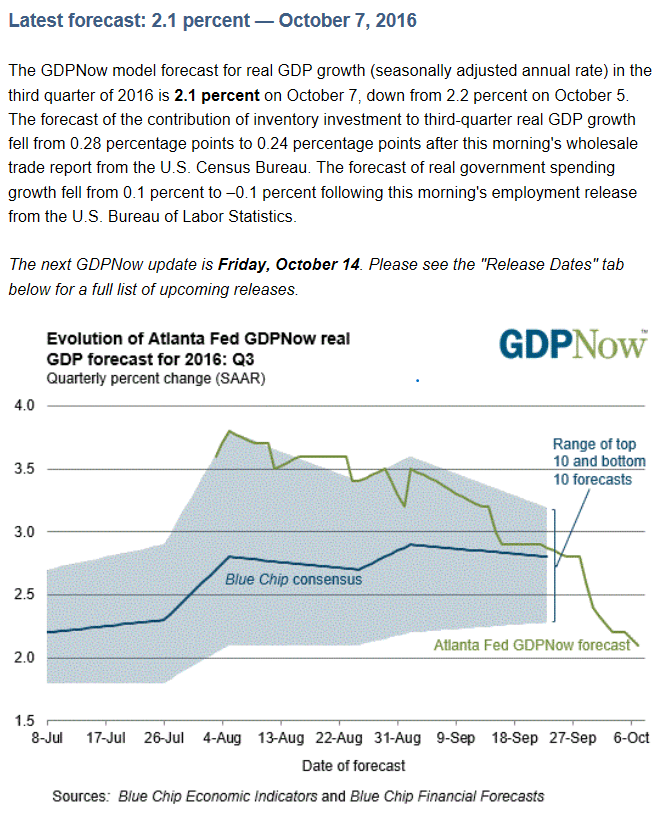
    Latest forecast: 2.2 percent — October 5, 2016

    The GDPNow model forecast for real GDP growth (seasonally adjusted annual rate) in the third quarter of 2016 is 2.2 percent on October 5, unchanged from October 3. Following yesterday’s auto sales release from the U.S. Bureau of Economic Analysis, this morning’s M3 manufacturing report from the U.S. Census Bureau, and this morning’s Non-Manufacturing Report On Business from the Institute for Supply Management, the forecast of third-quarter real consumer spending growth increased from 2.7 percent to 2.9 percent and the forecast of third-quarter real equipment investment growth increased from –2.0 percent to 0.0 percent. The forecast of the contribution of net exports to third-quarter growth fell from 0.13 percentage points to –0.13 percentage points after this morning’s international trade release from the U.S. Census Bureau.

    Mortgage purchase apps, ADP employment, International trade, PMI services, ISM services, Factory orders

    The year over year change not looking so good:

    100501

    Highlights

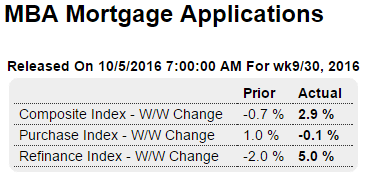
    Purchase applications for home mortgages were down just 0.1 percent from the prior week in the September 30 week, but the comparison with the year ago week plunged sharply into deeply negative territory at minus 14 percent. Refinancing applications were up 5.0 percent from the prior week, however, as more mortgage holders seized the opportunity to refinance with lower interest rates. The refinancing share of mortgage activity increased to 63.8 percent, up 1.1 percentage points from a week ago. Mortgage rates fell to the lowest level since July, with the average interest rate on 30-year fixed-rate conforming loans ($417,000 or less) falling 4 basis points to 3.62 percent.

    Employment growth continues to decelerate:

    100502

    Highlights

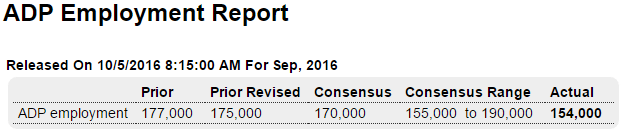
    ADP is looking for significant slowing in employment growth for September, to 154,000 for its private payroll estimate vs a slightly revised 175,000 in August. The Econoday consensus for private payrolls in Friday’s report is 170,000 but today’s ADP result will definitely raise talk of a lower print.

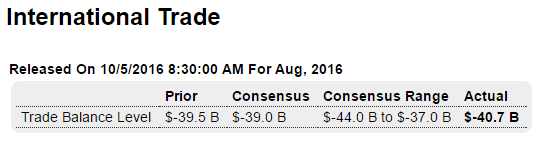
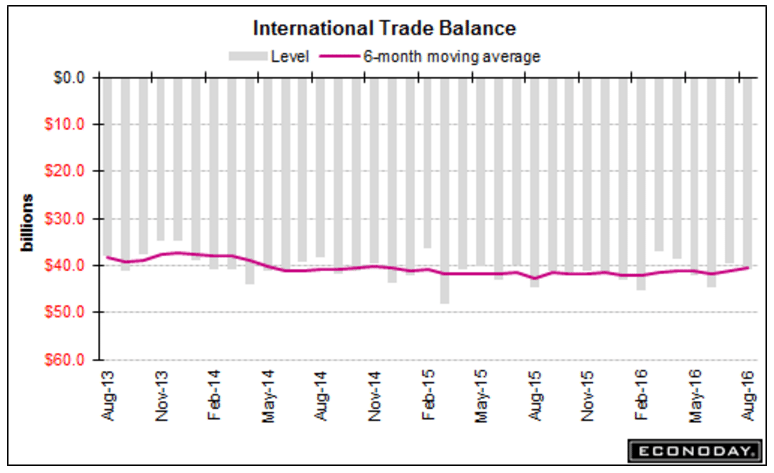
    In the old days a drop in oil prices would cause the US trade deficit to decrease. But as previously discussed, this time it didn’t happen. And now with lower US oil production and more oil and product imports, higher prices will increase the trade deficit:

    100503

    Highlights

    The nation’s trade deficit widened by $1.2 billion in August to $40.7 but details are positive. Exports of capital goods, excluding aircraft, actually rose slightly to $37.6 billion while imports of capital goods were up $1.2 billion to $50.2 billion. These results hint at badly needed strength for cross-border business investment. When including aircraft, however, capital goods exports fell $0.7 billion in what is the lowest result in nearly 5 years.

    Total exports in August rose 0.8 percent, which is another positive, while imports rose 1.2 percent. The gain for imports is a subtraction in the national accounts but it does point to solid domestic demand, specifically once again for capital goods. The trade gap for goods is unchanged from July at $60.3 billion while the trade surplus for the nation’s services, in what is a superficial negative in the report, fell $1.2 billion to $19.6 billion for the lowest showing since December 2013. But the dip in services reflects $1.2 billion in broadcast payments for the Olympics.

    By countries, the gap with China widened by $3.6 billion to $33.9 billion while the gap with the European Union widened by $1.6 billion to $13.9 billion. The gap with Japan edged lower to $6.0 billion.

    Today’s results may lower third-quarter GDP estimates but the export reading excluding aircraft is a subtle positive for the economic outlook.

    100504
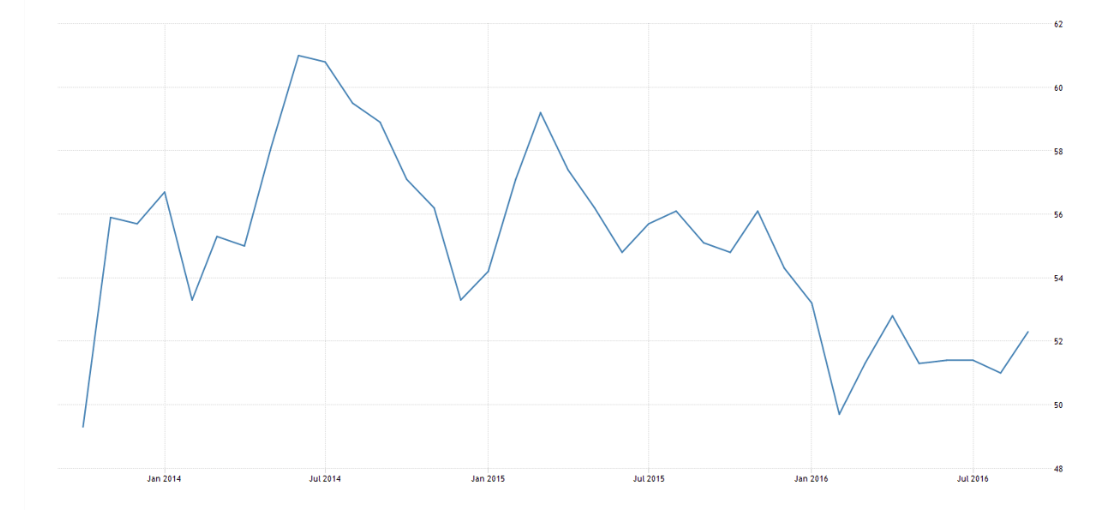
    Up a bit but some troubling details:

    100505

    Highlights

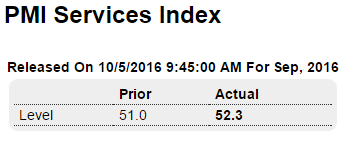
    Service sector growth is improving, at least that’s what Markit’s U.S. sample is reporting. The composite index for September is 52.3, up slightly from 51.9 in the month’s flash reading and up solidly from a 5-month low of 51.0 in August. But the composite hides what is disappointing slowing in new orders which are at their weakest growth rate since May. And in a negative indication for Friday’s employment report, hiring slowed to a 3-1/2 low in the month. Reports from Markit, unlike other reports, continue to cite uncertainty over the presidential election as a negative factor. A positive in the report is a third straight build in backlog orders which posted their second best gain since April last year. But another negative is a near recovery low in 12-month optimism. Input costs and selling prices are both very subdued. Watch for the ISM non-manufacturing report later this morning at 10:00 a.m. ET.

    100506
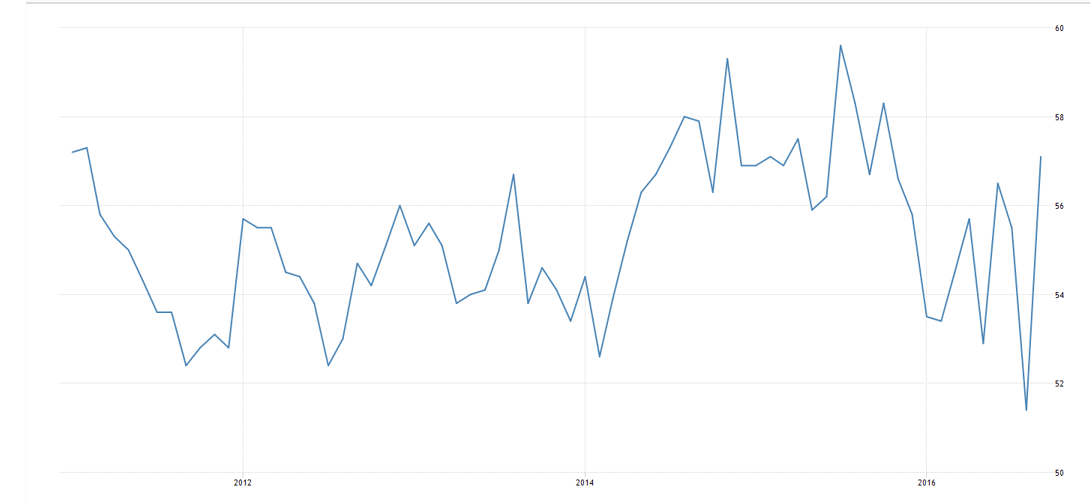
    Hard to say what’s going on here! I suppose it can be said that monetary policy is finally kicking in and the good times are back!!!
    ;)

    100507

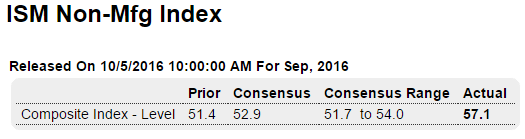
    Highlights

    August was a weak month for the ISM non-manufacturing report but not September! The composite index shot up to 57.1 from August’s recovery low of 51.4 which now looks like a very odd outlier for this report which otherwise has been consistently strong this year. And new orders are especially strong, up nearly 9 points to 60.0 which points to brisk activity for other readings in the months ahead. Employment is also a very solid plus in the report, up 6.5 points to 57.2 which is the strongest rate of growth since September last year. This particular reading will help offset some of the disappointment over this morning’s weak estimate from ADP. Service exports are a specific strength of the U.S. economy and this report points to September gains, at 56.5 for the best reading in a year. Business activity is at 60.3, again very strong, with total backlog orders back in the plus column at 52.0. The great bulk of the nation’s economy accelerated sharply at the end of the third quarter, at least based on this report.

    100508
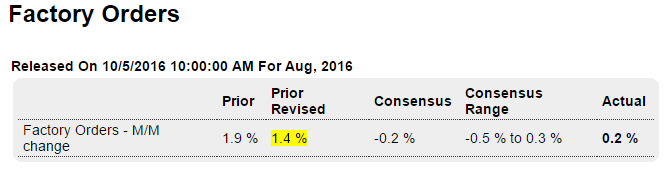
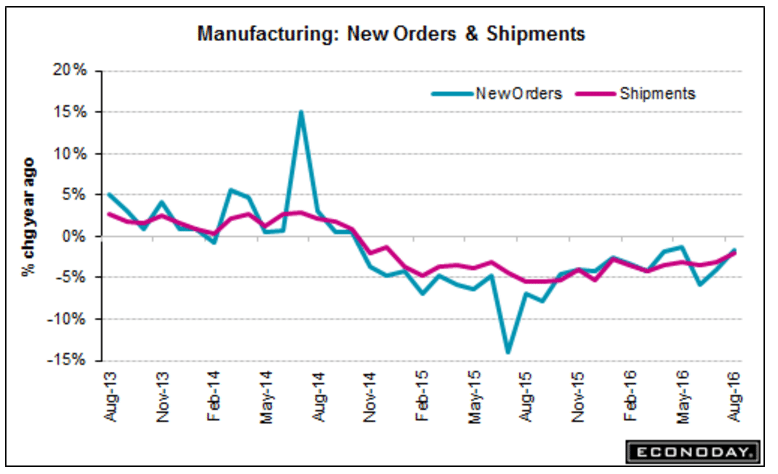
    Returning to earth, not looking so good here. August up a bit more than expected but July revised down more than that, and year over year orders remain in contraction:

    100509

    Highlights

    Throw out the headline and look at capital goods. Factory orders in August edged only 0.2 percent higher but core capital good orders (nondefense ex-aircraft) jumped 0.9 percent following very impressive gains of 0.8 percent and 0.5 percent in the prior two months. These results point to a rebound for business investment which otherwise has been depressed this year.

    But the new orders for capital goods will take time to fill and in the meantime business is slow as shipments of core capital goods slipped 0.1 percent following a July dip of 0.7 percent. These two readings will hold down nonresidential investment in the third-quarter GDP report, but that’s pretty much ancient history.

    Other readings include no change for total shipments, a fractional dip of 0.1 percent in unfilled orders, and a constructive 0.2 percent build in inventories. In sum, this report is a positive for the economic outlook.

    100510

    Vehicle sales, Manhattan apartment sales, ISM NY, Redbook retail sales

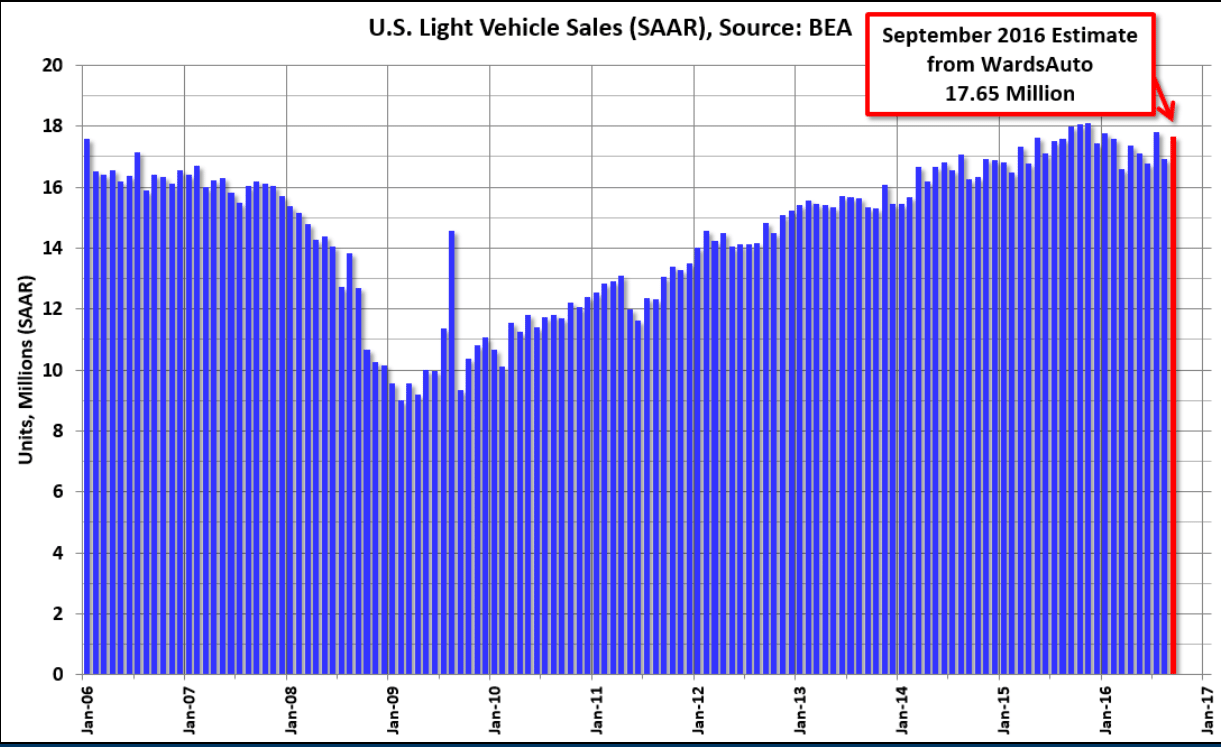
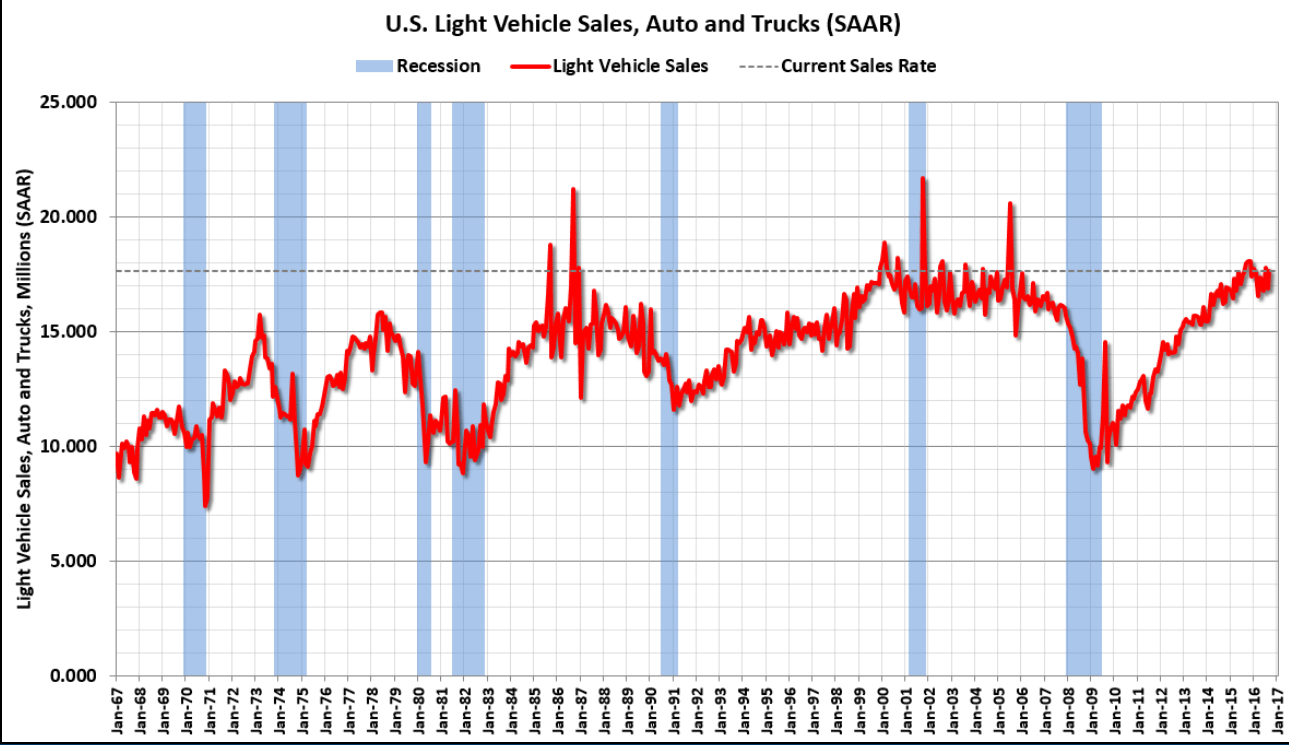
    Based on a preliminary estimate from WardsAuto, light vehicle sales were at a 17.65 million SAAR in September.

    That is down about 2% from September 2015, and up 4.3% from the 16.92 million annual sales rate last month.

    Read more at http://www.calculatedriskblog.com/#ycdZ4cVpGQLvjHoI.99

    100401

    100402

    Manhattan apartment sales plunge 19 percent

    By Robert Frank

    ISM New York Report On Business September 2016

    ISM New York 49.6 in September. New York City business activity largely held steady from August to September -with one notable exception. While minor adjustments were observed in all of the indices this month, Employment plummeted, dropping to the lowest level since the Great Recession of 2008 and its after effects in 2009.

    100403

    Construction spending, PMI Manufacturing, ISM manufacturing, Atlanta Fed

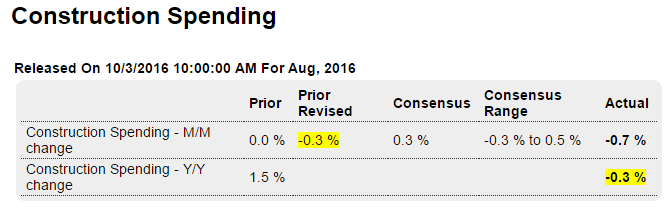
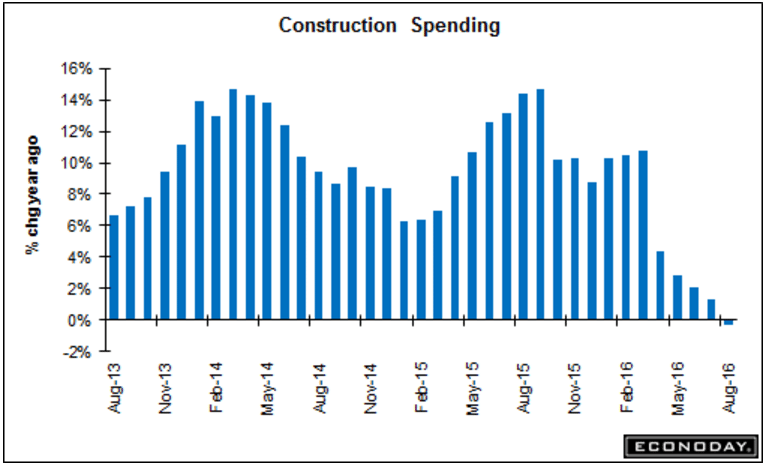
    Worse than expected, prior month revised lower, and year over year now in contraction as the downtrend continues. Watch for further downward q3 GDP revisions:

    100301

    Highlights

    Multi-family units are just about the only strength in what is a weak construction spending report for August, down 0.7 percent on the month with July revised 3 tenths lower and into the negative column at minus 0.3 percent. Construction spending on new single-family homes fell 0.9 percent for the third monthly contraction in a row. This belies solid strength in new home sales and points to continued lack of supply in the new home market. But multi-family units are a different story, up 2.4 percent and, with July and June both revised higher, the fourth gain in a row. Strength here reflects expectations of strength for the rental market.

    Nonresidential construction is weak across nearly all readings with commercial structures down 2.0 percent in the month, power down 1.5 percent, and manufacturing down 1.4 percent. These readings all reflect lack of business investment which is the economy’s stubbornly weak suit. Public spending is also weak, down 0.4 percent for educational structures and down 2.9 percent for highways and roads. Positives are hard to find but do include a 2.3 percent gain in office structures and a 4.0 percent rise in federal structures, the latter offset by a 2.5 decline at the state & local level.

    Year-on-year rates confirm the weak trends with single-family homes down 1.5 percent and total construction spending down 0.3 percent. The big plus here, once again, is multi-family units where year-on-year spending is up a robust 13.9 percent. But multi-family units make up only 5 percent of total construction spending which otherwise is not having a great year.

    100302
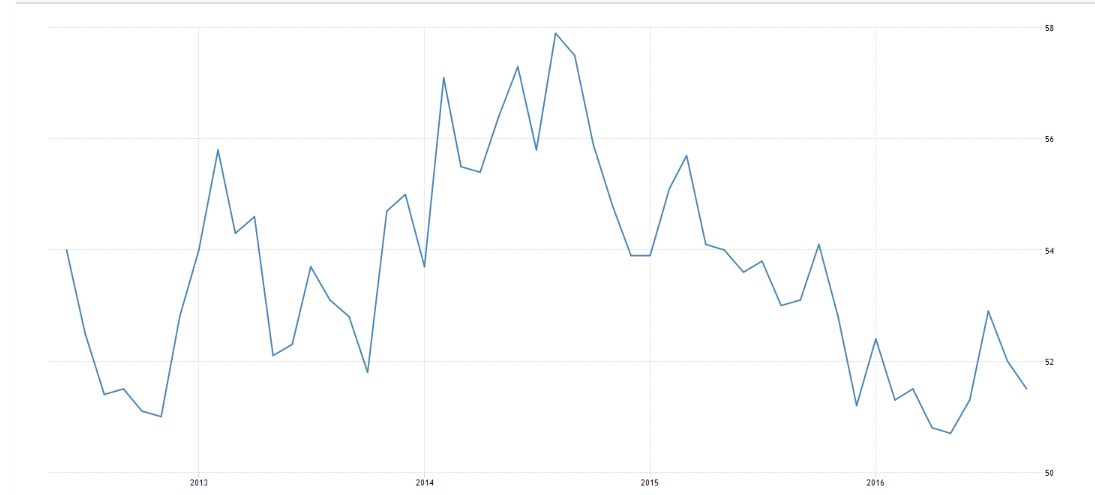
    Manufacturing seems to be settling into a modestly positive stance, but not adding to GDP growth they way it had last year:

    100303

    Highlights

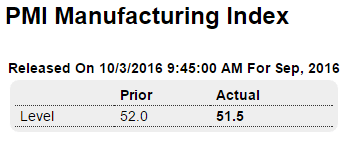
    September was another slow month for Markit’s U.S. manufacturing sample with the composite index slipping 5 tenths from August to 51.5. New orders slowed to the weakest growth rate of the year while export sales contracted for the first time in four months which the report ties to strength in the dollar. Production slowed to a 3-month low, hiring during the month was soft, and the sample continues to cut inventories which indicates lack of confidence in the business outlook. One plus in the report is a slight increase in backlog orders. Otherwise, pluses are hard to find in this report. Input costs are up slightly and selling prices continue to slip. Unlike other reports, this report is citing the presidential election as a factor, specifically a negative one that it says is delaying customer decisions. Watch for the ISM manufacturing report later this morning at 10:00 a.m. ET.

    100304
    Settling in at lower levels, while employment is still in contraction:

    100305

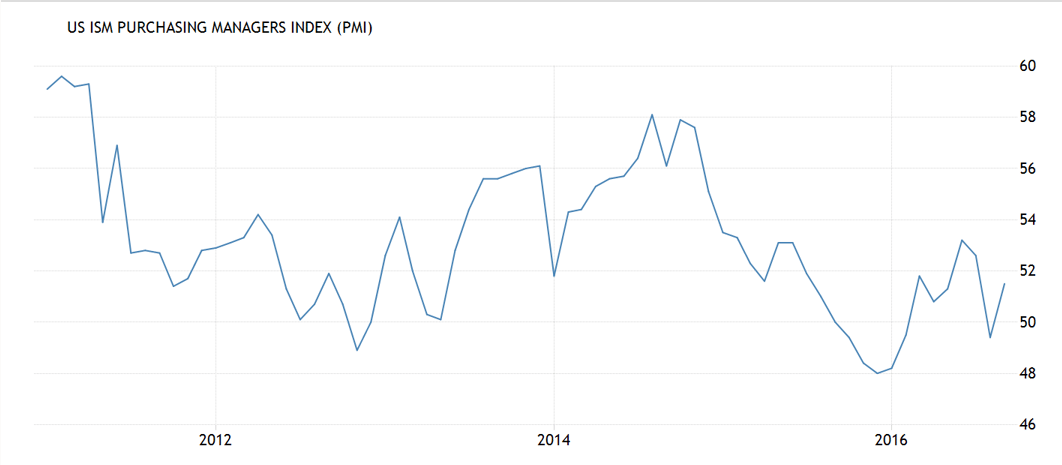
    Highlights

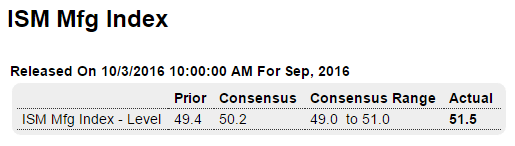
    August proved to be a one-month letdown for ISM’s manufacturing sample as the September index bounced more than 2 points higher to a much better-than-expected 51.5. New orders are the most important of all readings and they lead the September report, rising 6 points to a very solid 55.1. Export orders are respectable and steady at 52.0 while the draw in total backlog orders slowed, with this index up 4 points and nearly hitting breakeven 50 at 49.5. Production also improved in the month, up 1.4 points to 52.8, as did employment which, at 49.7, is also nearly at 50. This is a positive report, pointing to rising though no more than moderate strength for the nation’s factory sector.

    100307

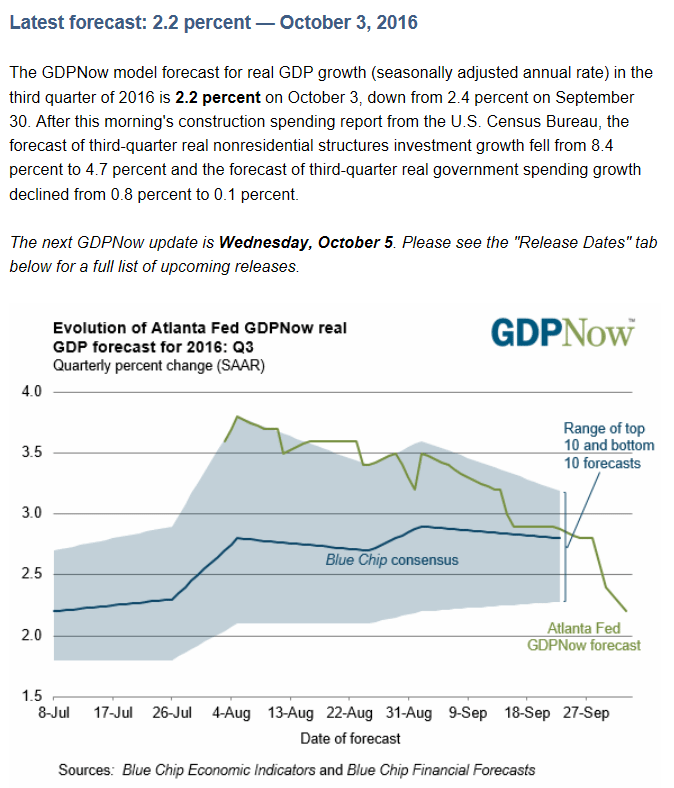
    Down yet again.

    Remember the cheerleading when it was at 3.8?

    ;)

    100306