Q4 GDP borrowed from Q1 due to expiring tax credits?

I’ve already posted the expiring tax credits that may have brought forward housing starts. Note housing starts spiked a whopping 30% or so in Nov, falling off some in Dec but still way up from October. However purchase mtg apps remain low and maybe down 10% vs last year. And pending home sales are down. And I’ve seen no anecdotals from lenders or builders suggesting a spike in November.

And I just remembered I’m personally involved in two energy projects. In both cases we started just enough construction before year end to secure our investment tax credits which were also otherwise due to expire at year end. So I suspect these were not isolated cases, and in total contributed to the 48,000 new construction jobs in the ADP report.

So watch for the Jan housing and construction numbers to see if it turns out like I’m suspecting.


Full size image


Full size image

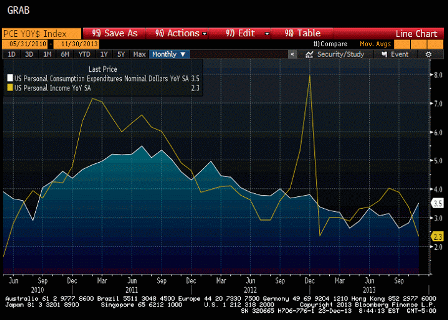
Nor is personal income growth going the right way:


Full size image

tax extensions

Was wondering what might have caused the 30% or so jump in shovels going into the ground in Nov/Dec!

Might also apply to other Q4 activity as well?

Tax Provisions Expiring in 2013

2013 Expiring Tax Provisions-Housing

These temporary taxes have been routinely extended by congress in the past. However, attempts are being made at tax reform in 2014, and these changes would either alleviate the need to continually extend these temporary provisions or eliminate them altogether. As such, these provisions may not be renewed until late 2014 if major tax reform efforts fail. This may have lead to a November jump in housing starts as consumers worried about the extension of these tax provisions


1. Determination of low-income housing credit rate for credit allocations with respect to non-federally subsidized buildings (sec. 42(b)(2))
   -Amount of credit for low-income (non-subsidized) housing


2. Credit for construction of new energy efficient homes (sec. 45L(g))

3. Credit for energy efficient appliances (sec. 45M(b))

4. Discharge of indebtedness on principal residence excluded from gross income of individuals (sec. 108(a)(1)(E))
   -Debt forgiveness on residences excluded from gross income


5. Premiums for mortgage insurance deductible as interest that is qualified residence interest (sec. 163(h)(3))

6. Treatment of military basic housing allowances under low-income housing credit (sec. 142(d))

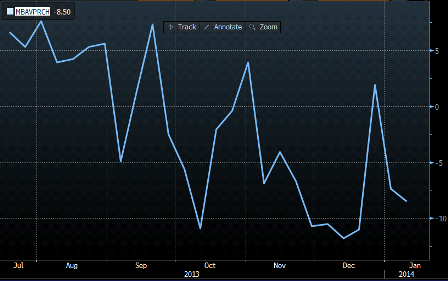
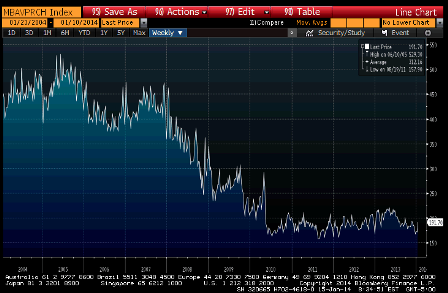
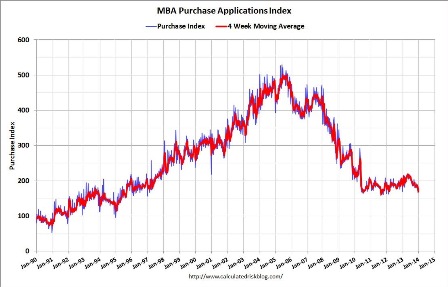
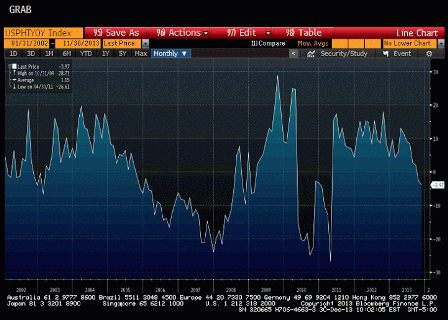
purch apps up wow, down yoy

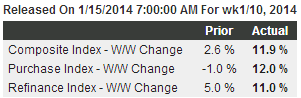
Purchase apps up vs last week, down vs this time last year:

Highlights
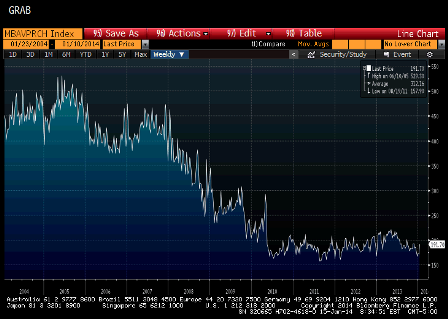
MBA’s index for purchase applications surged 12.0 percent in the January 10 week, boosted by a sizable decline in mortgage rates. But one week is only one week and the trend for purchase applications is still definitely down, though the latest gain does lift the index back to its level in mid-November. Refinancing applications also got a boost from lower rates, up 11.0 percent in the week. The average rate for conforming 30-year mortgages ($417,000 or less) fell 6 basis points in the week to 4.72 percent.

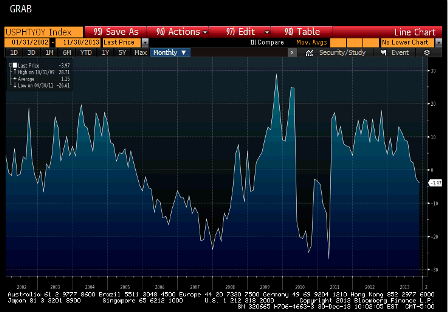
Purchase apps y/y:


Full size image
Purchase apps:

Full size image

Mortgage purchase apps now down 20% yoy

Most interesting is the positive spin from CNBC. Bouncing back? Finding their footing?

As they say, “Don’t p on me and tell me it’s raining…”

Highlights below:

Mortgage refinances bounce back as rates settle

By Diana Olick

January 8 (CNBC) — A sharp surge in interest rates caused mortgage refinances to plummet two weeks ago, but they are now finding their footing again.

Applications to refinance rose 5 percent last week after falling 9 percent the previous week, according to a seasonally adjusted measure by the Mortgage Bankers Association. They are still down 69 percent from a year ago, as mortgage rates are now up well over a full percentage point from January of 2013.

The average rate on a conforming 30-year fixed loan hit 4.72 percent two weeks ago, after the Federal Reserve announced it would slowly curtail its purchases of mortgage-backed bonds. That rate stayed put last week, causing more borrowers to come back to the refinance market.

The average rate for a jumbo loan is once again below that of conforming at 4.66 percent, as lenders and investors in that market are growing more confident and competitive. They are also not faced with high guarantee fees from Fannie Mae and Freddie Mac.

Applications for a mortgage to purchase a home, however, did not bounce back, falling one percent on week.

“Mortgage application activity remained weak over the holiday period, with purchase applications almost twenty percent lower than at the same time last year,” said Mike Fratantoni, chief economist for the Mortgage Bankers Association. “Other economic data is reflecting a strengthening economy, so this weakness is likely due to a combination of the increase in rates and still tight credit.”

Credit availability was little changed over the past month, according to another MBA report. Investors are continuing to fine-tune credit scores and loan-to-value formulas and debt-to-income measures in order to comply with new rules from the Consumer Financial Protection Bureau; those rules go into effect at the end of this week.


Full size image

last comment of the year on fiscal drag

Back in November my forecast for 2013 was 4%, which at the time was by far the highest around. The govt was spending more than its income by about 6% of GDP, which was about $900 billion if I recall correctly. But then it cut back, first with the year end FICA hike along with other expiring tax cuts, and then with the sequesters that began in April.

Consequently, the govt spent only about $680 billion more than its income, which lowered growth by maybe 2%. And today mainstream economists are saying much the same- growth would have been maybe 2% higher without the ‘fiscal drag’ of the tax hikes and spending cuts.

So far our narratives are the same.

But here’s where they begin to differ.

They say the GDP/private sector would have grown by 4% if the fiscal drag hadn’t taken away 2%, and so without the govt again taking away 2%, the private sector will resume its ‘underlying’ 4% rate of growth.

I say the GDP/private sector would have grown by 4% that included the 6%/$900 billion net spending contribution by govt, if govt hadn’t cut back that contribution to $600 billion.

That is, they say the govt ‘took away’ from the ‘underlying’ 4% growth rate, and I say the govt ‘failed to add’ to the ‘underlying’ 2% growth rate that still included a 4% contribution by net govt spending.

And, in fact, I say that if the govt had cut its deficit another 4% to 0, GDP growth might have been -2% (multipliers aside for purposes of this discussion), which is the actual ‘underlying’ private sector growth rate. And that’s due to the ‘unspent income’ of some agents not being sufficiently offset by other agents ‘spending more than their income’.

Furthermore, I say that unless the ‘borrowing to spend’ of the ‘non govt’ sectors steps up to the plate to ‘replace’ the reduced govt contribution, the output won’t get sold, as evidenced by unsold inventory and declining sales in general, throwing GDP growth into reverse, etc.

So because we have different narratives, we read the same data differently.

They see the 1.7% Q3 inventory build as anticipation of future sales, while I see it as evidence of a lack of demand.

They see the Chicago PMI’s large spike followed by 2 months of decline as a strong 3 month period, while I see it as a sharp fall off after the inventory build.

They see the fall off in mortgage purchase apps as a temporary pause, while I see it as a disturbing fall off in the critical ‘borrowing to spend’ growth maths.

They see October’s shut down limited 15.2 million rate of car sales followed by November’s spike to 16.4 million as a return of growth, while I see the two month average a sign that growth has flattened in this critical ‘borrowing to spend’ dynamic.

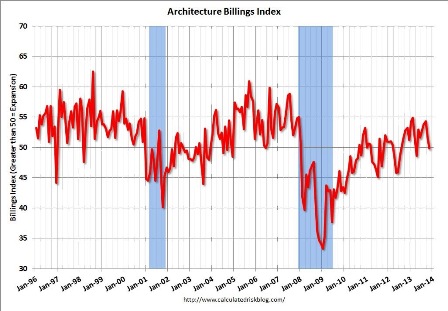
And likewise with the weakness in the Pending Home Sales, Credit Manager’s Index, Architectural billings, down then up durable goods releases, new home sales, the slowing rate of growth of corporate profits, personal income, etc. etc.

And they see positive survey responses as signs of improvement, while I see them as signs they all believe the mainstream forecasts.

;)

And not to forget they see the increase in jobs as evidence of solid growth given the rapidly growing % of sloths, and I see it flat as a % of the population.

;)

Happy New Year/ La Shona Tova to all!!!

pending home sales

Talk about spin!

Highlights


Pending home sales posted a fractional gain of 0.2 percent in November, a weaker-than-expected result but one that nevertheless ends 5 straight months of declines going all the way back to June. The year-on-year rate, at minus 1.6 percent, is weak but at least steady.

The two strongest regions are mixed with the South up 2.3 percent in the month but the Midwest down 3.1 percent. The two weakest regions are also mixed with the West up 1.8 percent but the Northeast down 2.7 percent.

Final sales of existing homes have been one of 2013’s biggest economic disappointments, sliding through the second half of the year as rising mortgage rates, low supply of homes on the market, and high home prices have held down sales. And today’s report doesn’t point to much improvement. Watch for Case-Shiller home price data on tomorrow’s calendar, data that are expected to show continuing gains in what would be another negative indication for sales.


Full size image

Chicago Fed report

Up more than expected, etc.

But interesting that November housing starts were reported lower when the national headline number was up 22%:

Highlights

Most economic data have been turning higher, reflected in the national activity index which jumped to plus 0.60 in November from an upwardly revised minus 0.07 in October. The 3-month average is also rising, to plus 0.25 in November vs an upwardly revised plus 0.12 in October. Readings in the plus column indicate that the economy is growing above its historical trend.

The employment component added 0.28 to the index after subtracting 0.05 in October. The gain reflects the 3 tenths decline in the employment rate to 7.0 percent and the 3,000 rise in non-farm payroll growth to 203,000. But it also reflects a roughly 25,000 improvement in initial jobless claims, an improvement however that reflects special problems in October with the government shutdown and counting problems in California.

The production component contributed the most to the index in November, at plus 0.39 as industrial production rose and capacity utilization went up. The sales/orders/inventories component also contributed to the index, but just barely at plus 0.06 vs plus 0.04 in October.

Consumption & housing was the only component subtracting from the index, at minus 0.12 vs October’s minus 0.13. The main factors here were declines in both housing starts and housing permits.