2009-02-12 USER


[Skip to the end]


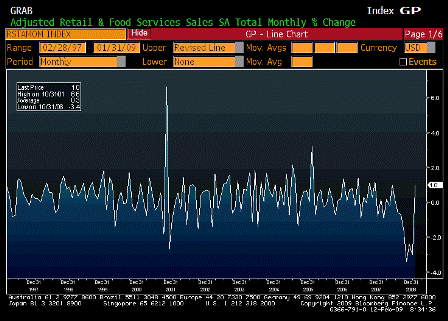
Advance Retail Sales MoM (Jan)

Survey -0.8%
Actual 1.0%
Prior -2.7%
Revised -3.0%

 
Karim writes:

  • Retail sales rise 1% in January for first rise in 7mths.
  • December revised to down 3% from down 2.7%.
  • 3mth annualized rate of change improves from -25.5% to -24.3%.
[top][end]

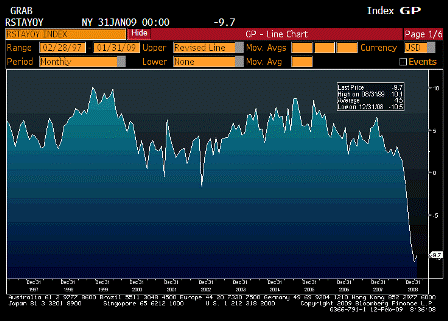
Advance Retail Sales YoY (Jan)

Survey n/a
Actual -9.7%
Prior -10.5%
Revised n/a

[top][end]

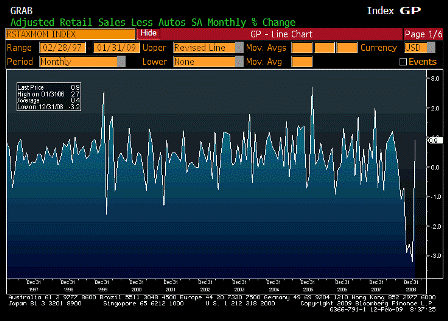
Retail Sales Less Autos MoM (Jan)

Survey -0.4%
Actual 0.9%
Prior -3.1%
Revised -3.2%

[top][end]

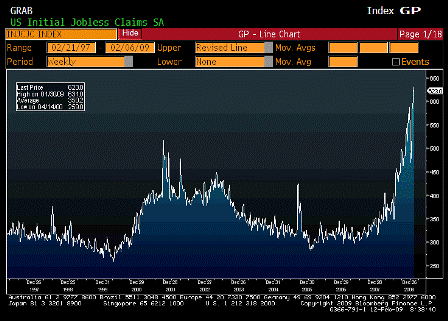
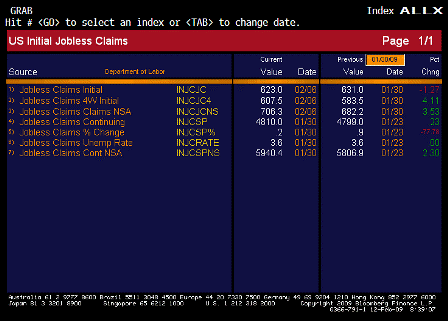
Initial Jobless Claims (Feb 7)

Survey 610K
Actual 623K
Prior 626K
Revised 631K

 
Karim writes:

  • Initial claims drop 8k to 623k
  • [top][end]

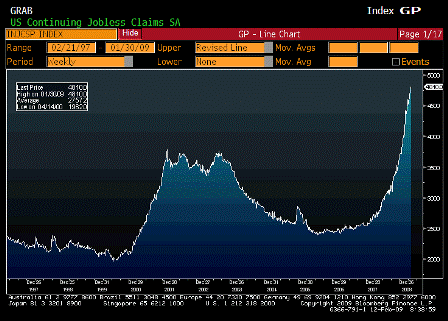
    Continuing Claims (Jan 31)

    Survey 4800K
    Actual 4810K
    Prior 4788K
    Revised 4799K

     
    Karim writes:

    • Continuing claims rise 11k to new cycle high
    • Chicago Fed Prez Evans yesterday that further policy accommodation was needed
    [top][end]

    Jobless Claims ALLX (Jan 31)

    [top][end]

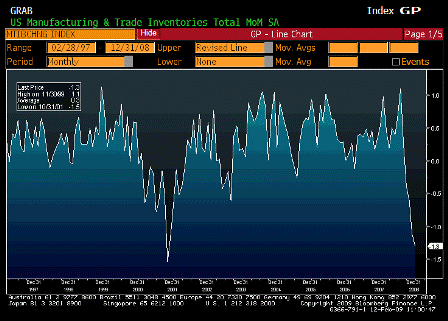
    Business Inventories MoM (Dec)

    Survey -0.9%
    Actual -1.3%
    Prior -0.7%
    Revised -1.1%

    [top][end]

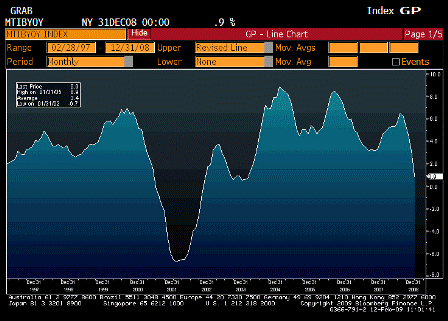
    Business Inventories YoY (Dec)

    Survey n/a
    Actual 0.9%
    Prior 2.9%
    Revised n/a


    [top]

    China crude drop only 8%


    [Skip to the end]

    Not nearly enough to dislodge the Saudis from being the swing producer and price setter now that the Great Mike Masters Inventory Liquidation has run its course.

    Beware an even modest recovery that increased crude consumption.

    China’s Net Crude Imports Decline to Lowest in a Year

    by Wang Ying

    Feb 11 (Bloomberg) — Crude-oil imports dropped by 8 percent to 12.82 million tons from a year earlier while overseas shipments of the fuel more than doubled, rising 156 percent to 450,000 tons, the customs said today.


    [top]

    Clinton to China


    [Skip to the end]

    This should be an interesting exchange:

    China Needs US Guarantees for Treasuries, Yu Says

    by Belinda Cao and Judy Chen

    Feb 11 (Bloomberg) — In talks with Clinton, China will ask for a guarantee that the U.S. will support the dollar’s exchange rate and make sure China’s dollar-denominated assets are safe,” said He in Beijing. “That would be one of the prerequisites for more purchases.


    [top]

    Obama, the FDIC, and private capital


    [Skip to the end]

    The FDIC claims the banks are solvent, and valuing their portfolios as required by law, or they could close them down as they are charged to do, also by law.

    If Obama believes his FDIC officers and bank examiners are liars, he should take action against them at once.

    If he believes the FDIC to be capable and truthful, then what is this about:

    Obama Says US Has ‘No Easy Out’ of Banking Crisis

    by Edwin Chen

    Feb 10 (Bloomberg) — Some banks haven’t been transparent about assets on their books, Obama said. Now they must “just be clear about some of the losses that have been made, because until we do that we’re not going to be able to attract private capital into the marketplace.”

    And the emphasis now seems to be on attracting private capital, hence with this claimed reason banks aren’t raising private capital.


    [top]

    2009-02-11 USER


    [Skip to the end]


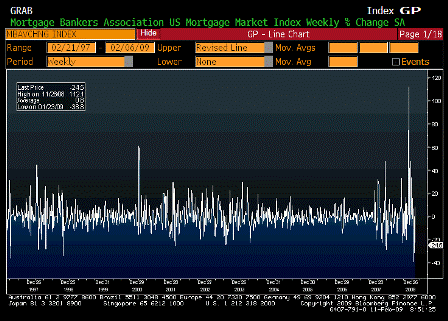
    MBA Mortgage Applications (Feb 6)

    Survey n/a
    Actual -24.5%
    Prior 8.6%
    Revised n/a

    [top][end]

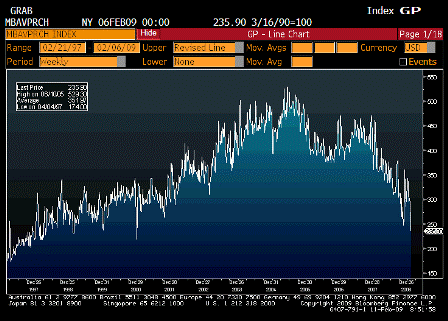
    MBA Purchasing Applications (Feb 6)

    Survey n/a
    Actual 235.90
    Prior 261.40
    Revised n/a

    [top][end]

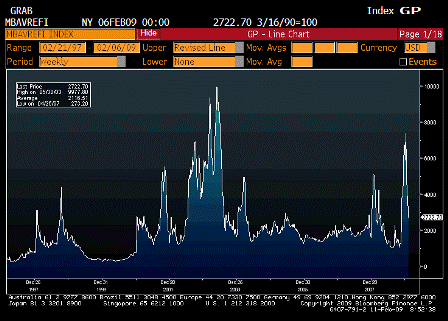
    MBA Refinancing Applications (Feb 6)

    Survey n/a
    Actual 2722.70
    Prior 3906.30
    Revised n/a

    [top][end]

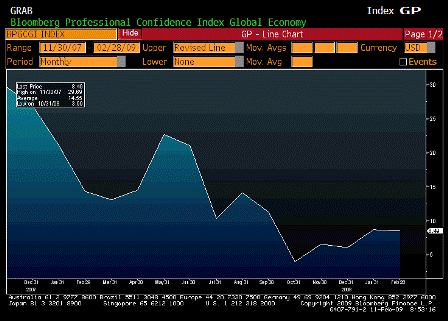
    Bloomberg Global Confidence (Feb)

    Survey n/a
    Actual 8.49
    Prior 8.72
    Revised n/a

    [top][end]

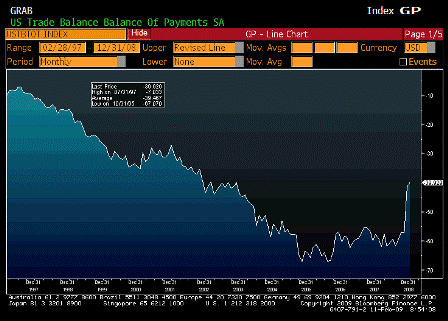
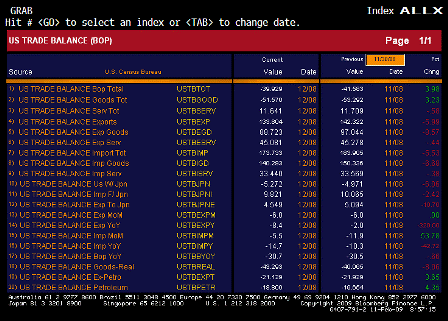
    Trade Balance (Dec)

    Survey -$35.7B
    Actual -$39.9B
    Prior -$40.4B
    Revised -$41.6B

    [top][end]

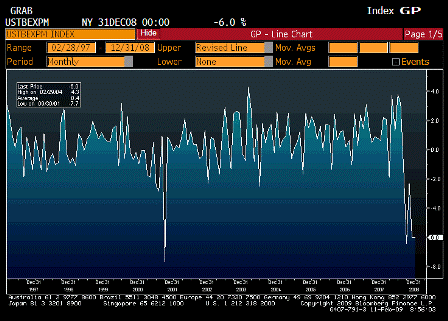
    Exports MoM (Dec)

    Survey n/a
    Actual -6.0%
    Prior -6.0%
    Revised n/a

    [top][end]

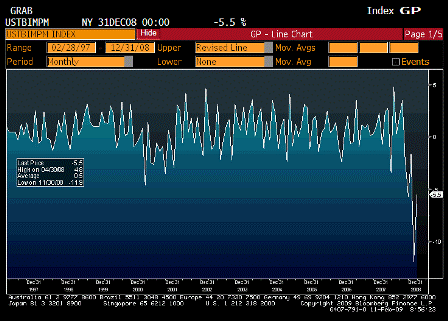
    Imports MoM (Dec)

    Survey n/a
    Actual -5.5%
    Prior -11.9%
    Revised n/a

    [top][end]

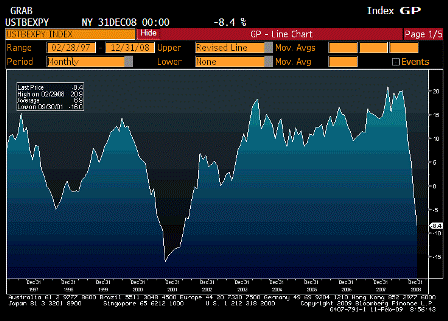
    Exports YoY (Dec)

    Survey n/a
    Actual -8.4%
    Prior -2.0%
    Revised n/a

    [top][end]

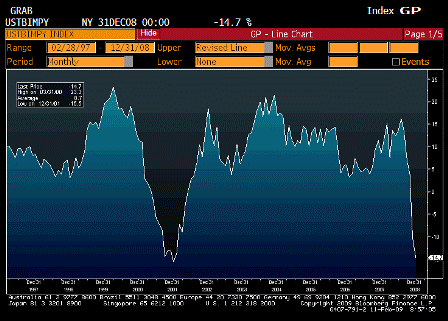
    Imports YoY (Dec)

    Survey n/a
    Actual -14.7%
    Prior -10.3%
    Revised n/a

    [top][end]

    Trade Balance ALLX (Dec)


    [top]

    Fact sheet on Geithner- Obama plan


    [Skip to the end]

    Thanks!

    Seems much of the latest proposal is designed to attract private capital by offering investors a sufficiently high level of profit.

    This directs income to those with financial capital, who now look to be the main beneficiaries of the new administration.

    Hard to expect otherwise from an administration that doesn’t understand how the currency works and therefore believes itself hostage to outside financial capital.

    The salary caps on business leaders is in odd contrast with increased returns on private capital.


    Final Financial Stability Fact Sheet


    [top]

    Re: Franklin Roosevelt’s Treasury secretary, Henry Morgenthau


    [Skip to the end]

    (email exchange)

    Yes, then, like now, they were afraid of the numbers, and couldn’t see them in context of the size of the economy.

    They were also concerned that ongoing deficits were needed to sustain output and employment, just like they are today.

    Within a year after that deficit spending on the war shot up to over 20% of GDP and the Depression ended.

    My guess is that we need deficits averaging about 4-5% of GDP to sustain output and employment. Some periods, like now, we need more, some, like the late 90’s during that credit boom, we needed far less.

    >   
    >   On Tue, Feb 10, 2009 at 10:05 AM, Mike wrote:
    >   
    >   Franklin Roosevelt’s own Treasury secretary, Henry Morgenthau, lamented in
    >   an address to Congressional Democrats in May of 1939:
    >   
    >   ”We have tried spending money. We are spending more than we have ever
    >   spent before and it does not work. And I have just one interest, and if I am
    >   wrong … somebody else can have my job. I want to see this country
    >   prosperous. I want to see people get a job. I want to see people get enough
    >   to eat. We have never made good on our promises … I say after eight years
    >   of this Administration we have just as much unemployment as when we started
    >   … And an enormous debt to boot!”
    >   


    [top]

    2009-02-10 USER


    [Skip to the end]


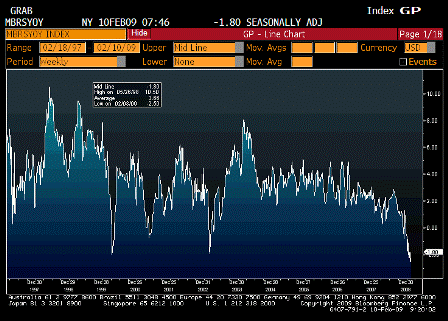
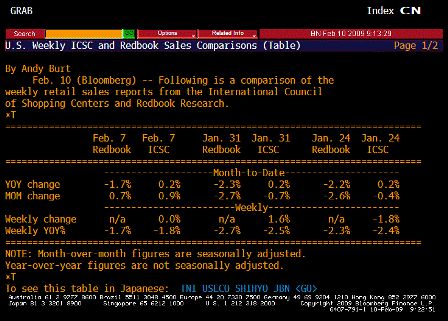
    ICSC UBS Store Sales YoY (Feb 10)

    Survey n/a
    Actual -1.80%
    Prior -2.50%
    Revised n/a

    [top][end]

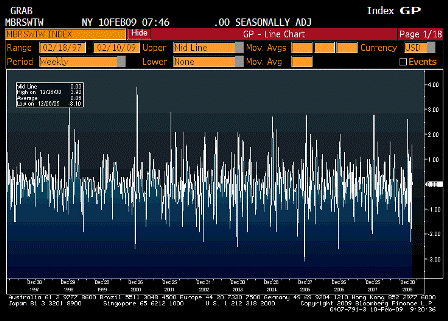
    ICSC UBS Store Sales WoW (Feb 10)

    Survey n/a
    Actual 0.00%
    Prior 1.60%
    Revised n/a

    [top][end]

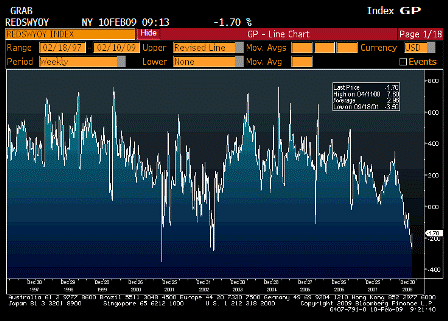
    Redbook Store Sales Weekly YoY (Feb 10)

    Survey n/a
    Actual -1.70%
    Prior -2.70%
    Revised n/a

    [top][end]

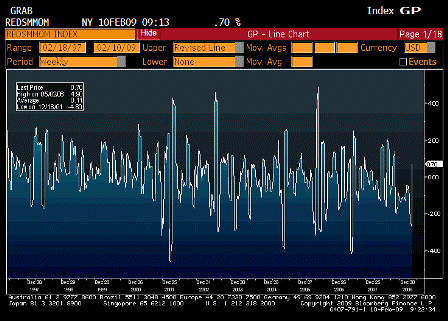
    Redbook Store Sales MoM (Feb 10)

    Survey n/a
    Actual 0.70%
    Prior -2.70%
    Revised n/a

    [top][end]

    ICSC UBS Redbook Comparison TABLE (Feb 10)

    [top][end]

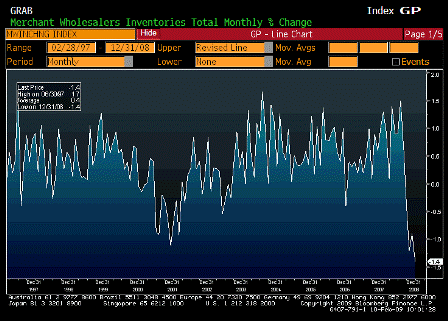
    Wholesale Inventories MoM (Dec)

    Survey -0.7%
    Actual -1.4%
    Prior -0.6%
    Revised -0.9%

    [top][end]

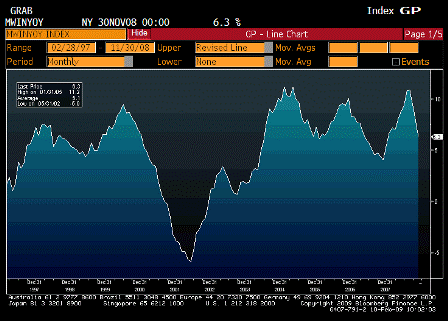
    Wholesale Inventories YoY (Dec)

    Survey n/a
    Actual 6.3%
    Prior 7.9%
    Revised n/a

    [top][end]

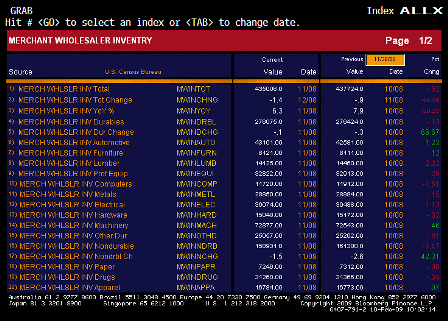
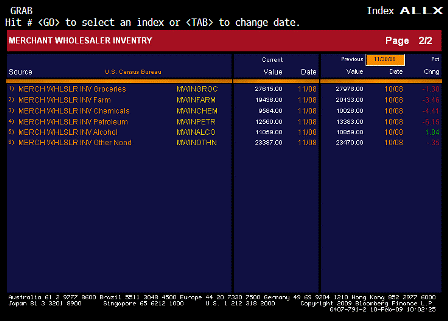
    Wholesale Inventories ALLX 1 (Dec)

    [top][end]

    Wholesale Inventories ALLX 2 (Dec)

    [top][end]

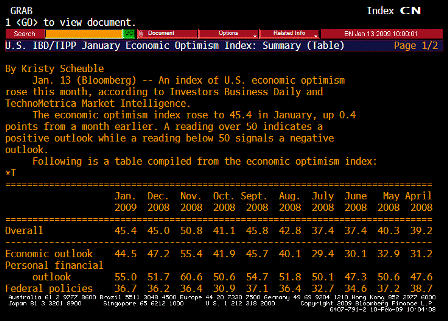
    IBD TIPP Economic Optimism (Feb)

    Survey 44.0
    Actual 44.6
    Prior 45.4
    Revised n/a


    [top]

    Keynes on payroll tax cuts


    [Skip to the end]

    Interesting how much of what I say turns out to have been written by Keynes:

    Greg Mankiw, Keynes and the Payroll Tax:

    The Mature Keynesian Perspective II
    As I previously noted, the older (and presumably wiser) John Maynard Keynes was skeptical of using infrastructure projects as a countercyclical tool. NYU economist Mario Rizzo now brings to my attention that the mature Mr Keynes also favored the payroll tax as a countercyclical policy instrument:

    In correspondence with the economist James Meade in 1942 Keynes says he is “converted” to Meade’s idea of altering the social security payroll tax over the business cycle. Here are Keynes’s words:

    I am converted to your proposal…for varying rates of contributions in good and bad times.

    (June 16, 1942). Keynes, Collected Writings, vol. 27, p. 208.

    …[Y]ou are able to show fluctuations in income of an order of magnitude which is significant in the context… So far as employees are concerned, reductions in contributions are more likely to lead to increased expenditure as compared with saving than a reduction in income tax would, and are free from the objection to a reduction in income tax that the wealthier classes would benefit disproportionately. At the same time, the reduction to employers, operating as a mitigation of the costs of production, will come in particularly helpfully in bad times.

    (July 1, 1942). Keynes, Collected Writings, vol. 27, p. 218.”


    [top]