pension funds, debt issuance, bank loans, earnings

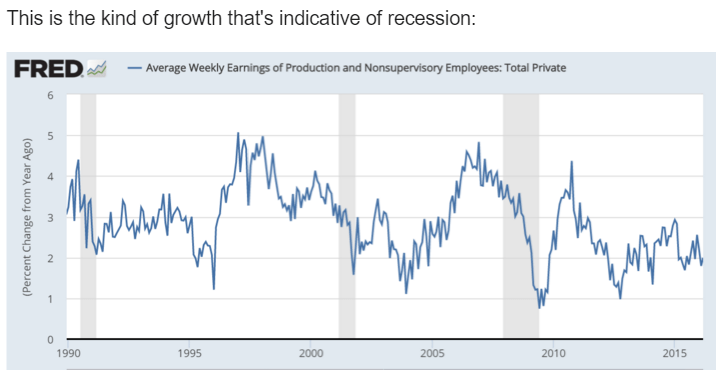
Contributions reduce aggregate demand:

US faces ‘disastrous’ $3.4tn pension funding hole

(FT) — The US public pension system has developed a $3.4tn funding hole. The collective funding shortfall of US public pension funds is three times larger than official figures showed. Joshua Rauh, a senior fellow at the Hoover Institution, who carried out the study, said: “The pension problems are threatening to consume state and local budgets in the absence of some major changes. Currently, states and local governments contribute 7.3 per cent of revenues to public pension plans, but this would need to increase to an average of 17.5 per cent of revenues to stop any further rises in the funding gap, the research said.

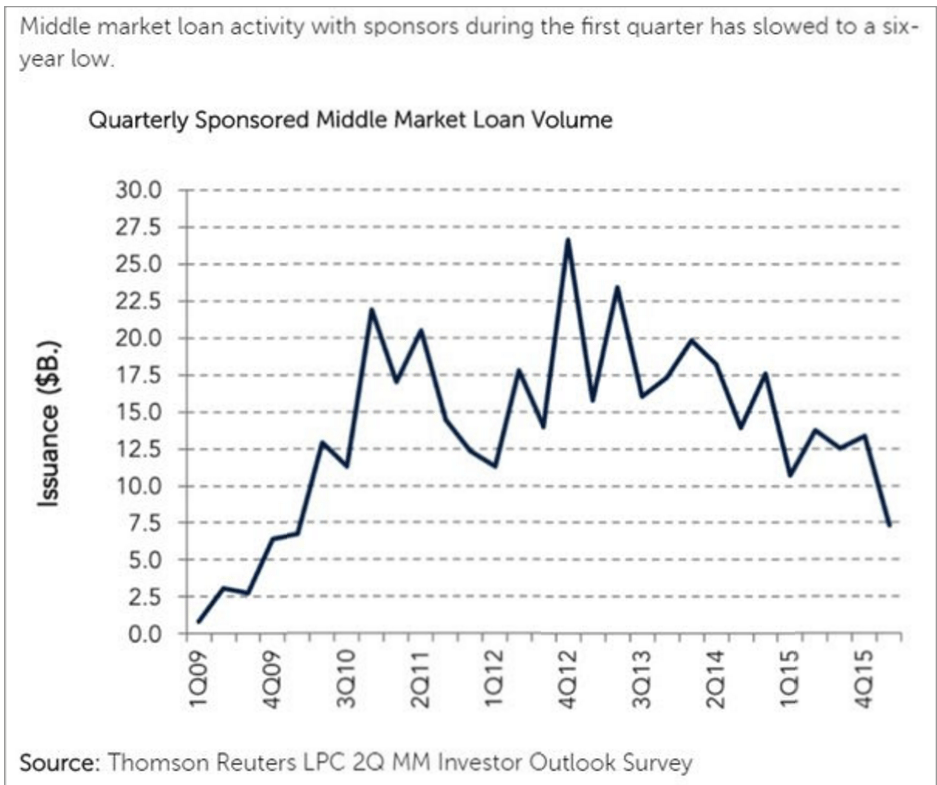
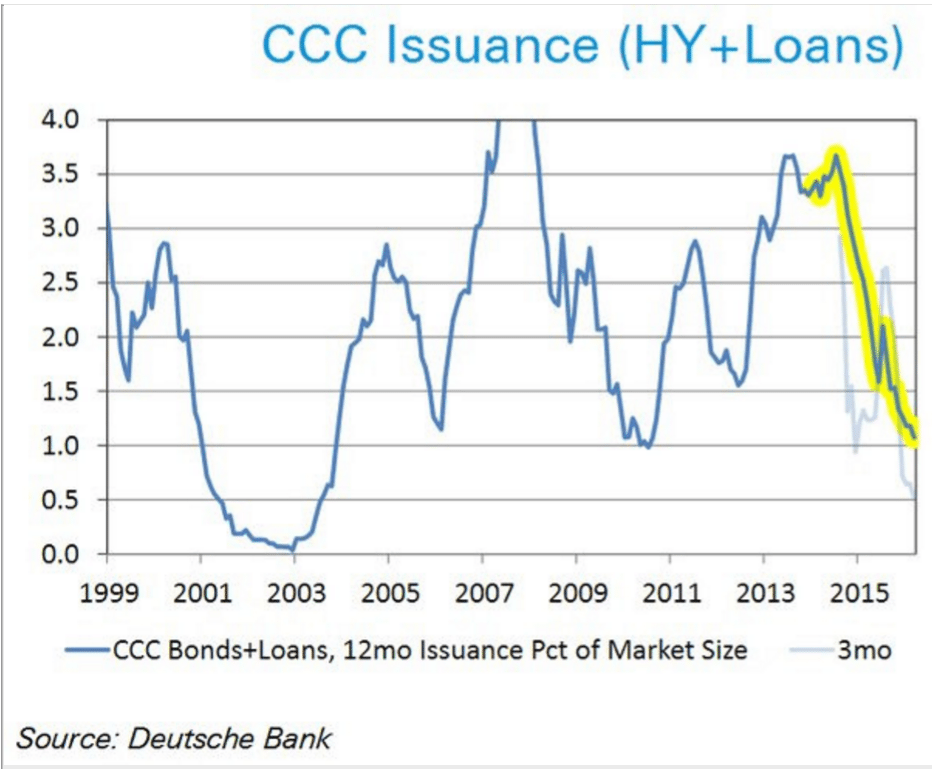
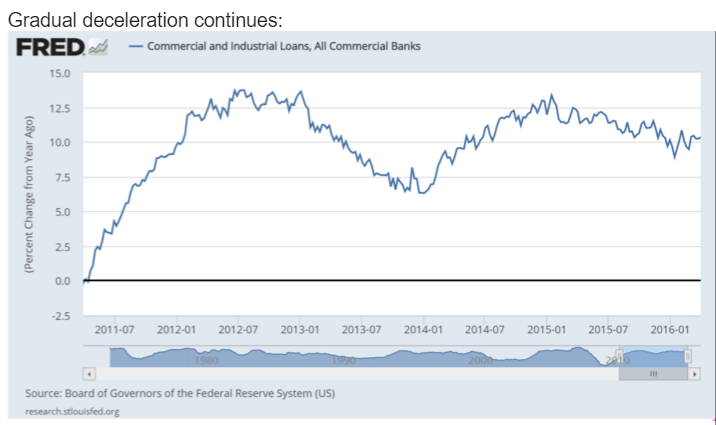
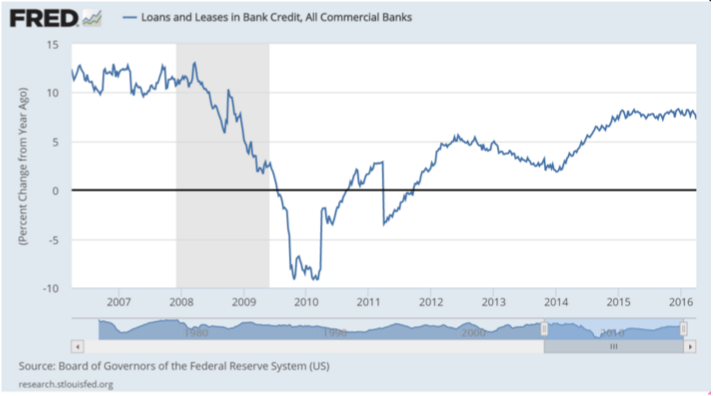
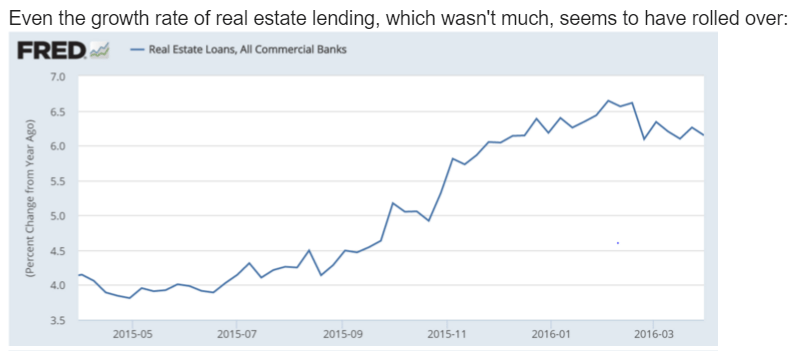
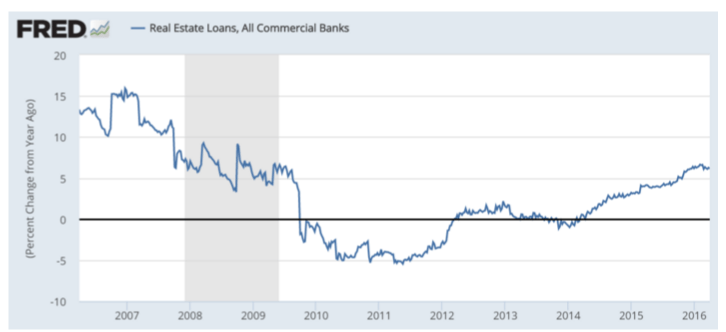
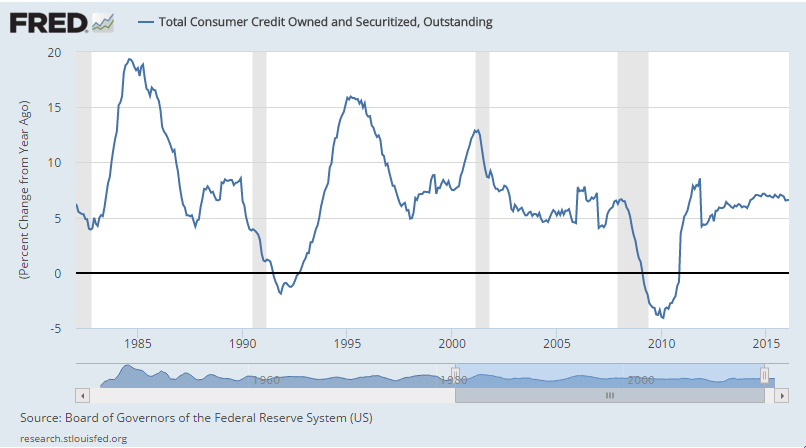
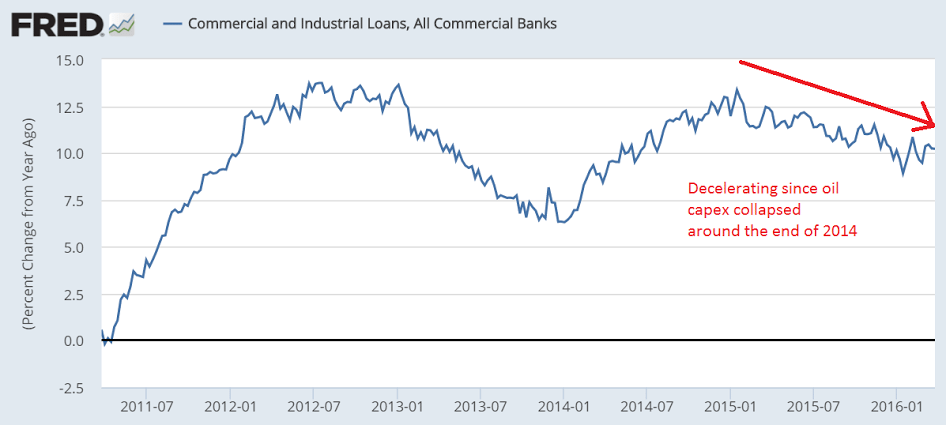
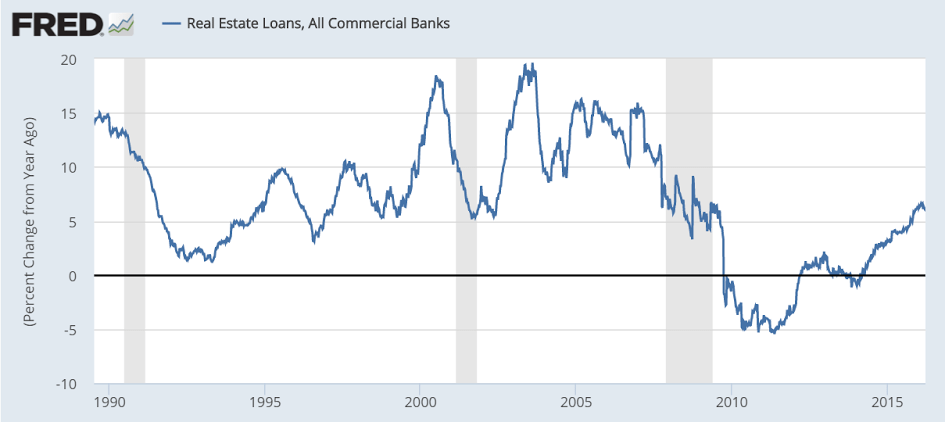
No growth in credit expansion here:
er-4-11-1
er-4-11-2
er-4-11-3
er-4-11-4
er-4-11-5
er-4-11-6
er-4-11-7

Wholesale trade, Earnings, Apartment market, Rail traffic

Here we go- the inventory liquidation looks to be underway in earnest.

Again, sales also fell, so the inventory to sales ratio remains at a still very high 1.36%.

Look for more downward revisions to Q1 GDP:

Wholesale Trade
er-4-8-1
Highlights
Wholesalers aggressively drew down their inventories in February, 0.5 percent lower following a revised 0.2 percent draw in January. Auto inventories were worked sharply lower in February, down 1.0 percent for the largest monthly decline since September 2013.

Sales in the wholesale sector fell 0.2 percent in the month for a 4th straight decline in a string that offers clear evidence of economic weakness. Yet the decline for inventories was greater than that for sales, making for an improvement in the stock-to-sales ratio which fell to a less heavy 1.36 from 1.37.

Auto sales have been struggling this year and the decline in wholesale auto inventories could be an early sign of correction for this industry. Still, draws are always welcome news when demand is soft. Note that today’s inventory decline and downward revision are negatives for first-quarter GDP estimates.

Can the economy grow faster than the sales of the S&P 500?

Weak U.S. earnings expectations set stage for stock gains

(Reuters) — Analysts expect profits of S&P 500 companies to be down 7.4 percent from a year ago, according to Reuters. The S&P 500 is trading at about 16.6 times its components’ earnings over the next 12 months. Roughly 80 percent of S&P companies that have already declared first-quarter results are beating expectations. Analysts started the year expecting a 2.3 percent increase in S&P 500 earnings. The drop in analysts’ views between Jan. 1 and now was almost triple the typical 3.5 percent preseason decline. S&P 500 sales are expected to have fallen just 1.2 percent in the quarter.

By FactSet’s count, first-quarter earnings are forecast to log a contraction of 8.5%, with energy companies garnering much of the blame. As recently as December, the S&P 500’s earnings-growth rate was projected to be slightly positive during the first quarter.

U.S. Apartment Market Shows Signs of Losing Steam

(WSJ) — The national vacancy rate, which has risen for three consecutive quarters, hit 4.5% in the first three months of the year, up from a recent low of 4.2% in the second quarter of 2015, according to market research firm Reis Inc. Average rents, meanwhile, increased by 4.1% to $1,248 in the first quarter from a year earlier, compared with the 2015 first quarter’s 5% increase, according to Axiometrics Inc. The number of occupied new apartments across the country climbed by just over 20,000 units in the first quarter, compared with the five-year average of about 40,000 for the quarter, according to apartment tracker MPF Research.

Rail Week Ending 02 April 2016: March Totals Down 11 Percent From One Year Ago

Week 13 of 2016 shows same week total rail traffic (from same week one year ago) declined according to the Association of American Railroads (AAR) traffic data. All rolling averages are in decline.

ECB footnote, Trade, Fed Atlanta, Redbook retail sales, ISM non manufacturing

Who would’ve thought?
;)

The ECB makes this point in a footnote on page 10:

The ECB Explains Why Central Banks Can’t Go Bankrupt in a Footnote

“Central banks are protected from insolvency due to their ability to create money and can therefore operate with negative equity.”

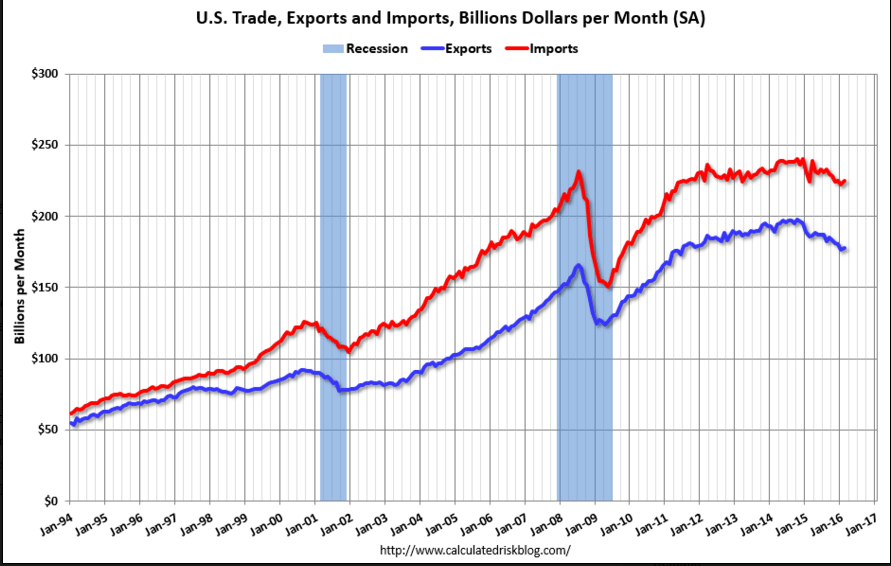
Trade deficit higher than expected.

GDP estimates being revised down:

International Trade
er-4-5-1
er-4-5-2

And note the general downturn in trade which has always been associated with recessions in the past:
er-4-5-3
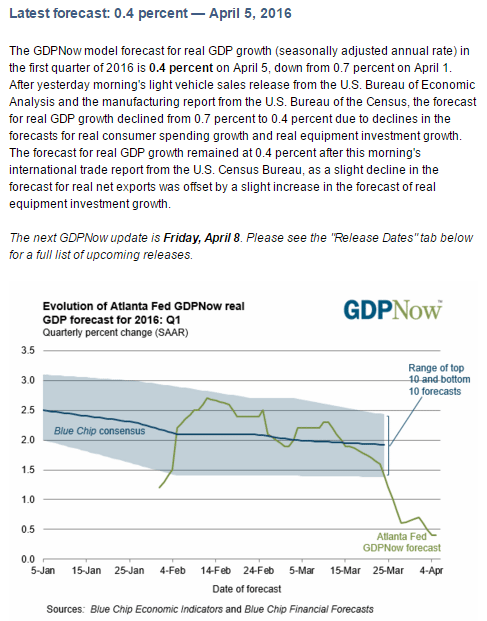
GDP growth forecast down to only +.4% annualized, and the inventory correction impulse is yet to come:
er-4-5-4
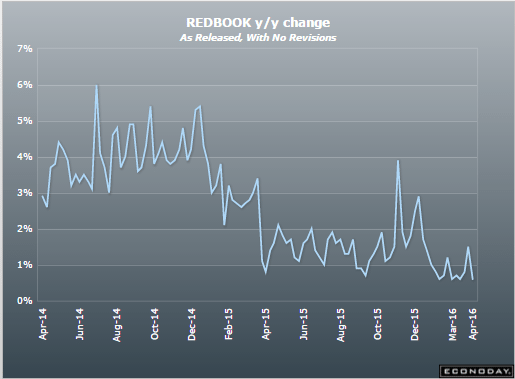
No sign of life here yet:
er-4-5-5
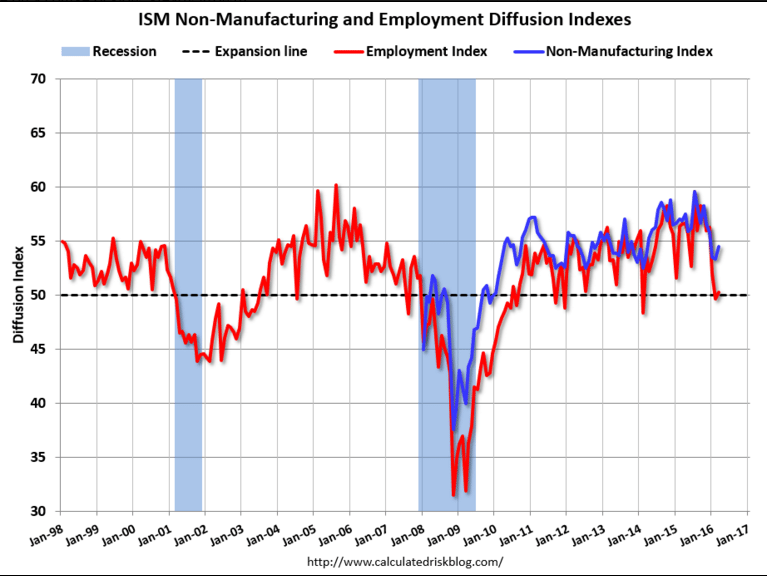
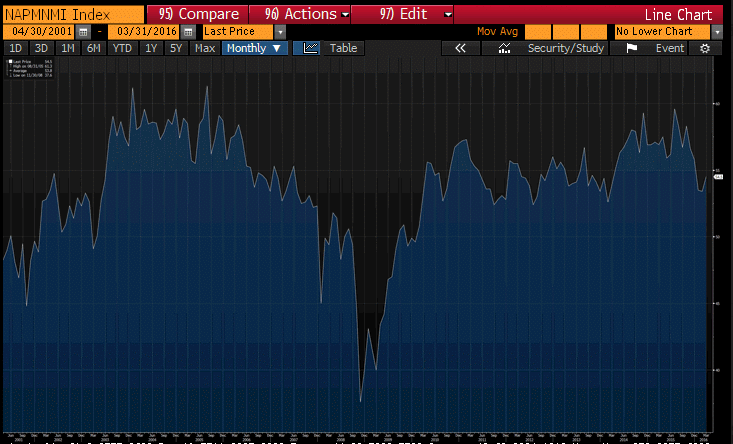
Up a bit, but the trend still looking lower from last summer’s highs, as the slump in oil capex works its way through the economy:

ISM Non-Mfg Index
er-4-5-6
er-4-5-7

Labor market index, Factory orders, Durable goods

The Fed’s labor market index is showing some slack:

Labor Market Conditions Index
er-4-4-1
Highlights
Employment has been strong, especially the participation rate, but isn’t being reflected in the Federal Reserve’s labor market conditions index which came in at minus 2.1 in March vs a downwardly revised 2.5 percent decline in February. The index, experimental in nature, is a broad composite of 19 separate indicators and is rarely cited by policy makers.

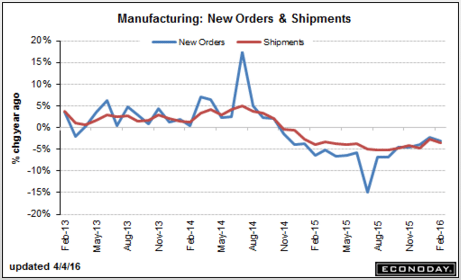
Another bad one, on the heels of very weak auto sales. And even though inventories are now falling, shipments and sales are falling just as fast, keeping the inventory to shipments and sales ratios at elevated levels:

Factory Orders
er-4-4-2
Highlights
Factory orders fell 1.7 percent in February, more than reversing what was a strong January which, however, is revised 4 tenths lower to a gain of 1.2 percent. February weakness includes a 0.4 percent drop in non-durable orders, one that reflects weakness in petroleum and coal products, and a steep 3.0 percent decline in durable orders which are revised 2 tenths lower from the advance release of minus 2.8 percent.

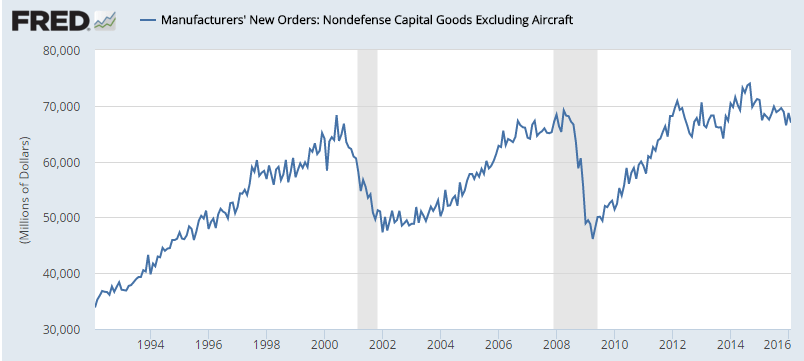
The February report makes for uncomfortable reading with orders for core capital goods falling 2.5 percent and pointing to continuing trouble for business investment. Other readings include a sharp 0.7 percent fall for total shipments, a 0.3 percent fall for unfilled orders, and a 0.4 percent fall for inventories though the latter is actually a positive given the decline in shipments and keeps the inventory-to-shipments ratio at 1.37.

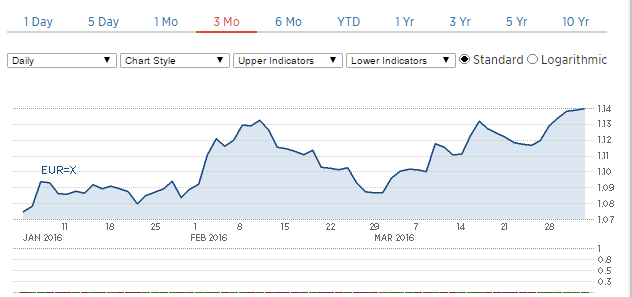
This year’s fall in the dollar did nothing to visibly boost February’s data though there are hints of relief in last week’s giant surge for the ISM new orders index, one that points to a significant rebound in this report for March.

er-4-4-3

Durable Goods Orders -3.0% in Feb.

New orders for manufactured durable goods in February, down three of the last four months, decreased $7.0 billion or 3.0% to $229.1 billion, down from the previously published 2.8% decrease. This followed a 4.3% January increase.

Car sales, Employment, Construction spending, Earnings, ISM manufacturing, Consumer sentiment

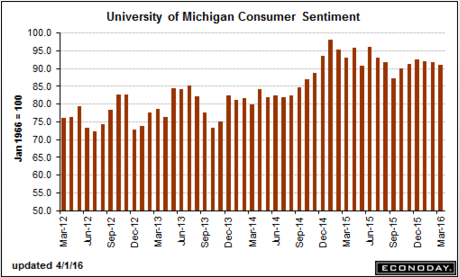
This is the big news today, and there’s nothing good about it. It’s way below expectations and continues the declilne from last year’s peak:

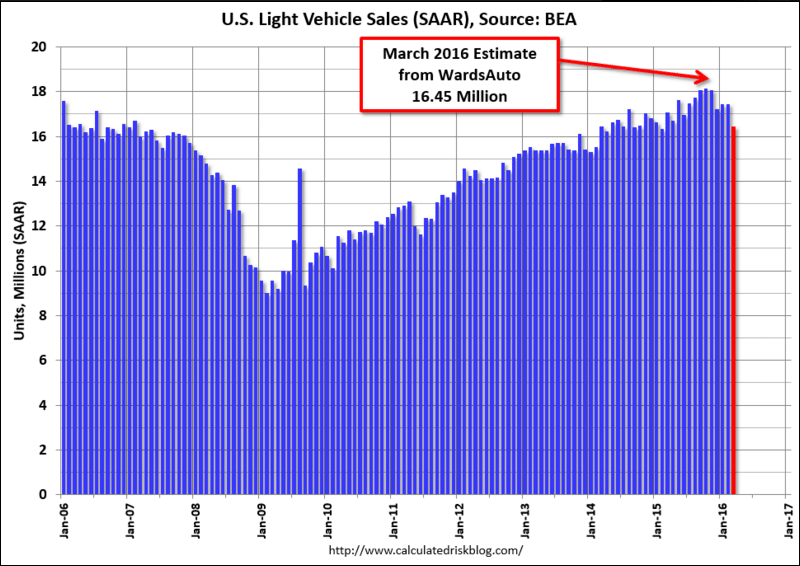
U.S. Light Vehicle Sales decline to 16.45 million annual rate in March

by Bill McBride

Based on an estimate from WardsAuto, light vehicle sales were at a 16.45 million SAAR in March.

That is down about 4% from March 2015, and down about 6% from the 17.43 million annual sales rate last month.
er-4-1-1
A bit better than expected, and, again, the growth rate (though generally declining) remains above GDP growth, indicating negative productivity growth. Also, it’s becoming more obvious that the ‘functional’ labor force has been a lot larger than most believed ever since the economy collapsed in 2008. Likewise, wage gains remain far below those of prior recoveries.

Employment Situation
er-4-1-2
Highlights
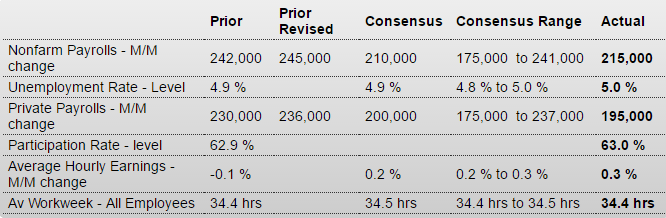
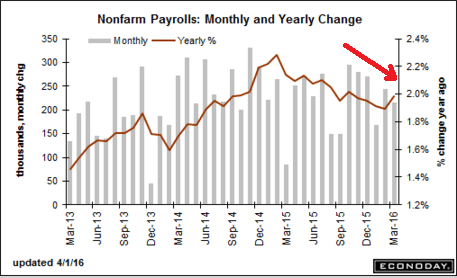
The labor market is growing with nonfarm payrolls up a higher-than-expected 215,000 in March and with the labor participation rate rising 1 tenth to 63.0 percent. The gain in participation, reflecting new job seekers coming into the market, is pulling the unemployment rate higher, up 1 tenth in March to 5.0 percent in what is the result of strength, not weakness, for employment. And there’s pressure in average hourly earnings, at least on the monthly level with a higher-than-expected gain of 0.3 percent that, however, did not lift the year-on-year which is sagging at plus 2.3 percent.

Payrolls by industries show further big gains for trade & transportation, construction and also retail. Professional & business services are also strong suggesting that employers have plenty of jobs to fill. Manufacturing, however, is once again down.

Not showing greater strength is the workweek, steady at 34.4 hours, nor manufacturing hours, with a decline in the latter pointing to another month of disappointment for the factory sector.

Revisions are not a factor in today’s report, one that, despite weak spots, points to accelerating economic growth. Yet the report is probably not strong enough to reawaken talk of a rate hike this month, at least not following Janet Yellen’s dovish speech on Tuesday, though the June FOMC may seem like a rising possibility.
er-4-1-3
This is only gradually getting back to the LOWS of the last two cycles:
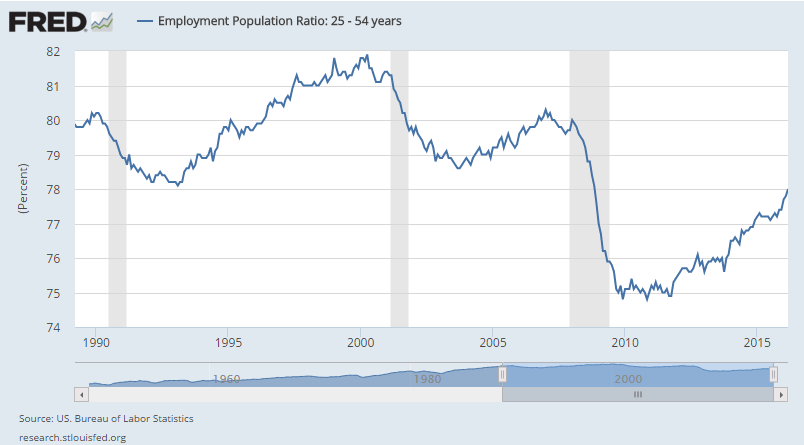
er-4-1-4
With every little wiggle up they scream WAGE INFLATION, but then wages revert lower and nothing is said. Then a wiggle up this week and it’s “WAGE INFLATION!!!!” again.
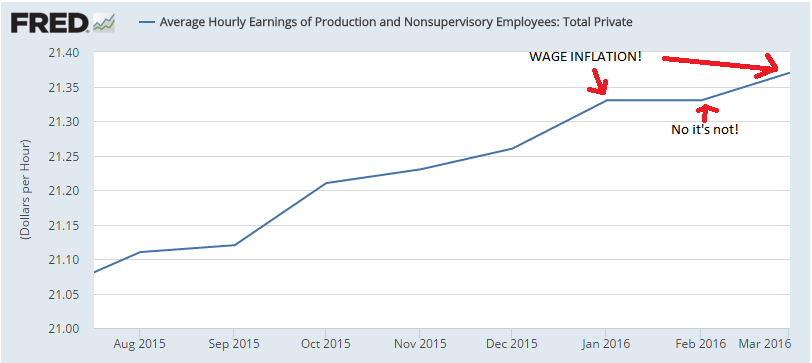
er-4-1-5
But a look at the year over year growth chart shows wage growth remains both low and depressed, a clear sign of a big whopping shortage of aggregate demand:
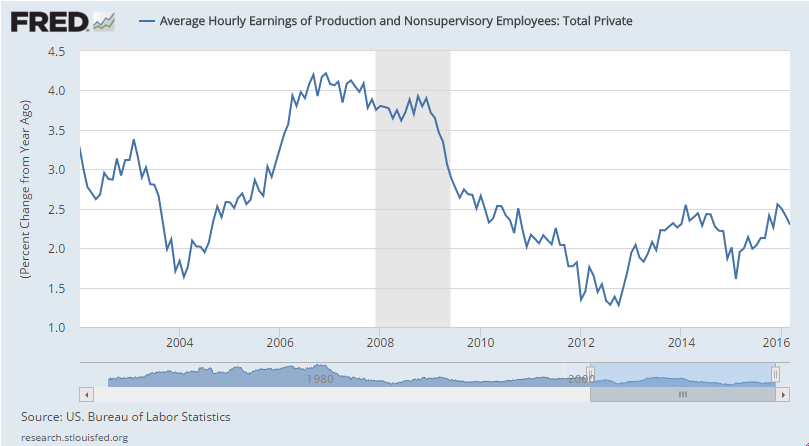
er-4-1-6
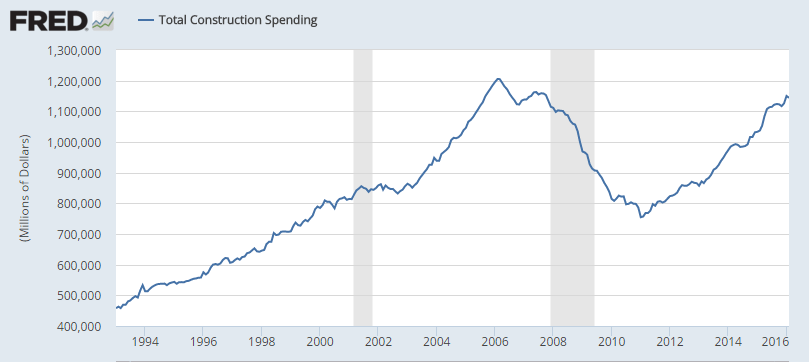
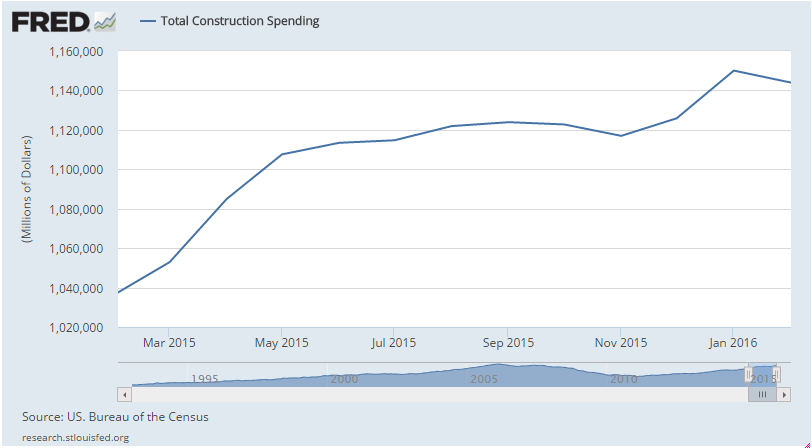
Cold winter last year, warm winter this year. The weather only gets mentioned when they are trying to make low prints look better? Note from the charts it’s still well below pre recession levels without adjusting for inflation:

Construction Spending

er-4-1-7
Highlights
A 0.5 percent decline for February masks what is otherwise a very solid construction spending report that includes upward revisions and gains for the residential component. January is now revised 6 tenths higher to a gain of 2.1 percent with the residential component moving from unchanged to plus 0.9 percent. New single-family homes now show a 0.5 percent gain for January and a very strong 1.2 percent gain for February. Multi-family homes also show a gain, up 0.9 percent following a 3.6 percent January surge. Year-on-year growth for residential spending is now in the double digits at 10.7 percent.

It’s the non-residential component that dragged February’s totals lower, down 1.3 percent with weakness in the manufacturing, educational, and highway & street subcomponents. Still, all together, non-residential construction spending, boosted especially by hotels and also offices, is tracking in line with the residential side, at a year-on-year plus 10.6 percent.

Construction spending, along with building strength for construction employment, are isolated but still fundamental positives for the housing sector where sales growth and price appreciation, however, have stalled.
er-4-1-8
And note how flat it’s been since May:
er-4-1-9

No Easy Way Higher Without Earnings Growth

March 31 (WSJ) — First-quarter earnings for S&P 500 companies are forecast to slump 8.5% from the same period last year, according to FactSet. Revenues at S&P 500 companies are forecast to log a drop of 1.1% in the first quarter, according to FactSet, which would mark the fifth consecutive quarter of declining revenues. Analysts polled by FactSet predict earnings at S&P 500 companies will rise 3.8% in the third quarter from the same period of 2015. Revenues are forecast to advance 1.9% in the third quarter. Profits and revenues are expected to accelerate in the fourth quarter, with analysts forecasting an 11% increase in earnings and a 4.3% rise in revenues for S&P 500 companies.

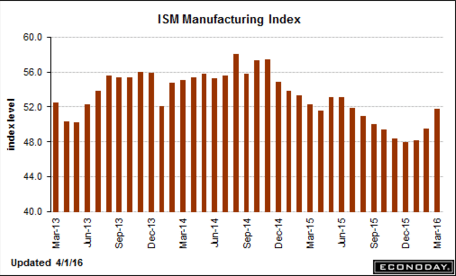
Better than expected but the rest of the news tells me this likely to go back down:
er-4-1-10
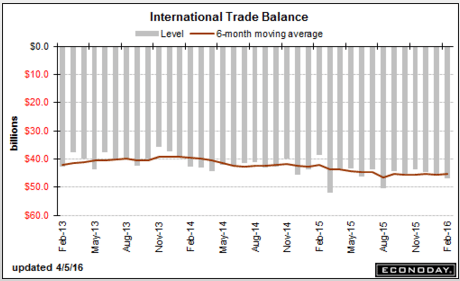
Continues to soften:
er-4-1-11

Mtg purchase apps, ADP, Fed comment

Sorry, wrote this up yesterday and never sent it.

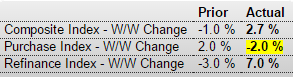
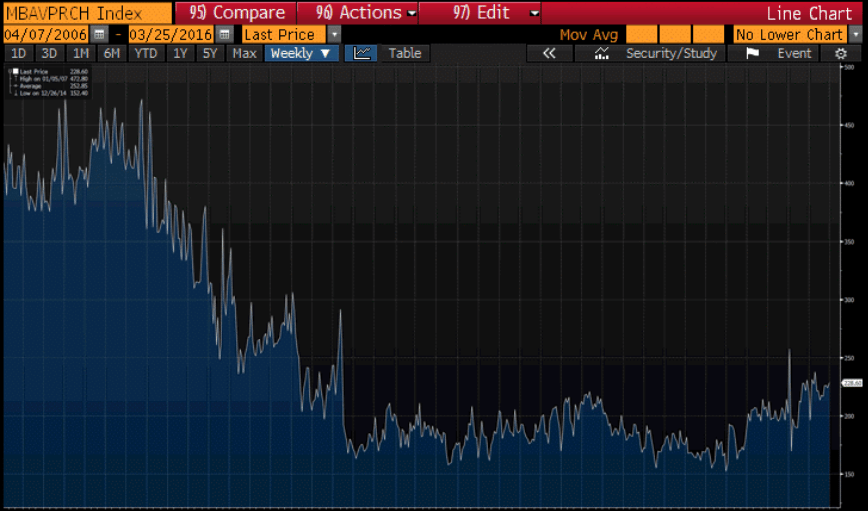
Purchase apps remain depressed, though a bit off the bottom, and depressed housing sales reports indicate the growth in mtg purchase apps is more about how purchases are financed rather than an indicator of total home purchases:

MBA Mortgage Applications
er-3-31-7
Highlights
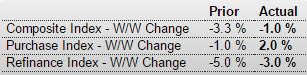
Purchase applications for home mortgages rose by 2 percent in the March 25 week, with the year-on-year increase continuing very strong at 21 percent. Refinance applications declined by 3 percent from the previous week, continuing recent softness in this component as mortgage rates, while still very low, have edged higher of late. The average rate for 30-year conforming loans ($417,000 or less) increased by 1 basis point from the prior week to 3.94 percent. Though not weak, the report does little to raise hopes of an awakening of the recently quite dormant housing market. A glimmer of such hope may have appeared after Monday’s report of a surprisingly strong 3.5 percent month-to-month rise in pending home sales in February.

Purchase apps:
er-3-31-8
The ADP forecast for Friday’s number is down from last month but not terrible, and note they revised last month’s forecast lower which means they are forecasting a downward revision of last month’s employment number:

ADP Employment Report
er-3-31-9
Highlights
Little else may be falling into place but the U.S. labor market is likely to show its strength once again in Friday’s March employment report, based at least on ADP’s private payroll count which came in very near expectations at 200,000 on the nose. There’s little change from February when ADP’s sample posted revised growth of 205,000. Expectations for Friday’s private payrolls are also at 200,000 which would prove a very healthy level though down from February’s even stronger 230,000. ADP isn’t always an accurate barometer of the government’s data but it has definitely been useful the last several reports, signaling convincing acceleration in December, slowing in January, then strength again in February.

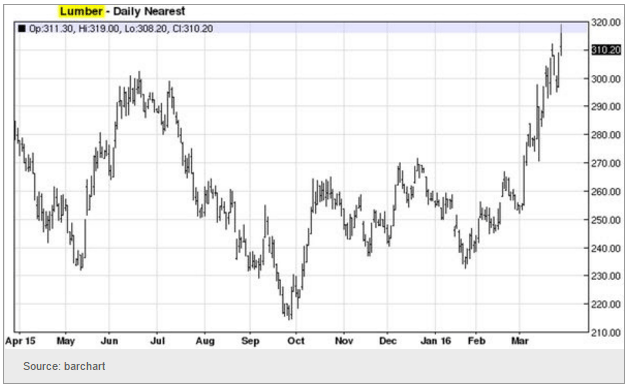
Recent Fed comments have caused a lot of portfolio shifting that has driven the dollar lower and most commodity prices higher, most likely due to short covering, and not a change in end user demand:
er-3-31-10

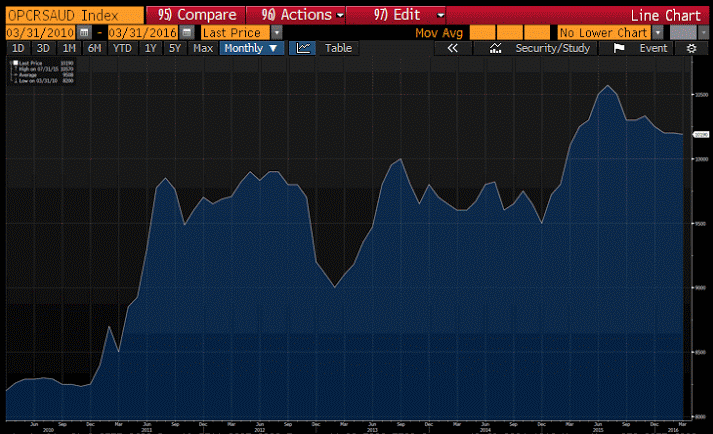
This came out today- Saudi aren’t selling as much as they’ve been hoping to sell, even as US oil production slumps.

If they leave their discount pricing policy in place prices will be heading a lot lower soon. Their new pricing update should be out in the next few days:
er-3-31-11