The Center of the Universe

St Croix, United States Virgin Islands

MOSLER'S LAW: There is no financial crisis so deep that a sufficiently large tax cut or spending increase cannot deal with it.

Fitch: Why Sovereigns Default on Local Currency Debt

Posted by WARREN MOSLER on May 10th, 2013

Seems like subversive propoganda to me.
They deliberately ignore the obvious fixed vs floating fx distinction, for example.
A few comments below:

Fitch: Why Sovereigns Default on Local Currency Debt

May 10 (Fitch) — Fitch Ratings says in a newly-published report that the popular perception that sovereigns cannot default on debt denominated in their own currency because of their power to print money is a myth. They can and do.

Local currency defaults in the recent era include: Venezuela (1998), Russia (1998), Ukraine (1998), Ecuador (1999), Argentina (2001) and Jamaica (2010 and 2013). Nonetheless, we recognise that local currency defaults are less frequent than foreign currency defaults and are unlikely for countries with debt mainly denominated in local currency at long maturity.

Russia and Argentina, for example, had headline, well publicized fixed exchange rate policies, where they fixed the value of their currency to the $US. Failing to recognize that in this report is intellectually dishonest.

To assess the capacity which sovereigns have to inflate away their debt, this report uses our debt dynamics model to illustrate how much surprise inflation might be required for three hypothetical scenarios. For a country with a large primary budget deficit, gains to the debt to GDP ratio from even quite high inflation would be short-lived. While for a country with a debt to GDP ratio of 100%, primary deficit of 1%, real growth equal to the real interest rate and a 10-year average debt maturity, it would take a jump to 30% inflation (from our 2% baseline) for three years and 10% thereafter to bring the debt ratio below the 60% Maastricht threshold.

There is no such thing as ‘inflate away their debt’ as govt debt represents the global net savings of financial assets of that currency. So all that can be said in this context is that ‘savings desires’ are, for all practical purposes, always going to be there as some % of GDP.

Undoubtedly, higher inflation can be used to raise seigniorage (the difference between the value of money and the cost to print it)

This is nonsensical with floating exchange rate policy ( non convertible currency) as, for example, all US govt spending can be called ‘printing’ as it’s just a matter of the Fed crediting a member bank account. Likewise, taxing is ‘unprinting’ as it’s just a matter of debiting a member bank account. With fixed fx policy, it’s the ratio of convertible currency outstanding vs the actual fx reserves at the CB, a very different matter.

and remittance of central bank profits to the government, up to a point. Nevertheless, in the long run, the ratio of government debt/GDP will rise if the government is running a primary budget deficit (excluding interest payments and including seigniorage), assuming the real growth rate does not exceed the real interest rate, irrespective of the inflation rate.

An unanticipated burst of inflation can reduce the real value of government debt as long as the debt is not of short maturity (as higher inflation is quickly reflected in the marginal cost of funding), index linked or denominated in foreign currency (as the exchange rate would depreciate). Thus countries with such characteristics – which give them ‘monetary sovereignty’ – do have some capacity to inflate away their debt.

Linking govt payments to an index is a form of fixed exchange rate policy and yes, govts can and do default on these types of fixed exchange rate ‘promises.’

Inflation is economically and politically costly.

Politically costly, yes, but economically, there are no studies that show real costs to the economy from inflation.

Thus, even if a sovereign has a capacity to inflate away its debt, it might choose not to. It is also far from clear how much money would need to be printed to deliver the ‘right’ inflation rate, as the current debate over quantitative easing highlights. Instead a sovereign might view a Distressed Debt Exchange (DDE) as a less bad policy option. Fitch classifies a DDE as a default.

This is a confused rhetoric and a display of total ignorance of actual monetary operations.

The myth that sovereigns that can print money cannot default on debt in their own currency has also fed the proposition that such local currency ratings are irrelevant.

Fitch is again refusing to distinguish convertible and non convertible currency policy.

Fitch disagrees that default is inconceivable or impossible. The agency agrees that countries with strong monetary sovereignty and financing flexibility are unlikely to default and these are important factors in Fitch’s sovereign rating methodology that affect both local and foreign currency ratings.

A sovereign’s local currency rating is closely linked to its foreign currency rating. It is typically one or two notches higher, owing to the sovereign’s somewhat greater capacity to pay debt in local currency, as taxes are usually paid in local currency and it may have better access to a stable domestic capital market, as well as some capacity to print money. It may also be more willing to service local currency debt if more of it is held by local banks and other residents.

Posted in Currencies, Government Spending, Inflation | No Comments »

Wholesale sales

Posted by WARREN MOSLER on May 9th, 2013

Though a bit old, this March release is yet another indicator that shows signs of rolling over.

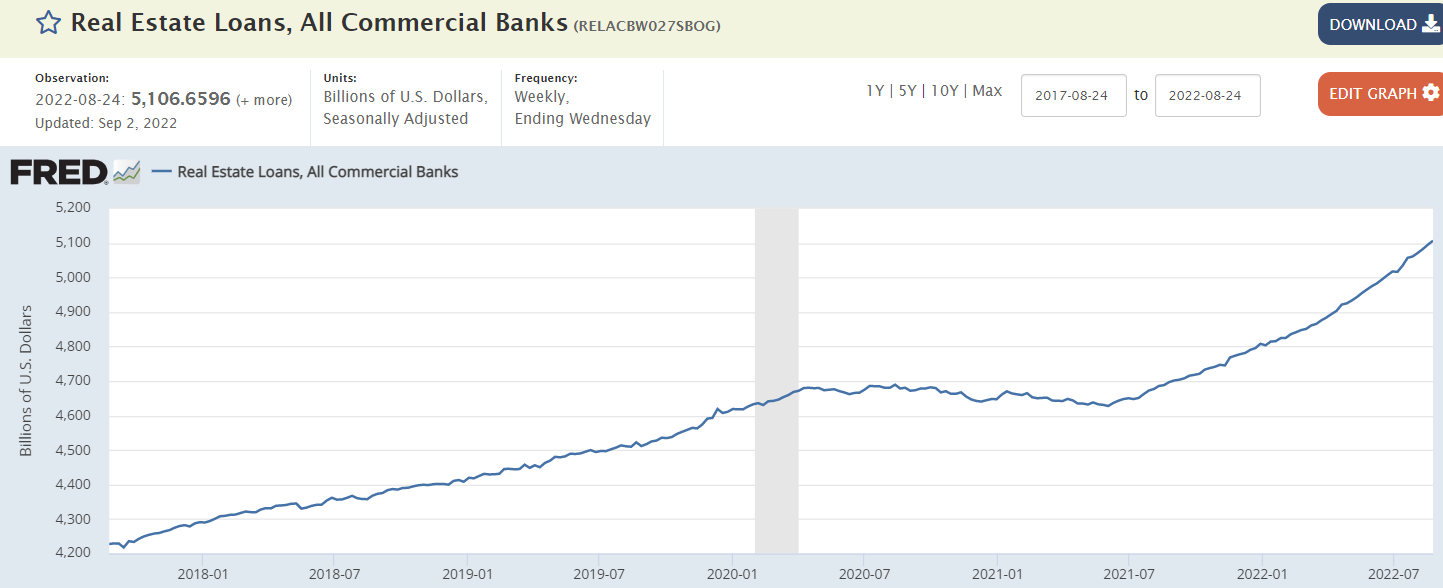
With the tax hikes and spending cuts, it’s up to private sector credit expansion to rise to the occasion. Should the lost income and lost jobs cause it instead to roll over, we’re looking at negative GDP.

How well do stocks forecast this risk?
Note, for example, the last time private sector credit expansion went into reverse, the S&P rallied to an interim peak of over 1,400 mid May of 2008, in front of a 50%+ sell off.

Not at all that it will happen again, but that markets aren’t all that good at forecasting private sector credit acceleration going into reverse.


Full size image

Posted in Equities | No Comments »

Fannie Mae to send $59.4 billion to U.S. Treasury

Posted by WARREN MOSLER on May 9th, 2013

Profits turned over to Tsy are a tax/demand leakage, just like $ from the Fed.

Fannie Mae to send $59.4 billion to Treasury

May 9 (Reuters) — Fannie Mae, the nation’s biggest mortgage finance company, said on Thursday it will pay $59.4 billion in dividends to the U.S. Treasury after a record profit in the first quarter that reflecting a multibillion dollar gain from reversing an earlier writedown of tax benefits.

Posted in Deficit | No Comments »

A word on jobless claims

Posted by WARREN MOSLER on May 9th, 2013

For example, unemployment could be 10% with no employees being dismissed and filing for new claims, and 150,000 new hire just in line with workforce growth so as to keep unemployment at 10%, and Thursday’s claims number would be 0.

Point is a falling claims number can refect ‘quietness’ and ‘stability’ and not ‘improvement’ and therefore not be forecasting increased growth and employment. Once ‘quiet times’ are achieved, it’s just a measure of turnover.

However/likewise, rising claims indicate ‘less quiet times’ with active dismissals on the rise. With a lag, a breakdown in the private sector credit accelerator due to the proactive austerity measures
should be evidenced (again with a lag) by a slowdown in the growth of credit/slowdown in sales/output/employment. This generally gets reversed by the automatic fiscal stabilizers of rising unemployment comp and falling tax revenues that increase the federal deficit to the point where the demand leakages are sufficiently offset.

Support could also come from a reduction of the demand leakages, including a reduction in net imports, but in the case of the US those are highly unlikely to change anything near term.

Posted in Employment | No Comments »

update on fiscal forecasts

Posted by WARREN MOSLER on May 8th, 2013

Tax hikes larger than I thought, says $185 billion below:

Commentary for Thursday: For the past four years, the annual federal budget deficit has exceeded $1 trillion. However, due to a combination of improving economic conditions, tax increases and fiscal austerity, the deficit is poised to shrink considerably in 2013 and 2014. In fact, it already appears to be ahead of target for 2013 relative to the Congressional Budget Offices estimates from earlier this year. Previously, most of the fiscal improvement was due to stronger tax revenue as the economy mended; however, more recently outlay reductions have caught up- revenues were up $72 billion in Q1 versus yearago levels, while outlays were down $78 billion. Revenue is being propelled by a combination of hiring gains, as well as the tax increases implemented at the start of the year. The expiration of the payroll tax holiday was worth about $135B, and higher tax rates for upper income brackets totaled roughly $50B. Individual income taxes, corporate income taxes and social insurance/ retirement receiptsaccount for the vast majority (92%) of federal receipts, and all three sources are highly cyclical. Thus, the best prescription for higher tax revenue is a sustained improvement in the pace of economic growth. If the economy accelerates along the profile we project for 2013 (thereby pushing year-on-year real GDP growth from +1.7% to +2.8%), the CBOs projected deficits for fiscal years 2013 and 2014 should prove to be too large. This makes sense since the CBO only projected 2013 real GDP growth at +1.4% (half of our projected rate). The figure below shows the difference between the 12-month rolling sums of federal receipts and outlays, which is a useful proxy of the federal deficit. As of March, it was running at -$911 billion, and as the chart illustrates, the deficit is shrinking rapidly. Over the past six and twelve months the rolling deficit estimate improved by an average of $28-$30 billion per month. Thus, if this pace is maintained through the end of the fiscal year, the deficit is likely to shrink to approximately -$735 billionconsiderably better than the CBOs deficit projection of -$845 billion. (CBO projects -$616 billion for fiscal year 2014.) However, since the budget sequestrations are only beginning to take hold, the pace of outlays will probably shrink more quickly in the months ahead. Outlays are down 2.8% on a 12-month rolling average basis, but Q1 was down 8.1% (year-on-year) and March was down 20.8%. Receipts also appear to be strengtheningthey rose +14.2% in Q1, compared to +10.0% on a 12-month rolling average basis. In light of these trends, we trimmed our 2013 deficit projection to $700 billion

Posted in Government Spending | No Comments »

placebo’s doing their thing

Posted by WARREN MOSLER on May 8th, 2013

As previously discussed, financial placebos like QE do cause market participants to alter behavior out of either a misunderstanding of the actual fundamentals, or in anticipation of reactions by others presumed to be misinformed. And while the effects of these activities get reversed, however sometimes the effects are more lasting.

And there are also first order and second order effects. For example, a QE announcement could unleash misinformed fears about ‘money printing’ and ‘currency debasement’ and subsequent portfolio shifting that drives down the currency in the fx markets and drives up the price of gold. And the same misguided fears could cause bond yields to go higher in anticipation of a stronger/inflationary economy, even with the Fed buying bonds in an attempt to take yields lower.

So right now the QE/’monetary policy works if large enough’ placebo is at least partially driving things in both Japan and the US, and today’s announcement of the possibility of the ECB buying asset backed securities is now also at work.

And along the same lines but with a different ‘sign’ is the ideologically driven idea that cutting govt spending in the face of a large output gap- the sequester- is a plus for output and employment. Same for the year end tax hikes.

The underlying fundamental I don’t see discussed is whether private sector credit expansion can continue to sufficiently ‘overcome’ the declining govt deficit spending and satisfy the ‘savings desires’/demand leakages.

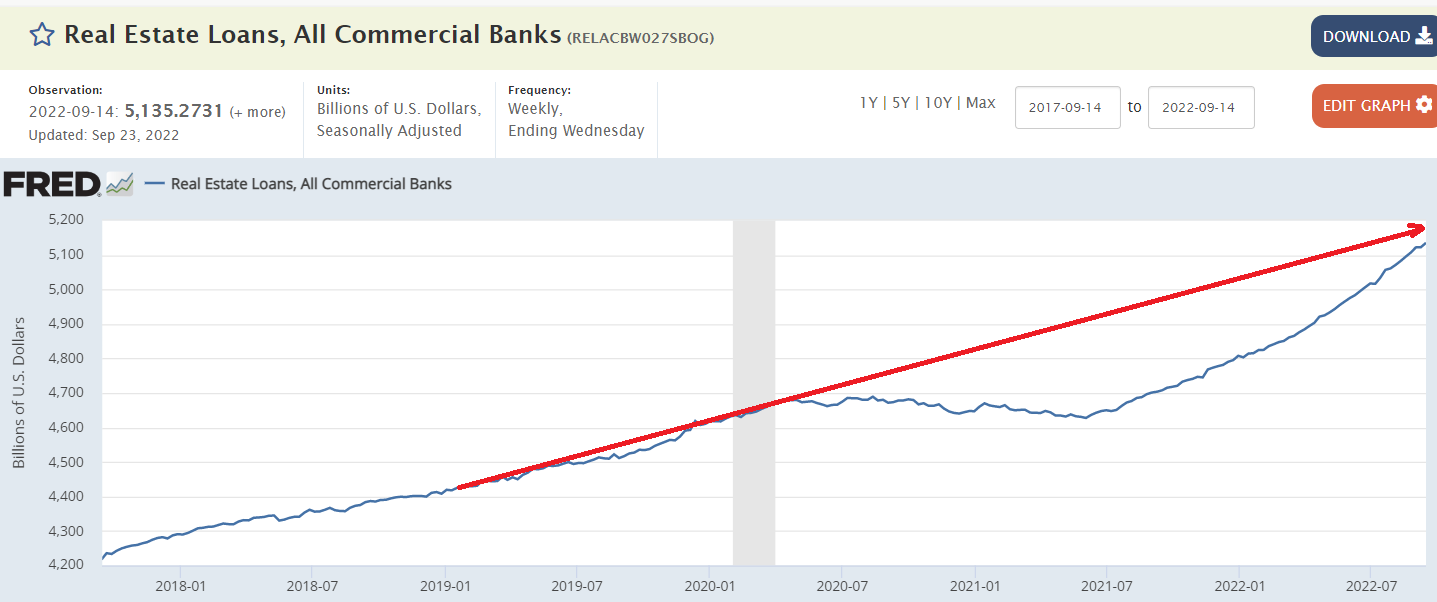
The main sources of private sector credit expansion are housing, student loans ($9 billion increase in March), and cars. Since 2009, the private sector credit expansion has managed to stay far enough ahead of the declining govt deficit, which has fallen from about 9% of GDP to about a rate of 6% of GDP by year end (mainly via the ‘automatic fiscal stabilizers’ of higher tax receipts and moderating transfer payments) resulting in about 2% real growth.

The question now is whether the private sector credit expansion can survive the 1.25% of GDP shock of the FICA tax hike and sequesters- which reduce support from the govt deficit to only maybe 4.5% of GDP- and still continue to sufficiently feed the (ever growing) demand leakages enough to generate positive GDP growth.

The stock market is often the best leading indicator of the macro economy, but it has ‘paused’ for two double dips that didn’t happen over the last few years, and it is subject to influence from placebos. Additionally, valuations change as implied discount rates change, and so in this case P/E’s shifting upwards may be discounting interest rates staying low for longer, due to an economy too weak to trigger Fed rate hikes, but strong enough to keep sales and earnings at least flat.

Placebo Surgery Shows Surprising Results

By Kate Melville

Research by Doctor Cynthia McRae of the University of Denver’s College of Education provides strong evidence for a significant mind-body connection among patients who participated in a Parkinson’s surgical trial.

Forty persons from the United States and Canada participated to determine the effectiveness of transplantation of human embryonic dopamine neurons into the brains of persons with advanced Parkinson’s disease. Twenty patients received the transplant while 20 more were randomly assigned to a sham surgery condition. Dr. McRae reports that the “placebo effect” was strong among the 30 patients who participated in the quality of life portion of the study.

“Those who thought they received the transplant at 12 months reported better quality of life than those who thought they received the sham surgery, regardless of which surgery they actually received,” says Dr. McRae. More importantly, objective ratings of neurological functioning by medical personnel showed a similar effect. In the report, appearing in the Archives of General Psychiatry, Dr. McRae writes “medical staff, who did not know which treatment each patient received, also reported more differences and changes at 12 months based on patients’ perceived treatment than on actual treatment.”

One patient reported that she had not been physically active for several years before surgery, but in the year following surgery she resumed hiking and ice skating. When the double blind was lifted, she was surprised to find that she had received the sham surgery.

Although patient perceptions influenced their test scores, when the total sample of patients was grouped by the actual operation they received, patients who had the actual transplant surgery showed improvement in movement while, on average, patients who had sham surgery did not.

Professor Dan Russell at Iowa State, the study’s co-author, says the findings have both scientific and practical implications. “This study is extremely important in regard to the placebo effect because we know of no placebo studies that have effectively maintained the double-blind for at least 12 months. The average length of placebo studies is eight weeks,” according to Russell. Dr. McRae notes that similar results related to the placebo effect have been found in other studies with patients with Parkinson’s disease. She says that there is a need for placebo controls in studies evaluating treatment for Parkinson’s as the placebo effect seems to be very strong in this disease. Dr. McRae also reports that although the sham surgery research design is somewhat controversial and has raised some ethical concerns, the results of this study show “the importance of a double-blind design to distinguish the actual and perceived values of a treatment intervention.”

Knee Surgery Proves No Better Than Placebo

By Katrina Woznicki

July 10, 2002 (UPI) — For individuals suffering from osteoarthritis in their knees, a common type of knee surgery has been found to be no more beneficial than a placebo, a new study revealed Wednesday.

Researchers at the Houston VA Medical Center and at Baylor College of Medicine came to this surprising conclusion after comparing various knee treatments to placebo surgery on 180 patients with knee pain.

The patients were randomly divided into three groups. One group underwent debridement, in which the damaged or loose cartilage is the knee is surgically removed by an arthroscope, a pencil-thin tube that allows doctors to see inside the knee. The second group received arthoscopic lavage, which flushes out the bad cartilage from the healthier tissue. A third group underwent a placebo surgery. They were sedated by medication while surgeons simulated arthroscopic surgery on their knees by making small incisions on the leg, but not removing any tissue.

During a two-year follow-up, researchers found no differences among the three groups. All patients reported improvement in their symptoms of pain and ability to use their knees. Throughout the two years, patients were unaware whether they had received the “real” or placebo surgery.

However, patients who received actual surgical treatments did not report less pain or better functioning of their knees compared to the placebo group. In fact, periodically during the follow-up, the placebo group reported a better outcome compared to the patients who underwent debridement.

Posted in ECB, Equities, Fed, GDP | No Comments »

Mortgage purchase apps

Posted by WARREN MOSLER on May 8th, 2013

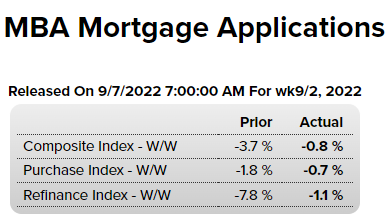
A bit of positive new here.

Mortgage banker’s purchase index still growing modestly from ultra low levels.


Full size image

Posted in Housing | No Comments »

Market Watch

Posted by WARREN MOSLER on May 8th, 2013

Radical fixes needed to make the euro work

Commentary: Warren Mosler has a plan but no takers

By Darrell Delamaide

May 8 (MarketWatch) — If youre ever tempted to think the euro zone has turned the corner and is on the right track, go have a chat with Warren Mosler and hell set you straight.

The former hedge-fund manager and an original proponent of what has come to be known as modern monetary theory gave a talk recently at a wealth management conference in Zurich that took a pessimistic view of the euro righting itself on its current path.

The European slow-motion train wreck will continue until theres recognition that deficits need to be larger, Mosler said at the conclusion of his analysis. The continuing efforts at deficit reduction will continue to make things worse.

Mosler suggested several measures that could turn around the situation in the euro zone, though he acknowledged there is little chance they will be adopted.

The euro authorities need to accept that deficits should be allowed to go up to 8% of gross domestic product, instead of the current 3%, as the only way to create the monetary conditions for full employment and economic growth.

The European Central Bank should make a policy rate of 0% permanent. The ECB, as the source of the euro zones fiat money, should guarantee the debt of all euro countries and guarantee deposit insurance for all euro-zone banks, which would entail taking over bank supervision.

Individual countries in the euro zone, like individual states in the U.S., are trapped in a procyclical monetary and fiscal environment. Because they have no sovereign currency, they must reduce spending in a downturn.

In the U.S., the federal government can operate countercyclically, by running a sufficiently large deficit to provide net savings to the private sector. The ECB is the only institution in the euro zone that does not have revenue constraints and could play a countercyclical role.

Because money is a public monopoly, when the monopolist restricts supply by not running a sufficient deficit, it creates excess capacity in the economy, as evidenced by high unemployment.

Mosler says the deficit can result from lower taxes or increased government spending, whatever your politics prefers. But policies aimed at reducing the deficit are doomed to keep an economy depressed.

And theres more. All successful currency unions include fiscal transfers, Mosler said. In Canada, this is written into the constitution and in the U.S. it is achieved through the federal budget.

In Europe, this would mean that some authority like an empowered European Parliament would direct government spending to the areas with the highest unemployment.

Clearly all of this is well beyond what Europe is currently capable of doing, and the leaders in power have implicitly or explicitly rejected all of these potential fixes.

The reality is, Mosler noted, that there is no political support for higher deficits, no political support for leaving the euro, and beyond reducing deficits the only remaining fixes are taxes on depositors and bondholders like those seen in Cyprus and Greece.

Mosler, who currently manages offshore funds and produces sports cars on the side, says his views, which have been taken up and elaborated by a post-Keynesian school of economics, are based on his experience as a money manager.

And, he adds, he has a substantial following of asset managers for his ideas because these are people who are paid to get it right.

The current stopgap measures proposed by the ECB notably the putative outright monetary transactions to bail out a country under certain conditions, which has yet to be used have a dubious legal basis and are so much smoke and mirrors, Mosler said.

In this Zurich talk, Mosler did not draw any further conclusions regarding his pessimistic view of the euros current course, but a website devoted to Mosler Economics in Italy, where MMT has a considerable following, spells out what it could mean in a post called 10 reasons to return to the lira.

These reasons include the ability to lower taxes, allow the government to pay off debts to the private sector and implement a works program to provide employment and improve the public infrastructure. Read the post (in Italian).

Lest this all seem like so much pie in the sky, keep in mind that the forces that gave the protest movement of Beppe Grillo a quarter of the vote in Italys recent election will only grow as continued austerity deepens Europes recession.

So remain optimistic if you like, but youve been warned.

Posted in Currencies, ECB, EU | No Comments »

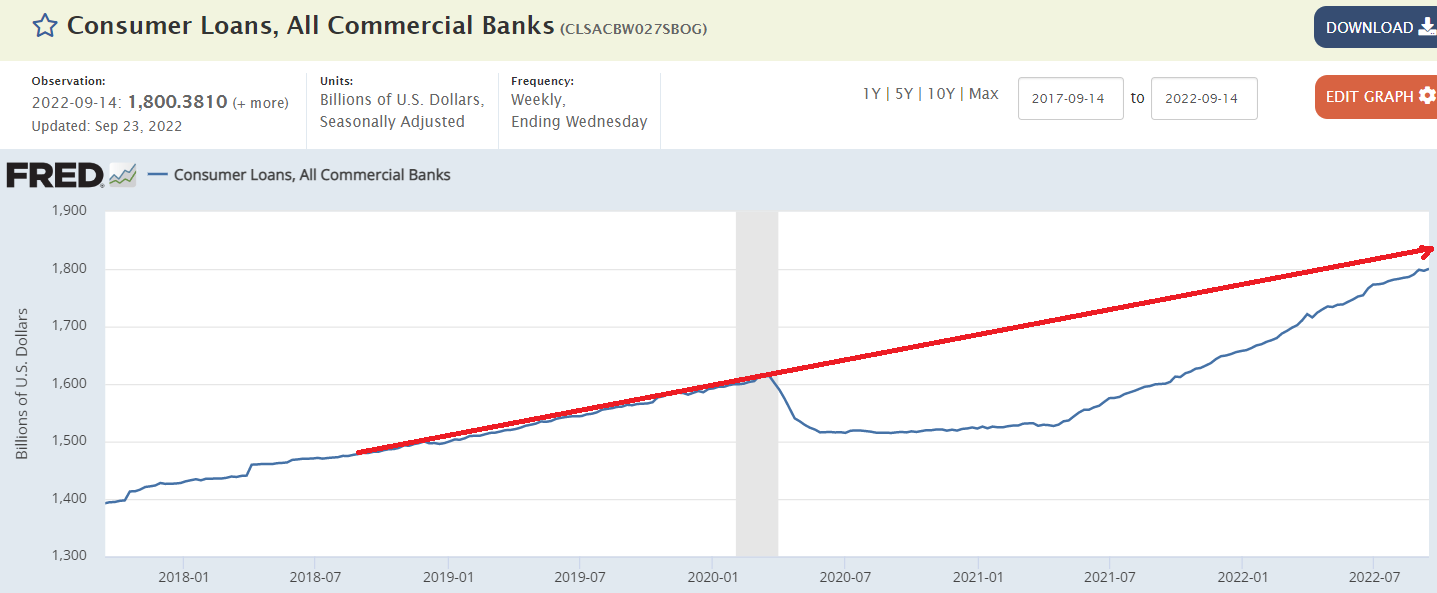
consumer credit- more deceleration?

Posted by WARREN MOSLER on May 7th, 2013


Full size image

Posted in Uncategorized | No Comments »

Cass freight index

Posted by WARREN MOSLER on May 7th, 2013


Full size image

Posted in Uncategorized | No Comments »

Redbook sales

Posted by WARREN MOSLER on May 7th, 2013

Redbook Sales Monthly M/M:


Full size image

Posted in Uncategorized | No Comments »

another one rolling over

Posted by WARREN MOSLER on May 7th, 2013

April Caps Off Continuing Weak Rail Trends

By Cullen Roche

Posted in Economic Releases | No Comments »

gasoline and nat gas prices

Posted by WARREN MOSLER on May 6th, 2013

Falling gas prices were helping some after hurting some, but now they’re just steadying around Q4 type levels:


Full size image

Meanwhile, take a look at nat gas prices. And allowing exports can cause them to climb to double digit world prices:


Full size image

Posted in Comodities | No Comments »

Today’s numbers

Posted by WARREN MOSLER on May 3rd, 2013

Yes, payrolls were better than expected, and the past was revised up some.

But looking at the charts as they now stand, looks to me like they are all down and decelerating?

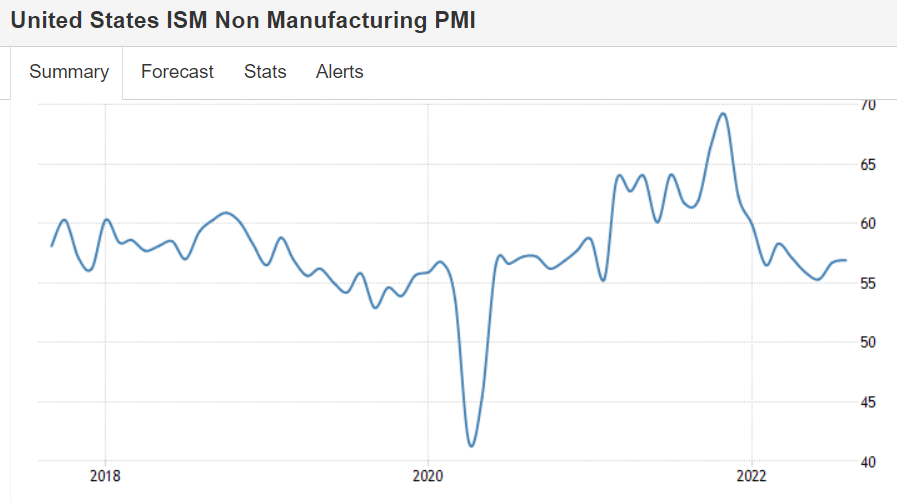
Non-manufacturing ISM:


Full size image

Payrolls:


Full size image

Factory Orders:


Full size image

Posted in Economic Releases, Employment | No Comments »

Tsy floaters

Posted by WARREN MOSLER on May 3rd, 2013

Yes, the Treasury is in fact selling notes that float off of its own bills.

:(

The Treasury provided a preliminary term sheet for the floating rate note program that will launch sometime in Q4 or Q1. In addition, they said the first auction would have a 2yr maturity, and that the expected pace of issuance would be $10bn to $15bn per month.

  • A 2yr maturity would be eligible to be purchases by money market funds, but the maturity is a bit long for them from a weighted average life (WALA) perspective. Fortunately, we think another investor base will pick up any slack left from the 2a-7 funds.
  • Bills: Watch the seasonality. As expected, the initial FRNs will be linked to the results of 3m T-bill auctions. But in a modest surprise, the rate will only reset quarterly.

Posted in Bonds, TREASURY | No Comments »

JPM warned

Posted by WARREN MOSLER on May 3rd, 2013

Not to defend JPM, but my personal experience at my bank is that the current crop of regulators are a pack of shameless, malicious, arrogant lying dogs (even worse than IRS agents…) working entirely against public purpose by any possible measure, and all being documented by our board of directors…

JPMorgan Caught in Swirl of Regulatory Woes

By Jessica Silver-Greenburg and Ben Protess

May 2 (NYT) — Government investigators found that JPMorgan devised “manipulative schemes” that transformed “money-losing power plants into powerful profit centers.”

Posted in Banking | No Comments »

DRAGHI SAYS ECB TECHNICALLY READY FOR NEGATIVE DEPOSIT RATES

Posted by WARREN MOSLER on May 2nd, 2013

If anyone can get a message to him, please tell him that, functionally, negative rates are just a tax on deposits that ultimately reduces spending/output/employment, much like the PSI did in Greece and whatever you want to call the ‘deposit confiscation tax’ in Cypress.

>   
>   (email exchange)
>   
>   This is a bit unexpected
>   

*DRAGHI SAYS ECB TECHNICALLY READY FOR NEGATIVE DEPOSIT RATES

*DRAGHI SAYS ECB TECHNICALLY READY FOR NEGATIVE DEPOSIT RATES

“on the deposit facility rate… we are technically ready. There are several unintended consequences that may stem from this measure. we will address and cope with these consequences if we decided to act. We will look at this with an open mind and stand ready to act if needed”

Posted in CBs, ECB, EU | No Comments »

Rogoff & Reinhart answering my call in FT – Austerity is not the only answer to a debt problem

Posted by WARREN MOSLER on May 2nd, 2013

Good to see Ken, who I’ve never met, and Carmen who I do know, no doubt assisted by her husband Vince, beginning to come clean with this response. While not complete, it’s the beginning of an encouraging, epic reversal and a first step in the right direction!

My comments added below:

Austerity is not the only answer to a debt problem

By Kenneth Rogoff and Carmen Reinhart

May 1 (FT) — The recent debate about the global economy has taken a distressingly simplistic turn. Some now argue that just because one cannot definitely prove very high debt is bad for growth (though the weight of the results still say it is),

They could add here ‘though likely via the reaction functions of govts and not the high debt per se.’

then high debt is not a problem. Looking beyond the recent public debate about the literature on debt we have already discussed our results on debt and growth in that context the debate needs to be reconnected to the facts.

Let us start with one: the ratios of debt to gross domestic product are at historically high levels in many countries, many rising above previous wartime peaks. This is before adding in concerns over contingent liabilities on private sector balance sheets and underfunded old-age security and pension programmes. In the case of Germany, there is also the likely need to further cushion the debt loads of eurozone partners.

Adding here ‘as they are ‘users’ of the euro the way US states are ‘users’ of the dollar, and not the actual issuer of the currency like the ECB, the Fed, the BOE, the BOJ, and the rest of the world’s central banks.’

Some say not to worry, pointing to bursts of growth after the world wars. But todays debts,

Add ‘while they pose no solvency risk for the issuer of the currency.’

will not be dealt with by boosts to supply from postwar demobilisation and to demand from the lifting of wartime controls.

To be clear, no one should be arguing to stabilise debt, much less bring it down, until growth is more solidly entrenched if there remains a choice, that is.

BRAVO!!!! And add ‘as is always the case for the issuer of the currency.’

Faced with, at best, haphazard access to international capital markets and high borrowing costs, periphery countries in Europe face more limited alternatives.

Add ‘as is the case for ‘users’ of a currency in general, including the US states, for example’.

Nevertheless, given current debt levels, enhanced stimulus should only be taken selectively and with due caution. A higher borrowing trajectory is warranted, given weak demand

BRAVO!

and low interest rates,

Add ‘which are confirmation by the CB policy makers who set the rates low that they too believe demand is weak’.

where governments can identify high-return infrastructure projects. Borrowing to finance productive infrastructure raises long-run potential growth, ultimately pulling debt ratios lower. We have argued this consistently since the outset of the crisis.

BRAVO! And add ‘additionally, weak demand can be addressed by tax reductions, recognizing that counter cyclical fiscal policy of currency users, like the euro zone members, requires funding support from the issuer of the currency, which in this case is the ECB.’

Ultra-Keynesians would go further and abandon any pretense of concern about longer-term debt reduction.

Add ‘without a credible long term inflation concern, as for the issuer of the currency inflation is the only risk from excess demand.’

This position has been in the rhetorical ascendancy in recent months, with new signs of weaker growth. It throws caution to the wind on debt

Add ‘with regards to solvency, as is necessarily the case for the issuer of the currency.’

and, to quote Star Trek, pushes governments to go where no man has gone before

Add ‘apart from war time, when the importance of maximum output and employment takes center stage.’

The basic rationale

Add ‘of the mainstream deficit doves (not the ultra Keynesian MMT school of thought)’

is that low interest rates make borrowing a free lunch.

Unfortunately,

Add ‘the mainstream believes’

ultra-Keynesians are too dismissive of the risk of a rise in real interest rates. No one fully understands why rates have fallen so far so fast,

Add ‘apart from the Central Bankers who voted to lower them this far and this fast, and in some cases provide guarantees to other borrowers.’

and therefore no one can be sure for how long their current low level will be sustained.

Add ‘as it’s a matter of second guessing those central bankers.’

John Maynard Keynes himself wrote How to Pay for the War in 1940 precisely because he was not blas about large deficits even in support of a cause as noble as a war of survival. Debt is a slow-moving variable that cannot and in general should not be brought down too quickly. But interest rates can change rapidly.

Add ‘all it takes is a vote by central bankers.’

True, research has identified factors that might combine to explain the sharp decline in rates.

Add ‘in fact, all you have to do is research the votes at the central bank meetings.’

Greater concern

Add ‘by central bankers’

over potentially devastating future events such as fresh financial meltdowns may be depressing rates. Similarly, the negative correlation between returns on stocks and long-term bonds, while admittedly quite unstable, also makes bonds a better hedge. Emerging Asias central banks have been great customers for advanced economy debt, and now perhaps the Japanese will be once more. But can these same factors be relied on to keep yields low indefinitely?

Add ‘In the end, it’s all a matter of the central bank’s reaction function.’

Economists simply have little idea how long it will be until rates begin to rise. If one accepts that maybe, just maybe, a significant rise in interest rates in the next decade

Add ‘due to inflation concerns’

might be a possibility, then plans for an unlimited open-ended surge in debt should give one pause.

Add ‘if he does not see the merits of leaving risk free rates near 0 in any case, as there is no convincing central bank research that shows rate hikes reduce inflation rates, and even credible theory and evidence to be concerned that rate hikes instead exacerbate inflation.’

What, then, can be done? We must remember that the choice is not simply between tight-fisted austerity and freewheeling spending. Governments have used a wide range of options over the ages. It is time to return to the toolkit.

First and foremost,

Add ‘only’

governments

Add ‘who fail to recognize that these are merely matters of accounting that don’t themselves alter output and employment’

must be prepared to write down debts rather than continuing to absorb them. This principle applies to the senior debt of insolvent financial institutions, to peripheral eurozone debt and to mortgage debt in the US.

Add ‘Additionally’

For Europe, in particular, any reasonable endgame will require a large transfer

Add ‘of public goods production’

from Germany to the periphery.

Add ‘which in fact would be a real economic benefit for Germany.’

The sooner this implicit transfer becomes explicit, the sooner Europe will be able to find its way towards a stable growth path.

There are other tools. So-called financial repression, a non-transparent form of tax (primarily on savers), may be coming to an institution near you. In its simplest form, governments cram debt into domestic pension funds, insurance companies and banks

By removing governmental support of higher rates from their net issuance of debt instruments, particularly treasury securities.

Europe is there already and it has been there before, several times. How to Pay for the War was, in part, about creating captive audiences for government debt. Read the real Keynes, not rote Keynes, to understand our future.

One of us attracted considerable fire for suggesting moderately elevated inflation (say, 4-6 per cent for a few years) at the outset of the crisis. However, a once-in-75-year crisis is precisely the time when central banks should expend some credibility to take the edge off public and private debts, and to accelerate the process bringing down the real price of housing and real estate.

It is therefore imperative for the central bankers to make it clear to the politicians that there is no solvency risk, and that central bankers, and not markets, are necessarily in control of the entire term structure of risk free rates, and that their research shows that rate hikes are not the appropriate way to bring down inflation, should the question arise’

Structural reform always has to be part of the mix. In the US, for example, the bipartisan blueprint of the Simpson-Bowles commission had some very promising ideas for simplifying the tax codes.

There is a scholarly debate about the risks of high debt. We remain confident in the prevailing view in this field that high debt is associated with lower growth

Add ‘but must add that the risk is that of misguided policy response, and not the level of debt per se.’

Certainly, lets not fall into the trap of concluding that todays high debts are a non-issue.

Add ‘as we must be ever mindful of the possibility of excess demand using up our productive capacity’

Keynes was not dismissive of debt. Why should we be?

The writers are professors at Harvard University. They have written further on carmenreinhart.com

Posted in Bonds, Credit, Currencies, Employment, EU, Fed, GDP, Germany | No Comments »

Double dip- this time it’s different

Posted by WARREN MOSLER on May 1st, 2013

During the last two post 2008 double dip scares I made the point that the 9% or so deficit was too large for that to happen, and instead recommended buying the dips.

This time the deficit has been proactively cut to maybe a less than a 5% of GDP annual rate, in which case I see a meaningful chance of negative GDP.

And one that is not being discounted by a market that’s remembering that the last two double dip scares didn’t materialize.

Posted in Deficit, GDP, Government Spending | No Comments »

de Niall on Krugman

Posted by WARREN MOSLER on May 1st, 2013

Not that Krugman is right, but that ‘de Niall is wrong here. Comments in below:

Niall Ferguson to Paul Krugman: Youre Still Wrong About Government Spending

By Morgan Korn

April 30 (Daily Ticker) — Niall Ferguson has two words for Paul Krugman: youre wrong.

The Harvard University history professor and author of Civilization: The West and the Rest says Krugmans pro-government spending thesis not only fails to address the core problems facing the U.S. and Europe today but also has dire consequences for individuals living in these economies.

You cant borrow trillions of dollars a year for the rest of time, Ferguson says in an interview with The Daily Ticker at the Milken Institute Global Conference 2013.

Operationally there is no numerical limit to US govt deficit spending. Nominal restrictions are political only. Yes, the currency might go down, there might be inflation, you might lose your job, but US Treasury checks won’t bounce unless congress decides to bounce them.

Once a government gets to a very very high level of debt, the risk is very small increases in borrowing costs which create a vast ocean of red ink. So that risk is not negligible.

So what happens as that ‘debt’ grows larger? Nothing if it isn’t spent. And if it’s spent, the risk is the risk of too much spending in the economy. Overspending would mean unemployment got ‘too low’ and the ‘excess spending’ was simply driving up prices. Comes back to the only risk of ‘too much’ deficit being inflation. So what’s his long term inflation forecast? He probably doesn’t even have one!!!

Very large debts do not simply disappear by magic.”

Correct, they remain as balances in either securities accounts (aka Treasury securities) at the Fed, or in reserve accounts at the Fed, or as actual cash, to the penny. And they constitute the $US net financial assets of the global economy that supports the global $US credit structure. To the penny.

Ferguson argues that Carmen Reinharts and Ken Rogoffs conclusions about the relationship between high debt and low growth are still true. The two Harvard economists had to defend their seminal book This Time is Different: Eight Centuries of Financial Folly after three University of Massachusetts academics correctly identified a spreadsheet coding error that led us to miscalculate the growth rates of highly indebted countries since World War II, according to Reinhart and Rogoff. (Lawmakers across the world cited their work as justification to institute austerity policies; they argued that economic growth slowed after a country’s public debt equaled 90 percent of its GDP).

The headlines have done a disservice to Ken Rogoff and Carmen Reinhart, Ferguson notes. Its extremely implausible that governments with already high debt can improve their situation by making their debt even larger. High debt scenarios often end with inflation or default. They dont end with a rapid increase in the growth rate. A minor error in the Rogoff and Reinhart paper does not refute the case that governments with excessively large public debt have to bring them under control.”

Presenting data doesn’t ever show causation.

But regardless of the level of cumulative deficit spending for a currency issuing govt, with a proposed tax cut and/or spending increase every economist paid to be right will revise his GDP forecast up.

Moreover, Ferguson compares government accounting of public debt to one of the most famous and hated public companies that ever existed.

If companies behaved like governments, they would essentially be Enron, he says. There is a fundamental problem with government accounting.

There are likely govt accounting problems, but not solvency problems for the issuer of the currency.

Posted in Currencies, Deficit, Government Spending, Inflation | No Comments »